← Spooked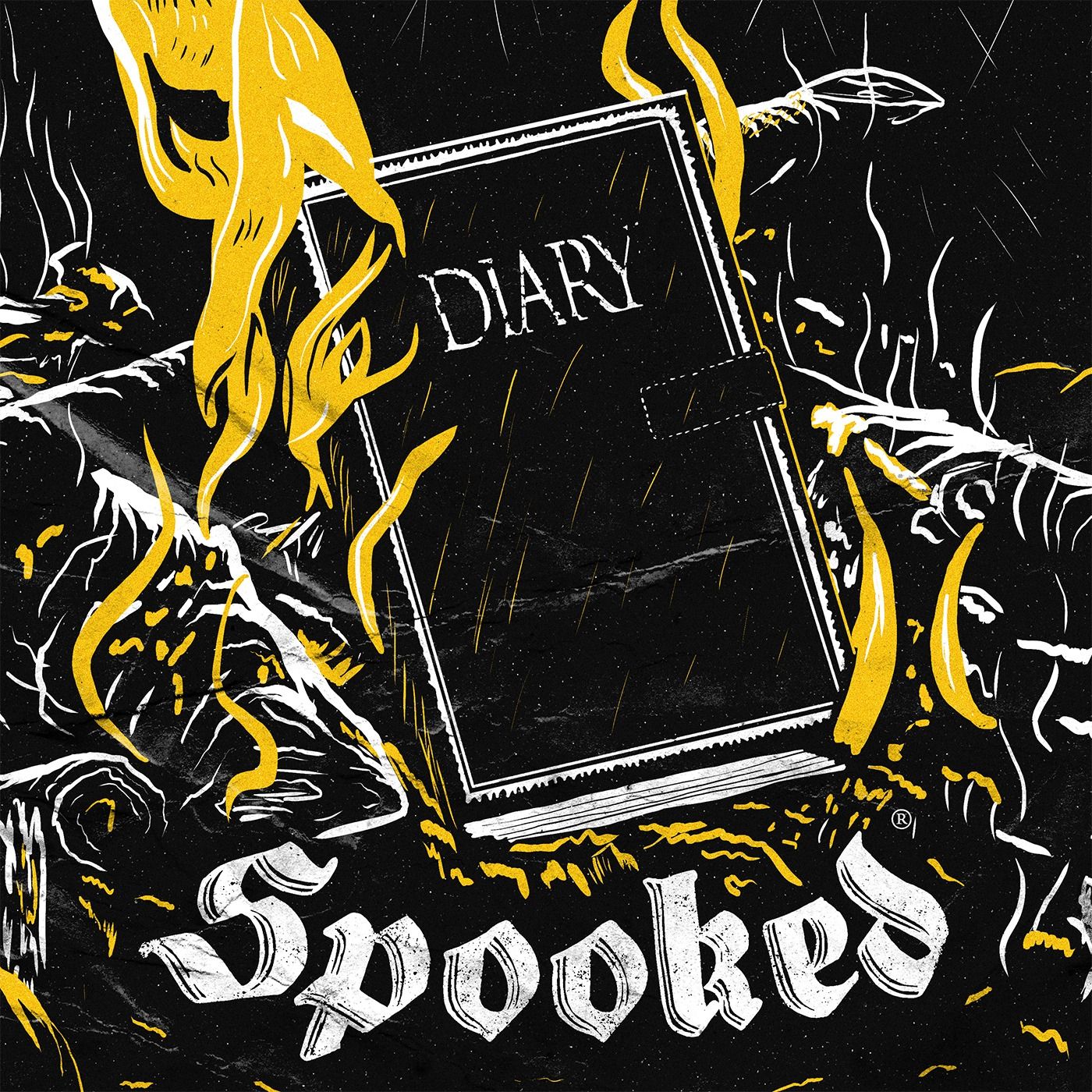
Spooked
Run!
00:26:10
Catherine is headed to her first ever archaeological dig with her college. She’s as happy as can be, living out her dream of being a real-life Indiana Jones. But when she wakes up in the middle of the night and sees a ghostly figure standing over her, watching her sleep, she starts to wonder if her lifelong dream is actually a nightmare.
Loading summary
Transcript28 lines
- [00:06]
Glenn Washington
Ours is not to question why. Ours is but to do or to die. You're listening to Spooked. Stay tuned.
- [00:23]
Catherine
In the summer, all of Oregon is our playground, thanks to our incredible park system. That's why it's so cool that Oregon Lottery gameplay like video lottery or cash pie help support tons of parks projects statewide, like accessible trails at Silver Falls State park or upgrades to your favorite dog park in Newburgh. It's just one way a little lottery play from many Oregonians can add up to a lot of good the Oregon Lottery. Together, we do good things. Lottery games are based on chance and should be played for entertainment only. Must be 18 or older to play Trip Planner by Expedia.
- [00:56]
Glenn Washington
You were made to have strong opinions about sand. We were made to help you and your friends find a place on the beach with a pool and the marina.
- [01:05]
Catherine
And the waterfall and the soaking tub. Expedia made to travel.
- [01:22]
Glenn Washington
In this space, this shadowland. People, they often want to make the simple things hard. They want to assume deep mysteries and seek hidden signs and esoteric understandings. But when you walk down the street and see screaming people fleeing back the other direction, it is not necessary to first query the shrieking folk, asking as to the specific nature of their common distress.
- [01:53]
Emily
No.
- [01:59]
Glenn Washington
No, no, no, no, no, no. If they are fleeing, follow them. Your little questions or whatnot can wait. It's the same thing here in this place. If you detect a voice, a feeling, a premonition, an intuition, a suspicion, a foreboding, a vision, a hunch telling you plainly that this is not the place you need to be right now. Run. Spook starts now. Now, our storyteller, Catherine, she studied archaeology in college, and when she was a senior, she got to head into the field like a real archaeological dig. She went with all the other seniors, a few professors, to a site that her university owned. But I have to tell you, Kathryn asked us to keep this location a secret for a very good reason, Spoot.
- [03:58]
Emily
I'm really excited, too, to see a large, like, scientific investigation and to get to bond with these people in my program and to kind of really, you know, put my money where my mouth is as far as becoming an archaeologist. So we meet on a Monday morning in the archaeology lab. We all pack into the bus, and the professor drives down behind us in his pickup truck. We're in the south, but we're not in the Deep South. It's farming, tobacco fields, and we're in a largely agricultural area in a river valley. I'm driving down this little unmarked road. It's not dirt road, but it's close. And this was really in the middle of nowhere. Even compared to our small town. This is absolutely the middle of nowhere. And then you turn into kind of a dirt driveway, and there's this tiny little house. My first impression of the house is that it's kind of cute. It's, you know, probably built in the 1920s or 30s. It's this little white wood siding house with a little front porch. And other than the kitchen, students aren't really supposed to be in most parts of the house, which suits me well because it's full of, like, spiders and cockroaches, and I don't really want to be in there anyways. It's got these creaky wooden floors and these old wooden stairs. And the upstairs, it's got these kind of, like, slanted roofs, and you've got some, like, eaves and some little nooks and crannies around there. It's a cute little house. It's just very small and old. And then over behind the little white house, there's a fire pit and a big ring around it. And then off to one side, there's two pretty rough bunk houses, One for boys, one for girls. No ac, no running water in them. The birds are singing, the insects are chirping. Because we are, again, in the middle of the woods. There's bugs everywhere, and it just feels very cheery, I think is the best word for it. We do the fieldwork like, a solid 30 minutes away. It's not too far as the crow flies, but the way we have to get there, it's. It's a long drive across a river in the middle of this old battlefield, essentially. I can't really say more about the location of the field school or the site that we dig at. We do tend to have a big problem with looters. If they know that there is a native American site there, they could potentially dig up graves or other disrespectful things that we don't want them doing. So it's, you know, we get in and we're, like, looking around. It's like, okay, unload. Like, let's go. We've got jobs to do. So excited but busy is how I was feeling. A couple days later, we come back from site. Our routine is to, you know, you split up, and whoever is on dinner crew goes to cook dinner. And then everyone kind of naturally congregates around the fire pit until dinner is ready. Our professor grabs everyone's attention in a way that we can Tell he's going to kind of make an announcement. The professor goes on to tell us that, you know, the school had bought the property. You know, he told us that they did have to bring on some volunteers and go clean out the house, take all the personal effects out of the house and make it right for our field station purposes. While they were doing this in a crawl space up in the upper floor, they found this diary that had belonged to one of the daughters. He tells us that the property was previously owned by a family. The father worked at the mill and he was an alcoholic and abusive. He got laid off one day and came home and shot his two daughters and his wife and then himself. We're sitting in a circle. It's really easy to see everyone's faces. And most people are somber and shocked. I was just thinking how terrible. And he pretty much says that since there was no other family that they knew of, they decided to just respectfully dispose of the diary by burning it that night and hope that it would kind of set things to peace for that family. And he was just saying, you know, just so we're aware, there's, you know, people have said they've heard things or seen things, but no one had really had any experiences themselves. I am, you know, very much inclined to believe him because he's my professor and I know him pretty well and I trust him. But at the same time, I think that it sounds a little far fetched. Eventually people start saying that things are going missing and coming back up places where they shouldn't be, or that they are seeing shadows at night and stuff like that. I do have a friend who one night he is laying awake in his bunk. He's got a window next to his bunk and the light from the bath house was kind of illuminating the area. And he sees this big tall shadow just slowly walk past his window. And in his words, I think his response was nope and just turned over and decided to ignore it. What freaks him out is that the whole camp is covered in mulch or gravel and you can hear people walking pretty easy. And he doesn't hear any foot footsteps go by with this big shadow. But other than that there were just. Just little things. The stories are prevalent throughout all aspects of camp life. I think they're really fun and I like to hear about them, but again, I don't really think that there's much truth to them. We leave the site around three or four, pack up all our gear, drive back to the camp, and then everyone just ends up hanging out around the campfire until dinner's ready. It's not uncommon for alumni to kind of drop in and out throughout the field season as they're able. And one of our more involved alumni had just arrived at camp, you know, just to kind of help out in general for a week or so. He's hanging out with the professors and the assistants during dinner and all that. And then eventually people start to go, oh, like hey, like you know anything about this weird stuff that happens here. He's like, well, yeah, actually I, I have an experience with that.
- [11:11]
Glenn Washington
Let me tell you about the online cannabis company that's revolutionizing how we deal with life's challenges. From sleepless nights to stress filled days, Mood.com has created an entire line of functional gummies that target specific concerns. With 100% federally legal THC blends delivered discreetly right to your doorstep, you can get 20% off your first order@mood.com with promo code Spooked from me, the epic euphoria Gummies are perfect for those days when you want to chill and hit the reset button. What makes these different is how they've paired THC with now they're cannabinoids with herbs and adaptogens. You're just not going to find gummies like this anywhere else. No pesticides, no BS, and they can ship to most states in the U.S. best of all, not only does Mood stand behind everything with the industry leading 100 day satisfaction guarantee, but as I mentioned, listeners get 20% off their first order with code SPOOT. So head to Mood.com, browse their amazing selection of functional gummies and find the perfect gummy for whatever you're dealing with. And remember to use promo code spooked at checkout to save 20% on your first order.
- [12:26]
Catherine
With a home equity investment from Home Tab, you get access to your home equity in cash without monthly payments to use for whatever you'd like, from paying off debt to making renovations or handling emergency expenses. Receive your funds in just a few weeks, start pursuing your financial goals and start getting more out of life. See if you pre qualify for an investment@hometap.com subject to eligibility. Terms and conditions apply. That's hometap.com.
- [12:57]
Emily
Okay, close your eyes.
- [12:59]
Unnamed Friend
Exhale.
- [12:59]
Emily
Feel your body relax and let go of whatever you're carrying today.
- [13:05]
Unnamed Friend
Well, I'm letting go of the worry that I wouldn't get my new contacts in time for this class. I got them delivered free for 1, 800 contacts.
- [13:12]
Emily
You guys, they're so fast.
- [13:14]
Unnamed Friend
Oh, sorry. Namaste.
- [13:17]
Emily
Hi there. Did you Find everything okay?
- [13:20]
Unnamed Friend
Yes, I did. Because I found the exact same contacts as my eye doctor prescribes. F1,800 contacts. Here, give me that. Attention shoppers. Did you know 1,800 contacts has 45 million contacts in stock?
- [13:34]
Glenn Washington
Okay, we checked the brakes. Everything looks good.
- [13:37]
Unnamed Friend
You know, speaking of checking, did you know 1,800contacts triple checks every order? Yeah, they make sure you get exactly what you need when you need it.
- [13:45]
Emily
1-800-Contacts. So good, so fast, so accurate. You'll want to tell everyone too.
- [13:51]
Unnamed Friend
Download the app or visit 1-800contacts.com today.
- [13:54]
Emily
And save on your first order. 1-800-contacts. He was working on his master's degree. He used our excavation site for his thesis. And as such, it had to go out and do some data collection off season. So when everything shut up, there's no one there. He did his data collection and he came back. He made a fire because it was cold. It's after dark, and he's sitting in front of the fire with the house behind him. And he notices all of a sudden that the light changes. So he turns around to look at what is causing it. He looks up at the house and on the second story there's a light on and a silhouette at the window just staring down at him. He describes it as just a solid black silhouette, like a big kind of bulky male figure. He felt a real sense of malevolence coming from it. The property is totally empty at this point. It's been shut up for months and locked tight. It freaks him out so much that he ends up. He puts out his fire and he gets in his car without even packing up any of his camping gear. And he drives off, checks into a hotel and stays there until daylight. At which point he comes back for his gear, but refuses to sleep there again by himself. Everyone around the fire is freaking out. It's very different from the night that our professor was talking to us. They're all kind of wide eyed and looking at each other. Heads are going back and forth. People are also kind of like uneasily looking back into the trees behind us. Got everyone kind of on the edge of our seats, like hair on the back of our neck standing up. We hypothesized that it might be the spirit of the father who had committed the murders and suicide there. I'm creeped out, but I'm not willing to just down and out be like, yep, ghosts are real. That could have been a squatter or something in the window. The rest of the program goes pretty smoothly. The same little rumors are Flying around, but nothing new or compelling comes out. So on the very last day, we don't go out to the site. We spend the day cleaning up the camp. All the basic chores to get the property ready for us to leave it for another 11 months until we come back for the next field school. So as part of this, my friend and I are assigned to sweep out the house. I take the downstairs while she takes the upstairs. And as she's heading upstairs, she pops her headphones in to listen to some music while she does the sweeping. And I'm starting to, like, scoop up and take out the dust. And my friend comes running down the stairs screaming, and just goes straight outside, down the stairs and straight out the door. Doesn't stop, doesn't look at anyone, just screaming. So I run after her, and I'm like, what? What happened? What is wrong? And she is standing in the driveway, and she stops screaming, thank God. But she's just still very visibly shaken. And she says, I felt something pull on the back of my shirt, and I turned around and there was nothing there. She says specifically, is that it feels like the way a child tugs on your shirt when they want to get your attention. When she says this, I immediately am thinking, the upstairs is where the diary of the girl was found. It's where we assumed the kids were sleeping. And so my kind. My mind kind of instantly jumps to the kids. I am kind of cautious as I go up the stairs to finish the sweeping, Kind of poking my head around the corner a little. And it's really small. You can see most of the upstairs at one time, and I don't see anything. And I tell myself, this just has to get done. Nothing happens to me at all. I feel like it really can't be explained. But mostly I feel like I'm glad to be getting out of there. And I felt relieved. My second year at the field school is actually two years later. So I'm there as a helper more than as a student. I'm showing people the ropes. I'm helping with crowd control and basic responsibilities around camp. I know all these people really well. I have a lot of friends. I'm also here to just have some good times with my friends before I graduate as well. Everything is pretty much the same. We have the same schedule, the same routine. Just, you know, a couple meters over from where we had been digging before. The house is the same. The bunks are the same. Everyone still gathers around the fire pit. Everyone's whispering about these rumors of a haunting and of the history of the house. And I have more skepticism back. You know, it's a creepy little place, But I'm sure none of this really happened. My friend Emily, we got into this routine really early on where she would have to use the bathrooms every night. And the bathrooms are these portable bathrooms all the way across camp in the dark. And she didn't want to go alone, and I can't blame her for that. It got to the point where I can just get up, don't even have to be fully awake. Just put on my shoes, halfway walk across camp with my eyes half open and go back and fall back to sleep. I wake up one night, I can see my friend silhouetted against my bed. So I say, all right, all right, all right. And I sit up and I put my shoes on, and without looking back at her, she's still standing next to my bed. I go over to the cabin, and I open the door, and I hold it open behind me, Waiting for her to come through. And she doesn't come. And so I look back behind me, and there's no one there. My friend is dead asleep in her bunk, and there's no one standing next to my bed. It wasn't one of the other girls who had woken me, and it certainly wouldn't have been my friend, because she couldn't have gotten back into her bed that quickly. Couldn't have been someone else in the bunkhouse. And I know the answer is no, because we didn't hear anything. Anything. I would have heard someone else walking around or getting in and out of bed. Sleep paralysis. And so I'm thinking, what if it was that? And I'm thinking, I got up, and I got up and walked to the door, so it could not have been sleep paralysis. And after I exhaust all the possible explanations, I start to really have to admit to myself that whatever that was, it was unexplained and possibly a spirit or a ghost. It takes me a while to fall back asleep, because as much as I'm trying not to think about it, I still. I can't get the image out of my head of that silhouette standing there. As soon as I get up in the morning, we hit the ground running with breakfast and getting packed up, but the whole time, I'm still trying to think about what that could have been. And I ask my friend, I'm like, did you. Did you see anything? Did you get up last night? She's like, no. You know, last night was actually the only night where I didn't have to get up. I was like, so you didn't. You didn't wake me up at all? She's like, no. Why? And I was like, don't worry about it. Never mind. I'm afraid that if it came back, I would see more than just a silhouette. I'm asleep and I hear the kind of, like, rustling and a tap on my shoulder. So I keep my eyes shut and I wait. And eventually my friend's voice does whisper my name. I think, oh, okay. We get up and put our shoes on and leave the bunk. And we open this creaky screen door and down the steps. And in order to get to the porta potties, which are on the opposite side of camp, we have to walk in front of the entirety of the house. There is some moonlight coming down, like, directly from above us, but it really quickly descends into dark shadows within a few feet of the forest edge on all sides. There's no one else out. I don't hear anyone else. I don't see any other lights. What if you could use your home equity to pay off your debt without monthly payments so you could focus on reaching your other financial goals? With a home equity investment from HomeTap, you can get access to your home equity in cash, get closer to financial freedom and get more out of life. Learn more and see if you pre qualify for an investment@hometap.com Subject to eligibility, terms and conditions apply. Get access to your home equity in cash. Visit hometap.com to apply in minutes. That's hometap.com Close your eyes, exhale. Feel your body relax, and let go of whatever you're carrying today.
- [23:39]
Unnamed Friend
Well, I'm letting go of the worry that I wouldn't get my new contacts in time for this class. I got them delivered free from 1-800-contacts. Oh, my gosh, they're so fast.
- [23:47]
Emily
And breathe. Oh, sorry.
- [23:49]
Unnamed Friend
I almost couldn't breathe when I saw the discount they gave me on my first order. Oh, sorry. Namaste. Visit 1-800-contacts.com today to save on your first order.
- [24:00]
Emily
1-800-Contacts. As my friend is in the bathroom, I'm just hearing, like, the basic sounds of the woods. My heart's being a little faster. I want her to just hurry up and get it over with so we can go back to the relative safety of the bunkhouse. She finishes up, the door slams behind her. We start walking back towards our cabin. We have our backs to the woods, and I just feel so uneasy all of a sudden. And I start to feel this prickling on the back of my neck. I just Felt like there was something behind us that didn't want us there. But I don't want to say anything to my friend because there's no point in scaring her. Essentially, she all of a sudden breaks into a run. I don't know why she's running, but I'm sure it's a good reason. And I don't want to be out here on the dark by myself. We run all the way back to our cabins. We kind of dive into our beds, and we don't say a word to each other. Then I figure it can wait till the morning. It was a Friday, which means that we would pack up to drive back to town for the weekend. And my friend and I are driving back in my car, and we were kind of quiet for a few minutes as we start to drive. And then my friend turns to me and says, what do you think was in the woods last night? And I said, I. You know, I don't really know. I just. I just felt really uncomfortable. Why? What do you think was there? And she says, well, didn't you hear the footsteps? And I was flabbergasted because I hadn't heard anything. I'd heard the crickets and I'd heard the frogs, but footsteps, I definitely would have noticed. I tell her that I didn't hear anything. She goes really quiet for probably a good 30 seconds. And then she looks at me and she says, if you didn't hear the footsteps, who told me to run? I was like, what? She goes, a voice whispered in my ear and told me to run. That's why I started running. I started running because you started running. I didn't tell you to run. We both had to kind of process that in silence for a few minutes. I think it's likely that it was one of the girls. If their spirits are still on that property, telling us to get back to safety. Because the malevolent presence that I felt and that most people had been encountering at that property was most likely the father who had committed these murders. I think if it was one of the girls that they were looking out for us. I think it's really sad that they are still trapped with this violent presence that murdered them. I think that they were probably trying to protect my friend and I from the same evil that had caused their deaths. I think they probably stay there and keep that malevolent force in check as best they can. I still love that site. I'm happy to go back to that property. I'm less happy to spend the night there. But I will still do it if I. If I need to.
- [28:06]
Glenn Washington
Now, I would never go back. No, no, no, no, no, no, no. But I'm grateful to Catherine for being brave enough to bring that story back to us. We here at Spooked appreciate year. The original score was by Renzo Gorio, was produced by Aaliyah Yates. Oh, yes, it's happened again. And I hear you. More, more you say. More darkness, more encounter encounters. More stories not to fear. More stories you shall have. And if you have a spook story the world needs to know, hit us. It's spooked@snapjudgment.org There is nothing better than a spooked story from a spooked listener. And if you like your storytelling in the bright light of day, subscribe to the amazing Snap Judgment podcast, because it might just change your life. Spooked was brought to you by the team that never, ever runs Mick and Hyde. That goes double for the Mark Ristage and assessment. Our chief spookster is Eliza Smith, Chris Hampton, Annie Nguyen, Lauren Newsome, Leon Morimoto, Renzo Gorio, Teo da Cott, Marissa Dodge, Aaliyah Yates, Zoe Ferrigno, Greta Weber, Jacob Winnick, Sana Khan, Tiffany Deliza, Anne Ford and Fernando Hernandez. The Spooked theme song was by Pat Mesiti Miller. My name is Glenn Washington. No, they're both good and bad lie on the other side of the veil. It can be hard to say which is which once you're fired test some will tell you that you are just fine the way you are right now, and that's nice. The others, though the bad ones, will implore you to come to their realm, to meet on their territory. And if you remember nothing else from our talk, remember this. Never ever. Never ever. Never ever. Never ever turn out the lights.