Loading summary
Transcript97 lines
- [00:02]
A
You're listening to the Cyberwire Network, powered by N2K.
- [00:14]
B
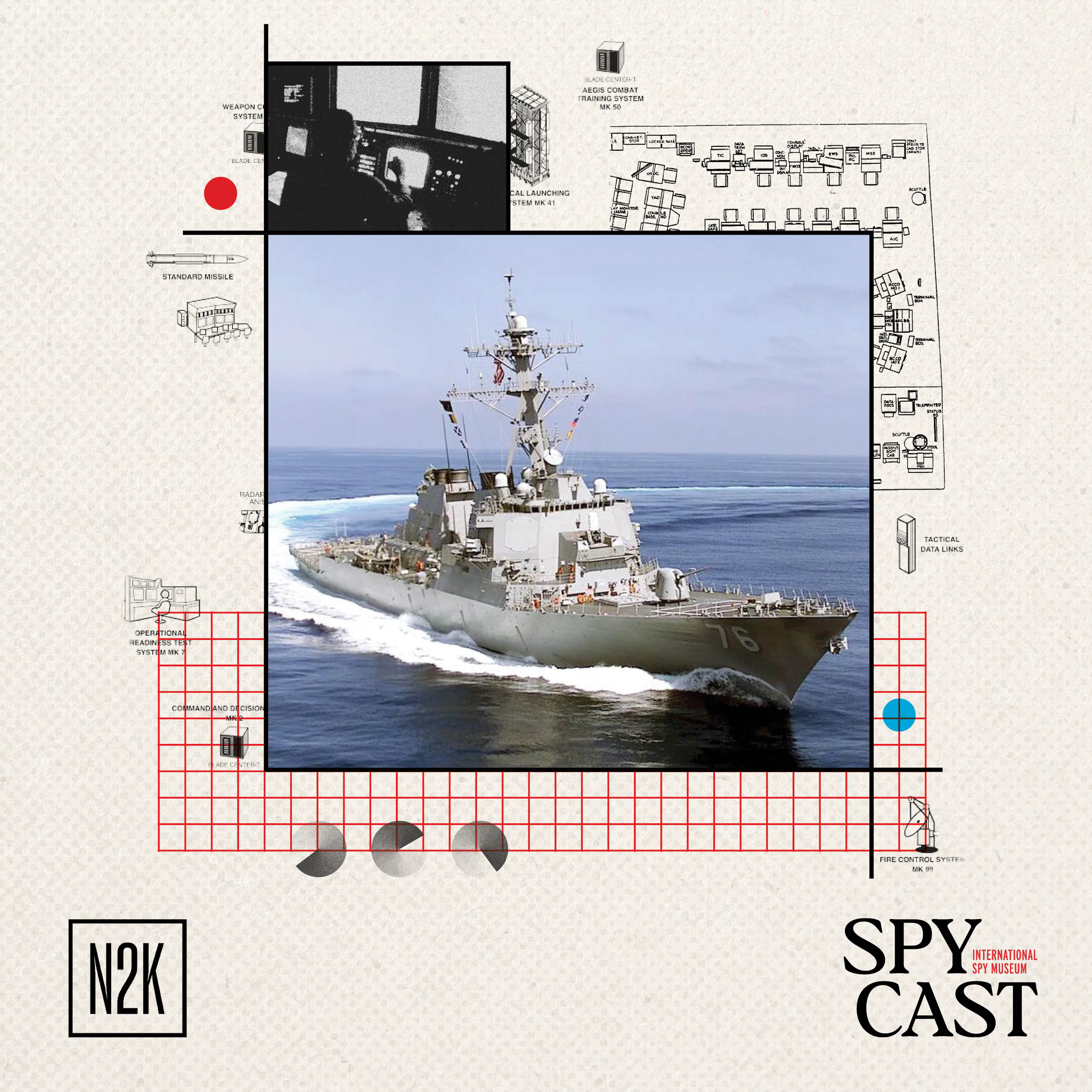
Welcome to Spycast, the official podcast of the International Spy Museum. I'm your host, Sasha Ingber, and each week I take you into the shadows of espionage, intelligence, and covert operations across the globe. You may have heard of the long running TV show ncis, based on the real work of the Naval Criminal Investigative Service. But you may have never heard of a unit inside it called the Office of Special Projects. Staff work on espionage cases that originate inside the US Navy. Case agent Mike Garzone, who has worked in the office for four years, sat down with me to talk about a case that closed in 2024. It's the first case in a few decades that the Navy prosecuted from start to finish. It revolved around Bryce Pedicini, who was working for the Navy in Japan as a fire controlman.
- [01:14]
A
Chief.
- [01:15]
B
That meant he could operate and maintain advanced weapons systems on ships. And in 2023, he entered a classified government network, took photographs that he sent to a foreign agent, and received payment through PayPal. Petaccini said he needed the money because of inflation. He was dishonorably discharged, and now he's spending 18 years behind bars. That comes to $377 per year for the information he was paid to share.
- [01:50]
A
Hey, Mike. Welcome to Spycast.
- [01:52]
C
Thank you for having me, Sasha.
- [01:54]
A
So tell me how this all got started. How did you get involved in this case?
- [02:00]
C
So we'll take it back in time to the distant year of 2023. It was May 16, which was a Monday. My supervisory special agent, he came in, he brought me into his office and said, hey, look, we've got a new case. It's a live wire. We've got this sailor out in Japan in contact with a foreign agent, and he's in discussions about passing some classified materials to them.
- [02:25]
A
Okay, so the person that he was talking about, or she, was a guy named Bryce Pedicini. Tell me about his. His background in terms of the professional as well as the personal. Yep. Who was he?
- [02:41]
C
So he was a Nashville, Tennessee native. He spent most of his life growing up there. He had 10 siblings, so large, and went to Christian Presbyterian School down there. And then he joined the Navy in 2008. Straight out of high school, he became a fire controlman. And then around 2022, that's when he picked up a chief petty officer, which is a pretty significant milestone for sailors who are enlisted in the Navy.
- [03:11]
A
And he also had reportedly received awards including the Achievement Medal and several Good Conduct medals.
- [03:20]
C
Precisely. Yeah. Now, admittedly, Sometimes for especially the Good Conduct Medal, all you have to do is just stay out of trouble, not go to prison, and you're good to go, you'll get those medals. But at the same time, to get the Navy Achievement Medal, that does require a bit more effort on your part to get that acknowledgment.
- [03:39]
A
So we understand who he is from a more of a professional standpoint, but what about his life as a. As a husband, as a father?
- [03:51]
C
So his wife, she was prior Navy as well. So they met while they were in. They got married around 20, 21, 2022. Around the time he picked up chief. She was Samoan. They. They seem to have a fine life. When we talked to his wife after he had been arrested or apprehended, she had said, you know what? Like both of us, we've had a great life together, no issues. He hasn't really complained about the Navy, no disgruntlement. She had a child from a previous relationship, and he was involved as a father. So, I mean, he seemed like, on the surface at least, a pretty good sailor, pretty good son to his parents, and a pretty good husband.
- [04:36]
A
Let's go into the moment of when you first get involved, and then we can move in real time through the information that you were getting as it arose. Once you get brought into this live wire, as you call it, then you fly to Japan, and when you get off the plane, what happens?
- [04:57]
C
So during that flight, I spent, you know, the 14, 18 hours, whatever it was, preparing for that interview, because at that point, like it had. It had only been open for a couple days, the case. So we knew the bare minimum. So I'm just there just going through my head, okay, you know, how am I going to approach this interview? You know, how am I going to go at it? I land, I take my phone off of airplane mode, and I get a flood of messages from my supervisor saying, hey, I hope your flight was. Well, no issues, sorry to say, but the local office, we brought in Petticini, and they've interviewed him, and he's provided some confessions at admissions. So that was a deflating moment for me personally as an agent.
- [05:43]
B
Yeah.
- [05:43]
A
So this was the local NCIS chapter in Japan that had interviewed him.
- [05:50]
B
Can you tell me, like, to what
- [05:52]
A
degree of a bummer is this for you?
- [05:55]
C
It was an enormous bummer. If, you know, if you talk to any investigators, detectives, special agents, they'll tell you that the interview of a subject is like the height of the art. You know, you're talking to a person and your job Basically is to have them voluntarily admit to a crime. You know, you can't force someone to confess against their will. So it really is like a test of wills to get someone to come out and say, yeah, I've been committing espionage on behalf of XYZ country. But yeah, to get there and to find out that someone else had had that moment, it was a bummer. I understand the decision. And you know, in hindsight, it was absolutely the right call to have him brought in by the Yokosuka office.
- [06:44]
A
And why had they brought him in? Why, why couldn't they wait?
- [06:48]
C
So at that point, so, you know, as you can see, the case was developing fast. I got it on Monday, I'm flying out to Japan on Thursday. But during that time, we've been getting some additional information in from our partners. Indic he was primed to imminently pass classified information to the foreign agents.
- [07:07]
A
Okay, so I read that the batteries to the video camera died during the interview.
- [07:16]
B
What?
- [07:17]
C
Most offices have a built in camera system, but given the fact that the local office was anticipating that this was going to go into the classified realm, they brought in a separate little portable recorder. So you don't burn the system basically, and you have to take out all the hard drives and dump them and burn, break him down or whatever. They were doing a fantastic job of talk to him, but at some point the battery just died. So it was kind of a mechanical failure on the device's part.
- [07:43]
A
Yeah, and I know that that was something that the defense ultimately used during the trial, but what exactly did Bryce say during the interview and why was he so quick to confess?
- [07:56]
C
So right away when they asked him, hey, you know, why do you think you're here? He was like, because I was taking some pictures of stuff I shouldn't have. I brought my phone into the secure space. He's like, you know, given the timing of what I just did and you guys breaking me in, you know, it's pretty obvious what happened. And at that point he just started spilling the beans. He said, I've been in contact with someone who purported to be a Japanese researcher for working for a nonprofit organization based in Japan. And that relationship started online. It remained online the entire time. And they just gradually asked me for more and more information and I just provided it to them.
- [08:41]
A
And what did he say as to why he gave this information?
- [08:46]
C
So initially what he was telling us was that he, he wasn't giving them classified information. What he told us and what he told another friend of his was, you know, I'm just messing around. With them, I'm going to f around with them, so to speak, and, you know, feed them bad information. Almost as if he was running his own, like, off the books double agent operation.
- [09:11]
A
That's convenient.
- [09:12]
C
Yes, it was.
- [09:14]
A
Not only does NCIS get this confession from him, but you also are able to now confiscate his cell phone and laptops as well. And now you're doing the back end work here. As far as I understand it, Mike, where you are securing warrants, you're looking at his interactions on social media. You're essentially trying to piece together what happened to get to this moment in 2023. So let's start by talking about what he had been doing on social media before he was even approached as a fire controlman.
- [09:51]
C
Yep. So online, his, the two platforms that we were looking at were LinkedIn and Facebook. And on both of them he conveniently listed his career on there, alternatively as ballistic missile computer technician and ballistic missiles defense computers. So right away, any adversaries who are looking to find someone with placement and access, they knew, okay, this guy's dealing with some sophisticated stuff, so let's take a shot in the dark and see if he responds. And that's exactly what they did, starting on Facebook.
- [10:27]
A
So how does Petuccini get approached on social media?
- [10:33]
C
So it started off with Facebook Messenger. It was a cold reach out on their part. So he got a message on messenger and it was basically a, it looked like a pre, you know, pre written out script saying, hey, this is who I, I am. I'm a Japanese researcher. We're looking for experts in the military to write some papers for us and to provide some consulting work and, you know, are you interested and do you have any friends that are interested? And he immediately took the bait and started talking to them and said, yeah, sure, I'm interested. You know, what does this involve? What do you expect of me? And then they sent him a questionnaire which ostensibly was to figure out what, what kind of position he would be suited in. But the questionnaire was basically trying to figure out what his motives would be to commit espionage.
- [11:28]
A
And they said that they would pay him to fill out this questionnaire. Is that right, that they were essentially going to pay him to find out what would motivate him to share intelligence.
- [11:40]
C
Exactly. Yeah. They gave him $50 just for accepting the questionnaire and then another $150 for actually completing the questionnaire. And it's, it's, the questions on it were pretty direct and pretty clear in their intentions. Things like, how's your Mental health. Does the military provide the mental health care that you need? How are your finances? Do you think that it's appropriate for the US Military to get involved in, you know, global and regional affairs? So it was clearly trying to figure out, is this someone who's going to be motivated by ideology, by ego, by money? In this case, Petticini was motivated by money. Because in there they said, you know, what's motivating you to work with us? And he wrote in their finances, particularly because of inflation.
- [12:30]
A
Wow. He just comes right out and says it.
- [12:33]
C
Yeah.
- [12:33]
A
And inflation.
- [12:35]
C
Inflation. Yeah. I guess maybe that's to kind of soothe his conscience. Like, wow, I normally wouldn't do it, but, you know, prices are getting high and, you know, it's kind of got to tighten my belt. It's getting tough.
- [12:47]
A
Okay, so let's pull back again. The person who has sent him this questionnaire, you say that this was a Japanese researcher, but what foreign government are we talking about here?
- [13:01]
C
So in the case of our line of work, we get information from partners from law enforcement agencies, intelligence community, both at here and abroad. So sometimes when that information comes to us, it comes with the caveat of, hey, here's a good lead. You may want to look into this guy, but certain information needs to stay off the radar. So in this case, that's what we're looking at.
- [13:26]
A
Okay. Because the court filing states, quote, defense initially seeks the contact information of an individual who is a known intelligence officer of a foreign country. The government does not have this information, but has agreed to provide defense with what information it does have. So do you know which foreign government this person was working for and you're just not telling me? Or is it that you also don't have that information because of an agency that tipped you off not actually sharing it?
- [13:57]
C
This is going to sound cliche, but I can neither confirm or deny that I know who this foreign adversary was.
- [14:03]
A
And so they. They start talking on Facebook. This conversation moves over to Telegram. Are there alarm bells going off for pet Cheney when he is going about answering this questionnaire, when he's being asked to now take steps to gather information? Are there indications from Petechini that this Japanese researcher probably is not actually a Japanese researcher?
- [14:32]
C
So initially, he didn't seem too terribly concerned. So what the Japanese researcher here started off pretty benign. They. They sent him a topic paper, basically saying, hey, this is a list of the information that we want you to write a paper about. And it starts off fairly innocuous. You know, talk about, you know, Japanese American cooperation, the Indo Pacific. Tell us about, you know, what you can about sonar technology, things of that nature. He writes the paper, he sends it off, and that's when the particular request and the more pointed ask from the foreign agent begins.
- [15:14]
A
Right. So in a way, it's like this foot in the door form of manipulation where, you know, just a little bit now, maybe a little bit more. But you also, in doing this work from a rewinding position, see that Petticini himself also displayed some rather sneaky or maybe lazy behavior. Can you talk about that?
- [15:42]
C
Yes. So when he was writing these white papers, as we call them, what he was doing is we kind of recreated his search history and we saw that he was going to publicly available websites like NAFSE and all these websites that are tied to the military or.
- [15:59]
A
And NAfSEA stands for naval Sea Systems Command.
- [16:02]
C
So they're the ones who are in charge of, you know, like Aegis system and surface vessels and things like that. He's going through the websites trying to find information that kind of falls in line with the request from the foreign agent. And he's literally just copy and pasting entire articles that he found online into his white paper. But what got him hung up was that while all that information is publicly available, unclassified, what he did was that in certain portions, when there's a particular metric or range or depth that's omitted, he would add in a bit of information there. So if the website just says, you know, this submarine can go, you know, pretty deep into the ocean, he would write out, you know, specifically how deep it could go or something along on those nature.
- [16:51]
A
Okay, so we're not talking pure copy and paste here.
- [16:55]
C
Mostly copy paste with just couple of words or lines inserted.
- [17:01]
A
Okay. Is it bad that I kind of like the fact that he was copying and pasting? Because that's what a dangle would do essentially, to provide information that wasn't that valuable to the Foreign Intelligence Service. He was starting off by doing that, at least.
- [17:18]
C
Yeah. Although unfortunately, in his very first paper that he provided, when it was reviewed by the. The information holders, it was determined to be secret, no foreign.
- [17:30]
A
Okay, so it got way worse. And you understood that now he's sharing really dangerous information. And is he trying to bargain his way into getting more money based on what they're asking him, or how is it working in terms of him trying to get around the inflation that he's so aggrieved by?
- [17:53]
C
So as that relationship developed, they started becoming more pointed in their request. They started saying, hey, we want insider information we want exclusive or non public information. And that was kind of their coded way of saying, give us some classified stuff without actually slaying classified information. Once they started becoming a bit more transparent, that's when he started to push back a little bit. They would ask for information on satellite technology, and he would push back and say, I would love to give you that stuff, but, you know, some of that's classified, so, you know, I can't really go into depth. They would then come back, push back a little bit more, and say, oh, you know, we've developed this friendship between us. You should be comfortable with us. Now, come on, what do you know? Give us a bit more information. We really like working with you at that point. Over time, he'd start moving the line back a little bit, saying, I don't want to give you this information. Not for the thousand dollars per paper, but if you give me 5,000, then I might think about it, huh?
- [19:06]
A
So in terms of the handler who's having to go back and forth with him, what was your take on this Japanese researcher in terms of the, you know, what they were experiencing, how good he or she was at negotiating?
- [19:23]
C
They were, they were very persistent. They were constantly staying on top of him, trying to get him to get his homework in on time. And it was, it was amusing to read those conversations because they would reach out to him on, you know, Monday, hey, is the paper ready? And he would reply back, I'm almost done. I've only got the last paragraph. And then two weeks later, they're still begging him, please, are you ready with this paper? My bosses are asking me. And only after the unending persistence and diligence of his handler would he finally give them the paperwork. However, he wasn't the most grammatical or very studious because you could see a ton of errors. And they even called him out on it, like, hey, look, you got tons of spelling errors here. The grammar doesn't make sense. Like, can you please, like, work on this? And also, by the way, give us some insider information.
- [20:21]
A
Wow. Now I want to see the spy movie where they're like, can you fix all these grammatical errors in the intelligence you're providing? We're kind of confused. So taking longer like that, that scene, I want that scene in a Netflix show. Fascinating to. To get the insider view from the back and forth. And espionage cases can be achingly slow. As you describe this, this was moving really fast. Was that a pro or a con?
- [20:52]
C
It was definitely a con. Just because you don't have time to prepare for anything It's. And, you know, within a week of the investigation being opened, we've already taken our subject in and put him into pretrial confinement. So he was already sitting in military jail. And at that point, the military justice system is very diligent about affording service members a right. So it's like, okay, the clock starts now, and now we have to retroactively build this case that otherwise would have been built over several months or several years even.
- [21:29]
A
And so did you go to colleagues, friends, family at that point? And what were they telling you?
- [21:36]
C
So pretty much everyone was, for the most part, kind of surprised. You know, they described Petaccini as a homebody, nice guy. He would look out for his junior sailors. He seemed like a pretty good chief. When he checked into his most recent command over in Japan, the chiefs over there said, they described him as kind of aloof, a bit withdrawn. At the same time, he had just checked in, so maybe he was still getting settled in. His wife had, like, no idea that any of this was going on. She. She couldn't cite any specific reason why he would have done this, with the exception. She hinted at the financial. Financial. Maybe some financial strain on his part.
- [22:27]
A
Can you explain where that money was going? In part.
- [22:31]
C
So that's part of the. The stuff that the wife hinted at. She'd mentioned that Bryce Petticini was friendly with other women and that women would sometimes take advantage of him in terms of being. Providing financial support. She had mentioned that he would send them, you know, $40, $100, but she didn't know why. She'd assumed it was just him, like, supporting, you know, his junior sailors or his friends.
- [23:00]
A
So, I mean, this is not a sugar daddy situation.
- [23:04]
C
So it wasn't a sugar daddy situation. There was definitely a quid pro quo. One of the sailors that we interviewed described that he had a certain fetish where he had asked them to put on yoga pants and then sit on them.
- [23:20]
A
Okay, Yeah, I wasn't expecting that we would go there, but we're there. We're there, we're there. And I'm really glad that our sponsor is not Lululemon right now.
- [23:32]
B
When we come back, why this prosecution was unique and is setting the tone for future espionage cases in the Navy Foreign. In the modern AI enterprise, adversaries no longer break in. They log in as autonomous AI agents and machines gain privileged access. Your risk is becoming invisible and legacy tools can't keep up. Introducing Idera from Palo Alto Network. IDERA is the next generation identity platform built for the scale of the AI workforce. It helps you discover hidden risks instantly. Eliminate static privileges with just in time enforcement and automate governance at machine speed. Secure every identity, human, machine and agentic with idera by Palo Alto Network. Visit paloaltonetworks.com Idira to get started.
- [24:50]
A
Pedicini ultimately receives a prison sentence of 18 years. But notably this is not prosecuted through the Justice Department attorneys. This goes through the military justice system, the United Code for Military Justice, AKA ucmj. Can you explain to us why that's important?
- [25:12]
C
Definitely. So just maybe less than a year prior to the start of the Petticini investigation, we had a series of noteworthy cases out on the West Coast. Wei and Zhao, those two sailors had been in contact with a foreign agent that was controlled by China and those had gone through the Justice Department out in town. One of the cases had resulted in the sailor getting around two plus years of prison time, which was great. But the unfortunate part about that investigation was that the Justice Department was reluctant in pursuing espionage charges, which would have upped the ante, so to speak. So once that case, the Petticini case, opened up, we thought, hey, let's bring in our trial prosecutors from within the military justice system and see if they're willing to really pursue this and go at him hard and go after espionage.
- [26:16]
A
We see sometimes that there is tension between the investigators and the prosecutors who are now trying to win the case. And sometimes the Justice Department really does go for the low hanging fruit because they want that easy win. They want something that can be most proven. Had there been cases specifically that the Justice Department had prosecuted that really didn't go the way that the Navy wanted,
- [26:46]
C
I can't speak for like big Navy, but I know that for us as agents, when we're working these cases and we've got that sense that, yeah, no, this is espionage, this checks all the elements. That's what we want to go for. And sometimes, you know, the prosecutors, they have their own calculus. So, you know, it's, it's prudent for us to defer to their opinion, but at the same time, it can be frustrating to have those particular constraints.
- [27:12]
A
And so the decision in this case with Petticini was deliberately made to stay in house. And one of the advantages of doing that, my understanding, is that you can have a jury that has a secret clearance or hire, which you wouldn't necessarily have or would not have just 100% if you went through the civilian justice system.
- [27:40]
C
Correct. In the military justice system, that jury of your peers includes service members who by virtue of the nature of their job typically have to have, at a minimum, a secret clearance to do that job.
- [27:55]
A
And why hadn't these cases been prosecuted by the Navy for a long time?
- [28:00]
C
I really can't speak to that. I don't know why, but I know that now. Ever since Petuccini went down and successfully prosecuted, there has been a strong drive to push for more cases being handled within military justice.
- [28:17]
A
So now there's a sort of formula or model to go by. And let's break it down. You had mentioned this trial counselor who had wanted to work this case.
- [28:29]
C
We were on the phone or emailing back and forth on a daily basis, sometimes multiple times a day. If she had follow up questions, she'd just call me up sometimes in the middle of the night, say, hey, can you get this bit of information? Can you clear this up? And I just get it done.
- [28:47]
A
And so when the trial gets going, is there a moment that you have where you think about how you've been rushing to kind of work the back end here and understand everything that happened with Bryce and the interactions on Facebook and telegram? Like, is there ever a moment where you, like, wake up in the middle of the night and you think, did I do it right? Did I do enough?
- [29:09]
C
Constantly, yes. No. There is always that anxiety of like, okay, did I get everything I need? Did I dig deep enough? Have I explained everything in a clear way so that, you know, a jury or a judge could understand what we're trying to say? Yeah, I don't think there's ever a moment where you're ever satisfied or comfortable with what you've done until you get that verdict coming in.
- [29:34]
A
Yeah. So you had mentioned that there is now this desire to keep prosecuting cases, espionage cases, this way. So what exactly is the formula that ncis, especially the Office of Special Projects, is striving for?
- [29:52]
C
So we're basically just taking all those lessons learned and just sharing that with the community and at the same time, just constantly maintaining that relationship with the prosecutor. So that way they know the moment something happens, hey, this is what's up with this investigation? What do you think? And then we kind of work in tandem to make sure that we get a successful conclusion to our cases.
- [30:16]
A
Especially when I think about China and the growing tensions between our two countries. Are we going to see more espionage cases prosecuted by the Navy as a result of the Pedicini case?
- [30:28]
C
I'd imagine so. We're developing that cadre of prosecutors who are getting the experience every day. We're constantly briefing him on the cases that we have ongoing and I don't get a sense at all that they are reluctant or backing down. If anything, they are leaning more into it and saying, yeah, this is not a problem that's going to go away. So we just need to be prepared to take these cases to trial when appropriate.
- [30:57]
A
That's notable. So where is Pedicini today as he's serving this 18 year prison sentence?
- [31:04]
C
So he just recently got transferred to the disciplinary barracks in Fort Leavensworth and that's where he's going to be hanging out for the next decade plus.
- [31:12]
A
So in the last you heard from him, did he express any regret now he's sitting behind bars?
- [31:21]
C
He never expressed any regret to us. I mean, he was steadfast throughout the trial that he wasn't trying to pass information on to the adversary, that he was just trying to mess around with them. No, no, no penance on his part.
- [31:41]
A
I really appreciate you taking the time to talk about Bryce Petticini and how you put together this investigation. Thank you so much, Mike.
- [31:51]
C
Thank you.
- [31:53]
B
Thanks for listening to this episode of Spycast. If you like the episode, give us a follow on Apple, Spotify or wherever you get your podcasts and leave us
- [32:04]
A
a rating or review. It really helps.
- [32:07]
B
If you have any feedback or you
- [32:08]
A
want to hear about a particular topic,
- [32:10]
B
you can reach us by email@spycastpymuseum.org I'm your host, Sascha Ingber, and the show is brought to you by N2K Network's goat rodeo and the International Spy Museum in Washington, DC.