
Podcast
Squiz Kids
Hosted by Squiz Media · EN
Squiz Kids is a news podcast, just for kids! Presented by Bryce Corbett and Christie Kijurina, it's a 10 minutes of age-appropriate news , delivered with positivity and humour. Make it part of your daily routine by playing it over breakfast, during the drive to school or - for all the Squiz teachers out there - in the classroom.
There's also kids v adults quizzes, a book club, kids-only Q&As (with people like the Prime Minister!), deep dives into topics kids love (from Barbie to Halloween, toys, sport, inventions, crazy science stuff, and so much more).
Want a birthday shoutout? Email us at squizkids@thesquiz.com.au, or visit the Squiz Kids website.
PS. We do news for big people (aka adults) over on The Squiz Today - a free weekday email and podcast. Search for Squiz Today in your podcasting app, or check out The Squiz Today newsletter here.
190episodes
Episodes
Newest firstAll episodes

Science that was Wrong - For National Science Week... From the Vault
Yesterday00:12:08Tap to summarizeIt’s National Science Week, and what better time to celebrate one of the most important things about science: sometimes, it gets things wrong. People once believed the Earth was at the centre of the universe, illness was caused by an imbalance of blood, phlegm and bile, and maggots simply appeared from rotting meat. So how did we go from those ideas to the science we know today? This week, we’re heading back into the Squiz Kids Vault for our Shortcut to Science That Was Wrong, where Christie and Bryce discover why changing your mind when new evidence comes along isn’t a weakness in science. It’s one of its greatest strengths. Listen carefully... there’s a S’Quiz at the end!
Transcribe →
Why does cutting an onion make you cry? Science Short
2d ago00:04:08Tap to summarizeFelix, from Hunters Hill, wants to know why slicing into an onion can leave our eyes stinging and tears streaming down our faces. In this week’s Squiz Kids Science Short, Christie breaks into the onion’s tiny chemical security system, discovers how cutting it releases an irritating mist into the air, and reveals why a blunt knife may make things even worse. Plus, do any of those strange onion-chopping tricks actually stop the tears?
Transcribe →
Kids vs Adults Weekly News S'Quiz
3d ago00:09:16Tap to summarizeA fun kids vs adults news quiz to test who’s been paying the most attention to the week in news. For the full episode transcript, click here.
Transcribe →
The President, the plane and secret escape, and a Bunnings sausage saga
4d ago00:09:16Tap to summarizeYour daily kids news podcast. The President, the plane and secret escape; Wallaby on the run in Netherlands; a Bunnings sausage saga; and shark scientists on hurricane watch. It sounds like a spy thriller: a president, a super-secure jumbo jet and a secret escape involving a catering container! Catch me if you can! A runaway wallaby has spent six months hopping around the Netherlands. Forget weather balloons — scientists are recruiting sharks! No, the Bunnings sausage sizzle hasn’t been replaced by Indian food stalls. AI-generated images are being used to stir up anti-migrant feelings online. For the full episode transcript, click here. Researched by Bryce Corbett Hosted by Bryce Corbett.
Transcribe →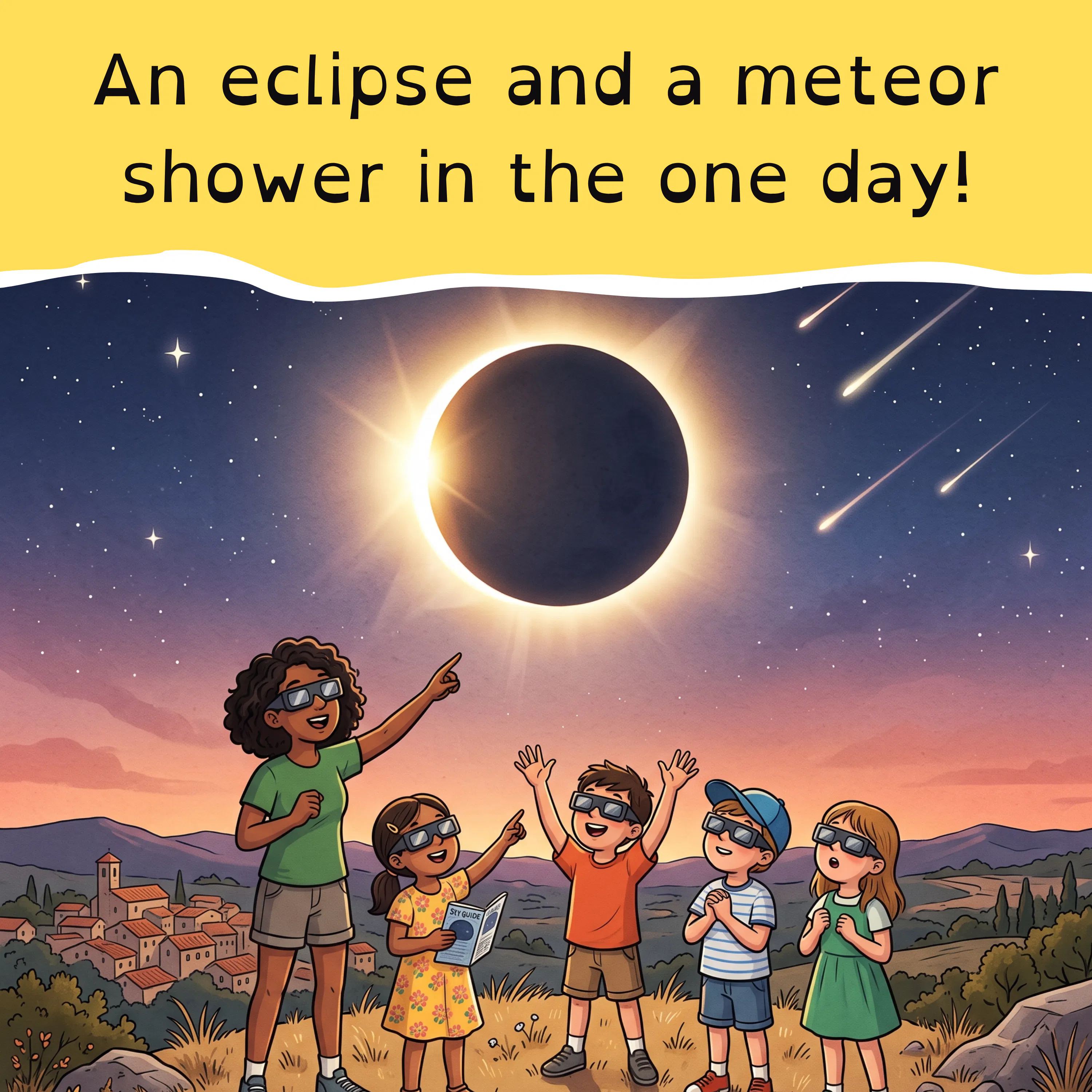
A total eclipse over Europe, and Aussie teens make their mark
5d ago00:11:51Tap to summarizeYour daily kids news podcast. A total eclipse over Europe; Colombia’s earthquake emergency; Aussie teens make their mark; and Brisbane’s underwater light show. The Northern Hemisphere is getting a cosmic double feature! A total solar eclipse will briefly turn day to darkness before the Perseid meteor shower lights up the night. Rescuers and volunteers are working through rubble after Colombia’s strongest earthquake this century. World records, gold medals… and an election campaign! Young Australians Isaac Beacroft, Izobelle Louison-Roe and Hera Sheppard are proving teenagers can achieve seriously big things. Brisbane’s water has been glowing electric blue thanks to teeny-tiny organisms known brilliantly as “sea sparkles”. For the full episode transcript, click here. Researched by Christie Kijurina Hosted by Christie Kijurina
Transcribe →
Andy Griffiths - You and Me and the Gigantic Knucklehead - and a Squiz Kids Q+A
6d ago00:30:56Tap to summarizeSquiz Kids Q+A with kids' author extraordinaire Andy Griffiths. Andy braves the Hot Seat for the fifth time with his new book... You and Me and the Gigantic Knucklehead. From what Andy's favourite snack is when he's writing, to where he gets his funniest ideas, whether there's an idea too gross to put in a book, and whether he's ever laughed so hard that he needed to stop writing.... The Squiz Kids crowd ask all the tough questions, and Andy gives some surprising answers!
Transcribe →
It’s Census time in Oz, and Minecraft comes to Switch 2.
1w ago00:10:14Tap to summarizeYour daily kids news podcast. It’s Census time in Oz; Brazil’s capybara invasion; Mice plague a feast for owls; and Minecraft comes to Switch 2. Australia, prepare to be counted! Census night is rolling around, giving the country a giant snapshot of who lives where and how we live. Move over politicians... there are some new rodents in the house! A pair of curious capybaras wandered into a parliament building in Brazil. Australia’s mouse plague has produced an unexpected winner: barn owls! With millions of mice providing an enormous feathered feast. Grab your pickaxes! Minecraft is heading to the Nintendo Switch 2, with a new version arriving in October. For the full episode transcript, click here. Researched by Bryce Corbett Hosted by Bryce Corbett
Transcribe →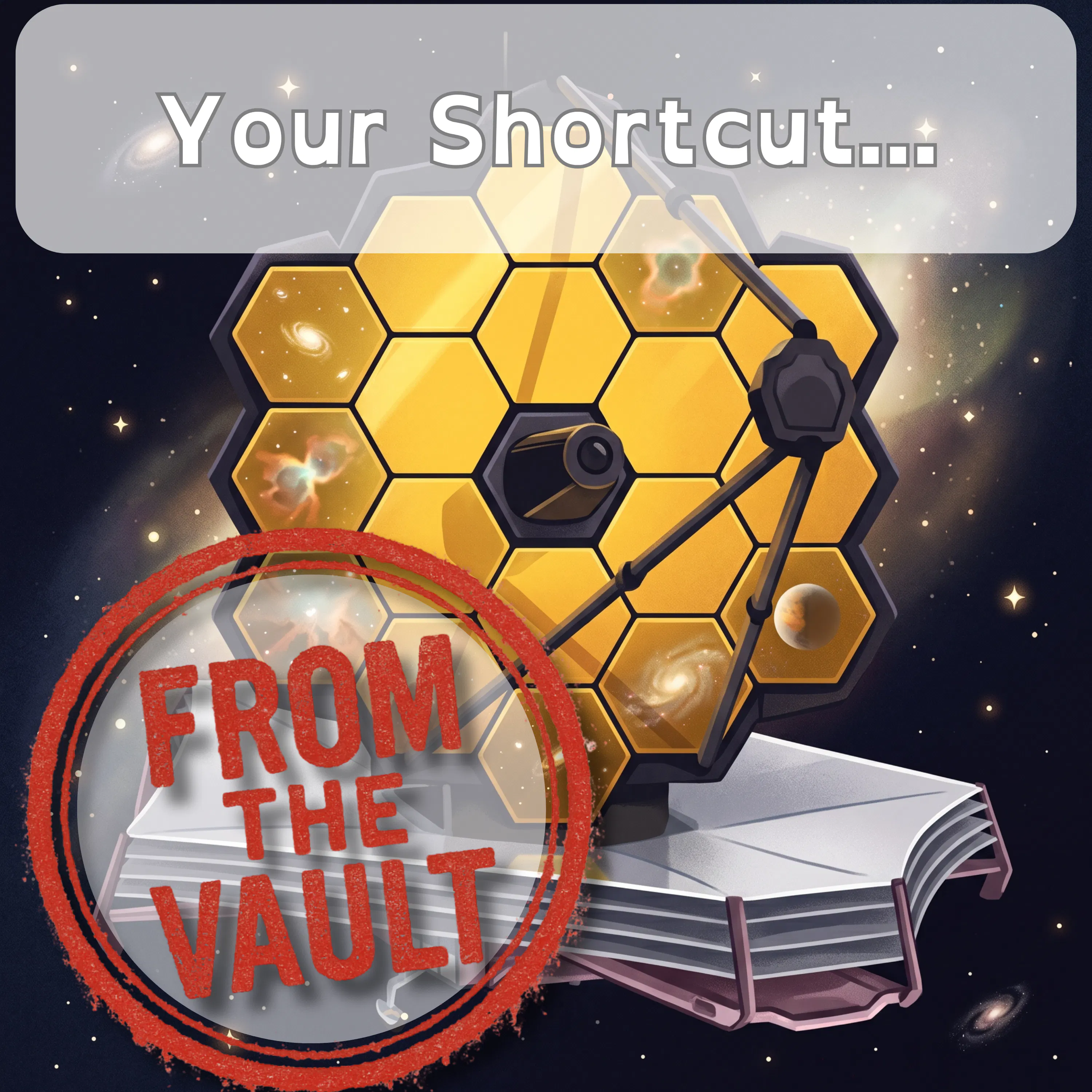
The James Webb Space Telescope... Your Shortcut - From the Vault
1w ago00:13:15Tap to summarizeThe James Webb Space Telescope has been sending back extraordinary images of newborn stars, distant planets and some of the earliest galaxies ever seen. So, this week, we’re blasting open the Squiz Kids Vault and revisiting our Shortcut to the telescope that some people call the Just Wonderful Space Telescope. Join Amanda and Bryce as they discover HOW the JWST works, WHAT its first spectacular images revealed, and WHY scientists believe studying distant galaxies and planets could help us better understand the universe, and our own little corner of it. LINKS: How the James Webb telescope works: https://graphics.reuters.com/SPACE-EXPLORATION/TELESCOPE/klvyknwbrvg/ Image One – SMACS 0723: https://www.nasa.gov/image-feature/goddard/2022/nasa-s-webb-delivers-deepest-infrared-image-of-universe-yet Hubble’s view of SMACS 0723: https://hubblesite.org/contents/news-releases/1996/news-1996-01.html Image Two – WASP 96B: https://www.nasa.gov/image-feature/goddard/2022/nasa-s-webb-reveals-steamy-atmosphere-of-distant-planet-in-detail Image Three – Carina Nebula: https://www.nasa.gov/image-feature/goddard/2022/nasa-s-webb-reveals-cosmic-cliffs-glittering-landscape-of-star-birth Image Four – A dying star: https://www.nasa.gov/image-feature/goddard/2022/nasa-s-webb-captures-dying-star-s-final-performance-in-fine-detail Image Five – Stephan’s Quintet: https://www.nasa.gov/image-feature/goddard/2022/nasa-s-webb-sheds-light-on-galaxy-evolution-black-holes
Transcribe →
Bird Flu Has Reached Australia… Now What? Science Short
1w ago00:13:12Tap to summarizeBird flu has reached Australia, but what exactly is H5N1, how does it spread, and what can families do to be prepared? In this special Science Short, Christie speaks with Dr Tiggy Grillo from Wildlife Health Australia about how bird flu affects birds and other animals, how Australia prepared for its arrival, and what scientists are watching for now. They also explain whether people and pets can catch it, how families can help protect backyard chickens and other animals, and exactly what kids should do if they spot a sick or dead bird. The Emergency Animal Disease Hotline number is 1800 675 888. Birdlife Australia Atlas of Living Australia For the full episode transcript, click here.
Transcribe →
Kids vs Adults Weekly News S'Quiz
1w ago00:08:46Tap to summarizeA fun kids vs adults news quiz to test who’s been paying the most attention to the week in news. For the full episode transcript, click here.
Transcribe →