
Podcast
St. Paul (Peoria) | Pastor Deveraux Hubbard
Hosted by Deveraux Hubbard · EN
At St. Paul, we are committed to living and loving like Jesus! We believe in creating a space where people can have authentic encounters with Christ, discover their gifts and use them for God's glory. Everyone is welcome.
Join us for our Sunday services at 10 AM!
14episodes
Episodes
Newest firstAll episodes
Fighting What's Pulling You
Jul 1200:38:43Tap to summarizeJames draws a sharp line between trials and temptation. God uses pressure to grow us. Temptation tries to pull us away from Him, and confusing the two leaves us misreading both our struggles and our God.In this message:- Why James separates trials (which mature you) from temptation (which pulls you away)- How a distorted view of God produces a distorted way of living- Why changing your environment isn't enough if your heart hasn't changed- What it means to be called a "firstfruit" of God's creation-Why identity has to come before you can withstand temptationThe challenge is simple but not easy: stop blaming your circumstances and take honest ownership of what's actually pulling your heart, then bring it to your Father instead of carrying it alone.
Transcribe →
Tired but Still Trusting
Jul 500:52:00Tap to summarizeJames doesn't let us stay comfortable. He asks whether we're the same person in every room, or whether we're carrying two competing loyalties at once (praying with our mouths while building a backup plan with our hearts).In this message:- Why James calls divided loyalty "double-mindedness" and how it drains us- How to "consider it joy" without denying real pain- The difference between asking God for answers and asking God for wisdom- Why neither poverty nor wealth was ever meant to be our foundation- What it means to rest in God's promise before the trial ends, not just after
Transcribe →
The Bottom Line: What Life Is Really About
Jun 2800:38:05Tap to summarizeWhat do you do when you finally get the thing you've been chasing, and your soul still says there has to be more?In this message:- Why the things we build to give life meaning always leave us asking "what else is there"- What the Teacher means by "fear God" and why it's not what most of us think- How God's seeing differs from surveillance (and why that distinction changes everything)- Why the cross is the place where the Judge absorbed the verdict that belonged to us- What it looks like to finally stop performing and actually live
Transcribe →
A Father's Legacy
Jun 2100:50:42Tap to summarizeProverbs 20:7 makes a quiet but disruptive claim: the most durable thing any of us leaves behind is not what we accomplished. It's how we walked. Not what we intended. Not what we said we valued. The actual direction of our daily life.This message confronts something most of us avoid. We spend enormous energy managing outcomes we can't control while giving very little attention to the one thing we can — the direction of our walk. And direction, not intention, determines destination.
Transcribe →
Remember Your Creator
Jun 1400:43:35Tap to summarizeTranscribe →
Is this All there Is?
Jun 700:39:57Tap to summarizeWhen life feels empty, faith anchors us in what endures.
Transcribe →
Parenting on Purpose
May 3100:47:44Tap to summarizeLong before a child can read Scripture, the world is already shaping how they see themselves, how they handle pain, and what they believe about who they are. Ancient Israel understood something most modern parents have forgotten: the home was always the primary formation institution, not the synagogue, not the school. In this message:- Why the question is never "are they being formed?" but "by what?"- What Proverbs 20:11 reveals about children before any formal moral instruction begins- How consecrating a child is different from controlling their outcome- Why discipline disconnected from the gospel collapses into either permissiveness or anger- How the Father in Luke 15 models what faithful formation actually looks likeBefore you correct this week, watch. Watch how your child plays. Watch what breaks their heart. Ask not who you need them to be, but who God already formed them to be.
Transcribe →
God's Got More in Store for You
May 2400:54:50Tap to summarizeWhat do you do when God has given you everything you wanted -- and it still isn't enough?That's the question sitting at the center of 2 Samuel 12. David was at the peak of his career -- king of Israel, military victories stacking up, a covenant promise from God himself. He had more than most people could imagine. And it still wasn't enough.In this message:- Why God sometimes blesses you with things that are bigger than you can handle on your own- How David's sin followed the same progressive pattern that traps us today -- and why it started at the top, not the bottom- What it means that the same Nathan who delivered God's covenant promise was the one who delivered God's correction- Why God is able to deal with your sin without destroying you- The reserve God holds in store when you think he's given you everything he's gotIf you've ever felt like you've exhausted God's patience -- or like your failures have cancelled out his promises -- this message is for you!
Transcribe →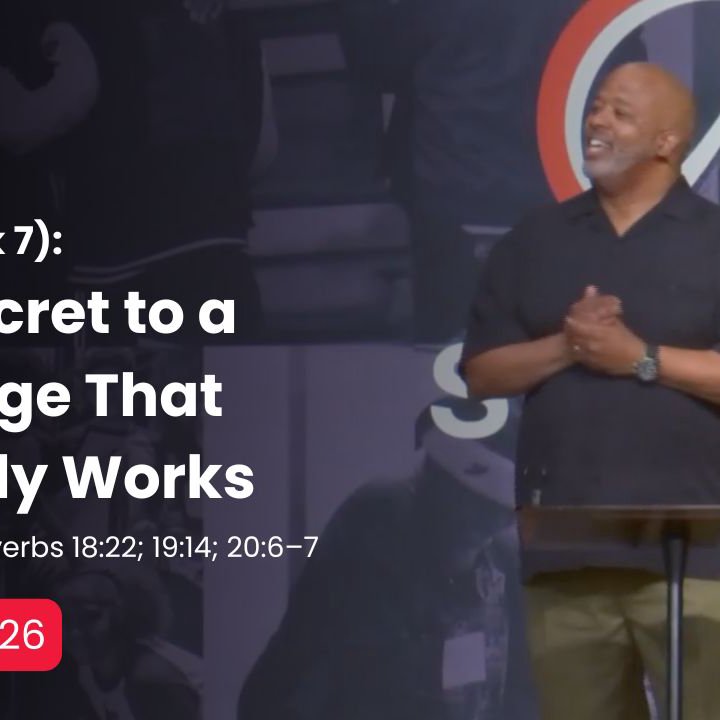
The Secret to a Marriage That Actually Works
May 1700:35:01Tap to summarizeIn this message:- Why going back to "before the curse" in Genesis 2 changes how we see marriage- The difference between living out a covenant versus operating on a contract- What Proverbs 18:22 actually says about finding a spouse (and what it means for how you search)- Why character has to be formed, not just found, and what that looks like practically- How Jesus as the True Bridegroom reframes what the "I do" commitment is really about
Transcribe →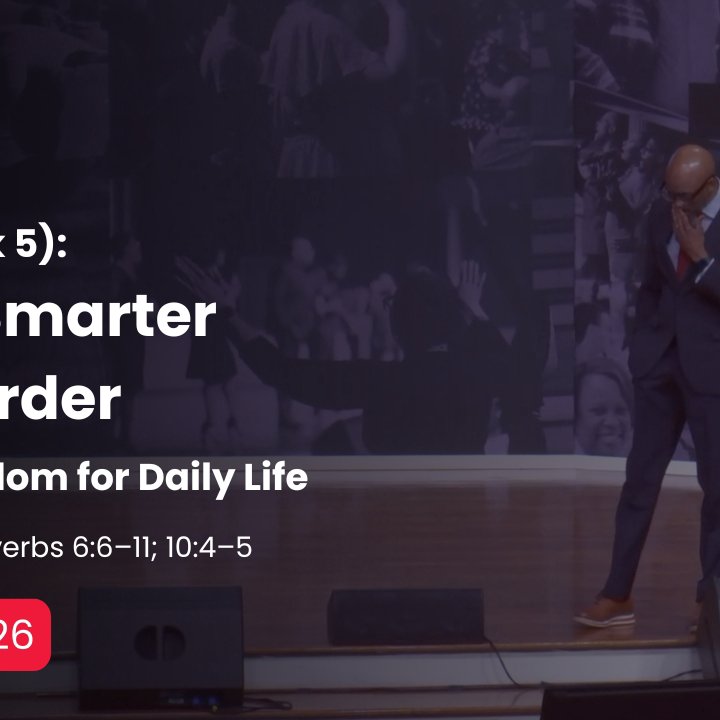
Work Smarter, Not Harder
May 300:34:03Tap to summarizeWhat happens when you do everything right and still feel like it's not enough? Proverbs offers a reframe about how to work and who you are while you're working. In this message:- Why hustle and avoidance are two sides of the same broken question- What Proverbs actually says about work (and what it doesn't)- The difference between working for approval and working from calling- How to build rhythms of rest and diligence that aren't in conflict- What it means to let Christ be your wisdom on the job, in the home, and in the grind
Transcribe →