← Standoff: What Happened at Ruby Ridge?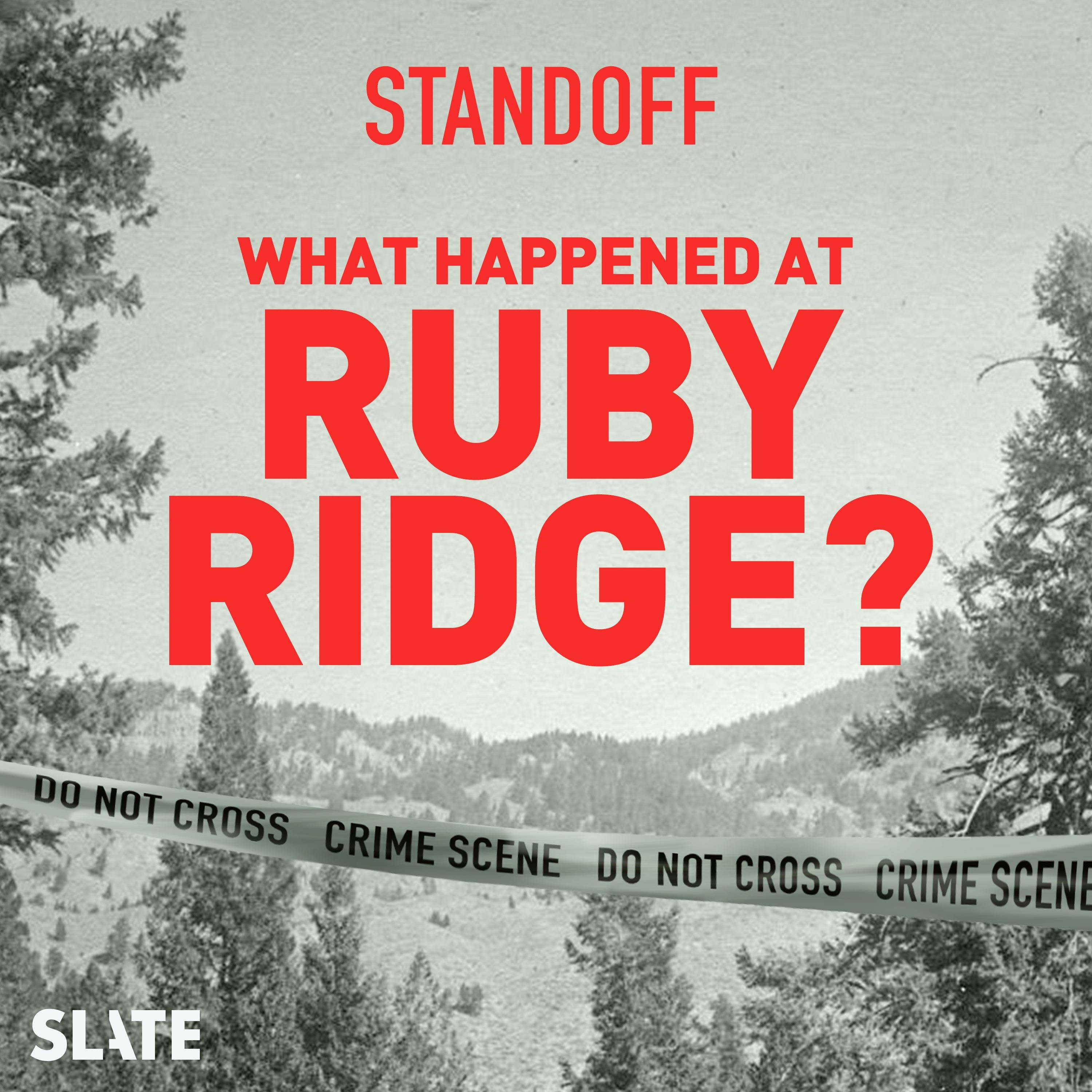
Standoff: What Happened at Ruby Ridge?
2. Rules of Engagement
00:31:45
The tense situation on the Weaver family compound erupts into violence.
Loading summary
Transcript118 lines
- [00:00]
Susan Matthews
Hi, I'm Susan Matthews, Slate's Executive editor. Thanks for joining us for episode two of this season. I hope you're enjoying the story so far. I want to let you know that after this episode, the rest of the season will be available exclusively to Slate plus members. Becoming a member gets you full access to Standoff what Happened at Ruby Ridge plus ad free listening and exclusive bonus episodes from your other favorite Slate podcasts, and it helps support the work we do here at Slate. Stick around to the end of the episode for more about why Slate plus is so essential, how you can join, and what you will get when you do.
- [00:40]
Narrator / Host
Tony Brown liked Randy Weaver from the moment they first met when you meet
- [00:45]
Tony Brown
somebody in a small community, you're either your friend or you're the enemy. So what would be your choice?
- [00:52]
Narrator / Host
That's his wife Jackie, laughing in the background. The Weavers and the Browns were good friends and neighbors before, during and after the standoff. Tony and Jackie also wrote and self published a book about Ruby Ridge and the Weavers.
- [01:07]
Tony Brown
There really wasn't anything particularly that stood out about him other than they had really strong beliefs and they stood together as a family. And they of course, were anti government, which is common up here.
- [01:23]
Narrator / Host
The Weavers Trouble began in the summer of 1990 when agents from the Bureau of Alcohol, Tobacco and Firearms pushed Randy to become an informant. He refused, and they indicted him for selling illegal shotguns. You heard about that in our last episode. According to the Browns book, this was already an anxious time for Randy and Vicki Weaver. The United States and its allies were mobilizing for the first Gulf War, which Vicki and Randy took as a sign that Armageddon was imminent. And when the ATF roped Randy into selling guns to an informant, the Weavers and their friends saw a nefarious agenda at work.
- [02:00]
Tony Brown
This was part of a government program to wipe out a religion, a white supremacist religion or white separatist religion.
- [02:11]
Narrator / Host
The Weavers decided they would stay on the mountain and refused to submit to authorities. In February of 1991, Vicki sent two letters to the U.S. attorney's office making it clear the family wasn't going to cooperate. In the first, she quoted a statement from the Order, the white supremacist group that had terrorized the northwest in 1984 war is upon the land, the tyrant's blood will flow. In the second, Vicki wrote, whether we live or whether we die, we will not bow to your evil commandments.
- [02:47]
Tony Brown
They believed in themselves. They believed in people that they thought would stand up for what was right and wrong.
- [02:55]
Narrator / Host
I wanted to talk to Tony and Jackie to get a sense of what the Weavers were thinking when they made their stand against the government. The Browns were willing to talk, but they sent me an email setting some ground rules. I had to direct all my questions toward Tony. Jackie Wood answer where necessary. At first, Tony did all the talking, but I could sometimes hear Jackie prompting him in the background.
- [03:17]
Tony Brown
You know, Aryan beliefs or white separatist beliefs or even white supremacist beliefs. Whatever you want to call them, they're guaranteed by the Constitution.
- [03:26]
Jackie Brown
It's like black power.
- [03:27]
Tony Brown
And it's just like black power or anything else. You can call it whatever you want.
- [03:33]
Narrator / Host
In the end, the weavers spent 18 months holed up in their cabin, hiding from the law. Jackie was one of the friends who brought them food and supplies. That became especially important when Randy and Vicki got a surprise. Vicki was pregnant at age 41. In October of 1991. She gave birth to her fourth child, a daughter she named Elisheba, meaning God is my oath. The fact that the family was in a kind of self imposed house arrest didn't change their baby plans much.
- [04:02]
Jackie Brown
I'm pretty sure it would have been a home birth anyway. Have you ever been into a hospital?
- [04:06]
Tony Brown
Definitely, definitely, definitely.
- [04:08]
Jackie Brown
You know, they didn't treat.
- [04:10]
Narrator / Host
No. To Tony and Jackie Brown, the idea that the Weaver family was a threat to anyone was ludicrous.
- [04:17]
Jackie Brown
Neither one of them had a criminal history of any kind. To the best of my knowledge, neither one of them ever even had a speeding ticket.
- [04:26]
Narrator / Host
But that's not how it looked from the outside. From Slate podcasts, this is standoff. I'm your host, Ruth Grah. On this episode, the shootout. When Randy Weaver didn't show up for his court date, a judge issued a bench Warrant and the U.S. marshal Service took on the job of bringing him in. This is Mike Johnson.
- [05:02]
Mike Johnson
I was the U.S. marshal for the District of Idaho from 1990 to 1994.
- [05:09]
Narrator / Host
In the spring of 1992, the Weavers were still holed up on their property. Randy, Vicki, their three older children, and now an infant, too. Johnson and other U.S. marshals suspected Randy was still leaving the cabin occasionally to run into town. They had written him letters trying to persuade him to surrender, but the replies that came off the mountain were not encouraging. My husband was set up for a fall, vicki wrote at one point. There's nothing to discuss.
- [05:38]
Mike Johnson
This went on for over a year. And again, the rhetoric that came back was pretty obvious. This was not going to happen like a normal case would.
- [05:50]
Narrator / Host
If Tony and Jackie Brown saw Randy as a simple family man oppressed by the violent arm of the law. The law saw something else. A paranoid guy who was proving himself impossible to reason with.
- [06:03]
Mike Johnson
The bottom line was, what do you want? If you don't want to surrender to the US Marshals, you can surrender to the county sheriff, the police chief, the postal inspector. You can surrender to whoever you want. The federal government is not going to take your house. The federal government is not going to arrest your kids. It's you that we need to arrest and so you can show up to court. And the information back came back as, stay off my mountain.
- [06:36]
Narrator / Host
What they didn't see was a significant threat.
- [06:39]
Ron Hoen
He wasn't a player.
- [06:40]
Narrator / Host
That's Ron Hoen, who was an assistant U.S. attorney in Boise in 1992.
- [06:45]
Ron Hoen
No one saw him as anything that was important. Just another, you know, one of these guys who spouts white supremacy. Kill the Jews, kill the killed. You know, you name it. That's everything that came out his mouth all the time.
- [07:00]
Narrator / Host
Hoen had aggressively prosecuted white supremacist criminals, including members of the Order. He said his office and the marshals went to great lengths to woo Randy off the mountain or to get him alone so they could arrest him without incident. At one point, they cooked up a plan to buy a parcel of land north of the Weaver property with deputy marshals posing as a husband and wife who would be Randy's new neighbors.
- [07:23]
Ron Hoen
And this guy was going to drive up and down the hill through Randy's place, get to know him. The plan was that at some point, Randy would probably agree to go up and help him with the work, and that they would get him in a car with the marshal, drive him up to that cabin, and then there would be an arrest team in the woods hiding there, take him down, get him arrested and off the hill.
- [07:47]
Narrator / Host
The obvious question is, why didn't Randy Weaver just come down from the mountain? But it's also worth asking, couldn't the government just walk away? Remember, Randy's only crime so far was to sell two illegal guns after a federal informant baited him into it. Johnson says, that's just not how it works.
- [08:07]
Mike Johnson
I don't have, as the US Marshal then the luxury of saying, well, I don't think it's that big of a case, so we'll put it on the back burner. In fact, when I run into the judge in the elevator sometimes, he'd say, where are you going on that case? Was that every day? No, maybe once every three or four months. I said, we're Working on it.
- [08:29]
Narrator / Host
Ron Hohen says he missed something important about how the Weaver household operated.
- [08:34]
Ron Hoen
I was starting to learn more and more about Vicki Weaver's influence and dominance of the family. And again, I wish I'd have known that long before, I guess, law enforcement. Perhaps we could have taken a different tack if we'd have really known that.
- [08:49]
Narrator / Host
Hoen came to see Vicki Weaver as the real driver of the family's apocalyptic doctrine. Tony Brown agreed.
- [08:56]
Tony Brown
Weaver was kind of a basic guy, you know, he liked to, you know, have a beer, drink a cigarette, talk, go do something, play ball. You know, just. He wasn't as convicted and as convinced as Vicki was.
- [09:13]
Narrator / Host
At one point, Randy and Vicki invited a local news reporter into their cabin and sat for an interview. They told him Randy wanted to give himself up for the sake of the family, but that Vicki insisted he stand firm.
- [09:25]
Ron Hoen
They were a couple, but she wore the pants in the family. She made the decision. Randy had wanted to surrender, but she said, no. This is going to fulfill the prophecy, and there's going to be the shoot off at the top of the mountain, and, you know, the feds will be killed, and the second coming of Christ will happen, and this is how this is all going to transpire.
- [09:46]
Narrator / Host
Owen found Vicki's involvement particularly incomprehensible because she was a mother.
- [09:53]
Ron Hoen
I've talked to a lot of women about that, and just why would a mother put her children in that kind of danger? And the recoil from that, from virtually every mother is, I would never do that to my children. Why do that? That's one of the unanswered questions I have.
- [10:13]
Narrator / Host
Jackie Brown was close with Vicki. She says Vicki wasn't the domineering battle axe she's often been portrayed as. She was a warm and loving mother, but also a loyal wife, in my
- [10:26]
Jackie Brown
view, the federal government. What they did was they picked a target, which was Randy, and by picking Randy, they picked Dickie. Because they were a married couple. And I don't know that folks think that way anymore, but my husband and I do, and they most certainly did. That means they're a unit. They're one. Attack one, you attack both.
- [10:54]
Narrator / Host
The wary stalemate between the Weavers and the authorities went on for a little more than a year. Things began to change when Bill Moreland started looking into it.
- [11:04]
Bill Moreland
As a reporter, you know, you pay attention to your sources. So I get wind of all this, and, you know, I could just see trouble in the making.
- [11:11]
Narrator / Host
We heard from Bill Moreland in episode one when he covered the Aryan World Congress. Now he was Interested in Randy Weaver.
- [11:19]
Bill Moreland
I started talking to federal law enforcement sources and I got this kind of goofy grins from them, like, guess what? The guy didn't show up. And we got a problem on our hands.
- [11:31]
Narrator / Host
Moreland made the two hour trip from Spokane to Naples to report on this unusual outlaw.
- [11:36]
Bill Moreland
And there was also a sentiment pretty pervasive in the community. And it's like, okay, who cares about the guy? So he sawed off some shotguns. So what? Let's just leave him alone. And, you know, why don't we just ignore him and maybe this will all just go away.
- [11:50]
Narrator / Host
Case in point, a conversation Moreland says he had with a local sheriff.
- [11:55]
Bill Moreland
He was suggesting, you know, why do you care about him? Why don't we just ignore him? He's up there, he's not hurting anybody. He's minding his own business. And I explained to the sheriff, I said, you know, Sheriff, just a few years earlier, In May of 1985 in Philadelphia, there was a group of African Americans, some of whom were named in warrants. Law enforcement there didn't decide to leave those folks alone.
- [12:19]
Narrator / Host
He's referencing the police shootout and bombing of move, a black liberation group. An urban war in Philadelphia. Scores of homes were destroyed by fire
- [12:28]
Mike Johnson
when police dropped a bomb on a heavily fortified house occupied by a radical group.
- [12:33]
Bill Moreland
At least they moved in on them and actually started an entire city block on fire, killing 11 people, including five children, in an attempt to force the
- [12:43]
Narrator / Host
organization called Move From One House.
- [12:46]
Larry Cooper
60 homes were burned.
- [12:49]
Bill Moreland
So I told the sheriff, I said, why should a white supremacist on a mountaintop in North Idaho be any different than African Americans in a tenement in Philadelphia? We're all equal under the law. And, and if you're accused of breaking the law, you should have your day in court. You should be presumed innocent, but you should go face justice and accept the consequences. And the sheriff thought about that, tipped his head and kind of shrugged his shoulders.
- [13:16]
Narrator / Host
In March of 1992, Moreland wrote a front page story for the Spokane Spokesman Review about Randy's refusal to come down from the mountain.
- [13:24]
Bill Moreland
The headline said, feds have Fugitive under our nose.
- [13:29]
Narrator / Host
In the article, he described how two Boise based marshals had been on the case for more than a year, gathering information on Randy's family and strategizing about how to get him down. Moreland's story got national attention. Soon media outlets were flying helicopters over the cabin. The Weavers had no way to know it was the press and not the government circling above, though maybe it didn't matter because the family didn't trust either one.
- [13:55]
Jess Walter
So it was getting a little bit of attention. I don't know if any of that forced the marshal's hands. But as August of 1992 approached, there was more pressure on the Marshal Service to try to bring this fugitive in.
- [14:14]
Narrator / Host
That's writer Jess Walter, who we heard from in episode one. In the months after Bill Moreland's story, the Marshall Service started keeping a closer eye on the Weavers property. They called it Operation Northern Exposure. Mike Johnson, the U.S. marshal for Idaho.
- [14:29]
Mike Johnson
One of the things that was concerned is now we were getting into August and then pretty soon as September and then as October, deer and elk season. What happens if some hunter is in that area and Randy Weaver thinks it's a federal agent and shoots him?
- [14:49]
Narrator / Host
The marshals brought in an elite team known as the Special Operations Group that was trained for high risk situations. They set up a solar powered camera system around the Weaver property that cost more than $100,000. What they found was that the family was pretty much always armed. Surveying hours of video footage, the marshals tabulated how often each member of the family was seen carrying a weapon. 14 year old Sammy Weaver had a gun 84% of the time. He was also spotted wearing a Nazi armband. They even commissioned a profile of the Weavers from a psychologist who lived in Texas and had never met them. He warned the family will fight, possibly to the death. The situation erupted into violence On August 21, 1992, at 4:30 in the morning, six U.S. marshals arrived just below the Weaver property. They split into two teams of three to scope out the cabin. The idea was to observe the family's movements so they could figure out how to get Randy on his own and eventually make a peaceful arrest. The Marshalls explored the woods below the Weaver cabin which included a rough logging road. The temperature had been in the 90s for more than a week. The teams finished their work by late morning, apparently undetected. But as they were heading back to their cars, one of the family dogs, a yellow lab named Stryker, seemed to catch a scent. He tore off in the direction of one of the Marshall teams. Randy, his son Sammy and their friend Kevin Harris followed Stryker. The body cameras the marshals were wearing captured the sound of his barking. Kevin was carrying a heavy hunting rifle and Sammy had a rifle and a handgun. The three marshals ran down the hill, staying hidden in the woods. Then they hit a clearing. They were exposed and Randy, Sammy and Kevin followed the dog downhill after them. There was an exchange of gunfire. Marshal William Deegan was killed. So was 14 year old Sammy Weaver. There's a dispute about who died first and who fired the fatal bullets. The marshals say Kevin Harris opened fire and killed Bill Deegan, a 42 year old father of two.
- [17:17]
Larry Cooper
The events I will describe next are etched in my mind and I am certain of what I saw.
- [17:24]
Narrator / Host
Larry Cooper was one of the marshals at the shootout. He described it later at the Senate hearings on Ruby Ridge.
- [17:30]
Larry Cooper
Deputy Deegan called out, Stop, U.S. marshals. As I heard Deputy Degan begin to announce, I joined in. But before I finished my words, Kevin Harris turned, fired from the hip and shot Deputy Deegan. I have a clear mental picture of Kevin Harris firing that first shot. There is no other aspect of this tragedy about which I am more certain.
- [17:58]
Narrator / Host
Cooper was a good friend of Degan's and and he ran to Deegan's side after seeing him go down.
- [18:05]
Larry Cooper
When I reached Deputy Deegan, he was laying on his side, his arm in the sling of his rifle. He was conscious, but he did not respond to me. I tried unsuccessfully to locate the entry wound in order to stop or slow the bleeding. However, within moments, I sensed that I was losing him. I reached for the artery on his neck to feel for a pulse and his pulse stopped beating under my fingertips. I knew he was gone.
- [18:42]
Narrator / Host
In response to Harris shooting Deacon, the surviving marshals say another marshal opened fire and hit Sammy Weaver. They're not sure who it was,
- [18:54]
Larry Cooper
so
- [18:54]
Narrator / Host
that's the way the marshals describe it. Here's the Weaver's version. They say one of the marshals shot the dog first and then Sammy screamed, you killed my dog, you son of a bitch. They say he opened fire but didn't hit anyone and then turned and ran back toward the cabin when one of the marshals shot him. They say Kevin then fired at the marshals in retaliation or in self defense. And maybe he hit Bill Deegan or maybe Deacon was killed by friendly fire. Here's how Randy Weaver told the story a few years later.
- [19:27]
Larry Cooper
On August 21, 1992, federal marshals shot my son Samuel in the back and killed him. He was running home to me. His last words were, I'm coming, dad. They shot his little arm almost off. And they killed him by shooting him in the back with a 9 millimeter submachine gun. The gun had a silencer on it. He was not wanted for any crime. He did not commit any crime. The marshals killed his dog right at his feet. He only tried to defend himself and his dog. Sam was just 14 years old.
- [20:07]
Narrator / Host
Bill Deegan's widow came to Washington for the Senate hearings. She didn't want to appear in front of the subcommittee herself, but she wrote a statement that was read by Senator Arlen Specter.
- [20:19]
Ron Hoen
The night before Bill left. We went to a party for my sister in law's birthday while we danced to the last Low song. And he told me, whatever might happen in Idaho, just remember how much I love you. And I, of course, do remember today. Those words are strangely comforting. At the time, you can imagine they were very unsettling. And unfortunately, of course, they proved to be prophetic. I remember saying something like, come on, you're talking like someone's going to get killed out there. He responded, no one's going to get killed. That's why we're going. But this is probably the most dangerous guy I've ever never had to deal with.
- [21:08]
Narrator / Host
We sent Randy Weaver a letter asking to talk with him and asked one of his former lawyers to put us in touch. But we never heard back. His daughters didn't want to talk either. But just this year, Randy gave an interview to a conservative news site in Montana. You can find the video on YouTube. It's an amateur production filmed with a handheld camera in a restaurant. Randy is sitting in a booth between two guys who act like fanboys. He's 70, but he's gaunt and small. And he answers their questions in a hollow voice that's often hard to make out. Three minutes in, Randy says this about Bill Deegan.
- [21:46]
Larry Cooper
He at the time was the highest decorated marshal in U.S. marshall history. Which I thought was kind of cool.
- [21:53]
Mike Johnson
Got that sucker.
- [21:59]
Narrator / Host
The moment Deputy Marshal Bill Deegan was killed, the nature of the situation changed. A federal deputy marshal was shot to
- [22:06]
Larry Cooper
death near a few police officers.
- [22:07]
Narrator / Host
And federal agents have taken up positions around a remote cabin near Naples, Idaho.
- [22:12]
Larry Cooper
Never before has North Idaho witnessed this
- [22:15]
Narrator / Host
kind of firepower from the federal government.
- [22:17]
Larry Cooper
And it's all because of Randy Weaver.
- [22:19]
Narrator / Host
Weaver is because Degan was a federal agent. The FBI now had jurisdiction over the scene. Members of the Bureau's hostage rescue team arrived the next morning.
- [22:28]
Jackie Brown
Jackie Brown to call them Hostage Rescue team is offensive to my very senses. They were an assassination team. You would have to have an IQ of 5 not to understand that.
- [22:45]
Narrator / Host
The Marshals Service may have been working with partial information on the Weaver family. But at least they'd been working the case for more than a year. The FBI came in blind, and it's crazy how much bad information they were working with. Law enforcement agencies thought Randy Weaver had experience in Vietnam. Wrong. They thought the family had booby trapped the property. Or that they had armed allies ready to fight alongside them both. Wrong. The ATF claimed at one point that Randy was a suspect in multiple bank robberies. Wrong. They thought he might be growing marijuana. Wrong. The shooting gave rise to new rumors that Randy and Kevin Harris had fired on the marshals from the cabin using automatic weapons, that the family had rigged their property with explosives, that Randy and his family had the remaining marshals pinned down and refused to let them flee. All of the bad information pointed in one direction that Randy Weaver was a very dangerous man. On the flight from Washington, D.C. the head of the FBI's Hostage Rescue Team decided desperate times called for desperate measures.
- [23:55]
Jess Walter
And this is when some rules of engagement are crafted which are will become one of the most controversial and indefensible parts of this case from the federal side.
- [24:07]
Narrator / Host
Certainly rules of engagement are internal guidelines that agencies use to define what kind of force can be employed under what circumstances. Standard procedure calls for deadly force to be used only in self defense or defense of others. The FBI's new rules, drafted on the plane and revised several more times on the scene, were unusually aggressive. The final draft read, if any adult male is observed with a weapon, deadly force can and should be employed. If a shot can be taken without endangering the children. In other words, if you see an armed man, shoot to kill.
- [24:46]
Jess Walter
This would change things in a way that would be tragic because obviously the Weavers are always armed.
- [24:53]
Narrator / Host
As the FBI descended on northern Idaho, the Weavers retrieved Sammy's body and moved it to a shed. That night, the survivors huddled together in grief and terror.
- [25:04]
Jess Walter
They wail and cry and believe that they're going to die. They hear helicopters and they hear trucks in the woods. And they believe that, you know, that they are under attack and that by morning, you know, they might come and finish them all off.
- [25:24]
Narrator / Host
The next evening, a team of 11 camouflaged FBI snipers from the hostage rescue team quietly surrounded the Cab. Just before 6, Randy and Kevin dashed outside to check the grounds and grab some batteries. Sarah Weaver, the family's oldest daughter, was outside too. Randy paused near the shed where Sammy's body was. He said he wanted to look at his son again. A helicopter buzzed overhead. Then a shot rang out. A sniper named Lon Horiuchi had fired.
- [25:57]
Larry Cooper
Bow, I got hit. I got a few feet off, away from the shed. And Vicki comes out front. She's holding the baby out there by the rock. And she says, what happened? I said, I've been shot. And she passed up in the hills.
- [26:09]
Narrator / Host
Randy and Kevin ran Back toward the house. Here's Randy in an interview.
- [26:15]
Larry Cooper
And she ran back on the porch and opened the door and was holding the door. And she said, get in the house. Get in the house.
- [26:23]
Narrator / Host
When they were almost inside, Horiuchi shot again. This time, the bullet hit Vicki, who had been standing in the doorway, baby Elisheba in her arms. She died almost instantly. Kevin and Randy later described the moment Vicki died to Tom Brokaw.
- [26:42]
Larry Cooper
It hit her and then hit me.
- [26:44]
Jess Walter
Did you think you were going to die right then?
- [26:46]
Larry Cooper
Yeah. And I turned around, and my wife was down on her knees with her head on the floor just inside the door with the baby in underneath her like this. Randy reached down and picked her up, and the baby had blood splattered in
- [27:00]
Narrator / Host
her, in her hair. There's a picture of Vicki Weaver that was taken by the Marshals Service surveillance camera the day before she died. It's a little grainy. Vicki's outside in a white nightgown, head down, her long hair falling forward, with her arms clutched close to her body. It's the COVID image for this podcast. When I see this picture, I sometimes think of a phase Vicki went through in Iowa, where she purged the house of all photographs in obedience to her interpretation of Scripture. Later, she loosened up about photography, but the last picture of her was taken by the government she hated. Lon Horiuchi later told investigators he mistook Randy for Kevin and thought Kevin was preparing to shoot at the helicopter. He also said he wasn't even following the revised rules of engagement. What he knew and what he was thinking would be debated in hearings and courtrooms for years to come.
- [28:04]
Jess Walter
Best case scenario, Lon Horuchi, who could hit a dime with his rifle from 100 meters, took two shots and in both cases, didn't know what he was shooting at and missed.
- [28:17]
Narrator / Host
What should have been a straightforward case had gone horribly wrong.
- [28:22]
Mike Johnson
You know, of all the effort that we did for over a year, and then we lost a deputy marshal, a husband, and a father just doing his job. It's just. Still to this day, I shake my head of why this had to happen. If Randy Weaver just would have showed up to court, William Deegan would be alive today and be retired, and Randy Weaver's son would be alive and his wife would be alive. But he chose to not do that.
- [29:02]
Narrator / Host
Everyone involved in what happened at Ruby Ridge knows there are countless ways it could have gone otherwise. The ATF could have chosen not to sting Randy on the gun sale. Randy could have chosen to show up in court. Bill Moreland could have chosen a different lead to follow and never learned about the guy who wouldn't come down from the mountain. The U.S. attorney could have chosen to drop the case. The marshals could have chosen to stay away from Randy's property. The FBI could have chosen not to change the rules of engagement. And with his family torn apart, Randy Weaver had another choice to make.
- [29:36]
Mike Johnson
Did it ever occur to you your
- [29:37]
Larry Cooper
wife is dead, your son is dead, your great friend Kevin is gravely wounded
- [29:43]
Narrator / Host
to walk out of the cabin, throw
- [29:44]
Larry Cooper
your arms in the air and say, no way.
- [29:46]
Mike Johnson
I surrender?
- [29:47]
Larry Cooper
No way.
- [29:47]
Ron Hoen
Why not?
- [29:48]
Larry Cooper
They'd have shot me.
- [29:56]
Narrator / Host
On the next episode of Standoff, Randy Weaver stays on the mountain while an angry crowd of supporters gathers to defend him and protest the federal government.
- [30:07]
Larry Cooper
He's a baby killer.
- [30:09]
Bill Moreland
I specifically remember skinhead yelling, this is war. This is war.
- [30:19]
Susan Matthews
Hi again, Susan here. I hope you're finding this story as compelling as we did. I've worked at Slate for nine years, and I now serve as executive editor of the magazine. I also hosted Slow Burn, Roe v. Wade, which was the most thorough and thoughtful journalism I've ever done. At Slate, we're dedicated to deeply researched narrative podcasts, tracking down the people who lived through history, uncovering archival material, and telling these stories in ways that help us better understand our present. That work isn't easy or cheap, which is why we depend on Slate plus members to make it happen. If you want to hear the rest of this season and support what we do, now's the perfect time to join Slate Plus. You can join directly within Apple Podcasts or Spotify, or visit slate.com standoffplus to get access wherever you listen. Thanks so much for listening and for considering becoming a member.
- [31:19]
Narrator / Host
Standoff is produced by me and Nina Ernest, with production help from Andrew Parsons. Slate's editorial director for audio is Gabriel Roth. Thanks this week to Chow Tu, Greg Sprungle, Jess Walter, and Emily Gaddock.