Loading summary
Transcript159 lines
- [00:00]
Matt Weiner
Foreign.
- [00:04]
Santi Ruiz
I'm Santi Ruiz and this is Statecraft. We interview top political appointees and civil servants about how they achieved a specific policy goal. You can find the transcript for this conversation and many others at www.statecraft.pub. today we're talking about the LA wildfires. My guest is a guy named Matt Weiner. He's the CEO and founder of a group called Megafire Action. It's an advocacy group that thinks the megafire crisis is solvable. We talked about a lot here, from California's topography to the state insurance market, to the difference between good fire and bad fire. We argued a bit about funding, as you'll see, but we shared some deep agreement about the bureaucratic reasons. It's hard to do fire mitigation. Matt grew up in LA and is an LA native. He's also spent a lot of time working on the politics of wildfire management. He was the former Executive Director of the California Democratic Congressional delegation. So he advised 46 members of Congress, all the Democrats from California, on all kinds of California specific policy matters, including wildfire. I learned a lot from this conversation and I hope you do too. Matt Weiner, thank you for joining.
- [01:12]
Matt Weiner
Thank you. Thank you for having me here.
- [01:14]
Santi Ruiz
Before we start talking about the policy side of the fires, I just want to say, you're from Los Angeles. I'm very sorry. How is the, how have the fires affected you?
- [01:24]
Matt Weiner
You know, we're okay, thankfully. I grew up in Topanga Canyon, so we grew up with deep familiarity with fire and we're, we're used to it. I was in D.C. actually, meeting with some senators talking about wildfire policy when the fires broke out. And so I flew home to help my parents evacuate from their home in Topanga Canyon. Fortunately, they're fine and they know the drill by now. They just leave as soon as, as soon as they see something burning towards Topanga Canyon, they know it's not worth it to stick around.
- [01:53]
Santi Ruiz
I'm assuming that you got into fire policy in part because you grew up around, around this kind of stuff, right?
- [02:00]
Matt Weiner
I did, yeah. So I grew up around fire and then worked in politics. I mean, I've early remember early memories of packing up and leaving during the 93 Malibu fires that burned through Topanga. And I was familiar with a certain type of fire in that region. Fast forward to 2018. I was the chief of staff to a state senator who represented the area that was burned by the Woolsey Fire. And what we saw there was a fire that burned through the Santa Monica Mountains. In a way, we'd never seen before. And I had a chance to see firsthand how all the systems that we built to deal with fire were being completely overwhelmed, even in a place that is particularly prepared for it compared to other parts of the world in the country. So I would say that got me on a journey of focusing on this from a policy lens much more.
- [02:46]
Santi Ruiz
One thing I've noticed in following the most recent LA fires and the response to them is you get a bit of a. Of a acronym SALAD or an acronym SOUP with the different organizations involved. So before we get any further, can you break down for me the different, or the different organizations involved in firefighting in Southern California? Who. What are the players?
- [03:08]
Matt Weiner
There are many. I mean, so when we look at Los Angeles itself, you've got Los Angeles Fire Department, you've got LA County Fire Department, you have Cal Fire, which is the state fire department that is probably the best wildland firefighting force in the world. And then you've got other national players like the National Park Service, the U.S. forest Service and others who have a role to play in managing fire on their lands.
- [03:33]
Santi Ruiz
Tell me a little bit more about Cal Fire. My understanding is they're. They're trained on wildfires to an extent that folks like, you know, a municipal fire department is not. Is that right?
- [03:44]
Matt Weiner
Yes. I mean, that is their main area of expertise. That is their main mission. Cal Fire is a robust, almost military, like, wildfire fighting force. They also are responsible for a lot of the mitigation work that happens on state lands in California, and they do a lot of great work in that space too. They have deep expertise on landscape management and forestry as well. But what they're mostly known for is, is being the best out there when it comes to suppression.
- [04:09]
Santi Ruiz
And is that model of like a state fire organization common in other Western states?
- [04:16]
Matt Weiner
It. It is, but no one has the resources that Cal Fire has, both just because of the resources in California and the unique risk that we face in the wildland urban interface in California. Nobody has quite the same resources, and there are a lot of states that have very little in the West.
- [04:33]
Santi Ruiz
Got it. Will you break down for me before we get into forest management, which. Which you mentioned a moment ago. So Cal Fire does a lot of that in California. Who else does that?
- [04:44]
Matt Weiner
The landscape management.
- [04:45]
Santi Ruiz
Yeah, sorry, Landscape management.
- [04:47]
Matt Weiner
So. So the California Natural Resources Department. The counties in a lot of cases are responsible for work on their lands. And you'll also get indigenous tribes who do a lot of work in this space, as well as private landowners. There's a lot of nonprofits that do a lot of work on different landscapes. Others like water, water agencies and others who have to mitigate risk in their watersheds and the like.
- [05:10]
Santi Ruiz
Okay, moving to the fires of the last few weeks, how do you. At a very high level, how do you understand what happened here? Just describe your perspective on what went down.
- [05:21]
Matt Weiner
I think just taking a step back to the previous conversation, I'll just say when we talk about wildfire, we largely talk about two types of fire. So we talk about these large landscape driven fires that we tend to see up north in California and elsewhere in the west, but also in parts of southern California as well. And then there's these other fires, these wildland urban interface fires that usually start in the wildland. But then once they start, once they get to structures, it's a structure to structure fire. And it's really important because that distinction, it causes different problems and requires different solution sets. When I look at the fires in Los Angeles, I look at an urban conflagration more than a traditional wildland fire, A structure to structure fire that we knew places like the Palisades and Altadena were at very high risk for. And we have known that for a long time. But even then, it's really hard to fathom the scale of destruction. I've walked through countless fire zones over the years, over my whole life, and I've never seen anything like what I saw when I walked through those areas.
- [06:22]
Santi Ruiz
Really?
- [06:23]
Matt Weiner
Yeah.
- [06:24]
Santi Ruiz
In terms of the scale or the.
- [06:27]
Matt Weiner
Scale of destruction, you can know the risk is there. Right. But it's still hard to fathom what looks like a war zone. I mean, it feels like pictures I've seen of Groznia in parts of these areas. And that structure to structure fire, once it's hot and in those kind of conditions, it. It goes through everything in a way that doesn't make sense to a lot of people who study the built environment and think about what is more likely to burn and what's not. Right. You'll go down the street and see a big concrete building with defensible space that you would have thought would have survived, and it looks completely bombed out. Then you go a couple doors down and a wooden house covered in shrubs somehow has been totally untouched. So the randomness of that is wild, but also just the sheer destruction, despite what mitigation efforts have been put in place in some cases.
- [07:13]
Santi Ruiz
Yeah. To your point about the scale of destruction, when I took my notes a week ago, the burned area was two and a half times the size of Manhattan. I believe it's more now, but just like a remarkable fire. And if I have it correct here, I think six of the seven most destructive fires in California in the last hundred years have happened in the last six or seven years. Do I have that right too?
- [07:35]
Matt Weiner
I believe that's right. Also, the 20 largest fires in California history have all happened in the last 20 years.
- [07:43]
Santi Ruiz
What's that about? Explain that for me.
- [07:45]
Matt Weiner
We're looking at climate change combined with years of mismanagement and poor community design, creating a perfect storm here. Right. I think one thing to take step, take a step back and note is that for a long time we got really good at suppressing fires. We took fire out of landscapes that need it to thrive. And what we're seeing is climate change and years of fire exclusion in these areas have made it so that we're pushing the bounds of what we're capable of suppressing here. It's overwhelming all of our systems.
- [08:15]
Santi Ruiz
There's some stuff I want to get to later in this conversation about procedural roadblocks to doing good landscape management. But before we get into even. You want to do landscape management, but you can't, were there policy changes about what we wanted to do with landscape management that happened over the last, know, 20 or 50 years, like separate out that sometimes we want to do it and it's hard to do because of man made obstacles. Was there a change in approach to how we wanted to manage that?
- [08:43]
Matt Weiner
Absolutely. I mean, I think what we've seen is a recognition that we need to do more, we need to do more here. Right. And over the last decade in particular, you've seen real investments at the state and federal level and real effort to try and get a handle on this problem. There have been imperfections along the way. I think what we have is a question of whether they're doing it at the scale that is necessary and whether policymakers are acting with the urgency that this crisis demands. We're kind of slowly shifting systems that were built to deal with an entirely different type of fire. Instead of taking a step back and reimagining what our life with fire is going to look like over the next 50 years.
- [09:22]
Santi Ruiz
But I guess just to get a little bit deeper here, when you say at one point we did know how to manage fires and we did it appropriately in these western landscapes, what changed?
- [09:32]
Matt Weiner
A combination of factors. Because what changed is multifaceted. But we had good fire on the land before. Westerners essentially came here and took it out. Right. Indigenous tribes have known how to manage these landscapes for millennia. And we Made a conscious decision over the last 150plus years to take that fire out. While that has been changing, there are challenges to us doing it. That those challenges are workforce related, they're regulatory. And it's also the fact that we built in places that it's hard to get good fire on the ground. Now in certain areas, it's hard for us to actually get in there and do what we need to do from a landscape level.
- [10:09]
Santi Ruiz
When you say hard, explain that to me because I know one piece of that is just people don't like when the forest behind their house is getting burned, even if it's a managed burn. But is it hard on a mechanical or a. Yes, mechanical level as well?
- [10:22]
Matt Weiner
Yeah. So once you've taken fire out of an ecosystem, it's really hard to restore it without going in and doing a lot of physical labor to get the land ready for it. What you've done is by taking good fire out, you've left overly dense fires. Then you combine that with drought and climate change, or overly dense forests, you combine that with drought and climate change and you've got tinder boxes everywhere. You could not reintroduce good low intensity fire there if you wanted to right now. So what you have to do is what's called mechanical thinning in a lot of cases, which is going in, pulling out dead and other species, or other species, other trees and what are called fuels, and you have to go pull them out so that you can get the landscape ready for prescribed fire. Now, mechanical thinning alone can actually do a lot to improve wildfire risk. If you do mechanical thinning and prescribed fire, you can reduce the intensity of fires on forested landscapes by 70%.
- [11:12]
Santi Ruiz
Okay. And reducing the intensity there means what? Temperature means temperature, Speed of spread.
- [11:19]
Matt Weiner
Yes. Intensity is, is about the temperature, the speed of spread, and it's. It's also about what gets left behind. Right. When you have the kind of fires that are mixed intensity fires that are natural to this area, you get some areas where there's high intensity fire, some where there's low intensity fire, but you leave a mosaic across the landscape that allows the landscape to grow back to its natural balance. If you have catastrophic fire too heavy in the mix there, then it's really hard for these landscapes to regrow to where they should be to be balanced. And it makes them, it creates a feedback loop where they're more destructive.
- [11:55]
Santi Ruiz
From a wildfire standpoint, what distinguishes a good fire?
- [11:58]
Matt Weiner
A good fire is one that we would see as having resource, economic, ecological benefit. Right. Something that Will go through and leave behind a landscape that is more resilient going forward. Usually what that'll look like is a fire that creeps along the bottom of a forest and sometimes will take a tree along the way. But if you look at footage of indigenous tribes, for example, doing prescribed fires, it's usually not as invasive as what you see with these catastrophic fires of the fire jumping from what's called the crown of the tree, the top of the tree, to the top of the tree, and leaving, in some cases, hundreds of thousands of acres of essentially moonscape. Right. If you go and look at some of the recent fires, like the Dixie fire and the Caldor fire, there are just hundreds of thousands of acres in Northern California with land that will may never grow back in the way we.
- [12:45]
Santi Ruiz
Envision it in Southern California. What would a normal rate or a normal amount of good fires be?
- [12:53]
Matt Weiner
It depends. Like I mentioned, Southern California is a different landscape. These chaparral landscapes are meant to burn, but not as frequently and as intensely. And so managing it is very difficult. And using prescribed fire in these areas is very difficult. There are areas where it makes sense, But a lot of what we're talking about with these sorts of landscapes are creating what's called defensible space around communities to try and prevent ignitions, but also to try and give firefighters and others the chance to stop a fire from getting into the community and destroying it.
- [13:22]
Santi Ruiz
And just to clarify, when you distinguish between northern and southern California, Northern is generally more wooded. And when you say. You say chaparral for Southern California, will you describe that landscape?
- [13:32]
Matt Weiner
I mean, it's. For anyone who's been there, you'll see it. It's much more shrubbery. It's not tall trees. Right. It's not tall timber. It's not tall trees that are meant to survive fire in a lot of cases. In the same way. Right. I mean, you do see a mix of oak and other things in Southern California. I'm overgeneralizing here, but the problem set is just very different.
- [13:47]
Santi Ruiz
Sure. And will you say a little bit more about how forest or landscape management differs in a densely wooded environment versus in chaparral?
- [13:56]
Matt Weiner
Absolutely. So we look at chaparral, we're looking at things like, like I said before, creating defensible space, creating firebreaks, creating fire roads that can serve as fire breaks, but also as an access point for firefighters so that they can come in and make a stand and try and prevent a fire from jumping from one area of a canyon to another. That's usually what we're talking about. We're also talking about things like clearing brush and other vegetation from inhabited areas or from roadsides where ignitions are very likely to start from a car crash or from. From other equipment.
- [14:24]
Santi Ruiz
Whereas mechanical thinning, you'd want to see a lot more in densely wooded environments.
- [14:28]
Matt Weiner
Correct. For the most part. I mean, some of. Some of the mechanical thinning you would see in this in the south, it would just look a little bit different. Right. It's actually creating those firebreaks, other things like that. When you're looking in the north, you're talking about actually removing what is a lot of biomass from these areas.
- [14:44]
Santi Ruiz
What do you see as the biggest impediment to better landscape management? Is it funding? Is it bureaucratic capacity? Is it what people in those communities actually want in their backyard? What is it?
- [14:55]
Matt Weiner
I'd say the main impediment to better landscape management is a resources than be bureaucracy. And when I say bureaucracy, that can include things like the National Environmental Protection act, which makes it very hard for us to get good fire on the ground. It can also be things like concerns about liability. Right. So anyone concerned about liability in an area worried about what that would mean for them and just the lack of urgency in a lot of these government agencies to get this done.
- [15:22]
Santi Ruiz
And by concerns about liability, do you mean I want to do a controlled burn, but if I lose control of that burn, I'm on the hook?
- [15:29]
Matt Weiner
Exactly. And we've seen those fights get really contentious in the Pacific Northwest and in far Northern California, where private landowners will blame the Forest Service for destroying some of their timber stock. And it can get real violent. There was a story of a Forest Service employee getting arrested for doing a prescribed fire in Oregon by the local sheriff. And that was fortunately resolved. But it sent a real chill in the wildfire community, as you can imagine.
- [15:53]
Santi Ruiz
Let me ask you about that point about funding. Cal Fire's budget has never been bigger.
- [15:57]
Matt Weiner
Yeah.
- [15:58]
Santi Ruiz
So contextualize your point for me, given that reality.
- [16:01]
Matt Weiner
Yeah. So. So let me take a step back. I'll use the federal example just because I think it's a little clearer in this case when we look at federal landscapes. The bipartisan infrastructure law and the inflation Reduction act made a lot of key investments that were long overdue for hazardous fuel mitigation across landscapes. It was about 10x what we spend a year on normal funding. It went from about 500 million a year at the federal level to 5 billion over the course of those two pieces of legislation. That's still about 10% of what you would need to fully fund the forest service's ten year crisis strategy.
- [16:33]
Santi Ruiz
I guess help me understand why is that from your perspective? Because there was a time when we were mitigating fire where we did not spend 10 times more than what we're spending today. We've never spent that. Right, right.
- [16:44]
Matt Weiner
And just like anything, you know, it's always easier in the emergency to spend on the response and the recovery than it is on the mitigation efforts. I mean, we can look at public health as another area where that's a stark example. Right. That's always been the case. I think what's changing is that you're getting people at every level understanding that we can't keep putting firefighters in this impossible position year after year after year. And there is no amount of suppression funding that is going to get us out of this crisis.
- [17:09]
Santi Ruiz
Talk to me a little bit about the scale. I'm very curious about this because I've got a bunch of notes here about other problems beyond lack of funding. But to stay on your point about lack of funding, what would the right amount of funding be to do fire mitigation?
- [17:25]
Matt Weiner
Well, to fund the wildfire crisis strategy at the current cost per acre would cost about $50 billion over 10 years. Now, to be clear, I don't think we're going to get that at the federal level. I think the imperative here is for us to dramatically drive down the cost of what it takes to do this. But it really does start with investing in our workforce. So we are talking to the tunes of tens of billions of dollars over a decade. If you want to do this right, if you're serious about doing this right.
- [17:48]
Santi Ruiz
Okay, I'm not going to make you come up with the exact numbers, but let's say we did get that 50 billion over 10 years. Roughly. How would you break down that pie chart? What would that go to?
- [18:01]
Matt Weiner
I think you're going to look at you need to invest in a federal workforce that can do this work year round. In addition to just doing the suppression activities, you're talking about investing in infrastructure in areas where you need to build up and take forest waste off of forested landscapes in particular. That's expensive. You're talking about investing in equipment people, and eventually you also have to invest in bioeconomy. Right. You have to invest in market based solutions around this as well.
- [18:27]
Santi Ruiz
Market based solutions, just for a layman like me, means that there's a productive use for that cleared.
- [18:33]
Matt Weiner
Yeah, yeah. So let me paint a quick picture here. When you do a treatment project in a Forested landscape. One of the things you'll do is you'll take down ladder fuels so you'll, you'll cut branches that are low lying on trees, you'll rake the forest, to borrow a terminology from, from President Trump. You'll go through and you'll, you'll take dead and invasive species and other things and other vegetation, you'll put it in a pile and then they'll come through in the winter in a lot of cases and just burn that pile for no economic, environmental or climate benefit. And so finding a way to utilize that to both drive down costs and to help us get a benefit from that is a top priority. And so it's just an incredibly wasteful process that needs to be changed if we're going to find a way to do these things at scale better, cheaper and faster.
- [19:18]
Santi Ruiz
I want to set aside this question of increased funding because my, just my assumption when I think about this stuff is we're going into a constrained fiscal environment, both because of Republican trifecta and just generally kind of a secular trend where there's less money available for all kinds of stuff.
- [19:34]
Matt Weiner
Could not agree more. But if I could add one thought on that, I think go for it. There's bipartisan concern about federal agencies ability to absorb the kind of funding that would be necessary to tackle this problem anyway. And so a big part of this challenge is going to be capacity building in these agencies and helping restore faith that they can spend it effectively. And when we were talking about build back better, which later turned into the Inflation Reduction act, when I was on the Hill, at one point we were pushing for $14 billion in hazardous fuel mitigation funding that later went down to 2 in the inflation Reduction Act. It is hard for me, with the benefit of hindsight, to, to see how the Forest Service and other agencies could have spent that money effectively had we given it to them. And that's a real problem.
- [20:19]
Santi Ruiz
Flesh that out for me a little bit more because I think people will be interested in hearing that from you. I mean, you've worked in Democratic politics your whole life. Yeah, it's, it's not necessarily the norm for folks like you to say federal agencies would not have been good at spending money if we gave it to them. So flesh that out for me.
- [20:34]
Matt Weiner
On the one hand, it's understandable, right? So you've got a one time major investment in agencies that have been underinvested in for a very long time. And it is very hard for them to just turn the spigot on and spend that Money effectively. And so I have a lot of sympathy for the people who are trying to do this work. And I think that they in a lot of cases did very good work with this funding with very limited resources. It was very hard for them to make the kind of long term hires you need to make to implement these programs effectively with one time money. Right. But longer term, there is an issue here where these agencies are bifurcated. There are multiple agencies in different silos managing different landscapes in very different ways. And ultimately, there's no one entity at the federal level that is responsible for what our overall risk reduction goals as a country should be. And that creates a fundamental problem in the way that we do resilience work both in the built environment and in the landscape environment.
- [21:34]
Santi Ruiz
Can you explain to me or give me a case study what are two ways that agencies at the federal level do landscape management?
- [21:42]
Matt Weiner
So a lot of it is through grants. And so you'll see, for example, FEMA will spend a lot of money in community defense grants that will go out, at least theoretically, go out to communities to help them make these kinds of investments. You'll also see on the landscape scale, a lot of money going to partnerships like the National Forest foundation and others, American Rivers, others who do really tremendous work on the ground and know what they're doing. It's also hard for them when they have an unpredictable funding source to be most effective. But I think those partnerships have been a real bright spot in the last couple of years in terms of getting good resilience projects on the ground.
- [22:17]
Santi Ruiz
But when you say that the problem is a lack of consistency in the federal approach, what do you mean by that? Is partner A doing risk mitigation in one place very differently, risk reduction in one place very differently from partner B in another location?
- [22:32]
Matt Weiner
In some cases, yes. I also think you get a big difference between the agencies because they have different prerogatives. The Forest Service is part of the Department of Agriculture. They are a commodity organization that also is pursuing stewardship. Right. They have a very different focus than the National Park Service, whose priority is protecting a lot of their infrastructure and other things like that. And that's very different than the way the states often view this as well.
- [22:56]
Santi Ruiz
I want you to go a little bit deeper here on agency capacity. Like let's say that you gave the US Forest Service a long term pile of money. What kinds of problems would say the U.S. forest Service run into in trying to use that money to do risk reduction?
- [23:12]
Matt Weiner
They would run into workforce problems. They still would need to be able to build up the workforce to implement these kinds of projects, the ones who are doing it directly. I think fundamentally you also have an issue where a lot of the Forest Service salary and line items go to the planning side and we don't have enough people in the field actually implementing these projects. And so I think that's a really big long term issue that's facing these agencies. We need people on the ground who can do this work and can work in partnership with the folks, the nonprofit and other folks who are doing this work as well.
- [23:43]
Santi Ruiz
Can you get into that a little bit more? I've not heard that point made before.
- [23:47]
Matt Weiner
I mean, one area we look at this, and I know we want to talk about this a little later, is permitting. Permitting takes an enormous amount of time to get a project on the ground. The Forest Service has to dedicate months and months and months and countless staff hours to not just planning a project for ultimate benefit, but also to getting all the paperwork in line to do something. Those hours could be much better spent actually implementing projects, in my view.
- [24:13]
Santi Ruiz
Yeah. So if, if that permitting burden was reduced, more of the workforce of an organization like the U.S. forest Service could be people working on mechanical thinning and quote unquote, raking the forest. That kind of work.
- [24:24]
Matt Weiner
Without question. Exactly. And putting good fire on the ground.
- [24:27]
Santi Ruiz
So in a place like California, to go back to your, your home state, where there's relatively large amounts of funding relative to other states and relatively high capacity in some of these institutions like Cal Fire, which is, by your account and other folks count, a better, more able organization than plenty of similar orgs elsewhere in the American west, how much of the policy problem is this permitting question? Because I think leaving the increased risks from climate change, which I think most folks agree are a background fact here, if you leave aside kind of like the brute facts on the ground, how much of the policy problem is like the permitting chunk of it when it.
- [25:07]
Matt Weiner
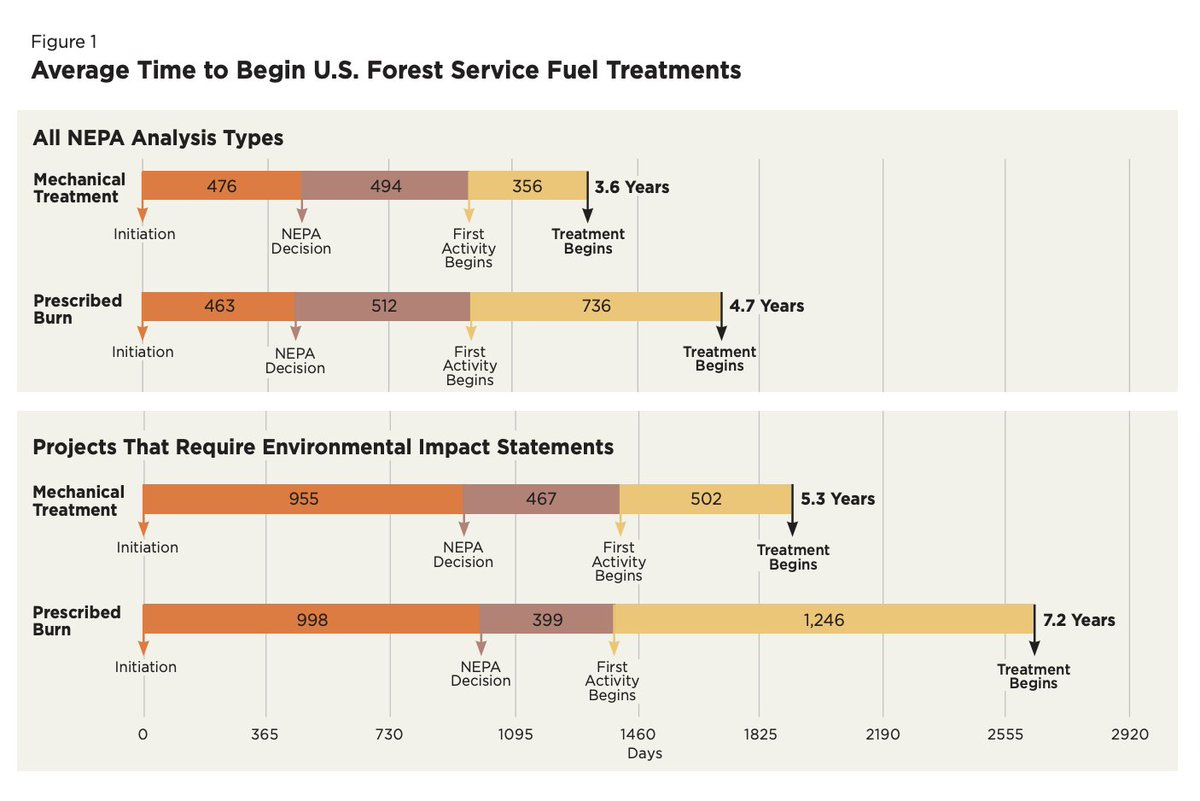
Comes to federal land? It's a huge problem. I don't think it can be overstated. You look at timelines that are just simply too long given the urgency of this crisis. So there's two pieces to it, right? There's the, the staff hours that have to go into this. But there's also the fact that it takes years for an environmental impact statement to be put in place, or that even a categorical exclusion, which is a streamlined way of doing these, permitting these projects and getting the permitting done can still take 180 days. And that's the most streamlined version we have. That's Underutilized, in my view.
- [25:38]
Santi Ruiz
Right. I know you agree with me on this, so this is not a challenge. But just to flesh out your point, I've got a list of four wildfires here compiled by my friend Thomas Hockman. And the most famous is the Six Rivers national forest fire in 1999. But in all four of these, the National Forest Service was in the middle of doing a multi year environmental review to decide whether it could clear brush or do controlled burns. And in each of these four cases, the Forest Service was still in the middle of its assessment when those forests burned down. So there's this kind of obvious question, what's the point of the environmental review if it stops you from preventing the forest fire in the first place?
- [26:10]
Matt Weiner
I mean, I think that's exactly right. Especially when we're talking about catastrophic fire and the environmental and ecological damage that they cause. Right. I think we're in a place here where the west as we know it is not going to exist as we are used to seeing it. And there needs to be real urgency injected into the conversation about how we get these projects on the ground. There are a lot of different ways we can do that, but permitting is a really big piece of that puzzle.
- [26:34]
Santi Ruiz
Yeah, Pop quiz for you. I have this stat in front of me, so I'm going to ask, do you know what percentage of its time the U.S. forest Service estimates it spends on planning an assessment in its work on national forests?
- [26:46]
Matt Weiner
I don't remember offhand.
- [26:49]
Santi Ruiz
I just found. A friend found this. It's 40%. 40% of its work on national forests is the planning and assessment and permitting part.
- [26:56]
Matt Weiner
That does not surprise me at all.
- [26:58]
Santi Ruiz
A part of the reason that permitting takes so long is that we have an adversarial legal system where if you don't do this work, there are entities that will sue that will try to get an injunction in federal court against you if you're the Forest Service for not doing sufficient environmental review. A lot of these orgs are environmental groups that care. These people care about the environment. I don't doubt that they do. So what's happening here that an organization like the Sierra Club will stop controlled burns from happening?
- [27:25]
Matt Weiner
I think there's two issues. One is philosophical and one is historical. I'll start with the historical, which is there are a lot of really good reasons from an environmental standpoint, to be mistrustful of the Forest Service and other federal agencies here. If you look back to the legacy of the timber wars in the west, where you had clear cutting of old growth and just absolutely devastating environmental consequences to the mining of our forests in the West 70s and 80s in particular. There's a real history of that. And these environmental organizations were formed during that era. In a lot of cases, you know, the term tree hugger kind of came from that conversation. It absolutely came from that conversation. And so I think that there is a real reason to be mistrustful, and I don't want to minimize that at all. What concerns me is where we have philosophical disagreements about whether or not this work needs to be done and whether there is merit in it. And there you see much more of a divide within the environmental community. Right. So you see organizations who believe that we should never do any mechanical thinning or that prescribed fire is not the appropriate tool for stewardship and land management. And then you see other organizations that really get it. They just don't quite trust the Forest Service to be given free rein to go pursue it. And so it's easier to work with that latter group than the folks who philosophically don't think we need to be doing this kind of work. I think there are elements of the environmental community who believe we just need to sit back, let it burn, because fire is natural. And that ignores the fact that these landscapes right now, because of human intervention, don't look like they did back when we did sit back and let them burn. And we can't allow them to burn in that way. Not just from a structural standpoint, because a lot of those groups will talk about how we need to make investments in the built environment to protect communities. Right. But from a health impact when it comes to smoke, from an ecological standpoint, when it comes to protecting our watersheds and other species. And then lastly, from a climate perspective, and that's not something we. We've talked about a lot here. But, you know, fire is not just something that is caused by climate change. It is something that is actively contributing to climate change. And the 2020 fire season in California is a great example where that one fire season undid 20 years of the state's industrial emissions progress.
- [29:37]
Santi Ruiz
Say that again.
- [29:39]
Matt Weiner
The 2020 fire season in California, the carbon emissions from that season wiped out 20 years of the state's progress on industrial emissions reduction through its cap and trade program.
- [29:49]
Santi Ruiz
That's remarkable.
- [29:51]
Matt Weiner
Yeah. And so from a climate standpoint, we are headed towards catastrophe if we can't find a way to get a handle on this problem. I mean, there's a lot more examples on the climate side, but at a basic level, if Alaska starts burning like the American west, is burning and has been burning over the last decade. Just pack your bags. On the climate front, you could potentially put more carbon in the atmosphere than currently exists in the atmosphere.
- [30:12]
Santi Ruiz
When the Forest Service identifies high risk forests that it thinks need prescribed burns, controlled burns, my understanding is it takes almost five years on average to get through environmental reviews, and that for complex projects, it's closer to seven years. So when groups like the ones you're talking about and you spend more time with them around these people than I do, when folks are philosophically opposed to doing not just mechanical thinning, but controlled burns, will you just go a little bit deeper? What do folks say when you talk, when you're in these conversations about why we shouldn't do controlled burns?
- [30:43]
Matt Weiner
They say that we got in this mess because we tried to play God on these landscapes and we need to get out of the way. And again, I just think that that completely ignores the history of what has happened since. We have shaped these landscapes to make them less resilient to fire, and now we need to shape them to get back to a natural state. Once we start reintroducing fire, we can have conversations about, you know, letting fire in certain cases take its course, where it makes sense and where it's healthy.
- [31:11]
Santi Ruiz
I'm curious for your read on how people think about this philosophically, because on the one hand, what you're describing is a very, you know, let nature take its course, we shouldn't play God instinct. But on the other hand, there are cases where it feels like the opposition to fire management is coming from the other perspective. So there's an example here from Berkeley, a project that was proposed in 2005 where a group sued to stop a plan to remove eucalyptus trees from UC Berkeley's campus. Eucalyptus trees are non native. They're invasive. The idea was to take them out and replace them with native species. That project was proposed in 2005 and it remains tied up in litigation. So there's a case of the reverse, right, where we're restoring something to the way it was before and environmental groups are opposed to that. Help me understand.
- [31:53]
Matt Weiner
Yeah, no, I think that's a. It's completely accurate. You know, I can't speak to what individual groups have been doing to sue on specific projects, but it's, it's the sign of a broader problem, which is a permitting system that doesn't allow managers to make sound decisions in the context of our overall risk profile. Right. It's such an egregious example when you look at something like eucalyptus trees, right. Or other Invasive species or species that are not native to California. But I do not want to lump in the broader movement with that because there are a lot of really smart thinkers who understand the scale of this problem and just aren't sure how to get to a place where we can trust the Forest Service to make these decisions. And that's where I spend my time trying to work.
- [32:33]
Santi Ruiz
I mean, you know these individual players better than I do. And, you know, I don't doubt that they care deeply about the environment. Right. That's kind of the. That's why they're doing this without the first place. Right. But when you say they're. When you talk about holding up the system, just to be clear, for, for myself and for listeners, you're talking about this kind of adversarial legalism that they're suing or finding ways for federal courts to slow down projects that would otherwise go forward.
- [32:58]
Matt Weiner
Exactly. And I believe that we need to make it harder to do that in cases where the risk reduction benefit is clear.
- [33:05]
Santi Ruiz
Sure. You've mentioned NEPA already. It's one of the existing environmental laws that makes it harder to deal with with fires and harder to do controlled burns. Will you talk a little bit about the Clean Air act and how it. How it plays into this?
- [33:19]
Matt Weiner
Yeah. The Clean Air act is really tricky. It was just not built for a problem like prescribed fire, let alone a problem like catastrophic wildfire. The largest Source of new PM2.5 emissions in the United States is wildfire smoke. By far. Where the Clean Air act has been unequivocally, wildly successful at reducing industrial PM2.5 emissions. There's no mechanism in the Clean Air act to deal with fire or our best tool for mitigating fire, which in a lot of cases is prescribed fire. And so what you'll see is, especially in places like California, where we already have places that are not in compliance with the Clean Air act, it's very hard for burn bosses to get good fire on the ground because they need to get regulatory approval. That's something we've been working with the EPA on. And there are people that understand this problem. But it's really difficult to work within the contours of a bill that was not designed for this.
- [34:09]
Santi Ruiz
Just to go a little bit deeper there on what exactly is the hold up with a Clean Air Act? As I understand it, and I want you to correct me as somebody who knows more about this, but wildfire combustion doesn't count towards Clean Air act thresholds for the emissions that your state can correct create. So if A wildfire like the recent L. A fires create a ton of emissions. That doesn't count towards my limit. But controlled burns do count towards my limit.
- [34:33]
Matt Weiner
That's exactly right.
- [34:34]
Santi Ruiz
From a climate perspective, from doing controlled burns, it's punished. Right?
- [34:38]
Matt Weiner
Correct.
- [34:38]
Santi Ruiz
As I understand it, historically this was just not on the radar of Clean Air act writers. It was just not a puzzle. Right.
- [34:46]
Matt Weiner
It just wasn't the problem that it is now. Right. It just wasn't something that we needed to consider in 1974 or in the Clean Air Act Amendments of 1990.
- [34:55]
Santi Ruiz
Let me ask you for your thoughts about something I think you'll know a lot about in 2019. Governor Newsom launched this program to fast track approvals for critical forest restoration projects. So very consciously an effort to deal with the thing that we're seeing now. There was an investigation, I think, in late 2021. So more than two years later, not a single project had been completed under that program, the California Vegetation Treatment Program. And the investigation, this was CAP Radio in the California newsroom cited a couple things. It cited bureaucratic bottlenecks and the state's, quote, byzantine environmental approval process for slowing down approvals. Can you speak to that? What happened there?
- [35:33]
Matt Weiner
I think. I think that's very true. I think that they have overcome some of those obstacles in recent years. The Wildfire Task Force in California has been doing really tremendous work at better coordinating activities around this, developing better metrics for wildfire resilience, and working across jurisdictions to get fire on the ground. We still have a long way to go, but they've made very real progress in the last couple years.
- [35:54]
Santi Ruiz
There's a database that California Wildfire and the Forest Resilience Task Force maintain. And through that treatment program, it looks like between 2021 and 2023, only like 55,000 acres in Southern California were treated. You know, and for context for listeners, the Angeles National Forest alone spans more than 650,000 acres. So without making you speak for Governor Newsom here, what have been the holdups in the past few years? And maybe you can get into specifically like the bureaucratic challenges, like when politicians in California recognize the problem and start a new program to do something about it. What are the holdups exactly?
- [36:33]
Matt Weiner
Yeah, I mean, I think broadly speaking, it's. To me, it's a sign of a broader lack of focus on Southern California and the risk that is faced there and a traditional focus on the forested landscapes when it looks to going at these problems. Right. We saw the same thing with the. The spending through the bipartisan infrastructure Law and the Inflation Reduction act, the Angeles National Forest and other federal land in California did not earn. Southern California did not get the same level of investment as other high priority firesheds under the Department of Agriculture's Wildfire crisis strategy. And so, you know, you've got a broader issue where there's not enough focus in these areas and that needs to change and we need to push on getting, getting into these landscapes in a much more robust way. And I would say that' it's not unique to California. That's a fundamental issue for a variety of reasons.
- [37:27]
Santi Ruiz
You probably know this, but there were only two projects in that treatment program located in the LA metro area and they scanned like 130 acres combined, which is nothing.
- [37:38]
Matt Weiner
Yeah, it's, it's, it's a huge overall failure. I think the point is there's a lot of failure to go around.
- [37:45]
Santi Ruiz
Yeah, I guess I'm curious about the timeline there because before this I talked to a friend who used to be a California firefighter and he and other folks will say what happened this winter in LA was not like a surprise to plenty of folks. Lots of folks saw this coming a mile away. And like you said, you saw political activity six years ago in 2019. Governor Newsom's working on this. So I guess what does it say about the California political system or the California regulatory system that all these people could see this coming a mile away and that you couldn't fix it quickly enough?
- [38:19]
Matt Weiner
Yeah, it goes back to my opening point, which is that people are starting to understand the urgency of this problem, but we're not anywhere near acting with the urgency that the problem demands. And you're seeing that at every level. I think California is actually doing a lot better than most states and then the feds in this regard in some ways, but they're not immune to that either. Ultimately, these are human systems. Doing prevention work is always hard to act with the same urgency that it is during the fire. I mean, I'll give a permitting example that I saw just the other week during the Los Angeles fires. Right. So I'd been. My parents have a large fire road up the street from their house in Topanga Canyon. I've been walking it for years. Send some pictures of the fact that it wasn't well maintained to some, some folks at the state. Right. Didn't really hear anything back. Push them on it, you know, that's, you know, pending review. We can't really get in there right now. Well, as soon as the fires broke out and the emergencies in place, bulldozers were coming up the hill and widening that road with no concern for the environmental impact of what they were doing. Right. So when the emergency happens, there's no shortage of urgency to go in and do these things. But when it's not an emergency, it's much harder for. For government officials and others to. To get them off the ground.
- [39:31]
Santi Ruiz
Sure. I want to ask you about water law and water use in California.
- [39:36]
Matt Weiner
Yeah. I mean, I'm not a water policy expert at all. And so with that caveat, I'm happy to give it a listen and see if we can add some value. But I want to just be clear that that's not my area of expertise.
- [39:46]
Santi Ruiz
If you worked on it, feel free to give me a high level or pass if this doesn't work. But I'm curious about the use it or lose it doctrine. Right. So water rights holders who don't use their allocated water can lose their rights to it in the future. Do you think that tends to discourage conservation? It means you have less of an incentive to conserve water.
- [40:03]
Matt Weiner
I don't want to speak to that just because it's not my wheelhouse.
- [40:06]
Santi Ruiz
That's fine. That's fine.
- [40:07]
Matt Weiner
Yeah. Thank you. I mean, I will say on the waterfront that the fact that we have such overgrown forested landscapes are putting additional strain on already strained watersheds. And that is a huge issue from a water management standpoint and a fire resilience standpoint.
- [40:22]
Santi Ruiz
Explain that to somebody who's like never left New York City, say so.
- [40:25]
Matt Weiner
Think about a tree as a giant, as a giant straw that's sucking water out of the ground. Right. You throw a lot more trees than are naturally native to this area or to these areas across the landscape because fires been taken out, because we haven't been managing the land. And it puts much greater strain on our watersheds by sucking more water out. Right. And so when you get areas that have been better maintained, what you'll see is fewer, larger, healthier trees, and that's what you want to see here. And that puts less strain on watersheds.
- [40:54]
Santi Ruiz
And real quick, what kinds of trees are especially problematic here? Non native species that are sucking a lot of water.
- [41:01]
Matt Weiner
It's really. It's not just non native species. It's. It's the full gambit. I mean, I couldn't even. It's the full gambit when you have overly dense forested landscapes that are denser than their natural balance. Now, in some cases, that's non native, but not always. Right. Because these native species need fire to thrive. And it comes through, it kills the weak links, it. It takes out dead and dying trees and others. Right. And leaves trees that can grow larger and be more resilient from a fire standpoint.
- [41:25]
Santi Ruiz
Yeah. Okay. Let me move away from water stuff. Matt. Should the U.S. forest Service be headquartered out west instead of in D.C. i.
- [41:35]
Matt Weiner
Don'T know how much that would help, but I'm willing to try it. I think it would be helpful to be closer to the problem in some cases, but I don't think that that's necessarily a silver bullet, to be totally honest.
- [41:43]
Santi Ruiz
Okay.
- [41:44]
Matt Weiner
There's a bill in Congress right now that's. That's examining that, and I think we're happy to look into that issue and see if that could help. I wouldn't put that at the top of my list of structural problems at the Forest Service and other agencies.
- [41:57]
Santi Ruiz
Sure. I want to ask you about the way insurance plays into this stuff. Most. Some listeners will know, but most listeners will not know much about the California insurance system. And just as a little bit of background, in 1988, California voters settled on a system where every time an insurance company wants to raise rates for cars or homes, they have to have a public hearing. Elected insurance commissioner has to approve that rate and increase as a result. I think plenty of folks would argue it's harder to raise insurance rates to the level that they should be at given risk, and so it's much harder to insure people's homes for catastrophic wildfires. Would you agree with that assessment?
- [42:34]
Matt Weiner
Yes, without question. I think we've got an insurance crisis everywhere in the country because of climate change. And so I don't want to overstate issues in California, but it is true that it is very hard for insurers to accurately price risk in these areas. The insurance commissioner has been moving in the right direction in some ways, but we need to do a lot more to allow them to variably price risk and adequately price price risk if we're going to have functioning markets in California and beyond.
- [43:00]
Santi Ruiz
When you say the commissioner is moving in the right direction, what are you referring?
- [43:03]
Matt Weiner
So they've taken some steps to allow. To allow insurers to use CAT risk models, catastrophic risk models, and to price somewhat differently. I think what we'd like to see is a movement towards more granular assessments and being able to really price in mitigation efforts at the. The community scale and at the individual scale.
- [43:20]
Santi Ruiz
When you say move towards catastrophic risk models, does that mean that to factor them in.
- [43:26]
Matt Weiner
In their pricing? I should say yeah.
- [43:28]
Santi Ruiz
I see. But currently, you know, as a insurance company, you may see a catastrophic risk and you can't price that risk accordingly.
- [43:35]
Matt Weiner
Correct. That was the issue that they're in. In the process of resolving.
- [43:39]
Santi Ruiz
Sure. Will you describe Fair F IR for our listeners?
- [43:43]
Matt Weiner
Yeah. So it's a California insurance plan that is a backstop to help provide coverage for people who can't get insurance in their areas. Ultimately, the state is on the hook for loss, but it does allow people to buy some form of insurance in areas where they can't get any.
- [44:02]
Santi Ruiz
My understanding, and correct me if I'm wrong here, is that they're estimating fare could be on the hook for something like $24 billion in the most recent fires and it has under $3 billion in the tank right now.
- [44:13]
Matt Weiner
Yeah, I mean, I think we've got huge solvency questions about the Fair Plan going forward, not just from these fires where they're going to have to rethink obviously their reserves as it relates to that. But this risk is not going anywhere. And a lot of folks are not really considering that this could put the state in a really catastrophic position and potential bankruptcy in a really bad fire season.
- [44:34]
Santi Ruiz
People joke about everybody on Twitter becoming a sudden expert in whatever the topic of the day is. And this is definitely, definitely what happened to me. I mean, I didn't know anything about California insurance before, you know, three weeks ago. Like, I'm totally new to this issue. But one thing that was just really striking and became clear in the aftermath of these fires is the fact that when the Fair Plan runs out of money to pay claims, it's allowed to split its remaining costs with all the other licensed insurers in the state according to their market share. So if you're a big and private insurer in the state, we basically levy a fine on that when people who you weren't insuring lose their homes. And it seems to be at least part of the dynamic that's driving insurers out of the state of California. Meaning you have fewer options for your insurance.
- [45:15]
Matt Weiner
I think that's right. I mean, it's really difficult right from a. Just as a political problem to solve. People are going to need access to some form of insurance. And if these carriers don't want to provide it in these areas, you have to find a way to pay for your liability. So I do have a lot of sympathy for, for the state and the way they're trying to manage that. But overall, we need to take a step back and completely rethink the way we. We manage insurance in the state.
- [45:37]
Santi Ruiz
Okay, let's go to Your recommendations here? You run an org called Megafire. You've mentioned something that you'd like to see already, which is just more investment in fire mitigation and landscape management. Talk to me about what else would be in the Matt Weiner playbook.
- [45:51]
Matt Weiner
Yeah. So, broadly speaking, Megafire Action has three core areas that we're really focused on. One is these investments in the landscape scale that we've talked about. Two is encouraging improved investment in the built environment. And then the third is really looking at all the new technologies that are coming online as a potential enabler for getting this job done smarter.
- [46:11]
Santi Ruiz
Talk about that.
- [46:13]
Matt Weiner
Yeah. So there's been a lot of technology coming into this space for a while, but most of it was focused traditionally on suppression. How do we get 5% better at suppression, which is a worthy goal, but doesn't get at the core problem in most cases. What we've seen since, especially the 2020 fire season where the San Francisco skies turned red, is a lot of new innovators, thinkers, founders and others coming into this space and lending their skills and their ideas and their creativity to this problem. What you're seeing is a lot of investment in things like how do you make better decisions. So investing in decision support, investing in real time detection and tracking of wildfires, which is something that we have the technology to do and we've made huge strides on, but we're not quite there yet in terms of actually deploying it. You look at everyone in Los Angeles over the last couple weeks was relying on an app called Watch Duty for constant updates on what's happening. John Mills, the founder of WatchDuty, who's an absolute legendary innovator in my mind and has done a remarkable job of working both with and driving government players to come to the table so that he can get this information in the hands of the public. He'll be the first to tell you that he would have loved for him to not be necessary. The government should have been providing this data. We don't provide that to the public or to first responders in any real way. And we're leaving a lot of points on the board as a result. So, taking a step back, you know, there's this something that we think is really relevant to this conversation at every phase is the fact that there's no one entity in this country that is responsible for evaluating risk and making decisions about how to manage and deal with fire across jurisdictions and landscapes. There are a lot of really great entities that do good work on this kind of detection, tracking, monitoring and modeling of Risk and understanding what's happening. But there's no one entity that's responsible for looking at across landscapes. And so we're leaving a ton of points on the board in terms of the way we manage fire holistically. And I think that would be really important for driving smarter decision making at every phase of fire.
- [48:18]
Santi Ruiz
Let me push you on this a little bit because I'm not sure I'm convinced. I want you to try, try and convince me about a piece of this. Why should fire be managed centrally or from one coordinated entity, given that? I mean, obviously different landscapes have different needs that in a lot of ways we trust folks on the ground to do better jobs at fire mitigation than other entities. So what are the things that you would expect to see done better as a result of centralizing this stuff?
- [48:46]
Matt Weiner
Yeah, so I think there's two pieces to this puzzle, right? One is the actual management and the unification of management of wildfire. That's a separate conversation than what we think is really important, which is the unification of decision support tools. So if everyone can be operating from a common operating picture on what's actually happening on the ground, that can help us prioritize what we're doing much better because fire does not represent or does not respect jurisdictions or other borders that we come up with. And so having a good assessment and a good awareness of what's happening everywhere can inform us at every step of the way. I think you take a look at Los Angeles actually, where you had the Palisades fire and you had a detection and it took some time for them to set out a spotter, figure out where the fire was burning, then send a response. We have the technology right now, and in fact, some of it's deployed by the Department of Defense at this moment that can detect ignition anywhere on the planet in real time. We're not using it to full effect. We should be able to immediately respond to these fires that we know are going to be catastrophic. So the dream here is for, from ignition almost immediately, whether this fire is likely to be catastrophic or not, whether it's likely to harm human health and structures or not, and to put a response in place in near real time to deal with it accordingly.
- [50:01]
Santi Ruiz
Let me ask you about some of the political valence of this stuff. You speak spent a long time as the executive director of the California Democratic Congressional delegation. So you advised Speaker Pelosi and 42 other members on Wildfire, among other California policy matters. How different in your experience or how wide was the range of views on proper Fire management and prevention across that delegation. That's a lot of folks. Are just folks. Yeah, give me. Give me like one.
- [50:28]
Matt Weiner
Oh, yeah.
- [50:28]
Santi Ruiz
Each end of the spectrum, you know.
- [50:30]
Matt Weiner
Yeah, it's a lot of people. So the job was kind of unique in Congress. No other state does this, but I was a shared employee among all 46 of the Democrats from California at the time. I was 46. And my job was to coordinate our efforts on all matters of statewide policy importance. I worked for Congresswoman Zoe Lofgren, who was the chair of the delegation and advised her on these matters and worked. I was paid by all of them equally, so I worked for all of them. And there was a pretty broad range of, you know, what should be primarily the focus on these issues. But there was a broad common understanding that the current systems at the federal level were not getting it done and that we needed to push for improvements and changes. And that's just. Fast forward to now. That's something we're absolutely seeing in D.C. at the moment. Right. I have never seen a moment where there are more members who want to do something about this wildfire process problem. The, the agreement is there. And I will say, like going into request meetings from folks, it's never been easier. And I, I say that even before the Los Angeles fires, there is so much desire to figure out how we can get a handle on this problem, and we're hoping to capitalize on that interest and turn it into action.
- [51:42]
Santi Ruiz
Yeah. In the past, and I don't want you to. Don't want to ask you to speak to any specific disagreements between members of the delegation, but what kinds of rifts would you see over wildfire policy? Like, what were some of the fault lines?
- [51:57]
Matt Weiner
I think the biggest one is environmental regulation, which is not surprising. Right. So you'll. You'll get differing views of members. I think last week, the House of Representatives passed the Fix Our Forest act, which is primarily permitting legislation that also has a really large focus on technology and innovation, which is something we're really supporting supportive of as well. There's pretty broad agreement on most of the provisions in that bill and a pretty big disagreement around the permitting reform language. I will say a majority of the delegation did support that legislation. So you are seeing, I think, more than the rest of the caucus as a whole, you're seeing California members really understand the dynamics of this problem. I will add that one other thing that we've seen each time we've seen a major smoke event because of a bad wildfire season is the politics and the coalitions changing. So what you'll see after the 2020 fires in California and bad smoke events there, you'll see members that don't necessarily have a lot of wildfire risk directly in their communities necessarily all of a sudden understand the scope and scale of this problem and take more interest in working on it. I think that smoke ends up being one of the great political coalition builders on this issue because it impacts areas that don't necessarily traditionally deal with fire. We definitely saw that as well nationally after the Canadian wildfires last summer or two summers ago where you saw D.C. chicago, New York blanketed in wildfire smoke. And all of a sudden you're getting interest from urban members who have not had any history of dealing with wildfire, wondering how they can get a handle on this problem.
- [53:30]
Santi Ruiz
I want to ask you about Prop 1 water projects in California. So there's a bunch of money that's been committed by California voters to build water storage and improve state water facilities. But as of about a year ago, late 2023, not one dam had been finished for the Los Angeles Times. So that's like about a decade of environmental regulations and reviews. Do you see those hold ups as contributing to the scale and the destruction of LA fires? Are they a separate issue? How would you.
- [53:58]
Matt Weiner
I think they're separate. I think they're a separate issue. I mean, there were some conversations about closed reservoirs and water availability, but at the end of the day I would. I think for most of the folks that I've talked to, those would not have changed necessarily the outcome of what happened on the ground. I think what they are is a broader indication of a problem we have here in falling in love with process over policy outcomes. And that's where we've seen a lot of similarity in the wildfire space.
- [54:23]
Santi Ruiz
Matt, is there anything else that you wanted to talk about that I left on the table?
- [54:30]
Matt Weiner
Plenty. I'm trying to think of the best way to frame and put it. And I mean, I think that broadly speaking, I, I do think that the Fix Our Forest act is a really interesting moment and we see it as a really important case study on building new coalitions to actually get stuff done in a really contested Washington. Right. So you've got a bill that passed the House last week with 64 Democrats, even though it was written by the conservative chairman of the House Natural Resources Committee, Bruce Westerman. I think they worked in a really good faith way with, with Congressman Scott Peters out of San Diego to attempt to get at a lot of these issues. And what we've seen is increasingly Democrats open to coming along in these conversations. I also think that you're seeing a lot of interest from Republicans and from the incoming administration in looking at systems change and issues that are holding up progress in the wildfire space broadly for us. We think we're at a really unique moment, even with joint Republican control in Congress, where we think that a lot of good could happen here in a bipartisan way. I think it's almost unique when it comes to issues that touch the environment and the climate. I think one of the things we're seeing is an increased interest in really shaking up the status quo on the federal wildfire response and management, and that's something relatively new. But what we're seeing is senators like Mike Lee, who's the chairman of the Energy and Natural Resources Committee, taking a look at things like making the Forest Service chief's position a political appointment and bringing more political appointments into the agency. We've heard newly elected Senator Tim Shehyk, who comes from aviation suppression world, take a real look and talk a lot about the need for structural reform among the agencies, perhaps a unified national, federal wildfire force so that it's not spread across these agencies. You've seen proposals to bring the Forest Service back into the Department of Interior, which I think is intriguing, so that you can also have a more unified approach to medication under one agency umbrella instead of having this over at a traditionally commodity focused agency. Right. So I think what we're seeing here is a willingness and an openness to structural reform and a bipartisan understanding that unlike some of the other conversations that are probably going to come up through DOGE and these other processes we're seeing. Right. There's an idea here that things are going so badly overall in this space that maybe this is something that's ripe for taking some chances and going big. And that's something we're looking to engage in, and we already have been. And it starts with that agency restructuring, and it also starts with getting our federal firefighters paid and getting them benefits and making them more professionalized. I mean, they're the. They are professional. So it's not to say they're not. It's that we don't treat them that way and we ask the impossible of them every year.
- [57:15]
Santi Ruiz
Just to clarify, when you would the logging industry traditionally be opposed to moving the Forest Service into the Department of the Interior, Would that be the roadblock?
- [57:24]
Matt Weiner
I don't necessarily think so. I mean, we're not taking a lot of timber off federal land in the way that we did back in the day. Right. It's just not a commodity focused agency in the same way that it was before and during the timber wars. So things have just changed. And in some ways, it depends on who you talk to. But some timber companies, you know, are happy to not have the competition from federal land because they operate their own private land land where they have timber stock. So it depends. But broadly speaking, I think there will be opposition to those kinds of ideas, and some of it will be really good points, to be totally honest. But I think from a fire management standpoint, we need more. More unification at the federal level.
- [58:01]
Santi Ruiz
Matt Weiner, thank you for joining.
- [58:03]
Matt Weiner
Santi, thank you so much for.