Loading summary
Transcript38 lines
- [00:00]
Santi Ruiz
Foreign hi, I'm Santi Ruiz and this is Statecraft. Today's big motivating question is what can we learn from Estonia? It's not a question you hear often. The nation of under 2 million residents doesn't mean much to many Americans. There's not a big expat community here. It's not a major geopolitical player. But for good governance advocates, it's long been a touch point for its E Government model. As the New Yorker wrote in 2017, Apart from transfers of physical property, such as buying a house, all bureaucratic processes can be done online. Wired called Estonia the world's most digitally advanced society. On its own E Estonia site, the country brags, we have built a digital society and we can show you how. Now, the Estonian model has a lot going for it from the perspective of a citizen. For example, taxes take just a few minutes to file. You can see every time the government looks at your data and why. And you never have to give the government a piece of information about you, your address, your Social Security number more than once. It also has governance benefits, bureaucracy is leaner, information is shared across agencies, and data is more secure. I've been reading about Estonia for a while. My big question has been how much of this model could we actually adopt here in the US or in the west generally, and how much of it is reliant on a cultural and a societal context we just don't have here to get answers, I talked today to Joel Burke, author of the new book Rebooting a the Incredible Rise of Estonia, E Government and the Startup Revolution. Joel's an American who worked for the Estonian government and I learned a lot from his book. Before we get into it, a quick plug, as you've heard me say before here. You can find the transcript for this conversation and many others at www.statecraft.pub. if you're not subscribed to the newsletter, I highly recommend it. You get the transcript in your inbox once a week. We clean up the transcript quite a bit. All the show notes and links are there and I think you'll enjoy some of those conversations. Also consider subscribing on here. Whatever platform you're listening to, whether it's Spotify or Apple Music. And if you like this podcast, if you're a fan of Statecraft and we would really appreciate a five star rating, give it a thought. Okay, that's it. Without further ado, Joel Burke on Estonia. Joel Burke, thank you for joining Statecraft.
- [02:23]
Joel Burke
Well, thanks so much for having me. I'm a big fan of the show. And I do want to give a shout out. I mean, especially the episodes that you did with your dad were really both really informative and touching. My parents have been hugely influential in my life, so was really glad to see those episodes. I thought it was awesome.
- [02:37]
Santi Ruiz
I'm glad you enjoyed them. You know, I was listening to Patrick McKenzie's podcast and he was interviewing his dad who's been in banking. And it was like 40 minutes into listening to that episode that I suddenly realized, like, wait, I should talk to my dad. It took me a moment to draw the connection. I'm glad you enjoyed it. I am really excited about this conversation and I want to start with making sure that we get the historical background to what you talk about in this book, to why Estonia is the way it is, and then what that actual model is. And then I think we should turn it around and talk about the lessons, maybe for the US or for the rest of the west more broadly. But before we get into, you know, U.S. application, I want to make sure we just nail what is the Estonian E government model? What are we actually looking at? So in 1991, Estonia becomes independent from the Soviet Union. Give me like a two minute lay of the land. Where are we? Where is Estonia as a society at this point?
- [03:30]
Joel Burke
Yeah. So if we roll back the clock to 91, I'd say that things are tough but hopeful. You know, it's a country that had been occupied for several decades by the Soviet Union. I mean, it also has a very long history of occupation from various regional powers. But basically, the country is faced with a bit of a economic conundrum. As you can imagine, the Soviets were not that great at capitalism. They're. The factories and institutions that were built in the country were not very efficient. So the country basically had to figure out, as with almost every country that achieved independence from the Soviet Union, had to deal with economic reform. And Estonia decided to wholly embrace the market economy. And there was a gentleman who became Prime Minister, Martin, who basically helped do economic shock therapy for the country. And it was very, very aggressive here. But I think I'll gloss over kind of the general economic shock, you know, removing subsidies. But there's a couple things that I want to highlight that I think set Estonia on a very good trajectory. One is that I think in many places, it's. And it sounds intuitive, the factories, you know, and facilities like. Like that were given to the managers of those facilities to run because the thought was that, you know, give it back to the people, they know how to run it. Best. But if you think about running a factory during the Soviet Union, it was a very political job versus a job focused on managerial efficiency. So Estonia actually focused more on finding foreign partners who could help reform the practices of these foreign factories and make them more efficient and do co investment. The second thing was really focusing on when you found that foreign direct investment, trying to get them to invest in more digital, and maybe not directly digital as we think of today. You know, we're not talking about smartphones and, and such. We're talking about the early 90s, but really modernizing the systems that they went into. And this is most obvious in the banking sector, for instance. So many of the banks even today are from, you know, Sweden and other countries in the region. But a big part of what, of what they ended up doing in helping to build the estate was investing in online banking, which then led to a whole kind of series of events that helped to kind of foment the digitization of the country and the adoption of technology.
- [05:38]
Santi Ruiz
If you zoom out just to kind of compare Estonia to a bunch of the other former Soviet bloc countries from a cultural or from a national level, why does Estonia have this instinct towards modernization or digitization? It's not that it's crazy or weird necessarily, but you don't see it across the rest of the Eastern European states. What's in the water that makes Estonia the edge case?
- [06:02]
Joel Burke
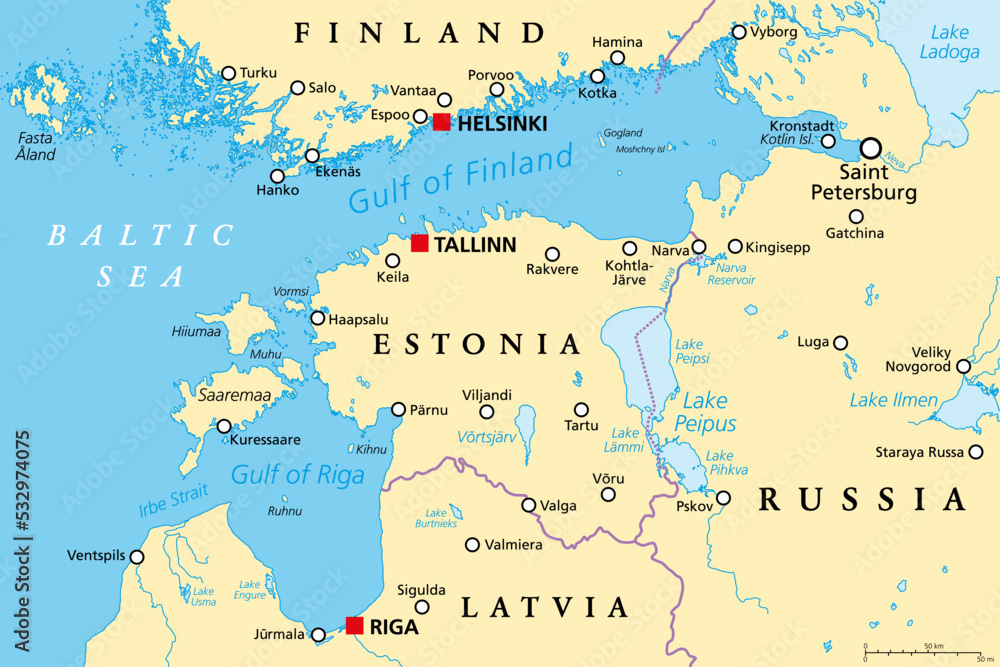
Yeah, so I'd say it's what's across the water. It's. It's Finland. So Estonia is a short way away across a body of water from Finland and Helsinki on the coast there. When they transmitted radio and television waves, they were strong enough to reach from Helsinki to much of Estonia, including the capital. So that meant that even during the Soviet days, unlike many of the other occupied nations that were really cut off behind the Iron Curtain, Estonia still got exposure to Finland. You would read advertisements for grocery stores that were full of meat at a time when there were bread lines, right. And so you, you both had this exposure to a capitalist society that was a kind of a short distance away from you and having that exposure repeatedly. And again, there are, there are kind of fun stories. I think President Elvis talks about watching reruns of Dallas and dynasty and these like, 80s and 70s TV shows that were broadcast in English in Finland. So there was like a bit more exposure to the West. So I think that helped. But the other reason I mentioned Finland is I think there was, you know, if we roll back the clock even further to, to just before World War II, when Estonia is Occupied. It had about the same standard of living as Finland. So. And then you roll the clock forward, you know, five decades of Soviet occupation, and as you can imagine, any calculation of, of wealth or wellness, Estonia far lags its neighbor Finland now. Right. And so I think there was this sense of collegial rivalry or competitiveness where Estonia and Finland were always each other's measuring sticks, or at least for Estonia, Finland was. And so after you receive independence and you really see, wow, Finland is way far ahead of us. If we just follow the traditional development methods, we're never going to actually catch up to these guys. So we have to pursue some, a really radical agenda. And I think Estonians were bought into this idea of trying to, you know, jump across the chasm and really leap to, to try and make a better lives for themselves. And both the popular support and boldness of leaders allowed for really aggressive militia reform.
- [07:55]
Santi Ruiz
Yeah. In your book, you talk about how Estonians really want to think of themselves as Nordics rather than as Baltic countries or as an Eastern European country. That the comparison culturally really is. No, we're part of kind of the greater Scandinavian cultural region. That's kind of what you're alluding to here.
- [08:13]
Joel Burke
Yeah, indeed. And actually, I think it's, it's interesting. One of my former colleagues, Adam Rang, who is a great writer and he's a Brit who moved to Estonia, was just talking about this. And it does seem that Estonia is also somewhat finding its groove and being itself. It's not trying to be the Silicon Valley of Europe anymore or trying to be, you know, a part of the, the Nordic nations. It's like, no, we're Estonia and we matter just on our own. So it, it is cool to see that evolution over time. But certainly when I worked for the Estonian government, I led business development for the E Residency program. And it was certainly a key talking point that we were supposed to get across that like, no, no, Estonia is not Baltic, it's Nordic.
- [08:50]
Santi Ruiz
That's very funny. So 91 is independence. You have this big privatization push. Export restrictions are abolished, no more price controls. And one thing you flag is even before the kind of full digitization in 1993, there's a national commitment not to buy any legacy equipment that they're going to build as much as possible internally or buy the cutting edge as a government. Give me just a little bit on that and then we can get to the actual digitization push.
- [09:19]
Joel Burke
Yeah. So I think this is emblematic of these principles that have become endemic to Estonian society or especially around the civil Service and kind of political and startup culture. And there's a lot of mixing in between those worlds. So this idea of not purchasing or not using legacy equipment was really important because I think the first time this really came up was, I think it was either Sweden or Finland, which were major, major supporters of Estonia after independence because the country just desperately needed help. One of them offered to revis stamp the phone system in talent. And it was kind of a choice of like, okay, we could take this free thing that's old while this other country upgrades to the new system, or we can make sacrifices and we can focus on building our own solutions and leapfrogging. And I think it fits in with this idea that the country was like, we can't just adopt the common model and grow slowly and kind of work our way up the value chain. That doesn't work for a country like Estonia, that's 1.3 million has no natural resource. It has to do really bold things. And so this idea also led to the conclusion or realization that maybe was quite apparent at the time after, you know, you go to Microsoft or Oracle and try and get a quote for something that like, actually we can't really afford the big Western companies. They're going to charge us 20 million for something. So it also led to this culture of fomenting domestic public private partnerships for the development of much of what would become the E government digital infrastructure. So if you look at, you know, eids, for instance, this was built with a consortium of the kind of local banks to help facilitate access to online banking. Basically every E service is built in partnership with a local tech company. And this is partly a deliberate strategy to at the beginning to keep costs down, but with the added benefit of helping to build up a domestic tech industry that is turned into an export engine and frankly a branding engine for the country.
- [11:04]
Santi Ruiz
You have a useful typology in this book of the problems that E government solves for Estonia as a nation in the late 90s. Three things you flag. One is you just have a lack of experienced bureaucrats. You know, you're a new country, all the Soviet administrators are gone. And so you have to build a new government without this kind of cadre or this history of administrators and totally new regime. Another one is public sector corruption. You want to avoid the problems that you had in the USSR of rank corruption and digitalization can help create transparency. And then the last one is just the inefficiency of delivering the services that the government needs to deliver. The kind of basic, like we'd like to make this smoother and faster and easier. Talk about how those three factors played into the development of the E government model.
- [11:49]
Joel Burke
Yeah, so absolutely. So as you can imagine, if you're in a situation where you've achieved re independence after, after years and years of, of, of fighting for it, and you're in a situation where you're now in charge of your own destiny and you don't want to fall into this trap of corruption because at the time there was something called the bloody autumn, I think this was 94 where you know, basically gangs from across the Soviet Union were kind of battling for turf because Estonia has always been part of the reason it was repeatedly occupied. It has a privileged position from a trading standpoint and been part of the hamsiatic league long ago. And so you, you don't want to allow corruption to, to take hold in your system, but you also don't have the literal manpower to, to actually staff these things. So what do you reach for? Digitization is, is kind of. Well, I'd say it's obvious and it feels obvious in Estonia, but obviously many countries didn't do this, but for Estonia they decided to bet on this. And former president Ilvis has a great quote. You can't bribe a computer. And I think that's also something you're starting to see pick up in, in other regions. And I want to shout out Ukraine in particular. So one of the first big E government projects in, in Ukraine was this pro Zoro open contracting, which has been held up as one of the gold standards and a part of the reason why you do this and make contracting open because government procurement contracts are a prime for potential corruption. And so it's just this idea of putting things out in the sunlight, digitizing them so people can't mess with them. So if you go and you know, ask for a construction contract, you don't have a guy showing up at your house and saying we can expedite this for, you know, for a tip. Right. Instead it's through a computer based system. It gets submitted, everyone can see who, who checked it and it goes through a normal workflow. Right. And then at the same time, I think digital and technology in general, and now we're seeing this with AI and Estonia's making a big bet there has just been seen as a necessary force multiplier for a country that just literally did not have the manp to do things that other countries could. And I think that, you know, if you're, if you're Poland, if you're Ukraine, you've Got enough of a domestic mass that you're going to matter almost no matter what, just, just purely based on your population and your size. But for Estonia, that's not the case. And so you need to find other ways to basically compete and make yourself into an interesting market or really do anything at the global stage if you want to, if you want to have a meaningful impact. And so technology was seen as that kind of dual role of, you know, preventing corruption and serving as a force multiplier for, you know, a workforce that just did not exist in the country post independence and also solve these pressing problems.
- [14:09]
Santi Ruiz
That makes a lot of sense. There's two key technologies that I'd love you to explain for an American audience as you describe it, is these are the two digitalization pieces that really matter. There's the digital identity, the EIDS for Estonians, and then there's this thing called Xroad, which is your secure data exchange layer. I could use a 101 on what each of those is, and I think that that probably should frame the rest of the conversation.
- [14:35]
Joel Burke
Cool. Yeah, so. So, indeed, I think. Well, one thing before we get into it that I want to emphasize is that I think these are the foundations of Estonia's E government and Estonia's digital society. But I don't think, and nor should any other country necessarily adopt wholesale the exact technologies or the exact techniques that Estonia did. And that's something that I hope I, I get across in the book as well, is that Estonia should be looked at for kind of the. The found. But when I used to work for the government because I'm an American, when American delegations would come to town, sometimes they'd bring me out and say, you know, talk to them about Estonia. And one of the things that would come up frequently is, you know, can, can we kind of take Estonia in a box or like, just copy this and like that? That doesn't really work and nor, nor should it. So I hope that for someplace like America, where I'm pretty skeptical that, you know, a digital identity at the federal level is likely. I mean, we're dealing with Real ID, which has taken 15 years or something to. To just up our driver's license. Yeah, exactly. So, but, but I do think that you might end up in a situation where, you know, we've all got phones and most of them have biometric information or, you know, Facebook or whatever. So we might end up with some interesting public private partnership for proving the authenticity of who we are and kind of connecting our documents that. So, so anyways, I just, I just want to clarify that, that, that's a.
- [15:50]
Santi Ruiz
Really, it's a really good caveat because I think, you know, we'll get into the obvious differences between the two societies. I mean, as you flag, Estonia is like 250 times smaller on a population level in the U.S. so we'll put a PIN in, you know, exactly how much you can adopt from the Estonian model. But I just want to get what, what is the Estonian model and then we can try and figure out which pieces are applicable and which are not.
- [16:10]
Joel Burke
Absolutely. So digital identity is basically this idea of how do you verify who you are as an individual and authenticate it. So let me give you the tax example, which is kind of a classic one because well, it's only a month out and maybe I'm still mentally scarred from doing my taxes in the us so. So the idea is that you would go to the government website for the tax portal and actually it has many different services but you would go into the login page and then you'd have a little card reader on your computer. You insert your digital ID and then it asks you for your identity code and then an authentication pin. Right. So basically you can think of this as like a much more secure version of using your email and a password that has probably been pwned like long ago. And this basically serves as the authenticator for who you are and whether it's accessing government services or you know, adding a digital signature to something. This is kind of the foundation that allows you to access these things from the individual side. And then on the other side you've got the X road, which is the data layer that underlies all of it and allows for the distributed data exchange. So we talked about one of the principles and another one is called the once only principle. And this is the idea that if you submit something like your home address to one government agency, another government agency that needs it shouldn't have to ask you, but you have the problem of like how do you share that information in between them? And so this is the X road is basically what's trying to solve this. And I'd also mentioned for, for those who are more technically minded and interested, it's actually run by an open consortium now, so other countries can kind of look at it and adopt it. So if you want to go and like talk to engineers about how to build on this and play with the code, you can do that.
- [17:46]
Santi Ruiz
Will you talk a little bit more about the xroad? Because I'm your non technical audience here. Explain it to me and explain why it matters. Like, what's the upshot for me as an Estonian citizen?
- [17:57]
Joel Burke
Yeah, so I think the once only principle is somewhat emblematic of this, right? So like, just imagine a scenario where you're moving homes. So maybe you have to update your utility, which is, well, I won't use utode because utility is, you know, quite often some pseudo private entity. But you know, you're, you have to file your taxes or maybe you have a child and you have to update where they're going to school or something to make sure that you're in the right district. So instead of, you know, kind of going through the, the slog of having to submit this information to multiple parties and maybe you forget one and a letter ends up getting sent to your old house, or maybe you even move countries and you know, there's just like it, it sounds small, but just these, these little things add up over and over and submitting and transferring this data. So it enables that, but it also just enables seamless information sharing between agencies. And something I do want to flag here because I imagine for some of the folks who are listening are like immediately screaming like, oh my God, what about the privacy concerns here? And something that it also helps to enable is that in Estonia they have a system where you can look at all the information that government has about you. So for instance, they have a digital health record system that is through the government portal. So when I go to a doctor, maybe they add something to my health record or you know, they upload a lab. But the interesting thing here is that I can see who has looked at my information. And if I see that someone that I didn't expect or didn't authorize has looked at it, with the exception of some national security stuff, I can basically demand that the government give me that information. And so it also enables kind of this transparency across the ecosystem of the data that the government holds. And in a way to me is somewhat more, maybe not directly privacy preserving, but kind of fundamentally enabling of an environment that facilitates my privacy compared to a system like the United States, where many of us has probably seen the cave that, that folks have talked about, you know, storing government documents in or just the, the warehouses and crazy amounts of paperwork that are floating around. Like, one, I have no idea what information the government has on me in the U.S. two, I have no idea who has accessed it. And three, I have no idea how to even check about that information. Like, I know I could send a foia, but I'm not even sure like, who I would send a FOIA to. And, I mean, that's a crazy amount of work to put on an average citizen where, you know, the X road and kind of the. Also the rule of law that comes along with these technical systems has enabled this environment for Estonia.
- [20:12]
Santi Ruiz
This was really interesting to me and counterintuitive, this point that you make, which is that you kind of think of this data centralization or the data sharing as this privacy concern, if you don't pay much attention to this. But. Right. Like, I have no idea who the federal government is poking around in my records, and there are really not any checks that are visible to me on who can look at this stuff. Whereas in this centralized data model, I can go in and see, here's all the data and here's everybody in the federal government or in the Estonian government who has opened this file and looked at it. And here's the reasons that they're flagging for doing that. So you can make privacy arguments in both directions is actually the really interesting part that I had not picked up before.
- [20:58]
Joel Burke
Yeah, absolutely. And, you know, I mentioned it kind of at the tail end there, but it's really important that Estonia has a very strong rule of law. It's low corruption. And so you're also in a trusted environment where, you know, if you demand that the government tell you who looked at it, they're going to do it, and also that, you know, they're not going to leverage the data for ill purposes. So I would be more concerned about collecting a ton of data and centralizing it in a country that maybe didn't have as strong a rule of law or didn't have, you know, kind of the checks and balances and systems in place to do that. But in Estonia, it works quite well because of the rule of law, and they also have a very strong press. And one of the perks of being, being a small country of 1.3 million is there's, there's a lot of, let's say, local accountability where, you know, maybe your parents went to school with the president so they can message them on Facebook and just be like, hey, don't really like that thing you do. And nothing grounds someone more than, like, you know, an old teacher or one of their favorite professors being like, oh, don't really like that thing that you did. And it's a much flatter hierarchy in society here.
- [21:58]
Santi Ruiz
Totally talk to me about the upshot of all this digitization. I'm a citizen and I'm having a kid or I'm paying My taxes, what does it matter to me? What does it cash out to?
- [22:11]
Joel Burke
Yeah, well, let me just mention that at the high government level, basically it's massive amounts of efficiency. And so there's two sides to that coin. And it's the government time savings, but it's also the citizen time savings so they can focus on things that are more worthwhile and productive. Not to put it in bluntly, economic terms, but like it helps save money and create a larger economy. Right. So there's that side, but on the more human individual side, the taxes for example. So when I lived in Estonia I filed my taxes and just to, just to pose this, right before that I had been in Germany running a company for Rocket Internet, which is a private equity venture builder place. So I filed my taxes in the us, Germany and Estonian. Quick order here. And so in Estonia, basically the process was I go to the website, I pop in my card, I sign in and all the data is pre populated because the, the government knows how much you owe and like I can kind of check it and you know, maybe change a few fields if, if was necessary and then I press accept. And so for me it took roughly five minutes. And I, I mean that's, that's pretty incredible. I was a foreigner, it was my first time and I'm sure if I was just, you know, aware of the system and tried to speedrun it, I could get through it much, much faster. But compare that to Germany where you just don't even try to file your own taxes. Right. That, that's just not a thing a foreigner would do or probably even a local in, in some of these situations. Right. So I paid several thousand dollars to a Steuer beretor that I'm probably horribly mispronoun, a tax lawyer or tax accountant. And then in the US you have the privilege of telling the government information that they probably already have and paying a private company at least, you know, 100 bucks, if not many, much more to an accountant to, you know, do your taxes for you, even though the government already has all that information. So that's just like one of the many things that just happened throughout, you know, think of every interaction with the government and think of how it would be done if a private company was trying to run it in a way that maximized efficiency or well being or you know, whatever the concrete things. And I'm not saying Estonia is perfect on all these accounts, it isn't, but it is this kind of customer centric mentality of like making government work for people rather than putting Aggressive barriers in kind of a, a way to do means testing without actually saying it. Right.
- [24:11]
Santi Ruiz
To your point about government efficiency and bureaucracy cutting benefits, you flag that Estonia has the lowest debt to GDP ratio in Europe. And obviously there are other big factors that go into that. It's not just a function of the raw size of the bureaucracy, but it's a kind of point in the direction of the value of government efficiency from a kind of broader economic perspective. In the book, you compare having a newborn in the US and getting that set of paperwork to having a newborn in Estonia. Will you give that example to our listeners?
- [24:43]
Joel Burke
Yeah, absolutely. So with the caveat that this is research driven, I haven't had a kid in either place yet, so I don't have the personal experience to compare here. But basically my, my understanding of the system is that, you know, in the United States you show up at the hospital, got, you know, private insurance, you know, maybe you're on, sorry, is it WIC or, you know, there, there's public programs as well for folks, and probably there's many state and local programs that exist here that you may or may not know about that are relevant for you, maybe for your taxes or for benefits after. So basically you, you have your child and then maybe the hospital helps you with the registration, but then they're going to send you the Social Security card and like a birth certificate in physical form that you're then going to stash like a probably fireproof safe in your home or a safety deposit box in a bank, which is just incredible. Whereas in Estonian system, you show up at the hospital, the parent has their digital identity, it's tagged to them, the baby is born, and then basically they're. It sounds a bit, it sounds a bit funny to say tagged to your profile, but that, that's essentially what it is. And then because they have that information and maybe they know that this is your third or fourth child, in which case maybe that triggers an additional tax benefit for you because like many countries in Europe, they're dealing with low birth rates and trying to incentivize more families to have kids. So maybe it means that you get additional tax benefits or additional monthly benefits and they just, instead of you having to figure out what programs there are and sign up for them or apply for them, they just proactively either sign you up in the case of like some taxes, or they'll send you a message and like, yes, no, do you want to do this? Right, which, which just like makes all the difference. I can only imagine what it's like to have a newborn and dealing with all the just natural things of having, you know, a new life at home and then having to think about, like, applying to a government program to get a tax rebate or something. I mean, that sounds nightmarish. And so they just try and remove part of that experience to make it easier for you.
- [26:30]
Santi Ruiz
Totally. Okay, so why don't we see more of this kind of digitalization in the US and in the developed world more broadly? You flag, obviously, the US Has a lot of work to do. I think listeners who are American will have a sense that a lot of American systems are way behind where they could be. But as you point out, Estonia is much better than most, if not all the developed worlds on government digitization. Taking it broadly, like, why do we not adopt some of these practices? And then just why. Why don't you see them more commonly across, you know, Western Europe or even parts of East Asia? What's going on there?
- [27:05]
Joel Burke
Yeah, so with the caveat that there's no silver bullet here. So I don't think there's any one thing, but I think there's a couple things that I touch on. One is that, well, I just want to mention the timing factor as well. Estonia achieved its independence at a time when was kind of the dawn of the modern web, at least in a more commercial sense. And that being said, they had the wherewithal to identify that trend and kind of build on it. But timing was a factor. They had achieved independence 20 years earlier. I don't know that they would have or could have made the same bets, and they might have ended up with a very different system. So I just want to kind of acknowledge the timing being a factor here, but also flag that if you are thinking about digitizing your country today like the US is, I hope that, again, not copying as what Estonia did based on the technology of the 90s, you should be thinking about how you're using AI to reform systems. Okay, yada, yada, et cetera. So that's one caveat. But on the other side, I think there's a couple things. So one is just, you know, I. I struggled with this in the book a little bit because I didn't want to get fuzzy with things. I wanted to try and get very concrete. But the idea of culture came up over and over and over again. And so what I mean by this in very concrete terms for Estonia is that they have created a culture, especially within the civil service, that rewards innovation and innovative thinking and trying new things. I think it's best exemplified by this program, Accelerate Estonia, which has a tagline of like, let's make illegal things legal. And it's basically a program that is focused on taking ideas from private citizens as well as some folks in the public sector, and then helping to change the legal framework. I mean, if they make sense and like they actually think it's going to be good for the country and proactively working with these entrepreneurs to fix them. And like the people who helped to build this program were lauded for, for this, they're well known in society. I think one of them is now ambassador to the uk, which is a pretty prestigious role. The UK is a very important partner for Estonian, you know, folks like Sikuit, who is the former CIO of Estonia and now runs Digital Nation, helping other nations kind of build this are, are well known and kind of applauded in society. Whereas I think in the US we have this idea that we want public servants to be more innovative. But I can tell you, having been on the congressional side, what I would expect to happen here is that as soon as there's a failure in one department, so let's say someone in the DoD procurement team does the right thing and says we're going to choose an unproven startup that has this amazing capability and we're going to give them a, you know, $500 million contract instead of going with Lockheed Martin or something. Right? So what are traditional primes? And then that project goes belly up, right? There's going to be congressional hearings and people screaming about government waste and this stuff. So instead of being applauded for trying to do something innovative, they're going to get yelled at. And so that creates this incentive problem among the bureaucracy of like, well, it makes sense to just keep my head down and move up the ladder in a seniority based institution. So, so that's one. And then I'd also just say that, you know, when, when I think about why Estonia took this pathway and not the U.S. i, I think that, that we are victims of our own success. And ditto for Germany and Japan, for instance, which paradoxically are very wealthy and successful nations in almost every other metric. But their bureaucracy is crazy. I mean, the amount of paperwork you have to do is crazy in these places. And I think that's because when you're wealthy enough or successful enough in society, you can either paper over these problems, I mean, in this case, literally, or you can basically get trapped in this mentality of like, we were successful this way and we don't want to mess up our success, right? I mean, it's kind of this, you don't want to be the one that disrupts your own business. I use this example in the book of the Macy's Dilemma, right, where you're a very successful big box retailer, you're synonymous with upscale fashion and you know, the Macy's Date parade, which still exists, but Macy's is kind of a shell of its former self due to, you know, fast fashion, Amazon, all the, all the kind of converging trends there. And it's, I can only imagine, and I can sympathize with whatever, you know, executive team was there at the dawn of Amazon and was like, like, okay, so should we blow up our business and bet on the web at a time when we, we have no idea if this thing is going to be successful? And that that's kind of a crazy thing to, to ask. And so take that to the nation state level, where you're asking a politician on two, four or six year cycles, like, should we blow up the system that, you know, it has faults, but for the United States, we're the wealthiest country in the world and you know, have very high quality of life and yeah, there are problems, but like, all in all it works pretty dang well. And that's a tough thing to do.
- [31:19]
Santi Ruiz
Totally. I can't remember whose idea this is, but I'll dig it up and link it in the written transcript. But the same thing applies at American state governance. You know, the, the prettier, more lovely states, you know, California gets to get away with just, you know, ridiculous, you know, mistakes in governance generally because it's got this remarkable premium. Whereas if you're a, you know, generally less pleasant state to live in, the demands on you to exhibit good governance are much stronger. And you can kind of skate if you're otherwise level, if you have other advantages.
- [31:53]
Joel Burke
Absolutely, yeah.
- [31:55]
Santi Ruiz
So I'm curious, I know you made it really clear you can't just pour over a bunch of the parts of the Estonian model to the US And I think there are some obvious reasons for that. One is the scale, we're 250 times larger. One, they're a much newer country and they were formed right at an opportune moment for adopting new digital technologies. I don't know if we've gotten, gotten into this yet, but federalism is another big piece of it.
- [32:17]
Joel Burke
Right.
- [32:17]
Santi Ruiz
We have 50 states, almost all of which are larger as governing entities than Estonia itself. And you've got, I think like a kind of folk libertarianism or a distrust of centralized power in the US That I think is both the strength and weakness for us. So like, given all that and probably other important differences I haven't flagged, what parts of the Estonian model would it be productive for American lawmakers and public sector servants to think about taking?
- [32:42]
Joel Burke
Yeah, so I do have to mention one thing because I think it's a little bit funny and interesting. The Prime Minister Lar, and actually many of the politicians in Estonia also have a very, very libertarian bent. He was a great fan of Margaret Thatcher and occasionally you'll see these articles from like the Heritage foundation in Cato and these traditional, more libertarian right think tanks. And there's definitely been a lot of cross pollination of ideas between these groups. So despite or because of the E Government and push there, there, there is a lot of libertarian sensibility. Because if you want to have a small but effective state, digital is a great way to do that and bring down the bloat of the actual pure number of bureaucrats. So there is a little bit of that mentality that exists in Estonia. But I think that when I think of the core lessons from Estonia that are applicable to the US I want to talk about the broader factors. So the first one that I want to speak about is doing unpopular things even when they're going to be very politically difficult for you and cost you. So the example I'd give here is the economic shock therapy that Prime Minister Lar put the country to. I'm paraphrasing here, but he had this quote later in his life after his political career that was something like, if the people knew what we were going to do, they never would have elected us or you know, something along these lines. And because he knew that for the country to be successful, he had to put, put them in pretty difficult economic circumstances. I mean, there were stories of like the government buildings not being heated because there was just not enough money to pay for these things because the country was going through such a shock. The second thing is, you know, investing from a long term perspective. So the example I'd give here is the Tiger Leap campaign, which sounds a bit basic now, but if you're in the 90s in a relatively poor country is quite a step to take is the idea of connecting all the schools to the web and basically closing the digital divide, as we'd say in the US which unfortunately we're still struggling with that. But Estonia was able to achieve that roughly two decades ago. It sounds intuitive, like, yeah, let's give kids access the web, let's help them become more familiar with technology. So that they can enter the workforce in the future and be ready to take advantage of the Internet economy. You can imagine if you were a teacher and you're like, we're barely paid anything, we're barely scraping by. Our pensions have been decimated because maybe they were denominated in rubles and then you had to turn away. And so it was quite politically difficult. But Ilvis and a number of other folks put their political careers on the line and focused on this long term thinking to get it done. And then the other one that I mentioned is just this idea of bold leadership. And again, it's doing things that are unpopular but will really matter. So digital identity, as we've talked about, one of the big differentiating factors for Estonia versus the rest of the world, because other places have digital identity solutions, is that they made it mandatory from the outset. And this was really important, but a little bit controversial because as you can imagine, this is again, not super cheap compared to alternatives. There was a joke that used to go around, the only thing this is good for is scraping the ice off the windshield because what are you going to use this card for? Because there were no services, but because the government had made it mandatory. It created, even though Estonia is a small market, if you're a supermarket chain here or the local, you know, a local bank or a local, you know, transport company running public transport, it's a, it's a large enough market that maybe you start building things on top of it. So today, if you go to the grocery store as a Estonian, your loyalty program is attached to your digital identity card. So you don't have to carry two things or scan, you know, put in your phone number or whatever. You know, if you go to the metro, you've got another card that, that you can just, that you can just tap. Right. So there, there's a number of things that basically got bundled in with a card because it became mass adopted across society that made it useful for the population that I don't think would have happened if it was optional. And you only got, you know, 20% opt in in a country of 1.3 million. Right, right. So I think, because basically they were bold, they did things that were unpopular and they took a long term view of this and frankly, they built the political will across different political parties. So these things continued and there was kind of a consensus on digitalization for many years in administrations that they were able to execute on this agenda. So I would mention these three things that are very difficult to come to a political consensus on and execute on, but I hope we can get to in the United States. Sure.
- [36:48]
Santi Ruiz
Well, let me use that framing. And I want to ask you about Doge, because at least initially you could argue Doge satisfied all three of those criteria. I mean, certainly it's doing things that are short term, unpopular, bold, and trying to act very quickly. And then, you know, I think pre inauguration there was widespread interest in Doge, even on both sides of the aisle. You had House Democrats signing up to join the House Doge caucus, et cetera. Obviously, the executions look very different. But, but how would you read the Doge push in light of the Estonian experience?
- [37:23]
Joel Burke
Yeah, it's a interesting and difficult question, I think in part because the actual information that I, at least I feel I have that is like, absolutely, like ground truth information is somewhat limited. Still on exactly what is happening with Doge, I'm going to do a reverse shameless plug and say everyone should read your piece about Doge to get a firmer grasp of it. I think that because they weren't starting from scratch and kind of aligned at the population level, from the bureaucracy at least. I mean, there, there was a relatively small group of folks who were building the actual government systems post re independence in Estonia. So they, they were collaborating and working together. And I, I think with Doge, there obviously wasn't a working to get aligned with the existing bureaucracy and bring everyone into the fold. Even though. So I thought it was quite interesting because like you said, I mean, there were many Democrats who also are well aware that there are problems in the system and even like you talk to folks at any of these agencies and I think almost everyone will admit that, you know, things could be better. I think it's pretty rare to say, like, yeah, yeah, like, we're 100% efficient. So I think that was a bit of a, of a missed opportunity. But I don't want to like, backseat drive here. It's a difficult, you know, it's a 100% difficult thing. I, I guess if I could pitch to Doge and to, you know, the admin folks here, like, I would think about the big picture things that would create an enabling environment for government to thrive. Because my experience, at least, you know, being in D.C. the last couple years and getting to interact with civil servants as well as on the political side is like, most people are doing this for the right reasons, right? They want to help their country, they're patriotic. Maybe they're stuck in bad systems and like, the systems incentivize them in bad ways. Like, by and large, people came to the government for public service. So I would think about, you know, making it, and this is going to sound very paradoxical, I would think about making it much easier to fire people to start with because frankly, there are low performers. You have an environment that incentivizes seniority, keeping your head down as well as, you know, it just has been very difficult to let underperformers go. And I've been lucky enough to work in my career with like some incredible people. And I'll speak for myself here, it is pretty demoralizing to see someone who's like rankly incompetent and they're promoted on the basis of seniority just because they happen to get there before another more competent car. Like, I can only imagine what that does to morale. So like instituting these sorts of reforms to make it easier to get rid of the low performers then making it way easier to hire people. Because the other problem that you have is that you might try and get someone and it might take, you know, six or 12 months to actually, you know, you put out the job on USA jobs. And first the person has to know and understand the fascinating USA jobs website, which I know they've worked to improve. But like, it's, it's still, it's not the same as, you know, LinkedIn, easy apply, right? And then you have to go through all these hurdles and whatever. And so it can take months and months and months and there's great IG reports and whatever on this. So, you know, like, I would then make it much easier to hire people so you can attract the people that you want. And then I would give people more autonomy because once you've got really good people and you've got people who are in it for the right reasons, then I think you, you want to give them room to actually execute and deliver on things because post Chevron society, I still, you know, let's see how that all plays out. But if I look at the world, having been a former congressional staffer, I mean, imagine trying to write a requirements doc for like make an e tax system. Like, I'm sure someone can write the bill that tells line by line someone how to do that. But that's a crazy way to try and execute policy versus here's the end state we're trying to get to and kind of at a high level now, you, agency being the expert, go execute and do it right. And like Congress can and should provide oversight throughout these processes. But like, I want the most knowledgeable people within an agency to execute on this, like I wouldn't think about going to the DOD and being like, no, you, you guys should fight a war this way. That's not my job as a Congressperson. Like, of course there's, there's oversight and whatever, but like, I want the experts to make the day to day decisions. So I think increasing the autonomy, which I also, you know, having worked with many great people in Congress and throughout the civil service, I think it's something that also drives out really top performers, is they came here to do something and to give back and build. But if you're just trapped under checkboxes and checkboxes of paperwork and processes and whatever, and you can't actually do anything, and you've got a job waiting for you back in the private sector that pays you three or five times as much, like, that's an easy question, right?
- [41:35]
Santi Ruiz
Yeah. I mean, just to your point about the DOGE missed opportunity to bring people in civil service and from across political spectrum who have these good ideas. I will have to anonymize this, but I talked to somebody who is pretty senior in a recent Democratic administration who said, I'd love to lay out for you all of the places in my agency that I think DOGE could take a scalpel to and all these things that they could fix. But because of the political environment the DOGE has created, that would be seen as a total betrayal of former colleagues. And I think you can apportion blame where you want. You can say, this person should be braver about that or trust DOGE more, or you can say, I think, I think pretty reasonably, DOGE has created a really toxic environment for sourcing this kind of stuff. And you can't trust that they won't take a hatchet to the entire system, root and branch. But it was really striking because this person, who's very senior, had had a bunch of criticisms about the way this agency functions. And I think in another context would have been happy to give those criticisms to a Republican administration and said, you should tackle these issues. I am curious. One piece of, of the DOGE push that we have not seen a lot of in public is this idea that Elon talked a lot about initially of integrating AI and integrating data across the federal government. And this is one that I think was more tweeted about than publicly reported on. But I'm curious, if you were at the helm of that push in the federal government, having had your deep Estonian experience, what kinds of things would you be interested in tackling, like leaving whatever is actually going to kind of DOGE Aside, what would you want to see from an AI integration perspective?
- [43:21]
Joel Burke
Oh, fascinating. Okay, so, so I'll start with, I'll start with saying I had a colleague who always said you have to do your homework before you were able to watch tv. And so the idea here, I mean, in this context is you have to kind of fix the foundations of a bunch of systems. So, I mean, Estonia had EID and the Xroad, but, you know, making sure that you had the, the, the fundamentals in place to actually build properly rather than just introducing more cludge and like another workaround to the system. So with that being said, something that I would prioritize and, and I guess I boil this down to the American dream of like the house, the, the yard, the picket fence, and the 2.5 kids, and having a family and having kids who will have a chance at a much better life than you did. When I boil that down, it's like healthcare, education and housing. Right. And so, so I would love to use AI to effectively look at rules that we could eliminate in the permitting process, for instance. I think that's, that's probably one of the big ones. And I think people are actually actively trying to do that. I don't know, inside government or outside government, but I think kind of this is a bit of a cop out, but like focusing on the biggest things that really affect people day to day and are having the worst outcomes on society. So for instance, the VA runs basically the largest healthcare provider in the United States. Right. And so I would love to go to VA and just be like, hey, what are the things that we can do to use AI to make this more efficient? And you know, maybe it's automating some of the scheduling, maybe it's, you know, freeing up times for doctors. I don't know what it is, frankly, from the outside, but like, I would just look at like, what are the biggest, thorniest problems that would mean the most to the most people and focus on solving those. Because I think that this is also, frankly, part of the reason why I wrote the book is because I was concerned that people are losing trust in government and institutions broadly. And I think, I think somewhat rightly, because they're not delivering on what they promise. And I sympathize when you pay, you know, 40, 50% of your tax bill and you're like, what did I actually get for this? I think that if you end up having these things and the government can fix part of the problems where, take the taxes one, for example. Again, if I had a solution where every April, instead of, you know, paying QuickBooks 150 bucks for the privilege of, you know, me spending Saturday to do my own taxes, to send information that the government already has. And the government just like, had a free pre filled form that I just clicked verify the information and clicked yes. And I was done in five minutes over coffee. And it assuming it worked well and was procured on time and on budget and, you know, all the, all the caveats, like it has to work, I think that would give me more trust in, like, the institutions broadly.
- [45:47]
Santi Ruiz
Totally. I think it's a great place to close. I'll just flag for readers again, the book is Rebooting a Nation the Incredible Rise of Estonia, E. Government and the Startup Revolution. Joel Burke, thank you for joining us.
- [45:59]
Joel Burke
Thanks so much for having me.