Podcast
Sticky Note Conversations
Hosted by Erika Washington · EN
To keep my thoughts in order and my to-do lists remotely manageable I create arrays of sticky notes on my desk and wall. New idea? Stick note! Someone I want to meet with? Sticky Note! Need to remember to pay a parking ticket? Write it on a sticky note. Over the course of the last year, I have wanted to create a podcast that allowed me to dive deep into conversations with interesting people.. I wanted to have real conversations that were more than sound bites or regurgitated talking points about fluffy topics. My hope is that each episode feels like old friends catching up. Revealing great information but also humanity, struggle, victory, joy, grief, and possibly, a flicker of transcendence.
I hope you will enjoy these as much as I do creating them.
Join me here every Saturday as I pull a new sticky note off my desk.
35episodes
Episodes
Newest firstAll episodes
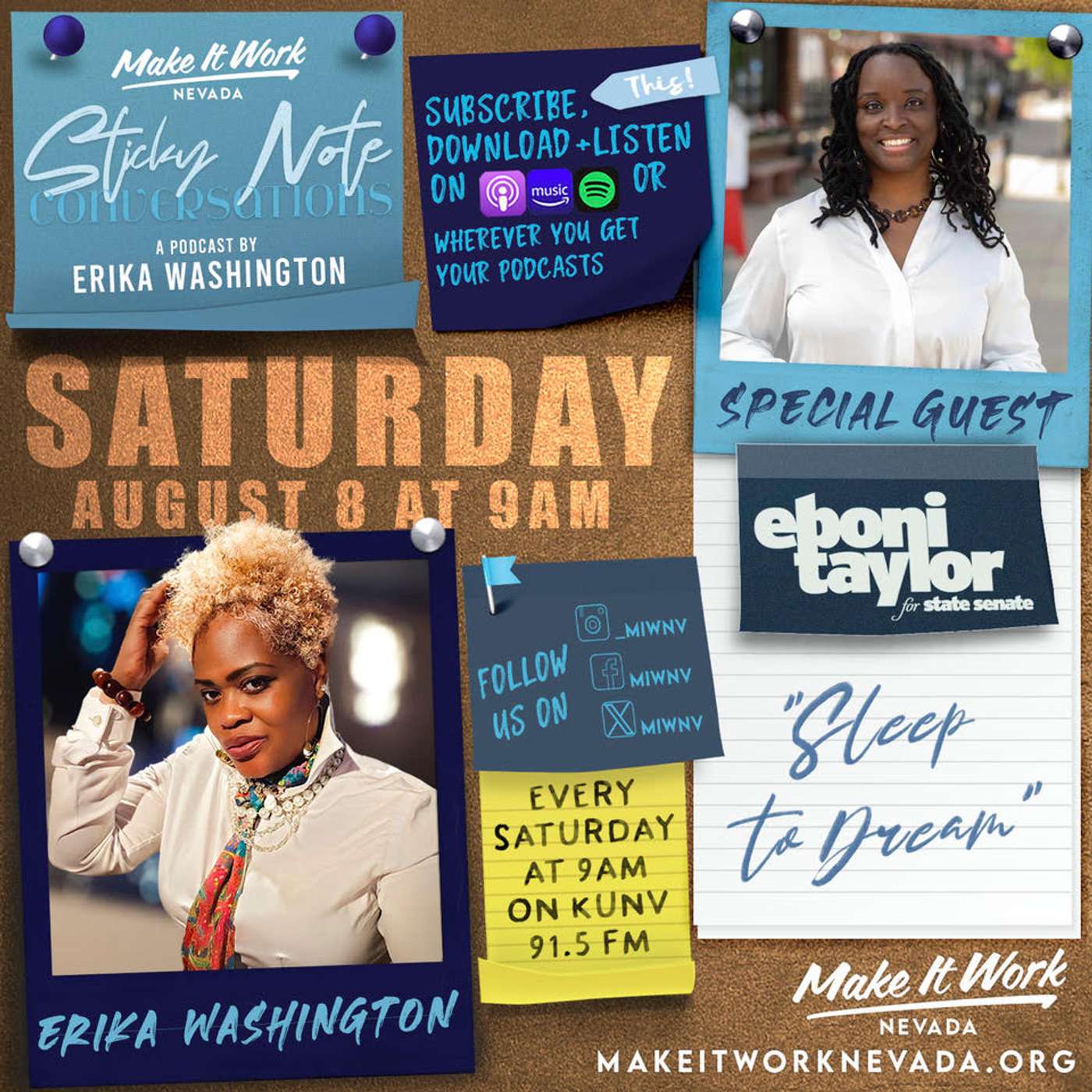
Eboni Taylor - "Sleep to Dream"
2d ago01:03:54Tap to summarizeEboni Taylor joins Sticky Note Conversations to reflect on her first run for Michigan State Senate District 3 — what she learned on the doors across Detroit's east side, Highland Park, and Hamtramck, and why she made motherhood the centerpiece of her campaign. Erika and Eboni dig into the affordability crisis, DTE's monopoly and record profits, the "progressive" label, Michigan's role as a swing state, the Democratic Party's struggle to connect with working families, and what democracy and the American dream really mean when people are just trying to survive. (00:00) - Intro (00:43) - Meet Eboni Taylor (03:05) - Motherhood & Identity (05:16) - Michigan State Senate District 3 (07:33) - Issues on the Doors (09:21) - Why I Decided to Run (12:14) - The "Progressive" Label (18:43) - Utility Crisis & DTE (28:09) - Michigan's Political Landscape (36:17) - The Democratic Party's Future (43:45) - Defining Democracy (53:29) - The American Dream (56:24) - Running Again & Closing
Transcribe →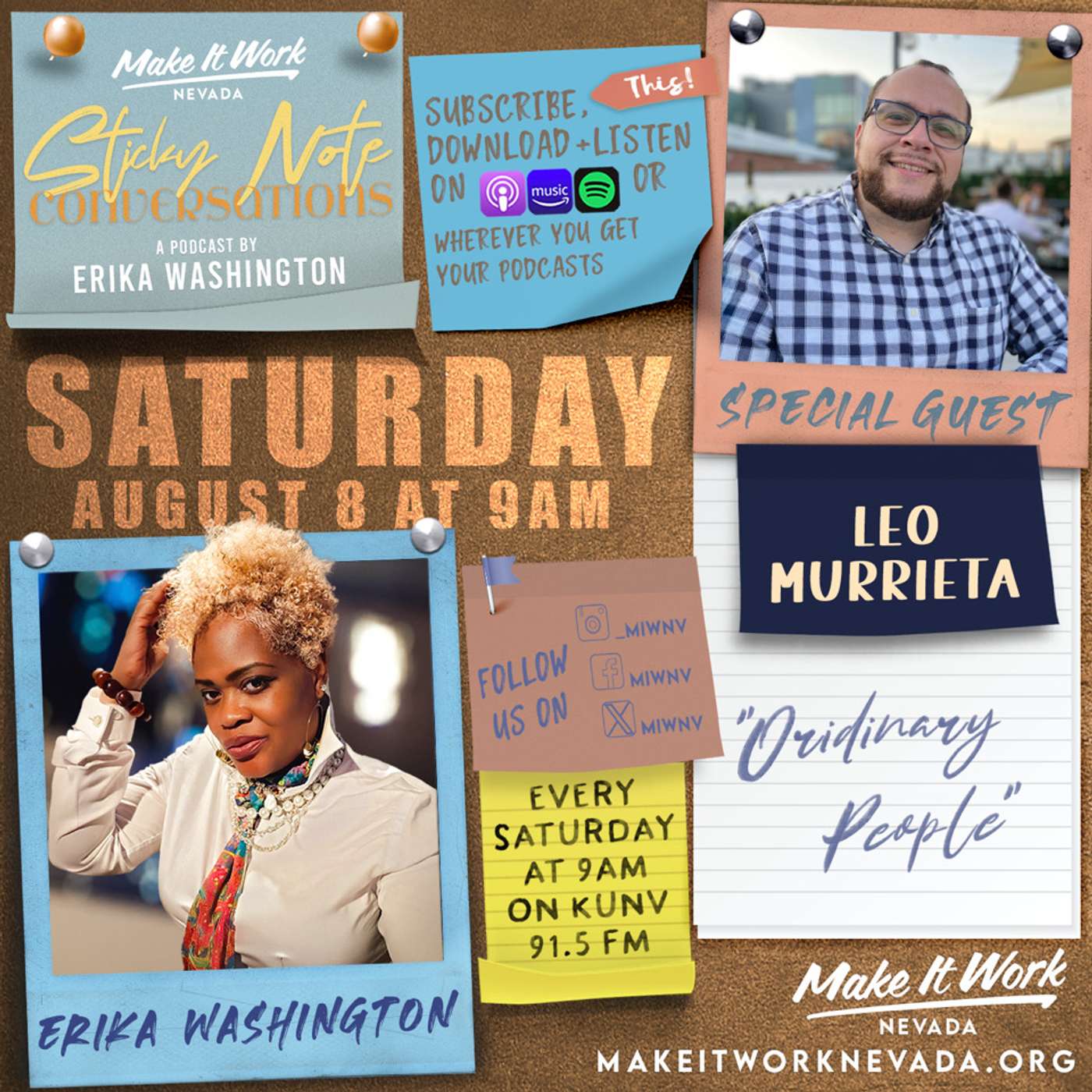
Leo Murrieta - "Ordinary People"
1w ago01:24:57Tap to summarizeHost Erika Washington sits down with Leo Murrieta — former Executive Director of Make the Road Nevada and proud "recovering executive director" — to talk about what real organizing looks like, the price of citizenship, and why staying moderate is a losing game.Leo shares his journey from arriving in the U.S. as a week-old baby to navigating notario fraud, discovering he'd been a citizen for a decade without knowing it, and leading one of Nevada's largest Latino power-building organizations for nearly nine years. He also opens up about the night of the Route 91 massacre — and what it taught him about who gets left behind.From grassroots base-building to the 2028 presidential primary, Leo and Erika get into what's broken in progressive politics, who the real leaders are (hint: they're not in the title), and what the American dream means for a queer immigrant who's spent his career fighting for others.(00:00) - SNC S3 Leo Murrieta - "Ordinary People" (00:41) - Introduction (02:39) - Who Is Leo Murrieta? (03:59) - How Leo Got Into Politics (07:27) - The Citizenship Journey & Notario Fraud (16:30) - Route 91 & Make the Road Nevada (25:55) - Lessons from Nine Years as Executive Director (27:44) - Leadership, Power & the Political Landscape (40:08) - Grassroots Organizing vs. Voter Mobilization (51:22) - Nevada as Second in the Nation & 2028 (59:49) - Rejecting Moderate Politics (01:08:16) - What Is Democracy? (01:13:59) - The American Dream (01:19:11) - Closing Reflections
Transcribe →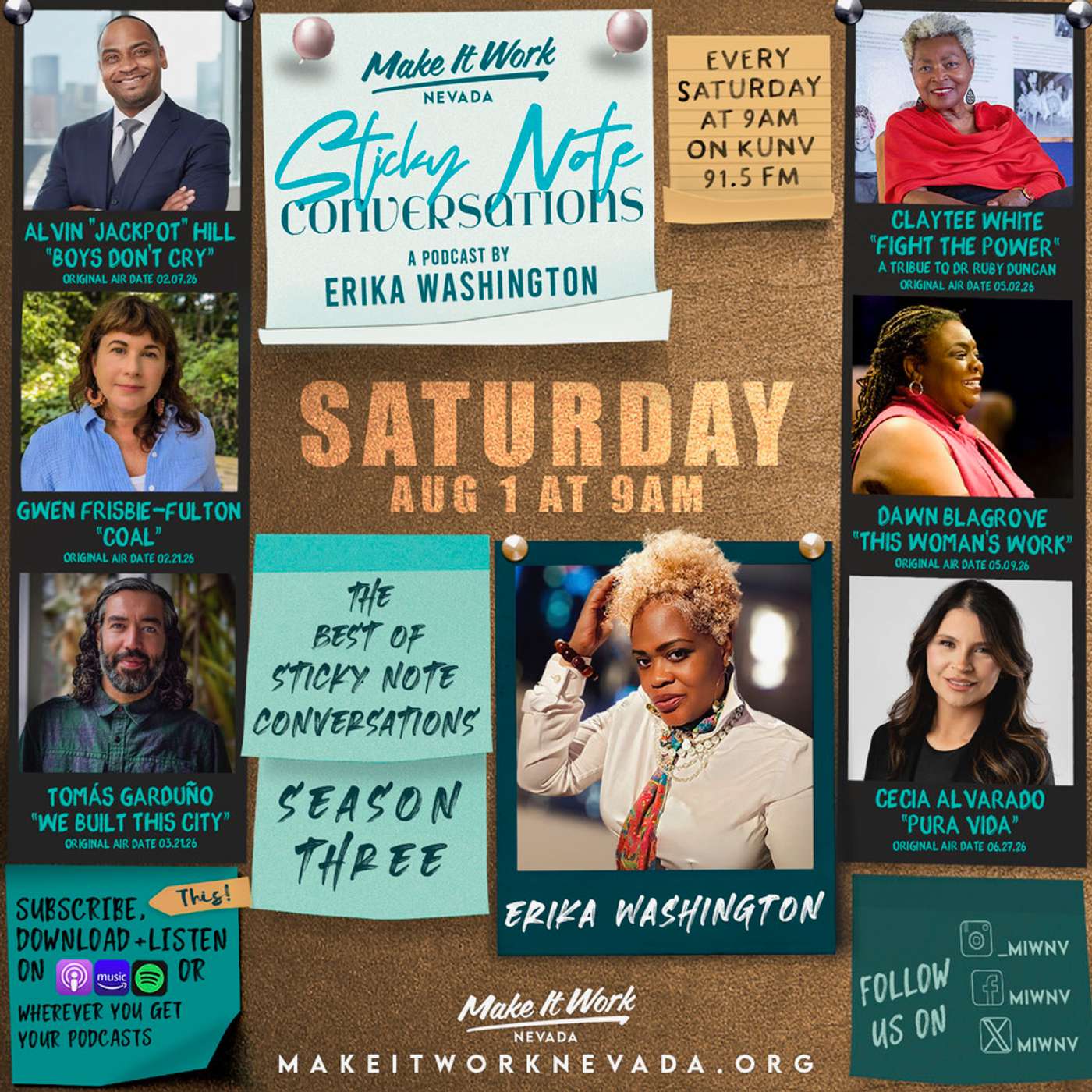
The Best Of Sticky Note Conversations Season Three
2w ago00:59:31Tap to summarizeTime is flying — Erika Washington can't believe we're already halfway through the year. In this special roundup episode, host Erika Washington revisits the most powerful conversations from Season 3 of Sticky Note Conversations, a season that explored what it takes to build stronger, more resilient communities while defining and demanding democracy.From organizers to writers, historians to community leaders, this season's guests proved that real change begins with honest conversations and the courage to fight for more. Relive the throwbacks:Alvin Hill – Boys Don't Cry: A raw conversation on masculinity, grief, and parenting, challenging the idea that strength means hiding emotion — especially for Black men.Gwen Frisbie-Fulton – Coal: A firsthand account of living next door to neo-Nazi recruiters, unpacking how economic hardship fuels extremism and how communities can fight back.Tomás Garduño – We Built This City: 25 years of grassroots organizing wisdom, distilled into hard-won lessons on humility, timing, and courage.Claytee White – Fight the Power: A tribute to the late Dr. Ruby Duncan, tracing her legacy of welfare rights organizing and the Black women who powered the movement behind the scenes.Dawn Blagrove – This Woman's Work: An unflinching take on electoral strategy, accountability, and building lasting community institutions beyond crisis response.Cecia Alvarado – Pura Vida: An honest look at immigration, identity, and why authentic outreach matters in reaching Latino voters.Erika closes with a personal reflection on what it means to stay engaged — and why she refuses to just watch from the sidelines.🎧 Listen now on Spotify, Apple Podcasts, YouTube, and wherever you stream audio.(00:00) - Intro (01:54) - Alvin Hill - Boys Don't Cry (09:47) - Gwen Frisbie-Fulton - Coal (26:31) - Tomás Garduño - We Built This City (39:48) - Claytee White - Fight the Power (47:29) - Dawn Blagrove - This Woman's Work (51:29) - Cecia Alvarado - Pura Vida (58:29) - Erika's Final Word
Transcribe →
Vanecia Boone - "The World is Coming to a Start"
3w ago01:24:03Tap to summarizeIn this episode of Sticky Note Conversations, host Erika Washington sits down with actress, director, theater educator, and MFA artist Vanecia Boone for a wide-ranging conversation about building a creative, fulfilling life on her own terms.Vanecia opens up about raising her eight-year-old son as a single Black mother — from navigating hypermasculinity and code-switching to the tough decision to pull him out of traditional school for homeschooling. She shares how motherhood transformed her from a free-spirited "couch surfer" into someone deeply intentional about safety, routine, and presence.The conversation moves through Vanecia's lifelong love of theater, her upcoming role in Purlie Victorious at the International Black Theatre Festival in Winston-Salem, NC, and the plays that changed her life. She and Erika dig into AI's growing role in the classroom and in playwriting, the acting techniques she teaches her students (and her son) for "taking off the mask," and her path to becoming an herbalist after her own mother's death.They close with a candid discussion of reproductive justice, birth stories, legacy, and what the American dream really looks like for a 38-year-old single Black woman building community, land, and freedom for the next generation.Topics covered:Becoming a mother and redefining herselfRaising a Black son with self-awareness and freedomHomeschooling and navigating judgment as a parentHer journey into theater and upcoming performance in Purlie VictoriousAI's impact on education, playwriting, and authenticity in artMental health, acting technique, and "weathering"Herbalism, reproductive justice, and her birth storyLegacy, identity, and reclaiming her name after lossLearn more about the International Black Theatre Festival at NCBlackRep.org. (00:00) - Introduction (01:38) - Meet Vanecia Boone (04:03) - Who Is Vanecia? Values and Faith (07:44) - Becoming a Mother (09:36) - Raising a Black Son (18:01) - Parenting Never Stops (21:29) - Her Journey Into Theater (26:28) - Plays That Changed Her Life (29:52) - Black Theatre Festival and Purlie Victorious (33:25) - Balancing Rehearsal and Motherhood (36:18) - The Homeschooling Journey (44:09) - Teaching the Next Generation (50:39) - AI, Theater, and Authenticity (56:42) - Masking, Weathering, and Mental Health (01:01:52) - Becoming an Herbalist (01:06:02) - Reproductive Justice and Her Birth Story (01:16:45) - Legacy and the American Dream (01:18:20) - Closing Thoughts
Transcribe →
Athar Haseebullah - "A Long Walk to D.C."
Jul 1801:19:31Tap to summarizeThis week on Sticky Note Conversations, host Erika Washington sits down with Athar Haseebullah, Executive Director of the ACLU of Nevada, for a deeply personal and wide-ranging conversation. Athar shares his journey as the son of Pakistani immigrants growing up Muslim in Las Vegas, the loss of his father as a teenager, and how his faith and community shaped his commitment to justice work — leading him to Howard University for both undergrad and law school.The conversation turns to Athar's work leading Nevada's largest civil rights organization, breaking down what the ACLU actually does, how it's funded, and why it takes on the government exclusively through litigation, policy advocacy, and community education.Erika and Athar dig into some of the biggest legal battles of the year, including the Supreme Court's rulings on birthright citizenship, temporary protected status for Haitian and Syrian immigrants, and trans athletes' rights — and what these decisions mean for equal protection going forward. They also explore bigger questions: what democracy really means in America today, the generational shift happening in politics, and Athar's own vision of the American dream.In this episode:Athar's upbringing as a first-generation Pakistani American Muslim in Las VegasChoosing Howard University over Harvard and YaleWhat the ACLU does and how it's fundedMajor Supreme Court decisions on immigration and civil rightsThe Supreme Court ruling on trans athletes and equal protectionIs America a democracy — and can it become a stronger one?Athar's vision of the American dreamFollow Athar Haseebullah on TikTok and Instagram @AtharEsq, and learn more about the ACLU of Nevada at ACLU-NV.Sticky Note Conversations airs Saturdays at 9:00 AM on KUNV 91.5, and is available everywhere you stream podcasts.(00:00) - Introduction (00:44) - Meet Athar Haseebullah (10:15) - Growing Up in Las Vegas (13:48) - High School and Choosing Howard (27:02) - Law School and Staying at Howard (31:04) - Race, Immigrants, and the Black Community (40:45) - What is the ACLU (49:23) - How the Supreme Court Works (58:58) - Trans Rights Case (01:08:14) - Is America a Democracy (01:11:40) - The American Dream (01:14:57) - Closing and Where to Follow
Transcribe →
Wil Black - "Seasons of Love"
Jul 1101:01:32Tap to summarizeWhat starts as a lighthearted catch-up between host Erika Washington and the shows editor, Wil Black quickly turns into one of the most honest conversations yet. Erika recounts an unsettling encounter she witnessed at a Las Vegas hotel — a young hostess being harassed by an older male guest — and unpacks the discomfort, complicity, and responsibility that come with bystanding. From there, the two dive deep into the messy, tender work of parenting adult children: Wil reflects on his daughter's wedding and the complicated feelings it stirred up about fatherhood and forgiveness, while Erika opens up about the push-and-pull of trying to build friendships with kids who are becoming their own people. The conversation winds through dating apps, communication styles, and the different ways love gets shown and received — landing, as always, on real talk about growth, grace, and showing up for the people we love.
Transcribe →Revisiting: "What Is Democracy"
Jul 400:58:53Tap to summarizeHost Erika Washington revisits powerful moments from past guests to tackle one big question: What is democracy, and do we really have it?From a mother teaching her toddlers about voting through dance-party elections, to a candid late-night conversation with her friend Derek about Trump, free speech, and why Black voters need to show up decisively — this episode weaves together perspectives on equity, representation, and the gap between democracy's ideals and its reality in America.Guests reflect on gerrymandering, voter suppression, the power of local elections, and why "vote for the lesser of two evils" misses the point of what democracy should be. It's an unfiltered, funny, and deeply honest look at democracy from the people living it every day.
Transcribe →
Cecia Alvarado - "Pura Vida"
Jun 2701:20:33Tap to summarizeIn this episode of Sticky Note Conversations, host Erika Washington sits down with Cecia Alvarado, an independent political consultant who has spent years organizing within Nevada's Latino community. Cecia arrived in the United States from Costa Rica at 16 — alone, with limited English, and quickly placed in ninth grade despite her age — and has been navigating broken systems ever since.Erika and Cecia cover a lot of ground: why Latino voters supported Donald Trump not once but twice, the "mariachi politics" that Democrats rely on every October, and why waiting your turn is advice women of color simply can't afford to take. Cecia also opens up about her own 20-year journey toward U.S. citizenship — still in progress — and what it's like to be "too American" in Costa Rica and "not American enough" at home.This is a candid, honest conversation about identity, immigration, political power, and what the American dream actually looks like when you've had to fight for every piece of it.Topics covered: Latino voter trends, the 2022 primary, immigrant experiences, political consulting, civic engagement, and the ongoing work of building community in Nevada.(00:00) - SNC S3 Cecia Alvarado - "Pura Vida" Alvarado FULLFINAL (00:41) - Introduction (03:18) - Cecia's Origin Story: Coming to the U.S. at 16 (16:33) - Entering Politics: The Trump Effect (20:27) - Why Latinos Voted for Trump (33:48) - Empowering the Latino Vote (53:30) - The Long Road to Citizenship (59:53) - What Is Democracy? (01:03:15) - The American Dream Reimagined (01:15:16) - Advice for Women of Color Running for Office
Transcribe →
Alvin Hill - "Murder Was The Case"
Jun 2001:05:25Tap to summarizeWhat is the price of a Black child's life? Host Erika Washington sits down with returning guest Alvin Hill — entrepreneur, formerly incarcerated father, and constraint navigation researcher — to unpack two cases that shook the internet: the not-guilty verdict in South Carolina v. Rick Chow, where 14-year-old Cyrus Carmack-Belton was shot and killed over a suspected dollar water bottle, and the 35-year sentence handed to 18-year-old Karmelo Anthony in Texas.Erika and Alvin go deep on the layers beneath both cases — from the complexity of young Black boys carrying guns in dangerous neighborhoods, to how a defense attorney can strip a child of their innocence in a courtroom. They wrestle with hard questions: Was justice served? Can you judge anyone's reaction? And what do we tell our kids about a system that was never designed for them?Alvin gets raw about his own past, fathering a son in Southwest Detroit, drill music, and what it really means to teach Black children to maneuver a world that's stacked against them — without snuffing out their light. The conversation also touches on the calls to boycott Asian-owned businesses and what it truly means to support Black businesses with intention.This one is layered, honest, and necessary. (00:00) - SNC S3 Alvin Hill - "Murder Was The Case" (00:42) - Intro & Context (04:06) - Alvin Hill Returns (05:05) - Alvin's PhD Journey (08:25) - South Carolina: Rick Chow Case Breakdown (20:11) - The Verdict: Was Justice Served? (34:47) - Karmelo Anthony Case (39:38) - Navigating Prison at a Young Age (47:06) - The Justice System Wasn't Built for Us (49:19) - Teaching Black Children to Navigate a Rigged System (54:43) - Boycotting Asian Businesses: Is It the Answer? (55:24) - Supporting Black Businesses
Transcribe →
Derek Washington - "Everybody Wants to Rule the World"
Jun 1301:10:37Tap to summarizeIn this episode of Sticky Note Conversations, host Erika Washington and Derek Washington record from the new West Las Vegas Library podcast room, discuss Dr. Ruby Duncan’s legacy and her emphasis on voting, and review Nevada’s recent primary election. They criticize campaign misinformation and union political tactics—particularly around efforts to unseat incumbents over opposition to the film tax credit bill—arguing these moves fueled racialized dynamics and community backlash. They highlight low turnout (about 21% of active registered voters), discuss close and notable races (including Jovan Jackson’s decisive win and Howard Watts’ tight contest), and note strong performances by several progressive candidates. They also address concerns about closed primaries for nonpartisan voters and discuss issues shaping future elections, including organizing outreach to independents and the impact of Israel politics on young voters ahead of 2028.(00:00) - Intro & West Las Vegas Library (02:43) - Tribute to Dr. Ruby Duncan (07:10) - 2024 NV Primary Overview & Union Influence (11:32) - Union Bullying & the Film Tax Credit Bill (16:30) - Race, Black Seats & Electoral Representation (26:37) - Jovan Jackson & Howard Watts Races (30:06) - Progressive Wins & Gen Z Energy (35:21) - Voter Turnout Numbers (38:33) - Race-by-Race Breakdown (57:55) - Open Primaries & Independent Voters (59:20) - Looking Ahead to 2028 (01:02:47) - 2028 Presidential Contenders (01:09:03) - Remembering Miss Ruby
Transcribe →