Loading summary
Transcript40 lines
- [00:07]
A
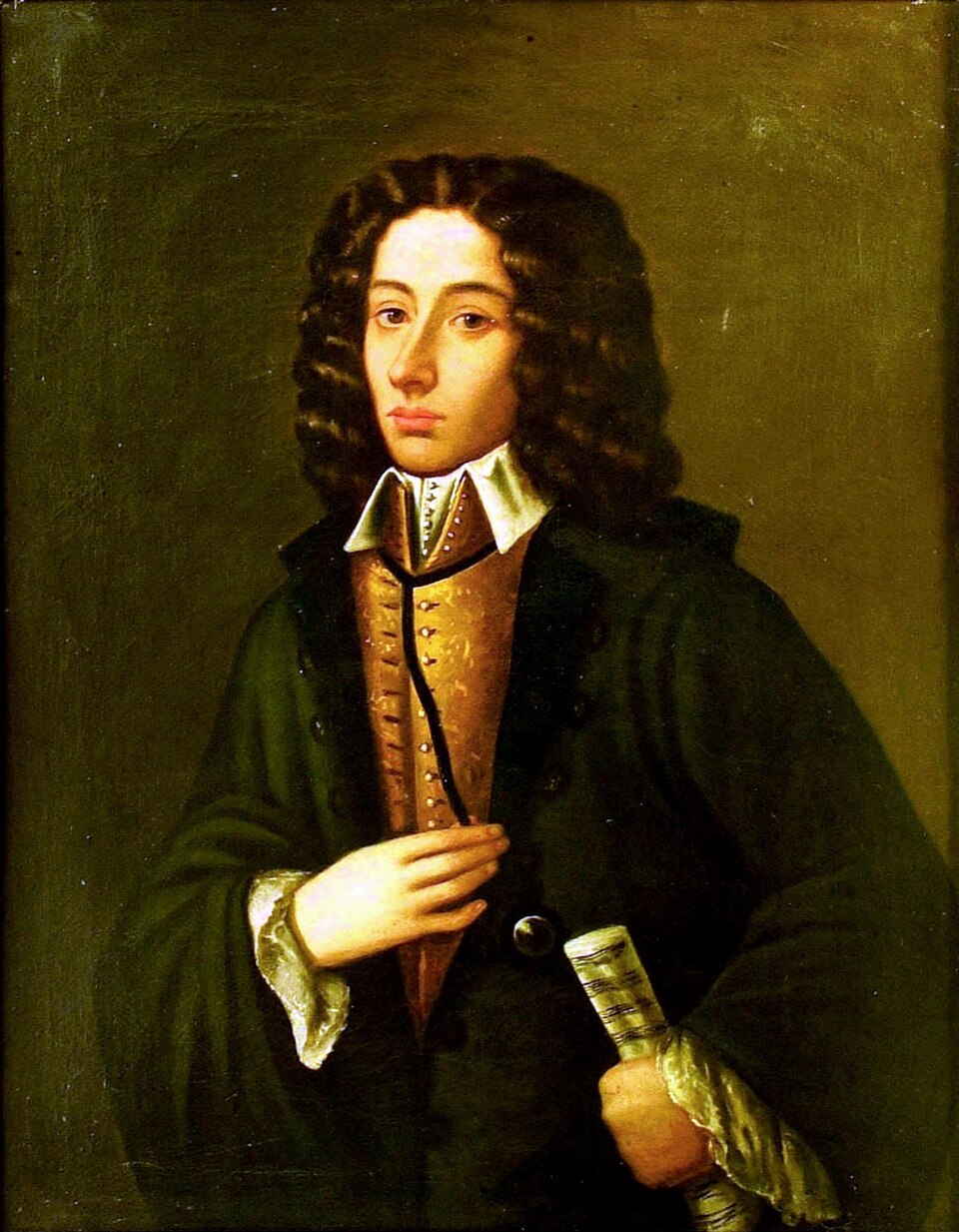
Hello and welcome to Sticky Notes, the classical music podcast. My name is Joshua Weilerstein, I'm a conductor and I'm the music director of the Orchestra National Delille and the chief conductor of the Aalborg Symphony. This podcast is for anyone who loves classical music, works in the field, or is just getting ready to dive in to this amazing world of incredible music. Before we get started, I want to thank all of my Patreon sponsors for making season 11 possible. And I also want to specifically thank Eric for sponsoring today's episode on Pergolesi's Stabat Mater. If you'd like to support the show, please head over to patreon.com stickynotespodcast and if you are a fan of the show, please take a moment to give us a rating or review on Apple Podcasts or Spotify. It is greatly appreciated. So I was in Lille last week having a fantastic time doing Shostakovich's 10th Symphony and Noah Bendix Bogley's First Fiddle Fantasy, a fantastic klezmer concerto that Noah wrote himself. Noah, for those of you who are not familiar with him, is the concertmaster of the Berlin Philharmonic, and so it was really just a special experience to have him with us, and it was just a fantastic piece that I really encourage you to seek out for this week. As you can probably tell, I'm slightly under the weather, but I will be heading to Porto next week to conduct there with a fantastic program again, Shostakovich's 10th Symphony, Mahler's Ruckert Leader, and Hector Para's Three Constellations. And I'm really, really looking forward to that. For the podcast this week I have an episode sponsored by Eric on Patreon on Pergolesis Stavat Mater. This is a repertoire that I don't get to cover that often, so this was really fun for me to dive into. If you would like to pick your own piece to be talked about on the show, please head over to patreon.com stickynotespodcast and there you can find out how Onto the show. Many aspects of Giovanni Battista Pergolesi's life seem relatively normal when it comes to composers of the Baroque era. He was prolific, died young, and his music was very famous only after his death. But actually, all three of these facts are complicated by the unique circumstances of Pergulesi's life. He was somewhat prolific, but actually dozens of pieces that have been attributed to him are no longer thought of as being authentic, including much of the music that Stravinsky made famous in his ballet Pulcinella Pergolese didn't just die young, he died remarkably young at the age of 26 from tuberculosis. And the fact that he was famous only after he died actually made him unique among composers of his time, where popularity during a composer's lifetime was a mark of success, with most composers falling into obscurity as soon as they passed away. In Bergalesi's case this was the opposite, with a massive amount of interest in his music just after his death, which in some ways led to the somewhat museum like atmosphere classical music has today. Perglesi was ahead of his time in many ways and that brings us to the piece we are going to be talking about, his Stavat Mater. We'll talk more about what the Stabat Mater is later on, but putting it simply, it is a musical setting of the poem Stabat Mater Dolorosa in a horrible translation, the Sorrowful Mother Stood, which was a 13th century Christian hymn poem to the Virgin Mary that emphasizes her suffering as she witnessed Jesus crucifixion. Fiction the poem has been set to music by many composers, but Pergolesi's, surprisingly enough, considering his status as a relative unknown today, has stood the test of time in a way that many other settings by more famous composers haven't. Today, on this Patreon sponsored episode, we'll learn a little bit about Pergles life or what we know of it and talk through this baroque era masterpiece. All this and more is coming right up on Sticky Notes.
- [04:15]
B
Sam.
- [04:46]
A
Pergolesi was actually born Giovanni Battista Draghi in Jesi, Italy in 1710. But he was given the nickname Pergolesi due to the origins of his ancestors who were from Pergola. He was an early champion of opera buffa, which loosely translates to comic opera. I went through the massive debates over opera buffa and opera seria, serious opera in my episode Introduction to Opera. But essentially opera buffa and opera seria were two branches of Italian opera that were very popular during this period. They both had their passionate supporters and Pergolesi actually played a part in a huge battle in France over their relative merits. Pergolese's biggest hit during his life was a comic opera intermezzo called La Serva Padrona, which funnily enough is a 40 minute long opera meant to be performed as a kind of palate cleanser. And in between, Pergolesi's opera Seria, the Proud Prisoner. Again, this kind of thing reminds us how different performing standards and expectations were at the time. Anyway, this little Intermezzo opera became Pergolesi's most successful piece during his lifetime, but long after his death, when it arrived in Paris, it created a scandal with critics going back and forth in the famous pamphlets. Jean Jacques Rousseau, a supporter of Italian opera, wrote, but without insisting on the tragic duets, a kind of music that we do not know in Paris. I can give you a comic duet that is known to everyone there, and I mention it boldly as a model of singing, unity of melody, dialogue and taste, which I believe will lack nothing when it will be well executed to audiences who know how to listen. What Jean Jacques Rousseau was talking about was an aria in the first act of La cerva padrona.
- [06:34]
B
Sam.
- [07:08]
A
Rousseau went on to mock French opera and French singing in a pretty brutal way, saying, I believe to have been made to see that there is neither measure nor melody in French music because the language is not sensitive, that French singing is only continual barking, unbearable to all unprejudiced ears, that the harmony is brutal without expression and feeling uniquely like schoolboys, patting that French airs are not airs, that French recitals are not recitals. Hence I conclude that the French have no music and can have none, or that if ever they have, so much the worse for them. Naturally, this created a bit of a backlash, with many writers defending French culture and French opera. In the end, the controversy lasted about two years before people moved on, but not before it had been dubbed the Querelle des Bouffons, which does not, as it is sometimes seen, translate to quarrel of the buffoons, but actually to quarrel of the comic actors, since Buffon did not have the same meaning as it does now. Okay, linguistic explorations concluded, we can now go back to Pergolesi. Pergolesi was quite prolific as a composer writing operas, as we have seen, sacred music, as we're going to talk about today, secular music, which included proto symphonies decades before Haydn truly invented the form. As I said in the introduction to the show, successful composers during Pergolese's time did not expect their music to live on after their deaths. Most composers wrote for the here and now and not for posterity. But the posthumous popularity of Pergolesi would begin to change that. When he died, interest in his music skyrocketed, with historian Charles Burnley writing, from the moment his death became known, all Italy manifested a keen desire to hear and possess his works. And that Carrel de Buffon I mentioned actually touched off the major flowering of popularity for Pergolesi's music. Suddenly, everyone wanted to get their hands on Pergolese's music and to perform it he became a household name practically overnight, and that led to a lot of issues. One was that greedy publishers and copyists decided they could make a quick buck off of the name Pergolesi. So they began slapping his name on just about any piece of music they could get their hands on that didn't already have a composer's name attached to it. Pergolesi soon had something like 500 compositions attributed to his name. But the thing is, pergolese died at 26 years old, and his life had been marked by constant health problems, so there was no way that he could have written all this music. In the end, scholars have whittled down the false attributions and can only definitively say that there are 28 existing works of Pergolesi, and there is considerable debate about approximately 20 more works. We will likely never know exactly how many pieces Pergolese wrote during his short life, which, of course, grew his appeal even more, especially to the late Romantics, who idealized the idea of the young genius cut off by poor health. So part of Pergolese's appeal is the mystery of so many of his works. The Stabat Mater, the subject of today's show, is either the last or the second to last work he wrote before his death. And it was written inside of a Franciscan monastery on a commission, we think, from the Knights of the Virgin of the Seven Sorrows, a Naples confraternity who intended Pergolese's version to replace a version by Alessandro Scarlatti, which was now considered outdated. The Sabat Mater poem hymn itself has existed since the 13th century. There is no fully accepted author to attribute the text to, though many theories have been put forward. The text is highly emotive, full of pain and suffering, and describes Mary's emotions as the biblical Jesus Christ goes through the stations of the Cross. The text was prescribed during Pergalesi's lifetime as a sequence for the Mass of the Seven Sorrows of Mary, and it continues to be used today. But Pergolesi would never have expected to hear this music outside of a small, noble church setting. The fact that it is performed today in regular concerts might have been a shock to him, as well as the fact that many conductors have greatly expanded Pergolese's modest orchestration through the years. The piece is written for two solo voices, strings and continuo, which can be any combination of an organ, harpsichord, lute, or other continuo instruments. But composers and conductors have honestly, they've gone wild with this orchestration. Some have added more strings, winds, and brass, and some have even added a choir. Nowadays, though, you are much more likely to hear the piece in its original form. There are a few places where I'll show you the massive differences these choices can make, almost making you feel like it's a different piece of music. But now that we've got all this preamble out of the way, let's dive into the music. The version I'll use during the show today is with the Academy of Ancient Music, conducted by Christopher Hogwood, with the solo singers, soprano Emma Kirkby and countertenor James Bowman. The first movement of the Stabat Mater is probably the most famous of the piece. The great French philosopher Jean Jacques Rousseau wrote that the opening in the movement was the most perfect and most touching to have come from the pen of any musician. It's not hard to see why Rousseau would have written that. This opening seems to define tragic Baroque era music in its use of harmonic tension and a slowly rising line that aches with a very Baroque kind of pathos. The main device that Pergolese is using in this opening is suspensions, which are notes that hang over the resolution of the harmony, creating a dissonance that is then resolved a beat or two later. Perlaese writes the movement in F minor and begins on an F minor chord, but immediately the first violin comes in on a G that needs to resolve down to the F, but it does it one beat after the continuo does, which is what creates that tension. Percolese does two things at once. He writes those suspensions, but he also is allowing the line to slowly rise in the continuo part, creating a contrary motion that is absolutely intoxicating. The suspensions have to fall down to their resolving note, but all the time they are being carried up by the harmony. It's an ingenious harmonic tactic and it sets the atmosphere right away. As Pergolesi sets the stage for the voices, he also employs a few other quintessentially baroque tactics, including deceptive cadences. A deceptive cadence is exactly an expected arrival to the main harmony. In this case, F minor is interrupted, usually by a minor chord that is a sixth up from the main key. That sounds very technical, but it's pretty easy to hear. Instead of this, You get this. Composers used this to subvert expectations and also to add another level of pathos, especially in minor key movements. Perklesi uses this brilliant here to add to the painful and halting nature of this music. Now the stage is set for the voices who take on that same rising line from the opening of the piece. The traditional translation of the Stabat Mater was done by Edward Casual, which is not a literal translation, but a more poetic one. Nevertheless, it is the standard translation and the one that I'll use here. The first movement of 12 movements from Per Gallese is just the three first lines of the poem. At the cross her station keeping stood the mournful mother weeping close to Jesus to the last. To emphasize the pain of Mary at the cross, Per Galesi employs plunging lines for the voices over and over, once that initial rising line has exhausted itself. He also uses appoggiaturas, yet another baroque cliche, and I don't use that term negatively. That involves something similar to a suspension. But this time the emphasis on the first note is not a dissonance, but instead just adds more emotional weight to the melody. Here's an example of a melody without a. And then here's the melody with an appoggiatura. And here's what Pergolesi does with the appoggiaturas, obviously in a much more tragic manner than my demonstration. Pergolesi then returns to that haunting rising line. And here is where I'll show you what this sounds like with a full orchestra playing Pergolese's music. This is a recording of the Berlin Radio Symphony Orchestra with Lauren Mazel conducting and Krista Ludwig and Evelyn Lear singing. You'll hear that this is a completely different sound world. It's also a bit closer to the sound our modern ears are used to. Which one do you prefer? I could go either way, though. This version is a little heavily vibrated and intense for me, and I do prefer the pure purity of the historically informed version. With that said, sometimes the historically informed versions lack depth to my 21st century ears. So usually what I would prefer is a kind of hybrid, historically informed, but not straight jacketed, allowing for the evolution of expression without destroying the lessons of the past. As Pergolese brings this movement to an end, he brings back that rising line. But this time he writes for the music to be sung so sotto voce in an under voice. This isn't as simple as singing softly. It has a different quality, and in great performances you really feel like there is something different about this third and final appearance of the theme. It's also cut short as the movement comes to its tragic.
- [20:22]
B
Ram.
- [20:48]
A
There are 12 movements in the Stabat Mater, so I won't be spending as much time on each one as I did in the first movement, so that I can cover the entire piece in one episode. The second Movement takes on the next three lines of the through her weeping soul, compassionate and grieving, A sword passed. Pergolesi marks the movement to be played Andante amoroso with a walking tempo and with love, which is quite an unusual marking not only for the Baroque era, but for any era. The music is in a flowing three and is an aria for the soprano soloist,
- [21:39]
B
Sam.
- [22:09]
A
Despite the nature of the text, Pergolese lightens things up from the first movement. And this kind of music was actually heavily criticized for making light of the text or of not taking its somber tones seriously enough. But Pergolese understood that gentle major key music can also portray sadness. Take the second section of this aria, where Pergolesi repeats the text in mostly a major key. But the way he stretches the rhythm of the soloist creates a kind of aching quality to it, belying the dancing major key music underneath. And then, of course, as you noticed, the music became more and more minor ish as it progressed, as if infected by the seriousness of the text. Pergolese follows this with another sotto voce moment as the tension mounts and the dissonances start to take over as the movement ends in one of the most final of C min. The third movement is a duet for the two singers and takes the next three lines of text. Oh, how sad and afflicted was that blessed mother of the only begotten. The movement is in G minor and is in one of the slowest tempos we have heard so far. It also is the first movement where the singers drive the action right from the start, not waiting for an orchestral introduction. The introduction seems to set up a movement of unrelenting bleakness, but Pergolesi magically turns us towards B flat major after a brief pause and a sweetness to the sadness emerges.
- [24:42]
B
Sam.
- [25:11]
A
Okay, now things are about to get a bit weird. Pergolese has avoided drastic dissonances, even though they did exist at the time in this kind of music, but they were rarely used. But for a moment, Pergolese seems to channel music that would be written long after him, as we feel a shocking dissonance in this moment. Don't worry, there's no way you'll miss it.
- [25:37]
B
Sa.
- [26:08]
A
Isn't that amazing? One note adds so much pain to the music and to the text. It's not something revolutionary. This is often how Baroque composers portrayed pain, but a lot of those lesser composers would overuse harmonies like that. And since Pergolese is basically doing it for the first time here, it really means something. It also takes us to the end of this Somber movement. The fourth movement is the fastest movement so far, but not necessarily the most dramatic, at least at first. In fact, I won't tell you the text yet because it might surprise you. Based on this music, What do you think the text is? Something about the good times in Jesus and Mary's life? Well, this is the who mourned and grieved, seeing and bearing the torment of her glorious child. This movement doesn't seem to correspond at all to the text and is actually much more operatic than anything else, even including a bouncy, offbeat accompaniment. This really confused me, to be honest, so I reached out to my friend Mahan Esfahani, the wonderful harpsichordist, to explain to me why this short movement would be written this way with that text. Here is the start of his answer, but for the rest, I'll share it on my Patreon exclusive mini episode.
- [29:30]
C
This is a question that's often asked about quite a bit of Italian music of the classical period, going into, I guess, what we imperfectly call bel canto, which is, you know, Rossini and. And his contemporaries. And the issue really is that, you know, one must draw a distinction between Baroque era ideas of passion and sort of great contrasts, and the classical sort of 18th century idea of sentiment or sentimentalism. This is not the same as sentimentality, by the way, which is sort of a cheap value. But the 18th century looked back on the Baroque period sort of in horror and on the sort of extreme contrasts and the sort of grotesque sort of gothic aspects of it. Indeed, the term baroque is a. Is a pejorative term. And so, you know, particularly in Italy, there's the music gets.
- [30:36]
A
The next movement is where Pergolese starts to expand things out. The first four movements have all taken one three line group of the text, but now Pergolese uses three three line groups at once. In the longest movement since the first, the lines of text are who is the man that would not weep if he saw the mother of Christ in such torment? Who could fail to feel sorrow to regard the merciful mother grieving with her son for the sins of his people? She saw Jesus in torment and submitted to the scourge. It makes sense that Pergolese would group these lines as they seem more connected in spirit than the first four do. Pergolese returns back to C minor for the beginning of this duet with a soaring line for the soprano over a 4 floating accompaniment that seems to embody sad baroque music. One thing Bergalesi has not done so much so far is to put specific harmonies or specific actions on the melodies to correspond to the text. But I think he does it here by having the soprano hang on to the word that roughly translates to such or so great as in big. Perlesi does not choose to hang on the word agony, but instead he emphasizes the magnitude of that agony. The counter tenor sings the next three lines of text, and for the end of that phrase, Pergolese has the voice and hang on the note grieving, making a kind of interesting play of words if we combine the two longer notes. Such grieving. Basically a good summary of this entire hymn. Now Pergolese for the first time combines the two groups of text together, with the soprano singing their lines and the countertenor singing theirs.
- [33:11]
B
Sam,
- [33:52]
A
I love the end of this section where the two singers ask together who? And the response is the third group of three lines that Pergilesi uses for the duet. The the music is much faster now and much more dramatic. It includes dramatic pauses, pedal tones and more as these three lines go by in a flash. This is also operatic music, but music that seems more appropriate for the text than the earlier operatic moment. For the next three movements, Pergolese returns to using just one group of three lines per movement. The sixth movement is a soprano aria on this text. She saw her sweet offspring forlorn and dying as he yielded up his spirit. We've returned to F minor, the opening key of the piece, and Pergolese starts to use a bit more word painting now, especially in the moment where he uses the text Forlorn in Dying, Pergolese slows down the motion of the music and we feel those appoggiaturas again, like we did in the first movement. It's wonderful to be able to describe music that uses the text forlorn as sounding forlorn. And that's exactly what it is. And then Pergalesi takes our breath away by using the text yielded up his spirit to stop the music in its tracks, as we practically hear a depiction of Jesus dying in the music.
- [36:13]
B
Ra.
- [36:50]
A
The second section is mostly a repeat of the first, but the end of the movement features another sotto voce moment, where the tenderness and the fragility of the music is quite stunning. This is deeply felt music, and it shows here almost more than anywhere else so far. The seventh movement is an alto aria with this text. Ah, mother, fountain of love. To feel the force of grief Grant that I may mourn with you. For the most part, this aria is beautiful, but not full of things to point out to you, except at the end, where Pergalesi suddenly stops the constant motion of the orchestra and has the alto voice sing in unison with the orchestra on the first two lines of the text, implicating the orchestra in the grief as well.
- [38:28]
B
Lo,
- [39:11]
A
The eighth movement is on the text. Grant that my heart may burn in loving Christ God that I may please him. And this movement certainly burns. It is in a very fast tempo, and Per Galesi sets up a fugue like structure with the soprano beginning and the alto following very quickly after. In music of great urgency and drama, Pergolesi pulls out all the stops here, writing music that feels operatic, like a Bach fugue, dramatic, academic and more, all at the same time. The motion is relentless in this short movement. And over and over again, it seems that Pergolesi is inspired by that burning heart.
- [40:37]
B
Saves, where pergola release shows off all
- [41:04]
A
of the techniques that make this period of music so satisfying to listen to, from appoggiaturas to sequences and to a use of brilliant motion followed by long sweeping gestures. Listen here, as Pergolese pans out with a long sequence of suspensions and appoggiaturas over the rustling accompaniment. It's baroque music in a nutshell,
- [41:31]
B
Sam.
- [42:06]
A
The ninth movement is the longest in the piece and uses the most text. I'll split it up into sections so we don't get lost inside of it. The first section is to this Holy Mother, grant me that I fix the wounds of the crucified firmly to my heart. Once again, Per Gholesi makes the most interesting music out of the word heart in general. This opening section is a beautiful E flat major aria for the soprano. But when it gets to the end of the text, Pergolese lingers on the word cordi to the heart, using different dissonances and or appacciaturas to emphasize the emotional center of this first line. The second section is for the alto. On the next three line of your wounded son who deigned to suffer for me, let me share the pain. And in this section, Pergalesi now lingers on the word pain in the same way that he lingered on to the heart in the first section, linking these words just as he did earlier on in the piece. It's again a way of using typical compositional techniques to add pathos to the text. The third section is truly haunting as Pergolese changes keys and the two singers sing a mournful melody over this. Let me truly weep with you. Grieve over the crucified as long as I live. It's incredible how quickly Pergolese is able to change moods here and take us into this weeping world. Dissonances abound and the singers seem to be in dialogue with the orchestra. The fourth section is a long and passionate theme in C minor. On this. To stand by the cross willingly to join with you in mourning I desire. The singers are now following each other with soaring lines as the orchestra returns to its role as a floating accompaniment, while Pergolese does the obvious thing and lingers on the word morning. But it's no less beautiful for being expected. Pergolese wraps up the movement back in E flat major, allowing us to escape for the moment the darkness we have walked through during the course of this extended duet. The tenth movement uses two three line groups of text, and it is perhaps the most dissonant movement of the 12. The text is Let me bear Christ's death. Let me share his passion and revere his blows. Let me be wounded by his blows to be drunk with this cross out of love for your son. The orchestral introduction is unusually long, and it seems as if Perglesi is meaning to use the orchestra to depict those blows. The music is marked full of dramatic pauses, and rapidly changes harmony and character and articulation as it progresses.
- [48:01]
B
Sam,
- [48:28]
A
As I said earlier, Pergolese doesn't always word paint, but I feel strongly that he is here. We've entered a different world with these violent lines of text. As the alto lingers on, the word blows for a long, almost coloratura like figuration, the orchestra answers with more violent music of its own. Of course, it's violent in the context of Baroque music, but it's still a marked difference from the music we've heard so far.
- [48:53]
B
SA.
- [49:54]
A
This is, in my opinion, the darkest music we've heard so far, and what is, of course, a dark piece. And it sets us up for the 11th movement, which is again on a text of two three line groups. The text is so fired and consumed with flames. Through you, virgin, may I be defended in the day of judgment Let me be guarded by the cross, strengthened by the death of Christ, cherished by grace. The movement starts in a bouncy B flat major, and it is as drastic of a contrast as possible from the previous movement. This is another movement that sounds a little more like Pergolese's lighter operatic music, and it does seem a bit in conflict with the text, unless we take it to feel that this text can present a sense of pride and joy as well, which maybe is what Pergolese was going for. After music of unrelenting darkness. This is a refreshing and even Stirring choice to make,
- [51:05]
B
Sam.
- [51:44]
A
And we come to the last movement, which naturally returns to F minor for the final lines of the when the body shall die, grant that my soul be given the glory of paradise. The tempo is slow again, and we seem to be consciously recalling the halting steps of the first movement. During the long introduction, The two singers sing in imitation of each other as we seem to be in the midst of a sad processional with strong dissonances and appoggiaturas abounding throughout the opening section. The harmony is unstable, though, with short ventures to AB major and then to an even darker key, BB minor.
- [53:13]
B
Ram
- [53:40]
A
and as the procession continues, Pergolese finally stops the motion on a breathtaking, deceptive cadence. We stop in mid sentence on the word glory.
- [54:04]
B
Ram.
- [54:42]
A
But there is no relief and the piece seems to come to an end in this deeply somber F minor. But Pergolese's operatic instincts kick in and for the amen, he writes another thrilling fugue like section that doesn't take us out of the darkness of F minor, but creates a fiery ending rather than a somber one. It's a powerful choice that emphasizes the intensity of this poem rather than the sadness of it.
- [55:22]
B
Sam. Sa.
- [56:29]
A
12 movements in around 40 minutes of music creates a ton of variety, as I've tried to show you throughout the show today. Perkolesi's creativity and the use of all of his techniques creates this emotional connection with the text. Even if you aren't religious at all. Anyone can relate to an appoggiatura on the word mourning. Anyone can relate to the grief that Pergolesi manages to convey during this journey through this text. I've thought a lot about this music in relation to our present time as I've written this show. This is a 13th century text with music by an 18th century composer. And here we are listening to it, maybe in your car, maybe at home, maybe on a plane, maybe while taking a walk. Neither Pergolese or the writer of the Stabatmater could have dreamed that we would be engaging with this text and with this music in this way. And to me, even though I don't personally relate to the text in any sort of meaningful way, this is my way into fully embracing this music. It is the power of words and of music reaching across centuries. Pergolese back to this text and us to Pergolesi, even in the way we perform this music. Some performers attempt to reach back to the past in as authentic a way as possible, while some choose to move steadfastly to the future. Essentially this music serves as both a time capsule and a living memory, allowing us to place ourselves into the past as we move towards the future.
- [58:02]
B
Foreign.
- [58:07]
A
It's been a joy to cover this piece this week. Thank you to Eric for choosing it as his Patreon sponsored episode, and thanks so much for listening to Sticky Notes today. We'll have some more exciting stuff for you in a couple of weeks, so don't miss our next episode. If you like what you heard today, please feel free to rate and review the show on Apple Podcasts or Spotify. It really helps the show gain more visibility. And please send any questions to sticky notes podcast mail.com or my Facebook page, slickynotespodcast. And if you'd like to support the podcast monetarily, just head over to patreon.com stickynotespodcast thanks and I'll talk to you again after a while.
- [58:56]
B
It's fading on.