Loading summary
Transcript15 lines
- [00:07]
A
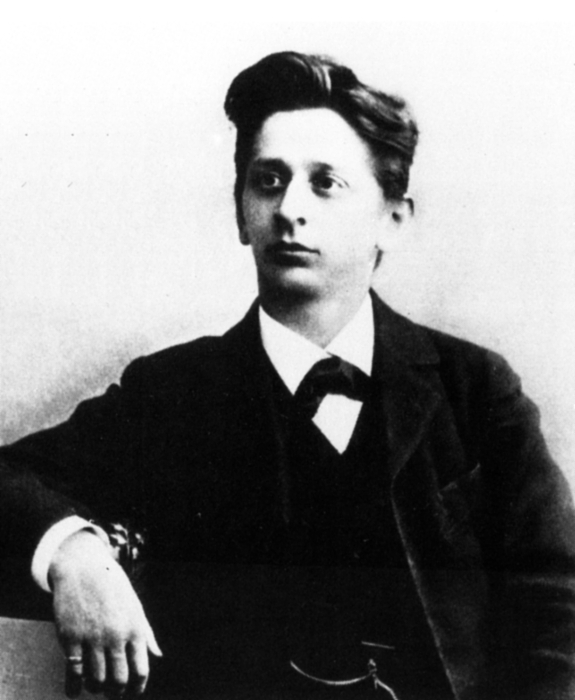
Hello and welcome to Sticky Notes, the classical music podcast. My name is Joshua Weilerstein, I'm a conductor and I'm the music director of the Orchestra Nacional de Lille and the chief conductor of the Aalborg Symphony. This podcast is for anyone who loves classical music, works in the field, or is just getting ready to dive in to this amazing world of incredible music. Before we get started, I want to thank my new Patreon John Stefan, Lenya Klimmer, Robert, Chris, Paul, Shin, Alexander, Milos, Jerry, Woody, Paul, Sarah, Daniel, janislei minidiva, Judy Celsius1414 and Shai, and all of my other Patreon sponsors for making season 11 possible possible. If you'd like to support the show, please head over to patreon.com stickynotespodcast and if you are a fan of the show, please take a moment to give us a rating or review on Apple Podcasts or Spotify. It is greatly appreciated. Next week I will be heading to Aalborg to conduct the piece that I'm talking about today, Zemlinski's the Mermaid. And we are going to be doing a live podcast on Brahms Second Symphony. So that will be going up in a couple of weeks. I'm really excited to do another one of these live shows with the orchestra. They're so much fun to do and it's. It's a different feeling to have the audience in front of you while you're talking. It is, I have to say, one of the most exhausting kind of things that I do as a conductor, going back and forth between the talking and the conducting. But it's really worth it and I'm really looking forward to sharing that episode with you for today. If you are not familiar with Zemlinski's music, I really encourage you to stick around and take a listen. This is just a gorgeous piece and it has a wonderful story behind it and I really, really think you'll enjoy it. So without further ado, on to Zemlins Minsky's the Mermaid. The story of Alexander von Zemlinski's the Mermaid begins with a passionate love affair and ends in heartbreak that couldn't be any more big R Romantic in feeling in 1900, the young, fabulously talented and famously gorgeous Alma Schindler came to Zemlinski's home to study composition. Passionate feelings soon developed between the two of them, and Alma wrote this in her I would gladly be pregnant for him, gladly bear his children, his blood and mine Commingled my beauty with his intellect. I would gladly serve him in his professional life. Live for him and his kitten kin, breathe for him, attend to his every happiness. Serve on him with a gentle hand. God, give me the strength and the willpower to do so. Their relationship lasted a little over a year until one night when Schindler went to a party that happened to be attended by a brilliant conductor and composer 20 years her senior named Gustav Mahler. The rest is history. Zemlinski was devastated and poured his energies into a tone poem based on Hans Christian Andersen's the Little Mermaid. Perhaps the source is a bit surprising, but as we'll get to later on, it was the perfect vehicle for Zenlinsky to exorcise the tortured memories of this turbulent relationship. But for a long time the score of the piece was lost. It wasn't until the 1980s that the full score was reconstructed and it is now among Zemlinski's most performed works. And it's not hard to see why. The Mermaid is a 40 minute long tone poem that from start to finish is full of fin de siecle romanticism, a la Schoenberg's Verkhlertenacht or transfigured Knight. And it is a piece of irresistible beauty and and passion. And it's being played more and more as Zemlinski's name again begins to take its rightful place among the standard canon of composers. Today on the show, I'll tell you a bit more about Zemlinski in case you aren't familiar with him. Read you more of the unbearably passionate letters and diary entries from both Zemlinski and Alma Schindler. And then, of course, we will go through the heartbreakingly beautiful music of the Mermaid, showing how Zemlinski played with both a narrative and an abstract form, and how he created this opulent, lush and profoundly moving score. All this and more is coming right up on Sticky Notes. Zenunsky was born in 1871 to a Catholic father and a Jewish mother, but was raised Jewish. His family was not well off, but he studied piano and organ and was admitted to the Vienna Conservatory at the age of just 13. His clarinet trio, written in 1896, impressed none other than Brahms, who became a big supporter of Zemlinski before his death. Zemlinski also became friends with Schoenberg at this time, and Schoenberg actually married Zemlinski's sister, Matilda. It's interesting here to note that Zemlinski had connections with both the Brahms era and and the beginnings of the second Viennese school of Schoenberg, Berg and Webern. Though he never fully embraced the atonal music of his brother in law with his own compositions. You'll hear in the Mermaid quite a bit of influence from Schoenberg as well as from Brahms. Just before meeting Alma Schindler, Zemlinski converted to Protestantism, just like many Austrian Jews of the time, including Schoenberg. It's unclear how important a role religion played in Zemlinsky's life, but to skip past the story we are going to tell today about Alma and the mermaid. In 1938, Zemlinski escaped Vienna to go to the United States with his wife. Tragically, Zemlinski was basically ignored when he arrived in the US with no interest in his compositions, as well as very little interest in his work as a professor. He suffered a series of strokes in 1939 and died, essentially forgotten, in 1942. Luckily, in the last 20 or 30 years, his music has enjoyed a small renaissance with the usual problem of composers like this. Once audience members are in the hall, they love this music, but it's hard to get them to buy a ticket for it. This show will hopefully encourage you to buy a ticket next time your local orchestra program Zemlinski, because I am sure you will love this music. But now back to the story that inspired the Mermaid.
- [07:28]
B
Sam,
- [08:00]
A
I told you a little bit in the introduction about the intensity of the relationship between Alma Schindler and Zemlinski, but I wanted to quote you a few more of the letters they wrote to each other. For example, Zemlinski wrote to Schindler, I want you with every atom of my feeling, and you make me wild. My renewed longing for you is driving me almost mad. Alma Schindler was equally in love, as I mentioned earlier, but she was torn. She found Zemlinski physically ugly, and her parents were disgusted with Zemlinski's poor background. They were particularly disturbed by his Jewishness. Alma, for her part, couldn't get over the problems in the looks department. She wrote in her diary how ridiculous it would look. He so ugly, so small, me so beautiful, so tall. She was also disturbed by the idea of marrying a Jewish person, saying that her children would be degenerate Jew children. This is quite ironic, considering the man she would marry two years later. But let's leave that aside. The relationship was, as you can imagine, turbulent, and Schindler tortured Zemlinski with a will they or won't they kind of attitude that lasted right up until that fateful evening when Schindler met Gustav Mahler. Alma recounted her breakup in her diary, which is a much more reliable account of her life than that of her memoirs, which are famously full of fabrications. Here is how she described it in her he entered the room paler than usual and quiet. I went to him, drew his head onto my breast and kissed his hair. I felt so strange. Then we sat down and talked earnestly about the whole affair, side by side, we two, whose bodies had once coiled in love's wildest embrace. He a little sarcastic as ever, but otherwise charming, endearingly charming. My eyes were full of tears, but my will stood firm. Today a beautiful, beautiful love was buried. Gustav, you will have much to do to replace it. As you can imagine, Zemlinski was completely devastated. He had lost the most sought after woman in Vienna and he had been called ugly, poor and a degenerate Jew while doing it. Zenlinski soon began working on a piece based on Hans Christian Andersen's the Little Mermaid. The Andersen story differs a bit from the Disney version just to warn you, and Zemlinski did not shy away from the darker aspects of the story. In fact, Zemlinski used the story to exorcise the demons from the relationship of the previous years. He apparently considered himself the mermaid and Alma as the prince, which is a powerfully symbolic choice. In letters to his brother in law, Arnold Schoenberg, Zemlinski explained that the piece was going to be highly programmatic and narrative. He explained that the piece would be in two parts split into four part 1A on the Seabed, B the Mermaid in the Mortal World, the Storm, the Prince's Rescue, Part 2 A the Mermaid's Longing in the domain of the Merwitch and B the Prince's Wedding, the Mermaid's End. But as he wrote the piece, Zimlinski adjusted this quite a bit, ending up with a piece in three movements and a piece that progressively frees itself from the narrative and becomes very close to non narrative for long stretches. This has caused issues with the piece as some people hear the beginning, which does have a clear narrative structure, and then expect that to continue throughout. They then look for what each passage is depicting and become frustrated when it's not clear. I understand that, but as we go through the piece I'll try to point out what is programmatic in narrative and what isn't, and also why Zemlinski might have chosen to write it this way. What is very clear is that the beginning of the piece does portray the seabed and the kingdom of the mermaids and the opening lines of the Anderson story. Far out in the ocean, where the water is as blue as the prettiest cornflower and as clear as crystal. It is very, very deep, so deep indeed that no cable could fathom it. Many church steeples, piled one upon another would not reach from the ground beneath to the surface of the water above. There dwell the Sea King and his subjects. This is how Anderson's story famously begins, and Zemlinski beautifully portrays that atmosphere with a sound that comes from the depths of the orchestra. With only the lowest instruments playing. The harp and double basses play rising lines that may bring to mind those church steeples, that imagery very early on. Zemlinski introduces a few ideas that are going to become prevalent throughout the piece. These are almost Wagnerian leitmotifs, meaning music that defines a character and then returns every time that character is referenced. The first is the introductory music I just mentioned, especially the rising scales. The second is a gently falling line of arpeggios played by the winds and harp.
- [13:56]
B
Sam.
- [14:24]
A
This line appears both in this somewhat melodic sense, but mostly as an accompaniment. When Zemlinski is describing the Kingdom of the Mermaids, sometimes he buries it in massive, uber romantic textures, but you will often hear it cropping up throughout the piece. The third line, and it is of major importance, is this theme.
- [14:51]
B
Sam.
- [15:17]
A
This theme also returns regularly throughout the piece, though in many different guises. It doesn't represent a particular character necessarily, but more a feeling of mystery, desolation, and if we're extrapolating Zemlinski's personal feelings into this tale, a feeling of loneliness that is palpable throughout this long line. Zemlinski's introduction features two more extremely important leitmotifs. The first is this. It's transitionary music, but it also crops up regularly. It's an extremely soft and gently lilting melody for the violins. And the fifth leitmotif is played by the solo violin and represents the mermaid herself. It is a melody that Zemlinski marks to be played very tenderly and with yearning or longing. So we have five the rising lines of the Kingdom of the Mermaids, the gentle arpeggios, the Big Lonely Tune, the soft and gentle violin transition music, and the solo violin mermaid music. Believe it or not, we have just encountered most of the building blocks of this entire piece to solidify everything in our minds. Zielinski then essentially repeats this section, though not literally. It's a bit truncated, and there are a ton of orchestration changes. Additionally, that lonely theme takes on a lot more importance. It's also, for the first time, accompanied by the arpeggio water music linking these leitmotifs together.
- [17:55]
B
Sam.
- [18:26]
A
This brings us to the second main section of the movement, Zemlinski bumps up the tempo to a moderately moving dance tempo, and we start to hear some of the opulent orchestration that Zemlinski adored. What is fascinating about Zemlinskii is that he combines Brahmsian rigor and thematic construction with Wagnerian and Straussian opulence and even excess. It's a gorgeous combination that we hear right at the beginning of this section, which Zemlinski said described the mermaid and the mortal world. It's not hard to imagine the mermaid bobbing up and down in the water, taking in the world above her. We've been introduced to another very important theme. This theme, which actually reminds me a lot of the second theme of the second movement of Tchaikovsky's Fifth Symphony, also doesn't have a specific meaning or character attached to it to it, but it appears throughout the piece. So why does Zemlinski give such specifics to some ideas and make others more vague? Well, part of this has to do with the battles that were being fought over programmed music versus absolute music. These were fights that Zemlinski was absolutely a part of. The battle was between the Wagnerians and the Brahmsians, with the Wagnerians declaring the symphony as a genre dead, and that the only thing that would save music was the Gesamtkunstwerk, the total artwork embodying music, theater, dance, the voice and more. The Brahmsians fought for the survival of abstract music that did not need to tell a story. Mahler was a part of these fights as well, and he went back and forth about the use of programs in his symphonies. He would write detailed programs, much more detailed than anything Zemlinski ever wrote for the Mermaid, and then would withdraw them from concert programs, declaring them useless. Zelenskyy seems to have been struggling with some of the same things. Does he just tell the story of the Little Mermaid, or does he make it more abstract? What he's settled on is what we are hearing, music that gives the impression of the Mermaid without being literal. But interestingly, Zemlinski changes lenses often in the piece, sometimes choosing to directly portray some moments of the story story. Perhaps these were moments of personal importance to him. But whatever it was, I think it's important to tell listeners like yourselves that while the piece is generally programmatic, it generally follows the story of the Little Mermaid. It is also not a piece like a Strauss tone poem, where you can follow the action like you're watching a movie. It's more complicated than that, and this section is no exception. This lilting 68 theme prances through the texture, while other leitmotifs, particularly the water music, arpeggios, constantly make their presence felt. As you're listening, I'll read you an excerpt of the Anderson tale that I think matches up pretty well to this music. But again, I don't know for sure if this is what Zemlinski had in. Nothing gave her so much pleasure as to hear about the world above the sea. She made her old grandmother tell her all she knew of the ships and of the towns, the people and the animals. To her it seemed most wonderful and beautiful to hear that the flowers of the land should have fragrance and not those below the sea, that the trees of the forest should be green, and that the fishes among the trees could sing so sweetly that it was quite a pleasure to hear them. Her grandmother called the little birds fishes, or she would not have understood her, for she had never seen birds. This brings us to the third main section of the movement, a theme played by the solo violin, which associates it strongly with the mermaid music, even though Zemlinski doesn't explicitly quote from that leitmotif in this moment. This is my favorite moment of the movement because of the way Zemlinski progressively makes this theme more and more passionate. We hear the mermaid's music again, once again marked to be played in a yearning or longing way, and the music keeps flirting with hugely passionate swells before giving back up again. But once again, Zemlinski will pick up the tension, and with a long crescendo and, in many cases, acceleration of tempo, Zemlinski begins to build to a huge and ecstatic climax, the moment that the mermaid falls madly in love with the prince. Listen for all the leitmotifs, the surging line of the mermaid, the rising lines in the low brass reminding us of what is below, and even the shape of the passionate line itself reminds us of those soft violin transitions. This is a moment of high drama, and every time we think Zemlinski has reached the peak, he keeps going.
- [25:08]
B
Sam.
- [25:38]
A
But then suddenly, everything changes in the story. A storm suddenly appears, and the mermaid at first enjoys it, but she suddenly perceives that the ship is in great danger. This is where Zemlinski portrays the action most literally, writing a storm scene that rivals anything in Strauss or Wagner. Surging lines of strings and winds, along with pungent blasts of muted brass, almost give us a palpable smell of the stormy seas as the ship and the mermaid and the prince are tossed back and forth. Listen carefully to this motive as it will return later on in the piece in a very different Guise. Here, though, it sounds the alarm of danger. And now that lonely theme returns, but now full of fear and terror as it is blasted out by the horns, who are told to put their bells into the air to create even more volume. At this moment, Zemlinski puts together three of his introductory leitmotifs, though it's very difficult to hear all of them within this texture. The low strings and bassoons are playing the rising scales motif. The winds are screeching out the water music arpeggios. And then, as I said, the horns are playing the lonely theme. Zanlinski pulls out all the stops in this storm, using irregular phrase lengths to heighten the instability of the music. Muted and stopped, horns to create raspy and unmusical sounds from the orchestra and a relentlessly churning, fortissimo dynamic. All of the charm of the earlier music has been extinguished. In the story, Anderson writes at length, the ship groaned and creaked. The thick planks gave way under the lashing of the sea. As it broke over the deck, the mainmast snapped asunder like a reed. The ship lay over on her side and the water rushed in. The Little Mermaid now perceived that the crew were in danger. Even she herself was obliged to be careful to avoid the beams and planks of the wreck, which lay scattered on the water. At one moment it was so pitch dark that she could not see a single object, but a flash of lightning revealed the whole scene. She could see everyone who had been on board excepting the prince. When the ship parted, she had seen him sink into the deep waves. I specifically stopped reading right before the end of that sentence, because Zemlinski does something gorgeous here, which I think is the most literally programmatic thing in the movement. And maybe in the piece, Zemlinski has brought the music to a fever pitch, but he suddenly stops the motion and the mermaid's charming music returns, but in the tempo of the introduction. This corresponds exactly to these words in the Anderson. And she was glad, for she thought he would now be with her. This moment of dreaming is quickly thrust aside as Anderson's story continues. And then she remembered that human beings could not live in the water, so that when he got down to her father's palace, he would be quite dead. But he must not die. So she swam about among the beams and planks which strewed the surface of the sea, forgetting that they could crush her to pieces. Then she dived deeply under the dark waters, rising and falling with the waves, till at length she managed to reach the young prince, who was fast losing the power of swimming in that stormy sea. His limbs were failing him, his beautiful eyes were closed, and he would have died had not the little mermaid come to his assistance. She held his head above the water and let the waves drift where they would. Zielinski depicts this next section with another climactic scream of terror, followed by music that Zelenskyy marks to be played as if calling for help and dying away. As the mermaid rises up with the prince out of the water, we arrive at the coda of this first movement. Once again, we get some generally programmatic touches. The way the theme is written suggests possibly lapping waves as the mermaid gently guides the prince towards shore. And then at the very end of the movement, we hear low bells, which are explicitly referenced in the Anderson story. Throughout, the coda is music of lush beauty, full of warmth and tenderness. It's hard not to be moved when imagining that Zemlinski thought of himself as the mermaid in the story, doomed to a failed love.
- [32:15]
B
Sam,
- [32:58]
A
I realize, looking back, that actually a lot of what I described to you comes straight out of the Anderson story. So why do I keep coming back to this idea of the piece not being programmatic? It's because, other than the storm scene, which is very clear, everything I just told you could be interpreted differently by someone else hearing this piece. In fact, imagine listening to this music without knowing anything about the story. Is it really necessary to know it? I think it's not, actually, and certainly many people in the audience don't know the ins and the outs of a Hans Christian Andersen fairy tale as they are listening to a piece of music. And I think that's the key for Zimlinski. For those who are reading the tale while listening to the music, not something he could really have envisioned during his lifetime or who had it memorized from childhood, they might listen and think vaguely, ah, that must be that part. But for those who are just there to hear a great piece of music, too many programmatic descriptions can get in the way of being swept up in the music. As we go through the rest of the piece, which is more abstract anyway, I'll try to point out when things are programmatic, but I also encourage you, too, when you listen to the whole piece, to throw the whole program out and allow yourself to get swept up in the music. Here's how the second movement starts. First, the practical the mood has clearly shifted here to something much brighter and more joyful. Zielinski has also taken the alarm music from the first movement. And transformed it into jaunty dance music full of Joy. It's not the first or the last time Zenlinski will transform one of his themes into a completely different character. Zelinsky then repeats this music, but at the end of the repeat, the music of the charming mermaid section of the first movement returns, reminding me even more of that Tchaikovsky 5 second movement. The main part of this movement, which is in a large aba form, is music that combines one of Zemlinski's original ideas to depict the mermaid's longing and a round dance among the kingdom of the mermaids that Anderson describes. This way. It is one of those splendid sights which we can never see on earth. The walls and the ceiling of the large ballroom were of thick but transparent crystal. Many hundreds of colossal shells, some of a deep red, others of a grass green, stood on each side in rows with blue fire in them, which lighted up the whole saloon and shone through the walls so that the sea was also illuminated. Innumerable fishes, great and small, swam past the crystal walls. On some of them the scales glowed with a purple brilliancy, and on others they shone like silver and gold. Through the halls flowed a broad stream, and in it danced the mermen and the mermaids to the music of their own sweet singing. No one on earth has such a lovely voice as theirs. The little mermaids sang more sweetly than them all. The whole court applauded her with hands and tails, and for a moment her heart felt quite gay, for she knew she had the loveliest voice of any on earth or in the sea. The dance music is quite clear, but to me the most beautiful part of this section is the constant return to this theme. Zenlitski returns to that theme five times in the section, and it is always answered by music of profound yearning, full of chromatic tension and drama all the time, though the general framework of the music is joyful and dance like. It's an amazing portrayal of the psychological state of a character. Again all done through abstract music and a subtle shading towards the story. The first section ends in a fountain of joy bouncing along, but this is quickly extinguished and the mood becomes more internal again as Zemlinski perhaps moves on to the next lines of the story. But she soon thought again of the world above her, for she could not forget the charming prince, nor her sorrow that she had not an immortal soul like his. Therefore she crept away silently out of her father's palace, and while everything within was gladness and song, she sat in her own little garden, sorrowful and alone. The lonely theme returns, now played by the bass clarinet, who is told to play in an eerie or unsettling way. This develops into music of deep sadness, with the mermaid light motif from the first movement transformed into music of pain and longing. Listen to the chromatic half step intervals in the line, creating more tension and passion. But also listen to how Zemlinski is using the motive of the dance as well underneath as an accompaniment. Everywhere you look in this piece, there is another leitmotif lurking beneath the surface. We then arrive at the second section of the middle section, a profoundly beautiful moment that I haven't really found a parallel for in the story. What it does remind me of a lot is the transformation dreamlike music in Schoenberg's Fricklearte Nacht, the long line, the sparkling accompaniment and the gorgeous EB major harmony. All of it brings a feeling of contentment and bliss that is profoundly satisfying amidst all the drama of the piece so far. It's a theme that will come back in the last movement, and perhaps it could be a dream of the mermaid to be with the prince. In the end. This builds the music of a desperate passion. I'm reminded of Zemlinski's letter, I want you with every atom of my being here. As the music rises and rises until it reaches a powerful E flat major chorale like climax. But this is quickly ushered aside as Zielinski returns back to the main body of the movement, which he repeats almost exactly. The movement comes to a close with two reminders, both quite soft. The jaunty music, which began as alarm music, and the climactic moment of the middle section of this movement. But in both cases they are played gently and quietly, as if they are already memories. And with the water arpeggios leading us to the end of the movement. In an echo perhaps of Mahler's first Symphony, Zinlinski brings the party to a. That little bang there might be unnecessary, but it also adds to the theatrical nature of the movement and of the generally positive character of the movement. It also creates a clear break between the atmosphere of the second movement and the dark and brooding atmosphere that begins the third. The third movement is by turns the most abstract movement, but it also sums up the first two movements due to the fact that Zemlinskii recycles so many of the motives and leitmotifs from the first two movements. But this music doesn't feel repetitive at all. In fact, the creativity with which Zemlinski plays with all of his themes is remarkable. Throughout, the movement begins with muted violins, softly intoning a forlorn melody that reminds us of the Mysterious transition music in the first movement, as well as the big lonely theme. It's important here to return back to the story of the mermaid, because while this movement is the least explicitly programmatic, it's still important to know what happens. The mermaid is so determined to win the love of the prince that she goes to a Merwitch for help. And actually, Zemlinski wrote this section in the second movement, but then took it out of the score later on. The witch says that she will give the mermaid legs so that she can walk on the earth like a human, but that she will never again be able to be a mermaid. And that's not the only catch. The witch says that if the mermaid is unable to win the heart of the prince, that she will die and turn into foam on the sea. The witch also demands that she cut out the mermaid's tongue so that she cannot speak. Disney left that part out. The mermaid agrees to these terms. Some commentators have said that the beginning of this movement is the first tentative steps that the mermaid takes coming out of the water, but I don't personally think so. I have my own imagery for this opening, but I'd rather you listen to it and make your own, since here we really don't know what Zimlinski had in mind. This introduction is extraordinarily mysterious, with cascading versions of the mermaid motif combined with that lonely falling line. The main part of the movement now begins, and it is surprising in its character. The tempo picks up and we hear music that is full of fresh freedom and ecstasy. This is the mermaid's motif, her theme finally finding itself in full bloom. In the story, the prince finds the mermaid and takes her in as an act of compassion, since she cannot speak. The prince loves her, but not in a romantic way. Anderson writes, as the days passed, she loved the prince more fondly, and he loved her as he would love a little child. But it never came into his head to make her his wife. Yet unless he married her, she could not receive an immortal soul. And on the morning after his marriage with another, she would dissolve into the foam of the sea. Despite the brightness of this music, the lonely theme returns, and it adds some anxiety. The mermaid knows that things are not going to plan. Another condition of her transformation is that the witch tells her that every step she takes will be like she is being stabbed with knives. Really seems like the mermaid got a raw deal here, but she bears it all in the hope that someday the prince will truly fall in love with her. Zenlinski once again starts to raise the level of passion. Bit by bit, for the first time, he starts to play with rhythmic displacement, writing music that sounds in two but is actually in three. He writes for this music to be played passionately, as if the protagonist is being torn apart. Perhaps this is the least programmatic movement, but this upcoming section, to me, represents the most autobiographical section of the piece. As the music builds to a thrilling climax, suddenly, like a knife going through our hearts, everything changes. It's one of the most stunning moments in the whole piece, and to me it could very well represent the moment where Alma told Zemlinski that they would not marry. This is the opening music of the movement, now transformed into this wailing pain, and it is, to me, the emotional center of the piece. As this dies down, Zanlinski puts together multiple motifs, but now in a softer and more resigned mood. The little mermaid, dressed in silk and gold, held up the bride's train, but her ears heard nothing of the festive music, and her eyes sought not the holy ceremony. She thought of the night of death which was coming to her, and of all she had lost in the world. Now Zelinsky returns to the story, but what he's actually portraying is a little bit in doubt. I've heard many different interpretations of this in the story. There are three important the prince's wedding, which, as we know, breaks the mermaid's heart. She is meant to die the following morning and to turn into foam. But the mermaid's sisters appear and say that the witch, who really ought to be arrested at this point, has offered the mermaid her life in exchange for killing the prince. The mermaid considers it, but then throws the knife aside into the water, followed by herself. She believes that she is dying, but instead she is carried up into the sky by an earthbound spirit, a daughter of the air. She is told that because she tried to obtain an immortal soul, that they have rescued her and that she will be given the chance to live with them and rise into heaven when her life finally does end. In the piece, we have several events that could constitute an extended coda. Zielinski starts with a gorgeous looking back at everything we've heard so far, all the motives of returning again, the mermaid motive, motives from the second movement, the theme from the end of the first movement, as if the journey is coming to an end. But then Zemlinski repeats this, and instead of contentment and calm, the music grows to an agonized and violent climax. We hear the most dissonant music of the entire piece at this moment, and the section ends with a terrifying fortissimo plunge in the strings. Is this the moment the mermaid stands over the sleeping prince with the knife? I don't know, but it is a profoundly dramatic moment, no matter what aspect of the mermaid it is trying to portray, if any. And it sends us into a state of instability just a few minutes before the end of the piece. And now Zemlinski takes us back to the beginning. We are back underwater again, and perhaps this is the moment the mermaid has thrown herself into the water. We hear all the motives of the introduction, and the mood is unrelentingly bleak. And it seems as if Zemlinski is wrapping up the piece in tragedy. But now Zemlinski returns to the story. For sure, he brings back this music from the second movement, But this time he writes it for violins, divided into seven parts, all to be played not pianissimo, not three Ps, but five Ps all near the very top of their register. It's a moment so delicate that if you touch it, it would shatter. But it is a touching description, emotionally touching description of the rising of the mermaid out of the water. Zemlinski, for the first time slightly develops the harmonies of this idea, and they become even more noticeably influenced by the gentle and tender sections of Schoenberg's Verhlarte Nacht.
- [56:42]
B
Sa.
- [57:13]
A
And it leads us to music that we heard in the second movement but didn't fully understand, that Verkler Nacht inspired transfigured music. And this is the music that carries us to the end of the piece. The little mermaid lifted her glorified eyes toward the sun and felt them for the first time filling with tears. On the ship in which she had left the prince there were life and noise. She saw him and his beautiful bride searching for her sorrowfully. They gazed at the pearly foam as if they knew she had thrown herself into the waves unseen. She kissed the forehead of her bride and fanned the prince and then mounted with the other children of the air to a rosy cloud that floated through the ether. You might have been thinking as you listened to this show, man, this guy talking. Can't decide whether this is program music or not. Make a decision. And you're right, I really can't come down one way or the other about how much of this music is directly programmed music and how much isn't. But it's not my fault. It's because Zenlinski couldn't really either. I've seen some pretty harsh criticism for this piece because of this fact that it becomes too frustrating to try to figure out what Zemlinsky is portraying in the story, and I get that. But I would recommend actually listening to this piece all the way through in two ways. Once with perhaps a cursory knowledge of the story, but without a lot of detail. The second time, read the complete Anderson story right before listening. It might make you make associations you wouldn't expect with the story. For me, I had trouble accessing this piece until I read the letters between Zemlinski and Alma Schindler. The level of passion, intensity, and feeling that bleeds out of those letters suddenly made me understand the passion, intensity, and feeling of this piece. Perhaps it's best to leave you on their words, not mine. After their breakup, Alma wrote this to Zemlinski, who she called know how very much I loved you. You have fulfilled me completely. Just as suddenly as this love arrived, it has departed, has been cast aside. Love has taken command of me with renewed force. On my knees I beg your forgiveness for the evil hours I have given you. Some things lie beyond our control. Thanks so much for listening to sticking us today. As I said, we'll have the live episode of Brahms 2nd Symphony for you in a couple of weeks with the All Borg Symphony, so don't miss our next episode. If you like what you heard today, please feel free to rate and review the show on Apple Podcasts or Spotify. It really helps the show gain more visibility. Please send any questions to stickynotespodcastmail.com and if you'd like to support the podcast monetarily, just head over to patreon.com stickynotespodcast thanks and I'll talk to you again after a while.