
Podcast
Sticky Notes: The Classical Music Podcast
Hosted by Joshua Weilerstein · EN
Sticky Notes is a classical music podcast for everyone, whether you are just getting interested in classical music for the first time, or if you've been listening to it and loving it all your life. Interviews with great artists, in depth looks at pieces in the repertoire, and both basic and deep dives into every era of music. Classical music is absolutely for everyone, so let's start listening! Note - Seasons 1-5 will be returning over the next year. They have been taken down in order to be re-recorded in improved sound quality!
37episodes
Episodes
Newest firstAll episodes
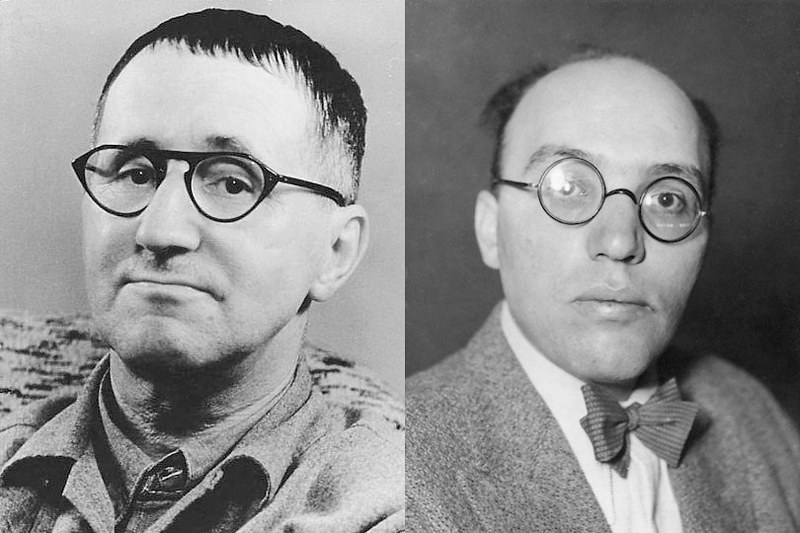
Weill: The Seven Deadly Sins
Jun 26, 202501:00:01Tap to summarizeThe collaboration between Kurt Weill and Bertolt Brecht is rightly legendary. The two men could not have been more different from each other, and like the Brahms/Joachim relationship I mentioned in my recent show about the Brahms Double concerto, the friendship between Weill and Brecht was stormy to say the least. The two collaborated on some of the most memorable works of the Weimar era in Germany, such as the Threepenny Opera, which features a pretty famous tune called Mack the Knife. Their final collaboration was on the “sung ballet” The Seven Deadly Sins. This is a piece that was written at a point of remarkably high tension within Weimar Germany. On an artistic level, the 1920s and early 1930s had seen a veritable explosion in the world of culture, with art, dance, theater, and music all featuring artists who were pushing the boundaries with wild experimentation and a kind of ecstatic fervor that produced some of the world’s greatest and most memorable cultural achievements. On a parallel track however, the rise of the Nazis cast a pall over all of this. By 1933, both Brecht and Weill(who was Jewish) knew that Germany was not a place that they could stay safely. Weill ended up in Paris and then in the US for the rest of his life, while Brecht bounced around Europe before returning to East Germany after the war, hoping to be a part of the Marxist Utopia that he believed had been founded there. The simmering combination of Weill’s mastery of transforming popular forms into a unique kind of classical music along with Brecht’s pointed satire and brilliantly inventive libretti resulted in the Seven Deadly Sins, a piece that that brutally satirizes extreme capitalism and the degradation of the human soul that supposedly results from it. This is a nakedly political piece, and I should make it clear that by talking about it, by choosing to feature it on the show, and by regularly performing it, I don’t necessarily endorse its views. Brecht was extreme in all ways, as we’ll get to today, and the power of this piece in my opinion doesn’t come from its politics, but from its remarkable and devastating portrayal of a human soul and the tragedies that can befall it. This is one of my favorite pieces of the whole 20th century, and I’m so happy to share it with you today. Join us!
Transcribe →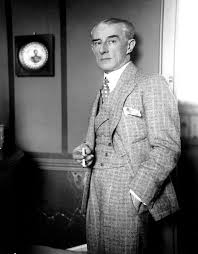
The Ravel Sound with Norbert Müllemann and Stefan Knüpfer
Jun 12, 202500:45:32Tap to summarizeI so enjoyed making this latest episode in my collaboration with G Henle Publishers. I talked with two absolute experts in their fields, Norbert Mülleman and Stefan Knüpfer, all about how to edit Ravel's music, and how to create the Ravel sound on the piano. This episode definitely veers into some very nerdy territory, but Norbert and Stefan are both so brilliant at explaining very high level concepts in a way that anyone can understand, from a person who has never looked at a score to a professional performer. I think everyone will learn a lot from this episode and I don't think you'll ever hear Ravel the same way again after listening! Enjoy!
Transcribe →
Dvorak Violin Concerto
May 29, 202500:49:16Tap to summarizeAdmit it: if you're a fan of classical music—or even just a regular concertgoer—you might have glanced at the title of this episode and done a double take. The Dvořák Violin Concerto? Not the Cello Concerto? One of the things I love about my job as a conductor—and my side gig as a podcast host—is bringing audiences and listeners like you pieces you may never have heard before, even if they're by extremely well-known composers. Don’t get me wrong, I love the blockbusters. But there’s a special thrill in introducing someone to something new. Now, some of you might already be big fans of the Dvořák Violin Concerto. But in my experience, it’s relatively unknown compared to Dvořák’s more famous works. I’ve never performed it myself, and I’ve only heard it live once. It’s not part of most touring soloists’ repertoire, and it’s just one of those pieces that rarely comes up—especially compared to the Cello Concerto, which I think I’ve conducted at least once every season since becoming a conductor. This concerto came about much like the Brahms Violin Concerto, the Brahms Double Concerto we talked about a couple of weeks ago, and so many other great 19th-century works: inspired by the sound of Joseph Joachim’s violin. Joachim was the great violinist of the 19th century and had been a friend and supporter of Dvořák for many years. Dvořák ended up dedicating the concerto to Joachim, writing: "I dedicate this work to the great Maestro Jos. Joachim, with the deepest respect, Ant. Dvořák." Sadly—and for reasons that remain somewhat unclear—Joachim never performed the piece. That may be one of the reasons it’s never achieved the popularity it deserves. Today, in this Patreon-sponsored episode, we’ll dive into the concerto, exploring its unusual form, the myriad challenges it poses for the violinist, and perhaps some reasons why it’s not part of the so-called “Big Five” violin concertos—even though it probably deserves to be.
Transcribe →
Gershwin: Rhapsody In Blue
Sep 26, 2024Tap to summarize"It was on the train, with its steely rhythms, its rattle-ty bang, that is so often so stimulating to a composer – I frequently hear music in the very heart of the noise.... And there I suddenly heard, and even saw on paper – the complete construction of the Rhapsody, from beginning to end. No new themes came to me, but I worked on the thematic material already in my mind and tried to conceive the composition as a whole. I heard it as a sort of musical kaleidoscope of America, of our vast melting pot, of our unduplicated national pep, of our metropolitan madness. By the time I reached Boston I had a definite plot of the piece." That was George Gershwin talking about writing Rhapsody in Blue, one of the most popular pieces of American Classical Music of the 20th century. But is the Rhapsody in Blue classical music? Or is it Jazz? Its certainly played on more classical concerts than it is on Jazz concerts, it uses a full orchestra (though that’s not what it was originally written for), and the greatest soloists of the classical field regularly play the concerto on so called “serious” classical concerts. But on the other hand, the structure of the piece is anything but classical and there’s ample room for improvisation though most classical pianists don’t improvise when they play the piece. So which is it? Well, the answer is a bit of both, which probably is one of the main reasons for its enduring popularity. There are very few pieces that put a smile on your face like Rhapsody in Blue, and so today, we’ll explore this most American of pieces, talking about the amazing story of its conception, Gershwin’s quest to be accepted by the great classical composers of the day, and of course, the music itself. Join us! Link to fundraiser episode on Appalachian Spring: https://www.eventbrite.com/e/1026719635067?aff=oddtdtcreator
Transcribe →
Romeo and Juliet in Classical Music
Aug 3, 2023Tap to summarizeThe "love theme" from Tchaikovsky's Romeo and Juliet Fantasy-Overture is one of the most famous themes in the history of Western Classical Music. The story it accompanies might be the most famous Western play ever written. Just like Eine Kleine Nachtmusik seems to define the powdered wig era of classical music to the general public, the passionate theme from Tchaikovsky’s Romeo and Juliet seems to define romanticism in music because Tchaikovsky’s Overture-Fantasy captures Shakespeare’s masterpiece with a roiling and unstoppable intensity. But Tchaikovsky’s setting of Romeo and Juliet, while probably the most famous, is by no means the only reimagining of the play by classical composers. There have been nearly a dozen adaptations of Romeo and Juliet by classical composers, including overtures, ballets, suites, and operas. Romeo and Juliet, just like it has been for actors, directors, and the audience, is an inexhaustible source for composers in a way that few pieces of literature or dramatic theatre have been in history. So today we’ll compare just some of them for you - I’ll be looking at Tchaikovsky’s Romeo and Juliet Fantasy Overture, Prokofiev’s Ballet Romeo and Juliet, Berlioz’s choral symphony Romeo et Juliette, a brief look at Gounod’s opera Romeo and Juliet, and Leonard Bernstein’s Westside Story. We’ll take a look at how these 5 composers inserted their distinctive personalities onto the music, leaving no doubt that this was Shakespeare, and Romeo and Juliet, through their eyes. I’ll do this by giving a general overview of each piece, and then I'll zero in on two ideas - the portrayal of Juliet, and the portrayal of Tybalt’s Death(or fighting in general). This way we can see how these composers handled these pivotal characters and moments, all in markedly different ways. Join us!
Transcribe →
Ravel, Bolero + La Valse
Jun 22, 2023Tap to summarizeMaurice Ravel the Magician, the Swiss Watchmaker, the aloof, the elegant, the precise, the soulful, the childlike, the naive, the warm, the radical, the progressive. These are all words that were used to describe a man of elegant contradictions throughout his life and into today. I talked a lot about Ravel’s skill with orchestration last week when we discussed Mussorgsky’s Pictures at an Exhibition, but Ravel's brilliance and creativity in terms of orchestral sound is absolutely unparalleled in musical history. But Ravel is somebody I’ve very rarely covered on the show, partly because he didn’t write very many large scale works that would cover a whole hour long episode. Well, it took 6 years for me to figure it out, but I realized a little while ago that I could cover two of Ravel’s shorter pieces and put them together on a double bill, so to speak. So today I’m going to tell you about Ravel’s most beloved and most despised piece, Bolero, and about my favorite piece of Ravel’s, La Valse. These are two pieces that could not be more different in their aims, in their constructions, and in their impacts on the audience. They are both thrillingly exciting, but in completely different ways. A good performance of Bolero should make you want to jump out of your seat with excitement, while a good performance of La Valse should terrify you to your core. Join us to learn all about it!
Transcribe →
The Music of Film Composers
Dec 1, 2022Tap to summarizeFilm music began as a solution to a problem. Early film projectors were really loud, therefore something was needed to cover up all the noise. In addition, silent movies apparently seemed a bit awkward without any musical accompaniment. Enter, usually, a pianist, who would improvise musical accompaniments to the events on the screen. None other than Dmitri Shostakovich got his first job as a cinema pianist, honing his improvisatory skills, and sometimes receiving cat calls and boos for his fantasy filled musings that tended to stray away from the action on the screen. Music in the silent film era had to help the audience in pointing out important moments to the audience, enhancing the emotional effects of the story, and most importantly, it had to give a certain musical line to every character, giving to them the emotional depth that the audience couldn't get since they weren't going to hear their voice. To do this, early film composers turned to the idea of the Leitmotif, an idea developed by the opera composer Richard Wagner. This idea would take hold even once "talkies" took over the screen, with composers such as Max Steiner, Charlie Chaplin, and others setting the stage for a century of brilliant music, by composers like Bernard Herrmann, John Williams, Dmitri Shostakovich, Rachel Portman, Hans Zimmer, Erich Wolfgang Korngold, Christopher Willis, and dozens and dozens more. Today on the show we'll talk about this development of film music, and also hear some of the greatest and most recognizable film music ever written. We'll also talk about why film music is sometimes looked down upon in the classical music world, and how we might begin to change that perception. Join us!
Transcribe →