
Podcast
Stoic Coffee Break
Hosted by Erick Cloward · EN
"Act on your principles, not your moods." A weekly meditation on how Stoic principles can help you be a better human.
Follow us on social media:
https://instagram.com/stoic.coffee
https://twitter.com/stoiccoffee
https://facebook.com/stoiccoffee
Hosted on Acast. See acast.com/privacy for more information.
33episodes
Episodes
Newest firstAll episodes
Interview With Ori Halevy: Comedian and Comedy Writer
Mar 20, 202401:39:26Tap to summarizeIn this episode I sit down and talk with comedian and comedy writer Ori Halevy. Ori, originally from Israel, is prominent in the large English speaking comedy in Berlin. We had a fun conversation talking about philosophy, comedy, anxiety, and why you need to laugh at life. You can find him on instagram at https://instgram.com/orihalevy_bigoldjew and https://instagram.com/epicomedyberlinA transcript of the audio will be posted on the podcast website at https://stoic.coffee. Hosted on Acast. See acast.com/privacy for more information.
Transcribe →
Finding Your Genius: Flipping Your Flaws Into Features
Mar 13, 202400:11:29Tap to summarizeDo you think that you have strengths and weaknesses? What if I told you that you don’t? Today I want to talk about how strengths and weaknesses are all a matter of perspective and context."Strive for excellence, not perfection, because we often find excellence in our imperfections."—Harriet Braiker Hosted on Acast. See acast.com/privacy for more information.
Transcribe →
Laughing With The Stoics: Finding Humor on the Path to Virtue
Mar 5, 202400:11:10Tap to summarizeDo you think that Stoics are too serious and all business? Do you think that if you adopt Stoic principles that you can’t have fun? Today I want to talk about humor and some of the misconceptions of Stoicism.“It’s better for us to laugh at life than to cry over it.”— SenecaWhen you picture a Stoic, you might imagine someone with the emotional range of a sloth, but surprise! The Stoics weren't the ancient world's equivalent of grumpy cat. They actually had quite a bit to say about living "according to nature," and let's be real, what's more natural than snorting milk out of your nose from laughing too hard? Exactly.So, how does humor fit into Stoicism?The Stoics often talked about achieving eudaimonia, also translated as ‘good spirit’, which for the Stoics is about reducing negative emotions, and cultivating positive emotions. Since we are emotional creatures, we aren’t expected to not have emotions, and for me, having a good laugh certainly helps me get closer to having a ‘good spirit’.Absurdity of LifeBecause stoicism is about trying to see the world for exactly what it is, we can laugh at the absurdities of life. Seneca was all about chuckling at life's curveballs when he said, "Fortune is like that drunk friend who tries to help but ends up knocking over the lamp." Life is unpredictable, so why not have a laugh when things go sideways? When you think about it, this is what Amor Fati is all about. It’s about not just accepting everything that happens in life, but loving everything that comes our way, and what better way is there to love everything that comes your way when you find humor in even the darkest times?When we take things too seriously, we often get stuck ruminating and stressing out over things that are small or even imagined. When we get stuck in this mindset, our thinking becomes more narrow as response to stress, which it makes it hard for us to make better decisions. In these situations, often times the best thing we can do is laugh about it. Lightening our mood helps us relax which in turn helps us think more positively and be more open to possibilities. The Stoics recognized that joy is not the same thing as being frivolous. They understood that joy is part of a well-rounded life. The Stoics themselves practiced self-deprecating humor in order to not take themselves or life too seriously. Epictetus was known to have a very dry and ironic wit. You can totally picture Epictetus cracking a smile and reminding us that just because we're after virtue, doesn't mean we can't enjoy a good meme. When talking about death, he once said, “I have to die. If it is now, well then I die now; if later, then now I will take my lunch, since the hour for lunch has arrived - and dying I will tend to later.”It was reported that Chrysippus literally died from laughing at the sight of his intoxicated donkey trying to eat figs. Marcus Aurelius, the emperor of Rome, once cracked, "I get up in the morning because the universe isn't done with me; also, someone has to feed the ducks." Keeping yourself grounded with a little self-mockery is very much in line with Stoic principles.Keep PerspectiveLaughter helps us to keep things in perspective. When we are in good spirits, we are better able to see things as they are, or imagine how they could be. When things don’t go the way we want, we’re better able to roll with things, focus on what went right, and move forward in a more positive direction. When we are stressed or pessimistic, then we’re more likely to catastrophize, only see the downsides, and wallow in why things didn’t work out.Seneca gives us some good instruction on keeping a humorous outlook when comparing the serious and sullen Heraclitus the more cheerful Democritus. He wrote:“We ought therefore to bring ourselves into such a state of mind that all the vices of the vulgar may not appear hateful to us, but merely ridiculous, and we should imitate Democritus rather than Heraclitus. The latter of these, whenever he appeared in public, used to weep, the former to laugh: the one thought all human doings to be follies, the other thought them to be miseries. We must take a higher view of all things, and bear with them more easily: it better becomes a man to laugh at life than to lament over it. Add to this that he who laughs at the human race deserves better of it than he who mourns for it, for the former leaves it some good hopes of improvement, while the latter stupidly weeps over what he has given up all hopes of mending.”Laughter is the Best MedicineWhen comes to health, laughter is truly good medicine. With the pace of the modern world, we’re all under a lot of stress, which is detrimental to our long term health. Since stress hormones, those released for our ‘fight or flight’ instincts are meant to get us out of short term danger, such as escaping from a saber toothed tiger, we’re not meant to operate under this type of duress for long periods. Exposure to these hormones over longer periods increase our risk for obesity, heart disease, cancer, depression and many other illnesses. Laughter, as it turns out, helps counteract many of these problems by relieving stress, increasing oxygen intake, and releasing healthy chemicals into our bloodstream.Strengthening Social BondsThe Stoics stress that it’s important for us to build community and be a productive member of society. Laughter is something that brings people together and helps to strengthen social bonds. Sharing a good laugh with family and friends or even strangers can help us form better social connections. At a very simplistic level, when we laugh with others, we relax around them and are better able to just be ourselves. It feels like the other person ‘gets us’. We associate good feelings with them. Our memories of them are positive, which means it’s more likely we’ll want to spend time with them, or be willing to help them out when they need it. For example, even though I had a difficult relationship with my father, some of my fondest memories of him are when he shared funny stories or we watched a movie that had us rolling on the floor. I can still remember his deep belly laugh and when he’d have to take off his glasses because he had tears in his eyes.When we can see the lighter side of life, we are also better able to be compassionate to other people and more likely to give them the benefit of the doubt. When we’re stressed or pessimistic, we’re more likely to place blame on them when things aren’t working out.Wisdom in HumorThere are many ways to learn and often humor is the best way to communicate wisdom. The best teachers I had growing up were usually those that could make learning fun or add some humor into their lessons. A bit of humor in the class often made the difference between really enjoying a class or just getting through it.Sometimes, the truth is so blunt, it hurts. But wrap that truth in a joke, and it becomes wisdom you can approach with a smile. Some of the best comedians share hard truths about life with humor that otherwise would be uncomfortable. By shining a light on hard things with humor, we’re more willing to look at things that we might otherwise would have avoided. By making us laugh, they open us up to seeing things from different perspectives that we may not have considered before. ResilienceWhen we can learn to laugh about the hard things in life, we become more resilient. When the going gets tough, rather than letting it drag us down, we’re able to make something good of a tough situation. With a shift in perspective, what may have seemed like a frustrating situation, can be turned into something more neutral or even a funny story to share with friends later. Learning to laugh at life also helps us in embracing imperfection. Nobody's perfect and Stoics get that. A well-timed joke about our own blunders reminds us to accept our flaws. I can imagine that if Marcus Aurelius had social media, he'd probably tweet, "Messed up today. #JustEmperorThings."Looking at the Bright Side of LifeSo how can you get better about looking at life from a more humorous perspective?A big thing for me is to just watch some good comedy. Last Sunday night I was working on some business ideas and was finding myself stressing out about it. I found that my thinking was narrowed and it was really hard to generate ideas. Then I would get even more frustrated because I couldn’t seem to get out of this downward spiral. So I went to a comedy show. It was small show but the crowd was really fun and the comedians were great. Some of the topics broached were dark, but still funny. I also made friends with the couple sitting next to me. Two hours of laughing reset my mood and started the week off with a much better outlook.Since the Stoics are big on having awareness of what you are thinking, pay attention to when you’re getting critical towards someone or something else. Approach the situation like a comedy writer. Can you stop and see if you can find something funny about the situation? Can you laugh at yourself for getting too serious about something? I found that if I think about how I could turn it into ...
Transcribe →
Interview with Mark Tuitert: Olympic Gold Medalist Speed Skater and Stoic Author
Feb 28, 202401:08:57Tap to summarizeThis week's episode is an interview with Mark Tuitert, an Olympic gold medalist speed skater and Stoic author. We sat down in his home outside of Amsterdam and had a wonderful conversation about discipline, handling stress, forgiving parents, and about his new book The Stoic Mindset. I hope you enjoy this episode as much as I enjoyed the conversation. You can find out more about Mark Tuitert at https://marktuitert.nlYou can also watch the interview on YouTube.Episode Transcript:Erick: Hello friends, my name is Erick Cloward and welcome to the Stoic Coffee Break. The Stoic Coffee Break is a weekly podcast where I take aspects of Stoicism and do my best to break them down to the most important points. I share my experiences, both my successes and my failures, and hope that you can learn something from them all within the space of a coffee break.This week's episode is an interview with Mark Tuitert. Mark is an Olympic gold medalist speed skater. He's from the Netherlands, which is where I'm living at the moment. And Luckily, his agent contacted me just as I moved here, and I was able to go down to his house and do an interview with him. And he just is working on a book right now called The Stoic Mindset, which should be coming out in the US and Canada and the UK in April.We sat down, we talked about stoicism, we talked about his Olympic career, and we talked about how he was able to use stoicism to help him overcome a lot of challenges and eventually end up winning a gold medal in the Vancouver Olympics. So I had a really great interview with Mark, really enjoyed sitting down and chatting with him.(I did mangle his name at the beginning of the podcast interview, but since then I've learned how to pronounce it properly.) I hope you enjoy this interview with Mark Tuitert.So hello everybody, today is my first live interview for the Stowe Coffee Break podcast. I'm here with Mark Tuitert so we're actually here in the Netherlands. I just happened to be here when we got contacted by him and it, so this worked out. So this is my first time actually doing a live interview and filming it.So hopefully this will go well.Mark: Do we actually have a coffee break? Here we go. Or a tea. Erick: So for me, this is rather exciting because like I said, this is this is all new. And. I guess let's just jump right into it. First off, why don't you go ahead and introduce yourself to my audience?Mark: My name is Mark Tuitert.I was an Olympic speed skater and speed skating here in Holland is a pretty big sport. So I was a professional athlete between my 18th and well, 34, 34 years old. And after that, I have now my own company, I'm a motivational speaker, I write books mainly also about Stoicism I'm a big and avid fan of the Stoics.So yeah, for me, I'm a father of two. I love music. I love sports. I love life. But I've had some challenging situations as an athlete, as an Olympic athlete. And I still work for television sometimes I go to the Olympics and do commentary. Erick: Oh nice nice. So you're your agent sent me over a copy of your latest book. You want to talk a little bit about that?Mark: Yeah. Sure. Yeah, The Stoic Mindset. Yes I always used a lot of wisdom From philosophy during my sports career. So within my career I I had to deal with a lot of pressure being an Olympic athlete. I missed out on two Olympics actually in 2002 and 2006 by various reasons. We can dive into that later probably.And that were really challenging times for me. So I had to deal with overtraining with. My parents in a divorce situation with pressure of sports, with pressure of well, the public here in Holland, speed skating is a big sport. So you have a lot of pressure. You can earn money with it, of course, but on the other side, missing two Olympic games was for me a tough situation because I've been training for four years for the one Olympics in 2002 in Salt Lake City training for four years for the Olympics in 2006 in Turin and I missed out on those.So for me, I had one chance to train for Vancouver another four years. And during that time I read a lot and I really was intrigued by the meditations of Marcus Aurelius, by the sayings of Seneca, of Epictetus, and I really, during my career as I got older and a little bit wiser, I used these. texts and philosophy, philosophical ideas to yeah, not only be, be a better person or make wiser choices. And that helped me a lot. Leading up to the Olympics in 2010. For me, that was the pinnacle of my career, probably last chance. Mm-Hmm, . I I could start on an Olympic games and two or three weeks right before these games.I did everything I could within my control to be the best athlete I can be. And I had to dive deep for that in my whole life. And yeah, for me, that was life changing. So, what, what my mindset was right before these Olympic Games, I think was really stoic. I don't judge my parents for what they do.I don't look at competitors, what they do. I don't worry about the journalists, what they write about me. I only focus on my internal state of mind, my mindset. That's what I call the stoic mindset in my book. And so I, I, I concentrate on my, yeah, my inner voice being. Stable being yeah, being a voice of courage.So not dealing, not pushing away the fear because you feel fear right before an Olympic Games. Absolutely. Working with it. So not pushing it away. Stoic. Yeah, could be in our English or Dutch language. Pushing feelings away. Not like that at all, but just embracing the fear, embracing the challenge.And just look at yourself. No, I give everything I have. I can look in the mirror. I know I did everything I could to get here. I'm 29 years old. I was in Vancouver. Probably this is going to be the last chance you get on an Olympic Games. Yeah, absolutely. And that's you're nearing your retirement age as an athlete.Yeah. So these things for me were Yeah, these thoughts that They were thoughts that kept me grounded and It's not that I didn't aspire to a big goal. I aspired to win Olympic gold, to be the best speed skater I can be. So that's what I wrote a book about. So how can you give everything you have, dream big, reaching your goals, but still detach from the negative emotions resulting you know, with that road leading up to that big goal.And for me, that helped a lot. And after two, three years ago we had difficult times with my company first energy gum. COVID was happening production wise, things were going the wrong way. So I was really challenged. Yeah, I learned how to deal with this, and I see a lot of people struggling with this, so why don't I write it down in a book so people actually can, yeah, maybe learn something from it.And it's not like I want to point the finger, but I want to tell my story so people can relate to that. And they don't relate probably to winning an Olympic gold medal, but relate to the journey, relate to the setbacks, dealing with pressure, dealing with Things that are not in your control, dealing with chaos.That's where I find the beauty in Stoicism. It's like for me, how can you keep standing upright in the storm of life? Like Marcus Aurelius did, like Seneca did, like all these great thinkers and people did who adopted this philosophy. Erick: So what was it that first drew you to it? Do you remember how you found Stoicism?Mark: Yeah. Well, I was always intrigued by history and in, in, in school, I loved history. And the first time I was really challenged by a situation was when I was 19, 20 years old. I was the hotshot talent in speed skating. I signed a big contract. I, well, I was on under the pressure of the Olympics of 2002 coming up.I did a lot of interviews. My sponsor paid me a fair amount of money so there was a lot of pressure on me, but I still was living at home with my parents who were going through a divorce. So me being the oldest son, I tried to intervene between the two people I love and that didn't work out.Actually, it, yeah, for me, what happened was I yeah, I, what was sort of a flight into the one thing I thought I could control that was training harder. So for me. I trained harder and harder and harder. I trained seven days a week, 2, 3, 3 times a day. So rest days, or I don't do rest days, you know? Yeah, I just grind.Wake up early, go to bed late and grind it through. But that's not how you become fit mentally and physically and emotionally. I was wrecked the winter of 2002. I missed out on these Olympic games. I was overtrained. Lying on my bed, I was sick. So I couldn't train that winter. I missed the Olympic Games.And that was, for me, that was like a sort of an epiphany. Like, how can we fool ourselves like this? How can we think we know how it works, life works, no? If I put the hours in, and of course you have to work hard and put hours in to get somewhere, but we can get blindsided, we can have blinders on, and I had that.So as I was really fascinated how that worked, like, how can I fool myself? I have to reflect on myself so that this doesn't happen again. I have to learn from this. So I read a lot about overtraining, about how psychology works. But I also read by then when I was 20 years old, beautiful text of Mark Aurelius.So I read parts of the meditations already. And a beautiful quote of, of Marcus is that the impediment to action advances action. What stands in the way becomes the way. And for me, yeah, that's, that's, that were the first lights of stoicism that I thought, Hey, that's, that's a really, really beautiful way of thinking through setbacks, not as the end of the road, but it's an obstacle in your path and it's up to you to find a ne...
Transcribe →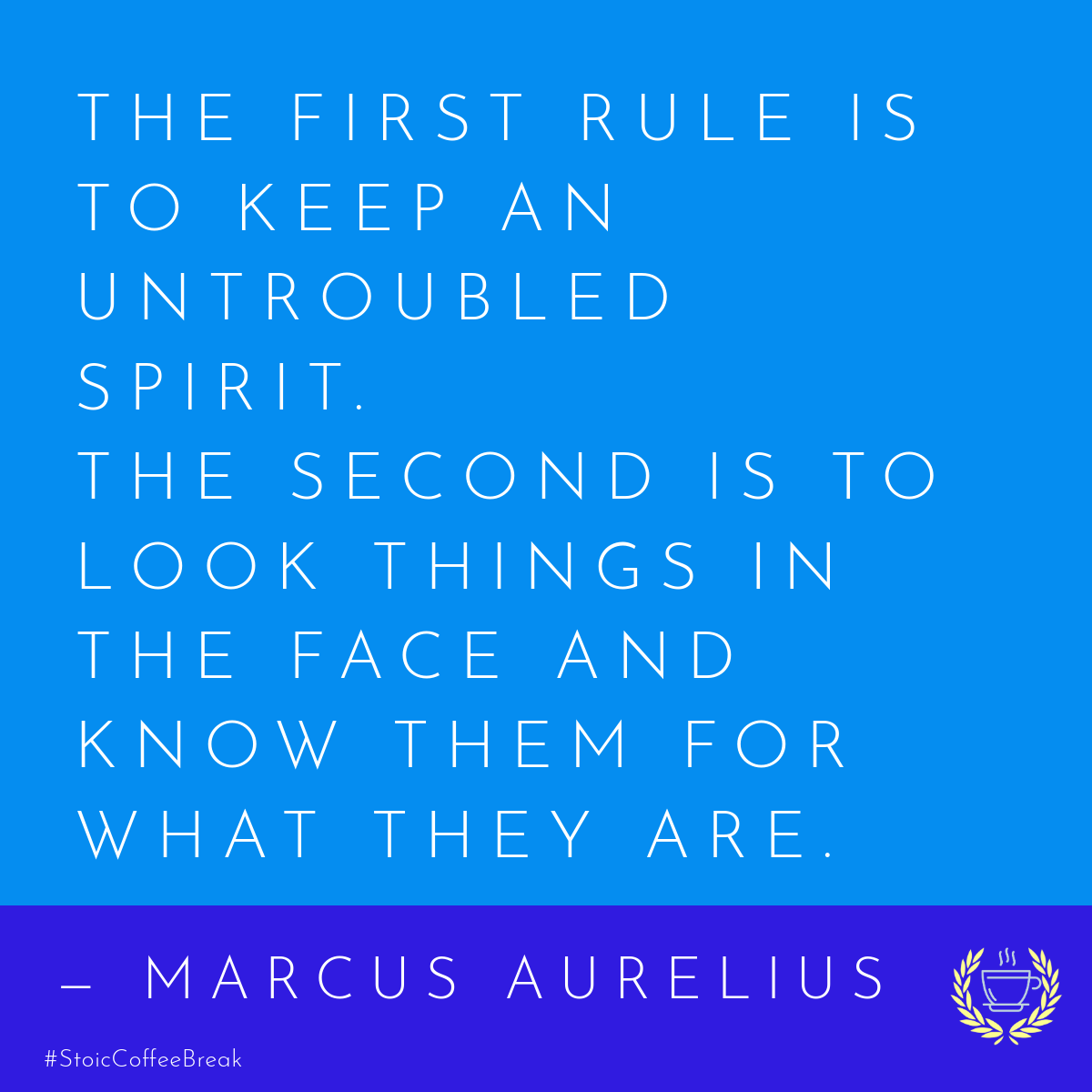
Starting Stoicism
Feb 20, 202400:15:47Tap to summarizeAre you new to Stoicism and want to know where to get started in learning about it and how to apply it in your life? Then this episode is for you. One of the things that I appreciate about Stoicism is that it’s very practical philosophy, and there are a lot of ideas and principles that have stood the test of time because they work in helping you live a good life. There are also misconceptions about what stoicism is and what it isn’t so today I’m going to walk you through the basics of what stoicism is, and how you can start applying it in your life immediately.“The first rule is to keep an untroubled spirit. The second is to look things in the face and know them for what they are.”— Marcus AureliusStoicism is an ancient philosophy that originated in Athens, Greece, then moved into Rome as it gained popularity. It was founded by Zeno of Citium, a merchant who found himself in Athens after surviving a shipwreck. While trying to figure out what to do next, he frequented a bookseller in Athens. He came across the writings of Xenophone, a Greek historian and military strategist, and in them read about Socrates. He was so inspired be what he read, that he asked the bookseller where he could find someone like Socrates to teach him philosophy. At that moment, Crates of Thebes, a Cynic philosopher, just happened to be passing the shop. The bookseller pointed to Crates and told Zeno that Crates was such a man, and Zeno became his student.As Zeno began to learn more about Socrates, Plato, Aristotle, and the other philosophies, he began to develop his own ideas about how to apply philosophy and live a good life. One of the main points about Stoicism is that it’s primary goal is not to answer the big questions about life such as why we exist and where we go when we die, but rather how to have a good and peaceful life by living a life of virtue. It’s a practical philosophy that can be applied in all aspect of life.Control“You have power over your mind — not outside events. Realize this, and you will find strength.”— Marcus AureliusOne of the first and most important teachings of Stoicism is that we need to understand what we have control over and what we do not have control over. The reason why this is so important is that most of our stress and frustration in life comes from trying to control things that we do not have any control over. When we focus on the things we can control, we’re able to make progress, and gain a sense of peace in our lives.When we try to control what we can’t, we waste a lot of time and energy without making much progress. We can find ourselves getting angry, upset, or depressed because we’re trying to control something we can’t control, or often because we’re trying to control someone else or their behavior. On the flip side, when we don’t take control of the things that we do have control over, then we allow ourselves to become victims, and miss opportunities to create real change in our lives. So that begs the question: What do we actually have control over? The Stoics teach us that the only thing we really have control over is our thinking, and our choices. In short, our will. Everything else is outside of our control. We don’t have control over nature, other people, or even our own bodies. For example, you can’t control the weather, what other people think of you, or if you get cancer. They are are just things that happen, and not things you have any control over. What you do have control over is how you respond to the things that happen. You can choose to wear a raincoat when it rains. You can choose not to let what others think about you bother you. You can follow your doctors instructions in treating an illness. All you have control over are the choices you make about how you want to respond.Suggested Episode: Two Sides of the Same CoinJudgments“Very little is needed to make a happy life; it is all within yourself, in your way of thinking.”—Marcus AureliusAnother reason that the Stoics teach us that we have control over our thinking is because the way that we think influences how we feel and how we respond to the things that happen to us. The emotions that we feel are caused by the thoughts we think, or the judgments we make, about the things that happen to us. Whether we feel calm or distressed in a situation is caused by what we think about the situation.For example, let’s say you have two people heading to the same office, and they both miss the bus for work. The first person gets upset and yells at the bus. Whereas the second person shakes it off, laughs about it, and sits down on the bench and waits calmly for the next bus. Why does one person handle the situation angrily when the other is able to relax and go on with the day? Shouldn’t they both act the same since they both missed the bus?It’s because of their thinking. In the first case, the angry bus rider is thinking how unfair it is that he missed is bus. He fumes about the fact that he’s going to be late, and is in a rotten mood for hours afterwards. Whereas the second rider sees that there is nothing that he can do about it, and that stewing over it will do him little good, so he lets it go, and enjoys the extra time he has waiting for the next bus. Same situation, just different thinking.Suggested Episode: Drop Your Opinions, Live Your PrinciplesEmotions“Any person capable of angering you becomes your master; he can anger you only when you permit yourself to be disturbed by him.“ — Epictetus“Who does not admit that all the emotions flow as it were from a certain natural source? We are endowed by Nature with an interest in our own well-being; but this very interest, when overindulged, becomes a vice.”— SenecaOne of the biggest misconceptions about Stoicism is that it’s about repressing your emotions and that Stoics don’t feel anything. But this is far from the case. Stoics have strong emotions just like everyone else. The difference is that they have practiced not letting their emotions overrun their thinking. They practice taking a moment to understand the thinking that led to the strong emotions. They also understand that emotions are transitory, meaning that they may feel strong or even overwhelming in the moment, but that over time they will fade and change. The difference is that a Stoic recognizes that one of the main reasons that we experience negative emotions is because of our judgements about something. That the reason we’re upset or angry is not because of thing itself, but because of the meaning that we give to something, and that if we can be aware of our judgments then we change how we think about something. We can also decide that something is not worth spending time thinking about and let it go. We can also choose not to have an opinion about something.For example, we often think that when we get angry at someone, it is the fault of the other person that we are angry. But the Stoics teach us that it’s not the other person that makes us angry, but our own thoughts that cause our anger. It’s the judgment that we made, the meaning that our minds give to what the other person did or said that causes us to feel angry.Now I’m sure many of you are thinking that this is wrong. If someone says something offensive, then surely it must be the fault of the other person that you’re angry. But this is not the case. It’s your judgement about what they said that leads to you feeling angry. In a purely objective sense, the other person simply spoke some words, and we are the ones that gave those words meaning. If you decided that you don’t care about what someone said, then you can let it go. To drive the point a little further, imagine if the other person said something offensive but spoke it in a language that you didn’t understand, would you still be offended? You probably wouldn’t because you don’t know what they actually said. Your mind wouldn’t have anything to judge so there would be nothing to find offensive.Suggested Episode: Stoics and EmotionsVirtues“Just that you do the right thing. The rest doesn’t matter.” —Marcus AureliusOne of the core tenants of Stoicism is that in order to live a good life, we need to follow the four cardinal virtues of Wisdom, Courage, Justice, and Temperance, which often translated as Moderation or Discipline. But why these four virtues? Let’s go over each of them briefly.Wisdom can be defined as the practical application of knowledge and experience. It’s not enough to just know a lot, it’s important that we know how to apply it. Also, we don’t just gain wisdom through reading or studying, but by experiencing life.Courage is the willingness to take action, even if we know we might fail. We need courage to gain wisdom because it takes courage to practice self awareness and see where we fall short, and have willingness to see where we are ignorant. Temperance means moderation or disc...
Transcribe →
287 - Interview With Constantin Morun from Unleash Thyself
Feb 13, 202401:40:05Tap to summarizeErick: Hello friends, my name is Erick Cloward and welcome to the Stoic Coffee Break. Stoic Coffee Break is a weekly podcast where I take aspects of Stoicism and do my best to break them down to the most important points. I share my experiences, both my successes and my failures, and hope that you can learn something from them all within the space of a coffee break.So this week's episode is an interview with Constantin Morin, and Constantin has a podcast called Unleash Thyself. And Constantin and I had a great conversation a couple of weeks ago and he's just a really warm and very insightful guy and I really enjoyed the conversation with him. We had talked before that as well and I really appreciated his insights into developing the type of person that you want to become and getting over those internal blocks that keep you from reaching your full potential. So his podcast again is, is called Unleash Thyself and I highly recommend it. Like I said, Constantin was, is a great guy and we just had such a wonderful conversation. So I hope that you enjoy this conversation with him and we'll see you at the end of the podcast.Constantin: Hello. Hello everyone. We have with us today Constantin Morun from the Unleash Thyself podcast.We're about to have a beautiful conversation around many, many amazing topics that are important in today's day and age and one that's very dear to my heart and for those that are able to see this in video format, I have a sign to my right here that says follow your heart. And what it really means to me is essentially not just following what's in your heart, but starting with knowing what's in there and allowing it to come up.And I also equal that to finding your why, finding your purpose, finding what it is that you want to be doing and then pursuing it. Like that's the last thing you'll do in your life so that you can ideally find joy, fulfillment, success, abundance, and whatnot. And I know Erick, you and I had a beautiful conversation last week on this topic and so many others.So I thought, why not start there? Maybe we'll, we'll start with you and say, well, how has your journey led to this point and how are you seeing this idea of potentially following your heart further down? whatever paths you decide to go on. Erick: Yeah. So the last, uh, year for me has been, wow. I mean, actually, yeah, basically the last two years, but especially this last year has been, uh, massive amounts of changes.So I'm currently in Florida right now and I don't have a house and I don't have a car and I got rid of most of my possessions. I have some things in my brother's place. Uh, Bicycle, keyboard, guitar, some clothes, old yearbooks, pictures, those kinds of things, but just a few bins over there and. What I have with me is a, a checked baggage, a carry on bag, and my backpack, and that's all that I have, and it feels very freeing to be in this situation.One of the things that I did find interesting was that even though I've gotten rid of all of this stuff, My level of happiness, levels of anxiety that are part of everyday life haven't changed much from when I did own a house and I did have all of these things. And so I was talking the other day with, uh, so I'm staying with my friend Shana here in Florida, and we're talking to a good friend of hers who is just Went through a really, really nasty divorce and her ex was talking about, she was telling me about how he is always looking for things outside of himself to find his happiness, you know, he bought this new big truck, you know, that he was hoping, you know, so we could be like, I'm, you know, this big manly man kind of thing and all of these things that he does and he's so miserable and he, he tries so hard to have all of these things outside of him to make him happy.And, you know, he's always, You know, he goes out of his way to make other people unhappy, thinking that by diminishing their happiness, it will make him somehow happier and have control over them. And it was just fascinating because I, you know, as I was talking to this gal and I just mentioned how, you know, the external doesn't necessarily change the internal.It can be helpful for sure. If you're in a really bad situation, like if you're in a war zone and you get out of a war zone, that can be incredibly healing for sure. But for the most part, so much of our external doesn't change our internal. So I'm just as happy as I was before, I have just as much anxiety about what I'm going to do with my life as I did before, but I definitely feel a bit freer because I don't have all of these things that I have to worry about, and that right there has been, been really, really good for me and very healthy for me, um, but I still, like I said, I still worry about what I'm going to do with my future and where I'm going to go, so I'm.Yeah. I'll be flying out to Amsterdam next week, which will be very interesting and very exciting. So I'm really looking forward to that. I'm going to move this mic here so I, uh, so I'm really looking forward to that. Um, but I think on, for the most part, uh, yeah, this next few months are going to be very much about discovery and trying to figure out what I can do and what I want to do with my life.Constantin: Yeah. That's a beautiful spot to be in. If you can be there. And the story you shared from your friend and. the discussion you had that resonated so deeply with me because honestly, that described me a few years back before I really made a decision and said, well, I need to understand why this brings me joy, happiness, fulfillment, because like the person described, I tried all the external things, shiny toys.Hanging out with the wrong people, doing the wrong activities. And I say wrong because they're wrong for me, not necessarily because they weren't good activities. And the putting down of other people. And what I have found that's very interesting that in all that process, Erick, is that it's usually like what you do to others and how you perceive others.It's a big reflection of who you are internally. And perhaps in his case was about putting people down so he can feel better about himself. But that also can tell me, and based on what I know now, is that likely he was putting himself down internally. Because I was doing the same thing and I come from a place where like, oh yeah, that makes sense.That's what I was doing. I was putting myself down. And I thought that's normal, which meant that why would I be doing anything else to other people? To me, that's normal. I'll put you down. I'll make you small because I make myself small all the time. And for me, the biggest catalyst, the biggest change was realizing that I was living a life that pretty much everyone else Painted for me in a way.They're like, this is what you should do. This is what's gonna bring you, happiness's gonna bring you money. This is what's gonna bring you success, blah blah, blah. Fill in the blanks. And it wasn't until I was like, oh yeah, you know what? That's what happened. I lived someone else's life. Let's actually take a step back.I want this constant in one. And that process took a while for me. 'cause I wanted it myself. with my own knowledge, following books, following podcasts. And eventually I came to the other side and I said, Oh shit, this is my, this is my passion. This is my, why this is my purpose. And since that day, everything became more clear.Like in your case, nothing changed overnight. It's still a process. It took me in fact, six months to really do something about it. But then once I took that action, so I went from like awareness, I became aware of what it is because I did the work to action. That's when everything changed. That's when my, I came out of depression and moved on the other side.That's when I, my anxiety reduced to the point where it's mostly gone now. That's where burnout pretty much. And all of these things start to happen in, in our lives when we align ourselves more with who we are. And that's what I found from my own life, the people I'm fortunate enough to, to coach and mentor and other people in my life that, that I've seen go on similar paths.And it sounds like you're on the path, Erick, right now where you have left behind the things that you don't need anymore, that don't serve you anymore. And now you get to pave a new path and finding out. What really makes you tick? Erick: Yeah, for sure. And yeah, it's, it's going to be an interesting path for sure.There's so many roads and, and things I can take. Uh, as most of you know, I've been in tech for at least my listeners. I've been in tech for 24 years and that was something that I fell into. It wasn't necessarily what I wanted to go into. It just more of, I was just stumbled into it, found I was good at it.And as people kept paying me more and more money to do it, it was like, okay, I'll, I'll keep doing this. And, um, you know, not the worst thing in the world, but by realizing that. It's probably not ever really been my passion. So I wasn't one of these people who came home from work or finished up work and then jumped on a, you know, my own project.So I jumped on an open source project to work on it. You know, it's just like, I would find it interesting and I would read up on new technologies and I would find those things, but I found that. That it just wasn't, I just wasn't one of those super geeks that loved, you know, sitting down...
Transcribe →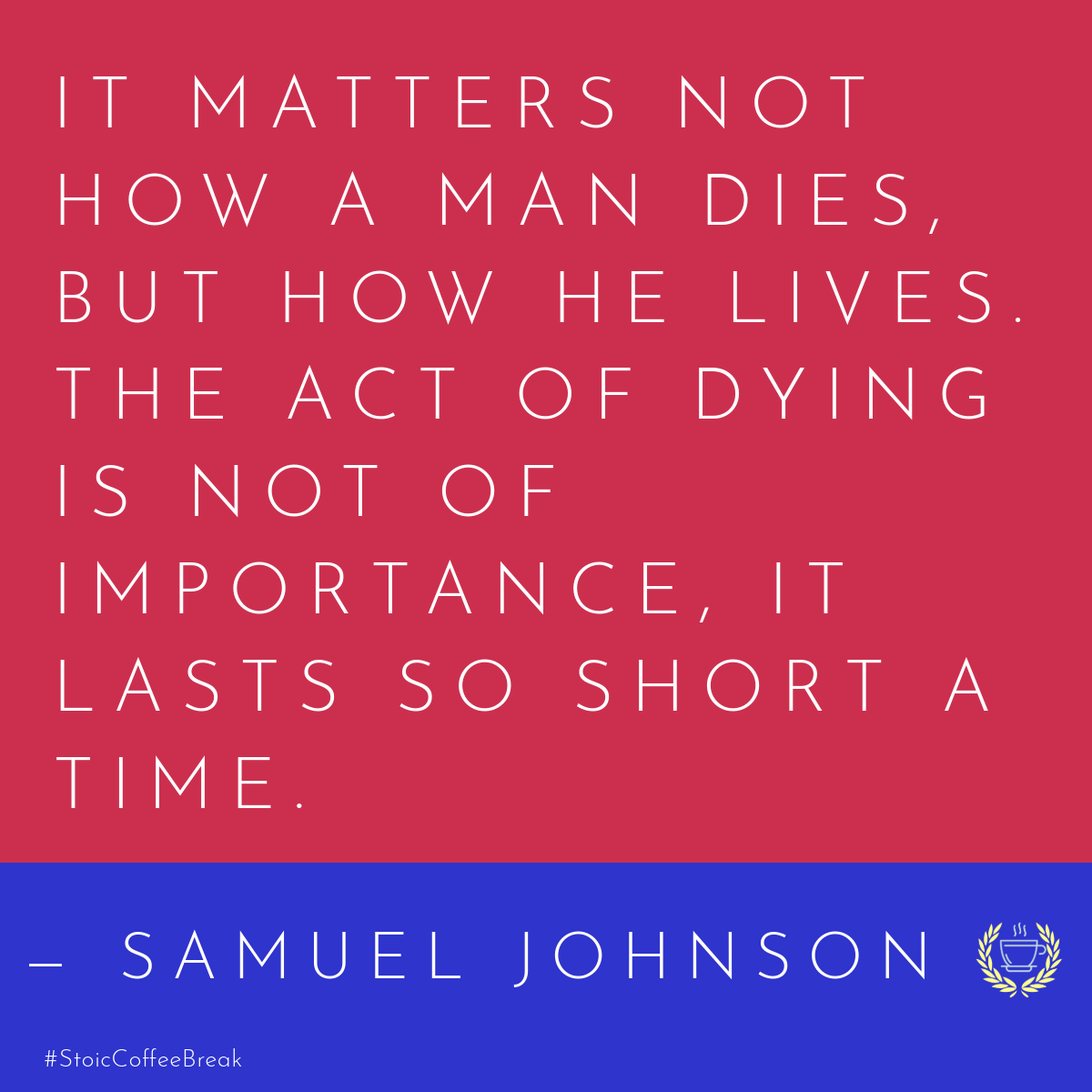
286 - Remember Death
Feb 6, 202400:10:46Tap to summarizeHow often do you think about your death? Do you go through your life just ignoring it and thinking that it’s always a long way off? Today I want to talk about why considering your death each day can make your life richer, fuller, and happier.“You could leave life right now. Let that determine what you do and say and think." — Marcus AureliusOne of the most important things that the Stoics teach is to be aware of death, that we too will die one day. The term the Stoics use is Memento Mori, remember death. The Stoics want us to remember that every day could be our last so that we use the time we have the best we can. Memento Mori is not about being morbid or macabre, but rather appreciating the fact that we are alive at this moment, and that we need to savor each moment we have because it could be our last. It means that instead of wishing for things to be different, we should accept things as they are and appreciate them. It also means that we should look for things to be grateful for right now. We need to find contentment now rather than waiting for it to come to us in the future after some event or accomplishment.Mortality“To live in this world, you must be able to do three things: to love what is mortal; to hold it against your bones knowing your own life depends on it; and, when the time comes to let it go, to let it go." — Mary OliverMemento Mori is there to remind us that we need to face reality. We need to accept that we will all die one day, and as much as we might want to ignore that fact, it is not something that we can escape. The sooner we come to terms with our own mortality, the less we fear death, and the better we can live in the present.One day, when I was about 40, I had just gotten out of the shower and was trimming my beard. As I was looking at my face in the mirror and I noticed the wrinkles on my face standing out a bit more. I remember having this rush of fear and anxiety about how I was getting older, and that I would die one day. I realized that I had never put too much thought into the fact that I would die. Like most people, I just went about my daily life as if death was something I could just ignore. I realized that I needed to face my own mortality because it was something that would come whether I liked it or not.Over the next few months, I would occasionally take some time and think about my death. I thought a lot about what it might be like after I leave this life. I thought about some of the things that I wanted to accomplish before I left this world. I worked on getting comfortable with the fact that I would have to face my death at some point. The more comfortable I got with death, the less fear I had about dying. This is not to say that I’m looking forward to it or seeking it out, but it no longer causes me the anxiety I felt when I was first confronting my own mortality. Live Now"Let us prepare our minds as if we’d come to the very end of life. Let us postpone nothing. Let us balance life’s books each day. … The one who puts the finishing touches on their life each day is never short of time." — Seneca"The trouble is, you think you have time." — BuddhaSo why is it important that we learn to face up to our own mortality? Remembering death sharpens our senses. It helps us to be more present in our daily lives because we can spend less time living for the future because it’s possible that we might not have one. When we recognize that all the plans and goals that we have may never come to pass, we learn to not let our happiness be dependent on things that we’ll accomplish or get in the future. Facing up to your death helps you live more urgently. Memento Mori helps to prioritize the things that matter and the things that don’t. It reminds that we shouldn’t put off the things we want to do but try to do them as soon as we can. We often live with the idea that we’ll get to it someday, as if we had all the time in the world. The Stoics tell us to get busy with the business of living. Don’t waste time on things that don’t matter.Will it Matter?"Remembering that I'll be dead soon is the most important tool I've ever encountered to help me make the big choices in life. Because almost everything — all external expectations, all pride, all fear of embarrassment or failure - these things just fall away in the face of death, leaving only what is truly important." — Steve JobsWhen we take the time to remember death, we can develop a bigger and more helpful perspective about life. For example, if we ask ourselves, will this matter in 100 years? 1000 years? Things that may seem important in the moment, can seem trivial in the long run. The minor inconveniences that annoy and distress us in our daily lives can be laughed off when we think about them in a long enough timeframe because everything you do will probably not even be remembered in 100 years, and probably not even in 5 or 10 years.In Meditations, Marcus Aurelius says, “Alexander the Great and his mule driver both died and the same thing happened to both. They were either received into the same generative principle of the universe, or they were both dispersed into atoms.” In talking about this, he’s reminds us that regardless of the greatness of your achievements, we all meet the same fate. And even though Alexander was a great conquer, what good does that do him now? Is he still able to enjoy the glory of his conquests? How You Live"It matters not how a man dies, but how he lives. The act of dying is not of importance, it lasts so short a time." — Samuel JohnsonSo if that’s the case and it seems like nothing really matters, why should we try to do anything good? Why should we try to accomplish anything in this life? It’s not that you have to accomplish great things in order for your life to mean something. Not everyone was meant to accomplish something that will be remembered. And that’s okay. Because how you live your life matters. Like I talked about in last weeks podcast, Ambition or Contentment, living a good life is not about all the accomplishments you achieve, it’s about the process of living. It’s about enjoying the journey and everything that comes your way. It’s about doing good things in the world, even if they are small acts. Gratitude of Living"It is only when we truly know and understand that we have a limited time on earth – and that we have no way of knowing when our time is up – that we will begin to live each day to the fullest, as if it were the only one we had." — Elisabeth Kübler-RossAn important part of Memento Mori, is that it teaches us to practice gratitude for the the everyday things in life. Remember, it’s not the grand gestures and huge accomplishments that make life good. It’s all the little things. A good cup of coffee, a great conversation with a friend, listening to a beautiful piece of music, watching a sunset, or even just appreciating that you are alive and you get to experience all these things. Appreciating the little things, the small joys of life is an easy way to help you feel more alive with just small shift in your perspective.Contemplate Your Death"Doesn't everything die at last, and too soon? Tell me, what is it you plan to do with your one wild and precious life?" — Mary Oliver, from the poem "The Summer Day"A practice to you can use to help you appreciate life more is to imagine what it would be like if you died. Think about all the things that you would miss. Spending time with your friends and family. Watching your favorite film. Eating dinner at your favorite restaurant. Imagine that you will never get to experience these things again. When you think about how much you’ll miss them, you’ll appreciate them even more the next you get to enjoy them.There’s a great example of this in the film Fight Club. There’s a scene where Brad Pitt’s character, Tyler Durden, pulls a gun on a convenience store clerk, Raymond, and threatens him with it. He takes his wallet and he sees that Raymond has an expired community college id. He asks him what he studied and what he wanted to become. Raymond tells him he wanted to become a veterinarian, but that there was too much schooling involved. Tyler then takes Raymond’s drivers license and tells him he’s going to check up on him and that if he’s not on his way to becoming a veterinarian in the next six weeks that he’s going to kill him. He then tells Raymond to run.Throughout the whole incident, Edward Norton’s character is trying to get Tyler to stop. After Raymond runs for his life, he asks Tyler why he did it. Tyler says, “Tomorrow morning will be the most beautiful day of Raymond K. Hessel’s life. His breakfast will taste better than anything you and I have ever tasted.”Now I don’t recommend that you go out and threaten someone with gun to help them face their fear of death. The scene in the movie was meant to be extreme to prove a point - that on...
Transcribe →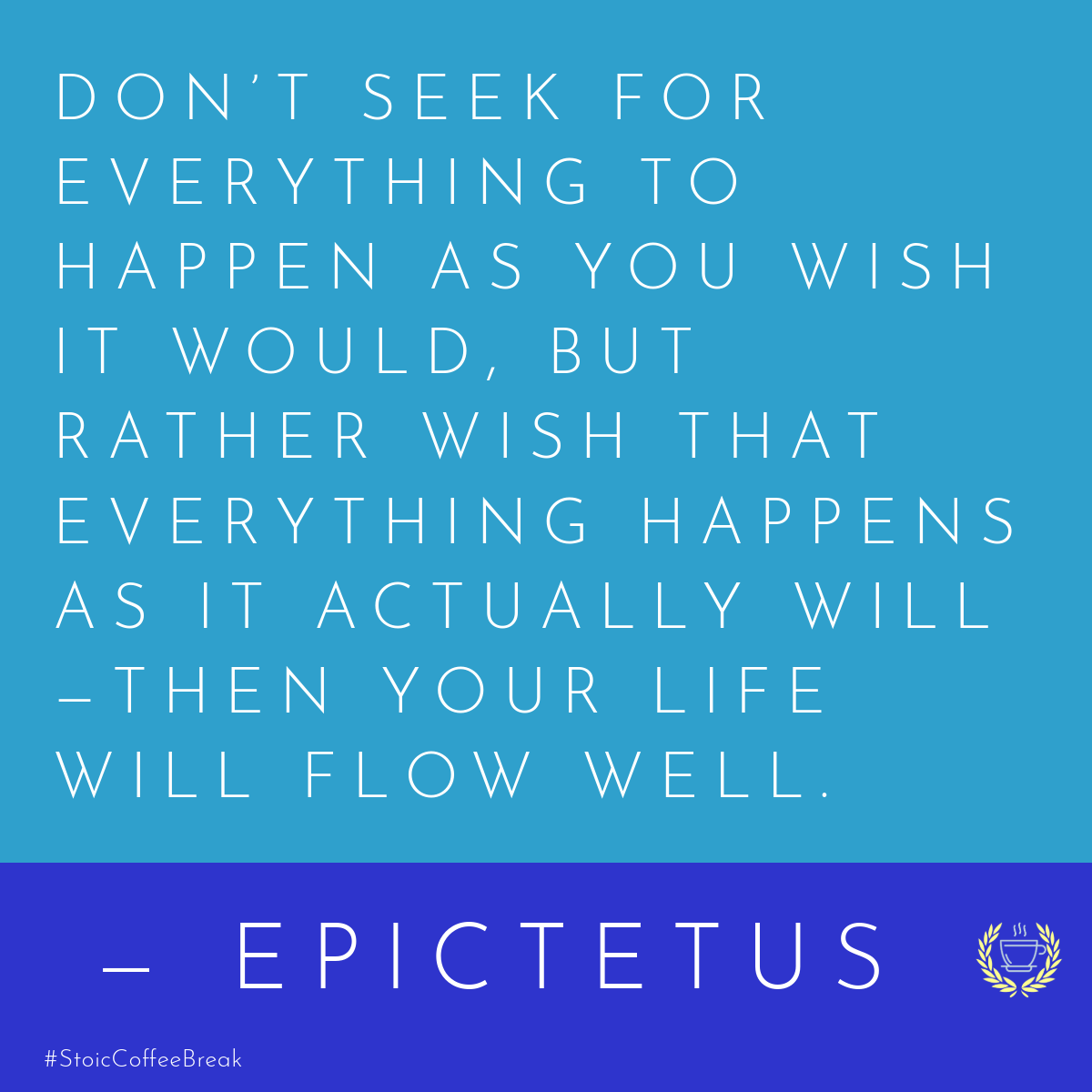
285 - Ambition or Contentment
Jan 30, 202400:13:27Tap to summarizeOne of the key aspects of stoicism is to be content with what we have. So how does this balance with ambition? If you are content, does that mean that you shouldn’t be striving to accomplish your goals? Today I want to talk about how stoicism can help you accomplish your goals while still finding contentment in your daily life."The whole future lies in uncertainty: live immediately."— SenecaOne question that I get from time to time is how do balance ambition with the stoic teaching of contentment? Meaning, if we’re supposed to be content with how our life is and accept it for exactly what it is, how do you work hard and achieve the goals you want to accomplish in your life?This is an interesting paradox to consider, because it seems like they are in opposition of one another. If you are content with what you have, does that mean that you become apathetic? If you are striving to accomplish your goals, does that mean that you are discontent with what you have?Contentment"Make the best use of what is in your power, and take the rest as it happens."— Epictetus First, let’s dig into the definitions for each of these things. What does it mean to be content? Does it mean that you simply accept life as it is? Does it mean that you’re docile and just let life happen? Often people think that contentment means that we are happy with life as it is and don’t want things to change. But that’s the thing, life will change. As soon as we are content with life as it is at a particular moment, things change. We can’t just be content with life as it is in one static moment because that moment will not last. We need to learn to be content with life as an ever changing process. We need to learn to flow with life as it comes.Contentment comes from an acceptance and appreciation of what is, of all things in your life whether you consider them positive or negative. Finding contentment means that we accept life and all its changes and recognize that we have the power to choose how we want to view the events that happen. It means that you choose your perspective and outlook and you don’t let external events and circumstances be the driver of your mood.Ambition“Concentrate on what you have to do. Fix your eyes on it. Remind yourself that your task is to be a good human being; remind yourself what nature demands of people. Then do it, without hesitation, and speak the truth as you see it. But with kindness. With humility. Without hypocrisy.”— Marcus AureliusNow let’s talk about ambition. Let’s go with the definition that ambition means that you have specific goals that you are striving to accomplish. It could be that you want excel in your career or you are trying to master a skill. Maybe you want to improve yourself in some way. Does mean that you aren’t content with the way things are?Where ambition leads to discontent is when we become dependent on the outcome. When we set our happiness upon achieving our goal is where we find the conflict with stoicism. The problem is not that you are discontent with the way things are and are trying to change them. The problem is when we focus on the outcome of our striving, then we set ourselves up for several kinds of unhappiness. The first is that when we set our happiness on achieving the goal, then it is likely that we won’t be happy while we are striving for our goals because it is still out of our reach. We have decided that we can’t be happy until we get what we want, and you’ve given away your control. You’ve placed your sense of well being outside of yourself. Since the stoics remind us to focus on what you can control, you can only control your perspective and the choices that you make in the present moment. Another pitfall of setting our happiness on the outcome is what happens if we fail to reach our goal? What if we give it everything we have and still fail? If your happiness is outcome dependent then you are allowing your happiness be dependent on something outside of your control.Another problem with being dependent on the outcome is that when we actually achieve our goal, then we are often happy for a time, but then we find that happiness fades. Our level of happiness fades to the level it was before we achieved our goal. This is known as the hedonic treadmill. We work hard to get the bonus or the new house only to find that after a while we are just as happy or unhappy as we were before. Process"Don’t seek for everything to happen as you wish it would, but rather wish that everything happens as it actually will—then your life will flow well."— EpictetusSo how do avoid the pitfalls of striving for our ambitions? How do we find contentment without becoming complacent?When we learn to focus on the process of what we are doing, then we are able to find contentment in it. We work on being happy with our growth and how we are doing something rather than just achieving something. We find joy in learning how to master something. We find contentment in our own improvement, know matter how small.What about external validation? Again, if we are intrinsically motivated, if we are motivated by our comparison with ourselves rather than needing the validation of others, then we can find contentment. The only person we should competing with is ourselves. Are we better than we were yesterday? Have we made progress?Now does this mean that if we ignore external validation and comparisons that we’ll achieve our goals? No. You could still work really hard on something, enjoy the process, and still not get what you want. But what you will have is control over your happiness. It will not be as dependent on what others think. The outcome will be what it will be, but your happiness is not affected by the outcome. Because you cannot control the outcome, you can fail, and still be content because you enjoyed the process and did your best. You may not get that promotion. You may not win the race. But your self worth, your contentment will not be dependent on those things. Another thing to consider is that we can’t develop our virtues of Justice, Wisdom, Temperance, and Courage without engaging with other people. All of these are things that we improve while we work on other things. You don’t gain wisdom by just sitting in your room reading books. You may get knowledge by doing that, but unless you interact with others it’s just knowledge. The same goes with Courage, Justice, and Temperance. Unless you are busy with life and trying to be useful in the world, you are unable to develop these virtues. How would you know if you have courage if you are never tested? How do you develop temperance without challenges? It is by getting out into the world and trying to better ourselves in all that we do that we improves these virtues, and thereby improve the world.As an example, say that you wanted to become a leader at your company. In doing so, you’ll have to learn how to work well with others. You’ll need to have wisdom of how to manage other people. You’ll need to learn to be fair with others, and to manage your own moods when things don’t go as planned. By putting yourself out there and trying to achieve your own goals, you’ll have to improve yourself, and in doing so you can make your work environment a much better place for yourself and those you work with. And one of the byproducts of focusing and doing the best you can with each situation as it arises, the more likely you are to succeed. Enjoy the Present"Concentrate every minute like a Roman—like a man—on doing what’s in front of you with precise and genuine seriousness, tenderly, willingly, with justice. And on freeing yourself from all other distractions. Yes, you can—if you do everything as if it were the last thing you were doing in your life."— Marcus AureliusSo what can we do to be better about being content while we work towards our goals?First and foremost, as I’ve mentioned several times in this podcast, we can focus on the How. We do our best to grow and learn when we learn to enjoy the process of doing. When we do this, we let go of the outcome determining whether we are successful or not. Does this mean that we will be successful? No. You can do everything perfectly and still not succeed. That is not a reflection on your character or whether or not you’re a good person or even whether you deserve the outcome you want. An important part of finding contentment in any situation is that you control the things you can and you let go of the things outside of your control. You can train for decades for the Olympics, be the best in your sport, perform the best you can, and still not win a medal simply because someone else was a little better or conditions where not in your favor. How well someone else does, the decisions a judge makes, and other external factors are all outside of your control.You can work hard at your job, put in more hours than your peers, and still get passed over for a promotion. ...
Transcribe →
284 - Q & A - Daily life, God, Difficult People, and Politics
Jan 23, 202400:19:01Tap to summarizeHello friends, my name is Erick Cloward and welcome to the Stoic Coffee Break. The Stoic Coffee Break is a weekly podcast where I take an aspect of Stoicism and do my best to break it down to its most important points. I share my experiences, both my successes and my failures, and hope that you can learn something from them all within the space of a coffee break. So this week's episode is going to be a little bit different. I've been traveling quite a bit. I am now in Amsterdam. And so I put a post out on social media a couple of weeks ago. I guess about a week or so ago, that I'm going to do a question and answer episode. This is the first time I've done this, but I thought it might be interesting to give it a go. So, I had some people on social media ask me some questions, I also asked some of my friends for their questions about Stoicism and just kind of about life and philosophy in general, and we'll see how this goes. So the first question that I got was, what are some common mistakes people make when trying to practice Stoicism, and how can I avoid them? So, the first mistake that most people think about stoicism is that stoicism is about repressing your emotions. That it's not showing any emotions when you are dealing with something that you're struggling with. And this is really not the case. Stoicism is about emotional awareness. It's about making sure that you are in touch with your emotions in a way that allows you to manage them better.That you have control over your emotions and yourself rather than letting your emotions control you and this comes with, really working on your awareness about yourself awareness about the way that you think. The way that your emotions come because of the things that you think because remember when you are struggling with an emotion. Emotions are created by the thinking that you have, and that your thoughts are the things that lead to emotions and it also can create a feedback loop because emotions can impact your thinking.So for example, if someone says something that you consider to be rude, it's your opinion of what they said that makes it rude. It's your opinion that causes the emotions that you feel about what they said. And by recognizing that it's your opinion that is causing the emotions, you get to choose how you let those emotions impact you and the actions that you take. So that for me is probably. One of the most common mistakes that people make it when they start to practice stoicism, you're not cutting off emotions. You're just becoming more aware of them so that you can actually do something about them and manage them rather than having them control you. So the next question is, how did you discover stoicism or what made you start studying it? So, I first heard about Stoicism from Tim Ferriss. He mentioned the book, The Guide to the Good Life: The Art of Stoic Joy by William B. Irvine. And he said it was a book that changed his life. And Tim reads lots of books, makes lots of recommendations. And for me, when Tim says, hey, this is a book that changed my life, it caught my attention.And I also was curious about the title. Or the subtitle, The Art of Stoic Joy. Because to me, I only knew stoic as somebody who is, you know, very rigid and very emotionless. And so stoic joy was something that I liked the contradiction, so I thought I'd give it a read. So I got the book, and I read through it, and there were a lot of good ideas in it, but it didn't quite click the first time.And I knew that there was something more to it, because as I listened to Tim's podcast, I would hear again and again, hey, you know, talking about stoicism, talking about stoicism. So I got the audio book and for about two or three months, I listened to it on the way to and from work. It was like a 15 minute commute.And I kept having a lot of these aha moments every time I would be listening to it. And it was at that point that it really started to click for me. And I just kept having these moments where I'd be like, wow, that is an amazing idea. I never thought of that. I never knew that the world worked this way. So at that point, I bought the daily journal that Ryan Holiday has, and this was back in 2017. And just at the beginning of 2018, so I could write it in the new year. And I started journaling, and my New Year's resolution was to start a podcast. And I wasn't sure what I wanted to start a podcast on, I had all kinds of ideas. And I figured since I was learning about Stoicism, I would just do a podcast on Stoicism and it was supposed to be just a practice podcast. I would just practice making a podcast and I would talk about Stoicism because I needed a topic to talk about. And then things kind of took off and here we are today. Next question is, what is the best way to practice Stoicism on a daily basis? I think there are a lot of ways that you can practice Stoicism, but there are a few things that I've always found helpful and I know it's going to sound like I'm repeating the same thing, but these are all things that. It'll allow you to practice Stoicism on a daily basis. I think that reading something from the Stoics such as Meditations or writings by Epictetus and Seneca or Rufus Misonius are always, always something good to add to your day. If it's, if Stoicism is just something that you're getting into, Ryan Holiday's books are also a great way to get a good introduction if you find the ancient text a little bit hard to follow. I think there are lots of great books out there that can be incredibly helpful. And I even like to mix in things by like Buddhist writers like Thich Nhat Hanh. Now, another thing that I talk about a lot is meditation. And even though I've kind of fallen off the wagon with this and have not been practicing it every day like I used to, gaining that awareness of your own mind is incredibly helpful for emotional awareness and emotional management. So a few years ago, I challenged myself to meditate for 60 minutes a day for 60 days in a row. And it was challenging. It was something that was very, very hard. And I found that usually the first half hour to 40 minutes, my brain was just kind of like randomly firing off thoughts and thinking about all kinds of things.And then the last, you know, 20 25 minutes would be where I kind of find some peace and I could watch my thinking in a much more relaxed way. But I found that doing that exercise really helped me to have an overall ability to manage my thinking better. So it, it kind of did a big reset. Like my brain worked through a bunch of stuff and so my anxiety levels overall And I find that when I need to, when I'm feeling anxious about something, I can just stop, take a deep breath and I'm able to manage my thoughts quite a bit better.And so it's something that I'm working on getting back into every day. Probably do it a bit shorter than that, but if you can, I highly recommend doing that exercise. It's hard. It's very, very hard, but I found that from that point on, I was a lot more in control of how I could think about things. Another thing to understand about meditation is it doesn't mean that you just have to sit quietly in a room for 30, 60 minutes, whatever.It can be just walking out in nature and paying attention to your thinking. It can be just taking a moment on the bus and just pay attention to your thinking. And just taking some time, even just 10 minutes a day to just sit down and allow yourself to be bored and to pay attention to your thoughts. And the goal of meditation, at least for me, is to not necessarily relax, but to become much more aware of what my brain is doing, what my brain is thinking of. And it's a, it's a very valuable skill because it's hard to manage your thinking if you're not aware of what you're actually thinking. And the last way that I recommend, again, these are all simple tools that everybody talks about. So for me, I find that sitting down and writing in my journal is a good way to get everything that's kind of stirring around in my head. It's also a meditative practice for me. So sometimes when I'm feeling anxious about things or I'm unclear about what I need to get done in my life, I just sit down and do a brain dump. And just whatever comes to my mind, I just start writing it down. And it takes what's spinning around in my head and puts it down on paper so one, it's easier to see and two, it's much easier just to be able to organize those types of thoughts.So if meditation isn't your thing, maybe try journaling. I think that either of those two practices will really help you to become aware of your own thinking, which is a big part of how you can practice stoicism in your daily life much better. So the question I got is an interesting one, but I think I'll, I'll address it. And the question is, Is “God” a pronoun, the name of an all powerful man, or is “god” an ancient word meaning the totality of an infinite universe, and why? So, this is an interesting question, and not something that is really particularly answered by Stoicism, so this is just my opinion on it, and, for me, I would tend to fall on the second option. So, I think that God is just a wa...
Transcribe →
283 - Interview With Entrepreneur Gavan Wilhite
Jan 14, 202401:26:38Tap to summarizeI'm sorry there is no transcript for this episode. I ran it through the usual service I use and it came out so poorly, that it wasn't worth putting up here. This weeks episode is an interview with Gavan Wilhite. Gavan has been an entrepreneur for over a decade and has had a few successes and a few misses. His most successful exit was when his company AltSpaceVR was purchased by Microsoft. We discuss how to use stoicism in entrepreneurship and person life to manage emotions, take risks and follow your personal principles. I hope you enjoy this interview as much as I enjoyed making it. You can find more information on Gavan at https://wilhite.io---Hello friends! Thanks for listening. Want to take these principles to the next level? Join the Stoic Coffee House Community! Stop by the website at stoic.coffee where you can sign up for our newsletter, and buy some great looking shirts and hoodies at the Stoic Coffee Shop. Like the theme song? You can find it here from my alter ego. :)Find me on instagram, twitter, or threadsLastly if you know of someone that would benefit from or appreciate this podcast, please share it. Word of mouth is the best way to help this podcast grow. Thanks again for listening. Hosted on Acast. See acast.com/privacy for more information.
Transcribe →