← Stronger with Don Saladino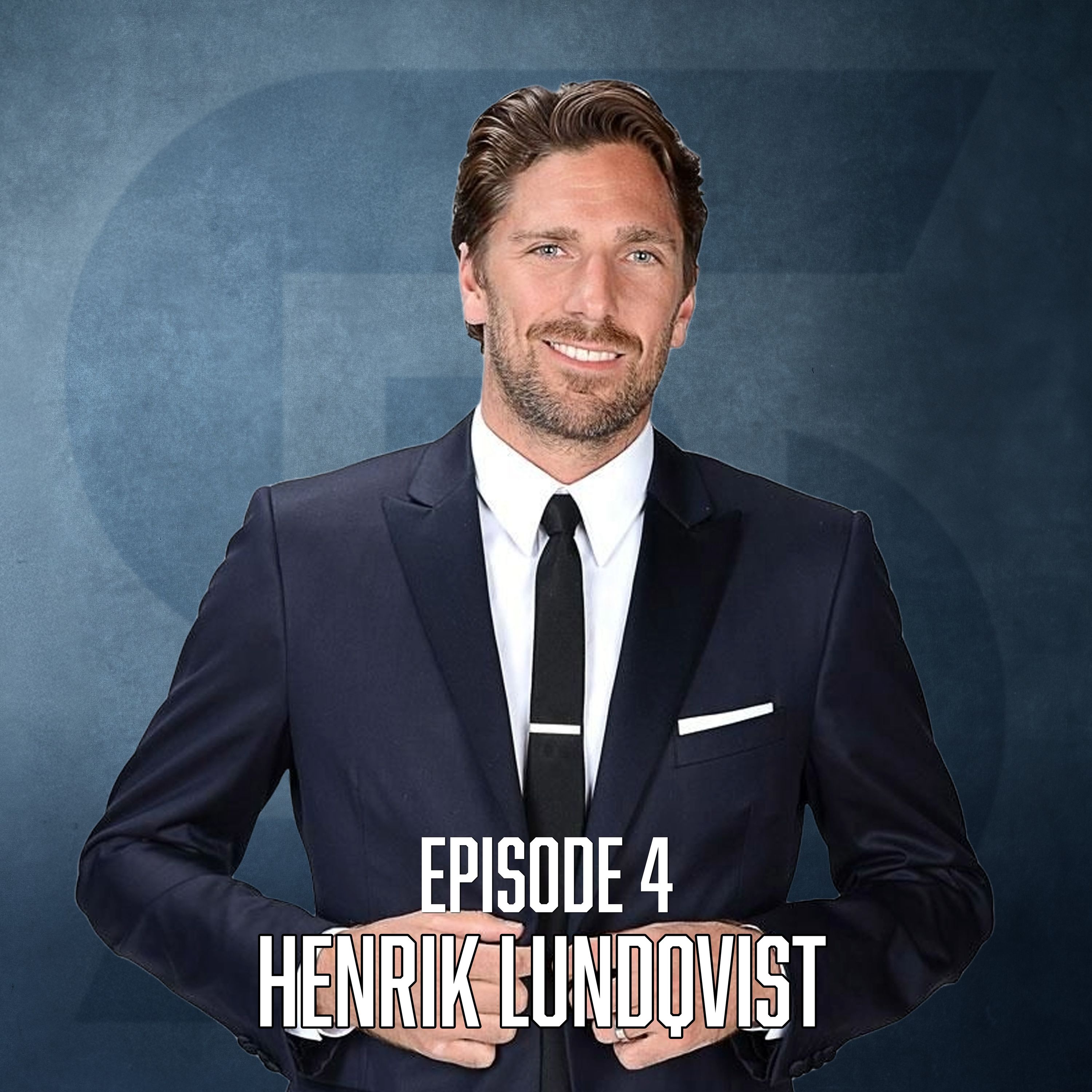
Loading summary
Transcript251 lines
- [00:03]
Henrik Lundqvist
Blind Nil Audio, really? Your crunch time to build up your body is summertime off season. Once the season starts, it's hard and, you know. Right. You want to optimize your body for that game in two days.
- [00:20]
Don Saladino
So were there times where you noticed that your body was beat to shit?
- [00:24]
Henrik Lundqvist
For sure. It's a grind. And I always say this. If you only play great when your body felt great, you got a problem. You would play good 50% of the time. Yeah.
- [00:35]
Don Saladino
Welcome to Stronger. On today's show, I'm welcoming New York Rangers legend Henrik Lundquist. Of course, Henrik is one of the greatest goalies to ever play in the NHL, but his strength off the ice is just as inspiring. I'm Don Saladino. Let's Get Stronger with Henrik Lundquist. So I've gotten to know you on a personal level over the last few years at the. At the Team Paris event down in Nashville. It's been great getting to know you and your family. And what's interesting is I know you outside of hockey. Right. Like, I was, you know, I was at your party after your post. What was it, your post final game.
- [01:12]
Henrik Lundqvist
Or your retirement jersey?
- [01:14]
Don Saladino
Retirement, actually, where I actually mistaken your brother Joel for you. And I went up to him and I started. I'm like, hank, great job. He's like, I'm not Hank. I'm like, you get that, all right.
- [01:21]
Henrik Lundqvist
You're not the only guy doing that, by the way. And by the way, when I go back to Sweden, more people say Joel to me than Henrik.
- [01:28]
Don Saladino
Yeah, I mean, he's. He's like a. He's a massive deal over there, right?
- [01:31]
Henrik Lundqvist
Yeah. I mean, he played there for 20 years. I was a captain 14 years. And for those who don't know, we're identical twins, so we kind of look the same.
- [01:40]
Don Saladino
You still look the same. And I didn't even have a lot of dresses.
- [01:43]
Henrik Lundqvist
I'm a little better looking, but kind of the same and a little bit better dress.
- [01:47]
Don Saladino
But I went rolling, and I started having a conversation with Joel, which was pretty embarrassing, but he couldn't have been any more. I mean, you and him have a very similar temperament in that way. You're very welcoming. I mean, I don't think you ever. I've never. It's never been led on to make anyone feel, like, uncomfortable when you meet them. I mean, you've always been a very warm and.
- [02:04]
Henrik Lundqvist
Yeah.
- [02:05]
Don Saladino
Inviting.
- [02:05]
Henrik Lundqvist
We try to be, and obviously, we're kind of used to, you know, having people mistake us.
- [02:12]
Don Saladino
Yeah.
- [02:13]
Henrik Lundqvist
Even growing up, it happened all the time. Even teachers that we have for years would mistake us. And now going back to Sweden, he still lives in Sweden. I live in New York City. But when I go back for summer, I have so many people come up to me. And sometimes you play along because they're so.
- [02:29]
Don Saladino
You have to.
- [02:29]
Henrik Lundqvist
You know, if they just go on a rant for 20 seconds talking about the game, you're like, yeah, you're right. Yeah.
- [02:35]
Don Saladino
So you. So you were the goalie. He was.
- [02:37]
Henrik Lundqvist
What was his center? Yeah, he's the center.
- [02:39]
Don Saladino
So how is that. I mean, that. That had to work out perfectly in the backyard. I mean, you guys just kind of him shooting on you all day and you guys. Was it ever competitive, though, since it's such different positions?
- [02:47]
Henrik Lundqvist
I mean, very competitive. But we were very supportive of each other.
- [02:51]
Don Saladino
Right.
- [02:51]
Henrik Lundqvist
Because we never competed for the same spot. Right. But growing up, you know, we did everything together. Same classes, same teams. That had to be exciting at different levels. Junior national team, national team, pro team in Sweden. Until I moved to New York City at 23.
- [03:08]
Don Saladino
So that's. That's 20 years ago now, right?
- [03:11]
Henrik Lundqvist
Yeah. 2005, that's when I moved to New York City.
- [03:13]
Don Saladino
That's when I opened my club. So that's technically the first time I opened. 2005 was the year I launched my club Drive. And that was.
- [03:20]
Henrik Lundqvist
It was a good year for us.
- [03:22]
Don Saladino
Better year for you. It was tough. I mean, coming in the city at that age, even though I'm a New Yorker, but getting thrown into this 15,000 square foot club, it was like a big eye opener for me. I mean, how was the transition for you coming from Europe?
- [03:36]
Henrik Lundqvist
I came in with a very open mind. You know, I was very established overseas again, playing for the national team, won a couple of championships. But you move here and it's kind of like starting over. Everybody's like, who are you? We don't really care what you've done in the past, overseas, in Europe or in Sweden. You have to prove yourself here and now. So it was exciting, but also everything was so different, you know, moving from, I mean, kind of large city for Sweden, but still just half a million people in Gothenburg. I grew up in a ski town, very small town, but now moved to New York City. Everything was different, but I think the key was just come here with open mind and just see where. Where life will take you. But, I mean, main focus was just hockey. And that guided me so much in terms of decisions, how I prioritize certain things, you know, because when you come here, there's a lot to Do a lot of people to meet and a lot of fun things going on, but you got to keep your focus on the right things.
- [04:37]
Don Saladino
But this city, it's, it's, there's so much risk, reward to it because you can show up. And we've seen a lot of athletes come into the city and they just, you know, I remember Randy Johnson when he, when he got traded to the New York Yankees and he got into a fight with a reporter like the first two night, two days and we're all sitting there like, oh God, here we go. This poor guy is like probably from, from some area that's not New York and he's not used to the media. And a lot of athletes don't last because they can't, you know, they can't deal with all the other temptations and all the other things going on.
- [05:09]
Henrik Lundqvist
Yeah, I think you have to embrace it. You can't escape it. You have to embrace the fact that it's a big market, high pressured environment. I think what helped me again, I was a nobody. Even though I was established overseas, nobody really knew me here, so. And I was a rookie here, so the pressure wasn't that high.
- [05:30]
Don Saladino
Who was the other goalie at the time?
- [05:32]
Henrik Lundqvist
Kevin Weeks. Oh, wow. So yeah, Kevin Weeks was my goalie partner. So I have to say it's a big different come into New York City, any sports team, as a free agent, big star, established athlete. Because the pressure is on day one. If you're a rookie, they, they give you a little time to get going and prove yourself. Right. So I think that helped me relax a little bit and then I just felt the support from the organization, from the fans from day one. So that helped as well.
- [06:01]
Don Saladino
So the organization obviously knows you're coming in from Sweden. You're 20, 22, 23.
- [06:07]
Henrik Lundqvist
Yeah.
- [06:07]
Don Saladino
So you don't know, like to get an apartment. You don't know the places to go eat at. Are they like turning around, they're like handing you a packet like here, check this out. Here's your real estate broker. Here are the places you want to look at. Or this is a rental place for a while. Like how do they, I've never asked that.
- [06:19]
Henrik Lundqvist
Well, you show up at camp and then you're six goalies were 60 players. So you don't even know if you're going to make the team. That's number one.
- [06:25]
Don Saladino
It's nerve wracking.
- [06:26]
Henrik Lundqvist
So you, you, you just do whatever you can to, to stay on the team. And after a few weeks, if you're still around that's when they tell you you can start looking for a place now.
- [06:37]
Don Saladino
Oh, wow.
- [06:38]
Henrik Lundqvist
But I had a really nice teammate, Darius Casparitis. He was a veteran.
- [06:43]
Don Saladino
He was an Islander at one time.
- [06:44]
Henrik Lundqvist
He was.
- [06:45]
Don Saladino
Yeah, he was. He was. He was a good. He was a fun player, dynamic, very like.
- [06:49]
Henrik Lundqvist
And such a funny, funny guy, but a great teammate. So he actually let me and my wife, girlfriend at the time, Therese, stay with them for a few weeks before we got settled and got our own place. But there's a lot of uncertainty when. When you move like that, start a new chapter in your life. But, wow, it's exciting. It was something you been dreaming about for, I don't know, 15 years.
- [07:15]
Don Saladino
Since you were a kid, was New York the pinnacle? I mean, when you're overseas and you're thinking about hockey, are you thinking, is it like New York or my. Or is it like. No, we were following this team because of Lemieux or Gretzky or. I don't know, like, what were you guys? What were you thinking?
- [07:32]
Henrik Lundqvist
Well, as a kid, at first, until I was 10, 11, I didn't watch much NHL. You know, time difference, middle of the night. And it was also kind of hard to watch NHL hockey. But then they start to air more games. I was a big Patrick Roth fan, and my brother Joel was a big Peter Forsberg fan, and they both played for Colorado.
- [07:55]
Don Saladino
Raw. Was he Montreal?
- [07:57]
Henrik Lundqvist
He started Montreal, yeah. Got traded to Colorado. So I watched them a little bit. I never really had a team. There was more players. Patrick, Rod, Dominik, Hasik, with Matuga.
- [08:08]
Don Saladino
Oh, wait, so you didn't go to an NHL game then, growing up, did you?
- [08:10]
Henrik Lundqvist
No.
- [08:11]
Don Saladino
Oh, so your first NHL game was when you were playing for a team?
- [08:14]
Henrik Lundqvist
No, actually, first game was the year after I was drafted. I came to New York City, 2001, after my draft, just to look around. They showed me around and I went to one game, and then I didn't come back until 2, 2005, when I signed here.
- [08:29]
Don Saladino
What was your. What was your experience watching that? Who. Who'd you watch? What was the first game? Was it. Was it a Ranger game?
- [08:35]
Henrik Lundqvist
Yeah, Rangers. I just remember Archers Urbe, legend, goalie, he was in that for the other team. I'm gonna guess it's. I might be wrong here. San Jose, maybe. Anyways, last game of the season, I watched it. I met a couple Ranger players, then think much of it. After that, I knew I had a lot of work to do. Going back to Sweden, play for a couple more years, play more international games. To prepare myself. But it was a great experience just to be here and see it and feel it.
- [09:07]
Don Saladino
What, what, what feedback did they give you? So you come into camp, they watch you and they're, I mean, I know in any sport they're going to get feedback, right? Like, listen, you're not moving laterally quick enough. You're not getting off the ground quick. Like, what are they, what were they telling you at the time? Was there something you needed to work on or were they just like reps, reps, reps. Keep, keep going.
- [09:23]
Henrik Lundqvist
Well, back then in much feedback, it was just to be here to see and learn. I think I actually went to a development camp a couple years later, but it was not in New York City. That's when they start to really give you more feedback. But also you have calls as you're playing overseas with certain scouts. And I think it's at that point, as you get closer, you start thinking more and more about how do I adjust my game? Because it is a different game when you play international or overseas is a bigger rink, more puck management is not as fast going to the net. So that was a big adjustment for me when I moved to New York City and started playing NHL hockey. Smaller ring, faster shooters are better. So those first couple weeks was a lot of adjustments and working with my goalie coach.
- [10:14]
Don Saladino
What did you feel like were the things that you really improved most on early on? Like, what were certain things where you're like, oh, I'm getting this. Like, I mean, you have to think that way sometimes, right? Like you just start developing skills.
- [10:25]
Henrik Lundqvist
I mean, yeah, I think I was very confident playing in Sweden, but coming here again, changing, I was way more aggressive playing over there because I was just further out. I played deeper in my net when I came here just so I would be in better position. So I was much better, I would say, reading the play, but also being good position. That's something that I think I improved a lot that my first year here in New York.
- [10:54]
Don Saladino
So we can't get in every detail of the career. I mean you had this incredible 15 year career. Were there any standout games? Was there any, was there any series? Were there, is there anything that your head. Because I played college baseball and my head goes back to certain games. Is there anything that your, your mind ever goes back to?
- [11:09]
Henrik Lundqvist
Well, obviously when you retire, hockey was my life from the age of eight. And when you retire it's a, it's a big, that's a big chapter that, that ends, you know, so you have time to reflect on what was good, what was not good. But when I think back of my career, the things that stand out to me as the championships in Sweden and winning the Olympics, my, My first year coming here, winning the world Championships with my brother after, you know, now playing together for 12 years, that was. That was amazing. But then for the Rangers, you know, the. The consistency throughout, you know, my career, I take a lot of pride in that. To be a Rangers MVP nine times, that's incredible. Out of my 15 years, consistency was a big thing for me. You know, I feel like a lot of players can. Can have a good year or two years, but you want to stay up there year after year after year.
- [12:09]
Don Saladino
She's also kept the train on the tracks. Right. You never. I mean, obviously I didn't know you 15 years ago, but it seems like your body didn't really change much. Like you still look young. Like you, you've taken good care of yourself. You're very athletic. You know, you make good food choices and not good food choices. It's like you've got this really nice balance. What was it like training and preparing? Like, were there things that you did that were a little unconventional?
- [12:34]
Henrik Lundqvist
Yeah, and I think it changed over time as your body changed, as your recovery time changed and you start to learn something. Certain things will help me a lot more. Certain things will not help me actually hurt me a little bit. So when I was younger, I was a big runner. Always, you know, always been in the gym. But in terms of cardio, I did a lot of running between, you know, 18 and 24. And then it started less running. And then I started picking up tennis. Actually, tennis was a big thing for me.
- [13:06]
Don Saladino
That was a big thing for you, right?
- [13:07]
Henrik Lundqvist
Summertime. Because I love the movement, low gravity and the mindset. Playing tennis is similar to hand eye, but also that one on one and reading the play, try to be one step ahead. It's kind of like gold 10. Yeah, I was about to say, I never thought of it that way, but especially the movement was great. I thought so. Yeah. The preparation. It's funny because you stay away from the ice for a month and a half, couple months maybe. And then when you're back on the ice, it's. It's kind of weird in a way. You feel like, can I really do this? My body, my joints feel a little off.
- [13:44]
Don Saladino
It hurts.
- [13:45]
Henrik Lundqvist
But then after a couple weeks, you just feel like your body is adjusting again. And it was just a reminder. Like you. When you train every day, your body gets so used to certain movements and and, but then if you have a longer break, it's almost like you have to. You need to be patient with that process of getting back to where you were. And it's a good reminder. Like, if you're training and then suddenly you have a longer break, don't. You can't expect your body to feel the way it did when you. When you were peaking. You know, that's part of the problem.
- [14:16]
Don Saladino
Is I think even in my business, people try and jump back too quickly. Or someone the other day messaged me and they're like, I just. How do I get started back? And I'm like, the problem is, is you remember your peak.
- [14:27]
Henrik Lundqvist
Yeah.
- [14:28]
Don Saladino
And. But you don't remember the time it took you to get to that peak. And I just say, no matter what, just go slower than you think you need to. Like, the juice isn't worth the squeeze. I take your time. And I think sometimes athletes, because they are competitive and they're like, oh, fuck this, I got to dive back into it. You know, they push themselves a little bit too fast and too early. I mean, were there seasons that you felt like you were coming in in a better place physically and mentally? Because maybe you did take more time off. Maybe it wasn't about training. Did you. Did you. Because we always talk about training in those rocky moments, but sometimes pulling yourself back, I think is as difficult, if not more difficult than continuing to do the stuff you know how to do.
- [15:09]
Henrik Lundqvist
Well, I think for. For hockey, you know, you play 82 games. You play every other day. So the crunch time. Yeah. So really your crunch time to. To build up your body is summertime off season. Once the season starts, it's hard. And you know, my first 10 years in the league, I played close to 70 games out of the 82. That's a lot. And then it started to get less. What's.
- [15:34]
Don Saladino
What's the average for a goalie is?
- [15:35]
Henrik Lundqvist
Well, it's. It's dropped now. Now you want starting goal is to play around 55 games.
- [15:40]
Don Saladino
Maybe they're finding that they're fresher.
- [15:42]
Henrik Lundqvist
Fresher. It's. It's more taxing. But also I think more go More teams have more options in terms of goaltending, so they. They try to rotate more. But again, that. That summertime was. That was when you were trying to rebuild your body a little bit. And during the season, a lot of times we worked out after games. If we play Tuesday, Thursday, Saturday. You worked out after that Tuesday game so you could recover Wednesday and then play the game. I think it's smart. Yeah. If you can't work out on Wednesday and then play Thursday and be sore. Right. You want to max optimize your body for that game in two days. So. And it was, listen, it was easy to go into the gym after a win. Everybody was smiling and happy. But it was after the losses where you were just grumpy and frustrated and you saw leg day on the board.
- [16:32]
Don Saladino
You're in the to talk and you think about what food am I going to get. I got a buddy of mine, Andy o', Brien, he's going to be a guest in a, in, in a month. He's does a lot of the strength conditioning for Florida Panthers and he said that a couple years ago he spoke to the organization about not having the team travel home when it's a specific flight that's over a certain duration because he started noticing that their readiness of the players really began diminishing. And that's what I'm seeing a lot with these athletes now. It's like, oh, we've got more than a three hour flight tonight. We, we're staying in the hotel. We're leaving tomorrow because that flight's not going to get us until 4 or 5 in the morning. No one's going to sleep on the plane. You're going to be all thrown off because of jet lag. How much do you think that it had to play a toll on you? Pretty drastically. The time zone changes. You're in this grueling environment for a night in LA and then you got to fly to wherever the hell you have to go to. I mean, were there times where you noticed that your body was, was beat the shit?
- [17:29]
Henrik Lundqvist
For sure. It's a grind. And I always say this, if you only play great when your body felt.
- [17:35]
Don Saladino
Great, you got a problem.
- [17:36]
Henrik Lundqvist
You would play good 50% of the time. Yeah, it was a lot of times it was about finding a way. Keep telling yourself you're energized, you're feeling great. But of course it's, it's, there's stretches throughout a season where you just feel beat up. So again, you need to find a way. But it's changed a lot throughout my career. Okay. I came into Ligo 5, I retired in 21. Just the amount of information that the teams use now from trainers and, and the numbers, the recovery. They have sleep doctors. To your point, is it worth flying back if we're on the west coast, east coast, or do we stay overnight and fly back tomorrow so you get a good night's sleep? The problem is sometimes when you stay overnight, guys tend to go out and have a good time, so they're not sleeping anyways.
- [18:23]
Don Saladino
We have tomorrow off anyway, so let's go. Yeah, no, that's where, that's where I think the battle is. No one's won that battle.
- [18:28]
Henrik Lundqvist
Right.
- [18:28]
Don Saladino
At a certain point, you can get away with partying early on in your career because you're young. But then later on, the thing that I've noticed, I'm going to be 48 in April. 48. 48, man. I'm older than you. Right, so. But like the body, like, is the strength still there? Is the endurance still there? Yes. Is the recovery still there? No, it's just the body. When you, when you get banged up, it takes you a few more days or a few more weeks to start feeling better. So you were fast forwarding now through your career. You had this incredible 15 year career. I mean, I got to go to the Garden with you one day for the Nick game. Thanks for the invite, by the way. And we, and we rolled in and that was an interesting experience to see you in your home. I mean, this is, that's your spot. I mean, I refer to it like when someone asked me, what's it like going with Henrik to the Garden? I'm like, I would assume it's like, you know, maybe being on tour with Michael Jackson. Like, you walked in there, you walked in there, the doors came open and there was just like lines of people and we're dressed up and we're walking in. We're like, how you doing? What's going on?
- [19:26]
Henrik Lundqvist
No, listen, I, I love msg. I.
- [19:29]
Don Saladino
The best place in the world.
- [19:30]
Henrik Lundqvist
It really, really is, it really is everything that's going on there. And, and yeah, I played there for 15 years. Now I work there as an ambassador for the past three, four years. I, I go to games, concerts, I work TV and MSG networks and the people that I've got to know over the years, it feels like family and I, I just feel like home there. You know, it's a big part of my, you know, I spent half, half my life almost in New York City now and the Garden is the place for me. So I'm so happy that, you know, they created this role for me. I feel like I, I try to give back to, to the organization. At the same time, I hope they benefit from, from having me around a little bit. But I'm just having a blast. I really enjoy being there and do a lot of different things.
- [20:18]
Don Saladino
How's all the post game stuff that you I mean, pre game, post game. I mean, you're kind of doing it all now, right? I remember the first time, I think I. I think my wife was with you and your wife. The first time you went off to work and you packed your briefcase and I think, what'd you have in it? You had like a comb. We were lamel.
- [20:35]
Henrik Lundqvist
Came home first off, I never used a comb.
- [20:40]
Don Saladino
Would you. Would you pack like an apple or something? Get a briefcase? Like, what the hell is it? Teresa's like, what the hell is this? It's cute, though. It's fun. But you.
- [20:46]
Henrik Lundqvist
But you look, first day to school, you know, but how was that environment?
- [20:49]
Don Saladino
Was that. Was that nerv? Is that different? Were you like. Or is it just like, hey, man, I do what I do and I'm just going to slip into this?
- [20:55]
Henrik Lundqvist
I mean, media has been a big part of my career. I play for 20 years, 15 here, 5 years in Sweden. So you learn to. To work with media, to what it means. But it is different to sit in a studio and have opinions and, and analyze the team. But I have to say that first year out of retirement was. Was strange. It was weird to watch and a little hard, actually, because I. I felt like I wasn't done at first. I wanted to play more. But as time goes by, you kind of distance yourself from the game and you start to see all the opportunities and positives. Positives of. Of not playing. I still miss the game, but I'm. I'm really enjoying life. It was just a big shift in my life in terms of how I prioritize the things I do and how I spend my time. Because when you're an athlete, your schedule is. You're so locked in.
- [21:58]
Don Saladino
Did you find it tough in the off season? I mean, you're in this because I had friends of mine that played in the NBA and they would be traveling all over the place, and then suddenly they come home and they're like, you know, finding that time management. They're golfing eight days a week and they're like, I don't know what the hell to do. Like, did you ever find that was tough? But you guys travel a bit and you guys kind of disconnect a little bit.
- [22:18]
Henrik Lundqvist
Yeah, we. We always went back to Sweden, Spent a couple. I mean, it was time to. To re. Energize, reconnect with friends, family back home and yeah, traveling a little bit. But I. I love the summers. You know, the. The season was so intense. You go back home and the contrast couldn't be any Bigger. You play sports in New York City. It's so hectic. And then you go back home and maybe you go to the beach house and sit. You don't talk to too many people. You just relax and enjoy that. You know that your closest circle with friends and family and. But after a couple months, you start to itch. Like, I need to go back to New York City and get going again.
- [22:58]
Don Saladino
I find it and no one ever compares it like this, but I built a career with working with actors. Right. I'm not working with really anyone anymore, but when I would see them in their environment and playing this character for six months, eight months, whatever it was. I mean, they're on like it's every single day. The cameras are on them, people are on them, and they have to, you know, report and answer and perform. And then when I'd see them, we would almost kind of say reenter. That's what we would call it. Like, re. Enter into reality. A lot of times they just want to sit there and just breathe and like, not be around people. And I think that's a really healthy thing, like getting some, getting some alone time. Did you feel like that you kind of just needed your family and just to kind of be doing.
- [23:40]
Henrik Lundqvist
I touched on it earlier. I love contrast in life.
- [23:42]
Don Saladino
Yeah.
- [23:43]
Henrik Lundqvist
Like, I love the intensity of New York City, but I also love going back to Sweden and it's quiet. And at times I'm a pretty quiet guy. I grew up, up north in Sweden. People talk less, people talk slower.
- [23:57]
Don Saladino
I'm not like me half the time talking to you and you're like looking at me like this. I'm like, no.
- [24:03]
Henrik Lundqvist
But, you know, I guess I, I, at times I, I need just that piece of collecting my thoughts. And maybe my wife wish I, I spoke more at times.
- [24:16]
Don Saladino
You gotta disconnect, man.
- [24:18]
Henrik Lundqvist
Yeah, no, it's, it's, it's a time for me to again, re. Energize and recharge and, and again, that contrast, you're talking about actors, it's. I'm sure it's very similar where they're so locked in and then when they get out of that, they, they need to not escape, but it's just a way of, of, you know, recharging different focus and different priorities.
- [24:44]
Don Saladino
Like, the goal every year is to win a cup, right? I mean, that's what everyone's goal is. And so season ends if you don't win a cup. You know, there's that disappointment and it's like all see a, see a training camp. It's like, that's got to be quite a shock.
- [24:55]
Henrik Lundqvist
It's an empty feeling.
- [24:57]
Don Saladino
Yeah.
- [24:57]
Henrik Lundqvist
And a lot of times it ends with a heartbreak, you know, over time, or. It's so intense. It's even more intense than during the regular season, obviously, and. And then it's at its peak, and just like that, it's over. So for a week or so, when you walk around, it's like, yeah, it's just such an empty feeling. Winning or losing, you know, winning a couple of championships overseas or. Or international championships, it's such a high. But then it goes to. To a pretty big low until you kind of get back on. On your schedule or. Or, you know, whatever you enjoy doing. But there's definitely a space there that's extremely weird.
- [25:45]
Don Saladino
So interesting pivoting a little bit right now. I mean, you were throwing a curveball, like, with. So you put out an incredible documentary that you were kind enough to invite Mel and I to, and we. And we loved it called Open Heart. So you were. I guess in 2020, you were. You were diagnosed with. Was it a valve issue? What was it?
- [26:01]
Henrik Lundqvist
Yeah, so I. I needed a valve and aortic root replacement. So everything happened kind of quickly. I was about to move to Washington to play there, actually, after 15 years in New York, and I knew I had issues. But that fall, everything just accelerated. Everything got worse pretty quickly. So instead of going to training camp, I had to go in for open heart surgery.
- [26:32]
Don Saladino
What were you feeling? Was it anything specific you were feeling or was it just.
- [26:36]
Henrik Lundqvist
Did the doctors pick up? I was tired at home, but I was working out pretty hard that fall, so I thought it was just, you know, being home, recovering, but I remember going up the stairs, being, you know, just got tired from that a lot. So there was a lot of testing going on. And then, you know, it was a big change for me that year. Mentally. Try to. Try to focus more on. On, you know, finding that piece that we talked about earlier, but also be happy and. And I think it prepared me for the surgery in a way. I was very calm, which surprised me when I think back, how calm I was.
- [27:15]
Don Saladino
Yeah. Watching the documentary. And if anyone hasn't, I mean, they should.
- [27:18]
Henrik Lundqvist
They should watch on Netflix. Yeah, Open Heart, but the power of the mind. You know, how. How good I felt. You know, good is a maybe strange word to say leading up to the surgery, but I felt like I was in a good place, I was ready for it. And then afterwards, first couple weeks was tough physically, maybe mentally too, a little bit. But then I was In a really good place and happy and very present. I think that's the biggest thing I take away from that whole experience. Being so present during that time made me very happy. I appreciated so many things around me. And as an athlete, I think you constantly think about how to improve. You think about tomorrow, you think about just happened yesterday, and constantly analyzing. So you miss a lot of moments along the way because you're not there 100%. But after that surgery, coming back from Cleveland clinic, I was 100% present for a few months to force you to.
- [28:20]
Don Saladino
Slow down a little bit.
- [28:21]
Henrik Lundqvist
Yeah, I mean, I didn't think about what's ahead, really. I thought about today. That's it.
- [28:27]
Don Saladino
What about rehab? When. What was that process like? When did that start exactly? Was there any rehabilitation or was it just like it was put in and they're like, just take it slow. But you got to start walking at a certain.
- [28:38]
Henrik Lundqvist
Yeah, no, they want you up and walking. Day two, three. Wow. Well, the first day, I. Maybe I made it to the door in my room at the hospital, and then you just increase. But they wanted you up, walking as quick as possible. And after a couple weeks, you know, you start walking around in the apartment, and they just improve, improve. And then within, I think three, four weeks, I start to feel pretty good. And I start. I went to the gym for the first time after. I'm gonna say five weeks, four or five weeks. And then I was back on the ice after seven weeks, which was. That was amazing. I didn't expect that. But it was under very controlled, you know, no high shots. It was just light movements. But I just wanted to feel, you know, get that touch back of the.
- [29:35]
Don Saladino
Movements and connection with the ice. Yeah. Smell and just being out.
- [29:38]
Henrik Lundqvist
Because my goal was to come back.
- [29:40]
Don Saladino
And I remember that in the documentary. I mean, I don't want to give up the documentary, but we got to talk about it a little.
- [29:45]
Henrik Lundqvist
Yeah.
- [29:45]
Don Saladino
I mean, so you went through this rehabilitation process. You got back on the ice, and. And at that point, you were like, oh, I'm coming back. Right.
- [29:52]
Henrik Lundqvist
Yeah, I was on my way. I was on the ice for a month or or so and felt really good. And then, fortunately, I had percyditis, which is inflammation around the heart. And that. That was a tricky one. And that's something that I still deal with in a way. I think that's a bit been. You know, when you talk about working out, being active, I had to change my expectations.
- [30:24]
Don Saladino
How so? If you don't mind.
- [30:25]
Henrik Lundqvist
Yeah. I mean, from the age of five, six, Seven, maybe. I've been extremely active, playing every sport and pushing my body as much as I could. And then after I had pericarditis, you know, if you push your body too hard, it triggers the inflammation. So first off, it led to me retiring from. From hockey. And then for the next three years, I had setbacks where I pushed a little too hard. You know, I love tennis, so when I played too much tennis, it came back, and then you feel sick.
- [31:05]
Don Saladino
How long does that last for those symptoms?
- [31:09]
Henrik Lundqvist
It's there for, I would say, four or five days. As long as you stop right away, no more activity, you. You stay calm. And. And again, when it first happened, they pretty much told me to, yeah, you can walk slowly, but, you know, like, what?
- [31:27]
Don Saladino
Like, come on.
- [31:27]
Henrik Lundqvist
Yeah. I just came back from open heart surgery and I was so pumped to get back on the eyes. So that was a big tease. Like, that was.
- [31:34]
Don Saladino
Put you on the eyes. Yeah.
- [31:36]
Henrik Lundqvist
But so just to set my expectations right now, for me to go to the gym today and be active for 45 minutes, sometimes just 30 minutes, that's a win. I feel great. I feel really good right now. I understand I can't be pushing myself the way I did. It's also a weird balance where I know it's good for me to work out. At the same time, I know it's not good for me to work out too hard.
- [32:04]
Don Saladino
Do they have you measuring heart rate? Like, do you have to go in with a heart rate monitor and measure heart rate? Or, like, what are they giving you? Or maybe they're not like. Or their pts telling you, Henrik, don't. Don't exceed this heart rate during training, or don't train for this much time, or don't do X, Y and Z. Like, are they. Are they or are they just, like. You've got to figure it out on your own. What are they?
- [32:23]
Henrik Lundqvist
Well, when the inflammation is there, then it's like, stay under 120 and heart rate, which is. That's kind of hard. I mean, you could go for a very light walk. But now when the inflammation is not there, there's not really any guidelines. It's almost like you have to find your own path. What. What works for you? Again, I've had probably four or five setbacks over the last three, three and a half years, so I kind of know what I can do and what I shouldn't be doing. More than listening. Everybody is unique, but recurrent pericarditis. Most people that have this, they get one time and it's gone. But if you have recurrent pericarditis. It keeps coming back.
- [33:04]
Don Saladino
It's like chronic. It just. Yes. And it's, it's very unpredictable. Or, or, or is it not, is it like. Well, you're dehydrated, you're, you're lacking of rest and it comes back quicker. Have you noticed any patterns?
- [33:16]
Henrik Lundqvist
The only thing I've noticed is when I play tennis, it's been coming back. So I'm trying to stay away from tennis for right now. For whatever reason that, that has now.
- [33:25]
Don Saladino
Just keep it to pickleball.
- [33:29]
Henrik Lundqvist
Exactly. No, but it's, it's, I think as an athlete too, you, you have to know your body. But I think that goes for anyone. Know your body and, and, and set the expectations. Right. If you asked me five years ago like you can't do this, this and this, I would be extremely disappointed. But now having the right expectations of where I'm at and what I can do and can't do, I'm, I'm super happy being able to go to the gym and do light workouts and just overall feel great.
- [34:06]
Don Saladino
Look, none of us are getting any younger, but that doesn't mean we can't feel younger. Healthy mitochondrial function is essential for supporting overall health, including cognitive function, immunity, muscle strength and endurance, and skin vitality. About 70% of us don't have the right gut microbiome to produce it naturally. So supplementation is the only way Enter might appear a powerful science backed ingredient created by Timeline. I use mitipure because it helps my mitochondria, that is my power plant, that is my internal power plant, that's allowing my energy level to feel optimal. So this is a supplement that I personally started taking years ago already. And this has become, you know, a keeper in my supplement regimen. Right now timeline is offering 20% off. Your first order of my to pure, go to timeline.com stronger. That's t I m e l I n e.com backslash stronger for 20% off. All right, now's the time of the show where we take some callers. I've got my producer Chris on the line. Chris, I know we got a couple questions.
- [35:11]
C
Yep.
- [35:12]
Henrik Lundqvist
All right, we have our first caller.
- [35:13]
Don Saladino
I'm going to let him in.
- [35:16]
Henrik Lundqvist
This is Billy from Los Angeles. Don.
- [35:19]
C
Good to meet you. Henrik. Unbelievable. Absolute pleasure.
- [35:23]
Henrik Lundqvist
Nice to see you.
- [35:24]
Don Saladino
What's going on, Billy, you got any questions for us?
- [35:27]
C
Yeah, I do. So, Hank, my fiance is a physical therapist, right. And we're watching Open Heart and she gasped. I literally gasped at your recovery. The speed at which you bounced out of the hospital, showboating on the ice after a few weeks. And obviously it speaks to your physical toughness. But I wanted to ask about your emotional toughness. Coming to the realization retirement was imminent. I was hoping you could speak to that emotionally. And how did you deal with that realization?
- [35:56]
Henrik Lundqvist
Yeah, it was. It was emotional at times, but you have to dig deep. And I think as an athlete, it happens to all of us. At some point you gotta have to retire, right? The question is when and how. And very few get to end it on their own terms. A lot of times it's an injury or you don't get re signed or whatever it might be. But for me, I think the turning point was just I felt so much gratitude instead of look forward. It's like, okay, this is not going to play out the way it was supposed to be. I turned around and looked at everything that I experienced. You know, I got to play the game that I always wanted to play. I turned pro, part of the Rangers for so long, and played for Team Sweden. I just felt so much gratitude. And that put me in a place of this peaceful. Yeah, I always bring that word up. I was in peace with it. I was so grateful for everything I experienced instead of try to want more, because it was. That was what I was building up in my vision of how things were going to end. And then pretty quickly again, I turned around and felt so much gratitude. And that really helped me move forward. And, you know, when it's in the doc too. I had that practice that summer. I still wanted to do it. And I realized after that practice that I felt the pain in my chest. It's over. It really is over. And I just felt like this at that point. I've been fighting it for maybe nine months, you know, through the surgery, through the setbacks with pericarditis. It was just. It's time to let go. And it's different for every athlete. I think it's something that you should not underestimate the fact that it's a huge chapter of your life that's going to change. But I. I worked a lot of myself mentally, and. And I just again, felt a lot of peace.
- [38:00]
Don Saladino
Yeah, But, Billy, what's. What I think is interesting about what Henrik's saying here is his, his bout. Even though he, he, he didn't come back and he decided to retire because of specific setbacks initially. Your recovery, Billy, you said was your wife or your girlfriend.
- [38:16]
C
My fiance, actually.
- [38:17]
Don Saladino
Congratulations, by the way. I think because you were kind of. You were in a good mindset when making that comeback. And I think that's something that it's very tough to do. Right. Like, you. You've had surgery, you've had an injury, you're out for a while. There's that level of uncertainty, and I think people get their mind into this downward spiral of like, oh, my God. Oh, my God. You kept using a word with me during our interview earlier, and hopefully you'll. You'll listen to this. But it was. You were present.
- [38:45]
Henrik Lundqvist
Yeah.
- [38:45]
Don Saladino
And I think that's important. I think that kind of relaxes you a bit. And I know. And your fiance knows better than anyone. She. This is what she. But when your mind's in a good place, the body's going to follow a lot better than if you're just constantly throwing negativity on the fire.
- [39:02]
Henrik Lundqvist
Yeah, absolutely.
- [39:04]
Don Saladino
Great question, by the. By the way, when's the big day?
- [39:08]
C
September 20, Santa Anita park in Arcadia, if you guys aren't busy.
- [39:12]
Don Saladino
You know, that's four days after my anniversary. Great, great, great month. Congratulations on everything.
- [39:19]
Henrik Lundqvist
Great.
- [39:19]
Don Saladino
Great question, brother. Thank you again for coming on.
- [39:22]
Henrik Lundqvist
All right. Thank you so much.
- [39:23]
C
And, Hank, let's go Rangers, buddy. Thanks so much for all. Thanks.
- [39:26]
Henrik Lundqvist
Thank you.
- [39:27]
Don Saladino
Awesome.
- [39:27]
Henrik Lundqvist
Okay, next is Rob and Don.
- [39:30]
Don Saladino
I think Rob used to work with you. Rob, here we go. This is my guy, by the way, I was telling you about.
- [39:39]
Henrik Lundqvist
Hey, what's up, Rob? How are you?
- [39:41]
D
Good. How's it going?
- [39:42]
Don Saladino
Rob, I know you have no questions for me, but why don't you fire off to Henrik, and then I'm going to embarrass you after that for a minute, so go right ahead.
- [39:49]
D
Okay, fine. Perfect.
- [39:50]
Henrik Lundqvist
Hi, Henrik.
- [39:51]
D
How's it going?
- [39:52]
Henrik Lundqvist
Good. How you doing?
- [39:53]
D
I'm good. I'm good. First off, I just want to say, obviously, huge fan, what's called. I got into hockey back in 2012. So you're pretty much the reason that I. I'm into the one sport that I actually follow, and the Rangers being my team. So thank you so much for all of that. I. I just cannot be more grateful for, you know, your career and the things that. The entertainment you provided me. So thank you. I was even at your number retirement ceremony where I saw you get that awesome guitar. And knowing that you are a fellow musician, my question to you would be, how does music factor in? If it factors in at all with your training? And if you could only have three artists, I guess, specifically for training, like, if you're training, if you could only have three artists, you got to keep three, who would they be.
- [40:43]
Henrik Lundqvist
Oh, boy. Well, I grew up, you know, 80s, early 90s. My biggest sister was a huge Guns N Roses fan, so there was a lot of Guns, Guns N' Roses growing up. But for training, I think Foo Fighters is great for me when I train.
- [41:04]
Don Saladino
That's your favorite group? That's Rob's favorite group of all time.
- [41:07]
D
Foo Fighters, Oasis. Those are probably my top two.
- [41:10]
Henrik Lundqvist
Yeah. And it's good, you know, if I'm not working out, I'm more of a chill guy. I like things calm but working out. I love a lot of drums, a lot of guitars.
- [41:20]
Don Saladino
You're. You're a Zeppelin fan, right?
- [41:22]
Henrik Lundqvist
No, I mean, I listen to it, but I. I wouldn't put it up in the top three. Wow, am I disappointed here right now.
- [41:32]
D
Hot debate, hot topic here.
- [41:33]
Henrik Lundqvist
Yeah.
- [41:34]
Don Saladino
What else? I'm curious.
- [41:35]
Henrik Lundqvist
Well, I mean, working out. I love acdc, the live album from Zibu and his iron. Yeah, I know. You hear the crowd and loud guitar again. It's great when we're in the gym and you just want to.
- [41:47]
Don Saladino
Just.
- [41:47]
Henrik Lundqvist
Just want to go, you know? Yeah. So we have no surprises.
- [41:52]
D
We have. I mean, I know me and Don have talked about this before, and, you know, Don will throw bandana in there. I'll throw abba. Like, do you have. Do you have any. Any of those. Any. Any surprise ones?
- [42:03]
Henrik Lundqvist
Are we still talking while working out?
- [42:05]
D
Sure, sure.
- [42:07]
Henrik Lundqvist
Why not?
- [42:07]
Don Saladino
Whatever.
- [42:11]
Henrik Lundqvist
Actually, one guy I listen to a lot right now is Teddy Swims. Yeah.
- [42:17]
Don Saladino
Who's Teddy Swims?
- [42:18]
Henrik Lundqvist
I don't know this.
- [42:19]
Don Saladino
How do I not know this?
- [42:20]
Henrik Lundqvist
Well, if you hear his song you Must write, he has a bunch of new songs, but his voice is the beat.
- [42:25]
Don Saladino
It's just.
- [42:27]
Henrik Lundqvist
It's a lot beat at times, but still kind of smooth. Great voice. So he will be my surprise for the workout session.
- [42:35]
Don Saladino
Yeah.
- [42:35]
Henrik Lundqvist
Great pick.
- [42:36]
Don Saladino
Now, hold on. I've got one question now, because Henrik's a friend, I can embarrass him a little bit, which I'm going to do. So, Rob, who's the greatest Ranger ever and why?
- [42:47]
D
Oh, I personally, I believe. I believe it would be Henrik Lundquist.
- [42:51]
Don Saladino
So can you. Can you break down personally, if. All right, but, like, if you wanted my. Yeah, I want you to. I want you to defend that. Say I'm arguing it right now. Why is he the greatest Ranger ever?
- [42:59]
D
Okay. Well, I would say. I would say it's Henrik, because just for first of all, what the. What you've done for the team is just incredible, you know? And I'm not just talking about on the ice. On the ice.
- [43:12]
Don Saladino
I mean, look, give me some stats. Give me some stats. Yeah, come on, give me some stats.
- [43:17]
D
I've looked at all the stats and the metrics, and let's be real. When it comes to domination in your career, it's. It's not even close. When you look at the consistency of your career, it's. It's incredible. And. And it just shows. It's such a perseverance and such a competitiveness that I think goes beyond almost any other athlete that I've seen, and definitely in New York. And then on top of that, it's just what you've done for the team, what you've done for the sport, and just, you know, the city itself. I mean, come on, like, you're the king of New York. What else. What else could you say? Whether you like the title right now. I know even if you want to stay humble, it's true, you know, and I think you approach it with such a graciousness and such a flair, and you. And. And you bring such a good, charismatic energy to, you know, whether it's. Whether you're. When you were on the ice or whether it's, you know, behind the booth or when you're talking on ESPN or any other network or wherever you are, I think you just are a great representative to the team. And on top of that, again, I just loved watching every night, every day.
- [44:22]
Henrik Lundqvist
And not only that.
- [44:23]
D
Didn't matter what the team was. It didn't matter what team was in front of you as long as you were on the ice. I was like, it's okay. We can always win this. Henrik's in it.
- [44:30]
Don Saladino
Thank you.
- [44:31]
Henrik Lundqvist
Thank you so much.
- [44:31]
Don Saladino
Thank you for embarrassing him. That was perfect.
- [44:33]
Henrik Lundqvist
Rob, you're the best.
- [44:34]
Don Saladino
Love you, buddy. You're very welcome. See you.
- [44:35]
Henrik Lundqvist
Thank you so much. Nice to meet you.
- [44:38]
Don Saladino
I had to throw you under the heat a little bit. Sorry. It's not going to be that easy today. So, putting aside your family and hockey, I feel like your third love is music. I mean, that's like. To me, like, that's. I think, where you and I kind of connected a bit, because we would go away and everyone wanted to do their own thing, and you. You start playing the guitar, and then I think I could sing. So I'll turn around, I'll start singing. And my son's singing.
- [45:01]
Henrik Lundqvist
Yeah.
- [45:01]
Don Saladino
Which is. It's. The next thing, you know, three hours, you're sitting there and you're picking up me. I'm like, oh, my God. You know that song you're like, yeah. I'm like, I love that song. And the next thing you know, there's. There's a connection you have with people, with music. There's. It's like, to me, it's like a foreign language. Like, if you know how to play an instrument or you know how to do something musically. To me, I'm like, wow, that's awesome. I wish I can do that. How did that start for you?
- [45:20]
Henrik Lundqvist
Started as a kid, actually. My brother played the bass, I played the guitar. My sister played the drums.
- [45:26]
Don Saladino
Oh, no way.
- [45:26]
Henrik Lundqvist
That little band at home, do you guys still rock out at all? No. No, it's been years.
- [45:31]
Don Saladino
Do they still play?
- [45:34]
Henrik Lundqvist
My sister plays a little bit.
- [45:37]
Don Saladino
Do you play a lot?
- [45:38]
Henrik Lundqvist
Not a lot. It goes in waves. You have weeks where you play a lot and then you have. I can go five months without playing. I'm not very good. But it was still something that took my mind off of hockey. I still have to focus when I play, but it's a different type of focus. It's almost like watching a really good movie. You just. Your mind is there 100%, and it makes you relax. It makes you take your energy off of the stress and pressure you feel from. From performing, maybe, to then just sit there and play. And. I'm the guy that brings out the guitar for after parties. That's where you. You come in. Yeah.
- [46:16]
Don Saladino
Yeah. Oh, yeah.
- [46:18]
Henrik Lundqvist
I'm not. I'm not. I'm like the guy that can play a few songs, but again, it's just. It brings a lot of. It's almost like meditation in a way, because my mind goes to a place where it's very relaxing and you can spend hours.
- [46:35]
Don Saladino
Who gave you the guitar when you retired? I never asked you that. I saw you with a guitar that someone, like, it was like a tribute.
- [46:42]
Henrik Lundqvist
Yeah. So John McEnroe came out with a. It's a Swedish brand, Hogstrom. It's an electric guitar. And the guy that painted all my Goldie masks for over 20 years, he painted that guitar with a Rangers theme. So that night at the Garden, he came out with.
- [47:02]
Don Saladino
How emotional was that, by the way?
- [47:03]
Henrik Lundqvist
That night was incredible. I'll never forget it, ever.
- [47:06]
Don Saladino
It was incredible.
- [47:08]
Henrik Lundqvist
You know, it was closure in a way. You know, something. Something was about to. I have a music. A friend back home. He's a big musician. He said it's almost like you attend your wedding and funeral at the same time. It's interesting, you know, it's a big celebration, but at the same time, it's It's. You're moving on, but just to be able to share that moment with all my friends and family. But also, you know, I talked a lot about this in. In the documentary, but an opportunity to thank so many people within the Rangers organization. And obviously, it's such an honor to have your name and number hanging in Madison Square Garden. So, yeah, I'll never forget that day.
- [47:57]
Don Saladino
It is special to see. I mean, there's been a few athletes that I think, as someone that loves sports, you know, New Yorkers, like, love. Like, you're one of them. Derek Jeter, you know, David Wright. There's just certain guys have been with an organization for the life of the organization. I think their number then gets retired. And there's just. That's why it was special for me to kind of go with you to the Garden and see it post your career, because I saw the level of respect that people gave you. And even going to a basketball game, watching basketball, and to see everyone in the Garden, it didn't matter. They were like, oh, Henrik's here. This is someone that's given us joy for 15 years. I mean, that has got to be. I mean, for someone who doesn't live in New York, I don't think most people would understand. It's like Frank used to say it, like, if I can make it there, I can make it anywhere. You don't know, but it's. But it's true.
- [48:47]
Henrik Lundqvist
It's.
- [48:48]
Don Saladino
That's New York for you.
- [48:49]
Henrik Lundqvist
It is amazing to feel that support and appreciation, obviously. And it's almost like I appreciate it even more now. When you're in it, you're just, go, go, go, go. To me now, you know, I was walking down the street. Yesterday was such a beautiful day out. I normally don't walk a lot here. I usually drive a lot, but I walked, and there were a bunch of people stopping me on the way. Just, we miss you. Thank you for everything. And New Yorkers are the best that way.
- [49:18]
Don Saladino
Yeah.
- [49:18]
Henrik Lundqvist
They're not overdoing it. They just want to let you know, and then they move on.
- [49:22]
Don Saladino
Hey, thank you.
- [49:23]
Henrik Lundqvist
Yeah. Yeah. And it just makes me so happy. And since I retired, I've been so appreciative of my career and the experience I had. But even so, the last few years, to feel that people still appreciate what I did for the organization. So that's a good place to be.
- [49:45]
Don Saladino
So now, your foundation, can you explain that a little bit?
- [49:47]
Henrik Lundqvist
While moving to New York City back in 05, I learned a lot through Garden of Dreams foundation which is the foundation of Madison Square Garden. I served as spokesperson for that organization for many years. And then 10 years ago I wanted to create my own foundation as well. You know, to, to work with different organizations, both here in New York but also back home in Sweden. So we focus on education and health for children, but also support their families. Because a lot of times when you work with, you know, especially sick children, it affects the entire family. Right. But so different organizations we work with here in New York City is a Presbyterian children's hospital. We also work with Food bank. And then I'm serving as ambassador for Ron and McDonald House.
- [50:40]
Don Saladino
I love that by the way. I go up there, I'm up there once a year supporting them in there. Yeah, that's a great foundation.
- [50:46]
Henrik Lundqvist
I've been working with them in Sweden for many years now. We start, I start to overlap a little bit here in New York City as well. And then we run our own program called Young Ambassador Program where we inspire kids to give back. So, so kids between 14 and 18 can apply to this program in this tri state area. And you do a one year program, you report to us, we give them help along the way, guidelines. But really what it's about if for them to see the impact of giving back in their community. And then we have a scholarship connected to the program.
- [51:23]
Don Saladino
That's amazing. So if anyone wants to hear about that. How do they, how do they go about?
- [51:27]
Henrik Lundqvist
Go to henryklonquist.com right. We actually just started the new class of 25. So they would go this year now and, and put in the hours and they will help us with different events. They'll work with our partners. They also create their own fundraisers and then they will report back to us and we usually finish the year with a huge presentation where I sit and we talk and give feedback.
- [51:54]
Don Saladino
That's incredible.
- [51:55]
Henrik Lundqvist
I love it.
- [51:56]
Don Saladino
Oh, I know for a fact you got a lot of great stuff ahead of you. I mean you had an incredible hockey career, we all know that. But great things are going to happen for you and your family in the future. You know, I can't thank you enough for coming on because I know, I know life, family, and I know you get pulled in a million different directions and you've, you've turned into a good friend. Even though we're not on top of each other every second, I feel like every time we see each other it's always like a hug.
- [52:15]
Henrik Lundqvist
It really is.
- [52:15]
Don Saladino
We pick up where we, where we left off. I also want to thank the post. Right Christian Ponder and the Post has hosted us here and this is really turned into like my new home in the city now that I'm out of. Out of out of drive permanently. But Hank, thanks again. I'm looking forward to all the great stuff you have in the future.
- [52:31]
Henrik Lundqvist
Thanks Donnie.
- [52:32]
Don Saladino
Appreciate it. Thanks. The views, information or opinions expressed in the series are solely those of the individuals involved and do not necessarily represent those of Chip and Joanna Gaines. By no audio nor Magnolia.