← Stronger with Don Saladino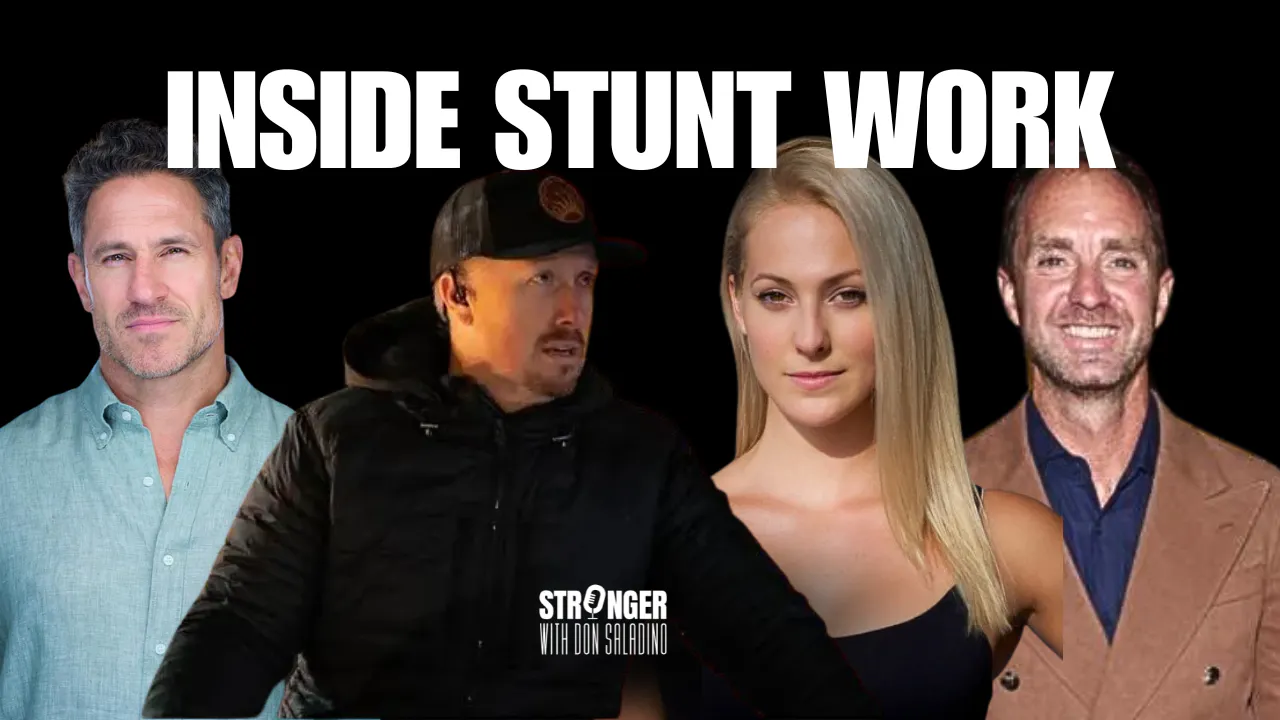
Loading summary
Transcript49 lines
- [00:01]
A
5:00am I'm up with a crisp Celsius energy drink running 12 miles today. Grab a green juice, quick change and head to work. Meetings, workshops. One more Celsius. No slowing down. Working late, but obviously still meeting the girls for a little dancing. Celsius Live Fit. Go grab a cold, refreshing Celsius at your local retailer or locate now@celsius.com My dad taught me a lot, including how easy it is to forget to cancel things. So I downloaded Experian, my bff Big Financial Freedom friend. Experian could help me cancel my unused subscriptions and lower my bills, saving me hundreds a year. Get started with the Experian app today. Your big financial friends here to help you save smarter. Results will vary. Not all bills or subscriptions eligible. Savings not guaranteed. $631 a year average savings with one plus negotiations and OnePlus cancellations paid. Membership with connected payment account required. See experian.com for details.
- [00:53]
B
Experian.
- [01:01]
C
Welcome to Stronger. Today, I've gathered three of the world's top stunt professionals, the people responsible for the most intense action you've seen on screen, to talk about risk, performance and how they keep their bodies functioning in extreme conditions. My guests today are some of the most underrated elite athletes in the world. They train, recover, and manage risk at a level most of us will never face. And they are powerful lessons in how they prepare their bodies and manage fear and stay healthy in extreme conditions that all of us can apply to our own lives. So before we start, I have to introduce the incredible panel. I'm so honored to have everyone on here. We're going to start up. First up, Hayley Wright. Haley is an elite stunt performer and an acrobat who's doubled for major stars across blockbuster films like Furiosa, a Mad Max Saga, and Birds of Prey. Hailey, welcome.
- [01:50]
B
Thank you. Thank you so much for having me. It's really an honor to be on a panel with stunt coordinators and second unit directors that I admire so much and your jolly self. Thank you for having us.
- [02:02]
C
Yeah, appreciate it. Also joining me is George Cottle. George is a veteran stunt coordinator and a second unit director behind massive franchises including Black Panther, Spider man, and multiple Marvel films. George, thanks for being here.
- [02:16]
D
I really appreciate it. I hope we. I hope all three of us can live up to the. To the fantastic intro.
- [02:23]
C
Well, I'm pumped. I'm pumped. And last certainly not least, Chris o'. Hara. Chris is a longtime stunt performer, coordinator, and action designer. Credit span Jurassic World, Venom, Baby Driver, and John Wick. Chris thank you.
- [02:36]
E
Thank you for having me. It's a pleasure.
- [02:38]
C
All right, here is where I want to start. Stunt work obviously comes with real risk. Have any of you drawn the line for a stunt that was just too dangerous? No matter the money or the movie? What is it like when directors ask you to do something you know is risky or a bad idea? How much pressure is there to say yes when everyone's counting on you? Each of you will have 60 seconds. Haley, you're going to be up first. So to reiterate the question, has there been a stunt that's just too dangerous going in, and how's that been dealing with the director?
- [03:13]
B
I've fortunately never been in a position where I've felt that something is too dangerous. I've definitely been in a spot where I've really had my nerves up at my throat. Actually, one of them was working with Chris o' Hara and one of your clients, Ryan, on Free Guy. I had to do a high fall, but I had to do a short shoulder roll into the fall. So it's really hard to stop your rotation during that, you know, 40 foot high fall. So I was very nervous. But I also, I believed I had the talent and the ability to execute it safely. But if in that situation I did not feel that I could do it safely, it would be, yeah, very much speak up. You have to know your limits in this industry. And, yeah, clear communication with your stunt coordinator to then relay, hey, we might need to make this fall lower or change the entry into that stunt.
- [04:07]
C
So, yeah, perfect timing on that. And just really, how many, how many times did you have to perform that stunt?
- [04:14]
B
Oh, Chris, I think we did it three times, maybe four.
- [04:18]
E
Yeah, yeah, yeah, that sounds good.
- [04:21]
B
Yeah.
- [04:22]
C
And Chris, Haley was up to standard beyond, I'm sure she over delivered.
- [04:27]
E
I mean, I have a. I have a soft spot in my heart for Haley because she comes from the gymnastics world and so I was a college gymnast as well, so she always delivers on everything she does. So she's a pleasure to work with.
- [04:40]
B
Oh, thank you, Chris.
- [04:41]
C
Well, that was awesome. So, George, you're up next. Let's take that same exact question. You have one minute. What is it like when directors ask you to do something you know is risky or a bad idea? How much pressure is there to say yes when everyone's counting on you?
- [04:56]
D
I think, yeah, I think when you get asked to, you know, coordinate or put together any stunt, it's kind of, you know, it's very terrifying. And for me personally, I'm always been so much More scared to ask a performer to do a stunt than I ever was actually performing it myself. I just take on so much more risk and worry when I'm asking somebody else to do it. But I think that the more time you coordinate, the more confident you get in your ability as a coordinator, the easier it is to say no, we can't do that and also come up with ideas. You know, we. We have so many incredible things available to us right now with rigging and pads and foam and all this kind of stuff. We always like to. We don't just like to say no. We always like to bring another option to the table. But it's. No one ever likes to say no. Of course.
- [05:50]
C
Of course. Appreciate that. And, Chris, let's close it out with you.
- [05:54]
E
Yeah, I think George kind of summed it up pretty well. I mean, you look at things in a script, and it seems like this huge, daunting task. But, you know, we have a bunch of individuals in this business that are really at the top of their craft, and so coming up with some things that might seem crazy and, you know, you want to say no to. There's always kind of a way to kind of figure it out. You know, that's the beauty of this business. We kind of. No's not saying, like, turning down, like, a big stunt, but, like, no is not really an answer. It's like, how can we figure it out? How can we make it safe? How can we. You know, the greatest line is, we create the illusion of danger by mitigating the risks. Right. So how do we mitigate the risk to make it look crazy and not say no? But from a stunt performer standpoint, I don't think I've ever had to really turn anything down. I mean, things are really worked out, and we take our time to be as safe as possible.
- [06:54]
C
Have you guys ever seen. It was an old stunt movie and maybe showing how old that I am. It's called Hooper by. By Burt Reynolds, of course.
- [07:02]
E
That's kind of seen how you led this. Led this question was. Was doing the big car jump over the thing, you know, and. Yeah, so that's. That's the funny part, because it really comes down to it, you know, a lot of the stuff in Hooper is true to the stunt business to this day. You know, it's like when they get ready to jump the gorge, it's like, I'll tell you exactly how much your. Your life's worth. It's $100,000, you know, at that time, you know, and so it's just a classic kind of dramaticized view of this business, but it kind of. It's not that crazy. But yeah, I mean, all that stuff applies to the business today.
- [07:39]
C
Chris, you're actually bringing a tear to my eye right now because I probably watched that movie, you know, 100 times and, you know, that was my first impression, you know, as a young kid. I saw that movie when I was probably 10 years old, if that.
- [07:51]
E
Yeah.
- [07:51]
C
And I remember the director being kind of a pain in the ass and Burt Reynolds not liking him. He was pushing, pushing, pushing. The sets I've been on, I was. It was completely different. It was. It was almost a little bit of this. God, it was. You guys communicated very well with the director or at least the sets that I've been on to, where the director, in a way would come to you and almost try and see, like, where could we push the envelope or what can we do? And it's your guy's job to be able to coordinate to him what's possible and what's not possible. Is that for all three of you, I mean, is that what you've. Is that. That's been your experience on most sets?
- [08:27]
E
Yeah, I mean, it's, you know, I think the. The Hooper esque took all of the. The cliches that you, you know, in this business. Right. I think back in. Back in the day of Hooper's time, there was, you know, there were those screamer directors, there were those guys that, you know, that. That you knew, just kind of come up with these crazy ideas. And the hard part is there's still not to the extent of, though, that who. That character is depicted in Hooper. But, you know, there still is some things where it's just like, they go, oh, it's just a stunt guy, you know, but they. They kind of go, it's just a stunt guy. But like, dude, it's still a human being. I don't care if it's the actor or the stunt guy. It's. I take the same. The same precautions and the same. I do everything the same. It doesn't matter that I'm a stunt guy or not. So, I mean, there's some of that stuff that's there.
- [09:14]
B
Yeah, I've definitely experienced that. You know, I'll just put the stunt double in, you know, kind of that. They'll be fine. But like Chris said, we're still human, I think. You know, I've been in the industry 11 years, so I'm newer, if you will. I've been fortunate enough to work with great Directors, mostly, you know, very respectful directors and amazing coordinators that have good communication skills. And, you know, I've. I've never really felt like. Well, I've never felt unsafe, but there is always still that pressure and, like, the last minute change on set. Actually, you guys were going over here. We're doing this right now. You know, quick, quick, quick, or it's hurry up and wait. You know, we're the last shot up of the. Of the night. And. And it's a big stunt. So, yeah, I think there's. There's. All of it is still out there. There's many different types of personalities in this industry, but it's, again, knowing your limits and knowing your team and feeling comfortable with your team.
- [10:14]
C
George.
- [10:14]
D
Yeah, I completely agree. I think Hayley made two really great points. I think a lot of our expectations with what we're doing and what we're going to, you know, perform on the day is we get to do it during prep. You know, a lot of these big movies have 10, 8 to 10 weeks of prep, so we can kind of manage expectations. We can get a really good working relationship with our director. But on the day, there are always those moments of we're losing the sun and hurry up, and we got to do this. And at that point, that's really when, as a coordinator, you lean on your team the most to be like, hey, listen, can we do this? Is this going to work? Because I know it's, you know, you talk about cheesy old lines, but we only get one chance to have a perfect safety record, you know, and I would never, ever want to hurt somebody for pushing too hard. But we do tread that fine line between, you know, stunts. I mean, that is kind of what we do, but we try to make it as repeatable and protect our performance as much as possible.
- [11:20]
C
So the Stronger podcast would not be possible if it weren't for our sponsors. And I'm so proud to announce that Masterclass is now one of our sponsors. This is like a total bragging right here. Masterclass. Thank you, guys. With Masterclass, you can learn from the best to become your best. And I'm very proud to say that my friend Joanna Gaines, one of the producers of the Stronger podcast, is on Masterclass. Also, my friend Evie Pompera. So incredible people. You can jump into a mind of an ex Secret Service agent. You can jump into the mind of a professional athlete and learn about their craft. I think this is extraordinary. I think it's fascinating, and I think it's one of the best educational Tools out there with plans starting at $10 a month. Build annually. You get unlimited access to over 200 classes taught by the world's best business leaders, writers, chefs, and more. 10 bucks a month. That is a very low investment. Here's a few classes that you can check out right now. Negotiate your next raise with lessons from super agent Rich Paul or FBI negotiator Chris Voss. I would also throw Evie Pompous in there. One of my favorites. Apply the principles of improv to your life with Amy Poehler. Design your dream home on your budget with the one and only, the best. Joanna Gaines, one of my good friends. And the classes really make a difference. Three in four surveyed members feel inspired every time they watch Masterclass. I know I do. Right now, our listeners get an additional 15% off any annual membership@masterclass.com stronger. That's 15% off@masterclass.com stronger masterclass.com S T R O N G E R Guys, thanks. I'd like to thank David protein bars. David protein bars are not like any other protein bars. To put it into perspective, David delivers 150 calories and zero sugar, all right, across both its gold and bronze product lines, delivering 28 and 20 grams of protein, respectively. That equates to 75% and 53% of the calories from protein, the highest protein calorie ratio by any leading bar on the market. Okay. Which typically equates to 40%. And ironically, I just took my daughter to the store, swear to God, I took my daughter to the store to purchase a few boxes of David protein bars. And she was actually asking me about the macronutrient profile. She loves the taste. I love the taste. And when I am, when I'm traveling, I find myself using these the most. Now, I'm someone that loves to consume whole foods. That's where the, where the bulk of my diet comes from. But I do find myself in situations where I could be traveling on the train, on a plane, whatever it might be. It's nice for me to leave a couple of bars in my backpack so I can just grab it in case of that emergency. So right now, David is offering to our listeners a special, very special deal.
- [14:16]
B
All right?
- [14:16]
C
Buy four cartons and get the fifth free when you go to davidprotein.com stronger. That's davidprotein.com stronger. Thanks, everyone. You know, I've been a coach for 27 years of my life, and I would always get asked the question, is it more challenging to train actors, celebrities, or athletes? And I was like, oh, it's not even a comparison. And people would say, well, what do you mean? I go, 100%. Actors is way more difficult. And they're like. Well, like, a lot of the strength coaches would get upset because training an athlete was always kind of the pinnacle. And I said, you have no idea what's going on set, right? You have no idea. The time zone changes. And even when I was over at, you know, Deadpool 3, you know, in London, there was a certain window that you guys were able to shoot because, you know, it's getting dark and Ryan's got walking pneumonia in the morning, and I try to work with him in the morning, and you just see all these variables that's thrown at the actors, you guys. I mean, it's insane because I would imagine there's always circumstances where something might pop up, right? Is there ever that in the 11th hour, oh, my God, we just came up with this idea. Hey, stunt crew, come over here. We want to implement this. Is that something you guys face a lot? And I'll start with George and I'll run back to Haley and then Chris.
- [15:38]
D
Yeah, no, absolutely. We always get those last minute. And also sometimes those last minute moments of inspiration are what really elevate the sequence. You know, you could be there, and that moment of inspiration may even come from a performer. You know, if Hayley's doubling, you know, number one on the call sheet, or a double has come to me a few times and been like, you know what I could do? I could clip off of that railing. I could hit this. And then you kind of pitch that to the director and they're like, oh, my God, that's amazing. Yeah. So, you know, that can work both ways. It can bring some real creative moments to it, but we also have to make sure we protect our team 100%.
- [16:22]
C
Hayley.
- [16:23]
B
Yeah, I think that was a huge thing for me early on in the industry. Is adaptability being okay with change. Like Chris said before, we both come from gymnastics backgrounds, so, you know, our training was extremely regimented. You're training the same routines to perfection, you know, so the stunt industry is like the complete opposite. Every single job is so different. And then, yeah, like, something is thrown at you last minute. So being able to mentally and physically be like, okay, well, this is happening now. I've rehearsed it this way for months, but it's not anything close to that now. So, yeah, adaptability, being able to just mold yourself on the fly is a huge skill to have because it happens quite often.
- [17:12]
C
I love it. I love It. Chris, we'll close out with you.
- [17:15]
E
I think, I think the one thing that George touched on earlier is team and your performers. So you want to have a team that can adapt. You want to. You want to trust in performers that aren't at the. The max of their abilities. You know, you always want to kind of leave reserve there. I mean, I always use. I. I use a couple drivers that are full race car drivers, and I always bring them out for, like, the most easiest jobs. And I say I'm going to use 5% of your talent today because if something goes sideways, I have 95%. I have the guy in the car that can get me through any situation that that appears. And so I think you just surround yourself with a team that has their abilities, that they can basically adapt to anything on the fly. Not that it happens all the time, but in the event it does, you know, you basically stack your deck, you know, for yourself, all send your team.
- [18:10]
C
Well, in all honesty, I mean, we all love the movies. We love the finished product. I mean, I do, but I actually find the process of what you guys go through with the entire team. Right. I find that more fascinating. And when you're on, when you're on a set and you're seeing these action scenes going on and you're standing. I got the chance to stand behind Shawn Levy and he's sitting there, you know, smiling, and he's all excited. That, to me, is what I wish people got to see that because I would see a specific stunt scene shot over and over and over. And there was this level of team, there was this level of family camaraderie. When the scene got hit, everyone's cheering, coming together, hugging. It's almost like they won a big game together. And you guys really, really did. So I mean, I commend you guys in what you do. I think you guys, like I said, the most underrated piece of the equation. I'm so happy to hear. I think they said next year there's going to.
- [19:05]
E
They're going to start 2028.
- [19:07]
C
Okay, thank you. So I've seen that, and I'm going to get into that later on there's going to start awarding an Oscar to, you know, these specific, specific accolades that should be, you know, they should be put on a pedestal. So thank you guys for what you do, because I know you give us all so much joy in being able to watch these films. And it all really, a lot of this comes down to what it is you guys do. So thank you. If there's a social media handle. Chris, Haley and George. We'll start with Chris. Is there any place people can follow you or see where you guys at?
- [19:36]
E
I wish I could say I was a huge social media guy. I love it, but I do use it for work and sometimes I try not to get sucked into it, but perfect. Air Aware 1, the number one on Instagram.
- [19:48]
C
All right, who knows? Maybe we'll get you a few followers, man, you might actually love it.
- [19:52]
B
Hailey Mine's at the Hailey Wright.
- [19:56]
C
Awesome. And George
- [19:59]
D
Mine is my name with a J in the middle. So George J. Cottle.
- [20:04]
C
All right, guys, be sure to subscribe to Stronger Podcast. Thanks everyone for joining in and we'll see you on the next episode. Thanks, guys.
- [20:17]
A
The views, information or opinions expressed in the series are solely those of the individuals involved and do not necessarily represent those of Chip and Joanna Gaines by Nail Audio, nor Magnolia.
- [20:27]
F
Hey, I'm Josh Spiegel, host of the podcast Lunatic in the Newsroom. If you enjoy journalism that drifts into mild panic, wild overthinking, and a guaranteed nervous breakdown, Lunatic in the Newsroom is for you. It's news like you've never heard before. The only newsroom with a panic button. You'll laugh, you'll cry and gasp in horror as the show spirals completely out of control. It's not just news, it's emotionally unstable. Lunatic in the Newsroom. Listen, today.