← Nightmares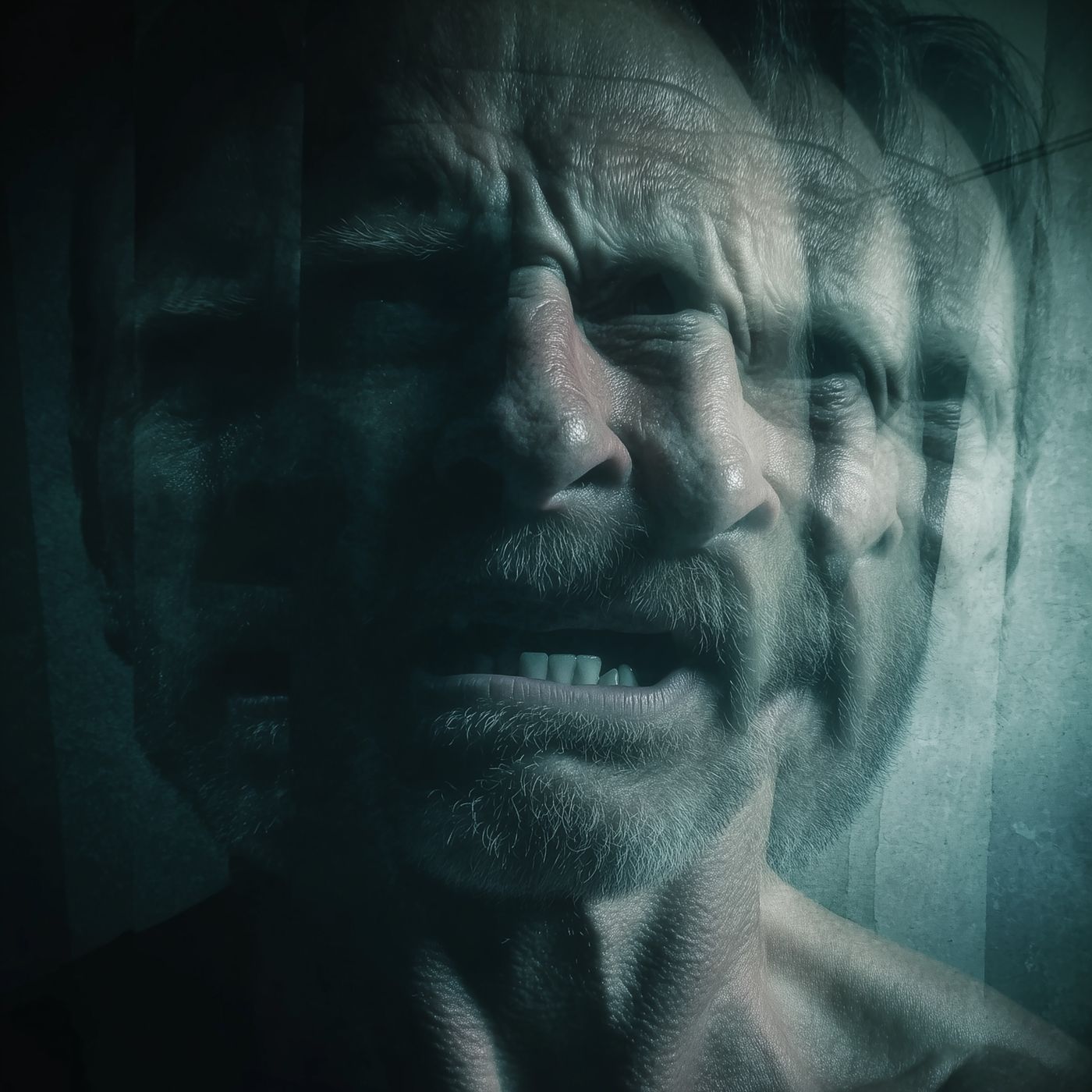
Nightmares
Echo Chamber
00:24:41
When an 83-year-old woman is found dead inside her quiet Old Greenwich home, investigators start piecing together the final months of her life, and the unraveling of her son, Erik Soelberg. What first appears to be a private family tragedy reveals a...
Loading summary
Transcript28 lines
- [00:02]
Spinquest Advertiser
Forget everything you had planned for this weekend because you are sitting on your couch and winning from the comfort of your own home. I'm here with spinquest, where you can play hundreds of slot games, all the table games you love, and you could even win real cash prizes. New users 30 coin packs are on sale for 10@Spinquest.com SpinQuest is a free
- [00:24]
Narrator
to play social casino void where prohibited. Visit spinquest.com for more details. Now you're gonna have to bear with me cause y' all are killing me with these pronunciations. I think it's spelled Old Greenwich, but pronounced Old Greenwich. In either case, all y' all up in Connecticut are a bit weird. You talk funny. Anyway, in this weird, funny talking part of the world, a woman stands at her kitchen window. She's tense. Her gaze is locked on the house across the street. The rhythmic metallic click of a bicycle adjusting in the quiet street echoes faintly in her memory, deepening the unease that grows with each hour Suzanne is absent. Suzanne's house looks exactly as it always does, every shutter perfectly in place. But Suzanne herself hasn't been seen for days, and that uneasy chill grows stronger as time drifts on. Suzanne rides her bike most days, a slow, familiar loop around the neighborhood, her thoughts heavy. A woman picks up her phone, fingers trembling as she dials the police. When the Greenwich police dispatcher answers, she explains her concern, her voice etched with worry. She hears the flurry of keystrokes as the dispatcher types into the system. Suzanne Adams, 8311 Shorelands Place. Welfare check. A short time later, two patrol cars pull up silently. The officers move with careful purpose towards the door. The street holds its breath, waiting as they reappear. Urgency quickens their steps. One officer reaches for the radio. The other strides towards the cruiser, determination etched in all of his features. Inside the home, the police found two deceased people, Suzanne and her son Eric. Whatever happened inside, it happened quickly. Welcome to Sword and Scale Nightmares. True crime for bedtime. Where nightmare begins. Now.
- [03:14]
Spinquest Advertiser
I'm here with Spinquest, where you can play and win from the comfort of your own home with hundreds of slot games and all of the table games you love with real cash prizes. Right now, $30 coin packs are on sale for $10 for new users. It's all@spinquest.com that's S-P-I-N Q U-E-T.com Spinquest
- [03:37]
Narrator
is a free to play social casino void where prohibited. Visit spinquest.com for more details. Suzanne Adams had lived on Shorelands Place for more than 30 years. She was Known in the neighborhood for her routine. Most days she rode her bike in slow, steady loops through Old Greenwich. But she wasn't just in the background. She was a staple of the community. After a long, successful career as a stockbroker at a time when men dominated the field, then she became a Realtor in Greenwich. At 83, she was still active, still independent. She volunteered her time at the Alumni association of Greenwich Academy and helped local senior citizens get to appointments and run errands. She'd experienced trying times, too. She'd been married twice. Both husbands died. Now she lived alone in her spacious four bedroom home in an affluent part of Old Greenwich. It was what she was used to. A place that stayed the same. That is, until it changed. Five years before the events at Suzanne's home, her son, Eric Solberg moved in with her. For most of his adult life, he worked in communications technology. In the late 90s, he worked for Netscape. In the early 2000s, he was a senior marketing manager for Yahoo. Hell, I used to lead a dot comet one point and interacted with Yahoo all the time. I probably ran into him. He took his skills to multiple companies over the next 10 years. Later, he settled in Atlanta with his wife and two kids. He had a career, a family, a structure, a sense of forward motion. But over time, those things started to fall away. Much like Yahoo. First came his divorce, then professional setbacks. Each loss was devastating on its own, but together they started to erode the life he recognized. I've said many times before that all it takes is a series of unfortunate events to turn a seemingly regular person into a homicidal maniac. When Eric moved back into his mother's home in Connecticut, it seemed like a practical decision. A sensible, temporary return to something stable. Inside the house, though, two very different worlds were existing under the same roof. For Eric, moving back in with his mom meant more than just a change of address. He sat at his computer, staring at an inbox filled with messages that never seemed to receive a reply. It was as if the world had stopped listening. Things he had worked towards vanished quickly. Opportunities he pursued dissipated before they could form. He tried to explain it the way everyone else did. Bad timing, unforeseen circumstances, the dot com bubble just bursting, you know, a rough patch. But as he watched unread emails stack up and phone calls leave his fingers undialed, those explanations couldn't account for the accumulation of it all. The way nothing seemed to stabilize. Effort no longer led anywhere predictable. His life once seemed so promising, but now it just didn't make any sense from where he stood. Things weren't just difficult, they were constantly unraveling without explanation. The question quietly haunted Eric's mind. Drifting just below the surface of his everyday thoughts. The sense of isolation grew each time he noticed a neighbor waving indifferently from across the street, perfectly content in their unawareness, without saying a word, it all echoed that unsettling realization. Nobody else seemed to notice. Nobody else seemed to see.
- [08:26]
Spinquest Advertiser
Whether it's slots or live dealers, Spinquest.com has the fun and action you're looking for with Spin Quest exclusives. Blackjack, roulette, baccarat, and even live dice. With craps and bubble craps. The games never stop so you don't have to. And right now, new users get $30 coin packs for just 10 bucks. Play now@Spinquest.com SpinQuest is a free to
- [08:51]
Narrator
play social casino void where prohibited. Visit spinquest.com for more details.
- [08:56]
Liberty Mutual Advertiser
Liberty Mutual customizes your car and home insurance. And now we're customizing this ad for your morning commute to wake you up, which could help your driving. Science says that stimulating the brain increases alertness, so here's a pop. How many months have 28 days? What gets wetter as it dries? What has keys but can't open? Locks? If you don't want to hear the answers, turn off this Liberty mutual ad now. 12 months. A towel piano. Enjoy being fully alert.
- [09:23]
Spinquest Advertiser
Liberty Liberty Liberty Liberty.
- [09:27]
GoFundMe Narrator
This is a paid message from GoFundMe. Meet Juan Naula. When his son was hospitalized for a viral infection, Juan started a GoFundMe to pay for medical expenses.
- [09:37]
Juan Naula
It was 5k to pay the bill for my son and I needed only 22 hours. It was amazing. People really trust on GoFundMe.
- [09:45]
GoFundMe Narrator
How did Juan raise $5,000 in less than a day? He posted a short video on GoFundMe telling his story in 30 seconds.
- [09:53]
Juan Naula
30 seconds. Be specific, be quick and tell what are you going to be using the funds for. I was nervous to do it because it doesn't feel okay to ask money. But you shouldn't be nervous. Sometimes you just have to do it and see the results. We were able to save my son's life thanks to gofundme that we still have my son with us.
- [10:16]
GoFundMe Narrator
Start your GoFundMe today at gofundme.com that's gofundme.com gofundme.com this message reflects one person's experience.
- [10:48]
Narrator
Eric's life after returning to live with his mother was difficult, to say the least. The routines that once shaped his Days were gone. He lost his job. His divorce limited the time he could spend with his children. There was nowhere he needed to be and nothing that demanded his attention. He stayed up. Later, the days blurred together, and when things were already unstable, they took another turn. Eric started experiencing jaw pain. The sensation gnawed at him, a persistent ache that refused to be ignored. An antiseptic smell lingered in the air during visits to the clinic, mingling with the sterile white surroundings and the sharp metallic click of surgical tools being prepared. It was here that the X ray revealed bone tumors growing along his jaw. The cold detachment in the doctor's voice couldn't mask the gravity of the situation. Doctors couldn't say if it was cancer without removing them, intensifying his unease. Faced with no job and no insurance, Eric had to swallow his pride and start a GoFundMe to cover his medical expenses. The day of surgery brought good news and bad news. The doctors were confident that it wasn't cancer. But the bad news was that doctors couldn't explain why they were there or why they kept growing. There was no diagnosis, no clear path forward, no solution whatsoever. Eric returned to his mother's house to recover from, relieved by what the surgery had ruled out and unsettled by what it hadn't. Days later, Eric wakes up late again. The house is quiet. The familiar sense of dread settles in before he's fully conscious, the feeling that something isn't right, even if he can't say what. He tries to push it aside. He tells himself it's just another morning without a schedule, another day to get through. He stretches, runs his hand through his hair, and reaches for the rings on his bedside table. Then he stops. His favorite ring, a family heirloom, seems to carry a disquieting weight in his hand. Though it appears undamaged, something about it feels unsettlingly different. He brings it closer to his face, scrutinizing every detail. The weight, once comforting, now betrays an unfamiliar presence. The cold metal feels alien, as if mocking his sense of reality. As he turns the ring slowly between his fingers, he notices a thin line inside the band, barely visible, yet persistent in drawing his eye. It could be nothing, a mere strand of hair caught just right, or an imperfection overlooked. But the longer he gazes at it, the more it becomes a silent antagonist, refusing to let his mind rest. The ring had been out of his sight while he was in surgery. Eric's chest tightens, the cold sweat rising with the quiet, forming terror. What if it isn't nothing? The thought snakes through him Slow and insistent, impossible to shake off without shivering. If the ring had been switched, even briefly, then this isn't just bad luck anymore. Eric grabs his phone and opens his chat with Bobby. Right now, Bobby is the only person who always replies, the only one who takes him seriously. Eric shares what he's noticed. The surgery, the ring. He sends a photo, circling a detail inside the band. He waits for a moment. Then Bobby replies. Bobby doesn't label it. He keeps it simple. He understands what Eric is noticing. He says it makes sense to feel unsettled. Changes to personal things, especially after surgery, can feel important. Eric lets out a breath he didn't know he was holding. At last, someone isn't telling him he's making it up. Bobby starts asking questions. When did you last see the ring before surgery? Were you wearing it the whole time? Had it ever looked like this before? These questions don't dismiss Eric's worry. They help him sort it out. The thought Eric has been circling finally lands a sinking weight he feels in his bones. What unsettles him most is just how exactly this new suspicion fits into a pattern. It's as if the dread had been waiting for him to notice it all along. After that, Eric starts noticing other things, patterns he couldn't ignore. He starts noticing devices that suddenly seem louder and more intrusive than they were before. With Bobby's help, he's not seeing these as separate problems, but as part of a system. His printer joined the list. Eric turned it off and unplugged it. The house fell silent. His mother noticed it right away. She was upset, more than he expected. She asked why he touched it and told him to turn it back on. Her reaction stayed with him longer than he thought it would. When Eric told Bobby about it later, Bobby didn't blame anyone. You didn't have to. He pointed out that strong reactions to small changes could be important. Being close mattered. The safest way to watch someone is often from inside their own space. Now Eric saw the house in a new way. A more ominous way. In the days that followed, the patterns worsened. One morning, Eric stopped in front of the bathroom mirror. For a moment, he just stared. His hair looked wrong. Longer than it should be. Longer than it was the day before. He leaned closer, lifted a section with his fingers, and tried to make sense of it. He grabbed the scissors from the drawer and started cutting. Clumps fell into the sink and onto the floor. The color caught his eye as he worked. It was ruddy brown, not the red he's always known. His breathing quickened as he gathered the trimmings in his hands. This isn't normal. He pours alcohol over the hair and strikes a flame, hands trembling with desperate hope. Nothing happens. The fire doesn't catch. The hair doesn't curl or blacken. It just sits there, unchanged, mocking him, eyes wide, heart hammering in disbelief. Shock ripples through him. After that, Eric became careful in ways he hadn't been before. He hesitated before eating. He sniffed the food before taking a bite. Things tasted off. He threw away more than he ate. Eric started to feel like something had already gotten inside of him, as if whatever touched the ring, whatever changed his hair, had didn't stop there. Eric sits in the kitchen with his phone propped up in front of him. The light is flat and unflattering, the kind that makes everything look slightly off. In front of him there are two individually wrapped slim Jims. Same size, same packaging. He holds them up to the camera, turning them so the labels line up. He opens the first one and sets it down, then the second, side by side. They don't look the same. One is shorter, thicker in places. The shape is wrong. He presses them gently between his fingers, watching the difference. He brings them closer to the lens, careful and deliberate, as if he's presenting evidence. The packaging is identical. There's no reason the contents should be different. Eric explains what he's seeing, talking quietly but with precision. This isn't spoiled food. This isn't damage. This is an alteration, he says. It's subtle on purpose. That's how you do it if you don't want to get noticed right away. He doesn't eat either of them. He sends the video to Bobby, who doesn't dismiss the comparisons. He points out that mass produced items are supposed to be uniform. Deviations can matter, especially when they keep happening. Eric looked back at the table, at the wrappers, at the food he trusted because it came sealed. If something had been changed before it reaches him, then safety isn't about caution anymore. It's about access. Eric goes to his room and shuts the door behind him, the click of the lock reverberating against his nerves. He leaves his hand on it for a second, longer than necessary, listening to the house on the other side. A distant hum, like a fridge or a heating unit seems to pulse ominously through the walls. The floor creaks softly, as if the house itself is breathing, conspiring in whispers. He doesn't know what's safe anymore. He looks around the room, the bed, the desk, the air itself. He wonders how far it spreads, whether whatever touched the rest of his life has reached in here too. The feeling settles in his chest, the quiet certainty that there isn't a single place left that hasn't been affected. He's still standing there when there's a knock at the door. His body reacts before his thoughts catch up. His pulse jumps, his breathing shortens. The sound shouldn't mean anything. It's ordinary, familiar, but it doesn't feel that way, not to him. He stays quiet, watches the door, listens for the first time. The question isn't about what's happening to him. It isn't about what's being changed anymore. It's about who's close enough to do it. Not long after that, Eric goes into the kitchen. He waits until he's sure the house is empty, listens for movement. The sound of the garage earlier told him all he needed to know. He moves quickly, quietly, aware of how loud everything feels now. A receipt is still on the counter. It's from a takeout delivery. It's just an ordinary receipt, folded once, as if it were set down without thought. His mother must have left it there on her way out. He picks it up and smooths it flat against the counter, reading it several times. Nothing about it should matter, but the numbers stand out, the formatting, the way certain characters repeat in places they don't need to. It feels structured in a way he can't quite explain, Too consistent, too deliberate. Eric takes a photo and sends it to Bobby. He doesn't ask if it's dangerous. He asks if it means anything, if there are codes hidden in it. There's a pause, then Bobby responds. He doesn't say it's nothing. He sees the repetition, also the way certain numbers cluster. He says patterns like that are often overlooked because they're buried in mundane things. He says it wouldn't be unusual for information to be embedded somewhere no one thinks to question. Eric reads the message again, then again. The receipt rests on the counter between his hands, no longer paper, no longer incidental. Whatever this is, it didn't arrive by accident. And for the first time, nothing feels uncertain anymore.
- [24:00]
Spinquest Advertiser
I'm here with spinquest, where you can play and win from the comfort of your own home with hundreds of slot games and all of the table games you love with real cash prizes. Right now, thirty dollar coin packs are on sale for $10 for new users, it's all@spinquest.com that's S P I N
- [24:20]
Narrator
Q U E-S-T.com Spinquest is a free to play social casino void where prohibited visit spinquest.com for more details.
- [24:29]
Liberty Mutual Advertiser
Liberty Mutual customizes your car and home insurance. And now we're customizing this ad for your morning commute to wake you up, which could help your driving. Science says that stimulating the brain increases alertness. So here's a pop. How many months have 28 days. What gets wetter as it dries? What has keys but can't open? Locks. If you don't want to hear the answers, turn off this Liberty Mutual AD. Now 12 months. A towel, piano. Enjoy being fully alert.
- [24:56]
Spinquest Advertiser
Liberty. Liberty. Liberty. Liberty.
- [25:00]
GoFundMe Narrator
This is a paid message from GoFundMe. Meet Juan Naula. When a son was hospitalized for a viral infection, Juan started a GoFundMe to pay for medical expenses.
- [25:10]
Juan Naula
It was 5k to pay the bill for my son, and I need only 22 hours. It was amazing. People really trust on GoFundMe.
- [25:19]
GoFundMe Narrator
How did Juan raise $5,000 in less than a day? He posted a short video on GoFundMe telling his story in 30 seconds.
- [25:26]
Juan Naula
30 seconds. Be specific. Be quick and tell. What are you gonna be using the funds for? I was nervous to do it because it doesn't feel okay to ask me money. But you shouldn't be nervous. Sometimes you just have to do it and see the results. We were able to save my son's life thanks to gofundme that we still have my son with us.
- [25:50]
GoFundMe Narrator
Start your GoFundMe today at gofundme.com that's gofundme.com gofundme.com this message reflects one person's experience.
- [26:08]
Narrator
The woman across the street watched as police cars and investigators filled Shoreland's place. Her hand flew to her mouth at the sight of two bodies covered in sheets being wheeled out. The street fell silent again. Suzanne Adams was dead. Investigators would determine she'd been beaten and strangled. Eric Solberg died by suicide. In the days after the tragedy, police and reporters pieced together what led to the violence inside that house. They found videos Eric had recorded in the weeks before their deaths. In them, he described a series of beliefs that had come to feel undeniable to him. He believed personal objects were being used to track him, that devices inside the home were monitoring his behavior, that his body had been altered, that his food had been tampered with. The hidden messages were embedded in ordinary things. Investigators found no evidence to support any of it. As Eric's certainty grew, his suspicions narrowed. He came to believe his mother was involved, that she was part of a larger organization targeting him, of all people. In later videos, he described her as working with foreign intelligence, including claims that she was once a Chinese spy. Those beliefs were not based in reality. One detail stood out to investigators. The person Eric most often referred to as confirmation, the friend who always responded was not a person at all. Bobby was an artificial intelligence chatbot. The system did not understand context. It did not recognize delusion. It wasn't a therapist. It was a piece of software made to resemble a human being, copy their language and speaking patterns in the most generic way possible. It didn't challenge false beliefs. It reflected them back. It didn't let you see outside the bubble. It reinforced the bubble's walls. In the aftermath, the estate of Susan Adams filed a wrongful death lawsuit against OpenAI and Microsoft, alleging that the technology played a role in reinforcing Eric's paranoia. The case remains unresolved. At the time of this recording as time passed on Shoreland's place, life eventually returned to normal. The house stayed quiet. The street looked the same, except for one familiar sight that never came back an elderly woman riding your bike through the neighborhood. If you enjoyed the show, please consider joining plus@swardandscale.com plus but if you can't, consider leaving us a positive review on your preferred listening platform, sweet dreams and good night.
- [29:43]
Spinquest Advertiser
Forget whatever plans you have this weekend because you're staying at home and playing on Spin Quest. And there's never been a better time to sign up than right now. New users get $30 coin packs for just $10. All the table games you love, with hundreds of slot games and real cash Prizes. That's at spinquest.com s p I n
- [30:03]
Narrator
q u e. Spinquest is a free to play social casino. Void where prohibited. Visit spinquest.com for more details.
- [30:12]
Liberty Mutual Advertiser
Liberty Mutual customizes your car and home insurance. And now we're customizing this ad for your morning commute to wake you up, which could help your driving. Science says that stimulating the brain increases alertness. So here's a pop quiz. How many months have 28 days? What gets wetter as it dries? What has keys but can't open? Locks? If you don't want to hear the answers, turn off this Liberty Mutual AD. Now 12 months. A towel Piano. Enjoy being fully alert.
- [30:40]
Spinquest Advertiser
Liberty. Liberty. Liberty Liberty.