← Sword and Scale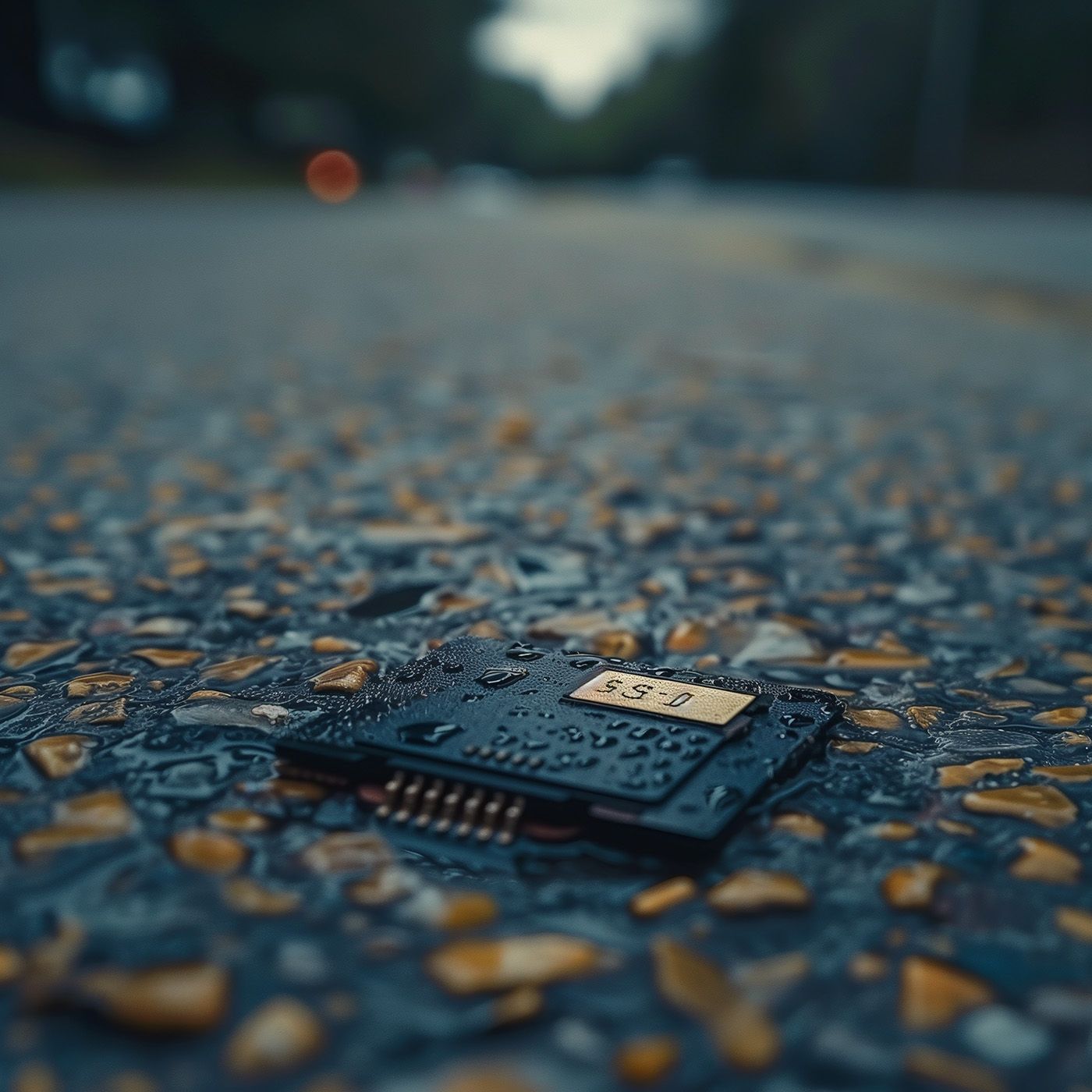
Sword and Scale
Episode 320
01:14:44
When a homeless woman in Anchorage finds a discarded SD card, she hopes it holds music. Instead, she uncovers something far more disturbing - graphic videos documenting the torture and murder of a woman later identified as 30-year-old Kathleen Henry....
Loading summary
Transcript386 lines
- [00:00]
Mike Boudet
Sword and Scale contains adult themes and violence and is not intended for all audiences. Listener discretion is advised.
- [00:13]
Sam
For fuck's sake. Are you still alive? Yes. It's been like what, 20 minutes? So I think it's time we finish this fucking drop, bitch.
- [00:28]
Mike Boudet
All right, get your popcorn ready because we've got some old school sword scale coming your way. This one's gonna give you a little nostalgia. Episode 320. Here we go.
- [00:58]
Sam
Sam.
- [01:34]
Mike Boudet
We sure do love to talk about Florida here. It's kind of. It's kind of my thing. Probably because that's where all the nutbags go to do their nut baggery. But there's another state in this great union that's a haven for psychos, weirdos, and straight up degenerates that are looking for a place to hide in plain sight. And no, I'm not talking about California. Anchorage is Alaska's largest city, but it isn't the sprawling Metropolis the lower 48 might expect. It's a place of contradictions. A city of modern industry and glass towers, yet still haunted by the lawlessness of the frontier. Here, the wilderness isn't just beyond the city limits. It lurks in the streets, in the shadows, in the hearts of those who hunt. Tourists pass through snapping photos of moose and suburban neighborhoods, never seeing the harsher reality beneath the postcard, perfect cityscape. Anchorage has a problem. A problem that thrives on Spenard's sidewalks, in the shadows of the Midtown mall, and in the encampments that spread beneath the Glen highway overpass. A problem that makes victims of the vulnerable, where survival isn't just about enduring the cold, but also the violence that comes with being unseen. A problem we've talked about here many times. Homelessness, Alaska Native woman disappearing.
- [03:23]
Alicia Youngblood
Gone, dead. And then next thing you know, you hear him on the news.
- [03:31]
Mike Boudet
The crisis is impossible to ignore. In the winter, the cold kills. In the summer, the streets swell with the unhoused people searching for shelter, safety, or simply the next moment of peace.
- [03:46]
Alicia Youngblood
This population is preyed upon by people.
- [03:49]
Valerie Kastler
Who want to, you know, harm them.
- [03:52]
Sam
In some way, take any resources they may have.
- [03:54]
Alicia Youngblood
They're a very, very vulnerable population.
- [03:58]
Mike Boudet
Among them, Alaskan Native people are disproportionately represented. Is that what they say, represented? It's a nice Karen like way to say it when you aren't close to. Severs them from the land their ancestors thrived on and leaves them to navigate a city that too often turns its back on them. The reasons are many. Generational trauma, displacement, addiction is a big one. And Poverty. But the result is the same. A population visible and invisible at the same time, ignored until something terrible happens. And in September 2019, something terrible did indeed happen. It started with an SD card.
- [04:50]
Valerie Kastler
It's some really bad pictures.
- [04:52]
Detective Lee
Okay, so it's got pictures of a homicide?
- [04:55]
Valerie Kastler
Yeah.
- [04:57]
Detective Lee
Okay, how do you know that?
- [04:59]
Valerie Kastler
Because I looked at it.
- [05:01]
Mike Boudet
And where did you find it?
- [05:02]
Valerie Kastler
I found it on the ground. I thought there was music on it, so I put it in my phone, see if it had some music in it.
- [05:08]
Sam
Okay.
- [05:09]
Valerie Kastler
There was no music on it. And it was titled. There's a title on it. It says Homicide, and it has all these pictures of this lady, and it shows the Marriott Hotel.
- [05:21]
Mike Boudet
The responding officer arrived at the medical clinic on Lake Otis Parkway, where he met Valerie Kastler. The call came in as a suspicious circumstances report, prompting a quick response from law enforcement. But the officer remained objective, neither discounting her claim nor fully believing it. You see, the idea that someone would find a random SD card with photographic evidence of a homicide was far fetched, to say the least. More far fetched than thinking it was real was the idea that whoever took these photos would be careless enough to lose them.
- [06:03]
Valerie Kastler
There's videos on it. And on one of them, he even told her, hey, you ain't leaving this hotel alive. You're gonna end up making me murder you. And I was like, holy shit.
- [06:17]
Mike Boudet
The officer had seen plenty of hoaxes before. He braced himself for another. But then the first image loaded. He scrolled through the pictures on the SD card. Each photo was more gruesome than the last. Very quickly, he started to believe every word Valerie said.
- [06:37]
Detective Lee
This is very disturbing.
- [06:39]
Valerie Kastler
Yeah, it is.
- [06:41]
Mike Boudet
The officer didn't let it show, but the videos and images on the SD card were some of the most disturbing he'd ever seen. He knew this warranted an investigation and that detectives would want to speak with Valerie. A short time later, she sat down in a small gray room at the Anchorage Police Department, where Detective Lee sat across from her. The tiny woman, wrapped in layers of worn clothing, hinted at long nights in the cold.
- [07:10]
Detective Lee
And how about a good address if I needed to come talk to you?
- [07:13]
Valerie Kastler
Well, I'm homeless. I live in the woods by Shiloh.
- [07:16]
Sam
Okay.
- [07:18]
Mike Boudet
Her face was lined with exhaustion. She'd spent years navigating a system designed to forget women like her. But today, she was holding something no one could ignore. On the night of September 28, 2019, Valerie Castler was walking through Anchorage near the Cars grocery store on 13th Avenue. She often searched the area for discarded items, such as Broken cell phones and picked up items she thought had a little bit of value. That night, she found a small SD card on the ground.
- [07:56]
Valerie Kastler
Yeah, I thought, cool. I found another SD card. Maybe there's more music on it. Because I found one a couple months ago. It had, like, 325 songs on it.
- [08:05]
Mike Boudet
The SD card was not like the last one.
- [08:09]
Valerie Kastler
There ain't no music on that card. It shows some really sick shit on there. And it's been freaking me out, okay? Because I can't seem to get the pictures out of my head.
- [08:20]
Mike Boudet
The images haunted Valerie. Ever since she saw them, she'd been having nightmares. Still, Detective Lee needed her to describe what she saw.
- [08:32]
Valerie Kastler
Okay. It showed her in the hotel room on the floor. And he's beating her up. He's slapping her a second. He's talking to her the whole time. And then on the videos, you don't see no face. He doesn't have no face, but it is. His accent is like Polish. It's. It's foreign.
- [08:53]
Detective Lee
Okay, what's he saying?
- [08:57]
Valerie Kastler
Some of them would be like, oh, this is chapter one. Like, chapter one, take one. And then there was one where he says something. No, you must want to get murdered tonight because you're not leaving this hotel because I'm gonna murder you.
- [09:16]
Detective Lee
Okay?
- [09:17]
Valerie Kastler
He's, like, slapping her, fondling her. And she's not really seeing anything. She's not making no noises or anything.
- [09:29]
Mike Boudet
Instead of music, Valerie was met with something wholly unexpected. As she scrolled through the contents of the card, she saw a series of images and videos depicting what can only be described as torture and murder.
- [09:45]
Valerie Kastler
And then the one that I. I presume that where he killed her is. He had this thing around her neck. It looked like a wire or something. And then next thing you know, he. He goes, like. He crosses him. And then you hear this. And then it's like she wasn't moving anymore or anything.
- [10:11]
Mike Boudet
She said she had the card for two days, but a couple of reasons kept her from coming to the police. First, she was distrustful of them because of her troubled past. She didn't want to get into trouble, just trying to do the right thing. Second, she wasn't even sure if the contents of the SD card were even real. People have been known to act out some crazy sexual fantasies because it looks.
- [10:36]
Valerie Kastler
Like the tailgate sound, and he's got her body in the back of the truck.
- [10:42]
Detective Lee
How come you didn't call us right away when you saw it?
- [10:45]
Valerie Kastler
I don't know.
- [10:47]
Detective Lee
I'm not judging you or anything. I'm not.
- [10:49]
Sam
It's just a question.
- [10:50]
Detective Lee
It's gonna come up.
- [10:51]
Valerie Kastler
I didn't know if it was real or okay, or if somebody was staging something. Cause I've been listening to the news and watching the news, and I didn't. I didn'. I didn't hear anything on the news about a woman missing or, you know, or them finding a body or anything. So I wasn't. I wasn't sure. But the more I thought about it, and I couldn't go to sleep at night. I was having nightmares. And then I started thinking, well, it could be real. You know, just because if they haven't found a body doesn't mean that it didn't really happen because of you. They were too gruesome.
- [11:31]
Sam
Sure.
- [11:32]
Mike Boudet
She watched the news and read the papers every chance she got, waiting to see the headline, Body Found. She hoped she never would. Then she could believe it was all fake. But the longer she sat with those images in her mind, the more she thought they had to be real.
- [11:52]
Detective Lee
And you said you could hear the male's voice. Could you ever see any part of his body in his. Anything?
- [11:57]
Valerie Kastler
No. No. No face at all. Just his feet.
- [12:01]
Detective Lee
You saw his feet? What does he look like?
- [12:03]
Valerie Kastler
There was one on there where he's got his foot on her throat. And then there's another one where it just. It looks like it's going in the hotel. And the hotel floor is like hardwood floor, and he's got like a pair of blue shoes or slippers or something on.
- [12:24]
Detective Lee
Okay.
- [12:26]
Valerie Kastler
That's all you hear is his voice.
- [12:27]
Sam
Okay.
- [12:28]
Valerie Kastler
And he's talking to her.
- [12:30]
Detective Lee
Okay.
- [12:30]
Valerie Kastler
Just rambling on, you know? And then there's parts in there where, oh, you get your ass beat because you drank all my alcohol. I gotta go find another bitch because you're being non cooperative.
- [12:44]
Alicia Youngblood
They.
- [12:44]
Valerie Kastler
She never moved.
- [12:47]
Mike Boudet
In the videos, a man with an unfamiliar accent is seen beating, berating and torturing a woman in a hotel room. The woman is completely naked and seemingly unconscious. Her face is swollen, her lips are bruised and purple. Her left eye is swollen shut with blood trickling from under the lid. The man calls her names and stands on her neck, all while filming it, seemingly for an audience.
- [13:18]
Detective Lee
Can you describe the female by her rays?
- [13:20]
Mike Boudet
What she looked like?
- [13:20]
Valerie Kastler
She looks native.
- [13:22]
Sam
Okay.
- [13:22]
Detective Lee
How old do you think she was?
- [13:24]
Valerie Kastler
I don't know. Looks like she has kids.
- [13:27]
Detective Lee
Why is that?
- [13:28]
Valerie Kastler
Because she's got the pooch.
- [13:31]
Mike Boudet
Valerie didn't know the woman. Not that she could have recognized her with all the swelling anyway. The only leads were a strange accent, an accidental photo of the man's shoes and a photo of his truck.
- [13:46]
Valerie Kastler
All I want to know is when you do guys find out, can you let me know?
- [13:50]
Detective Lee
Yeah.
- [13:51]
Mike Boudet
No, I can.
- [13:51]
Detective Lee
Yeah, I can let you know, kind of.
- [13:54]
Valerie Kastler
I'd like to know her name. If you find out who she is, because, you know, she's probably related to somebody out there that I know, you know?
- [14:04]
Mike Boudet
The SD card showed everything. The torture, the suffering, the final moments of a woman's life. But it didn't show her name. She wasn't in any of the missing persons reports. No one was looking for her. The investigation had hit a dead end until a U.S. marshal recognized her face. Battered, swollen, but familiar. He reached out to a corrections officer at Highland Mountain Correctional Facility for confirmation. She had been processed there before. Her name was Was Kathleen Henry. She was 30 years old, 5 foot 3, with long black hair. Like Valerie, she'd spent years trapped in a rotation of homeless shelters, streets, and survival. Her family last saw her in August at a shelter. After that, she was seen in Fairview, a rough part of town where Anchorage's homeless gathered. She was struggling, but she was alive. Then she wasn't. On October 2nd, nearly a month after her murder, railroad workers made a grisly discovery. Kathleen's remains were found near mile 108 of the Seward Highway. Her body was already decomposed, partially taken by the wilderness. Animals had scattered her remains. Her fingers and toes were missing. Her left foot was gone. A red bag sat nearby, tangled with strands of her long black hair and scalp. Kathleen Henry's life didn't end the day she was murdered. It ended long before that, when the world stopped seeing her. Her death was the inevitable result of a broken system, one that cycles vulnerable women through jails and shelters, but never offers them a way out. A system where the unhoused commit crimes of survival. Shoplifting for food, sleeping in abandoned buildings, resorting to prostitution. Yeah, not sex work. Prostitution. While predators hunt them in the shadows, she was one of the many lost, forgotten, and disposable in the eyes of society. And the terrifying truth is, there are countless others like her. Look around. How many more Kathleen Henrys are out there right now, waiting to be found? The Anchorage police found themselves in possession of an SD card with evidence of murder. The videos showed the final moments of Kathleen Henry's life, But they didn't show the man behind the camera. And without a suspect, all the evidence in the world meant nothing. Police knew Kathleen hadn't just disappeared. She had been erased. There is no missing persons report, no family is searching for her. Only the system recognized her because it had seen too many women like her before. Processed, incarcerated, released, and forgotten. And that wasn't unusual. Indigenous women in Alaska are murdered at rates 10 times higher than the national average. When homelessness is added to the equation, the risks multiply. Kathleen's body confirmed what they already knew. Now they needed to find the man who put her there. And the SD card was about to give them the first clue. When homicide detective David Cordy was assigned to the case. He didn't immediately know why the case seemed so familiar. But after reviewing the videos, he started to recognize the man's method of violence, the control, the torture, the strangling. Kathleen Henry's murder wasn't random. It wasn't a heat of the moment crime. It was planned, controlled, performed. The footage suggested that the man behind the camera had done this before. A year earlier, Detective Cordy worked on another case where a woman reported that her boyfriend had dark and disturbing sexual fantasies. At first, she was into it.
- [19:16]
Alicia Youngblood
I like rough sets. If you put your hand on my neck, I like that. If you can press down a little bit, that's good. If you try to kill me, I'm gonna break your nose. You know what I'm saying? He took a little too far.
- [19:29]
Mike Boudet
A couple days ago, Alicia Youngblood, an Alaskan native, met this married man at work and before long started seeing him. It was a sexually charged relationship from the start. They shared taboo fantasies and rough sex scenarios. Alicia thought it was innocent role play until he shared a video clip.
- [19:53]
Alicia Youngblood
He told me he killed her two or three days ago. He didn't show me the video until last night. And then the pictures. The pictures are her pressed, and he's grabbing them so hard, I mean, like, really hard, that they're coming up and they're. They're. What is that called? Fatigue. And banged. And he's got them so hard that the blood is pooling.
- [20:17]
Mike Boudet
This wasn't the SD card. This was a year before Valerie Kastler would make her discovery.
- [20:23]
Alicia Youngblood
He said he was standing over her like this, and he felt like a. A hunter standing over his kill, Like a lion they swear over zebra. And he said he just sat there and puffed his chest out, and he just felt so empowered. I keep seeing him over and over doing that to that girl. And I could hear her bodily fluids as he's jamming, you know, and he's slapping down on her legs, and, you know, she's just so lifeless. That could have been any of our little girls that he thought it Was okay to fist while she's dead.
- [21:01]
Mike Boudet
Him showing you this video, is that kind of his?
- [21:04]
Sam
Does he get his rocks off that where then he wants to have sex with you? Is that.
- [21:07]
Alicia Youngblood
Yeah. He was playing with me, okay? And I had to pretend like I liked it.
- [21:12]
Sam
Did he say why he did it to us?
- [21:16]
Alicia Youngblood
To release anger, to vent, to get it out of him.
- [21:20]
Mike Boudet
He showed her pictures and videos of a woman who looked dead. He wasn't just into rough sex. He claimed he killed her.
- [21:31]
Alicia Youngblood
And he just looked at me and he's like, you know, I. I kicked her real hard in her pussy, trying to break her bones so I could get that whole fist in there. But that bone is tough. He's like, you would not believe how. How tough a pubic bone is. He said, I put my foot lay up in there. And I was like, oh, yeah. He's like, yeah. He said that when she died, everything released. She pooped or whatever and her vagina opened up. He said it and he. He made his mouth like this and he grabbed my finger and he said that's what it felt like. Okay, so wouldn't y' all believe him if. If you were on the other side of this?
- [22:22]
Detective Lee
So would that need you to believe.
- [22:24]
Mike Boudet
That he's inside of her after she passed then? Is that what you're saying?
- [22:28]
Sam
Is that.
- [22:29]
Alicia Youngblood
Yeah, he. He was with our hands. He said he didn't put his penis in her.
- [22:33]
Sam
Okay.
- [22:33]
Alicia Youngblood
But a water bottle in his hands. He said he went, got butter out of the fridge and put him. That helps smudge the fingerprints and helps him get his hand in there. Cuz he wants to put fist in there.
- [22:43]
Sam
So you got butter out of the fridge?
- [22:44]
Detective Lee
Water bottle.
- [22:46]
Alicia Youngblood
The water bottle. I didn't see, but I. I did ask him, like, why are your hands so shiny? You know? He's like, that's butter. I got butter.
- [22:54]
Mike Boudet
As soon as she saw the images, she tensed up.
- [22:57]
Alicia Youngblood
You have to understand, just a week ago, I was in love with this man.
- [23:01]
Mike Boudet
Suddenly, all her love for this man was replaced with fear. But she couldn't let him know that, so she kept playing along.
- [23:09]
Alicia Youngblood
I'd let him do things to me that prove my loyalty and trust. Does that make sense sexually? Like, put myself in a position that, you know, made me vulnerable. And he thinks that because I've done that, that I trust him and now he trusts me and. Okay, y' all are about to see these text messages. I want you to remember that I am playing a. I am not a sick person. I am not enjoying any of what.
- [23:38]
Mike Boudet
I told him she thought they were indulging in taboo fantasies. But as soon as he showed her how far he was willing to go, Alicia got scared. But she was on his good side, bonded through the kinky sex. So she kept playing along for her safety. She faked jealousy. She scolded him for being with another woman. Even if he did kill her, he now had to make it up to her. Alicia told him he wasn't allowed to do this again unless she was there too.
- [24:11]
Sam
So you are role playing into the park and you would like to be part of this next event?
- [24:18]
Alicia Youngblood
Yeah, I'm his ultimate fantasy at this point. Okay, men.
- [24:22]
Valerie Kastler
I'm telling you, when it comes to.
- [24:25]
Sam
Sexual drives, I tell you what this man has.
- [24:27]
Alicia Youngblood
I've never seen anyone, maybe, maybe a 14 year old boy, but who cannot quit playing with himself. I mean, he's every. His every waking moment is about sex. And you know, I knew he had fetishes.
- [24:44]
Mike Boudet
Is he a sadistic. Does he like pain and torture on people or does he just.
- [24:48]
Alicia Youngblood
Yes.
- [24:49]
Mike Boudet
Alicia believed what he showed her was real. And it scared the shit out of her. She played along, but not just for her safety. She wanted proof so she could go straight to the cops. Unfortunately, she didn't have copies of the images or the video. All she had were some filthy text conversations that didn't prove anything.
- [25:13]
Alicia Youngblood
I know what I saw was real. It had been better if I saw his face, you know, but I know what I saw is real. And I know that him telling me about it is real. Apparently there's other clips.
- [25:24]
Detective Lee
I believe you.
- [25:25]
Sam
Almost 100. I never believe everybody. 100.
- [25:28]
Detective Lee
Never.
- [25:29]
Mike Boudet
I haven't met a person on the planet that's 100.
- [25:31]
Sam
Truthful all the time.
- [25:32]
Mike Boudet
Yeah, but right now, as far as.
- [25:34]
Sam
Concrete facts and evidence, we have very little.
- [25:36]
Mike Boudet
We have your text messages. We need more.
- [25:40]
Alicia Youngblood
Yeah. So if he is lying to me and this is all he. He's good, but I don't think he's lying.
- [25:49]
Mike Boudet
What next sound is he?
- [25:51]
Alicia Youngblood
He's South African.
- [25:52]
Sam
Okay.
- [25:52]
Alicia Youngblood
Yeah, but he'll have a British accent. Heavy, heavy British accent. Remember I told you he had a really. Me and him have a great time together. I mean, other than the fact that he's a serial killer. He's a funny guy. We crack each other up all day.
- [26:10]
Mike Boudet
Her story was disturbing, but there was no proof of a crime being committed. The images he showed her could have come from anywhere. The Internet is, after all, a big scary place. To Detective Cordy's surprise, she called him the very next day, claiming her boyfriend showed her where he dumped the body. The site was far from town, hidden in a small clearing in the woods off the main road. When they arrived, there wasn't a body there. Alicia said her boyfriend thought maybe a bear had taken it since it had been there for a long time. Detective Cordy found this unlikely, but followed Alicia as she tried to find the landmarks from the pictures. They searched for a while, but didn't see anything or smell any decomposition. If there was a body, it was gone. Or maybe the guy was just making the whole thing up for some disturbing story. Fun time. Alicia hoped the murder was just a fantasy, but she feared it was real. Detective Cordy needed more evidence, though. He returned to the site with cadaver dogs and checked her boyfriend's phone data. The cadaver dogs found nothing. And the phone record showed her boyfriend was not near the site on that day. The day she said he dumped the body. The conversations between Alicia and her boyfriend seemed to be role play fantasies. Dark ones, but still just fantasies. No body, no crime. A year later, Detective Cordy doubted that assumption. Now he had an SD card with photos and videos matching Alicia's account. Her boyfriend, Brian Steven Smith, a South African immigrant, had a thick accent like Valerie described and drove a black Ford Ranger just like the one in one of the videos. Detective Cordy looked up Brian Smith's DMV records. The video showed the partial plate number 8 7, which matched Brian's plate number, FSL 878. But one thing was bugging him.
- [28:31]
Detective Lee
If it's any other way you found it, I don't really care. I just. We need to know the truth, because this is a. Obviously. You saw what was on that SD card.
- [28:38]
Valerie Kastler
I found it on the ground. Honest to God, I found it on the ground.
- [28:42]
Sam
We're not worried about anything other than where that card came from. Okay?
- [28:49]
Valerie Kastler
That guy picked me up that night.
- [28:51]
Detective Lee
Okay? The guy in the videos?
- [28:54]
Valerie Kastler
Yeah, he picked me up.
- [28:55]
Sam
Okay.
- [28:55]
Detective Lee
Can you tell me about that?
- [28:57]
Valerie Kastler
He picked me up. I was on my way home. It was raining. He picked me up. He wanted to do a date. He went to the Chevron. I mean, to the Shell station. And it was in his car on his dash. And I just picked it up. That's how I got it.
- [29:16]
Mike Boudet
Valerie hadn't told the truth at first, not just because of the prostitution and theft, but because women like her, homeless and struggling with addiction, knew how easily they could be ignored or punished instead of helped. Kathleen had disappeared without notice, and Valerie was afraid that this might be her fate as well. But With a murderer on the loose, the cops didn't care about her past. They just needed to stop him.
- [29:48]
Valerie Kastler
He's white. He's got short, short hair, and it's like a grayish white.
- [29:57]
Sam
Okay, okay.
- [29:58]
Detective Lee
What kind of vehicle was he in?
- [29:59]
Valerie Kastler
It was a truck. It was a black truck. It was a black truck. And like the camper, like how I described the camper, it was a white camper.
- [30:10]
Mike Boudet
Valerie's full truth confirmed the detective's suspicions. Brian Smith was their guy. Quickly, the police coordinated with the FBI and Homeland Security to track him down. They found him on vacation in Washington D.C. of all places, with his wife in tow. His scheduled return to anchorage was on October 8th. A multi agency operation was set up and plans were made to simultaneously serve search warrants on Brian's person, house, truck and workplace. He was arrested as soon as he stepped up to the baggage claim. At the same time, detectives were in D.C. confronting his wife. As soon as poor Stephanie Bisland stepped out of a local restaurant, she was greeted by local detectives and detectives from Anchorage. She asked for their credentials, as everyone should, by the way, and then agreed to talk.
- [31:11]
Alicia Youngblood
So the things that we would like to talk to you about involve your husband. Perhaps he did just become a citizen. And I think it was.
- [31:25]
Sam
I should know.
- [31:26]
Valerie Kastler
It was, I think the Friday before we came down here.
- [31:31]
Alicia Youngblood
Okay. It was.
- [31:33]
Valerie Kastler
So, yeah. So his truck was broken into and took his brace fist that had all.
- [31:42]
Sam
His.
- [31:44]
Valerie Kastler
South African documents.
- [31:47]
Alicia Youngblood
So that's where he's from? Yes, South Africa. Did you guys meet South Africa?
- [31:52]
Sam
No.
- [31:52]
Valerie Kastler
Playing a game.
- [31:54]
Alicia Youngblood
You met playing a game? Yes.
- [31:57]
Mike Boudet
Stephanie met Brian Smith online. He was 23 years younger than her. They played a game called Realm of Empires together and hit it off. He managed a small hotel in his home country and his accent gave him somewhat of a die Antwood mystique. Flash forward to the present. They had been married for five years and Brian had just gotten his U.S. citizenship.
- [32:24]
Alicia Youngblood
Are we talking about. Is that who you're wanting to talk about? Yes. So did you guys ever. Do you guys ever have your moments? I think every relationship. Right. Every marriage has your moments. Right.
- [32:35]
Valerie Kastler
How are those.
- [32:36]
Alicia Youngblood
How would you describe that?
- [32:38]
Mike Boudet
Excuse me.
- [32:39]
Alicia Youngblood
He tends to slam up.
- [32:44]
Valerie Kastler
He'll get time and he might leave.
- [32:47]
Alicia Youngblood
And then he'll come back, you know.
- [32:49]
Sam
When he's calmed down.
- [32:52]
Alicia Youngblood
Has he. Has he ever threatened you or been or made you feel unsafe in any way?
- [33:00]
Valerie Kastler
I have figured a couple of times. The reason that he left was he was getting so mad that he might.
- [33:06]
Alicia Youngblood
So he left and then come back. That he might have.
- [33:11]
Mike Boudet
She revealed that Brian had a bit of a temper but was never violent with her. He would leave rather than argue. The only thing is, sometimes he would leave for several days without a word.
- [33:24]
Alicia Youngblood
Do you know if he happened to go up to or go out of town or do something around the first part of September? Can you tell me more? So there are some concerns that we have that he may or may not be involved with. And so I'm just trying to find out. You know, we had a fight. I don't remember exactly what it was. So he's. He was gone for four days.
- [33:53]
Mike Boudet
She answered their questions slowly realizing the situation was way more serious than they were letting on. The questions became more personal, and Stephanie felt a sense of fear as she wondered what this was all about.
- [34:07]
Alicia Youngblood
Can I ask you something really personal?
- [34:09]
Sam
Yes.
- [34:10]
Alicia Youngblood
How's the sex? None for a long time. Okay. Like, what's a long time? Maybe two years.
- [34:17]
Sam
Okay.
- [34:19]
Valerie Kastler
And there wasn't a lot anyway.
- [34:20]
Alicia Youngblood
Okay. Is. And why is that? I think. I think he thinks he was hurting me because he's heavy. I don't think anybody told him how.
- [34:36]
Mike Boudet
To be with a girl, that's for damn sure.
- [34:40]
Alicia Youngblood
Is somebody saying that he did something sexual? There are reports that he may have hurt some women.
- [34:51]
Sam
Really?
- [34:51]
Alicia Youngblood
In Anchorage. In Anchorage. Did you ever feel like he may have been cheating on you?
- [34:59]
Sam
No, actually.
- [35:01]
Alicia Youngblood
Okay. So your husband right now is being interviewed in Anchorage by police detectives.
- [35:10]
Valerie Kastler
And.
- [35:10]
Alicia Youngblood
He is being arrested for homicide.
- [35:16]
Sam
No.
- [35:17]
Alicia Youngblood
Of a woman. I'm sorry that I had to be the one to tell you this.
- [35:23]
Valerie Kastler
Was it in my house when I was out?
- [35:26]
Alicia Youngblood
Was it on a bar? Was it on a workplace? Was it on the side of the road? I want to know.
- [35:35]
Mike Boudet
Stephanie seemed to be entirely in the dark about Brian's extramarital activities. She sat there stunned at the news. The man she had fallen in love with helped immigrate to the US Married, and had been on vacation with, had been accused of murdering a woman. She couldn't reconcile what they were saying against the man she knew. She was utterly dumbfounded. While the seriousness of the matter sank in for Stephanie, Brian was just then sitting down with detectives. Brian was an unassuming man of average height, maybe a little shorter, and he had short, graying hair. He had a large nose and a mouth that seemed to be in a perpetual frown. His eyes were trusting, except when he furled his brow. Then there was a sense of the untamed behind his eyes.
- [36:32]
Detective Lee
So, like I said, we have some matters we need to clear up with you. And I just wanted to ask you, do you have any idea. Any thought in your head about what we might want to talk to you today about?
- [36:41]
Sam
No. My truck was broken into.
- [36:45]
Detective Lee
The thing we need to talk about is recently some property was brought to APD and we have. I was given that property. It's a little SD card. I viewed the images and the videos on that SD card.
- [36:57]
Sam
Yeah.
- [36:57]
Detective Lee
And that's obviously. It led. That's how I got to you. That's how I figured out who you are.
- [37:02]
Sam
Okay.
- [37:02]
Detective Lee
And that's what I'm. That's what we need to. We need to clear up that. That matter. What's on that SD card?
- [37:08]
Sam
Okay. What's on the card?
- [37:10]
Mike Boudet
The card showed a picture of his truck outside the Midtown Marriott. He admitted that it was his truck on the card. He might have used it for something, but he didn't know what they were getting at. So detectives asked how often he stayed at the Marriott.
- [37:28]
Sam
A few weeks ago, probably a month or two, I had a fight with my wife and I went and stayed at a Marriott. Yeah.
- [37:38]
Detective Lee
So what about? What date do you think that was?
- [37:41]
Sam
I can't remember. Okay.
- [37:43]
Detective Lee
And how many. How many nights did you rent it? Do you have to. As an employee, do you have to rent the room or how does that work?
- [37:48]
Sam
Oh, yeah, I just rent the room. Yeah.
- [37:50]
Detective Lee
Okay. And how many nights did you rent the room for?
- [37:53]
Sam
Probably about two nights. Yeah.
- [37:56]
Detective Lee
What was your evening like?
- [37:59]
Sam
Well, I. After fight with your wife, you usually drink a hell of a lot, so it did involve quite a bit of alcohol, so. Okay.
- [38:08]
Detective Lee
Did you go anywhere?
- [38:11]
Sam
I probably would have driven around a bit, gone and got some food and stuff. Okay.
- [38:16]
Detective Lee
Did you meet up with anybody? Talk to anybody?
- [38:19]
Sam
I probably would have.
- [38:20]
Valerie Kastler
You?
- [38:21]
Sam
Yeah, I've. Between us, I have been known to sometimes go out and find a companion, you know. Okay.
- [38:30]
Detective Lee
Did you do that, you think? That particular night?
- [38:32]
Sam
I probably did, yeah.
- [38:33]
Detective Lee
And like I told you, I viewed everything on the SD card and I did see your truck on there. Is there anything else on that SD card that we need to talk about?
- [38:42]
Sam
No. You can show me the card and see. You can show me what's on there if you want to. Okay.
- [38:49]
Mike Boudet
He slid a photo across the table. It was a picture of Kathleen.
- [38:55]
Detective Lee
I just wanted to show you this picture, see if it would help you kind of refresh the girl from that night.
- [39:00]
Sam
No, that's not her.
- [39:01]
Detective Lee
Not her.
- [39:01]
Sam
Just short, short. Short short hair.
- [39:03]
Detective Lee
Short hair. Okay.
- [39:05]
Mike Boudet
Then he slid a photo of his truck in front of the hotel across the table.
- [39:10]
Detective Lee
I mentioned I told you on there that how I found you as I saw your truck.
- [39:13]
Sam
Is that. That's. That's my truck.
- [39:15]
Detective Lee
That's your truck.
- [39:16]
Sam
Okay. Okay. I recognize the rooms and my gray canopy.
- [39:23]
Mike Boudet
Then he slid a photo of a man's shoes across the table.
- [39:28]
Detective Lee
This is one of the images on there. Part of it. It's kind of cut down a little bit, but can you tell me what's in that photo?
- [39:35]
Sam
There's somebody's feet. Okay. Yeah.
- [39:38]
Detective Lee
Whose feet are those?
- [39:39]
Sam
I don't know.
- [39:40]
Detective Lee
Okay. I'm looking at you. I mean, it looks. Looks like the shoes you're wearing right now.
- [39:45]
Sam
Yeah, it does. Yeah. Okay.
- [39:47]
Detective Lee
Is it safe to say those are your feet in that picture?
- [39:50]
Sam
I don't. Okay. I'm not the only person that's got shoes like this.
- [39:55]
Mike Boudet
Detectives had seen all kinds of reactions before. Anger, denial, fear. But Brian was different. When they showed him the picture, he only shrugged. The detective didn't dwell on his shoes, even though they were obviously the exact same pair he was wearing. Next, he slid more photos of Kathleen over, but these were from the SD card.
- [40:20]
Detective Lee
So what can you tell me about this photos?
- [40:22]
Sam
This looks like someone that's really been beaten up a bit. Okay.
- [40:27]
Detective Lee
And these are. These are images. These are. These are images, but there's also videos of them. This person.
- [40:32]
Sam
Yeah.
- [40:33]
Detective Lee
And another person in the room as well. And that's what I'm. That's why we're here to talk to you about.
- [40:38]
Sam
You think I hit this girl?
- [40:41]
Detective Lee
Well, like I said, there's video. There's videos of it. There's video of it. There's audio of it. There's a voice that's. I've been talking to you now for almost 30, 40 minutes, and I know it was your voice I could hear in the video.
- [40:53]
Mike Boudet
Then he played the video.
- [40:59]
Sam
Face the camera. Dying. Now I'm. My hands in. Tired. You just. I'm being too nice here. Just. Okay, so let's do this. Let me do this. What's happening.
- [41:23]
Detective Lee
Happening when. That's what's happening is on this video, on these images, the person that's recording it is holding the recorder and is standing basically above this girl and. And strangling her.
- [41:36]
Sam
Okay. I don't. I'm not denying.
- [41:40]
Mike Boudet
I'm not.
- [41:41]
Sam
I'm not saying you're lying, but I. I don't remember anything like this.
- [41:46]
Detective Lee
So what you're saying is it's definitely you talking on the recording, on the audio there, that. You don't recall that.
- [41:53]
Sam
That's my. It sounds like My voice. I've got a unique voice.
- [41:56]
Detective Lee
Absolutely.
- [41:56]
Sam
It's English mixed with the.
- [41:58]
Mike Boudet
The Dutch check mate. Brian was polite and presentable. It was hard to believe he could do what he did, but they had video evidence. He seemed to have no recollection of doing anything like that to anyone. Then he paused, swallowed hard, and acknowledged how serious this was.
- [42:23]
Sam
Look, this sounds very serious. No matter what, I'm gonna be in deep shit. So. Okay, I'll tell you what I remember. The next day at work, I saw something dripping out the back of my truck. And I was like, what the hell? And I opened up, and there was somebody there underneath. There was a blue. Like a top at the back of my truck. I was thinking for a long time, what the hell? What must I do? And then the one night I thought, well, I've got to get rid of this. I can't. And I drove out and I did. I went and damped it.
- [43:08]
Mike Boudet
Detective Lee thanked him for his honesty and chose not to press the whole I don't remember excuse. Instead, he asked about Alicia Youngblood.
- [43:18]
Detective Lee
I want to ask you to kind of shift gears a little bit. Alicia Youngblood. Can we talk about her for a little bit?
- [43:24]
Sam
Okay.
- [43:24]
Detective Lee
So what can you tell me about Alicia?
- [43:29]
Sam
Shit, don't tell my wife about it, but he said, last year we had a small little affair. So.
- [43:39]
Detective Lee
I've seen the stuff you've chatted about, the stuff you and Alicia talked about, and that's what I want to talk to you about.
- [43:45]
Sam
Okay. Alicia and I did do some fantasy stuff. I'm usually quite conservative about sex. And then she'd ask me to slap her, you know, and we'd make up. We actually made up fantasies. Almost like this, you know. Kill somebody. Yeah. You know, and rape and all that stuff.
- [44:10]
Detective Lee
You guys would talk about that on the.
- [44:12]
Sam
Yeah, yeah, we fantasize. That's fantasy stuff. That.
- [44:17]
Mike Boudet
Why are freaks like this never freaky with their own spouses? That's what they're for. I mean, why even get married if you're not going to be open and honest about your kinks with the person you allegedly love? Listen to me. Trying to rationalize a psychopath's actions. It's no wonder some of you think I'm a dumbass. He assured Detective Lee that all the talk with Alicia was pure fantasy. Which was hard to say considering the images and videos on the SD card. Detectives couldn't look past the striking similarities between Brian's fantasies and what he actually did in those videos.
- [44:55]
Detective Lee
Is it possible that, like, on this evening you. Those, some of those fantasies were coming out because, I mean, that's exactly what you did on those videos. That's what you did to this girl. Except that she wasn't. She wasn't enjoying it.
- [45:08]
Sam
No, no, no.
- [45:10]
Detective Lee
And you were talking to her.
- [45:12]
Sam
That's my voice.
- [45:14]
Detective Lee
You were talking to her clearly as we're talking right now, and pointing out things and laughing and saying things. And in my movies, sadly, everybody dies. What are my followers gonna think of you? People need to know when they're being serial killed. These are things you're saying to her while you're doing that.
- [45:37]
Sam
Why would I say that? That's stupid to say things like it.
- [45:42]
Detective Lee
You don't remember this particular one because you've killed so many. You tell her that she's being serial killed.
- [45:47]
Sam
No.
- [45:49]
Detective Lee
Do we need to be investigating you for killing people here? Killing people in South Africa?
- [45:53]
Sam
Do we need to. I mean, no. There's this thing with Alicia about killing people that's just me and you trying to outdo each other.
- [46:03]
Detective Lee
But you tell her the same thing. That's what you tell her.
- [46:08]
Sam
Yeah.
- [46:08]
Detective Lee
In the video, you're telling her that as you're strangling her, as you're stepping your foot onto her throat, as you're punching her in the vagina as hard as you can and kicking her in the vagina as hard as you can. Poking her in the eye and laughing about it. Talking about killing her and die, bitch. And telling her to die and getting mad when she starts gasping for her interfering with my drinking time.
- [46:30]
Sam
That sounds like something I would say.
- [46:32]
Detective Lee
You did say it.
- [46:33]
Mike Boudet
Yeah, sounds like something I would say. What the fuck?
- [46:38]
Sam
I shouldn't have spoken to Alicia about stupid things like that, you know.
- [46:41]
Detective Lee
But you didn't just speak to her about it. You showed her videos of you punching women in the vagina, Buttering up your fist and shoving it into the vagina, Kicking them in the vagina. You show she saw these things and she was frankly. And you told her to find out whether it was or was.
- [46:54]
Sam
Oh, oh, oh, oh, oh, no, man.
- [46:57]
Detective Lee
And it's exactly the same thing that we're seeing in these videos.
- [47:00]
Sam
No. If I was going to have a fantasy going further on, I could have carried on with Alicia, you know, but this is.
- [47:05]
Detective Lee
Except a year later. Except Lisa, Alicia, you have a history with Alicia. You know how easy it would be to find out who killed Alicia. You would have several months relationship if Alicia was killed. It wouldn't be difficult to pinpoint you for it. But if you pick up somebody in the dark of the night. Who's an indigent person? Homeless person down by the homeless shelter. These are the type of people that are perfect for this.
- [47:31]
Mike Boudet
Throughout the conversation with Brian, detectives learned that he often cruised the streets near homeless shelters looking for companions. And by often, I mean a lot. For Brian Smith, Anchorage's homeless shelters were hunting grounds. The same women society ignored he targeted. Alaskan natives making up a fraction of the city's population were excessively among the unhoused, living in shelters, deserted buildings, or braving the brutal winters outside. And Brian knew that no one would come looking for them.
- [48:09]
Detective Lee
So earlier you said maybe three times in a couple years, and now we've already have. Now we already have three in about a month. So are we sure that you.
- [48:20]
Sam
Well, before. Before this girl from this knot, there was probably about three times that I.
- [48:27]
Detective Lee
Picked up a girl, so maybe six.
- [48:29]
Sam
Yeah. So sorry, when you. When I said three, it was three before. So, yeah. So three, four, five. Yeah, six. Yeah.
- [48:41]
Mike Boudet
Motherfucker can count but not do basic math, apparently.
- [48:46]
Detective Lee
Anything about this, these particular type of people, does he have something against native women?
- [48:52]
Sam
I've asked myself that question. Is it. Is it a racial thing? And it's no, it's coincidence.
- [49:00]
Detective Lee
They happen to be the indigenous people. They happen to be easy.
- [49:05]
Sam
They make up 90% of the 99% of the homeless people.
- [49:10]
Mike Boudet
What an asshole. Anybody with a haircut like that, you know, is an asshole. According to the Anchorage Coalition to end homelessness, in 2024, there were 9,524 homeless people registered in their programs. Of those, 9,547.3% were Alaskan natives. That's a very high number when you consider that Alaskan natives only make up 15.6% of the state's population. That means 5% of all Alaskan natives are homeless, probably due to the white man's delicious alcoholic beverages. The longer they talked to Brian, the more he revealed he wasn't panicked. He wasn't even defensive. He admitted it was his truck in the pictures and his voice in the videos, but he still claimed he couldn't remember anything about that night.
- [50:10]
Detective Lee
So she. Did she want to leave that night, and you didn't want her to go?
- [50:14]
Sam
I'm serious. I don't remember this girl. I believe everything you're saying. I honestly don't remember anything up until the morning I woke up. I mean, I opened the back of my truck, and here was this person lying there. No one else could have put it there. I must have. You've Got photograph of me putting the there, but I do not remember it.
- [50:37]
Detective Lee
You think everybody's gonna understand that?
- [50:39]
Sam
No one's gonna believe it. I don't believe it.
- [50:43]
Detective Lee
Motorboy's gonna make that happen because we're gonna go. We have more than we have evidence to show that it happened.
- [50:49]
Mike Boudet
And the evidence was a lot. They had Valerie's statement that she got the SD card from him. They had the timestamps on the images and videos that matched his stay at the hotel. They had the GPS data putting him at the dump site. They had the image of his truck with part of his license plate showing. And of course, they had his voice on video.
- [51:14]
Sam
You've convinced me. I've done that. You're putting stories in my head that maybe it's a fantasy gone off or it's something I didn't remember.
- [51:24]
Detective Lee
Well, I actually don't think it's any of those things I think you remember. So knowing that this person is this person and this person's dead and that you want to dump her body out on the highway, do you have remorse? I'm not seeing.
- [51:38]
Sam
Yeah. I don't like to know that I've done that to someone. I don't like that.
- [51:44]
Mike Boudet
Science, and by science, I mean chatgpt, tells us that amnesia is a real phenomenon. I have my doubts. It's especially doubtful when the amnesia is selective, like remembering Kathleen but not remembering what you did to her. It's pretty convenient that nobody can actually verify this. Like we can't put on a headset like Christopher Walken and brainstorm and step inside someone's mind to see what they actually remember. Or don't. Sorry for the 80s movie reference millennials, But Brian never admitted to getting killing Kathleen. He only admitted that it must have been him. To the detectives. It was way too convenient to have no memory of the murder. But they had plenty of evidence. Even if he didn't actually confess, the video told more than who did. What it showed a man with experience.
- [52:44]
Detective Lee
Have you been involved in any missing persons or any other murders in the state of Alaska?
- [52:49]
Sam
No, I haven't. No.
- [52:50]
Detective Lee
It's just this one. This is the only person you've ever killed?
- [52:56]
Sam
Yes. Are you going to take me off to prison?
- [53:01]
Detective Lee
Yes.
- [53:01]
Sam
That's.
- [53:01]
Detective Lee
That's the step at the end of this night.
- [53:03]
Sam
Okay.
- [53:05]
Mike Boudet
After speaking with Brian for over five hours, they were convinced he had more to tell. But they were satisfied they already had him dead to rights. So they left the room and let him stew for a while. When they returned, they had paperwork for him to sign. But he blurted something out.
- [53:24]
Sam
Are you guys in a rush to go home?
- [53:26]
Detective Lee
Are we in a rush?
- [53:27]
Sam
Yeah.
- [53:28]
Detective Lee
Do you want to talk some more?
- [53:33]
Sam
Some time ago, I thought of maybe I picked up a very drunk girl. My wife was gone. She was away for the weekend. I had to go home, and I shot her.
- [53:57]
Mike Boudet
For all his denial, all his. I can't remember, he openly admitted that Kathleen wasn't the first. She wasn't the only one. Ain't that weird? Ain't that something, boy? Guess Mike was right again. Give me a second while I pat myself on the back. Ow. Forgot how old I am. I shouldn't be stretching like that. Gotta pull something. Anyway, despite Brian's sudden reemergence of memory and his humble brag, y' all haven't seen anything yet. When the truth of what this South African scumbag did played out in court, even the most hardened jurors weren't prepared for what they were about to see. After detectives confirmed Brian Smith was the owner of the SD card and confronted him with the pictures and videos on it, he claimed to have no memory of it. He admitted to dumping Kathleen Henry's body after finding her in the back of his truck the next morning. But the conversation with Brian revealed that he often sought the companion of Anchorage's homeless, Begging the question, are there more murdered indigenous women out there waiting to be found? When they asked Brian, he said no. But moments later, he suddenly remembered things, and he confessed to a different murder he committed years earlier.
- [55:57]
Sam
She actually seemed like a nice person. And I picked up and I said, hey, do you want some warm food in a warm place to sleep tonight? And she was like, yes, sure, she jumped in, but she was really drunk. She was slurring. And I took her home, and she fell asleep on the. On the couch in front of the tv. And she was smelling. I knew she was homeless then. You know, she was stinking, and I was getting upset. And I said to her, go take a shower, you know, because now there's smell in the house, you know, she wouldn't do it. She kept saying, no, no. And I was worried that she's going to vomit now, because then I realized that she really had been drinking a lot. No excuse, but I'd also been drinking, thinking, I clearly remember this. And again, I'm not lying to you. I don't remember. I can't visualize this girl. But I went through to the garage, and I got my little pistol there. I said to go to the shower, and she wouldn't. She Wouldn't. She wouldn't. And I just did it. And I.
- [57:10]
Detective Lee
While she was on the couch.
- [57:11]
Sam
Yeah, I just shot her.
- [57:15]
Detective Lee
They.
- [57:15]
Sam
The messed up thing. I can tell you, honestly, there was no emotion there. It was just. You're not listening to me. Go shower. You're not listening to me.
- [57:25]
Mike Boudet
He shot her in his own home because she was smelly and wouldn't take a shower. This chilling confession came out of Brian almost nonchalantly.
- [57:36]
Detective Lee
So do you remember she. White, black, Native.
- [57:38]
Sam
She was native.
- [57:39]
Detective Lee
She was a native.
- [57:40]
Sam
All those people, they are natives.
- [57:42]
Detective Lee
Remember her name?
- [57:44]
Sam
No. No.
- [57:45]
Detective Lee
Do you remember reading anything about any remains being found?
- [57:48]
Sam
No. And I actually did look. Okay. Yeah, so actually, I did lie to you guys. Those pictures I showed Alicia, they were the real ones.
- [57:58]
Detective Lee
Of what?
- [57:59]
Sam
Of her. I did. I did have a photo of me trying to stick my fingers into her vagina. Yeah.
- [58:07]
Detective Lee
So that was a real photo of you doing that to the person you shot. Was that before or after you shot her?
- [58:13]
Mike Boudet
Often the photos and videos he shared with Alicia were real. She had been right all along. Detective Lee laid out some photos of missing women, and Brian immediately picked out his first victim. Her name was Veronica abauchuk. She was 52, and like Valerie and Kathleen, battled addiction and homelessness. She was last seen in July of 2018 by her family at a local shelter. Shortly after that, she stopped communicating with them. But unlike Kathleen, Veronica's family reported her missing in early 2019. Her remains were discovered in April but never identified. Brian later led police to the site where he dumped her, the same site where he took Alicia to. Brian Smith was arrested for the murder of Kathleen Henry, charged with multiple counts of first degree murder, second degree murder, second degree sexual assault, tampering with evidence, and misconduct involving a corpse. But after he confessed to the murder of another homeless Alaskan native, Veronica Abouchuk, a grand jury indicted him for her murder as well. They added more counts for first degree murder, second degree murder, tampering with evidence, and misconduct involving a corpse. It all added up to 14 individual charges against Brian. During his arraignment, he pleaded not guilty to all charges, wasting the court's time and the taxpayer's money. In the trial, the defense would argue that the most substantial evidence came from an unreliable source. They cited that Valerie stole the card and that she had more than enough time for the images and videos to be doctored. Now, I don't know about you, but I'm not willing to believe that a homeless indigenous person in Alaska is an expert at Photoshop. It was a pretty Weak argument to say the least. When the prosecution played the videos for the jury warning, and I would take this one seriously. What you're about to hear is Kathleen Henry taking her last breaths at the hands of Brian Smith. She's already very beaten and seemingly unconscious. But the following audio is rough to say the least.
- [61:06]
Sam
And you're alive and you die. And your life. And you die, you live, you die, you live, you die, you live, you die. Sadly, in. In my movies, everyone dies. I get the Oscar, bitch. Only me.
- [61:39]
Mike Boudet
I get the Oscar, bitch. So that's what it takes. He toys with her, laughing hysterically. He taunts her with a brief release only to strangle her harder. All the while he talks to the camera as if someone is watching him. As if this is going up on YouTube or something.
- [62:00]
Sam
Take seven, part five, subsection C. The would not go away. It's called like. We don't like you anymore. So just off. You're resisting me. Okay, so yes, the throat. Here's the hay. Here's a string. I've got a string guy. Okay, I'm going to pull the string quickly. Okay? Yeah, let's pull tight. And rust. Just put your face forward. You stupid.
- [62:44]
Alicia Youngblood
Jesus.
- [62:47]
Sam
Do people have to be torn die these days? After 120000 years of evolution, you haven't learned to die yet, huh?
- [62:59]
Alicia Youngblood
Jesus. I don't.
- [63:00]
Sam
I don't have time for your. You're up my drinking time. I'm. I got like half bottle of whiskey still to go through and it's already like 11 o' clock at night. What the.
- [63:16]
Mike Boudet
It's important to notice that there is no evidence that Brian uploaded any pictures or videos to the Internet yet. He still addresses the camera as the audience. He feels that he is performing, but he is getting tired.
- [63:33]
Sam
We going on for no lies. This is like half an hour at least now. We're going on half an hour now. Fuck bitch. You're taking so long. You're the longest ever. You fucking realize I still have to carry your fucking sorry ass down to my fucking car and go dump you somewhere? Huh? You just fucked up my entire evening, bitch. Huh? If you survive this, I'm gonna fucking you up so badly. You're going to need to change your religion. Oh Jesus. Now you want to. People need to copyright. People need to know when they being serial killed this and you like a B on my hand. What the. Huh? Huh? You want to give me hepatitis D, E, F and G and K or what? A just fucking die.
- [64:38]
Mike Boudet
He was the producer, director and star of the film. He called her names, knelt on her chest and slapped her. He strangled her over and over. He showcased her injuries to the camera. But when he got tired, he stood on her neck until she died. And when it was over, four more fans out there.
- [65:03]
Sam
Hit the like button, please.
- [65:06]
Mike Boudet
I don't like the death penalty. I don't like the idea of giving the state the power to kill its own citizens. But after watching this performance, it's hard to argue against it. Really hard. Inside the courtroom, the jury watched the 12 videos without blinking. The families of Kathleen Henry and Veronica Abouchuk couldn't see the videos, but they could hear them. They sat there silently watching the jury's horrified reactions. For somebody who couldn't stop narrating a murder, Bryan was silent throughout the entire trial. Outside the courthouse, a group of people seemed to reflect the inner turmoil of the jury's ghastly expressions. A protest had gathered.
- [65:57]
Alicia Youngblood
Justin Park.
- [65:58]
Mike Boudet
Cassandra. We want answers. We want answers. A deleted photo was recovered from Bryan's phone. It showed a third native woman. She appeared passed out on the grass. Either that or she was already dead.
- [66:17]
Alicia Youngblood
He asked me if I could look.
- [66:19]
Sam
At another photograph that was actually in Brian Steven Smith's phone and his deleted files. And I said, sure.
- [66:28]
Alicia Youngblood
So I looked through FaceTime and I.
- [66:30]
Sam
Could see through FaceTime that, yes, it was Cassandra. I took a double look, but yeah.
- [66:35]
Alicia Youngblood
And I instantly just started crying.
- [66:38]
Mike Boudet
The family of Cassandra Boskovsky was convinced it was her, and the fact that her picture was found on Brian's phone made them fear the worst. Unfortunately, Brian was done confessing, and once again, there was no body. Even if it was Cassandra on Brian's phone, they couldn't prove a crime had been committed. Cassandra was just another missing homeless Alaskan native. Later, her family would have her declared legally dead without ever knowing what happened to her. Back inside the courtroom, the family of Kathleen Henry had to learn that although Brian didn't upload his heinous crime to the Internet, he did share what he had done to someone.
- [67:25]
Detective Lee
This is from Smith's phone. I have something to show you, period. Something I can't keep for too long. Need to find a secluded spot to meet. And he responds, I was not up, comma. Sounds like you were having a lot of fun. I did have fun. Wanted to share.
- [67:42]
Mike Boudet
The man Brian was texting met him after the murder of Kathleen so he could see the body, too. What a couple of sick fucks. He pleaded the fifth didn't have to testify. And get this was never charged. What horseshit. I get Canceled for a meme. But this asshole's walk around society doing just fine. Okay, Ms. Henry Lynn.
- [68:07]
Sam
She was slowly beaten to death and.
- [68:08]
Mike Boudet
Strangled to death and tortured to death.
- [68:11]
Sam
Ms. Abalczyk didn't actually suffer as much, but she was treated like a thing to be used and cast aside. Both were treated about as horribly as a person can be treated.
- [68:25]
Mike Boudet
Killings like this that are publicized affect.
- [68:30]
Sam
All of society and especially women in our society. It's the stuff of nightmares. They strip women of any feelings of safety in their own neighborhoods.
- [68:44]
Mike Boudet
That damage continues long after the crimes are solved. It's no surprise Brian was unanimously found guilty of all 14 charges. He was sentenced to 99 years for each and two counts of first degree premeditated murder. All the other charges, including the aggravating factor that he tortured Kathleen, which eliminated any chance of parole, added up to another 28 years. All in all, Brian Stephen Smith was sentenced to 226 years in prison to run consecutively. It left the families of Kathleen and Veronica feeling just a little bit better.
- [69:28]
Alicia Youngblood
They're at peace now. That's the most important. And for me, her sister Veronica, Veronica's sister and Kathleen's family, it's been too long. And today is life celebration and spiritual celebration.
- [69:49]
Mike Boudet
But Brian's wife, Stephanie, was left completely dumbfounded and questioning her own intelligence. Can you blame her?
- [69:58]
Valerie Kastler
I've never seen anything that dark in him. When I think about that, I think, how could I have missed. How can you missed something like that, you know?
- [70:12]
Mike Boudet
To add insult to injury, two months after his conviction, a federal grand jury charged him with one count of unlawful procurement of naturalization and one count of unlawful procurement of naturalization by an ineligible person. You see, one of the questions they ask you when applying for naturalization is, have you ever been involved in a killing, sexual assault, or have you ever committed or assisted in committing or attempted to commit a crime you were not arrested for? Brian answered no. If convicted, which is likely, his citizenship will be revoked and he will be deported. And then some dumb bitch with a septum ring and clown hair will protest about it on the streets of Portland and upload it to TikTok, because that's the fucked up country of morons. We live in America, land of the woke, home of the dumb. Brian Smith is behind bars. But the crisis is far from over. Justice for his victims doesn't fix the real problem. Kathleen Henry and Veronica Abouchuk weren't just murdered. They were failed. Failed by a system that allows indigenous women to disappear without a trace. Failed by a society that barely notices when the most vulnerable go missing. And if Valerie Kastler had never stolen that SD card, would Brian Smith have ever been caught? Probably not.
- [71:49]
Sam
All I can tell you is that there's something wrong with me. I mean, obviously it's the second half, so there's something wrong with me, and that's why I did it. There's no way to come back from that. There's no way.
- [72:04]
Detective Lee
Well, not personally, even.
- [72:06]
Sam
Yeah, I'm not. I'm not temporarily insane. I'm not anything like it. I am saying I know exactly what I'm doing. But, yeah, I've gone too far, and I don't want to go on.
- [72:22]
Detective Lee
Are you glad?
- [72:24]
Sam
I'm not glad. I.
- [72:27]
Detective Lee
Feel glad. You're not going to be able to hurt anybody else.
- [72:30]
Sam
Yeah.
- [72:32]
Mike Boudet
Somewhere in Anchorage, on the streets, in the shelters, in the shadows, another woman is disappearing right now, and no one is paying attention. Brian Smith knew what kind of women wouldn't be missed. He counted on it. He thrived on it. And the system proved him right again and again. Kathleen Henry and Veronica Abouchek weren't the first to be forgotten. And unless things change, they won't be the last.
- [73:21]
Sam
Sam.
- [73:53]
Mike Boudet
Right now is a great time to go check out Sword and Scale television. If you've been curious about it. For just 20 bucks, you can binge through all 20 episodes. That's a steal. You can find it@swordscale.com.
- [74:13]
Sam
Sam.