← Taking Control Of Your Diabetes® - The Podcast!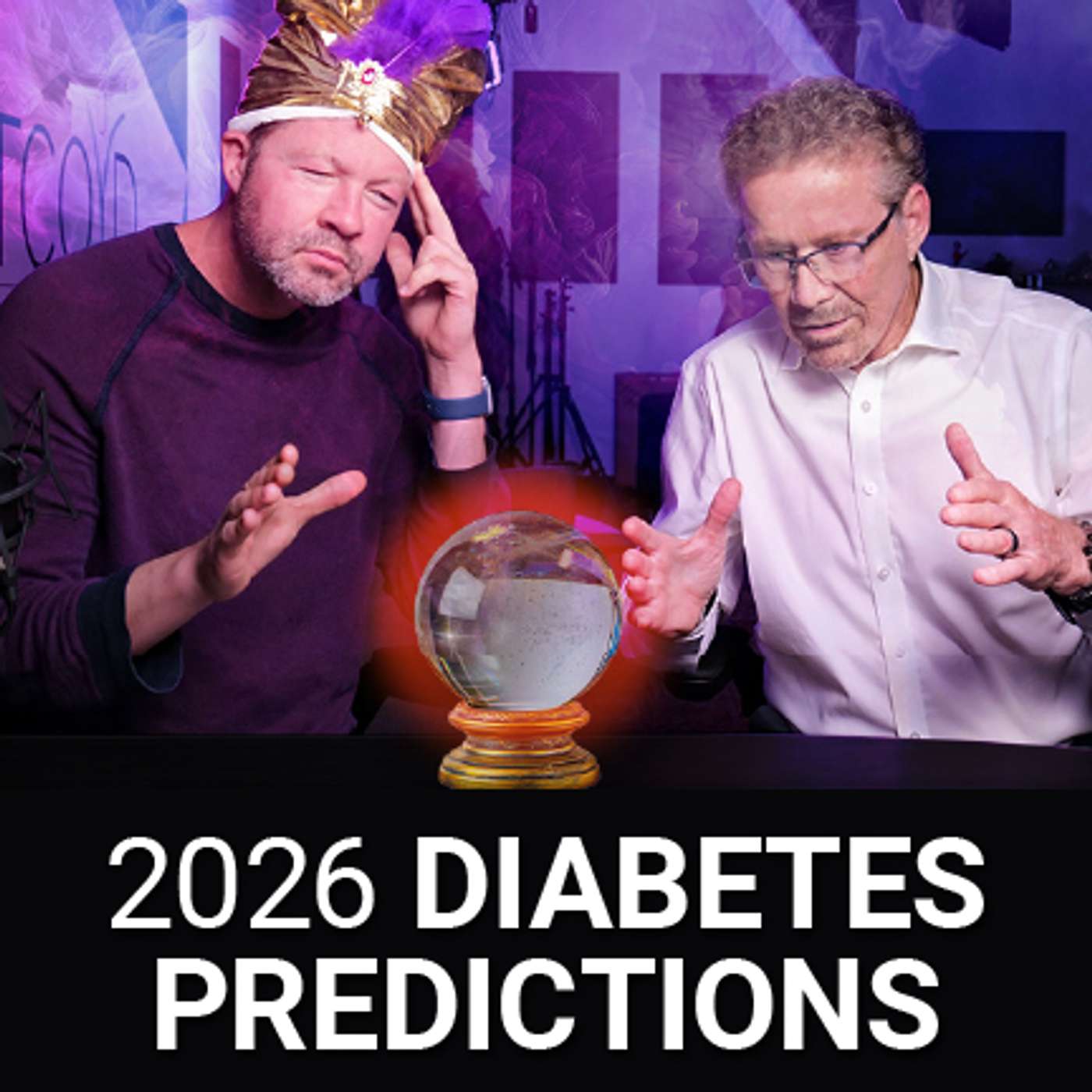
Taking Control Of Your Diabetes® - The Podcast!
2026 Diabetes Predictions: Retatrutide, Oral GLP-1s, Stem Cell Breakthroughs… and more!
00:39:16
Loading summary
Transcript135 lines
- [00:00]
A
Foreign. What are going to be the biggest advances in diabetes in 2026? Well, Steve and I sit down right now to talk about our predict that we're pretty darn certain you can expect to see in 2026 if you have type 1 or type 2 diabetes. Right now, on this edition of the Taking control of your diabetes podcast, I am one of your hosts, Dr. Jeremy Pedestone, as always, by my good friend.
- [00:46]
B
And colleague, Dr. Steve Edelman.
- [00:49]
A
There he is, folks. So if you're just tuning in, Steve and I are both endocrinologists. We both have type 1 diabetes since we were 15. We both do research on, see patients and of course, work at taking control of your diabetes, where we promote empowering, educating people with diabetes to take control of their diabetes. So, Steve, that's the title. So predictions of 2026. And yeah, these aren't like hair brain schemes of ours. These are things that we're like 90% or more confident are actually gonna happen in 2026. And we talk a lot about, especially in type 1 diabetes, that you hear about these things and, you know, these, these cures or these treatments. And when are they going to be here? Like, oh, 10 to 15 years. And of course, 10 to 15 years goes by and that never happens. So these are here and now things that we feel confident that people can actually look forward to in the relatively new or near future.
- [01:40]
B
Yeah. And, you know, we're going to predict 2026, but a lot of these medications I'll be talking about are going to the fda. And same with some of your cures. And with the fda, you never know. There could be delays, but things that are close within our grasp.
- [01:56]
A
Yeah. So we're gonna go back and forth. I'm gonna be in charge of the Type 1 updates, and Steve is gonna be in charge of type 2. I worked tirelessly to get Steve to consolidate his stream of consciousness writing into actual categories for type 2s, and I think we narrowed it down. So I'll jump in. And I'm gonna start with one that I think is a little bit interesting because, well, let me just give it away. So I'm gonna talk about the new indication for. It's a therapy for type 1 diabetes. And I think that one is interesting because we are recording this podcast in November, and we're going to release it in the new year in January. And I actually predict between the time that I'm looking at you right now, Steve, and the time that this airs, in a little over a month, we will have this new approval for this medication, Tzield, and specifically a new indication. So that requires some background. So right now we have this drug, Tzield, that's approved to delay the onset of type 1 diabetes. You can get your family members screened for autoantibodies. If they're positive, they have a high risk of developing type 1. You can get this drug, it's a 14 day IV infusion. You go in every day and you get like a 30 minute infusion. And it's been shown to delay the onset of diabetes by about two to three years. Now, since it was approved probably two or three years ago at ucsd, a major academic center, we've done probably five of these infusions. It's hard to find these patients. You have to screen them. So it hasn't been like, you know, a blockbuster drug in that sense. It's very therapeutic, but it's just hard to find these people. Now the new indication that they're probably going to get approved for is people that have new onset type 1 diabetes. So, Steve, what does that mean?
- [03:37]
B
That means new onset type 1 for you and I. Crash and burn, diabetic ketoacidosis, admitted to the hospital for a couple days, discharged on insulin. And it's good to probably differentiate the. And you will in a second. The preservation section of it, where you want to get to people early. We've done it.
- [03:58]
A
Yeah. So, you know, we always talk about when you're diagnosed with type 1 diabetes, you have 10 to 20% of your beta cells that are still left. And that's why people typically go into this honeymoon period after they're diagnosed. They don't need much insulin at all. Sometimes can come off of insulin completely. Steve always gets jealous that I was off of insulin for almost a year.
- [04:15]
B
I don't get that. Why is your honeymoon better than mine? I don't know, but the video we did on this was awesome. Eric came down with type one. We jumped into action, we carried him away to the hospital to preserve those remaining beta cells, and that's it.
- [04:28]
A
So those remaining cells are worth saving. And if you don't do anything, they die, you know, gradually over time. The honeymoon always ends, as we say. But this drug now has been shown to essentially kind of preserve that honeymoon period, Preserve insulin producing beta cell cells. You would get it essentially right when you were diagnosed. And again, another infusion six months after diagnosis. And finally here we have something that people can do when they're diagnosed. Yes, you need a CGM and you need insulin. You need to control your blood sugars. But here's a drug that actually affects the disease itself. And is it a cure? No, but it's a first step in terms of what can we actually do to slow down the progress of this terrible disease.
- [05:12]
B
Yeah. Now, the data presented to the fda, they clearly showed that C peptide was preserved. For those of you that are not familiar with that phrase, C peptide is just a marker for insulin production. And I think the best analogy is when we talk about those folks that get type 1 later in life. Lada L A D A. And those folks seem to have a much easier time with their diabetes. Their A1Cs are good. They don't have much variability. Their time and range is awesome because they still have beta cell function. And I think that's the best analogy I could give.
- [05:45]
A
So my official prediction is we'll have this new indication and we're just gonna start using this stuff like gangbusters. Like I said, we've hardly used it to date because it's hard to find these people. It's very easy to find someone who's newly diagnosed with type one. They might be in the hospital, a dka and, you know, parents want to do something. People that are newly diagnosed want to do something. So look out for that early 20, 26 and, and tell your friends, tell your family, hey, if you have like a new diagnosis of type one, there's something new to do about it. So that's my number one.
- [06:15]
B
What do I always say about that? When it's gonna get approved for new onset type 1 diabetes? What do I tell you?
- [06:20]
A
People are gonna be lining up.
- [06:21]
B
Yeah. There won't be enough infusion centers.
- [06:23]
A
Yeah.
- [06:23]
B
I mean, seriously, we might get some advanced ticket sales.
- [06:28]
A
All right, so what's your number one? In no particular order, by the way, for type 2 diabetes, what do you got?
- [06:33]
B
Well, my first category is the biggest and probably the most conversation around is these newer, what we call incretin, like, drugs. So we all know that we have Ozempic and we have Wegovy and we have Mounjaro and Zepbound for type 2 diabetes, cardiovascular risk reduction, weight loss. And we've had a lot of new indications come along. Like with Ozempic, we got it for MASH and preventing the progression of diabetic kidney disease, and for Montreal, you know.
- [07:03]
A
Again, fatty liver disease. So we just keep finding out. And Manjaro for sleep apnea. These drugs do more and more things.
- [07:11]
B
Yeah.
- [07:11]
A
You know, they started off just being diabetes, and now it's for whole cardio, metabolic, weight, metabolism.
- [07:18]
B
They help perfect you took the words, you literally. I did. Took the words out of your mouth and grabbed them. Okay, so I think the first category is going to be a oral GLP1. Now, Novo does have an oral GLP1, and Lily is coming out with a new one that I predict between the time that we are sitting here today and the time we're sitting here next year to do 2027, it'll be approved.
- [07:47]
A
So a once a day oral.
- [07:49]
B
Yeah. And you ready for this? These drugs, before they're approved by the fda, they got their chemical names and you really. I don't have a speech impediment. I'm just gonna say it like I read it. It's called Orphoglipron and it's once a day oral. And I've heard a lot of people talk about this, that once they lower the price for these medications and they're seeing what great benefits it gives to people that have obesity, type 2 diabetes, heart disease, that once a day oral is going to be quite attractive to many people, especially people who are not on insulin or never took insulin. Because we know taking injections, you and I, it's no big deal. But I do think a lot of people will gravitate towards the oral.
- [08:35]
A
Yeah, you know, we'll see. I think honestly, I mean, we have type one, but if you told me I could take a once a week injection or a pill every day, I'd go for the once a week injection.
- [08:45]
B
Jeremy, you're a type one. You've been taking shots your whole life. You always say that you're Mr.
- [08:49]
A
Prevalence and Adherence. And like, we know that most people a year after being on a GLP1, they stop taking it. And they've looked at this like, what are the reasons? And like, true injection phobia is very, very rare. People stop taking it because it's expensive or there's side effects or they have apathy for the disease. So I don't know. I think it's a great option. I don't think it's going to solve the problem of medication adherence. I mean, but that's your thing. So what do you think?
- [09:13]
B
You might be right. Let's wait and see. But I think if these folks get educated by taking control of your diabetes on the importance of it, that improves and solves. Yeah, adherence issues.
- [09:24]
A
I get it. You've never seen a needle in your life. You know, you're on oral agents. Hey, this is a much literally easier pill to swallow than, you know, teaching someone how to do injections, things like that.
- [09:33]
B
Okay. The number two in this whole category.
- [09:36]
A
So category one, part B. Got it? Yeah.
- [09:41]
B
I feel bad for your kids. You probably make them line up their underwear.
- [09:44]
A
I wish everybody could see this. Just word vomit on this page. You have. Okay, let's go.
- [09:49]
B
One baby cagry sema. So let me give you some background. That is a dual agonist. That's new. It's a combination of semiglutide, which is not new, which is Ozempic.
- [10:02]
A
Yeah, yeah.
- [10:02]
B
And cogrillentide. Now cogrillentide sounds very similar to pramlintide, which is the marketing name. Simlin, approved in 2006 for people with type 1 and type 2 diabetes. And what is Simlin and what is congruelantide? It's a amylin analog. Now you're the beta cell guy, but everyone should know that in the beta cells secrete insulin. And we all know what insulin does, but also a very important sister hormone that's typically forgotten about called amylin. And both they work together to keep the blood sugars in a tight range. And we've been able to give people amylin analog called Simlin, but it was difficult to give. You have to take it with every meal. It does cause a lot of nausea when you don't start it correctly. And so no one used it. And believe it or not, they. They just took it off the market a few weeks ago due to lack of sales. But Novo has made a once weekly cogrillentide, put it with semi glutide, Ozempic, and they have shown probably almost the most weight loss you can get with any of these injectable agents. We're Talking about like 24, 25% of the body weight. And so it's going to be another approach to weight loss and type 2 diabetes management.
- [11:26]
A
Yeah, and I would say that's the theme here. We know GLP1s work and now we're adding other stuff to them. So ozempic is a GLP1 agonist. That's how it works. Manjaro is actually GLP1 and another hormone called GIP. And I know this sounds like Alphabet soup, things like that. And now you're saying, okay, let's add ozempic to this other hormone, Amlin, and you get the idea. It's kind of this like weight loss space race, you know, what can we add to what, what other hormones can we modulate to really increase the benefits of blood sugar control, but really weight loss. So, you know, our first GLP1s, exenatide or byeta, people maybe lost 5%, you know, of their body mass. Now with these new drugs, we're what, like 30%? Like, how high are we getting? Not 30%, 100%. People are going to disappear.
- [12:16]
B
Yeah, well, you know what? It's funny because everyone thought replacing amylin, which is a natural hormone, would be a good thing, and it certainly was. It reduced postprandial glucose, and it also promoted weight loss. And that's why Novo took this shorter acting compound, amyl and analog, and made it into the once weekly. And then when they. They experiment, they put it together with their other blockbuster, Ozempic, saw a ton of weight loss.
- [12:45]
A
And I will say that people aren't gonna have to know these crazy names. You know, when it gets approved, it's not gonna be Sema kagra, whatever. It's gonna be like super govi, you know, like something like a little bit more palatable, so.
- [12:56]
B
Well, some of these marketing names aren't that good either, to be honest, but Mountjaro.
- [13:02]
A
So we got a potential oral drug, a pill to swallow, and now this Supercharged Ozempic. Let's call it that, for lack of a better term.
- [13:10]
B
And.
- [13:10]
A
And what's one category 1C.
- [13:12]
B
Good recap, Jeremy. This one is amazing. This is a triple agonist. So it has a GLP one and a gip, just like Mounjaro, but then they add a third in there. It's a glucagon agonist. What does that mean? It stimulates the glucagon receptor. Now, you're going to have to explain to our listeners and viewers that you're giving glucagon to people with type 2 diabetes. And, you know, typically we think that raises the blood sugar, it saves you from hypo. But let me just say that this drug is called Ready for this? Retatrutide. Oh, God. I just. I think I strained my jaw.
- [13:55]
A
So let's call this supercharged Manjaro. We got supercharged Ozempic. Supercharged Manjaro.
- [14:00]
B
That's a good thought.
- [14:01]
A
Yeah.
- [14:01]
B
And apparently adding this glucagon agonist, Stimulating glucagon helps with preventing muscle loss. When you go on these weight loss drugs we all talk about, when you go on these drugs, you really need to do some, you know, workouts. You got to keep your muscle strength, you know, 100%. And this may help, but also, it's a black box. But we do know that these folks do really well. They lose weight, a ton of weight. I think, like 25% of their body weight of the Data just presented at the American Diabetes Association. Now, that's a lot, Jeremy. A quarter of your body disappear. Just think if it was from your shoulders up.
- [14:41]
A
Yeah, I miss that part of me, you know? All right, so to be specific, you think the oral drug is going to be available in 2026?
- [14:50]
B
For sure.
- [14:50]
A
What about these other two?
- [14:51]
B
I think that they might be available the fourth quarter, but if not, they will be very close to being going to the FDA for approval.
- [15:02]
A
Okay, is that the last one in that category?
- [15:06]
B
I think it is. Yes, it is.
- [15:08]
A
Well, number two for me. Well, first of all, those are super exciting. Just more options. And these quote, unquote old drugs like Ozempic and Mounjaro are certainly not bad. So the build on that is pretty impressive.
- [15:23]
B
Yeah, you're right.
- [15:24]
A
All right, so for back to type 1s, if you guys fell asleep, wake back up, wake up. In 2026, we will have our first approval for a stem cell derived islet cell replacement. So what does that mean? Well, there's a company called Vertex. We've done a lot of content surrounding them that I've actually taken human stem cells. They can make them into beta cells. So we can make essentially as many of these cells as we need to. So we can supplies essentially everybody with diabetes on the planet with these cells. Eventually. They've done some early phase one studies finding that when you take these cells and fuse them into patients, they actually go into their liver. People, generally for a period of a year that they've been followed, generally come off of insulin and require a very low amount of it, essentially eradicates hypoglycemia. People have very tight glucose control with a 1Cs in the 5s, low 6s, those kinds of things. So what's the catch? You have to take chronic immunosuppression, low grade immunosuppression drugs that tell your body not to react and kill thesethese stem cells. So they've done early results positive. They're finishing phase two, phase three studies with hopefully for getting approval in 2026. So this isn't gonna be a therapy that everybody rushes out to get because of the chronic immunosuppression, but it'll be nice to certainly have that option. Of course, the next steps then are how do we get to a place where you can transplant these islet cells without immunosuppression? That is still a little bit far away. Guess how many years, Steve?
- [16:53]
B
Five to 10?
- [16:54]
A
I was gonna say 10 to 15. The classic.
- [16:56]
B
Well, you know what I Think it's faster than that.
- [16:58]
A
Okay. So that will be a big deal. I've always said there's two barriers to everybody getting islet cell replacements. One is the source of the cells, and it typically had to come from cadavers. People were in car accidents, they would donate their organs. So that was one limitation. And two was a need for immunosuppression. So with the stem cell therapy, where we can kind of generate these cells indefinitely in a lab, we've gotten rid of the supply problem and now we're left with this kind of immunosuppression issue. So obviously, kind of a big step forward in this area of islet cell transplantation.
- [17:36]
B
Yeah. And I think I can add on that it's not the same level of immunosuppression that you would get for what we call a whole organ.
- [17:44]
A
Like a kidney or something.
- [17:45]
B
Yeah, exactly. And I have been in communication with some folks in the Vertex study, and they're over the moon that they are basically cured, at least for the time being. But I wanted to ask you about the company called Sana and this CRISPR technology. Maybe you can explain that because it is early, but I think it's important to mention now.
- [18:07]
A
Yeah, they. It's a company that basically did like a very small islet cell transfusion in terms of the number of cells that they infused into this person. But they've modified the cells using this gene editing approach to be kind of immune silent. So the idea is that the beta cells wouldn't be detected by the immune system, so you wouldn't need immunosuppression. They transplanted into one patient and showed some positive data that these cells took up. They were able to secrete like a little bit of insulin. A little bit. Since it was such a low dose infusion. It wasn't kind of like a clinically relevant amount of insulin. I don't believe this person's blood sugar control changed much at all. So this is more of a proof of concept. It's literally one person that this can be done, but it needs to be scaled up and higher doses of the cells, et cetera. So early days. It's one of these things, Honestly, Steve, people, I think, jump to kind of showing early, let's call them conclusions, but it's one person. So that one's got a long, long road. But pretty cool idea.
- [19:08]
B
I mean, it's not. Definitely not 2026, but I thought it was good to mention in relation to what's going on. But the Vertex is exciting.
- [19:16]
A
Yeah.
- [19:16]
B
Well, my next one is it Tanya.
- [19:19]
A
Jeremy, number two. Number two, how many subcategories this one have?
- [19:23]
B
One.
- [19:23]
A
Okay.
- [19:24]
B
This one's quick and it's important. It's called accessibility to these weight loss hormones. You know, Zepbound and Wegovy. These are the two medications that are currently on the market, helping a lot of people change their life around and improve their health. So the government had a big meeting with Novo and Lilly and agreed to lower the prices of these drugs for people with. What came from the press release was severe obesity. So this is really the first time where people are saying obesity is a severe disease before they'd say, well, it's not really a disease. Well, you know, call it what you want. Being overweight is not good. And that leads to so many problems. You know, heart, liver, kidney. And so for people on Medicare, it's going to cost a copay of $50 a month for either Zepbound or Wegovy, which are the weight loss formulations of Mounjaro and Ozempic. And if you're Medicaid, they're working on that as well. They're gonna. It's gonna take a little bit longer to get through those. The bureaucratic meetings. But I think for the folks out there in the world that just cannot afford it but really want it and know it can help them, it's coming.
- [20:46]
A
Yeah. And I think the development of these newer drugs that you mentioned in category one A, B and C will help maybe lower the prices of these, like, now, you know, kind of older drugs, hopefully, because they're fantastic. So.
- [20:59]
B
You're right. You're right. And also, you know, these drugs have. These drugs, Mounjaro and Ozempic, you know, especially. Ozempic's been around for a while. There is a patent ending on their patent, too. And we know of a zillion companies, like, drooling there. I hit the mic again to get in there and come up with a me too drug that may work just as good.
- [21:18]
A
Yeah. All right. Well, my third one I'm gonna go a little bit out of order is you said no particular order you've been talking about. I'm going out of my order. I had this very.
- [21:28]
B
Okay.
- [21:31]
A
Is GLP1s and type 1s. You know, you've been talking about these drugs for category 1 and 2 now for type 2s and they do all these things, like, we talk about it all the time. And type 1s don't have any of these drugs approved. Well, finally the companies have started, like, actually doing the clinical trials to get them approved, you know. Why has it taken so long? Well, I think the frank reason is these are multi quadzillion dollar drugs for these companies. And there is a fear that if they do the studies in type one and there's some negative outcome, maybe it increases hypoglycemia or something they didn't know about and they get slapped with a bad label that could kind of like shoot themselves in the foot. So thankfully, Lilly now is actually already enrolling their phase 3, kind of their final clinical trial program in type 1 diabetes using Manjaro. And it's not slated to finish until 2027 actually. But I think in probably like 2026, we'll get some inklings if it works. I have no idea or no doubt, sorry, that this will work. We know it works. We use it all the time, kind of off label in our patients. Guess what? Their blood sugars improve, they lose weight, they use less insulin. All those things that we talk about in type 2 diabetes, we'll see in type 1. So I think not quite 2026, but 2027, we'll have our first one of these drugs approved for type one. And I'm hoping that'll start a domino effect of not just GLP1s, but these other drugs that you're starting to talk about. Why not test, you know, cagrelin and tie in a type 1. We know Amylin works. So hopefully this will create a pathway. Hopefully type 1s will use it. I think they will. Maybe that'll attract more pharmaceutical companies to study these things in type one. Because, you know, you make fun of me that I'm always bitching about this, but I'm tired of being left out.
- [23:11]
B
Yeah. Well, I could add to that, you know, this for the listeners, you know, phase three studies. These are big studies. The study that you're talking about with Lilly is almost 1,000 patients, multiple centers, and that's the data they present to the FDA for approval. But our friend Varal Shah from Indianapolis published a paper of about, I think, 100 type ones, all on hyperclosed loops, all on Ozempic, one milligram a day. And he presented that data and they did extremely well. They had all those benefits you just mentioned. No side effects.
- [23:44]
A
Well, the typical nausea and things like that that people like. But, you know, generally people can deal with that.
- [23:50]
B
Yeah.
- [23:51]
A
And nothing major like, you know, like red flags, you know, no increase in hypoglycemia, things like that.
- [23:57]
B
No dka. Yeah, it was, it was, it was a small study, but it really was an impressive study. Not big enough for the FDA to approve it. So that's good. I'm glad you mentioned that.
- [24:07]
A
Yeah. All right, so that was. What's your number three?
- [24:10]
B
Number three are the innovations and in insulin for type two.
- [24:14]
A
Sorry, that's our format here. I'm type one guy, you're a type two guy.
- [24:18]
B
Okay. All right. You're driving me nuts today, by the way. Okay, well, it turns out that I'm going to talk about once weekly injectable basal insulin. And Lily has one called. What is that name? Insulin L Sulfora Alpha. Oh my gosh, it's crazy. And Novo has one called Icodec and that once weekly basal insulin is approved in Canada and some other countries. So here's the story originally developed for both type 1 and type 2, but I'll talk about just the type 2 and you can mention the data and type 1 and in the clinical studies, they compared it to some of the best basal insulins. The second generation basal, like Lantus, we all know. But they also compared it to traceba and Tujea, which are once weekly. Once daily, very good basal insulin. And they showed it was just as effective. Didn't cause more hypo, didn't cause less hypo, except that people took it once a week. The issue with the insulin, you have to start off with a loading dose, kind of like the time you did on your own, but we'll skip that story for now. And you adjust it weekly. And when you get to an even Steven dose after four or five weeks, you just inject once a week. And so people are thinking that there is a subgroup of people that could really benefit from that ease of administration, adherence issues. People in nursing homes, or just people out in the real world that want to make their diabetes regimen that much simpler. But any comments on that?
- [26:04]
A
What do you think these are going to be approved? This 2026?
- [26:07]
B
Yes.
- [26:08]
A
Okay.
- [26:08]
B
Definitely.
- [26:09]
A
Yeah. I mean, listen, if you can take something once a week instead of once a day, that's great. I think we talk about it has this crazy dosing, right, that let's say you're on 20 units of Tresiba a day. Well, that would be 140 units a week. So when you dial up these once weeklies, you would dial up 140 units. So you have to get your head around that. You're not giving this mega dose. It's just spread over the week. So it's conceptually is different for patients and practitioners.
- [26:38]
B
It's educ. You're right, that's important.
- [26:41]
A
But I think for people that want the convenience, that's great. Type ones, the short story is that there's an increase in hypoglycemia. So this, I don't know if it'll be approved in type 1s, but even if it is, it doesn't seem to confer the same benefits it does in type 2. When you take it once a week, there are subtle changes day to day in the amount of insulin that's actually in your system, that there's kind of a spike in insulin concentrations on day three, let's say three or four. So if you take it, I don't know, on Friday, you might have highest levels of basal insulin on Monday, Tuesday, and lower the rest of the week. And for type 1s, we're much more susceptible to those small little changes. And those small little changes. One day you have a little bit more, one day you have a little less. In the clinical trials, people had more hypoglycemia not seen with type 2s, so more power to the type 2s, but it's just, it's not going to be a widely used thing in type one.
- [27:33]
B
Okay, I, I happen to agree with you.
- [27:35]
A
All right.
- [27:36]
B
Should I mention anything about the, the new dosing for Afrezza?
- [27:40]
A
Yeah, if you want.
- [27:41]
B
Well, we're gonna, I should just say this.
- [27:42]
A
We're gonna do a whole podcast on it.
- [27:44]
B
We're gonna do a whole podcast on Afrezza very soon. But I'll just say that Afrezza is the human inhaled insulin that's been around for 10 years. People are now just recognizing how impressive it is at reducing the postprandial blood sugar, reducing delayed hypo rapid in, rapid off. Now, when it first came out, everyone had to be very conservative. They said, okay, well, what's the dose? If you're on 10 units of fast acting insulin, you take 10 units of Afrezza or something close to that, and they realized that that really wasn't enough. Make a long story short, a couple large studies called the Inhale 3, where they got that name from, they showed that really people need more than one to one. So if you're on 10 units of fast acting insulin, you might need 20 units of Afrezza as the equivalent dose and maybe even 25 or 30. And so, you know, it takes time to find out what the best relationship is on how much you should take and then bring it to the fda, show studies that it's safe. And then changing the label will be important because A lot of doctors follow the label and also the company can promote education programs around the proper way to take it. Right now they have to tell everyone one to one.
- [28:59]
A
Yeah.
- [28:59]
B
And you and I know that just doesn't work.
- [29:01]
A
Yeah. So a great option for type 2s. Again you don't want to do an injection. You can inhale insulin and type ones we talk about all the time, how fast, how rapid on, rapid off it is. Like you said, we'll do a whole podcast on this. But your category basically new insulin options. And here we are still tinkering with insulin after 100 years of it being discovered and making some meaningful changes. A new way of delivering it, inhaled, you know, longer acting basil once a week, that's important. So my next category is kind of again on the let's say cure based approach is we did this whole podcast too on gene therapy and type 1 diabetes. And specifically we had a head representative from this company called Kriya K R I Y A that is looking at a way of they take a virus, in this case they load it with two different genes, one for insulin, one for something called glucokinase. And in 2026 they're starting human trials to essentially with a one time injection into the leg muscle. This virus, it's a completely benign virus. And when you say virus, you think infection, things like that.
- [30:08]
B
You gotta think of a better word than virus.
- [30:10]
A
It's a delivery truck to take these genes into the muscle. So get this, the muscle will be able to secrete insulin and the glucokinase gene, for lack of better description, works as kind of like a glucose regulator. It gives a little bit more effect when there's high level of glucose and a little bit lower when there's not. So one time procedure. This could have at least 10 years of efficacy, maybe potentially lifelong. You don't need immunosuppression at all. And so this is going into clinical trials next year. The path to approval wouldn't get us an approved therapy until let's say 20, 30 or so. But hey, that's still on the horizon. And I wanted to mention it because a completely different modality. We've talked about islet cell transplant forever. We've talked about pancreas transplantation, we've talked about different immune therapies forever. We've tried these approaches. Here's something completely new that most viewers probably have never heard about. I hadn't heard about until recently. Steve just heard about it just now, first time. So that's just something like cool to Kind of look out for. And I think you'll start hearing a lot more about that.
- [31:17]
B
Well, Jeremy, we. Since we did the podcast, we've had a lot of comments, a ton. You've seen them and I've seen them. And the one you. One thing I want to emphasize is that you don't need immunosuppressants. This is totally different. And as I learned, not just today, but before, it's just the insulin producing cell.
- [31:40]
A
The gene.
- [31:41]
B
The gene. It's not an islet cell.
- [31:44]
A
No. So it gets into your existing muscle tissue and it doesn't even get into your DNA. It doesn't go into the nucleus, it doesn't incorporate. It doesn't make you different. It sits outside the nucleus in its own little gene. And it's just a secreting factory for insulin and glucokinase.
- [32:02]
B
And the glucose kinase helps regulate. You don't get too much or too little to a certain. And people. A lot of people have asked, one person said, can you write me a prescription? It's not quite yet, but it's not gonna be approved in 2026. But I think it's important to mention because they're gonna hear about it. And what about people with type 2?
- [32:24]
A
You know, it would be kind of the next step for sure.
- [32:26]
B
Yeah, that's my category, but that was a trick question. No, go ahead.
- [32:30]
A
Yes. I think type 1s, we don't make any insulin, so you give us back some, that's a big deal. Type 2s, there's a real variable amount of how much insulin people require. That changes over time. So it's a little bit more complicated. But you could use this same approach for potentially any hormone. You know, like pick something you want a treatment for, mash or weight loss or something. You can do a similar approach with different therapies.
- [32:55]
B
Yeah. And should mention that this gene therapy is amazing and that they've cured or they've almost cured six or seven major diseases. Everything that relate to eye problems, hemophilia. And so it's not like a new approach. But this company, crea, decided to say I want to focus on diabetes. And so. That's awesome.
- [33:20]
A
Yeah. All right, so I think I have one more. But you do too, right? Well, you got your technology one.
- [33:27]
B
Yeah, the technology one. So you want to do your technology first and I'll jump on with the type 2 stuff.
- [33:32]
A
Yeah, mine.
- [33:32]
B
Just a comment.
- [33:33]
A
Mine could be pretty quick that I think, you know, I predict in 2026 we'll have a continuous ketone monitor approved and Again, we've done a lot on this that you have your continuous glucose monitor, but it'll also read ketones. Also Abbott is slated to go to the fda, hopefully get that approved soon. We had the CEO of Dexcom sit right here and talk about that. Their G8 will likely include ketones as well as potentially you can measure other things, lactate, potassium. So not only are we going to be adding ketones, but this is going to be the wave of the future that you can measure all these different things continuously and everybody with diabetes needs glucose. But if you have kidney disease, maybe it'd be nice to know what your potassium was also. So maybe you would get to a place where you pick and choose kind of the little the functions you want of this wearable device. But in 2026 for sure. Ketones, why do we care? Ketones are the cause of dka. If you know what they are, they start getting elevated, you can act, you can intervene. And I really think this could be put a dent in, you know, hospitalizations, things like that as it gets more widely used.
- [34:37]
B
Yeah, it'll be used especially in the pediatric population. The parents will be more comforted knowing that they can identified DK earlier. And we've talked about the class of SGLT inhibitors like Farziga, you know, Jardianz, Xinquista, Empatha. These are all these sglt which are awesome drugs, but they can cause euglycemic decay where the glucose doesn't go up and could fool the user. And apparently according to Dr. Santos Tricia, our colleague and friend UCSD, it happens a lot in type 1s and type 2s. Yeah, so it might be a very good protective device to prevent euglycemic decay.
- [35:20]
A
And to allow people with type 1 access to this special class of medications. Again, all these positive effects and once a day drug helps blood sugars, help kidney, help heart. Guess what? Type 1s can't use it because of the higher risk of DKA. But if you have this device that offsets that, suddenly that becomes a viable option. So 2026 new drugs for type one. New technology too.
- [35:42]
B
Yeah. And if you look at our website, if you're a healthcare provider in any way or shape or form, we did a very good continuing medical education program on continuous ketone monitoring decay prevention. So I'd encourage you all to take a look at that.
- [35:58]
A
So what's your final comment? Type 2 technology?
- [36:01]
B
Yeah, it's just a comment. You know, we have all these, we have five hybrid closed loop systems on the market. I would say that all the companies cater to type 2s aggressively, and many type 2s that need insulin, these systems work extremely well. Insulet and Tandem have the official approval in type 2, but there's also the Medtronic 780G, the islet and the Twist.
- [36:28]
A
Wow. Yeah, you're spitting out drugs.
- [36:31]
B
And so I would just say that when I talk to these companies, they say 25 to 30% of their customers are people with type 2. So, yeah, they do use a little more insulin. However, they have much better control. The time and range is great. And I would say that these systems make much better decisions than people with diabetes, both type 1 and type 2, because it's automatic insulin delivery. And I'll say one other thing in this category, if I may, that I think everyone is working towards a system where patients don't have to input carbs, they don't have to make any adjustments. They just put it on and they go through life. Now, the islet is just meal announcement, but they want to get past that.
- [37:17]
A
Yeah.
- [37:18]
B
And so there are systems out there, and I think that's coming. And I believe we're going to see some of these major advancements in the algorithm, as we call it, in 2026.
- [37:28]
A
Yeah. Well, there you have it, folks. And we wanted to be very mindful of, again, these are here and now things. These aren't like pie in the sky, crazy things. The vast majority of things that we talked about, we really believe will be in 2026. Again, Tzield, I think, will be in literally any day. And this is everything from preserving beta cells with Tzield gene therapy, islet cell replacement, massive weight loss, and type 2s accessibility of drugs. These are profound categories. And so you always say we're kind of in the golden age of diabetes. If this is a great time to have diabetes, it really is. And it's a fun place for us to work because things are changing so rapidly and new tools to help people, the GLP1s, those kinds of drugs can be literally life changing. And a lot of stuff that I went through. We're getting closer to this idea of a cure for Type one, which is nuts. It's nuts.
- [38:23]
B
I'm so happy I have diabetes.
- [38:25]
A
I'm serious.
- [38:26]
B
What would I be doing?
- [38:27]
A
Yeah, if you get an islet cell transplant, you're kicked out, bud. Well, thanks for listening, everybody. Please make. Excuse me to, like, share. Follow all those things. Those metrics really do help us. We love seeing your comments about the podcast. On any podcast, the platform that you have, those things go a long way to encouraging us and also showing sponsors and things like that that we're doing a good job here. So please do that for us and we will see you on the next one. Thanks as always, Steve. It was a fun one, Jeremy.
- [38:56]
B
That was fun. Fun. Thank you for organizing this whole podcast.
- [38:59]
A
Sorry for driving you nuts, bud.