← Taking Control Of Your Diabetes® - The Podcast!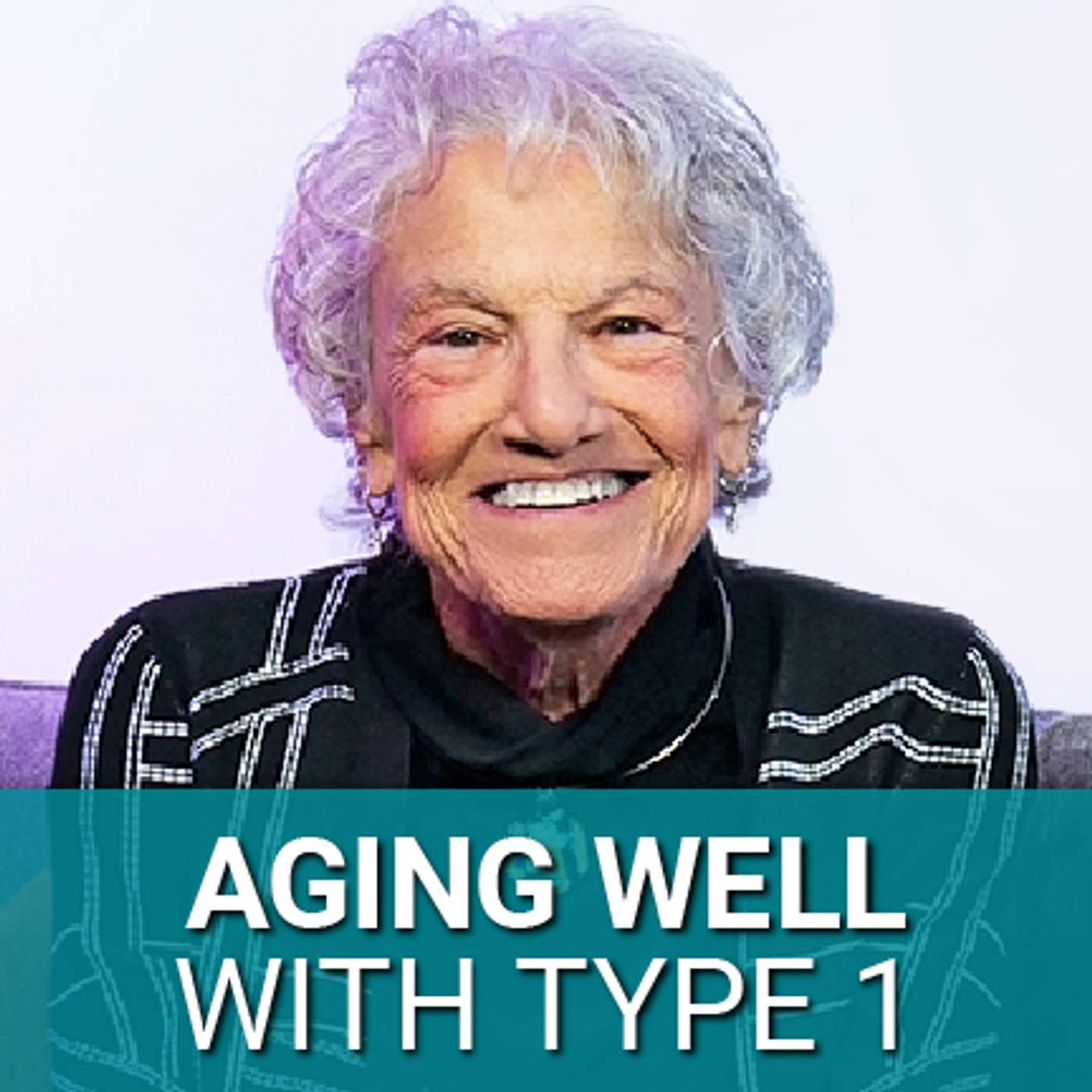
Taking Control Of Your Diabetes® - The Podcast!
T1D to 100: How to Live a Long, Healthy, and Happy Life
00:37:26
Loading summary
Transcript109 lines
- [00:05]
A
I received a death sentence in 1970 when I was 15 years old, got the diagnosis of type 1 diabetes. But you know what? Things have changed and you can live a long and healthy life with diabetes. So welcome to the Taking Control of youf Diabetes podcast. And I'm Steve Edelman, one of the guests and unfortunately my crime and my partner in crime, my cohort, my everything, my good friend Jeremy Pettis is not here because he's not even 50 years old yet and he knows nothing about aging with diabetes, which is the topic of today's program. And the good news is people are getting older with diabetes and that's completely new thought because everyone thinks you die at a much younger age. So I want to introduce our two guests, Joanne Milo. She is the founder of T1D to 100, but has been involved in the diabetes world for centuries and knows everything about diabetes. We've been friends, a long time author and just really nice person and well experienced. And then Athena Tamikis, who is an excellent endocrinologist, I'm proud to say she was one of my very first trainees, a fellow when she came to ucsd and she now runs the Scripps Diabetes Institute, amongst many other things. And I should say that Athena has been given the title the world's smartest Endocrinologist because we had a Jeopardy Diabetes game and she beat out five other very smart endocrinologists. So with that, I think we'll start and I think the best thing to do is to Joanne, you go first, you're our ultimate guest and tell us a little bit about yourself and maybe why you started T1D 2100, sure.
- [02:00]
B
Hi, I'm Joanne Nilo. I just Sunday celebrated type 1 diabetes for 61 years. I was diagnosed when I was 11. I remember the day, the time, the hour, the office, everything about the next 24 hours. And I barely remember anything before. It was such a profound emotion event, death sentence, terrifying. And my parents immediately dove into advocacy, got involved with whatever was available at the time to raise money for and talked to everyone, which was mortifying to me. Could we just be quiet? And she said, no, we need to talk. So I grew up with that sense of community, of connecting to people and to helping the next generation. I run a blog called the Savvy Diabetic and it's just about technology and updates and what's going on in the world. Just news that you might not see that might be interesting. And about six or seven years ago, I should also say I'm very involved in the open source community. And I started a group called Loop and Learn on Facebook. It now has about 14,000 members worldwide in an effort to just make support available to those of us who need it. And that's what seems important to me. About six or seven years ago, I thought, uh, oh, I'm getting older and I wasn't supposed to live this long. When I was diagnosed, as you were, Steve, I was told I would probably not make it past the age 40. I just turned 72.
- [03:35]
A
That's exactly the age they told me. What was the name of your doctor?
- [03:42]
B
And when I put it out in the community, they're all told, few have said, were told 30. And a few who were told their parents were told, enjoy them, they won't last.
- [03:52]
A
Yeah, they really said those things.
- [03:53]
B
They did. And when I started looking at it, I actually contacted Bill Polonski and said, I'm concerned for our community and for myself. Nobody knows what to do with us. There's no research about aging. There's no information. My doctors don't quite know what to do with me and with all of us aging. And Bill's comment was, well, what's the problem? You get to live longer. And I said, no, absolutely, totally grateful. Love the technology, but I don't know what's coming. I don't know how to manage what has happened to my body. My generation didn't have the best technology. We didn't have the best control. We're probably experiencing the most number of problems, and what are we going to do and what are the issues? So I gathered about 10 people around my dining room table and said, what are we scared of? What are we concerned about? And then when we made the list, what do we do about it? What can we do? And certainly my generation need to advocate for ourselves. Things aren't going to change fast enough for what we need, but we need to know what we need to do and what's coming.
- [05:07]
A
Yeah. Thank you for that. You know, we're focusing today on type 1 diabetes. That's the type of diabetes that was not supposed to live too long. So, Athena, maybe you can tell us a little bit about. We talked about this before we started the podcast, a little bit about aging, how it affects the presentation of diabetes, the usual time period. And we were talking about people in their 90s coming down with nuance at type one. Yeah. Say a few things about how aging can affect how diabetes shows up.
- [05:40]
C
Sure. You know, for type 1 diabetes specifically, everyone here knows it's an autoimmune process. I Think what we've learned in the last probably 10, 15 years. This is not juvenile onset diabetes, which is the way it was considered. Over 35% of people diagnosed with new onset type 1 diabetes today are over the age of 35, 40. So that's a large population, people that may have been missed. They walk into the ED at 40, 45 years old and they get labeled type 2 diabetes. They get put on a pill and off they go. And they don't have dramatic onset like folks that are diagnosed at a young age do. They don't have DKA necessarily, although sometimes they do and they might go on for a month or two and nothing's happening longer, even longer. Exactly.
- [06:32]
A
Years.
- [06:32]
C
And what I've seen is many times they land in our diabetes educators offices. The diabetes educator goes over things and says, you don't have type 2 diabetes, you have type 1 diabetes. And from there the ball gets rolling. But like you said, I've diagnosed people as old as 91 years old, first time new onset type 1 diabetes. And it's a little bit different. To explain how do you go about taking care of this, what's the best use of medications? Technology, you know, at 60, 70, 80, 90, do you prescribe the pump, do you prescribe a few other things? And I think we should be open minded, discuss that. It's an individual choice looking at how active the person is, what their mentation is like, all those important things on how do you manage it throughout that age spectrum.
- [07:24]
A
You know, I've been using this joke for years, but there's no more appropriate place than now. You know, it really depends. It's like adult diapers because we all know people like Joanne, who is young, 70 year old lady, and then we also have people who are in their 60s who you could never even think about using technology. So it really, it's an individual. So Joanne, let me turn to you. What will you say some of the biggest challenges are in general and we'll get into specifics of getting older with diabetes and when, you know, you said six or seven years ago, it dawned on you that, hey, I am getting on in years. The good news is I'm still alive. I've heard elderly patients say the good news is about getting old is that, you know, you're not going to die young. So we can say that for sure.
- [08:19]
B
What we can also say is if you've lived this long with type 1 diabetes, you're good at organization, you're good at managing what you need to manage, you're good at connecting Somehow in the community to take care of yourself. This disease is, at one point, I calculated 20 hours a week. If you do it right, with doctors and prior authorizations and medications and watching your blood sugar and calculating your carbs, it's a lot of time.
- [08:47]
C
And.
- [08:48]
B
And we've done it well. And so, you know, kudos. We have the skill set. What happens and what I think are the biggest concerns. It's a huge topic. And what happens is there's a concern that my brain isn't as agile.
- [09:06]
A
I think the cognitive decline is something we all worry about.
- [09:09]
B
Right. It's to the point of if you're mdi, did I take the shot? What do I.
- [09:17]
A
Is my blood sugar above 160?
- [09:20]
B
We both look at our numbers.
- [09:21]
A
Sorry about that.
- [09:25]
B
So that's a huge concern. Not only because we lose the ability to take care of ourselves, but who's there to take care of us? If we can, we do it well enough, maybe we have a care partner. Maybe our care partner passes away. Who's there who understands the disease, understands what I do and what it takes to keep me alive. How much is that going to cost? Where am I going to live? And then inevitably there are issues, physical issues, that are more likely as a type 1 diabetic. And the topic came up the other day, why are diabetics more likely to fall? Fall? Risk is there for everyone aging, but more so with diabetes, with neuropathies and vision issues.
- [10:13]
A
Totally.
- [10:14]
B
And what happens then is you end up in the hospital.
- [10:18]
A
Yeah.
- [10:18]
C
You know, the ADA has put together a nice framework for the elderly in this past year's standards of care, and they emphasized the 4M framework. It's medications, mentality, mobility and what matters. And you've touched on all of those. I think, Joanne, all those things you have to think about individually, explore those in the older individuals to understand what is the right approach to care that works.
- [10:46]
A
What is what matters?
- [10:47]
C
What's under the what matters category? You know, just think about it.
- [10:51]
A
Quality of life.
- [10:52]
C
Exactly. It's what's important in your life and how much.
- [10:56]
A
Donuts.
- [10:57]
C
Donuts. So you joke, Steve, but you're the one that showed me way back, if you want donuts, you take a little extra insulin and it's okay. So I think that is exactly the thought. What matters? What's important in life? How. How tightly should you manage the blood sugars? How important is it to prevent the lows, prevent the highs?
- [11:18]
B
Those are really important issues. There's a sense of lightening up on control. And the first time I Heard that my back went up and said, control's what I've lived with all my life. That's the word I was taught when I was 11. That was the word. And you're asking me not to do that. Why? And what will it do for me? And I get it. I understand. We don't want to have lows. Lows are harder to treat. Highs are harder to treat. And as my endo said to me, what's your point?
- [11:55]
A
I'm not listening.
- [11:56]
B
That's my point.
- [11:57]
C
And under mobility, you talk about a low. You have a fall if you're a low, and all of a sudden you're into a whole lot of other problems.
- [12:07]
A
I think at least Joanna and I probably have some experience taking care of our elder parents. You're too young, Athena.
- [12:13]
C
No, not at all.
- [12:14]
A
But you know, I helped take care of my mother until she was 96 and passed away last year. And she did not have diabetes. And it was a full time job. You know, we all have medical problems. And so with diabetes, it just makes it that much more difficult. Well, Athena, let me ask you a doctor question. You know, what changes with muscle mass? Insulin sensitivity and how does that affect dosing? And we talked a little bit about hypoglycemia and hyper. I mean, I don't expect you to know all that, but it's a complicated area.
- [12:49]
C
It is complicated, but think about it. You could think about it in two ways, actually. And the one way you might be losing muscle mass as you get older, your patterns change. Maybe you eat a little bit less, you pick at a few things. So that might make you a little more insulin sensitive. You have to lower your doses. You might have a little bit of kidney dysfunction that's going on. Maybe not working quite as well for all those reasons. You have to lower your doses. But on the flip side, as we get older, sometimes we like to eat a little bit more. We're not exercising quite as much and we might gain weight, and that makes you a little more resistant and you might need higher doses. So I think it could go both ways.
- [13:27]
A
It depends.
- [13:27]
C
And it depends.
- [13:30]
A
Well, you know what? I think it's an important point that people have to be cognizant of their weight and their exercise status. What do you do to look so trim and fit and as we say in Yiddish, svelte.
- [13:46]
C
Aren't you cute?
- [13:49]
B
Early on, I realized the importance of exercise. When I was a teenager, everyone would be sitting around the dinner table and I'd get up and jump rope and they would laugh at me, and I said, no, I need to do this. I just need to do this. Throughout the years, taught aerobics, taught yoga. It just seemed important enough to me to keep moving. These days I take Pilates classes and Pilates.
- [14:15]
A
Oh, Pilates. I thought you were talking about dealing with the prior off people. Okay.
- [14:22]
B
And what I tell people in the community, just keep moving. Just keep moving. Whatever it takes. I think we tend to hurt a lot more. I don't remember hearing my voice. Parents talk about hurting as much as I hear it now and I feel it. Arthritis, inflammation, which you did a great podcast on. It's there, it's real, and then it limits what you do. But you still need to keep moving and you need to stay social. So all those things, you need to stay engaged even if you're tired.
- [14:56]
A
Do you know what? Exercise is so important? And I think the other thing is exercising your mind. And, you know, people develop cognitive decline and sometimes has nothing to do with diabetes, you know, Alzheimer's and different ages, too. It doesn't seem fair when people get it when they're young. But I think keeping your mind active is important. And, you know, you're the great example of that. But we have to, I think, push ourselves versus, you know, maybe staring at the television all day. And also make sure you're hearing and sight is good, because I know a lot of patients do not want to get hearing aids. And, you know, they're a little bit isolated. And same with vision. If you can't see well, you're. You're not going to be able to read, see the television, see the people you're talking to. So those are things I think we have to deal with as well.
- [15:47]
C
Deal with and also ensure that people are screened. I think time at times, Steve, we kind of get used to seeing people. You know, I've been seeing people now 30 years in the career is what I've done. We started 30 years ago, so I've seen people go from 50 to 80 in that time span. But you might not necessarily recognize some of these things are going on. So it's important to screen for them, too. Go for that screening, hearing test, vision test, and cognitive test to see if there is a little bit of decline.
- [16:15]
A
Yeah, I mean, that is so true. I was following a patient for many years, and then she wasn't doing things quite right. And I just thought she was getting lazy at taking care of her diabetes and managing her pump. And then I saw her with one of our endocrine fellows who's now on Faculty. And at the end of the meeting, she had spent time with the patient. In the beginning, she said, I think she's got some serious cognitive decline. And I got so used to seeing her, and it would happen so slowly. I totally missed it. And now she's getting help. But you're right, Athena. I think people have to be screened, you know, and you can get comfortable with your caregiver if you're seeing them for a long time and vice versa.
- [16:59]
B
But, yeah, you could miss it. And none of us want to admit it, even if we may be at home saying, gee, I'm not as sharp as I, but we'll cover up. We can get through 20 minutes in an appointment. So, yeah, that's true, Sally.
- [17:18]
A
Kidding.
- [17:19]
B
There's also this. You mentioned vision. I read an article. The bifocals are the highest risk for falls because when you're wearing them and you don't see the floor the way you need to. So vision hearing is so significant and so many people don't want to admit this. I'm not thrilled with it either, but I'd rather hear than not hear. And they're expensive. It's coming down, but it's a costly bite.
- [17:51]
A
Well, then you mentioned screening. Like, give us an example. I know a lot of healthcare systems ask you questions like, well, have you had a fall? That may not be cognitive, but what kind of screening tests are you talking about?
- [18:06]
C
There are very simple seven or eight question screening tests. We actually deliver those in a health fair. We do health fairs once a month in southeast San Diego, and it's one of the screening events that we do. We just hand it out. And I think you're very correct that some people are hesitant. They don't want to necessarily be diagnosed with this. But if they're willing to take the screening test and you find something, then you can offer some solutions. I'm sorry, just one other screening test that I think is important that we don't do often enough. It's called sdoh or Social Determinants or Drivers of Health. And that's where you can pick up a few other things that I think we've all spoken about here. Are you struggling with financial issues? Can you pay for your medications? Can you pay for your technology that you need? Are you in a living situation that's appropriate? Can you get the food that you need? If you're on the frail side, are you getting the right kind of food? We do not screen for that in the ambulatory environment anywhere near enough. If we do, we're not even raising it up so that we can visually see it in our electronic health record when people come in. So I'm an advocate for that. I think it's important because if there is something there, we should recognize it and try and offer resources to people to try and help them.
- [19:24]
A
Yeah. Joanne, were you going to say something?
- [19:26]
B
Well, in the screening process there's from the patient point of view, fear, because what if you find something and I lose my license? I am then viewed by my medical team as less than adequate and you start to lose. So the COVID up will be there and to be astute enough to actually figure that out.
- [19:53]
C
And how do we make people feel comfortable to be able to tell us to go that next step is important.
- [19:59]
A
That was one of the things. How do you address that? I think even asking a patient to take a cognitive test might be difficult. They might say, why are you asking me? And I did suggest that to a patient recently and she started crying right away. She goes, nothing's wrong with me. Different person. So I mean, you're just reminding me. But let's go talk a little bit about using technology and medications in the elderly. You're a great example. You know, you're using a open source system, communicates with your Dexcom, you have the implantable Eversense and you're up to snuff and you help people. And you've helped me on your website looping, because I'm a looper and type ones. The ones that are getting heavy that you described, Athena, some of Those are on GLP1 drugs like Ozempic and Mounjaro. And also we talked briefly about technology. So what are the main, I would think with most people you look at, are they a good candidate? In the elderly, I've learned you start low and go slow with the medications no matter which one you're using. But I don't see any reason not to use some of these modern techniques and medications and devices in the elderly. How about you?
- [21:22]
C
Absolutely.
- [21:22]
A
Insulin pumps, like hybrid closed loop systems,
- [21:26]
C
if you think about it, those actually may be protective. They turn off, they slow down when you're getting low and you don't even have to think about it sometimes. So if the person can manage putting it on a few of the adjustments that are needed, then yes, absolutely, offer it. It's part of that discussion that you have. If they can afford it, if they all the other components that go along with it, but absolutely would offer it as part of it.
- [21:54]
B
It also keeps track of what you did. So if you're taking shots.
- [21:57]
A
So if your memories know that, did
- [21:58]
B
I take my shot? But if you. Exactly. But if you have a record of it, then you go, yeah, my insulin delivered instead of I forgot to take my nighttime injection.
- [22:08]
C
The other nice thing is it communicates. I have a report that I can look at in the cloud on how someone is doing. So if I need to have a conversation, pick up the phone, say, here's what I see on the report. What's going on? Should we adjust things? We can do that with both CGMs and with pumps.
- [22:25]
A
A lot of healthcare professionals that you know out there, they don't think that these systems are for people with type 2. And I've learned from talking to my colleagues that run these five, you know, FDA approved systems that almost a third of their clients are people with type 2. And I always say that these, these systems make way better insulin decisions than us humans. You know, guessing the carbs and things like that. As you mentioned, Athena always, always giving you a little bit of insulin when you need it and cutting back and even stopping when you don't need it. And you're predicted to go low. So I think it's really the wave of the Future. For type 2s who require insulin, the
- [23:04]
B
tricky part is changing them and filling the cartridges and doing what you need to do on a schedule. And what I'm fortunate to have is a care partner who is willing to be trained. He's real good at it. And we fight about location of where he puts pods, but he's there, he knows how to do it. And when I've had surgeries, he can do it. When I'm in the hospital, he can put a CGM on and a lot of people don't ask their partners or their family. I'm not quite sure why. There are lots of reasons. But it's a built in care assistant.
- [23:47]
A
Yeah. Well, we met Richard, who's sitting back over there listening and you know, I think it's so important to have a good partner. And unfortunately some people do not have a partner. You know, maybe they passed away or got divorced or for any reason. And it's good to have kids that care for you. Usually one or two of the kids, if you have that many, takes that role on and so important. And I think I'm going to have a hard time asking my kids to help me, you know, because I don't want to be a burden.
- [24:18]
B
Well, I'll help you, but I'm older than you are, so I'm not sure I'm the One you want?
- [24:21]
A
Well, you're probably going to live longer than me, Athena. I know Athena's cell number.
- [24:27]
C
Exactly.
- [24:27]
A
She's two very nice kids too. Yeah. So, I mean, Athena, what comments? You were about to say something and Joanne jumped in there.
- [24:33]
C
You know, I was just thinking about some of the medications that you mentioned and how do we use those in older individuals? GLP1 receptor agonists, even SGLT2 inhibitors. These are incredibly important in heart disease. It's not just diabetes, weight loss. Are they safe to use in the elderly? Heart disease is much more common in the elderly and they have done now many studies that look at the older versus the younger population. They do very well on these medications, the Mounjaros, the Ozempics, all those medications. So we should be using them for type 1 diabetes. They are not yet approved, but certainly for obesity and for heart disease, they can be used and are covered for those instances.
- [25:17]
A
Yeah. And think about, you know, Ozempic, which is approved to reduce kidney progression. And you know, Even for type 2, mostly type 2s, they have the fatty liver. So I mean, for focusing on type 1, we have a lot of type 1s have obstructive sleep apnea or they have kidney disease. And number one cause of us type 1s passing away the same as everyone else in this country is heart disease. And they are cardio protective. So, you know, I think there will be a day in the near future they will be approved.
- [25:47]
C
There's a couple studies already going on, so I agree that we'll see that in our lifetime.
- [25:52]
A
Yeah. And we should talk about the SGLT2 drugs, Farziga and Jardiance. I mean, I don't think you can find any pillar of therapy to prevent the progression of kidney disease as SGLT2s. We have a lot of other ones like blood pressure and ACE inhibitors, but I use those pretty frequently when I see early kidney decline. And how about you? And what kind of things do you tell them to look out for?
- [26:19]
C
I do. We do have to watch out for euglycemic ketoacidosis with that medication. So I warn my patients, here's what could happen. I give them a ketone meter and say, check your ketones if you think there might be issues. But they're great drugs, not only for kidney progression, but heart failure, big, you know, that's a huge issue and it can make a dramatic improvement in that condition. So we have to think about, Even with the GLP1 receptor agonist muscle mass you mentioned earlier, you know, we want to be Careful that we're not progressing, that we're not affecting muscle mass and eat the right amount of protein, do your exercises, all these other things, try and maintain muscle mass. But the benefits of both those categories of agents are so good on heart disease, heart failure, all the other things that you mentioned that we do need to consider and use them appropriately.
- [27:12]
A
Yeah. And SGLT2s, the Farziga Jardiance, they're tremendous, but they're not approved for type one either. And I have find that when I prescribe those for patients, when I see their kidney function creeping up, hardly ever gets declined anymore. GLP1, you know, is a lot tougher these days. So, Joanne, are you on any of these other medications?
- [27:33]
B
I started on Ozempic about three years ago. I read about it, went to my endo and said, what about it? And he goes, absolutely. You were part of my little panel of doctors who explained how you got the prior auths through so that I could share that with the community when
- [27:49]
A
their doctors said all those illegal ways we did it. Dishonest.
- [27:53]
B
That's right. And what seems to happen is we need to advocate for ourselves because our doctors don't always know. Or I have a new internist who said, you're on so many medications, who put you on all of these. We don't know how they all work together. And his inclination is to start taking things away. And it's a complication to figure out what belongs, what can stay, what needs to be there and why.
- [28:22]
A
And primary care doctors, they have a tough job, they don't have extensive training in diabetes, and God bless them, they have to be an expert in so many different areas. You know, Athena and I, we pretty much focus in on diabetes. If you can't be an expert in one disease, give it up. Right, Athena? But at least it's a common disease. Yeah, it's tough to get a good primary care doctor that will listen and not go down. The typical rote instruction that they have been taught. Cut back on medications.
- [28:54]
C
And simplifying sometimes is a good thing. Just before I walked in here, had a patient that texted me and said, athena, my blood pressure is running really low. Well, he had been on Ozempic, lost a lot of weight, was doing great, and that's why he didn't need his blood pressure medications any longer. So reviewing those on a regular basis, important simplify if possible.
- [29:15]
A
And here's a good doctor who lets her patients text her. And I bet you he doesn't abuse that privilege.
- [29:20]
C
He does not. Absolutely not.
- [29:21]
A
Yep. And I Had a call from a patient who was having severe nausea, you know, and wanted to make sure she wasn't going into dka. And she had a ketone meter, so she was just nauseated. You know, something else was going on. But, you know, having access to your caregiver is unusual. You know, you try going through the electronic medical records and things like that. But Joanna and I wanted to ask you also about some of the emotional issues of getting older with diabetes. You know, I think that's a good way to sort of get to the end of what we can talk about for several hours. And you, you put a good, you know, front. You know, you seem happy. You see, you're so involved with diabetes, but you probably have friends that are having issues with that. Tell us what you think about it.
- [30:13]
B
This is a non stop disease. It's 24 7. And if you don't know what 247 is, you try living with T1D. T1D. You're six hours away from dead. It's an urgent disease you, if you turn your back on, can be bad. And so I asked the community that we're building, what are your concerns? What do you want me to say? What's important? And they wanted me to say, we're not afraid of aging. We're afraid of being misunderstood, unsafe, and unheard. And part of it is our responsibility to be heard and to speak up. You talk about your primary care, but we have a medical team at this point. We have lots of specialists by this age and how do they interact and how do you coordinate them? That's a full time job in and of itself, unless you're at a facility that has all specialists on your case. So it's tiring, Steve. You know, it's. I don't want to do diabetes today. Well, diabetes wants you to do it today.
- [31:25]
A
That's what middle fingers are for, you know, Exactly.
- [31:28]
B
You know. So I tell people in the community, give yourself grace. You've done so well, and this is an impossible task. And you're still doing it. And you will. So find your points of joy. Take a moment out. I'm working with some millennials and I learned a new expression. It's called touch grass. So if you're on your technology or you're focused on your diabetes, go outside for a walk, touch the ground.
- [31:55]
A
Have you heard that?
- [31:56]
C
I have.
- [31:57]
A
Oh, geez. I feel old now.
- [31:58]
B
And I do think I just learned it last week.
- [32:01]
A
Eric smokes it. I don't know about touching it.
- [32:06]
B
It's important to ground yourself. Because this is not an easy disease. Adam Brown says there are 62 factors that we have to keep track of. We need a computer for that.
- [32:19]
A
Yeah, yeah. Well, I wanted to ask you this question. If you could go back in time and do anything different, what would you do to help prepare for getting older with diabetes? You're really the wrong person to ask because you've done so well, but you know the field and you know the area really well.
- [32:39]
B
Oh, I could go back on specific things and absolutely I might have chosen a mother who didn't have eating disorder issues, which would have helped me early on be under better control. In my 20s and 30s, I didn't have the knowledge. I should have had the knowledge, but I didn't know how important it was and thought I was okay. Didn't understand variability of blood sugar and the impact of it. Could I have done better? I don't know. This disease does what it does with your best efforts. So I don't kick myself, but maybe be a little. I always active, but be a little more mindful of. I didn't know carb counting till I was in my 50s, so it was a guess. I would guess at things.
- [33:33]
A
You ever hear of the WAG method? Wild ass guess.
- [33:40]
C
I might say that. Steve, what you do here is a lot of what you touched on education and advocacy and you are helping to educate the community, to advocate for the community and yourself, as you said. And that's what it takes. A lot of times as physicians. We're out there, we're trying. I am so impressed by when my patients come in and I see what they've done at any age. But all of that is so important and you're doing an amazing job helping with that.
- [34:08]
A
Thank you very much. And I want to tell all our listeners to please visit t1d2100.com she's so busy, she hasn't done the paperwork to make it a dot org yet. But I was on the website and it is excellent.
- [34:23]
B
Thank you very much.
- [34:24]
A
And it really addresses many of the issues. We didn't have time to talk about the issues of getting older. And it's probably good for anybody that wants to prepare for old age. And I think after seeing my mother, what she went through, I worry about it, how much money you need, where you're gonna go. You just don't want to be a burden to your family. But it takes preparation. You can't just all of a sudden say, oh, shoot, I'm older now and I'm sick and I don't have any resources.
- [34:55]
B
We have a very active Facebook group, and I didn't expect that, but we're growing by about 100 people a week. One of the things I'm most proud of is our connection to the research community. It's a growing community. There's finally research. I was approached for a study yesterday to actually discuss the dangers to T1Ds in the hospitals. There's been no research. It just hasn't been studied. We all have stories, but they haven't done it. And so we get to contribute to that and that will educate the medical profession. It's important to get that information.
- [35:36]
A
You know, in the old days, they, for a lot of studies, they limit it to 60, 65 and so. And even, you know, so many other things, they limited the age. But now I think because people are living longer, they want to study those age groups.
- [35:51]
C
Absolutely. And we have made progress. Even in the hospital. We are allowing CGMs now. We've realized how important that is. So, yeah.
- [35:59]
A
Athena, in your closing comment, if you're giving a lecture to a bunch of people in a TCO ID conference or Whittier Diabetes conference, preparing to get old with T1D, what are some of the last things you would suggest to them? Even if it's a repeat of some of the things we said?
- [36:19]
C
Wow. I would go back to the touch grass comment, which is, I want you to be able to live your life the way you want to, to enjoy yourself and let me help you do that in whatever way I can. And that might be with technology. It might without technology. It might be with certain medications and without. But I want you to enjoy your life. And how can we do that together?
- [36:44]
A
Wow. That's so much more important than any specific, you know, information. Yeah. Finding a good physician like Athena is key. So with that, I think we should say goodbye to everybody and we're going to do a video. So for those of you that are on our TCUID website, take a look at that. And thank you so much for coming in, Joanne, and thanks for pulling away from a pretty crazy schedule, which I know you have.
- [37:10]
C
Always a pleasure and so great to meet you, Joanne, in person.
- [37:13]
A
Okay.