← Taking Control Of Your Diabetes® - The Podcast!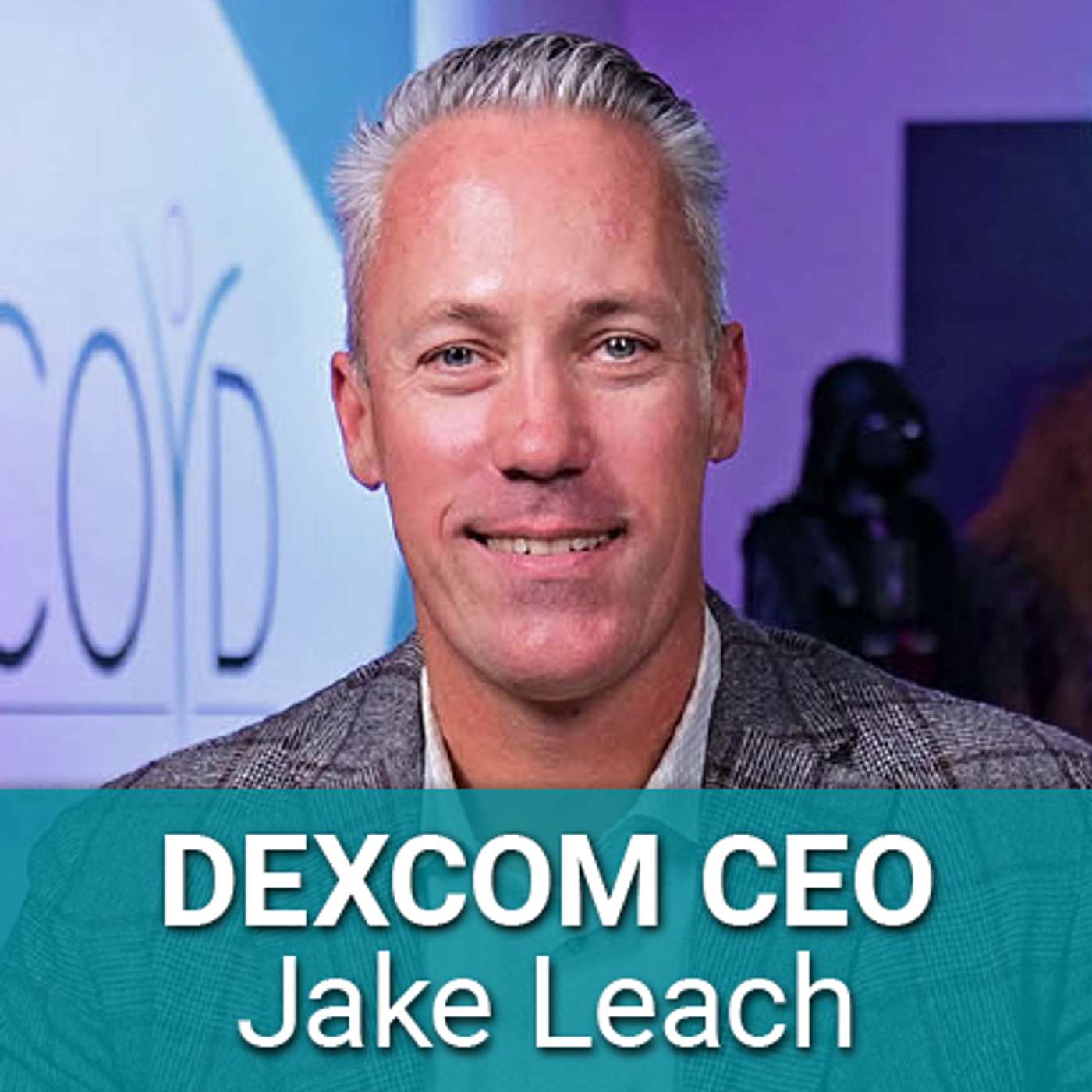
Taking Control Of Your Diabetes® - The Podcast!
Dexcom G7 Sensor, The 15-Day Sensor, and What to Expect from G8 with CEO Jake Leach
00:48:11
Loading summary
Transcript134 lines
- [00:00]
Dr. Jeremy Pettus
Foreign.
- [00:23]
Steve Edelman
Hello, everybody, and welcome to this edition of the Taking Control of your diabetes podcast. I have one of your hosts, Dr. Jeremy Pettis, joined as always by my good friend and colleague Steve Edelman. And if you're just tuning in, Steve and I are both endocrinologists. We work at University California, San Diego. We Both have type 1 diabetes since we were 15. Steve Just about 20 years after me, and we both work at Taking control of your diabetes, which just celebrated on Friday our 30th anniversary of Steve basically creating this wonderful organization. So we have a very special podcast today and a very special guest. So what you might not know is that our TCOID office here in San Diego is maybe half a mile from dexcom. So we literally, Steve and I, and especially Steve, have been very close with dexcom over the years. The evolution of not just dexcom, but, you know, sensors in general, how they've been made, the accuracy, the clinical use of them is just something that we should talk about. That this is such a cornerstone of all diabetes care now, but it didn't used to be that way. So we have. Who better of a guest? Jake Leach. So, Jake, say hi, tell us a little bit about yourself and then I thought we'd go through the history.
- [01:34]
Jake Leach
Of course. Yeah, it's a pleasure to be here with you guys and congrats on the 30 year milestone. That's really incredible.
- [01:40]
Dr. Jeremy Pettus
Thank you.
- [01:41]
Jake Leach
So, yeah, excited to be here. Jake Leach. I've actually been a part of DexCom for 21 years. Started as one of the initial engineers working on the sensing system and has been part of just an incredible development of technology and patient impact, clinical data, all the things that we've done over the years. It's always kind of really been focused on the idea of the user experience, making sure users are getting the most out of the technology. But I just have to say the growth and the opportunity that CGM has to impact the world is just not something I think we contemplated when we first started. We were really just trying to solve this hard problem of putting a glucose sensor under the skin and accurately measuring glucose. And that was just. It was an exciting engineering project. But then as we learned more and the technology improved, we started to see the tremendous impact that CGM can have, starting with type 1 diabetes, but through the whole spectrum, through prediabetes and beyond.
- [02:41]
Dr. Jeremy Pettus
Yeah, whoever thought that it'd be now standard of care for people with type 2 on insulin, and pretty soon it's going to be standard of care for all type 2, no matter what they're on. Because you just mentioned the importance of the feedback you get from looking at it for people with pre diabetes. But we were just talking before we started the podcast for the listeners and viewers that Dexacom started off as an implantable sensor and then quickly transitioned to the subcutaneous patch. And you were with Dexcom the whole way. And you told me that you were with Medtronic for eight years before that, correct?
- [03:14]
Jake Leach
I was, yeah. I was actually with minimed up in Los Angeles. We were focused on insulin pumps, and then we started building glucose sensors. And so it was my first job out of college. I was working in the chemistry lab, actually, as an intern before I even graduated. And I didn't really know a lot about diabetes, but I just needed the best internship I could find, and that was at minimed. And then it turned into an engineering job after I graduated, and then went into the engineering group working on sensors. And then this little company called Dexcom came around, and they said, hey, we've got this really cool technology. We're trying to implant glucose sensors, continuously measuring glucose under the skin for six to 12 months. And I was really intrigued by it. And I went down to Dexcom here in San Diego, where it was founded, and the company was about 5 years old at this point, didn't have any products on the market, but was a really incredible engineering team and really focused on this idea of a continuous sensor. I joined thinking I was going to be working on these implants. And then we rapidly, at the time, were pivoted to the architecture with the sensor under the probe and the patch and making it more of a subcutaneous disposable sensor, which has basically been our architecture since the very first product that we launched.
- [04:33]
Steve Edelman
What year was that?
- [04:34]
Jake Leach
That was 2004, when I joined.
- [04:36]
Steve Edelman
And Steve, you said you were involved in those clinical trials, which I actually didn't know, so I thought that was a good story.
- [04:41]
Dr. Jeremy Pettus
Yeah. In the cadaver lab, no one should ever donate their body to science.
- [04:48]
And no, it was a great experience, and I think it was part of a learning curve for dexcom. They realized that the body just gunks up anything, and it turns out to be a win, win, win with the transcutaneous sensors. And you've come. Dexcom's come such a long way, and I think the G7, such major advance over the G5.
- [05:07]
Steve Edelman
Well, then tell us that history. So implementing these devices didn't really work that great. You know, you pivot to subcutaneous sensors. What was the first sensor on the market? When did that happen?
- [05:20]
Jake Leach
So fantastic question. 2007, March of 2006, we got approval for the STS three day. And what that basically was is we'd taken all the learnings from the implant sensor, which in general we got about 70% of those implants to work reliably. But then the other 30%, we couldn't quite get them to accurately measure glucose for the long run. And so we kind of said that's probably not going to work out as a product, especially an implant. Also the other thing too is just the engineering time it would take to determine if a 12 month implant was going to work for 12 months is 12 months with these short term sensors. We started doing these turnaround studies that were three days old. We could do a study, we could learn from it, and then we could start another study the next week. And so the rapid evolution of the technology really occurred when we changed the architecture to something that was much shorter duration. And so that first product, yeah, this STS3 day was. There was so many things in that product that it was just we had to figure out how to do it as fast as possible. We had this receiver device, funny note about these receivers. So this is before smartphones had Bluetooth, before smartphones existed. We had the display device, kind of looked like a finger stick meter that showed you your glucose. When we first started building those, we actually took Motorola pagers and we took the electronics out of them and we developed our own version of the circuitry that could read the readings from our sensory implant and put those inside these Motorola pagers because we didn't have an engineer that could design a new whole housing. And we're also true, we were a scrappy little startup trying to save money. So yeah, the original receivers that people used in some of the studies look like a pager. And then we went into a new design sequence and we built this oval shaped receiver. Some people called it the Tylenol just because it was reminiscent of a round Tylenol capsule. And so that product, in 2006 we launched it and it worked well for some people and others it really wasn't accurately measuring glucose. I think the MARD on that product was about 26%. So that really means that it was within 26% of the reference on average. So it could really tell you if your glucose was changing, whether it was going up or down. But it was not accurate enough to make a lot of treatment decisions.
- [07:30]
Steve Edelman
Did you use that sensor, Steve?
- [07:32]
Dr. Jeremy Pettus
Yeah, I was on the short term sensor, the three day, the little Tylenol pill. And I Remember clearly that it may not have been as accurate as I would have wanted, but you have to remember where I was coming from. Pricking your finger 10 to 12 times a day. So I just thought it was incredible that I could just put the sensor on and get a blood sugar every five minutes. And you know what? I did double check with a finger stick because I was used to doing that. It worked pretty well, I would say, the majority of the time. And for me it was the beginning of continuous glucose monitoring. It was amazing. So yeah, you have to remember where people were coming from. Nowadays people get diagnosed like last week and they're so fricking spoiled, they get put on a CGM in 20, 24 hours.
- [08:19]
Steve Edelman
Well, you know, I was thinking my first experience was in 2010. Ish. And you know, with the seven plus, which you know, was still kind of like the oval looking receiver. And how long did that sensor last?
- [08:30]
Jake Leach
So it was a. So we started with the STS 3 day. Yeah, which by the way stood for short term sensor. That's what. When the engineers get the name, the product, that's what we. That was our marketing. And then we did a seven which was basically extending the wear life to. And then we did a seven plus which was taking a bunch of feedback from users on the performance of the product and also the user interface of the receiver. And so we added some enhancements there. So 7 plus was a really nice upgrade from 7. And it was at the time, 7 day sensor and no one had really done at that point in time these subcutaneous type products like the infusion cannulas used for insulin pumps was one of the things that we looked at. No one had done anything more than three days. And I remember just sitting around going, why don't we let's try and make it last a week? A week, seven days. Let's try. It turns out it worked well.
- [09:18]
Steve Edelman
Yeah. So I was telling the story before this that it was actually when I first met Steve and I was in my internal medicine residency and I was thinking I wanted to do cardiology mostly because I had massive student loans and endocrinologists don't make that much. And I met Steve and he said, you have type one? And we chatted for a while and he was like, are you on a cgm? And I literally said, what is that? He about lost his mind and then told me all the stuff that was going on. And honestly I had no idea that sensors were happening. Updates and pumps were a little bit behind that. But I kind of went through my Medical training, feeling like type 1 diabetes was stagnant. There wasn't much going on. It wasn't an exciting area. My care had not changed for a decade at least. Yours had multiple decades. So that was a big reason for me to actually go into endocrinology. There's actually stuff happening and stuff happening here in San Diego. I got on the seven plus. But I think it's also interesting that to get it prescribed and to get it covered was just a nightmare. I mean, first of all, I had to go see a physician who didn't know what it was. It was tough to get covered. They gave me this huge logbook to fill out times that I had blood Sugars less than 50 to justify getting it. And I'm saying this because.
- [10:36]
That obviously has changed. Like when these sensors first came out, I think they were viewed as like, they're kind of niche. They're like, you know, like, you don't really need that information. And actually on the medical side, it was very much. Patients shouldn't have this information.
- [10:52]
Dr. Jeremy Pettus
Too much information.
- [10:52]
Steve Edelman
Too much information. They're going to be looking at their glucose all the time. Oh, my gosh, they're going to be adjusting their own insulin doses, heaven forbid. And they're going to have car crashes and all these things. And we didn't know at the time how that would pan out. Of course, we know now that CGM helps people stay safe and less hypoglycemia and all these kinds of things. So what was the company's or your feeling when these products first launched? I guess one, from kind of the technical side and two, from the headwind you were facing, I suppose, in diabetes care.
- [11:23]
Jake Leach
Yeah. I remember vividly the day that we unveiled some internally in the company, unveiled some clinical data that just basically when we saw it, we were like, we got it. And it was a study where we blinded the sensors for a week. So people wore multiple sensors and then the data was blinded. So they didn't get to see it. They just knew they were wearing a continuous glucose monitor. They had no idea what the data was. And then we unblinded it and started showing them real time glucose data and the dramatic increase in time and range and the reductions of the hypos and the hyperglycemic events in just the matter of a couple days when you turned on the real time data and these. We didn't give them any education. This is early days, these things. We just cobbled them together. But when they got the real time feedback and started obviously adjusting their. Therapies and the food and everything they were doing, having data they'd never had before, this real time glucose data. We knew that this was going to work.
- [12:23]
Steve Edelman
Is that what that was called? I remember seeing these slides, a bunch of them.
- [12:27]
Dr. Jeremy Pettus
But let me just say, Jake, that that's one thing that drove me nuts with the Medtronic cgms, the three day blinded sensor. I was so adamantly against blinding data. And they said, well, you know, if a patient sees their number, they're going to change their behaviors and it's going to improve their numbers and we won't know what improved it. I said, well, there you go. And I remember debating Ian Bloomer and.
- [12:54]
Steve Edelman
Real quick, just to make sure people know, blinding means that people would wear these sensors but they wouldn't see the numbers. That's right. And they would have to take it to father or doctor to interpret and see their information and then tell them what to do. And that was kind of the initial use of this as a way to.
- [13:10]
Dr. Jeremy Pettus
Poke them in the eye.
- [13:13]
Steve Edelman
And so there was a huge debate. We actually wrote several articles about it. Blinded versus Unblinded. And our stance was always that blinding was unethical, even, that, why not show people this information? But that was a huge debate.
- [13:27]
Dr. Jeremy Pettus
No, no, that's it. And I remember having to debate this issue. And there's one paper that's in the medical literature about the first recorded.
- [13:40]
Passing away of a type one called dead in bed syndrome, where that happens. I don't want to get too morbid on the podcast here, but he was wearing a blinded cgm and sure enough, they documented him going down and his body tried to fight back a little bit. Blood sugar came up a little bit, and then he passed away. So, I mean, that's the ultimate rule.
- [14:00]
Steve Edelman
If it was unblind, if he saw the information, he would have been alerted to it. And that's just crazy.
- [14:05]
Dr. Jeremy Pettus
Yeah. So anyway, you know what, it's all part of the evolution. And you're right, Jeremy, people were writing, oh, it's way too much information for patients. And that actually occurred when fingerstick chem strips came out from urine testing. They thought about blinding the meters, the little finger stick devices. So I remember Jay Schuyler, you know, kind of a big leader in diabetes for so many decades, and he wrote an op ed against that. You know, so it's just tough to change the way we do things in medicine.
- [14:37]
Jake Leach
It definitely took a while. And I think I remember early days to Jeremy, your point around access and how hard it was to get A cgm. I had a friend that had actually worked with me at Dexcom in some of the early days, and he'd gone on to do some other medical technology projects, and he was diagnosed with type one. And he called me and he said, look, my doctor's not gonna give me a Dexcom until I prove that I have hypoglycemic problems. So I'm gonna go and record a bunch of hypoglycemic data. But I would like to have a cgm. Can you just get me one for now until I get my insurance to pay for one? And I was like, yeah, of course I got him one. But just the fact that he had to go through this hoop of I'm gonna prove that I have hypoglycemia and have to document it to be able to get the tool he needs. I mean, it was crazy.
- [15:17]
Steve Edelman
That's exactly what I had to do. And of course, I made up a bunch of numbers, you know, like, well, Yep, I was 50 yesterday and 40.
- [15:22]
Dr. Jeremy Pettus
I gave him different colored pens and crayons so it wouldn't look the same.
- [15:27]
Steve Edelman
On the flip side, like, if you want me to have a severe hypoglycemic episode right now, I could, you know, like, why should I have to force myself to do that to get this therapy? But anyways, all right, so this was early days and a lot of work to be done. And honestly, Steve, I think, like, a big thanks to Steve. I would say outside of Dexcom employees, maybe nobody as important as Steve Edelman as, like, really being a voice for getting CGM going and kind of an advocate for and because we're talking about it like it was these old, crazy days, but it kind of was in the sense that this was a technology that was not quickly adopted, and here we are just not being able to live without it now.
- [16:06]
Dr. Jeremy Pettus
Yeah, well, thank you for that. But having Type one myself, I think I really could realize the importance of it probably more than someone that doesn't have diabetes.
- [16:14]
Steve Edelman
So then, I don't know, maybe catch us up, Jake, between, let's say, 2010 and now there's all these iterations and, you know, G4, G5, G6. More clever naming, by the way. So anything jump out at you, like, in that evolution that we should highlight?
- [16:30]
Jake Leach
Yeah. Funny thing about the GS, we actually called the first product G1 and G2 and G3. And so G4 was finally. Internally, we called it that as an engineering team, but finally the marketing team then adopted the engineering speak with G4. And so G4 was a huge product for us because it was the first CGM that had the accuracy and performance. It was still calibrated, you still had to add calibrations to it. But it really met the needs of much broader population than say what seven plus did, just because of some of the fiddle factor and some of the usability and the reliability of the product. And funny enough, G4 started out as mainly a manufacturing project in terms of how do we make sensors in a little bit more scalable way, in terms of the way we put membranes on the sensor wire. And it turned out that the better we got at making the sensors, the better the performance we got out of them. And we made some changes in the materials. It was a big leap. And really the fundamental material stack that we use Even on the G7 today, a lot of its roots trace back to that original G4 development and that product. Again, it's still before we have smartphone integration, but that along with access and insurance coverage, people were really starting to listen to, you know, the Steve elements of the world around, the advocacy and how this product works. And the insurance companies started paying for it. And so those two things really started broadening the adoption of cgm. The better technology and the access. And it's really just from there it's grown and grown. G5 was a big advancement, smartphones.
- [17:58]
Steve Edelman
The thing I remember about a couple things about the G4, first of all, it was a cooler looking receiver. It was like a square kind of a rectangle one versus the oval, which was pretty big and bulky. I mean, you had to calibrate it. We forget now that that was a thing. So twice a day you had to actually enter a blood sugar. And then everybody wanted it to go to the smartphone. Everybody wanted it to go to the kind of cloud that didn't exist yet. So you could get this little dock for the G4, which was like the initial share. Right. That you could plug it into this dock at night or I guess whenever you weren't using it, but primarily at night. And they could go to people to kind of follow your blood sugars. So I remember that being kind of a big deal.
- [18:40]
Jake Leach
It was the share cradle.
- [18:41]
Steve Edelman
Yeah.
- [18:42]
Jake Leach
And we developed it and it was the first time that a Class 3 medical device, which is basically like the highest level of oversight at the FDA for medical devices, these are things like heart valves and brain implants are all in that Class 3 at the time, CGM was also in that category because they were still trying to figure out exactly how to treat the Technology, it was the first time that type of class had ever been connected to a smartphone. And it was very purposeful for us. We knew we wanted to get to full display on a smartphone. You don't have to carry your receiver device. You just everything on the smartphone. Because we knew we could do the remote monitoring, the convenience, all the computing power, but we knew we couldn't get there in one step. So we went and we did the cradle, which was the idea was you can charge your receiver, but it also pulls the information out of the receiver and puts it on your phone so it can go to the cloud so then loved ones can follow you. And that technology we really actually only sold. I think there was about 1,800 of those cradles that we sold because we quickly built the cradle technology right into that cool new receiver. And so you didn't need the cradle. But funny story, I remember when we first started doing clinical studies with that receiver cradle, one of the kids that was wearing it was in college, and he said, hey, I love this thing. My mom really likes it because every time I plug it in, the data suddenly populates on her phone and she knows what time I got home.
- [20:08]
Steve Edelman
Yeah, that's the thing with Cher, right? It goes both ways. People can see your blood sugars, but yeah. So to me, the next big thing was then the G6 losing calibrations. But it seems like you wanted to talk about G5. What stands out there?
- [20:20]
Jake Leach
So G5 was the first time we connected the CGM directly to a smartphone, and it was your, as we call it in engineering speak, primary display. So there was no other device. And the big thing around that was you had to prove that you could reliably do the glucose alerts that alert users when their glucose is low or high, that you could really reliably do that on a smartphone. And that was no small task. And that so really was the big development of G5 was how do we ensure that the safety and effectiveness is in this product that is on really a platform. We don't totally control iPhone at first and then Android quickly after that. And that. I remember when we launched that product, we launched it globally all at the same time. Actually, September 2015, we were at EASD and I got to stand on the stage like Steve Jobs and talk all about this new technology. And it really was the beginning of unlocking the power of what a smartphone can do for users that have their device connected to it. And in the development of that product, we made a very conscious decision that's worked really well, over time, which was the idea was the device on your body, the patch, the wearable, it is where all the intelligence is for glucose. And so what that allows you to do is it allows your CGM, the DexCom, to connect to your smartphone to an insulin pump for automated insulin delivery. Because we also were doing insulin pump integrations at the time, starting to get towards closed loop. So we knew that was important, but people still wanted share followers. And then ultimately it led to our ability to connect directly to the Apple Watch. So people have that extra convenience of just having the glucose on your watch and not having your phone with you. That was all really foundationally developed in the G5 days, which was, you know, way before, you know, the smart smartwatch.
- [22:00]
Dr. Jeremy Pettus
Yeah.
- [22:00]
Steve Edelman
And I remember this too, because this was back in the day. This was pre Covid still and TCuid. You know, we would travel around the country and we would put on, you know, workshops in person, conferences, a Saturday in Kansas City or, you know, different cities. Like we do one a month. And this was such a big issue. Again, something that we take for granted now, your cgm, of course, it goes to your phone, but people are like, why doesn't this, like going to my phone? People were mad about it. And, you know, I remember thinking that yes, there did seem to be this discrepancy between like how quickly smartphones and things were moving and kind of how relatively slow it was to connect with it a lot because of these regulations and the clinical trials and things that were required. So I don't know, that seems interesting to me that that must be something you struggle with as a company. It's like, yes, we can do this tomorrow, but like, we need to go through the proper steps and things like that.
- [22:52]
Dr. Jeremy Pettus
Yeah. I remember even before people were getting angry they couldn't connect to their iPhone. We'd ask if you remember how many of you have a CGM. And out of maybe 200 type 1s, maybe 15%.
- [23:05]
Steve Edelman
Yeah.
- [23:05]
Dr. Jeremy Pettus
And now you couldn't even see the hands of the type ones that don't have one. Folks on mdi, they all have one and standard of care now, so. But what I remember too was the auto inserter.
- [23:16]
Steve Edelman
Answer my question. You chime in with a second question. Did you have a. Yeah, I had a question.
- [23:21]
Jake Leach
What was your question?
- [23:22]
Steve Edelman
Technology kind of interface.
- [23:23]
Dr. Jeremy Pettus
Sorry, sorry.
- [23:24]
Jake Leach
No, no, it's.
- [23:25]
Dr. Jeremy Pettus
I thought that was a comment. Sorry.
- [23:27]
Jake Leach
No, it actually does. Anybody. You guys remember the blackberries? Remember the cab? So that was the smartphone before there was the iPhone. Right. And we actually had a project working on trying to integrate with one of those. And the Bluetooth required so much battery power to communicate with the phone that we ended up with these wearables that were just too big. And so we really went and we talked to Apple, we talked to Samsung and even Sony at the time was making Android phones. We were advocating for a lower power connection to the phone so that we could build a wearable that worked. And ultimately Apple was the first to adopt what's called low energy Bluetooth and that was the unlock for connectivity to smartphones because then you could do it at a low power and your battery could be small and the wearable could be small. But it was, I mean I never envisioned that as, you know, someone who's involved in CGM development that I'd be going around to Samsung and in Korea and going up to Cupertino to meet with Apple to try and convince them to do this. And I think there are others doing it at the same time for other technologies or other industries. And it was a big unlock for us is when Apple adopted that low energy Bluetooth.
- [24:30]
Steve Edelman
Yeah, I just say a cool progression of things. I don't know what sales and use look like, but it must be this kind of steep curve of all these things coming together that the technology is getting better so it's more accurate, people trust it. Suddenly eventually you don't have to use your meter anymore because it's accurate enough by the fda, you can actually use it to control insulin pumps and things. As these uses become more and more and more and people kind of have adopted it, insurance companies cover it. All these things took time to come together. But again now we are here where it's just such a standard of care and Dexcom has been a huge leader in this. Let's jump forward to today's sensor and then want to talk about what's next, what's coming with with Dexcom. So we unfortunately had to jump over the G6 again. For me that was huge. Getting rid of calibrations, that was like, just like monumental in terms of, you know, I don't poke my finger at all like ever.
- [25:27]
Dr. Jeremy Pettus
Anyways, I'll just say one quick thing, last thing about the development. The auto inserter was kind of a nice feature. You know, the guillotine, the G6, Ba boom. And of course that's so much better with the G7, but you know, that was nice because I had no problem with the G4 pushing that thing in, but some people did.
- [25:46]
Jake Leach
So anyway, we had a video that we used as a Motivational tool and really to help the engineers understand what we were trying to do when we were developing the auto applicator. And it was a video that was on YouTube of a mom chasing a little girl around, holding an applicator, trying to hold her down to get the sensor in. And she was crying and she's running around, her mom's chasing her. And I said, this is the problem we're trying to solve. Team.
- [26:09]
Steve Edelman
Yeah. And the gym, four of the previous ones was that giant syringe. I mean, it didn't look like fun pushing this needle into you. So, yeah, going to the applicator and it freed up where you could put it. I know you like to put it all over your.
- [26:21]
Dr. Jeremy Pettus
Yeah, yeah, yeah, yeah.
- [26:22]
Steve Edelman
He's got like 17 on right now.
- [26:24]
Jake Leach
Favorite sensor spot.
- [26:26]
Steve Edelman
All right, so we get to G7, and, you know, I want to talk about. Obviously, there's some. There's many advantages to it, but there has been at least like, anecdotally, people having issues with it. And for me, I would say it's like one third, one third, one third. Like a third of my patients are like, this is a superior product. I love it. Compared to the G6, it's a huge positive. The other third in the middle are kind of like, there's some bugs, there's some issues, but it's no big deal. And there is a third or so, in my opinion, that they're losing connectivity or there's accuracy issues and they can't wear it.
- [27:05]
Dr. Jeremy Pettus
So.
- [27:05]
Steve Edelman
So what is this issue? How do you quantify it? What's Dexcom's kind of opinion approach and all that to it?
- [27:12]
Jake Leach
Yeah, it's super important because if you think about user experience and CGM is such an important part of managing diabetes for so many people that we are very focused on making enhancements every generation. We've made the product more accurate, more reliable. But as we've seen larger and larger populations of users, we learn lots. One of the things we pride ourselves in is listening to users taking the feedback. And as we've scaled G7, as you mentioned, kind of like the large volume of new people using cgm, we've had certain struggles in trying to ensure we could build enough products. Towards the end of last year, beginning of this year, we had some supply shortages. We had some deployment reliability problems that started earlier this year with G7 that I think really amplified some of the frustrations out there. And we were very aware of it, and we were working super hard to fix it. And at the scale we operate at there were people were having those experiences and getting those sensors. And so we spent a lot of time focusing on how do we make this system as reliable as possible. And so there definitely have. Users have experienced some challenges. As you mentioned, there's lots of users who have a fantastic experience. But our focus right now is making sure we know everything that people run it into and that we're on top of resolving it. And then the other thing too, I think that we've also learned again this idea of continuous learning is when people call in when they have an issue, how our tech support talks to users and manages that and makes sure that they have a great experience. And if they need a replacement, they get the replacement and they get it in the timeframe. I think we've made some mistakes in the way that we rolled out some of the support policies around how we replace sensors. And I think with good intent. We always had the positive intent, but just the way it came across and we learned a ton from that. And so one of the things I want users to know is that we will replace any sensor that doesn't work for you. There's no limit, there's no cap on those. And if you need a sensor overnight, we're going to ship it overnight. I think that's also been something where users have had a hard time accessing sensors. It's my last sensor, I've got an aid system. We understand how critical it is if you needed replacement for us to get it to you. And so that's something that I'm ensuring. Our teams are doing everything necessary to ensure people can get the sensor replacements they need.
- [29:31]
Dr. Jeremy Pettus
Jake, I was going to ask, is the problem fixed? Now I know that when I spoke to Kevin Sayers, your predecessor, he, you know, the way he described it to me was that, you know, you're producing a ton of these things. You, you bring in parts from a lot of different companies and at some point some of them were defective and a bunch of sensors got out into the world. And that's part of the problem. I'm sure. You know what 10x but the bottom line is, is the problem fixed or will people still be experiencing connectivity issues, stuff like that?
- [30:00]
Jake Leach
It's a good question. So, and I'll talk about the connectivity issues too. So when it comes to sensor deployment and reliability, we fixed it in the factories and so there are still very small and again we're talking about like small single digit percentages of these problems. But when it's more than it was before, people feel it and it can be very frustrating. Right. So we fix it in the factory, but then there are still sensors out there. As we kind of move through the huge volume of sensors, there's more than 4 million sensors are used in a week. Right. So we're talking about we have over 3 million customers.
- [30:36]
And growing. And that doesn't even include the stelo product which is also rapidly expanding. So we are getting through it very quickly.
- [30:47]
CGM technology is not perfect and we know that every iteration of the technology we work to make it better. And so people can still have issues and the goal is to make sure if they do run into an issue that we've got the technology to replace it. But when it comes to those deployment issues, we're seeing it come down pretty dramatically. Our warranty replacements are actually lower than they've been and they've been on this slow decline in terms of the number of sensors we have to replace. Basically because we've continued to improve the technology from where it started. But there's still plenty of work for us to do to make this technology further more reliable. We've got a 15 day product coming out soon which extends the wear life and so still lots to do when it comes to making technology better.
- [31:27]
Steve Edelman
Well, yeah, let's talk about kind of what's coming next and maybe starting with keeping with glucose for now. Tell us about the 15 day and then what's next? G8, where is glucose sensing at? Dexcom.
- [31:40]
Jake Leach
Yeah, it's incredibly exciting. We've got our 15 day sensor which is the longest lasting CGM, the most accurate and it has a further enhancement on the performance of the algorithm that's in the product. And so we're launching that imminently here. Patients are going to start. We've already got some wearing it, but we'll have some more.
- [31:58]
Dr. Jeremy Pettus
We're happy to beta test it for you.
- [32:00]
Jake Leach
Oh, anytime. I'm wearing one right now actually.
- [32:02]
Steve Edelman
Oh, good. Well Jake, we always get frustrated when people without diabetes. We're glad you're wearing it, but then, you know, like we have fellows that wear it and they're like, oh, I went up to 103. We're like, you know, boo hoo.
- [32:12]
Jake Leach
Yeah, not only am I wearing it, but I literally am using the receiver.
- [32:16]
Steve Edelman
Oh wow.
- [32:17]
Dr. Jeremy Pettus
I use the receiver myself. The. Let me ask you, is it 15 and a half day or 15?
- [32:22]
Jake Leach
It's 15 and a half days. So it still has the grace period on it that allows you the convenience of changing your sensor when you, when it's convenient for you so that it's 15 half days, the extended performance. And then also there's a lot of software updates too that we're putting out. So we're going to launch 15 day here shortly. And then we're also going to, shortly after that, put out a feature called Smart Basal. Because we have so many new users to CGM that are basal insulin users, either initiating basal insulin or someone who's trying to optimize their daily dose of this long acting basal insulin.
- [32:55]
Steve Edelman
This is mostly. This is a type 2.
- [32:56]
Jake Leach
It's a type 2 population. Yeah. And so that is really around helping their physician and them titrate to a dose safely. You don't want to experience hypoglycemia, but you want to get to that dose that really helps you keep those blood sugars lower. And so that insulin algorithm technology is implemented in G7 as well as in the Clarity software that.
- [33:17]
Steve Edelman
What does that look like? They get a little ping. Hey, consider increasing by one unit or how specific is it? Or talk to your doctor. What does it do?
- [33:25]
Jake Leach
Yeah, basically the physician enters in the order. So they kind of put in what's the starting dose that they want that patient to start at? What's the maximum dose allowed? And then how much do you want it to be able to increment per day? And then basically puts that into Clarity. And then that is sent to the user and it says it gives them a recommended dose for the first time. And then you acknowledge that you took the dose. It has a reminder built in. The physicians really like this idea too, where you could remind the user to take it.
- [33:50]
Dr. Jeremy Pettus
That's cool.
- [33:51]
Jake Leach
And then the CGM can help show the impact of taking insulin versus not. And then it just every day gives you a recommendation and gets you the dose so needed.
- [34:00]
Steve Edelman
I mean, how many lectures have we given on, you know, like basal initiation, titration and type 2 diabetes? That we start at 10 units of Lantus. 10 units of Lantus or whatever it is. Six months later, they come back, they're still on 10 units and you know, like 12. Yeah, maybe 12. Yeah. And there's. You lose months, years sometimes of poor glycemic control without, you know, like really prompting people, because people aren't used to. They're actually told not to adjust their medications. Most often this is your dose of your blood pressure and your cholesterol medicine. And under no circumstances are you to change this. But here we're saying with insulin, not only do you need to change it, but sometimes daily. And so it takes some reminders and some comfort with those Parameters for patients to take control of their diabetes.
- [34:45]
Dr. Jeremy Pettus
Yeah. And you know, we went to a UCSD faculty meeting today. One of the biggest issues is access. You know, patients can't get into clinic and I think that's why this technology is even more important because they can't see their doctors every six months. Now, you know, maybe a quick note through the medical records, you know, the EMR at three months, but access has never been this bad. And I think post Covid, there's lots of reasons for it. So anything patients can do at home.
- [35:11]
Jake Leach
Is perfect and it's motivating, I think, you know, with a, a patient that's taking an injection once a day, if it's not really helping them improve their glucose, why are they really going to want to do it? But if you show them with the CGM and the titration algorithm just how much better their glucose control is by taking the right amount of insulin, that's a real motivator to do it.
- [35:31]
Dr. Jeremy Pettus
Absolutely, you're right.
- [35:32]
Steve Edelman
And we've been saying that forever. Usually finger sticks, but with the CGM seeing it in real time.
- [35:40]
Other things in the glucose area you wanted to talk about.
- [35:43]
Jake Leach
Yeah. We have our next gen platform. So it's a new wearable, it's called G8 and it's smaller. Could have guessed. Right.
- [35:54]
Dr. Jeremy Pettus
So creative.
- [35:54]
Jake Leach
We're keeping with the theme. So it is, and it is our eighth generation of sensor wearable technology and so much packed into it from a technology perspective. Very excited about the new enhancements to basically glucose sensing. So we're shooting for again another huge improvement in accuracy and reliability and performance. A lot of the, some of the checks that we've built into the hardware and its ability to check the sensors. The size of the wearables is incredibly small. And then we're also packing in some alternate analyte sensing. So not just glucose. And so we're working on a couple of different ones. Obviously ketones high on the list, but even things like lactate and potassium.
- [36:35]
Dr. Jeremy Pettus
Oh, interesting.
- [36:36]
Jake Leach
And so, and there's a whole host of analytes that since we've already got this amazing wearable on your body, sensing glucose continuously, why not amplify the value by adding some other markers in there?
- [36:50]
Dr. Jeremy Pettus
That was one of our questions. That's amazing.
- [36:52]
Jake Leach
Yeah, I think it's really going to help us, this Dexcom really further our impact within diabetes, but also in some of the other chronic diseases that are so synonymous with diabetes. Things like liver disease, kidney disease.
- [37:07]
Even heart disease. There's a lot we can do by Better managing glucose and then also helping folks with some of those other markers.
- [37:14]
Steve Edelman
And then G8 will have a better camera too. I'm guessing.
- [37:20]
That'S a joke, Steve. So when do you think that might be like targeted?
- [37:24]
Jake Leach
It'll be a couple years. Yeah. If you kind of look at our technology iterations per generation, it's about every between three to five years we come out with a new, full new platform. And for us, what that really requires is not only development of new technology, but also in manufacturing and how we make sensors and we do these large investments in wholesale changing of our production facilities and everything to be able to make these new products. And it's the exciting part about what we do is bringing new technology that really furthers the impact that dexcom has on people's lives.
- [37:56]
Steve Edelman
How do you think? I'm curious because as we add these analytes, do you imagine these would be separate products or do you always have the cgm, but then you could choose. Well, I also want potassium and ketones or it's all there and you can turn them off or on. How's that going to work?
- [38:12]
Jake Leach
I think the way that we see it now is it's pretty much glucose plus. So you have a glucose. There's very few situations where having that glucose reading wouldn't be helpful. So it's kind of like take the glucose reading, that's why I call it multi analyte. And then you add in some of the other, other sensors. I do think though, just like CGM has done, once you start building the technology and people start using it, you start learning about all kinds of other applications for it. And I think we're still in the early days of sensing glucose continuously for people who don't have diabetes. And there's so many learnings coming from that. And I think there's still much more to come as we look at these other analytes and even ketones. You know, there's a diabetes use case there that's important, but there's also a lot of use cases outside of diabetes for ketone.
- [38:56]
Dr. Jeremy Pettus
You know, Jake, one thing you should just mention briefly about if people don't know about this new software update, the smart food logging feature, because I didn't even know about it, I haven't played around with it, but tell us what it is and how could it help?
- [39:09]
Jake Leach
Sure. So both in our Stelo product, which is our over the counter product, and our G7 product, we actually launched this in G7 first. So in the mobile app update, when you go to add your Meal. So not very many people would. Actually, some people start out logging a lot of stuff, but then over time they kind of lose interest in it. But if you go into that menu now to log a meal, there's a button for the smart photo meal logging and you literally can take a picture of what you're about to eat. And it uses AI technology to analyze the meal and then it will pre populate it into your history. Log what it is you ate. And it's really detailed. And I've done all kinds of fun experiments with it, testing what it can recognize. And it does a pretty good job.
- [39:52]
Steve Edelman
It gives you like a carb count too.
- [39:54]
Jake Leach
It doesn't.
- [39:55]
Dr. Jeremy Pettus
Did you know that?
- [39:55]
Steve Edelman
I didn't know this.
- [39:56]
Jake Leach
Yeah, we kind of launched it in stealth mode. It was a new feature. And really one of the important aspects of the progression of the feature is for it to start giving you macros like carbs today. What it does is it gives you the good description, records it, and then also pairs up your glucose excursion.
- [40:12]
Dr. Jeremy Pettus
That's cool.
- [40:13]
Jake Leach
That you experience from the meal, whether it's a good one or a bad one or a big excursion or not. It pairs it up with a meal and saves it. It also puts it into clarity so that if your physician's working with you on a treatment plan and kind of says, hey, what happened last Tuesday? Or this, you're not going to remember.
- [40:29]
Dr. Jeremy Pettus
What the hell did you eat?
- [40:30]
Jake Leach
Yeah. And you're going to look at a glucose graph that's kind of like, okay, I don't really know. But now they have a full description of the meal. And so there's that and there's also the ability to log the insulin.
- [40:39]
Steve Edelman
And I'm thinking on the research side, which I do a lot of, that's always been a big bugaboo for us. How do we capture what people are eating? And this sounds like a great step. Take a picture and you can start pairing it with the CGM information. As you're saying this, I want to ask you, kind of like pie in the sky, next five, 10 years, because so much is happening now. We can take pictures and analyze food like AI with all the data that exists with CGM ketone levels, insulin pumps getting they're accurate enough to deliver insulin, what do you see as maybe one or two of the big things that you're hoping for in the next five, ten years?
- [41:19]
Jake Leach
Yeah, one of the ones that we're pushing and driving and really looking forward to is just the continued access to CGM technology. There's over 600 million people in the world that have diabetes, very few of them actually have access to CGM technology. And so that ability for people to use the technology, for us to continue to improve it, lower the cost over time, like all those things that allow the global population to really manage their diabetes and take care of it, is really one of the things that keeps me, it drives me, it drives the company driving that access. And the way that we do that is both through advocacy and producing the clinical data that proves the value of the cgm, which we've done a lot of that. We still have more to do, but it's also on the innovation side. As I look at the history of CGM and all the innovations we've done, each one of those innovations has unlocked more use of the CGM through either users demanding having the technology or payers, those making the decision on how a CGM is covered, recognizing even more value in the product. And so as the products have gotten easier to use and there's more value in them, and again a lower cost, you know, cgm, the price of cgm, if you look at it over the last five years, has come down dramatically. And we're always focused on the lowest out of pocket cost for our users because that's the most important thing for someone who's actually using the CGM for them to get access to it at a low cost. So that's one thing I'm really looking for, is just global access, better access here in the us, better access around the globe. The other thing too is continuing to expand the applicability of our CGM technology along with the other analytes. I see a day where Dexcom is a company that helps you on a health journey in some of the most common challenges. A lot of it is around nutrition, glucose control, ensuring activity levels. There's all these things we can do to help someone make a slightly healthier habit. We're not talking about completely changing everything you do, but if you can help reiterate a healthy habit for somebody that helps them, you know, live, live longer, have a better life, I mean that's really one rewarding and something I think it's truly possible with, with CGM technology and wearable technology in general, combining it with AI technology on the software side.
- [43:37]
Dr. Jeremy Pettus
Yeah, and you mentioned this earlier, but so many other conditions that are associated with diabetes are silent. You know, heart, kidney and liver disease. And if there could be some analytes that can, you know, have someone's red light go off and then they speak to their doctor, you could address these issues long before they get serious. So, I mean, that is amazing to me.
- [43:56]
Jake Leach
Yeah.
- [43:56]
Steve Edelman
I was just thinking that as we talked about this evolution, it started with proving that this actually mattered for this individual patient, that it helped them control their blood sugars or whatever it might be. But with all the advances, all the opportunity there is on these population levels now of helping people not just with their diabetes, their blood sugars, but their overall health. And Steve said, we just had this faculty meeting today at UCSD and a big conversation was, we don't have enough people, like even in San Diego, ucsd to see the patients that need to be seen. And that through things like Dexcom and having this data, we can change the entire way that we operate in medicine from, okay, Jake, you need to come see me every three months for your diabetes, and you might be completely fine, but what about all these people that are out there that aren't coming to see me? Well, we now are getting to the point where we can access our patients and look through them and see their CGM data and reach out proactively to the people that actually need help. Their time and range is below where we want it or whatever it might be, or something gets triggered that there's a complication that is an entire different way of operating with health. And this has largely been driven through data. And diabetes is leading the charge in this because it is so data driven. And there's companies like Dexcom that have been working on this for such a long time and I think have had a significant Runway compared to what other wearables are getting to now, that diabetes is really kind of the poster child for this, I think.
- [45:26]
Jake Leach
Yeah, I really see it as a technology that empowers both the user and the physician to really drive a better outcome for everybody. And I think it's very scalable. It's, you know, CGM saves the health system money in the first year because if you eliminate extra utilization in healthcare, like emergency rooms and extra doctor visits to help, I mean, there's just so much that resonates with CGM for everybody, including even the payers. Right. And so we're want to continue that message, make sure people understand it. But it is, it's an empowering technology. And like I said, the day that we saw the impact that it could have when you turned on the real time display, we were like, this is a really powerful technology.
- [46:09]
Dr. Jeremy Pettus
That's the whole concept of taking control of your diabetes.
- [46:11]
Steve Edelman
Exactly. When my CGM's warming up for, God forbid, for 20 minutes, I'm like, what the hell am I doing? I don't know. My blood sugar's.
- [46:20]
Jake Leach
Do you remember what it was? Two hours.
- [46:22]
Dr. Jeremy Pettus
I love how you can overlap them.
- [46:23]
Steve Edelman
Yeah.
- [46:25]
Dr. Jeremy Pettus
That to me is a great little advance. Gosh, Jake, we can talk all day.
- [46:29]
Steve Edelman
Yeah. Well, I was just going to say thank you so much. This has been a fun kind of trip down memory lane for the evolution of care and diabetes. But personally for me and Steve too, what care has been like for us. It's so great having you so close by and we've known you for so long now. Some exciting stuff coming. And that's the other kind of final thing is it used to be every five years and it's just like the rapid pace of these improvements that really kind of are meaningful to people is really impactful. So thank you so much for being here. We'd love to do this again at some point, some interval, but nine.
- [47:05]
Dr. Jeremy Pettus
No, I just say, Jake, thanks so much. I mean, to me, the listeners and viewers are going to be like our experience. We have a greater appreciation what it takes to develop technology like this. You stealing from something from Motorola, never telling them.
- [47:23]
All the way to the BlackBerry and, and forward. No, I think people with diabetes, type 1 and type 2, so appreciate this technology, but it, it wasn't easy.
- [47:33]
Jake Leach
No, there's, there's still so much more to do and I really appreciate being on with you guys and I really appreciate everything you guys do to, to advocate for the technology and advocate for patients.
- [47:41]
Steve Edelman
Yeah. All right, well, thanks everybody for listening. Make sure to like subscribe, follow, share all those fun social media things. Send us comments too, and we will see you or you will hear us on the next one sa.