← Taking Control Of Your Diabetes® - The Podcast!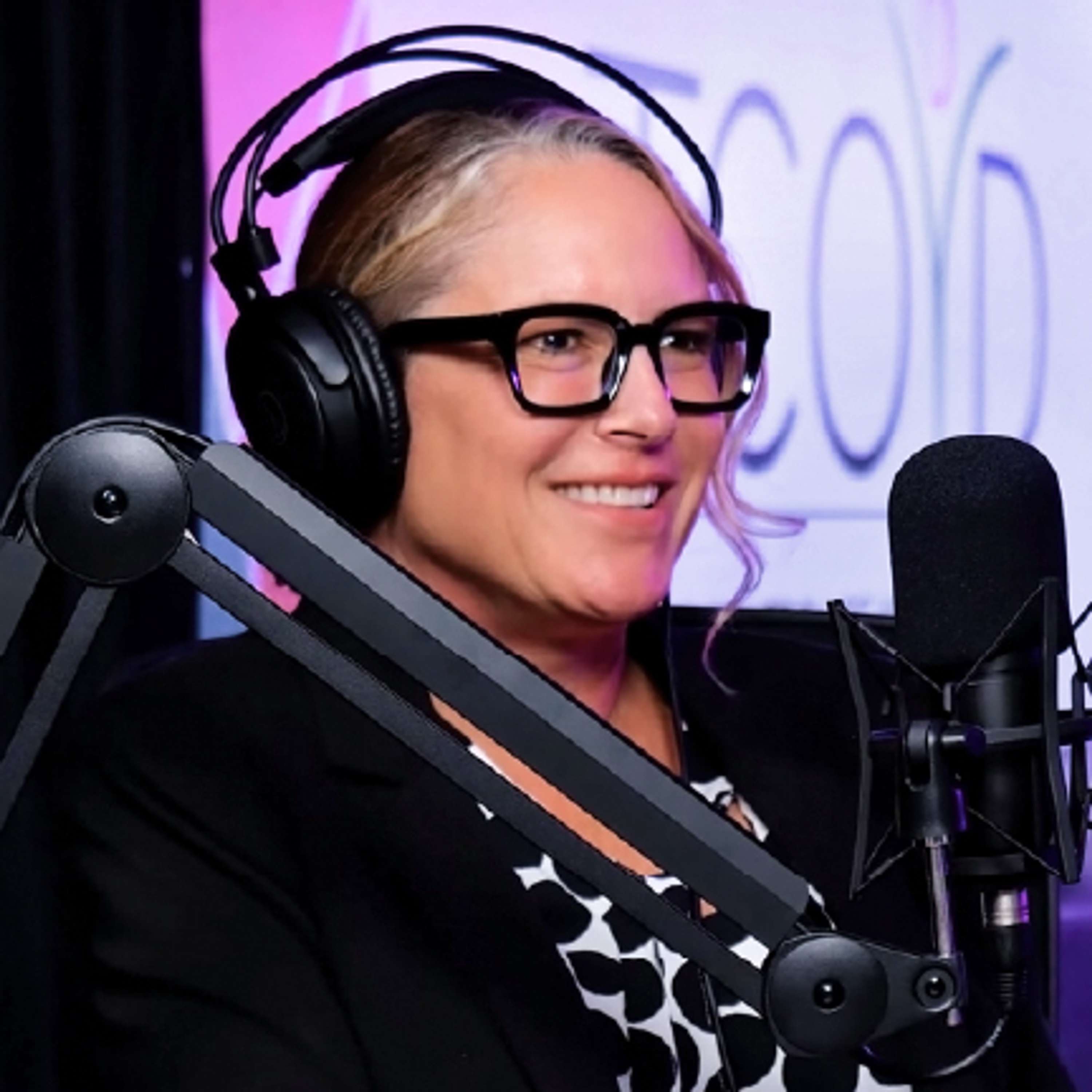
Taking Control Of Your Diabetes® - The Podcast!
Diabulimia and Eating Disorders in Type 1 Diabetes with Dr. Liana Abascal
00:34:11
Loading summary
Transcript121 lines
- [00:20]
A
With diabetes, so much focus goes into what you eat, but what happens when that becomes problematic? Well, stay tuned to learn more about diabulemia and other eating disorders on this episode of the Taking Control of youf Diabetes podcast. I am one of your hosts, Dr. Jeremy Pettis, joined as always by my good friend and colleague, Dr. Steve Edelman. Hi, Steve.
- [00:42]
B
Hey, Jeremy.
- [00:43]
A
So if you're just tuning in, we are both endocrinologists, adult endocrinologists, University of California, San Diego. We both work for the not for profit taking control of your diabetes. And if you like listening to us, please, like, subscribe, follow, do all those things because those do help us out. So today's topic is a unique one and I'm glad that we're doing this because this is something very serious and something that, you know, people need help with. And we're going to introduce our very special guest in a second. But, Steve, I mean, you know, I have been living with type one for a long time. You quite a bit longer than me, but that was a joke.
- [01:21]
B
It's true.
- [01:22]
A
So, you know, and just being Type one, we, you know, kind of have a adversarial relationship with food that we're always thinking about it and, you know, are we taking the right amount of insulin or beating ourselves up for, you know, how much we ate, especially if you went high or low or whatever it is. So it's only natural that that could spill over sometimes to being like a true problem.
- [01:44]
B
Yeah, I agree with you. It's something that we think about every single day. Hyperglycemia that you both, you and I both experienced yesterday and hypo. And it's not only that, you know, are you eating the things that are healthy for your heart, your kidney, portion control. Oh, my God. But we're gonna hear from our guest Leanna in a second that we're going way beyond the day to day issues that we have to think about. And it is a serious topic. And you mentioned that. And this is one podcast. I will not be making any jokes.
- [02:15]
A
Okay, we'll see about that. All right, so just to be clear, so when people hear eating disorders and diabetes, just the general public, what their mind would probably go to is diabetes. Well, that's associated with people being overwe. And are we just talking about diets here? That's not at all what we're talking about. We're really going to be focusing mostly on people with type 1 diabetes that might have issues around body image. They can stop taking their insulin. Diabulemia is a situation where People actually induce vomiting to try to lose weight. So this can be very severe, very life threatening, and very difficult to treat. So we want to get into it. So Leanna is actually here in our studio. Sometimes we have people on Zoom. So thank you for being here. Will you please introduce yourself? Tell us about who. Who you are and kind of maybe how you came to do what you do.
- [03:03]
C
Yeah, absolutely. So I'm Leanna Abaskal. I'm a clinical health psychologist here in San Diego, and I have particular expertise in eating disorders and in diabetes, type 1 and type 2, as well as the overlap between the two. So most of the patients that I see either have an eating disorder or diabetes or both.
- [03:25]
A
Okay.
- [03:26]
C
Yeah. And a lot of people ask. I myself do not have diabetes. My mother had type 1 diabetes, so pretty much grew up with it in the house.
- [03:34]
A
All right, well, we'll give you a pass.
- [03:35]
B
And she works. She does things with Bill Polonski and has done something with TCOID in the past. And yeah, we appreciate you coming in today and talking about this important topic.
- [03:45]
C
Absolutely.
- [03:46]
A
So I guess maybe starting with. Again, we're gonna focus mostly on type 1s. What are some of the common eating disorders that you see and how common are they in type 1? Is this half of people with type 1? Is this 20%? How much of a problem is this?
- [04:03]
C
It definitely is a problem for Type one. If we just look at eating disorders in general, prevalence rates, depending on what we're looking at, might be somewhere between 1 and 5% of the population. Someone who has type 1 is at a twofold risk of developing an eating disorder. And some of the reasons, like you mentioned, is this. You can't get away from thinking about food or carbs or what you ate. And it's really a 247 thing. So if someone has underlying risk factors for developing an eating disorder and then they develop type one, it really can create a perfect storm to developing an eating disorder as well.
- [04:45]
B
Yeah. And someone with a type 1, they have the tools, which is withholding the insulin that they absolutely need to keep their blood sugars in a good range. And as you mentioned when we were talking before, it's mostly women, due to societal pressures to look good. And so they have a tool. What the tool is withhold insulin, which.
- [05:06]
A
Let'S be clear, is completely unhealthy, dangerous, don't do it. And also when we were talking, correct me if I'm wrong, but it sounds like you kind of divide these eating disorders into maybe one of diabolumia, people that are Actually vomiting to induce weight loss.
- [05:21]
C
Diabulemia is people who do not take their insulin or minimize their insulin.
- [05:27]
A
It has nothing to do with vomiting.
- [05:29]
C
No.
- [05:29]
A
Okay.
- [05:30]
C
That's a separate word. That's bulimia.
- [05:31]
B
It's just good to teach you.
- [05:33]
A
Oh, you got it. All right. So just regular bulimia. Regular, let's call it just bulimia is inducing vomiting. Diabulemia. That is confusing, though.
- [05:42]
C
It is.
- [05:43]
A
It's people that just emit insulin to lose weight. Okay.
- [05:46]
C
Typically, yeah.
- [05:46]
A
And do those run together? I mean, I'm guessing there's people that vomit and don't take their insulin.
- [05:52]
C
You can. Absolutely. And there's other compensatory mechanisms someone might use, like, you know, over exercise, for example. People with cystic fibrosis actually have a higher incident of diabetes, and many of them will not take insulin as well as their enzymes for cf. So there's other ways that you can manipulate your basically net calories.
- [06:19]
A
So what about along those lines, I suppose, anorexia, People that take their insulin, and they're doing a good job with that, but they just simply are not eating enough. Can you see that also?
- [06:29]
C
Yeah, yeah, absolutely. And so I like to think about it as kind of two separate ways in the sense of there are people with type 1 who omit or don't take all their insulin, and that's what we would call diabulemia. And there are horrible, severe medical complications to that that we can talk about. And then you might have somebody who has type one who just happens to have an eating disorder, but they also take care of their diabetes. They actually take their insulin, but they may not. They may severely under eat or they may vomit or over exercise or use sort of the tradition compensatory mechanisms.
- [07:12]
B
Liana mentioned before we started that she had a patient that would step on the scale in the morning, and if she was above the weight that she wanted, she would not wear her pump that day.
- [07:22]
A
Yeah. That's intense.
- [07:24]
B
Yeah, that's intense.
- [07:24]
A
I mean, that gives me anxiety just thinking about it, you know, like, if I didn't have my pump right now, I'd go home, you know, like, freak me out. So. All right, so I'm thinking as we're talking, when somebody finally comes to see you, they've probably been dealing with this for years on desktop.
- [07:39]
C
Yes. Very often.
- [07:40]
A
Tell us about that development, that there's some, like, maybe they have some underlying health condition, whatever have led to them starting this behavior. And what's the path for them eventually, hopefully, coming to see somebody like you.
- [07:53]
C
Yeah, it's hard. There's a lot of ambivalence with eating disorders because people, of course, they want to be healthy and at the same time, gaining, potentially gaining weight is really aversive to them. So they're terrified to, you know, come in and present for treatment because what are we going to do? We're potentially going to. If they need a weight restore, we'll work on weight restoring. They need to up their insulin. We're going to focus on upping their insulin. Right. And so a lot of times, especially within the diabulemia space, I have family members that are bringing in often their adult children or their spouses, and I have not had a patient. So the only patients that I truly successfully have worked well with, with diabulemia are the ones that truly want to be there.
- [08:50]
A
Yeah.
- [08:50]
C
The ones that don't, you know, they may come for a little bit and then they don't come. Sometimes I hear from them years later, and they may come in for treatment, or often it's getting some kind of complication that prompts them to come in for treatment.
- [09:08]
A
Some intervention family says, enough to come in.
- [09:12]
B
I would imagine that they come in and they've already been browbeaten by people that are not very sensitive, like their family members or primary care doctor or even endo, that just doesn't understand. And then they're forced to see you. So that sets up a situation of not. Not getting better.
- [09:29]
C
Right, right. Yeah. And that in the same way, if someone isn't eating enough, there's always the joke that the doctor says, well, eat. We can solve that. Just eat. And you might even think that with insulin, you were saying you were getting anxious and thinking about not taking all your insulin. Right. So it's really easy to look at someone and say, how could you not be taking all your insulin? When there are really strong drives that are leading them to not do that?
- [09:56]
A
Okay. So when you see somebody, I guess part one is the diagnosis, and that probably shouldn't take that long to figure out what the issue is if there is vomiting or admission of insulin. But then how do you start chipping away at this behavior they've had for years and convincing them to take their insulin, which is gonna cause them to gain weight. So where do you start?
- [10:18]
C
So it's really tricky. You start by both addressing the psychological pieces and then you address the behavioral pieces. And the behavioral, as you might imagine, is, okay, we're gonna work on upping your insulin in a way that is comfortable for you. And this May seem crazy to some couple of endos, but it will literally be like, this week, you will take a half unit more than what you typically do. And there's something that's called insulin edema. I'm sure you all know much more about it than me from the medical perspective. But if you haven't been taking your insulin and you increase it, it also leads to intense water weight gain. And I've had one patient who talked about going into the hospital, and they usually take the control away from the patient, and the medical team gives them insulin. And she had the worst insulin edema. She said she look like the elephant man. Right. So what'd she do? As soon as she got out of the hospital, boom, stopped taking her insulin so that she could drop it all. So we have to really work on tolerating that. Right. Like we do. It's really exposure treatment is what we're doing. You know, we're going up a little bit, and we're gonna see how that feels. Can you tolerate this? And if so, then the next week we might decide, okay, we're gonna go up again. Or I like to say maintenance is always a good goal. If we can at least keep you to that, a little bit more amount of insulin for however long you need before you're ready to go up again, then that's what we're going to do. And it really needs to be gradual because of this, the insulin edema, there's some evidence that shows that retinopathy and neuropathy can potentially get exacerbated by increasing insulin too quickly as well. So there are. With that.
- [12:19]
B
Yeah. Expand a little bit on the psychological aspects. That's the behavioral. To me, obviously, I'm not an expert like you, but to me, it all starts with the psychological issues. I don't know if that's correct or not, because the behavior issues follow that.
- [12:32]
C
Yeah, yeah. And, you know, we were talking about this earlier. There are a lot of pressures on women to look a certain way and to weigh a certain amount. Right. And honestly, there's. There's no getting away from that. We've evolved somewhat as a society. Those pressures are still there and very strong. And so that is usually a factor in eating disorders, but it's not everything. There can be other mental health issues, Things like perfectionism, anxiety. Sometimes people might be starting at a higher weight, and the. They're doing what most of us might do to drop a few pounds, and it becomes problematic. Right. It takes over. It's not just a, okay, I'm not gonna Eat this. And next week it's like, oh, well, forget that. I wanna eat that. Right. For them, it becomes something that it's a challenge to keep up.
- [13:34]
A
Well, I'm just thinking, are there any benefits to getting your blood sugars better that you find might actually resonate? Because obviously, if they've heard, look, 10 years down the road, you can get retinopathy, whatever. They've already decided, I don't care about that. But there's acute effects, effects on your skin or your hair that you might actually look better. And this is going to sound like a joke, but it's not. But I had a male patient for years. His blood sugars were off the charts.
- [13:59]
C
I know, it was huge.
- [13:59]
A
He heard everything. Yeah. And told him, this can lead to erectile dysfunction. And the next day, almost literally, kind of turn it around. So sometimes it seems like something will break through. Do you find that to be true?
- [14:13]
C
It's funny that there's a term in public health called wrong reason advertising. So, for example, you probably have seen ads for smoking and erectile dysfunction. We really don't want you to smoke because you're going to get lung disease and other things, but that may not compel you to make a difference. But not being able to perform well, that might compel you. So that is definitely something. When I'm working with adolescents, I actually used to really enjoy mortifying them by bringing up the fact that, oh, do you have a romantic partner? Okay, well, this might be an issue unless we start dealing with this also not being able to drive, potentially. So parents and the dmv sometimes depending on someone's own management will limit that. And then I have also had, especially college students. So when people are not taking all their insulin, they get very good at just taking enough to avoid DKA so they don't end up in the hospital. And it's amazing. They get very good at it over time. However, of course, that does happen. And I've had college students who get hospitalized and they literally have to forfeit their entire semester in college because of it. So then that becomes a really good motivator for them to, okay, this can't keep happening.
- [15:47]
A
Yeah.
- [15:49]
B
Do these folks try to get their hands on GLP1s? You know, all the commercials about weight loss and all the medications.
- [15:56]
C
Yeah.
- [15:57]
A
And I think to add to that, because I wanted to ask that question too. Let's say they did. Is there a weight that they feel like they've won or a look? Or is this just. They're never gonna be satisfied.
- [16:08]
C
Yeah. Yeah. There often is no endpoint. Which is also why eating disorders is the highest death rate of. Other than opioid overdoses for psychiatric illnesses. And it has consequences and people will continue very often without treatment. So the earlier you intervene the better. Unfortunately, like I mentioned with diabulemia, very often people aren't motivated until they start to have complications from diabetes.
- [16:42]
B
Well, you were going to comment on the.
- [16:43]
C
Yes, the GLP one. Yeah, we're definitely starting to see more of that. And especially since, gosh, we have these, I don't know, do we call them like designer pharmacies? I'm not sure what.
- [16:59]
B
Compounding pharmacies. Yeah.
- [17:02]
C
And people are paying out of pocket. They're not necessarily being held to. Oh, it's indicated because you have these health things or you're above this certain BMI or whatever. So people might be of average weight and taking these. And it can be very controversial. It's a tool just like any other tool that we have for weight loss. And there's risks just like anything else. Right. And so looking at that risk benefit ratio. So that's why usually unless someone is having metabolic health complications, then the risk of doing something like GLP1, that makes more sense for them, but in absence of that, it's a trade off.
- [17:50]
A
Yeah. So I wanna get into kind of what success looks like and maybe some improvement stories. You. But before that, I'm thinking you got to treat the whole patient. Right. And how often is there a true psychiatric diagnosis that goes along with this in addition to an eating disorder like depression, anxiety, bipolar, those kinds of things?
- [18:10]
C
Yeah, really high comorbidities with other mental illnesses. So definitely depression, anxiety, substance use. Sometimes people have experienced trauma. Also they may have some post traumatic stress. And we also know those things are higher in people with diabetes. Right. Like you have type one, you're more at risk of developing depression. So again, it's that perfect storm that can develop. It's difficult to treat and it's difficult for the patients.
- [18:46]
A
So then feeling like a team's coming together here. Right. Like you ideally would have the endocrinologist kind of managing their blood sugars. Your addressing specifically the eating disorder. And then hopefully they have a psychiatrist.
- [19:00]
C
To prescribe medications potentially if medicine is indicated. Yeah, absolutely. Yeah. And usually it's also their primary care provider. You might potentially be working with a dietitian, depending. So with eating disorders there's very much a team approach. And when someone has diabetes, then of course you want the endocrinologist involved as well.
- [19:22]
B
Well, give us a success story. An example of what it looks like someone that came to you and wanted help, obviously.
- [19:29]
C
Sure. Well, I can think of a couple of them. Let's start with one, though, that actually did not omit insulin. But this was a very interesting case. A gal who was involved in dancing and other things. So additionally, a lot of pressure to look a certain way. In her teens, developed an eating disorder. She did have type one, however, she always took her insulin, but really restricted a lot. So she had. Her diagnosis was anorexia. She got treatment. She recovered, doing really well. Now into her 20s, she wants to tune up her A1C, right. And she feels like she's not doing very well with carb counting and that kind of thing. And she's absolutely terrified to start to do that because those eating disorder thoughts might come back in if she starts to really over examine what is she eating? What are the carbs? Is this too much? Is it not enough? And so it was fascinating. She was very proactive in wanting to address this. So we really worked on how do you, you know, most of us eat relatively the same things every day, right. So you don't really have to like, if you're putting, you know, she liked rice bowls with tofu and veggies. Well, you don't have to carb count that every single time. You do it once, and then, you know, that meal is whatever. So we worked on techniques like that to help her not kind of trigger any of that. And then she would also literally have friends look at the nutritional information for and tell her the carbs so that she didn't also see the calories and the fat on there.
- [21:26]
B
You know what I'm thinking, Jeremy, Leanna, There's a new hybrid closed loop system on the market. The pumps that give automatic insulin delivery. And there's no carb counting or anything. You just tell the pump, small, medium, or large meal that just an idea of an application of that type of system.
- [21:44]
C
Take some of the mental load off that isn't gonna be triggering.
- [21:47]
A
Yeah, well, that's interesting. So, yeah, you're right. Being very proactive that. Look, I've had issues with food before, and I'm scared to kind of re engage and analyze my food. So let's take it out of the carbs and the fat to just. This is my tofu bowl dose, and this is my burrito dose or whatever, which is what most of us end up doing anyway. Do I actually count carbs?
- [22:06]
B
No, you just give 30 grams.
- [22:08]
C
But you're also not terrified of it, right? You're not terrified it's gonna take you down this really dark hole. So another example of someone who did omit insulin, another young woman in her 20s who was starting to have some with her kidneys and was starting to freak out a little bit. And she was the one actually who said she looked like the elephant man from the insulin oedema. Right. So right away, I knew, we need to go really, really slow, or she's just gonna disappear and start not taking her insulin again. And we worked so small, so incrementally over time, of increasing her insulin so that she could tolerate it. It wouldn't scare her as much to be adding more in. And, you know, this might sound, again, crazy to talking to endocrinologists, but we don't worry about ratios. I mean, it's literally like, are you taking three units a day? Okay, let's take 3.5 or 4. We have to start that small, and eventually, hopefully, we get a little better dialed in on the management. And it can be very rewarding for people to see their A1C go down. You know, typically, a patient who comes to me is at 14, you know, 12, 13, 14, and, you know, it.
- [23:36]
A
Reminds me a little bit of a completely different patient type. And I'm sure you've seen them, too, the people that have an absolute terrifying fear of hypoglycemia, and they have their blood sugar at 400 all the time. And we say, can you be comfortable at 380? Can you be comfortable at 350 and these little steps? And it does work, but it takes time. And these are people that have been to their endo for years getting yelled at. Why don't you just take more insulin? And when I see people like that, and I don't know if this is the right thing to do, but I say this has nothing to do with your carb ratios, your sensitivity factor. This is all trying to get more comfortable with, in that case, lower blood sugars, in your case, just simply more insulin. And to Steve's point, I'm guessing then that these automated insulin delivery systems might terrify them, that they're automatically.
- [24:24]
C
Oh, gosh, they're letting go of control. Absolutely.
- [24:27]
A
So, I mean, if you could get somebody on that, obviously, their blood sugars would be a lot better. But if it's just randomly giving more insulin, that's probably gonna give them a heart attack.
- [24:36]
B
Do you feel where patients do better with a continuous glucose monitor, where they can see their glucose at any time, or. It depends.
- [24:43]
C
It depends. I mean, you've seen Most people have a love hate relationship with their cgm. Right. It's great to have all that data and it's really hard to have all that data at your fingertips. But again, it is that feedback that you can get more quickly that can be very rewarding. Because in absence of that, what people every three months got their A1C and had some measure and yeah, testing with a meter, but so random on when you're catching it. So that's something. It can be motivating and it can backfire. People can get very obsessive about the numbers.
- [25:24]
B
For Jeremy's patient that's fearful of hypo, you can set the alerts much higher and then slowly lower them. So slow progress. I think that's the key word.
- [25:36]
C
And it's interesting just to talk about this because I've worked with patients who either take teenagers that don't want anyone to know they have diabetes at school or adults who don't want anyone at work to know that they have diabetes, so they intentionally will run high in order to not be at risk for a low. Right.
- [25:58]
A
So, you know, I'm thinking also that I've had a couple patients with diabulemia or, you know, insulin omission or both. And for me, I suppose an endocrinologist with limited time, my focus has been trying to keep them safe, like out of dka. And I've always just said if you could at least take your basal insulin every day and hopefully we get to the mealtime down the road. But if you could at least do that.
- [26:26]
C
And that is the first step. Thank you for pointing that out because it is, I mean, safety. Safety first. Right. And that is usually a little less scary to. Okay, I will. I can do my basil and you.
- [26:40]
A
Know, try to get people on usually traceba. It lasts a little bit longer. You know, it's called traceba. I don't know if people know this because the tray for three, it was initially for three times a week because it lasts longer. So, you know, if people miss a dose, maybe it's hanging around a little bit longer to provide some safety there.
- [26:58]
B
I didn't know you spoke French.
- [26:59]
A
Yeah, I don't know, Trey. Yeah, there it is.
- [27:02]
B
Tujeo too. Don't forget.
- [27:03]
A
Or Tujeo. Yeah, either one of those. And they have been developing these once weekly basal insulins. I don't know if you think that would be helpful in this patient population.
- [27:12]
B
That's a great suggestion.
- [27:14]
C
I mean, it's helpful for having the insulin on board. It also might increase anxiety A huge.
- [27:22]
A
Dose that you had to take for a week.
- [27:24]
C
That's true. And so sometimes people have their basal rates lower than what it should. And that's something we work on as well.
- [27:32]
A
Just so people know that. Yeah, these are in development. And let's say you take 20 units of Lantus a day. The dose you would take of this would be 140 units once a week. And there's concern of providers. That just seems like a big number. Even though it's the same, like marched out over seven days, it's just for one dose. It's like click, click, click, click, click, click. So we'll see. But that's a good thought.
- [27:53]
B
Yeah, we should talk about where should people go.
- [27:56]
A
Yeah, that's what I wanted to get into and maybe start with again. I bet there's a lot of not fear, but it's hard for people to come see you. So where should they start? Can they go online or can they read things before they commit to maybe coming in to see somebody?
- [28:12]
C
Yeah, online can be a great place to get a lot of information. There's a Diabolimia Hotline is an organization that has a lot of resources. They have a conference they put on. They also have referrals to therapists and that kind of thing. The American Diabetes association. So they also have a section on their website where you can go and find a mental health provider in your area. And these are people who are specifically trained in diabetes. Like you had to have done a certain amount in order to get on this list. And people can talk about their specialties there too. Like if it's type 1 or type 2 or both. Do they have a specialty in eating disorders or other things? So those are all really good places to start. Yeah.
- [29:02]
A
And when somebody does come see you, how often is this a financial issue? I mean, does insurance cover your things? I know every insurance is different, but tell us about that.
- [29:15]
C
It can be difficult for sure. A lot of therapists, I mean, I could go into all the issues with insurance and all this, but a lot of therapists don't take insurance. So generally, if a patient has a PPO, which is most people with type 1 tend to opt for PPOs anyway, then they can get a certain amount of reimbursement. A lot of times too, the mental health provider might be able to do what's called a single case agreement with an insurance company, which means that for the purposes of seeing this patient, they are considered to be part of their in network provider. And the insurance companies, they're incentivized to do this because again, usually the person has had multiple hospitalizations or they're having other complications. So being able to work on the treatment and hopefully prevention of anything further than they're willing to do it.
- [30:13]
B
I know a lot of clinical psychologists. The one that I see, even he accepts cash, but he gives you a formal receipt.
- [30:20]
C
Yes.
- [30:20]
B
Super bill with a code. Crazy edelman. I think DX471, you have your own code. And I mail it into the insurance company and they pay 80%.
- [30:31]
A
Yeah.
- [30:31]
C
Fantastic.
- [30:32]
B
And I mail them all in at the end of the year, so it's easier.
- [30:35]
A
Yeah. Like 20 to $30,000 to work on Steve. He's still crazy.
- [30:40]
C
Yeah. And there is a code that is basically psychological issue that is affecting medical disease. So you can use that in addition to whether it's eating disorders or depression or other things. So that's also helpful for the insurance companies to see that there are other things that are going on.
- [31:03]
A
Well, I think in starting to kind of wrap this up, you know, I think takeaways for me are that, you know, this is fairly common. And obviously, you know, Steve and I have seen many patients with this. We hear about this. So for people to know that it's common, other people are going through this, you know, treatment is available, people can get better. There is kind of a way out of this, I suppose. So it's been, you know, enlightening and hopefully for people that are. That are listening, they realize that they're. They're.
- [31:31]
C
They're not alone.
- [31:32]
A
They're not alone for sure. And. Or if parents or friends are listening and maybe it is time to at least haul them in to start the process.
- [31:40]
C
Right, right.
- [31:41]
B
I'd say healthcare providers that are listening. And I'm thinking for myself, I might have missed it multiple times, but it's kind of a level of awareness now that if someone comes in with a super high A1C and there's other telltale signs I might think about that and start talking about that because I feel confident that I probably have missed a couple eating disorder folks.
- [32:04]
C
And I think it's hard for someone in your position because the average person who's not taking their insulin, who doesn't want to take it in order to lose weight, isn't going to tell you that they're not taking their insulin. And so there's kind of that trust that needs to be built up. And I have patients lie to me all the time, and I tell them, I know you're gonna lie to me. And I love confessions and that also helps them to come forward and say, like, yeah, well, you know, when you asked this and I said that, well, really, it's this. So it just helps to kind of get over that almost embarrassment or shame of what they've been hiding.
- [32:46]
A
Well, and I'd say to conclude, thank you so much for doing this.
- [32:50]
C
Of course.
- [32:51]
A
It's really great to have an expert help us, guide us through this, because without you here, this would have been much more medical. And Steve misses his diagnosis all the time anyways, apparently.
- [33:01]
B
God, I was being honest.
- [33:04]
A
Is there ways that people could find you or can go to your website or anything that you want to leave people with?
- [33:09]
C
Yeah, sure. I do see patients in private practice. I'm based in California and do telehealth, so patients need to be in California. I have a website which is literally just my name, so Leanna Abasal.
- [33:24]
A
Okay. And that's obviously we'll be in the little notes of the podcast to find that. So thanks so much for doing this.
- [33:29]
C
Thank you.
- [33:29]
A
It's been great. Thanks, Steve, as always. And again, hope you guys enjoy this. Make sure to share, like, subscribe, follow. I need some more words there, but hope to see you guys in the next one, or at least you'll be listening on your podcast app. Thanks again.
- [33:44]
B
Thank you.
- [33:44]
C
Thank you.
- [33:49]
A
Sam.