← Taking Control Of Your Diabetes® - The Podcast!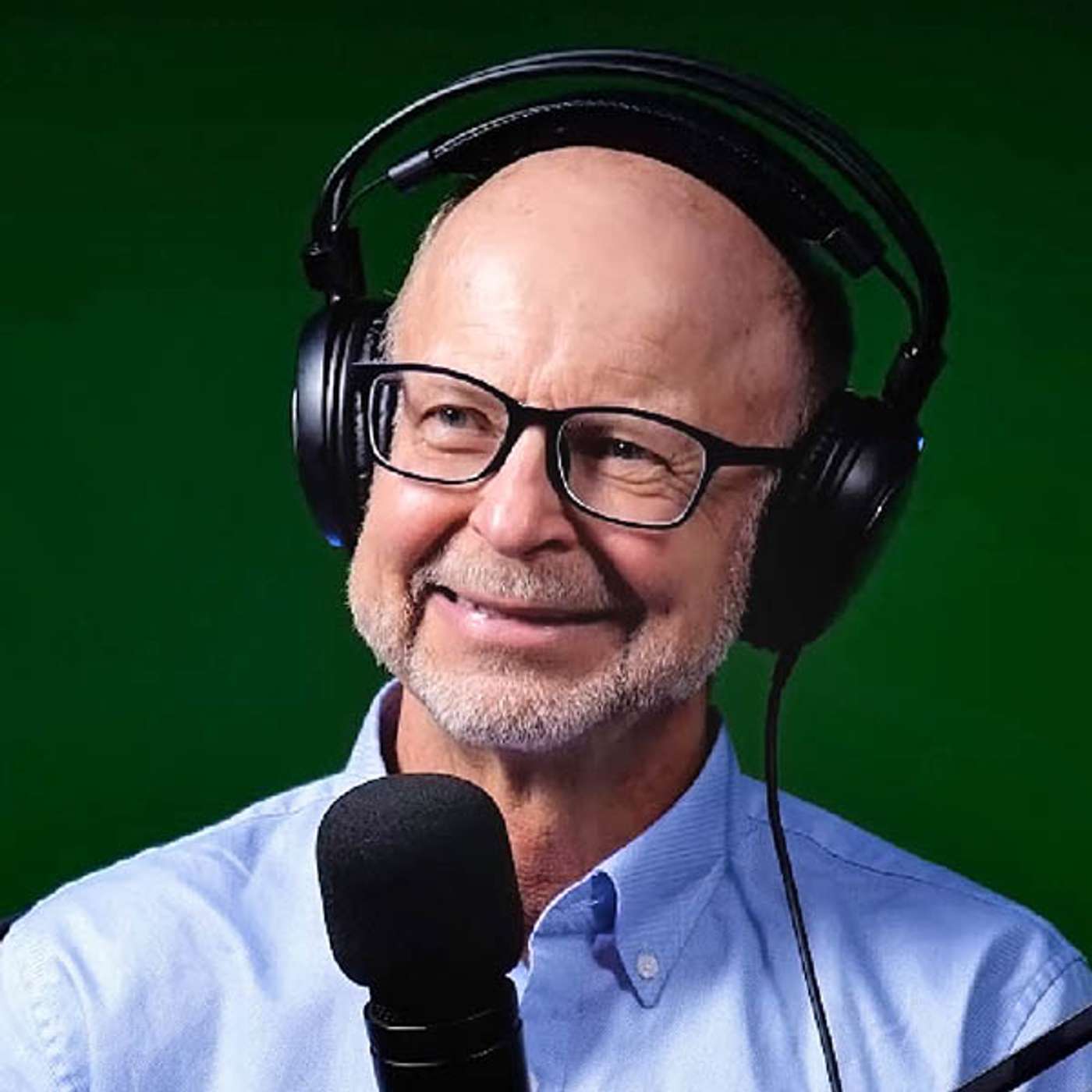
Taking Control Of Your Diabetes® - The Podcast!
Diabetes Cure with AAV Gene Therapy? Let's talk with Dr. Fraser Wright
00:34:41
Loading summary
Transcript84 lines
- [00:00]
A
Foreign.
- [00:24]
B
Hello and welcome to this edition of the Taking control of your diabetes podcast. I am one of your hosts, Dr. Jeremy Pettis, joined as always by my good friend and colleague, Steve Edelman. Now, if you're just tuning in, Steve and I are both endocrinologists. We both see patients with diabetes, have done research on diabetes. We Both have type 1 diabetes since we were 15. Steve just got it about 20 years before me. And also work for Taking control of your diabetes, the not for profit that Steve founded 30 years ago. We're gonna have our 30th anniversary party, or what are we calling it? Fundraiser.
- [00:58]
A
Yes.
- [00:59]
B
To celebrate that.
- [01:00]
C
October 10th.
- [01:01]
B
So this episode we have a very kind of unique topic which is on gene therapy and how it pertains to diabetes. So Steve and I are gonna kind of set this up, but I kinda wanted to lead with kind of the punchline of this is that we're gonna go through what is gene therapy, what kind of diseases are we using it in? But we're gonna get to a place that this is here and now for diabetes and ultimately to informing everybody how we can use gene therapy to potentially kind of deliver insulin to people with diabetes, to have their own bodies make insulin with kind of like a one time therapy. So stay tuned because that's where we're going to end up. And by the end of this, you're going to be experts on this topic because Steve and I were talking about that this is one of those kind of rare topics that in the diabetes world nobody knows anything about, providers and patients included. When I was telling you about gene therapy a month ago, you kept calling it eye with cells and things like that. So I've had to educate Steve a lot. So, Steve, like, what's your background on this topic?
- [02:08]
C
Well, my background is knowing you and hearing you speak about it and looking up the company online. But I just want to add that, you know, we hear a lot about how to prevent type one in people that have positive autoantibodies, or what to do in the first hundred days after diagnosis when there's still some viable beta cells. But this doesn't matter. You could have diabetes a hundred years and this therapy will still work for you.
- [02:32]
B
And that's exciting, that's nice because finally it's maybe something for you and me because people kind of forget about us. All right, so this is literally the thing I'm the most excited about, to be honest, especially in type 1 diabetes, but kind of in diabetes in general. So without further ado, we have a very special guest Joining, who is like a true, true expert on this topic, has done a lot in the gene therapy space. So we have Dr. Fraser Wright. So Fraser, say hi and introduce yourself.
- [02:58]
A
Well, hello. Thank you, Jeremy. Steve. It's a real pleasure to be here. I'm Fraser Wright, a gene therapist, career gene therapist. I've been working in the field for over 30 years. I am a co founder and the chief gene therapy officer at Crea Therapeutics for disclosure and of course we're very interested in type 1 diabetes and other prevalent diseases. PhD biochemistry, immunology by original training, I got into the gene therapy space in the early 90s, the previous millennium. So I've been working in this for quite a long time and I've been involved actually with many gene therapy programs, especially using aav. We're gonna talk a little bit about Adeno associated virus vectors today. But also using the other major vector type, which is they're called lentiviruses. It's a different type that's used for other types of gene therapies as well. And I guess maybe a highlight, a relevant highlight is that I've had both an academic and industry background. I've had faculty positions at University of Pennsylvania as well as at Stanford. And I was also in addition to co founding crea, I was a co founder at Spark Therapeutics, which brought forward the first gene therapy for genetic disease that was licensed by the FDA and is distributed actually worldwide. Now for a form of blindness, not of course, a prevalent disease.
- [04:26]
C
Well, us diabetics, we're familiar with that word blindness. You know, before you got here, Jeremy, I got to know Frazier and Frasier plays the guitar and he also does bouldering. You know what that is?
- [04:39]
B
That's when you pick up boulders and throw them at your enemies.
- [04:42]
C
So I want to know, when you're bouldering, what kind of jeans do you wear?
- [04:48]
A
I don't wear jeans.
- [04:49]
C
Okay. Levi's, Jordache.
- [04:52]
B
Lucky he doesn't. Naked, he said.
- [04:54]
A
All right, sometimes topless. But anyway.
- [04:58]
B
So you know, normally when we do our podcast, it's like, I don't know, the latest cg and we can jump right into it here. We gotta start from the beginning. Totally. So if you say gene therapy to people, their minds probably go every which way, every direction. What is gene therapy? It's kind of its simplest form.
- [05:15]
A
Yeah, great. Well, just to go right back, I think many of us are familiar with protein therapeutics or polypeptide therapeutics, like insulin and monoclonal antibodies, which are made in factories, in cells, and then purified and administered or prepared and administered as products. The concept with gene therapy is to go right back to the genetic, the gene, the DNA gene from which those proteins are derived and to put that gene actually into an individual. We do in vivo gene therapy, put it directly into a person, or you can do something called ex vivo, which is different. I won't go into the details, but the big thing about this is that once you put a piece of DNA into an individual, and this is now validated with seven approved products using AAV in the United States to date, you have long term expression. So we call it one and done. Sometimes you put the gene in target specific areas of the body cells, wherever it might be most relevant, and then have continuous expression of that DNA or that gene leading to the therapeutic protein being expressed on an ongoing basis. Of course, there's a lot of work to get the dose right and all that type of thing.
- [06:33]
B
All right, so I think people understand that we're delivering a gene that maybe the patient is deficient in to make some protein like insulin. Yep. How do you do that? And you know, I know you need a virus. So again, that's confusing to people. Is this virus a good thing, a bad thing? And how does that deliver these genes?
- [06:50]
C
Yeah, the word virus kind of scary for most people.
- [06:53]
A
Absolutely. Yeah, absolutely. And the question is exactly why do we need to use a virus? So it's really, it's a virus derived vector. So in fact we don't use wild type viruses. We engineer them extensively so that they become what are called vectors. And a vector is kind of a delivery vehicle.
- [07:10]
B
And so it's not, say it's not infectious. This isn't something that's like people getting the flu or this is something that.
- [07:16]
C
We'Re not like venereal disease or anything.
- [07:18]
A
No, no, no, nothing. And even if I could focus on, especially on aav, adeno associated virus, I mean we've heard adenovirus, this is not adenovirus, it's adeno associated. It's a very rather harmless virus that's very common in the human population. Matter of fact, if you go to daycare centers, I think aav, wild type AAV gets spread around to everybody and it's not associated with any type of disease, outcome or sickness or so. But that's only the, that's the starting point. And we actually take the guts, the DNA, the wild type or the natural DNA out of the AAV through molecular biology techniques, you know, tools that have been developed over the last 50 years. Really, molecular biology tools and we put in the gene that we want to express. So that's it's a viral vector expressing something that's going to be beneficial to a person to receive it. And right. It is non replicating, it doesn't spread, it doesn't amplify anything like that. It's very inert. And I think the key reason that we use a virus is because of efficiency. If you just put a piece of DNA, if you inject it by whatever means into a body, it'll degrade very quickly. It's hard to get it where it needs to be. Viruses have evolved over the eons, I'm not sure what the right term is, for millions of years, but many, many a long time to be very efficient, to do this very thing for their own life cycle. So we're kind of built, borrowing that life cycle efficiency of these naturally evolved viruses, picking a relatively harmless virus even at the wild type, engineering it so it's harmless and that it also expresses something therapeutic and using that efficiency, that inherent efficiency of delivery of the DNA that is part of the phenotype of the virus, the nature of the virus.
- [09:14]
B
It's definitely really helpful that you know exactly that we're benefiting from mother nature kind of like creating this over millions of years. And that's what a virus does. It has to get into the cells, it has to use our bodies to kind of replicate and things like that. And here instead of saying we want the virus to replicate, we're saying we want the specific thing inside of there, an insulin gene or whatever to replicate. So what does that look like? So you said that you have helped develop some of these gene therapy products. What isn't like, is there one shining example of like a successful gene therapy that exists right now?
- [09:49]
C
That's what I was going to ask too. That way we can relate what's going on with diabetes.
- [09:54]
A
Well, that's a great question. And you know, first of all, I'll put it in the context that the idea of doing this viral mediated, viral vector mediated gene therapy came up in the early 70s, so a long time ago, you know, and this is when we started to understand the nature of the sequence of DNA and that we have molecular biology tools, you know, tools to cut and modify DNA and things like that. Then in the intervening time there have probably been many, many different programs using viral vectors and most recently using aav. Go forward. I have to say, and I'm so pleased to say that to date now to 2025, there are seven approved products gene therapies using AAV that have been approved by the FDA in the US and generally worldwide, in the EU and in many different areas of. So this is really exciting. And just to put a real context on this, to get that type of an approval follows a long process of basic research design, making these vectors, doing animal safety and efficacy studies, an abundance of these things, moving into early phase clinical studies and then advancing based on data that's coming into late phase clinical studies, eventually preparing a, you know, a package that would go into the FDA regulatory authority for approval or not. So it really represents a milestone that we have seven. I can say that I've been involved quite intimately with two of those seven. So that's one for a form of blindness. It's a single gene defect leading to a form of blindness quite rare. And also for hemophilia. B. Working with colleagues at Children's Hospital of Philadelphia, Catherine Ahai and her group there, hemophilia, and then, and then Jean Bennett and, and, and Kathy and others, you know, also for the lecterna, which is the form of blindness, we were able to get licensure on these two. And I'll talk a little bit about.
- [12:00]
B
Yeah, maybe walk us through. You know, I think everybody understands blindness, like you said. So, you know, somebody like, is this therapy restoring sight? Like, how does this work? Is this in, you know, and how is this administered? And kind of like, yep, let's say you have a patient in front of you. What's their journey like with this therapy?
- [12:17]
C
Is it childhood disease?
- [12:18]
A
It is, it's a childhood disease. Now. It is progressive. So, you know, typically visual function, there's some level of visual function, although there's quite a bit of variability in the severity of the disease. It's called RPE65. This is the gene name phenotypically or I should say the original. One of the older names for it was Leber congenital amaurosis type 2. So these are some of the names, you know, the complexities of naming diseases, of course. So typically is a parent early, you know, early in childhood in toddlers because of visual. Apparent visual deficits and as progressively progresses and becomes worse over the course, typically leading to blindness. I'm not quite sure what the, you know, legal blindness, probably in the teens and then, you know, progressive degradation. So really the administration of this virus is really quite simple. It's very localized. It's called a subretinal injection. And you know, I'm not a surgeon and of course one might be a little bit queasy, but the idea of putting a needle under anesthesia, just under the retina in the eye. And this is done in both eyes, not at the same sitting. But this again is like.
- [13:33]
B
Unfortunately it's something that people with diabetes are exposed to. So a lot of the therapists are written off. And Steve actually we did a video of him getting an injection into his eye.
- [13:42]
A
Okay.
- [13:43]
B
You always say it's kind of odd, but it's not really painful. I mean like you've had some corneal abrasions afterwards and things like that.
- [13:51]
C
Well, that was unusual, but it sounds like some type of torture. Someone's put the needle in your eye, but it really is relatively painless. And if it's gonna save your vision, go for it. It's not under the retina, but it's for retinopathy. They inject these medications into the, in your eyeball and then it's supposed to help with that.
- [14:12]
B
So in this case they get the local injection. And I guess the earlier you catch it, the better.
- [14:17]
A
Yes, it's better to catch it earlier because. So the virus or the vector, I should say the vector expressing RPE65, forgive me for the gene name, but that's what it is because that's the gene that is missing in these patients that's defective or missing. Then after the administration of the vector, the gene stabilizes within the cells that have been exposed to the vectors and that's in a critical area in the retina. And within some weeks, it's probably two to four weeks, it starts to express and you have this therapeutic protein, the RPE65, the missing protein, the correct version of it, starts to express. And this is a one and done procedure. And I think that we're up to 10 years plus. I mean, I have to look.
- [15:10]
B
That's worth pausing and kind of describing that. When we say one and done, it means a one time injection of the vector each eye.
- [15:18]
A
So one and one eye and then it could be a week later.
- [15:20]
B
But this is very different than taking insulin shots every couple hours or whatever. Therapy we're very happy to have once a month therapies or whatever here is potentially lifelong. And in the case of the eye, I know this is nuanced, you don't need immunosuppression or any other kind of long term therapy. So really quite miraculous kind of opportunity here. And it sounds like it's been effective.
- [15:45]
A
It has been. And there have been multiple publications in journals like New England Journal of Medicine and here and there, I mean in prestigious journals and I think long term follow up by the companies Sparc and Novartis is sublicensed out into the, into the European market. This particular product and long term follow up I think is going as long as we have experience in humans. So far since, you know, the early controlled studies were done, the pivotal studies coming up on 10 years showing continuous ongoing benefit, which is, it is remarkable. And I always like to think again, I'm a biochemist by training and I can sort of, I'm into you know, the microgram amounts of astronomy material that are going into the eye. It's very, very small. It's 1 to 10 micrograms of the DNA that we're talking about having such a profound impact, a life changing impact. And I could maybe I'll just make a comment about what type of comments that came up in some of the subjects, clinical trial subjects who are patients, of course, the concept attending the advisory committee meeting for our application to, for approval from the fda. Some of the stories from patients coming forward that one of the young women who received it had sort of, I believe, given up. She conveyed that she had given up on the idea of moving past high school with the support, I think the visual support, and given up on the idea of going to college. I think she was a very bright young woman, but this changed it for her and she was able to move forward to college. I think she got an engineering degree. I don't know specifically, but it was really a heart touching story. I mean some of the stories that we're hearing were bringing even tears to our eyes as we were sitting up at the front. So, you know, really rather definitive high impact effects in these diseases that are affecting, you know, individuals.
- [17:46]
B
So, you know, I'm thinking when I first met you maybe two years ago and I kind of heard the first gene therapy for the first time. This is the world I put it in, like these kind of ultra rare diseases and it was helping these people, which is fantastic. But it was couldn't be farther away from diabetes in my mind. So what has happened that now we're going to be talking about diabetes? Why can we start using this in more common diseases?
- [18:11]
A
Right, well, that's a great question.
- [18:14]
C
Well, I was just going to say that when you look at the eye condition that you're talking about, it sounds like the earlier you intervene the better. And maybe if someone's totally blind it may not help them that much. That's so different in diabetes because we don't have any insulin and you can replace that at any time with this type of gene therapy, which I can see why it's so exciting. And how you can affect so many people.
- [18:37]
A
Yeah, the one and done nature and I think also the potential for superior control, you know, more real time control perhaps. Yeah.
- [18:45]
B
Can he answer my question now? Oh, Steve always likes to add a question to my question which has nothing to do with.
- [18:52]
C
I was trying to get a word.
- [18:53]
B
An edge was, well, so, yeah, so why, why common disease? How did we get here?
- [18:59]
A
Well, you know, I'll go back to this first concept of gene therapy and it's maybe part of the reason for the name for gene therapy is people were thinking of genetic diseases and more particular monogenic diseases. That means that diseases where a single gene defect or deficiency caused a well defined disease and you can think of hemophilia, you can think of Duchenne's muscular dystrophy, you can think of these rare eye diseases. It's the most obvious case for gene therapy.
- [19:26]
B
One gene. And here we come with the gene.
- [19:28]
A
Replace it, get it in the right spot and replace it. So in a sense it was kind of the low hanging fruit, I think of the general strategic approach. But I think we've got, you know, Jeremy, I think we're at the point now where we have seven approved products. We've looked at actually there have been hundreds of programs over the last 30 years, to be honest. And we've been doing a lot of learning and this has sort of got to the point we're still learning, of course we're still learning, there's still challenges to overcome but we've gotten to the point where we're getting successful, real medicines approved. And I think that really does validate the strategy. It validates the fact that you can have long term expression, multi year, decade, now approaching decade plus expression in humans. Because you know, you can say we've got animal data and it looks good and looks promising, but you know, a year in a mouse, you can't really translate that into what's going to happen in humans directly, directly. So I think the time now has come to take this validated therapeutic modality. It's a paradigm, it's almost a new paradigm. Like if I could, you know, just put it this way, like the recombinant protein therapeutic paradigm that has been so successful with many, many different products. I think we're emerging here with the gene therapy approach and you know, if we understand the mechanisms and you know, insulin, type 1 diabetes, we understand the mechanism, we know what's missing here. If we have a strong mechanistic approach and we have the supporting data of Course, you know, in animal models, which is critical, then it just makes sense to move forward into prevalent diseases.
- [21:05]
C
Maybe we should talk about more specifically type one now.
- [21:10]
B
Yeah, let me start with my overview, because when I again first learned about this, like you said, a lot of this has been published in animals. Now moving to humans, hopefully to start or to be engaged in clinical trials in 2026. So using this idea, we all know that people with type 1 diabetes don't make insulin. Like you said, it's not a gene target, but we need to that protein, insulin. So they took mouse models or rodent models, made them essentially type 1 diabetic not producing insulin, and were able to deliver this therapy. And the difference here with this approach is that there are plenty to do it kind of in the muscle tissue. And the good thing about insulin is that you can release it pretty much from anywhere. I mean, you probably wouldn't want to put it in the eye in this case, but there's a lot of other places you could have tissue secrete insulin, but the muscle is very accessible. I'm doing kind of mimicking these injections that you would do to actually put it in your leg, let's say. But they've had really good data in terms of, you know, I don't know if it's curing because the disease, I suppose is still present with type 1 diabetes. But you know, these animals not needing insulin, normalizing blood sugars, then they moved on to dogs with multiple years of not needing insulin. Took these dogs that became type 1 diabetic, they were essentially in DKA, like looked really unhealthy, robust. There are these great videos of putting them on treadmills and things like that and them doing well. And now some actually primate studies again showing efficacy. So this has been tested in as many animals as honestly you can test to show that this works. And so now here we are on the cusp of let's do this in people with type 1 diabetes. Broad strokes, it would be people like Steve and I, you know, don't make any insulin, doing this one time procedure to get this vector into the muscle, to have the muscle start acting kind of like a pancreas, but secreting insulin. And the hope is that it would at least reduce the amount of insulin you would have to take. And ultimately the ultimate, ultimate goal would be to not need any insulin at all. But what a cool concept with this one and done phrase that you're using without the need for kind of long term immunosuppression. And when we talk about curing type 1 diabetes. That's always what it's been about. We to need, we need islet cells, we need these other cells, we need immunosuppression. This has nothing to do with islets. It's just putting the gene and the protein in a completely novel place. So did I summarize the data well enough?
- [23:44]
A
That's a great summary, Jeremy. And I would like to just call out Fatima Bosch, who had developed this program some years ago and she had published the dog data. So this concept's been out there. She's an academic working and she's based in Spain, in Barcelo. And so I think it's. So this is. It's really been through a number of different animal models. We've, you know, we've recapitulated many of the animal models as well. That seems to be a very robust outcome in, you know, at least three, three to four, actually more, because there's subtypes of the mouse studies as well that are done. Some of them have certain features that help us understand even better. So, yeah, we're excited. We're excited. And that was a great summary, Jeremy. Yes.
- [24:32]
C
Yeah, thank you. You know, this is the first thing that comes to my mind. It's going to be able to secrete insulin, something that we're missing. And how do you make sure you don't secrete too much or too little insulin? And I know a little bit of that answer, but it sounds complicated the first time I heard it. So that would be one question I think a lot of people would have.
- [24:57]
A
Sure. And I think that's right, because we all know, of course, that insulin is a very pot, you know, molecule, and of course it's tightly regulated in us. So that's part of. Without going into the details too much. In fact, this approach that has been demonstrated and the approach that we're moving forward with doesn't. It's not just simply a delivery of, for example, insulin. It may involve insulin and involves other enzymes that have a sensor function that can turn on or off off the reduction of glucose conversion into glycogen and things like that through phosphorylation. But it is a great point. And I would emphasize that the amounts of insulin expression that we can achieve locally, that might be required locally is very, very low. And really, in terms of systemic insulation, would be considered very low. But nevertheless, because of the local effect, would have a good impact on kind of a strong glucose conversion machine to bring postprandial glucose down without going into a hypoglycemia state.
- [26:09]
C
Yeah, that sounds like some glucose sensing going on there.
- [26:12]
A
Yeah, there's glucose sensing. Yeah.
- [26:14]
B
Different, you know, versions of this. You know, maybe insulin and another gene, glucokinase, to help with, like, kind of, you know, regulating glucose. But that is. That is kind of the question. How do you get the dose? Right. And that's where it might be. Well, well, you know, we could shoot for the moon and try to get everybody off of insulin. Or you come in kind of a lower dose that everybody needs and help regulate glucose and less fluctuations, less boluses. You know, I think about this as essentially eliminating dka. You know, if you could kind of guarantee that, you know, somebody always had some amount of insulin on board, that's a big deal. So I do think this is, you know, like, a really exciting technology. And then the other point I wanted to make is, is, yes, what if you do overdose? This is one of the first thoughts I had. Are you just going to be hypoglycemic all the time? And there are ways to kind of turn the genes off, essentially, that you might have to do a local kind of injection in that area with some kind of substance to essentially damage the muscle tissue. But since it's such a small area that you're putting the genes into, it's not like you need to rip out a bunch of muscle tissue, but you can turn it off. And that's important.
- [27:23]
A
Yeah, we've developed technology to be able to reverse out the, you know, what's called transduction. This is the cells, the conversion of cells. And I think it's a good point to emphasize, too, there that in fact, the number of cells that are converted as a fraction of your total, let's say, muscle cells, is really quite small. So this is kind of a small machine in some regard, a biological type of sensor and glucose reduction pump, if I could put it that way. It's not quite the right word, but it's quite a localized effect that, yes, there are approaches that can be used to reverse out.
- [28:05]
C
Well, Jeremy, you told me that they're going to put markers on where they inject the gene, then you can go back in.
- [28:12]
B
And like you said, no matter how this is delivered, you're going to want to know where it is. So there's different ways that you could kind of think about how to do that. And I was going to say the other question that comes up a lot is, okay, this is in my muscle. What if I exercise? If it's in my legs, what happens if I Go for a run or I bike, or is that going to make it secrete more insulin on one side, or is it going to damage the muscle tissue and kind of like turn things off? And obviously this needs to be studied, but that's the main reason why they put these dogs on the treadmill and would run them and make sure that their blood sugars stayed normal. And they did. So early signs show that hopefully, hopefully you can still be able to do, like, the normal things that you do and, you know, not damage the muscle to kind of ruin your therapy, so to speak.
- [28:56]
C
Well, I'd be worried when you and I play Twister and sometimes we get in a wrestling match. I don't want to mess up my gene therapy.
- [29:04]
A
Well, I do have to say that I saw some of your music videos and, boy, that's a lot of exercises I saw.
- [29:11]
B
We're moving and shaking.
- [29:12]
C
Yeah.
- [29:13]
B
But, you know, I think so again, I think we're taking people through a lot here, but leaving them with that. This initial study will be going on in 2026, and a lot of times when we talk about things, it's kind of this, like, well, maybe one day, you know, Steve and I always make the joke of, like, you know, when you were diagnosed, Steve, how long did they tell each other be a cure?
- [29:33]
C
Yeah, 15 years.
- [29:34]
B
Yeah, me, 15 years. And you tell somebody now, you know, 15 years. This is actually happening essentially now, you know, like, really underway. It obviously takes years to go through the whole clinical trial process to get approval. But, you know, if every. Let's say everything went well, you're looking at sometime before 2030, which, you know, for somebody living with type 1 diabetes, that's, that's, that's here. We've been promised so much, you know, for so long. And I'm not saying we're not promising this, but this is like the speed that it could potentially happen.
- [30:06]
A
Right, that's fair. That's fair. And we have now experience developing, you know, gene therapies based on aav. So, you know, that's a reasonable estimate. Again, we can't promise any specific dates. It really is pending the clinical trial performance, going through three levels of clinical trials and negotiations with the regulatory authorities, of course. But, you know, I would say it's on the horizon in a reasonable time. Horizon. Absolutely.
- [30:33]
C
And has been proven in seven other diseases.
- [30:36]
A
Exactly.
- [30:36]
C
So it's not like a first one ever.
- [30:38]
A
Yeah.
- [30:39]
B
And, you know, I just love this because Steve and I, you know, we have so many meetings about what should we talk about, you know, and there's kind of the usual prongs, you know, there's the technology updates, super important. All these other things are very important. You know, new medications, you know, lifestyle interventions, diet, exercise, and then maybe some of these curative things which have usually been islet cell transplants, et cetera. Here's something that people probably didn't even know about a whole nother other potential column of areas of research. And this mechanism can be used for many different things. So if you have type 2 diabetes, there could be other hormones that are used. Maybe it's insulin, maybe it's insulin with something else. So this is just gonna be like, become a new modality. Just like you can take a pill, you can take a once a week shot, or you can get your gene therapy. I think it's not that distant of a future that we could be there with these metabolic diseases.
- [31:31]
C
This might be the first, first patient program explaining this gene therapy that I've ever heard of. And I think you need to give me, Frazier, a PhD in gene therapy after listening to all this technology for the last 30 minutes, M.D. phD. Sounds good?
- [31:48]
A
Yeah, no, it sounds great. Well, I think also maybe I'd emphasize too, I think it's nice to think of the complementarity of the approaches that we have, you know, the technology that we have available too. I think as a first approximation this comes could substantially progress, control and meet unmet needs and maybe compliance issues and things like that in T1D. Maybe down the road we could talk about even a more substantial thing.
- [32:13]
B
I think you're right. And these things work together. Maybe you get to a point where you get your gene therapy and you're on a pump, but you don't need Ebolas or something like that. It modulates it. So there's all kinds of just the beginning areas of success. Obviously we want to always keep our eye on the prize of not needing insulin, things like that. But we got a lot of ways in between that could be kind of a win. So we'll see. So my thought is just leaving people with hopefully some hope to be excited about it. So Frazier mentioned in the beginning that he works for Crea Therapeutics. You can always Google it. Look up their website, see exactly what they got going on. Spell that so they K R I Y A. Right.
- [32:52]
A
Kriya. Yes, it's a Sanskrit word that means energy. My fellow co founder, Shankar Ramaswamy, I think his wife suggested that this might be a good name. Shankar, forgive me, I think I've got that right. But it's Kriya Therapeutics. Kriya Therapeutics, exactly.
- [33:10]
B
And then any closing comments or thoughts you have?
- [33:14]
C
No. Well, thank you. I would say thank you for all the work you've done in this field. You're a pioneer. To bring back someone's vision is incredible for a small number of people, but to bring back insulin for millions of people, that's a big deal. And thank you for that.
- [33:31]
A
Well, thank you, Steve. I appreciate that. And I must say I've been very lucky in my career. I followed my nose in many regards. I like science and I'm a career scientist. That's my passion. I just do have to acknowledge the many great individuals who have really advanced gene therapy to date as well. On the medical side, on the basic science side, on the vector design, manufacturing, manufacturing and characterization. There's so many strands that lead into this. So I've, I've played a part. I appreciate it. I've been lucky to have been involved too, because it's such a puffy.
- [34:04]
B
You are humble. We're very lucky to have you. How many people are there that have launched a gene therapy? Not many. And we got one of them here with us today. So really appreciate it. Hope you guys enjoyed listening to this. Honestly, you know, one of the podcasts I think I've learned the most, you know, continue to learn about this area. Hope you guys found this enjoyable. Please be sure to like subscribe, follow, share these things. Your comments are all actually very meaningful.
- [34:27]
C
We will answer them too.
- [34:29]
B
So take care and we will see or you will hear us on the next one. Bye Bye.