Podcast
Talks On Psychoanalysis
Hosted by International Psychoanalytical Association · EN
Talks On Psychoanalysis shares topics published in the IPA Society Journals and Congress debates worldwide, brought to you in the voices of the original authors.
This podcast is produced by International Psychoanalytical Association
28episodes
Episodes
Newest firstAll episodes
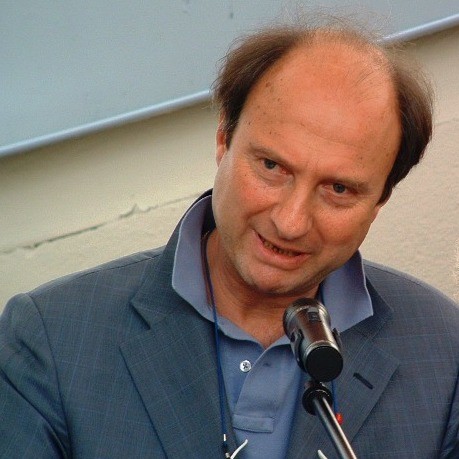
Bernard Golse - A plea for a third topicality.
Oct 12, 202300:31:41Tap to summarizeA plea for a third topicality. An intrapsychic representation of the intersubjective bond, even before the discovery of the object. Can psychoanalysis be useful with infants? How can we think through concepts of metapsychology with infants? The two Freudian topics are in reference to the instances which are fruit of the completed intrapsychic differentiation process. How can they be useful with infants, who by nature are still undifferentiated and unfinished? In this episode Bernard Golse presents us with his arguments for a third topical approach. Drawing on his extensive experience of parent-infant therapy, he proposes a metapsychology of the primitive pre-object bond, a perinatal topic of mental representation of the intersubjective bond prior to differentiation of instances and object discovery. Bernard Golse is a child psychiatrist and psychoanalyst (member of the Association Psychanalytiquede France) and Professor Emeritus of Child and Adolescent Psychiatry at the Université Paris Cité. For many years he was head of the Child Psychiatry Department at the Necker-Enfants MaladesHospital in Paris. Among other associative activities, he is presently chair of the European Association of Child and Adolescent Psychopathology and he recently founded the Institut Contemporain de l'Enfance to promote psychological care and support for infants, children, and adolescents, with reference to psychoanalysis, psychopathology and pedagogy with links to the world of arts and culture because of the dialectic that exists between therapeutic creativity and artistic creativity. The three areas in which he has been most involved are early infant development, autism spectrum disorders and adoption issues. He is therefore particularly focused on the question of links. A subtitled version of this podcast is available on our YouTube channel: https://youtube.com/playlist?list=PLhxiwE76e0QaOquX3GujdwNLFsgxUQNXz&si=yf381EDu3pess6Yz This episode has been produced in collaboration with Julia-Flore Alibert. This Podcast Series, published by the International Psychoanalytical Association, is part of the activities of the IPA Communication Committee and is produced by the IPA Podcast Editorial Team. Head of the Podcast Editorial Team: Gaetano Pellegrini. Editing and Post-Production: Massimiliano Guerrieri. You can download the written text of this paper from this link: https://docs.google.com/document/d/12dvhD8riz2DSwqYN7a8qOmbIQYndYUyF/edit?usp=drive_link&ouid=112457875385152358388&rtpof=true&sd=true This episode is available also in French Recommended Links and Readings: S. Missonnier and B. Golse, The third topography: a topography of the bond, 89-114. In : Autistic phenomena and unrepresented states – Explorations in the emergence of Self (edited by H.B. LEVINE and J.SANTAMARIA). Phenix Publishing House Ltd, “Firing the mind”, A.Santamaria Picoanálisis México, Oxfordshire, 2023
Transcribe →
Vera Lamanno Adamo - The Psychoanalyst, The Filmmaker And The Art Of Sculpting Time.
Oct 5, 2021Tap to summarizeHow deep and historically grounded is the intertwining of cinema and psychoanalysis? In this episode, we'll listen to Vera Lamanno Adamo on the crafts of filmmaking and psychoanalysis as the art of sculpting time. She weaves correlations between the construction of a film and the analytic process, and draws a parallel between the history of cinema and the history of psychoanalysis. This episode refers to an article published in Calibán, Latin American Journal of Psychoanalysis, vl.18, n.2, 2020. Vera Lamanno Adamo is a training and supervising analyst of the Brazilian Psychoanalytic Societies of São Paulo and Campinas. She has published seven books. Her latest are “Work of the Negative”, “Living on the border: psychoanalysis and art”, “In Corners of Life Death Charms” (in Portuguese), and “Teresa Margarida: the audacity of a woman in the 18th century” (in Portuguese). In 2012, she received the Psychoanalysis and Freedom award from the Psychoanalytic Federation of Latin America for her contribution to the theoretical and clinical development of psychoanalysis, and in 2013 she received the Revista Brasileira de Psicanálise award. This episode is available also in Portuguese
Transcribe →
José Alberto Zusman: Between the Axes of Dependency and Addiction.
Mar 28, 2021Tap to summarizeThe present paper suggests the existence of two axes of human development: the axis of dependence, associated with human connectedness and the axis of addiction, associated with using inanimate objects to fulfill one’s needs. A crucial role of the analyst who treats people with addictions is to promote movement towards the axis of dependence. Jose Alberto Zusman, M.D, is Chair of the IPA Subcommittee on Addiction; Post- Doctor on Addiction mentored by Edward Khantzian (Harvard); Full Member and Professor at the Psychoanalitic Society of Rio de Janeiro (SPRJ); PhD on Psychoanalysis mentored by Eustachio Portella Nunus (Federal University of Rio de Janeiro (UFRJ); Professor and Supervisor of Psychoanalysis at the Psychiatric Residency programme at the Institute of Psychiatry (UFRJ). This episode is available also in Portuguese
Transcribe →
Michael Parsons - Psychoanalysis and Art.
Mar 13, 2021Summary readyMichael Parsons is a Training Analyst of the British Psychoanalytical Society and a member of the French Psychoanalytic Association. After a degree in classical literature, ancient history and philosophy, he became a doctor and specialised in psychiatry. He trained as an analyst at the Institute of Psychoanalysis in London, and worked for thirty years in full-time private analytic practice. He has a particular interest in connections between psychoanalysis and other fields such as art, literature and religion. He is the author of two books: The Dove that Returns, The Dove that Vanishes: Paradox and Creativity in Psychoanalysis (Routledge, 2000) and Living Psychoanalysis: From Theory to Experience (Routledge, 2014). He is also co-editor of the collected papers of Enid Balint under the title Before I was I: Psychoanalysis and the Imagination. (Free Association, 1993). His podcast is about the relation between psychoanalysis and the visual arts, literature and music. It draws on his two books, quoting passages from them, and develops some further ideas relating to this theme. Link to the paper https://drive.google.com/file/d/1Mxt6vyNXnHtk2gyWd694f_8w9mr1R9g1/view?usp=sharing
Summary
Antonio Pérez-Sánchez - "Misunderstandings in Bion’s Work: Intuition"
Jul 13, 2020Tap to summarizeIn this podcast for “Talks on Psychoanalysis” Antonio Pérez-Sánchez presents his paper MISUNDERSTANDINGS IN BION'S WORK: INTUITION where he explores misconceptions around intuition and how these dramatically impact the making of meaning, in the patient-analyst relationship. Antonio Pérez-Sánchez is a psychiatrist, training and supervising analyst, and past president of the Spanish Psychoanalytical Society. He has written extensively on technical issues in psychoanalysis such as envy, psychic truth, forgiveness, and time. He is the author of five books. His last two books are The Psychotic Organization of the Personality (2018) and Interview and Indicators in Psychoanalysis and Psychotherapy. He is chair of the Sponsoring Committee of the IPA for the Portuguese Study Group, Nucleo Portuguese de Psicoanalisi, and member of the European team of the IPA-Interregional Encyclopaedic Dictionary. Email to the author aps.nijar@gmail.com Last published books and papers: Interview and Indicator in Psychoanalysis and Psychotherapy (2012), Routledge Psychotic Organization of the Personality (2018), Routledge The body and the 'here and now' (2019), EPF Also published in the Italian Journal Psicanalisi (2019)Vol.23. nº 1. Link to this paper https://drive.google.com/file/d/1uN-OyYoBN24Kog1Gnpocn01Y4Tb_Mxm6/view?usp=sharing This Episode is also available in Spanish
Transcribe →
Interview with William Glover, President of the American Psychoanalytic Association
Jun 29, 2020Tap to summarizeIn this episode, Talks On Psychoanalysis hosts an interview with William Glover, President of the American Psychoanalytic Association. He will talk with Anna Christopoulos, member of the IPA website Editorial Board, just a few days after the end of the 109TH Annual APsaA Meeting. This interview will offer us the opportunity to have an in-depth view on the current social and political situation in the United States, from the perspective of the psychoanalytical frame. William C. Glover is President of the American Psychoanalytic Association and served as North American member of the IPA Board of Representatives, 2009-2011, and 2015-2019. He is Training & Supervising Analyst at the San Francisco Center for Psychoanalysis and lives and practices in Berkeley, California. Anna L. Christopoulos is a member and the General Secretary of the Hellenic Psychoanalytic Society in Athens, Greece. She is Assistant Professor of Clinical Psychology at the National and Kapodistrian University of Athens, Greece. Introduction recorded by Frank Andrade frankandrade70@gmail.com Etude Op. 25 no. 4 in A minor - 'Paganini' comes from https://musopen.org
Transcribe →
Merav Roth - “Transference In The Days Of Corona”
Jun 9, 2020Tap to summarizeMerav Roth (PhD) is a clinical psychologist and a training psychoanalyst at the Israel Psychoanalytical Society. She is a researcher of Hermeneutics and Culture, focusing on the link between psychoanalysis and literature. She is the chair of the psychotherapy program, Sackler School of Medicine at Tel-Aviv University, and the former chair of the Interdisciplinary Doctoral Program in psychoanalysis and the former founder and chair of the post graduate Melanie Klein studies. Roth published various chapters in books and papers on psychoanalysis, literature and trauma. Among her recent publications, this year her book Reading the Reader – A psychoanalytic perspective on literature - was published by Routledge, 2020. To read the entire paper. Introduction recorded by Frank Andrade. Etude Op. 25 no. 4 in A minor - 'Paganini' comes from https://musopen.org
Transcribe →
Talks On Psychoanalysis (Trailer)
May 17, 2020Tap to summarizeTranscribe →