Podcast
Tank Talks By Ripple Ventures
Hosted by Ripple Ventures · EN
Join your host, Matt Cohen, Founder & Managing Partner at Ripple Ventures for weekly conversations with leaders in the startup ecosystem discussing the truth about investing, building and running startups.
tanktalks.substack.com
tanktalks.substack.com
49episodes
Episodes
Newest firstAll episodes

How Tokenized Gold is Revolutionizing Wealth Preservation with Peter Grosskopf of Argo Digital Gold
Feb 1900:43:04Tap to summarizeWhy is gold suddenly back in the spotlight?In this episode of Tank Talks, Matt Cohen sits down with Peter Grosskopf, a seasoned veteran in the precious metals and investment management world. Peter has seen it all. He helped scale Sprott from $5 billion to over $20 billion in assets under management, and now, he’s co-founded Argo Digital Gold, a platform pioneering the tokenization of physical gold.Peter breaks down how gold is reasserting itself as the ultimate hedge against today’s inflation, debt crises, and financial uncertainties. From the global financial crisis to the latest trends in digital gold, they explore how gold remains the bedrock of wealth preservation and why even the tech-driven world is waking up to its importance. Plus, hear why Peter believes tokenization is the key to democratizing access to gold for everyday investors.Peter shares his wealth of knowledge on the role of gold in modern portfolios, how blockchain is transforming the way we interact with real assets, and why long-term patience with gold has paid off for investors. Get ready for a deep dive into gold’s resurgence and what it means for the future of investment.The Role of Gold as a Defensive Hedge (02:03)Why gold acts as a key insurance asset in uncertain times and how it has performed during global financial crises. Peter explains why gold often takes a short-term dip but then explodes as a long-term haven.Scaling Sprott to $20 Billion (03:06)Peter discusses the pivotal moment that drove the growth of Sprott, focusing on the creation of physically-backed ETFs that gained the trust of investors globally. Learn how this became a game-changer for the company’s success.Real Assets and Family Office Strategies (09:14)A discussion on how real assets like gold and silver have become crucial in the portfolios of family offices, foundations, and institutional investors. Peter explains how real assets help hedge against inflation and government-controlled currencies.Gold’s Role in Today’s Macro Environment (12:09)How gold is perceived by investors in a high-debt, inflationary world. Peter shares his thoughts on why governments are turning to gold and how this is affecting the gold market globally.Tokenization of Gold and the Future of Blockchain (25:02)Peter outlines his involvement in tokenizing physical gold and the benefits it brings to the retail and institutional markets. We explore how blockchain is disrupting traditional gold storage and trading, creating 24/7 access with lower fees.The Gold vs. Bitcoin Debate (32:29)In a world where both gold and Bitcoin are being digitized, Peter shares his thoughts on how they can complement each other and why gold remains the more stable choice for wealth preservation.Gold in the Future of Investment (35:01)What’s next for the precious metals market as governments try to navigate their debt crises and central banks keep a close eye on gold? Peter discusses the future of gold in both physical and digital forms.About Peter GrosskopfPeter Grosskopf is a renowned leader in the precious metals space, having served as the CEO of Sprott, where he played a pivotal role in scaling the firm’s assets under management from $5 billion to over $20 billion. He is also the Co-Founder of Argo Digital Gold, a platform at the forefront of tokenizing physical gold. With extensive experience in both the resource banking and asset management sectors, Peter has advised family offices and institutional clients on real asset strategies. As a director of Agnico Eagle Mines and the World Gold Council, he brings deep insight into gold’s macroeconomic role and its function as a defensive hedge in volatile times.Visit the Argo Digital Gold website: https://www.argovault.com/Connect with Matt Cohen on LinkedIn: https://ca.linkedin.com/in/matt-cohen1Visit the Ripple Ventures website: https://www.rippleventures.com/ This is a public episode. If you would like to discuss this with other subscribers or get access to bonus episodes, visit tanktalks.substack.com
Transcribe →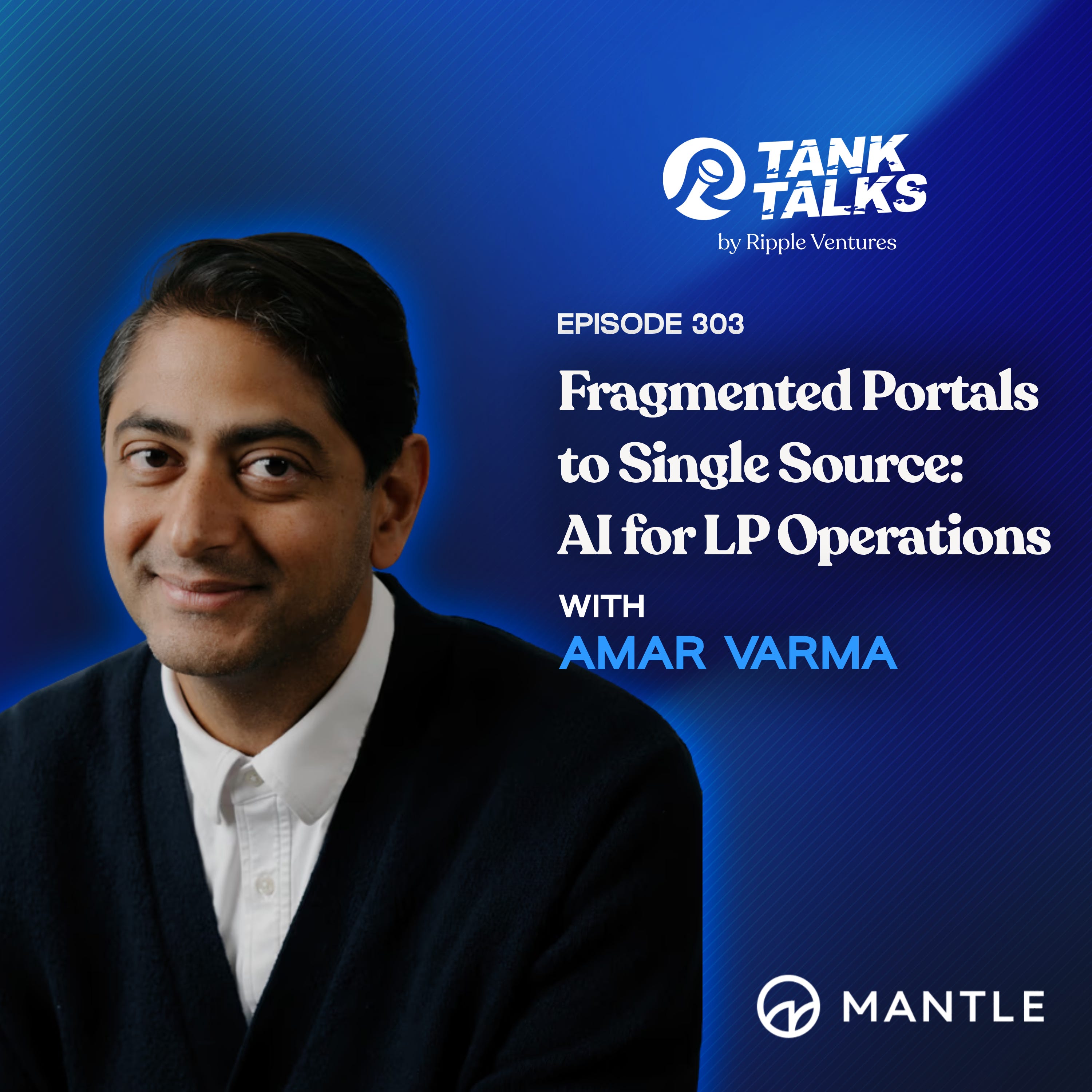
Fragmented Portals to Single Source: AI for LP Operations with Amar Varma of Mantle
Feb 1200:51:10Tap to summarizeIn this episode of Tank Talks, Matt Cohen sits down with Amar Varma, CEO and Co-Founder of Mantle, a revolutionary platform designed to transform the private investing landscape. As a serial entrepreneur with experience as both a General Partner (GP) and Limited Partner (LP), Amar offers a rare, dual perspective on the world of investment. His background spans multiple industries, including mobile, connected vehicles, and now private market infrastructure, where he is tackling one of the most persistent pain points: the fragmented, manual world of LP operations.Amar dives deep into how Mantle is positioned at the intersection of chaos and clarity, automating the heavy lifting to help investors make better decisions without drowning in documents. From global scaling and customer obsession to the parallels between today’s AI transformation and past tech waves like mobile, this conversation covers a lot of ground. Whether you’re an investor, allocator, or founder, there’s something for everyone in this episode.Amar Varma’s Early Influences and Entrepreneurial Spirit (00:02:15)Amar shares his journey from growing up in Ottawa to becoming a serial entrepreneur. He talks about his first exposure to tech industries and how a global perspective shaped his career. The experience of being raised in a government and tech hub like Ottawa gave him early access to innovation and a deep curiosity about the world.The Power of Perseverance and Growth Mindset (00:06:16)Growing up with an immigrant background, Amar reflects on the importance of perseverance and a growth mindset in overcoming struggles. His belief in the value of individual and team struggles is evident in his journey as a founder, investor, and parent.The Shift from Founder to Investor (00:13:50)Amar explains the transition from being a founder to taking a break and exploring the world of investing. His time working as an LP and angel investor gave him insights into the challenges faced by investors, especially when trying to scale operations without sufficient data or structure. This led to his founding of Mantle, which solves many of these problems.The Birth of Mantle: Revolutionizing LP Operations (00:25:40)Mantle is designed to automate and streamline the process of managing private market investments. Amar breaks down how Mantle’s software works to track investments, capital calls, K-1s, and investor reports. He discusses the challenges of managing unstructured data and how AI-powered features have allowed Mantle to offer LPs and family offices a more seamless experience.The Power Law of Venture Capital (00:15:49)In the world of venture capital, Amar talks about the concept of the power law, how a few investments end up driving the majority of returns. He also discusses the importance of knowing when something is truly working in early-stage investments and how understanding this can lead to better investment decisions.Family Offices and LP Tech Stacks (00:29:00)Amar explains how Mantle is helping family offices and LPs with managing their investments, especially when dealing with the unstructured documents that are common in private markets. He shares how Mantle is creating a single source of truth for private assets, helping LPs track their investments across multiple funds, and how AI is helping improve efficiency in this space.AI-Driven Insights and Workflows (00:32:01)AI plays a major role in Mantle’s value proposition, helping automate workflows, track financial data, and ensure accuracy across private market investments. Amar dives into the layers of AI that are stitched into Mantle’s platform to help LPs and family offices gain more insight into their portfolios.The Future of Private Market Investments (00:40:00)Amar discusses the ongoing evolution of private market investments and the role technology, particularly AI, will play in shaping the future of LP operations. He also reflects on how private market infrastructure is moving towards a more standardized and efficient process, making data more accessible and reliable.About Amar VarmaAmar Varma is the CEO and Co-Founder of Mantle, a private market infrastructure platform designed to streamline the operations of LPs and family offices. With a background spanning semiconductor design, mobile technology, connected vehicles, and AI, Amar has built multiple successful startups. As an investor and founder, he has gained invaluable insights into the challenges of scaling and managing private market investments.Connect with Amar Varma on LinkedIn: https://www.linkedin.com/in/amar-varma-8041b9/?originalSubdomain=caVisit the Mantle website: https://withmantle.com/Connect with Matt Cohen on LinkedIn: https://ca.linkedin.com/in/matt-cohen1Visit the Ripple Ventures website: https://www.rippleventures.com/ This is a public episode. If you would like to discuss this with other subscribers or get access to bonus episodes, visit tanktalks.substack.com
Transcribe →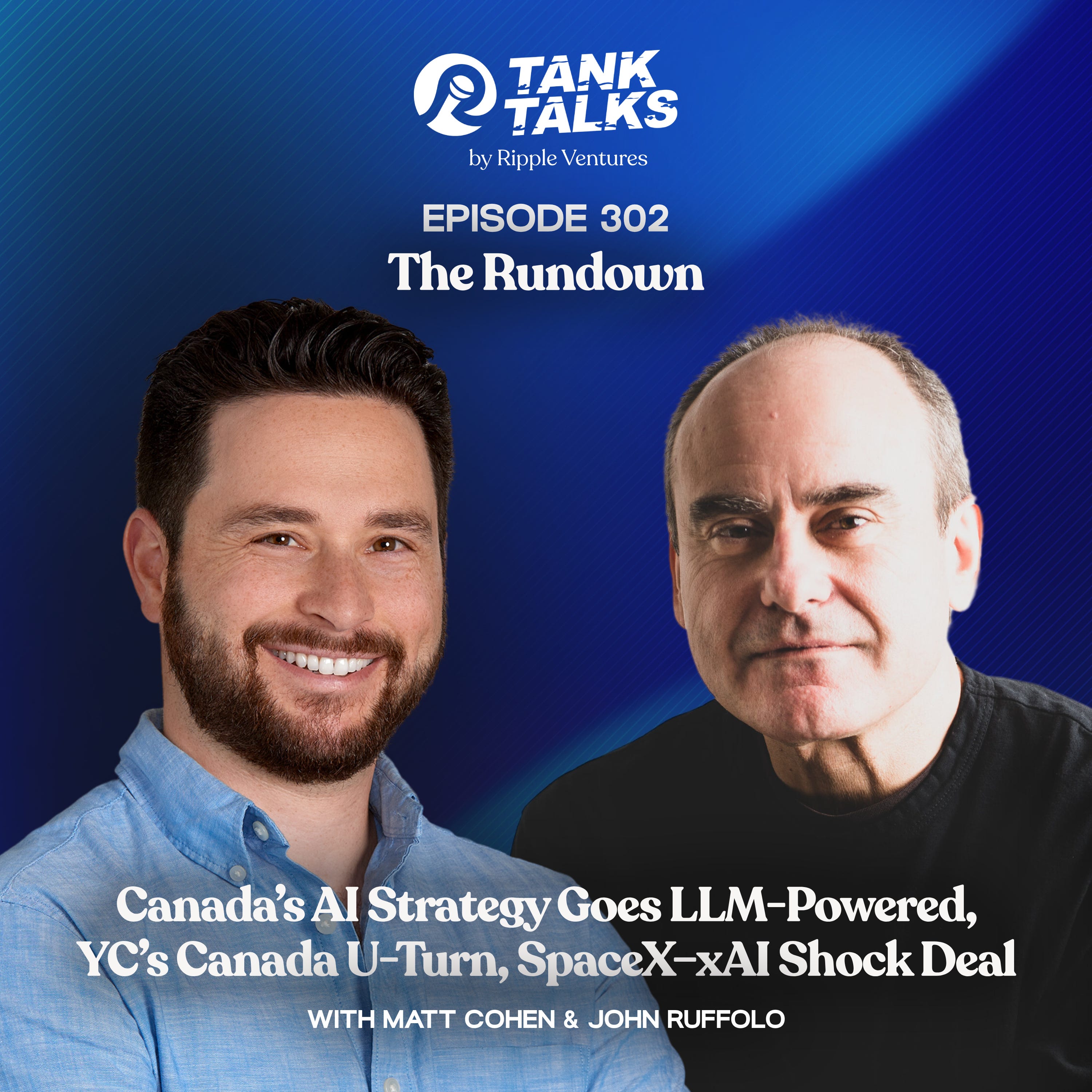
The Rundown 2/6/26: Canada’s AI Strategy Goes LLM-Powered, YC’s Canada U-Turn, SpaceX–xAI Shock Deal
Feb 600:21:23Tap to summarizeIn this episode of Tank Talks, Matt Cohen and John Ruffolo rip through a stacked rundown of tech, venture capital, and geopolitical “sovereignty” theater. They open with Europe’s accelerating shift away from Microsoft Office and big U.S. platforms toward open-source alternatives, then jump straight into a breaking change from Y Combinator CEO Garry Tan: Canada is back on the list of accepted incorporations, reversing a move that sparked serious backlash about Canadian startup brain drain and U.S.-domicile pressure.From there, they dissect Elon Musk’s headline-grabbing SpaceX–xAI all-stock merger and why it looks way better for xAI holders than SpaceX shareholders ahead of a rumored SpaceX IPO window. The episode also digs into Canada’s national AI consultation (and the government openly using multiple LLM providers like Cohere and OpenAI to process submissions), the EU’s push for digital sovereignty (and the risks of swapping to “free” tools), and the brutal reality of AI-driven search gutting legacy media traffic, with the Washington Post laying off a third of its newsroom. The big throughline: information is cheap now, execution and trust are expensive, and countries (and companies) that don’t adapt are about to get cooked.Y Combinator Reverses Course: Canada Back on the List (00:43)YC CEO Garry Tan adds Canada back to YC’s list of accepted incorporation jurisdictions after removing it, triggering a wave of criticism. Matt and John break down what changed, why the original rationale (Canadian winners re-domiciling to the U.S.) was a flawed signal, and why the real issue is still Canadian capital formation and follow-on funding strength.SpaceX Buys xAI: A $1.25T Story Swap Before an IPO? (02:34)Matt tees up the shocker: SpaceX acquires xAI in an all-stock deal valuing xAI at $250B and SpaceX at $1T, creating a combined $1.25T entity. They discuss xAI’s massive burn versus SpaceX’s improving cash profile (driven by Starlink) and why this kind of move raises eyebrows heading into an IPO narrative.Second-Order Effects: When a Cash-Burning AI Company Merges Into Space Infrastructure (07:35)They debate whether this becomes a template for other pre-IPO restructures or stays a one-off “Elon special.” John says a Starlink-style consolidation would make strategic sense; folding in xAI doesn’t feel like a choke-point win.Canada’s AI Strategy Consultation: Government Using LLMs in the Workflow (09:10)Canada’s ISED publishes a high-level summary of its AI consultation and explicitly notes using multiple LLMs and pipelines (including Cohere and OpenAI) to process massive public input. Matt frames this as a meaningful “government actually doing something” moment, even if the public is still anxious about jobs and privacy.Europe’s Digital Sovereignty Push: Dropping Teams/Zoom for Open Source? (12:40)They react to reports of governments moving away from Teams/Zoom and Microsoft tooling in the name of sovereignty. Matt calls the open-source swap risky from a security and operational standpoint; John says the bigger signal is global: sovereignty is now a first-order priority, and Canada can’t pretend this wave isn’t coming.Washington Post Layoffs: AI Search Is Eating the Referral Economy (16:48)Matt highlights the Washington Post’s reported search traffic collapse and layoffs impacting a third of the newsroom. John calls journalism an obvious early disruption target: LLMs compress content production costs, and the old newsroom pyramid doesn’t match the new economics.The Survival Play: Media Becomes a Live Events Business (19:26)They land on the counter-move: stop fighting the trend and monetize what still works: brand, access, community, and in-person experiences. If content becomes commoditized, relationships and trust become the product.Connect with John Ruffolo on LinkedIn: https://ca.linkedin.com/in/joruffoloConnect with Matt Cohen on LinkedIn: https://ca.linkedin.com/in/matt-cohen1Visit the Ripple Ventures website: https://www.rippleventures.com/ This is a public episode. If you would like to discuss this with other subscribers or get access to bonus episodes, visit tanktalks.substack.com
Transcribe →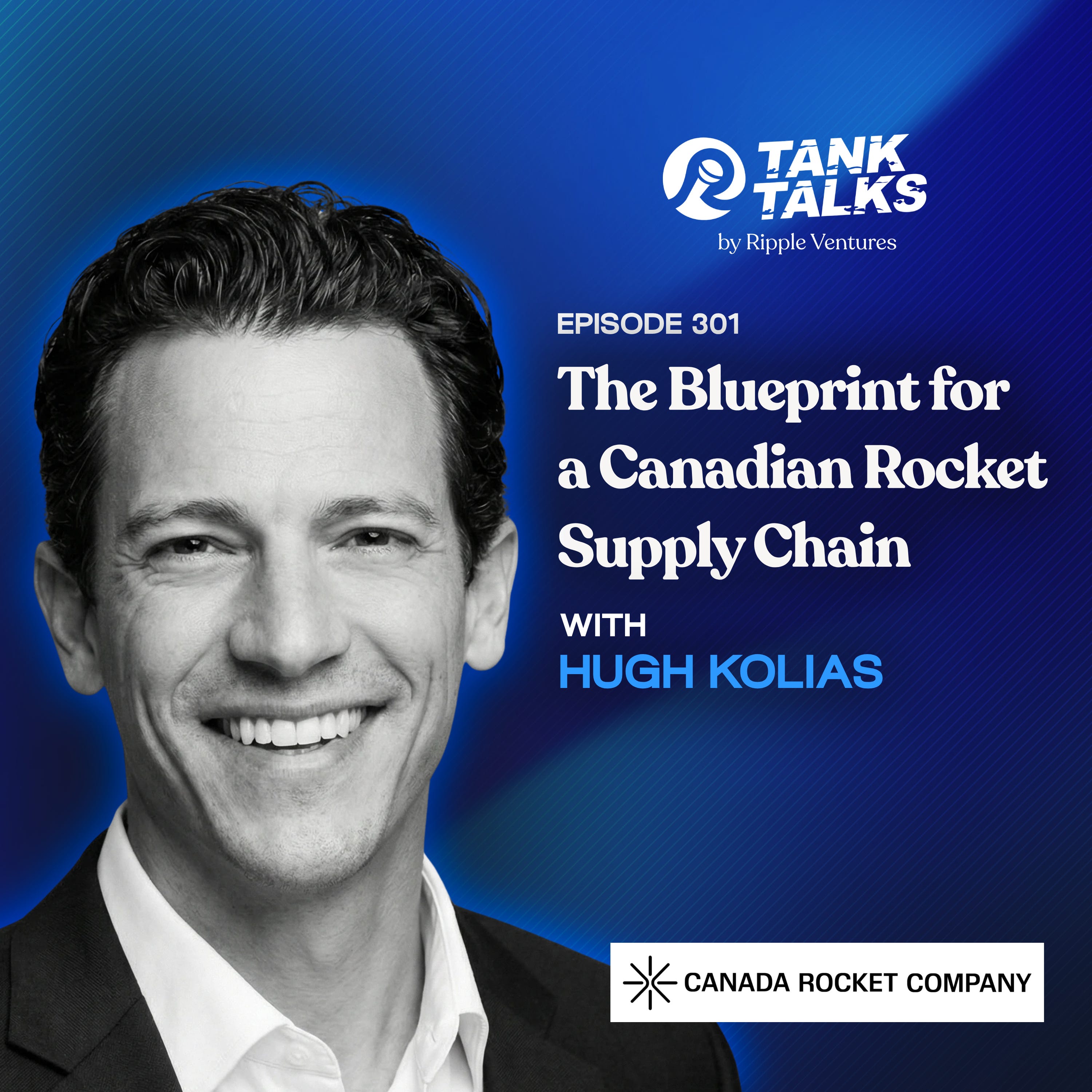
The Blueprint for a Canadian Rocket Supply Chain with Hugh Kolias of Canada Rocket Company
Feb 300:41:14Tap to summarizeIn this episode of Tank Talks, Matt Cohen sits down with Hugh Kolias, Co-Founder and CEO of Canada Rocket Company, right as the company exits stealth with a $6.2M all-Canadian seed round backed by Ripple Ventures, BDC, Garage Capital, and others. Hugh breaks down the real mission: give Canada sovereign, medium-lift launch capability, so we’re not dependent on foreign nations to put critical satellites into orbit, while still building a business that can win globally.They get into the “hard part” behind the headline: pulling top-tier aerospace talent back home (including veterans from SpaceX), choosing a propulsion strategy that stays competitive by the time the rocket actually reaches orbit, and building a Canadian supply chain without over-verticalizing too early. If you care about dual-use tech, defense tailwinds, or what it actually takes to go from “deck” to “orbit,” this one’s a blueprint.From Calgary to PropTech Exit to Rockets (02:13)* Hugh’s path: mechanical engineering, a detour into finance, then building and selling a PropTech SaaS business.* Why deep tech finally felt “doable” in Canada: shifting market appetite + policy momentum.Repatriating Talent and Building a Team That Can Actually Ship (07:01)* How Hugh discovered just how many Canadians were already working across elite aerospace teams.* The pitch that works: Canada’s stability + genuinely hard problems + a rare “clean sheet” chance.The SpaceX Co-Founder Moment (09:38)* How Hugh recruited his co-founder David, a former SpaceX engineer who helped optimize Falcon 9.* Why “paper to orbit” is the kind of challenge that pulls experienced builders in fast.The Medium-Lift Strategy and Why Small Launch Fell Off (12:20)* CRC’s focus: ~6,000 kg to LEO (the market gap between small launch and heavy lift).* The key market shift: satellites didn’t keep shrinking once launch costs dropped, so demand moved upmass.Methalox, Reusability, and Not Building a Rocket That’s Obsolete on Arrival (15:51)* Why CRC is betting on Methalox vs Kerolox: reusability economics and less refurbishment burden.* Their cycle choice: keep it simpler early (open-cycle gas gen) and iterate toward more advanced designs later.Supply Chain, Partnerships, and Making It Actually Canadian (19:23)* Why CRC prioritizes partnerships early instead of trying to vertically integrate everything on day one.* Designing to match Canada’s industrial strengths (ex: metals/welding realities vs composites constraints).Government Tailwinds: Defense, Sovereignty, and Capital Unlock (23:47)* How rising defense focus and sovereign launch priorities change the startup math for deep tech.* The bigger point: the “space multiplier” effect and why governments care (jobs, manufacturing, spillovers).Timeline to Orbit and the Hiring Wave (34:01)* Benchmarks Hugh cites: ~4 years and ~$160M (inflation-adjusted) to reach orbit for top performers.* Scale expectations: ~150 people for light lift to orbit, then 500–1,000 for medium lift + manufacturing.About Hugh KoliasCo-Founder and CEO, Canada Rocket CompanyHugh Kolias is a Canadian founder who previously built and sold a PropTech SaaS company before returning to his original obsession: space. Now he’s leading CRC’s mission to build a globally competitive, Canadian sovereign launch capability, while repatriating elite aerospace talent and aligning rocket design with real-world economics, policy tailwinds, and Canada’s industrial base.Connect with Hugh Kolias on LinkedIn: https://www.linkedin.com/in/hugh-kolias-71a402b0/?originalSubdomain=caVisit the Canada Rocket Company website: https://www.canadarocketcompany.com/Connect with Matt Cohen on LinkedIn: https://ca.linkedin.com/in/matt-cohen1Visit the Ripple Ventures website: https://www.rippleventures.com/ This is a public episode. If you would like to discuss this with other subscribers or get access to bonus episodes, visit tanktalks.substack.com
Transcribe →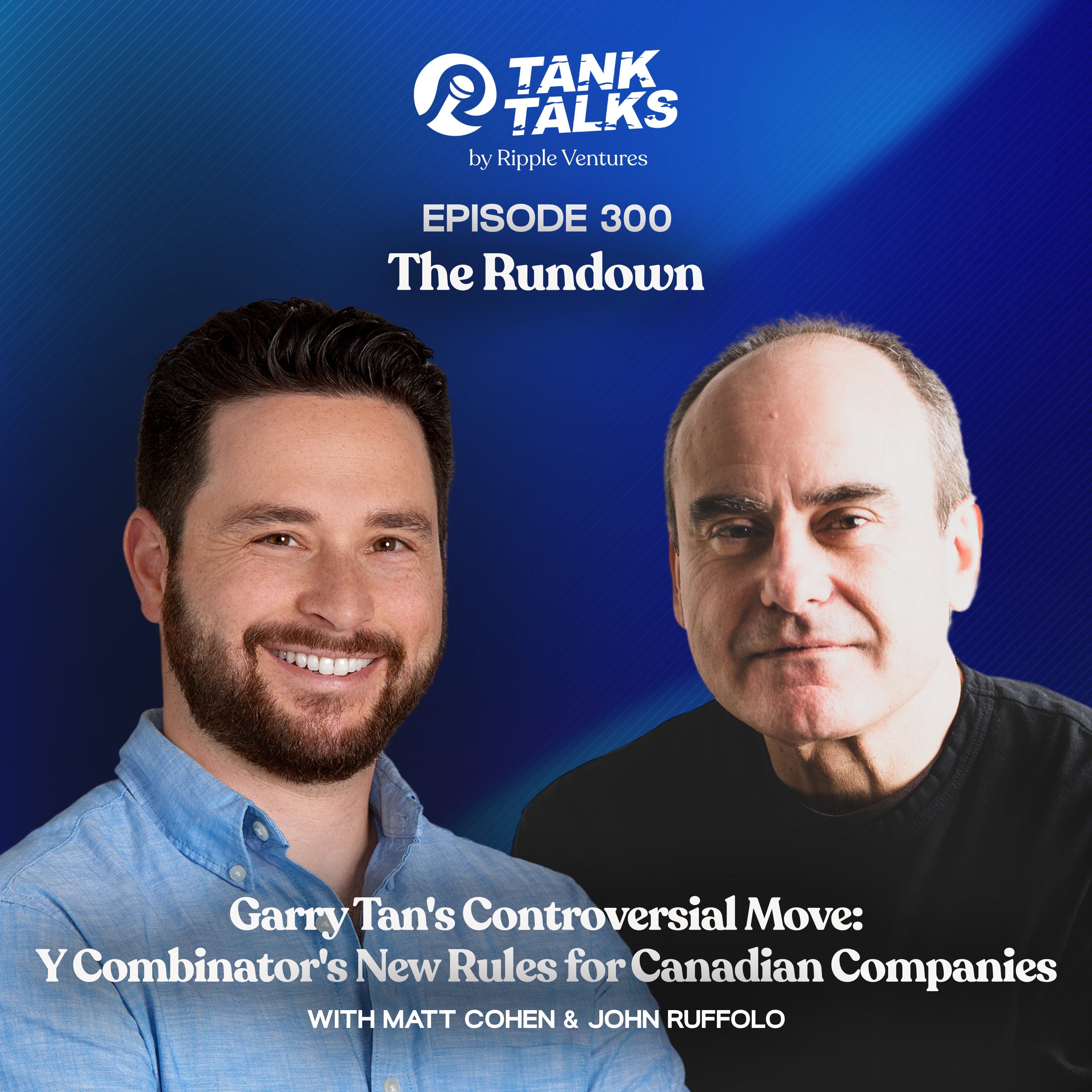
The Rundown 1/29/26: Garry Tan's Controversial Move: Y Combinator's New Rules for Canadian Companies
Jan 2900:21:26Tap to summarizeIn this episode of Tank Talks, Matt Cohen and John Ruffolo unpack the ripple effects of Y Combinator’s decision to exclude Canadian startups from their investment portfolio unless they’re incorporated in the U.S. or other tax-friendly jurisdictions. This move has sent shockwaves through the Canadian tech ecosystem, and Matt and John break down exactly why this matters for founders and investors alike.The conversation explores the myth of U.S. incorporation being the golden ticket for capital-raising and the rise of a narrative that Canadian entrepreneurs must leave their home country to achieve success. Matt and John challenge this narrative head-on, providing deep insights into why Canadian tech companies can still thrive domestically and refuting the data that YC used to justify their decision.Y Combinator Shakes Up Canadian Startups (01:09)YC has revised its investment criteria to exclude Canadian companies unless they’re incorporated in the U.S. or certain tax havens. The duo debates the implications of this shift and how it impacts Canadian founders who are now questioning their incorporation choices.The False Narrative of U.S. Incorporation (03:09)John breaks down the myth that U.S.-incorporated companies raise more capital than their Canadian counterparts, calling out misleading data points used by YC’s Garry Tan to justify the shift. The conversation digs into why this narrative is misleading and what Canadian entrepreneurs can do to counter it.Why YC’s Data Doesn’t Tell the Full Story (05:35)John explains how some of Canada’s most successful tech companies didn’t follow the YC path and still thrived, refuting the idea that incorporation in the U.S. is always the best move for Canadian startups.The Ripple Effect on Early-Stage Founders (06:25)The discussion turns to the younger generation of founders who now believe they must incorporate in the U.S. to succeed, potentially setting them up for unnecessary challenges.The Shift from PE to VC: Innovator’s Dilemma (14:07)Matt and John shift gears to discuss private equity’s struggle with legacy enterprise software companies in the wake of AI disruption. They explore how PE firms are transforming into venture funds to keep up with market changes, creating a new kind of investment landscape.The AI Crisis for Private Equity (15:10)As AI-native startups disrupt traditional software models, private equity firms face extended hold periods on their investments. Matt and John explore how firms like Thoma Bravo are adjusting their strategies to deal with these changes.CGI Partners with OpenAI: The Changing Consulting Landscape (18:54)The episode wraps up with a discussion on CGI’s new global alliance with OpenAI. This partnership marks a major shift in the IT consulting world, with CGI aiming to integrate AI at scale. Matt and John speculate on the future of AI in enterprise consulting and what this means for legacy players like CGI.Connect with John Ruffolo on LinkedIn: https://ca.linkedin.com/in/joruffoloConnect with Matt Cohen on LinkedIn: https://ca.linkedin.com/in/matt-cohen1Visit the Ripple Ventures website: https://www.rippleventures.com/ This is a public episode. If you would like to discuss this with other subscribers or get access to bonus episodes, visit tanktalks.substack.com
Transcribe →
The Rundown 1/23/25: Truth Bombs at Davos, Chaos in Markets, Big IPOs Ahead
Jan 2300:24:07Tap to summarizeIn this episode of Tank Talks, Matt Cohen and John Ruffolo unpack Prime Minister Mark Carney’s China agreement and his Davos speech, calling out the collapse of the rules-based international order and pushing “middle powers” to coordinate against coercion. John and Matt agree the speech was sharp, but they hammer the real issue: Canada has to build leverage at home (resources, infrastructure, internal trade, and actual execution) or “diversifying” becomes a vibes-only strategy.The conversation then pivots to Trump’s Greenland framework, rare earth realities, and why the real choke point is processing, not just “owning minerals.” Finally, they switch lanes into markets, covering the biggest anticipated IPOs of 2026 (SpaceX, OpenAI, Databricks, Stripe, Revolut, Canva), why liquidity could snap back for LPs, and why SPACs are creeping back as a funding path for deep tech, including General Fusion’s SPAC and the emergence of the Canadian Rocket Company as Canada tries to repatriate space talent.Canada–China trade reset and what it actually means (02:13)Matt tees up the January 16 China agreement and the idea of trade diversification under U.S. tariff uncertainty. John frames it as a fix for specific trade pain (not a full political pivot) and warns against treating China as a “safe alternative.”Davos speech: “truth bombs” vs real-world action (04:11)They break down Carney’s Davos message on coercion, great power tactics, and middle-power coalitions. John calls it “spectacular,” but both stress the gap between rhetoric and measurable outcomes.Canada’s leverage problem: “build Canada first” (06:39)John argues Canada can’t diversify trade if it has nothing competitive and scalable to trade. The conversation turns into a blunt call for domestic execution: resources, pipelines, and the hard stuff that moves GDP.Matt’s frustration: Why no national address to Canadians? (08:06)Matt goes off on the lack of direct, plainspoken communication to Canadians about what has to change, what’s coming, and what tradeoffs might be required.Trump and Greenland: Bond markets, politics, and power (12:32)John calls Trump’s posture performative and points to constraints that actually matter, including internal GOP pressure and market reactions (he highlights the bond market as the real “adult in the room”).Top anticipated IPOs of 2026: the mega list (19:12)They run through what’s being floated as the monster class of potential offerings: SpaceX, OpenAI, Databricks, Stripe, Revolut, Canva (and more speculation). The bigger point: it’s not number of IPOs, it’s dollar value and liquidity unlock.Canada’s space bets: Canadian Rocket Company emerges (21:15)Matt shares CRC’s emergence from stealth with $6.2M funding (all Canadian investors including BDC and Garage). Focus: repatriating SpaceX/Blue Origin talent and pushing Canada deeper into the space industrial base.Connect with John Ruffolo on LinkedIn: https://ca.linkedin.com/in/joruffoloConnect with Matt Cohen on LinkedIn: https://ca.linkedin.com/in/matt-cohen1Visit the Ripple Ventures website: https://www.rippleventures.com/ This is a public episode. If you would like to discuss this with other subscribers or get access to bonus episodes, visit tanktalks.substack.com
Transcribe →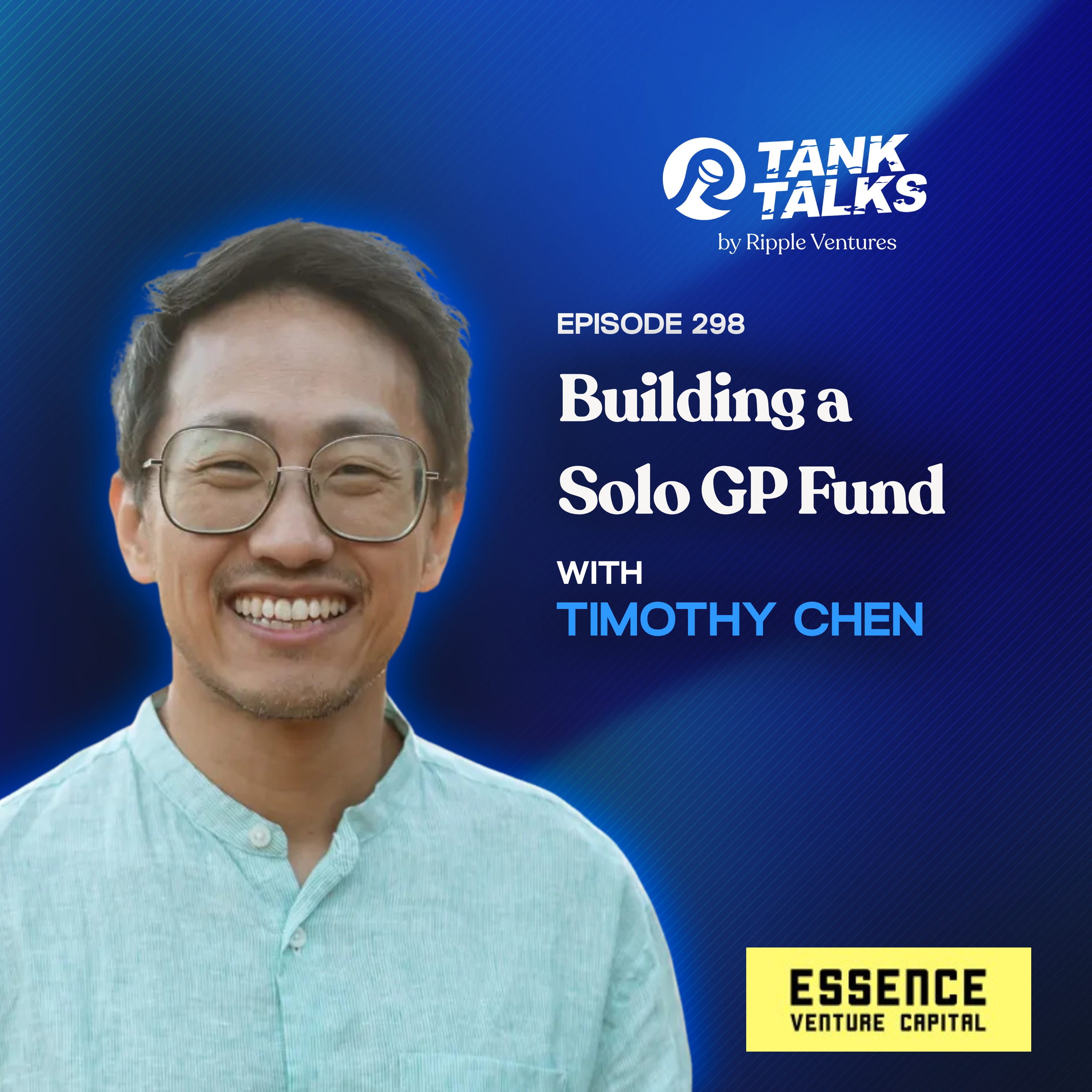
Building a Solo GP Fund with Timothy Chen of Essence VC
Jan 2201:04:42Tap to summarizeIn this episode of Tank Talks, Matt Cohen sits down with Timothy Chen, the sole General Partner at Essence VC. Tim shares his remarkable journey from being a “nerdy, geeky kid” who hacked open-source projects to becoming one of the most respected early-stage infrastructure investors, backing breakout companies like Tabular (acquired by Databricks for $2.2 billion). A former engineer at Microsoft and VMware, co-founder of Hyperpilot (acquired by Cloudera), and now a solo GP who quietly raised over $41 million for his latest fund, Tim offers a unique, no-BS perspective on spotting technical founders, navigating the idea maze, and rethinking sales and traction in the world of AI and infrastructure.We dive deep into his unconventional path into VC, rejected by traditional Sand Hill Road firms, only to build a powerhouse reputation through sheer technical credibility and founder empathy. Tim reveals the patterns behind disruptive infra companies, why most VCs can’t help with product-market fit, and how he leverages his engineering background to win competitive deals.Whether you’re a founder building the next foundational layer or an investor trying to understand the infra and AI boom, this conversation is packed with hard-won insights.The Open Source Resume (00:03:44)* How contributing to Apache projects (Drill, Cloud Foundry) built his career when a CS degree couldn’t.* The moment he realized open source was a path to industry influence, not just a hobby.* Why the open source model is more “vertical than horizontal”, allowing deep contribution without corporate red tape.From Engineer to Founder: The Hyperpilot Journey (00:13:24)* Leaving Docker to start Hyperpilot and raising seed funding from NEA and Bessemer.* The harsh reality of founder responsibility: “It’s not about the effort hard, it’s about all the other things that has to go right.”* Learning from being “way too early to market” and the acquisition by Cloudera.The Unlikely Path into Venture Capital (00:26:07)* Rejected by top-tier VC firms for a job, then prompted to start his own fund via AngelList.* Starting with a $1M “Tim Chen Angel Fund” focused solely on infrastructure.* How Bain Capital’s small anchor investment gave him the initial credibility.Building a Brand Through Focus & Reputation (00:30:42)* Why focusing exclusively on infrastructure was his “best blessing” creating a standout identity in a sparse field.* The reputation flywheel: Founders praising his help led to introductions from top-tier GPs and LPs.* StepStone reaching out for a commitment before he even had fund documents ready.The Essence VC Investment Philosophy (00:44:34)* Pattern Recognition: What he learned from witnessing the early days of Confluent, Databricks, and Docker.* Seeking Disruptors, Not Incrementalists: Backing founders who have a “non-common belief” that leads to a 10x better product (e.g., Modal Labs, Cursor, Warp).* Rethinking Sales & Traction: Why revenue-first playbooks don’t apply in early-stage infra; comfort comes from technical co-building and roadmap planning.* The “Superpower”: Using his engineering background to pressure-test technical assumptions and timelines with founders.The Future of Infra & AI (00:52:09)* Infrastructure as an “enabler” for new application paradigms (real-time video, multimodal apps).* The coming democratization of building complex systems (the “next Netflix” built by smaller teams).* The shift from generalist backend engineers to specialists, enabled by new stacks and AI.Solo GP Life & Staying Relevant (00:54:55)* Why being a solo GP doesn’t mean being a lone wolf; 20-30% of his time is spent syncing with other investors to learn.* The importance of continuous learning and adaptation in a fast-moving tech landscape.* His toolkit: Using portfolio company Clerky (a CRM) to manage workflow.About Timothy ChenFounder and Sole General Partner, Essence VCTimothy Chen is the Sole General Partner at Essence VC, a fund focused on early-stage infrastructure, AI, and open-source innovation. A three-time founder with an exit, his journey from Microsoft engineer to sought-after investor is a masterclass in building credibility through technical depth and founder-centric support. He has backed companies like Tabular, Iteratively, and Warp, and his insights are shaped by hundreds of conversations at the bleeding edge of infrastructure.Connect with Timothy Chen on LinkedIn: linkedin.com/in/timchenVisit the Essence VC Website: https://www.essencevc.fund/Connect with Matt Cohen on LinkedIn: https://ca.linkedin.com/in/matt-cohen1Visit the Ripple Ventures website: https://www.rippleventures.com/ This is a public episode. If you would like to discuss this with other subscribers or get access to bonus episodes, visit tanktalks.substack.com
Transcribe →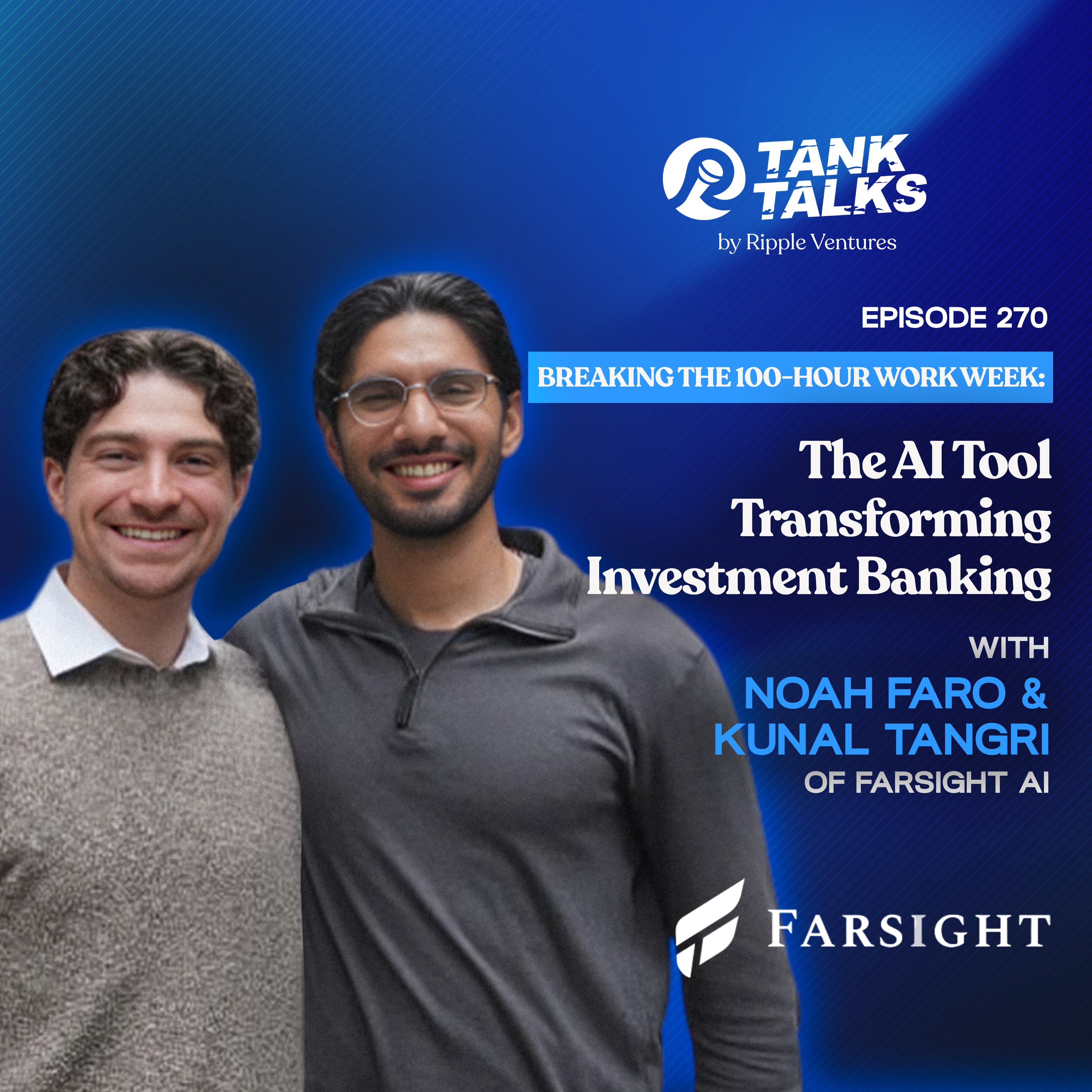
Breaking the 100-Hour Work Week: The AI Tool Transforming Investment Banking with Noah Faro and Kunal Tangri of Farsight AI
Aug 14, 202500:50:48Tap to summarizeIn this episode of Tank Talks, we dive deep into how AI is reshaping the world of investment banking and financial workflows. We’re joined by Kunal Tangri and Noah Faro, co-founders of Farsight AI, a trailblazing FinTech startup out of New York that’s automating everything from pitch decks to financial models, all within the tools bankers already use, like Excel and PowerPoint.Farsight’s mission is to help finance professionals cut down on tedious, manual work and focus on higher-level strategy, and the results are already impressive. In just one year, the company grew 10x in revenue, offering a compelling solution to banks, private equity firms, hedge funds, and wealth managers.In this episode, we discuss:* The aha moment behind starting Farsight AI and the team’s journey from MIT to Wall Street and beyond.* Why the founders believe AI is the key to eliminating grueling 100-hour work weeks for junior bankers and making high-end finance more efficient.* The biggest challenges they’ve faced in building a tool that integrates seamlessly into finance professionals' daily workflows.* The future of AI in financial services and how it can democratize access to top-tier financial tools.From scaling the company to navigating investor interest and addressing the challenges of maintaining security in the financial sector, Kunal and Noah offer valuable insights on building a product that doesn’t just save time but transforms the entire way finance professionals work.How It All Started (00:02:36)Kunal and Noah share how their experiences at MIT and roles in big tech led them to co-found Farsight AI and the unique problem they set out to solve in financial services.Breaking the Banking Mold (00:06:49)What it takes to build a product that bankers actually want to use without forcing them to learn a new workflow.How AI Can Eliminate Manual Grunt Work (00:10:50)Automating the dreaded task of creating pitch decks, memos, and financial models, and how Farsight AI is pushing the boundaries of what’s possible in financial services.Investor Pitch & Growth (00:20:34)How Farsight AI secured its first round of funding, raised $16 million in Series A, and caught the eye of major investors.AI-Powered Decision Making in Finance (00:28:00)How Farsight AI is tackling everything from Excel-based tasks to handling private equity and M&A documents with seamless integration and workflow automation.The Road Ahead (00:40:04)Kunal and Noah discuss their vision for the future, why they believe junior bankers of 2030 will spend more time on strategic thinking than mundane tasks, and how AI will change the financial landscape forever.About the GuestsKunal Tangri and Noah Faro are the co-founders of Farsight AI, a revolutionary AI startup that’s changing the way finance professionals work. Both with deep roots in tech, they bring a unique perspective to automating some of the most tedious tasks in investment banking, private equity, hedge funds, and wealth management. With backgrounds at top-tier companies like Hugging Face, Amazon, and MIT, they’re at the forefront of the AI revolution in finance.Connect with Noah Faro on LinkedIn: https://www.linkedin.com/in/noahfaroConnect with Kunal Tangri on LinkedIn: https://www.linkedin.com/in/kunal-tangri-61ba48121/Visit the Farsight AI website: https://www.farsight-ai.com/Connect with Matt Cohen on LinkedIn: https://ca.linkedin.com/in/matt-cohen1Visit the Ripple Ventures website: https://www.rippleventures.com/ This is a public episode. If you would like to discuss this with other subscribers or get access to bonus episodes, visit tanktalks.substack.com
Transcribe →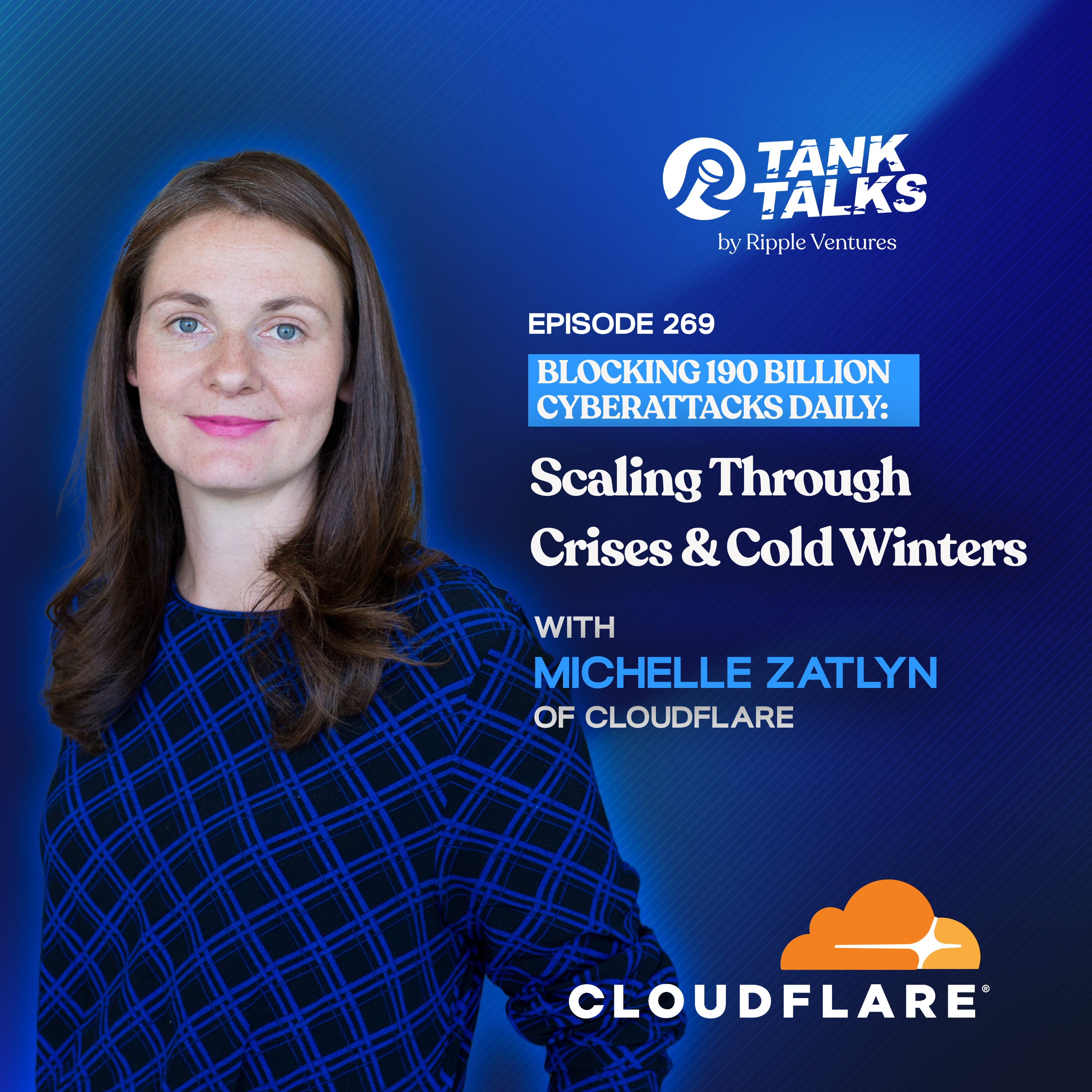
Blocking 190 Billion Cyberattacks Daily: Scaling Through Crises & Cold Winters with Michelle Zatlyn of Cloudflare
Aug 7, 202500:59:59Tap to summarizeIn this episode of Tank Talks, we’re joined by Michelle Zatlyn, Co-founder, Co-chair, and President of Cloudflare, a company protecting and powering a major part of global internet traffic. Cloudflare helps businesses stay online, load faster, and block threats before they reach the door.Michelle explains how growing up in Saskatchewan shaped her views on leadership and teamwork, and how that experience still guides her as Cloudflare scales. She shares how a hallway conversation at Harvard became the starting point for the business, how they raised their first round of funding without a product, and why they moved to Silicon Valley during a downturn with no connections.She talks through the pressure of going public, the spike in traffic when COVID hit, and how the team responded when customers suddenly needed help keeping their services running. She also walks through Cloudflare’s new AI crawler model, how it gives content owners more control, and why a new business model for the web is overdue.From managing billions of attacks a day to helping publishers keep their content protected, Cloudflare shows what it means to stay reliable when the stakes are high, and Michelle makes it clear that good infrastructure only works if people trust it.We explore:* How do you raise money with no product, no revenue, and no connections?* What happens when a hallway idea becomes core infrastructure for the internet?* What changes when your company goes public six months before a global crisis?* Can creators control how AI models use their content?* What can founders do to make their teams more inclusive without making it performative?* Why $100M-to-$1B is more fun than $0-to-$100MThe Canadian Roots and Early Values of a Tech Founder (00:02:36)* Growing up in Prince Albert, Saskatchewan* How cold winters and community spirit shaped her leadership* From science nerd to Silicon Valley co-founderWhy She Left Medicine for Business (00:06:49)* How a summer research job made her rethink med school* Falling into tech through work in Toronto* Applying to Harvard without knowing how to pay for it* The support from Canadian alumni that made it possibleThe Hallway Conversation That Sparked Cloudflare (00:10:50)* A casual remark turns into a business idea* How she and Matthew Prince turned Project Honeypot into a startup* Using their .edu emails to get early help and access* Getting credit for the project instead of taking another classRaising Money With No Traction (00:20:34)* Moving to Silicon Valley in a U-Haul with no connections* Pitching investors with nothing built* Getting $2M on a $4M pre-money valuation* Why the Valley still bets on early-stage founders with clear ideasHiring, Scaling, and Keeping a Startup Culture (00:24:52)* Going from 20 people to over 4,500* Why they still focus on shipping and momentum* How ownership and trust make the difference* Running fast without losing focusGoing Public, Then COVID Hit (00:28:00)* Why they went public when they did* Customers who once said no came running back* What changed when traffic spiked overnight* How customer demand and product pressure collided* Working through the crisis while remote* What Cloudflare learned under fireCloudflare’s AI Crawler Controls (00:40:04)* What’s happening with AI scraping content* Why Cloudflare built a way to block or license crawlers* The impact on small content creators* How this fits into wider changes to how the web worksDDoS Attacks and Online Threats (00:48:06)* Stopping 190 billion attacks per day* The evolution of DDoS threats in 2025* Why using modern security tools is non-negotiableMichelle's Vision for the Next 15 Years (00:51:18)* Cloudflare as generational infrastructure* Building the most trusted connectivity cloud* Why Internet infrastructure is as vital as plumbingChampioning Women & Diversity in Tech (00:53:27)* Leading by example* Small asks, big impact: improving referral pipelines* Creating space for underrepresented founders and talentCloudflare has grown into critical internet infrastructure, but Michelle talks about it like a work in progress. The problems are large, but they stay focused on solving them one at a time. Her view is practical: strong teams, clear goals, and ongoing effort.About Michelle ZatlynCo-founder, Co-chair & President of CloudflareOne of the most influential leaders in Internet infrastructure, Michelle is a Canadian-born tech executive known for building and scaling Cloudflare into a global powerhouse. A champion for cybersecurity, innovation, and women in tech, she brings passion and grit to every conversation.Connect with Michelle Zatlyn on LinkedIn: https://www.linkedin.com/in/michellezatlyn/Visit Cloudflare Website: https://www.cloudflare.com/Connect with Matt Cohen on LinkedIn: https://ca.linkedin.com/in/matt-cohen1Visit the Ripple Ventures website: https://www.rippleventures.com/ This is a public episode. If you would like to discuss this with other subscribers or get access to bonus episodes, visit tanktalks.substack.com
Transcribe →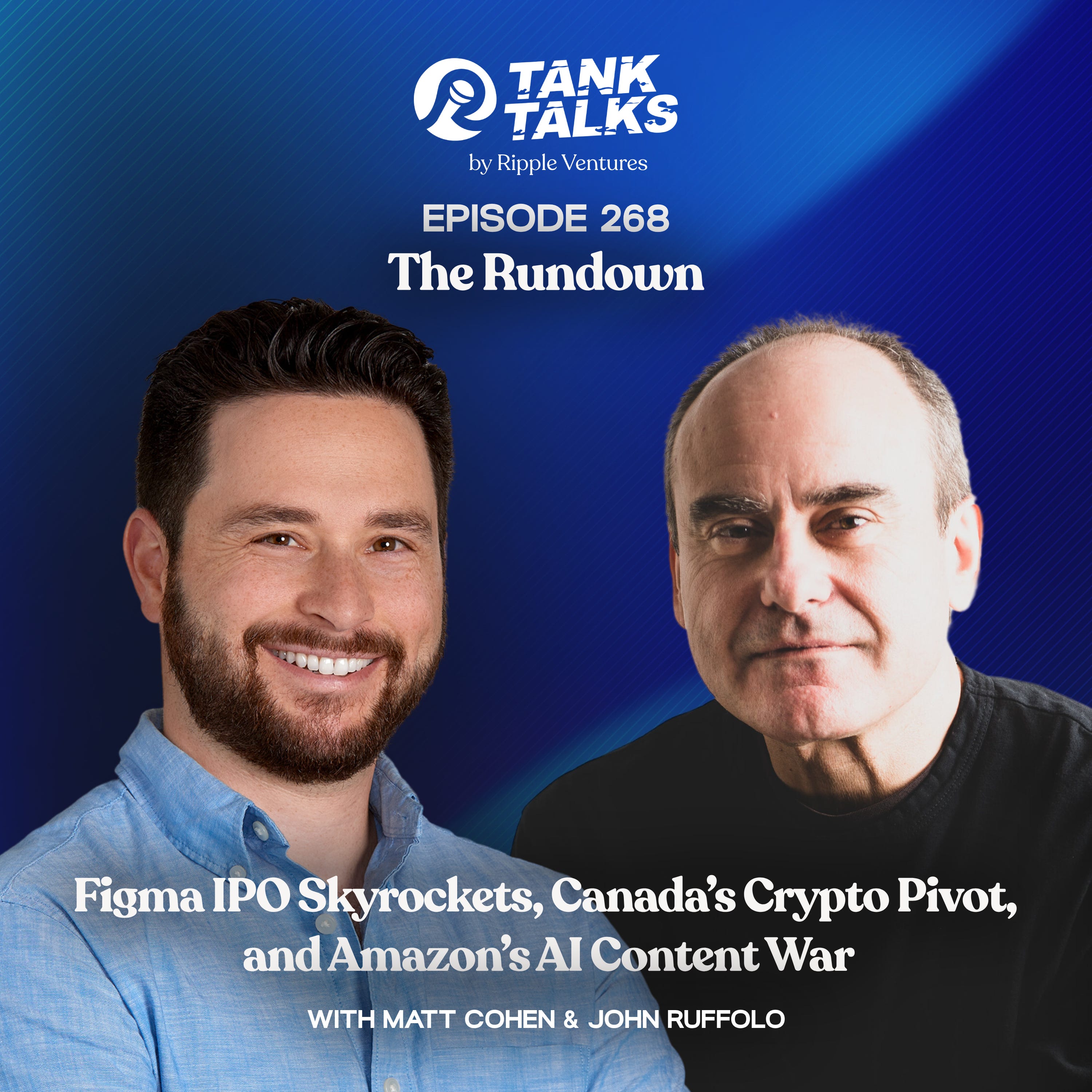
The Rundown 8/1/25: Figma IPO Skyrockets, Canada’s Crypto Pivot, and Amazon’s AI Content War
Aug 1, 202500:27:21Tap to summarizeWelcome back to another exciting episode of Tank Talks! Host Matt Cohen is joined by John Ruffolo as they dive deep into some of the most fascinating business and tech news, covering everything from the Bank of Canada’s interest rates to Figma’s IPO debut and the rising debate over AI web crawling. Get ready for another whirlwind discussion on the challenges and opportunities at the intersection of technology, finance, and policy!Bank of Canada Holds Rates Amid Tariff Resilience (00:31)The episode kicks off with a look at the Bank of Canada’s decision to hold interest rates steady at 2.75%, despite tariff resistance from the U.S. Matt and John dissect how the Canadian economy is faring and whether this wait-and-see approach will help or hurt the country’s future rate cuts.Figma IPO: A Tech World Shake-Up (02:56)Figma, the design software giant, hits the New York Stock Exchange with a stunning 225% stock surge, far surpassing its $33 IPO price. Matt and John explore the remarkable jump in Figma’s stock value, its previous $20 billion offer from Adobe, and how this signals a new era for the tech IPO market.The Surge of AI-Powered IPOs and Investment Opportunities (05:02)From Figma to potential IPOs from high-growth AI companies, the episode shifts focus to the flood of upcoming tech public offerings. With Microsoft and Meta reporting blowout earnings, the duo discusses how AI and high-tech companies are dominating the IPO space and the new investment opportunities in play.Cohere's Growth Amidst AI Giants (07:29)Canadian AI startup Cohere is making waves with a new partnership with Bell Canada and reports of revenue growth, doubling its projected recurring revenue. John and Matt discuss how the startup is positioning itself in the highly competitive AI space, especially with privacy-focused models catering to regulated industries.JPMorgan and Coinbase's Surprising Crypto Partnership (09:48)JPMorgan and Coinbase announce a groundbreaking partnership, directly connecting customers' bank accounts to crypto wallets. Matt and John break down how this bold move marks a huge shift in the banking industry, particularly as Canadian banks are left playing catch-up.Ontario Cancels Starlink Deal Over Tariff Tensions (12:09)In a shocking move, the Ontario government cancels a $92 million Starlink deal due to U.S. tariff tensions. Matt and John discuss how this decision could impact access to vital broadband for remote communities and the political ramifications of Canada’s communications sovereignty.The Growing Battle Over AI Web Crawlers and Content Protection (15:26)As AI web crawlers, including OpenAI's GPT and Anthropic's Claude, face growing restrictions, Matt and John discuss the implications of major companies like Amazon and media giants blocking these crawlers. The episode explores the future of online data scraping, the rise of closed ecosystems, and the potential impact on digital advertising.Connect with John Ruffolo on LinkedIn: https://ca.linkedin.com/in/joruffoloConnect with Matt Cohen on LinkedIn: https://ca.linkedin.com/in/matt-cohen1Visit the Ripple Ventures website: https://www.rippleventures.com/ This is a public episode. If you would like to discuss this with other subscribers or get access to bonus episodes, visit tanktalks.substack.com
Transcribe →