← Tax Smart Real Estate Investors Podcast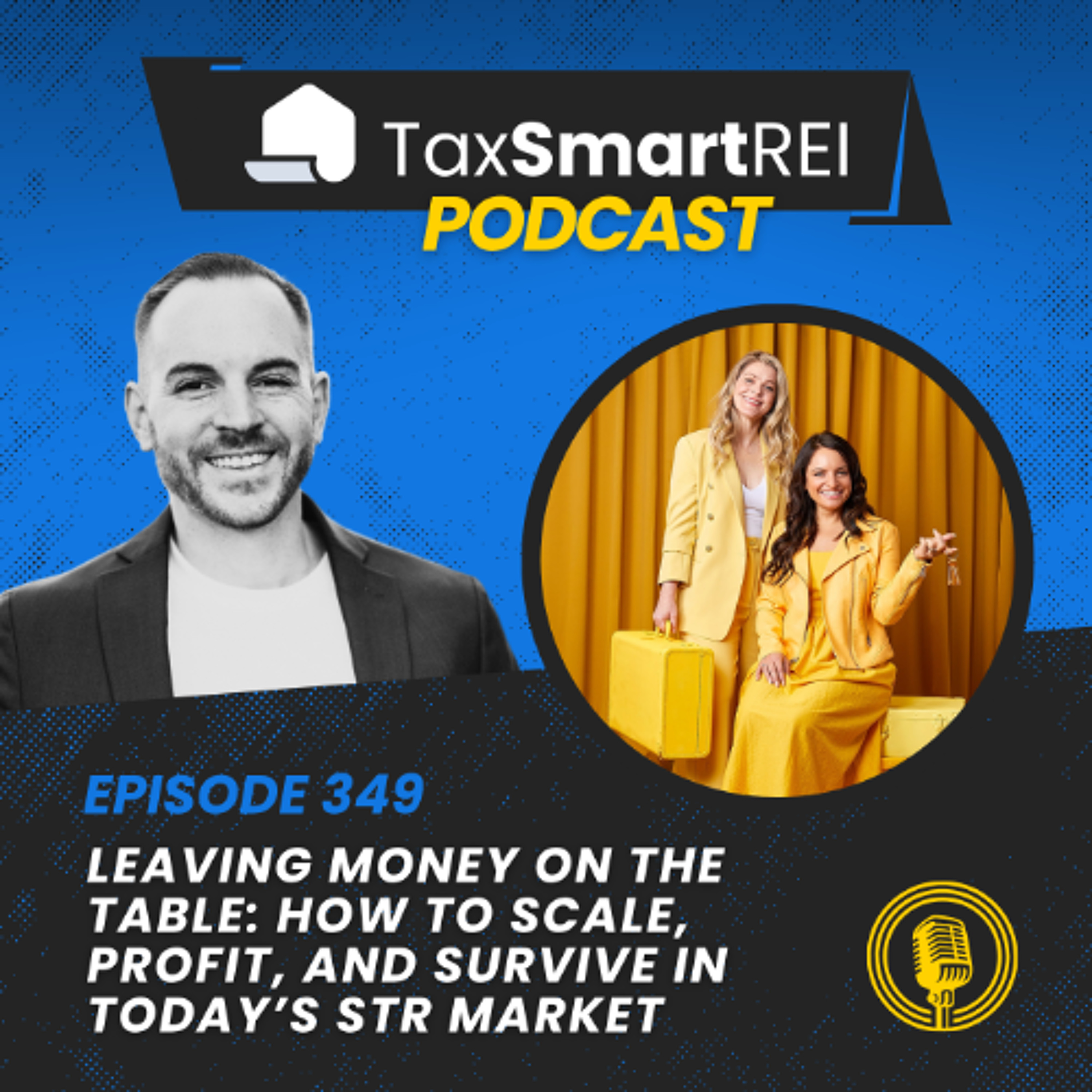
Tax Smart Real Estate Investors Podcast
349. How to Scale, Profit, and Survive in Today’s STR Market with Thanks for Visiting
00:36:43
In this episode of the Tax Smart REI Podcast, Tho…
Loading summary
Transcript81 lines
- [00:00]
Host 1 (Podcast Announcer)
You're now listening to the Tax Smart REI podcast, the number one tax podcast.
- [00:04]
Thomas (CPA/Tax Expert)
For real estate investors.
- [00:06]
Host 2 (Podcast Closer)
Your source for all things real estate, accounting and tax. Here we reveal our secrets that can save you thousands in taxes, streamline your accounting process and help grow your business. Stay tuned to hear insightful interviews with industry experts, successful real estate investors and current clients on what strategies they use to grow their business and how they steer clear of Uncle Sam.
- [00:33]
Thomas (CPA/Tax Expert)
Hey everyone, thanks for tuning into this week's episode of the taxmart REI Podcast. So first thing I want to point out here in today's introduction is I know we've been doing a lot of short term rental podcasts recently and look, we're not a short term rental only podcast, but we have a lot of listeners tuning in looking to jump into short term rentals for tax benefits. But we don't want to let the tax tell wag the dog, right? We want to actually get into and acquire viable short term rentals in good markets, good properties, and then also operate them to make a profit. Right? It's not just about the tax benefits. Which is why I'm excited to bring on this week's guests today where I'm joined with Annette Grant and Sarah Car.
- [01:09]
Sarah Car (Co-founder, Thanks for Visiting)
I'm sorry, I'm going to watch you struggle. This is good.
- [01:14]
Thomas (CPA/Tax Expert)
Cara Carrie. Did I get that right?
- [01:16]
Sarah Car (Co-founder, Thanks for Visiting)
Kara Kay. And not. Not too bad.
- [01:18]
Thomas (CPA/Tax Expert)
Okay, thank you so much.
- [01:19]
Host 1 (Podcast Announcer)
Yeah.
- [01:20]
Thomas (CPA/Tax Expert)
They are co founders of. Thanks for visiting a leading education and coaching platform helping short term rental hosts turn their short term rentals to scalable, hospitality driven and profitable operations. With background spending from Broadway to HGTV and multi million dollar business ventures, they built a thriving community. Over 50,000 hosts who are redefining what it means to succeed in the short term rental space. So we're going to be diving into all types of questions about operations and profitability in just one moment.
- [01:47]
Host 1 (Podcast Announcer)
After talking with clients and fellow real estate investors, one thing was clear. There wasn't a newsletter that delivered real market insights, concise decision making info and relevant tax strategy all in one place.
- [01:57]
Thomas (CPA/Tax Expert)
So we created it.
- [01:58]
Host 1 (Podcast Announcer)
REI D delivers real estate news that won't put you to sleep. Real and concise market insights that aid in your decision making, legislative updates that actually impact your investments and tax strategies sprinkled in because the IRS does not need a tip. If you're a real estate investor who wants to stay sharp without sifting through all of the clickbait or fluff, this is for you. And celebrate the launch. You'll have a chance to win a free one on one tax strategy call with one of our top real estate experts. No pitch, just strategy. Subscribe now by visiting www.therealestatecpa.com. subscribe again. You could subscribe now by visiting www.therealestatecpu.com. subscribe. We'll see you in the inbox. But now, right back to the show.
- [02:34]
Thomas (CPA/Tax Expert)
All right, and we're back. Thank you so much for joining us again today. Before we kind of dive into the nitty gritty here, would you be able to kind of just give a brief overview of what got you guys into the short term rental space?
- [02:46]
Annette Grant (Co-founder, Thanks for Visiting)
I like to always start out for everybody out there. Sarah and I actually met as complete strangers at a city council meeting fighting for our right to short term rent. So for everybody out there that's interested in short term rentals, you will face at some point in time some sort of regulation. So showing up is important and I love to share that. That's where Sarah and I met and started our relationship and now our business partner. So showing up matters in this industry. But before that, I actually had been building businesses for about 20 years and it was time to just go out and build something on my own. And I didn't know what that was. So I was trying a multitude of things, one of them being short term rentals. I was very interested in the sharing economy. I was very interested in the platforms that exposed you to millions, millions of people as marketing for your short term rental. And so I was trying that amongst other things, but learned that, wow, it's fun, it's, it is scalable, it's hard work with a lot of not just financial reward, but reward for being able to host the many, many guests that you will serve. And then last but not least, that so many people were interested in it that there were a lot of folks in their nine to five in their daily lives that wanted to become real estate invest, but specifically short term rental hosts. So I just had my eyes like wide open when I went into this world. But yeah, I'd been in the office for 20 years, huge teams, building businesses, but I really wanted to figure out how to do something on my own. And what I loved is that this avenue gives you physical real estate. So you, before you layer on the short term rental, you start with a very valuable asset. And I think that's something where you feel really rooted and secure in what you're doing because a, you have the asset first and then you can build a second layer of income on top of that asset, which is very appealing to not only myself, but all the people that we serve.
- [04:48]
Sarah Car (Co-founder, Thanks for Visiting)
Yeah. And for me, I'm Sarah, and I was the one, the Broadway to hgtv. So I moved to New York City right out of college to pursue a career on the stage, which I did. And after about, I don't know, 12, 15 years, my husband. I kind of looked at each other, and we're like, we don't really have a lot to show for all the hustle and hard work we've been doing. I mean, it is like, no one teaches you that. At least not in. In my BFA program. You know what I mean? So I obviously watched a lot of hgtv, and I was like, you know what? We could buy a house here in New York City. Like, we could do that. Right? And I'm so glad I was. I didn't know what I didn't know because I had just blind confidence, blind ignorance, and it was the best thing that could have ever happened to me. I started reading, I started listening. Bigger pockets. And they told everyone then, this is back in 2010, told me to read We're Chad Poor dad. So I did, and then I was hooked. And so I figured out how to buy a property in astoria, Queens, with 3% down FHA loan. And the cool thing about this house, but at the time, I was an actor, so I was thinking I could have roommates in the bottom level of the home. Because when you're an actor, you're doing jobs all the time, and you're, like, leaving town to go on tour or do some sort of regional theater, then you come back to New York to audition again. So this house that I had my eye on, walking around Astoria, it had a door down the basement and a steps up to the main level. It wasn't a duplex, a single family. But when I toured the home, I was like, oh, I could have a roommate live down here. We could share the kitchen, and it'll be great. And that's what I did. But then in around 2010, 2011, Airbnb started getting traction in New York City. And so we tried the app, and I had to convince my husband. And at first it was a hard no. And I was like, listen, if we die, at least we'll die. Like, with some money in our bank, it's fine. So we tried it, and oh, my gosh, unlike a roommate who just pays their portion of the mortgage, we got our mortgage covered and then some. And as an actor, too, I was in and out of hospitality jobs, working restaurants, hotels. So this was like the perfect fit for me and I was all in. So all in that four years later we sold that property. We of course didn't have to pay capital gains and we took that money to the Midwest and we found Columbus, Ohio where I shortly after that met Annette because we had to show up at city council to continue to short term rent, which is the whole reason why I moved there. But spoiler alert, we got some fair regulations in place because we showed up and those regulations are still in place today, which is great because it keeps the bad operators out. But I'm all in on short term rentals. Annette and I started thanks for visiting in 2018 as the platform to discuss the operations side. But we also invest in them, we run them. It is pretty much all we do and I love it.
- [07:39]
Thomas (CPA/Tax Expert)
It is an awesome background. I'm excited to dive in here. I actually used to live in Astoria, Queens, right off of 36th Avenue, like the subway and then like used to do audits in Columbus, Ohio and used to go to the shore north all the time. So small world.
- [07:52]
Annette Grant (Co-founder, Thanks for Visiting)
There we go.
- [07:53]
Thomas (CPA/Tax Expert)
Small world. But yeah. So you know, if we dive into like the operational side, profitability side, you know, what are the biggest, maybe just broad question here, you know, in today's short term rental landscape, what are the biggest keys to running a profitable short term rental? I know it's a very open ended.
- [08:08]
Annette Grant (Co-founder, Thanks for Visiting)
But no, I think it's the easy answer.
- [08:11]
Sarah Car (Co-founder, Thanks for Visiting)
Pricing and calendar management, none of you know how to do it and it is eating into your profits, you know, and, or if they do like make an effort, they like get a third party dynamic pricing software but they don't know what to do with it. And so we are seeing that hold back so many owner operators and everyone just operators are doing other things they have with our jobs, which we totally get. But if you're not focusing on that calendar management and on your pricing and understanding the market, your whole purpose behind having the short term rental is in jeopardy. You see hosts leaving money left and right and it's, it's, it's a thing. Yeah, number one, pricing and calendar management. Yeah.
- [08:54]
Annette Grant (Co-founder, Thanks for Visiting)
Because everyone, before they get in there, they're using some sort of software to help them analyze the property.
- [08:59]
Sarah Car (Co-founder, Thanks for Visiting)
Right.
- [08:59]
Annette Grant (Co-founder, Thanks for Visiting)
Help them forecast the, the profitability and then they stop using all of that and then they're like wait, I'm not making any money, why? And then we can dig in there and figure that out for them. So yeah, with Sarah it's knowing your numbers. We see so many. I mean it is, it is Alarming how many people spend half a million million dollars, $1.5 million on acquiring the property, you know, a hundred thousand dollars furnishing the property. But when it comes to investing and learning how to run the property, they spend zero because they think we talk to it every day. Oh, I have a corpor, I have this, I have that. And then it's like, but no, you now you're a business owner.
- [09:41]
Thomas (CPA/Tax Expert)
Yeah.
- [09:41]
Annette Grant (Co-founder, Thanks for Visiting)
I think to piggyback off what Sarah said, the mindset is where it starts. They are business owners. Yes. They are short term rental hosts. But first they are the business owner that owns the asset, that runs the asset as a short term rental. So it's so much of that mindset. And then when we can lock in and change their mindset, they're like, oh, you're right. Why am I not using a dynamic pricing software? Why am I not doing this? And then they kind of have that mirror moment where they're like, wait, everything I do in my job, I'm not doing in, in this like side hustle or hobby. And it's not a side hustle or a hobby. You are a business owner. And once they can, once they make that connection, it changes. They change their mindset, they change what they focus on. And you know, for all of us, any business owner, you have to be focused on profitability. That doesn't mean profit comes before people. Not at all. The hospitality has to be there. But, you know, if we're always on tilt about our profitability, we're never going to be able to serve the guests the best that we can.
- [10:48]
Thomas (CPA/Tax Expert)
That makes a lot of sense. Definitely agree with that, like people over profits type of thing. When it comes down to like, you know, I know a lot of people who are investing in these things who are at least just starting out, are often the busy professional or maybe it's a side thing to their business for now. And I know it's important to run as a business. Do you have any, any tips in terms of like, cadence or things they should be looking out for when they're drilling into pricing so that they could maybe, you know, get a leg up, if you will?
- [11:13]
Sarah Car (Co-founder, Thanks for Visiting)
Yeah, you gotta pay attention to the market. There is a marketplace. You do have competitors. No matter how unique your property is, no matter how many virtual golfing things you put in there or, you know, pools and hot tubs, like, there's still a market that you have to play within and you have to pay attention to the customer. And I'm using the word customer very specific. Yes, There are guests, but they are also paying customer and they, they travel based on everything that's going on in the world and you have to pay attention to that. So you can't fit your customer into this mold that you want them to fit in. Like you want them to book 45 days before they arrive. Like that's not how it works, you know. Or if you keep dropping your rate, it's not going to create false demand. Demand is demand. The rates are out there. All the data is there for you to understand and interpolate to helping you price appropriately so that you are taking your fair share of the market. So paying attention to travel, to third party dynamic pricing software and to understand your calendar. So if you're going to use your property for you to understand the value of you using your property for that time period, it still matters when you're running your numbers, it still matters when you're trying to understand what was your occupancy for that month, what was rev pan for the month. And you have to factor in you using it too, which, you know, you run the business, you get to make those decisions. But we also see people kind of say, well, it's not making what I thought it was and we dig in. And you were there for 14 days, you know, during peak season. Right.
- [12:44]
Annette Grant (Co-founder, Thanks for Visiting)
And then, oh yeah, I did let my brother and sister and my niece and nephew and it's like, well, you gave away all of your peak dates, so I have to, to circle that. And you said a cadence. The cadence is truly. So revenue management, which Sarah's alluding to like it's a habit I love. We have a revenue manager and she says that revenue management isn't about spreadsheets, it's about habits. So yes, it is a daily, weekly, monthly monitoring. Because we always love to compare short term rentals to let's say the airlines or let's say car services, for example, Uber.
- [13:17]
Host 1 (Podcast Announcer)
Right?
- [13:18]
Annette Grant (Co-founder, Thanks for Visiting)
You can go in and by the minute your Uber price could increase or decrease. Right. Literally that dynamic pricing algorithm is insane. Okay, then we, we could circle over to, or leap over to the airlines and you know, hey, if you look on Monday, it's going to be a completely different price than probably by Tuesday afternoon. So why is your short term rental, which is part of that travel ecosystem, not following that same sort of algorithm? And so when we kind of chat with people about that too, they have that aha moment that oh yeah, it is dynamic. It is changing daily, weekly, monthly. And I think something important that Sarah just said too, just going Back to, like, some of the, the pitfalls, because I think this, these are other really important things for, for investors, you are not going to have the same amount of income every single month. And we see hosts wanting to chase profitability every single month. And that might not be the case because your June might be 4x what your January is, and that's okay. And we see people getting so, like, focused on the slow months and in the January where it's like, wait, if you would spend that time working on your peak season pricing, you would understand, like most businesses there is, you know, there is a peak season. It's like, even in any business I've been in, we've had those months that potentially could lose money. But we were rooted. And we know that because the next four months are going to be our peak months where it all levels out at the end. And that's where we see a lot of hosts making mistakes, is they really just, they let their feelings instead of the facts and the data take over their success. And we see so many people, newer investors, they want to be profitable month one. And if you go to any other business owner and ask them about when they want to see profitability, it might be year two, year three, you know, and we see them want to give up way too soon because they didn't get that cash flow that someone online said they would get. And you laugh because, you know, it's true that they didn't get that cash on cash return in month one. And we see it, people want the cash on cash return, they want the tax loophole, and they want to spend time in the property. And it doesn't work like that.
- [15:36]
Thomas (CPA/Tax Expert)
Yeah.
- [15:37]
Annette Grant (Co-founder, Thanks for Visiting)
And so that's a dose of, like, realness we're going to give today. And they want passive income, and it's not passive. And we're here to, like, it can be amazing, but it can't do all of those things for you. You've kind of got to choose one.
- [15:49]
Sarah Car (Co-founder, Thanks for Visiting)
Way and you can't do all those. Have it do all those things for you. And you just put it on Airbnb and you're like, there you go. Just. I'll just wait for the business to come to me and then I'll, you know, message back the guest and get a cleaner and boom, I'm done.
- [16:04]
Annette Grant (Co-founder, Thanks for Visiting)
Like, cleaner in a lot.
- [16:05]
Sarah Car (Co-founder, Thanks for Visiting)
There may have been a gold rush. 2021, 22, maybe into 2023. We're back to business now. Like, it's back to business. It's like any other business. You have to have A marketing plan. You have to have a budget. You have to. You have to have. How about this? And you'll love this. We have so many hosts that we see behind the scenes. They've got all these impressive properties and these goals and they don't have bookkeeping. Right. Like, they are not. So I don't know how to tell you how to be profitable. If we haven't categorized all the revenue and expenses in a way that we can then read data and then tell you what the next best move is. I don't. I don't know how you do that. I don't think you can.
- [16:47]
Thomas (CPA/Tax Expert)
Yeah, it's honestly a little insane how often we see this. Like everybody that they want to know, they want to know the best tax moves. They want to know how profitable their business is. If are they spending too much money, how can they forecast revenue and say, okay, great, let's pull up your bookkeeping. We don't have a system. And then they're like, it's like, it's like so neglected. But it's like a foundational piece. And I know it's not like getting into QuickBooks or whatever bookkeeping system you might be using and sitting there and categorizing and reconciling everything may not be, you know, the most glamorous part about running a business, but it's the foundational information you need to make decisions. So it's just, it's fun though.
- [17:20]
Annette Grant (Co-founder, Thanks for Visiting)
You just said it's not the most glamorous. I actually want to shift everyone's mindset on that. Yes, it is.
- [17:26]
Sarah Car (Co-founder, Thanks for Visiting)
It's so fun.
- [17:27]
Annette Grant (Co-founder, Thanks for Visiting)
The P. L. Is sexy when there is a number and a big number at the bottom. Okay. I'm not talking about size here, but I am like, it's sexy. Okay. Like, that's what I want people to understand is you can like, we're doing this for the numbers. We're doing this for a positive number at the bottom of that page. And if. When you can shift your mindset that way too of like get excited about that P L. Let's go.
- [17:55]
Sarah Car (Co-founder, Thanks for Visiting)
And half of our work is. Is helping people to just change. I know what somebody listeners might be saying, but I'm not a numbers person. Well, you better figure it out and you better. You better. And this is not you to. You did not tell us to say this, but you better find someone to.
- [18:12]
Annette Grant (Co-founder, Thanks for Visiting)
Do your bookkeeping for you before you need them.
- [18:15]
Sarah Car (Co-founder, Thanks for Visiting)
Yes. And then once you hire them, they do not now own. They are not you're. They are not your cfo now they're not on some big salary. Like you have to stay on top of them. Understand the way they've allocated the funds and the way they've organized everything on your, in your books so that you can then make decisions to pull different levers. Like we can't just take ownership and like move it to your bookkeeper. You still have to say, hey, when we meeting, can you show me what this is about? Why is this like this? Hey, if, if I should. And then, then we, we encourage everyone to check in with your accountant. Am I looking good for tax time? Because come January, that's not the time to get organized. Right. It's, it's periodically through the year and as you do that, it's awesome because you can see, oh, I allocate, I, I organize this incorrectly or I had, I have a question about that. Like if, do I get a bigger whatever. You know, I'm saying like there's just when you pay attention on these little bite sized monthly basis, it's not so it's not such a heavy lift at that point.
- [19:13]
Host 1 (Podcast Announcer)
Right, Right.
- [19:14]
Thomas (CPA/Tax Expert)
Hey, real quick, if you've been a.
- [19:15]
Host 1 (Podcast Announcer)
Longtime listen to the show that you.
- [19:17]
Thomas (CPA/Tax Expert)
Know, we give everything away for free.
- [19:18]
Host 1 (Podcast Announcer)
From how to use the real estate professional status and the short term rental loophole to save tens of thousands of dollars on taxes to upcoming tax changes, including the potential return of 100% bonus depreciation. We don't hold anything back. And the only way we're able to help more real estate investors is if you rate, review and share the show. It just takes 15 seconds to leave a quick rating review or share with a friend who may find this information useful on their real estate journey. That's all for now. We'll dive right back into today's episode.
- [19:44]
Annette Grant (Co-founder, Thanks for Visiting)
We love something that our CPA just recently told us that like shook us to the core. And maybe this will help some of the listeners out here that we were talking about, you know, getting audited. You know what that looks like because we were talking about the specifications of why you can say, yes, I am a real estate professional and be designated as such. Okay. And how to, how to fact check that and his statement because we were going through and you know, when we're offering our clients, like can they, can they be a designated professional, real estate professional. And he was like, I want to let you know when you get audited. This is not like court where you're innocent until proven guilty.
- [20:26]
Thomas (CPA/Tax Expert)
Right?
- [20:26]
Annette Grant (Co-founder, Thanks for Visiting)
You are, you are, you are in the wrong until you can prove them right. Right. And, and when I, when I heard that, I was like, what do you mean? And so maybe you can even shed some light on that, Thomas. So when you get audited and they say you're wrong, like you have to go in and prove. Right? Correct.
- [20:42]
Thomas (CPA/Tax Expert)
Yeah, yeah. I'm more than happy to share some details on that. So the first thing is, yeah, you're 100 correct. When you do get audited, the burden of proof is on you to prove your innocence. That means you need to have impeccable records. And we've defended now 25 plus audits and counting, many of them in the short term rental space. And the way we end up setting up our clients is to win the audit before it ever comes. So we make sure that they're. So like there's two different things here to break down real quick. I know a lot of listeners on the show probably heard this ad nauseam, but I'll be brief. So there is a case to be made to qualify as a real estate professional with short term rentals. And there's a professional article that me and another gentleman wrote out there on it. But there's also the short term rental loophole where if you have an average day of seven days or less and you materially participate, losses are non passive. Whichever route you ultimately go, you need to be able to prove the amount of time you spent on the property. And depending on what test you're using, how much time other people have maybe spent on the property, you need to be able to prove that. So you need to have a spreadsheet, a time tracking application, some type of backup for that. Evidence matters, right? And then same thing with the seven days or less. If you're doing the short term rentals and if you're going the, the reps route a little bit nuanced and you need to speak to a CPA about that if you're using short term rentals. But long story short, you need to be able to back all this stuff up. And if you get to the audit and you can't back this up, you don't know. Another thing real quick on the audits is that book bad books, right? If they start to audit your expenses and they start to ask about your deductions and you can articulate very quickly, here's my P L, my very clean P L with everything, then what ends up happening is the trust starts to diminish and your credibility starts to diminish very quickly and they start asking more questions and things just kind of get even more unraveled. So honestly, you need proof, you need your Data on point, 100%.
- [22:30]
Annette Grant (Co-founder, Thanks for Visiting)
Oh, and then yeah, it's, it's, it's you defending it. And like you said, the trust with every, every expense, every line item that you can't back up. And I don't know about anybody out there, but my memory, like, it's, it's, it's like locked in on some things, but other things, like the bazillion things you're gonna buy for your short term rental, it's gonna be a fleeting memory for sure.
- [22:51]
Thomas (CPA/Tax Expert)
Yeah, Yeah. I mean, I know I just going back sometimes and just personal expenses that I have, just basic stuff, I'm like, yeah, I totally forgot how that happened. So it's, you know, if you have to recreate this after six months, a year, two, three years, however long down.
- [23:03]
Annette Grant (Co-founder, Thanks for Visiting)
The road it may be happening and.
- [23:06]
Thomas (CPA/Tax Expert)
You know, you're digging yourself, you're digging yourself a hole. But wanted to follow up on, since we're talking about bookkeeping and data and the importance of such information. What are like some key KPIs that you guys look at within the business to tell if it's healthy or what do you track to be able to determine, you know, where you are and where to go from there?
- [23:24]
Sarah Car (Co-founder, Thanks for Visiting)
Yeah. So when it comes to pricing and calendar management, which is, like we said, is really the big driver in profitability, that brings it back to just business. Overall health would be adr, occupancy, rev pan booking window and average length of stay. So those five KPIs we track, I also track where our leads are coming from. As you know, the OTAs are getting more and more expensive. And so you talked about profitability. So if the OTAs, online travel agencies where you think business is just going to keep coming to you for free, it's not. And you will pay for those people to, to come to you. And it's going to get harder and harder to get those people that you pay a lot of money to come to you. So we track like direct booking or is it coming from booking.com furbo, Airbnb. And we want to make sure that we're staying diversified there and then everything. I mean, anything else I'm missing there?
- [24:15]
Annette Grant (Co-founder, Thanks for Visiting)
No, that, that was, those are like the basics. The one thing I want to share though, again, a mistake. We see over and over again Sarah mentioned occupancy as one of the KPIs we see so many folks want to only focus on occupancy. I was talking to several hosts yesterday over their goals and 90% occupancy, 100% occupancy. I'm like, that doesn't matter. So we say all the time, volumes, vanity profit is sanity. That 100% occupancy to us is you are underpriced. Okay, so I do want to share again. People are chasing occupancy numbers where a, at a 50%, if you are priced right, you could have a killer month. Okay. And so that's when we want to track the KPI of occupancy. But it needs to be in sync with the other KPIs that Sarah was talking about. So we can't just focus. That's where we see hosts misstep is they focus on that one. And it's so funny. We'll be at events and people like, oh, I'm 100 occupied. And we're like, oh, well they left a lot of money on the table, you know. So that is that vanity metric that I think once we flip it around and we show them, hey, someone else in your market was at 70%.
- [25:24]
Sarah Car (Co-founder, Thanks for Visiting)
Yeah.
- [25:24]
Annette Grant (Co-founder, Thanks for Visiting)
And they made way more than you. So I'm not being blinded by that, that one metric.
- [25:30]
Thomas (CPA/Tax Expert)
I could see that being an issue for people who may be invested in like multi family real estate or something like that where they want to be at the 90% occupancy across all their units. And that does typically make sense. But what I learned, at least in the multi family world, is that exactly what you said, if you are at 100 occupancy, you're probably undercharging. That's why you're at 100%. So it's interesting, it's, I mean, not too surprising to hear that you have much lower occupancy in a short term rental, but still be very profitable if you're pricing right. So.
- [25:56]
Annette Grant (Co-founder, Thanks for Visiting)
Right, yeah.
- [25:57]
Sarah Car (Co-founder, Thanks for Visiting)
If you're. So let's pretend that multifamily is a hotel. The hotel doesn't care about occupancy. They care about rev pan revenue per available night. All right, with that combines occupancy and adr, average daily rate. And that's because I get it in long term rentals, of course you want someone in that room paying rent. But when it comes to short term rentals, you have to think about it in terms of how much revenue you're bringing in. Which is also the same in real estate. When you go to real estate meet up and they're like, how many doors do you have? And you're like, I don't know about how many doors I have, but here's my revenue and here's my profitability number, you know what I mean? Like, that's what really matters. And it's the same thing with short term rentals. So don't get lost in the sauce. Just stay focused on how much money you're bringing in.
- [26:38]
Annette Grant (Co-founder, Thanks for Visiting)
The, the other part that I, again, I mentioned it at the very beginning of the episode is I talked to. So, you know, we, we talk to hosts every single day and sometimes they get a little down on their overall profitability. And then I always remind them, like, please go. What is your home valued at right now versus when you, you purchased it? And then they get a little pep in their step and they like sharpen their pencil because I'm like, this isn't just the cash flow game. What is this for you? And then they start to think about it. They see the equity now in the property. They say, yeah, you know what? I did use that property for two weeks of amazing vacation. That would have been $20,000 somewhere else. And then they look at the profitability and then they're like, oh, you know what? Holistically? And then they look at their tax savings, right? So then it's like, oh, is are you really doing that bad now? And then they like, they have to be kind of shaken. And there are a multitude of KPIs when holistically looking at what's that home value, how's it increasing your net worth? How's it decreasing your taxes? How's it increasing? Maybe friends, family, just your, I don't want to say status, but your status with your family and being able to spend time. So that's the other thing I always want to encourage hosts to, to zoom out. We want them to zoom in on those five metrics that Sarah just spoke about, but we also want them to zoom out and know their larger why. Because we can share this with you. Short term rentals cannot be a short term gain game. You will not see, you will not see the financial success that you want. If you're looking to we people all the time, oh, my house isn't selling. I'll just like put it up on the short term rental or, oh, I'm going to just arbitrage and make the difference. You might make a couple, you know, like scratch some, some cash together. But you have to, if you really want to see true success, like any other business, you have to be ready to play the long game. And I guarantee you the compound effect of all of that time will be very, very worth it. So that's where I want to couple those KPIs with the long term KPIs and I think when we do that, we have seen very few people not be extremely successful.
- [28:48]
Thomas (CPA/Tax Expert)
Yeah. And I, I would have to agree with that. You really have to. It kind of what I realized in investing is you have to know your buy box, right? What are you looking for to get out of this investment? That often starts with your why. And any specific thing like, you know, what are, you know, you can't have, usually you can't have everything. Right. So you have to, you have to pick what's important to you. Is it appreciation, is it cash flow, is it using the property? Is it a combination of these things? How do you balance it all? So, yeah, I think a lot of people, you know what I'm hearing in this episode today, and I've been aware of this course, but like is this is not just something you're gonna buy, throw up on Airbnb, collect the tax savings and then, you know, and ride off into the sunset. This is a real investment, it's a real business and you have to operate as such if you really want to.
- [29:26]
Annette Grant (Co-founder, Thanks for Visiting)
See success, because you could potentially. I will share, like I have seen behind the scenes of several hosts who were very excited to get into it and let's say their tax savings now, it's, it's, it's not worth the headache, like, like almost heartache because it's not as profitable as they thought it was going to be. And they're spending a lot of time and a lot of energy and they know it's like a lot of work and it's like, wait, that, that tax savings might not be worth, hey, me and my business partner, our life partner now have less time, less cash flow because maybe we made a very significant investment from our savings to do this. So, you know, you have to be real there too. Like you said, what is your why? And Sarah and I share that all the time with folks. There are certain, you know, there aren't lines on a spreadsheet that help you with your why. So that needs to be clearly defined ahead of, ahead of time for sure. Especially we have some people in some markets where, you know, homes are sitting on the market for over a year, especially vacation rentals. So them understanding. I talked to somebody last week, they have a 1.5 million dollar home there. It's on the market, it's not doing as well, well as they thought. And the realtor is very honest in that area. That type of home will be on the market I think for almost 500 days because no one's looking for that. And they're like trying to make their short term rental work because they're, they got a very, very like extreme dose of reality of this thing is not going to turn as quick as you think it is. Like a lot of people aren't in the market for a 1.5 million dollar vacation home. Especially when there's a lot of uncertainty in the world right now.
- [31:06]
Thomas (CPA/Tax Expert)
100. 100. So yeah, we've covered a lot in today's episode. Great talk about data. KPIs, the importance of pricing. And I know there's entire other side of this business, the actual operations where the rubber meets the road, so to speak. And I know you guys, thanks for visiting, help people a lot with that. How does that work? How do you normally help people? And can we just drill down into that a little bit?
- [31:26]
Sarah Car (Co-founder, Thanks for Visiting)
We'd love to. So we show up on our thanks for visiting podcast twice a week. We are also on YouTube at Thanks for visiting as well. And we show up there once a week and then we are known for our boot camps, so we don't have one going on at this moment. But if you go to thanksvisiting.com forward/waitlist, we could get you on that waitlist to learn how to join us next time. And we do pricing, we do listing audits and it's not everyone, it's not about just your photos and you know what you say in your listing, like there's an entire booking funnel. Right. Like taking someone from a looker to a booker. There's strategy behind that as well. But we would love for you to join us on the podcast or YouTube and get educated because the more we have hosts educate themselves, we have better stays. People trust short term rentals. Y' all are making more money. Like it's just a good thing.
- [32:18]
Annette Grant (Co-founder, Thanks for Visiting)
All of us are. And that's, that's our mission with thanks for Visiting is up leveling what it means to be a host for all of us to be professional hosts because the number one thing that we're offering is a safe overnight stay. So we didn't mention all of that today, but seriously, people are spending their very, very hard earned money to stay with us and it's our responsibility to give them an amazing stay that's safe and the value is there for what they're paying for. And so that's what Sarah and I, Sarah and I do. So we would love for anyone to follow us anywhere at thanks for visiting. And then yes, our bootcamps are awesome and we hit you with a dose real quick in those boot camps in a week and make serious changes. The, the testimonials that we get from people just really focusing and turning the profitability up in their businesses, really fun.
- [33:04]
Thomas (CPA/Tax Expert)
And so we're going to drop all that into the show notes for anybody who's interested. When would be the best time for someone to come into your world? Is it when they're still searching for properties after they bought it? When they have something under contract? When's the best?
- [33:15]
Sarah Car (Co-founder, Thanks for Visiting)
Now.
- [33:16]
Annette Grant (Co-founder, Thanks for Visiting)
Honestly now, like our free content. Seriously, if it's something that you're even thinking about, come into our world. It's F r e e free 99 right now. Like if you're even thinking about this might be the path for you. It's never too soon to educate yourself and that's why we do the free content. And so you could, you could start today learning more for sure.
- [33:39]
Sarah Car (Co-founder, Thanks for Visiting)
And Thomas, you can correct me if I'm wrong, but when the time is right, and I always say it depends what kind of learner you are, like I like to learn before I do the thing, before I manage a million dollar asset, I want to know how to do it. So if you want to learn before you do, you can do that. Or if you want to get into it, get it all set up and then figure it out. We have, I would say the majority of our students do that, but it should be a write off. Right? It's a continuing education.
- [34:05]
Annette Grant (Co-founder, Thanks for Visiting)
Right.
- [34:05]
Thomas (CPA/Tax Expert)
So. So the challenge of the write off is education is not tax deductible unless it's for a business that you're already running. So they have to kind of be running the business first, which usually rentals.
- [34:16]
Annette Grant (Co-founder, Thanks for Visiting)
Okay, good. Now I know, now I know.
- [34:18]
Thomas (CPA/Tax Expert)
That's usually how it works. And the task code's pretty clear about the educational component. Now it's different for consulting. There's some like different nuances there, but. Right, yeah, but, but the point is if, if it were me, if I were to buy a short term rental, right, I would first want to know what I'm getting myself into, what to expect, what. Yeah, I wouldn't want to buy it and then have to figure it out necessarily. Of course it's going to happen to an extent anyway. But I would want to go in prepared. You know, start with the end in mind, that type of mentality. So I'd say if you're seriously considering a short term rental, you know, want to get started on this sooner rather than later so that when you actually have the asset, you have an idea of what you're doing with it.
- [34:53]
Sarah Car (Co-founder, Thanks for Visiting)
So yeah, and we we give a lot of great content on podcasts and YouTube and of course, like Annette said, that's we show up there free. So at least start there. And yeah, all right, so we'll go ahead.
- [35:03]
Thomas (CPA/Tax Expert)
We'll go drop that in the show Notes Annette Sour like you so much for joining us today and really appreciate you sharing your knowledge with us.
- [35:14]
Host 1 (Podcast Announcer)
The TechSmart Real Estate Investors Podcast is for general information purposes only and is not intended to provide and should not be relied upon for tax, legal or accounting advice. Information on the podcast may not constitute the most up to date legal or other information. No reader, user or listener of this podcast should act or refrain from acting on the basis of the information on this podcast without first seeking legal and tax advice from counsel in the relevant jurisdiction. Use of an access to this podcast or any of the links or resources contained or mentioned within the podcast show or show Notes do not create a relationship between the reader, user or listener of the podcast and the host, contributors or guests. Any mention of third party vendors, products or services does not constitute an endorsement or recommendation. You should conduct your own due diligence before engaging any vendor. For more information, reference the show notes or description of this episode.
- [36:01]
Host 2 (Podcast Closer)
Thanks for listening to today's show. If you enjoyed the show, please find us on itunes and leave us a review. You can also email us@contactherealestatecpa.com with any feedback or topic suggestions. We are always taking on new clients and with the new tax laws in play, you really don't want to navigate this alone. Let us help you save money on taxes with your accounting and CFO needs to become a client. Navigate to our client page@therealestatecpa.com and fill out a web form with as much detail about your situation as possible. Thanks so much for listening. Have a great rest of your week.