Podcast
Tax Smart Real Estate Investors Podcast
Hosted by Hall CPA · EN
The Tax Smart Real Estate Investors Podcast is a show that focuses on tax, accounting, and finance tips for real estate investors and business owners. We bring on guests to talk through complex topics and we break it down into bite-sized chunks of knowledge for our listeners.
Our episodes generally run 30-60 minutes of no-nonsense, hard-hitting information. We know your time is valuable so our goal is to save you thousands of dollars per episode.
Hall CPA, PLLC is a CPA firm that exclusively serves real estate investors and real estate business owners. We work with syndicators and developers closing multi-million dollar deals, as well as small investors building a portfolio from scratch.
Check us out at www.TheRealEstateCPA.com/Podcast for more free content and information.
Enjoy!
The Tax Smart Real Estate Investors podcast is for general information purposes only and is not intended to provide, and should not be relied on for, tax, legal, or accounting advice. Information on the podcast may not constitute the most up-to-date legal or other information. No reader, user, or listener of this podcast should act or refrain from acting on the basis of information on this podcast without first seeking legal and tax advice from counsel in the relevant jurisdiction. Only your individual attorney and tax advisor can provide assurances that the information contained herein – and your interpretation of it – is applicable or appropriate to your particular situation. Use of, and access to, this podcast or any of the links or resources contained or mentioned within the podcast show and show notes do not create a relationship between the reader, user, or listener and podcast hosts, contributors, or guests. Any mention of third-party vendors, products, or services does not constitute an endorsement or recommendation. You should conduct your own due diligence before engaging with any vendor
208episodes
Episodes
Newest firstAll episodes
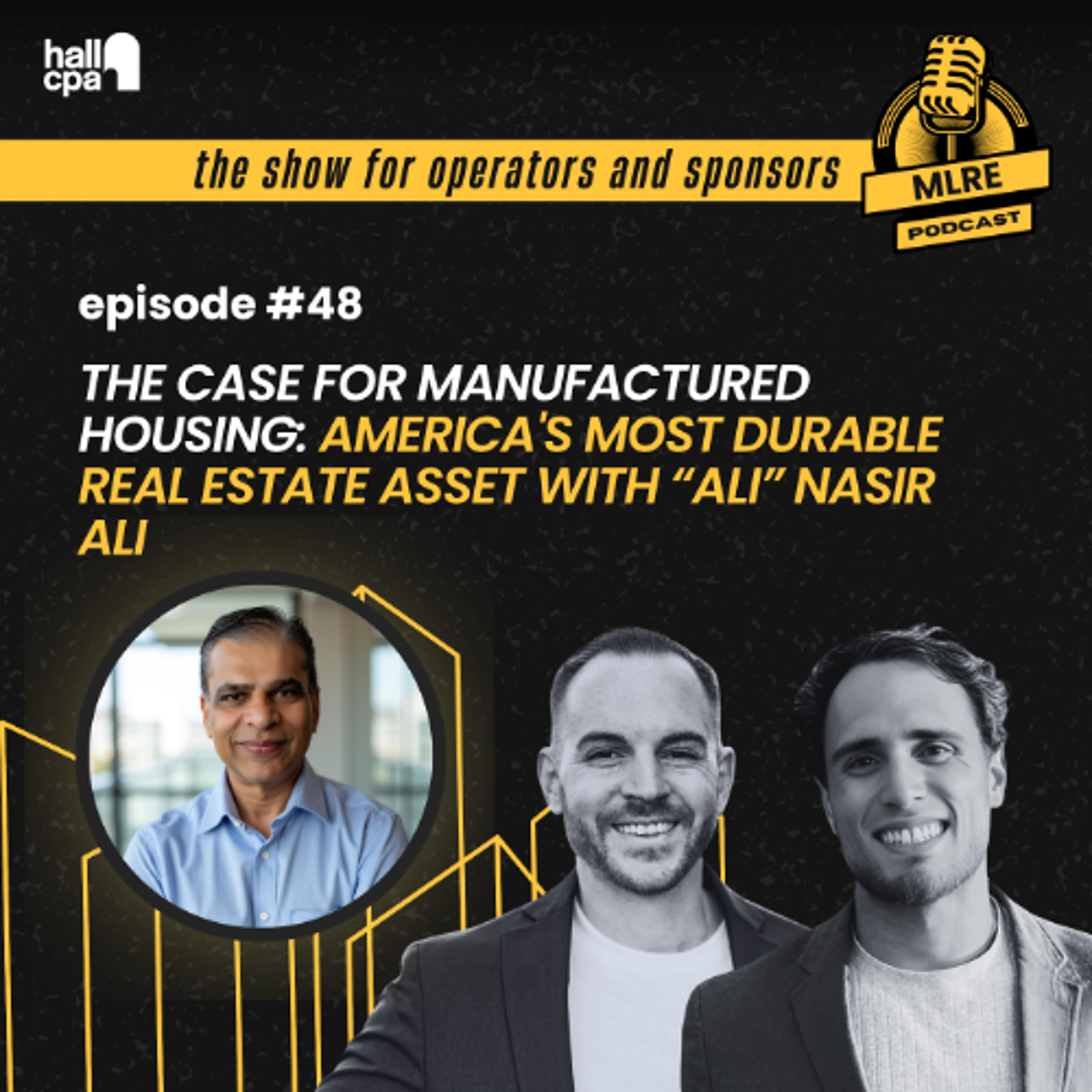
The Case for Manufactured Housing: America's Most Durable Real Estate Asset with "Ali" Nasir Ali
Jul 200:37:04Summary readyToday's manufactured housing communities are becoming one of the strongest-performing real estate asset classes available. In this episode of the Major League Real Estate Podcast, Nate Sosa and Thomas Castelli sit down with Ali, Managing Director and Co-Founder of Rise360 Ventures, whose family has spent more than 44 years investing in manufactured housing. Ali shares how growing up in the business shaped his investing philosophy, why manufactured housing consistently outperforms many traditional real estate asset classes, and how investors can benefit from stable cash flow, lower operating costs, tenant-owned homes, and powerful tax advantages. They also discuss: - Why tenant-owned homes create a better business model - How manufactured housing compares to multifamily investing - The tax benefits of cost segregation and bonus depreciation - Building generational wealth through 1031 exchanges - Why manufactured housing may help solve America's housing shortage - How AI is changing real estate investing and operations Request a free discovery meeting: go.therealestatecpa.com/mlre Register for FREE access to the 2026 Hall CPA Tax Strategy Summit: www.taxandlegalsummit.com/2026signup Join the Hall CPA Team: www.therealestatecpa.com/careers/ Get the Ultimate Guide for Real Estate Syndications: go.therealestatecpa.com/mlreultimateguide Submit your questions to: go.therealestatecpa.com/question Connect with Ali: rise360ventures.com The Major League Real Estate podcast is for general information purposes only and is not intended to provide, and should not be relied on for, tax, legal, investing, financial, or accounting advice. Information on the podcast may not constitute the most up-to-date legal or other information. No reader, user, or listener of this podcast should act or refrain from acting on the basis of information on this podcast without first seeking legal and tax advice from counsel in the relevant jurisdiction. Only your individual attorney and tax advisor can provide assurances that the information contained herein – and your interpretation of it – is applicable or appropriate to your particular situation. Use of, and access to, this podcast or any of the links or resources contained or mentioned within the podcast show and show notes do not create a relationship between the reader, user, or listener and podcast hosts, contributors, or guests. Any mention of third-party vendors, products, or services does not constitute an endorsement or recommendation. You should conduct your own due diligence before engaging with any vendor.
Summary
384. From $2.5M to $350K in Tax Savings: The RV Park Strategy
Jun 3000:25:39Summary readyRV parks have become one of the fastest-growing alternative real estate investments, but are the tax benefits really as good as people claim? In this episode, Thomas Castelli, CPA and Nate Sosa break down exactly how RV parks are taxed, why investors can often get significantly more bonus depreciation than traditional multifamily properties, and when RV parks may qualify for the same tax advantages as short-term rentals. In this episode you'll learn: - Why RV parks can generate exceptionally high bonus depreciation - How the 7-day average stay rule affects tax treatment - When RV parks qualify for short-term rental tax benefits - Material participation requirements investors often overlook - Purchase price allocations and why they matter - Depreciation recapture and 1031 exchange considerations - Whether RV park investing is the right fit for your goals Request a consultation from Hall CPA at go.therealestatecpa.com/3KSEev6 Register for FREE access to the 2026 Hall CPA Tax Strategy Summit: www.taxandlegalsummit.com/2026signup Join the Hall CPA Team: www.therealestatecpa.com/careers/ Connect with Eckard Enterprises: https://eckardenterprises.com/taxsmartrei/?utm_source=taxsmartrei&utm_medium=podcast_ad&utm_campaign=taxsmartrei_podcast_2026&utm_content=podcast_ad_copy_hyperlink Submit your question for Tom & Nathan: go.therealestatecpa.com/question The Tax Smart Real Estate Investors podcast is for general information purposes only and is not intended to provide, and should not be relied on for, tax, legal, or accounting advice. Information on the podcast may not constitute the most up-to-date legal or other information. No reader, user, or listener of this podcast should act or refrain from acting on the basis of information on this podcast without first seeking legal and tax advice from counsel in the relevant jurisdiction. Only your individual attorney and tax advisor can provide assurances that the information contained herein – and your interpretation of it – is applicable or appropriate to your particular situation. Use of, and access to, this podcast or any of the links or resources contained or mentioned within the podcast show and show notes do not create a relationship between the reader, user, or listener and podcast hosts, contributors, or guests. Any mention of third-party vendors, products, or services does not constitute an endorsement or recommendation. You should conduct your own due diligence before engaging with any vendor.
Summary
383. The $60,000 Tax Question: Expense It or Depreciate It?
Jun 2200:27:43Summary readyShould you expense a rental property cost immediately or capitalize and depreciate it over time? It's one of the most misunderstood areas of real estate investing and getting it wrong can cost you thousands in missed deductions or IRS headaches. In this episode, Thomas Castelli and Nate Sosa break down the decision framework every real estate investor needs to understand when dealing with repairs, renovations, improvements, appliances, HVAC systems, roofs, and other property expenses. You'll learn: - When an expense can be deducted immediately - How the De Minimis Safe Harbor works - The difference between repairs and capital improvements - When the BAR Test applies (Betterment, Adaptation, Restoration) - How cost segregation impacts your deductions - Bonus depreciation vs. Section 179 and when each makes sense - Common tax myths that trip up landlords and short-term rental owners Request a consultation from Hall CPA at go.therealestatecpa.com/3KSEev6 Get the FREE Ultimate STR Tax Strategy Bundle: go.therealestatecpa.com/strbundle Register for the FREE Investing Debate: go.therealestatecpa.com/debate Submit your question for Tom & Nathan: go.therealestatecpa.com/question The Tax Smart Real Estate Investors podcast is for general information purposes only and is not intended to provide, and should not be relied on for, tax, legal, or accounting advice. Information on the podcast may not constitute the most up-to-date legal or other information. No reader, user, or listener of this podcast should act or refrain from acting on the basis of information on this podcast without first seeking legal and tax advice from counsel in the relevant jurisdiction. Only your individual attorney and tax advisor can provide assurances that the information contained herein – and your interpretation of it – is applicable or appropriate to your particular situation. Use of, and access to, this podcast or any of the links or resources contained or mentioned within the podcast show and show notes do not create a relationship between the reader, user, or listener and podcast hosts, contributors, or guests. Any mention of third-party vendors, products, or services does not constitute an endorsement or recommendation. You should conduct your own due diligence before engaging with any vendor.
Summary
Why This Airline Pilot Chose Passive Investing (Oil & Gas, Senior Living, & More) with Tait Duryea
Jun 1800:50:34Summary readyIn this episode, Nathan Sosa sits down with Tait Duryea, Founder and CEO of Turbine Capital, for part one of the active vs. passive investing debate. Tait shares how he went from airline pilot to building an investment firm and explains why many high-income professionals are turning to passive investing opportunities in real estate and energy. The conversation breaks down today's most attractive asset classes, including multifamily, senior living, industrial real estate, and oil & gas. Tait also explains how passive investors can benefit from depreciation, K-1 losses, and unique tax incentives available through oil and gas investments. Topics Discussed: - The biggest misconception about passive investing - How to evaluate fund managers and syndicators - Senior living and industrial real estate opportunities - Oil & gas investing and tax benefits Request a free discovery meeting: go.therealestatecpa.com/mlre Get the Ultimate Guide for Real Estate Syndications: go.therealestatecpa.com/mlreultimateguide Submit your questions to: go.therealestatecpa.com/question Connect with Tait: https://www.turbinecap.com/ The Major League Real Estate podcast is for general information purposes only and is not intended to provide, and should not be relied on for, tax, legal, investing, financial, or accounting advice. Information on the podcast may not constitute the most up-to-date legal or other information. No reader, user, or listener of this podcast should act or refrain from acting on the basis of information on this podcast without first seeking legal and tax advice from counsel in the relevant jurisdiction. Only your individual attorney and tax advisor can provide assurances that the information contained herein – and your interpretation of it – is applicable or appropriate to your particular situation. Use of, and access to, this podcast or any of the links or resources contained or mentioned within the podcast show and show notes do not create a relationship between the reader, user, or listener and podcast hosts, contributors, or guests. Any mention of third-party vendors, products, or services does not constitute an endorsement or recommendation. You should conduct your own due diligence before engaging with any vendor.
Summary
382. Can Real Estate Developers Use Cost Segregation & Bonus Depreciation?
Jun 1600:21:41Summary readyIn this episode of the Tax Smart REI Podcast, Thomas Castelli and Nathan Sosa break down one of the most misunderstood areas of real estate taxation: how developers are taxed and when they can (and can't) take advantage of cost segregation and bonus depreciation. They explain the key difference between developers who build to sell versus developers who build to hold, why dealer status can eliminate depreciation benefits, and how entity structure decisions can impact your ability to defer taxes, execute 1031 exchanges, and maximize long-term wealth. Request a consultation from Hall CPA at go.therealestatecpa.com/3KSEev6 Get the FREE Ultimate STR Tax Strategy Bundle: go.therealestatecpa.com/strbundle Register for the FREE Investing Debate: go.therealestatecpa.com/debate Submit your question for Tom & Nathan: go.therealestatecpa.com/question The Tax Smart Real Estate Investors podcast is for general information purposes only and is not intended to provide, and should not be relied on for, tax, legal, or accounting advice. Information on the podcast may not constitute the most up-to-date legal or other information. No reader, user, or listener of this podcast should act or refrain from acting on the basis of information on this podcast without first seeking legal and tax advice from counsel in the relevant jurisdiction. Only your individual attorney and tax advisor can provide assurances that the information contained herein – and your interpretation of it – is applicable or appropriate to your particular situation. Use of, and access to, this podcast or any of the links or resources contained or mentioned within the podcast show and show notes do not create a relationship between the reader, user, or listener and podcast hosts, contributors, or guests. Any mention of third-party vendors, products, or services does not constitute an endorsement or recommendation. You should conduct your own due diligence before engaging with any vendor.
Summary
What Happens When an Investor Dies, Sells, or Gets Bought Out? Understanding Section 754 Elections
Jun 1100:18:56Summary readyWhat happens when an investor dies, sells their partnership interest, or gets bought out of a real estate syndication? In this episode, Thomas Castelli and Nate Sosa explain Section 754 elections and how they affect real estate syndications, private equity funds, and partnership structures. They cover when these elections make sense, when they don't, and why every syndicator should understand the impact on depreciation, investor reporting, and compliance. You'll learn: - What triggers a Section 754 election - How basis step-ups and step-downs work - Why partner deaths create unique tax opportunities - When buyouts and redemptions should be considered - Why large open-ended funds often avoid these elections - The operating agreement provisions every syndicator should review If you're a syndicator, fund manager, GP, or serious real estate investor, this is an important tax topic you don't want to overlook. Request a free discovery meeting: go.therealestatecpa.com/mlre Get the Ultimate Guide for Real Estate Syndications: go.therealestatecpa.com/mlreultimateguide Submit your questions to: go.therealestatecpa.com/question The Major League Real Estate podcast is for general information purposes only and is not intended to provide, and should not be relied on for, tax, legal, investing, financial, or accounting advice. Information on the podcast may not constitute the most up-to-date legal or other information. No reader, user, or listener of this podcast should act or refrain from acting on the basis of information on this podcast without first seeking legal and tax advice from counsel in the relevant jurisdiction. Only your individual attorney and tax advisor can provide assurances that the information contained herein – and your interpretation of it – is applicable or appropriate to your particular situation. Use of, and access to, this podcast or any of the links or resources contained or mentioned within the podcast show and show notes do not create a relationship between the reader, user, or listener and podcast hosts, contributors, or guests. Any mention of third-party vendors, products, or services does not constitute an endorsement or recommendation. You should conduct your own due diligence before engaging with any vendor.
Summary
381. The Top Entity Structuring Mistakes We've Seen (LLCs, S Corps, and Partnerships)
Jun 900:35:18Summary readyIn this episode of the Tax Smart REI Podcast, Thomas Castelli and Justin Shore break down some of the most common entity structure mistakes they see with real estate investors. They discuss when S corporations make sense (and when they don't), why rental properties generally shouldn't be held in S corps, the pitfalls of creating property management companies for your own rentals, and how multiple partnerships can dramatically increase tax preparation costs. They also cover important updates to Tennessee's FONCE exemption, explain accidental partnerships and joint ventures, and share practical ways to simplify your structure while maintaining legal protections. To become a client, request a consultation from Hall CPA, PLLC at go.therealestatecpa.com/3KSEev6 Get the FREE Ultimate STR Tax Strategy Bundle: go.therealestatecpa.com/strbundle Register for the FREE Investing Debate: go.therealestatecpa.com/debate Submit your question for Tom & Nathan: go.therealestatecpa.com/question The Tax Smart Real Estate Investors podcast is for general information purposes only and is not intended to provide, and should not be relied on for, tax, legal, or accounting advice. Information on the podcast may not constitute the most up-to-date legal or other information. No reader, user, or listener of this podcast should act or refrain from acting on the basis of information on this podcast without first seeking legal and tax advice from counsel in the relevant jurisdiction. Only your individual attorney and tax advisor can provide assurances that the information contained herein – and your interpretation of it – is applicable or appropriate to your particular situation. Use of, and access to, this podcast or any of the links or resources contained or mentioned within the podcast show and show notes do not create a relationship between the reader, user, or listener and podcast hosts, contributors, or guests. Any mention of third-party vendors, products, or services does not constitute an endorsement or recommendation. You should conduct your own due diligence before engaging with any vendor.
Summary
MLRE: 1031 Exchange Capital in Syndications: TICs, DSTs, and UPREITs Explained
Jun 400:26:32Summary readyCan investors use 1031 exchange proceeds to invest in real estate syndications? The answer is yes, but it's not nearly as simple as many sponsors hope. In this episode of the Major League Real Estate Podcast, Nate Sosa and Thomas Castelli break down the most common structures used to bring 1031 exchange capital into syndications, including Tenants in Common (TIC) arrangements, Delaware Statutory Trusts (DSTs), and 721 Exchange/UPREIT structures. They discuss why 1031 investors are increasingly looking for passive investment options, the challenges syndicators face when accepting exchange capital, and the operational, legal, and tax considerations that come with each strategy. Request a free discovery meeting: go.therealestatecpa.com/mlre Get the Ultimate Guide for Real Estate Syndications: go.therealestatecpa.com/mlreultimateguide Submit your questions to: go.therealestatecpa.com/question The Major League Real Estate podcast is for general information purposes only and is not intended to provide, and should not be relied on for, tax, legal, investing, financial, or accounting advice. Information on the podcast may not constitute the most up-to-date legal or other information. No reader, user, or listener of this podcast should act or refrain from acting on the basis of information on this podcast without first seeking legal and tax advice from counsel in the relevant jurisdiction. Only your individual attorney and tax advisor can provide assurances that the information contained herein – and your interpretation of it – is applicable or appropriate to your particular situation. Use of, and access to, this podcast or any of the links or resources contained or mentioned within the podcast show and show notes do not create a relationship between the reader, user, or listener and podcast hosts, contributors, or guests. Any mention of third-party vendors, products, or services does not constitute an endorsement or recommendation. You should conduct your own due diligence before engaging with any vendor.
Summary
380. The IRS May Owe You a COVID-Era Refund: What to Know Before July 2026
Jun 200:23:01Summary readyDid you pay IRS penalties or interest during the COVID years? The IRS may owe you a refund. In this episode, Thomas Castelli and Nathan Sosa break down two major court cases that could impact taxpayers who paid penalties and interest between 2020 and 2023. They explain why recent court rulings have challenged the IRS's interpretation of COVID-era tax relief, who may be eligible for a refund, and what steps you should take before the July 2026 deadline. You'll learn: - Why the IRS's handling of COVID-era penalties and interest is being challenged - How the Kwong and Abdo cases could affect taxpayers - Who may qualify for a refund - How to check your IRS transcripts for potential claims - What a protective claim is and why filing one may be important - Why real estate investors and business owners should pay particular attention Plus, Thomas and Nathan answer a listener question about short-term rental tax strategy, cost segregation studies, and how personal use can impact your ability to utilize losses. Important: This opportunity is not guaranteed, and the IRS is continuing to challenge portions of these rulings. However, taxpayers may need to take action before July 10, 2026, to preserve their rights. If you're wondering whether you may qualify, this is an episode you won't want to miss. To become a client, request a consultation from Hall CPA, PLLC at go.therealestatecpa.com/3KSEev6 Get the FREE Ultimate STR Tax Strategy Bundle: go.therealestatecpa.com/strbundle Register for the FREE Investing Debate: go.therealestatecpa.com/debate Submit your question for Tom & Nathan: go.therealestatecpa.com/question The Tax Smart Real Estate Investors podcast is for general information purposes only and is not intended to provide, and should not be relied on for, tax, legal, or accounting advice. Information on the podcast may not constitute the most up-to-date legal or other information. No reader, user, or listener of this podcast should act or refrain from acting on the basis of information on this podcast without first seeking legal and tax advice from counsel in the relevant jurisdiction. Only your individual attorney and tax advisor can provide assurances that the information contained herein – and your interpretation of it – is applicable or appropriate to your particular situation. Use of, and access to, this podcast or any of the links or resources contained or mentioned within the podcast show and show notes do not create a relationship between the reader, user, or listener and podcast hosts, contributors, or guests. Any mention of third-party vendors, products, or services does not constitute an endorsement or recommendation. You should conduct your own due diligence before engaging with any vendor.
Summary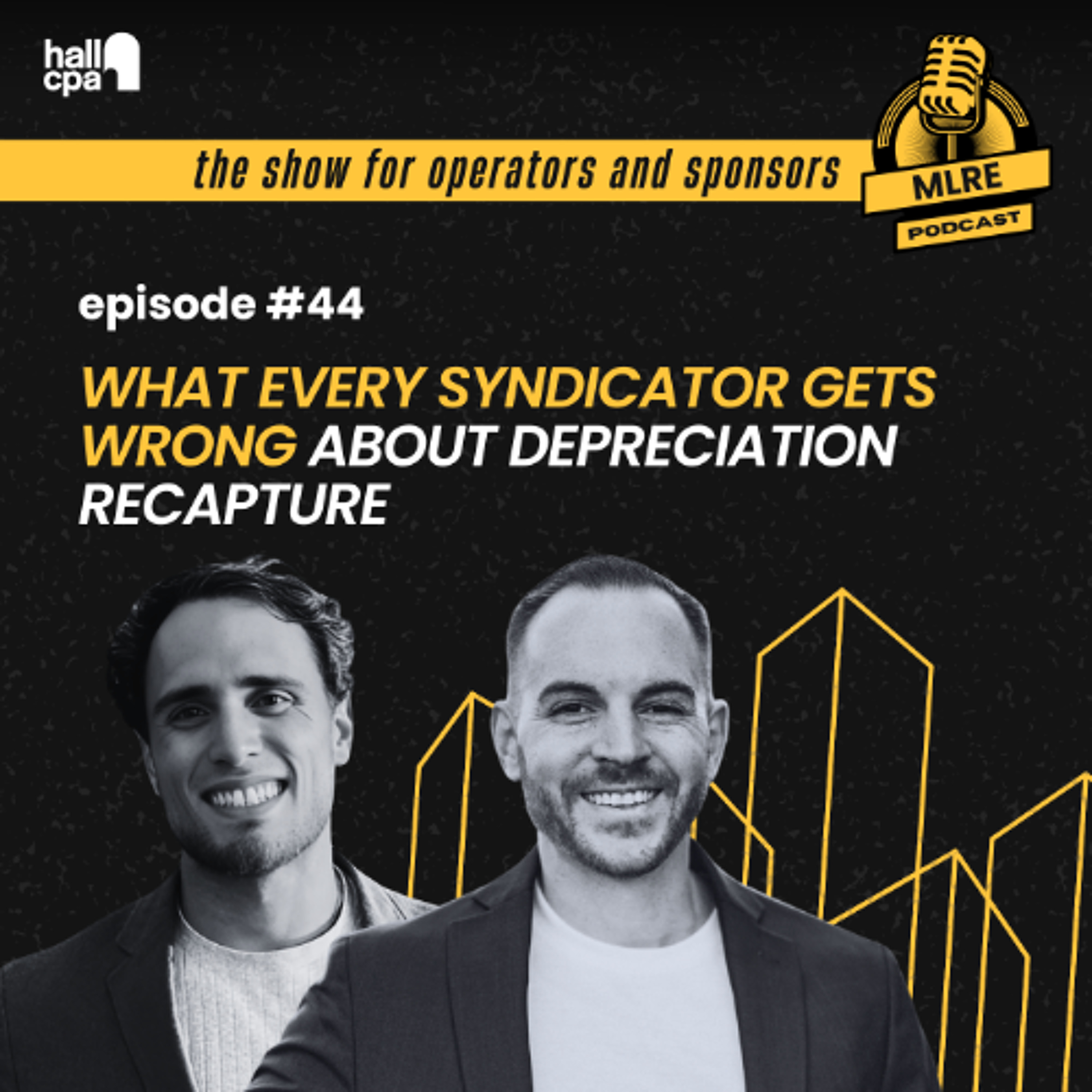
MLRE: What Every Syndicator Gets Wrong About Depreciation Recapture
May 2800:18:07Summary readyWhat happens when a real estate syndication exits and all that bonus depreciation comes back into play? In this episode, Nate Sosa and Thomas Castelli break down depreciation recapture, cost segregation, and the tax implications GPs and LPs need to understand before selling a deal. Topics discussed include: - Bonus depreciation and cost segregation - Depreciation recapture mechanics - 1245 vs. 1250 vs. 1231 gains - 1031 exchanges in syndications - Refinancing strategies - Partial asset dispositions - LP communication and tax planning - Time value of money and tax deferral Request a free discovery meeting: go.therealestatecpa.com/mlre Get the Ultimate Guide for Real Estate Syndications: go.therealestatecpa.com/mlreultimateguide Submit your questions to: go.therealestatecpa.com/question The Major League Real Estate podcast is for general information purposes only and is not intended to provide, and should not be relied on for, tax, legal, investing, financial, or accounting advice. Information on the podcast may not constitute the most up-to-date legal or other information. No reader, user, or listener of this podcast should act or refrain from acting on the basis of information on this podcast without first seeking legal and tax advice from counsel in the relevant jurisdiction. Only your individual attorney and tax advisor can provide assurances that the information contained herein – and your interpretation of it – is applicable or appropriate to your particular situation. Use of, and access to, this podcast or any of the links or resources contained or mentioned within the podcast show and show notes do not create a relationship between the reader, user, or listener and podcast hosts, contributors, or guests. Any mention of third-party vendors, products, or services does not constitute an endorsement or recommendation. You should conduct your own due diligence before engaging with any vendor.
Summary