Podcast
Tech for Business
Hosted by Computer Integration Technologies (CIT) · EN
Overwhelmed by technology acronyms? Stressing about cybersecurity? Join team members from CIT and their guests as they discuss technology for small to medium businesses.
22episodes
Episodes
Newest firstAll episodes
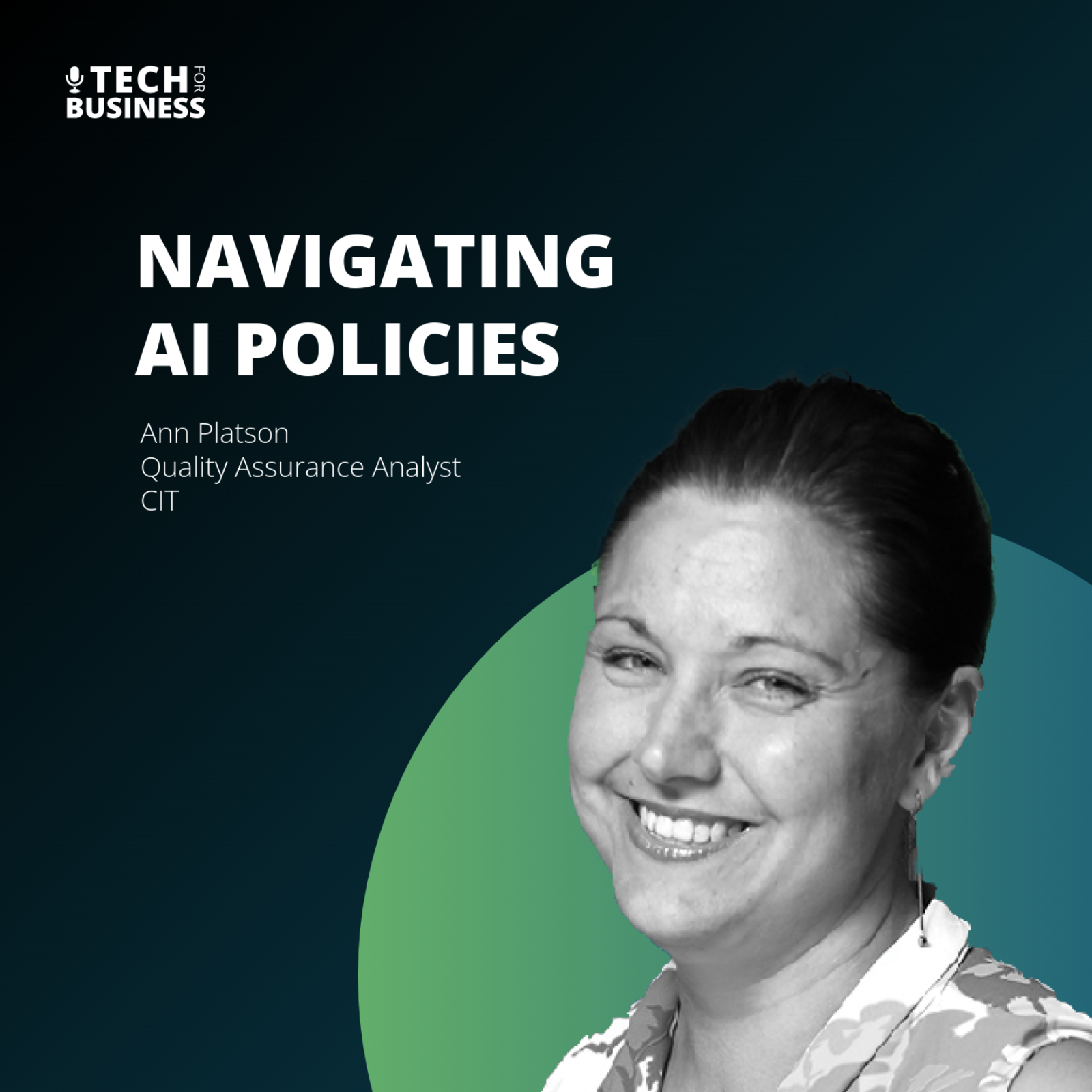
Navigating AI Policies
4d ago00:07:12Tap to summarizeAnn, CIT’s Quality Assurance Analyst, recaps a recent webinar on what an AI policy is, why it matters, and how straightforward it can be to document, implement, and communicate to a team as “bumpers” for responsible AI use. She advises rolling out an AI policy like any other organizational change—routine, transparent communication that frames it as guidance and risk mitigation rather than a crackdown. Ann notes that even as AI tools and workflows evolve and reduce the human-in-the-loop, the core principle should remain: humans are ultimately responsible for outputs and must review results. She encourages leaders to define acceptable risk up front, communicate benefits, and revisit policies at least twice a year or after major changes, assigning ownership to stay ahead of evolving tools and compliance.00:00 Webinar Recap Intro00:38 Rolling Out the Policy02:01 Keeping Humans Accountable03:24 What Leaders Miss About Risk05:08 One Year Later Outlook06:37 Wrap UpCheck out the full webinar here: https://www.citsolutions.net/events/webinars/ai-starter-series/
Transcribe →
Web Application Firewalls Explained
2w ago00:47:15Tap to summarizeThis week we are joined by Michael Collins, Principal Consulting Solutions Architect at Barracuda, to explain what a web application firewall (WAF) is and how it differs from a network firewall. Along with Nate, CIT's Director of Cybersecurity, we explore how WAFs help defend websites, web apps, and APIs against threats like injection, bot attacks, brute force attempts, and DDoS, especially as AI “vibe coding” leads to insecure public-facing applications. The episode covers choosing basic vs enterprise-grade WAF protection based on business criticality and sensitive data, tuning to reduce false positives using detect vs block modes and staged deployment, visibility into daily attacks, geofencing and IP blocking, and how WAFs support compliance efforts like PCI and HIPAA as part of a broader security strategy.00:27 What Is a WAF03:58 Defining Web Apps07:41 APIs and Vibe Coding Risks11:12 Choosing the Right WAF14:31 Tuning and False Positives20:52 Onboarding Detect to Block28:06 Compliance and Regulations31:48 Visibility and Geofencing38:13 DDoS Story and Wrap Up42:54 Testing and Deployment Options46:35 Final Thanks and CTACheck out more from Barracuda
Transcribe →
AI & Cyber Threats
2w ago00:16:58Tap to summarizeNate, Director of Cybersecurity, recaps a webinar on how threat actors weaponize AI to run efficient underground businesses, using it to speed up phishing, malware creation, data parsing after account compromise, and to lower the skill needed for attacks, including deepfakes. He emphasizes AI itself isn’t “bad,” but intent matters, and the best protections are fundamentals: vigilance, validation, and strong financial controls. The discussion covers why deepfakes work—circumstantial timing and emotional manipulation—and why training should focus on core red flags rather than only deepfakes. Practical wins include two-person review for large wire transfers, moving to phishing-resistant MFA/passkeys, watching for “evil proxy” credential pages, setting AI usage guardrails to avoid shadow AI, and creating an incident response plan with clear contacts and insurance details. Nate also predicts maturing AI-driven defense tools becoming more accessible to SMBs.00:00 Webinar Recap Setup00:29 AI as Criminal Business03:40 Deepfakes and Why We Fall07:26 Quick Wins for Security09:00 MFA and Evil Proxies10:37 AI Guardrails Not Bans12:15 Incident Response Planning13:26 Future of AI Defense16:28 Wrap Up and ResourcesCheck out the full series right here! https://www.citsolutions.net/events/webinars/ai-starter-series/
Transcribe →
Healthcare Compliance Updates
4w ago00:26:22Tap to summarizeIn this episode, Nate, CIT’s director of cybersecurity discusses proposed HIPAA Security Rule overhauls aimed at strengthening healthcare cybersecurity after major breaches and downtime incidents. Nate explains that the vote on the proposed changes was pushed back by one year (to 2027), but organizations should still start planning because implementation is typically required within 180 days of the final rule. Key shifts include moving many controls from “addressable” to “required,” enforcing multi-factor authentication for access to ePHI/EMR systems, requiring encryption in transit and at rest with no exceptions, and strengthening risk analysis and governance with formal documentation, asset inventories, network/data flow mapping, and executive engagement. The proposal also emphasizes incident response with a 72-hour service restoration plan, more frequent vulnerability scanning, annual penetration testing, and third-party assessments.00:00 HIPAA Rule Update00:22 Why HIPAA Is Outdated01:58 Breaches Drive Reform02:46 Timeline And Delay04:14 Addressable To Required04:57 MFA And Encryption Mandates06:50 Risk Analysis And IR Plan09:27 Cost And Budget Impact13:08 Biggest Hurdle MFA16:33 How It Compares To Others18:15 What Might Change21:58 Vendors And Education23:23 Action Items And Wrap UpResource: https://www.hipaajournal.com/hipaa-security-rule-update-postponed/
Transcribe →
AI vs Automation
Jul 800:35:52Tap to summarizeOn the Tech for Business podcast, the host talks with Kelsey, an AI operations coordinator, about the difference between automation and AI and why people confuse them. Kelsey explains that automation follows rules you provide while AI figures out the rules, using analogies like a dishwasher (automation) versus a cook (AI), and notes marketing has contributed by labeling many products as “AI.” They discuss when the distinction matters, focusing on outcomes, resource usage, and measuring impact through output quality and time saved rather than “using AI” as a goal. The episode covers where automation fits best (repetitive, predictable tasks) versus AI (judgment, messy inputs, agentic planning), and warns that adopting AI without documented processes and clean data can accelerate broken workflows, waste money, and create risk, emphasizing problem-finding over tool-chasing.00:00 AI vs Automation Intro00:31 Simple Definitions01:14 Kitchen Metaphor02:39 Why The Confusion04:23 Does The Difference Matter08:08 Automation In Business10:36 Where AI Fits In11:47 Using AI Without Automation14:27 Overrelying On Automation19:23 AI Without Groundwork29:03 Human Context Still Matters32:31 Find The Real Problem35:28 Wrap Up And Next Episode
Transcribe →
Shaping Cybersecurity: Educating the Next Generation
Jun 1700:44:19Tap to summarizeOn the Tech for Business podcast, Collin (Manager of Solutions Engineering at ThreatLocker) and Nate (Director of Cybersecurity at CIT) discuss how to build cybersecurity awareness and secure habits earlier—especially in K–12 and universities—based on Colin’s dark web presentations showing frequent compromises in education. They explore generational shifts as kids adopt internet-connected devices earlier, the need to normalize fundamentals like password management, passphrases, password managers, and MFA/2FA (even for gaming accounts), and the growing importance of social engineering and spotting AI deepfakes. The group debates who should own curriculum standards, notes North Dakota’s requirement for at least one computer science or cybersecurity course to graduate, and considers “digital citizenship,” parent responsibility, and the role of schools, industry, and regulation. They also discuss improving workplace onboarding and training through better access controls and aptitude-based, personalized education.00:00 Meet the Guests00:46 Why Youth Cyber Matters03:53 Campus Reality Check05:56 Kids Tech Skills Gap08:33 Gaming as Security Hook10:51 Curriculum Needs Updating13:26 Digital Citizenship Debate15:12 Parents Schools and Equity17:34 Regulation and Age Checks21:45 Core Fundamentals to Teach22:18 Passphrases Basics22:40 Deepfakes And Social Engineering24:26 Social Media Risks For Kids25:53 Spotting Tech Skill Gaps27:25 Curiosity As A Tech Signal28:42 Parenting Misinformation Lessons30:23 Rethinking Security Training33:17 Tools Over Awareness Alone36:15 Aptitude Tests And Personalization40:24 Curriculum And Who Decides41:08 Big Tech Shaping Education43:51 Wrap Up And Next Episode
Transcribe →
Build your AI Morning Routine
Jun 301:00:33Tap to summarizeKelsey (AI Operations Coordinator at CIT) and Kyle (President & CEO) explain how they built an AI “morning briefing” and daily recap workflow that functions like an executive assistant, pulling context from connected tools such as Outlook/365, Teams, Monday.com or Notion, SharePoint, and a ticketing system. Kyle describes using Claude Code with simple slash commands (e.g., /morning and /daily recap) to surface meetings, open tasks, priorities, and prep context, then updating to-dos throughout the day to avoid relying on an inbox as a task list. They demonstrate Claude’s integrations, scheduled briefings, and “skills,” clarify skills vs. agents (and token/cost benefits), and discuss persistent memory via tools like Monday/Notion. They share a universal setup guide and prompt template, touch on security/governance cautions, and briefly explain OpenClaw and its risks.00:00 Morning Briefing Intro00:30 Building an AI Assistant01:30 Morning and Daily Recap03:44 Inbox Overload Problem05:16 Live Demo Setup05:29 Connecting Work Tools07:03 Skills Explained09:59 Agents vs Skills14:18 Morning Briefing Walkthrough15:17 Persistent Memory Systems17:29 Email and Schedule Highlights18:53 Tickets and File Examples19:36 Manual vs Auto Memory24:40 Choosing Notion or Monday30:37 Make It Exist Then Good30:57 Next Skill Idea Triaging31:45 Cited AI Summaries32:22 Universal Setup Guide33:02 Tool Stack Options33:43 Add Personal Sparkle35:48 Data Governance PSA38:25 Setup Paths and Automation39:03 Cowork and Agent Actions40:38 Copilot and Platform Roadmap47:13 Prompt Template Walkthrough50:00 OpenClaw Explained53:36 Sandboxing and Safety58:13 Wrap Up and Resources
Transcribe →
Weekly AI News Recap
Apr 2900:53:01Tap to summarizeKelsey talks with CIT President and CEO Kyle Etter about recent AI releases like GPT 5.4’s native computer control, Gemini 3.1 updates, and the shift from chatbots to agentic AI that can navigate business systems and complete real work. They discuss why IT infrastructure must now include AI governance, identity, logging, permissions, and emerging liability and insurance considerations for “digital teammates,” noting early examples like insured voice agents. Kyle advises deploying narrow, task-specific agents with strong guardrails, human-in-the-loop checks, and layered QA/security agents to reduce risk. They also cover preventing shadow AI by providing authorized business licenses, training staff to manage agents, and why ROI is increasingly driven by integrating agents into existing software and data workflows, including analysis and data cleanup.00:00 Welcome and AI Shift00:50 GPT 5.4 Computer Control03:16 Governance and Liability06:31 Designing Digital Workers12:05 Risks and Guardrails18:35 Jobs and Agent Managers23:34 Stopping Shadow AI26:04 Training and First Use Cases28:51 AI Licensing ROI29:35 Software Over Hardware30:26 Agents Deliver Value33:57 Data Cleanup With AI36:58 Conversational Analytics40:34 Automations Built Faster43:34 Governance And Guardrails44:27 Capture Ideas With Tools48:29 AI To Do Assistant52:03 Wrap Up And Resources
Transcribe →
AI Live Chats: Show Me the ROI
Apr 800:27:11Tap to summarizeIn this third LinkedIn Live AI chat, Kelsey and Todd discuss how to define and prove AI ROI, arguing many AI projects fail due to poorly defined returns beyond simple time-savings. They distinguish AI activity from AI value, stressing goal-driven, iterative adoption and measurable milestones executives and CFOs can trust—typically cost savings (growth without headcount) or revenue impact (more leads, faster launches, higher win rates). They walk through ROI approaches for practical scenarios including SOP creation and searchable copilots, marketing email HTML generation, new-hire self-serve process help, AI-assisted RFP drafting, job descriptions and onboarding templates, automated revenue-report narratives, customer success call recaps, contract review prep, and meeting-to-action-item pipelines, emphasizing reduced rework, fewer dropped tasks, better decisions, improved customer satisfaction and retention, and lowered legal and operational costs.00:00 Live Chat Kickoff00:14 Defining AI ROI01:39 Activity Versus Value02:33 Proving ROI to CFOs04:19 Measuring After the Fact06:04 ROI Scenario Challenge06:42 SOPs and Process Consistency09:36 Marketing Email Automation10:49 Onboarding and New Hire Support12:53 Sales RFP Drafting13:58 HR Docs and Consistency15:44 Finance Reporting Summaries18:55 Customer Success Recaps20:27 Legal Contract Review22:06 Meeting Actions and Accountability24:00 Todd’s ROI Tips26:02 Wrap Up and Next Episode
Transcribe →
AI Live Chats: The Prompt Doctor
Mar 2400:30:18Tap to summarizeIn this LinkedIn Live episode, host Kelsey and Todd discuss how to improve AI workflow results by moving beyond vague prompts like “write me a marketing email” and using an iterative approach. Todd shares the CRIT framework (Context, Role, Interview, Task), recommends prompting AI to ask clarifying questions one at a time, and stresses specifying desired outputs such as a Word document, table, or executive summary. They demo a prompt-building tool called Prompt Cowboy and discuss using screenshots or PDFs to extract, simplify, or reformat information, including translating legal documents into plain English. The conversation highlights governance concerns such as AI memory, paid vs. unpaid tools, and avoiding sensitive data like PII, employee information, financials, and health details. Todd also mentions agents for specialized compliance use cases and a voice tool called Whisper Flow for capturing ideas while away from a keyboard.00:00 Welcome and Setup00:55 Why Prompts Fail01:49 CRIT Prompt Framework04:10 Handling Complex Requests05:50 Prompt Cowboy Demo07:58 Iterative Prompting Tips10:32 Screenshots and Privacy16:23 Everyday Business Use Cases19:04 Saved Prompts Debate26:44 Agents and Compliance27:53 Wrap Up and Voice Tools30:05 Outro and Next Episode
Transcribe →