← TFTC: A Bitcoin Podcast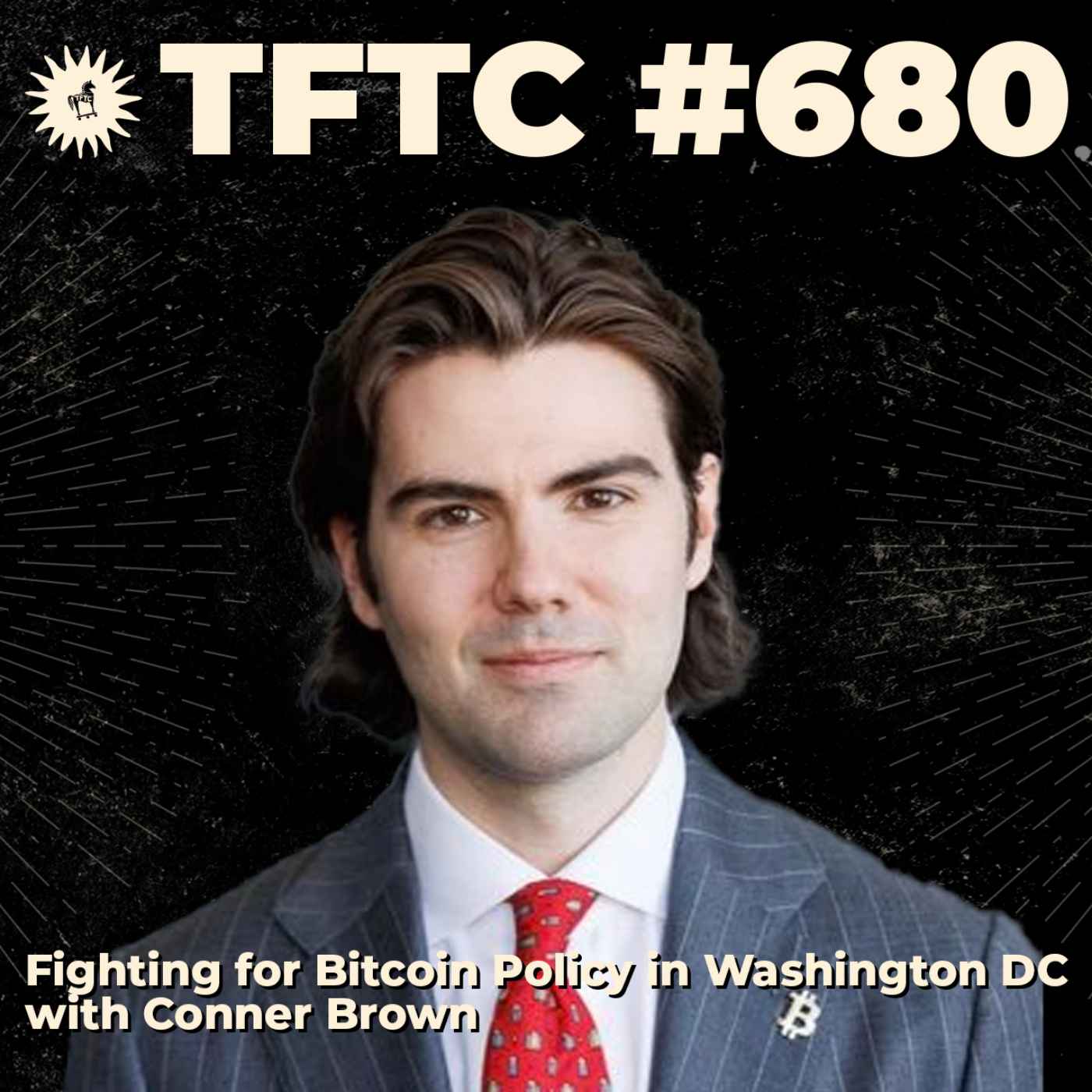
Loading summary
Transcript110 lines
- [00:07]
Connor Brown
You've had a dynamic where money's become freer than free.
- [00:11]
Marty Bent
If you talk about a Fed just.
- [00:12]
Connor Brown
Gone nuts, all the central banks going nuts. So it's all acting like safe haven. I believe that in a world where central bankers are tripping over themselves to devalue their currency, Bitcoin wins. In the world of fiat currencies, Bitcoin is the victor. I mean, that's part of the bull case for Bitco. If you're not paying attention, you probably should be. Probably should be. Probably should be.
- [00:37]
Marty Bent
Connor Brown. You got me to wear slacks and penny loafers. Put on a sweater, button down.
- [00:42]
Connor Brown
Welcome to Washington, Marty. It's good to have you.
- [00:44]
Marty Bent
It's good to be here. Here we're looks maxing.
- [00:47]
Connor Brown
You've got to be looks maxing. That's a key point here in D.C. everyone is focused on appearance, whether you like it or not. So you've got to look the part. You got to play the game a bit. And you did a great job. I got to say, the loafers look great. The socks are good. This is good.
- [01:01]
Marty Bent
Yeah. I did go to a prep school, so, yeah, I deep ingrained in my memory, my DNA. Now at this point.
- [01:07]
Connor Brown
Yeah, you fit right in. Yeah, I would have never suspected, but.
- [01:12]
Marty Bent
It'S been six, almost six and a half years since you were last on the show. You're on episode 87 in July of 2019. I think we're 600 episodes past that now at this point, which is crazy to think.
- [01:25]
Connor Brown
It is. Crazy Freaks. I missed you. It's been good. It's been a long time. It's crazy to think all these years later, here we are, still the same people, man, the world has changed so much, but bitcoin's still what we're focused on. I think that's important.
- [01:45]
Marty Bent
The price when you first came on was $11,500 right around there. We're currently dumping as we speak to around $105,000. People are scared.
- [01:55]
Connor Brown
It's funny. It's funny to imagine if ourselves then could see this and we'd be like, oh, yeah, we're down. It's down only over 100k now.
- [02:06]
Marty Bent
But I mean, thinking of how much has changed since then, obviously we've had Covid Microstrategy went on their sort of strategy of putting bitcoin on their corporate treasury. Bitcoin has entered the zeitgeist. It is a brand name in homes around the world. And just last night we were talking over coffee before we came over here, Donald Trump was on 60 Minutes saying that this is a race. Bitcoin and crypto is a race that we need to win. Just starting there. How profound do you think that is that we're at this point right now?
- [02:44]
Connor Brown
Well, it's crazy because when we had recorded the podcast back in, what, 2019, he had just put out the tweet that said something like, I don't like bitcoin. I don't trust it. It's not nearly as good as the dollar. And. And to think, in just a few short years, how far he's come to say, not only is this something that is positive, but it's something that America has to be the leader in. It would be crazy to tell us that in the past and be like, oh, yeah, in only just, let's say, five years, he's going to have completely shifted his view on it and is actually going to be seeing this as a competitive aspect of staying as the world leader in technology. So, yeah, it is good, but I don't think that we've necessarily won. I don't think that our. I don't think that America is quite there yet. And I think there's still a lot more that we can do to solidify our position. And I think that is, you know, what we're working on every day here in D.C. is that we are off to a great start. We've shifted from bitcoin being seen as sort of a nuisance by both parties, and suddenly more and more people are understanding how important this is, but there's still a lot of education that has to happen.
- [04:06]
Marty Bent
Well, and for anybody listening who may not be aware of you, Connor, and the work that you've been doing, particularly on the Hill over the last four, five years, if there's anybody who can say what was just said with confidence, it is you. And I think this is a good opportunity to basically let the audience know what you've been up to, what you were doing under Senator Lummis, the work that was going on behind the scenes as it pertains to the strategic bitcoin reserve and the bitcoin act. What have you seen, sir?
- [04:38]
Connor Brown
Yeah, well, Freaks, I've missed you. It's been a long time. I have not completely left the bitcoin scene. I've just been sort of working behind the scenes a bit. But, yeah, I think to sort of go over a quick timeline of where I've been. I ended up working for Senator Lummis as her bitcoin advisor and saw a lot firsthand of how Washington thinks about Bitcoin. What the state of bitcoin policy is, and I guess what ultimately led me there is I was working in the private sector after a few years, after I graduated law school, I worked for a few years at different corporate law firms, and I was working at a firm in New York. I tried to get them interested in bitcoin treasury companies back in 2020, actually, hilariously, Michael Saylor had just announced his first bitcoin acquisition and tried to get him to pitch bitcoin to our partnership at the law firm. He came and spoke, and they didn't take it seriously, so that was maybe a bit too early. Then I worked at another firm here in D.C. on sort of fintech and blockchain practice and saw firsthand the attacks by the SEC on different companies. And I was working on enforcement actions. But ultimately I still really cared about bitcoin. And I had been in touch with Senator Lummis staff for a few years, and a spot opened up to be her bitcoin and AI advisor. And I was going back and forth, but decided that at the time, there were still a lot of attacks on bitcoin. This was late 23, early 24, and it seemed very obvious that we needed someone to really defend bitcoin, to bring knowledge to the Hill. And Senator Lummis was really one of the only people that was talking about this. And I decided to go see what it was like. And it was just the most fascinating experience of my life, truly. It changed how I view myself and how important I see the political system now. And it was just a fantastic experience. But, yeah, so that started in 24, and learned a lot through that about how the Hill works, how you can take an idea, and really, with just a good idea, you can have incredible amounts of changes. So, yeah, it's been a crazy past five years.
- [07:30]
Marty Bent
Well, let's dive into this. How was the sausage made? What was your expectation going in?
- [07:35]
Connor Brown
How was the sausage made? I actually didn't know what to expect going in. So I had met Senator Lummis one time in passing at just like a conference, basically. And I had been told she's a great bitcoiner. You've got a meter. And decided to take the job. But without really knowing what to expect, I walk in the first day, I'm walking through the office, I'm seeing bitcoin signs on some desk. I'm like, okay, this is good, this is good. And then I notice everyone has a copy of Gradually, then suddenly sitting on their desk, and there were copies of the bitcoin standard. And then I was like, okay, this is real, this is the real deal. And got to know her. And sure enough, we hit it off pretty quickly because she really is a bitcoiner. She really is someone who's read all the same things we've read. She's read the same Parker Lewis books and listened to a lot of the same content. And so I didn't know what to expect. But I came into an environment that was just the perfect place for me. And it was also a way for me to start to educate others on the Hill about bitcoin because our office was understanding bitcoin. But none of the other offices, they didn't really understand bitcoin deeply. So it was a great opportunity to just go around and start teaching people and spreading the good word about bitcoin.
- [09:13]
Marty Bent
What's that process like? What's it like saying, hey, we're Senator Lummis, her office, we're the bitcoin experts. Is it a lot of outreach or people coming to you? What is that like?
- [09:25]
Connor Brown
It's very self driven and a lot of people might not even know this. It's sort of a black box how the legislative system works. So to give you sort of a rough sense of it, each office has different functions. So you have the communications team, you have the scheduling team, you have the legislative team. And I was part of the legislative team. And each office has basically, let's say between, depending on the size of the office, a Senate versus House office, between five to 10 people, sometimes more, that are working on legislative issues. And each member has a staffer who's responsible for, let's say financial services or bitcoin and digital assets. And so my job was to reach out to all of the staffers in the other offices. I was on the legislative team and I was responsible for reaching out and saying, hey, you are Senator Cruz's staffer or you're Senator Blackburn staffer. Hey, let's talk about bitcoin and going out and just figuring out who's interested in this and who cares about it and also explain to people. Bitcoin touches many policy areas in ways people don't understand or don't anticipate. And so spreading the good word about bitcoin and explaining here's what bitcoin is. Bitcoin 101 fundamentals, how the network works, why it's trustworthy. It's a lot of just self motivated getting to know people and teaching them about bitcoin. And a lot of people are very interested, but they've heard a lot about it. It's talked a lot about in politics, but they've never had someone who can really explain it to them in a way that makes sense to them. So it's a lot of meeting people where they're at and just hitting the pavement and knocking on doors.
- [11:24]
Marty Bent
Considering the scope of all the policy decisions that are being made in the city, not only as it pertains to bitcoin, healthcare, energy, whatever it may be, how hard is it to get an individual staffer to focus on something very specific like bitcoin?
- [11:40]
Connor Brown
It depends on how you pitch it. I mean, I found that people were actually really receptive, surprisingly receptive. I had no clue what it was going to be like going in, how closed off people would be. But the reality is that the Hill is a very social place and everyone is wanting to get to know everyone. And for me, it was sort of like, wow, it's rare for someone to come from outside the Hill and that really cares about a specific policy issue and to explain why it's important. So I was surprised at how receptive people were. I mean, you have to be creative, right? So we had bitcoin pizza day. We had bitcoin and bagels. We had all sorts of different. You know, whenever there was just some sort of random event we could come up with that's bitcoin related, we would do it. But I found that people were actually very receptive. And that comes down to meeting people where they're at and explaining to them in a way that is palatable to them. But across the political spectrum, it was not a partisan thing. And I don't think that bitcoin is a partisan thing. Across the aisle, you can think about what bitcoin represents and what they care about and explain how powerful a tool bitcoin is. And I think people were actually hungry for that. It was surprising, but, yeah, it was, I think, made a lot of very positive inroads to people who otherwise probably would not have thought about this, wouldn't have been on the radar.
- [13:03]
Marty Bent
Well, there's been an obvious evolution in a positive sense, in terms of the posturing from DC towards bitcoin, particularly on the right, but even on the left, you gotta like Ro Khanna, Richie Torres and many others who understand that this is something that they should care about and lean into. What, in your observation, were some of the events or framings of how you were pitching bitcoin that made people wake up and say, hey, this is something we need to care about, focus on?
- [13:34]
Connor Brown
Yeah, I think that focusing on bitcoin, not in a partisan sense, but just in a broad historical sense, that fundamentally this is a historical event that we've seen play out many times in the past, that bitcoin, like other monetary paradigm shifts, it simply is better money. It simply is better savings technology. And just like we've seen play out, whether it be the shift from seashells and cowrie beads or salts to precious metals, from silver to gold, that the uptake of bitcoin is just another technological shift and that we should be thinking about how we can capitalize on that. Just like America was the home of the Internet and all the benefits that brought and talking about it in these broad historical paradigm shift ways, rather than it's on this incremental partisan issue going to win points or lose points. I think that is what people are very receptive to. And ultimately, I think the concept of bitcoin's unique circumstances, it came out of the financial crisis. No one is happy with how the financial crisis was handled. I don't think there's anyone that thought, you know what, they did a good job that the system was set up right. I mean, you might have a different story for why it happened or how it was solved, but no one came away from that thinking, yeah, that was a good thing that happened. And so having bitcoin as something that came out of that environment and that is something that can be a savings tool for anyone, for the individual, for the corporation and even for the state, I think is something that people are very receptive to and they just haven't thought about bitcoin like that. I think a lot of it is, you know, there's not even for some people, an understanding between bitcoin and the long tail of crypto schemes that we've seen blow up. You know, we've seen, they know and are constantly reading articles about different rug pulls or a lot of them knew Sam Bankman fried before FTX fell apart. And so delineating bitcoin from the unsavory parts of the crypto ecosystem is also very important. And once you peel that back, then I think that you can really explain bitcoin in terms that is, you know, interesting to people.
- [16:02]
Marty Bent
That's been the biggest uphill battle of the last three years, specifically post FTX blow up is. I mean, we've made a concerted effort at TFTC and I think many others in the industry to drive that demarcation. Like there's bitcoin and then there's crypto, and going back to the scope of what people have to focus on here in the Hill, it makes me wonder how easy or hard is it to make that delineation clear? And how many people are just throwing the baby out with the bathwater because they don't understand that you shouldn't conflate FTX blow up with the Bitcoin protocol itself?
- [16:39]
Connor Brown
Yeah, I would say it is easier than you would expect. The people on the Hill are people that care about policy. They care about America's future. They care about getting things right. They are often there because they are interested in policy. And so you have someone who is typically much more engaged than your average person talking to someone about Bitcoin that's just a random friend. They might just say, I'm not really sure how much I want to think about this, but the people on the Hill genuinely do want to think about what good policy is, what the future looks like. So you have an audience that's interested and then it just becomes a numbers game. At the end of the day, there just aren't that many bitcoiners on the Hill, truly. And there are so many staff that are responsible for understanding Bitcoin policy and understanding what the right and wrong answers are. And so it becomes a numbers game pretty quickly is at the end of the day there's only so many people you can meet with individually. So I think that was really the bottleneck for the daily was just how much time you have to explain Bitcoin to people and meet people where they're at.
- [17:51]
Marty Bent
Sup freaks? This rip at TFTC was brought to you by our good friends at BitKey. BitKey makes Bitcoin easy to use and hard to lose. It is a hardware wallet that natively embeds into a 2 or 3 multi sig. You have one key on the hardware wallet, one key on your mobile device, and block stores a key in the cloud for you. This is an incredible hardware device for your friends and family, or maybe yourself, who have bitcoin on exchanges and have for a long time, but haven't taken a step to self custody because they're worried about the complications of setting up a private public key pair, securing that seed phrase, setting up a pin, setting up a passphrase again, Bitkey makes it easy to use, hard to lose. It's the easiest zero to one step, your first step to self custody. If you have friends and family on the exchanges who haven't moved it off, tell them to pick up a bit key, go to Bitkey World, use the key TFTC20 at checkout for 20% off your order. That's Bitkey World code TFTC20 sup, freaks? This rip is brought to you by.
- [18:47]
Sponsor Announcer
Good friends at Silent Silent creates everyday Faraday gear that protects your hardware. We're in bitcoin. We have a lot of hardware that we need to secure your wallet. Emits signals that can leave you vulnerable. You want to pick up Silence gear.
- [18:58]
Marty Bent
Put your hardware in that.
- [18:59]
Sponsor Announcer
I have a tap signer right here. I got the silent cardholder replace my wallet. I was using Ridge wallet because it's secured against RFID signal jacking. Silent. The cardholder does the same thing. It's much sleeker, fits in my pocket, much easier. I also have the Faraday phone sleeve, which you can put a hardware wallet in. We're actually using it for our keys at the house too. There's been a lot of robberies. They have essential Faraday slings, Faraday backpacks. It's a bitcoin company. They're running on a bitcoin standard. They have a bitcoin treasury. They accept bitcoin via strike. So go to slnt.com tftc to get 15% off anything or simply just use the code tftc when shopping@slnt.com Patented technology, special operations approved. It has free shipping as well. So go check it out.
- [19:39]
Marty Bent
Speaking to this lack of, for lack of a better term, bitcoin talent on the Hill that can be here to educate staffers and individual representatives and senators about this, how much do you think that is driven by the historical aversion of the wider bitcoin community towards government specifically?
- [19:58]
Connor Brown
So this is something that's very common, I think, and I'm very sympathetic to it. I've read all the cypherpunk readings that a lot of us have. I've listened to my 10,000 hours of Bitcoin podcast. I think there is a common thread in the bitcoin community that is basically, the state exists, but we want to avoid it at all cost. And I'm very sympathetic to that. I think privacy is extremely important, that limiting the state's power over individuals. These are important considerations. But I don't think that the solution is let's stop engaging with the state altogether. Because at the end of the day, the state does have a monopoly on violence. The state does have the ability to do all sorts of things to bitcoiners here in the US And I think that it is on us to engage with the state and explain that bitcoin is not adverse to its interest, but is actually an important tool that everyone should be using, that individuals should be using. I mean, this is just like the Internet. Right. If the state perceived the Internet as a threat and said, you know what, we're going to crack down on it, freedom of expression in the digital age is a bad thing, then we'd be in a very different country. And it took smart policymakers to recognize the value the Internet had.
- [21:30]
Marty Bent
Well, and there was an attack on the Internet. Right. Then they want to put chips in the back of the computers and make sure we were tracking everybody. But that ultimately got stomped out. And the free and open Internet was able to thrive.
- [21:40]
Connor Brown
Exactly. I mean, it took smart cypherpunks to really make the case that code is free speech, that encryption is not a weapon, and that it is good for free and open society to have these technologies. And I think that we are in a similar position with bitcoin, which is we need to take the responsibility on ourselves to educate the state and to explain why, like many technologies in America's past, that it is on us to embrace this technology first. It is an American technology fundamentally of private property, rights of ownership, of freedom of expression and transaction. And that if we don't really take up the mantle and educate the state, then I do worry where that could go. And I think that that is just a testament to how powerful really working through policy can be in 2024. In early 2024, there was legislation that had multiple different co sponsors about really regulating the node layer of the network. There was attempts to have these reports on mining energy consumption which could have led to all sorts of different regulations down the line. And we've sort of went past that paradigm, at least for now, of trying to clamp down on bitcoin. But I don't think it is something that we can take lightly. And it's something we have to really be on guard for because bitcoin is going to continue to mature, but the state is still going to be there, it's still going to exist. And it's important that we navigate that carefully.
- [23:28]
Marty Bent
It's like our good friend Bitstein said, the only winning move is to play. And I think this is something we've been having ongoing discussion over the last three days. We had a nice catch up call on Saturday afternoon in preparation for this and really anchoring this back to the historical aversion of bitcoiners who, I mean, bitcoin is a sly, roundabout way to take control of money out of the hands of the state. But with that being said, it does not mean that the state is not going to exist. And I think one thing that's really stuck out to me based off of our conversations since Saturday, is incentive alignment and how do we make it so we educate the state, they implement correct policy, and then you have an aversion to what has existed for the last five decades, which is the state is working in an incentive framework that aligns with citizens broadly across the spectrum because their incentive is to make sure that bitcoin succeeds too totally.
- [24:32]
Connor Brown
And this is the justification behind the sbr. This is why a strategic Bitcoin reserve, this is one of the main reasons, which is one of the easiest and most straightforward ways to align the interest of bitcoiners and the US Government is to have the US Own some bitcoin. And that seems like a pretty straightforward way to remove or at least start to have the state on the same terms of individual bitcoiners and see bitcoin as a tool that individuals and states can use. So that was actually part of it. I know there's a lot of people that love to throw bombs on X and say, look, this is a number go up play, or something like that. But the reason that we put that out there, I think, was really because we saw this as an important way to avoid what happened with gold, avoid what happened with the Gold Reserve act of 1934. And what we've seen in historical terms of whenever there is a new monetary standard and the state finds itself without enough of it, then it just seizes what the private individuals have. And I think that's a very, very important historical takeaway, is that the terms change, but the incentives are structurally the same. And so we need to recognize that and think about ways to align the interest of America and bitcoin for the betterment of both bitcoiners and Americans generally. It is in America's interest to get there first. So that was actually, I think, one of the driving reasons behind it is thinking about what it can offer the United States and what it can also do in terms of helping bitcoiners.
- [26:37]
Marty Bent
Can you walk us through the history of the Bitcoin act, the sbr?
- [26:39]
Connor Brown
Yeah.
- [26:40]
Marty Bent
What was that journey like? Obviously came out of Senator Lummis office. You were working on the legislative team there, so I'm sure you had your hands pretty immersed in that process. What was it like up until you recently left Senator Lummis office to join the Bitcoin Policy Institute as the head of strategy? We'll get to that, but let's focus on The SBIR first, yeah.
- [27:04]
Connor Brown
The history of the sbr. It's such a privilege to have been sitting in the room. I always wanted to be in the room where it happened. And sure enough, I was in the room when it happened. It was crazy. So I guess the condensed version of the story is roughly that at the time in 2024, like I said, the sentiment around bitcoin was very reactive from a policymaking perspective. We were trying to think, how do we fight off proposed attacks on the bitcoin network? And we hear through the grapevine, essentially that there are some new policy suggestions being made that potentially President Trump, then candidate Trump, was considering strategic reserve. And it was funny because sort of separate from that, we had been talking about bitcoin in our office, and Senator Lummis, many people don't know this, was actually treasurer of Wyoming. And during her tenure as treasurer, she diversified Wyoming's balance sheet. So Wyoming has a sovereign wealth fund, one of the only states to have one. And she, by diversifying the balance sheet, really dramatically improved Wyoming's financial outlook and allowed them to not even have a state income tax because of good financial management. And so that was sort of an idea that we had been kicking around, which was, if bitcoin can be this potential similar scenario for America where Senator Lummis saw firsthand what being smart and forward thinking and finances can do for a state, what does that mean at the national level? And so she said, conor, can you look into this? Can you guys think about what this would look like to have a Fort Satoshi? And at the same time, we hear that President Trump might be considering something similar, but we weren't sure how credible that was. And they were looking at it. And we knew that he was going to speak at the bitcoin conference. And so what we were trying to do was think about if this is going to be a policy suggestion. And we're bitcoiners and we understand the principles that are important to the network and how to do this correctly. What does good policy look like on this? You can do it in good ways or bad ways. We wanted to really provide a bitcoiner forward version of what a bitcoin reserve could look like if we were to have a parallel of Fort Knox. So it was a wild time, and we were super excited leading up to the conference. And until the very moment that President Trump went on stage, we weren't sure if he was going to talk about this, support this. And it was just wild being backstage, got escorted in by Secret Service to the front Row of the conference, Me and people from my team were sitting in the audience, not sure what's going to happen. We know that Cynthia is going to announce the bill right after. And so we're just hoping, fingers crossed. And sure enough, he says that America needs a national bitcoin stockpile. And we're like, oh my gosh, here it is. The moment has arrived that we have really hopefully shifted from a paradigm of seeing bitcoin as a nuisance to seeing bitcoin as a tool to something that is a positive for America and Americans to embrace. And then right after that, Senator Lummis goes and announces the bill publicly. And we're sitting there in the crowd. And it was just really one of the highlights of my time in the Senate of seeing that moment happen and then seeing the domino effect, seeing states take this up Internet, you know, countries around the world start considering this legislation is within a few months proposed all over the world in these different legislative bodies. It was crazy to see in real time the impact of just a good idea. And it was incredible that Senator Lummis was really willing to go there and say, you know what? This is what I truly believe. And she was okay with being the first and the only one to say this is a good idea in the beginning. And then seeing how that sort of matured over time has been really cool.
- [32:15]
Marty Bent
It's been incredibly cool. I forget I had Cynthia on the show. It was during COVID It had to be 2020, 2021. And that was when she first came out publicly as a bitcoin senator and was really championing it. And to see how far it's come since then is I think people take for granted. Again, going back to the point that we're dumping to $105,000, whether it's where price is at any given point in time or where bitcoin sits in the zeitgeist. I think people get caught up in the day to day price movements, headlines whatever it may be, and really forget to take a step back and appreciate how far we've come, both from a market structure, liquidity profile perspective and policy, public perception of bitcoin perspective. It's changed wildly since you were last on. But you mentioned one thing when you're explaining the story of the SBR and it said we want to craft a bill that really respects individual rights and is a bill that bitcoiners would be proud of. And so in your mind, what are you. A few of the key points that need to be executed to make sure that the SBR is done, right?
- [33:27]
Connor Brown
Yeah, great question. It's funny because we got a lot of pushback from people saying, is this going to give the government control of Bitcoin? Is this going to, in some ways, create a bad set of incentives? And our goal really was, let's take the lessons learned from when the government passed the Gold Reserve act and seized everyone's gold. Now, you had the Gold Reserve act, you had Executive Order 6102. What does the antithesis of that look like? What does getting it right ahead of time look like? So that. That is never necessary. So that was really at the heart of what we were thinking when we're drafting this, of how do we set up the right set of incentives, and how do we set up the right set of incentives for bitcoin, the network? So, you know, obviously, the first thing is we're looking to acquire Bitcoin. And we also are very cognizant of how do we make sure that while we're using Bitcoin as a tool, you know, we think it's prudent for the US Government to use Bitcoin as the savings technology to prepare for the age of bitcoin that is to come. At the same time, we want to protect the network and ensure that that does not create a perverse set of incentives for network development, and that it doesn't allow the US Government to put their thumb on the scale. And I've seen a lot of smart bitcoiners, people that I've listened to on plenty of podcasts, read a bunch of their articles. They're critical of the SBR actually, for various different reasons. But one that I've heard a lot is we don't want the government involved with this. And I understand that conceptually. I understand that from a philosophical point of view. But I do think that the way we drafted it, we really tried to think through how could this create a perverse set of incentives, and how do we make sure that doesn't happen? So one example is if America is acquiring a large sum of bitcoin, then it might not have control over the network development, but it would be a large market participant. And we know that network forks are sometimes based on how the market perceives one side of the fork or the other. We learned from the block wars lots of lessons to be learned there. But part of it is people can sort of signal to the market what they believe and what they think the right fork is just by selling one fork and buying the other, or vice versa. And so we Wanted to set the incentives in place so that the US government does not get involved in any sort of network discussion. So that was one of the key provisions is we wanted to hodl all forks basically say if the network does fork and there are multiple coins that come out of it, you can't express an opinion one way or the other. You can't sell one and buy the other because that would be a way to actually influence the network. Even if they're not on GitHub or they're not actually proposing software updates, just by expressing a preference could be significant. So we wanted to cut that off. We also put in the bottom of it a protection for self custody and wanted to clarify that while we think it's prudent for America to acquire Bitcoin, that does not mean that you should go and take bitcoiners Bitcoin. That would be the wrong way to go about this. So we wanted to put that protection in there as well. And then we also had some transparency requirements that I think are very important. We've seen that the gold in Fort Knox is notoriously difficult to audit. The last I heard is that Elon Musk said we need to audit it and then crickets.
- [37:25]
Marty Bent
It's been nine months and nothing's happened.
- [37:27]
Connor Brown
Don't know where that went. Someone should look into that. But yeah, so that's ultimately where we landed is we wanted to put in strong protections so that the US government can be onboarded as a user, but it does not impact the network operations.
- [37:47]
Marty Bent
Sup Freaks Bitcoin's market cycles tend to follow the same old pattern. Parabolic spikes, brutal crashes. This time is measurably different. The Bitcoin check from Unchained and check on chain shows how the 2023-2025 cycle has permanently reshaped Bitcoin's market structure. Inside you'll find why volatility has collapsed, why ETFs have anchored new five and six figure price floors, and why long term Hodlers remain firmly in control. Download now.
- [38:09]
Sponsor Announcer
You'll also get access to the online event featuring James.
- [38:12]
Marty Bent
Check. Bitcoin has crossed the Rubicon. Get the report@ Unchained.com TFTC that's Unchained.com TFTC Suffrage Healthcare Open enrollment has started. It will roll through the end of January.
- [38:23]
Sponsor Announcer
Opt out of health insurance, which doesn't care about you.
- [38:26]
Marty Bent
It's impersonal, it's expensive. They deny an increasing amount of claims. Premiums are going up. You don't have to live this way. You can opt out.
- [38:31]
Sponsor Announcer
I opted out four years ago and joined crowd health.
- [38:34]
Marty Bent
I've been a crowd health member, a very happy crowd health member for four years. I've had two children, a couple of health events in that time period and crowd health has been there. You pay a monthly fee, you contribute to the crowd. We were paying $1,800 on Cobra as a family of three.
- [38:45]
Sponsor Announcer
Now we're paying around $900 a month.
- [38:48]
Marty Bent
As a family of five. And that's with crowd health and direct primary care. You can opt out of health insurance. Go to joincrowdhealth.com TFTC you're going to get $99 a month for the first three months if you use the code TFTC. Joincrowdhealth.com TFTC and let's go further into the importance of not only doing this, but getting it right. And we were just having coffee and discussing the concept of bitcoin helping to manufacture the soft landing. That was a big meme in 2022, 2023, 2024 as the Fed was unwinding its accommodative policy post Covid and beginning to tighten and Janet Yellen was pounding the front end of the yield curve. I think knowing you and knowing many other bitcoiners and how they think, it seems like the government with the Treasury Department and the Federal Reserve working together or independently, it doesn't really matter. Independent of each other. You're not going to fix the structural issues that are that exists in the monetary and financial system depending on the same tools, policy tools specifically, that got us into the problem in the first place. I think really framing bitcoin as a free market solution and tool that could be used to actually manufacture a soft landing over a multi decade time horizon. That's another thing I think we really need to hammer from the bitcoin perspective when we're interfacing with Capitol Hill is like, hey, this isn't a quick fix solution. We need to begin strategically, methodically and intentionally implementing Bitcoin into what we do at the national level as well as at the individual and business level. But it's going to take some time. And so really framing Bitcoin as this tool that could be used to set up the United States both at the government level, the business layer and the individual layer to succeed as we continue to transition into the digital age.
- [40:52]
Connor Brown
Yeah, I think that's where we're at at a national level. And this has been another criticism of the concept of a bitcoin reserve, which is oh we're going to revalue our gold and we're going to use that revaluation to acquire more Bitcoin. Is that aligned with the Bitcoin ethos of limited government, of taking the power of money printing away from the state? I think fundamentally the situation is such that drastic times call for drastic measures, right? And every smart person that I know, that I respect in their forecast, whether it be Lyn Alden who's saying nothing stops this train, whether it be Ray Dalio who's saying we're at the end of a long term debt cycle, there's plenty of different analysts that are all saying the same thing. And it's the same thing that I saw working on the Hill, which is we are locked into a structural set of problems that we will not be able to diffuse using standard measures. Right now, the incentives are such that given the time horizon of members, they're on short cycles and these problems of increasing spending are on very long time horizons that we need to think outside the box on what is a really radical solution to this. And I think there's been lots of great modeling that shows one of the only ways to diffuse this bomb, one of the only ways to truly solve this is you take an outsized bet on an emerging paradigm, right? This is a tale that America has seen over and over with either the Louisiana Purchase or the acquisition of California or the acquisition of Alaska. And this is a time, a tale as old as time, that America is the type of country that sees the future before it happens, recognizes resources that will be important, and gets a huge windfall off of them. And the reality is that our finances, our structural set of incentives have us in a bad position, a really bad position. And there is not an obvious solution, except for Bitcoin. Bitcoin is literally the only thing that I can think of that can diffuse this bomb. Now, maybe artificial intelligence will have an impact, unclear. But Bitcoin is, I believe, through just the economic physics of it, going to continue to out compete other stores of value, other capital assets, and will obsolete many other types of money. And in that process, it will become this new global store of value. And one way America can get out of this is by getting there first. And so I think that that is the decision that we ultimately landed on is we can't just do nothing. If we do nothing, and we just hope that someone down the line is going to fix it, then the problem is going to continue to compound and no one is going to actually have a solution. And this is something that's been talked about a lot, but I think that that's an important part of the bitcoin conversation, is we need to do it sooner rather than later. When we proposed the bitcoin reserve, the price was what, $50,000? So it's gotten twice as expensive in a couple of months. So time is of the essence here, and I think it's really the only option we have on the table is to recognize this and think about how we start incorporating it as a release valve for a lot of the problems and mismanagement that both sides of the aisle. This is not a partisan thing. This is mismanagement that has happened just structurally since 1971, right?
- [45:00]
Marty Bent
Yeah. And as an American, too, to be incredibly encouraging, especially as we approach the 250th birthday of this great nation, if we were to act bold, think out of the box, be creative, really reinvigorate that American spirit that I still truly believe lives in the bellies of many individual Americans out there, myself included. Let's act bold. Let's do it. And you mentioned AI. Maybe we get this productivity explosion that really helps us figure out things economically. But then you're going to have some job issues if that does manifest, and you have to deal with those with money printing. But even if you believe that AI is the Hail Mary, considering the energy part of that equation, Bitcoin has to play a part because you're going to need to expand generation. The AI data centers need constant consumption of the electricity that's being produced, and you're going to need some demand response there. And I believe we're beginning to see this become recognized, actually, particularly from this administration. Chris Wright, I think he's talked about this. FERC came out with, I believe, a bulletin a couple of weeks ago, really leaning into demand response and loosely alluding to the fact that bitcoin miners have a role to play here. And I think that's just bringing this back to the debt situation. Nothing stops the strain, the structural issues that exist. This is something that should invigorate and I would hope engender a lot of optimism on the Hill. It's like, oh, we've been talking about whether Social Security, the debt issue, the bailouts of the banks, whatever it may be, my whole life and there really hasn't been many solutions other than feigning or wanting to balance the budget, which is never going to happen just due to the structural issues. Raise the Social Security retirement age limit. It's all been sort of dinks and dunks trying to minutely change different inputs into a function that is not working. And here you have this external variable that can enter the equation and really add some positive momentum towards a solution.
- [47:10]
Connor Brown
Yeah, I think that it will definitely be a forcing function for change. In terms of how AI interacts with the structural fiscal problems, we have still unclear. The vast majority of our mandatory spending comes from payroll taxes. A lot of money that comes from Social Security is ultimately paid into by how many people are employed. And if there is some sort of job displacement that could actually speed up some of the timelines here. I think there will be massive productivity gains, but hard to know how that plays into it. And if that moves the timeline up for how quickly some of these longer term ticking time bombs have to go, does that mean that corporate real estate will be impacted more because more sort of digital workers are working? Does that mean less people are paying into the payroll system and that means Social Security goes bust sooner rather than later? Just this year they moved up the timeline on when they expect that Social Security will start to run out, which got moved up by a year and it's already less than 10 years away. Right. So really hard to know what the impact will be. I do think that Bitcoin will be a part of it, part of the AI sort of revolution, however you want to frame it, which is digitally native agents, digitally native economics is going to look to digital money and they're obviously going to want something that's like Bitcoin.
- [48:43]
Marty Bent
Right.
- [48:43]
Connor Brown
They're going to want something that's programmable, something that they can transact in freely.
- [48:48]
Marty Bent
Bearer instrument.
- [48:50]
Connor Brown
It's a bearer instrument. You know, Nick Szabo talks a lot about the mental transaction cost that Bitcoin might be programmable. We might be able to send millions of transactions per minute over the lightning network. But you and I, mentally we don't have that capacity. Right. Paying 10 cents for a piece of data or something is just it has its own mental costs that are separate from the cost of the transaction. AIs do not have that problem. They can make a million transactions per second for a million years and not think twice about it. Right. So that's a really interesting thought to imagine in an economy where the mental transaction cost part of it are no longer there. And we're going to see something like Bitcoin become a lot more attractive in that scenario too.
- [49:38]
Marty Bent
Yeah. So shifting toward, I mean, we been really discussing solutions oriented things, but getting more granular with it in terms of acquiring the Bitcoin. One of the proposals that came out of The Bitcoin Policy Institute earlier this year was the idea of bit bonds. And this is something that I. I think is a good way to do it. There are many people who say bit bonds won't work. Why would you buy a bit bond? We could just buy Bitcoin. Why would you leave potential upside returns on the table and feed the government monies so that they can expand their debt? But as we were discussing over coffee, we're beginning to see products like a Bitbond emerge in the private sector, particularly via MicroStrategy and its preferred offerings that really give me the confidence that bitbonds could be a solution and a way to accumulate a strategic reserve at the federal level.
- [50:39]
Connor Brown
Yeah, I think that this is something that we're going to see mature over time, certainly. But the innovation always starts in the private sector. Right. And we are seeing the emergence of these digital credit instruments. We're seeing the emergence of. Of building out what the risk curve looks like when you have Bitcoin as the driving monetary asset, and then you're layering financial products on top of that. And strategy, I think, is doing a fantastic job of illustrating that once you realize Bitcoin is this monetary asset at the base of it, that you can build all of these really interesting products on top of that. And the U.S. government is in a very similar economic position, Right. They have all of this credit, they have all this debt that they have to offer to the public. Right. So they're looking for how do they keep interest rates down, how do we sell these large offerings to the public and finance our deficits? And I think that the private sector is demonstrating that by blending Bitcoin into existing instruments, you can actually create novel products that benefit both the borrower and the purchaser. Right. Because ultimately you're able to offer a better product to the market. And I don't know exactly what the terms of those instruments could look like, but I think the bitbonds proposal is one example of saying, look, if you were to blend Bitcoin into a standard treasury offering, then you could have the purchaser become interested by this Bitcoin upside, and they're able to offer the borrower much better terms because they're more interested in this upside. Right? And so you can sort of align the interest of both the borrower and the purchaser through Bitcoin. And I think that that is an example of how the US Government should be thinking. It's great that we're tweeting about Bitcoin, tweeting about the resilience of the network. But where we're at now is we need to think creatively about how do we align and how do we put Bitcoin into these existing tools that we have and build that into the toolbox and sort of take some of those private sector innovations and think about it at a federal level. I think that is something that would be a very, very worthwhile endeavor. It's part of what we're working on at Bitcoin Policy Institute is helping those in government think through how do you blend Bitcoin into your tool set.
- [53:27]
Marty Bent
All right, let's steel, man this. Considering the polarized nature of politics in the United States right now, how practical is it to get any of this implemented, do you think?
- [53:37]
Connor Brown
Well, I think that goes back to the educational piece. So I guess it probably would be best to keep going through the history of the sbr. Right, because it's a great case of showing how you can start to build momentum for a concept. So we put it out there in 24, and there were no co sponsors, there was no House Companion, There was no one that wanted to get on board with this idea. And it was really just us saying, hey, we think this is important. And over that period of time, Senator Lummis is talking to her colleagues right on the staff level, I'm meeting with people explaining Bitcoin to them, explaining why bitcoin is going to be this important savings technology. And over the course of six, seven months, we roll around to 2025 to the new Congress. And by just talking to people and meeting with them several times, getting them familiar with the concept of bitcoin and what we're proposing, then we were able to, in just six months, reintroduce the bill in the new Congress. And this time we had five additional co sponsors, a House companion, and the House Companion had additional co sponsors. And so it just kind of goes to show what the impact of education can have. So I think that where we're at now, is something like the SBR politically palatable enough to happen tomorrow? No, it's not there. But I think that there's a very clear proof of concept that as bitcoin continues to gain momentum, as institutional credibility continues to build, as people keep learning about it, and as bitcoiners continue to show up to D.C. and talk about it and explain how important this is for our future, for our children's future, then there is a very clear path to victory there, in my opinion.
- [55:40]
Marty Bent
Well, on that note, in your mind, what's a reasonable timeline to expect an SBIR to.
- [55:46]
Connor Brown
So I think this was another sort of criticism that came about, right, which was people said, well, this is never going to happen. It's never going to be politically palatable. And I think that those criticisms were probably accurate. It is sort of a way to plant a flag in the ground to say, look, this is where we think good policy is. But realistically it's. It's not there politically. But I do think that it is a way of getting the idea out there. And I would Hope that in 2026 we could see something like a codification of the reserve, a bill that really tries to start thinking through and mandating that the administration come up with a plan, start mapping out the game theory, start planning contingency scenarios of what do we do if China acquires 2 million bitcoin? What do we do if we are caught off guard? Right. We don't have any break glass plans right now. We don't have the right people that are coming up with strategic plans thinking about this. So my hope is that in 2026, and I think there probably is political will for this, is that we start formalizing things and that we start getting our plan together. So I think, and I think that the more bitcoiners that come to the Hill, the more people that are interested in this and want to work on this, the faster it'll happen.
- [57:21]
Marty Bent
I was telling you over coffee I came here in 2009. It was the first time I came or second time I came for a field trip when I was younger. 2009 was 18 and I hadn't been back to the Hill till earlier this year when you guys had the BPI event. And I've been here three times since just this year, I've been here four times.
- [57:43]
Connor Brown
It's important. We need to dramatically increase the bitcoiner density of Washington D.C. i think it is very, very important that if we want to be on the good timeline where bitcoin wins and America wins. And that's going to mean a lot of bitcoiners have to come to D.C. and do the rounds and talk and educate and make the pitch and explain how important this technology is. I completely agree that homesteading is awesome and it would be great to be on a ranch in Montana somewhere and not have to think about any of this. But I do think that there is a lot of merit in actually coming and engaging and the stakes are too high. Truly, we've got to get this right. And if we just completely opt out of the political system, power still exists. And if and if we are not engaging with that, then, you know, we don't want that power used against Bitcoin or against us. Right. So I do think it is important to work and understand how the system operates.
- [58:56]
Marty Bent
You may not care about politics, but politics cares about you.
- [58:58]
Connor Brown
So true.
- [58:59]
Marty Bent
This is where we look into the camera. This is weird.
- [59:01]
Connor Brown
Yeah, it's so true. You have to play the game, I really think, because other people are always playing the game. Right.
- [59:08]
Marty Bent
Well, that's the point I want to bring up. It's very clear that the broader crypto industry is certainly playing the game and they have significant financial backing. And I think that's. It hasn't really been disconcerting or disheartening. But you're outside looking into D.C. and you're seeing the crypto lobby really taking space. And when you had the sort of crypto brief press conference, you had to not come off as uncouth. You have people who I don't think were putting the best foot forward for Bitcoin, but maybe they have some personal interest with the projects that they're involved with really getting the ear of this administration and many people on the Hill. And it's because I think if we're being objective, the crypto industry's definitely been better at recognizing, like, hey, we need to put resources and capital behind lobbying and policy discussions on the Hill, where as bitcoin, until the Bitcoin Policy Institute really emerged, was lacking in that department.
- [60:09]
Connor Brown
Yeah, I think it is a demonstration that the political system is open to people coming in and engaging with it, and they've been able to get a lot of wins. We got the Genius act passed. They're working on market structure now. It demonstrates proof of concept, again, that with time and resources and patience and just willingness to engage, that you can actually get wins for yourself, for your industry out of the political process. But it takes a lot of time and effort, and that is what we're trying to do at bpi. And I guess that might be a natural segue to sort of explain why I ended up leaving the Senate. So after working in the Senate for two years, it sort of became apparent to me that these outside groups are very effective at getting things done, and that as a single staffer, there's only so much impact you can have because it's sort of this idealistic one guy versus the government, one guy trying to explain bitcoin to the entire federal government. So that was the reason I decided to make the change, was we need a real organization, real heft and bitcoin Policy Institute was the one that has been aligned and principles driven and sort of right from a forecasting perspective, from my view.
- [61:53]
Marty Bent
With that in mind, you guys, from my perspective, have really out punched your weight class in terms of what BPI has been able to get done. Shout out to David Grant, Matthew Pines, who is the position that you're sliding into, and everybody else, Zach, both Zach, Zach Shapiro, Zach Cohen, and many others at bpi. Considering how small and it's a bit punk rock, you guys have made a big impact. But now with you at the helm of strategy, what do we need to do from here on out? Or what does BPI need to do?
- [62:32]
Connor Brown
Yeah, I had the same view, which was BPI is basically the honey badger of dc. I said this, I think about this all the time, which is that bitcoin is the superpower, right? That we might not have the resources or the organizational size that a lot of the traditional securities groups have or banking groups have. There's all sorts of major, major organizations here in D.C. but BPI is uniquely positioned to be this sort of underdog that does punch well above its weight class because bitcoin is such a powerful idea and that we know what's going to happen. And the more you talk about it, the more you're proven right. So we have an immense amount of credibility that's gained by just explaining bitcoin patiently and then being proven right. As the tides continue to shift, as bitcoin continues to mature, as it continues to itself, punch above its weight class. That is a superpower for BPI is that we can sort of see the future and explain it before it happens. So ultimately the reason I decided to join was I was just really impressed. I met David by sort of accident. I was trying to do an educational event for Hill staff and I thought a good event could be, let's explain Bitcoin versus CBDCs and just sort of have one side explain bitcoin and one side explain CB, CBDCs and what they're trying to get at. And David got recommended to me as someone to explain the bitcoin side, so don't know what to expect. I meet him and it turns out he's actually a very similar background to mine. We were both debaters in high school and in the really crazy small world had the same debate coach. He coached me at Wake Forest when I was in college and then he went to Alabama and coached David for high school. So we had this crazy, crazy small world moment and that became the beginning of a great friendship. And I was consistently just impressed by how serious they were, that they understood the stakes. They had a very similar view that bitcoin is important, that the ideals behind the network are so important. The promise of a free and open monetary system is just critical. But in order to achieve that, we have to make sure that smart, aligned policymakers have tools at their disposal. They're educated. They understand the issues. And, you know, that was ultimately why I decided that BPI was sort of the right place to go. They had the depth of bench and the same outlook. That I think is exactly what we need in bitcoin right now is that we're sort of going to the next phase. We're going to the next phase. We're going to the phase where bitcoin really is seen as a world asset. And it's much more serious. We are not just a joke on the Internet anymore. We mean serious business. And that means that we have to be prepared for serious threats and have to be able to professionalize and explain bitcoin to the most important people in the world and explain it to them in a way that they can understand it easily because everyone's very busy as well. So you've got to be quick and concise. But that's sort of where we landed, is that BPI is really the only organization positioned to set America up for success and guide America through the rise of bitcoin.
- [66:32]
Marty Bent
Well, moving forward, what does that look like mechanically?
- [66:35]
Connor Brown
Yeah, well, mechanically, this is something that we're actively trying to figure out, right. Is how can we take sort of what we've learned from working around the Hill. I was on the Hill for two years. How can we take those lessons and think about what are the major asymmetric moves we can make to have a big impact? I think huge lesson learned in just having people on the Hill. Right. So Senator Lummis is a bitcoiner. I was a bitcoiner. There's like a handful of other people on the Hill that were interested in bitcoin, and just those handful of people were able to have a major, I would say, paradigm shifting win from thinking about bitcoin defensively to thinking about it offensively, to seeing it as a good for America. So with that, one of the first things that we're doing is a congressional fellowship program, and BPI will be able to fund subject matter expert bitcoiners to go and work on Capitol Hill. So our first cohort will be in January. It'll be small, as we're just getting started, but it's Been crazy, actually. I've just put out like a few tweets about it and my inbox is just flooded with super smart, talented bitcoiners. They're working all over the country in different jobs, working in sales or marketing or on Wall street or, you know, some of them are developers. I think it's really important that we get them here on the Hill and they can help explain what bitcoin is, how it works, what good and bad policy looks like. We just need subject matter experts here. So that's one thing. Another thing is it is very common for senior staff to go through more rigorous explainers on policy. The key thing is there are committee staff that are responsible for determining specific policy area. And those committee staff have a lot of say in what Congress takes up and how issues are resolved. And so one of the other programs that we're going to be starting is a Satoshi Scholars program. This is basically a program that will educate senior members of committees, senior staff on committees, on the basics of bitcoin and basically be like an eight week crash course to really get people up to speed. Because you can't learn Bitcoin in a 30 minute or even an hour long setting, you really to grock it deeply. It needs to be a multi week session and we want to really provide the resources to help the staff that want to learn but just haven't made the time for it to really make it easy and accessible for them.
- [69:38]
Marty Bent
You mentioned you had a flood of people reaching out after you announced it originally. But in your mind, what is the archetypal individual for this position?
- [69:50]
Connor Brown
The archetypal? Well, okay, well, good question. Honestly. They come in many shapes and sizes. There's lots of different types of bitcoiners. There's people that are much more on the developer side, right. They have spent time working on different bitcoin related projects. They might have even made some submissions trying to work on core or something related. Maybe they've worked on wallet software. Or it could be someone who's not as technical like myself. I've never programmed, but I've done my 10,000 hours of Bitcoin podcast like everyone else, right. I've been in the trenches on X. I've been reading what all the plebs have to say. You can get a really good understanding of bitcoin even without the technical side. So I think there is no one true, perfect fit for this. But there are certain things that we look for, right? One of my favorite interview questions is can you explain the difference between what a node does and what a bitcoin miner does. That's a pretty straightforward answer. I think that probably there might be like three or four people in all of Capitol Hill that could answer that question, like realistically. And it's a relatively simple question. So that's the type of thing we're looking for, is like, do you understand what the network does, how it operates, why it's important? And there's a lot of different people that do.
- [71:29]
Marty Bent
If you're out there and you're interested, we need you on the Hill. I never thought I'd be saying stuff like this. When we were recording in my apartment in Brooklyn six years ago, if you would have told me we'd be sitting in D.C. at the Rumble Studios talking about how we're going to affect bitcoin related policy, I would have said you're nuts.
- [71:48]
Connor Brown
Yeah. Even the concept of bitcoin related policy was like, is there a bitcoin related policy? I don't know. But it is true. If you're out there. Freaks. We need more freaks in dc. We need more bitcoiners here. Please come out. We're a great community here. We're opening up. There's the new Pub Key Pub Key DC is going to be opening up. So we're going to have a bitcoin embassy. And I do think it's very important to get involved and to sort of help DC see the beautiful orange light at the end of the tunnel. Yeah.
- [72:26]
Marty Bent
We've been talking a lot about how we get this right. In your mind, how does the US government get this wrong? Moving forward, what sort of foot guns are there on the horizon that the government could wander into?
- [72:40]
Connor Brown
Yeah. Getting it wrong. Bitcoin is inevitably going to win in my mind that just by its nature it will continue to out compete. How quickly that happens, the exact path it takes, hard to say. But I think just by its nature, it's simply better money. So I think that getting it wrong would look like what other jurisdictions are considering. Right. Something like an unrealized gains tax on bitcoin or something where you are being adverse to bitcoiners. At the end of the day, bitcoiners are smart. They understand world events, they understand where they fit into things. They are very mobile. Right. Capital flight is a major risk and that if you are not passing pro bitcoin policy, if you're not treating bitcoiners well, I do think there's a risk that they just up and leave to Dubai or somewhere else in the Middle east or a friendlier jurisdiction so that would be my worst case is just that people don't appreciate that bitcoin is inevitable and they think that it is just something that you can sort of brush off and we sort of accidentally make already a bad financial situation just that much worse. As large portions of your capital base decide, you know what, we're going to just go to another jurisdiction, that would be worst case. I also think there is risk in trying to anything on the network side, trying to restrict mining or trying to see energy as a zero sum game. This goes back to what you were saying about AI, right? If we don't understand Bitcoin as a buyer of last resort for energy and instead see it as a zero sum game where if the bitcoiners are using energy then someone else is not, then I think that's also going to be bad. It will make our energy systems more fragile. It will prevent us from having the most cost competitive, probably AI systems. There's a lot of secondary consequences of that too. So this is what we're constantly looking out for at BPI is making sure we're passing good pro bitcoin policy and making the right decisions. But also it's a game of defense too. You can't lose sight of the fact that people that are adverse to Bitcoin are trying to think about how they want to. I don't know if they even want to harm the network, but there could easily be something that slips in where they think they're doing something good for, let's say, illicit finance. And they sort of accidentally, as collateral damage, hurt the network. So that's something that we're thinking about too.
- [75:54]
Marty Bent
Yeah. I think recently there was a memo or bulletin from the Treasury Department a lot of people looked at, a lot of bitcoiners looked at were like, whoa, what is this? I think it was based out of the crypto brief which said we need to expand the Patriot act to include this sixth condition that incorporates digital assets tokens or whatever they're being referred to these days. And from what I can tell, it was just some staffer at treasury or somebody put out guidelines like, hey, maybe this is what we should do. And it was like, you can't use collaborative transactions coinjoins if you're using multiple addresses. We're going to assume you're doing something nefarious. And many things about wallet software particularly. And any bitcoiner, it's been in bitcoin for long enough and actually uses it and does UTXO management, it's like, hey, these are best practices to preserve privacy and security of your private keys over long term. You don't want to be reusing addresses. And the reason I bring this up is I think there was a pushback and many people. I've got some texts from people on the Hill like, don't worry, we'll make sure we get this right. When you notice that bad policy is potentially going to get incorporated into something, whether that's guidelines from a department in the federal government or into a bill itself, if you speak up, I think we've seen this pretty consistently over the last few years. The Hill will react.
- [77:26]
Connor Brown
So true. So true. This is another question that I ask when we're interviewing for the Congressional Fellowship. What is a utxo? You know, it's a relatively simple concept. A lot of people aren't quite clear on it, but I think that goes to a perfect example, right? That as bitcoiners, we understand UTXO management, we understand how the network operates, and that a lot of the things that can, by some people be seen as nefarious activity are actually just proper management of block space or actually just proper management of your UTXOs and having people that are technically inclined that can explain that clearly of exactly why that is necessary, why it is not evidence that you're a criminal or that it is some reason to think this person's guilty, but it's actually just proper hygiene for maintaining your coins and using the blockchain in a thoughtful way. That is a discussion that is just non existent, non existent on the Hill. And so important that someone is getting that right, because it goes to the difference between, at face value, I totally understand why someone who's concerned about illicit finance or national security, I understand why they might think, you know, using multiple addresses. They haven't done the 10,000 hours of Bitcoin podcast. They're not in the weeds like we are. And so they can plausibly come up with an argument for why that's true. And it's important that we have smart bitcoiners that say, no, no, no, that's not what's happening there. And you can basically refute the FUD with basic understanding of the network. And what I found is coming through and providing that subject matter expertise. People are extremely receptive to that. It's just they're not getting the other side. They're not. And that's why it's important to engage. It's important to be here because they're not listening to the plebs on Twitter. I love the plebs. On Twitter. They're great, they're important. But at the end of the day, you have to come and speak the language and be there in person and explain it to them. And I think there's just a lot of dividends there to further sort of.
- [79:47]
Marty Bent
Massage the pitch that you're giving to bitcoiners to come work and see what's good about the city. Is there good food, great food, good nightlife? What's going on? Why come to dc? Why come to the city? It seems like they're cleaning it up.
- [79:58]
Connor Brown
It's getting very clean. It's getting very hospitable. There's great food. There will be really good food at pubke again just to plug that. But I think it's a beautiful city. It's one of America's great cities. Truly the architecture here, top notch. Great museums. I think that we've really lost beautiful architecture. And D.C. is one of the few places that has it. It's very walkable. It's got a great layout. The metro system's nice. I mean, quality of life wise, it is tough to beat. I think that architecture is actually. This is something else. Another rabbit hole I went down since we last spoke, but I had a big architecture phase.
- [80:44]
Marty Bent
I think we all do. Once you find bitcoin, it's like, yeah, it messed up architecture.
- [80:48]
Connor Brown
Yeah, Fiat architecture. This is terrible. Right? So DC does not have fiat architecture for the most part. It's got a lot of really good stuff and that has a real impact on your psychology and your lived environment. Really impacts how you think and how you behave. I think you knew Chuck Maroon strong. So DC is great for that. It's actually got very wide sidewalks. The buildings aren't very tall, so you don't feel like they're towering over you. Lots of sunlight. It's a. It's overlooked. I think you hear a lot about Austin, you hear a lot about Miami. DC sort of slept on.
- [81:31]
Marty Bent
Yeah. So it was Philadelphia, came from Philadelphia, had beautiful train experiences. Today, 30th Street Station in Philly. Beautiful. They have this incredible statue in remembrance of World War II veterans who passed Michael the Archangel. Picking somebody up. Nice. I forget it was World War II veterans or people who built the train tracks, whatever it may be. Beautiful, awe inspiring building. And then you get here at the Union Station. Similarly, statues all over the place. Beautiful environment. I walked here to Rumble Studio from Union Station. Beautiful walk.
- [82:08]
Connor Brown
Yeah. Union Station, great building. Another one of those classically inspired. Inspired by Roman architecture. It's inspired by some of the baths over in ancient Rome and just absolutely gorgeous. And we need to. Look, this is why we have to win. Okay, freaks. Look, this is why we have to win because we need to go back to building beautiful things. We need to go back to a sound monetary system where we can have beautiful architecture, where we have beautiful art, where. You know, I'm a huge believer in all of this. D.C. is sort of. Sometimes I feel like when I'm walking around D.C. it's like I'm walking through the ruins of like an old civilization. You know, they have these great paintings, some great, like, pastoral landscapes of, you know, a farmer, like, leading some cattle through the. The Roman forum. And you can see like these great arches and stuff, like, poking out of the tops of the dirt. And it just has such. This. Such an interesting feel of, like, ah, there was once a great civilization here. That's how I feel walking around D.C. it's like, oh, we used to be able to do awesome stuff. Like, we used to have these great beautiful buildings and. And we need to bring that back.
- [83:29]
Marty Bent
Well, it's funny, we're sort of flippantly going through this subject, but I think it highlights something very important, which is that there is still this disconnect that people do not realize that the monetary system affects all this. And part of our job as bitcoiners, more importantly, part of your job at BPI is to really get this message to people on the hill and really paint a broad brush, particularly over the political spectrum. We were talking about this over coffee. If we're being objective about the state of politics in the United States right now, hyper polarized. And I was telling you, I was just on what bitcoin did with American Hodl, Eric Case. And a lot of the conversation was, it looks like the two paths that are predominantly being talked about in the United States right now. Hardcore socialism from the left and strongman, for lack of a better term, fascism on the right. Not saying that Trump is a fascist or anything, but that's at least the framing that people have accepted as the two paths. And I think what we're doing with bitcoin and really highlighting, like, hey, we acknowledge that these problems exist for everybody across the spectrum, and people on both ends of the spectrum, on the polar ends of the spectrum have very radical ways of doing this. And if we can just focus in on the money being broken having an effect across the spectrum and work on and focus on fixing that, there is a sort of happier middle path that can appease everybody.
- [85:00]
Connor Brown
Yeah, it's something that concerns me a lot. I mean, right now we're in a government shutdown. This will probably be one of the longest in history. And I think that we are still at the early stages of what's to come. Right. No one can predict the future, but we do know structurally, we have this massive looming financial problems that are on the horizon. We know that Social Security is going to run out. We know that Medicare is going to run out. We know we're going to have these problems. And I do think that as the fiscal picture gets less bleak, as the sort of inequality picture gets worse, as affordability gets worse, as inflation continues to sort of slowly eat away at people's finances, they are increasingly turning to more radical political positions. And I do think that Bitcoin is, like I said, the one thing that can sort of. You can give it to them and be like, look, we can diffuse the bomb. Okay? You don't have to go down this path. We could just adopt a new monetary standard in a very peaceful manner. We can just be the first to embrace a new technology, get a huge windfall off of that position ourselves. Well, and hopefully we don't have to tear each other apart. I mean, that is. Maybe I'm being naive or too optimistic, but I think we have to try because I don't. You know, both sides are looking at the same thing. They're saying, the system doesn't work for me, it's unaffordable. I'm getting nothing out of this. And what is for them, is one side or the other going to be a more radical solution? That's where they're going to gravitate unless we do something. So, yeah, I think it ultimately is on. I think that we are responsible in some ways of being able to be the sane people in the room to say, look, there's a third path.
- [87:10]
Marty Bent
Are you optimistic?
- [87:12]
Connor Brown
I think you have to be. I think you have to be. I am optimistic that there is a good chance that we change the timeline. Right. And any risk of fixing the timeline is better than just resigning yourselves to. It's just going to get worse. So I would say if I had thought about it before I went to the Senate, I was much more pessimistic. I was wanting to go and learn how it worked, but it seemed like this overwhelming behemoth, the federal government, with millions of employees and all these people. I do think the white pill in all of it was, you can actually have a much bigger impact than you expect because the vast majority of people just don't know what they don't know, and maybe I'm repeating myself, but I do think that there is a lot. If you are self motivated, there's a lot of benefits to just agency going out and doing stuff. You can just do things. And so I don't know, maybe I'm just, I am just sort of a relentless optimist. I will say that is just kind of in my nature is I'm not someone who gets down, but I see a pretty clear path to victory. We just have to have the resources and the people to make it happen.
- [88:44]
Marty Bent
Yeah, that's your call. To action freaks. This has been an incredible catch up. It's been six years, but maybe that was the perfect amount of time between the first episode and this conversation. A lot has happened. You've got some war stories to tell.
- [88:58]
Connor Brown
On the show, some real war stories. Yeah, we'll catch up again in six years. How about that? I'll see you in 2031. No, but it's been long overdue. I've listened in routinely. I haven't, I haven't tuned out. But yeah, it was just undercover for a bit there. But we want to, now that I'm at bpi, much more public, want to be really talking a lot about the things we're doing, how we're seeing things on the Hill and the executive and what we think the opportunities are.
- [89:37]
Marty Bent
Well, thank you for your service. I mean that earnestly, not only to this country, but as a bitcoiner. I think there are many bitcoiners out there who have sort of come to the space since you went behind the scenes and were completely unaware of who you were or the impact that you were having behind the scenes. And I just want to say I'm proud having known you for almost 10 years now, seeing what you did while you were working for center on. Well, Ms. And what you're doing now with BPI, I think it's very important work and work, if I'm being honest with myself, that I thought was not worthwhile only a few years ago, but I think I've been wholly convinced. And if you've been listening to the show for the last three years, you know that I've had sort of a phase shift to recognizing that even if you don't care about political power, it cares about you and it's best to engage. And I think you're on the front lines of this very important engagement. So thank you.
- [90:34]
Connor Brown
Well, thank you. I mean, thank you for putting out all the content. I mean, I don't know how many hours of your content that I listened to and helped, you know, charge me up as a bitcoiner. But no, it's. It's really an honor. Like I'm. I feel incredibly lucky. It just was sort of circumstance of how it worked out. But you know, I. I see this as a dream job. My job is to pitch bitcoin. Really, this is a job really, I can have this. So it's not like this awful thankless work. It's really just like I get to be a bitcoiner full time. I think that working for BPI is really the closest you can get to just working for bitcoin. Maybe. I mean, obviously, you know, on the development side that is certainly working for bitcoin, but working for the network, working for the ideals of what it represents, making sure that the promise of what bitcoin started as is seen through that it's fulfilled, that it doesn't stall out or get co opted. I do think that working on policy is one of the true ways that you can work for bitcoin. So it's really an honor. Like I'm just so thankful every day that I'm able to do it. And I was able to escape the FIAT mines, you know, I was just mining FIAT for years on the corporate law side and just saw, you know, it was like, you know, I mean it was fine. It wasn't awful, but it wasn't deeply fulfilling. Now I have and you probably feel the same way with the stuff you put out and your content is like, it is deeply, deeply satisfying. Knowing that your work and energy is going towards supporting bitcoin and supporting America. I think that's incredibly important. So I just feel really lucky. I really do. I would not want to be doing anything else.
- [92:42]
Marty Bent
Yeah. And we're lucky to have you. And I do feel the same way. The fact that I was able to wake up on a Monday morning, hop on a train, and this is my job, sitting here with you talking about bitcoin.
- [92:52]
Connor Brown
This is great.
- [92:52]
Marty Bent
It's pretty sick. Not going to lie. Well, Connor, we won't wait six years between this episode and the next one, but.
- [92:59]
Connor Brown
Okay, good.
- [92:59]
Marty Bent
Thank you. Thank you for your time. Thank you for what you're doing.
- [93:02]
Connor Brown
Yeah, well, thank you, Marty.
- [93:04]
Marty Bent
And let's go win. We're going to win. Peace of love, freaks.
- [93:06]
Connor Brown
We're going to win the game.
- [93:08]
Sponsor Announcer
Thank you for listening to this episode of tftc. If you've made it this far, I imagine you got some value out of the episode. If so, please share it far and wide with your friends and family. We're looking to get the word out there. Also, wherever you're listening, whether that's YouTube, Apple, Spotify, make sure you like and subscribe to the show. And if you can, leave a rating on the podcasting platforms, that goes a long way. Last but not least, if you want to get these episodes a day early and ad free, make sure you download the Fountain podcasting app. You can go to Fountain FM to find that $5 a month get you every episode a day early ad free helps. The show gives you incredible value, so please consider subscribing via Fountain as well. Thank you for your time and until next time.