Loading summary
Transcript76 lines
- [00:07]
Ryan
You've had a dynamic where money's become freer than free. If you talk about a Fed just gone nuts, all the central banks going nuts. So it's all acting like safe haven.
- [00:19]
Marty
I believe that in a world where central bankers are tripping over themselves to.
- [00:23]
Ryan
Devalue their currency, Bitcoin wins.
- [00:25]
Marty
In the world of fiat currencies, Bitcoin is the victor.
- [00:29]
Ryan
I mean, that's part of the bull case for Bitco. If you're not paying attention, you probably should be. Probably should be. Probably should be.
- [00:37]
Marty
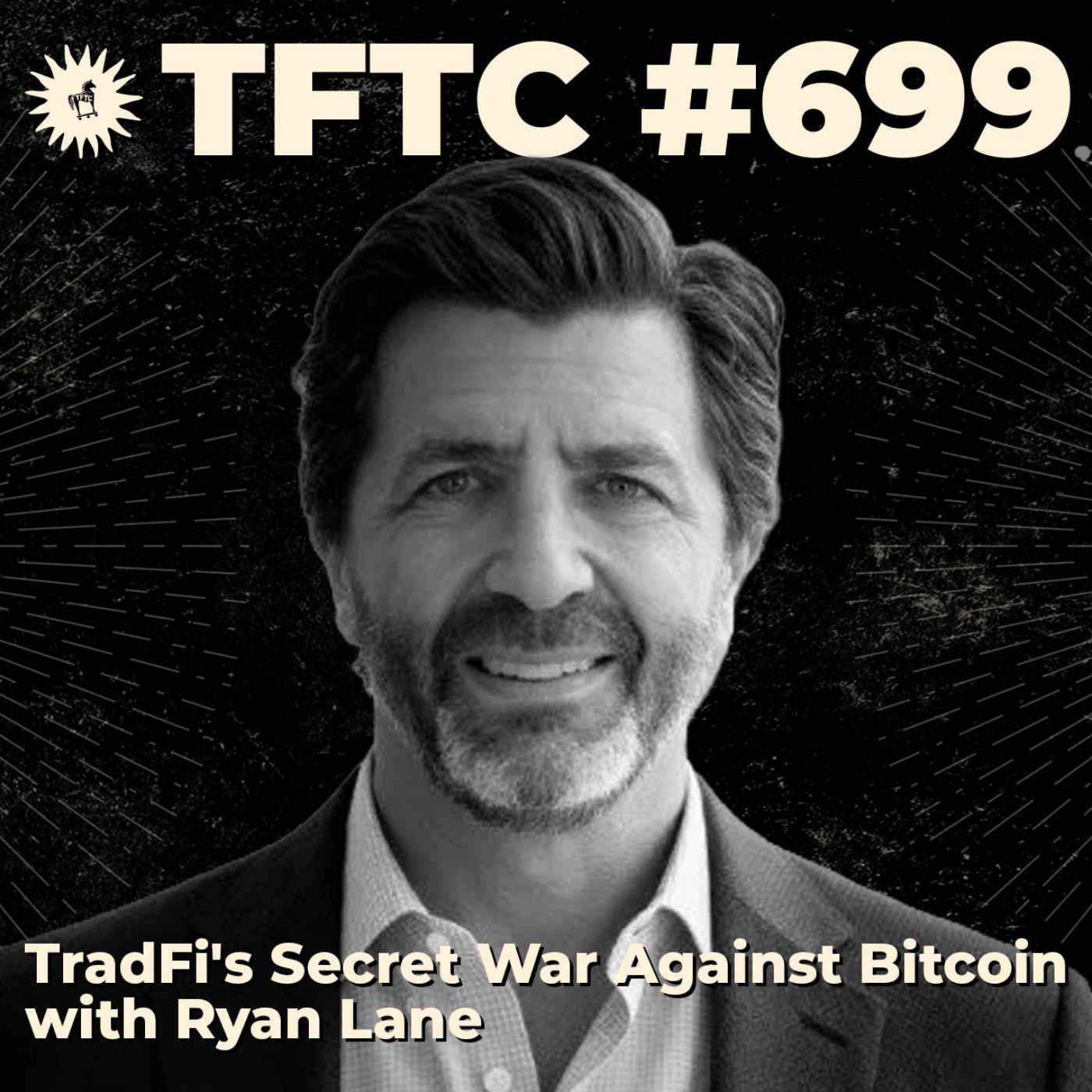
Ryan, thank you for joining us. I think these will be an interesting discussion because I think you've been heavily immersed in what many would deem to be the tradfi world for years with Empiry Asset Management. You founded it in 2008, so I think you've been through a couple of tradfi cycles. Interesting. Founding an asset manager in 2008 when the world was a bit more chaotic. So I think to really set up this conversation is, let's go back to 2008, starting EMPRI Asset Management, being very successful in that world and then coming to find Bitcoin and really lean into it full bore.
- [01:25]
Ryan
Yeah, it's really through conversations like this that makes me think back to what that was then. Because 2008 was a fascinating time, right? It was a, you know, a true financial crisis, right? Driven by finance, you know, consequences to finance. It was just financial all, all around, right? Money markets trading at discounts to, to their, you know, par value or a dollar, right? That's, you know, hard to fathom that cash is trading below cash. So but, you know, we managed to get our funds together and we were supposed to launch with 50 million bucks. We ended up launching with five because everyone just panicked, like literally like had signed subscription agreements and just panicked. So, you know, we've seen it. We didn't hold people to, you know, their subscriptions because everyone was just too nervous. And we just said, you know, hold your money and watch us perform and come in when you're comfortable. Because everyone was scrambling for every dollar they could sort of secure at the time. So it was interesting. And then when we first started, the biggest risk was we held cash, right? And depending on where your cash was and what bank it was in, like cash was at risk if that bank went under. So we had multiple bank accounts. We had Goldman, we had JP Morgan, we had Jeffries, and we had like td and we, I, I, every morning I had wire instructions with the balances in the accounts to be able to move them out based on, you know, the bank potentially collapsing. So I could just quickly move. And that was, you know, you couldn't do electronic wires. So it was sort of like you're faxing or scanning wires to the prime broker to get the funds out and trying to be ahead of everyone else because, you know, if you were a little bit slow, you were going down with the ship, right? And then you got to go unscramble the eggs and get your money back, which could take, you know, a decade in worst case scenario or maybe long case scenario. So that's what we were dealing with. It was, investing was like almost secondary, was protecting our cash and then finding interesting things to do. So we, we've seen, I think the worst right out of the gate. And then we performed well, you know, we stuck to our discipline and we made money. We effectively were doing, and still are doing private equity style investments in the public markets. Right. Structuring transactions with public companies and funding whatever their mission to, you know, growth was. And we've been doing that for almost two decades now, generating good returns.
- [04:14]
Marty
What, what's it like structuring these deals? Is it sort of white label go in depending on what the particular company is, what their goals are, really sitting down with them and getting it done, or is there some formula to this?
- [04:29]
Ryan
It's very much a bespoke market. Every provision, every aspect, every term is negotiated with that issuer based on what the risks are there, what we're, what we're, we're seeking for, you know, upside, how much, you know, risk tolerance do we have? Right. Are we structuring as equity or structuring as a convert? Right. We'll go all the way up and down the capital structure from senior secured debt to just plain vanilla common with, you know, no rights whatsoever. So we'll, we'll go depending on what the situation is. Right, because that's kind of what investing is. It's fitting your structure and the capital to their needs, if you like the situation. So, you know, hundreds to sometimes thousands of pages of documents for each transaction. We've done over 2,500 in the last 18 years. So we have, we have a machine, but it's, it's a, it's a very cumbersome machine. And then it's also organizing all the investments you've made and all understanding all those provisions which, you know, the, the current iteration of, of AI and all that stuff is helpful with that. But you've got a, you know, you've got a big file to manage as well, so you have to have a good operational team for that.
- [05:48]
Marty
So doing this since 2008, I said, Just as you're describing that, I'm thinking in my head, like, how, how, how much is the scale? These are like, of these individual deals changed as you've had QE1, QE2, Covid stimulus, how much more money is being demanded by these deals? I'm just curious specifically.
- [06:13]
Ryan
I mean, back in 2008. It's a good question. Back in 2008, it was the only. There was. It was very spotty transactions, like very little was getting funded. And it was only things that, you know, made a lot of sense that were like, distressed. Like Hecla Mining was one where it was like the biggest silver producer in the country. It was on the verge of bankruptcy. So you go in, you fund that, and you kind of resurrect that asset and you take bankruptcy off the table. And then it really performed really well. It was very kind of, you know, niche things like that that made sense to finance in that environment. Then Covid was the exact opposite, right? Covid was. People were throwing money at everything because liquidity was crazy and performance was crazy and you could manage a ton of money and recycle that money with returns. I mean, that. I don't think you could get more of a despair at time than from financial crisis to like Covid. And then it's, you know, it's the risk capital's been off since the end of COVID really into the last 12 months. And even that's been spotty. Right. Biotech's come back, obviously, the AI boom. There's different sectors that are moving, but we don't have a, you know, a broad market rally. There's some interesting things going on within the market that has kind of kept it from being broad.
- [07:34]
Marty
Right.
- [07:34]
Ryan
There's just a lot of change happening.
- [07:37]
Marty
You think it's this over indexing on the AI boom specifically, or.
- [07:42]
Ryan
I think that's attracting a lot of capital. Right. And then you have this whole, like, what's happening to the middle management world, right, within all these corporations? AI is sort of replacing a lot of the mundane work, right? As, as a, as a senior person, how many middle management and junior people do you need when you can just get your information from, you know, a chatbot, Right. And when you have the smartest person within each sector available on an AI engine at least to start your work and, you know, initially educate you on that, how, you know, how much, how much work do you need from your middle management how much of that can you slice out? And I think we're seeing that across the board. And a lot of you'll see in law firms, you're going to see in accounting firms. Right. You're going to see it in even companies like Amazon and you know, all these, you know, cloud computing companies. Right. You can eliminate a lot of that data analytics because that can just be automated. So it's a. The economy is kind of trying to figure its way through this. Employment's trying to figure its way through this. Right.
- [08:50]
Marty
Because it affects the different ends of the spectrum differently. Because I think about here media company of four or five people, what it's allowed us to do to extend our productivity and efficiency. It's been miraculous over the last two years, really leaning into it. But then you have these behemoths with tens of thousands of employees where they're going to meet in the middle. So I've been very vocal about this. If you're a small team starting up right now, it's never been a better time to start a business. But if you're, yeah, a large corporation with a bunch of headcounts and SG&A, there's going to be some tough conversations moving forward.
- [09:29]
Ryan
Yep. Like my, my son runs a 3D printing. He's like 15, runs a 3D printing business out of our basement. And I could have never even dreamed about doing that. Right. Because everything is automated. He gets all his own and he can run a full business while in school. Right. The just the ability to leverage that technology and leverage automation, leverage information. Right. He's like, oh, I want to buy a new 3D printing. Hey chat GBT. Compare these two models. Tell me what's better for this and that and that. And it'll categorize all the, you know, areas where different, you know, 3D printers are better or different engraving machines are better. Right. From the community it has to the how you repair it with, you know, YouTube videos and who has more YouTube videos to be able to make a repair on something or replace a part or whatever. It's just, it's a different world. And like you were saying, it's not just that you lay people off, it's that you never hire them in the first place because you can leverage your internal resources and grow. Yeah. So it's fascinating.
- [10:32]
Marty
That's funny. We had a 15 year old on the show last week, Stella, she's at the Alpha School in Austin where they're really leaning into AI and she was showing her Masterpiece project, which is some game Storyboarding app that'll eventually become like a gaming application, all built with Claude code. And speaking with her made me very encouraged for the younger Gen Z's and Gen Alpha because it seems like they're leaning into it and it's going to be massive for them.
- [11:04]
Ryan
Right. They can leverage it. We're not smart enough to be able to do that because we're not. We didn't grow up with it. We're just trying to survive.
- [11:14]
Marty
Speaking of survival and transitioning to bitcoins, and I think that's one thing buying into bitcoin for like, I think we're in this transition into the digital age and we sort of got to shed the skin of the incumbent system. A big part of that incumbent system being the financial system, which is riddled with debts and perverse incentives, depending on where you look. And I view Bitcoin as a solution to a lot of these problems, particularly the debt issues that exist. I think we need to recapitalize the system with better collateral. And obviously, when you're doing an EMP digital, it seems like you have come to a similar conclusion. So what led you from what you had been doing to really, I don't want to say drop everything, but like, look at Bitcoin and say, oh, I need to lean into this pretty heavily.
- [12:05]
Ryan
So I will say out of the gate, you say, shed the skin. I think that's a really good comparison because in this world that we live in today, let's just say tradfi is the snakeskin that doesn't want to come off. Right. It's not. It's not like the snake skin where they voluntarily shed. Like here, bitcoin's trying to insert and the skin's like, I'm not letting go. I'm hanging onto this snake. Right. So it's. The transition's tough because there's a lot of fighting overtly and covertly. Right. I see that on a daily basis, especially coming from tradfi and understanding how it works. But my. Our transition started because for the longest time we were a registered investment advisor with the sec, right? And SEC was enforcement, enforcement. Enforcement. Right. They were going after anyone in the digital asset world, whether you're doing something right or whether you're doing something wrong. And like any industry, a lot of people are doing things wrong and some people are doing things right, but it didn't matter because they just. They had a blanket approach to if you're in digital assets, if you're in Bitcoin, if you're doing things within Crypto, you must be doing something wrong. That was kind of the approach. And for us, as a registered investment advisor, that could be audited by the sec, you know, any given day, right? The come in every couple of years or every few years, and they could do it at any time. And, you know, I didn't want to be in the position where I was even having to address that, right. I got enough problems, you know, you know, organizing our business as it was and, you know, presenting it to the SEC in a way that gets them comfortable. And then you go and you add this whole thing on, right? And then you just give them this avenue to just dig and explore and, you know, put the radar off. So under Gensler at the sec, not something that we were willing to dabble into, as much interest as we had in it. And I did struggle with it, to be. To be fair. I struggled with the purpose. And the purpose is a lot easier to describe when you don't have all these bureaucratic hurdles, right? Once the bureaucratic hurdles drop and you can actually see the thesis playing out, which is ultimate store of value, right? And, you know, fighting the debasement of all these currencies, right? Take away that bureaucratic, you know, ceiling and then have that thesis and starts to look really interesting. And that's when we were like, okay, like, administration is clearly behind this. Gensler's out. All the enforcement people at the SEC were eliminated, right? And everyone, even if you were involved in fraud related to crypto, you were still getting closing letters from the SEC saying, we're no longer pursuing this matter. It's closed, right? You start seeing stuff like that, and you're like, okay, this. This is safe zone for someone like us who's trying to stay on the straight and narrow. And we like it, but how can we actually get in it? And the DAT was a very fast way to get a ton of exposure to Bitcoin, you know, kind of overnight, right? As principals of a fund, as a. As, you know, investors for our fund, we thought that they should have exposure to it. We as individuals wanted exposure to it. And then we're capital markets guys, right? Like I started out describing, we do transactions in the public markets, investing in all these public companies. That's what a digital asset, treasury is, right? It's a capital market strategy to try and cheaply raise money or efficiently raise money in the public markets with all the relationships that we have to add Bitcoin per share. And if you. If you're right in that sweet spot, then. And you like the Bitcoin asset. It just seemed to make a lot of sense to just kind of take our team. Don't take the risk of building a new team, right? We had our hedge fund team plop. The four people in that were had the skill set to be able to execute that capital market strategy within the public markets and boom, you're off to the races. Then the trade blew up. But that's a separate discussion and probably a longer discussion.
- [16:34]
Marty
Sup Freaks? This rip with TFTC was brought to you by our good friends at BitKey. BitKey makes Bitcoin easy to use and hard to lose. It is a hardware wallet that natively embeds into a two or three multisig you have one key on the hardware wallet, one key on your mobile device, and block stores a key in the cloud for you. This is an incredible hardware device for your friends and family or maybe yourself who have Bitcoin on exchanges and have for a long time but haven't taken a step to self custody because they're worried about the complications of setting up a private public key pair, securing that seed phrase, setting up a pin, setting up a passphrase. Again, Bitkey makes it easy to use, hard to lose. It's the easiest zero to one step, your first step to self custody. If you have friends and family on the exchanges who haven't moved it off, tell them to pick up a BitKey. Go to BitKey World. Use the key TFT20 at checkout for 20 off your order. That's BitKey World code TFTC20 Seth Freaks was brought to you by our good friends at Unchained who brings you this message. Is Bitcoin risky or is ignoring it the Greater risk? On January 7th at 10:00am Central Join Unchained and Parker Lewis for Bitcoin is the Greatest Asymmetry an exclusive online video premiere exploring the forces behind Bitcoin's risk reward profile. Originally presented at the old Parkland Debate Chamber in Dallas, Parker breaks down why the probability of its success matters more than short term price movements, how monetary design shapes outcomes, and what today's market and policy environment may mean for the years ahead. If you want a clear framework for thinking about Bitcoin's opportunity, don't miss this video premiere. Register now@ Unchained.com TFTC that's Unchained.com TFTC let's dive into it because I think it ties in. I think there's a lot of broad skepticism of the digital asset treasury play, obviously, since really going back to beginning of the year when strategy started coming off its highs and then obviously in the summer when things really accelerated and now probably 28 to 30% off Bitcoin's all time highs. People are asking the question was this just a fad or is there something here? And so I think starting with the debt strategy at a high level, like does it actually make sense? Obviously I think you do. Like why does it make sense to deploy a strategy like this? And then we can get into the sort of incentives that have been introduced with individuals and companies like Empery Digital leaning into this. Like is it viewed as a threat to TradFi and are there moves being made to quell the threat?
- [19:17]
Ryan
Yep, yep. Does the that thesis make sense? It does. Under very specific circumstances. Right. Like I understood that this was a big fat trade when we started on the journey, like from, from I literally from when I came up with the idea to when we close in the $500 million, it was six weeks. Like I. We banged it out, right? We had the thesis, we identified the bankers, we identified the public company that we would, that we would go into. And then we put our roadshow together, our presentation materials together, you know, refined the strategy, figured out where we wanted to live within the DAP world, right? Because a lot of the stuff we were looking at from the hedge fund side was, you know, everyone seemed to have a lot of expenses associated with their debt. Whether it's this asset manager agreements that were like between like 1% and 3% for doing what? Like the public company was outsourcing the management of that asset to a third party for some exorbitant amount of fees. That didn't make sense for us because you're like as the public company, that's your job, right? You're the fiduciary over that asset. Manage that asset to the best of your ability. And if you don't have those capabilities, probably shouldn't be in the strategy, right? And you got to keep all those expenses down. You can't have big corporate overhead, you can't have big salaries, right? So we came in really cheap, right? Low salaries. And we're put $25 million from our hedge fund in. So we're like, okay, now we are all aligned with the investors and we got to run this thing really efficiently, right? Keep the corporate overhead down, the salaries down, keep the option packages. So you're not issuing more options, you're not milking this. This is not like a lifestyle public company, like a lot of these smaller public companies are. And we're like so when does this make sense? And I think it makes sense and we did it because we, we felt that we could make it make sense. And a lot of them are just too bloated. And when the trade collapses, right? When you come near nav or below nav, how are you servicing all those expenses? Because are you selling bitcoin? Right? Because you can't sell your stock anymore because that's, you know, you're diluting bitcoin per share. And are you selling bitcoin, you know, you're slowly going to bleed out Bitcoin to service the public company. That's not a good scenario, right? Do you have the internal capabilities to be able to trade derivatives and get some yield on that stack, right? Can you sell calls? Can you sell puts, collect that premium? Can you do put spreads and call spreads? And can you play that game without risking your stack and actually generating value for your investors? And I think if you can't do all those things then it's a stupid trade. It doesn't, it doesn't make sense. And even if you can do all those things, who knows if the market even cares. Maybe they just rather own Bitcoin directly, right? So we remain with the thesis that I can protect your bitcoin, right? Because I can have multicustodial relationships, I can have it in cold storage, I can have insurance at each custodian, I can have an over laying insurance product that protects the Bitcoin generally, right? I can trade derivs around it to generate cash flow to offset corporate expenses. I can do capital markets transactions like buy my stock back to add bitcoin per share, right? And modestly leverage against that stack. So you can, you can, there's a lot of tools that you can pull from and I think if the public debts are set up like that, where you have the flexibility to use your stack to borrow against it, where it's not leaned up, you know, right out of the gate where you have a senior secured convert against it and it's sitting in some account control agreement where you can't touch it, you can't post it for collateral because as you probably know, if you're going to trade on deribit, right, you're going to trade with these market makers like a Falcon X or a Gemini. You got to post your btc and if your BTC is stuck in an account control agreement, you can't post it. So you can't trade dribs around it. So you're kind of like stuck. So if you've got the right setup. I think it can make sense. I think a lot of people get nervous about holding their Bitcoin. So I can hold it and protect it for I could trade derivatives around and then I can do capital markets transactions to, you know, add bitcoin per share. If I can do all that, then I think you've got something. But you also want the asset to work right. Underlying the whole thesis is the assets got to work right. And so you got to believe in bitcoin and you got to start there. And that's. We started there and then we built it behind it. And it has been a difficult asset for the last call it three months. Right. Started to break a lot of people's confidence in the asset. And I think that's a, that's a topic worth exploring as we got all these tailwinds. But something's not right.
- [24:24]
Marty
Yeah, a lot of tailwinds. It was interesting because we posted it doesn't make sense to a lot of people what's happening. Obviously the administration you mentioned, the sec, the, the bureaucratic morass that the industry has been subjected to for, for many years seems to be behind us. We want to be the bitcoin crypto capital of the world executive order around a bitcoin strategic reserve. You have banks announcing, it seems like daily at this point, some sort of integration with bitcoin focused products allowing their customers to buy, trade and ultimately use Bitcoin as collateral. The etf. Despite the fact that Bitcoin was down however many percent in November and for much of this month it still has net inflows outside the US you're seeing a bunch of positive headlines in relation to the mining industry and UAE and other, other countries buying exposure to Bitcoin. And to your point, just a lot of people are sitting here scratching their heads like why, why isn't the price reacting appropriately? And obviously you have this confluence of events too where the price did run up to 125,000. We saw looking at the on chain data, it looks like a lot of people have been holding bitcoin for over a decade. Said okay, market's liquid, it's valuable enough. I'm going to take some chips off the table. Famously we had Galaxy facilitate the sale of 80,000 bitcoin for some estate sale that was demanded by the estate owner who had passed away, I'm pretty sure. And so I think we're, we're at this point where it seems like it's all systems go, but the price is not, it's not reflected in the price going up.
- [26:14]
Ryan
Yeah. If I were to do what you just did. Articulate. If we didn't have the benefit of being able to see the price. Right. And I were articulate all those reasons that you just articulated. Genius sacks, stablecoins on top of all of that, Right. And I said to you, okay, so start the year. Bitcoin was at 100,000, right. Or Trump administration comes in, bitcoin moves 90, 100,000. And I were to tell you all these things that happened over the last 12 months, you would say, oh, my God, it had to have doubled, right? Something like it had all those, those tailwinds. But don't forget the efficient market theory. Right. As a TRADFI guy, the efficient market theory basically says that all that stuff is priced in, in advance. Right? So that $100,000 price that you saw back at the beginning of the year, right. That was pricing in all this great stuff that was likely going to happen because of the position the Trump administration had taken. So you could have easily predicted that all these things were going to happen and some of them were delayed. Like the legislation through the Senate has been slowed down. It's not going to get done before the end of the year. And the SEC coming out and saying that it was going to get done before the end of the year. It's just not how the congressional process works. It's not that fast, but I think people were hoping for that. But. So there was some stuff that was slowed, but a lot of stuff happened. And you could say that that was predicted back then. So we're sort of where you would have expected from a, a tailwinds perspective to be. Right. But then you have this whole thing happening under the surface, right. Which is the banks are scared to death of this asset. I know, right. And I, I truly believe that because if you just play it out, right, banks rely on deposits, right? Deposits. That's their fuel for everything they do. Right. They got to get spreads, they got to collect that money and then they got to lend that money through all these different mechanisms, Right. Whether it's financing someone's jet or financing someone's home. Right. Or financing someone's apartment complex that they're developing, right. That spread is that, that's their bread and butter. Then they have the prop training desk and all other stuff they're allowed to take. From a risk perspective, it's a little higher on the risk spectrum. But the bread and butter is that lending business, and that lending business needs those assets. And if you can control your own wallet Right. And we've been now transacting in Bitcoin for a few months actively, right? Because we got the big stack and we can move it around between wallets and custodians and, and places where we're posting as collateral for derivatives trading. It is so elegant and beautiful to move around, right? You get your wallet address, you do your little test of, you know, 0.00001, you send it over, it's received, you can see all the history in that wallet that's ever happened, right? All open ledger stuff and boom, Sunday night at 8pm, I can move $100 million from one wallet to the next. I can move it from Galaxy over to Falcon X. Like that's amazing. I've been operating within the confines of the banking system and the Fed system for, since I started my career where we're doing wires, right? And I gotta, gotta get my wire set up and I gotta get it released before the Fed cutoff and the bank's internal cutoff policies at 4pm even though the feds close at 6pm and then I'm stuck from Friday at, you know, 6 till Monday morning where I can't really do anything. So. And you know, you're financing transactions where it's really difficult for me to send a wire over 5 million bucks, right? It's getting a ton of scrutiny from the bank and it's going through this whole process and I just don't even know when my wire is going to get out, if it's going to be able to get there for the closing of the transaction. And so internally we have all these procedures in place to make sure we're set up for closing, that we're wiring a day early so we don't mess it up, right? All that stuff is out the window with Bitcoin, right? It's just such an elegant asset to move around. It puts all the control within the owner of that asset. And that's a, that's a real threat to the banks, right? And then as soon as the insurance starts to make more sense, right? And then you get the charters issued. So all these custodians can exist without filing, you know, individual applications on the state level. So you can get the federal charter and then those federal charters, although now you can't borrow at the Fed window and you can't lend on those five charters that were issued to the crypto custodians. Eventually you'll probably be able to. And then, then it starts to look much more like a traditional banking system, right? And Fidelity, you know, they're. They're tradfi, right? They're within crypto. They're tradfi. And now they have a bank charter, so they're in a really good spot. Seems to me that they've already done a really good job at gathering assets within their brokerage accounts. So they'll be able to gather assets within their crypto custodian accounts and do it on more of a traditional system that people are accustomed to. So it's a threat. It's real.
- [31:30]
Marty
I think I checked last week. I think Fidelity has something like 7.2 trillion in assets under management. So to your point, they can definitely bring it in. And so.
- [31:38]
Ryan
And they span both tradfi and crypto. Like, they're in it. They're in a sweet spot.
- [31:43]
Marty
And they've been in Bitcoin for 11 years now. 2014 is when Abby had them getting in. So you know what they're doing. And so you say the banks are scared. And obviously, part of the list of headlines that I listed off earlier was that banks are implementing it. Do you think they are in an. Oh, shit, like, this is happening. Bitcoin's not going anywhere. And so we need to basically stave off the sort of native bitcoin and crypto companies long enough while we implement everything so that we can capture some of this market. Or do you think they still want it to go away?
- [32:22]
Ryan
I think it's. It's the latter, but they're pretending it's the former. And I'm. I'm not a conspiracy theorist guy. I just. I see it happening right there. There's out front saying they're supportive of it, just like they said they were supportive of the new charters. But behind the scenes, they're trying to kill it in every way they can. Right? Lobbying against it, fighting, you know, anyone who is in support of it and trying to, you know, convince them that it's. It's risky. Right. The things they're saying publicly. Right. Versus the things they're saying privately. Like they're literally telling people that are fans of it that it's too risky of an asset, that it's not appropriate for, you know, the masses to own. And there shouldn't be charters that help facilitate this because you're really, you know, you're allowing people to take risks that they don't understand, but publicly they're saying, oh, we're building blockchain. We're going to allow our FAA's to. To buy it. Right. So the disparity between those statements that are happening in the public versus the private. I think that tells you everything you need to know, right? They, they, they don't want to be the idiots who publicly were bashing it when the train has left the station and it's probably happening. But they also want to slow it down and kill it, as you know, and be like, I told you so. Like we originally told you so. We tried to get on board, but we told you this was risky. And look what happened to MicroStrategy, right? That thing got crushed. Everyone was a believer and that thing got crushed. And, you know, you shouldn't have been owning that. Right. So in hindsight, and they're really powerful institutions with tons of capital be able to move stuff so they can make these Monday morning calls when they were actually the ones on the field affecting the place. Right. They can say, oh, I told you, you know, MSTR was risky. You know, we brought the margin requirement up to 95%. That's why we did that, because it was risky. It's like, no, no, no. The margin requirement going to 95% is what caused the asset to go down and why you can now say that it was risky and you made the right move. I told you so. It's like, okay, you were pulling the puppet strings that made the puppet collapse and you said the puppet was going to collapse. So it's, it's a lot of that.
- [34:44]
Marty
Let's dive into this specifically because we've, we've been talking that offline for the last few weeks. And I think that's one thing that made me really excited to have you on the shows because you've seen this. You know how these large capital allocators can use their large amounts of capital to influence things. And I think everybody is looking at MicroStrategy this year and going, oh, gosh, this is, this is terrible. But to your point about the margin requirements, I think that was a, a clear sign to me at least, like, hey, they don't like this. Why would they just ninja launch a massive increase of margin requirements overnight? And so what effect does that increase have on people that not only own MSTR, but had at that point been using it as collateral for a loan?
- [35:40]
Ryan
Yeah. So if you were a longtime bitcoiner and MSTR came along, you said, oh, wow, now I can, instead of just owning bitcoin, I can sort of be a little bit levered to bitcoin so I can own mstr. I can still love my bitcoin and own bitcoin, but I can also own mstr. And I can borrow against it, right? Because you can post it in your brokerage account, in a margin account, and you can borrow cash against it and you can buy more mstr, right? So you can effectively use the bank's money to more exposure to mstr, right? On top of the fact that they have the preferreds and the converts out there where they're, you know, effectively levering their own equity to it by using the preferred capital to, you know, juice the equity returns that you can get on the bitcoin, right? So it was a great thesis for the bitcoiners because just modestly increases in value. It's a, it's a, it's a flywheel, right? And so I, I totally get why all the bitcoiners were really into that debt, right? And it also made them vulnerable because inside these big institutions, you can see how much money you're lending against MSTR in the aggregate, right? You can say, you know, there's 10 million shares held of MSTR with inside JP Morgan, and you can say, okay, we've lent 5 billion against it. If we increase the margin requirement from 50 to 95, you got to, basically, people got to post, you know, $4.9 billion, $4.8 billion. So you, you know, the effect that things like that will have on the asset. And they, you know, they called it, know a, a Risk department call, right? The Risk Department decided that they had to bump up that margin requirement. But that doesn't, it doesn't make any sense. It doesn't reconcile with, with anything that MSTR was doing at the time or Bitcoin was doing, right? But then because you have so many bitcoiners that own MSTR and people associate Michael Sailor with Bitcoin, when that thing starts to come down, right, when it goes from over 400 to under 200, you're sort of breaking people's confidence in Bitcoin. And I think that was part of the overall strategy was to hurt mstr, hurt bitcoin, hurt the confidence and thesis in the asset, bring the volume back up, right? And then put this narrative out there that that seller could potentially have to sell Bitcoin, and they own a large percentage of the bitcoin that's. That's issued. So then start to panic people, right? And then it's selling, beget, selling, beget, selling. And that's, that's how history always plays out. No one wants to catch the falling. Nice.
- [38:41]
Marty
No, but let's dive into this, too. The risks department, too. It's like, okay, We've. Our risk team is determined that we need to increase the margin requirement. Just playing through the thought experiment. Okay. What are they protecting their clients from? Is it the case MicroStrategy goes down and they don't want them to have to sell their positions? But conversely, if that's your whole goal of managing risk for your clients is to make it so they don't lose their assets in the form of this security of the stock, the shares in this company, like, isn't increasing the margin requirement, doesn't that end up with the same goal? Because you're just gonna have to force people to sell or post collateral, and if they don't have collateral to post or have to sell down their positions.
- [39:28]
Ryan
That's the irony. Yeah, yeah. That's the irony of the whole thing. And let's be clear. They're not increasing the margin requirement to protect their clients. When a risk department increases the margin requirement, they're doing it to protect their own balance sheet. Because they say, okay, if we go from 50 to 95, that means the stock can basically go down 90% before we. 95% before we start to get in problems with the loans that we have out against it. Right. So if they move it to 95%, they're effectively expecting a 90% move in the stock. Right. Which that only happens if the asset collapses too. And were they predicting a 90% move in. In Bitcoin down? They're predicting it goes back to 10,000. Right. That just didn't seem to be on the table. None of it seemed to be on the table. Right. The stock was pretty stable. Bitcoin, the underlying asset was at the lowest volumes it had ever been at. Right. On a, on a trailing period, MSTR's volatility was declining, not increasing. Right. You. You would increase margin requirement when the vols go up because the higher probability of a big move. Underlying asset balls down. MSTR stock Vols down. Didn't make sense. Yeah, didn't make any sense. There's no risk. There's no risk model. Or unless they have some AI bot that, you know, is predicting things that no one's ever seen in their life, which AI doesn't do that. AI can only work off data that exists. That's why it's not a good predictive model. Right. And that's where you need humans.
- [41:16]
Marty
Sup freaks. Have you noticed that governments have become more despotic? They want to surveil more, they want to take more of your data, they want to follow you around the Internet as much as possible. So they can control your speech, control what you do. It's imperative in times like this to make sure that you're running a VPN as you're surfing the web, as we used to say back in the 90s. And it's more imperative that you use the right VPN, a VPN that cannot log because of the way that it's designed. And that's why we have partnered with Obscura. That is our official VPN here at tftc. Built by bitcoiner Carl Dung for bitcoiners focused on privacy. You can pay in bitcoin over the lightning. So not only are you private while you're perusing the web with obscura, but when you actually set up an account, you can acquire that account privately by paying in bitcoin over the lightning network. Do not be complacent when it comes to protecting your privacy on the Internet. Go to obscura.net Set up an Obscura account. Use the code TFTC for 25% off. When I say account, you just get a token. It's a string of token. It's not connected to your identity at all. Token. Sign up, pay with bitcoin. Completely private. Turn on Obscura, Surf the web privately. Obscura.net use the code TFTC for 25% off. Sup freaks? Been seeing a lot of YouTube comments. Marty, your skin looks so good. You're looking fit these days. How are you doing it? Well, number one, I'm going to the gym more. Trying to get my swell on. Trying to be a good example for my young sons. A fit, healthy dad. But part of that is having a good regimen, particularly staying hydrated, making sure I have the right electrolytes and salts in my body. That is why I use salt of the earths. I drink probably three of these a day with one packet of salt. The earth. I'm liking the pink lemonade right now. It's my flavor of choice. This is their creatine. I've added this to my regimen. They have it in these packets as well. Makes it extremely convenient if you're traveling. You want to work out while you're traveling, but you don't want to be carrying a white bag of powder going through tsa. It's very, very nerve wracking at times. You have to explain hates. It's not what you think it is. It's creatine. I'm trying to get my swell on. Make sure you're staying hydrated. I have become addicted to these it's made my life a lot better. I can supplement this for coffee in the morning and be energized right away. I can supplement. I can bring the creatine wherever I need to. Just put a couple packets in here before I head to the gym. Bring this to the gym. Drinking out of a glass bottle. Make sure I'm not injecting any microplastics into my body. Go to drinksoute.com, use the code TFTC and you'll get 15 off anything in the store. That's drinksoute.com code TFTC. So I guess my other question is, like, how long is. Is that just one shot? Is that like one arrow in the quiver that they have? Because I imagine you bump up margin requirements to 95% and then anybody who was engaged in sort of using MSTR as margin to get leverage, you'd have sort of the books clear. Ultimately find another equilibrium and then go from there. People who were overextended get wiped out. People who were not overextended are fine. You just sort of find an equilibrium and things can reset from there. Or is. Is that how you view this playing out? Or is this like a sustained, quote unquote attack for. For lack of a better term?
- [44:47]
Ryan
I think it was their first. Not their first. I think it was one of the. Their more public attacks on the asset where they thought they could really have a, you know, financial impact and, you know, emotional impact. And the emotional impact, you cannot discount how powerful that is, Right, people, big bitcoin believers start to question everything, right? Is this asset subject to manipulation? And am I exposed to that and just starting to conspiracy theories swirling? Has it been hacked? Is there more asset out there than we understand? Like all these crazy things were happening because they tapped into people's confidence in it. Once the confidence breaks. Because that's what all these things are, right? At the end of the day, any currency. What's the USD worth? Worth what people are willing to believe it's worth, right? Because you got a huge leveraged balance sheet that if that was any corporation, it would be bankrupt. But USD is the best currency in the world. So it's just confidence. And people say, well, you know, bitcoin is. You can't articulate what it's worth. It's just, you know, digital. A digital asset, it has no actual value. No currency has actual value. Like people who say that are just missing the mark. And it's all confidence. So JP Morgan adopting that theory, I think was like, okay, so if we break Confidence in it. Like any currency, whether it's, you know, Japan or Argentina, right? If you break that confidence in that currency, then you damage the value of that currency, and that doesn't go away overnight. So I think that they took a big shot across the bow, right? They probably got a leak in the boat, and then they kind of were in there trying to make that hole a little bigger by saying, you know, going off the NASDAQ 100, going to get kicked out of the MSCI, like, pulling back, you know, pulling old, you know, articles and data and statements and kind of making them in the headlines. Like that's part of that coordinated attack. Like, why. Why is an analyst at JP Morgan talking about it being removed out of the index and talking about MSTR as a, as a risky bet when he doesn't even cover the company? Like, pretty sure the analysts are pretty busy writing research and publishing on companies and doing update notes on the, you know, universe of companies they cover. And. But yet he's going off on some MSTR attack for a company that has no research coverage at JP Morgan. Right? So it's just. And it's. At the end of the day, that move was detrimental to their own clients. They wiped out the billions of dollars of value in their own clients portfolios. Right? That was the ultimate result of it. They basically attacked the stock by attacking their own clients because they knew that they couldn't post the billion dollars of collateral. So I, I think it's just confidence, confidence, confidence. And they, that that was what they were. That's what they were firing at.
- [48:14]
Marty
How do you counter attack this?
- [48:18]
Ryan
You call them out. It's the only way to do it. You got to go to the mat with them. I think that's the all. It's the only. And a lot of people are afraid to do that, right? Because it's a big, massive institution and people have exposure. Like we, as a fund, we have accounts with J.P. morgan. Right. We have accounts all over the street. But we were prepared to get the phone call saying, we're going to shut your account down. Right, okay. Shut my account down. I'll post about that too. Right. So I think that's the only way you beat them is you have to have a voice. You have to know what you're talking about. Right? Because if you're wrong, they'll destroy you. But if you're right, how do they really deal with you? Like, as a tradfi guy, I'm like, okay, I know enough to be dangerous about how all of this works. I'VE seen this in different asset classes for my entire career, right? These big banks attack based on the knowledge they have under their umbrella, right? There, there's, there's so many examples of when banks have attacked hedge funds, right? Hedge funds used to, you know, generally custody all their assets at one institution until in the late 90s, early 2000s, the prime brokers or the, the banks were figuring out that we see exactly what this fund's exposure is, right? And they're my custodian, but they can use that information against me. And there are so many examples where they did, right? There's, there's a case out there where basically a fund got taken down by a top five institution because they did a similar thing. They basically were shorting all the stocks that were in that fund's portfolio and they were smaller names so they could move, they could just lay on them and short them and short them and short them. And then they wouldn't increase the margin requirement on those securities because they said they're under a lot of pressure, the Vol's up on these things and we got to increase the margin requirement. The fund was like, well, we don't have the capital to post for that. You are our prime broker, you know that, because we keep all of our assets with you. And the response from the bank was, okay, we'll come back to you with a solution. Their solution was we will bid you for your entire portfolio below market. Right? Now you have that bank that's short, and this is a public case, you have that bank that's short, you have the hedge fund that is long, all that stuff, and the bank to cover their shorts. If they can buy it down here, right, they can pay below what they shorted it. That's a great trade for them. And so they can basically go to that fund and say, you can't meet your margin requirement. We'll bid you, we'll bid you for your whole portfolio. Just take you out of it and, you know, fix your problems, right? And so that's what happened. They ended up taking them out, right? They shorted it up here, they bought it down here from the fund. Funds wiped out. And this bank had a great trade, right? Shorted it, took the positions from the fund, wiped the fund out, bought it all really cheap, wrote it back up, right? That, I mean that, that happens all over the place. And that is why all these funds now have multiple custodians, right? We keep your shorts in one place, keep your longs another place to trade your derivatives in another place. No One can see no one has transparency into what your overall positions are, so no one could take advantage of them. And that was sort of what people started learning through incidents like that. And they're really manipulative. But if you read your prime brokerage agreements, most of it's allowed because you ultimately give them control when you take on margin. Right. So that's the prime.
- [52:15]
Marty
Well, that was another detail that emerged from JP Morgan's posturing towards MSTR and the margin requirements too, is that there was a bunch of people stuck in that trade who said, well, if you're going to raise the margin requirement to 95%, I can go over to Fidelity or someone else who has not raised the margin requirement. And I would like to do that. Can you please send my shares over to this broker? And they were not able to do so in a timely manner, which I'll let you explain. But this would signal that they didn't have the shares because they were locked up in short positions.
- [52:55]
Ryan
Yeah, yeah. And we'll never know exactly the nature of those shorts, but there are multiple incidents that I know of where that happened, and one very specifically where I got all the details. I think you're familiar with a similar one where this guy who had a pretty decent position of MSTR at JP Morgan when they increased the margin requirement. So I can't meet that, but I'll move my stock out to a place that doesn't have merger requirements that are that ridiculous. So at that point, it's in JP Morgan's interest to not let those shares leave. Right. Because that kind of hurts their thesis. And two, maybe they can't let them leave because they don't even have them because either they put a short on themselves so they're shorted, or they lent it out to some hedge fund on the street that's willing to pay for it and they can't get it back. They don't want to recall. You know, these prime brokers never want to recall. They never want to have a track record of recalling shares that they lent out, because then whoever put that trade on it blows up that trade at the time when they want it to work. So they basically just try to hold out as long as they can and try to find stock from other places to be able to deliver out on behalf of clients that are requesting to do transfers. So there's a lot of information to be gleaned, like them not being able to deliver the stock out. Irregardless of the reason, the exact reason why it tells you that either they were directly short or indirectly short. Right. They're short the stock. They don't have the stock to deliver. So it's curious. Increase the margin requirement. Don't have the stock to deliver. That's. Those two things pair together, plus, you know, making statements, you know, down the line after the, after you already wounded the animal. Right. After the ship is leaking and it's starting to sink, and then you start to hit it with, you know, MSCI stuff and NASDAQ stuff. It just, it's just too much. Right. Just too much to be a coincidence.
- [55:05]
Marty
Yeah.
- [55:05]
Ryan
Like, where was that statement a month ago when that MSCI report came out? It didn't do them any good then?
- [55:14]
Marty
No.
- [55:15]
Ryan
Right.
- [55:16]
Marty
And do you think, like, how to. Again, how do we get out of, like, do you think people just need to move there, their money off of JP Morgan if they think this is a believable thesis that they're attacking this and sort of just take their control of the margin specifically away from them?
- [55:37]
Ryan
Yeah, I do. I think people should move their stock out of mstr, out of JP Morgan, move their MSTR stock out. I think, you know, places like Fidelity are, you know, I think they, although they are a tradfi institution at the core and at their founding, I think they are one of the more, you know, crypto intelligent firms. And I think they could benefit from the, you know, the big guys taking a hit. So it seems like a good, safe place to go because they seem to be on the right side of things as opposed to the, you know, more just deposit collectors. Like Fidelity is less, less of a deposit collector. It's a brokerage firm. Right. So the deposit collectors are the ones that are most vulnerable. So I think those are the places where you move the asset out if you want to fight this, this trend. Right. Because although like we spoke about, the banks are publicly saying that they like blockchain, they like bitcoin, the systems that they're building, that's not really blockchain. Right. That's not a, you know, decentralized network. It's a, it's a centralized network. It's a centralized blockchain that they control. They're calling a blockchain to be on trend, but it's just a ledger system that JP Morgan will control and it has some blockchain technology. Right, right. Whereas the bitcoin network is a true decentralized network. And so that they, they want, they, they want to say they're in favor, but the things they're doing are just, just like everything else.
- [57:26]
Marty
They've ever done.
- [57:27]
Ryan
Control the asset, control the knowledge. Right? Be this, be the center of the system so you can control the system and so you can, you know, be aware of what's on the system because it's part of your network. Right. It's not, it's, it's totally disingenuous to, to suggest that, that they're adopting, you know, a, a true, true blockchain philosophy of a decentralized network. That's not what's happening at all. They're saying smart contracts and loans.
- [57:59]
Marty
Yeah, it's bullshit. It is. It's finance. So old is new again in this space. Digital, digital ledger technology is back in, back in the news, back in vogue. But this right to interesting topic too which is like, it seems clear to me again going back to like the system needs to be recollect with better collateral. Bitcoin is the best collateral, most pristine collateral that's ever existed. Scarce, divisible, as you mentioned earlier. Trade 24 7, 365. It is not collateral like real estate or even shares an individual company which come with their own, which come with their own hair. It's very hard to move a house. The value of a share in an individual company is dictated on how well that business is being run and how profitable they are at any given point in time. Where Bitcoin is just this neutral reserve asset that is relatively simple and dumb, which is a good thing. And many people, myself included, think like there is room for Bitcoin to intersect with traditional finance. I think particularly in structured credit where you use Bitcoin as collateral to help you buy a house or get a loan to invest in a business or something like that. And I think that's sort of the period we're in right now is where sort of feeling out where this intersection makes sense and who are actually the good actors within this intersection that are going to build products the right way that actually give individual Bitcoin holders value and increased utility of their Bitcoin to actually be able to do things in the real world. And that's right. I think the JP Morgan positioning towards MSTR and Bitcoin by extension is really unfortunate because there's massive opportunity here if done the right way. And it will come down to, I think everybody's got to be hyper cautious of rehypothecation and how these products are structured is going to be very important and should determine whether or not you interact with them in the first place. But there is a way to do it right, particularly with like multi sig escrow and being able to validate that your bitcoin is where you think it is at any given point in time. Like there is a way to do this 100%. Will it happen? And who's actually going to drive that?
- [60:32]
Ryan
Yeah, yeah, we've seen that because we borrow against our Bitcoin a little bit to buy our stock back. And if you, you know, you can enter into all these different structures of these loan agreements and like you say multisig account control agreement, where you have a wallet, right? And you have the capital provider and you have the, you know, lender, right? Because, because it's an alternative market. The capital provider is not necessarily the lender, right. You have the lender who's getting their capital from, you know, some bank or some foreign institution or whatever, and then they're lending it to the borrower. And. But you should have an account control agreement that's a tri party between the capital provider, the lender and the borrower. And that bitcoin should be locked in that account, in that wallet and not move. And as you said, you can monitor the activity in any wallet address, right? So there are very good ways to do it without letting that bitcoin get down to that capital provider and then him, you know, rehypothecating it to, you know, 10 different parties because he rehypothecates it and then they rehypothecate and then they rehypothecate it. And as the person whose Bitcoin that actually is, you sort of start to lose control over that, right? You could have a bankruptcy, you know, 10 steps down the road and your bitcoin could fall into that bankrupt entity. And then you say, okay, yeah, but I could get it back from the person who lent it to them, but then they file bankruptcy or I get back from the person who lent it to them and then they file bankruptcy, right? So it's, you know, once the cascade of liquidations or bankruptcies start to happen, it's very tough. I mean, they were unscrambling the Bear Stearns, you know, situation, the Lehman Brothers situation, right? Lehman for 10 years, right? Bear Stearns. That is why they saved it, right? Because they knew that unscrambling those eggs when you have all those different swaps and collateral agreements and all that mess out there in an operating institution could take 10 years, right? So same things for Bitcoin. Once you have that network out there, if you're just allowing that bitcoin to move around and allowing those assets to move around, you could. Right. You got to do it the right way, you got to do it smart. You got to learn from the, you know, mistakes that trad spies made over the last hundred years. So account control agreements. But you got to have a sophisticated party who understands Right. What they're negotiating. And so maybe it's like legislation where you have smart contracts that just dictate how it works. And we literally prevent rehypothecation. Stuff like that where you could protect the system a bit. Because like when you lend stock out, when you lend bitcoin out, you lend one bitcoin, it gets reop. That, that, that bitcoin can be sold 10 times. Short, short, short, short, short, short. Right. So although there's only one bitcoin cycled through the system and created the selling of 10 and that happens in equities. So rehypothecation is dangerous. And posting as collateral when people can do that is dangerous. They're not aligned with the borrower.
- [63:52]
Marty
No. And there's no lender of last resort in bitcoin too. Somebody loses. I mean we Learned this in 21, 22 with three arrows Gemini and their yield products with Genesis lending it out to people, obviously blockfi, Celsius, ftx go down the list. Like there is, you got it, a very high potential. I mean the counterparty risk isn't worth it. At the end of the day.
- [64:15]
Ryan
That's like I'm not even sure how you get your hands around what the counterparty risk is when you can rehypothecate it because you don't even know who ultimately has it. Yeah.
- [64:25]
Marty
And that's what like these Tripari agreements, I think they need to be table stakes for anybody.
- [64:31]
Ryan
Yeah. Doing this should be industry standard.
- [64:33]
Marty
They should be. And that's what like companies like Unchained, Debify, that's what they're working to bring to the market in the private sector. But that's my biggest worry as the banking sector is at least feigning interest in, in getting in is are they just going to import their rehypothecation engine in equities onto bitcoin and their end clients are none the wiser. And I think we should demand the transparency and the sort of products that, that are possible with these multi sig trilateral agreements. Like if you're not using this, like I'm not going to use your product.
- [65:12]
Ryan
Right, right, right. And I'm not, I'm not sure how you would draft into legislation other than preventing it. But do you, do you really want to, you know, have bureaucracy, you know, dictate the terms of these agreements? I don't know the answer to that, but I think people have to be wiser to the different mechanisms and why hypothecation, rehypothecation is dangerous. And all these, like when we started negotiating our agreements, the most clear, like tell about the value of rehabothecation to the people who are lending us money against our Bitcoin is, is that if you allow, if you do it in ACA, it's 10 and a half percent interest. If you do it such that we can hypothecate and re. Hypothecate it, we'll do eight and a half percent interest. Right. So as the consumer, you're like, oh, I don't care what they do with it all. I don't want to pay the other 2%. Right. I don't want to pay like 40% more or 20% more. That I don't really care because I'm saving the 2% on a, on a big asset. I'll, I'll, I'll save the money. Right. But in that 2% is a, is a message, right? Which is what are they doing with it that they want it so bad that they'll give it to you for 2% less. Right. And that's, that's where you gotta be wary. If they're, if they're, if they're making more money than that, which they are, otherwise they wouldn't give you that discount, then how are they doing that and how is that going to hurt me? Yeah, right. As, as the borrower. And so that, that's the message.
- [67:06]
Marty
Yeah, it's a very strong message that people don't pick up on either. And to your point about legislation.
- [67:13]
Ryan
I.
- [67:14]
Marty
Don'T think it needs to go that path either. I think it's going to be dictated by the market. You need something like a fidelity, the brand cachet as a fidelity to step out and say, hey, no, this is how we're doing it.
- [67:25]
Ryan
This is the way to do it.
- [67:26]
Marty
If you're pledging bitcoin as collateral, here's where it's going to stay and here's how it's going to work. And you can validate that it's not being rehypothecated. I think the ideal path for forcing the market to, to adopt this, what I would deem to be, I mean she's objectively safer market structure.
- [67:46]
Ryan
Yeah.
- [67:48]
Marty
What we're ending the year here. It's December 22nd. This will be released on 29th. So leading up to New Year's Eve, obviously it's been a year of scratches, bruises, punches to the face for the bitcoin market. What are you looking forward to in 2026? Do you think we're going to continue on this trend, or you think the tailwinds are simply too strong, that the punches have been eaten, or we're getting back on our feet and 2026 is looking like a good year? How are you viewing Bitcoin in 2026?
- [68:27]
Ryan
So there are still more tailwinds. Right. Also because of the efficient market theory, a lot of them are understood and probably priced in. But I think the one that's not priced in is you get legislation through Senate and you have a true framework where digital assets, hopefully specifically large digital assets like Bitcoin, maybe Ethereum will fall in it, maybe Solana will fall in it, where there is just a very defined framework for them to exist within the system. And once that happens, I think there will be more broad adoption. Right. Because at the end of the day, there's still a very, very small percentage of the world consumer that owns bitcoin. Very small. Outside the U.S. i don't think there's any country that's above 5%. Right. And the U.S. is still arguably between 15 and 20 for any ownership of any digital asset whatsoever. So there's still a long way to go. But I think the catalyst that really gets it going and breaks all of the naysayers is a massive buyer. And there's no more massive buyer than U.S. treasury and Treasuries around the world. If, if the legislation goes through, I think that'll happen. I think there will be, you know, right now, US can own it. If they seize it, they don't have to sell it. Right. New Hampshire, same. So, but if they actually acquire it, right, as part of a reserve, where they're saying 5, 10% of the treasury value should be in digital assets or Bitcoin or whatever, then that's massive buying. Right. And then other jurisdictions around the world will follow. Right. That's just the nature of the beast. And then you should really start to see the assets stabilize. If, if the legislation happens in Q1 or Q2, I could see that happening in Q3 or Q4. I think that's in the administration's interest. It's in their interest financially, personally. Right. And it's a large part of the way this administration works. And then I actually think it's in the interest of the country and many countries around the world because it will stabilize their economy. Right. I Mean you can get rid of this whole inflation disaster, all this currency debasement. Right. If you, if you owned one USD in 1920. Right. By 2020 had lost 96.6% of its value like that. That's shocking. Right? That's when you look at inflation that way, you really understand what's happening. And if you have a fixed asset, then you can really stabilize everything. And I think if we can get there, that's when we go to the next level. Like, that's when this asset can really move. And I don't think that's priced in.
- [71:46]
Marty
Strategic reserve market structure. I mean, it seems like the, the tailwinds of that, the late tailwinds are beginning to bubble up. I mean, the UAE stepping in, I think don't have any hard information on this, but just perceptively looking at some of the headlines and having been in conferences around the world where some government officials attend, it seems like everybody on the geopolitical stage at least is sort of looking behind their shoulder at others and saying, okay, who's going to be first to do this? And that's another bit of black swan. Positive tailwind is if you have some country, it's like, okay, I'm not going to wait for the U.S. i'm going to go first. And the environment as such, where like the, the pressure to do that is rising. I don't think it's going away.
- [72:39]
Ryan
I mean, the thesis is there. I mean, Argentina, they've been chasing their currency for the benefit of their citizens for decades. And this could be a really quick fix for them to just stabilize it. Right. Instead of making your currency based off of gold, like peg it to bitcoin. It'll work. You can just peg it to Bitcoin. Well, they're starting, can't be more volatile than their currency.
- [73:11]
Marty
You can see like they're starting with bitcoin mining. I know there's government initiatives to survey how mining can be incorporated into their electricity system down there. Who knows what happens with Venezuela. Obviously tensions are rising there, but it's a very oil and gas rich nation. If you have the Maduro regime fall, whether it's naturally the will or some regime change, who's going to replace them? And are they going to be looking at the state of the country and saying, hey, we can use these energy assets and Bitcoin to sort of get ourselves back on our feet quicker? That would not surprise me. Yeah, yeah. I think all these, these factors and these variables are just pointing to somebody's got a jump at some point because the incentive is too strong.
- [74:01]
Ryan
Yeah. The thesis is 100% there. Someone's just got to make that jump. And I agree with you that someone should make that jump before the US because the thesis is stronger for other countries, like potentially Venezuela if the regime falls or when the regime falls. And then countries like Argentina, like it's, it's a no brainer. But if the US does it first, it makes it so much easier for them because then it's stabilized. Right. If they're the first to jump in, it's a little more dicey. Right. But if the US does it and then it starts to be a real trend and then if every treasury around the world owns some of it, I mean, then you have a commodity that's parked. Right. Are Treasuries going to sell it? No. Right. Then you just bring, you essentially suck up the float and that starts to look really interesting and then you can't manipulate it as much. Right. So now you can swing it around. I don't know if you call it manipulation or whatever you want to call it, but for an asset that's $1.8 trillion, you can move it around with a few billion, which that's probably going to change once you have Treasuries start to suck it up.
- [75:26]
Marty
Yeah, yeah. We need to move into the DECA trillions cent a trillion market cap to make it so you can't move the market with billions. Ryan, this has been incredible. Where can anybody who's so curious learn more about what you're up to? Learn about Empri.
- [75:46]
Ryan
Yep, you can follow us on X Empri Digital and then we're on Instagram and we're on all the other socials as well. But I think our majority of our presence is on X. And you know, I post a lot about this Tradfi stuff and the, the way the two worlds are starting to integrate together and the, the good and the bad that comes with that. And this is going to be interesting to watch it play out over the next 12 and 24 months. Whether this works or doesn't work, it's going to be really interesting. There's going to be a lot happening overtly and covertly. So.
- [76:22]
Marty
Well, that's the, that's the beauty of Bitcoin. At the very least, no matter what the price is doing, it's always very interesting. So, yeah, we'll be.
- [76:33]
Ryan
Marty, I really appreciate you having me. No, thank you for coming on.
- [76:35]
Marty
I was going to say, I was just going to say we should do this again at some point next year, do a little update, see how things are progressing.
- [76:42]
Ryan
Agreed. There's going to be a lot to talk about.
- [76:44]
Marty
There is. All right, well, you. You enjoy your week. The end of the year and we'll see you in 2026.
- [76:52]
Ryan
Sounds great. Happy holidays.
- [76:53]
Marty
All right. Peace of love, freaks. Thank you for listening to this episode of tftc. If you've made it this far, I imagine you got some value out of the episode. If so, please share it far and wide with your friends and family. We're looking to get the word out there. Also, wherever you're listening, whether that's YouTube, Apple, Spotify, make sure you like and subscribe to the show. And if you can, leave a rating on the podcasting platforms, that goes a long way. Last but not least, if you want to get these episodes a day early and ad free, make sure you download the Fountain podcasting app. You can go to Fountain FM to find that $5 a month get you every episode a day early ad free helps. The show gives you incredible value, so please consider subscribing via Fountain as well. Thank you for your time and until next time.