Loading summary
Transcript94 lines
- [00:07]
A
You've had a dynamic where money's become freer than free. If you talk about a Fed just gone nuts, all the central banks going nuts. So it's all acting like safe haven. I believe that in a world where.
- [00:21]
B
Central bankers are tripping over themselves to.
- [00:23]
A
Devalue their currency, Bitcoin wins. In the world of fiat currencies, Bitcoin is the victor. I mean, that's part of the bull case for Bitco.
- [00:32]
B
If you're not paying attention, you probably should be.
- [00:34]
A
Probably should be. Probably should be.
- [00:36]
B
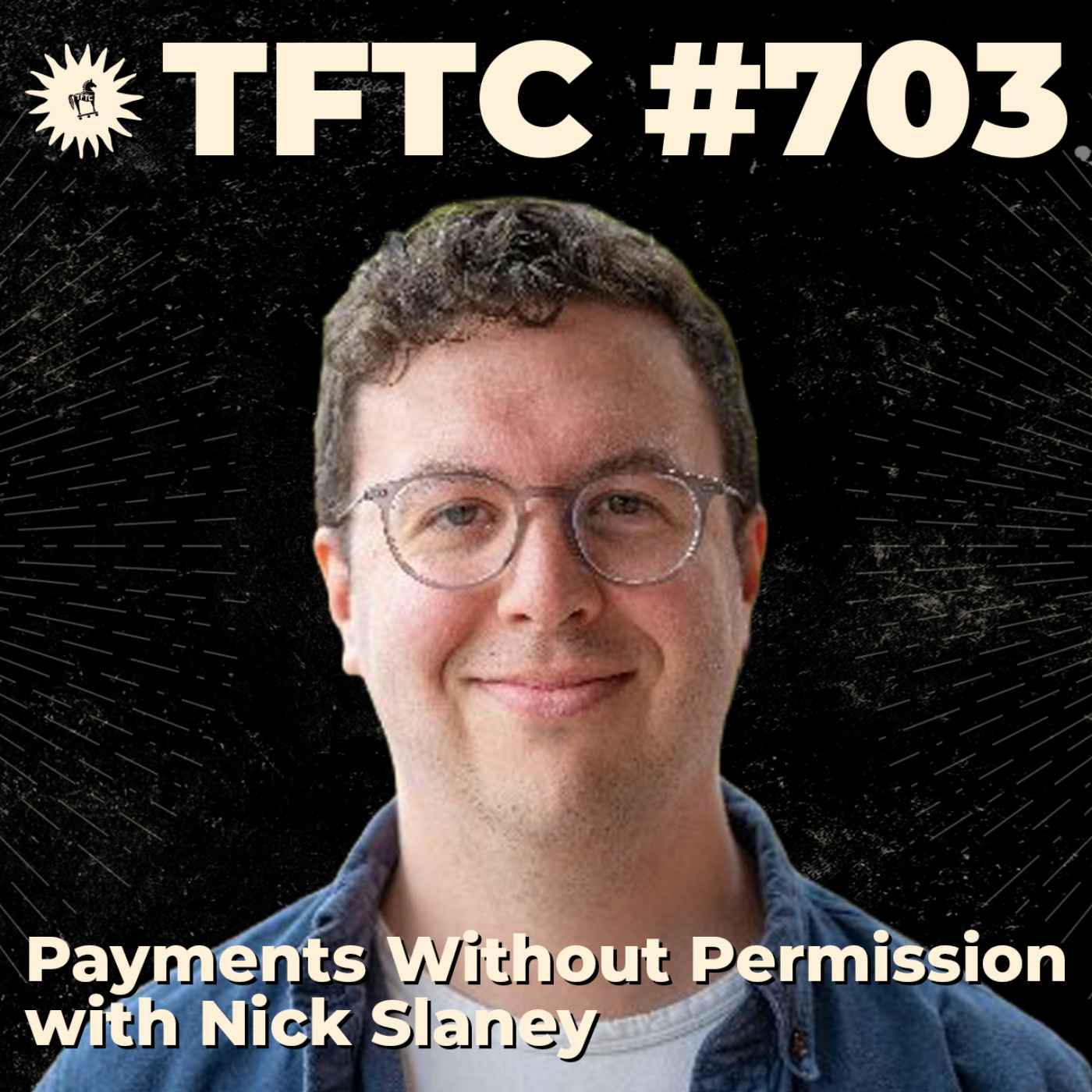
Nick Slaney, welcome to the show, sir.
- [00:39]
A
Hey, Marty, thanks for having me on.
- [00:41]
B
Thanks for coming on. I think you're at the intersection of something that fascinates me incredibly right now, which is bitcoin. Obviously been a Bitcoiner for 13 years, but I've been getting into Vibe coding. And you, you released a demo of integrating your product, MoneyDevKit into ReKit and making it easier for Vibe coders to accept payments pretty trivially using the bitcoin network. So to jump off, why don't we give a brief description of your background and why you decided to start MoneyDevKit and what it is at a high level.
- [01:25]
A
Yeah, definitely. Nick Slaney, been a bitcoiner for a long time, since like 2013. I joined Block as a hardware engineer and around that time, that's actually when Jack started talking a little more publicly about Bitcoin. Really exciting for me as a bitcoiner. And I was also getting into the Lightning Network at the time. So that was going on. They internally said they were going to start working on what became bitkey. I got onto the bitkey team exactly as a mechanical engineer. So I did help do the product design for BitKey. And at the time I was also getting the Lightning Network and I was like, hey, we can do more with the Lightning Network. At Block, we just had cash app withdrawals and deposits at the time. So I went and put together a doc, pitched it around the company, got the attention of the right people, and we started C Equals so at Block, you know, we started cequals, which was a routing node on the Lightning Network, and we wanted to do a lot with that node. What we ended up doing was mostly serving cash app and, you know, making the best routing node we could. And we saw really big growth in volume, which was really cool. Fast forward to the end of 2024, early 2025. I ended up leaving Block and I wanted to pursue kind of the insights we saw at Block. We saw a bunch of volume on the light Network, we saw a lot of people paying, we didn't see a lot of people actually receiving payments. So kind of that Money Dev Kit was born out of that, this idea of, hey, let's make it actually easy to receive lightning payments online. And it just so happens, you know, all of this vibe coding AI stuff was taking off. I actually started Money Dev Kit. It was me and Sonnet at the time, like, hey, take LDK node, let's try to make it something I can run, which I kind of had an idea about. But from there I got some help, got some people to, you know. Money Dev Kit is not completely vibe coded. It's made by really legit developers. But yeah, it's been a lot. So Money Dev Kit is basically now a way to take lightning payments on your website. And we've gotten it to the point where you can just say, hey, replit agent, add payments with Money Dev Kit. And it just works. And that's the dream. So that's a video we put out on New Year's Eve actually, and we have a bunch of people trying it now.
- [04:04]
B
Yeah. And so when you're calling a replit agent saying, hey, implement Money Dev Kit, what's happening behind the scenes?
- [04:11]
A
So we've actually created an MCP server which allows you to create an account and do all the Money Dev Kit things via the agent. And Replit has this integration where you can easily add MCP servers. So the agent actually reaches out to our website, creates an account, looks at our docs, implements everything in our docs, and, and puts in all of the environment variables, everything for you. So the agent is basically doing everything and we've just given the agent the right things to poke and prod to make it work.
- [04:46]
B
And I think one of the reasons you're focused on Bitcoin specifically Money Dev Kit, is because of the sovereign neutral asset of the protocol itself. I think there are many people out there vibe coding, many applications will need payments and many people run into problems with something like Stripe particularly, or even stablecoins to a certain extent. What is it about Bitcoin and the Lightning network specifically that is perfectly suited for this explosion in app development that we're seeing?
- [05:21]
A
The way we can get such an easy flow is because we're doing self custody. And if you go to the Money Dev Kit website, we're not saying self custody, care about self custody. This is the biggest thing ever. What we're saying is accept payments with self custody, you don't have to do all of the onboarding. Kyc that you have to do when you use something like Stripe. So, you know, we've kind of packaged that up so that we can get the access. And it's kind of two things. It's access and ease of use. So the demo of just add payments and then you can take a production payment in less than five minutes, that's huge. No one's been able to do that before. Even if you're in a supported country by Stripe and you go through the Stripe onboarding flow, it'll take, you know, a day at least to get things going. So ease of use is huge. But also access, since we're self custody, we don't have to have the limitations of Stripe. So there's a lot of people out there. If you go on X right now and you search Stripe rejected, you'll see hundreds of people of them actually in India who are saying, hey, I made this cool app. I'm really excited. I just found out Stripe doesn't work in my country. What do I do? And they're in a lot of pain. It's like actually probably the worst thing to put days, if not weeks of your life into an app and find out, wait, I can't get paid for this. So using Bitcoin is the best way for us to reach those people. Because Bitcoin was built with the idea of self custody in mind. That's what gives us a way to actually reach as many people as possible as easily as possible.
- [07:03]
B
And what's happening under the hood when you use Money Dev Kit?
- [07:09]
A
With Money Dev Kit, we've basically made libraries that easily fit into what people are using today. Our first library was Next js. A lot of people make websites on Next JS and deploy them to Vercel. It's a very easy thing. We have another library that's replit. So it uses Express Vitae, like the kind of things that Replit uses. And what we're doing in the library is we're actually giving you a little mini lightning node that you run yourself. When I say we're giving you a lightning node, I think people automatically go to like, wait, I have to run a server and I have to do this? We do it all for you. So it's an lsp. We actually let you hold your keys and you're able to run a server on your own infrastructure. But we are, you know, handling channel liquidity and all the kind of complicated stuff. The main thing is you're holding your keys and you have a node that's deployed on your own infrastructure.
- [08:08]
B
And how do you make users aware that they're holding their own keys and the responsibility that comes with that?
- [08:15]
A
We have it in the docs, we have it actually in the MCP server too. Like hey, this is your wallet key. You want to keep this safe. But also we think the typical money DevKit user is maybe not a bitcoiner. Actually we kind of hope that's the case for bitcoiners. I think they know pretty well like hey, this is my key. But also we want people to be offboarding either to their exchange to get their own local currency or to their own wallet. So we don't really see money Dev Kit as the place where you store all your money, more just an easy place to receive payments and then from there you can bring it to your wallet, your self custody or to your local currency. So we do say, hey, you know, it's good to keep the seed, make sure you don't lose it. But also we expect most people to not be keeping a lot of money on money dev camp.
- [09:10]
B
And right now it's only one time sales, but you have subscriptions and use of space coming soon.
- [09:16]
A
Yeah, so we're going to be covering all of the things that people expect from a payment product. A lot of people have made like hey, you can, this is a developer tool. You can use Bitcoin payments with this. But all they give is send and receive. That's good for a wallet. But most people who are making websites, they want the full stack. Stripe does a lot more than just the credit card API receive credit card payments. They're doing customers, subscriptions, products. These are all things we're working on now. We actually just got our customers integration started and subscriptions and products and all that sorts of things are going to to be following soon.
- [09:56]
B
Yeah. So let's lean into this. Do you think, because this has been an ongoing conversation over the last two years, particularly as AI has really hit the scene, and more particularly this idea of an agentic framework, more specifically an autonomous agentic sort of digital ecosystem arising. And I've always been under the impression that it makes sense if agents are going to be running around the Internet doing tasks for humans and some of those tasks necessitating the transfer of money, Bitcoin makes sense. Is this your view as well? And if so, let's explain to the audience why Bitcoin may be perfectly suited for this specifically.
- [10:45]
A
Yeah, definitely. The biggest thing is what I was talking about before is the self custody aspect. With MoneyDevKit we've made it so self custody is super accessible and you don't really have to think about it. And the benefits that gives is you can accept payments anywhere. You don't need to have the very rigid, basically set up a bank account to accept payments. And this translates really well to agents because I think you see a lot of people talking about agentic payments and a lot of people saying like, this is going to be huge. But I haven't seen anyone actually do it yet. And I think a lot of it is they are in discussions with all sorts of people at payment networks and they're talking about the sort of things that keep people from getting on those payment networks in the first place and trying to figure out how this is going to work with a easy to use self custody solution that an agent can just spin up itself. You don't have to worry about any of that because there's no payment processor that's taking on the risk of what the agent is doing. The agent is just using a software tool that lets it interact with Bitcoin and lightning. So that's hugely powerful. When you're talking about things like, hey, is an agent going to pay for an MCP server? Are agents going to be paying each other? Are agents going to be creating other agents that then are paying other agents? All these kind of use cases in the traditional finance world you have to start with, well, where am I going to scan the passport, you know, how do I make sure it's the country I support and you know, I know where the money is coming from. When it's self custody and it's very much your responsibilities on the developer and the agent, then it's just so much simpler. So we're, we're looking into the agentic payment stuff now and I think we can get to a proof of concept much faster than a lot of these companies that are, you know, starting with Stripe or starting with traditional payments or stablecoins.
- [12:40]
B
You know, I think you have strong views on stablecoins specifically. What are, what are your thoughts on the fascination and the energy behind stablecoins as an industry right now?
- [12:50]
A
A lot of people have asked us about stablecoins especially as we raised our seed round kind of, hey, stablecoins are the hot thing we were raising right around the time when Stripe was spending a billion dollars on Privy and bridge and all these kind of stablecoin things. And I think everyone was, there was a lot of fervor. But underneath, people who know how stable coins work and they know why tether is popular were pretty confused. Marty, I think you were Probably, I think at least Odell was at the Bitcoin for America conference in Washington, D.C.
- [13:26]
B
I was there, too.
- [13:27]
A
Yeah. Yeah. And Paolo was there. I don't know if you noticed that, but I think that was the first time Paolo ever stepped foot on U.S. soil. He's the CEO of Tether. And people in the industry know that Tether is popular because it lets you hold dollars in places where it's basically illegal to hold dollars. And Tether's whole business was based around having absolutely no US Nexus. No one went to the US they didn't hire any US citizens. So the whole Genius act, circle, ipo, bridge, privy thing, I think to most people in the industry, they were kind of like, hey, what's going on? Like, a USDC has always been a lower market cap than Tether because Tether got global access by completely avoiding the US and when the Genius act passed and we saw, hey, this has these kind of onboarding requirements that banks have, I immediately was like, okay, well, this won't have the access that Tether hat. And I think that's like the real glaring thing right now. The narrative is, hey, stablecoins are going to have Stripe go global. But actually, when you look at the plays, when you actually go through stablecoin flows, you usually run into the sort of stuff that keeps people from, like, India out. So for us at Money Dev Kit, we're maximizing for access. We're really going for those people who are, hey, I created an app. Millions and millions of people can do this now, but I can't use Stripe. And what we saw with stablecoins was not a big Access expansion, at least with the US stablecoins. But we saw basically a fintech play to replace MasterCard and Visa, which is totally reasonable for Stripe to do and totally reasonable for Bitcoin. Basically every company in the US to try to get around MasterCard and Visa. But for a really big global TAM play, it doesn't really match up. So for us, bitcoin was really the thing to go with. And actually, it's really interesting, Marty. We were talking with a traditionally underbanked business in the US and they told us, hey, we're talking to a bunch of stablecoin companies. You know, they're really excited. But with this bitcoin thing, do you have to. Will MasterCard get mad if you're doing this? And I had to explain to this company, like, no, Bitcoin is an open network. There's no. I don't have to worry about what MasterCard thinks about our business. And that to me was a really validating point to this. This idea of like, hey, these us stables that everyone's excited about this, they don't actually give you more access.
- [16:15]
B
Yeah, that I think we're very much aligned on this. My PIN tweet on my profile right now. I sent this out in July of last year. The noise of this cycle is going to be stablecoin fervor, real world asset tokenization in a resurgence of blockchaining. All the things, especially AI and I think the siren calls of stablecoins specifically are just fascinating is people view them as these, they conflate them with Bitcoin's sovereign nature. Right. Like with stable coins you have a central issuer, whether it's tether or circle or coinbase, whoever it may be, and they can blacklist you. It's like you do have some, I mean props for props are due. There definitely are some efficiency and user experience improvements using stablecoins over Visa, MasterCard, particularly in settlement times. But at the end of the day these are centrally issued dollar equivalent tokens that can be frozen or blacklisted. And you have a company that sort of dictates who can and cannot use them. Or Bitcoin does not have that problem.
- [17:23]
A
Exactly. And the other thing with stablecoins is people would say, hey Nick, don't you think people want stablecoins? And my response to them is the people we're trying to serve, they don't want stablecoins. They don't want, they probably don't even actually want bitcoin. They just want payments. They're in a position where they've made something and they actually, they can't receive any value. So however, however we can get to them is most important. And you know, it being Bitcoin, it means that we don't have those risks that the stablecoin issuers have. And it also means we have more liquidity, more exchanges available. So someone who wants to just take payments, they can get their local currency like rupees or they can get Bitcoin if they want. But it really, I think leaning into this kind of medium exchange frame of you can use Bitcoin for transparency. Easiest way to transfer value across the world is exactly where we want to be right now.
- [18:19]
C
Suffreaks this rip a TFTC was brought to you by our good friends at bitkey. Bitkey makes Bitcoin easy to use and hard to lose. It is a hardware wallet that natively.
- [18:29]
B
Embeds into a 2 or 3 multi sig.
- [18:31]
C
You have one key on the hardware wallet, one key on your mobile device.
- [18:35]
B
And Block stores a key in the cloud for you.
- [18:38]
C
This is an incredible hardware device for your friends and family or maybe yourself who have Bitcoin on exchanges and have for a long time but haven't taken a step to self custody because they're worried about the complications of setting up a private public key pair, securing that seed phrase, setting up a pin, setting up a passphrase. Again, BitKey makes it easy to use, hard to lose. It's the easiest zero to one step. Your first step, self custody. If you have friends and family on.
- [19:02]
B
The exchanges who haven't moved it off, tell them to pick up a bit key.
- [19:05]
C
Go to Bitkey World, use the key TFTC20 at checkout for 20% off your order. That's Bitkey World code TFTC20 sup freaks? This rip is brought to you by good friends at Silent Silent creates everyday.
- [19:17]
B
Faraday gear that protects your hardware. We're in Bitcoin, we have a lot of hardware that we need to secure your wallet, emit signals that could leave you vulnerable. You want to pick up silence gear, put your hardware in that. I have a tap signer right here. I got the silent card holder, replace my wallet. I was using Ridge wallet because it's secured against RFID signal jacking Silent. The cardholder does the same thing. It's much sleeker, fits in my pocket, much easier. I also have the Faraday phone sleeve which you can put a hardware wallet in. We're actually using it for our keys at the house too.
- [19:45]
C
There's been a lot of robberies.
- [19:46]
B
They have essential Faraday slings, Faraday backpacks. It's a bitcoin company. They're running on a bitcoin standard. They have a Bitcoin treasury. They accept Bitcoin via strike. So go to slnt.comtftc to get 15% off anything or simply just use the code TFTC when shopping@slnt.com patented technology, special operations approved. It has free shipping as well. So go check it out. What are your thoughts on the double sided market problem? Because obviously bitcoin payments have been a meme since you've been in bitcoin. Since I've been in Bitcoin. I think Roger Burr, particularly back in the 2012-14 era, really pushing for merchant adoption, seen a resurgence of that, particularly in the last year with your former company Block and Square, specifically integrating it into their point of sale systems. And I think that's still one of the Lingering questions in many bitcoiners minds is like when are enough people going to have bitcoin and be willing to spend it for this use case specifically to make sense?
- [20:46]
A
Yeah, it's a big chicken and the egg thing. And when I look back at all the merchant adoption, 2013, 2014, I bought a laptop off overstock.com with Onchain Bitcoin. I don't even want to look back at that transaction and know how much money that's worth now. But it was there, right? You could buy things on overstock with, on chain. Bitcoin, I think the issues were on chain was slow. I mean it's why lightning was invented. Right. And also bitcoin hadn't really caught on yet. We were super early adopter days. Now it's 10 plus years later. Bitcoin has already had its big kind of investor institutional investment phase. All the kind of memes around buying bitcoin, More people own bitcoin now. And also the technology is so much better. How far we've come with lightning is actually really impressive. And I think we're still at kind of the precipice of people reducing that to real practice, like actually taking the stuff we've done with lightning and making it accessible for normal people. So I think back in the day merchant adoption was a good idea, but the consumers weren't there. I think now we have the opposite problem. I think we have a lot of people who either hold bitcoin or have access to send bitcoin and we don't have a lot of people accepting it. So we're kind of back at the beginning. But now I see a lot of demand on the consumer side and we just need to shore it up on the merchant side.
- [22:21]
B
But Nick, I was told that lightning's a complete and utter failure.
- [22:26]
A
Yeah, this is what I was going crazy about in 2024. 2024 was such a dark time for Lightning. Between Phoenix pulling out of the US and all that sort of uncertainty with the Biden administration. But at the time, that's when at cequals our volumes were really changing and we were seeing what went from something where everyone was just sending deposits to other exchanges. It started to shift towards payment size. Payments going to payment looking destinations in pretty good size for the Lightning network. And that's somewhat captured in the river report. But yeah, I was going crazy in 2024. I mean the fee market was a little wild too. But you know, I think what I was saying through all of that, through all the ordinal stuff Was this is going to blow over in like a year and we're going to be back to 1 Sat per B Bite and we're going to be cruising. And that's where we've ended up. So, you know, lightning is definitely not dead. A lot of people are using it and with money deficit, I think a lot more people are going to be using it.
- [23:35]
B
Well, what would you say are the most underappreciated or is completely misunderstood aspects of the lightning network and how it's being used today, how much activity is actually happening on it?
- [23:49]
A
I think people really get tied up with the technical details. I think as an industry with Bitcoin we're really focused on science when we should be focused on engineering. And what I mean by that is everyone's looking at lightning and they're looking at okay, in a high fee market it costs more to open channels or okay, if I use UTXO sharing then I can spread this cost out. And I think we're kind of looking at the wrong problems. I think what we really should be focusing on is how do we get this to people, how do we make this so people want to use it. And right now our fees are much, much lower than anything someone can use today. Like the person in India example, someone in India wants to take payments right now they have to open an LLC in the US which is just a giant cost right there. And then once you actually, if you can get on stripe, once you're on stripe and you're trying to take global payments, you start at it's like 4.4% and you pay 1% on the currency exchange. So you're like 5.4% if you're in the U.S. if you're outside the U.S. you're at 6.4% because they tag on another percent to exchange to your local currency. So all of this focus on lightning fees and like trying to get to micro bips for sending payments. It's not really the right focus because if I give someone payments in India right now they're going to be like, wow, I could never have payments before and now I can have payments. So I feel like we micro focus on these things that are very abstract to normal people and what we actually need to give is a nicely abstracted experience that someone can just use. So there's so much with lightning in bitcoin where it's just like, okay, this is cool and this will help when we have 100 million users. But right now we don't have 100 million people sending payments so the actual things we need to do are totally different.
- [25:53]
B
When you say like sending payments, I think to your point, another big update from the Block family companies, I think was Cash App's ability to pay a bitcoin invoice using your dollar balance on the app. So do you think more companies integrating that particular Use Case Strike obviously has it as well? I think there are a few others that do that. But do you think that's like a necessary low level infrastructure that needs to be widely adopted to really allow Money Dev Kit users to have incredible success? Because their end users, at the end of the day, if they have Cash App or Strike and they know that they don't actually need to hold Bitcoin to pay a bitcoin invoice, that they can, they can buy something without needing to worry about holding bitcoin.
- [26:47]
A
Yeah, it's huge for us because, yeah, I mean, it's a much better experience and it's something that I was really hammering on at Block is, hey, we should do this. We should make this very easy for someone to just send a bitcoin payment. I tweeted about it a lot too, but basically, yeah, it fills that medium of exchange use case that I think we're at right now. We have the UX to be able to convert from dollars to Bitcoin and send it anywhere, and we have the liquidity in the exchanges to convert from Bitcoin to local currency anywhere else. And that's what people want. They don't necessarily. There are definitely people who want bitcoin and we love them and you know, they're going to do probably really well if they hold Bitcoin over the long term. But most people, they want money in their bank account and Bitcoin is uniquely positioned to deliver that. So I'm really happy that Cash shared that experience. And I think if you're running an exchange right now and you can see kind of the, if you're looking ahead, having this sort of auto convert on and off ramp, I know Bull is doing it. I think Bull Bitcoin is actually in a really good position. And Cash App and Strike, of course, being able to be the on and off ramp for something like Money Dev Kit is insanely valuable because we're going to have a lot of users who are creating apps, creating value and they're going to want to just get money in their bank account. And that partnership, whether you're on the accepting side or you're partnering with a wallet, it's kind of the right setup to make money really flow. So that's why we use Cash app with every demo we have because it's just so simple and quick and it's such a good example. I could use Coinbase or I could use another app and you get there, but you have to like buy Bitcoin, you have to send it. I think if you're an exchange and you want to be forward thinking and you want to be in the future, you should be looking at Cash app and how they actually do their stuff.
- [28:53]
B
Yeah. What's the response been like since you've been releasing these demos over the last few months? I mean, I think the replit one was probably the biggest because obviously there's a lot of focus on replit specifically as people are getting into Vibe coding. But I have to imagine that having that MCP server integrated into replit could be massive for you guys.
- [29:16]
A
Yeah, because it just works and people aren't used to that with payments. We actually had. I had like a fintech payments PM say like, hey, where do you do the onboarding? I'd explain to them, oh, it's self, self custody. You don't, you don't have to do this for self custody. And I think people are just astounded that they can just add payments in five minutes. The access story is key, but the ease of use and the UX is actually kind of surprisingly what people are responding most about. They're like, I can't believe I can just do this this quickly. And especially I actually had one person say, oh, why should I use this next to Stripe? And I wasn't expecting, I was thinking, okay, maybe most people are using this because they can't use Stripe. But that international payment story, if you want to take payments globally, you actually get hammered on fees to do that. So it's been interesting. There's a lot of cool websites that are being spun up right now and whenever you put out a video, it's kind of a lagging effect. It's like, you know, you get hundreds of thousands of views and you get, you know, a thousand bookmarks and those are all people who are going to go. It's really interesting for Vibe coding and kind of this industry, it all happens nights and weekends. It's like someone doing a side project in their spare time and you know, it only takes, eventually those hit and take off and people start investing more and more time into it. So it's been really cool to see what people create and we're excited for what's next.
- [30:49]
B
What are, what are some examples of things that people are using MoneyDev kit with.
- [30:55]
A
We have. Matt Bolez is a famous Vibe coder. He was early on talking about Vibe coding in Bitcoin. He's created Impressionista Fun. He told me that image generation is like the hello world of AI Vibe coded apps where you just make like a nice app that calls maybe the OpenAI image generation API and he has a nice prompt to make them all like super aesthetic pictures. So he's using Money Dev kit, which is really exciting and it's kind of cool because you see Vibe coders and you see how they're talked about online and you think it's just like someone who's really dumb who can't do anything. But in reality they're making more and more sophisticated apps. So what started as an image generation website has now gone to okay, you can display your images on the website and now you can receive tips. And you know, Matt has gone from just simple one time payments to now he's looking for, you know, a way to track customers and a way to pay out to customers. So it's super interesting how someone goes from by coding something simple to now they're thinking about AUTH and databases and stuff like that. Another example is E Currency Hodler on X. He is building Sat Doku. So it's a Sudoku website where you can pay for more lives when you want to keep going if you've made a mistake and you want to actually keep going. So that's a very simple, easy one time payment. But now he's gone to add an AI assistant that actually makes you better at Sudoku and you can pay the AI assistant to actually make you better at Sudoku. So he is another example where he's like started with something simple that's Vibe coded and now he's wanting to track customers. He's got a leaderboard, he's got all these features he wants to add that are now approaching what someone on X is talking about when they're making like a, a very nice software as a service website. So it's really interesting. Someone who's really super early. They're already getting into stuff like auth databases, customers, all the stuff that we're looking to add.
- [33:10]
B
What, what is your ideal customer in your mind?
- [33:13]
A
The ideal customer is someone in one of these countries that aren't served by stripe. They have created an app that they think is valuable and they pick up Money Dev kit because they just want to get payments and they don't have any other way to do it. That's where we really want to be. Our early customers are bitcoiners who are excited. I mean, just day one, we've made it so that you can Vibe code lighting payments in your website. And for Bitcoin, that kind of wasn't really a thing before. You'd have to run a server somewhere. You'd have to pay a monthly fee here. To have just a library that you can take payments with is already like a, I think a huge upgrade for Bitcoin payments in the bitcoin space. But our dream is to be in India, to be in all these. All these people who are saying I can't use Stripe on X, they start using Money Dev Kit because those are people who are not necessarily excited about bitcoin, they're just excited about getting payments. And in a world where more and more people can make apps now and more and more people can make things are that are valuable. Being able to give them a payment solution that gets them that value, I think is tremendously valuable.
- [34:24]
B
Yeah. And on the topic of Vibe coding, not necessarily. Well, maybe we can focus on Money Dev Kit, but how somebody who's been engineering products for pretty large massive corporations Block, obviously for many years now. How profound is the emergence of these AI tools and what is your preferred stack, if you don't mind me asking?
- [34:53]
A
Yeah, it's amazing. So app block, I said I was a hardware engineer, I'm not actually a software engineer, and we had a team of software engineers building sequels. We were using Lightning Dev Kit and the team would do a lot of the implementation. I would do more like the product work and kind of defining where we're going. But now at Money Dev Kit, with AI my stack, I use cursor. I think people might call me an unknown for using cursor. Everyone's in Claude code and on a terminal. But with Opus, actually in the past month, there was a bunch of user feedback that we had in Linear and we were like, okay, we'll get to this. You know, over the past, like few weeks, I've just been assigning them to Opus through Cursor and just getting a lot done. And that's not something. Even over this past year with Sonnet and all the other models, Codex, I was doing work, but I was never really confident that we could merge it. I would always have, you know, a developer look at it. Now with Opus, I can just, you know, I need something different on the website. I need something different with this, this experience. I can prompt it and it's something we merge like that day. So our Speed has really increased. It's really dramatic. A lot of people are talking about this online now. Like, Opus is one shotting all these things. It's true. And it's now at a point where instead of being the annoying CEO who's like, hey, can we get this in someday? You know, I can just go do it. And so now I'm picking up all those kind of annoying, not quite super, you know, hard tickets. I can just do all those in a weekend. And then we're, you know, we're on to the big important stuff. So it's, it's truly like a really.
- [36:49]
B
Big change in terms of the amount of headcount do you think you'll need in the long run? How does it affect that? Like, how big do you think you can get Money Dev kit with?
- [37:01]
A
Yeah, we're not really focused on making Money Dev Kit like this giant team. We'll grow to whatever we need to. But right now we have four developers and we're hiring a designer soon. And I feel pretty good about that. I think that's a really good place to be. And we have a lot of, you know, with Money Dev Kit, we are doing a lot of specialized stuff behind the scenes. We're doing all the lightning stack. We're running everything that spiral has basically, and we're doing a lot of kind of special stuff. We're ahead of the LSP spec. We're doing all these kind of things that are very custom lightning things that AI can't do. So we'll always need kind of our lightning experts we've been lucky to hire. But for the feature work, when we talk about, hey, how quickly can we make something that matches stripe in terms of subscriptions and features, I think we can get there really quickly.
- [38:04]
C
Sup, freaks? When you take bitcoin seriously, you start with custody. You want to control your keys, avoid single points of failure, and make sure your savings cannot disappear because you or someone else screwed up. That is what Unchained has been focused on since 2016. Unchained is the leader in collaborative, multi sig custody and bitcoin financial services that keep you in control. They secure over $12 billion in Bitcoin for more than 12,000 clients. That means about one out of every 200 Bitcoin sits inside an unchained vault. Their model is simple. You hold two keys, they hold one key. It always takes two keys to move bitcoin, meaning their single can't access your.
- [38:34]
B
Bitcoin on its own.
- [38:35]
C
Just resilient shared custody that gives you institutional grade security while keeping you sovereign. Unchain also lets you trade straight from your vault, access bitcoin backed commercial loans, open a bitcoin IRA where you hold your own keys and set up personal business trust or retirement vaults. They even offer inheritance solutions built for long term hodlers. Or opt for the highest level private client service with Unchained signature and get a dedicated account manager, discounted trading fees, exclusive access to events and features, and much much more. If you want a partner that helps you secure and grow your bitcoin without giving up control, go to unchained.com and use the COD TFTC10 at checkout to get 10% off your new Bitcoin multi sig vault. That's TFTC10chain.com.
- [39:12]
B
It would be remiss of us not to touch on it. Sorry I haven't done it yet. But like Non Custodial Lightning, that's been a white whale in the bitcoin space for a while. And I know the LDK team. I've been talking to Matt Corallo, he in Vegas earlier this year when I saw him in person and he came on the show and said it publicly. So I feel comfortable saying he's like this is the year of non custodial lightning and obviously you guys are implementing that at Money Dev Kit. What's changed recently to make this viable?
- [39:41]
A
I've always believed in Self Custodial Lightning and what we're doing at sequels was really to further that. Not a ton has changed. I think back to 2023 when we were doing Mutiny. I was so excited about Mutiny. I was a big Mutiny user. The Mutiny guys shout out to Ben and to Tony and to Paul. They took the first draft of Self Custody Lightning and they did everything they could with it. And they found all the bugs, they found all the hard stuff. You know, the LDK team really kind of decided hey, we want to make mobile Lightning work. And that is really hard. And I think I consider like Mutiny kind of the first generation of Lightning wallets where they figured everything out. And I think a lot of those bugs are ironed out now and a lot of that stuff has been figured out on the backs of things like Mutiny. I think Matt's right. In the next year I think we'll see a lot more Self Custody Lightning. The way everything panned out with the fee market and kind of the early take on self custody lighting payments, people got disillusioned, people went and created whole new L2s. Was it super necessary? I don't know. But Yeah, I think now everything's a lot more refined and we have a lot better idea of how to make things work. So I mean our entire company is staked on self custody Lightning right now and it's working amazing.
- [41:17]
B
What was the biggest thing the Mutiny figured out was that the keeping private keys in the secure enclave in the cloud channel management, LSP stuff, Muni took.
- [41:26]
A
LDK kind of to its limit of running in the browser and really being super lightweight, which was something no one had really attempted before to that extent. And I think in doing that they found there's no like one big thing where it was like, hey, we figured this out and now everything works. It was a bunch of little tiny bugs that, you know, pre AI. I'm just thinking about that little three person team going through all the support and everything. It goes back to a little bit of what I was saying before. It's the engineering. It's like in theory everything should have worked with Lightning, but in practice when you have users and they're actually finding all those edge cases and corner cases, it's really hard work. But what you end up with is a much more refined product. So like, you know, the force closes, the fee stuff, anchor channels, all these sorts of things have made the experience so much better. And now I think it's up to someone with a good amount of kind of product vision to really take what we have, the Lightning Primitives, and make it a really nicely polished product.
- [42:38]
B
What, what is lacking from Lightning that you would like to see and make your, your life easier? If anything.
- [42:44]
A
My big thing is subscriptions. So we can make subscriptions work at Money Dev Kit in a way that I think is okay for someone who's an early adopter. But what Lightning really lacks is a native way to do pull payments. I actually talked about this recently on X, saying hey, we should bring back this bolt 12 or current spec. I think Rusty's been working on it and Christian responded as well. Just this way to let people do recurring payments. That's how everyone pays their bills. It's how they pay for Netflix. It's a very expected thing that you can sign up for a service, give your payment details and just have it work. So that's kind of what I'm ringing the bell about nowadays. It's more the payment protocol stuff as opposed to we need this very specific low level feature. It's the stuff that makes payments work on kind of a higher level.
- [43:46]
B
What's holding that up right now?
- [43:48]
A
Recurring payments, I think it's just a classic Open source spec process when you're trying to get something that multiple implementations are going to use. Everyone has their own priorities. I think the Lightning ecosystem deserves a lot of credit here because you have three different clients that are effectively interoperating on Lightning. I think it's actually like a huge achievement and everyone's talking about Bitcoin core all the time. But what's happening in the Lightning Spec meetings is actually pretty impressive. So I have to find out exactly what it's going to take. I think to actually get something like that in. You need at least two implementations. But the big thing to really make that feature work, Wallacey to adopt it. And that's why I say, you know, if you have a Lightning integration, you really want to be on the latest stuff so that you can interoperate with, you know, the coolest features.
- [44:47]
B
Yeah, yeah, that's my big question. Bringing this back to like stablecoins versus Lightning too. Again, it seems like the focus in the broader tech fintech sectors on stablecoins and I think you and I both agree that Lightning is a superior technology. Bitcoin is a superior technology. What do you think it's going to take for the broader market to recognize that?
- [45:10]
A
I think just better high level abstractions like what we're doing with Money Dev Kit. It's Money Dev Kit. Like if you go on our website, we actually don't talk about Bitcoin. We're big bitcoin believers, we're all bitcoiners. But we're not trying to sell Bitcoin the asset. We're trying to sell the access and the ability to actually be on the network and actually like accept and receive value. So I think that's a big part of it. And yeah, I think Bitcoin has a real clear advantage because when you try to use stablecoins right now, Marty, I don't know if you've ever like used the stablecoin app recently or even go and try to pay a stablecoin payment. It's pick your stablecoin, pick the chain only send USDC on base or you'll lose all your money. And then it's, there's no privacy. This is actually a really terrible experience beyond just the liquidity and the access. People aren't doing this. That's why I'm saying like this is a, it's a meme that's going to go away. You know, I think in the US maybe stablecoin rails get tucked under bank accounts or something like that and that's, that's Fine, like Stripe's going to make more money. But for people around the world who want to take global payments, having something that's really, truly interoperable and is very simple is going to be the thing that wins.
- [46:31]
B
Yeah, that's funny. I have avoided successfully and who knows, maybe I'm a little. Maybe not doing as much research as I should be, but I've observed enough to understand that the friction is there. And I don't want to. I don't want to go through the.
- [46:48]
A
Brain damage of figuring it out myself, honest.
- [46:52]
B
It's funny, like, I have contractors that live, that'll do work for us outside the US And I've had them send me stablecoin invoices. I'm like, I don't have stablecoins. Just send me a bitcoin address and they reply in five minutes with the bitcoin address. It's like just, it's. It's much easier for me and obviously I'm a hardcore bitcoiner, but it's just as easy to spin up a bitcoin wallet and send an address and receive that money. And the complexity of the stablecoin landscape as such, where it's like, I think there's a lot of noise and there's going to be a lot of capital burn focusing on that.
- [47:26]
A
And that's a testament actually to the pain people feel when they're trying to take global payments. They're going through all of that complexity just to be able to get something. So I think we can give them a much better experience with bitcoin.
- [47:45]
B
What would you say to anybody listening to this? How could they get involved and help money dev kits dream come true in terms of getting bitcoin payments spread on the Internet as by coding explodes?
- [47:58]
A
Make something cool. We're at a time where you can just make stuff. And the barriers to actually writing code have been tremendously lowered. I think a lot of people, like, some people have like an aversion to AI. I understand where that comes from. But if you have an idea, you can just build it right now and you can go on replit and you can say, hey, make me this. It's not perfect, but it works really well. And if you want to take payments, you can just use money Dev kit. We're working on integrations that let you very easily get cash in your bank account. So you don't necessarily have to be a bitcoin believer. But the more people who use this stuff and show that it's valuable, it's better for the ecosystem because More people are sending bitcoin payments better in my mind.
- [48:48]
B
Yeah, it is great. I mean I think the example that you gave earlier is very in line with how I've been vi coding where like when you were starting out Money Dev Kit, just using Sonnet to get the, the proof of concept MVP together. Like everything that I vibe coded, that's how I use it. Like I'll use replit or plot code, get it to a certain point, then have the self awareness to understand that I don't understand the, the, the holes that could exist in the thing I vibe coded and then I find a competent developer and say hey, here's this thing. Do you see what I'm trying to build here? Can you make sure it's not insecure and actually works and hand it off and the thing gets built? I think it's. That's another important thing to recognize with vibe coding. If you're not a software engineer and you don't understand where you could foot gun yourself, you can get it to a certain place, find a developer who doesn't know what they're doing and they can take it from there pretty trivially.
- [49:52]
A
Yeah, I mean that's how I felt in April. I think now I feel like you could probably just send it if you're going to do, if you're going to build a business where you're handling or helping people, you know, send receive payments, maybe have someone look at that. But for most ideas they're pretty low stakes and you know, you're not like handling other people's money and if you're using Money Dev Kit, we've got all that taken care of for you. So I would say, you know, don't, don't lose your confidence, Marty. I think you could send it without a developer right now.
- [50:27]
B
Well, I still need to get better at the, just like the back end. So like setting up Vercel, I'm still learning how to do that. Like getting the domain, setting up the DNS, like all that, all that stuff, that system admin stuff that I'm not trained in, getting more familiar with it but stuff like that where I need the, the last mile help.
- [50:50]
A
Yeah, the cool thing is you can actually learn a lot too like just telling the agent to do it and if it can't do it a lot of times it'll be like, well here's what I would do. And yeah, there is still, I think I'm a little bit of advantage because I definitely am a bit of a nerd and I'm running nodes and doing all that stuff. So there is some base level knowledge, but you can get really far.
- [51:12]
B
So having been in Bitcoin for a while now and being on the cutting edge of building products that have touched millions of people, what are your thoughts on the current state of Bitcoin broadly? The network, the sort of social movement behind it, for lack of a better term, the awareness, the brand awareness. Is Bitcoin exceeding your expectations? Has it come up short in 2026? Is it right where you thought it would be? How's bitcoin doing in your mind?
- [51:50]
A
I like where bitcoin is, honestly. I think we've come really far. I think we still focus on things that are too low level, that people don't care about. Most people HTTP, tcp, these protocols that run the Internet, very important. There are very passionate people who have put a lot of time into making that work. And you know, they're there with the Linux foundation, all those mailing lists and they're still slaving away at the low level things that make things work. But most people, they just use Facebook, they don't care about HTTP or TCP or anything like that. So when I think about bitcoin, I see us focusing a lot on like the very low level things that no one cares about. And not a lot of people are building the high level stuff that people will actually care about. So, you know, I'm really happy where the tech is. I think there's still things we have to do. There's always upgrades we have to do, there's always things we need to fix. Nothing is perfect. But I think the real focus for Bitcoin 2026 and beyond is making things that people actually want to use. And that's a different kind of heart. Like it's not the spec work and you know, the interoperability and you know, consensus and the mempool stuff. It's more taking it up to a level where someone's actually using it and finding out how they break it, where the sharp edges are. It's different hard work that we need to be doing. And that's why I say also, if you have an idea for an app that you want to take payments or you want to send payments, or you want to make a wallet, you should just do it because we need it.
- [53:31]
B
This may be controversial, but do you think we need better tastemakers on bitcoin app development specifically?
- [53:37]
A
Absolutely. Mapolez is actually really good with this. He makes some cool stuff. And when you talk about taste, there's technical taste, which is Actually a big part of it, just the way you use Bitcoin and Lightning, there's a certain technical taste there, but there's also just, yeah, the higher level, like more broadly appealing taste of what do people want to use? And it's not even just. I think when people talk about taste, they're thinking like, the way something looks, but the way something is used and feels. A lot of people out there. The first thing you do when you have a new cool tool with a bunch of, like, configuration options is you make an app and you expose every option and then you can configure everything. And you, as a person who appreciates the technology, you're like, yes, this is so cool. I can do all these things. But someone who just needs a technology but isn't actually. Isn't actually into it, they want the very highly opinionated, paved path that does everything for you. And that's what we need more of in Bitcoin.
- [54:42]
B
Yeah. What is an app that doesn't exist that you think should exist and could basically unlock that recognition? Because I agree. I think bitcoin app developers or people integrating bitcoin into their app, we still haven't crossed the chasm of tapping into the zeitgeist and being part of something that goes viral. I mean, outside of cash app and all that, but those are exchanges and payment wallets. But I'm looking for something outside of Bitcoin that integrates it in a novel way that the product so good that even though it has bitcoin integrated and that may seem to be a hurdle for most people want to use it, the experience is so good that they figure out how to use Bitcoin anyway.
- [55:26]
A
The big thing for me was MoneyDev Kit. That's why I went and made that. But beyond Money Dev Kit, it's all these websites. I did a video on this. There's all these websites where you just Google. You have to do one thing. I did SVG to ping. You have like a nice SVG logo. You want to put it somewhere else. You have to make it a ping file. I could, you know, there's probably some terminal app that I could install that'll do it super easily. But what I actually do is I Google SVG to ping. I go to a really gross website with a million ads on it and I put it in. So I made a website where you can do that, but instead of seeing a bunch of gross ads, you just do a quick micropayment and then you're done. There's so much low Hanging fruit like that, that I think could be a lot nicer. And yeah, just like anything where, you know you can, you just want to do global payments. So you just want to work just anything that's cool, just make it, add payments to it. There's a bunch of really interesting industries that Stripe doesn't serve. It's beyond just, you know, the 120 countries they don't serve. It's like fortune telling apps. One of the coolest things I actually saw recently was this website called Chart 2 AI and it's. Are you into astrology, Marty?
- [56:45]
B
There are many people in my family that are into astrology. My sister and my wife specifically, they.
- [56:53]
A
Would love this because basically what it does, you put in your information, it gives you a birth chart and then someone has just gone through and iterated with AI to basically put in all the astrology knowledge ever and they've made it. So you basically put in your information, you get this super long prompt and you plug it into ChatGPT and it gives you the best horoscope reading you could ever get. I did it. I'm not a big astrology guy, but just see what it's like. It was telling me about my life, current life at that moment in ways I was like, wait, how do you know this? So that's really cool. But the interesting thing, so you should try as Chart 2 AI. But the interesting, interesting thing is Stripe actually doesn't serve fortune telling services. So if you are, you know, you're driving along and you see like the psychic on the side of the road, they can't use Stripe because, you know, it's a high risk industry for that. Maybe some chargebacks or something like that. If you make an app like that, you basically need to use MoneyDevKit. There's a lot of businesses like that where it's like totally legal, everything's above board, but you can't actually be banked if you're in that business. So maybe you're your wife or your sister, you said maybe they want to make an app with, with astrology or something like that. They can use moneydevkit.
- [58:15]
B
I'm gonna have to give them the advice. Ladies, it's time to start vibe coding. You can work on it together. This is fascinating. This is awesome.
- [58:24]
C
Thank you.
- [58:25]
B
Thank you for building moneydev Kit Number one, I think I completely agree. We need something as simple as an API call in CLI to get payments integrated in apps. And the fact that I think the way you've approached the market, specifically building a replit mcp, at a time when it's one of the hottest companies in the world, is strategically incredibly sappy. And so I hope. And obviously Amjad is a bitcoiner too and don't want to dox anybody, but I know there's bitcoiners in very strategic places within replit specifically and so it will be cool to see if they lean into it. And do they. Do you know if they have any plans of like highlighting Money Dev Kit within Replit? Like, hey, if you want to add payments, here's one of the easiest options.
- [59:13]
A
Amjad already blasted us out. It's a dream for replit because we were talking to Replit a few years ago and they were talking about how they had all these users but 80% of them were outside the US that's where Replit started really with the underserved. And now I think maybe that balance is a little different. But they have 30 million users and I'm willing to bet a big proportion of them just can't monetize these cool websites that they're making. So I think it's a match made in heaven. And of course we're talking to repl it now about how we can keep going with that. But yeah, it's exactly where Amjad wants to be. He's talked about how access to creating software and creating cool things is kind of replit's mission and our mission is access for payments. So I think it's a really cool thing and I we can go further with it.
- [60:06]
B
Oh yeah. Where can anybody is so curious. Find out more about Money Dev Kit, more about you. Get involved for me.
- [60:14]
A
I'm Nick Slaney on X for Money Dev Kit just go to moneydevkit.comdocs.moneydev kit.com just ask your agent to add MoneyDev Kit to your app. And yeah, feel free to ping me if you need help. I'm happy to hop in Replit multiplayer and you know, help you out if something's getting stuck. But the idea is you just ask your agent to add my dev kit and it just works.
- [60:39]
B
Go do it free because I know a lot of you are vibe coding out there. Get on it, get on it. Nick, thank you for your time. This has been incredible. Hopefully we could do it again at some point in the future.
- [60:49]
A
Thanks a lot, Marty. Yeah, I had a good time. Glad to. Happy to do it again.
- [60:53]
B
Awesome. Peace of love, freaks. Thank you for listening to this episode of tftc. If you've made it this far, I imagine you got some value out of the episode. If so, please share it far and wide with your friends and family. We're looking to get the word out there. Also, wherever you're listening, whether that's YouTube, Apple, Spotify, make sure you like and subscribe to the show. And if you can, leave a rating on the podcasting platforms, that goes a long way. Last but not least, if you want to get these episodes a day early and ad free, make sure you download the Fountain podcasting app and you can go to Fountain FM to find that $5 a month gets you every episode a day early ad free helps. The show gives you incredible value, so please consider subscribing via Fountain as well. Thank you for your time and until next time.