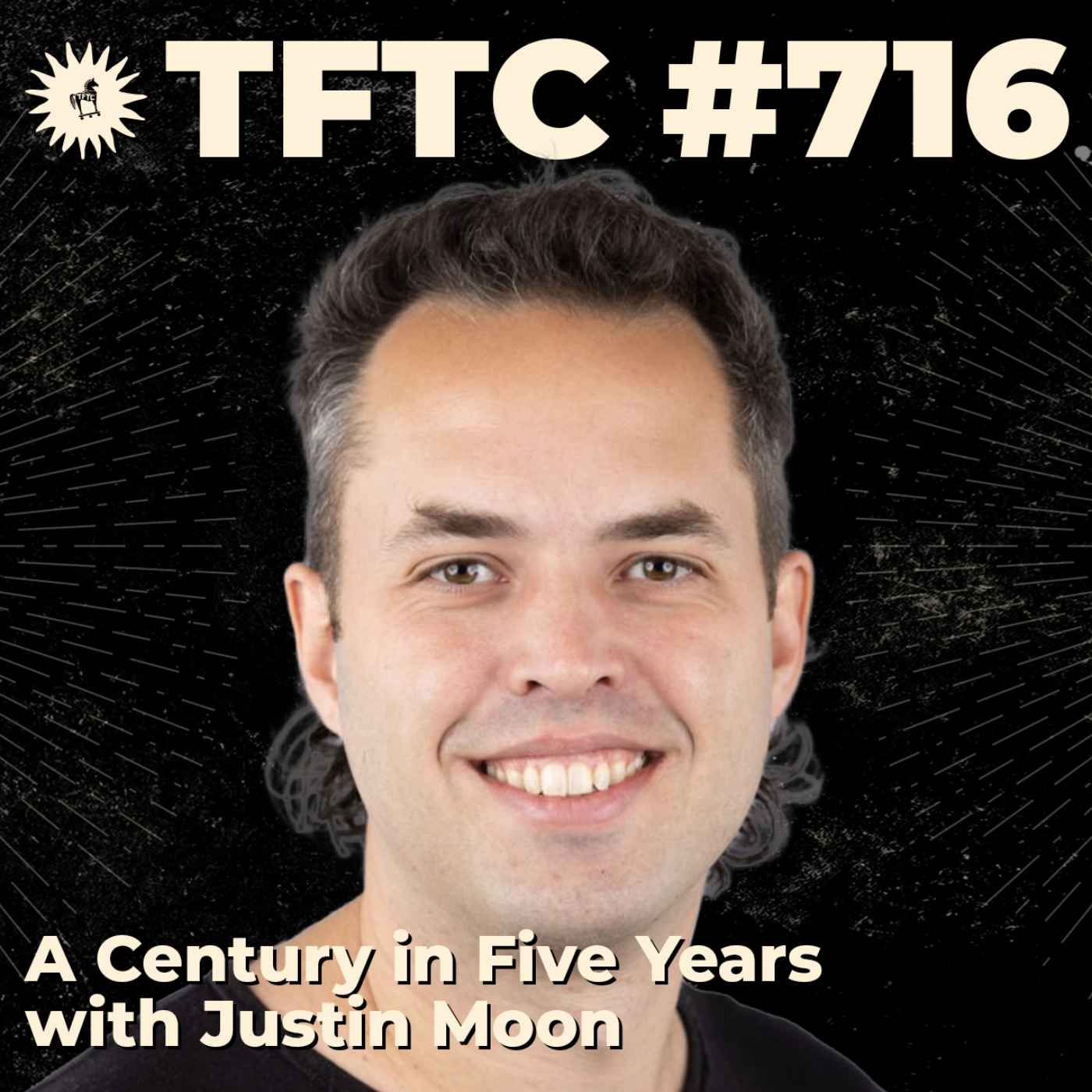
Loading summary
Transcript119 lines
- [00:07]
Justin Moon
You've had a dynamic where money's become freer than free. If you talk about a Fed just gone nuts. All. All the central banks going nuts. So it's all acting like safe haven. I believe that in a world where central bankers are tripping over themselves to devalue their currency, Bitcoin wins. In the world of fiat currencies, Bitcoin is the victor. I mean, that's part of the bull case for bitcoin. If you're not paying attention, you probably should be. Probably should be.
- [00:35]
Host (possibly a co-host or interviewer)
Probably should be.
- [00:36]
Justin Moon
Oh, God. Oh, God.
- [00:38]
Host (possibly a co-host or interviewer)
Oh, God is right. Ladies and gentlemen, I. I regret to inform you that Justin Moon has got the itch again. And when Justin Moon gets the itch, things get.
- [00:49]
Justin Moon
Not drunk this time. I think every other time I've been on this podcast, I've been severely drunk.
- [00:58]
Host (possibly a co-host or interviewer)
Yeah, dude. I mean, we've been talking behind the scenes. I was just showing you some of the work I've been doing.
- [01:02]
Justin Moon
Well, you haven't been doing it. Yeah, you've been having work done, as they say in la.
- [01:08]
Host (possibly a co-host or interviewer)
Yes, I have my clanker. I have my clanker working on it, as people like to say.
- [01:14]
Sponsor/Advertisement Voice
I don't know.
- [01:14]
Host (possibly a co-host or interviewer)
We've been talking a lot about this for over a year now. I mean, you taught me how to. How to vive code about a year ago, you and Anthony, when I was still in Austin. And a lot has happened since then, and I think even when we did the BTC thing, I remember talking to you after that. You're like, yeah, I just. I don't know what I want to do. I don't got the itch for anything. I'm going to take time. And then in recent weeks, we've been talking and you told me you have the itch again and you're itching because it seems like we've reached a tipping point in terms of what is possible with these LLMs, these agents, and how far we can push freedom Text.
- [01:53]
Justin Moon
Exactly. Once you walk, I mean, yeah, I feel like right now, just in the last, like month or two. So I've been, you know, for the last year, like, you know, I left that like a year and a half ago or so and was just kind of taking a break for a couple of months. And then Alex Gladstein reached out and was like, hey, would you like. We're starting an AI program with hrf. Would you like to help? And I'm like, sure, I'll help. Kind of on the side though, you know, because I'm not really ready for a full time thing and, you know, so help like, you know, a little bit part time. And so I had like a nice kind of front row seat to just kind of watch and just play, play around with stuff. And I think that's one of the most important things to do. That's been the most useful thing for me to just play. And I was just reading, listening to a podcast. I'm over here with the Peter Steinberger guy, the open claw guy, and he's like, you know, that's what he. He did the same thing. He sold the company, took three years off, came back and just played for like a year. And I think I've probably Vibe coded probably 2, 300 projects over the last year and had a very specific decision not to ship anything, to feel no pressure to ship or to be productive at all. Just to play and have fun. And this is actually Milian from Primal, kind of helped me understand this. He's talking about a previous company he did. He's like, don't hurry back into it. Because that's kind of my. I was actually, yeah, I tried to hurry back into it this time too. And it was like, yeah, I just need to take some time off. And so that's what I did for like a year. Played around with it a lot, kind of through the HRF capacity. Went to Sovereign Engineering twice, which is Gigi and Pablo's little idea factory in Madeira. You know, you show up in an island and meet up with a group of people, and every week you try to like, ship something new. And this last one, I think every day I was trying to not ship, but like, build something new, build a prototype that is usable by the other people in the cohort, but not something that's going to change the world necessarily. Experiment with new ideas. And so, yeah, that's kind of what I've been doing for the last year, basically just playing around with these things, learning. And then just over the last couple of weeks, it just starts to feel like it's like, okay. Timing is always everything. If you try really hard at the wrong time, it doesn't work. Like, and it has felt over the last month or two, it's like, okay, now is like we have like a window for things. You know, I kind of. I'm starting to get the feel, I wouldn't have said this two weeks ago, but like, even maybe a month ago, but it's starting to feel like, you know, like a century could happen in the next five years, you know, in the sense that, like, maybe, maybe not that much has happened. Since World War II, you know, we kind of live in the same world that the Korean War happened in, you know, or something. You know what I mean? Like, it's not like a lot of things have changed. Like, we have more technology, we have the Internet. We have, you know, certain cultural things have changed. We have rock and roll a little more than we did back then, but it's like, it's not that much different in like 75 years. And like, I don't know, it seems like the world in many different ways is kind of unraveling and, you know, from a negative side and then on a positive side, there's like this groundswell of like, you know, intelligence that's happening. And it's. Yeah, from. From like a social and a techno tech side. Just like the last couple months have felt like. Like, I don't know, like some. I don't know, like. Like a bud starting to. To cut. You know, like something's. Something's happening here. So that's kind of why. Why I'm. I'm kind of. This last last week or two, I'm like, okay, it's time to, whatever, take. Dust the sword off to get back out there.
- [05:33]
Host (possibly a co-host or interviewer)
Well, what is it particularly that makes you feel this? What state did these?
- [05:40]
Justin Moon
I'll tell you. One, I mean, two things, and they're kind of insane. I mean, I feel a little bit like I'm always. Every day I'm like, do I have to. What degree do I have AI psychosis right now? I try to be so like on one thing. So last. So the first time I went to the Sovereign Engineering Program, you know, I tried to. The goal was to enjoy programming again because, like, that was my profession for a long time. And then I hated it for a while. I really didn't like sitting down at the computer. Every time I tried, I kind of didn't enjoy it and I missed it. And so I was just trying to find a way to enjoy it again. And what I did was like, there was. I had this idea for how you could build a mobile app. What I always wanted, kind of like how I internalized my experience of building the Fedi mobile app and just observations I had along the way. It's like, this would be a fun way to build mobile apps. And the idea is, the thing you want with mobile apps is ideally you'd like to write it once and have it run on multiple platforms like iOS and Android. Right? And that's kind of the holy grail. It's half as much work. And so that's why something like React Native became very popular and Flutter. So that's kind of the, the premise. But they're like an abstraction layer between the native system, like actual iOS, actual Android and your code. So you have a big pane of glass between you and the system you're operating on that distorts and you can't really achieve. It limits what you can do in a sense because there's a level of distortion that happens here with a huge layer of technology between the native platform and yourself. And so I had this vision of like you write the entire application in Rust and it models everything about your app, like what page you're on, the router we call it. Right. Like literally everything happens in Rust and then you have a very thin layer on top on iOS and Android that uses the platform native way of drawing to the screen. And so it feels like a native app. Like, you know, like this new liquid glass thing that they did. Like if somebody is using the native thing, you can just kind of feel it in your, in your monkey brain, so. Or your lizard brain. And so that was kind of my idea. I had this vision for how you could do this and how. And I worked on this for like 4 weeks and I kind of almost got there, but couldn't quite ship it. I want, I kind of started to want to ship it. I wanted to ship something and I worked on it for like a good month doing like iterations every week. And so last Friday I was streaming, so I started doing these little live streams on nostra where like 10 people show up. It's perfect. Marty. Marty was played a big role because he showed up in the first one and gave me a fat zap. And I'm like, okay, if Marty likes it, I might be onto something. Right. A couple of my friends showed up and they all said good things. So I'm like, it was a Friday.
- [08:22]
Host (possibly a co-host or interviewer)
Night, I was out.
- [08:22]
Justin Moon
Yeah. And I was perfect. I was in the west coast and I was, you know, I started at like 9pm or something. So I'm like, I'm purposefully trying not to get viewers, basically just a few, right. And I'm a little self conscious there. And so that was the previous week. So last week I was streaming and I was getting really pissed off. Like my stream kept coming in and out like technical problems and it wasn't working. So I just turned it off. And then I started working on this Rust multi platform idea again. And over the course of 24 hours, I built what I couldn't build in a month. Last summer and it's better. And then I did a stream with Paul Miller like a day or two ago and we got a really nice mobile app working with this that uses Marmot protocol. So Marmot Protocol is the thing underneath White Noise, if you heard of White Noise. The premise of White Noise is to fill a gap that exists in Freedom Tech. Right now we don't have an end to end encrypted messenger that uses best, best in class encryption and privacy tools that doesn't depend on a single third party. Like Signal. Right. Like Signal's great, but there's a company that runs everything. And so the idea is like, well, could you have the same user experience but have more freedom and like consumer choice, like we do on Nostr with relays, right? Like could you choose which service is going to forward your messages and if you're getting censored by everyone, could you run one yourself? Right. And so that's the premise of Marmot. And I've been a fan for the last year with what Jeff and his team are doing on White Noise. I always wish I could help them more, but I'm like, I'm, you know, I'm not trying to be productive. And so, yeah, so we made a mobile app, a really nice native mobile app that feels like a native mobile app. And then I built an extension for OpenClaw that could send and receive messages from OpenClaw. So I built a, a way to talk to OpenClaw that has the privacy characteristics of Signal and no central third party. And I'm standing on the shoulders of giants here because OpenCloud, White Noise and Jeff and the Marmot team have been working on this for like two years. So I, most of the work was theirs, but that's what I've been doing the last couple of days. And to me, the big one of the big things is like, okay, I just did a project in one or two days and it's better than what took me a month last summer. And a lot of it's just how much smarter the models have got. I was cheating also I was pointing it at my previous experiment so we got a little farther. But that's like that, that, that was like, okay, I just did something that was like, would be a good achievement for like a year. It's not quite done, but like another week and it's like, that would be a good achievement for a year of work. And I, and I can do it in roughly a week. And I have a big text note of all kinds of other ideas, like this. And so it just feels like. I don't know, it just feels like fishing opener, right? It's like, okay, it's time to go fishing, right? Come on, dad. Come on, Taylor. Let's get in the boat. Let's go fishing. Right? So that was one in terms of how the world's different. And then, honestly, it sounds weird, but the Epstein thing is another thing where it's like, okay, there seems to be these big. You know, there may be big conspiracies that are unraveling in front of our eyes. Like. And like, the attorney. Like, the Attorney General is giving the most insane congressional testimony I've ever. I could even imagine. Like in a comedy movie, you know, it's like, the Dow is so high we can't prosecute pedophiles. It's just like. I don't know. That's just one anecdote in the last couple days, and it seems like there's been many of these where it's just like, okay, something's unraveling here, right? Like, something really. And I don't want to go too. Too deep in that hole, but it's like something that spans many, you know, like.
- [12:15]
Host (possibly a co-host or interviewer)
You know, most of my whole life while people are just catching up.
- [12:18]
Justin Moon
I know. Well, I've been there, too, but it's. It's starting to this, like, there. You can feel something on. It's like, if I visual. It's like there's a ball of yarn that is spinning right now and. And it's getting smaller. Right? And you can see that. So that's one of the things where I feel like it's like on both tech and social side of things, like, it seems like. It seems like there's like a big shift that's happening. And I don't know, you've seen people. I think other people are seeing this, too. Like, Callie had a post on Noster the other day, and I just saw Matt Cora retweeted it and said the same thing, basically saying, like, hey, it's kind of do or it's not. It's. You know, we're not going to get. Bitcoin's not going to succeed on its own, and our ideas aren't going to succeed on their own. We have to, you know, we need to champion them and we need to fight for them. And kind of now is the time to do it. Like, you have. There's nothing stopping you. And so, yeah. And I mean, the open cloth thing also, I know I have watched this whole phenomenon mostly because I've been just trying to get really good at vibe coding. So I saw Peter Steinberger's post about how he vibe codes like two months ago and I've integrated a lot of that into my workflow. And I've been a student of his GitHub projects, but not of his product. I've actually barely used open code. I started trying last week and then I got nerd sniped. I'm like, well, we need a better way to communicate it with Over Noster. So I actually have accomplished very little with open code. But I'm sort of going to start going one by one on these kind of missing primitives to make it like Freedom Tech compliant. So having a really, really, really good hardcore way of talking to it is where we start, right? And then so last night I have a way to send text messages end to end encrypted to it. And so last night I'm adding video calling or audio calling. So I'm going to try to talk to it. And as I'm going I'm implementing another thing that I was working on in the second cohort I was at for Sovereign Engineering where I had this idea for. Nostr is good at exchanging text. It's all text based right now. And even how it does text is kind of slow. It's a JSON and there's levels of serialization and stuff that make it a little slower. So you definitely can't do real time, like doing real time video. Real time things like video audio streaming, game state and video games. I think games are a huge opportunity for Nostr that nobody. I haven't seen any. Like the. The best experiment I've seen was actually me and Paul Miller made a little game called In Pub. I don't know if it works right now, but it was in Pub Vercel app or something and it was like a pixel art level, right? Like think of like the Pokemon video games. And it was a room, it was a little level with three rooms. And if you're. You could just jump in with your. Your. You log in with Nostr and if you're in the same room you can talk to people. When you leave the room, you don't hear them anymore. And so we were doing this audio over this thing called media over quick. And the media over quick is. It's a very simple technology. It's called like binary pub sub. So at binary pub sub and binary means just data, like raw data, like voice, like the actual readings off my microphone, like the sine waves off my microphone or video Right. Like actual frame, you know, lists of pixels of the each frame that my camera captures. So that's what binary just means that like raw data, you know, not like necessarily JSON, not structured data like JSON, but raw and pub sub means you can publish and you can subscribe. So if I'm, let's say we were doing this recording over media over quick, my computer is publishing two streams, my audio and my video. Your computer is doing the same thing. And then my computer is subscribed.
- [16:12]
Host (possibly a co-host or interviewer)
I'm sorry, it's getting too loud.
- [16:16]
Justin Moon
My. Sorry, I wasn't excited. So. And my computer is subscribing to your audio and video and yours is doing the same thing. So that's what pub sub means. And it's the same thing as nostr, right? Nostr is pub sub. You publish and you subscribe, right? And so, and it's a very similar architecture to nostr, where you have a really dumb server, like an OSTER server, an OSTER relay, doesn't really know anything. It enforces some nips, right? Like it checks signatures, but it doesn't really know the business logic of the Primal web app, for example, doesn't know shit about that. The client is smarter, right? And so that's kind of how we achieve this nice middle ground of kind of censorship resistance where it's not like fully peer to peer and buggy, but we're also not going to a third party. So like x.com, right? And so it's like a level of, you know, it's distributed enough to not have this centralization risks, but it also works, right? And so this media over quick technology is like a cool thing because it's very similar to nostr. And so yeah, I'm, I'm kind of trying to build a stack. The last two days, I'm trying to build a stack for real time over nostr that I think it's more aligned to the NOSTR principles than the WebRTC, which is what like Primal and Zapstream and stuff use now. Just because that's the standard, right? Like not blaming them or anything. That's what everyone uses. And WebRTC is like an insane thing, right? It's a browser standard, you know, it's a standard that went into the web. This is official standard every browser has to implement. And it was basically Google shipping their Google Meet, like their web app, their app as a browser standard. And they made it so complicated that Safari and Firefox, the two other major browser vendors that actually implement their own browser engine, they just use Google's code. It's so complicated and it's so complex that they don't bother to implement it themselves. They just ship Google's code. So it's kind of an insane thing where we talk about regulatory capture. This is like an, this is like specification capture, right? Like the big tech platforms make the web so complex that now you can't build a new browser, right? That was the, the idea for a long time. It's like, and I think it's on purpose because someone like Apple, the last thing they want is more browsers, right? Because the browser is the only way you can route around the app store on, on iOS, right? It's the only way you can run arbitrary code without having to go, you know, without having permission through their walled garden. So they want like tight, tight control over that. Right? I know this is one of the other projects I did during this year is I built a browser and I learned all this stuff about how I think browsers are. It's kind of one of the reasons why the web died is you just had these big tech platforms have full control over this, what was this beautiful ground up thing. And it stopped being that way once these big companies and their committees got control over it. TLDR in two, three days I built the thing I spent the first sovereign engineering cohort building. And then now in two, three days I'm getting close to building the one I tried to do in the second one. And both these sovereign engineering cohorts, I failed to finish them. And now in a couple days it feels like I'm going to get it to work. And the end result is that I have a beautiful, simple, fast, native feeling mobile app that can talk to my bot either over text or voice or soon video. And I can also do all this with my friends over, you know, in a mobile app. And I can talk to White Noise and other things. Right? So it's like if you don't like my app, you can use White Noise, which is beautiful, right? Like you don't get captured into one client either. And yeah. So it's just like, dang, we're in a new world. It's time to, it's time to hit the gas.
- [20:06]
Sponsor/Advertisement Voice
Sup freaks? This rip is brought to you by good friends at Silent Silent Creates every day Faraday gear that protects your hardware.
- [20:11]
Host (possibly a co-host or interviewer)
We're in Bitcoin.
- [20:12]
Sponsor/Advertisement Voice
We have a lot of hardware that we need to secure your wallet, emit signals that can leave you vulnerable. You want to pick up Silence gear, put your hardware in that I Have a tap signer right here. I got the silent card holder replace my wallet. I was using Ridge wallet because it's secured against RFID signal jacking silent.
- [20:28]
Host (possibly a co-host or interviewer)
The cardholder does the same thing.
- [20:30]
Sponsor/Advertisement Voice
It's much sleeker, fits in my pocket much easier. I also have the Faraday phone sleeve which you can put a hardware wallet in. Actually using it for our keys at the house too. There's been a lot of robberies. They have essential Faraday slings, Faraday backpacks.
- [20:41]
Host (possibly a co-host or interviewer)
It's a bitcoin company.
- [20:43]
Sponsor/Advertisement Voice
They're running on a bitcoin standard.
- [20:44]
Host (possibly a co-host or interviewer)
They have a bitcoin treasury.
- [20:45]
Sponsor/Advertisement Voice
They accept bitcoin via strike. So go to slnt.comtftc to get 15% off anything or simply just use the code TFTC when shopping@slnt.com patented technology, special operations approved.
- [20:58]
Host (possibly a co-host or interviewer)
It has free shipping as well. So go check it out.
- [20:59]
Sponsor/Advertisement Voice
So freaks, if you've been listening for a while, you've probably heard us all talk about BitKey. It's a Bitcoin wallet built for people who want self custody to actually fit into their lives. Because a private multi sig wallet that removes the biggest point of failure in traditional self custody. The seed phrase, no ceremony, nothing to hide and no single mistake that can put your bitcoin at risk. We all know things get lost. I lose things all the time. Phones get replaced. Life happens. Bitkey specifically is designed so your bitcoin stays secure and recoverable without demanding constant attention or expertise. Because it's built for the long term, inheritance is built in so your bitcoin can move securely into the next generation. It's bitcoin self custody built for real life and for February only for you freaks. Okay, February only. You got 28 days. Not a leap year. I'm pretty sure 28 days. You listeners, TFTC listeners and get bit for $99 using code TFTC99@bitkey world. That's bit k e y dot world. Use the code TFTC99 and you're going to get a bit key for $99.
- [21:55]
Host (possibly a co-host or interviewer)
Yeah, I think you're honing in on a few things here. But I think most importantly is that I think people are looking at what's happening in AI, particularly with the hyperscalers and the closed source models. They're saying, oh, they're gonna what they say goes moving forward. Like they're the new Google. Maybe Google, maybe Facebook, Microsoft, Amazon if ever. Maybe it's like, oh, they're gonna just plant their flag and assert their dominance and increase their dominance. But I think what you're highlighting here is that while this may be true to an extent if we let it, if you actually exert some agency and use the tools to our advantage in terms of proliferating freedom tech, like it can be done. And I think that's been to your point about what Kale and Coralo were talking about earlier this week. I saw that, that exchange and I think it's totally true. Like, the onus is on us to begin building these tools and it's never been easier. I think the hardest part of these open source software projects up to this point has just been finding people to spend the time to do the thankless work, to build it out and make it usable. Now with these LLMs, anybody, the idea guys can come in and help.
- [23:09]
Justin Moon
Yeah. So two thoughts there. Like, one is that with hrf, we did like a. And we have a program called AI for Individual Rights, and it started like nine months ago. And so we did a big event in San Francisco in November called the AI Summit. And so there's this guy, Ramez, he's on X or Twitter, a sci fi writer, and he had a great talk, if you can find it. I would encourage anyone to listen to it. I think it was posted somewhere. And so his talk was about. One of the things he pointed out was that like a year ago, everyone was scared that you'd have a runaway winner. And a year ago it looked like it would be OpenAI or Google or something. I mean, that was. OpenAI was created because Elon Musk was scared that Google would be the runaway winner. And then OpenAI happened and then Anthropic was created out of OpenAI engineers because they were scared that OpenAI would be the runaway winner and they would control everyone's destiny. And who knows, in a few years that might happen. But in the last year there's been zero evidence. It's gotten more and more competitive. And I think I haven't tried them yet, but in the last day or two, you know, you had GLM5 and Minimax 2.5 released. These are both Chinese open source open weight models that are damn near as good as Opus 4.6 or whatever we're on right now. And of course, that was released a while ago. So Anthropic is cooked.
- [24:33]
Host (possibly a co-host or interviewer)
No, that was released last. That was released earlier this week.
- [24:36]
Justin Moon
The 4X models, it could be. This is. Anthropic is probably cooking up version 5. So anthropic will reassert a lead here soon. But even the Open source models. Sam Altman complaining to the government. Apparently I saw some news story that they're distilling his models and like, hey, you can't copy my coffee machine, right? And so I think that's really encouraging that it's becoming, instead of having a winner take all runaway scenario, the natural, like dynamics of the technology are making it extremely, extremely competitive. And it's maybe a race to the bottom in some sense. And any, any model that gets out there can kind of be copied, right? Like, you know, apparently, like according to Sam Altman, right, that's the state of the world right now. So that's one thing on, you know, being dominated by central parties and the other thing is like, well, you know, you can just build it now. And I think that's, that's really true. I mean there's, you know, there's a risk of going too overboard because it's like, you know, we're not going to, you know, there's still a big role for expertise, right? Like, you know, you, you probably shouldn't go and start vibe coding Bitcoin core pull requests, you know, if you don't know anything about bitcoin core. But at the same time, like, if you've always wanted to understand bitcoin core and you've never been a programmer before, but you're interested in bitcoin, like you can fire up codecs and cloud code, have it clone bitcoin core and start trying to build stuff and like you're going to have the best education on how the bitcoin software actually works. The nuts and bolts that was possible a couple of years ago. Like if you went to the chain code labs, residencies and stuff, you probably wouldn't get as good of an education as you would if you just locked yourself in a room for two weeks and tried to modify Bitcoin core to do different things, right? Like try changing the supply schedule, right? Like try changing how the networking works or try, try doing all kinds of different things and you'll, you'll learn a ton, have it give you tutorials. Like, I want to do one livestream at some point where we spend one week. I keep saying I'm going to do this, but then I have better ideas where we do one week and we try to build bitcoin core from scratch, like clone it. You know, if we start from the test suite, there's a test suite. And so we'll just be like, okay, which test is the easiest? Fast, right? Like maybe two nodes sending a greeting to each other, okay. Now we're one of 300 tests, or however many tests there are, right? And then just keep going. I think in a week, it would be possible to pass much of that test suite. Probably not all of it, but, like, some of the core things you could pass. And maybe you'd leave parts of the Bitcoin core code in there, like the live Bitcoin consensus, right? The actual consensus engine. Or maybe you. You'd start with that and just slowly pull out pieces. So I think there's. Yeah, there's there. But, you know, on the other hand, it's like there's an. There's a possibility to build. You know, like, we've lived in a world where you. You sort of choose software off the shelf, right? You used to buy it and it showed up in a CD or you got it at Best Buy or something, right? And then now we move to a world where it's like you download it in an app store or you have. You go to a SaaS website. And so in any case, it's choosing off the shelf, right? You're choosing software off the shelf and you're using software that wasn't made for you. And very few people have had the opportunity to build software directly for themselves. You had to be a programmer. And that's changing. That's one of the things I think that's most exciting is that it's going to invert kind of how software is created. You don't start with a market, you start with yourself and you build something for yourself, right? And so you've been experiencing this, and I can tell one fun anecdote that we did. This is probably the thing with hrf. The thing I've been most excited about here recently is we did a hackathon Alex mentioned. What do we think about a hackathon? And my initial doing a hackathon for AI, and my initial thing was like, that's a terrible idea. Hackathons stink. The ideas are bad. And there's no distribution afterwards. No one ever uses them. And then after thinking some more, I was like, wait, well, if we did something where we took the democracy human rights activists that HREF supports, right? Like, you know, people think of, like, student organizers at Tiananmen Square or like, people who are trying to turn Venezuela into a freer society or, you know, places like that, what if we matched one of those people up who has a lot of ideas, who has good. Who have good ideas, like, real ideas, but they don't know how to do it, right? Match those up with, like, the people who came to my meetup in bit devs for all these years. Right. So you know, one of these activists with like three hardcore developers, and the activist brings the idea, the developers build it, they teach kind of the activists how it works and they see the life cycle of software creation. They get to see how software is made. And then afterwards, the activist tries to leverage their network to distribute it and to get the freedom tech tools out there with an existing audience instead of us trying to kind of create audiences. And so we did this hackathon and I was hoping like we got one or two cool projects. All eight of them are cool. Eight amazing projects. All the devs loved it because they got to work on something really concrete. And that's one of the big problems if you've ever gotten one of these open source grants in our system, our ecosystem, it's often you don't really have a clear optimization loop. You don't know if you're winning or not. And that's one of the hardest things to succeed as an open source dev in Bitcoin is you need to bring that yourself. It needs to be in your own psychology. And so I don't know. We mentioned Callie. That's something I think he's really good at. He has a North Star in his head of what is good or not. Some of the really successful bitcoin core developers probably who are able to put up with years of pain, they have a North Star, but most people don't have that. And so many people fail when they get a grant. And so a lot of the devs were like, this is really awesome. I basically just get to see what's working. You show me what's working, what isn't. And then the activists were obviously very happy because they got to see what's possible now and they actually had to build something. And now their communities are using it in some cases. So this is really exciting. And we'll see more announcements about what's actually getting built here. That's just a great example of how new things are possible where you start with somebody who has a problem and you get either them or with the help of one or two people over a weekend, they can make something happen.
- [30:56]
Host (possibly a co-host or interviewer)
Building on those projects. I think that's one question that most people have. And I did too. Like last year, like, you know, like when we were back in Austin, I was vibe coding the, the Chrome extension. It's crazy to think how far things have come.
- [31:07]
Justin Moon
Yeah.
- [31:08]
Host (possibly a co-host or interviewer)
Since then. But that's like been the number one question I'VE been getting. I've been setting up my brother, my cousin. I was the first one at 10:31, test this stuff out. And they were like, oh, is it, like, really is really worth it? Like, what do you do? Like, what value does it provide you for Open Call specifically? And I was like, guys, you just got to download it and try it for yourself. So in terms of how you would advise any curious individual listening to this or out there who may have just apprehensions to dive in because they're not technically competent or don't know what they would do with it, like, what is the zero to one step they should take? And then how do they use this? Because I think that's the most important thing I've learned using Open Call specifically over the last month is like, you need to really focus on setting up the backend, the memory system, feeding a context, giving it skills and markdown files to pull from to really get the most out of it.
- [32:05]
Justin Moon
So I felt the same way, but like a year ago, and I still feel the same way. Like, I'm still an open claw noob. I've barely used it. I've mostly just hacked on it. I've spent a lot. I know how it works on a very detailed level, but I haven't actually gotten. I've gotten, I could say, zero value out of it so far just because I haven't really tried yet, because I get nerd sniped on stuff. But, yeah, so I always felt like, I don't know, I have. You know, Cody Lowe is like a friend of mine who just always jumps on the newest thing. And I not. I'm a little more conservative. Like, I'm not an early adopter. I'm like that second wave of adoption, you know, and like, the famous graph. I'm always like, a hater at the beginning. Like, I was joking. I think maybe with you at some event once, I'm like, yeah, I'm just a hater. Like, when I heard of bitcoin, I hated it for a couple of years. Same with Lightning, same with Noster, and same with AI. Like, every time I say, I kind of make fun of it for a few years, and then at some point, there's something that totally destroys my preconceptions of what it was like, you know, for bitcoin, it was. Somebody started gambling on it that I would never expect to do, like, on the end. So I was like, oh, so this could go mainstream via speculation. Oh, okay. This is not just, like a thing for nerds, right? And with Lightning. It was like seeing ecash and being like, okay, so you don't need to run a node on your phone, right? There's a nice middle ground that is totally doable right now, and you can get really good privacy in nostr. It was kind of going to these sovereign engineering things. I don't think I quite got it after the first one, but 12 weeks with Gigi and Pablo did it for me. And AI was just like seeing vive coding. But it took a while with AI to get it. A new thing would always happen. I would be very resistant to it. I remember Anthony Ronning was telling me for like a week that our two weeks last like a year ago that I had to try cloud code. And I'm just like, no, it just sounds, like, difficult and it sounds painful, and I don't want to change my habits. So I think that's what everyone is. And for me, the thing that got helped me to get around that was to just not take it seriously at all. Like, just be like, I'm just going to f around here a little bit, and I'm not even going to try to have a good time. I'm not even going to try to be productive. Like, I'm going to just play with it like I'm a kid in a sandbox. You know, I'm going to get my hands dirty and just kind of have fun and, I don't know, treat it. Like, treat. I kind of think it's like, I don't know, like, treat. Treat the tool like you're an anthropologist studying, like a lost tribe. Just like, okay, so how does it, how does it communicate? Or, like, what can it do? What can't it do? Like, does it know the number zero, right? Like, does it know, have they found the wheel yet? You know, like, just sort of play with it on that level as like an anthropologist would, and try to build a mental model of what it can do. Like, find the line. If you can find the line between what it can do and what it can't do, and then if you can figure out why, and then if you can eventually get it to cross that line by tweaking something, it's like, now that's kind of peak performance, right? Like, that's what, that's what. So if you do that, then almost accidentally, you'll start to be productive, right? And so that's kind of what I would encourage people to do is if you're struggling with it, like, just stop taking it so seriously. Don't, don't, you know, you can't be scared you're going to lose your job or you're going to, you're going to, you can't, you got to get fear out of the equation, I think. And, and, or just have fun with it. Just, you know, you know, just, just embrace the fear or something. Right? You can't, you can't let the fear dominate you because I think or, you know, it's, it's a new thing. It's like encountering an alien kind of, right? Like it is, it is kind of scary, right? And it's uncomfortable. And so yeah, I think you just gotta, you gotta find a way to get over that. And then, you know, when you play with it, try not to give it like your Social Security number. Try not to give it all your credit cards. Try not to, you know, give it your email or something. But maybe give it its own email, Give it its own, you know, maybe, maybe give it a, if you want it to buy stuff, like go sign up for like privacy.com or something and make like a one off card and give it that and put 50 bucks on it, you know, and like, just find ways where you can experiment where like the blast rate, like picture what the maximal blast radius is and whether you'd be okay with that level of explosion. Right. And so yeah, a big part of that is education, right? Like, and that's one of the thing I'm going to try to do more. Like that's actually how I got into Bitcoin is teaching people about it. And, and I've been doing that kind of steadily this whole time. And so I think it's really important to have mental models on like what's actually happening. You don't have to understand all the details or look at the code. But when you talk about what a skill is, what is an AI skill, if that just is a word to you, it's going to impair your ability to do stuff. You have to have some mental model of what that actually means. I just did a podcast with Preston a couple days ago and we tried to explain what Claude code is or what openclaw is. If you had assuming no knowledge of AI at all, just from scratch. And so I want to do more stuff like that because it's kind of, I think a lot of people. When I started teaching stuff in bitcoin, I was trying to teach people how to integrate with the protocol as developers. And what happened is the people who were most interested were actually the plebs who weren't a developer who just wanted to understand basically their investment more. They're like, I trust my life with this thing. It would be really nice if I understood it better. Right. And so. And they were very empowered. Right. We did a little. One of the things I did in my class seven years ago was we built a little mini version of Bitcoin and a small computer program you could run on your thing and we'd add each feature one by one, like difficulty adjustment. And so after you did that, you had a framework of what is actually happening in Bitcoin core that you didn't previously. And so yeah, I think I want to do more stuff like that to help people understand the building blocks and just have mental models. And then so when you're setting up your open claw and it's like you got to think about, well, do I give it my phone number or do I give it its own phone number? Like you can kind of understand what the trade offs are because you can't, you know, if you just read a manual and with recommendations and you don't understand what they actually mean, you kind of can't make informed decisions. Right. So I think education is really important part of it. Because without a little education you can't make informed decisions.
- [38:15]
Host (possibly a co-host or interviewer)
Yeah. And I like the way you describe the sandbox, the act like an anthropologist. That's how I've been describing it to people. And like just download it.
- [38:22]
Justin Moon
Yeah.
- [38:22]
Host (possibly a co-host or interviewer)
Then spend the time to map the territory. That's how I've been explaining it. This is.
- [38:27]
Justin Moon
And get reps in like that's one thing I am glad I did is like, you know, the sovereign. It was almost by accident. I was like, I was trying to learn to enjoy programming and went to Sovereign Engineering. Paul Miller showed us cursor on the first day and we're all like, what the hell is that? Right. And so the first one, the whole thing was us trying all these like by coding tools and you know, I just got reps and like I said I've done like three or 400 projects without trying to be productive. And that's been, I think very empowering because now I, I mean I think I've gotten really good at this just because I've done it so much. And so, you know, I don't, you know, if you're a busy person, you don't have to do three or four hundred projects. But like don't try to have, don't try to install Claude or open Claude and expect it to run your business on day one. Like if you get to maybe find some annoying Thing that is not getting done, that could be done and if it fails, it doesn't matter. But if it succeeds, it would be kind of cool and you'd use it. That's another thing. It's like if you can build things that like, that's why openclaw is cool, because you can. It's a lot easier to get a little benefit from your in your own life. Like a little tiny thing. Like so I have like my little personal note taking app that I've been had for like five or six, seven years. And so that's the only thing I've had my openclaw do is it can talk to my notes and that's valuable. And so now that's what gets me back into it. So if you can find a little tiny little thing like that that makes it somewhat useful, then you get a feedback loop going where you're like, okay, well its personality is starting to piss me off. How do I stop being so positive? Or something like that. And then you start tweaking it and then you're off to the races.
- [40:01]
Host (possibly a co-host or interviewer)
Yeah, I think the first thing for.
- [40:02]
Justin Moon
Me.
- [40:04]
Host (possibly a co-host or interviewer)
And at TFTC it was decks, like decks for advertisers. We had doing like a couple of deals and a couple of the advertisers were adamant about me getting them a media kit and deck. And it's always been the bane of my existence. I've used like Google Presentation or Google Slides to make them. They always look terrible. I'm always embarrassed handing them over. It's a very small operation here. Don't have any designers or marketing people.
- [40:30]
Justin Moon
Yeah.
- [40:31]
Host (possibly a co-host or interviewer)
And I was able to spin up openclaw basically gave it like a very long prompt in the beginning telling it about the business, what we do, all the properties we have, gave it access to a read only YouTube API key, has access to our RSS feeds, has access to a third party Twitter API where it can find people talking about us. I was like, okay, here's the advertiser. Yeah, here's what they're looking to buy. Like make a deck pumping the brand, showing the growth of our properties over the last five years, getting reviews from fans. Like literally was in bed at 1am when I typing this into telegram and 3 minutes later it had the best looking deck that we've ever sent out at tft.
- [41:17]
Justin Moon
Yeah, yeah. I mean I think, I do think that one of the moves, it's like, you know, how, how, how to move forward Here you kind of have two options is like you either embrace the hell out of it and like make your kind of professional goal to get really good at AI. Like that's going to be, I think, I think there's a good chance where that's like one of the best things you can do. Or like go buy some property in rural Idaho and learn to subsistence farm. Like those are the two. You know, that's existence farm necessarily. But like you know, you know those are the, those are two big calls. Or like become a plumber, right? Like become even that though. I don't know, like there's going to be plumbing robots soon. So like, I don't know, it's kind of an uncomfortable thing. But those are, you know, those are two directions that make a lot of sense to me. And, and yeah, I think that any, any investment you do getting good at AI is going to pay off a lot in the, in the, in the near future sufferings.
- [42:23]
Sponsor/Advertisement Voice
When you take Bitcoin seriously, you start with custody. You want to control your keys, avoid single points of failure and make sure your savings cannot disappear because you or someone else screwed up. That is what Unchained has been focused on since 2016. Unchained is the leader in collaborative multi sig custody and Bitcoin financial services that keep you in control. They secure over $12 billion in Bitcoin for more than 12,000 clients. That means about one out of every 200 Bitcoin sits inside an Unchained vault. Their model is simple. You hold two keys, they hold one key. It always takes two keys to Bitcoin, meaning their single key can't access your.
- [42:52]
Host (possibly a co-host or interviewer)
Bitcoin on its own.
- [42:53]
Sponsor/Advertisement Voice
Just resilient shared custody that gives you institutional grade security while keeping you sovereign. Unchained also lets you trade straight from your vault, access bitcoin backed commercial loans, open a bitcoin IRA where you hold your own keys and set up personal business, trust or retirement vaults. They even offer inheritance solutions built for long term hodlers. Or opt for the highest level private client service with Unchained Signature and get a dedicated account manager, discounted trading fees, exclusive access to events and features, and much much more. If you want a partner that helps you secure and grow your Bitcoin without giving up control, go to unch.com and use the code TFTC10 at checkout to get 10% off your new Bitcoin multi sig vault. That's TFTC10@ Unchained.com sup freaks? This rip was brought to you by our good friends at Salt of the Earth. It's so delicious. This is my pink Lemonade electrolyte mix. It's pink Himalayan salt. There's no sugar. It's way better than element liquid iv. I went through a. A big electrolyte kick testing them all out. And I let. Landed on this, settled on this. Been drinking it pretty consistently every day for two years now. It is my favorite. This is the pink lemonade. They have orange here, as you can see. This one's ripped. I had this on the train ride back from New York last night. I'm always stocked up with these things. They also have creatine packets. Very convenient, particularly if you're traveling and you like to work out. You like, get those brain juices flowing. They have these creatine packets as well. They're about to launch a bunch more flavors. Lemon, lime, watermelon and. And a few others as well. So go check it out. Go to drink sotE-R-I-N-K-S O-T-E.com use the code TFTC for 15 off. Seriously, game changer in our house. My wife drinks it, I drink it, our boys drink it. Stay hydrated.
- [44:39]
Host (possibly a co-host or interviewer)
It's a beautiful thing. Well, the reason we're sitting here today is because you called me yesterday. You got the itch, you're very passionate. You're going to start the live streams. But one thing you said during our phone call yesterday, I think you mentioned that you listened to Peter Steinberger, the founder of Law, on one of the podcasts. I don't know who's Lex or whatever, but yeah, observing him hit the. The media scene over the last two weeks has been interesting. He seems like a very passionate open source developer. Specifically, like, he's very passionate about keeping Opens Law open source. And that was one thing that we were discussing yesterday is like Bitcoin and Freedom Tech. People really need to begin to bridge the gap between what these AI people are working on, because when combined, they can be extremely powerful.
- [45:24]
Justin Moon
Yeah, I mean, I have. One thing that pisses me off about the OpenStar ecosystem is like, I think we pat ourselves on the back too much, Way too much. And we assume we're going to. We oftentimes think we're doing a better job than we are. And if I'm speaking realistically, it's like we're not breaking into the mainstream at all with our ideas. Really. We're like in an echo chamber. And every once in a while we can peel off individuals who will start saving in Bitcoin or things like that. But I think we're just not doing. I think we're losing. We're not getting our message out well enough, and we're not winning in the market as much. Right. Like, you know, Nick Carter, I think, has a good point where he's like, well, everyone's using stablecoins now. You know, the train left and for medium of exchange. And it's like, yeah, that's true. And I think we should think about that a little more. And maybe it was destined to happen, but, like, you know, I think in some sense maybe it was because it's just like not having to calculate the. Not having to deal with, like, price fluctuations is really nice, but there's. There's some of these things I think we should be more introspective about. And it's much healthier to, I think, to think that we're failing and try to not fail than to think that we're succeeding and forget to not to be a little paranoid. So that's kind of what I think. And I think that we have a lot of really good values in this little ecosystem we have towards individual freedom. And, you know, being in control of. You're trying to help people be in control of their lives, right? Like, to not be a slave to the modern industrial system and, you know, to the, to the people, I won't use the effort that I would like to the people who control the money, you know, And I think we've done, like, there's a lot of really good values we have. They were kind of like Ron Paul, you know, like, we're like, our community is like a community version of Ron Paul. And I think we're right on a lot of things, but, like, Ron Paul never really made it happen. Right. You know, the Fed's still there, so I think, yeah, I think we should really try to get our ideas out there, like, much harder than we can. And so that's kind of what I've decided because I think we all need to think about. It's like, okay, like, let's say. Well, let's say a lot of the white collar work that many of us do gets automated. And much of the blue collar work that some of us do, right? Like, I hope to God no backhoe can replace Tony Vitzon, for example. But maybe, maybe that's coming, right? So, you know, I think you got to think about, like, okay, so like, if a lot of the things that I used to define myself on, like professionally or whatever, I used to bring home the bacon gets replaced, it's like, you got to think about, like, what are you uniquely, like what do you have to add that is, like, specifically you, like, what is. And like, you know, like, it's like rooted in your actual humanity, not like some thing you learned from a book, right? And so for me, I think it's like, I really like teaching people and building communities and stuff like that. I did that with this class I did years ago. I did that with bit devs and did that with the Vettamin developer community. And so that's kind of what I want to get back. For me personally, that's what I kind of decided. It's like, okay, I want to do that and then just try to really blast our ideas out there, like build really cool stuff in public, like this marmot thing I'm making or like, you know, so the next one is once I get this video streaming, when I get this, you know, mobile app working, I want to make. Help us get like an actual proper Discord replacement, because that's what we need. Like, I'd like to have a Discord for this and. But I don't want to use Discord, right? And so we have one called Flotilla, which works well in some ways, but it doesn't have calling. And like, calling was the thing that made Discord blow up, right? Like, people would just get in those voice calls and, and just like hang out while they're playing video games. And so kind of I just want to go through one by one of these. These things that I want to make and I want to build them in public and I want to have people in there with me and I show people how to make pull requests. And, you know, like, next week I'm going to do one with Parker Lewis where we're going to. He has this idea for a butcher shop he wants to do with a software component. And so I'm like, he was working on it in a spreadsheet. I'm like, you want to come on the live stream and build your butcher shop app? You know, and so we're going to try stuff like that, right? And if anybody else has like these sorts of ideas where it's like, hey, this is a cool thing I've always wanted to do, but I don't think I have the either the skills or the confidence to do it. Like, I want to figure out some way where they can basically book it, right? And so I have like a way like, hey, next Thursday's open. I'm going to take the best submission and, you know, it's going to be a full day of, you know, making it happen. So that's kind of my. So with an education component, but then also like I'm going to ship these apps. I'm going to ship all this on a. And I'm going to try to make it usable for normal people who don't have like an ideological reason to use it. You know, I wanted. So like let's say so in a month Discord is going to start scanning faces and IDs to use it.
- [50:29]
Sponsor/Advertisement Voice
Yeah.
- [50:29]
Justin Moon
Right. Right now they're not going to. No one's going to be switching to the Noster, quite frankly. How do we get it? So they do. Right. Like with the, you know, with kind of an urgency there. Right. Like we need to find ways where like when these opportunities come up, we can self organize and make that happen and be ruthless about it. Right. Like that's kind of what I. The thing I want to see happen.
- [50:54]
Host (possibly a co-host or interviewer)
Yeah. Well, leaning into this bridging between the bitcoin freedom tech world, which I agree is in a bubble and I agree we think we're doing way better than we actually are bridging what we're doing with this explosion of capabilities coming out of AI and going back to open Claw Computer. Steinberger specifically. I didn't watch the whole Friedman RIP that he did, but I caught a clip where they were talking about just like as soon as open clock start with Claude bot, somebody spun up a cloud bot meme coin. Then it went to Moltbot it spot up and ultimately landed on openclaw. Meme coin came and then all the crypto bros sort of completely just turn off. Peter Steinberger specifically. I'm sure many others on top of that. And I think we've talked about this throughout the years. That's an uphill battle that we face as bitcoiners is separating ourselves from those degenerates. But then also we have our own problems as well. It can be too ideological at times and let perfect be the enemy of good enough. And so just diving into your view of the correct tact to take when trying to present the solutions that you think are worthwhile in terms of trying to bring them to the world and implementing them at scale.
- [52:19]
Justin Moon
Yeah. I think a lot of it is where nobody cares how a problem is solved. They care that the problem's solved. Right. And so I know Bitchat's a good example. Right. Like Callie's been killing it. He's one of the few of us that I think is actually. I mean, I think he could do a lot better too. And I'm sure he would agree like he's continually trying to prove but he's been able to bridge this gap. And so with like Bitchat was an interesting example where it's like, you know, there's N6 in there, nobody knows there's N6 in there. They don't know what an insect is. Right. They don't care about peer to peer networking and Bluetooth meshes and shit like that. They care about be able to self organize when the Internet's off, you know. And so that's a way, I mean I don't think it was initially conceived this way but I think it succeeded this way where it solves a problem for people and the people who have the problem solved don't care how. And that's always the case, right? People like Bitcoin because it preserves their purchasing power or allows them to transact internationally where they couldn't. They care about how the supply schedule only afterwards really or you know what I mean, Most people don't care about how. And so I think we kind of get a little bit too hung up on how and not on like what and actually you know, fixing like an end user need. So I think that's like a really interesting example and I think this openclaw is interesting too because it's like a big wave. So that's, that's one thing is like you know, being more focused on the actually really solving a real thing. But that's pretty obvious. But again we don't really do it so it's not as obvious as it should be. And I don't do it either. Right. Like I think, you know, yeah. So I mean another one is like I think we could do better like, like I think we have an opportunity here with OpenClaw to help ride this wave and show, you know, get on this wave and then you know, with our little freedom tech board and say like so here's a way to not be defendant, you know to here's, here's a really good end to end encrypted thing that has voice call like this can do. Maybe we can make something that's better than communicating over signal. Right? This is the most private one. Let's use this, right? Or your agent just got its card canceled and it needs to buy a vps, right? Can we make the payments aspect? They're really good, right? Like the money dev kit I think is an interesting example where it not called the Bitcoin dev kit, it's the money dev kit. It doesn't, you know, it's like can it actually Solve problems, right? Like, I think that's a good tact where it's like, hey, can we solve, you know, agent pain points, right? Or like the discord, like, you know, being, being aware of what's failing. There's lots of shit's going to fail here the next couple years, right? So when you see a ship going down, we should all go around it like little parasites, you know, like little maggots and try to, try to, try to suck a little flesh off, you know, like, if we have, if, when Discord starts scanning faces, if we have something that doesn't scan faces, that has enough of the features and isn't very hard to use, that could bring in tons of things. And the other thing is the stuff that, working with these activists. One interesting hackathon project was from Leopoldo Lopez, who used to be the mayor of Caracas in Venezuela. And he's fighting to make Venezuela Venezuela fer. And he always had this problem where he wanted his people to use Noster so that they have like a censorship way of. Censorship resistant way of organizing, right? And so, you know, he had a problem where, you know, he had an opportunity where he had a lot of people with real problems who in theory could be solved by Noster. But when they got in, everything was talking about Bitcoin. So it was like an inauthentic experience, right? And so at this hackathon, he kind of solved that problem by working with Alex Glen and the team at Soapbox. You know, Alex built with Social, for example, so he's like, he knows how this stuff, he knows how to build stuff. And now they're starting to test it and roll it out with an existing community. Like the distribution, right? Start from distribution. That's another heuristic is like anywhere where we can start from distribution and not start from a solution and not necessarily start from a good user experience. What's something that we can do that works? It's like, well, how could we get like a million people to use something, right? And if you saw that, I think the stuff with Bitchat in Uganda, I think a big part of that was World Liberty Congress, which Leopoldo helped found, did a lot of training on how to use this, right? So it's like, you know, start from distribution, right? And then you get a lot of users that's created more endpubs than I have for sure, than you have, than most of us have, right? So I think that's another heuristic, but I don't have the answers. Those are just a couple thoughts I'm trying to figure it out as well. And then also just like, just iterate quickly. Like if something's not working, don't keep trying. That's one of the ones that we should be mindful of. Right. Like fail fast, fail really fast. Like that's another thing I think we could all get better at is like if it's not working, you want to know and you move on to the next thing.
- [57:41]
Host (possibly a co-host or interviewer)
You're seeing what I've been able to do with openclaw over the last month.
- [57:45]
Justin Moon
Yeah.
- [57:45]
Host (possibly a co-host or interviewer)
And we've had many of these iterations. Like I want you to do this, I want you to do that. And it's like eh, not good enough.
- [57:49]
Justin Moon
Marty's no computer scientist.
- [57:51]
Host (possibly a co-host or interviewer)
No. You know this, you know this. On the left side of the bell curve. I can speak. That's about it and write.
- [57:59]
Justin Moon
But.
- [58:02]
Host (possibly a co-host or interviewer)
It is mind blowing. The potential is there. And it's funny, like I told you, I had a 1:30am night last night. Was in a flow state between 10.
- [58:11]
Justin Moon
Yeah.
- [58:11]
Host (possibly a co-host or interviewer)
In 130 and I felt really good. But what kept creeping into my mind is like, who's out there doing the same thing? And are they values aligned with me? And if the answer is no, we need to work hard and lean into this as hard as possible to win this. And I think that's something that everybody in Bitcoin needs to recognize. And it's been fun seeing people hop on the open claw sort of wave over the last couple of weeks. As the early adopters. I would include myself in that basically got in and said, hey, this thing's really powerful. You have people like Brad Mills.
- [58:45]
Justin Moon
Yeah.
- [58:46]
Host (possibly a co-host or interviewer)
He's like, like he responded to that correspondence between Cali and Corallo. Like, I'm finally going to do something. Like I'm going to try to do something. Like I've done it with my. I mean it's not like a commercial product. But I was just testing again, mapping the territory of what's possible at this thing. And I've got my open call agent to spin up a Phoenix D server. It's ln URL auth into websites that are compat. With that I can send Bitcoin. I can command it in telegram or discord. Like, all right, pay this invoice and I can do it. And that highlights a valuable use case. Obviously I haven't commercialized it and I don't plan on commercializing it. But it proved to me like, oh, this is possible with this.
- [59:26]
Justin Moon
I think one of the other interesting things too is. Yeah, I mean Start from distribution. That's like one way to do it. But then the other way is what kind of tiny little economies could we build with our like if, let's say 50 of us have these open call agents, like, like what, how could we get a little economy that's like $50 a day, but it's actually like running, you know, like, because like these big, big snowballs often start really small, right? So it's like let's say 100 of us, 50 of us have these open claws. Like in what way could we kind of incubate a little economy between them? Right? Like, I don't know if this is like we're not, I don't know if anyone has self like actually trying to design this. Like get, get this, you know, it's, it's happening organically, right? But if we maybe if we put a little more, tried to facilitate that more and ran more experiments together, like collectively we could find something because that's the, you know, it's, it is a two sided marketplace, right? And so everyone's with their open claw agents right now trying to use bitcoin around mostly on the demand side, right? And so we have this big supply side of the problem, you know, so if, you know, if, if we put a little bit more onto the supply side, maybe we could get like a little thing going and you know, and we, and it's collectively we all have to be able to see it. So okay, if my agent is doing this and your agent is doing, you know, we got to notice these patterns and it's like, okay, well how can we start to snowball this, right? Yeah, that's another really interesting one. These like little micro, little experiments, maybe something really big could grow out of that. Because with bitcoin payments, it's not going to grow out of Silicon Valley people. They're not going to do it. The agents aren't going to do this themselves too, right?
- [61:06]
Host (possibly a co-host or interviewer)
Yeah, that's a huge misunderstanding out there. And I thought, I was naive to think the agents will pick bitcoin, but they will do whatever you prompt them to do.
- [61:14]
Justin Moon
Well even that. But also it's like what's in the training data, right? They've read the whole Internet, everything is dollars and stuff. They're not primed to do bitcoin. And certainly no one in OpenAI is going to be reinforcement learning, training them post after reading the whole Internet to do this. Right? Like it's, it could be an emergent behavior over time if like Stripe and them don't get their shit together. But you know that like Visa and Stripe and all these people are going to just be bending over backwards and to, to let this happen. And you know, Trump administration is going to let them. They're not going to. If they're not following the rules. Exactly. But they're enabling the AI thing and you know, the Dallas 51,000, like, you know, what's Bambondi going to do about that? Right? Like she's. You think she's going to prosecute a credit card company? No, they're going to, you know, they're going to get this shit together probably. So, yeah, like, I think this one is going to take very concerted human effort. It's not going to like it. Very concerted human effort will certainly help.
- [62:20]
Host (possibly a co-host or interviewer)
Yeah, I would actually flip the supply and demand. I think the supply is there. There's plenty of bitcoiners who have Bitcoin and want to use it, but the demand for merchants to receive the bitcoin is the problem right now. And the ease of facilitating that transaction, which gets to the point, what are your thoughts on just the form factor of how we interact with the Internet? Changing point and click, I'm pretty much convinced is going away in the next decade and how you actually build these apps. What I found most helpful is like my Open Claw has a Chromium based browser on his server, but he doesn't use it that much anymore because I figured I'd learned like when he tries to use it, when it tries to use. Can't get stuff done. And I try to have it interact with sites that have APIs because it makes it much easier.
- [63:10]
Justin Moon
I mean, I don't know, I haven't thought about this that much. But it's interesting because the Internet or like the web, let's say, started as like about document sharing, right? Like HTML is a document format and there's a way about kind of sharing documents and information. And now it's flipped where it's about application distribution. That's what JavaScript is and that's why JavaScript kind of took over. And so now it's like these applications. And so I think what application. And this was Peter Steinberger's point. He's like, you know, applications are going to kind of go away and every useful application will become like an API, which is just an easy way for an agent to interact with the back end of the system without dealing with the front end. Right. So like, you know, if you want to buy Bitcoin, it'll. It won't be going through the river web app, it'll be going through the river API without having to go through a, you know, clicking on forms. You clicking on forms, right. And. But I think there's still a big value in documents, right? Like a human, you know, you don't learn, you don't. We're not going to do everything over voice chat or text messages, right? Like, I don't think that's the world we're going to go to either. I think there's still going to be a lot of value in actual visual representation and visual kind of experiences, but maybe the documents are going to be created kind of ad hoc as you interact with the agents. Like that's what I've been doing. Like I had a system where I don't use it anymore, but I built like a coding agent. Like I built like one of everything over the last year. I built an operating system. Yeah, I built an Android operating system. I built an operating system on top of mainline Linux that could boot on an Android phone. I think it was the fair phone. And paint the screen blue without any Java code, right? So like, you know, that was interesting. That's something where if like somebody, if I had a big ass budget to do whatever the hell I want, I would build that. Like build a new, like, you know, built on our ideas. Like that would be fun. But. Oh, what was I saying? Oh, the coding agent. So I built this coding agent and the one unique thing it had is that I found myself not wanting to actually read the code to check that it's. In the beginning as a programmer, you want to read the code and see if it's right. And then at a certain point you stop caring about. You sort of trust that it's right or right enough and you care about whether you understand it or not. Because if you don't understand what's happening at a certain point, it's harder to prompt because you don't know if you want to say I want to change xyz. If you don't know some of the terms inside the code base, it's hard to have that discussion. So I built a little system where when my coding agent was done, it would prepare me a tutorial and it would break the changes that it did into little chunks and it would show me the little code and then a little English explanation and I could just use the arrow keys to hop back and forth. I think that's kind of the world we're going to move to is where, you know, so that's the documents, right? So a document Explaining what's happening. And so I think that's kind of, we're going to kind of go full circle back to the original web where it's like, you know, we, we do interact with documents but they come, the agent interacts with applications, the doc, you know, and we, we kind of read documents and to understand what's going on. But they're, they're created on the fly by your agent. So that's one of the things like this is like MCP apps. Like that's one of these things just came out where like you can have an MCP server that can spit out ui, right. And so that's like, I think that's going to be, I think more. And I think the agents are going to become more visual here soon. They're not, it's not going to be like staring at a wall of text. Staring at a wall of text is not great. They'll use things like diagrams and images, animations, video. They'll just make you a video. If you're asking, if you're asking about a certain thing, it will just like generate you a video on the fly and explaining it like your own personal YouTube, you know. So yeah, I think that's kind of my thoughts on the subject.
- [66:54]
Host (possibly a co-host or interviewer)
I mean I've been talking with a couple of our friends.
- [66:58]
Justin Moon
Have had a.
- [66:59]
Host (possibly a co-host or interviewer)
Couple of three hour late night conversations with them. One of which I'm not going to dox him on the show, but I'll tell you after he's been on the tip of the spear of many of these technologies for many decades now. And the way he was describing it to me is like we're just turning into projectionists. Like that deck I sent you before we hit record, I just was like, hey, I need this. Like I didn't go to Figma or Canvas or something to make it. I just had a conversation with my agent and yeah, projected the deck that I wanted exactly as needed. And yeah, I think bring it back to like form. Like that's like you said, that's where I think we're going. It's just like you tell this thing if you want to see something, you just tell it to visualize it.
- [67:42]
Justin Moon
Yeah, I mean one, one way to think about it is like, you know, I think we, we lived in a world where like intelligence was really important. Like being really smart is, was the thing you needed the last like 50 years. And maybe we're moving a little towards a world where like will is what you need, you know, like you need will, you need to just like, or agent, you know, agency or will. Like, will's the older word for it. And, you know, maybe that's kind of what you needed in the Bronze Age or something, right? Like, you needed will. That's how you're going to survive as will.
- [68:12]
Host (possibly a co-host or interviewer)
No, that's something I've been saying the last couple months is like, hopefully these technologies trigger that realization in people. Like, all you need is agency. Because what I'm doing, like you said, I'm not a programmer. I'm left side of the bell curve caveman. But to my credit, I think I have the will to just play around.
- [68:34]
Justin Moon
That's why you're succeeding. That's why you're doing it. It's the will. And I think that's why Peter Steinberger built that. He's like, nobody's building this. I want to do this. He noticed this problem for, like, six months. He was waiting for someone to build this, and it didn't happen. He just locked himself in his room for three months and just started absolutely blasting away. Like, just, you know, like. Like he's going through a rock face, you know, at the full screen up and just, like, pedal to the metal. And that's the irony is, like, you know, that is probably the most intellectually stimulated he's ever been. And he was like a. He made the most popular way of reading PDFs on mobile phones, I think, previously. Right. So, you know, so it's like, if you really lean into it, it's. It can be really, really stimulating, really hard. Right. More so than just like, programming and remembering syntax was. So. Yeah, that's. I mean, that's going to be like a. Like, you know, a lot of people are turning their brain off, and the other side is like, you can turn it on much more, right? Where you're just, like, really exerting yourself.
- [69:44]
Host (possibly a co-host or interviewer)
I mean, you mentioned it earlier, but these models are progressing rather rapidly, and it's not clear who the winner is going to be. How do you approach experimenting with the new frontier models?
- [69:56]
Justin Moon
I don't know if this is the right way to do it, but I'm a little conservative. I try not to. Fomo, Right. So it's like this GLM and Mini Max came out. I might try them next week. You know, you know, I usually don't. You know, the, The. The Opus Fast and the Codex Fast just came out. I might try them next week. You know, like, I try to get a simple workflow that kind of works for me. And then, you know, like one of the. One of the Pitfalls is you get like, this is what you, this is one of the themes in the last year is like a lot of people learn vive coding. They spend a lot of time like getting their setup just right and like getting all these complex workflows. And you see like Peter Steinberg where he's like, I just open a terminal up and I split it into rows and I just blast away. Right. Like it's not, you know, you don't have to, you don't have to like figure out the perfect system and you don't have to chase every shiny new thing. Experiment a little and find something that works. And then that's, that's kind of how I approach it. I try not to chase too many shiny objects. Like GLM5 is not going to change my life. So I'm happy with the Codex and Claude setup I have now. Maybe I'll try it. I'm trying to use Maple a little more. So maybe when they come out in Maple I'll use them, but that's kind of how I do it. I don't know if it's right or wrong.
- [71:07]
Host (possibly a co-host or interviewer)
I'm happy you brought them up because I'm very excited for what Maple's doing. And thinking of the ideal sovereign stack, what would that look like in your mind? Sovereign.
- [71:18]
Justin Moon
I mean the ideal sovereign stack is like, I mean, I think it's going to be a little bit of a mix if you want to be really sovereign. One thing you want is to use the smartest model regardless of where it came from. If you have a really hard problem, you want to have the sharpest projectile. That's one thing that's helpful for sovereignty. Another one is it would be really nice if you could use something the best thing you can locally. So I think a lot of people are going to spend, I think over the next year there's a lot of us that are going to spend a shocking amount of money on hardware. Like there's going to be a lot of us that spend tens of thousands of dollars on hardware this year.
- [72:06]
Host (possibly a co-host or interviewer)
You told me you're buying two laptops yesterday.
- [72:09]
Justin Moon
I, I, I have to restrain myself at the moment. Yeah, the capex man, this is a capex intensive business. Yeah. So I think a lot of us, I think that's going to happen like we're, we're going to, there's going to be a lot of that. And I think, you know, Maple is a cool thing because it's a middle ground where you get to use you, you get some of the privacy of of maple is the best you can do privacy wise, if you don't want to spend 20 grand on hardware, right? And so that's really powerful as well. But I think, I think there's a lot of people who are going to be like, if you're somewhat successful, it's like having an agent. You can say anything, roughly anything to. I mean it's still like a local model isn't a catch all and it's actually kind of a little terrifying because let's say you have a local model and if you have the Internet off then it's pretty safe, but it's also less capable, right? There's all kinds of times where you want web search, you want it. You can't be a good personal system with no Internet, right? Like so you have the Internet on and you're using like a Chinese model that has web search like that can exfiltrate anything it knows. Like and you have no idea what instructions that has baked into its model weights anything it sees. It could decide to call home to some server in China, you know, and it could be an American model too, right? Like this says, hey, you know, I just found something interesting. It, here's an SSH key that looks important, you know, send it over, right? I just found an address that might be interesting. And you know, I think we'd find, we'd figure people would observe that at some point but like if that happened to me, I wouldn't notice it, right? Like probably, I probably wouldn't notice it right now, right? So you know, local isn't like a true. There's still massive risks with it. And I don't, yeah, I don't, I don't see how we're ever going to totally get away. But you can get a lot closer to that where you know, if it's running on your own hardware, I mean you can just turn off, you can turn web search off too. If like you wanted to have one, you could have one, you know, mode or set of memories where you just like, I mean if you had a hardware kill switch on the thing that could, I mean the tough thing is like yeah, when you turn it back on, it could always outsmart you. But you know, like if you had a hardware kill switch for the Internet and then have a different hard drive plugged in and then detach it, right? Like, you know, kind of like framework laptops where they have like these hardware things. I mean I think we could jimmy rig stuff like that up where like you can kind of have, you can kind of switch back and forth between your offline agent, which can be like your confessor basically, right? Like this can be like your priest almost, you know, machine priest, where you tell it, you tell it things that you wouldn't maybe tell your spouse and you can kind of figure stuff out, right? And then you connect, you know, detach, connect it back to the Internet and it can book a haircut for you. So I don't know, I think stuff like that will. Yeah, I think, I think, I think this year we're going to see a lot of. I think by this time next year many more of us will be using local models on hardware we own.
- [75:05]
Host (possibly a co-host or interviewer)
Yeah, I've got my open call running at a VPS right now. I'm learning a lot. I've been learning a lot.
- [75:11]
Justin Moon
How fun is it? Think of how much you've learned about how the Internet works and how computers work, right?
- [75:15]
Host (possibly a co-host or interviewer)
I've never set up a server before.
- [75:17]
Justin Moon
Yeah, exactly. So this is one of the things, one of the best things about learning to be a programmer when it was like 10, 15 years ago for me was it's like, oh my gosh, so that's how a website works or that's where the Internet comes from, right? Like that's what, understanding where files go, like what is a file, right. There's all these things that you. It's very, very empowering to understand how a computer works. And I feel like you couldn't really do that in the past unless you'd learned some programming because you can't really learn something until you interact with it. And so that's one of the things that I think is going to be really cool is that many of those people are going to get this kind of hands on experience of how computers work and then build that mental model which opens up so many different things, right. If you understand what a server is and you know how to set one up, then all of a sudden you'll have all these things in daily life that could be done if you had a server that was always on, right. And that you didn't have to open up an app on your computer to pound on it to get something to happen, right. And so when you learn that now you just have a whole new toolkit to attack life with, right? So I think that's going to be really. Now that is one of the big things we've had in the last couple decades is computers. But I think many people, you know, like the original idea of like Steve Jobs, this like bicycle for the mind, I don't think it's. I mean, it's. You think of, like, what, zoomers, how zoomers experience computers. It's like the opposite. It's like the Plato's cave for the mind. Right. It's like the opposite of what Steve Jobs was envisioning. And I think the hope for myself and I know Alex and the href team, for example, this is why we're doing that is. And a lot of us Bitcoiners who are trying to work on it is like, to make it more like a bicycle for the mind, like a motorcycle for the mind. Right. Like something that's a little more leveraged.
- [76:59]
Host (possibly a co-host or interviewer)
Setting the server up. And then, so, like, what you just described is happening to me in real time. So, like, I have cron jobs running on bank websites, waiting for them to release a research report and a PDF, then it downloads the PDF, puts it in a folder, and I'm pointing a certain prompt at that folder to basically distill the research of that banking app and then presenting it another way. So I understand it's like, oh, if I hook up to these banking websites, I'm running cron jobs and they're issuing PDFs on a certain cadence. The cron job runs new PDF download. Put it in this folder in Dropbox.
- [77:39]
Justin Moon
Yeah.
- [77:39]
Host (possibly a co-host or interviewer)
Once the new file's in that folder in Dropbox, it knows to trigger a prompt to read what's the new file and then get a distillation of the information. So I'm learning, like, oh, this is how all this interacts.
- [77:51]
Justin Moon
Yeah. So that's amazing. I think we're going into a world where coding is dying. Right? Coding is going away as a thing. Like, I was a professional coder for a long time, and I'm not anymore. I don't code anymore, but I do program. And you've never been a programmer, but now you are, like, what you were just describing is computer programming. You are programming computers to do things for you. So, like, you are a computer programmer now. You're not a coder. You'll never be one, and you weren't one previously, but you're a programmer now, and you're going to get better and better and better. And I think this is accessible to anybody who has some will and some ideas about what's missing in the world. And that's also something that, you know, the insights that are leading you to do this exact task, which I don't understand, is something that your actual human experience is showing you is valuable. Right. So this is like, the idea of, I haven't read this stuff for a while. But the idea of why capitalism works, it's that you have this, it's like an economizing knowledge, right? There's the thing that a guy who grows a cow will notice about the market or the conditions or the weather that allows him to produce value in a way that a central planner couldn't. And so I think there's all these things where people have their own life experiences where they'll see opportunities or computer programming really that no AI is going to spit out. Right? Like, I mean it's funny. One thing I, you know, I like when I was doing, I was demoing like these things to people and I kept asking the AI to tell me a joke. Like it's the first thing I get it working. I say tell me a joke and you do numerous sessions and they'd always tell the same joke, right? Because they just pick in the middle of a distribution, right? And so they're not going to have many different ideas. They're not going to notice opportunities. I mean maybe in the future they will, but currently they don't. And I think that's the thing we all got to figure out is like, well, so what in my life experience and my humanity do I see ways to serve other people? Right?
- [79:44]
Host (possibly a co-host or interviewer)
Yeah, no, it's like I'll just pull it up. So like this example and it's allowed us to launch. Sorry freaks, I'm not writing this but it is trained on my data. Everything I've written and I will continue to write as a human. But that banking example, like now every day these banks are releasing research reports and I can surface that signal to people. So this morning Morgan Stanley's financial team is calling the current AI driven sell off. A cascading event started. So it's like, okay, here's what Morgan Stanley's thinking about this AI thing.
- [80:18]
Justin Moon
This is kind of an example of what I was talking about earlier is like maybe the Internet goes a little bit back more to documents, right? Like ephemeral documents. Like that's an example. That's the same thing as my code editor showing me this explanation of what it just my coding agent showing me this explanation of what it's just, just did, right? Like repackaging some information for a human that's only really useful for a day or two or a week, you know, and then news passes. But like that's. Yeah, I mean I think that's really neat. That's, it's amazing.
- [80:45]
Host (possibly a co-host or interviewer)
Yeah, it's cool that I'm a computer Programmer now. It feels good.
- [80:47]
Justin Moon
Yeah, yeah. I Marty, name the title upon me.
- [80:56]
Host (possibly a co-host or interviewer)
What? I mean we've touched on it. Job disruption. Like using this again. I do think we really need to engender a spirit of agency, will and a go get them attitude. I think it's lacking in the world right now. But if we can successfully do that, and who knows if that's possible, maybe there's a distribution of people who just naturally have willpower and agency and maybe it's a minority. I hope it's not. I like to think you can instill those values in people. But what do you think the future of work looks like? Is this like 10,000 flowers bloom or is it you got the permanent underclass?
- [81:34]
Justin Moon
AI is interesting because it's like a second industrial revolution or it's a follow on of the Industrial Revolution. A consequence of the Industrial revolution. This is the Industrial Revolution continuing to go. And what are the, what are some of the legacies of the Industrial revolution? Right, well one of is everything got systematized and everything got measured and weighed and there's a little box for everything. And then so for people from an early age they just get beat into a shape so they can plug in, right. And so we really beat the will out of young people to fit into this industrial system, right. And there is an opt out by becoming an entrepreneur, you go either that way into fitting in or you just totally embrace not fitting in and you can succeed there. Because the industrial capitalist system needs some people that have their hands on the dials. The interesting thing about AI is that the people who are going to succeed with it are the ones who have the willpower and don't fit the more the entrepreneurial spirit. But that's also what's you're going to need inside companies too to some extent. You know, you're going to need people who assert their will who are like, like the, the type of like I kind of feel like we're going to have to. I mean if we get like total AGI or whatever where like the machines do literally everything better than us and who knows, all bets are off. So I don't even can really consider that because like at that point it's like not even useful to speculate, right? Like who, who, who knows, right? If it's like if we're like little cats next to this thing, like it's not even, it's not something we can even really think about. But if not, right? And if it's just something that become like massively, massively improves productivity and obviously, it's many of the things we do, but not all of them. We're basically going to have to totally change how we. Like, kind of the skills to thrive even at a normal job are going to be very, very different than if you're, like, at an assembly line just stamping apart. Right. So I don't know. I have no idea. But that's one of the things I think about where you look at how people, like what people do in college or what people do in high school, and it's like, Jesus, this is not preparing them at all for the future that I see that's coming. It's like the worst thing you could be doing. It's the worst. Go be a plumber. Get out of there and be a plumber. Or go grow a willpower.
- [84:01]
Host (possibly a co-host or interviewer)
You know, I think school should be seeped in. Just like, first principles, thinking, rhetoric, logic, like the classics. Yeah, because you need to know how to think and adversarially, creatively. Like, that's what I'm thinking of my boys. You're just teaching the oldest how to read and do math now. But it's like, I really want to teach them how to think about things. Just literally how to think.
- [84:27]
Justin Moon
I mean. And that was one of the interesting things about, like, listening to these podcasts with Peter Steinberger. Like, you should all listen to one of, like, the Lex one was good, he's done others. But it's like, you know, this was possible for six months and no one did it. Openclaw. You could have done openclaw six months ago, and it could have blown up six months ago. There's been nothing really in the way. And there's all these companies. There's billions and billions of dollars, hundred. Like, Microsoft could have done it, Facebook could have done it. Like, so many. There's so many people who could have done it. And the models were smart enough. Like, what was different about this guy? And it's like that he was. He approached it both very systematically and critically and was thinking from first principles, but he also kind of brought his humanity to it. He was in touch with how he feels. When you listen to him talk, he talks about his feelings a lot. Like, how does this software make me feel? Right. There's something that just doesn't feel right about that. Or it's a very soft approach to this. So it's like that he kind of put us all to shame, like, just in how well he applied, you know, his heart and mind to this task. And, like, when I was watching him, like, Jesus, I'm like a fucking amateur, you know? Like, this is kind of in my experience watching this, so it's like, you know, yeah, that's. That was the difference between him and the rest of us. And it just shows how much more room there is to kind of grow and think and how much better we could educate people and stuff. So. Which is why I kind of want to do, you know, I want to learn, I want to get better, and I want to help other people get better. So that's kind of why I decided to focus again on education a little more. Because, like, that's just a great example. It's like every. So many people could do that, but they just don't really, you know, they don't know how you think somebody else.
- [86:13]
Host (possibly a co-host or interviewer)
Is going to do it. If not you, then who? Yeah, I mean, this is a good opportunity to wrap up. I know you got to go here in 10, but where can people find your live streams right now? They're not.
- [86:25]
Justin Moon
Kind of. Yeah, they're kind of hidden right now, but, yeah, just look for me on Noster and, you know, follow me on Twitter, Justin Moon and X. And I'm kind of trying to get good before I, like.
- [86:39]
Host (possibly a co-host or interviewer)
You're good. You're good, dude. I've sat in on, like, three of them. You're fine.
- [86:43]
Justin Moon
Yeah, thank you. But I'm. I'm in the next week or two, I'll probably like YouTube or Twitter and stuff is going to appear and, you know, but I'm also just trying to have fun with it. Like, that's. I mean, for me, it's like, if I really have fun with this, I think I'll have the best outcomes versus if I take it too seriously. So I'm kind of, you know, very willfully playing with this. Right. So it'll show up and you'll hear about it. Marty will retweet it, but if not, hop on Noster, follow me, and every once in a while, you'll see a little stream pop up and hop in there.
- [87:26]
Host (possibly a co-host or interviewer)
Well, thank you for doing it, sir.
- [87:28]
Justin Moon
Yeah.
- [87:29]
Host (possibly a co-host or interviewer)
What a time to be alive. I'm having fun. Are you having fun?
- [87:32]
Justin Moon
Are you having fun? Yeah, fun. I mean, it's. I don't. What do they call, like, doomer? Optimism. Right. Like, we need, like, a new word for it where it's like, like terror play or something. Right? Like, it's like, on the one side, I'm terrified, on the other side, I'm having the time of my life. You know, it's a very mixed emotions yeah. And you can get.
- [87:51]
Host (possibly a co-host or interviewer)
I mean, I've described it as equally unnerving and exhilarating playing with it.
- [87:57]
Justin Moon
Yeah, it is. It's. Very few times you feel, outside of a relationship or something, do you feel such wide range of emotions all at once, you know?
- [88:08]
Host (possibly a co-host or interviewer)
Yeah. I mean, that's like. I mean, we don't have time to get into the philosophical discussion of it, but it's like, are we. Are we just building something that's going to surpass us and ultimately dominate us? But like, it's so fun playing with, like, we can't. They're just like the lizard brain. Can't look away, can't slide.
- [88:27]
Justin Moon
Yeah. I mean, I feel in some sense that's not a choice we have. And I'm not sure if anybody has that choice. Right. Like, if you're the President of the United States or the President of China, like, imagine the most powerful person. You know, maybe there's people above that that we don't know about.
- [88:42]
Host (possibly a co-host or interviewer)
But the Illuminati list got dropped in the Epstein files.
- [88:45]
Justin Moon
So, you know, short of world government, I don't know if you stop this. Right. And even with world government, like, is it. Are you really going to close every hole? Right. So I think to some extent, at least from my perspective, in terms of what I can control, it's like I have no ability to influence this in a negative direction. Like, I can't. I can't stop it. I can't apply the brakes. All I can do is try to jump on board and steer it a little bit in a direction I want to see. And I think that's probably true for all of us kind of individualists who are in the bitcoin ecosystem.
- [89:16]
Host (possibly a co-host or interviewer)
Yeah. Use this stuff to build the Freedom Tech. It's never been easier. I've never been more bullish on freedom Tech. Our good friend James O' Byrne tweeted he's been down for the last 10 years. But one thing that has stayed constant throughout his sort of journey is that he believes that open source software is more important than ever.
- [89:36]
Justin Moon
Yeah. Marc Andreessen had an interesting post here a couple days ago. He's like, what if all the value here accrues to hardware and energy? Right. And all the software just becomes open source. Right. Which is like an odd messenger for that a little bit, you know, because he's made the last 20 years of his life about building closed source SaaS companies basically. But he was just following the market like, what a world it would be if we get this like, open source fantasy. That we've always dreamed of, right? Not only open source, but self hosting, right? Like what if we all have open source self hosted on our own hardware? You know, brilliant machines that can coordinate economically with Bitcoin. Like that's. It's something I couldn't. I certainly couldn't believe a future like that six months ago or a year ago, but I'm starting to believe it now.
- [90:33]
Host (possibly a co-host or interviewer)
Yeah, it's possible. Believe Freaks beliefs, Peace and Love thank.
- [90:39]
Sponsor/Advertisement Voice
You for listening to this episode of tftc. If you've made it this far, I imagine you got some value out of the episode. If so, please share it far and wide with your friends and family. We're looking to get the word out there. Also, wherever you're listening, whether that's YouTube, Apple, Spotify, make sure you like and subscribe to the show. And if you can, leave a rating on the podcasting platforms, that goes a long way. Last but not least, if you want to get these episodes a day early and ad free, make sure you download the Fountain podcasting app. You can go to Fountain FM to find that $5 a month get you every episode a day early ad free helps. The show gives you incredible value, so please consider subscribing via Fountain as well. Thank you for your time and until next time.