← The Agile Brand with Greg Kihlström®: Expert Mode Marketing Technology, AI, & CX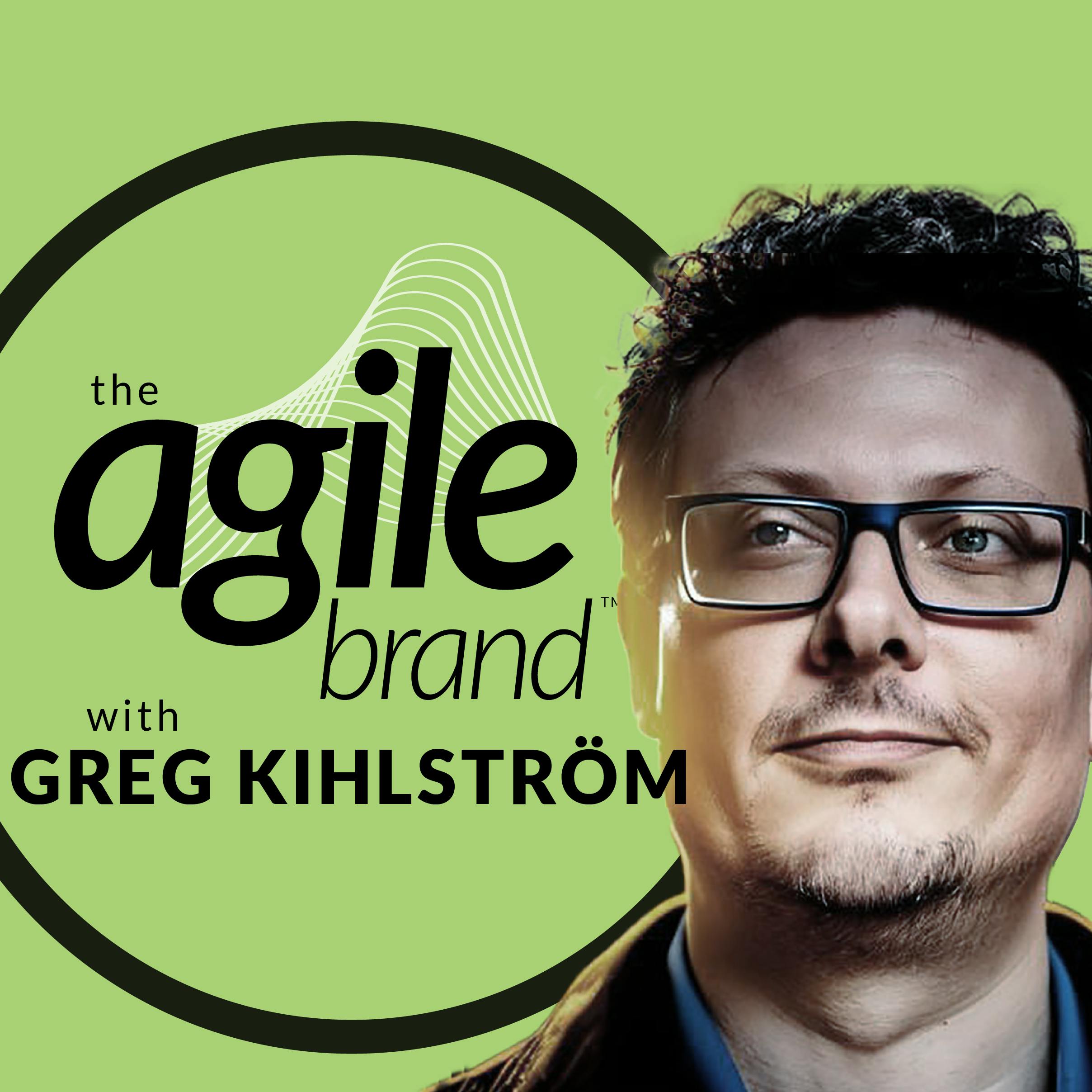
The Agile Brand with Greg Kihlström®: Expert Mode Marketing Technology, AI, & CX
#757: Funnel CEO Fredrik Skantze on the evolution of marketing measurement
00:27:17
Loading summary
Transcript25 lines
- [00:01]
A
The Jack Welch Management Institute at Strayer University helps you go from I know the way to I've arrived with our top 10 ranked online MBA. Gain skills you can learn today and apply tomorrow. Get ready to go from make it happen to Made it happen and keep striving. Visit strayer.edu Jack Welchmba to learn more. Strayer University is certified to operate in Virginia by Chev and its many campuses, including at 2121 15th Street north in Arlington, Virginia. The agile brand.
- [00:43]
B
Welcome to Season seven of the Agile Brand where we discuss the trends and topics marketing leaders need to know, stay curious, stay agile and join the top enterprise brands and Martech platforms as we explore marketing technology, AI, e commerce, and whatever's next for the Omnichannel customer experience. Together we'll discover what it takes to create an agile brand built for today and tomorrow and built for customers, employees and continued business growth. I'm your host Greg Kilstrom, advising Fortune 1000 brands on martech, AI and marketing operations. The Agile Brand Podcast is brought to you by Tech Systems, an industry leader in full stack technology services, talent services and real world application. For more information, go to teksystems.com to make sure you always get the latest episodes, please hit subscribe on the app you listen to podcasts on and leave us a rating so others can find us as well. Now onto the show. Marketing is quickly evolving. Is your team agile enough to navigate the waters of evolving customer expectations, best practices in marketing measurement, and the rise of AI? Agility requires more than just quick reactions. It demands a proactive understanding of emerging trends and and the ability to adapt your strategies, processes and tech stack accordingly. It's about building a brand that can continuously learn and evolve. Today we're going to talk about navigating the complexities of modern marketing measurement and the critical role that data plays in building an agile brand, especially as AI rapidly transforms the landscape. To help me discuss this topic, I'd like to welcome Frederick Skanza, CEO and Co Founder at Funnel. Frederik, welcome to the show.
- [02:26]
C
Thank you Greg. Thank you for having me on the show.
- [02:29]
B
Yeah, Looking forward to talking about this with you. Before we dive into the topics here, why don't you give a little background on yourself and your role at Funnel?
- [02:37]
C
Absolutely. Yeah. So I'm the CEO and one of the co founders of Funnel. We're a leading marketing intelligence platform and marketing intelligence is really the product that marketing buys to improve their marketing effectiveness. So we're software as a service business about just getting up to $70 million in annual recurring revenue growing by about 30%. Have about half our business in the US, half in Europe, where I'm based out of Stockholm in Sweden and then we have an office in apac which is one of our fastest growing markets. My background is I'm Swedish, but spent about 12 years in the U.S. studied at MIT Engineering and then business school at Stanford. Worked in Silicon Valley and enterprise software for five years and then I was in London for seven and built an E commerce company. And that's where I first came across this problem of sort of measuring marketing effectiveness and sort of at that time, you know, really kind of understanding like the P and L of your marketing, like we spend all this money in these channels but what is the real effect, you know, which channels are driving what effect? And so everybody had a spreadsheet and that's what we then later came to start to solve with Funnel. But that was 10 years later.
- [03:54]
B
Yeah, yeah, love it. So yeah, let's dive in here and going to talk about a few things here. But I want to start with some of the things I teed off in the intro is, you know, AI data and really the future of measurement. And so why don't we start by talking about some of the challenges of modern marketers. Lack of data isn't usually the issue anymore. Usually there's so much data that marketers almost don't know what to do with it and so many sources that it can be hard to prioritize. Can you talk a little bit about how challenges like this have shaped your approach to building Funnel?
- [04:31]
C
Yeah, absolutely. And sort of solving this data complexity problem is core to what we do. And I think a good way to look at it is that it's based on sort of the number of data sources that are available to marketing and that is roughly correlated with the number of marketing products that there are out there. And in 2014, when we started building Funnel, there were about a thousand marketing products available for marketing and adjacencies like, you know, e commerce platforms, CRM platforms and so on. And now there are 13,000 of these. 13,000, 3,000 were launched in the last year. So complexity of data is just going through the roof and the larger platforms are just providing, you know, orders and orders of magnitude or more data. So that is, that is absolutely the case and sort of to help narrow that down, you know, the, the, the fundamental problem that we help with is this cross channel, cross marketing initiative attribution and sort of measurement and reporting problem. That, that is sort of the harder problem than just looking at Silo data. And that is what we fundamental focus at. At Funnel.
- [05:46]
B
Yeah. And so certainly AI is transforming a lot of things. You know, we talk about it every episode on this show, of course, in different ways, but it's also transforming the field of marketing and data analysis. What are some of the areas that you see as exciting opportunities to enhance marketing measurement with AI and what are some of the potential pitfalls that marketers should be aware of?
- [06:14]
C
Yeah, no. So I mean, I think it's really exciting and I think there's a lot of really high potential things coming out. I think one of the things I'm most excited about is that forever data analysis has been the same. You sort of look at the data and then you sort of create dashboards and use dropdowns or SQL to sort of create graphs and then you sort of look at your dashboards or you click through your analysis tabs. But now with generative AI, there is an opportunity and a new interface is emerging for how to interact with your data, which is sort of this chat interface and essentially conversational analytics where you can have a conversation with your data. Now there are these interfaces starting to emerge. I don't think anybody's really cracked it yet because it's a really hard problem. And it's a hard problem because for you to be able to have a conversation with your AI, your AI need to understand your data and your data, how it's structured and set up and actually think we're pretty well set up at Funnel there because we are in a vertical where marketing, we built all our, you know, we have 700 connectors to pull in data, We've built those, we understand all the data. We have to understand the data model and have the data model out of the box. So we're pretty well set up there to do this in a vertical rather than some of the horizontal tools where you have to do a lot of staging to get this to work. So I think that's one the things I'm very excited about. And then in data analysis, and then if you talk about measurement, what I would say is we're increasingly using machine learning and AI to sort of make measurement better. So one example is we use long, short term memory neural networks, which are one type of recurring neural networks in our measurement technology. They are really good at understanding sequences where the order of the sequence matters. And if you think about like marketing and marketing data, if you have two instances, for example, first in one instance somebody comes to a website through branded search and then they come directly to the Websites, that's one thing. In the other one, the sequence is the other way around. They first come through a direct visit and then they come through a branded search. Right. In the first, in the first case it's very clearly the branded search that stood for the, for the conversion. In the second case, actually they already knew about you somehow differently. It was like a referral or something. And so you have to understand those differences and you have to make those decisions in split seconds and sort of sequence this information. We use neural networks, for example, to do that. So that's just one of many examples of how we use AI more widely.
- [09:05]
B
Yeah, yeah. And so maybe building on that, you know, you've talked about triangulation using marketing mix modeling, multi touch attribution, incrementality testing. I'm sure a lot of those, listen, listening to this are familiar with some of those terms, if not all of them, but triangulation using them, you know, can you unpack that a bit and explain why this approach offers a more holistic view of ROI in an admittedly complex media landscape?
- [09:38]
C
Yeah, absolutely. And triangulation is really the gold standard, using all algorithms essentially available for measurement. And that's sort of more and more sort of what thought leaders even like Google and Meta and LinkedIn are sort of pushing for. But it's important to understand that that is the most advanced type of measurement. And there is a whole set of range of measurement that you can do. You can start with sort of last click cross channel attribution, then you can do rule based attribution, you can do programmatic attribution, which is sort of where you bring in the, of neural networks and statistics. And then you can kind of layer on incrementality testing or some sort of marketing mix modeling type of techniques into that. But then you come into sort of this golden standard. And it requires two things. It requires that you have enough data that you're a large enough company and have enough conversions for this to be possible. And it requires you to be reasonably sophisticated as a marketing team to kind of absorb this. So really what you do then is, and this is the fundamental premise is that the world isn't deterministic anymore. Cookies are essentially going away. So you really have a lack of signal and signal loss. And to make up for that you need to do two things. You need to use all the data that's available, so be it, of data from all the different channels and all your first party data and so on. And then you need to use algorithms technology and use all the algorithms Available now individually, these algorithms, because of signal loss, have challenges, but when you use them together and have them influence each other, they provide a very accurate picture. And you sort of run a machine learning framework to sort of coordinate between these models, which is quite sophisticated. But that then really provides you with a good solid answer. And it also provides you with a very accurate way to model your marketing. Right. So if you take a step back, you know, kind of, we sort of got lost a little bit in digital marketing. We basically want to attribute all our marketing to the different channels that we spend money on. Yeah, a very common attribution model is last non direct click. So if it, if, if it's non direct, we don't count it. We instead give the credit to a paying channel. And that, that sort of means that you're trying to this month attribute all your sales to one of these channels that you pay money for. But for most brands, if you actually stop marketing, you probably get 70% of the sales anyway because you have a really strong brand. That's called the baseline. So you need to model your baseline and then, you know, if you turn on your marketing initially, even when you buy clicks, it takes a while for that to have effect. That's called ad stock, where it has an effect, but it's over time and you have to model that as well. And then you need to model, you know, not only what it call, you know, you got, you got a hundred conversions and you spend $1,000. That's $10 per conversion. But if you want to buy additional conversions, you're not going to be able to buy them at $10 because there's saturation in these channels. So you need to model incremental CPA and then see where you are on these saturation curves for all your channels to optimally figure out how to balance your budget. It's pretty sophisticated, but that's what you get with triangulation. Then you get really good modeling and then you get on top of that, the correct attribution. Like these are the channels that are really driving whatever sales that you're getting.
- [13:25]
B
Yeah, I mean, because I've, you know, I've heard debates on, you know, like media mix modeling versus multi touch attribution. But you know, what you're saying here is we need to go beyond, you know, one versus the other and look a lot more deeply. Is this, is this primarily for companies that are either spending a lot, a lot on advertising or have a lot of traffic or how big does a company need to be to be able to Benefit from this kind of triangulation.
- [13:57]
C
You don't have to be an enterprise, you can be a mid market company but you have to have six, seven different media channels that you're on and you have to have a good number of transactions to really be on this. And they have to ideally be online as well. We can also model store traffic and all these things, but there has to be online elements to them as well. But if you're not quite at that level then we can kind of prune it down and simplify it a little bit, have it be a little bit more skewed towards multi touch attribution, but sort of gradually bring in some of these elements from either running tests or you know, looking at modeling other things than clicks, maybe views through sort of marketing mix modeling data science techniques. And so there's a scale and we can help you at any level of sophistication and size.
- [14:59]
B
Yeah, yeah. Well I know there's a lot of enterprise marketers listening to this show so I know a lot of those could really benefit from the, the full triangulation as well. One of the other things impacting marketers in addition to, you know, the number of channels, the, the, the number of data sources is third party cookies. And I know we've, we've all been through a bit of a journey with, with the, the cookie apocalypse and then it wasn't happening and you know it's, it's sort of gone back and forth a little bit on exactly what's happening. But you know, I think deprecation of third party cookies and the increasing value of first party data has not changed. I mean that's still something that is very much constant and growing. That said, deprecation of third party cookies is altering the landscape of marketing measurement. How are you helping your customers navigate this shift and leveraging first party data effectively so that you get the best insights on campaign performance?
- [16:09]
C
Yeah, so I think that's a really good question. And this is really key to what we do and there are two aspects to this. The first one is sort of the signal loss for you as the advertiser. So you know it used to be really that like just by us doing data integration for you and making a business ready and sort of measurement ready data set for you, you can kind of look at that in a table and kind of make decisions based on, you know, based on a click based attribution model. And that is no longer the case. Now you actually need to do use data science to sort of make these decisions and you have to use algorithms and increasingly AI to do it. So that is the first thing and that's sort of modern measurement and where it's going and it is pretty sophisticated and really hard marketing problem. That's the first thing. Now we as an advertiser aren't the only one who have signal loss. If you think about, if you go back seven years, what was it like to be a search marketer or like a marketer on meta? So your job was to set up campaigns and traffic came to your website and you looked at the conversions you got from each campaign and then certain campaigns gave you customers that bought more, had a higher, longer lifetime value, you know, maybe higher margin products or lower return rates and you wanted more of those customers. So what you then did is you went back to the ad platform and you increased your bids on that platform. That was your way to signal to the platform, give me more of those leads. Now that job has gone away. Now you know, on Google there is performance max, there's meta advantage, it's an AI black box. It does this better than any human. But it doesn't have that signal. It doesn't actually know what happens on your website because the same cookie block, you know, cookie blocking happens to your, you happens to meta and Google so they can't really see what happens to your website. So now when you have done the attribution and you know which conversions are coming from which channels and you also can look at your back end data and see lifetime value and margins and you know what customers you want, how much customers are worth you and what you want more to, you need to in sort of near real time go back and push that data into these ad platforms and say here I had these conversions, this is how much I attribute them to you and this is how much they're worth to me. If you do that, you can improve your performance per platform by something like 20% is massive, massive increase in performance. So those are the two things we help customers with. And this is modern marketing. It is data driven. It's really complex, it's hard and it hard to do this in real time because you have to set up systems to do it.
- [19:15]
B
Yeah, yeah. And so kind of following on that, I want to talk about a little bit about how you're growing and building funnel and scaling, you know, so scaling a product to meet the demands of, you know, you work with multinational corporations like Adidas, Sony and others. Doing that presents some unique challenges. What have you learned and what learnings has funnel gained and tailoring your platform and services to these large scale clients.
- [19:50]
C
Yeah, absolutely. I mean we work with a whole spectrum of customers from small e commerce companies to some of the world's largest brand. You mentioned some of them. We also do the global marketing reporting for Uber, Samsung, some of the large, really large media networks like Havas Media Group and Publicis. So massive, massive amounts of data. So many of these customers have literally tens of thousands of data sources. And we call it the funnel at scale problem, which is really kind of how do you manage this many data sources at scale? And so these are individual accounts they have on those data sources. But some of these customers have between 100 and 200 different connectors they use from us, meaning Google Ads is one connector, Meta is two and TikTok is three, 150 of those. They keep changing the versions, they keep having data issues. What we provide is marketing data as a service. It always works, it's always there. There are so many of these data sources. So every fourth customer that comes to us comes with a data source we had never seen before. So we have a service level agreement and particularly these large enterprise customers, we have a service level agreement. We will build any new platform that they have that we haven't seen before built within a couple of days. Data as a service, we just provide it, we solve the problem and they don't have to think about it. And that has really been transformational, especially in how we work with the enterprise.
- [21:27]
B
Yeah, a lot of SaaS companies struggle with maintaining a balance between customization and scalability. How do you think, think about this and how do you approach this so that you know, you can do what you're talking about, which is, you know, achieve that, that ability to, to be flexible while still maintaining that, that high quality experience for everybody.
- [21:53]
C
Yeah, it's a great question. So you know, I think there's two things we've done. We have, in general, we have said we're going to build one product for all customers. We have advertisers as customers, we have agencies. Customers use the same product and it's going to be a standard product and we don't make any modifications or customizations to it. And it's meant that we've built a sophisticated product with a lot of flexibility. I would liken it to like notion. So you know, notion is like Lego for workflows. Yeah. As opposed to like a CRM tool which is a workflow, but it's like a really particular workflow. So you never outgrow funnel. It is a little more, you have to be A little more sophisticated when you come in and you might need some help, but you never outgrow it. That's the first thing. And then we break the rule. Once there was one thing we do when it comes to customization, and that's what I talked about, data sources. Because there are so many of them. So we will, with an sla, build any data source that you need whenever you need it. We will also build any data destination you need when we need it. So data in, data out, we will figure out for you. But other than that, it's one platform. It's like Lego for marketing data. We solve any problem, you never outgrow it. You can start with five data sources and go to 30,000 data sources. We have one customer who added 100,000 Facebook data sources.
- [23:20]
B
Wow. Yeah. Love it. Well, as we wrap up here, a couple last questions for you. Certainly you're the person to ask this question too. Where do you see marketing measurement going in the months to come? Certainly there's been a lot of changes. There's a lot more to come. What role will marketers, data scientists, measurement tools, and even dashboards play as some of these AI enabled tools continue to grow and the role of marketers shift?
- [23:51]
C
Yeah, no, absolutely. You know, so the role of the marketer in AI is shifting. We already talked about how Google and Meta's and TikTok's AI is handling the bidding. Search is going to not, you know, it's going to be, you know, these gen AI tools going forward. That's changing massively. We're seeing less, you know, less search traffic that you can buy. And then of course, automated image generation for ads, automated copy for content marketing, B2B lead gen, automated with agents. That's going to happen. But ultimately you still have to attribute your marketing spend to what your results are. As I said, that's a really hard data science, machine learning AI problem that doesn't go away. And we're going to continue to evolve that and continue to solve that. And whether it is a marketer who does the marketing or an AI that uses it, they still need to know the impact of what they do and relative to the cost.
- [24:58]
B
Yeah, absolutely. Well, Frederick, thanks so much for joining today. One last question for you before we wrap up. What do you do to stay agile in your role and how do you find a way to do it consistently?
- [25:09]
C
Yeah, that's a great question. I mean, I definitely feel a lot of that right now with the world changing so fast. But at the same time, 30 years ago when I took did my master's at MIT. I did it in AI and adaptive systems. It feels a little bit like coming home. But you know, when you do a scale up, one of the most important things you can do is keep learning. You know, the company grows, it changes, you have to learn. The industry changes, technology changes. So you have to keep learning. You know, that is over 20 years of having done this. That is what I do now. The other thing to be agile in my role as a CEO is that actually get the company to be agile. That is actually much harder. And when we were 30 people we were really agile and as we then grew to like under 50, 200 people, we got much slower and that really worried me. We had this bottom up culture and it kind of was really hard to make bigger shifts and find big mountains. And so I spent the last sort of two, three years rebuilding the operating model of the company to balance bottom up with top down strategic planning and also sort of setting top priorities for the company and an ability to sort of really get everybody to row in the same direction. And that's really been transformational. That combination has caused us to be probably twice as fast as we were three years ago. So that's really has been my focus on agility.
- [26:39]
B
Yeah. Love it. Well, again I'd like to thank Frederick Skansa, CEO and co founder at Funnel for joining the show. You can learn more about Frederic and Funnel by following the links in the show notes. Thanks again for listening to the Agile brand brought to you by Tech Systems. If you enjoyed the show, please take a minute to subscribe and leave us a rating so that others can find the show as well. You can access more episodes of the show@theagilebrand.com that's theagile brand.com and contact me if you're interested in consulting or advisory services or are looking for a speaker for your next event, go to www.gregkilstrom.com that's G R E G K-I H L S T R O M.com the Agile brand is produced by Missing Link, a Latina owned, strategy driven, creatively fueled production co op. From ideation to creation, they craft human connections through intelligent, engaging and informative content. Until next time, stay curious and stay agile.
- [27:46]
A
The agile brand. This summer, don't squeeze in. Spread out. Find homes big enough for your whole guest list on vrbo. That's vacation rentals done right. Book your stay now. The Jack Welch Management Institute at Strayer University helps you go from I know the way to I've arrived with our top 10 ranked online MBA. Gain skills you can learn today and apply tomorrow. Get ready to go from make it happen to made it happen and keep keep striving. Visit strayer.edu Jack WelchMBA to learn more. Strayer University is certified to operate in Virginia by Chevin at many campuses, including at 2121 15th Street north in Arlington, Virginia.