← The Agile Brand with Greg Kihlström® | What CMOs Need to Know About Marketing Technology, AI & CX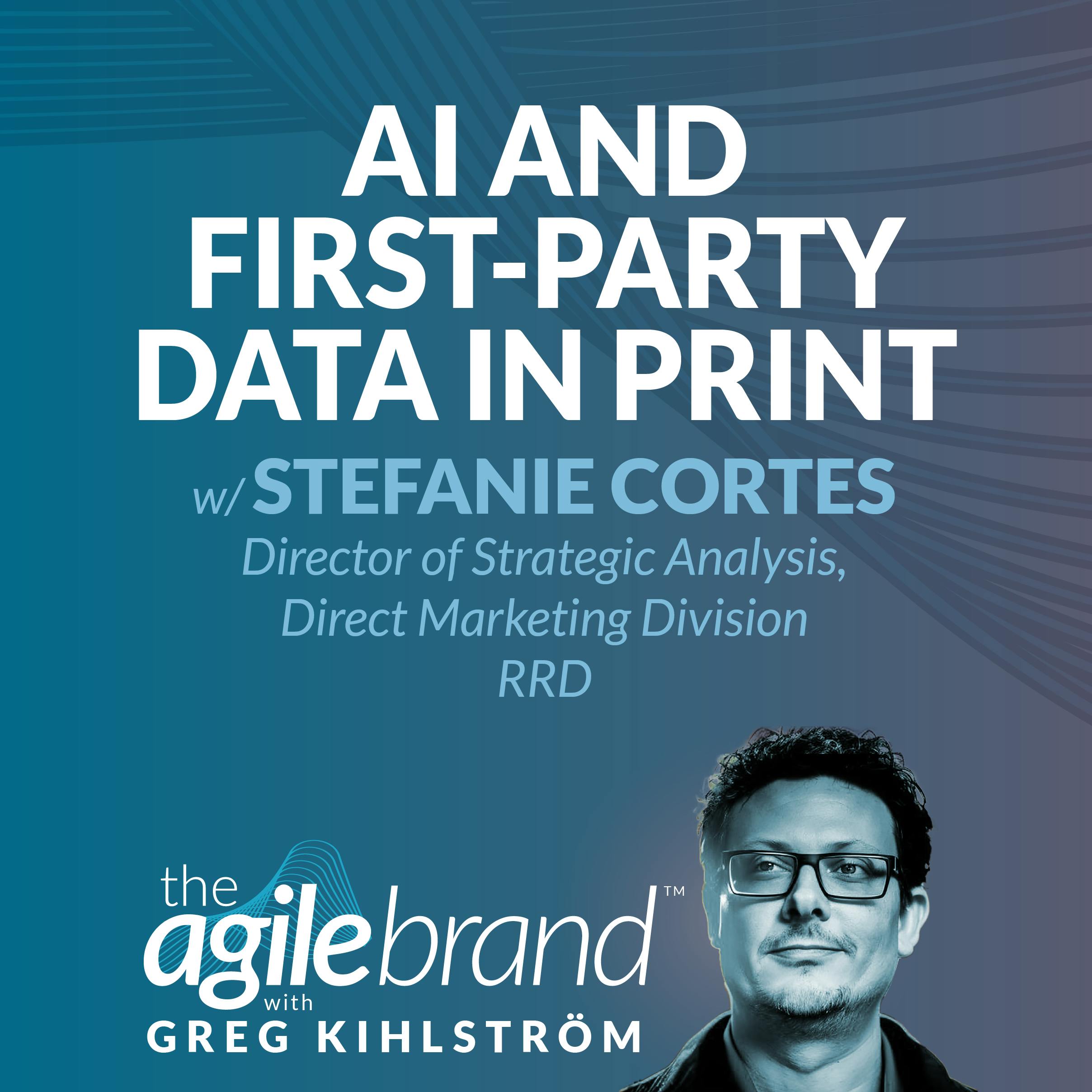
The Agile Brand with Greg Kihlström® | What CMOs Need to Know About Marketing Technology, AI & CX
#557: AI and First-Party Data in Print with Stefanie Cortes, RRD
00:15:48
Loading summary
Transcript57 lines
- [00:02]
Liberty Mutual Spokesperson
And Doug, there's nowhere I wouldn't go to help someone customize and save on car insurance with Liberty Mutual. Even if it means sitting front row at a comedy show.
- [00:12]
Greg Kilstrom
Hey, everyone, check out this guy and his bird.
- [00:14]
Stephanie Cortez
What is this, your first date?
- [00:15]
Liberty Mutual Spokesperson
Oh, no. We help people customize and save on car insurance with Liberty Mutual together. We're married. Me to a human, him to a bird.
- [00:22]
Stephanie Cortez
Yeah, the bird looks out of your league.
- [00:24]
Liberty Mutual Spokesperson
Anyways, get a quote@libertymutual.com or with your local agent.
- [00:27]
Stephanie Cortez
Liberty Liberty. Liberty Liberty.
- [00:30]
VRBO Announcer
VRBO makes it easy to claim your dream summer spot with early booking deals from homes with pools to poolside loungers. When you book a vrbo, you don't have to reserve any loungers. They're all yours. All you have to do is book early book with vrbo.
- [00:49]
The Agile Brand Announcer
The Agile Brand
- [00:52]
Greg Kilstrom
Foreign
- [00:56]
welcome to Season six of the Agile Brand where we discuss marketing, technology and customer experience, trends, insights and ideas with enterprise and technology platform leaders. We focus on the people, processes, data and platforms that make brands successful, scalable, customer focused and sustainable. This is what makes an agile brand. I'm your host, Greg Kilstrom, advising Fortune 1000 brands on martech, marketing operations and CX, best selling author and speaker. The Agile Brand podcast is brought to you by Tech Systems, an industry leader in full stack technology services, talent services and real world application. For more information, go to teksystems.com before we get started, I wanted to let you know that my latest book, Priority is seven Principles for Better Strategies, Decisions and Outcomes is now available. In it, I give ideas and insights for leaders and teams that need to make meaningful progress on their priorities. After all, our priorities are what we do, not what we say we'd like to do. You can find Priority as Action on Amazon or learn more on my website greggkilstrom.com now let's get on to the show. In a world seemingly dominated by digital
- [02:06]
media, at least according to digital media
- [02:08]
practitioners, print marketing continues to carve out
- [02:12]
a significant and evolving role, particularly in
- [02:14]
how it integrates with digital strategies to
- [02:17]
create compelling customer experiences.
- [02:19]
Today we're joined by Stephanie Cortez, director of Strategic analysis for the Direct marketing
- [02:24]
division at RRD, who will share insights from RRD's latest print impact report.
- [02:30]
Stephanie, welcome to the show.
- [02:31]
Stephanie Cortez
Thanks so much, Greg.
- [02:33]
Greg Kilstrom
Yeah, looking forward to talking about this with you. Why don't we get started with you giving us a little background on your role at RRD?
- [02:41]
Stephanie Cortez
Absolutely. So I've been with RID for a little over 15 years now. In my current role I'm the director of Strategic analysis with the Direct Marketing division. In that role, I work alongside the president of our division and the other sales leaders. You know, we're really focused on strategic thought leadership, analyzing the industry and competitive trends. And I also provide a lot of oversight to project management and, you know, that'll help us identify and grow new business opportunities.
- [03:12]
Greg Kilstrom
The RRD Print Impact Report, later in the show definitely dive into a few aspects of that. But as an introduction, could you give us a little background on what is the report and a little more background there?
- [03:26]
Stephanie Cortez
Sure. So the Print Impact Report is our latest annual printing industry report. The goal there is to understand the landscape of the industries our clients work in and to ensure bringing them the best possible solutions. We've been conducting these surveys for about four years now across all of our business lines, which include print supply chain marketing, packaging and labels as well. We've been really finding that these surveys provide us with really, really strong insight and really help us maintain a pulse on the industry in a very data driven way.
- [03:59]
Greg Kilstrom
Great, great. So let's dive into the first of a few topics we're going to be talking through. And this first is the resurgence of personalized print. So digital gets a lot of talk about personalization and marketing. But as digital environments become increasingly saturated, personalized print communications are gaining more attention for their ability to connect deeply with their audiences. So one of the things the Print Impact Report highlights is that over 2/3 of organizations are personalizing their print communications. What trends are driving this resurgence in personalized print marketing?
- [04:42]
Stephanie Cortez
Yeah, I think as you just mentioned, I mean it's really the oversaturation of the digital climate right now. And also with Google moving away from third party cookies, this is definitely motivating marketers to seek other methods of marketing channels. And print being the predominant one that we're seeing right now, especially as it relates to direct marketing. It's really just, even though it's probably one of the oldest techniques in direct marketing, it's becoming more of a trendy channel to incorporate into the more digital first strategies we're finding.
- [05:17]
Greg Kilstrom
Yeah, yeah. And so given that marketers are working more in a multi channel or omnichannel world and consumers certainly are living in that world, how are marketers effectively combining print with digital elements to enhance the personalization of those communications?
- [05:37]
Stephanie Cortez
Yeah, a good question. So I think there was a time and we're still kind of seeing it right now. We were just recently at an industry event where we're still surprisingly seeing some people pushing back a little Bit and kind of seeing the print competing with the digital. But the main thing about effectively combining print and digital is just to embrace the technology and utilize the tactics that we have now to incorporate and bridge that gap between print and digital. So anything from QR codes, flow codes, automated trigger, messaging, web to print, obviously artificial intelligence is the huge one right now. So I think it's really just about embracing the new technology. And I think just from my experience, I've kind of always been focused on this digital print integration since the beginning of my career. The main thing is just really embracing it because what's truly keeping print relevant is the technology. So without that, I don't think that print would be in such a beneficial and positive performance space that it is now, should it not be for the digital channels that we're working with?
- [06:48]
Greg Kilstrom
Yeah. So another trend that marketers are talking about more and more is the concept of using more first party data, first party data strategies. So I want to talk about that as in terms of print marketing as well. So with everything from shifting data regulations and just more consumer awareness of data privacy, first party data has definitely again become a lot more top of mind for all marketers. Can you discuss how organizations are prioritizing the acquisition and utilization of first party data for personalized print marketing?
- [07:28]
Stephanie Cortez
Sure. So you know, as you mentioned, it's, you know, as the digital environment becomes more and more crowded, I think that we're using it the same way. I believe in the print applications, it's just, you know, what works sometimes in one channel doesn't necessarily work in another. So it's really, how do I take this really, really rich data that, you know, has to do with the individual and understand the creative applications that work best for the direct mail channel versus, you know, an email or a social product because there different nuances that you have to use from a creative aspect. So I believe from looking for a vendor to work with a print provider, it's very beneficial to find someone that really understands that creative strategy and what works best for certain channels.
- [08:14]
Greg Kilstrom
Yeah, yeah. And so what are the primary sources of this data and how are marketers working with print vendors to harness this information effectively?
- [08:25]
Stephanie Cortez
Yeah, I mean it's really all about just these direct interactions. From the print impact report, we found I think the top three ways that marketers are using first party data most effectively and they're harnessing it from consumer feedback, buyer history as well as consumer demographics. But you know, I mean there's a ton of others. So surveys, loyalty programs, you name it. So any Kind of direct interaction or historical data that you have from a one to one interaction with that consumer is really, really becoming the holy grail of marketing right now. Because, you know, back in the day it was all about segmentation and, you know, different, you know, based on, you know, your region, your, your age, you know, and that's, that's all great, but now we're really, we've gotten to a point where print communications are dealing on a one to one basis.
- [09:22]
Greg Kilstrom
So to kind of segue there, the, the platforms, you know, a lot. Another thing we talk about a lot is AI's role and increasing role in, in marketing in, in general. And so AI isn't just a trend here. It's, you know, it's making significant inroads into not only digital but, but print. And so according to the report, 32% of marketers are currently using AI in print marketing, with an additional 31% planning to use it. How are you seeing AI being utilized to support print marketing efforts?
- [09:58]
Stephanie Cortez
Yeah, well, we've seen marketers use who, especially marketers who use print heavily in their channel strategy, using AI for predictive analytics and to streamline operations. AI can also be used for supply chain management, for example, predicting demand for consumables like ink and paper.
- [10:15]
Greg Kilstrom
Yeah, and I've certainly seen advantages in the, you know, I would say on the marketing operations side and the creation of content. I've seen a lot of it on the digital side because I just work a little bit more in that area. But what are you seeing as far as advantages of AI in creation and execution of print marketing campaigns?
- [10:39]
Stephanie Cortez
I'm seeing that marketers that use the channel, the print channel specifically, tend to be leveraging AI, mostly for consumer insights, AI, allowing us to take large amounts of data and glean insights that make the customer experience more timely, relevant and targeted. So, you know, with that, I think it's very similar in the ways that digital marketers are utilizing AI. Just a different channel.
- [11:00]
Greg Kilstrom
Yeah, yeah. And so next thing I wanted to talk about is just, you know, when, when we're talking about, it's not a, it's not a print versus digital conversation. It's, you know, I think as we've been talking about, it's, it's really how do both work best together because they can, they can really complement each other. But there is digital fatigue. You know, it's, it's a thing, you know, we're on our screens all day, we're being marketed to all day on those screens. And so, you know, there, there is A bit of fatigue there. So, you know, print marketing can actually offer a tangible alternative to, you know, the, the pop up ads and the, all that stuff that we're kind of inundated with. And the report mentioned previously indicates 94% of, of marketers are using print marketing to combat digital fatigue. What are the top strategies employed in this regard?
- [11:53]
Stephanie Cortez
Yeah, I mean we've, we've been seeing many, many marketers continuing to use the direct mail channel as the sort of the flagship acquisition touchpoint. Being that it's proactive, highly directed and targeted. Some of the top strategies, you know, they, they include digital. It's not like you're saying it's not getting away from digital or you know, print verse digital, but the tactics typically include digital being surrounding the mail event with coordinated digital touches that support a campaign theme, bridging direct mail messaging and digital adoption with supportive tactics like QR codes and personalized URLs and also direct mail retargeting. This has been gaining huge popularity as like a very successful marketing tactic to move customers through the funnel.
- [12:36]
Greg Kilstrom
Yeah, yeah. And then so you know, you've kind of, you've touched on this. But you know, for those wondering how effective these channels or these strategies in personalizing print materials for targeted messaging, how do you look at the effectiveness of the strategies for personalization?
- [12:55]
Stephanie Cortez
Yeah, I believe these strategies are effective because while digital excels at immediacy and reach, I think print is trusted. We've seen tons of studies pointing that to the fact that print is trusted, impactful, personal and distinctive and unique. So together, I think digital and print just make a very powerful marketing partnership. Print messages will resonate more if they're reinforced digital messages and vice versa. We've experienced it with our own clients. I mean, time and time again when comparing a solo print campaign or a solo digital campaign versus a coordinated touches that support a campaign theme, meaning coordinated multi or omnichannel campaigns will always almost prove to generate higher return.
- [13:39]
Greg Kilstrom
Yeah. Well, it's been great talking with you, Stephanie. Looking out ahead, what future trends do you see in the realm of print marketing, especially considering the integration of new technologies and data strategies as it relates
- [13:55]
Stephanie Cortez
to print marketing, but more specifically, direct mail, Modern marketers are prioritizing value and performance over the lowest cost per piece we're seeing lately. Also, customer data, we see that will continuing to be leveraged in more sophisticated ways drive personalized campaigns. Also, more and more marketers will continue to embrace marketing automation for coordinated channel delivery as well as campaign measurement. And for all these reasons, another trend I definitely foresee getting stronger is digitally native brands continuing to test the channel into their marketing mix simply because, you know, they're realizing that it just works.
- [14:32]
Greg Kilstrom
So can you elaborate a little bit on what you mean by value and lowest cost per piece just for those that a little, little, maybe a little more familiar with digital versus print?
- [14:41]
Stephanie Cortez
Sure, absolutely. So this is something that we've at RD been referring to as a fundamental shift in direct marketing. So where marketers used to focus on volume and the masses and how many people can I reach and what is the cost per piece, they're now focused on the value and performance and becoming way more targeted and less focused on the cost per piece. And also there's more of a focus on the customer and their needs. You know, because of all this behav access to behavioral data and first party data that we've been talking about, you know, becoming way more customer centric versus what's the marketer's promotional agenda. So that that's really the biggest shift that we've been seeing in terms of how marketers are using the channel.
- [15:26]
Greg Kilstrom
Yeah. Yeah. That's great. Well, again, I'd like to thank Stephanie
- [15:29]
Cortez, Director of Strategic Analysis for the
- [15:31]
Direct Marketing Division at RRD for joining the show. You can learn more about Stephanie and the findings of the print impact report by following the links in the show notes.
- [15:42]
Thanks again for listening to the Agile brand brought to you by Tech Systems. If you enjoyed the show, please take a minute to subscribe and leave us a rating so that others can find the show more easily. You can access more episodes of the show at www.gregkilstrom.com. that's G-R E G K-I H L S T R O M dot com. While you're there, check out my series of best selling agile brand guides covering a wide variety of marketing technology topics. Or you can search for Greg Kilstrom on Amazon. The Agile brand is produced by Missing Link, a Latina owned, strategy driven, creatively fueled production co op. From ideation to creation, they craft human connections through intelligent, engaging and informative content. Until next time, stay Agile,
- [16:32]
The Agile Brand Announcer
The agile brand.
- [16:41]
Liberty Mutual Spokesperson
And Doug, there's nowhere I wouldn't go to help someone customize and save on car insurance with Liberty Mutual. Even if it means sitting front row at a comedy show.
- [16:50]
Greg Kilstrom
Hey everyone.
- [16:51]
Stephanie Cortez
Check out this guy and his bird. What is this your first date?
- [16:54]
Liberty Mutual Spokesperson
Oh no. We help people customize and save on car insurance with Liberty Mutual together. We're married. Me to a human, him to a bird.
- [17:01]
Stephanie Cortez
Yeah. The bird looks out of your league anyways.
- [17:03]
Liberty Mutual Spokesperson
Get a quote@libertymutual.com or with your local agent.
- [17:06]
Stephanie Cortez
Liberty Liberty Liberty Liberty.
- [17:10]
The Agile Brand Announcer
The Jack Welch Management Institute at Strayer University helps you go from I know the way to I've arrived with our top 10 ranked online MBA. Gain skills you can learn today and apply tomorrow. Get ready to go from make it happen to made it happen and keep striving. Visit strayer.edu Jack Welchmba to learn more. Strayer University is certified to operate in Virginia by Chev and its many campuses, including at 2121 15th Street north in Arlington, Virginia.