← The Agile Brand with Greg Kihlström®: Expert Mode Marketing Technology, AI, & CX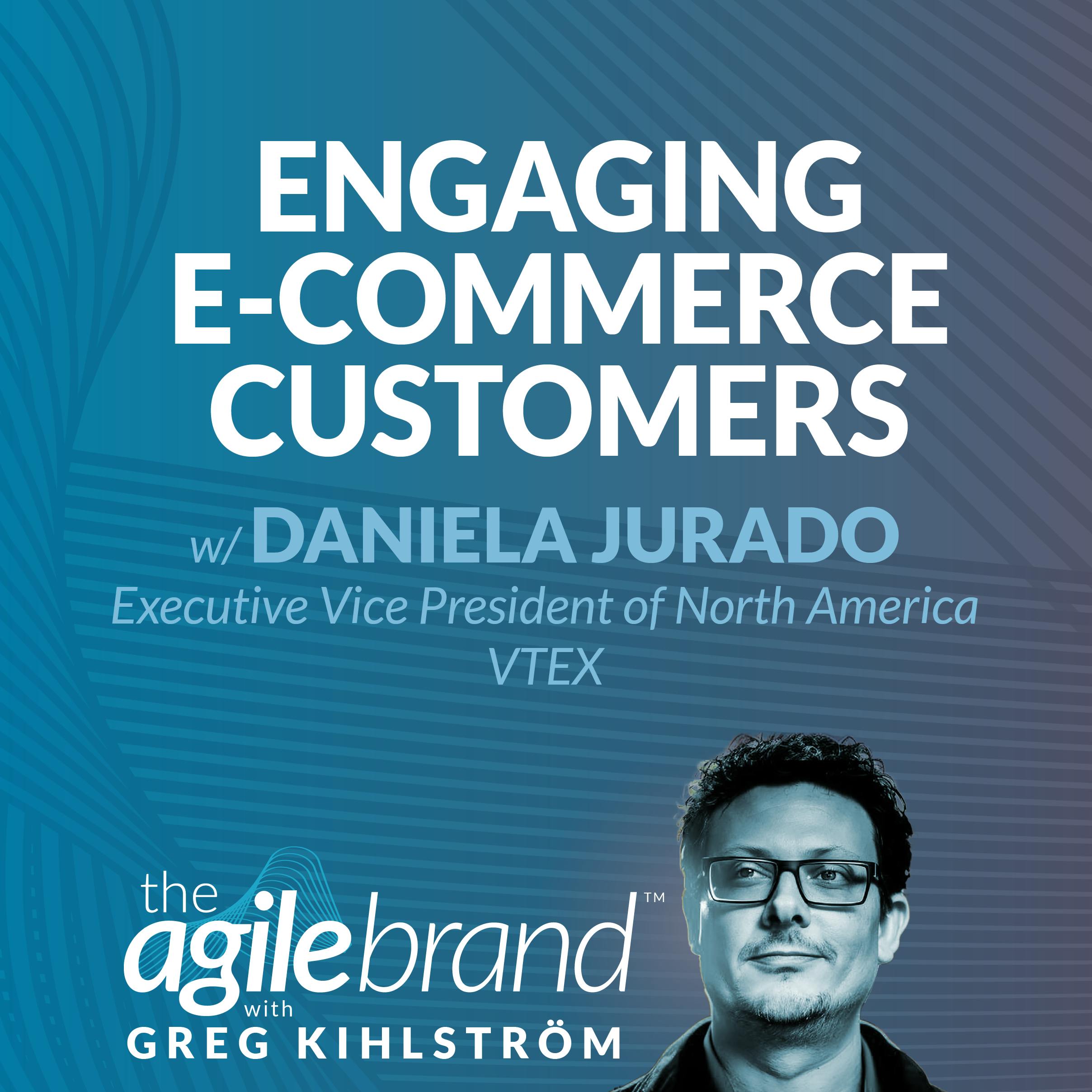
The Agile Brand with Greg Kihlström®: Expert Mode Marketing Technology, AI, & CX
#567: Engaging e-commerce customers with Daniela Jurado, VTEX
00:24:59
Loading summary
Transcript38 lines
- [00:01]
Strayer University Announcer
At Strayer University, we help students like you go from Is it possible? To Anything is possible by offering access to up to 10 no cost gen Ed courses so you can reach your goals affordably and fast. Visit Strayer Edu to learn more. No Cost Gen Ed is provided by Strayer University affiliate sofia. Eligibility rules apply. Connect with us for details. Strayer University is certified to operate in Virginia by Chev and has many campuses, including at 2121 15th Street north in Arlington, Virginia.
- [00:31]
Carvana Customer
Hey sweetie, your mother showed me this Carvana thing for selling the car. I'm gonna give it a try. Wish me luck. Me again. I put in the license plate. It gave me an offer. Unbelievable. Okay, I accepted the offer. They're picking it up Tuesday from the driveway. I haven't even left my chair. It's done. The car is gone. I'm holding a check anyway. Carvana give it a whirl. Love ya.
- [00:54]
Danny Jurado
So good you'll want to leave a voicemail about it. Sell your car today on Carvana. Pick up fees May apply. Foreign.
- [01:11]
Greg Kilstrom
Welcome to Season six of the Agile Brand where we discuss marketing technology and customer experience, trends, insights and ideas with enterprise and technology platform leaders. We focus on the people, processes, data and platforms that make brands successful, scalable, customer focused and sustainable. This is what makes an agile brand. I'm your host Greg Kilstrom, advising Fortune 1000 brands on martech, marketing operations and CX, best selling author and speaker. The Agile Brand podcast is brought to you by Tech Systems, an industry leader in full stack technology services, talent services and real world application. For more information go to teksystems.com now let's get on to the show. Today we're going to look at the strategies behind enhancing customer e commerce engagement
- [02:02]
while streamlining business operations with Danny Jurado, Executive Vice President of North America at Vetex, a digital commerce platform known by being the complete and composable platform.
- [02:12]
Danny, welcome to the show.
- [02:15]
Danny Jurado
Thank you very much for having me here. It's a honor. I'm very, very excited.
- [02:19]
Greg Kilstrom
Yeah, looking forward to talking about this. And before we dive in, why don't we get started with you giving a little back background on yourself and your role at vtex and you know, just how it gives you some perspective on customer engagement and business efficiency.
- [02:34]
Danny Jurado
Yeah, absolutely Greg. So as you said, I'm the EVP for North America, which basically means I cover everything related to growth in the organization and in the region of North America. So basically, if I have to say it in a few words, sales, marketing, go to market strategy that's most of my job in btex and covering the second part of your question. Basically, my position today gives me the chance to talk to all of the customers that we get in btex. And I'm not like exaggerating actually all of them. I had the chance to understand why companies like brands, retailers, manufacturers are looking for an eco platform or are looking to modernize the platform that they already have in place. And as you said in your question, this is completely connected to efficiency. I think that you know better than me, we're in a world where the cost of funding is not the same as before, cost of people is not the same as before. So I can tell you for sure 100 of the prospects that are coming to us. The main reason, or one of the top three reasons they're looking for a new platform is cost. They really need to decrease that total cost of ownership and decrease the cost of technology that they have.
- [03:40]
Greg Kilstrom
Yeah, great. Great. Well, yeah, and I definitely appreciate the value of having those conversations and, and being able to have so many of those conversations, definitely. So, yeah, let's dive in here. We're going to talk about a few things, but want to start with talking about prioritizing business efficiency and ROI while balancing that and while growing customer loyalty. So let's start with, when you're focusing on streamlining maintenance, optimizing efficiency within operations, how should business leaders look at, and possibly rethink their e commerce approach?
- [04:18]
Danny Jurado
So that's a very good question because as I was mentioning before, because of the cost of money and everything else, I think that most of the companies have come to the conclusion that technology cannot be or cannot consume like more than around 6% of your revenue. And that's already a lot, right. When we're talking about only online. And the thing is, until today, we still see many companies that are using legacy systems or that developed their own platforms a couple of years ago or many years ago, and today they understand again, the cost of that inside the corporation itself. So I think there is a huge calling today to the leaders itself to take a look at the cost internally. First of all, it's very hard to do that, right, because when you have an internal solution, it's very hard to understand how much you're spending. Usually you have like transversal areas, so you have like an IT team that works not only for Ecom, but also works for different areas. So it's something very hard to do. But definitely the thing is, and the point is, there is a huge cost in technology today, especially those Companies that have again, internal systems or legacy systems. So there is a huge call on profitability. I think that we're seeing this. It's been a couple of years already. It's not only increasing revenue, but it's also increasing margin, it's increasing profitability. That's what's going to make the difference. And there is something very interesting, but this morning I was reading a paper from Andy Rohr, so the same one that does the B2B paradigm. And you will see saying like most of the customers today are really focused on trying to increase their revenue from existing customers instead of just trying to get new customers because again, the cost of trying to get new customers is just crazily expensive. So there is no way to focus on that again. And also companies are being very, very pressured to kind of increase the short term results. Especially companies that have like private equity behind. Like you really need to start showing results in the short term they don't. Like before, what we're seeing is like you had a five year split in, right. You have five years to show a little bit of Roy today. That's not a possibility anymore. So we are definitely living a different world in which again like short term results, profitability, that should be the focus. The other thing that I was gonna mention, Greg, in something that you asked me is like maintenance, right. And I think this is, this is a key thing. Companies came to the conclusion that the most expensive thing and the hardest thing to do is not to build, it's to maintain. Especially when you have internal solutions and when you kind of depend upon developers. There is a lot of turnover on developers. And every time that developer leaves, you get a new one that wants to build from scratch because they always think they're going to do better than the one before, which can be, which can be right. But at the same, it's like you're entering this endless cycle of technology coding that doesn't really allow you to modernize and to bring innovation. So that's the other kind of call out that I would make to these retailer leaders and these E commerce leaders.
- [07:16]
Greg Kilstrom
Yeah, definitely. And you know there's as, as you just said, I mean there's, there's so much revenue pressure and you know, whether it's short term, whether it's growing, you know how, how they're growing, whether it's existing new customers and all that. At the same time there's, you know, there's the old saying, the customer's always right or you know, something like that. And you know, we could, we could argue whether that's actually true or not. But more, more importantly, I think it's, you know, brands have to balance this idea of, you know, customer satisfaction and loyalty with what, what you've been talking about as well, which is this operational efficiency, total cost of ownership. So, you know, what's the, what's the mindset for a brand to have? I mean, you, you can't really have it all. You can have some of each. But how should businesses think about balancing this?
- [08:05]
Danny Jurado
I don't think these are things that go necessarily once against the other. I think that's the main thing. Again, the messaging would be how can you increase loyalty, how can you increase customer satisfaction without creating a huge gap in your P and L without bringing a huge cost right now that you cannot sustain in terms of Capex, for example. And there are many ways to do this. And I'm just going to give you a couple of examples that are coming to my mind. The first one, I just had the chance to do a presentation for an MBA group of students that came from the Vienna University to the VTEX office two days ago. And I was telling them how this idea of the concierge commerce. Have you heard about that, Greg? Probably you have.
- [08:49]
Greg Kilstrom
For those listening, why don't you explain a little bit what that is?
- [08:52]
Danny Jurado
Absolutely. So this idea of concierge commerce, where you have the physical world more connected to the online world through the figure of the sales associate, and I'm going to explain it better, basically you have all the sales associates in your physical stores or in your showrooms or whatever that are selling. But these people can also be key pieces for the online operation. So what I was explaining to these students is how you can use the sales reps to help and serve clients that are navigating online and that eventually want to talk to someone and they don't want to go into a chat, they don't want to go into a customer service. They're navigating the website and they would like to have the chance to. In the same moment that they have a question, they can get some help, real help and life help. That's the concierge. So Vitex developed in a very innovative way a solution or a feature that we call the personal shopper or the commerce concierge, where basically once you're navigating in the website, you can press one button. The sales rep or the sales associate that is in the physical store will get an alert saying basically someone needs or wants to talk to you, and they can just join a Call Live with Camera where the sales associate can show the product and explain whatever the client is looking for and can of course maximize the chances to convert to actually the customer place that order. And the reason why I'm mentioning this is because when I was explaining this to the students they were saying like okay, but that nudger telling me you have to hire a lot of people to do that, so that's a huge cost. And I said no, that's the point. You already have your sales associates that are already in the fiscal store and probably there are some times in the day that you don't have anyone in the store. So there are some times that you can just get the same people, use the same people to do that and to create this kind of exclusive experience, exclusive support, one on one support and again just help maximize the chances of converting. And by the way you can tag that person, you can still pay commission to that sales rep or sales associate for helping convert that process. So that's just one idea, you know, and there is no cost on that, there is no additional cost. The feature from Vitex is a native feature for our customers. Any kind of sales associate that they already have the product is already in the store, so why not to try something like this. So this is just one example that I wanted to give to you that again keeps the focus on operational efficiency and at the same time on customer satisfaction and loyalty.
- [11:10]
Greg Kilstrom
Yeah, I mean that's so interesting to be able to use existing employees that are already trained, already active, just not necessarily utilized at that moment and stuff. That's really interesting. Another thing that comes up a lot these days, it's hard to escape the topic of AI so I'm going to bring it up here. Where do you see, you know, the role of AI based tools helping out here as well? You know you mentioned a great example of you know, using real life people to, to solve some of these problems. But you know where you know what's, what's working to today with AI, what maybe you know, with among amongst all the hype and all, you know what maybe needs a little more maturity before it's rolled out.
- [11:52]
Danny Jurado
Yeah, well it's a trend. Right. And, and I really trust in the power of AI. I think there are some areas where it's still like in experimental, let's say phase and we still need some time to actually again get data and get Roy on this. But I definitely think like, and I'm going to speak first on the case of Btex and like software and then I'll go more to the customer side. But from a BTEX perspective, where we see the value of AI is for example, search. So that's already something we're using for a couple of years. So having some artificial intelligence on the synonyms, for example, you can apply to a word while the client is looking for something in the website. The other area where we're investing in AI is returns. There is some very, very nice app that we developed that basically allows you to kind of check the picture that the client is sending for the return with the real product that they bought. So basically just to minimize the chance of fraud. And that's made through AI. And lastly, we just announced a couple of weeks ago, like a huge partnership with a Poland company that is called Senoriza, that is one of the best AI basically modeling companies. And the main objective of Bitex at least is to apply all these AI on the infrastructure level. So it's more for us to kind of again get efficiency in terms of infrastructure, how we use the infrastructure, where do we need more infrastructure and when do we need more infrastructure, scalability and so on. At the end this generates a benefit like immediately on our customers itself. So on the retailers and the brands that are using. So that's from a like software perspective. Now from a more like retailer or brand perspective, I think we have many examples, right? Like one example is inventory, like inventory management, inventory tracking, inventory optimization. I know there are brands such as American Eagle for example, that have been using this for a couple of years already. Actually, like most of us think this is a 2024 thing and it's not. Right. Like it started actually coming up a couple of years ago. It's just, it's just this of the wave. There is always a wave. In the same way we had a wave on SaaS a couple of years ago, now we're having the AI wave. So yeah, American Eagle, some other retailers are using this for inventory tracking basically to be able to keep leaner stocks. And this is all at the end related to cost. No one wants to have huge levels of stock because of the cost that generates for you as a company just to keep the products there. So that's one very cool example of application of AI. And just to finish this, by the way, I recently heard and read a report from McKinsey where they were saying by 2025, 80% of the retail executives will be using AI somehow. So definitely something that is going to happen whether we like it or not, right?
- [14:40]
Greg Kilstrom
Definitely, yeah. It's definitely on the rise. So I want to switch gears a little bit here and talk about something else, and that's managing diverse retail models. So integrating B2B, B2C marketplace capabilities, all of this stuff for those relatively new to retail, it can seem a little bit daunting. But how can doing all of these help businesses rapidly adapt to shifts in the retail market?
- [15:17]
Danny Jurado
Yeah, so I think first of all, it's not like all brands need to have it all. Right. I think that's the first point. It's understanding where, for example, the marketplace model makes sense to you. That's a very particular model. And we were talking about waves before. We're also seeing a wave about marketplace, which doesn't necessarily mean this is going to be successful. Successful for all the ones that are trying the marketplace. Right, that's. That's kind of the main point. But I think the marketplace model specifically gives you a lot of value in the way that helps you help to create like a brand. Right. It helps you increase your portfolio, your catalog without having the cost of manufacturing products, of shipping products, of stocking products, because at the end you're just getting the products from someone else. And what I think that a platform like again, Vetex can really add on this is the fact that you can become a marketplace very, very fast in terms of features itself. Of course, you need the business side and you need the products and you need the agreements with the sellers and so on. But from a platform and software perspective, it's just one feature already natively connected to the B2C. So this is the reason why many of our customers that start as B2C, they are already marketplaces, which means they have at least one product that they don't, they don't manufacture, they don't produce and they don't ship. But it's coming from someone else that can be an external brand, that can be a drop shipper or whatever. So I think at the end, the message is you really need to be prepared to switch whenever you need it. And the other reason is talking what about B2B and B2C? We hear more and more B2B businesses telling us like B2B needs to be much more similar to B2C than ever before.
- [16:58]
Greg Kilstrom
Yeah.
- [17:00]
Danny Jurado
Which kind of brings this idea that you cannot think on separate products, you cannot think on separate softwares to manage B2C and B2B. It should be easier than that. It should give you the possibility to again change if you need to, from one to the other in an easy way and in a very cheap way as well. And I'LL give you just a last example to finish on this, but we recently closed a client on the home improvements kind of vertical. And it was very kind of funny because we ran a process, a sales process for like 6 months completely focused on B2C. And the last one was like, okay, we just presented the project to our private equity fund and now we're going for B2B. And I was like, what? And they were like, yeah, because you know what? Like, we don't have a lot of room to grow on the B2C. That's what the whole world is experiencing right now. So the private equity is putting some pressure on us on show like long hanging fruit. So let's do the B2B. That's something we don't have right now. We only do it offline. So let's go for B2B. And again, like from a software perspective, we were ready because the platform can do B2C or B2B natively and from the same kind of product. So that's, that's one example I wanted to share with you, Greg.
- [18:09]
Greg Kilstrom
Yeah, so from the, from the brand perspective that, I mean, definitely it sounds like having the flexibility is key. And as you said, you know, starting with the mindset of okay, we're a B2C company or something like that is not necessarily the right way to start either. What should an organization, you know, how should they start? You know, if it's, if it's not necessarily kind of pigeonholing themselves into a specific B2B. B2C marketplace, you know, what, whatever that may be, you know, what, what should they start? Like, what kind of strategies or ideas should they, should they be thinking of first?
- [18:46]
Danny Jurado
So I, I really think like it's, it's taken into consideration what makes sense to you right into your business. And, and I'll talk because I think that's the more tricky one. Like usually B2C. B2B. It's easier to know you already do it offline. But the marketplace usually like a new channel and the way for you to track, if you really have the power, let's say, of the capabilities to become a marketplace, I would say are like two or three. The first one is search if you're noticing in your website. And again, this can be B2C or B2B that your clients are looking for something constantly and they don't find it because you don't sell this. That's the first kind of trigger, you know, like understanding, okay, if my clients are looking for something, I don't produce That I don't manufacture, but there is a demand. Maybe I have an opportunity here to bring those products actually and sell them. And again, the point here is you don't need to manufacture that. It's not like you need to create a new line of production and start actually making those products. You can just again, do business with someone else and plug those products and get a commission on those orders. So that's the kind of first factor. The second one is traffic. Like, you really need to get traffic. You really need to be able to sell your marketplace to the brands. Right. Like, why would a brand would want to separate or allocate some inventory to your marketplace? What is that you need to offer in exchange? And that's basically traffic. Like, and to give an example, we have Hearst as a client in the US and what they're doing today is transforming the magazines into marketplaces. And they have a huge asset to do that. Traffic. All the traffic comes from the magazine itself, from people that subscribe to those magazines. So that's the best thing they can sell to brands such as gnc, Nike or whoever to basically plug their products into their marketplace. And the third one is branding. You really need to feel like you're connected to our marketplace because of the brand. There must be a niche, for example, or something that connects you to that marketplace. It's not like if you saw home improvement, you are gonna. You will want to sell your products in a, you know, like fashion marketplace
- [20:49]
Greg Kilstrom
or something like that.
- [20:50]
Danny Jurado
So, yeah, so a little bit of coherence on that. So, yeah, that's what I would say on the marketplace model itself.
- [20:56]
Greg Kilstrom
Well, yeah, and I mean, that seems so. Definitely there needs to be traffic. And one thing you touched on that I want to talk about a little bit more is just that idea of, you know, I think consumers are very used to E commerce at this point. They're kind of a. They see it all the time. But to drive that loyalty and drive that brand experience, it's got to feel like the brand. You mentioned the Hurst example a little bit. Can you talk a little bit more about just, you know, what do operators need to take into account to really make a great experience that people want to come back to and not just feel like it's commoditized.
- [21:34]
Danny Jurado
Yeah, I feel like the support, that's something people are really expecting to have some added value in the support. And again, going back to what I mentioned, the concierge is one feature that can help you on that. I think people just don't want to open a Ticket and wait a couple of days to get an answer or call someone and being on hold for a couple of minutes with some music in the background, talking to someone that has no idea about the product that you, that you bought. Right. So I think support definitely is, it's still a differentiator. And then I think that policies like returns and so on, like people are really. We kind of got used to these, you know, us, and I'm talking right now as a customer, we got used to just being well served.
- [22:22]
Greg Kilstrom
Yeah.
- [22:23]
Danny Jurado
So brands is very tougher brands because they need to serve customers. But there are also a lot of costs behind this, like getting a return for free and then you know, like a refund in one day or you want the refund today. So I have to figure out how to do it. So it's, it's a lot of things but I would say definitely support needs to be the first one. And the second one is content. People are more and more looking for content. If you take a look at most of the websites today, in the search itself, you don't only index catalog, you also index content because people are looking to understand reviews, to understand what are the people doing with. What are people doing with one product specifically, how did I use it? What are the many usage that a product can have? So I think content and support are definitely two of the things that I would focus on this. Yeah.
- [23:10]
Greg Kilstrom
Great. Well, Danny, thanks so much for joining today. One more question before we wrap up here just to talk about some future trends and what you're seeing looking forward. What trends are you seeing that are shaping retail and E commerce and what are we going to be seeing in the near future?
- [23:29]
Danny Jurado
I wish we had like 10 minutes just to talk about.
- [23:31]
Greg Kilstrom
Right, right.
- [23:32]
Danny Jurado
I'm not going to use 10 minutes, don't worry. But I think the first one is definitely conversational commerce. I think we have a great example in front of us that is Asia and China and again, as I said with AI I think whether we like it or not, that something is going to come as well here. So having WhatsApp SMS in the US that is stronger than WhatsApp itself running the E comm itself. I think that's one thing. There is this possibility of no browser. We really talk about this probably in the future and that's not a very far future. People won't be browser anymore. People will be using just voice and again, conversational commerce to buy. Yeah, I would say the other thing is TikTok, that's a kind of question mark because. Because of all these like kind of security alerts, right? And warnings that people are kind of racing around us. But definitely like shopping. I think definitely like shopping is going to be. It's already a reality again in China, Latin America. We have many clients doing live shop in Latin America and just a few starting to do it in in the us So I think that definitely will be a trend. And lastly, sustainability. I don't know if you have heard about this new term recommerce, but it's all about like recycling, repairing, reselling. So I think there is a huge opportunity as well for brands that want to invest on on sustainability products.
- [24:55]
Greg Kilstrom
That's great. That's great. Well again I'd like to thank Danny Jurado, Executive Vice President of North America at Vetex, for joining. To learn more About Danny and VTechs, please follow the links in the show notes
- [25:08]
thanks again for listening to the Agile Brand brought to you by Tech Systems. If you enjoyed the show, please take a minute to subscribe and leave us a rating so that others can find the show more easily. You can access more episodes of the show at www.greggkillstrom.com. that's G-R E G K-I H L S T R O M.com While you're there, check out my series of best selling Agile brand guides covering a wide variety of marketing technology topics. Or you can search for Greg Kilstrom on Amazon. The Agile brand is produced by Missing Link, a Latina owned, strategy driven, creatively fueled production co. Op. From ideation to creation, they craft human connections through intelligent, engaging and informative content. Until next time, stay Agile.
- [25:58]
Strayer University Announcer
The agile brand.
- [26:05]
Danny Jurado
Refresh your space for summer during PURA's Summer Savings event. Enjoy 20% off site wide with exclusive savings on our Smart Home fragrance Diffusers. It's the perfect time to upgrade.
- [26:17]
Strayer University Announcer
Visit pura.com@strayer university, we help students like you go from Is it possible? To Anything is possible by offering access to up to 10 no cost gen Ed courses so you can reach your goals affordably and fast. Visit Strayer. Edu to learn more. No cost gen EDS provided by Strayer University Affiliate sofia. Eligibility rules apply. Connect with us for details. Strayer University is certified to operate in Virginia by CHEV and has many campuses including at 2121 15th Street north in Arlington, Virginia.