← The Agile Brand with Greg Kihlström® | What CMOs Need to Know About Marketing Technology, AI & CX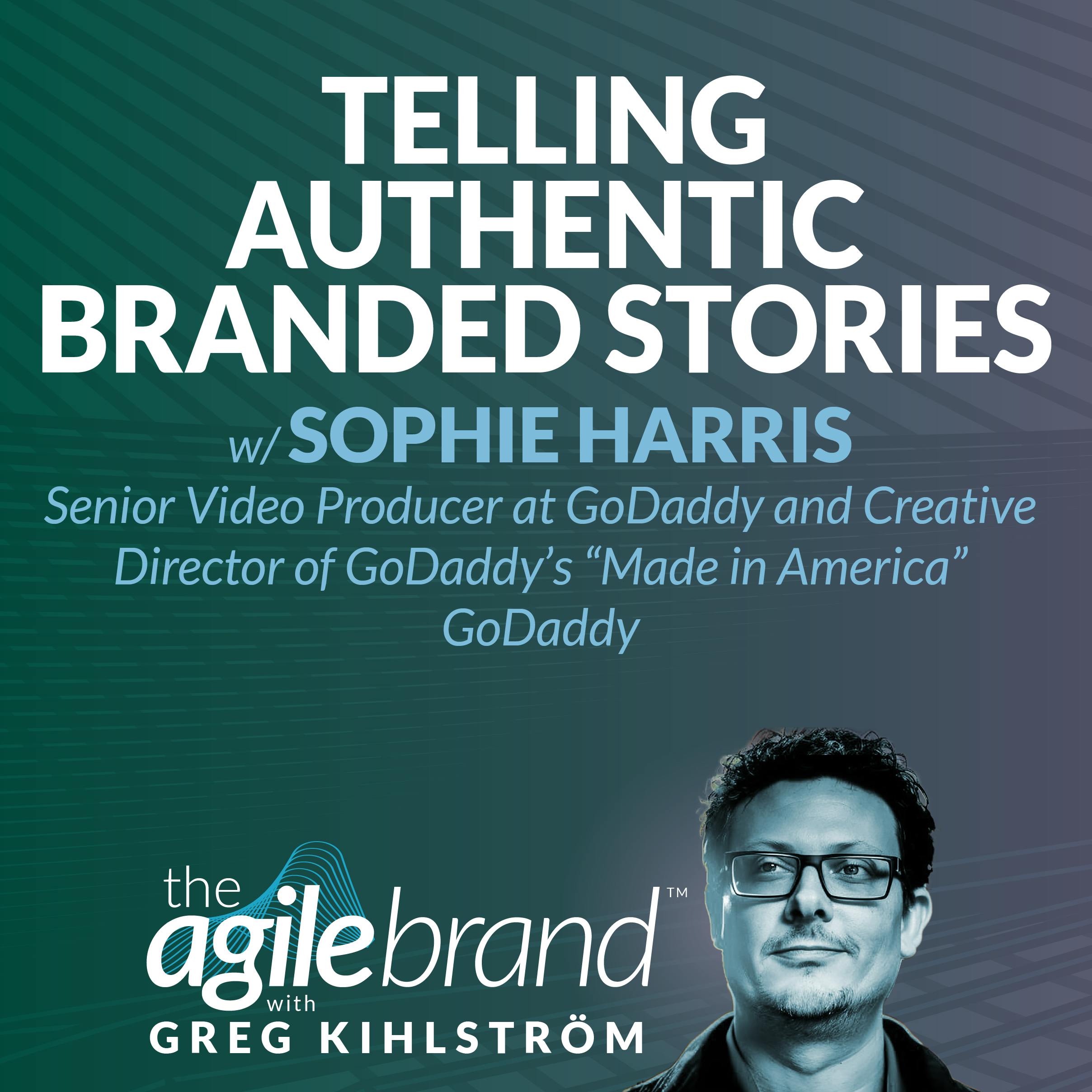
The Agile Brand with Greg Kihlström® | What CMOs Need to Know About Marketing Technology, AI & CX
#575: Telling authentic branded stories with Sophie Harris, GoDaddy
00:24:23
Loading summary
Transcript33 lines
- [00:00]
Capella University Narrator
You've never been one to settle, stand down or stand still. You're a lifelong learner, energized by excellence. There's a fire inside you you can't ignore. You've got competition to outrun, momentum to build on, and your own high standards to meet. Stop now. Not a chance. At Capella University, we help you catch what you're chasing because you've always had the drive. Now go earn the degree. Capella University. What can't you do? Visit Capella. Edu to learn more.
- [00:30]
Sophie Harris
Mom, can you tell me a story? Sure. Once upon a time, a mom needed a new car. Was she brave? She was tired mostly. But she went to Carvana.com and found a great car at a great price. No secret treasure map required. Did you have to fight a dragon? Nope. She bought it 100% online from her bed, actually. Was it scary? Honey, it was as unscary as car buying could be. Did the car have a sunroof? It did, actually. Okay, good story. Car buying you'll want to tell stories about Buy your car today on Carvana. Delivery fees may apply.
- [01:01]
Greg Kilstrom
Foreign. Welcome to Season six of the Agile Brand where we discuss marketing, technology and customer experience, trends, insights and ideas with enterprise and technology platform leaders. We focus on the people, processes, data and platforms that make brands successful, scalable, customer focused and sustainable. This is what makes an agile brand. I'm your host, Greg Kilstrom, advising Fortune 1000 brands on martech, marketing operations and CX, best selling author and speaker. The Agile Brand podcast is brought to you by Tech Systems, an industry leader in full stack technology services, talent services and real world application. For more information, go to teksystems.com now let's get on to the show. GoDaddy's Made in America series has recently debuted its fifth season which captures the real, unscripted stories of small business owners as they unfold in real time. Today we're going to talk about capturing and sharing unpredictable stories to create authentic brand messaging. To help me discuss this topic, I'd like to welcome Sophie Harris, senior video producer at GoDaddy and creative director of GoDaddy's Made in America documentary series. Sophie, welcome to the show.
- [02:22]
Sophie Harris
Thank you so much for having me.
- [02:24]
Greg Kilstrom
Yeah. Looking forward to talking about this with you. Before we dive in, why don't you start by giving a little background on yourself and your role?
- [02:32]
Sophie Harris
Sure. Briefly. Briefly. I worked in documentary film for about 15 years, mostly for HBO documentary films and for PBS and had some wonderful commercial success. Great experience and about four or five years ago I was approached by some colleagues at GoDaddy who asked me to join their team specifically around doing customer storytelling. And, you know, that shift away from sort of traditional journalism into more brand marketing work was a big one for me. But I think what convinced me was GoDaddy's true commitment to really putting their customers honest experiences at the heart of their storytelling. I was really impressed by the good work that they were doing through their Empower by GoDaddy program, which is a social impact program that offers real, concrete, tangible support to entrepreneurs and underserved communities. And I also just personally and as a storyteller, I felt really excited by the opportunity to work with small business owners. I mean, it's. I, As I hope viewers can see from the series, it's an incredibly diverse, driven, interesting population that simultaneously affects real, necessary and outsized positive impact on our nation's economy. So it was a really good fit for. For me in my professional storytelling journey.
- [04:08]
Greg Kilstrom
Great. Great. Well, yeah, let's dive in here. And I know you touched on it a little bit just now, but for those a little less familiar with the Made in America series, you know, what was the original idea behind it? And, you know, again, I think. I think you touched on a little bit. But, you know, what's. What do you think the Bennett's secret to capturing audiences for, you know, we're in season five now. What do you think has been the secret to capturing audiences for four seasons so far?
- [04:38]
Sophie Harris
I mean, the initial impetus for the series, and really, I think the core of it is to celebrate the resilience, determination, talent, ideas of small business owners across the US and as I'm sure anyone can imagine, there are some really interesting stories out there. And we were able to partner with this social impact program that GoDaddy has called Empowered by GoDaddy, which allowed us access, intimate access to these incredible stories of entrepreneurs in underserved communities and really aligns with GoDaddy's mission of empowering entrepreneurs and this idea of making opportunity more inclusive for all. And I think the secret to its success, gosh, I think know. Lies in its authenticity. This opportunity to tell real stories of real people in real time, which is surprisingly unique in a brand space, honestly. And, you know, getting to watch people overcome obstacles or not in real time and being honest and vulnerable about that experience is captivating as a viewer. And so it's really just, you know, as a storyteller, it's kind of like shooting fish in a barrel. I mean, there are just these incredible stories out there, and you just have to turn a camera on. I mean, achieving that intimacy and the nuances is challenging. And I think one of the things that's also unique about this series is that it's a longer format. So each episode is like 10 to 15 minutes, which really allows for nuance and intimacy and getting past the buzzwords and really into some more juicy content, for lack of a better word. So, you know, it's done really well to date. I'm gonna mess this up, but I think we're north of 25 million views or so. And a related short film that we made called Big Water Summer screened in competition at south by Southwest and at dozens of international festivals. So having that sort of more commercial validation has been really wonderful also.
- [06:59]
Greg Kilstrom
Yeah, yeah, definitely. Yeah. And I think the, the authenticity of it definitely struck me in watching it as well as, you know, there's, it's, there's. We'll talk a little bit more about this in a few minutes as well. But the unpredictability and, you know, not everything goes 100% according to plan or well or, you know, for, for everybody. But it's, it's sort of, I think it gives a real. Having been a, a business owner myself resonated as well. So several things in there. One of the things. So this, this season five is located in Ohio. You know, what was the thinking behind moving it, Moving it there and locating it in Ohio?
- [07:45]
Sophie Harris
Filming in Ohio was an incredibly sort of unique experience for us in a very deliberate choice. It's a region that's been deeply impacted by economic downturns, opioid epidemic, and in this rust belt region, this sort of shift away from a few giant employers and this towards a real resurgence of small business. And seeing that in real time and seeing those effects on the economy, it seemed like a really sort of perfect case study for some of the points that we're trying to make with the series. Since the pandemic, there's been just an unprecedented increase in new small business applications. I think it's outpacing population growth by like 10%, which is huge.
- [08:34]
Greg Kilstrom
Yeah.
- [08:34]
Sophie Harris
And so, you know, it's a wonderful opportunity to be able to reflect back sort of, as you said, like the realities of that journey to serve as inspiration, but also validation. You know, a big aspect of what we're trying to do with the series is not just showcase intimate personal journeys, but also tie those journeys into data From a more 30,000 foot view of like, how and why small businesses have an incredibly positive and vital impact on our economy. And so Ohio was Just a great place to showcase that. One of the challenges, you know, maybe we bit off a little more than we can chew at the beginning, was that we filmed across the entire state, which was, I'm sure you can imagine, from a production standpoint, is just a lot of.
- [09:25]
Greg Kilstrom
It's a pretty big state.
- [09:26]
Sophie Harris
Yeah, it's a big state. But, you know, what we lost in low sleep and long hours was gained in just, like, an incredibly diverse population that we were able to speak with, you know, from Cleveland to Appalachia, steelworkers, veterans, refugees, like, just really a diverse population with this really fundamental commonality as small business owners who are working hard, have a vision, and are also bringing that success back to their community. So it was a really wonderful experience to get to film in Ohio.
- [10:09]
Greg Kilstrom
Yeah. And one of the things, I mean, speaking to authenticity as well, you know, one of the things that you did was partner with a local production company in Ohio. You know, how do you think that contributed to the storytelling and authenticity? And, you know, did working with new teams present new challenges? Was it an opportunity to gain a new perspective? Maybe all of the above.
- [10:32]
Sophie Harris
Yes. Yes, all of that. You know. Yeah. We worked with a really wonderful production company called Cane Toledo, who I partnered with really closely. And it is always. Anyone who's worked in production knows that there's always sort of an uptick of getting to know each other, learning each other's workflows and all of that. And especially because we often hired local to whatever city we were in. You know, we had certain people we worked with in Cleveland and certain people we worked with in Columbus and certain people we worked with in Portsmouth. But what that gave us was a real sort of local, authentic feel, you know, of. I may come in there having looked on, you know, done my research and gone on Google Maps, but the person who's lived there their whole life has a much better perspective on where we go for B roll or, you know, what the best shots of or what's actually representative of their city, not just what makes it into the Internet, you know. So, yes, it can be logistically challenging, but ultimately, for the sake of the story, it's totally worth it. And I was just blown away by the talent that we were able to find in these markets. You know, I think there can sometimes be this attitude of, like, oh, you have to fly someone in from la. That is completely not true. And we had great teams where we worked. It was wonderful.
- [11:57]
Greg Kilstrom
That's great. That's great. Any other challenges that unfolded as you were filming this season?
- [12:03]
Sophie Harris
I Mean, I think one challenge that we, I always sort of grapple with as a director is around size of crew. You know, of like a larger crew can sort of help you make things easier up your production value. And ultimately we always end up going with a smaller crew on this project, you know, which really just lends a certain intimacy and flexibility to our production. We are going into people's homes who have never been on camera before. You know, we are asking really intimate, personal questions. And it really helps when it's just a few of us and we can get to know each other and we're not traipsing in with tons of strangers and tons of equipment. And, you know, I think that that that small crew really helps us be flexible and listen to the people that we're filming and then adjust accordingly. You know, on this, on this production. You know, one of the people that we're filming with, he does barbecue and he will stay up all night doing barbecue. And we literally, like one person from our crew stayed with him through the night with a camera, you know, filming at 2 in the morning as he checks temperatures or whatever. And that's just the kind of stuff that you don't get with a bigger crew.
- [13:34]
Greg Kilstrom
Well, and to touch on something you just mentioned as well, you know, there were some people there that probably were never in front of the camera before. You know, some a little more comfortable with being in front of the camera than others. I mean, everyone's did a great job of, you know, kind of letting their characters show through. But, you know, what do you see as the role, you know, your role as producer and the production team in, you know, you want to capture that authenticity. You also want to make sure that they are showing their character and are doing that. Like, how do you kind of balance the coaching on screen and all that kind of stuff with letting, letting the person shine through?
- [14:20]
Sophie Harris
That's a really good question and certainly a balance. You know, everyone that we film with, I have several conversations with ahead of time, which is really, you know, helps me get to know them and get to have a feel for them, but also hopefully helps them get to know me and helps it feel a little bit less intimidating. So I think that pre production work is really central. Second, I think the vibe on set makes a really big difference. And again, with this smaller crew, we're all friends, we're all having a good time, you know, sort of welcoming them into that community makes a big difference. You know, I think sort of how you run your set can be really inviting or not And. And being thoughtful about that. And then I also think it really comes down to being flexible and open to what they want to say and so not going in with too many preconceived notions, because everybody can feel that. And so genuinely asking questions and genuinely listening and allowing time in your schedule, which, of course, you know, time is. Is precious on all this, but allowing and budgeting for that time to give them space to honestly tell their story and not rush them and, you know, make it a comfortable conversation. Like one example in. In we were filming some interviews with people who I had talked to, you know, at length beforehand, and they. The person was pretty nervous, and they have some, you know, struggle very openly, but struggle with adhd. And they had written down all of their answers on note cards, which, of course, is not necessarily what you want come off very stiff. But, you know, we did the whole note cards, and I let them read everything that they wanted off of note cards. And that got us to a place where they were much more comfortable talking openly, you know, and so, like, allowing that, whatever it took, 20 minutes or whatever, you know, of them presenting their story in the way that they wanted to and being there for that. And so I think that's sort of a flexibility that we build into our entire approach around production.
- [16:48]
Greg Kilstrom
So, as I mentioned briefly before, you know, one of the things that really struck me as I was watching the latest season was just again, you know, when you watch something like this, you root for the. The heroes and you want everything to go 100 according to plan and everybody to win everything and. And so on and so forth. But what I liked about it was it felt real and. And not, you know, there were. There were definitely some positive stories and positive outcomes, but not everything necessarily went, you know, was. Was the happy ending all the time. And so with that and trying to film something where there are unpredictable elements, how do you basically anticipate the unanticipated and feel confident that at the end of the day, regardless of what happens, you're gonna have a good story to tell, even again when you can't control the outcomes.
- [17:43]
Sophie Harris
Gosh. I mean, that is just fundamental challenge of documentary film. And I think, honestly, is something that really that. That confidence that things will come together from a story perspective is something that, you know, increasingly in my career, I'm getting to a place that I can trust, but I think it has to do a lot with one not coming in with a storyboard or a preconceived notion of what should happen, you know, and I've been surprised enough times when I think I know what should happen and something else happens and it actually is better. That's happened to me enough times that I trust it. And I think with stories like this, it's also about trusting the characters that you're working with and the people. And I think if you have interesting people who at their core align with the brand goals and values, you can let go of the reins. You know, what actually happens is often more interesting than the stuff that you planned for.
- [18:45]
Greg Kilstrom
Yeah, yeah.
- [18:46]
Sophie Harris
And I think, you know, a big reason that I'm able to proceed in that way is, is, you know, I think Godaddy has a real sort of North Star of putting their, their customers, truth and needs at the center. And so we're not coming in with like a, we need to hit this point and that point and this point and it needs to all be rosy. There's more flexibility and honesty. There's. We. A couple years ago, this, the film that I mentioned, Big Water Summer, is about a woman named Cheryl Lynn who's a farmer on the Navajo Nation. And so we followed her through a summer and of course going into filming, you come up with all the schedules and all the possible, you know, things that could happen and you plan for everything and you have decision trees and you try to sort of predict everything. And there was an incredible drought in Arizona that summer and her plants weren't growing. And it was just an outcome that I hadn't, I couldn't control for. I literally could not control for it. And I was worried for a while and then I won't spoil it, but it ends up being sort of the most central, beautiful thing to the story, you know, and she wins regardless, you know. And so anyways, it def. It definitely is, is something that is challenging. You know, as a producer you do try to predict every possible outcome and control for things, but you also need to be totally prepared to tear down your plans and go with what's actually happening.
- [20:23]
Greg Kilstrom
Yeah, yeah, yeah. No, I love it. And you know, I think one of the, one of the things that lends to the authenticity of the, of the series as well is just, you know, to your point, I didn't, I didn't feel like there was a, there was somebody from Godaddy saying hey you, someone's gotta say our tagline or you know, something that may be a little bit far fetched or whatever, but I felt like there was, there was some very natural integration and you know, there was a presence there, but it wasn't, it wasn't Heavy handed. It was there. It was, you know, highlighted the empower program that you mentioned at the, at the top of the show as well. But yeah, it felt very, very integral to the story and not, not intrusive. So, you know, what do you hope that viewers are going to take away from watching this latest season?
- [21:17]
Sophie Harris
I mean, I, I hope that they're entertained. I hope that we people come away with, you know, more of an understanding of the power of small business to drive economic and cultural changes. And I, and I hope they also have more appreciation for the challenges and the nuances and the realities of what it's like to take on that journey. And maybe they come away with, which I come away with is, you know, more inspiration to chase that idea or their own dreams or whatever their thing is that they've been thinking of doing but maybe not pulling the trigger on. You know, I'm always really inspired by the small business owners that I work with who had an idea for something and are actually making it a reality. And I think whatever that is, I hope people come away with a little bit more, I don't know, itch to do that thing.
- [22:24]
Greg Kilstrom
Yeah, yeah. Love it. Well, Sophie, thanks so much for joining the show. One last question before we wrap up here. Maybe to take maybe a higher level view here. You know, there's a lot of marketers and marketing leaders and brand leaders listening to this show and you know, I do think that GoDaddy has set a pretty high bar when it comes to branded content here with the series. What's something that, you know, they might be thinking about creating their own brand stories and their own authentic stories. You know, what is some, something key that they should remember when they're, when they're trying to do that?
- [23:02]
Sophie Harris
I think whether it's, it's brand stories or documentary films or some blend thereof, you know, I would say don't start with necessarily the story you want to tell, but start with the people who you want to tell it. You know, I think if you find the right people to tell your story, that's where authentic, transparent, honest storytelling comes from. Put those characters at the center and let the narrative emanate from their experience and don't try to force it the other way around.
- [23:39]
Greg Kilstrom
Yeah, yeah.
- [23:40]
Sophie Harris
I think if you, you know, listen to and trust the people who you are working with, that that's where real magic happens. And I think that, that, I think I said it already, but you know, that sort of belief that the customer's truth and their needs is the center and then building out from that is sort of the goal of of what we're doing at GoDaddy with this series and and listening to them and reflecting back their truths.
- [24:14]
Greg Kilstrom
Yeah, I love that. Well, again, I'd like to thank Sophie Harris, Senior video producer at GoDaddy and creative director of GoDaddy's Made in America documentary series, for joining the show. You can learn more about Sophie and godaddy and the Made in America series by following the links in the show notes. Thanks again for listening to the Agile Brand brought to you by Tech Systems. If you enjoyed the show, please take a minute to subscribe and leave us a rating so that others can find the show more easily. You can access more episodes of the show at www.greggkillstrom.com. that's G-R-E G K-I H L S T R O M.com While you're there, check out my series of best selling Agile brand guides covering a wide variety of marketing technology topics. Or you can search for Greg Kelstrom on Amazon. The Agile Brand is produced by Missing Link, a Latina owned, strategy driven, creatively fueled production co op. From ideation to creation, they craft human connections through intelligent, engaging and informative content. Until next time, Stay Agile.
- [25:22]
Sophie Harris
Brand.
- [25:29]
Capella University Narrator
There's a fire inside you you can't ignore. Stand still. Not a chance. You're a lifelong learner who's come this far. Now we are here to help you keep going further. Capella University what can't you do? Visit capella.edu to learn more.