← The Agile Brand with Greg Kihlström®: Expert Mode Marketing Technology, AI, & CX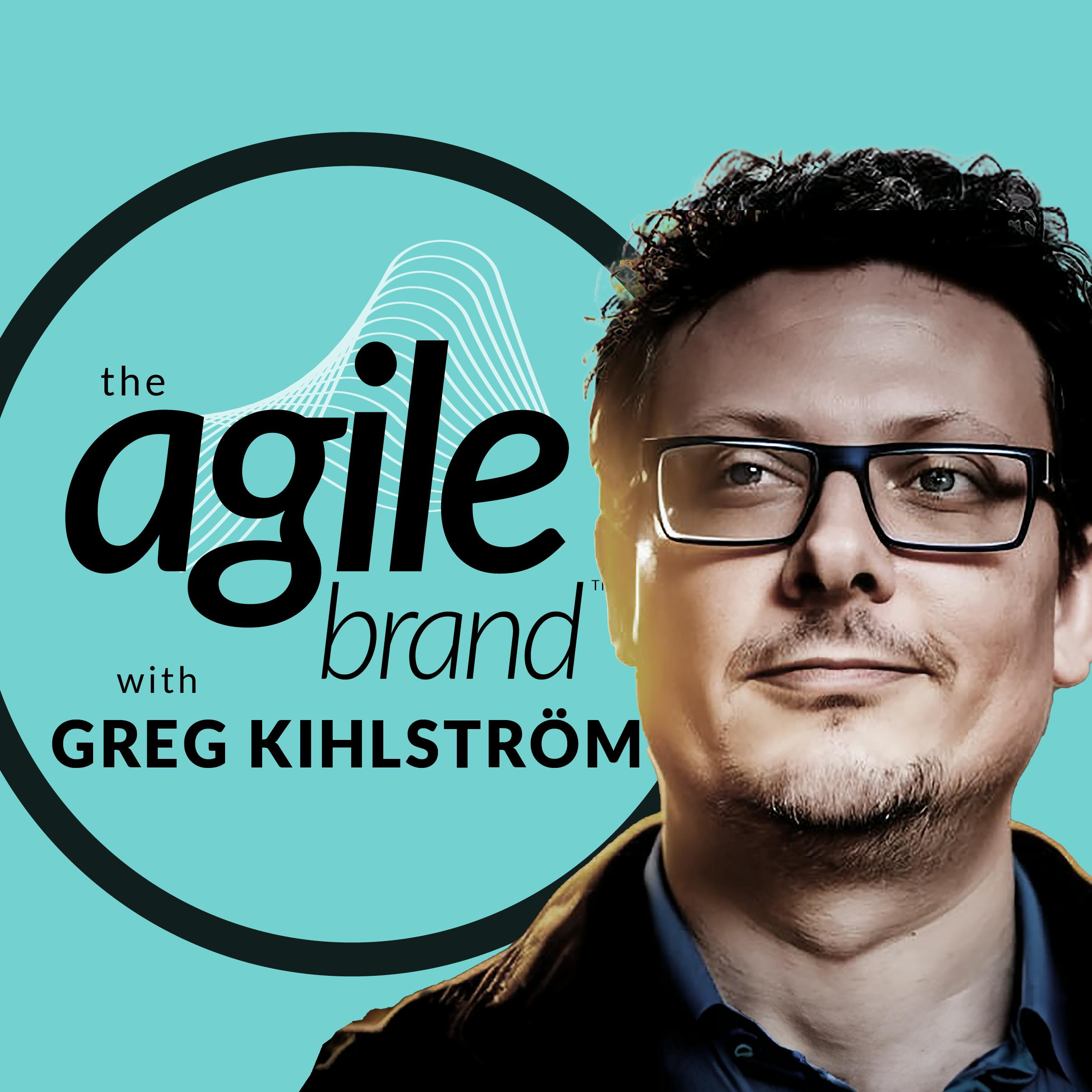
The Agile Brand with Greg Kihlström®: Expert Mode Marketing Technology, AI, & CX
#766: Square CMO Lindsey Irvine on connecting with customers through community-driven storytelling
00:27:08
Loading summary
Transcript40 lines
- [00:02]
Marine Corps Narrator
To realize the future America needs. We understand what's needed from us to face each threat head on. We've earned our place in the fight for our nation's future. We are Marines. We were made for this
- [00:19]
Lindsey Irvine
the Agile Brand.
- [00:28]
Greg Kilstrom
Welcome to Season seven of the Agile Brand where we discuss the trends and topics marketing marketing leaders need to know. Stay curious, stay agile and join the top enterprise brands and Martech platforms as we explore marketing technology, AI, e commerce, and whatever's next for the Omnichannel customer experience. Together we'll discover what it takes to create an agile brand built for today and tomorrow and built for customers, employees and continued business growth. I'm your host Greg Kilstrom, advising Fortune 1000 brands on martech, AI and marketing operations. The Agile Brand Podcast is brought to you by Tech Systems, an industry leader in full stack technology services, talent services and real world application. For more information, go to teksystems.com to make sure you always get the latest episodes, please hit subscribe on the app you listen to podcasts on and leave us a rating so others can find us as well. And now onto the show
- [01:26]
as we're increasingly inundated with AI generated content and algorithm driven ads. What's more powerful? Yet another new technology or the authentic voice of the small business owner on the corner? Agility requires not just reacting to marketing shifts, but deeply understanding the very fabric of the communities you serve and having the conviction to amplify their voices over your own. It's about finding strength not in shouting louder, but in listening closer. Today we're going to talk about how a brand can cut through an increasingly crowded market by turning its most loyal customers into its most powerful advocates. We'll explore the strategy of reasserting brand relevance through authentic community driven storytelling and what it takes to execute this when competitors are focused on features and scale. Tell me Discuss this topic I'd like to welcome Lindsey Irvine, Chief Marketing Officer at Square. Lindsey, welcome to the show.
- [02:21]
Lindsey Irvine
Thanks Greg. It is awesome to be here.
- [02:23]
Greg Kilstrom
Yeah, really looking forward to this conversation and looking forward to diving in. Before we do though, why don't you give a little background on yourself and your role at Square.
- [02:32]
Lindsey Irvine
Sure. Happy to so CMO Square. I've been here for a little over a year. It has been a wild and awesome ride. I'm sure we'll get into it. Prior to that I've been about over two decades in marketing and go to market more broadly for tech companies. So I was almost 10 years at Salesforce, held a variety of different kind of go to market roles was the CMO of one of our business units, mulesoft, when I left and then transitioned to actually help run and grow a startup company called Benchling, where I was also the cmo. So spent a lot of time focused on the software and technology world and it's been a really fun year putting all of that to work for small and local businesses.
- [03:14]
Greg Kilstrom
Great, great. And I think most people listening are probably familiar. I'm positive they've come into contact with Square before. But could you give maybe the big picture? What's Square's core focus today and who are the customers that you're ultimately trying to serve?
- [03:31]
Lindsey Irvine
Sure. Well, probably a lot of the listeners like me think of Square as that little white reader that we all saw in the farm market 16 years ago when it got started. And I think it was, it's such a powerful concept which is how do we let anyone with a dream, any entrepreneur with an idea, how do we make it incredibly easy with that right reader for them to start and run their business by democratizing payments? Fast Forward quer serves over 4 million businesses around the world. And we are not just that little white reader that you think of from farmer's markets. It's in addition to kind of being the point of sale in every neighborhood, we also have a full software platform. We offer banking services so businesses can take out loans through Square. We have checking services as well. And we have a full range of solutions for a business to operate and streamline how they run. So it really is a full service kind of local commerce platform. Yeah, yeah.
- [04:27]
Greg Kilstrom
So let's dive in then. And we're going to talk about a few things today. But I want to start with something I touched on in the intro and this is really, you know, brand strategy in a crowded market. And Square's recent see you in the neighborhood campaign is a clear bet on local businesses as brand advocates. So with competition in a lot of spaces in fintech and the payment space intensifying, what was the strategic insight that led you to double down on community voices instead of a more traditional feature focused or a tech forward campaign?
- [05:05]
Lindsey Irvine
Yeah, it's a great question. I would say there's two main insights here. One, you need to start by deeply understanding who your customer is and who you're looking to serve. And the second is look to develop content and thought leadership and activations that actually speak to those customers in your community far beyond product and function feature functionality. So to just to go back to the first, like deeply understanding your customer, we've always grown up as being for small business. But as we actually dug in to the breadth of Square customers today, what we actually realized we stood for is not just small business, but local business. And that could be the mom and pop who opened their, their single store on the corner. It could be a 60 to 100 location business like Bluestone Lane that's scaling nationally. But what they all have in common is they're more than just a restaurant or a coffee shop or a salon. They really are part of their local community. Right. And that is a key reason why they started. That is a key factor to their growth. So we really at the center were for the local business, not just the small business. And then the second was, okay, how do we really put local businesses up on a pedestal? Right. And our campaign platform is seen in the neighborhood. It's far more than a tagline. That is our promise in terms of we're actually from a marketing standpoint, going to show up and put investments into local communities and into local business to support both our sellers. But the communities around them like grow and thrive. It's a promise that every element of our campaign actually heroes and spotlights the real local business owners and not our words. Their words, their stories, their journey and the through line is certainly how, you know, Square is a part of that journey and a part of their growth story, but it really heroes the local business through it all. So I think it's, it is both those are the two key insights is know your customer deeply. For us, it's the local business. And then make sure that as you're developing a brand campaign, a platform, really find ways to speak to and authentically represent the heroes of the story.
- [07:15]
Greg Kilstrom
Yeah, yeah. And I mean that's, that's such a key part of, of the brand strategy then. And, and you know, another part that, that I know you've spoken about is the just maintaining and reasserting brand relevance in this era. You know, what does relevance mean to you and the brand and how has that maybe how has that definition evolved from what it might have meant for a company like Square five years ago?
- [07:41]
Lindsey Irvine
Yeah, so I do. Relevance to me, at its core is delivering on your promise to support your customers, to actually show up and be there for your customers, and then definitely to deliver the products and the innovation that help them be successful. I think without any of those three, you're not gonna be truly relevant. Right. You can't just be a brand and then not deliver the product value. And you can't have product value and only talk feature function and not actually show up in times of need or when there's questions. So I think that that is what real relevance looks like and how that's evolved for Square as part of our brand promise of CU in the neighborhood is we are both putting the real humans of Square to work for our local businesses. So we have local representatives in neighborhoods across the country and across the world that are literally walking the neighborhood, showing up for our customers, both existing and new, there to answer their questions, offer support and really be there, be a trusted advocate for the local business and what they need. And that's really been valued. So there's a people component to this. There's a product component to this. Right. Which is we actually just hosted our second kind of biannual we call Square Release. It's our twice a year big product moment where we bring big innovation to life. And it's all shaped by our local business customers. Right. What they need and want. And so we just unveil a lot of new product innovation together, bringing the community together. And the feedback was overwhelming. So that's. The second thing is like delivering the innovation to stay relevant and frankly, stay ahead of where your customers are asking you. And then I think the third thing that's really sparked by this campaign is we're not using like flashy celebrities that don't tie to our brand to try and create relevance. Right. Like, we are literally the center of our campaign, our TV spots, our ads. The. The full thing is we're heroing real local businesses who by the way, are celebrities in their own right, in their own neighborhoods. And so it's kind of a flip of the table of using local heroes, local influencers that are actually the business owners that we all know and love in our own communities and giving them the spotlight to tell their story.
- [09:54]
Greg Kilstrom
Yeah, yeah. And I think you're touching on the authenticity part of this as well, which is, you know, again, I think a lot of, A lot of brands use celebrities and it's, you know, there's, there's an approach there. But, you know, using real people, real voices, real people within their, their commun definitely lends to that authenticity. But, you know, as, as anyone knows, it's hard or it can be hard to do that at scale. And you know, how do you, how do you go about identifying and finding, you know, the right stories that are relevant and, and really serving that, that brand narrative while keeping, you know, keeping it real, for lack of a better term.
- [10:34]
Lindsey Irvine
Yeah. So I think this is where a brand also has to tie in a business Strategy, Right, because you can find some really cool, influential, you know, businesses or customers represent, but if it doesn't tie to where you actually want to fuel growth, you know, it's. It's less revenue, and then it's also how you tell their stories. So I think tied to that. On the business strategy piece, the first place we started before identifying the right sellers to hero, before working through the campaign specifics was what are the cities and neighborhoods where we think we have the most opportunity to both be helpful and to continue to grow? Right. We have a good existing base, but we also have a ton of opportunity. And we did that in both the US and in our key global market. So I think that's the first thing. And importantly, that's not just a marketing investment strategy. That's where we're putting real humans of square to work in those cities and neighborhoods to make sure we have people representation. So I think that was the first thing is we got really clear on the key cities and the actual neighborhoods in those cities where we saw real opportunity to both show up in an authentic way, support existing customers, and grow. So what that helped us then do is identify the local businesses that are square customers today that are really influential and local heroes in their own right in those cities and in those neighborhoods. And that's the exercise we went through, right? We kind of looked at both who our customer base was there, who are the sellers that are the real heroes in their community. One interesting fact is we found very often it's the restaurants at the center of their community that really create the meeting points and the gathering points. So we tried to recognize that and spotlight some of the really great restaurant owners in their communities, as well as other business owners. That was the approach, and I think importantly, that let us then back it up, not just by highlighting those influential real sellers in the community, but then really surrounding them with the full power of square. And I think part two is no one wants to listen to a scripted customer talk, right? It sounds like the vendor is giving them all the words to say, and it feels very, very faked. So our approach with our creative team is as we identify these sellers, we go on site, we go into their actual business, we compensate them for the time, by the way, if there's hours that close down, and we actually also bring the community together afterwards. And we literally, we give them some questions, but we let them riff and tell their own story in their own words. So there's no script. There's no. You have to say these things. It's here's the questions. We know the community is looking to understand, say what is true to you. And as a result of that, you get just, I think really compelling, authentic, truly community relevant content where people are interested not just in watching it, but now they want to go to those people for advice.
- [13:29]
Greg Kilstrom
And so, you know, I'm sure there are some, you know, what you'd call traditional measurements and you know, marketing measurements that you're using for growth and other things like that. But you know, how does this approach, does it change? Does it add new types of measurements or just different ways of looking at success when you're, you know, getting so involved in communities and looking at things like this? Like what, what does measurement look like?
- [13:54]
Lindsey Irvine
In other words, I'm gonna, I'm gonna take your question as the classic brand versus demand story.
- [14:00]
Greg Kilstrom
Sure, sure, yeah, yeah.
- [14:02]
Lindsey Irvine
How do you think of measuring brand and investment in this way?
- [14:05]
Greg Kilstrom
Right, right, right.
- [14:06]
Lindsey Irvine
Look, I think that there are a few ways and I do think it's incredibly important to tie your brand investments to the company metrics, right. And to what your stakeholders care about. I also think I'm going to come back to that. In a world of AI generated content and AI bots and kind of AI slop everywhere, brand is the one thing you can't fake, right. Or you can't AI your way to real brand connection, real human connection. And so I think that there is a feel to the brand. There is a vibe like you either have a brand that people feel like is of the moment and culturally relevant and they're paying attention to it or you don't. Right? And so I think that's just the first thing to acknowledge is in this world of AI generated content, people are acknowledging that metrics aside, you need to invest in real human connection, real customer connection and a brand that matters and stands out because that is your moat. And without that, you're one of many. Now to get back to the metrics question of how do you actually then measure this outside of the classic awareness, perception, consideration, shift? I think there's a few key things I look at that tie back to the company care abouts. So the first thing is revenue growth, right? Revenue growth also equals long term pipeline growth. Brand undoubtedly creates long term pipeline growth. And here's how 95% of your buyers, and this is proven by a number of studies, are not in market to buy at any given time. So all of your performance demand dollars are going to the 5% that are ready to click by now. 95% are, are not there yet. So Brand allows you to reach the 95%, create interest, create excitement, create authentic connection and be in the consideration point when that 95% becomes the 5% ready to buy. Because the other data point is every one of those buyers buys on the top three. What brands come to mind first and are in their top three consideration list and typically they're first and that is brand. That's the awareness, that's the connection. So that's the first thing is brand. And you can prove this over time. But brand actually equals long term pipeline growth because you're acquiring and building engagement and resonance with the 95%. I think the second way I measure this, which is more tactically is okay, if you're doing that, then you should be able to see growth in your organic traffic, right? And we know organic traffic converts better than paid traffic. So that's another very, very clear way you can measure this is if you're doing a lot of brand work and it's resonating, more people should be organically coming to your own properties, right? So you can look at a lift in organic traffic and then there's a lot of clear data that says organic performs better than paid from a conversion standpoint. Makes sense. So then actually you start to see the flow through in real revenue, right? More pipeline builds and then there's also good results is if you actually look at brand investment done right, you will see an increase in your paid performance spend as well. So I think those are some of the key areas I look at other than if you know, you know, you know your brand is moment and culturally relevant or it's not. And that is increasingly a moat in an AI world.
- [17:21]
Greg Kilstrom
Yeah, yeah, love that. So I want, I want to talk about, I know this isn't your first CMO role, but you know, at Square you're about a year into your role. As you said, what has been maybe the most surprising or most valuable lesson you've learned about leading a well known brand like Square through this kind of strategic evolution?
- [17:44]
Lindsey Irvine
I'm going to give you two, two big surprises. One is always stay building and always stay curious. I think from the outside in you would think that, you know, we're a large public company, we have 4 million customers, we have a very large product portfolio. You, we've got it all figured out. I firmly believe companies of this day and age need to act no matter the size or scale, like builder startups. And I think that's what's incredibly cool and most frankly surprising to me is the startup mode that Square is In, you know, I'm really that builder first mentality. We are all builders here and we're using AI to support that build mentality and to do a lot of work that's increasing velocity, add value to our customers. But I think that's the first thing is just you gotta be a builder, right? And man, even at this size and scale we're building and we're putting a ton of good pressure on ourselves to increase velocity, ship faster and deliver more value to our customers and find more ways to just get more out of the work we're doing. So I think that's the first which lends itself to having to be constantly curious about new things to build and new places to go. And I think the second thing is Square has such a phenomenal brand and such phenomenal brand awareness. But what was surprising when I joined was how many people still think of Square as the little white reader. So people still harken back to like, oh yeah, you guys are the thing I can plug into my phone and that. I see it every farmer's market. It's like, yeah, and, and, and, and, and right. Like we have this whole portfolio of products and services and when people get exposed to that, whoa, they're, they're thrilled, they're amazed. They're also like, I had no idea. So I think that was the second surprise point. That is, we have such a rich product portfolio that adds a ton of value to our customer base, but many of them don't know about it. And so that was both part inspiration for the brand, but I think importantly part inspiration for how do we be much more deliberate about being clear of the value we can provide. And as we launch new things, creating a motion which we now call Square releases, where we can really bring the innovation to life in clear ways for our sellers each and every year in every market. So they know and start to expect, like, this is when I can go find out about what's new and start to take advantage of that.
- [20:08]
Greg Kilstrom
Yeah, yeah, yeah. I don't know, maybe that's, it's like anchor bias or something like that. You know, the people thinking of, of Square is that, that thing they saw, you know, five, five years ago or so. But I mean, I think that's another, that's another challenge, right, is, is being able to overcome and build on, you know, build on those things. And you know, people, in this case, it's a positive, you know, it's a, it's a positive interaction, but they get this, this thing in their mind, you know, how do you? I guess what's, what's the best way or best first way to help people kind of understand that yes, you are that, but you're also so much more.
- [20:44]
Lindsey Irvine
Yeah, it's a group. I mean this is the. I feel very fortunate. We don't struggle from a brand awareness problem.
- [20:50]
Greg Kilstrom
Right.
- [20:52]
Lindsey Irvine
And perception challenge. Right. It's the perception shift that we need to drive. So I think again that it comes back to like, so where do you start? You're like, okay, well we can serve literally any business in any part of the neighborhood in any city around the world. That's a very broad surface area. How do we start to create moments that matter for that broad surface area to come together and learn about what we have to offer? So that was the first. And we do that through our twice a year Square releases. We've now launched a what's new webpage, right. Where you can actually come and literally every month see new features that are added and get a preview of the roadmap. And now every month we're sending out to our different sellers by audience type. A proactive. Here's what's new and here's what's coming. So I think that's the first thing is we have such a wide base. We want to make it really easy for sellers to find out what's new and they're hungry for it. So I think that's the first thing. I think the second thing is I am a big believer in brand. Brand. Brand is not your way to pitch features and functionality. Right. So see you in the neighborhood. Will never be. Let me tell you about our whole product portfolio. Right. It is much more about again, elevating the voices of the community and tell their stories. And underneath that then you have to really have ways in which you pull through on more of that. Okay, that's cool. So now what do you offer? Right. You have to then really be able to pull through on the product value prop. And so that's where we in marketing speak do have a series of campaigns where we actually they're much more mid funnel oriented where once someone is interested in learning more or how can Square help me? We proactively are targeting certain types of sellers with a clear product value prop to expose more of what Square has to offer. And then the last tactical thing I'll give you, you would be amazed at how far a really great simple product demo goes. People just want to click through on their own and if you're lucky, like we are to have a genuinely intuitive, easy to use product the more ways you can get that out in the world and get that in the hands of people physically and virtually, the better. So I think that's just the other way.
- [23:03]
Greg Kilstrom
Yeah, yeah. Love it. Well, couple, couple last things before as we wrap up here. You know, if we were having this interview a year from now, what would we be talking about? I know you mentioned a little bit about AI usage and stuff like that, but you know, what would we be talking about a year from now?
- [23:22]
Lindsey Irvine
I predict a few of the big topics we, and more broadly, like a lot of people will be talking about is how brands continue to stay relevant in this world where AI starts to intermediate the customer journey. Right. And the customer experience and how you allow your brand to show up and create genuine human, real connections. Right. And also how your brand shows up for the AI agents that are crawling for all this information and feeding first principle knowledge to what should I choose when I'm thinking about xyz? So I think brands are increasingly. I think the conversation to hear from now will be like, how does a brand do both? Well, how does a brand show up for real for humans? And then how does a brand also, in a very distinct way show up for the AI agents that are now frankly a customer we have to serve and solve for. So I think that's probably the biggest one. I hope the other side of that conversation is on the first part, the human connection. Like how are we being able to be so authentic and fun and interesting with our brand building and customer base? And I think that's an opportunity we have. People want to have fun. They want real, they want things that feel authentic and real and gritty at times. And I think you're going to see a lot more of that from us as we look forward because we're really, we have such an incredible base of real businesses that we get a pull from and excited to just have fun with it and authentically show what's up with, with what it means to build a business.
- [25:04]
Greg Kilstrom
Love it.
- [25:05]
Love it.
- [25:05]
Well, we'll have to have to check back in a year and have that conversation. That as well.
- [25:11]
Lindsey Irvine
And I'm sure there's more things you haven't thought about. So there you go.
- [25:14]
Greg Kilstrom
Yeah, of course, of course. Yeah. Well, Lindsay, thanks so much for joining today. One last question before we wrap up here. What do you do to stay agile in your role and how do you find a way to do it consistently?
- [25:25]
Lindsey Irvine
I am constantly talking to as many people across the org as I can. Not just my directs, but like tons of skip levels and different conversations and also traveling quite literally the world to meet with our customers. So I have innate first principle understanding of the problems we're trying to solve and then I'm constantly looking to also acknowledge what we're learning and where we're failing, not just what we're working. Because I think part of being agile is not just plowing forward, but it's taking time to what are we learning, what's working and importantly what's not working and being open and vulnerable so you can quickly course correct. And I believe that matters now more than ever given the fast paced nature of what we're all working in. Thanks Greg. Great to be here.
- [26:16]
Greg Kilstrom
Yeah, thank you so much. Well again I'd like to thank Lindsey Irvine, Chief Marketing Officer at Square, for joining the show. You can learn more about Lindsay and
- [26:24]
Square by following the links in the show notes. Thanks again for listening to the Agile Brand brought to you by Tech Systems. If you enjoyed the show, please take a minute to subscribe and leave us a rating so that others can find the show as well. You can access more episodes of the show@theagile brand.com that's theagile brand.com and contact me. If you're interested in consulting or advisory services or are looking for a speaker for your next event, go to www.gregkilstrom.com that's G R E G K I N H L S t r o m.com the Agile brand is produced by Missing Link, a Latina owned, strategy driven, creatively fueled production co op. From ideation to creation, they craft human connections through intelligent, engaging and informative content. Until next time, stay curious and stay agile.
- [27:22]
Lindsey Irvine
The agile brand.
- [27:29]
Audi Q3 Narrator
With the all new Audi Q3, the answer is always yes. Yes to adventure. Yes to escape. Yes to right now. The all new Audi Q3 made for the S life.
- [27:46]
Marine Corps Narrator
To realize the future America needs, We understand what's needed from us to face each threat head on. We've earned our place in the fight for our nation's future. We are Marines. We were made for this.