
Podcast
The American Masculinity Podcast
Hosted by Timothy Wienecke, MA, LPC, LAC · EN
Want to become a better man? American Masculinity is a self improvement for men podcast helping you master personal development, men's mental health, and leadership.
Hosted by Timothy Wienecke, licensed psychotherapist, Air Force veteran, and award-winning men's advocate. Each episode delivers expert insight and practical tools for men's self improvement.
Whether you're navigating fatherhood, building confidence in relationships, or working on personal growth, you'll find grounded conversations on masculinity, trauma recovery, growth mindset, and what it means to show up as a better partner, father, and leader.
No yelling. No clichés. Just thoughtful motivation rooted in psychology and real-world experience. Perfect for men seeking mental fitness, self-discipline, and meaningful life skills.
New episodes drop weekly with actionable advice on men's wellness, stress management, and becoming a better man. Subscribe now and join thousands of men committed to personal development and positive change.
31episodes
Episodes
Newest firstAll episodes
3 Stoic Virtues Men Are Missing (And How To Use Them)
1w ago00:08:21Tap to summarizeSend us Fan MailIn this episode, Tim explores why stoic thinking resonates so deeply with Western men, what happens when guys only pick up three of the four stoic virtues, and what it takes to reclaim the full toolkit the one that actually builds a life instead of a fortress.1. The map is already yours: Stoic thinking isn't borrowed, it's baked into Western culture. The Roman Empire's reach shaped Western law, government, and education, so the instinct to "master yourself and let the rest go" feels natural because it is your inheritance. The problem starts when men take only pieces of it and go cold and closed off instead of becoming true stoic thinkers.2. Stoicism built modern psychology — and it was never about killing emotion: There's a direct line from Zeno to Epictetus to Ellis to Beck, the founders of cognitive behavioral therapy — today's most tested psychotherapy. The Stoics had a word for healthy emotion, eupatheia: joy instead of pleasure, caution instead of fear, considered wish instead of desire. It's not suppression — it's noticing the pull of emotion and choosing your response.3. The missing virtue is justice, and empathy is how you find it: Epictetus brought the Greeks four virtues to Rome — wisdom, courage, temperance, and justice — and you need all four for a complete map. Tim breaks down why so many "self-mastery" influencers (the kind covered in Inside the Manosphere) are missing justice entirely, usually because they never had a positive male role model modeling it. Without empathy, temperance has nothing to measure against and justice has no one to serve.4. How to actually build the compass: Self-compassion and empathy for others reinforce each other — you can't do either well without the language to name what's happening internally. Therapy is one path (about 45% of men in a recent Australian study left therapy early, almost always over lack of connection with the provider, not gender), so Tim shares two things to screen for before you commit to a therapist. For guys who want to start on their own, there's a free empathy-building worksheet linked below.Connect with Tim: Website: americanmasculinity.com Substack: substack.com/@americanmasculinity Psychology Today: psychologytoday.com/profile/315507 Books discussed are available through our local-bookstore affiliate link: bookshop.org/shop/AmericanMasculinity 0:00 - The Cultural Influence of Stoicism1:30 - Stoicism and Modern Psychology2:30 - The Dangers of Isolation in Stoic Practice4:00 - The Compass of Empathy5:30 - Building the Map of Life7:00 - Therapy and Connection8:22 - The Fortress vs. The HomeThe American Masculinity Podcast™ is hosted by Timothy Wienecke — licensed psychotherapist, Air Force veteran, and men’s advocate. Real conversations about masculinity, mental health, growth, and how men can show up better — as partners, leaders, and friends. We focus on grounded tools, not yelling or clichés. If you have questions or want a tool for something you're wrestling with, leave a comment or send a message — your feedback shapes what we build next. Note: While this doesn’t replace therapy, it might help you notice something worth exploring.
Transcribe →The Nice Guy Deficit: What People-Pleasing is Costing Men
2w ago00:24:16Tap to summarizeSend us Fan MailMany men become known as the reliable one, the person who fixes problems, takes on extra work, and is always available when someone needs support. But constantly putting others first can leave men feeling overlooked, resentful, and alone. In this episode, Tim explores how people-pleasing often begins as a way to earn approval or avoid rejection, then follows men into adulthood where it affects their careers, friendships, and romantic relationships.Tim explains how to recognize when generosity has turned into an unhealthy pattern and what it takes to change it. Through personal experience and practical strategies, he shows men how to slow down before automatically saying yes, set clearer boundaries, communicate their needs, and become more comfortable asking others for support. The goal is not to stop being kind, it is to build relationships based on honesty and mutual care instead of silent expectation. 1. Kindness vs. people-pleasing: Kindness is seeing a need, pausing to check your actual capacity, and then choosing whether to engage. People-pleasing skips the pause — it runs on a hidden fear that "if I do X, I get Y; if I don't, I lose care, get rejected, or trigger conflict." The behavior looks generous from the outside, but inside it's a transaction nobody else ever agreed to.2. Where the pattern comes from: It usually starts young. A child looks to a caregiver for something, doesn't get it, and writes a simple story "I shouldn't have needs; I'll just be of service." It doesn't require capital-T trauma; it just has to be a strategy that worked once. That straight-line rule protects a kid in an unsafe world, but the terms of adult life change while the little kid inside keeps expecting the old deal to pay out.3. A screen and four tools to break it: Screen yourself with the "I'm a nice guy, but…" thought and the questions What did I give? What did I expect back? Did I say it? Did they agree? Then run the four DBT-based moves: (1) buy time "give me a minute" so your auto-yes can't fire; (2) say no proportionately, without apologizing or managing their reaction; (3) maybe, surface the cost "how important is this?" or "which of these am I dropping?"; and (4) make a small request of someone and let yourself feel what happens when the answer is yes.Here is the video on scaled boundaries to help you dial in your No: https://www.youtube.com/watch?v=PJ8AGBkACy4&list=PL8bRXcjy2sxOkxAG4_rSJGS8S4ZFvNHhm&index=40Connect with Tim: Website: americanmasculinity.com Substack: substack.com/@americanmasculinity Psychology Today: psychologytoday.com/profile/315507 Books discussed are available through our local-bookstore affiliate link: bookshop.org/shop/AmericanMasculinity 0:00 — Kindness vs. People Pleasing2:11 — Where the Pattern Comes From5:25 — The Screen: "I'm a nice guy, but…"7:46 — What It Costs at Work9:40 — What It Costs in Friendships14:05 — What It Costs in Relationships16:30 — Tool 1: Buy Time17:57 — Tool 2: Say No Proportionately19:16 — Tool 3: Surface the Cost21:12 — Tool 4: Make a Request23:30 — CloseThe American Masculinity Podcast™ is hosted by Timothy Wienecke — licensed psychotherapist, Air Force veteran, and men’s advocate. Real conversations about masculinity, mental health, growth, and how men can show up better — as partners, leaders, and friends. We focus on grounded tools, not yelling or clichés. If you have questions or want a tool for something you're wrestling with, leave a comment or send a message — your feedback shapes what we build next. Note: While this doesn’t replace therapy, it might help you notice something worth exploring.
Transcribe →How to Find a Mentor: What Mentorship Looks Like and How to Ask
4w ago00:19:07Tap to summarizeSend us Fan MailA lot of men want a mentor but have no idea where to find one or how to ask.The problem is that many are waiting for a perfect, all-knowing guide to appear and give them the answers. That person usually does not exist - and waiting for him can leave men stuck and isolated.In this solo episode, Tim shares lessons from three mentors who shaped his life: a third-grade teacher who believed in him, a man who helped make college possible, and a professional mentor decades ahead of him.He explores what real mentorship looks like, why boys need to see healthy manhood modeled, and how to build mentor relationships without making the intimidating ask, “Will you be my mentor?”The takeaway: stop looking for one perfect mentor. Find a few people slightly further ahead, make small asks, and allow trust to develop over time.What This Episode Covers:Real mentorship requires care and expectations. A mentor should believe in you while also challenging you to grow. Care without standards is support. Standards without care are often what online influencers sell.Boys need examples, not just advice.Tim explains how watching a mentor act with confidence, generosity, and integrity taught him more than words ever could. Healthy behavior needs to be seen before it feels possible.You need a network, not a Yoda.One person does not need to have every answer. Different mentors can help with your career, personal life, relationships, and decision-making.Make smaller asks.Do not begin by asking someone to become your mentor. Ask for coffee, advice, or a few minutes to discuss a specific question. Notice who continues to show up and let the relationship grow naturally.A real mentor stays through failure.The best mentors do not disappear when you fall short. They hold you accountable, show honest disappointment when needed, and continue believing in who you can become.Free Mentorship Worksheet:Tim created a free worksheet to help you identify potential mentors and confidently make the first ask:https://americanmasculinity.gumroad.com/l/jqykj Books discussed in the episode:https://bookshop.org/shop/AmericanMasculinityThe American Masculinity Podcast™ is hosted by Timothy Wienecke — licensed psychotherapist, Air Force veteran, and men’s advocate. Real conversations about masculinity, mental health, growth, and how men can show up better — as partners, leaders, and friends. We focus on grounded tools, not yelling or clichés. If you have questions or want a tool for something you're wrestling with, leave a comment or send a message — your feedback shapes what we build next. Note: While this doesn’t replace therapy, it might help you notice something worth exploring.
Transcribe →Muslim Men Are Carrying a Weight No One Names
Jul 700:53:12Tap to summarizeSend us Fan MailIn this episode, licensed counselor Furkhan Dandia joins Tim Wienecke to look at the hidden psychological pressures modern men carry but rarely name. This is a direct look at identity, shame, and what happens when the pressure to perform leaves no room to actually connect. Furkhan opens up about the trap of trying to be the "toughest guy in the room," the reality of generational "provider" burnout, and how becoming a father to his newborn daughter completely redefined his understanding of masculine leadership Key topics discussed:- The Provider Dilemma: Why financial success doesn't matter to your family if your emotional presence is entirely missing.- Breaking the Shame Cycle: How cultural taboos fuel isolation and coping mechanisms like pornography- Leadership vs. Control: What it actually means to be a grounded, safe anchor for your wife and children. - Being a Better Neighbor: Why true connection starts with simple curiosity instead of awkward DEI checkboxes. 👉 Subscribe for more grounded, unfiltered conversations on men's mental health, masculinity, relationships, and growth. CHAPTERS00:00 - Introduction02:28 - Stigma, Shame, and Male Emotional Intelligence03:30 - Financial Security vs. Emotional Presence04:46 - The Immigrant Narrative and the Chase for Status05:53 - Stay on Your Side of the Street: Projections & Accountability08:00 - Taboos, Pornography, and the Isolation of Addiction10:45 - The Tension of Belonging and Fitting In12:17 - Code-Switching and Making Space in the Community14:48 - The Neighbor Dilemma: Connection is a Two-Way Street16:32 - Guests and Hosts: Overcoming "Us vs. Them" Dynamics18:00 - The Robbers Cave Study: Shared Goals over Competition21:00 - Side-by-Side Intimacy: How Men Actually Bond23:25 - Misconceptions: Breaking the "Rigid Muslim" Stereotype28:42 - What the News Misses About Heroic Men34:06 - What Muslim Men Ultimately Want 36:01 - DEI Failures vs. True Side-by-Side Collaboration42:22 - The Truth About Masculinity That Stayed True45:09 - When the Pursuit of Manhood Hurt Him: The Tough Guy Trap47:43 - When Manhood Empowered Him: Becoming a Girl Dad50:23 - Final Thoughts: Trading Condemnation for CuriosityThe American Masculinity Podcast™ is hosted by Timothy Wienecke — licensed psychotherapist, Air Force veteran, and men’s advocate. Real conversations about masculinity, mental health, growth, and how men can show up better — as partners, leaders, and friends. We focus on grounded tools, not yelling or clichés. If you have questions or want a tool for something you're wrestling with, leave a comment or send a message — your feedback shapes what we build next. Note: While this doesn’t replace therapy, it might help you notice something worth exploring.
Transcribe →
Infertility and Marriage: 30% Separate. 25% Come Out Strong. Here's the Difference
Jun 3000:57:17Tap to summarizeSend us Fan MailEvery fertility journey hands men a job to perform: stay steady, fix what's fixable, keep providing, don't fall apart in front of her. Each role promises the same payoff: do it well, and you've held up your end. But underneath the role, the actual fear rarely changes. Most men white-knuckling their way through infertility aren't really trying to be supportive enough; they're trying to outrun the suspicion that their body, their luck, or their worth as a man has failed at the one thing no one ever doubted they could do. Swap the role for the next one, and the same dread keeps driving from underneath.In this episode, Timothy sits down with Dr. Clay Brigance. He is a licensed professional counsellor, a Level III Gottman Method couple therapist, and the founder and clinical director of Shiloh Counselling in Ballwin, Missouri, where he and his team have spent over a decade helping couples through infertility, miscarriage, and reproductive loss. He hosts the podcast Love and Infertility, and his research is drawn from clinical work and interviews with more than 1,000 couples. All has been published in journals including The Family Journal and Psychological Trauma: Theory, Research, Practice, and Policy. His forthcoming book, Couple Therapy for Reproductive Grief, is due out from the American Psychological Association in early 2027. His core premise, deliberately at odds with content that treats infertility as primarily a woman's medical and emotional burden, is that men's reproductive grief is just as real and just as capable of either fracturing a marriage or transforming it, depending entirely on whether a man learns to put his armor down before it's too late.Together, they unpack:Proving you can still protect her versus proving you're enough: Clay's own qualitative research found a recurring theme in men going through infertility, a quiet belief that their emotions matter less than their partner's, so they push their own needs down and try to be "a solid rock" instead. The episode traces how this well-intended chivalry gets expressed as practical support (paying for treatment, running errands) when what's actually being asked for is presence, and how that mismatch leaves both partners feeling isolated from each other.The double-edged emasculation of virility and provision: Infertility threatens two masculine identity pillars at once, the ability to father a child, and the ability to provide for a family. The conversation follows Clay's own memory of borrowing money from his father-in-law for treatment, which felt like a second blow stacked on top of the first, and unpacks why so many men respond to helplessness by working harder rather than showing up.The Four Pillars of getting through it together: Clay built this framework specifically because he found existing couples-therapy models missing what's unique about infertility's stress. Mindful attunement, navigating decisional conflict, uncovering each partner's disrupted vision of parenthood, and keeping physical intimacy alive together, his research suggests these don't just prevent damage, they predict genuine post-traumatic growth.The Dobby Effect and the self-harm conversation no one's having: Clay names the pattern of mentally punishing himself after giving his wife fertility injections, a need to "make it equal" when he couldn't otherwise share her physical pain. Timothy connects this directly to the broader, rarely discussed risk of self-harm in men moving through fertility loss, and the two land on a simple, urgent ask: find one person to talk to before it gets that far.Guest InformationLicensed professional counsellor, Gottman Method couple therapist, and founder and clinical director of Shiloh Counselling, a group practice built around couple therapy for infertility, miscarriage, and reproductive loss. He also hosts Love and Infertility, a podcast created with fellow couple therapist Ginny Lupka, LPC, and is the author of the forthcoming book Couple Therapy for Reproductive Grief, set for release through the American Psychological Association in early 2027.Clay has worked almost exclusively with couples navigating reproductive trauma for over a decade, founding Shiloh Counselling shortly after completing his PhD in Counselling at the University of Missouri, St. Louis in 2023. The practice has since grown to ten therapists, and his research, drawn from clinical work with more than 1,000 couples and published in journals including The Family Journal and Psychological Trauma: Theory, Research, Practice, and Policy, has shaped his Level III training in Gottman Method Couple Therapy.Known for grounding clinical research in lived experience, speaking openly about his own and his wife's infertility journey rather than keeping it at arm's length, and naming specific, often-unspoken patterns like well-intended chivalry and what he calls the "Dobby effect" that make the male side of fertility grief speakable instead of something men quietly carry alone.Focus areas include why some couples grow closer through infertility while others separate, the compounded threat infertility poses to virility and provider identity, his Four Pillars framework for navigating reproductive grief as a couple, hidden self-punishment and self-harm risk in men, and male friendship as a precursor to vulnerability within marriage.Note: Dr. Clay Brigance appears in this interview in a personal and professional capacity. The views expressed are his own and do not represent Shiloh Counselling, the Gottman Institute, or any other affiliated institution, clinical body, or organization.Here is our affiliate link to buy the books discussed from a local bookstore in your area: https://bookshop.org/shop/AmericanMasculinity Substack Link: https://substack.com/@americanmasculinity?utm_campaign=profile&utm_medium=profile-pageConnect with Dr. ClayWebsite: https://www.drclaybrigance.com/ LinkedIn: https://www.linkedin.com/in/clayton-brigance-phd-lpc-99a4381a4 YouTube: https://www.youtube.com/@Dr.ClayBrigance/videos Instagram: https://www.instagram.com/dr_claybrigance/ The American Masculinity Podcast™ is hosted by Timothy Wienecke — licensed psychotherapist, Air Force veteran, and men’s advocate. Real conversations about masculinity, mental health, growth, and how men can show up better — as partners, leaders, and friends. We focus on grounded tools, not yelling or clichés. If you have questions or want a tool for something you're wrestling with, leave a comment or send a message — your feedback shapes what we build next. Note: While this doesn’t replace therapy, it might help you notice something worth exploring.
Transcribe →
He Checked Every Box and Still Felt Like a Failure
Jun 2301:08:00Tap to summarizeSend us Fan MailEvery decade brings men a new label to chase to feel like enough: New Age, red pill, stoic, and now traditional masculinity. Each one promises a checklist: do these five things, and you're a man. But underneath the label, the actual hunger rarely changes. Most men chasing a definition of masculinity aren't really trying to prove they're masculine at all. They're trying to prove they're significant, that they can still kick ass in the world, that they won't be forgotten, left behind, or revealed as not enough. Swap the costume, and the same fear keeps driving from the inside.In this episode, Timothy sits down with Tripp Lanier. He is a professional coach and the host of The New Man Podcast, where he has spent two decades, since 2005, coaching men ranging from Navy SEALs to entrepreneurs to small business owners through career, identity, and relationship transitions. He is the author of This Book Will Make You Dangerous, built around the idea that real danger today rarely looks physical and almost always looks like discomfort: the hard phone call, the unproven idea, the conversation that might get a no. His core premise, deliberately at odds with most of the masculinity conversation, is that he has never actually been coaching men toward a definition of manhood. He has been coaching them toward wholeness, whatever that requires them to feel, risk, or admit.Together, they unpack:Proving enough versus proving manhood: Across two decades of coaching, Tripp has noticed his clients are rarely anxious about being masculine enough. They're anxious about being successful enough, significant enough, never invisible. Money becomes a stand-in for security, status, and identity, and the goalposts keep moving long after the original need has been handled. The episode traces how that hunger gets wired in early and why it rarely turns off, even for men who have clearly "made it."Redefining danger: Tripp's earlier branding around being a "dangerous man" gave way over the years to language about aliveness, because what counts as danger has quietly shrunk. With almost no physical threat left in modern life, the body still reacts to a hard ask the same way it would react to a real one. Timothy and Tripp dig into why social risk filled the vacuum physical risk left behind, and why playing it safe rarely feels safe from the inside.The armour men need, and the armour that costs them: A throughline of the conversation is armour: necessary to move through certain rooms, costly when it never comes off. Tripp describes a wilderness retreat where names and job titles were stripped away entirely, and how fast trust formed once nobody could lean on credentials to be seen. They talk through why the most successful men are often the most isolated, why men's groups work best as something as simple as a few guys agreeing to show up, and why the real goal is flexibility, knowing when armour serves you and when it's just become who you think you have to be.This is not a conversation about coaching tactics for men deep into personal development circles. It is a conversation about what's actually driving most men long before they'd ever call it a masculinity issue, and why the real work looks less like performing a role well and more like finding out what genuinely matters underneath it. What Tripp offers, after two decades in the work, is permission: a man can be unfinished, messy, and still be a good one.Guest InformationProfessional coach, podcast host, and founder of The New Man Podcast, a platform built around men's coaching, lifestyle design, and what it actually takes for a man to feel alive rather than just functional. He is the author of a book, This Book Will Make You Dangerous, which reframes danger away from physical risk and toward the discomfort of building a life around what actually matters.Tripp has been coaching men since 2005 and podcasting since 2007, building The New Man into one of the longest-running shows in the men's coaching space, evolving over two decades from a "Become a Dangerous Man" framing toward a focus on aliveness through small, consistent action.Known for a humour-forward, irreverent voice that resists the heaviness and self-seriousness common in personal growth spaces, making deep interior work accessible to men, including Navy SEALs, entrepreneurs, and business owners, who might otherwise dismiss it as too soft or too woo.Focus areas include the interior drivers underneath status and significance, redefining what counts as danger in a physically safe modern world, the armour men need versus the armour that isolates them, men's groups and community as foundational rather than optional, and wholeness as the goal rather than any fixed model of masculinity.Note: Tripp Lanier appears in this interview in a personal and professional capacity. The views expressed are his own and do not represent any affiliated institution, clinical body, or organisation.Here is our affiliate link to buy the books discussed from a local bookstore in your area: https://bookshop.org/shop/AmericanMasculinity Substack Link: https://substack.com/@americanmasculinity?utm_campaign=profile&utm_medium=profile-pageGet Tripp’s Book: This Book Will Make You Dangerous: https://bookshop.org/a/112938/9781608422142 Connect with TrippWebsite: https://www.tripplanier.com/ Instagram: https://www.instagram.com/tripplanier/?hl=en Resources MentionedThe Newman Podcast: 🔗 https://www.thenewmanpodcast.com/ The American Masculinity Podcast™ is hosted by Timothy Wienecke — licensed psychotherapist, Air Force veteran, and men’s advocate. Real conversations about masculinity, mental health, growth, and how men can show up better — as partners, leaders, and friends. We focus on grounded tools, not yelling or clichés. If you have questions or want a tool for something you're wrestling with, leave a comment or send a message — your feedback shapes what we build next. Note: While this doesn’t replace therapy, it might help you notice something worth exploring.
Transcribe →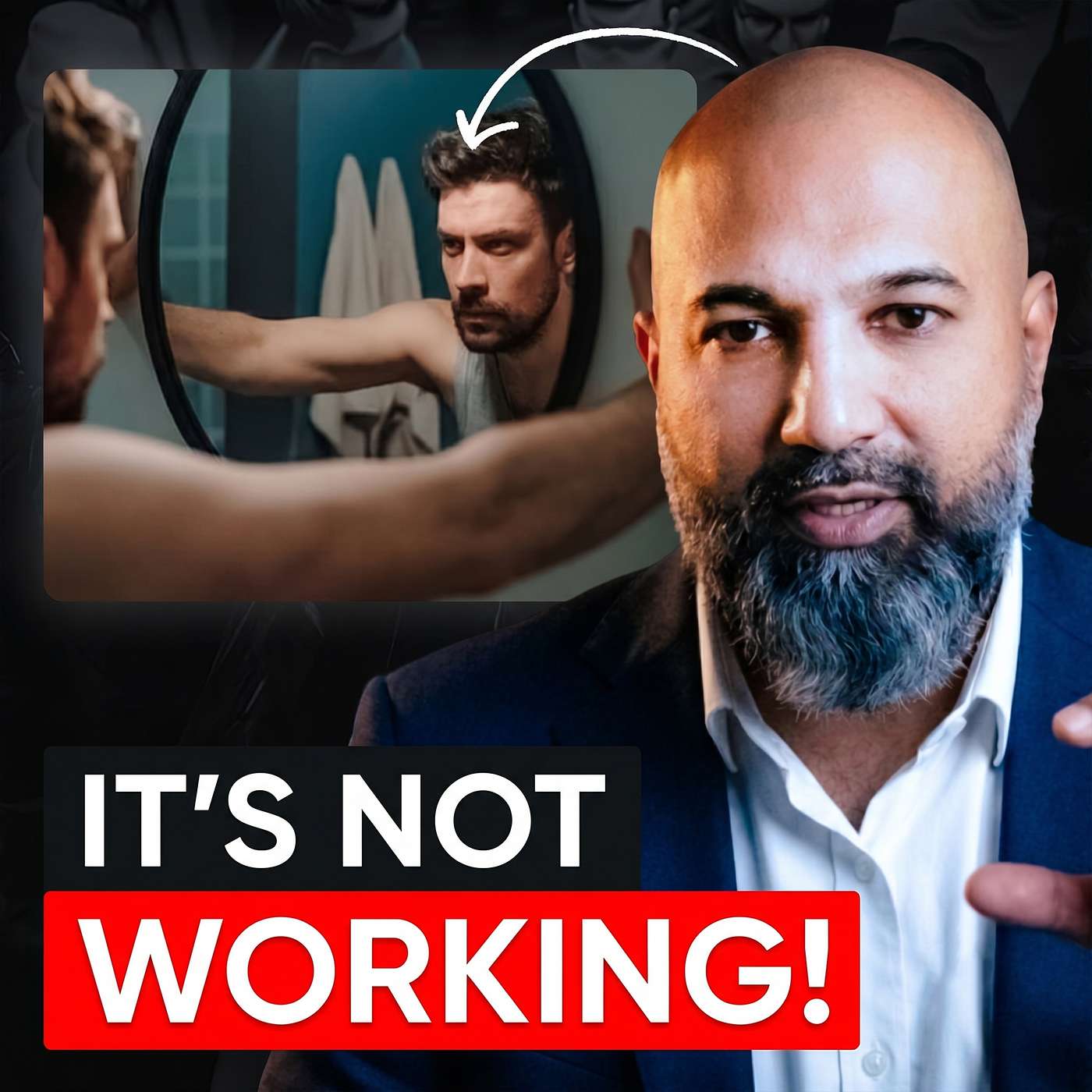
He Built a Muslim Masculinity Framework, He's still learning.
Jun 1700:56:38Tap to summarizeSend us Fan MailMost men searching for a model of manhood are looking in the wrong places. They find content that tells them how to perform masculinity outwardly, the status, the physique, the dominance and nothing about what to build on the inside first. And when those external structures shake, there is nothing underneath to hold them.In this episode, Timothy sits down with Nabeel Azeez. He is a Muslim writer and media entrepreneur who spent a decade building one of the most recognised voices in Muslim masculinity and eventually channelled that work into a book structured around forty hadith. Nabeel is the founder of MuslimMan and the author of a 40 Hadith on Masculinity: How to be a Good Man that begins not with tactics but with character. It is rooted in the traditions of Islamic scholarship and the example of the Prophet Muhammad. His core premise is one that clinical work and men's culture both tend to skip: before a man can show up well for his family, his community, or his faith, he has to do the interior work that most men spend a lifetime avoiding.Together, they unpack:The interior before the external: Modern masculinity is almost entirely a performance of outward signals like wealth, physique, status. Nabeel's framework deliberately inverts that sequence, arguing that sustainable manhood requires working on the inside first. The episode examines why men are naturally conditioned to seek external results before trusting the internal process, and what gets built or left hollow.The Prophet as a complete model of manhood: At the centre of Nabeel's framework is the figure of the Prophet Muhammad. He highlights him not as a distant religious ideal but as a fully realised example of what a man can be across every domain. The episode explores how he embodied strength and tenderness, land why that completeness is exactly what men who have been handed a flattened, stoic model of masculinity are missing.Where stoicism ends and suppression begins: The conversation moves honestly into the tension between the emotional control that earns men respect in the world and the same control that quietly severs them from their wives and children. Nabeel reflects on his own experience with this, the cost of the strong, contained provider frame and what it withholds from the people closest to him. What clinical models miss about Muslim men: The episode makes a case that a clinician working with a Muslim man without any understanding of his religious framework will miss the most accessible tools available to that man. Nabeel explains how Islamic psychology, worldview, and tradition offer pathways to change that a secular clinical model would never think to offer. He highlights why the cultural and religious background of a man is not background at all but the terrain where his change will actually happen.This is not a conversation about religion for religious men only. It is a conversation about frameworks, the tested, inherited structures that give men something to measure themselves against, something to strive toward, and something to hold on to when the world gets hard. What Nabeel offers is a model of manhood that is wide enough to be honest about imperfection and, actually, deep enough to sustain a life.Note: Nabeel Azeez appears in this interview in a personal and professional capacity. The views expressed are his own and do not represent any affiliated institution, clinical body, or organisation.Here is our affiliate link to buy the books discussed from a local bookstore in your area: https://bookshop.org/shop/AmericanMasculinity Substack Link: https://substack.com/@americanmasculinity?utm_campaign=profile&utm_medium=profile-pageGet Nabeel’s Book: 40 Hadith on Masculinity: How to be a Good Man: https://bookshop.org/a/112938/9798869785541 Website: https://www.nabeelazeez.com/ Instagram: https://www.instagram.com/nabeelazeezdxb/ The Way of Men by Jack Donovan: 🔗 https://bookshop.org/a/112938/9780985452308 The American Masculinity Podcast™ is hosted by Timothy Wienecke — licensed psychotherapist, Air Force veteran, and men’s advocate. Real conversations about masculinity, mental health, growth, and how men can show up better — as partners, leaders, and friends. We focus on grounded tools, not yelling or clichés. If you have questions or want a tool for something you're wrestling with, leave a comment or send a message — your feedback shapes what we build next. Note: While this doesn’t replace therapy, it might help you notice something worth exploring.
Transcribe →
Why Smart Men Keep Choosing the Wrong Women
Jun 900:56:06Tap to summarizeSend us Fan MailMost men were never taught how to choose. They were taught how to pursue. They learned the approach, the frame, the strategy, and eventually the marketplace. But somewhere between optimising their profile and running the playbook, the goal quietly shifted from finding a partner to winning a transaction. And no one told them those are completely different games.In this episode, Timothy sits down with Shawn Smith. He is a psychologist, author, and thirty-year marriage veteran whose clinical work has spent two decades sitting across from men trying to figure out where it all went wrong. Shawn is the author of The Tactical Guide to Women and Gatekeeper, and his work is built on a simple, uncomfortable premise: most men sabotage their relationships before they ever choose the wrong person. The error isn't the woman. It's the unexamined filters, the unasked questions, and the values a man never bothered to name. That's the conversation this episode is built around.Together, they unpack:The relationship skill nobody teaches men: Why generations of fathers, uncles, and older brothers have passed down strategies for pursuing women and nothing about choosing them. The episode examines how that silence leaves men cycling through the same costly, emotionally draining patterns and blaming the outcome rather than the judgement that created it.The marketplace frame: The value, leverage, scarcity, and status model gives isolated, lonely men a language for their frustration. But the episode examines why it's ultimately a strategy for winning encounters and losing connection. It shows how online dating platforms are algorithmically designed to keep men playing the game rather than leaving it.The red pill line between awareness and paranoia: There's real wisdom in cautionary relationship content, and every man should encounter it. But the episode explores what happens when men overcorrect, moving from naivety through suspicion into a calcified contempt that makes genuine connection impossible. Values, not value: Most men feel their values but cannot name them, and that silence costs them everything. The episode unpacks how getting clear on the man you want to be at work, at home, in a marriage, on a Wednesday, transforms not just who you choose but how you date, and why women are drawn to men who can articulate who they are and ask genuine questions in return.Falling in love with potential versus the person in front of you: One of the most common and costly traps in relationships is choosing someone based on who you believe they could become with you. Shawn and Timothy examine what that looks like in the couples room, what the can't-or-won't dynamic reveals about values misalignment, and why unexpressed expectations almost always surface as resentment and eventually contempt.The provider trap: The episode examines what happens to men who build an entire identity around provision. They win in the marketplace, lose the family, and arrive at the far end of life as part of the most isolated demographic in the country: elderly men.This is not a conversation about tactics. It is a conversation about judgment, the slow, honest, unglamorous work of knowing yourself clearly enough to choose someone worth building with. It's about understanding that discernment isn't suspicion, that standards aren't contempt, and that the man who knows what he values and can say it out loud is already ahead of most. What Shawn offers isn't a shortcut to the right relationship. It's a framework for becoming the kind of man who recognises one when it's in front of him.Guest Information:Psychologist and author with over twenty years in private practice, working with men and couples navigating anxiety, relationship breakdown, commitment, and identity.Author of The Tactical Guide to Women and Gatekeeper, books designed to help men think clearly about character, values, compatibility, and the choices they make before building a life with someone.Founder of ironshrink.com, a platform that blends clinical psychology, direct communication, and unapologetic honesty to help men navigate relationships, masculinity, and personal growth without unnecessary softening.Known for a blunt, data-grounded approach that challenges both naive romanticism and red pill cynicism, offering men a middle path built on self-knowledge, discernment, and informed decision-making.Focus areas include relationship selection, values alignment, masculine conditioning, the psychology of commitment, emotional coercion, infatuation and its neurological effects, and the patterns that lead men to choose partners who are wrong for them repeatedly.Note: Shawn T. Smith appears in this interview in a personal and professional capacity. The views expressed are his own and do not represent any affiliated institution, clinical body, or organisation.Here is our affiliate link to buy the books discussed from a local bookstore in your area: https://bookshop.org/shop/AmericanMasculinity Substack Link: https://substack.com/@americanmasculinity?utm_campaign=profile&utm_medium=profile-pageGet Joe’s Books: The Tactical Guide to Women: https://bookshop.org/a/112938/9780990686446 Gatekeeper: https://bookshop.org/a/112938/9780990686460 Connect with Dr. Shawn:Website: https://ironshrink.com/ YouTube: https://www.youtube.com/user/ShawnTSmith/videos Resources MentionedThe Tactical Guide to Women: 🔗 https://bookshop.org/a/112938/9780990686446 Gatekeeper: 🔗https://bookshop.org/a/112938/9780990686460 No More Mr. Nice Guy by Dr. Glover: 🔗https://bookshop.org/a/112938/9780762415335 1984 by George Orwell: https://bookshop.org/a/112938/9788119214341 The Red Pill Community: Discussed at length as a source of legitimate cautionary awareness for men about the legal and emotional risks of relationships, while cautioning against overcorrection into paranoia and bitterness.The American Masculinity Podcast™ is hosted by Timothy Wienecke — licensed psychotherapist, Air Force veteran, and men’s advocate. Real conversations about masculinity, mental health, growth, and how men can show up better — as partners, leaders, and friends. We focus on grounded tools, not yelling or clichés. If you have questions or want a tool for something you're wrestling with, leave a comment or send a message — your feedback shapes what we build next. Note: While this doesn’t replace therapy, it might help you notice something worth exploring.
Transcribe →
Why High Achievers Still Feel Empty After Winning Everything
Jun 301:03:54Tap to summarizeSend us Fan MailMost men are running hard toward a finish line they've never questioned. They're achieving, accumulating, and performing, but somewhere along the way, the race stops feeling like freedom and starts feeling like a prison. What does it take for a man to stop, look around, and realize the life he's been chasing was there all along?In this episode, Timothy sits down with Joe Hehn. He is a coach, speaker, and widower turned consciousness guide. They have a raw and deeply personal conversation about presence, suffering, identity, and what it really means to arrive. Joe didn't learn these lessons in a classroom. He learned them at his wife's bedside in the ICU, and in the years of travelling and soul-searching that followed. That hard-won wisdom is exactly what makes this conversation worth your time.Together, they unpack:The moving horizon problem: Why high-achieving men keep chasing and how the ego perpetually manufactures a new finish line the moment the old one is crossed.Living in the future: How "I'll be happy when..." becomes a man's entire operating system, and what it costs him in the present.How men are conditioned to perform: Why boys learn that acceptance is earned through results, not who they are. And how that wiring follows men into adulthood, silence, and shutdown.The quiet desperation of numbness: What happens when decades of suppressing emotion lead to a man who can't feel anything at all. And why that's more dangerous than being angry.Pain without purpose is just suffering: Joe's framework for transforming trauma into meaning and what the four stages of post-traumatic growth actually look like in real life.The pain scale of attachment: Not all hard moments are equal. Joe breaks down mild, hard, and severe events. He shares why expecting a quick mindset fix from a severe loss is a setup for shame.Rather than selling a shortcut to happiness, this conversation offers something more honest: a path toward peace. It's about learning to recognize what you've already built, regulating before you react, and understanding that the most powerful shift a man can make isn't achieving more. It's finally learning to see what's already there.Guest InformationCoach, speaker, and author who works with high achievers, entrepreneurs, executives, and professionals, helping them break the cycle of achievement without fulfilment.Author of an upcoming book, The Higher Perspective, a three-step formula for transforming your life through conscious awareness, bridging the gap between neuroscience, spirituality, and practical mindset work.Speaker and educator who bridges science and spirituality, translating concepts from neuroscience, psychology, Buddhism, and metaphysics into accessible tools for everyday men navigating stress, identity, and purpose.Known for blending personal testimony, philosophical inquiry, and practical nervous system regulation into conversations about presence, suffering, masculinity, and what it means to genuinely arrive in your own life.Focus areas include conscious presence, emotional regulation, the ego and achievement trap, grief and identity reconstruction, the science of self-awareness, masculine conditioning, and building peace as a foundation for growth.Note: Joe Hehn appears in this interview in a personal and professional capacity. The views expressed are his own and do not represent any affiliated institution, clinical body, or organization.We fact-checked this conversation against established research in psychology, neuroscience, spirituality studies, anthropology, and traditional knowledge systems. The most significant affirmations, contextual explanations, and evidence-based insights covered during the episode are included below.Here is our affiliate link to buy the books discussed from a local bookstore in your area: https://bookshop.org/shop/AmericanMasculinity Substack Link: https://substack.com/@americanmasculinity?utm_campaign=profile&utm_medium=profile-pageGet Joe’s Book: Dreams of Antiquity: https://bookshop.org/a/112938/9798986746814 Connect with JoeWebsite: https://joehehn.com YouTube: https://www.youtube.com/user/joehehn Instagram: https://www.instagram.com/joe.hehn/ Resources MentionedThe Higher Perspective by Joe Hehn: Joe's upcoming book outlines his three-step formula for transforming your life through conscious awareness, bridging neuroscience, spirituality, and practical mindset tools.Mark Manson on Resilience: Referenced by Timothy in relation to the hidden costs of being a high-performing doer — particularly the erosion of empathy and patience toward others.🔗 https://markmanson.netThe American Masculinity Podcast™ is hosted by Timothy Wienecke — licensed psychotherapist, Air Force veteran, and men’s advocate. Real conversations about masculinity, mental health, growth, and how men can show up better — as partners, leaders, and friends. We focus on grounded tools, not yelling or clichés. If you have questions or want a tool for something you're wrestling with, leave a comment or send a message — your feedback shapes what we build next. Note: While this doesn’t replace therapy, it might help you notice something worth exploring.
Transcribe →
Why So Many Men Fall Apart After Success with Rorke Denver
May 2600:43:35Tap to summarizeSend us Fan MailSuccess doesn’t usually come from grinding alone. More often, it comes from the people who challenge you, mentor you, and open doors you couldn’t open yourself. But what happens when a man’s entire identity is built around one role, one title, or one chapter of life?In this episode, Timothy sits down with Rorke Denver for a powerful conversation on masculinity, mentorship, transition, and purpose beyond achievement. From elite military culture to fatherhood, identity loss, and the danger of clinging to past glory, Rorke reflects on what actually makes men resilient when life changes.Together, they unpack:The danger of identity attachment: Why men who tie themselves to one role often struggle most when that chapter ends.Mentorship and “kicked-open doors”: How small interventions from the right people can completely alter a man’s trajectory.Life after elite performance: The hidden emotional crash many athletes, veterans, and high achievers face after reaching the top.Masculinity and authenticity: Why real strength comes from being genuine, not performing an archetype.The Renaissance man mindset: How reading, curiosity, and adaptability build emotional resilience.Fatherhood and emotional modeling: How raising daughters forced Rorke to rethink strength, vulnerability, and leadership.Purpose beyond comfort: Why men often deteriorate without challenge, responsibility, or meaningful struggle.Rather than glorifying toughness for its own sake, this conversation explores how resilient men stay open to reinvention. It’s about letting go of old identities without losing yourself and learning that the strongest men are often the ones willing to keep growing long after the applause fades.The American Masculinity Podcast™ is hosted by Timothy Wienecke — licensed psychotherapist, Air Force veteran, and men’s advocate. Real conversations about masculinity, mental health, growth, and how men can show up better — as partners, leaders, and friends. We focus on grounded tools, not yelling or clichés. If you have questions or want a tool for something you're wrestling with, leave a comment or send a message — your feedback shapes what we build next. Note: While this doesn’t replace therapy, it might help you notice something worth exploring.
Transcribe →