← The American West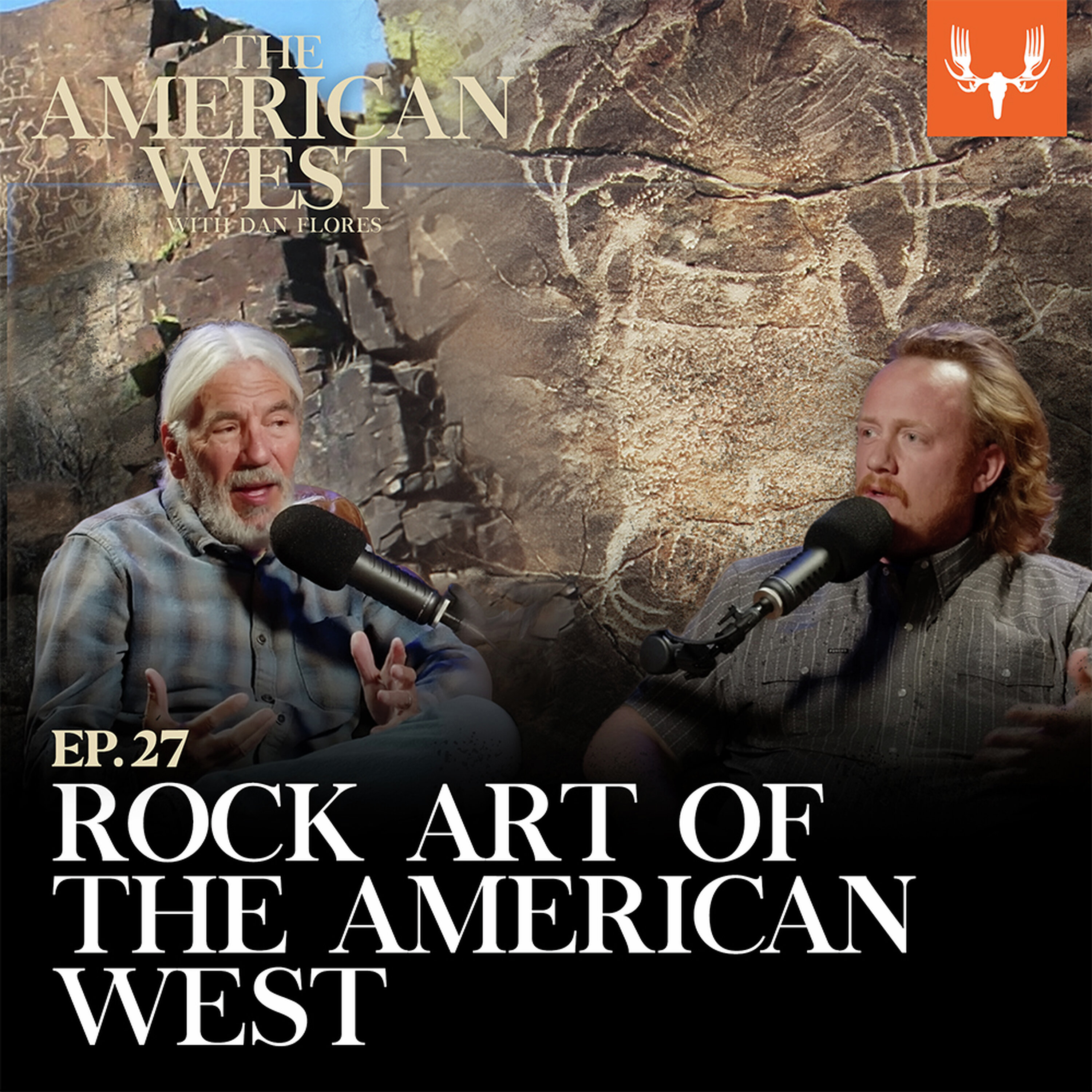
Loading summary
Transcript65 lines
- [00:00]
Dude Wipes Spokesperson
When you're in the back country, don't forget your own backcountry. Keep it pristine and confidently clean by bringing along wet extra large Dude Wipes. Just like your truck gets muddy out in the wild soaking your butt. You never clean your vehicle with dry paper towels, so why would you clean your butt with dry toilet paper? Wetter cleans better so ditch the itch and switch from TP to Wet Extra large Dude Wipes Dude Wipes it is the best clean. Pants down. They're available at Amazon. That's where I usually order mine from, but you can get them at Walmart nationwide. Fantastic product. Proud to be doing ads for these boys at Dude Wipes.
- [00:37]
Land.com Advertiser
You ever get that feeling? The walls closing in the concrete jungle suffocating you? You crave some wide open spaces, the chance to connect with nature. Maybe in a spot all your own. Well, head over to land.com they've got ranches, forest, mountains, streams, you name it. Search by acreage, you can search by location, you can search by the kind of hunting and f you're dreaming of land.com it is where the adventure begins.
- [01:04]
CarMax Advertiser
Do you want to find a stress free way to buy your next car? Start at CarMax and shop your way. If you want to browse with confidence, get pre qualified online with no impact on your credit score and shop cars within your budget. From luxury cars to family rides, CarMax has options for almost every price range, including more than 25,000 cars priced under $25,000. So hey, want to get started? Just head to CarMax.com for details and get pre qualified today. Want to drive CarMax
- [01:39]
Dan Flores
found almost exclusively in America in the western half of the continent, the west rock art remains an enigmatic record of thousands of years
- [01:48]
Randall
of the human presence here.
- [01:51]
Dan Flores
I'm Dan Flores and this is the American West. Messages from the Past the Rock Art
- [02:16]
Randall
of the American West
- [02:19]
Dan Flores
For Europeans and Americans journeying into the west in the 19th century, the region past the center line of the continent was plains and mountains, deserts and seacoasts, people and animals. And for them the whole stood as the purest, most distilled version of John Locke's famous line, in the beginning, all
- [02:41]
Randall
the world was America.
- [02:44]
Dan Flores
For old worlders, the west loomed as a planetary touchstone of everything that was wild and new. All the west seemed freshly made, a high drama country awaiting a high drama destiny. But for a good corrective to that kind of colonial nearsightedness sometime in your life, do this Drive across the remote San Rafael swell country of southern Utah to a detached Piece of Canyonlands National Park. Follow the signs into a particular canyon of the many thousands of beautiful slick rock erosional cuts in the American West. Then stroll along under shimmering cottonwoods a little more than three miles until you come to a particular sandstone alcove. There, in a grand wild lands of stone, sand and blue sky, is a mural that will at once silence all thoughts about how untouched America was when Europe stumbled onto it. The Great Gallery, the name by which we know the round shouldered, armless, enigmatic, ghostly beings that decorate this sandstone alcove, seems to possess the odd and rare ability to pull gobsmack visitors out of the present and into a different time, a different continent. The Great Gallery's humanoid figures stretch across 60ft of vertical slickrock. They await the modern gaze in adornments of gauzy red and snowy white. Most figures are as tall as you are. Many are solidly colored. Others are festooned with snakes and torso designs like tattoos. But it's the gallery's reigning protagonist, appearing in a cluster of figures on the wall's left margin, who quickly draws every looker's attention. There are other figures almost as large. But this sort of humanoid, sometimes called the Holy Ghost, with a light bulb head, glowing eye sockets and geometric body patterning, is the only figure who appears surrounded by a robed retinue. The Holy Ghost consorts are painted with red hematite and the ancient artists who rendered the scene portrayed them in various sizes to create the 3D effect of a powerful king or maybe a God trailing followers at every remove of distance and perhaps of time. So the American west was a new undiscovered part of the world when we Old Worlders found it. Yes, maybe that assumption needs a reset. Archaeologists estimate the painted images of the Great gallery are between 2000 and 4000 years old. Its artists, or more likely artists, were archaic around earlier than the Anasazi, the so called Old ones of the Southwest. Ancient Rome may not have yet begun dominating Europe and Africa. When the Great Gallery appeared in this canyon, England and France were millennia from becoming nation states. In 2026, the United States is celebrating its 250th anniversary as a nation. The people who painted the glowing eyed being and his companions in the Great gallery were here 8 to 16 times farther back in America's past. If the west can be said to possess several grand mythologies, one of them, its deep time human story, is exemplified by the Great Gallery and thousands of other pictographs and petroglyphs across the West. These surviving ancient portrayals of the human presence are their own evidence of a mythological time. Art and graffiti on enduring rock Reaching out of the deep past down to us. We were here, the West Rock art says there were people right here and so very long ago. You can't fathom such a passage of time, nor did we ever imagine your existence. But what we left for you is the still visible proof of how mind and consciousness have long expressed themselves. Today, we're reasonably certain that Coyote stories, the West's oldest literature, extend centuries back into the dimness of American time. Coyote was a Paleolithic God, so some Coyote stories may be 10,000 years old. The hundreds of thousands of rock art images painted on or incised or pecked into rocks are the visual analogy to the West's Coyote stories. Efforts to date. Some of them indicate that there is Western rock art that legitimately reaches 8,000 years into the American past. Rock art is a catch all term for what the study of these images categorizes as pictographs and others called petroglyphs. The Holy Ghost and his companions in the great Gallery are pictographs, figures native artisans painted onto rock walls in a variety of colors, reds, yellows and blues, made from local natural resources. Petroglyphs, on the other hand, are images that long deceased Western inhabitants, either carved into rock with knives or pounded onto rock surfaces with stone hammers and chisels. As an artifact of the American presence, rock art is scattered in most suitable locations everywhere we humans have trod, which is to say all over the planet. In 2026, the oldest rock art that science has so far found is a human handprint on an Indonesian island that's been dated to 67,800 years before our own present moment in time. In North America, there are still a small handful of rock art sites east of the Mississippi, but by many times over. The greatest number of such sites in the US are in the West. The West's widespread rock art is yet another trait that makes it exceptional among American regions. I once had a yellow cat I named Kerouac. He was a cool cat who forever pawed at the keyboard of my laptop. Probably he was jealous that I paid the keys and mousepads so much attention. But watching him, I convinced myself he was puzzling over what possible role something like a keyboard was playing in the world he and I shared. Animal science has now taught us that neither self awareness nor handed down culture sets us much apart from our fellow animals beyond our obvious cleverness in refining those two traits. But is there another species out there that tries to explain the world. To be a human animal is to wonder at things beyond our ken, because we've long tried to manipulate nature to make our lives better. We're the animal that tries to figure out how things work and the animal that tells stories to illuminate our insights. Maybe Kerouac really was puzzling over what a keyboard meant. Most likely not. We humans, on the other hand, witness something inexplicable and do our best to tease out its meaning and role. There are many aspects of the human story that elicit the puzzlement I used to assign to my cat, Kerouac. Coming face to face with the internal lives of people who existed in past realities is one of them, and it's a powerful one. Once, for a few weeks, I got to read the thoughts of Thomas Jefferson, put down on yellowed parchment, written in his own hand on one page with a thumb smudge from some all too human accident still visible back when the authorities still let you do it. I once stood atop the Mayan sacred pyramid Kukulcan in the ancient city of Chichen Itza, wheezing from the climb but euphoric at the human impulse to construct a monumental shrine to the Morning Star on Hawaii's Big Island. I've knelt silently before a black lava rock sculpture, a heiau shrine to the goddess Pele that Kamehameha the first had built prior to attempting the unification of all the islands. In all these places, I felt an absolute connection with minds like my own, with ideas. We'd come vision or ambition? It's the same feeling I've had time and time again, investigating rock art sites across much of the American West. Like my cat, I may not understand their function or their messages, but the human intent to leave something to the future is universal and unmistakable. And I do at least get that. And in fact, some of the most powerful connections I've ever felt to the human continuum have come from simply standing awestruck before the imagery laid down by the West's ancient inhabitants. Rock art as a name for these images is a term some modern native people don't favor, largely because they don't consider the imagery to be art. Whatever it's called, it's found everywhere in the West. There's exposed rock from the Great Plains to California, from the Northern Rockies to the Southwest. But very much like the great Pleistocene bestiaries painted on the walls of limestone caves in Western Europe between 12,000 and 35,000 years ago, Western rock art imagery can seem inscrutable. It regularly forces us to grapple with cultural value systems unfair, familiar to us, human symbols we struggle to make sense of. Confronted with strange emblems of a world we assume we know, what we're really being fussy about is having to admit just how optional are our own precious beliefs. We humans might be the same animals everywhere, but our cultures are like computer software, the number of which can seem infinite. A Montana hunter gatherer of 5,000 years ago might strike us as odd with explanations of how the world works, why things happen, as willfully strange. But with compassion and imagination, it's usually possible to see that behind the cultural wrapping there's another human being. We recognize that's the way you have to approach rock imagery, because no other elements from the ancient American past provides this kind of intimacy with the people who were here hundreds or thousands of years ago. Flint tools like points or scrapers, pieces of pottery, fragments of woven sandals or baskets were, in a sense, all tools, objects of utility and economy. But images are the way our minds symbolize the world. When you stand wonderingly in front of Utah's Great Gallery, you're getting to peer into the minds of the ancients and catch a glimpse of how they interpreted and thought about the cosmos and how it worked. Most Westerners have favorite rock art sites, but before proceeding to a few of my own, I ought to at least mention theories of meaning as well as techniques for dating some of these sites. Rock art is notoriously difficult to date, but there are ways to determine a site's age. Subject matter is one obvious one. If the imagery features guns or horse, mounted warriors, or other post contact scenes, it's obviously only 400 years old at most. Many older sites are covered to various depths by desert varnish, iron and manganese oxides produced by biotic activity. Varnish lamination atop a site's images can sometimes be dated in less exposed locales. The age of calcium carbonate deposits that form over artwork is datable with a technique called uranium series analysis. Researchers haven't necessarily used these approaches extensively
- [16:03]
Randall
in the west, but in a few
- [16:05]
Dan Flores
select sites they've yielded some very old dates. Not Clovis or folsom old, but 8,000 years old and more. As for theories about the intentionality of rock art, they range from the utilitarian to some version of the spiritual pilgrimage. Garrick Mallory, researcher with the U.S. bureau of Ethnology a century ago, famously argued for the literal. He believed that rock art images were a native form of writing similar to the glyph inscriptions of the Mayans. Today, a pretty vanishingly small minority of researchers Follow Mallory Top. Scholars like Polly Shaftsma, who's written extensively on the rock art of the Southwest, are more apt to argue meaning on a site by site basis, like painted buffalo robes and the so called ledger paintings done by Plains people in the late 1800s. Some rock art is autobiographical. It can even recount historical events. Other sites may constitute territorial markers or clan specific images. Existing Indian peoples, who almost always know the rock art sites in their country and and sometimes still use them for ceremonial and religious purposes, reject many of the non native interpretations out of hand. In fact, some groups, like the Shoshones and Crows on the peripheries of Wyoming's Bighorn Basin, a major site of a kind of rock art often called Dinwoody, argue that it was not their human ancestors at all who painted or carved the images in their country. In their traditions, rock art was the work of spirit beings, supernaturals. In this view, the images are not in the modern sense of such things, historical or territorial or clan derived. And they certainly are not art. The images are religious. They recount the look of spiritual adventure travel.
- [18:22]
Dude Wipes Spokesperson
When you're in the back country, don't forget your own back country. Keep it pristine and confidently clean by bringing along wet extra large dude wipes. I'm. I'm glad to be doing dude wipe ads because I buy dude wipes anyways. I've been a long time dude wipe. I'm a dude wipe dude all the time. Just like your truck gets muddy out in the wild soaking your butt. You never clean your vehicle with dry paper towels, so why would you clean your butt with dry toilet paper? Wetter cleans better. So ditch the itch and switch from TP to wet extra large dude wipes. Love them. Like going on a 10 day moose hunt, I just bring a pack along. Not only that, so they're extra large. Okay? If you're a little baby, you get little baby wipes. If you're a man, you get extra large dude wipes. And when you're out in nature, it's going to inevitably call. So make sure you bring along wet dude wipes and three adventure sizes like day hike single wipes, 18 pack weekend wipers, or you know for long trips you got a 48 count pack. And it's not just that. Like when you're out camping just sleeping in a sleeping bag, let's say you're gone for 10 days, whatever. I use them just to clean up at night. Like you know, scrub the old pit, scrub your arms if it's all dusty, just kind of get your neck and everything cleaned up. I love having them with me. Dude Wipes it is the best clean. Pants down. They're available at Amazon. That's where I usually order mine from. It's on Amazon, but you get them at Walmart nationwide. Fantastic product. Proud to be doing ads for these boys at Dude Wipes.
- [19:48]
American Medical Association Spokesperson
Your social media feed delivers plenty of advice, but it doesn't know you. It doesn't ask questions. It doesn't give physical exams or order tests doctors do. At the American Medical association, we believe the best care starts with a real conversation, with someone who understands the science and your unique health. So stay curious, ask questions. But when it's time to make decisions, make them with a doctor. Learn more at amahealth versus hype.org that's amahealth vshype.org you ever get that feeling?
- [20:20]
Land.com Advertiser
You're stuck inside staring at screens and a primal urge kicks in. You crave wide open spaces, fresh air, the chance to connect with the land. Well, maybe it's time to find your own piece of the wild. But searching for property can be a maze. That's where land.com comes in. They got millions of listings across the country, from mountain ranches to hidden fishing holes. Their search tools are like a seasoned guide, helping you narrow down what you want. Land.com isn't just about buying and selling. It's about finding a place to hunt, fish, explore, or simply sit by a campfire and listen to the crickets. So head over to land.com today to turn one day into today, because trust me, there's nothing quite like the feeling of standing on your own piece of earth.
- [21:06]
Dan Flores
Now, beyond being awestruck at the cosmos and at the existence and intricacies of life itself, I'm not religious. I like to science the shit out of my explanations. So with all respect for the power religious explanations have, for many people, the scientific method does indicate that the chances of genuine supernatural activity having produced the West's rock art literally is vanishingly remote. That, however, doesn't mean that a large percentage of rock art isn't deeply religious in nature. In fact, the prevailing opinion among trained archaeologists these days is that shamans may have executed much of the rock imagery in the West. If that's true, and I suspect it is, I like to fall back on the Scandinavian anthropologist Eky Holkrantz's definition of a shaman. The shaman, Holkrantz once wrote, is a social functionary who, with the help of guardian spirits, attains ecstasy in order to create a rapport with the supernatural world. On behalf of his group members. Shamans achieve their ecstasy in a variety of ways, Sometimes through fasting, sometimes through repetition or rhythmic movement, sometimes through the use of psychoactive drugs. These kinds of stressful physical ordeals sometimes were initiation or ceremonial rites. Sometimes a result of them was to record mental images of of the experiences induced, perhaps to invoke supernatural beings in a spirit world, to take interest and intervene in human affairs. What we may have in many rock art image sites, in other words, are representations of vision states or of a religious condition of rapture. Because some of the particular details seen in rock images appear when worldwide. For a good many years now, there have been experts who think that some designs that appear in petroglyphs and pictographs are endemic to the hard wiring of the human brain and nervous system in altered states. And readers who, like me, are children of the 60s and 70s, may recall this rather well. The brain tends to see geometric patterns or cascades of dots, swirling spirals, which science tells us are called phosphenes. Brain created patterns you can sometimes see behind eyelids by closing your eyes tightly. Hallucinogens like the cactus peyote used in ceremonies of the Native American church, can induce them as well as a sense of the self leaving the physical body and flying off to parallel worlds where the physical body can't go. I stand as a witness, at least to the phosphine effect. Once, sitting cross legged in the sand on the banks of the Rio Grande in Trans Pecos, Texas, four or five fresh peyotes into the experience, I watched in wonder as an endless stream of geometric designs swept over me from behind, then disappeared into the far distance in front. It was an astonishing display that put me in mind of Mesoamerican wall freezes and art. Only later did I realize that my eyes had been shut the whole time. For those who remember the 70s, these flights became the vehicle for the teachings of an anthropologist turned writer named Carlos Castaneda, who, in a flotilla of wildly successful pop anthropology books, created a Yaqui Indian shaman named Don Juan. Anthropologists doing more serious work have subjected the Paleolithic cave images of Europe to this shaman analysis with success. And in the American west they've done the same with the famous pictographs of of the Lower Pecos river in Texas, and with the Bighorn Basin's Dinwoody images and some of the petroglyphs of California. The near life sized Dinwiddie images, pecked petroglyphs the experts assume are from the deep Shoshone inhabitation of this part of the west are the most prevalent on the western edge of the Bighorn basin. In places like the legend rock art site, the Thermopolis area, or in the canyons exiting the eastern flanks of the Wind river range. The Dinwiddie figures are absolute showstoppers. The imagery appears to show humans, but humans merged with other animals. The term of art for which is therianthrope Dinwiddie humanoids often have the clawed feet of bo birds. Sometimes the hands are also clawed. And the figures frequently have wings in Dinwiddie sites. And this is also true of images like the white shaman along the lower Pecos in Texas. The figure's arms are often in the classic shaman position, Raised overhead and held wide, as if welcoming visions. Or maybe launching into flight on journeys to the world of the supernaturals. Or perhaps raised and held wide to radiate power to control nature or animals, to make things happen in the ordinary
- [27:04]
Randall
world of the living.
- [27:06]
Dan Flores
The Dinwoody shamanic tradition seems to have first appeared on the rock faces of the Bighorn Basin 6,800 years ago. And some of the figures may be barely more than a century old. That's a very long representation of a form of artfulness and shamanic tradition. Another culture's rock art I've been privileged to walk among many times. Is that of the ancestral pueblos and their pueblo descendants, which decorates the lava cliffs and dikes and that surround me. Where I now live in New Mexico. A national park service unit called Petroglyph National Monument Preserves thousands of the images. The pueblos long ago pecked into the black cliffs along the Rio Grande on the west edge of Albuquerque, Climbing its trails to pick your way through white lined images on black boulders. Petroglyph national monument has sometimes given me a Sistine Chapel feeling. At other times, the open mouth reaction one has on the Las Vegas strip. There are elaborately costumed kachina deities on these rocks. God messengers the pueblos still reenact in their ceremonies. Having once stood in freezing December weather in Zuni pueblo and watched a towering ship, Shalako kachina, clacking its two foot wooden beak While dancing a solstice blessing inside a new home. It's hard for me to separate the sacred from the entertaining and the rock art representations of such beings. I also can't help imagining young native couples wandering through here on date nights a thousand years ago, holding hands under a full moon. And as white outline visions leaped out from the silvery black. Such images from the ancients tend to be stylized, Sometimes Seemingly chaotic, often recognizable, but pushed in what appears outrageous directions. In a word, they're abstract. They're exactly the inspiration that led 20th century painters like Pablo Picasso and Johan Miro to develop modern art. Pueblo imagery here and elsewhere is mind bending in variety and detail. There are mythical creatures like giant horned water serpents, but also real rattlesnakes, often too in tandem. There are thunderbird eagles, badgers, coyotes, bears, all revered animals. The Pueblos precious, preserved. There are gleaming four pointed planets, parades of priests, sometimes all with erections. An endless variety of different cloud terraces, the home of the Kachinas. Those appear in conjunction with water serpents, mountain lions, sometimes a woman's nether parts. There are faces with or without masks, handprints, length of zigzag lines, spirals, fields of dots. Warrior figures protected by circular shields. Petroglyph monument preserves a particularly well done Central American parrot, a colorful macaw, not native here, but imported for priests and ruling families among the Pueblos as a way to signal wealth and status. One other region of the west where I've long hiked to rock art sites is the Great Plains, a vast locale of 13,000 years of human inhabitation. But where most of the rock art I've personally explored is actually historic, obviously done by Plains Indian peoples who were acquiring horses and firearms and interacting with Europeans. The white cliffs of Riding on Stone Provincial park along the Milk river in southern Alberta preserves the largest collection of rock art anywhere on the Great Plains. A sacred site for the Montana Blackfeet and the Alberta Blackfoot peoples, Writing on stone presents a labyrinth of both painted and carved images. When I roamed the cliffs there in the early 2000s, I was impressed with what I felt was the richest and most elaborate portrayal of of horse mounted battle scenes I'd ever seen anywhere. The northern Great Plains is also the setting of a great tradition of rock imagery archaeologists called shield figures. Shield designs, which at first glance appear to represent circles or wheels, were a visual and ceremonial appreciation of a military tradition. Usually pictographs, the painted circles portrayed shield bearing warriors and may have been done as a result of vision quests by individuals who were warriors rather than shamans. The classic site for the shield bearing warrior figure is Pictograph Cave in the Crow country, south of Billings, Montana. Another part of the Great Plains that presents really intriguing rock art is the southern High Plains. And the part I've especially explored for rock art sites is the Caprock canyonlands
- [32:37]
Randall
country of West Texas.
- [32:39]
Dan Flores
Cowhead Mesa in the canyons of the Llano Estacado's Eastern escarpment is a typical bread loaf shaped mesa, indistinguishable at a glance from dozens of others in these canyonlands. Unlike the rest, its grand currently under investigation by the National Register of Historic Places because of its rock art compared to further west, there's not a great deal of rock art here on the southern High Plains. Most of it's in the valley of the dry Cimarron river and in Rocky Dell in the Canadian Breaks. There are a dozen or more minor rock art sites in Palo Duro, Thule Blanco and Yellow House canyons. And like the pictographs in Rocky Dell, many of them seem traceable to those traveling artists, traders from Pecos and Santo Domingo pueblos and other pueblos in New Mexico. The Rocky Dell pictographs, which a few years ago some idiot outlined in chalk for his photographs, show a horned serpent like those that appear frequently in the Galisteo Basin near Santa Fe and far out on the plains on Yellow House Crossing Mesa. I've seen a kokopelli etched into the sandstone. Kokopelli, the humpback flute player was the pueblo equivalent of the traveling salesman, a slippery rogue with a pack of goods who could sucker men and coax women into joint him in the bushes. The kokopelli on Yellow House Crossing Mesa may be his most easterly appearance in the whole West. The rock art on Cowhead Mesa south of Lubbock, though, is intriguing for two reasons. For one, the Brazos river headwaters Canyon, where it's located, is the rock art capital of the Southern plains with nearly three dozen sites. Second, a remarkable number of those sites tell historic era plains Indian stories, stories of mounted warriors and shamans, wagon trains and raids. The rock art on Cowhead Mesa in fact seems to reveal an Indian perspective on a famous historical event in Texas history, the so called San Saba massacre of the year 1758. The Indian raid on the Spanish mission of San Saba had its origins in the desire of Franciscan priests to missionize and convert Texas Indians to Christianity. When the Lapun Apaches asked for priests to come among them, the Franciscans in Texas interpreted the request to mean that the Lord had at last delivered the pagans unto the fold. They built the Apaches new mission about 100 miles northwest of San Antonio along the San Saba River. It was in effect and in fact a blood sacrifice. What the Apaches really intended was to intrude the Spaniards into the eye of a tornado sweeping down on them. A horse mounted tornado of new buffalo hunters from the north who entered history as the Comanches. A year after the San Saba mission was built, a large force of Comanches shoved their way through the gates, killed the two priests, and burned all the buildings to the ground. Later they added humiliation to the lesson, routing a Spanish army sent to punish them by capturing its artillery and chasing the Spanish survivors around the prairie like chickens. If the rock art on Cowhead Mesa depicts what it seems to depict, one group of the Comanches involved in the sacking of the San Saba mission headed up the Brazos river into remote canyons at its head. There they carved into the sandstone face of the mesa their impressions of the event. Mission buildings like layered cakes with crosses on top, flames licking up through them, roundabout men with the frocks of priests, others wearing the three cornered hats of the age, and scenes of personal combat. One glyph is of a bovine with a long ropy tail and spiraling horns, an Indian impression of a Spanish longhorn. It's the figure that gives the mesa its name. Most powerful of all the scenes on Cowhead Mesa, though, is one showing a looming figure in Comanche buffalo headdress, a shaman with outstretched arms in a classic pose of making things happen. A question that's long puzzled me is why rock art was done where it was. Why this particular mesa, for example? Archaeologists tend to point to things like nearby water, protection from the weather, superior rock surfaces, and so forth, but I suspect other things were going on. The geographer Yifu Tuan once worked on a theory he called topophilia. It's one that took on the perceptions some older cultures have that there are sacred places in landscapes, even geni loci, or spirits inhabiting particular power spots. Okay, nonsense maybe. But one culture's nonsense can sometimes be another's religion. And as a matter of fact, I have been upfront and personal with the spirit that inhabits a particular rock art site on the Canadian river in New Mexico. It happened on a still fall day with a little haze in the air. I was with a girlfriend who was doing a master's thesis on plains rock art, thoughtfully parking my old Fiat in a pasture where the horses could have a fair try at licking off its remaining paint. We had hiked a tributary upstream a mile or so to a site some obscure scientific paper reported to be there, and it was. We found it in a small hemispheric rock amphitheater theater on the south bank of the creek. Walking in, we had passed excellent locations for rock art, had seen nothing, and had grown dubious. But the pumice walls of this Little grotto once we got there, were covered top to bottom with scores of stunning spirals, Shields, Nebula, animal spirits, and dream images. Katie was out of sight below me. I was standing on a rock shelf beside the uppermost petroglyphs, still mildly puzzling over why this particular spot when the spirit appeared for the first time. I was framing a photograph when I heard the noise of it. Thinking a rattler might be rustling in the grass behind me, I froze, the noise readily audible. A steady whirring grew louder. I turned around. It wasn't a snake. Whatever it was, it was in midair, about 15ft away from and slightly below where I stood on the rim rock. I registered an impression of Katie in the grass below. Open mouthed, our gazes converged on an indistinct visual disturbance in midair. A whirring plains dervish that was marching in stately fashion around the circumference of the rock cove. Too stunned to speak or even gesture, we wordlessly watched it walk past us and down to the creek, where once it hit the cottonwoods, it assumed the form of an ordinary whirlwind. Rational Western minds can be satisfied. Then twice more during the next hour, the spirit appeared again, followed the same path, emerged from the boulder corral as a small whirlwind. That I would have argued earlier that day, was merely the creation of the peculiar topographical clothes qualities of the place. But the people who had covered this little spot with symbols of their culture were dealing with a very tangible entity. Anyone who stood here could see and hear. Now, having been face to face with their reality, I understood a little more
- [41:53]
Randall
about the imagery from ancient America.
- [42:01]
Dude Wipes Spokesperson
When you're in the back country, don't forget your own back country. Keep it pristine and confidently clean by bringing along wet extra large dude wipes. I'm. I'm glad to be doing dude wipe ads because I buy dude wipes. Anyways. I've been a long time dude wipe. I'm a dude wipe dude all the time. Just like your truck gets muddy out in the wild soaking your butt. You never clean your vehicle with dry paper towels, so why would you clean your butt with dry toilet paper? Wetter cleans better. So ditch the itch and switch from TP to wet extra large dude wipes. Love them. Like going on a ten day moose hunt. I just bring a pack along. Not only that, so they're extra large. Okay. If you're a little baby, you get little baby wipes. If you're a man, you get extra large dude wipes. And when you're out in nature, it's going to inevitably call. So make sure you bring along wet dude wipes and three adventure sizes, like day hike, single wipes, 18 pack, weekend wipers, or, you know, for long trips, you got a 48 count pack. And it's not just that. Like, when you're out camping, just sleeping in a sleeping bag, let's say you're gone for 10 days, whatever. I use them just to clean up at night, like, you know, scrub the old pit, scrub your arms if it's all dusty. Just kind of get your neck and everything cleaned up. I love having them with me. Dude Wipes. It is the best clean. Pants down. They're available at Amazon. That's where I usually order mine from. It's on Amazon, but you get them at Walmart nationwide. Fantastic product. Proud to be doing ads for these boys.
- [43:25]
American Medical Association Spokesperson
At Dude Wipes, your social media feed delivers plenty of advice, but it doesn't know you. It doesn't ask questions. It doesn't give physical exams or order tests doctors do. At the American Medical association, we believe the best care starts with a real conversation with someone who understands the science and your unique health. So stay curious, ask questions. But when it's time to make decisions, make them with a doctor. Learn more at amahealth versus hype.org that's amahealthvshipe.org you ever get that feeling?
- [43:58]
Land.com Advertiser
You're stuck inside staring at screens and a primal urge kicks in. You crave wide open spaces, fresh air, the chance to connect with the land. Well, maybe it's time to find your own piece of the wild. But searching for property can be a maze. That's where land.com comes in. They got millions of listings across the country, from mountain ranches to hidden fishing holes. Their search tools are like a seasoned guide, helping you narrow down what you want. Land.com isn't just about buying and selling. It's about finding a place to hunt, fish, explore, or simply sit by a campfire and listen to the crickets. So head over to land.com today to turn one day into today, because trust me, there's nothing quite like the feeling of standing on your own piece of earth.
- [44:46]
Podcast Host
All right, Dan, so I just want to begin this with sort of a simple point or observation that you made in this episode that kind of stuck with me. And that is when you look at scrapers and bowls and other artifacts, material culture from the past, there's a utilitarian.
- [45:06]
Randall
Yeah.
- [45:08]
Podcast Host
You understand what that was for and why someone did it and how they used it. And probably how they thought about it, just more or less. But when you. When you look at rock art, there's this question of intent and motivation. Like, if you find an arrowhead on the ground, you think, oh, someone was here. I wonder what they're doing. When you find rock art, you think, what were they trying to say? Or what were they thinking? And there's an added depth to that sort of gap between you and whoever this artifact originated with.
- [45:46]
Randall
Yeah, well, I mean, I think you got the primary point, Randall. That's definitely. That's it. I mean, we have various ways of sort of touching the past and the west, which, of course, is, for one thing, it's a very deep past. It goes back more than 20,000 years. And so we've got things like points and pottery and a variety of different tools, which, as you said very well. I mean, you can kind of discern looking at them, handling them, what the intent was, even something about how they were made, but a lot about purpose. And, I mean, we have footprints, we have a variety of things, but what
- [46:38]
Dan Flores
we have that probably communicates the hugest
- [46:40]
Randall
body of information are these rock images that appear all over the West.
- [46:46]
Dan Flores
And in that instance, you're looking sort
- [46:50]
Randall
of directly into people's minds and having them instruct you in how they see the world around them.
- [46:58]
Dan Flores
And that's a different thing.
- [47:01]
Randall
That's another level, to be sure, than looking at pure tools.
- [47:07]
Dan Flores
And it's.
- [47:07]
Randall
In a lot of ways, it becomes a mystery, because the cultures that were here are pretty mysterious to us. I mean, human cultures all over the world tend to be mysterious one from the other. And so a lot of what the rock art story is about is standing in front of this almost bewildering array of images and signals from the past and trying to figure out what in the world does it mean? What is it trying to convey? Yeah.
- [47:36]
Podcast Host
And you raised this point as well, about sort of intended audience. You know, whenever I look at a piece of rock art, I wonder, how long was this legible?
- [47:50]
Randall
Yeah.
- [47:50]
Podcast Host
To passersby, maybe it wasn't legible to other people at the time. You know, when I drive by some graffiti on a bridge, often I have no idea what somebody was tempted to convey, but. And then you think, well, maybe I'm part of the intended audience. Maybe it's something like a time capsule. Right. And so I don't know that there's any. We can arrive at any firm conclusions there, but it's one of those things that. That always makes me wonder, that there's a message in there somewhere. Who's it for and when and in what context was this meant to be understood?
- [48:24]
Randall
Yeah, it's very definitely a way of thinking about audience. Which course, as writers, we do you think about who you're writing for, who you're trying to convey a podcast topic to, and what you assume with, with most rock art is that the audience is the local community, but we don't really know that. I mean, and some of this rock art, I mean, has lasted for so long. I mean, some of the rock art in the west we know is 8,000 years and older, and that's not an indication. I don't think that people who were doing it were necessarily thinking of some future audience. I don't think think, for example, the people who did the great Gallery in Canyonlands park in Utah had us in mind as an ultimate audience. But they may well over the generations have assumed that, yeah, this is intended for. Down the timeline for other people to see. And I do think that probably most of it was intended for a local community, maybe at the very, very moment of time when it was done. But, you know, it's another one of those mysteries that attends to it.
- [49:47]
Podcast Host
Yeah. And I. There's. There's another aspect to this topic. Right. And drawing that distinction between utilitarian items and this art and that the art is very firmly anchored in place.
- [50:05]
Dan Flores
Yeah.
- [50:06]
Podcast Host
And. And if, you know, if in some instances, if it's removed to a museum, something like that, it loses a lot of its meaning because I can think very clearly. For whatever reason, the past few years, I've encountered a lot of rock art along the Green river near Echo Park. From the plains of Montana, the upper Missouri breaks in Montana. And in my mind, the place is as much an object. It's like, why here? What was that person doing here? And why was this place significant to them? So another aspect of this, we're just sort of left to wonder.
- [50:46]
Randall
Well, I mean, I attempted in the end of this particular script to address at least one of the experiences that I've had trying to ascertain. When looking at a landscape, you can see all sorts of suitable spots, and those seem to be ignored in favor of a particular one. And of course, this happened to do with an experience I had quite a number of years ago in New Mexico with a girlfriend who was doing a thesis on rock art. And we were going to this kind of remote, faintly known even among archeologists site and trying to, as we were going in, trying to figure out, so why is there. This looks like a great Place for rock art right here. Why is there nothing here? Then? We get to this one particular spot, and it is just festooned with imagery of every kind. Just stunning spirals and nebula and dream figures and creatures.
- [51:43]
Dan Flores
And
- [51:46]
Randall
it happened to. To be, I think, associated with the particular dynamics of that spot on the ground, which was catching these whirlwinds that were coming through. And not being prepared for that and having that happen while we were there, I mean, that was one of the more stunning, open mouth, gobsmacked experiences I have had, because there were many long moments sort of almost visibly seeing this thing, this spinning object go through this little cul de sac of images where I had no idea what it was.
- [52:27]
Dan Flores
But it did give me an insight
- [52:29]
Randall
that I think I would have never had before into why some spots were picked. And so it's made me wonder every time I find some out of the way piece of rock art. Is there something about this spot? It may not be the generator of a whirlwind, but something about the spots, I think, tend to have struck people in the past as some sort of special or sacred place in order to put these images. And so you're exactly right. The location of them is oftentimes as important as the images that appear there. Yeah.
- [53:06]
Podcast Host
And I was thinking of another really memorable encounter I had. This was in the Green river, and there was a scene of bighorn sheep, what I assumed to be bighorn sheep, but their horns sort of went straight up and then began to arc back. And they looked like ibex.
- [53:27]
Randall
Yeah.
- [53:27]
Podcast Host
You know, they didn't look like bighorn sheep. And you make the point that these are abstract representations. Right. Like your inclination, I think, if you were to not think about it, would be this is someone who didn't know how to draw a bighorn sheep. But you could say the same thing about Picasso. You know, in Guernica, it's just. It's big horses at work. It makes you take a step back and think about what is it about the bighorn that they're trying to convey.
- [54:02]
Randall
Right, yeah, that's exactly it. I mean, and some of the. The creature imagery, like there is a horned serpent motif that is very common among the Pueblo people of the Southwest. And, I mean, I've seen one on a particular rock art site that I mentioned in this script. It's called Rocky Dell in the Texas Panhandle. That's like about 20ft long. I mean, it is a gigantic rendering of a horn serpent. But what you have to assume about a horned serpent is that it's a camera. It's not a real thing. It's something out of Pueblo stories, creation stories. But those kind of figures often appear interspersed with animals you can readily identify with eagles and coyotes and badgers with, you know, with the nails of their front paws well represented to show a digging animal. And so it's a. It's kind of a mix of things, but it's often done in a very stylized way. And I mean, just as you said, it's. This is really the discovery of a lot of this kind of art, not only from America, but from other parts of the world. It was kind of the impetus for the emergence of abstract modern art. People like Picasso and Paul Gauguin for example, were fascinated with this kind of imagery. And Picasso, of course, in particular, began to incorporate it into his work.
- [55:36]
Podcast Host
Yeah, I think one other. I've found encountering rock art to be a very kind of head spent, like a dizzying experience, you know, and it makes you sort of look at your surroundings in a new way and try to put yourself in someone else's mind. And the best comparison I could come up with was like, you go to a medieval cathedral and you sort of have a sense of why they did this, you know, but you'll never actually be able to understand that person's lived experiences and the sort of the. The topography of their imagination in that moment. But it's like a very. It's a very powerful experience to. To encounter these things in. In the places where they were created.
- [56:29]
Randall
Yeah, it really is. I mean, it's like, you know, my. My best sort of remembrances of things like that are like going to the Mayan pyramids and the temple of Kukulkan that I mentioned in one of these episodes that I had before. They wouldn't let you do it anymore. Got to actually climb to the top of that temple in Chichen Itza and sort of witness what it all looked like from up there. And
- [57:04]
Dan Flores
it's much like rock art in
- [57:06]
Randall
a way to be. And the presence of something like that that ancient people did. And it's probably one of the best examples you'll ever have of an old truism that we use in history that the past is a foreign country. I mean, and sometimes the past is a really foreign country where you really struggle to understand it. And that's kind of fascinated me. Some of the episodes that are coming up sort of take on that same topic of first contact and what happens when two peoples who have no prior experience with one another meet for the first time. And try to understand one another. In this instance that we're talking about with rock art, you don't have the second person of the first contact to help you understand what's going on. Even modern native people in most instances can't determine what the rock art in their country often means. They can recognize some of it, but not all of it. And in the instance where you're standing there by yourself looking at some of these images and trying to figure them out, I mean, it can be the puzzle of an entire afternoon. And I've certainly done that plenty of times.
- [58:17]
Podcast Host
Well, Dan, thanks. I appreciate this one because it kind of took me back to some of these moments in my life and kind of got to reimagine all that one more time.
- [58:27]
Randall
Well, you'll get to see plenty more of it. I know roaming the west because there's a lot of it out there.
- [58:31]
Podcast Host
Yep. Thanks, Dan. You bet.
- [58:51]
Gronk
Hi, this is Gronk from Dudes on Dudes and talk about a perfect partnership. I'm here to tell you about protecting your end zone with Dude Wipes. If you're still wiping with toilet paper, you need to listen up. Dude wipes are a wet, extra large flushable wipe that leave nothing behind in your behind because they are wet. And we all know wetter cleans better. Unlike dry wiping with toilet paper, dude wipes clear instead of smear. Goodbye dingleberries, Goodbye itch and irritation. Plus, if you take Gronk sized grumpies, or as I like to call them, Gronkies baby wipes won't do. You need extra big dude wipes to handle the job. And they come in different scents and pack sizes, including a single use on the go pack that you can take wherever you go for that home field advantage. So don't fumble the ball with toilet paper. Stop being an A hole to your B hole and and start using Dude Wipes. Available on Amazon and major retailers nationwide. Dude Wipes Best clean Pants down.
- [59:57]
Land.com Advertiser
You ever get that feeling? The walls closing in the concrete jungle suffocating you? You crave some wide open spaces, the chance to connect with nature. Maybe in a spot all your own. Well, head over to land.com they've got ranches, forest, mountains, streams, you name it. Search by acreage. You can search by location.
- [60:17]
Dude Wipes Spokesperson
You can search by the kind of
- [60:18]
Dan Flores
hunting and fishing you're dreaming of.
- [60:20]
Land.com Advertiser
Land.com it is where the adventure begins.
- [60:25]
American Medical Association Spokesperson
This is Sophia Donner from OK Storytime this summer. Find your next obsession on Prime Video. And listen, we're not saying you need another obsession but there could be a lot worse ones. Steamy romance, addictive love stories, and the book to screen favorites you've already read twice, so why not watch them a third time off campus? And l the Love Hypothesis and more Slow Burns Second Chances chemistry you can feel through the screen, and it makes you wish you were actually in that movie. We've got bingeworthy series. Can't miss movies perfect for when you're ignoring your own problems or procrastinating as one does. Your next obsession is waiting. Watch only on Prime.