← The American West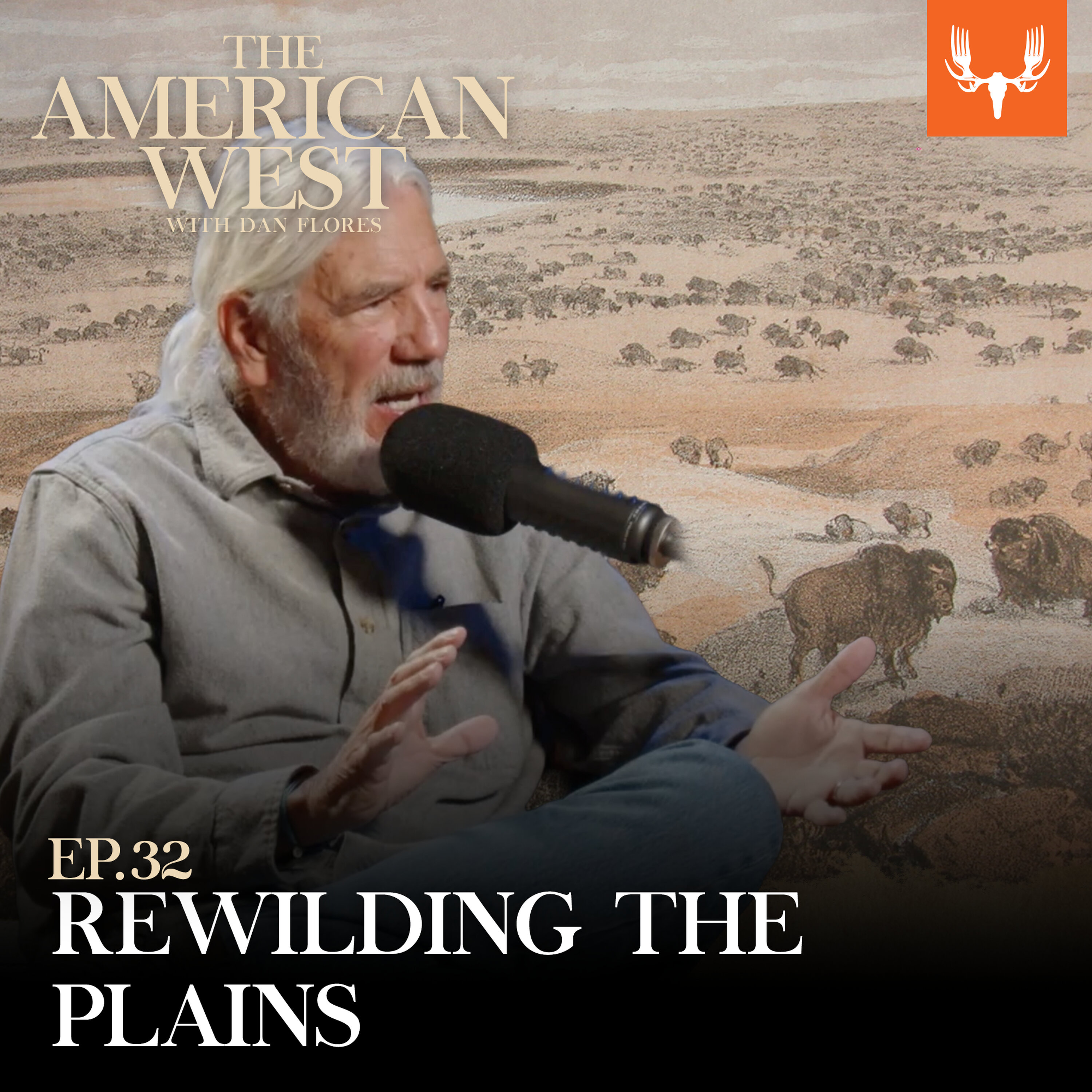
Loading summary
Transcript72 lines
- [00:00]
WeatherTech Spokesperson
Everyone knows you need vehicle protection in the winter with that snow and ice, but summer is messy in its own unique way. Summer is about sand and sweat, snacks, water, grass, ice cream, and you don't want anything like that slowing you down. WeatherTech is built for all those summer things, giving you the freedom to go all in. WeatherTech floor liners, cargo liner and seat protectors. Keep up with your summer adventures. Weather without the worry. American made premium. Built to last and easy to clean. If you're going to go all out this summer, you need WeatherTech. Visit weathertech.com today.
- [00:38]
American Military University Representative
Service opens doors and at American Military University, it can open doors for the whole family. If you have a loved one who served in the military, you may qualify for reduced tuition. AMU offers flexible online programs designed to fit your schedule so you can keep moving forward wherever life takes you. Learn more at amu Apus Edu Military open doors to the future for you and your family with the help of American Military University.
- [01:16]
Shady Rays Spokesperson
You know that moment, the one when you realize you left your favorite sunglasses in the woods or on the roof of your car, or at the gas station three states away? Well, I've been there too. I remember telling my wife that I would know that I was a mature
- [01:30]
Shady Rays Spokesperson (Alternate)
human being, a man, when I knew
- [01:33]
Shady Rays Spokesperson
exactly where my sunglasses were at all times. But then I found Shady Rays and it changed the game. These sunglasses are made for real life. Good looking, polarized, durable and not stupidly expensive. And here's the wild part.
- [01:46]
Shady Rays Spokesperson (Alternate)
If you lose them or break them,
- [01:49]
Shady Rays Spokesperson
Shady Rays will send you a brand new pair. No guilt trip, just replacements. We've teamed up with Shady Rays to bring you an exclusive offer. Head to shadyrays.com and use code BEAR for 50% off two or more polarized sunglasses. Try for yourself The Shades rated five stars by over 300,000 people.
- [02:13]
Dan Flores
Despite its role as the central region of the frontier story in the west, the Great plains in the 21st century is requiring novel conservation approaches to recapture its former magic. I'm Dan Flores, and this is the American West. Loving the plains, hating the planes, rewilding the planes. I know almost Nothing useful about W.H. auden, the 20th century British writer critic, except that he once wrote these lines which I committed to memory. I cannot see a plane without a shudder. Oh God, please, please don't ever make me live there. Auden put an exclamation point at the end of that sentence. His sentiment is one I suspect a great many modern Americans would agree with as they drive through or fly over America's vast plains country the Great Plains is not, by any usual measure of landscape aesthetics, an admired part of America these days. We no longer love the plains the way we love mountains, we or oceans or even deserts. A few of us are outlier exceptions, though. In the 1980s and 1990s I built a house in a shallow canyon set into the horizontal yellow prairie sweeps of West Texas, and today I live in another house I've built in pinyon juniper foothills only 20 miles west of the high plains of New Mexico. In an experiential refutation of W.H. auden, I can say honestly that no other landscape has ever moved me the way the plains have done. So try to suspend disbelief over that sentence for a moment. I grew up in southern forest, lived for two decades in the heart of the Montana Rockies, and am passionately in love with deserts, especially where saguaros loom like cactus, redwoods and I travel the ocean since, like most of us, I find something hypnotic and satisfying to my genetic memory on an ocean beach. But the woods, the mountains, the sea, even the deserts, all of which appear at first glance richer and more varied, lack the simple minimalism, the vastness of earth and sky that's so powerful with an aurora sunrise or on a glittering night on the plains. I realize few other Americans, even other Westerners, react this way, driving a car across America's prairies and plains. To many, the horizontal yellow spaces are hardly inspiring. What most of us see, if we bother to look, is emptiness. No water, no trees, no green, almost no people. What there is in abundance is wind, which buffets and rocks your car as you drive. The horizon encircles the world like the rim of an enormous plate. No matter how fast you go, that horizon recedes in front of you, eventually placing you in a kind of twilight zone of suspended forward motion. There are stretches where, if you roll down the windows, the country smells of ammonia, feedlots and hog farms. And those aren't pretty scents. At midday the light can be almost too bright to look at, or else it's a diffuse brown pall agriculture going airborne. As for our presence on the plains, the human infrastructure often looks beaten and discarded. Dying towns memorable for the amount of windblown waste snagged on chain mesh. Fences loom and recede along laser straight highways. Billboards unintentionally advertise a kind of 21st century great chain of being. Jesus. Cowboy boots, farm machinery, banking loans, moving truck deals, maybe diversions like the Minnesota Vikings or the Denver Broncos beyond the frequent sight. Oddly, in these sear Expanses of thousands of waterfowl threading the blue bowl overhead. You're in a world of erasures. Maybe you see pronghorns if you look hard, or a coyote rocking across the road, or the occasional prairie dog struggling for a comeback after the prairie dog holocaust. This is the west that everybody prefers looking down on from 20,000ft. If you feel this way about the plains, maybe what I'm about to say next will nudge you in a different direction. It was not always this way. Not very long ago, reactions to the
- [07:50]
Plains west were very different.
- [07:53]
Let me quote a few of those past reactions. They're about the same place I just described and that most of us have experienced. 200 and a few years ago, a Scottish scientist from Natchez, Mississippi, who President Thomas Jefferson engaged to help him plan young America's Western explorations, recreated for Jefferson the sense of excitement Western travelers had about traversing the Great Plains. Raised in Elgin Morayshire on the northern coast of Scotland, and educated at the University of Glasgow, William Dunbar spent his early life in in a very different kind of landscape than the American plains, now situated on the forested edges of fascination with that country farther west. Dunbar recreated for Jefferson a thrilling world by the expression plains or prairies. He told the President, it is not to be understood, a dead flat without any eminences. The western prairies are very different. The expression signifies only a country without timber. These prairies are neither flat nor hilly, but undulating in gently swelling lawns and expanding into spacious valleys. Dunbar went on, those who have viewed only a skirt of these prairies speak of them with a degree of enthusiasm, as if it were only there that nature was to be found. Truly perfect. Perfect. They declare that the fertility and beauty of the vegetation, the extreme richness of the valleys, the coolness and excellent quality of the water found everywhere, the salubrity of the atmosphere and above all, the grandeur of the enchanting landscape which this country presents inspires the soul with sensations not to be felt in any other region of the globe. In later letters, Dunbar told Jefferson what he called wonderful stories of wonderful productions on the great prairies. Especially compelling were the accounts of the wildlife riches there. In this natural pasturage. There were buffalo and other grazers in numbers beyond imagination, even herds of wild horses like zebras in Africa. There were bears, tigers, wolves, all the animals that lived off those grazers. There were accounts of giant water serpents which a scientist like Dunbar did not credit. All of it he passed on to an American president whose house at Monticello was decorated with maps of the West. Americans in the Jeffersonian age were obviously not the first to see the wonders of the continent savannas. But they were among the first since the 16th century Spanish explorers to write extensively of what they saw. Meriwether Lewis, for one, as his party was just entering the plains in today's South Dakota, described how the shortness and verdure of the grass and gave the plains the appearance throughout its whole extent of beautiful bowling greens in fine order. The party could hardly believe the wildlife spectacle on those bowling greens. This scenery, already rich, pleasing and beautiful, was still farther heightened by immense herds of buffalo, deer, elk and antelopes which we saw in every direction and feeding on the hills and plains. Zebulun pike, exploring farther south two years after Lewis, found the high plains along the Arkansas river more barren than green. In fact, he thought the southern plains a match, as he put it, for the sandy deserts of Africa. This was the same part of the plains that would inspire the Stephen Long exploring party a few years later to pronounce the central and southern stretches of the plains unfit for agriculture and thus a barrier to any advancing frontier settlers planning to farm. Yet traveling over this dusty plain of sand and gravel, barren as the deserts of Arabia, was never tedious, they said, because the wildlife spectacle was absolutely thrilling. Returning to civilization down the Canadian river in today's western Oklahoma, Long's party travel through inconceivable numbers of herbivorous animals and innumerable birds and beasts of prey. Herds of wild horses 500 strong surrounded them. All these animals were so tame that they appeared wholly unaccustomed to the sight of men, they wrote. The bisons and wolves moved slowly off to right and left, leaving a lane for the party to pass. Long's official report claimed that the western plains seemed particularly adapted as a range for buffaloes, wild goats and other wild game. As a result, these explorers thought the plains best left just as they had found them. Other 19th century Americans were amazed and too curious not to go see. The famous writer Washington Irving was enthralled enough to go himself and then write Travels in the prairie. New York novelist James Fenimore Cooper wrote a leather stocking novel about the plains. The painter of Indians, George Catlin, was besotted and did his best, which often wasn't so great to capture prairie landscapes and wildlife. Germans who trained with the legendary naturalist Alexander von Humboldt explored around the world. But one of the places they sought out was the American plains Prince Maximilian of Vid Neuvied brought with him the amazing Animal and landscape painter Carl Bodmer, whose collection of oils dawned on the Missouri in the early 1830s, are some of our very best great Plains time travel machines. And of course there was John James Audubon, who left us wonderful accounts from his 1843 trip up the Missouri with his sons. Accounts I've laid out in prior episodes. Even after the Civil War, when travelers, naturalists and artists going west were responding to America's so called Hudson River School painters and their rapture over mountains, the plains remained unforgettable for many. America's poet laureate of the 19th century, that ultimate lover of being alive in a vibrant time was captivated. Walt Whitman saw the plains for the first time after the Civil War, when the animals and native inhabitants still held sway and the frontier was then hosting one of the greatest dramas in the world. His reaction was simple and direct. I can almost quote it from memory. While I know the standard claim is that Yosemite, Niagara Falls, the Upper Yellowstone, the and the like afford the greatest natural shows, I'm not so sure. But the prairies and the plains, while less stunning at first sight, last longer. Fill the aesthetic sense fuller, precede all the rest and make North America's characteristic landscape consider that when you look out the car window for mountains as a signal that traversing the plains and is finally over. As long as the wildlife spectacle lasted, the plains continued to intrigue the same set of eclectic adventurers from Europe who searched out the sources of the Nile in Africa or became white hunters there. Prairie fever is what they called this fascination in the 19th century. Even in the 20th century, after five decades of killing had rendered the plains eerily silent. But before agriculture pulled the grass up wholesale, the region could still entrance. For New York bohemian Mabel Dodge, journeying by train to New Mexico, the plains seemed a desert, but a beautiful one. The that in her words, rolled away for miles and miles, empty, smooth and uninterrupted. I thought I had never seen a landscape reduced to such simple elements. Young Georgia o', Keeffe, sentenced to a career as an art teacher in Outback Texas during World War I before becoming an internationally known painter out on the undulating sweeps near Amarillo, marveled at how you could just drive or walk off into space. As she said, it's absurd the way I love this country writing her friend Daniel Catton rich. As late as 1949, O' Keeffe told him, crossing the panhandle of Texas is always a very special event for me. Driving in the early morning toward the dawn and and rising sun the plains are not like anything else, and I always wonder why I go other places. The Western writers Mary Sandoz and Willa Cather reacted in a similar way to the country that produced them. Cather told a back home newspaper in 1921, I go everywhere, I admire all kinds of country. But when I strike the open plains, something happens. I'm home, I breathe differently. That love of great spaces, of rolling open country like the sea, it's the grand passion of my life. I've tried for years to get over it. I've stopped trying. It's incurable. Even without the great herds, without the wolf packs or the side of a grizzly suddenly standing upright in river willows when the landscape itself was still intact, the Great Plains could excite the eye with a rhythmic ocean like topography. There's an obvious question to pose here. What's happened to make the modern reaction to the Great Plains so different? How, in other words, do you get from Walt Whitman and Willa Cather to fly over country? That answer has to do with the stunning transformation this part of the west underwent at our hands in the late 19th and early 20th centuries. In the relative wink of an eye, we dismantled and demolished a 10,000 year old ecology, one of the most exciting natural spectacles in the world. For the women tuned into the Plains, Sandoz, o', Keeffe, Cather, it was not wildlife beyond imagining that stunned them, but in their case, a sense of freedom at being in vast natural spaces that appealed. A country like the ocean was a phrase that served as a code for feeling free. But historical forces that mounted as railroads and ranching and farming arrived, destroyed much even of that Great Plains. True enough, reducing 30 million bison to 1000, 15 million pronghorns to 5000. Rounding up all the wild horses for pet food, erasing all the wolves entirely, all done so the cow and the sheep could replace them, was the unkindest cut. But there was more. Act two was the agricultural assault level. Grasslands didn't present the obstacles to monocrop market agriculture that other landscapes did. So from the 1850s to the 1930s, homesteading policies privatized the vast bulk of the former American Serengeti. In Kansas and Colorado, the big breakout took place on either side of the 20th century. In Oklahoma, the land rushes resulted from Indian reservation allotments. Settlers broke out in Nebraska, the Dakotas, eastern Montana and Plains, New Mexico, after Congress passed an enlarged Homestead act in 1909. In Texas, with its anomalous lands, history and long devotion to privatization, the breakup of the gigantic XIT ranch in 1915 brought farmers by the train load to the Llano Estacado and the rolling plains of Texas. Entirely transforming a 10,000 year old ecology in the space of 150 years is a staggering thing to contemplate. On the southern blackland prairie of Texas and Oklahoma, agriculture has by now reduced to ancient grasslands there to only 1% of their original coverage. By 2001, even Saskatchewan had only 19% of its native prairie left. North Dakota possessed only 28% of its remaining prairie at the beginning of this century. And that was before the Bakken oil boom. Texas has an overall average of of 20% of its prairie left today. Although the part of the high plains I know best, the Llano Estacado, is in far worse shape. Lubbock county, where I once lived, by 1980 had lost 97% of its native grasslands. Literally all that remained was in Yellow House Canyon. A grassy, gorgeous. Ranchers had settled because there was a little stream threading it and it was too rugged to plow and put in cotton. Economics left Yellow House to the cows and to me. Back in the west of 1806, homeward bound, Lewis and Clark were desperate to escape the wildlife poor and difficult Rocky Mountains and return to the plains. Two centuries of history have accomplished a reversal of that. Now the national forests of the Rockies are home to most of the West's wildlife. But in one of the more exciting plains developments in recent years, elk, grizzlies and wolves have once again started to push out of the mountains and into their former Great Plains homelands.
- [23:38]
American Military University Representative
Iconic summer moments deserve an iconic drink. It is Mountain Dew and American Original. From their beginnings in the foothills of Tennessee to the biggest forest fourth of July. Yet the refreshing citrus kick of Mountain Dew is the perfect companion to your American summer adventures. No matter where you go or who you are with, bring Mountain Dew to amplify your celebration. When I was in college, Dew was the daytime beverage of choice for all things summer. Rope swings into the river, jumping off bridges into the river, tubing the river, fishing the river, riding snowboards down the Lake Michigan sand dunes, right out into the waves and shooting off fireworks at night. You name it, we were powered by dew. It's been tasting great since 48. That's right. Two brothers created Mountain Dew in the foothills of Tennessee back in 1948. The refreshing citrus kick is perfect for summer and 4th of July at the grill, on the beach or right in the living room. Enjoy the refreshing citrus kick of Mountain Dew in American Original. Tasting great since 48, look for American Dew limited time packaging or find it in stores near you@mountain Dew.com that is
- [24:40]
Shady Rays Spokesperson (Alternate)
Mountain Dew.com Everyone knows you need vehicle protection in the winter with the snow and ice, but summer is messy in its own unique way. Summer is about sand, sweat, snacks, water, grass, ice cream, sunscreen and gear, and you don't want anything slowing you down.
- [24:58]
Shady Rays Spokesperson
WeatherTech is built for all those summer
- [25:01]
Shady Rays Spokesperson (Alternate)
things, giving you freedom to go all in. Weathertech floor liners, cargo liner and seat protectors. Keep up with your summer adventures without the worry. American Made Premium Built to last and easy to clean. If you're going to go all out this summer, you need WeatherTech. Visit weathertech.com today.
- [25:21]
American Military University Representative
Service opens doors and at American Military University it can open doors for the whole family. If you have a loved one who served in the military, you may qualify for reduced tuition. AMU offers flexible online programs designed to fit your schedule so you can keep moving forward wherever life takes you. Learn more at amuapus.edu Military open doors to the future for you and your family with the help of American Military University
- [26:02]
Dan Flores
this is a three act story. Once, when its ecological health was fulsome and intact, we thrilled to the plains part of the West. Then we homesteaded it and wreaked havoc on its natural world, creating flyover country. For the past three quarters of a century, a third phase has been building momentum. Stage three is still a vision, a vision to reimagine and recreate the setting that once infected us with prairie fever. Rewilding the Great Plains with its traditional charismatic big animals means finding places where the antelope can still play. Natural grasslands and prairie ecosystems are now among some of the most under preserved natural regions on the continent and indeed in the world. Despite acclaimed examples of grassland parks that now preserve the charismatic wild animals of the African plains, such as the Masai, Mara and Kruger parks in Africa and the Elmas in Brazil, conservation in the United States for a very long time overlooked the Plains. Irony doesn't even capture knowing that the first call for an American national park by artist George Catlin in 1832 was for a park on the Great Plains. But all of us are aware that that the most famous western national parks are nowhere near the Plains. The National Park Service during its early history was embarrassingly apathetic toward parks on the grasslands east of the Rockies. That began to change in the 1930s, but not before there were huge misses during the initial phase of national park history. The scenic ideals of the Romantic age was for scenery thought to be sublime. Sublime landscapes were always Vertical. The more monumentally vertical, the better. The horizontal was decidedly not sublime. So the major conservation initiatives that gave us our national park public lands a century ago focused on western terrain that was like the European Alps. In other words, soaring mountain peaks, gasp inducing canyons. This meant that the Rockies, the Sierras and Cascades and the Colorado Plateau became the bastions of the parkland public lands. The powers that fashioned the western scenic parks in the lower 48 almost entirely ignored landscapes like the Western Desert and the Plains grasslands. Yellowstone and Glacier and Rocky Mountain national parks, along with the great canyons like Yosemite, Zion and the Grand Canyon, thus became the ne ultra examples of American parks. These landscapes aren't just vertical, they're monumentally vertical. No landscapes on the plains seemed very interesting to an American public with an aesthetic taste based on on European ideals or a Park Service with this value of scenery. Except for tiny Wind Cave park in South Dakota, the only significant plains nature preservation in the early years of the 20th century, the heydays of the grand parks came when Teddy Roosevelt's administration proclaimed a small mountain range in southwestern Oklahoma the Wichita Mountains Wildlife Refuge. With the emergence of the science of ecology by the 1930s, the Park Service gradually began to appreciate the idea of preserving ecologies. But now a new problem surfaced. Until the creation of the Land and Water conservation fund in 1964, the Park Service in America had no budget to acquire parks. That hadn't been an issue when parks and monuments came from the public lands. But it became an almost insurmountable obstacle on the prairie, where widespread privatization had meant that almost every potential site for a prairie national park would have to be purchased. In the 1920s, the American pioneer of the science of ecology, Victor Shelford, and a group called the Committee of Ecology of the Grasslands began to press for large Great Plains preserves based on ecological factors rather than scenic Spectacle. They studied 11 sites, found four more than acceptable, and eventually submitted one spanning three quarters of a million acres in Nebraska and South Dakota to the Park Service and Congress. But lacking an acquisition budget for new parks, nothing came of their work. The philosophical direction the Park Service took in its early years was the result of the personal vision of its first director, New Englander Stephen Mather. The prime directive in Mather's criteria was that new parks had to possess scenery so extraordinary as to be of national interest. While scientists like Victor Shelford were thinking of representative ecosystems, the Park Service still had the Mather scenery inertia to overcome. So as the NPS began to look beyond mountains and canyons to Heed the scientists interest in the Great Plains. They concentrated not on the rolling, grassy upland most typical of the region, but on the more dramatic bandlands and Canyonlands country, the Plains, erosional equivalents of the Colorado Plateau. The success of Yellowstone had them thinking about animals, too, about game parks like Africa's. But scenery was always first. The problem was that little on the Great Plains measured up against the Grand Canyon or Zion. Thus, in the 1920s and 1930s, the Park Service disappointed the ecologists by turning down one proposal after another. One area, though the South Dakota badlands did set the plains on the road, eventually to a sizable national park. Local advocates had proposed the yellow and cream South Dakota badlands as a park as early as 1909. Since much of its acreage consisted of Indian lands left over from allotment and parcels passed over in the homesteading process. It was a good candidate for an agency with no money. But it was a badlands. Its sparse grass cover seemed too thin for wild herds on the Yellowstone model at the time, the broadly experienced Roger Toll, a man who would lose his life in a tragic car accident a few years later, was the chief investigator for new parks. Toll visited the area in July of 1928 and within days decided that it is not a supreme scenic fe feature of national importance. The badlands, he explained to his Washington superiors, are surpassed in grander beauty and interest by the Grand Canyon national park and by Bryce National Park. Toll would have had to tour Mars to find another Grand Canyon. 60% of the Badlands had remained part of the public domain, though, and when South Dakota agreed to acquire and transfer to the Park Service 90% of the remaining private holdings, Toll proposed a consolation. He recommended that the Service use the Antiquities act, whose targets were usually landscapes of unusual archaeological or geological interest, to proclaim 68,000 acres of the area a new national monument. Congress approved Badlands national monument in 1929. Eventually enlarged to some 250,000 acres, it became the Great Plains, largest chunk of public lands. When the monument opened in 1939, bison were gone from it, pronghorns very nearly so, and across the gray and saffron mounds, hunters had long before wiped out the famous local population of Rocky Mountain bighorn. All three species could be and were recovered. But the badlands, sparse grass cover and small size has kept it from becoming a plains Yellowstone. Something similar happened with North Dakota's little Missouri badlands, which the NPS initially found too barren for a national park. At first, local ranchers there vehemently opposed a park, but rancher opposition swirled away with the Dust bowl and the Depression and the Park Service finally acquired the area in 1947. But as a historical memorial park based on President Theodore Roosevelt's presence in the area. With its pronghorns and bison herd and eventually wild horses, North Dakota's Theodore Roosevelt national park came closer to the Great Plains ecosystem park Shelford and the ecologists were calling for. But the park's two units were small, barely 70,000 acres total, and the Park Service had promised that none of the big original predators like grizzlies or wolves would ever return. The public lands reserve on the Northern Plains that would eventually have the most promise as a catlin like wild possibility began life modestly in 1936 as the Fort Peck Game Range, initially managed by the Bureau of Biological Survey. The survey had sent its well respected ecologist Olas Murray to report on the area surrounding a damned reservoir the Corps of Engineers was creating on the Missouri called Fort Peck. Expecting Murray to suggest a waterfowl refuge, Murray surprised his bosses by arguing that the broken badland studded valley held much greater promise as a preserve for big wild animals from small things, large results. By the 1970s, what had now become called the Charles M. Russell National Wildlife refuge was the second largest one in the lower 48 of a size that made it a real possibility for modern rewilding. With its 1978 omnibus parks bill. That same decade, the Park Service upgraded both the badlands and Theodore Roosevelt to full national park status along with Wind Cave and Saskatchewan's Grassland national park established in 1981 and eight national grasslands. All these gave the Northern Plains at least a start in recapturing the wildlife spectacle and ancient poetry of the American prairies. I've already told the story in episode 22 of the NPS attempt to create a national park of the Plains on the Southern Plains around Palo Duro Canyon, a 60 mile long canyon carved by the headwaters of the Red river and as it slices through the Texas Panhandle, a thousand foot deep roar of color. Palo Duro was certainly scenic and vertical, but it wasn't scenic or vertical enough to suit Roger Toll. Plus, it had long since gone under private fence without a commitment from Texas to acquire the land. It failed as both a national park candidate in 1934 and and as a 135,000 acre national monument in 1938. Geologist Charles Gould argued that Palo Duro, as he put it, is well worthy of being made into a national monument. It is the most spectacular canyon carved by erosion anywhere on the Great Plains of North America. But no one in Texas stepped forward to to help with the $294,000, roughly 6.7 million today the NPS needed in the 1930s to acquire a Palo Duro Canyon National Monument, losing that which ultimately would have also become a national park, was among the biggest misses on the plains in the 20th century. So the southern prairies have ended up in entirely lacking a national park. South of the Arkansas river, there are a handful of national wildlife refuges and two small national monuments, Alabate's Flint Quarry in the Texas Panhandle and Capulin Volcano in New Mexico. Today, on the Southern plains, only 3.6% of the landscape is in public ownership. Here in the 21st century, in a country its 19th century explorers said seems particularly adapted as a range for buffaloes, wild goats and other game, no great preserved or rewilded landscapes exist on the southern prairies. In our time. Restoring the great prairies to their former glory is assuming a different form than the last century's grand national parks. Since the turn of the 21st century, this new approach has conservation organizations like the Southern Plains Land Trust in Colorado and American Prairie in Montana employing a market approach, acquiring Great Plains ranches that they then work to rewild. The Southern Plains Land Trust owns a 45,000 acre ranch called Heartland in southeastern Colorado, where it's now removed all internal fencing and recovered bison, pronghorns, wild horses, elk and extensive prairie dog towns. Once 5 billion strong prairie dogs are today down to just 1% of their former numbers. But ecologists find a striking correlation between existing prairie dog towns and the remaining populations of iconic prairie species like burrowing owls, ferruginous hawks, golden eagles and endangered species like mountain plovers, swift foxes and blackfoot footed ferrets, which prior to mass poisoning of dog towns, preyed on prairie dogs the way wolves culled elk. In fact, In October of 2024, my wife Sarah and I had the thrill of helping to release 33 endangered black footed ferrets into Heartland's prairie dog towns. There's more public land on the northern Plains, though, and the the best hope for a great prairie wildlands on the scale of the game parks of Africa is there specifically in the state of Montana. Conservation biologists say that to work ecologically, a catlin esque plains park should cover at least 2 1/2 million acres the size of Yellowstone. And let's be honest, fashioning something this grand is a conservation act on the level of creating the first national parks in world history or passing a wilderness preservation act. And America achieved both of those in the 19th and 20th centuries. Do we still have that kind of vision? There's something close to it, although in our present political climate it must of necessity take a different form than the federal actions that got us. Parks and Wildernesses the bookends of a Grand Prairie preserve emerge From President Bill Clinton's 2001 proclamation of an Upper Missouri River Breaks national monument. Draped along 150 miles of that river. Downstream of it is the Charles M. Russell National Wildlife Refuge I mentioned, now grown to a whopping 915,814 acres. And in between those two vast public lands, private ranches. Looking for buyers. American Prairie opened offices in Bozeman, Montana in 2001 to see if the Rockefeller family's strategy of buying up private ranches to create Grand Tetons park might work on the 21st century Great Plains. The organization has money. They're big time donors on both coasts, although the vast majority of AP's donors are small contributors. And it has an epic plan to acquire a critical half million private acres in order to stitch together the existing public lands along the Missouri into a restored Great Plains preserved that could approach 3 million or more acres in size, larger even than Yellowstone. Despite arousing a firestorm in the conservative media and the present strongly conservative Montana state government, major players including National Geographic, are all in on American Prairie's project. It envisions a rewilded Great Plains preserve, including not just bison, elk and pronghorns, but the full ecological array of animals and ecologies of the historic plains, including grizzlies and wolves. American Prairie, in other words, would be what we never got a version of the Maasai Mara or the Serengeti in America. Recreating our American Serengeti means a reversing of the arc of recent history on the Great Plains that enrages some people. But it is, after all, a realization of the Stephen long idea from 1820 that the best future for at least pieces of the Plains is to preserve the region in the state we found it. That state of nature, after all, had 10,000 years of prior existence going for it.
- [45:56]
Shady Rays Spokesperson (Alternate)
Everyone knows you need vehicle protection in the winter with the snow and ice, but summer is messy in its own unique way. Summer is about sand, sweat, snacks, water, grass, ice cream, sunscreen and gear, and you don't want anything slowing you down.
- [46:12]
Shady Rays Spokesperson
WeatherTech is built for all those summer
- [46:15]
Shady Rays Spokesperson (Alternate)
things, giving you freedom to go all in. WeatherTech, floor liners, cargo liner and seat protectors. Keep up with your summer adventures without the worry American Made premium, built to last and easy to clean. If you're going to go all out this summer, you need WeatherTech. Visit weathertech.com today.
- [46:35]
American Military University Representative
Service opens doors and at American Military University, it can open doors for the whole family. If you have a loved one who served in the military, you may qualify for reduced tuition. AMU offers flexible online programs designed to fit your schedule so you can keep moving forward wherever life takes you. Learn more at amuapus.edu Military open doors to the future for you and your family with the help of American Military University.
- [47:13]
Shady Rays Spokesperson
You know that moment, the one when you realize you left your favorite sunglasses in the woods or on the roof of your car or at the gas station three states away? Well, I've been there, too. When I was in my early 20s, I remember telling my wife that I would know that I was a mature
- [47:29]
Shady Rays Spokesperson (Alternate)
human being, a man, when I knew
- [47:32]
Shady Rays Spokesperson
exactly where my sunglasses were at all times. That's a true story. But then I found Shady Rays and it changed the game. These sunglasses are made for real life. Good looking, polarized, durable, and not stupidly expensive. And here's the wild part.
- [47:47]
Shady Rays Spokesperson (Alternate)
If you lose them or break them
- [47:50]
Shady Rays Spokesperson
even on day one, Shady Rays will send you a brand new pair. No guilt trip, just replacements. That's pretty incredible. So now I can actually wear and use my sunglasses without fear, even though I do like to keep up with them. On hikes, at concerts, on the boat, when I'm hunting. Wherever Shady Rays is eyewear backed by lost and broken protection, We've teamed up with Shady Rays to bring you an exclusive offer. Head to shadyrays.com and use code BEAR for 50% off two or more polarized sunglasses. Try for yourself the shades. Rated 5 stars by over 300,000 people. I've been wearing Shady Rays and I love them.
- [48:34]
Randall (Interviewer)
All right, Dan, so in this episode, you're standing up for the plains as a. As a landscape that should be celebrated. And I think you. One of the things that I really appreciated about this episode is you describe driving across the plains and what you see. And a lot of times I think the impression that it gives to folks is that time is standing still out here.
- [49:05]
Dan Flores
Yeah.
- [49:06]
Randall (Interviewer)
And you point out that there's this huge irony between the impression that people have of a timelessness on the Great Plains and the tremendous amount of change that they've gone through that's invisible to us now. And I kind of wonder if you think we'll ever wake up as a country to the reality of that history. Right.
- [49:31]
Dan Flores
You know, I wrote a book a few years ago that I titled American Serengeti. And I did it very deliberately to try to wake people up because I wanted them to realize, I mean, we're all enamored on the Nature Channel and PBS of the wonderful documentaries about, you know, the great game parks in East Africa and Tanzania and Kenya and South Africa and elsewhere. I mean, and those are kind of bucket list things for a lot of people, including me. Sarah and I are going to Kenya, in fact, this October, having tried to go in 2019. It was going to be the summer of 2020 that happened to be the summer of the pandemic.
- [50:16]
Randall (Interviewer)
Yeah.
- [50:17]
Dan Flores
So we weren't able to go that summer and are finally going to get over to Kenya this coming fall. And the reason I, I wanted to make that kind of analogy is because of all of those quotes that I used in the script of this particular episode in the 19th century and even in the 20th century after. Even after some of the animals were gone. But the. The landscape, as plains people put it, still had the hair on it. The grass was still there. And so that topography still had a kind of an appeal. I wanted to, to. To make the point with American Serengeti and with an episode like this that we Americans had one of the natural marvels of the world, like East Africa right here in the near American west, the west on the east side of the Rocky Mountains. And we sort of myopically and without very much thought, it seems, just frittered it away. We destroyed all the wildlife. We de buffalo dewolfed the entire countryside of the Great Plains that had so inspired so many people. And then unlike the mountainous west or the Colorado Plateau or even the deserts of the American west, all of which ended up getting a lot of public lands, the plains looked to American policymakers
- [51:59]
like the perfect place to plunk down farmers and ranchers.
- [52:04]
And so we ended up privatizing most of that world. And those two steps, wiping out all the wildlife that had been there that had made it into an American Serengeti. And then the next step of tearing up even the grasslands themselves in many cases, in order to produce farms and ranches and privatized empires, made it really difficult for us to sort of redress the historical error of not preserving some of this Great Plains country as some semblance of what it once had been. I mean, I try to point out in this particular episode that it's beyond ironic that the first call in American history for a national park, yeah, it wasn't in Yellowstone. It wasn't in Glacier.
- [52:54]
It wasn't in Yosemite.
- [52:56]
It was for a national park on the Great Plains. But we ended up instead with the Great Plains being almost completely ignored by the great movement to establish America's western parks. And so we've only, in the 21st century, begun to, I think, circle back and try to try to come up with some sort of new 21st century solution to how we get some rewilded part of the Plains back again.
- [53:28]
Randall (Interviewer)
Yeah, you. I think a lot of people, when they imagine the western national parks like Yosemite, Grand Canyon, all the Utah parks, Yellowstone, Glacier, it's like, I think there's sort of a unconscious assumption like, yeah, that's. That's exactly where the park, like, landscapes are. Where else would they be? Yeah, you know, it's like these are natural settings for these parks to be. But you point out in this episode sort of how the site selection for national parks has been based throughout the Park Service's history on sort of a changing set of criteria that in some instances privileges certain landscapes over others, or maybe ecological values. Like, there's been sort of an always shifting set of rules about what's a national park and what's not. And it's not etched in stone anywhere on a tablet that these places are fit to be parks and these other landscapes are not.
- [54:36]
Dan Flores
Yeah, I tried to provide the audience for this particular episode with some sense of the history of that. And it's pretty clear in the early years of the designation of parks, and of course, we designate quite a number of parks before we ever have a National Park Service in order to kind of codify what sort of landscapes we're looking for. But when we do have a National Park Service, that happens in 1916, and we have an initial director, Stephen Mather is his name. He's a New Englander, very wealthy, Harvard educated New Englander who sort of imposes his will on site selection for additional national parks. What you start to realize is that in these early stages, from the time that Yellowstone had been set aside down through the creation of a park Service, is that we had looked for parks based on a kind of a European model that centered around what was thought of as the most scenic part of Western Europe, which was the Alps. And so we were looking for mountain ranges that looked like the Alps. We were looking for in the more arid parts of the west, at least, really vertical walled canyons, because verticality was regarded as the sublime scenery.
- [56:06]
Randall (Interviewer)
Right.
- [56:06]
Dan Flores
And of course, the Great Plains is anything but vertical. It's basically a horizontal landscape. And so that kind of model immediately put the Great Plains. Privatization is taking place, too, but that model put the Great Plains on a back burner. And then when we finally start getting ecologists beginning to weigh in and telling the Park Service, so what you need to do is you need to have some representative pieces of different ecologies to preserve. To preserve American nature. By this point, many of the public lands, parks had been created. And since the Plains has been privatized, the Park Service is now confronting, wow, so how do we actually get a park if we want one on the plains? That means we're going to have to buy it and we don't have an acquisition budget.
- [56:58]
Our Park Service has always just created
- [57:02]
parks out of existing public lands.
- [57:04]
Randall (Interviewer)
Right.
- [57:04]
Dan Flores
And that then becomes the next big hurdle and an effort to try to turn back towards the Great Plains and begin to preserve some of those landscapes that are there.
- [57:18]
Randall (Interviewer)
Yeah, you. You allude in this episode when you're discussing American prairie and this new model that's emerging here in Montana, you allude in that discussion to the case of the Rockefellers in Grand Teton National Park. And I think that's a story that maybe is not as well known because you look at that place and you think, well, of course, this has always been a park. It's a postcard, you know, But I wonder if you can tell that story in a little more detail for folks that aren't familiar with the role that the Rockefellers played in that.
- [57:56]
Dan Flores
Yeah, well, I mean, so Grand Teton national park, obviously, as you say, it's a piece of the west that we would say, okay, that right along with Yosemite and Glacier and Yellowstone, that is a part from the very beginning. Well, it's actually not.
- [58:10]
It's a part of.
- [58:11]
Of a forest reserve in western Wyoming. And so the peaks themselves, the Tetons, become a part of the public lands. But in order to create a national park there, you need some of the valley floor, you need a longer stretch of the mountains. And much of the country around the peaks themselves had been taken up under the homestead acts by ranchers.
- [58:38]
And.
- [58:39]
And so what the Rockefeller family did, starting in the 1930s, was very quietly, as ranches came for sale, they began buying up the ranches around the Great Tetons and the Grand Tetons and in the. The Jackson Hole Valley and quietly conveying title to the National Park Service. I mean, it reached a point in the 1940s where the ranchers realized what was going on, and there was a tremendous kind of pushback. Some ranchers refusing to sell no matter what the price was, because they were steadfast against turning the Tetons and the Jackson Hole Valley into a national park. But the Rockefellers basically managed to get most of the lands that went into Grand Teton national park by buying up private ranches. So that was kind of the model when American Prairie began imagining the possibility of, okay, here's this big public lands that Bill Clinton has just created along the Missouri river as a national monument. And we've long had this now almost million acre sized Charlie Russell National Wildlife Refuge downriver.
- [59:58]
And here are these ranches in between,
- [60:01]
many of which are being offered for sale. And so let's do the same kind of thing in Montana that the Rockefeller family had done in Wyoming.
- [60:12]
Randall (Interviewer)
Yeah, and I think that's part of sort of the popular. Maybe it's a blind spot and sort of popular discourse surrounding American Prairie is that this isn't sort of a. A brand new invention. The Rockefeller story is actually a sort of very insightful. It's a precedent. Yeah, yeah, yeah, it is. And today, you know, we think of Grand Teton national park and we don't associate it with controversy is how sort of short the historical memory is with that place.
- [60:46]
Dan Flores
Yeah, that's exactly right, Randall. And I mean, I first heard of American Prairie, in fact, when a friend of mine, a historian named Bob Ryder, who had written about the creation of Grand Teton national park, was invited by this organization that was forming in Bozeman to come over and talk to them about the creation of Grand Teton Park. And so I remember, you know, having a conversation because Bob and I, he was one of my backpacking buddies for many years, and we were off on a backpack and I was saying, so
- [61:18]
what are these folks?
- [61:19]
And yeah, in Bozeman have in mind?
- [61:21]
He said, well, I think they're going
- [61:23]
to try to do something kind of
- [61:25]
like what the Rockefellers tried.
- [61:26]
That's what they wanted me to talk about.
- [61:28]
Randall (Interviewer)
Yeah, yeah. I think I was up on American Prairie 2 weeks ago Helping out with a bison hunt. And this is sort of a non sequitur to what we're just getting at. But it popped into mind because we were talking about the Grand Teton precedent up there and we were watching the prairie dogs, and it's one of those prairie dogs are one of those animals. You mentioned this in the piece, that they don't get the credit that they deserve as sort of a native fauna. But we were watching him and I was thinking to myself, man, if these were African animals, that'd be the most popular Animal at the zoo. Oh, yeah, right. You think of like the meerkat, and it's sort of just the exoticism of that animal gives it like a spark in your mind that the prairie dog just doesn't seem to elicit. And I don't know, I find sometimes when I kind of rearrange the furniture in my head and try to take a different perspective on what's right in front of me, I get this new appreciation for it. And you kind of begin to really see the prairie dog for what it is. And I, I don't know, I think you, you went through that experience in all your time living on the, on the plains, but I just wonder what more there is to do to, to rebrand some of our local Serengeti. Right.
- [63:03]
Dan Flores
Yeah. And I think that we, in a lot of ways, one of the reasons we're struggling with this today is that because we didn't act the way, for example, a colonial power like England did in Kenya and Tanzania, where they moved to help these emerging governments establish parks to preserve all the wildlife that they had. Because we didn't do that in here, in some respects, we allowed the American public to sort of lose interest in a lot of these, These creatures. I mean, when you read those accounts
- [63:43]
in the 19th century, people were fascinated
- [63:45]
by animals like prairie dogs and black footed ferrets and swift foxes. And I mean, everybody was just, you know, they were. Prairie fever, in fact, is the term that everybody use for a fascination with being on the Great Plains and seeing all these animals. And because of the way our history played out, we lost the sense of the magic of it. And so, along with the creation of the landscapes themselves, I mean, we're kind of going to have to, I think, reacquire the magic. And I think if American prairie does succeed in its grand vision of not just having buffalo and elk and pronghorns, but also having gray wolves, grizzly bears, prairie dog towns, all of the complete kind of ecology that so thrilled people in the 19th century. I think we've got a chance to get it back.
- [64:43]
Randall (Interviewer)
Well, Dan, I'll keep my fingers crossed.
- [64:45]
Dan Flores
Yeah, me too, Randall.
- [64:47]
Randall (Interviewer)
All right, thank you.
- [65:06]
American Military University Representative
Summer is messy in its own way. Sand, sweat, snacks, water, gear. And you don't want anything slowing you down. WeatherTech is built for it, giving you the freedom to go all in. Floor liners, cargo liner and seat protectors. Keep up with your summer adventures. I, we literally, I have Weathertech in all of our vehicles. American made, built to last, easy to clean. If you're going to go all out this summer. You need WeatherTech. Visit weathertech.com today. Service opens doors and at American Military University, it can open doors for the whole family. If you have a loved one who served in the military, you may qualify for reduced tuition. AMU offers flexible online programs designed to fit your schedule so you can keep moving forward wherever life takes you. Learn more at amuapus.edu Military Open doors to the future for you and your family with the help of American Military University.
- [66:13]
Shady Rays Spokesperson
You know that moment? The one when you realize you left your favorite sunglasses in the woods, or on the roof of your car, or at the gas station three states away? Well, I've been there too. I remember telling my wife that I would know that I was a mature
- [66:27]
Shady Rays Spokesperson (Alternate)
human being, a man, when I knew
- [66:30]
Shady Rays Spokesperson
exactly where my sunglasses were at all times. But then I found Shady Rays and it changed the game. These sunglasses are made for real life. Good looking, polarized, durable and not stupidly expensive. And here's the wild part.
- [66:44]
Shady Rays Spokesperson (Alternate)
If you lose them or break them,
- [66:46]
Shady Rays Spokesperson
Shady Rays will send you a brand new pair. No guilt trip, just replacements. We've teamed up with Shady Rays to bring you an exclusive offer. Head to shadyrays.com and use code BEAR for 50% off two or more polarized sunglasses. Try for yourself. The shades rated five stars by over 300,000 people.