Loading summary
Transcript74 lines
- [00:00]
Ryan Seacrest
Hey, it's Ryan Seacrest for Albertsons and safeway. Now through August 12th. Get great savings on your favorite self care items and earn four times points when you shop in store or online. Shop for items like Neutrogena Cleansing and Makeup removing towelettes, Dove Men 2 in 1 shampoo and conditioner, Dove Shampoo, Tresemme Shampoo Method Body Wash and Suave Body wash and earn 4 times points. Use these points for discounts on groceries or gas. Offer ends August 12th. Restrictions apply. Offers may vary. Visit albertsons or safeway.com for more details.
- [00:31]
Oregon Lottery Representative
In the summer, all of Oregon is our playground thanks to our incredible park system. That's why it's so cool that Oregon Lottery gameplay like video lottery or cash pop helps support tons of parks projects statewide like accessible trails at Silver Falls State park or upgrades to your favorite dog park in Newburgh. It's just one way a little lottery play for many Oregonians can add up to a lot of good the Oregon Lottery. Together we do good things. Lottery games are based on chance and should be played for entertainment only. Must be 18 or older to play.
- [01:02]
Tristan
I'mma put you on nephew. All right, unc.
- [01:04]
Ryan Seacrest
Welcome to McDonald's.
- [01:05]
McDonald's Employee
Can I take your order, miss?
- [01:07]
Tristan
I've been hitting up McDonald's for years now. It's back. We need snack wraps. What's a snack wrap? It's the return of something great. Snack wrap is back.
- [01:21]
Podcast Host
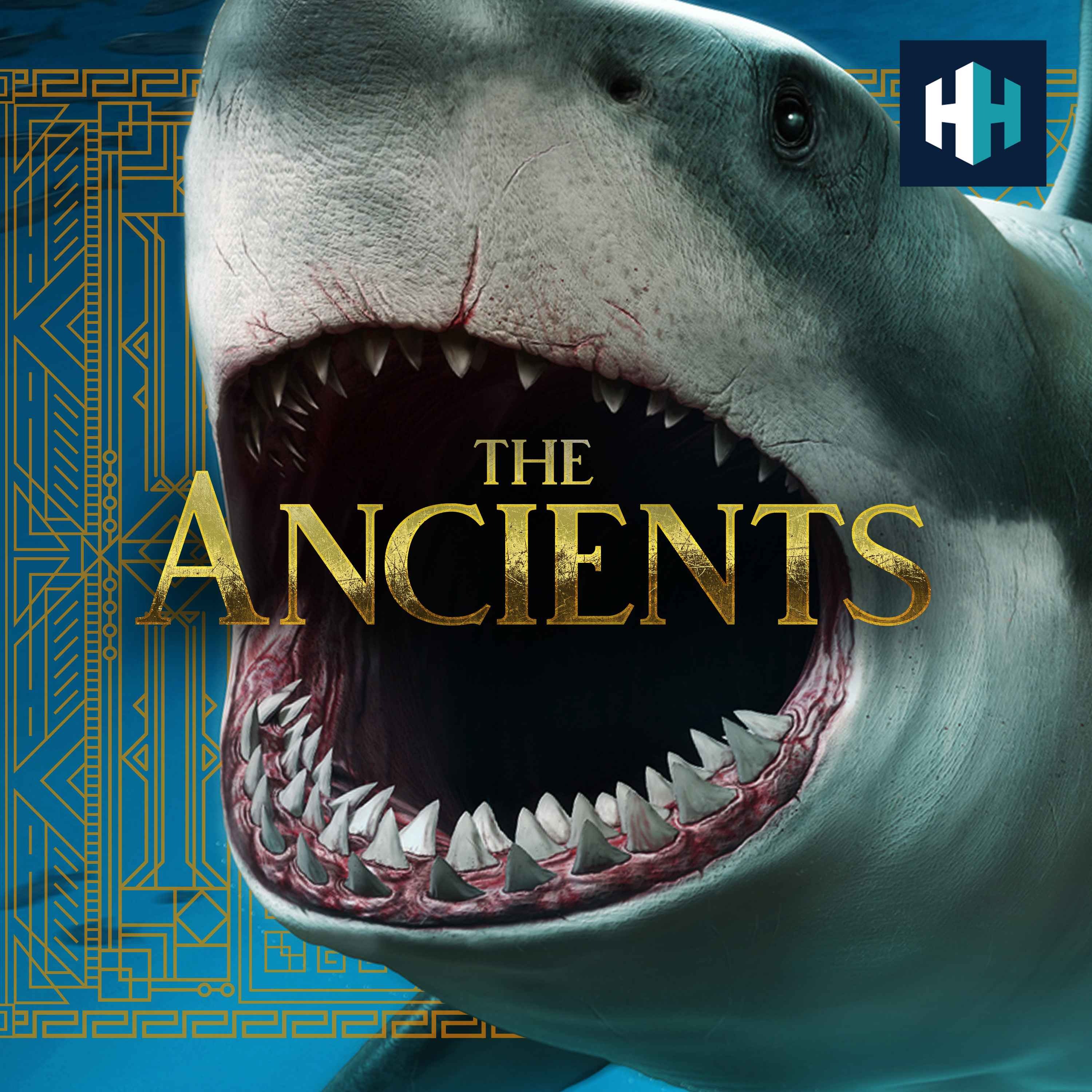
Hey guys, I hope you're doing well. I'm all good here. I'm currently relaxing in my local park this lovely summer's evening in London. And to tell you about today's episode, I'm really excited to share this one with you because we are continuing our special week of episodes on prehistoric sharks. Finishing it off with this episode about the biggest, the meanest, the baddest prehistoric shark of all the real life. Meg the Real Megalodon I loved learning about what the archaeology is revealing about this super predator of prehistoric seas. Our guest once again is the leading prehistoric shark expert, Professor John Long. Now let's get into is one of the most famous predators of all the time. The apex prehistoric shark that has fascinated humans for over a thousand years and continues to do so thanks to movies and museums. Today, Megalodon, which lived between roughly 23 and 3 million years ago. In our previous episode, we explored just how diverse and successful sharks became hundreds of millions of years ago. Now we're going much further forward in time and exploring the story of of the real mech, the largest shark to ever live and the most fearsome the Greatest predator of all time. This is the story of Megalodon with our returning guest, Professor John Long. John, welcome back. It's great to have you back on the Ancients.
- [03:07]
Tristan
Thanks, Tristan. I'm really pleased to be here.
- [03:10]
Podcast Host
Now, we're doing this from two parts of the world, very different parts of the world. Me in the uk, yourself in Australia, it's the morning here, I've got my cup of tea, it's the evening there. And you've got a beer, if I'm not mistaken.
- [03:21]
Tristan
I do indeed.
- [03:22]
Podcast Host
Fantastic. That is the way to do it. Last time we covered the rise of sharks, but today it almost feels like we're covering the shark of all sharks, the Megalodon. Now, was this one of, if not the greatest predator of all time?
- [03:36]
Tristan
I think it is the greatest predator of all time. There's no dinosaur that even comes close to Megalodon in terms of size and sheer bite force and ability to be a carnivore.
- [03:47]
Podcast Host
And what first got you very interested in the story of Megalodon in particular? I know in the last chat, you mentioned how you started, you know, looking at fossils when you were 7 years old. Did Megalodon come soon after that?
- [04:00]
Tristan
Yes. Well, I was always trying to find a Megalodon tooth. That was the prize we all sought after the buried treasure. But I found hundreds of different types of fossil trees, shark's teeth. But I only ever found one Megalodon tooth, but it was a half, it was a broken one. So it was always something that eluded me. But I've got one now. I actually purchased. This is a big Megalodon tooth, the size of my hand, from North America, and it's a beautiful example. I love to bring it along to show groups when I give talks on sharks.
- [04:29]
Podcast Host
And can you give us a sense of the size of just that one Megalodon tooth?
- [04:35]
Tristan
Yeah, well, this one's a good 13cm in length and it's got serrated edges, it's a big triangular tooth and it's quite massively thick and heavy. So the largest Megalodon teeth are up to 18cm in height. So they're coming from the jaws of a shark that would have been at least 5 or 6ft or 2 meters across, that sort of size, you know, undoubtedly the biggest predator that Earth has ever seen. Now, it was a gigantic shark, we know that, but what it looked like. We'll get into that later. I think first we've got to go back to the origins of the Megalodon story.
- [05:11]
Podcast Host
Let's explore that, because we finished our last chat at the height of the dinosaur period in the Jurassic period, having covered most of the chat, being on the first golden age of sharks before the rise of dinosaurs. But can you almost bridge that gap between the Jurassic and the time of the dinosaurs and the rise of Megalodon, because it feels that there's quite a few million years in between?
- [05:33]
Tristan
Yeah, well, in the Jurassic, say we go back 150 million years ago, there's a wonderful fossil site in Germany called Solenhofen. That's where Archaeopteryx, the first bird, comes from. That's, you know, feathered dinosaur. And we also get sharks in those same deposits that are beautifully preserved, whole, complete specimens, really the best preserved sharks you can, you can see from anywhere of that age. And these include the first modern sharks, sharks that are the same genus as living sharks like the bullhead shark or the horn shark, Heterodontus, the Port Jackson shark, we call it in Australia. And we've got other members of the first Wobbegongs or the first angel sharks. But the group that was the most abundant from the Late Jurassic, the early Cretaceous onwards, is the group of sharks we call the Lamniformes. Now, lamina forms today include the white sharks, the mako sharks, the thresher sharks. And this was the group that really took off in the Cretaceous period, the last part of the Mesozoic era. And it's when sharks suddenly got large again from being very small after the great dying. We get about 100 million years ago, in the middle of the Cretaceous, sharks that suddenly reached 7,8 meters in length. And their very big lamina forms related to the modern sand tiger sharks, like the grey nurse shark, they're not related to the white shark because that lineage hasn't evolved yet. But they're part of that family called the lamiforms. And there are over 100 different species of these Lamniformes living in the Cretaceous seas of the world, which was from about 145 million years ago to about 66 million years ago, the end of the age of dinosaurs. Of course, they weren't alone in the seas. There were gigantic marine reptiles they had to fend them against, such as the giant mosasaurs, giant lizards that develop paddles, some of them up to 20 meters in length, that appeared towards the end of that period. And the sharks of the day then actually got smaller and they got got down to about five or six meters. But I have to mention one or two sharks that were really spectacular during the seas of this day. One of them was called Tychodus and it had huge domed crushing tooth plates. Now, for centuries, all we had was teeth of this beast and nobody knew what it was. Many of the scientists said, oh, it has to be a stingray, a giant ray, because rays had evolved in the Jurassic as well. So that's another lineage of sharks that split off from the modern ones to become the stingrays of today. They appear in the Jurassic period. Anyway, back to Tychotes. Bits of its jaw were found in Kansas and parts of North America and they could reconstruct that. This thing was gigantic, probably up to 10 meters in length, but still with only teeth and bits of jaws. We knew nothing what it was like. And just as my book was going to press in, last year being printed, a paper came out where they discovered a deposit in Mexico with whole complete skeletons of Tycotus preserved with all the teeth in the mouth, the fins, the tail, the body, everything. And they discovered it was nothing like a stingray. It was actually a lamina form that would have looked something like a white shark with a really sharp streamlined body. This was a fast swimming creature, like a predator, but not with sharp teeth, but with crushing teeth. So what did it eat? Well, the theory is that probably was hunting these giant turtles that were in the seas at the time, and also very big ammonites or squid like creatures, some of which grew to 2 meters in diameter in the seas of the Cretaceous. So a fast swimming predator that preyed on crushing its prey to death rather than killing it with sharp pointed teeth. What an amazing beast that is still.
- [09:18]
Podcast Host
The time of the Cretaceous. Is it where you've still got T. Rex and the like? Well, at the end of the Cretaceous.
- [09:23]
Tristan
Exactly right. T. Rex on land and giant Triceratops and things. But the seas at the time were dominated by the giant predatory reptiles like the Mosasaurs, which were way bigger than any sharks of the time. And the rise of these lamina form sharks. There were also other members of living shark families, but I won't go into all of them because we'd be here all night. But we'll just concentrate on the lambda forms because they're the ones that are going to give rise to Megalodon. So 66 million years ago, what happens if you're a dinosaur and you looked up, you would have seen a terrifying sight as a big star gets bigger and bigger and bigger and then bang, crashes into the earth, causing a devastating mass extinction event 66.4 million years ago. And this affected not only life on land, but Life in the oceans. So in the seas, these giant marine reptiles go extinct, as do the big ammonites, the big coily squid like creatures. Some of the lineages of sharks go extinct, but most of the main groups pass through that boundary. But they have to recover from being knocked for six, shall we say that smaller numbers of species are left alive. They have to recover. So in this new age called the Cenozoic era, which goes from 66 million years up to the present day, we find that the seas are fairly benign. There are small sharks and one big predator emerges called A Todus obliquis. Now, it doesn't have a common name. Megalodon has a binomial name. It's called A Todis, Megalodon, but we all just call it Megalodon. But this is the same genus, like Homo for man, Homo sapiens, Homo neanderthalensis. So we have an early relative of Megalodon called A Totus obliquis, which got to about maybe 7 to 8 meters in length and probably preyed mostly on fish. We know this because there wasn't really much else it could have eaten. There were no whales in the ocean at that time, Just a few giant penguins were starting to emerge. Penguins about 2 meters high in the southern latitudes that they could have fed on. But there were also large billfish and swordfish around that these otoidas probably preyed on.
- [11:32]
Podcast Host
It's so interesting, isn't it? We're almost kind of following the line until you get to the meg, until you get to Megalodon. But it's also interesting, John, how much people like yourself know about the evolutionary line of Megalodon. It sounds like a lot of work's gone into that.
- [11:47]
Tristan
Yeah, well, I actually took a lot of my evidence for this from a truly remarkable British palaeontologist called David Ward, who lives in Orpington. And David is a vet. Actually, he's never trained as a paleontologist, but he was able to set up a successful surgery, veterinary surgery franchise so he could then spend a lot of his time chasing fossil sharks teeth. And he's written over 100 scientific papers and named 90 species of fossils. So he's quite an expert in it now. And he wanted to go searching for the source of the Megalodon lineage. And for a paleontologist, this is like the old explorers finding the source of the Nile, you know, in Africa, El Dorado or something. Yes, mystery, you know. When did the Atodus obliquis that appeared after the dinosaurs first start getting bigger? And suddenly there was a change in its teeth because it had sharp, cutting edge type of teeth, triangular teeth, but not the serrated edge teeth that Megalodon has. Somewhere in that evolutionary lineage, we're looking for a point in time where they develop serrations on those teeth and then they get bigger and bigger and bigger. So what did David do? Well, back in the early 1990s, he was working with some colleagues in Kazakhstan, and this is after the collapse of Soviet Russia kind of thing. And the only way to get to the deserts of Kazakhstan was to tee up with the local scientists over there that had these old worn down trucks and they didn't have any modern equipment. He said it was one of, one of the most sort of rough and ragged expeditions he'd ever been on. They got lost several times because they didn't even have proper maps. They just had sketch notebooks with landmarks to look for, like a tree or a sort of mouth of a river, turn left kind of thing. So after three or four days in the deserts of Kazakhstan with these fellow colleagues from Russia, he ended up getting to the site where there's Russian scientists years before had found a mixture of teeth, some of them serrated and some of them straight edged. The question was, were these teeth all from the same layer or did they come from different layers, giving a sequence of age? With a lot of careful digging and mapping out the layers inch by inch by inch, he was able to ascertain that the lowest layers had these sharp, pointed teeth without serrations. And then the layers above it, the serrations were just beginning to show along the edges, very fine crenulations. And then the layer above, he had teeth that were slightly bigger, but with sharp, well defined serrations along the edges. And that defines a new species that was the beginning of the lineage leading directly to the Megalodon. Wow.
- [14:30]
Podcast Host
There's also something extraordinary in the fact that those people, they had to go to Kazakhstan, to the great steppe in the deserts of Kazakhstan, to find these shark teeth from millions of years ago. But I'm guessing that also hints at how the, the geography was very different back then.
- [14:46]
Tristan
That's right. This was a desert, but it was below the sea at that time. Shallow seaways. But the point is that you can find Megalodon teeth and shark's teeth all around the world. But it's rare to find an outcrop of layers of rock that give you a nice stratigraphy of several layers that give you a block of time where you can see an evolutionary change. So this block of time we're looking at was an outcrop of about 5 or 6 meters that covered 4 million years of time from about 52 million years ago to 48 million years ago. And these are well dated by the micro fossils in those layers that are dated elsewhere with radiometric dates on volcanic rocks and so on. I explain it quite clearly in the book, if you want the full explanation. But going back to what David found by digging layer by layer by layer, he saw the transition going from the Otodus obliquis to this new species called Otodus axuaticus, which had the definite serrations, but it still had these little side cusps on the teeth that the Otodus obliquis had. Next we get those teeth getting bigger and going into another species that's pre Megalodon, and then much, much bigger teeth where they lose those little side cusps and then you've got true Megalodon. So what drove this sudden increase in size? Yes, well, the answer in evolution is always resources. And what was the new resource that came into the ocean at that time? Well, precisely at that time, 48 million years ago, guess what? First whales appeared in the ocean. They were only small, but within a few million years, they got gigantic really quickly, up to 20 meters in length, things like Basilosaurus. And we believe this was an arms race. Predator, prey. The prey gets bigger, the predator gets bigger. And when whales like that provide a rich source of energy, blubber, high fat content, food, sharks can then get a lot more energy from their prey than just by eating fish or other turtles and things like that. So within a few million, 10 millions of years, not, not. We're talking from 48 million years ago to about 20 million years ago. So we're talking over 28 million years. We see this gradual increase in the size of these teeth and the gradual expansion of the teeth get broader and they lose those little side cusps as they develop into one big gigantic triangular tooth. And that's the beginning of Megalod. The McDonald's snack wrap is back. You brought it back. Ranch snack wrap, Spicy snack wrap. You broke the Internet for a snack? Snack wrap is back.
- [17:41]
Ryan Seacrest
Hey, it's Ryan Seacrest for Albertsons and Safeway. Now through August 12th. Get big savings on your favorite products for the little ones in the family and earn four times points to use for discounts on groceries or on gas. Shop in store or online for items like Earth's best yogurt smoothie, Gerber pouches, Happy baby pouches, Huggies, Natural baby wipes Pediasure bottles, Earth's Best Crunchy sticks and Gerber yogurt. Melts snacks and earn 4 times points. Offer ends August 12th. Restrictions apply. Offers may vary. Visit albertsons or safeway.com for more details.
- [18:11]
McDonald's Employee
This summer, Instacart is bringing back your favorites from 1999 with prices from 1999. That means 90s prices on juice pouc that ought to be respected, 90s prices on box Mac and cheese and 90s prices on ham, cheese and cracker lunches. Enjoy all those throwbacks and more at throwback prices only through Instacart. $4.72 maximum discount per $10 of eligible items. Limit one offer per order. Expires September 5 while supplies last. Discount based on CPI comparison.
- [18:45]
USAA Representative
How many discounts does USAA auto insurance offer?
- [18:48]
Tristan
Too many to say here.
- [18:49]
USAA Representative
Multi vehicle discount, Safe driver discount.
- [18:52]
Tristan
New vehicle discount. Storage discount.
- [18:54]
USAA Representative
How many discounts will you stack up? Tap the banner or visit usaa.com autodiscounts restrictions apply.
- [19:14]
Podcast Host
So the true Megalodons, do they only emerge some roughly then, 20 million years ago, almost the climax of this arms race?
- [19:21]
Tristan
That's exactly right. You know, we can, we can see jumps in the teeth. They go from one morphotype to another. And that defines the different species of the Otodus Totus, Angustodans, Otodus Auriculatus, and then Otodus, sort of Megalodon. These are the different species. Auriculatus came first, and then Angustodans and then Megalodon. So let's talk about Megalodon. It appeared about 23 million years ago and it died out about 3 million years ago. We'll talk about its extinction later. But most people think we only know about Megalodon from its teeth, but they're wrong. We actually have a number of specimens that show associated remains of Megalodons, like associated teeth that occur with scales and bits of cartilage. We also have one skeleton of Megalodon in one of the natural history museums in Belgium, and It's got like 140 vertebral discs that were articulated, but it's missing the head, so we don't have the teeth. We know it's Megalodon because it's a lamina form shark vertebrae, which has calcified vertebrae just like modern white sharks. And it's gigantic. And there's nothing else in the seas at that time that big. So it simply has to be Megalodon. This is interesting because up until the discovery, well, this thing was found a long time ago, but very few people had studied it. But up until a recent new study was made of those vertebrae, the shape of Megalodon was always by default taken to be like a big, gnarly white shark on steroids. And you've probably seen the Meg, you know, Jason Strathan kills everything and saves the world. Well, fundamentally, every Megalodon B grade movie ever made restores it as a white shark, simply because in the olden days, paleontologists believe Megalodon was the ancestor to the white shark. But now we know that's not the case at all. It's a completely separate set of lineages.
- [21:22]
Podcast Host
So what do we think then that Megalodon actually looks like? What do we think was the body structure of Megalodon, from its teeth and its head to its finger to its tail? I mean, everything.
- [21:33]
Tristan
We think it was a lot more slender than the restorations that make it like a big white shark. We know this because a recent paper was published only late last year that studied that vertebral column from Belgium, and they realized that the tail vertebrae have a slightly different shape to the rest of the body vertebrae. So it denotes where the tail begins. And the tail was much larger and longer than we thought. So the body was more elongated. So this means that Megalodon was probably way bigger than we thought it was previously. Probably up to 24 or 25 meters in length, but more slender of build, like not as massively chunky, maybe like a nurse shark or a slender type of sand shark type of body shape. And there's further evidence that backs up that it wasn't as fast as we might have thought. The scales, scales of sharks are really, really important. They might be tiny, but, but they have little riblets on the surface and that breaks the tension of the water. And the fastest swimming sharks today, like Makos, have a very particular kind of scale with three ribs, and they can actually bristle those scales up from the skin when they want a super burst of power speed to go faster. So studies of the scales of Megalodon combined with the body indicated probably had a slower swimming speed than the modern white shark, something like 2km an hour, but it was still capable of fast prey attacks, you know, because it had a big, long, powerful tail and it would have been able to still catch whales. Clearly it did. We know this for a fact. We're not guessing here because we find fossil whale vertebrae with Megalodon teeth stuck in them.
- [23:15]
Ryan Seacrest
Wow.
- [23:15]
Tristan
Or remains of other mammals with Megalodon scar marks cut into them. Quite distinctive.
- [23:20]
Podcast Host
Well, You've kind of hinted it there with that surviving remarkable evidence of Megalodon teeth in Wales. Do we know then just how powerful and devastating, you know, rows of Megalodon teeth would have been, even to the biggest whales at the time?
- [23:34]
Tristan
Exactly. And studies have been done on the bite force of Megalodon teeth, you know, based on finite element analysis, reconstructing the jaw musculature, which is not hard to do because all the lamina form sharks have the same kind of architecture around the jaws of those muscles. So it's pretty easy to reconstructed jaw and guess where the muscles attached and so on. So it had a very powerful bite force. We know from certain fossil remains that Megalodon could have attacked whales from head on, not necessarily chasing them and biting them from the back, you know, so it was an ambushed predator. It would have had different ways of catching its prey. We know white sharks today often ambush their prey by hiding in deep water and coming straight up, you know, to catch seals. Maybe Megalodon did that as well. Whatever it did, we don't know exactly how it caught its prey, but it was successful because MEG teeth are found all around the world in deposits between 3 and 23 million years ago. But one thing we do know about MEG is there's been some remarkable people studying Megalodon and one of them is my hero. I call her the Queen of the Megalodons. Professor Catalina Pimiento is at the University of Zurich and also at Plymouth. She's got joint positions and she's the only person in the world I know that's done two postgraduate degrees just on Megalodon. She's done a master's and a PhD and she grew up in Bogota in Colombia during a time of bombings and kidnappings and lots of crime. And she kept her head low and studied at university and eventually went to America to do a PhD and studied megalodon. And from her remarkable work we know things like that the average size of Megalodon was more like 12 to 13 meters. For the average population, that the big ones that we talk about that were gigantic are the extreme size ranges. It's kind of like you pick any shark species today, the average size is pretty much smaller than you would imagine. The average size of a white shark is between 3.5 and 4 meters, females to male. But we always think of the big 6 meter ones that are humongously big. So Catalina also discovered things like the birth size based on the teeth, that they probably gave birth to 2 1/2 meter long young pups and Things like that. And she discovered that. And recently, not her work, but a team that looked at isotopic ratios in the teeth, discovered they were warm blooded, that they had a body temperature of 28 degrees Celsius. This is a new technique called clumped paleoisotope thermometry, where we look at the temperature that the cartilage bonds form in living animals like sharks or reptiles or whatever, and then we apply it to the fossil record to look at the same ratios of isotopes to calculate that temperature. It's how we first calculated that dinosaurs were warm blooded by real evidence, not by speculation.
- [26:27]
Podcast Host
And is there also the fact that the fin of the Megalodon was bigger or just as big as an adult male, as like a six foot male today?
- [26:37]
Tristan
We can only speculate on the size of the fin. And you have to, I mean, when we've got nothing but a vertebral column and scales and teeth, then the rest of it has to be fleshed out by analogy with living sharks. So it depends on which shark model we're using. We're using a white shark, then the fin might be quite high, but if we're using a nurse shark, it might be a little bit lower. So I wouldn't like to speculate on the exact size of the fin. It's nothing we'd have any real evidence about at this time.
- [27:05]
Podcast Host
You mentioned how Megalodon remains have been found across the world. Can you give us a sense of the world that they lived in some 23 million years ago? So of course you've got Megalodon in the seas, you've got these great whales as well. But what did the Earth look like both above the waves and beneath the waves at that time?
- [27:23]
Tristan
Okay, well that's a good question because 20 million years ago, the current position of the continents wasn't very different from where they are today. You know, there's not much change really. Australia is a little bit further south and so on. The oceans were much the same as they are today, but we had a lot higher abundance of whales, baleen whales in particular, a lot more species than we have today and bigger biomass in the ocean. So a lot more megafaunal creatures, bigger creatures like larger turtles, gigantic seabirds, up to 6 meter wingspans with beaks covered in horny teeth things. Pelagornis, which was a large predatory seabird. We had lots of manatees and giant dugong like creatures, seals as well, walruses with strange tusks coming out everywhere. So the seas were full of a lot of food for Megalodon, but also a lot of other predatory sharks that were competing for the same resources. White sharks hadn't appeared at that time. They appeared much later, 20 towards the end of Megalodon's reign. But take some of the other lamina form sharks that are alive today. Like we have for example, mako sharks. We had gigantic mako sharks that, like this tooth I'm holding that I found as a kid from Beaumoris. Now that's a tooth that's about 6 centimeters in height. And yet these mako sharks were probably getting up to 8 to 9 meters in length. And now we call them Carcharodon hastalis. Different species, but the same genus as the living white shark. And they would give rise to the modern white sharks later on, just by the same mechanism, developing serrations on those big teeth. Think of thresher sharks, you know, thresher sharks with a gigantic long tail. Okay, yeah, well, we had gigantic predatory thresher sharks that had big, robust teeth with serrations on them. No living thresher shark has serrated teeth. But these are occupying the same niche as say white sharks would have today. Again, targeting marine mammals, we had gigantic tiger sharks getting up to 8 meters in length. I mean, you name it, whatever was around today, we had a bigger version of it Back then because there was so much more biomass in the oceans, the food chains were on steroids. So, you know, we expect a lot more predators. So it was a very interesting world. And for Megalodon to emerge as the top apex predator of this predator rich ocean was really quite, you know, quite an amazing moment in evolution.
- [29:58]
Ryan Seacrest
Hey, it's Ryan Seacrest for Albertsons and safeway now through August 12th. Get great savings on your favorite self care Items and earn 4 times points when you shop in store or online. Shop for items like Neutrogena cleansing and makeup removing towelettes, Dove Men 2 in 1 shampoo and conditioner, Dove Shampoo, Tresemme Shampoo method body wash and Suave body wash and earn 4 times points. Use these points for discounts on groceries or gas. Offer ends August 12th. Restrictions apply. Offers may vary. Visit albertsons or safeway.com for more details.
- [30:29]
McDonald's Employee
This summer, Instacart is bringing back your favorites from 1999 with prices from 1999. That means 90s prices on juice pouches that ought to be respected, 90s prices on box Mac and cheese and 90s prices on ham, cheese and cracker lunches. Enjoy all those throwbacks and more at throwback prices only through Instacart. $4.72. Maximum discount per $10 of eligible items. Limit one offer per order. Expires September 5th while supplies last discount based on CPI comparison.
- [31:16]
Podcast Host
With Megalodon being the top apex predator and hunting things like whales. But of course, you also have those other massive marine mammals as well, like those other sharks. Do we get a sense that Megalodon would have also eaten those other sharks too, and other sea creatures alongside whales?
- [31:34]
Tristan
Yeah, I mean, sharks are not fussy eaters. They'll eat whatever they can catch. Generally, if other sharks are around, they. They'll have a way of avoiding big predators and, you know, just get eaten if they're ill or opportunistically caught, you know. But Megalodon would have. Targeting the isotopic work that's been published recently by Jack Cooper and other people have shown that they had a very high fatty diet, you know, based on the isotopes. So they would have primarily been targeting marine mammals and even large turtles and other large seabirds and things like that, but mostly marine mammals because that's the richest source of energy you can get.
- [32:12]
Podcast Host
Now, naturally, as you mentioned earlier, like this is the. The super hunter, like the super predator of all times. And the Megalodon, how unique, aside from its kind of size and power. John, how unique would you say that Megalodon is in its structure compared to both sharks, more ancient than it and modern sharks today?
- [32:34]
Tristan
In terms of its size, we're talking up to 24 meters in length and maybe weighing up to 70 tons in weight. Bigger than any shark, bigger than any fish or any other shark or any other marine creature that's ever existed in the oceans. That's it. Bigger than the Mosasaurs, bigger than any of the marine reptiles. Not as big as the blue whale or the large baleen whales. Even some of the sperm whales today would have been probably approaching the same body size and mass as Megalodon. But they're a different kind of predator. They're not a super predator. What I call as a super predator is something that has teeth adapted for killing prey equally its own size or larger. And that's where big serrated teeth means you can attack a large whale and bring it down and eat it. Even a white shark can bring down a humpback whale. And you know, I give an example of that in my book, how they do it in a very clever way. So that's a super predator, something that can kill something bigger than itself or attack something its own body mass. Megalodon was certainly in that category, but not Sperm whales, because sperm whales tend to hunt squid and things that are still large but nowhere near their own body size or body mass.
- [33:45]
Podcast Host
Apologies. Apart from size, just like in, in the body adaptations and the structure, because as we've mentioned already, yes, the size of Megalodon was like unlike any other shark. But was it unique? Just kind of going back to this, before we move on to the ultimate extinction of the Megalodon, do we get a sense that there were certain parts of its body adaptations and its structure that really set it apart from both more ancient and more modern sharks today?
- [34:08]
Tristan
Apart from its size and the fact that it was a warm blooded, like some other living Lamina forms are warm blooded. But a body temperature of 28 Celsius means it was able to forage much further in range than other sharks of its day, apart from maybe some of the other warm blooded Lamina forms that were closely related to. I think it's just power of its bite, you know. Right. Most powerful bite force of any creature. So that's the business end of a Megalodon. Very powerful large teeth, the very powerful jaws to, to inflict that bite, that killer bite.
- [34:41]
Podcast Host
John, it's absolutely extraordinary. For how many millions of years do Megalodons reign supreme in the oceans?
- [34:47]
Tristan
About 20 million years. And then towards the end of that period, we come across a minor mass extinction event. It's called end Pliocene megafaunal marine extinction event. And about 2.6 million years ago marks the end of the Pliocene period. You know, it's not that long ago really compared to the whole history of sharks, but the ocean started cooling at that point and it's the beginning of the ice ages where we get, you know, a succession of seven ice ages going into the Pleistocene period and the ocean's cool, suddenly the food chain is altered. There's not enough resources around. Many of the whales and marine megafauna go extinct. And Megalodon just couldn't cope. And at that stage the white shark had appeared about 5 to 6 million years ago. The modern white shark, that is, we had some ancestral ones before that and they kind of took over the niche of Megalodon eating, you know, preying on whales and seals and marine mammals and so on.
- [35:44]
Podcast Host
And do we think it is very much climate that brings to an end the reign of the Megalodon in the seas?
- [35:49]
Tristan
We do, because if Megalodon just went extinct by itself, it would be a mystery. But the fact that we have a marine megafaunal extinction event with many other species of Both giant turtle whales and even other large sharks, like the giant mako shark that I just showed you before that, you know, we have other sharks going extinct as well. So it's, it's a whole decline of, of predators going extinct at that time and other large creatures that couldn't get enough resources to survive.
- [36:20]
Podcast Host
I mean, John, it's astonishing, given our last chat where we covered sharks some 400 million years, 300 million years ago in the Devonian and Carboniferous, the fact that we're now down at some 3.5 million years ago with the extinction of the Megalodon, you know, that's the same time then you've got early humans, like, only on the human line, like Australopithecus in Africa. And I don't think they, Australopithecus would ever have seen a Megalodon off the shores of Africa. But it's still fascinating to say maybe.
- [36:48]
Tristan
An Artopithecus spider, you never know. Come across a dead one on a beach.
- [36:52]
Podcast Host
Well, that's the thing. Like, do you think there were cases where there would have been dead Megalodons that end up being washed up on the beach, like sometimes you get with beached whales today?
- [37:01]
Tristan
Yeah. There's a much closer story, though, about Megalodons and humans. I'd love to tell you while we've got time. Megalodons probably saved more human lives than they've ever taken, because back in medieval days in Europe, it was very common for people to poison their enemies. And so Europeans of the day, both the Germans, Italians and French, developed these ornate little trees made of silver. And they used to hang fossil shark's teeth from chains, so that before you toasted your friends or your enemies, you would all dip your wine goblet into a shark's tooth and then watch it for a minute and then see if the color of the silver band around that shark's tooth changed its color. Because apparently, and this has been studied by chemists who have written papers on it, arsenic, which is the common poison of the day, would affect the color of the silver band around the tooth, and it would stain it, make it go dark. So you knew then someone was trying to poison you. So these beautiful jewelry trees full of Megalodon teeth are called the Nattersungen, or Adder's teeth in German. They also have a French name, the Languier, and you can find them in museums around the world in Europe, you know. So it's quite possible that this saved a lot of human lives due to Megalodon teeth with little silver clasps around them. It's quite an interesting side story. There's also Megalodons have been used in archaeology. The Mayans offered Megalodon teeth to their gods that have been found at the temple in Palenque, Mexico, dated between 200 and 600 AD. And there's other parts of the world where Megalodon teeth have been found in different burial chambers and so on. Even Pliny the Elder referred to Megalodon teeth as the Glossopetrae, or tongue stones of saints. So back in AD 73 they believed they fell from the sky at the eclipse of the moon and were helpful for guess what, appeasing flatulence in humans. So Megalodons have been serving the needs of humans for hundreds of years.
- [39:04]
Podcast Host
Pliny the Elder, that naturalist, a very stern naturalist even he knew of Megalodon. So Megalodon teeth have been discovered by humans even back into ancient, ancient times? John?
- [39:16]
Tristan
Yes, yes. Even further back in archaeology, back in the North American Indians around Chesapeake Bay were, were using some of these fossil shark's teeth for implements and hand tools and things like that. I've written a big section in my book about Megalodons in archaeology and History, so you can get further details about it.
- [39:33]
Podcast Host
If people have known about these teeth for so long, do you see big misconceptions about the Megalodon emerging over time and how they envisaged these creatures that had these massive teeth? Do you see kind of misconceptions emerging in the popular world all the way down to the present day?
- [39:50]
Tristan
Yeah, yeah, oh absolutely, yeah. Based on the popular misconceptions of Megalodon as a giant white shark has just gone out the window of this recent slew of papers that have been published in the last year or so about the body shape and the scales and the morphology of the body and how it probably swam much more slowly than the living white sharks. And also the fact that it's no longer deemed by paleontologists to be on the lineage leading to the living white shark, that it's a completely separate lineage that goes back to the age of dinosaurs. Whereas the mako sharks evolved way back in time as well, just after the age of dinosaurs, and continued their lineage right up leading to the modern white shark, which is a highly evolved mako shark with serrated teeth, basically. So when we look at it from that perspective of the evolution of the lineages as being separate, not related, we have no cause or reason to restore Megalodon like a white shark anymore. Like it is in every single movie ever made about it.
- [40:49]
Podcast Host
And are there myths still that there might be a Megalodon or two out there in the depths of the oceans?
- [40:54]
Tristan
There are myths, but there's no evidence. I mean, I explore this deeply in the book. I mean, there's been lots of submersibles going down to the deep ocean and deep cameras and things, and look for a population of Megalodons to be alive today. We wouldn't go to the deep ocean, we'd go to the surface, because that's where the prey is. They'd be eating whales, large whales, and we would see them. And occasionally one would die and be washed up on a beach. But no, we get even the rarest of whales that are known from one or two specimens occasionally get washed up on beaches, and that's how we know about them. So I think there's absolutely zero evidence that Megalodons out there, the youngest dated shark's teeth, come from about 3 million years ago. There's no evidence of a Megalodon tooth younger than 3 million years anywhere on the planet. So I don't think we have to fear Megalodon, we just have to fear the living sharks.
- [41:44]
Podcast Host
But the popularity of Megalodon will no doubt endure for many, many, many years to come. Oh, yes, John, this has been fascinating. Before we completely wrap up, are there any particular moments from your research, from your story covering Megalodon, very memorable moments that you'd like to mention before we finish, or parts of Megalodon's story that we haven't covered as much as you feel we probably shouldn't?
- [42:07]
Tristan
Okay, so there's one thing about Megalodon that probably did have one enemy, one sort of other predator it had to fear. Of course, everything's vulnerable when you're small. So baby Megalodons would have been prey for other sharks, and certainly a predatory sperm whale called Leviathan, which had. Modern sperm whales have only got teeth in the lower jaw because they eat squid. But Leviathan had teeth in the upper jaw as well as the lower jaw. So it was a more carnivorous, more predatory sperm whale than any of the sperm whales alive today, and at about the same size, or not quite as large as the biggest Megalodon. We're speculating it was close to the same body size as Megalodon, but not quite, maybe reaching, you know, up to about 18 meters, something like that. But it's quite possible that Megalodon was preyed on by Leviathan, especially smaller ones, and vice versa. Megalodon preyed on smaller leviathans. So, you know, Megalodon didn't just have it easy. It wasn't, you know, good to be the king at the top of the food chain with nothing to worry about. They still had something that would have preyed on them.
- [43:15]
Podcast Host
John, this has been such a wonderful conversation, just like our last one as well. Last but certainly not least, you have written a book all about Megalodon and the whole history of sharks.
- [43:25]
Tristan
It is called the Secret History of Sharks, the Rise of the Ocean's Most Fearsome Predators. And there's also the audiobook out which I narrated actually.
- [43:34]
Podcast Host
Absolutely fantastic. John. Well, it just goes to me to say thank you so much for taking the time to come on the podcast today.
- [43:40]
Tristan
My pleasure, Trisha.
- [43:45]
Podcast Host
Well, there you go. There was Professor John Long bringing to an end this small mini series about prehistoric sharks with this fascinating episode all about the real life Megalodon. I've loved doing these episodes on prehistoric sharks and I hope you guys have too. Please follow the show on Spotify or wherever you get your podcasts. That really helps us and you'll be doing us a massive favour if you'd also be kind enough to leave us a rating as well when we'd really appreciate that. Lastly, don't forget, you can also listen to us and all of History Hit's podcasts ad free and watch hundreds of TV documentaries when you subscribe at historyhit.com subscribe.
- [44:31]
Ryan Seacrest
USAA knows dynamic duos can save the day like superheroes and Sidekicks or auto and home insurance. With usaa, you can bundle your auto and home and save up to 10%. Tap the banner to learn more and get a'@usaa.com bundle restrictions apply.
- [44:46]
USAA Representative
Did you know 39% of teen drivers admit to texting while driving? Even scarier, those who text are more likely to speed and run red lights. Shockingly, 94% know it's dangerous, but do it anyway. As a parent, you can't always be in the car, but you can stay connected to their safety with Greenlight Infinity's driving reports. Monitor their driving habits, see if they're using their phone, speeding and more. These reports provide real data for meaningful conversations about safety. Plus, with weekly updates, you can track their progress over time. Help keep your teen safe. Sign up for Greenlight infinity@Greenlight.com podcast.