Loading summary
Transcript115 lines
- [00:00]
Tristan
In the summer, all of Oregon is our playground thanks to our incredible park system. That's why it's so cool that Oregon Lottery gameplay like video lottery or Cash Pop helps support tons of parks projects statewide like accessible trails at Silver Falls State park or upgrades to your favorite dog park in Newburgh. It's just one way a little lottery play for many Oregonians can add up to a lot of good the Oregon Lottery Together we do good things. Lottery games are based on chance and should be played for entertainment only. Must be 18 or older to play.
- [00:31]
John Long
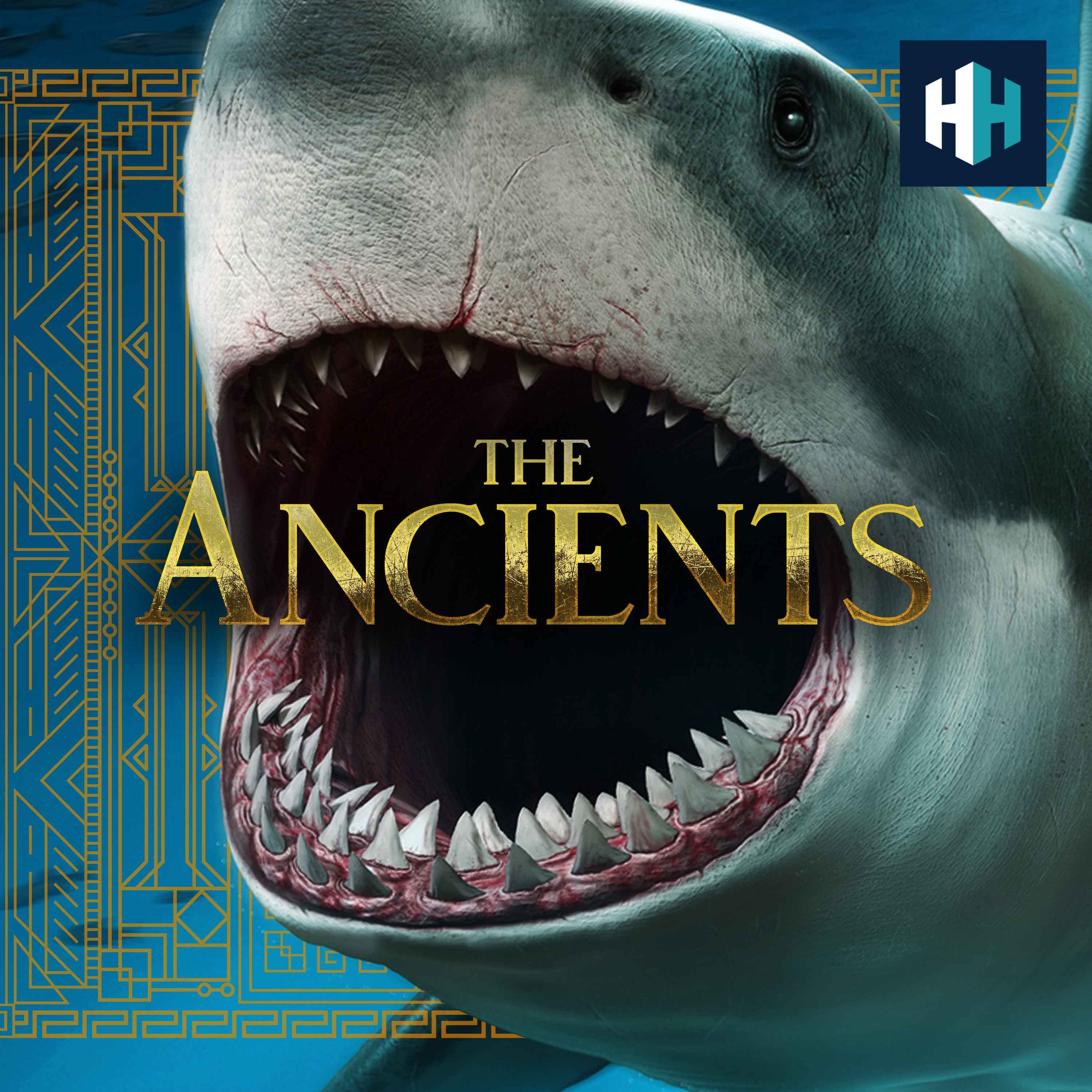
Have you ever wondered how your body naturally repairs and rejuvenates itself? It all comes down to your stem cells. Your body's built in repair system that renews tissue, restores balance and helps you feel your best. But by age 30 you have up to 90% fewer stem cells in circulation. That's where Stem Regen comes in. Founded by stem cell scientist and health pioneer Christian Dropo, Stem Regen products are designed to support your body's natural repair system by by using science backed plant based extracts, just two capsules of STEM regen releases an average of 10 million of your own stem cells into your body. No injections, just two capsules empower your body to rejuvenate from within. Whether you're focused on recovery, longevity or just overall wellness, Stem Regen can help release more of your health, more life and more of the best version of you. Try it now at Stemregen co and use code POD20 for 20% off your first order. That's STEMREGEN CODEPOD20. Hey guys, T.R. and I have an exciting announcement. The Ancients will be returning to the London Podcast Festival. Now last year tickets they sold out at record speed. So this time we've been upgraded, we've got a bigger room and you, you can be there too on Friday 5th September at 7pm at King's Place. Now I've invited friend of the podcast, the fabulous Dr. Eve MacDonald to join me on stage with where we will be exploring the gripping story of ancient Carthage. Carthage, the Phoenician city that became a superpower. An empire that rivaled Rome for control in the Western Mediterranean and ultimately had a terrible traumatic demise. Of course the Ancients is nothing without you, so we want you to be there in the audience taking part and asking us your burning questions. Tickets for the festival always sell fast, so book yourself a seat now at www.kingsplace.co.uk whatson or click the link in the show notes of this episode. The team and I cannot wait to See you there. Hey, guys, I hope you're doing well. Welcome to a very special episode of the Ancients. Because we are going back hundreds of millions of years to explore the story of the first sharks. Yep, you heard me right. I am really excited for this episode. I loved recording it. With our guest today, a leading expert on prehistoric sharks, Professor John Long from Flinders University in Adelaide, Australia. And I just love the fact that we were able to explore a creature that we know today, that occupies the oceans today, whose ancestors also lurked in the seas and the rivers before the age of the dinosaurs. It's an extraordinary story and I really do hope you guys enjoy.
- [03:20]
Christian Dropo
Let's go.
- [03:33]
John Long
Sharks. They're older than the rings of Saturn. They're older than trees. 300 million years ago, sharks enjoyed a golden age. Dozens and dozens of different species spread all across the globe. These prehistoric predators occupied oceans, seas and rivers, seawater and freshwater habitats. And some sharks were more fearsome than others. One particular species even had a vertical buzzsaw like wheel of teeth. Don't believe me? Just search the word helicoprion. It's insane. Today we're delving into this extraordinary world of the earliest sharks with our guest, Professor John Long. John, it is a pleasure to have you on the podcast today.
- [04:25]
Christian Dropo
Thank you, Tristan. It's great to be here.
- [04:28]
John Long
And we're literally doing this across the world. So you're in Australia at the moment, if I'm correct. So it's bright and early in the morning here in Britain. You've taken some time out of your evenings to come on the Ancients today.
- [04:38]
Christian Dropo
Yeah, it's dark now, it's winter and it's very cold. And I'm happy to be in a nice warm room to talk interesting things about fossil sharks with you.
- [04:45]
John Long
Exactly. Fossil sharks. And this is a story that is. Correct me if I'm wrong, but it feels it's older than the dinosaurs, way older than dinosaurs.
- [04:52]
Christian Dropo
We're talking older than trees, older than insects, and get this, even older than the rings of Saturn.
- [04:59]
John Long
No, really, the rings of Saturn.
- [05:01]
Christian Dropo
Yes. The rings of Saturn are about 400 million years old. And sharks go back 465 million years. So that's a way long time back.
- [05:11]
John Long
And for experts like yourself, are fossils the main tool of research for learning about these earlier specimens of sharks, for following the whole evolutionary cycle, the evolutionary journey of sharks.
- [05:24]
Christian Dropo
It is indeed, Tristan. I'm a palaeontologist, so I study fossils to look at the history of life on Earth. As you get closer to the modern day, then genetics comes into it more and more because you've got living species that can bracket the extinct species. But when you go way back into deep time, hundreds of millions of years ago, it really is just fossils is all you've got. And the context of the fossil, like the geology of the rocks that the fossils are found in, the geochemistry of those rocks, you can do a lot of analyses that give you the environment that these creatures lived in.
- [05:57]
John Long
And John, you are one of the leading experts in the fields of early sharks and fossil fish in general. And your interest in this, it stems from quite a young age, you know, when you started collecting fossils. This has taken up almost all of your life.
- [06:11]
Christian Dropo
Yeah, I started collecting fossils when I was seven at school, because I met a schoolmate whose father collected fossils and used to take us out to local quarries and places where we could hit rocks and find little creatures like trilobites and fossil shells. And then a year or two later, I realized that right close to my home where I was living, was a beach where we could find ancient fossil shark's teeth that were eroding out of the cliffs. Or, you know, you could just pick them up on the beach. Your listeners won't see this, but here's a fossil shark tooth, a really large one that's about 6 centimeters in size. And I found that when I was about 8 years of age and kept it ever since.
- [06:48]
John Long
And how old do we think that shark tooth is, if I may ask?
- [06:51]
Christian Dropo
Well, that's from a site in Victoria called BEAUMORIS. It's about 6 million years. So it's kind of recent on the scale of, you know, sharks going back 465 million years, but it's still precious to me.
- [07:03]
John Long
Let's go right back to the beginning then, 450 million years ago, roughly 450 million years ago. What do we know about the origins of sharks, the earliest sharks?
- [07:13]
Christian Dropo
Well, sweet fa, actually, Tristan, all we had was a handful of scales, basically tiny little scales the size of a pinhead. Now you might think, what can you do with scales? Well, think of a cake. You know, a lovely, delicious cake. If we only had crumbs, we could tell if from those crumbs, if it was a sponge cake, that's fairly boring, or a black forest cake, which is kind of interesting. And so those scales can be simple in terms of their structure, their histology, or they can be quite complicated. And so the first tens of millions of years of shark evolution is really told through these tiny little scales that become more and more complex and they Go from being the sponge cake of scales to the Black forest cakes within 10 million years. And so sharks were starting to do a lot with their, with their bones, the structure of their scales, their dentine tissues that made those scales. But we know nothing about the animal, what they look like, just that they were scales similar to living sharks. So we know they must be on the line leading to sharks.
- [08:14]
John Long
And how long is it before you start seeing the fossil record a bit more evidence and get a bit more sense of sharks actually as sharks, you have a bit more than just those scales and knowing fa about it.
- [08:25]
Christian Dropo
Well, during the, that was the 465 million years ago was the Ordovician period. But jump to the Silurian which comes after it. There's not much there still mostly, you know, scrappy material. But when we go to the Devonian period, which started 419 million years ago and ended 60 million years later, we start getting abundant shark fossils from marine deposits and also freshwater like river deposits and an abundance of teeth. Because it was that point in time sharks developed their first great superpower, which is the ability to make lots and lots and lots of teeth quickly. So sharks today, for example, are shedding their teeth all the time as new teeth pop up and keep that mouth full of really sharp, effective teeth. So a shark can develop something like 20,000 teeth in its lifetime and keep shedding the old teeth into the bottom of the sea floor. So that's why shark's teeth make excellent fossils.
- [09:24]
John Long
And where were these earliest shark teeth fossils found for some 419 million years ago?
- [09:29]
Christian Dropo
Well, Spain has got the oldest teeth that are actually belong to the the same type of replacement tooth as modern sharks have in the Aragon mountains of Spain, which I was there in 2022 actually on a field trip and got to visit the, the beautiful mountains there with the limestones. You don't actually go and find teeth by spotting them with your eyes. You take big samples of rock, dissolve them up in weak acid and then pick through the residue. And then you get the abundance of these micro fossils which include sharks, teeth and scales and other bits of fishes and things.
- [10:03]
John Long
John, before we delve more into the evidence that we have and you know, kind of their structure and size of these early sharks you mentioned there also this the Devonian period and how preceded by Ordovician and Silurian. Now I don't know too much, but I know that this is long before, as you mentioned at the beginning, the times of the Triassic or the Jurassic or the Cretaceous, with dinosaurs later. Yes, but can you give us a sense of almost what was happening in the world, you know, between 450 and 420 million years ago, that you go from that division period to the Devonian period, where you see this kind of great leap in shark evolution?
- [10:42]
Christian Dropo
Well, basically, from the spines and scales, we can see that sharks are developing a more complex kind of cartilage structure, and they're developing different hard tissues like dentins, which forms the core of teeth. And then when we get to the Devonian, we start finding whole complete shark like fossils as well, with the whole body, the skulls, the head preserved and the whole dentition in place. And they look like modern sharks, but they're not yet anatomically the same as modern sharks. In the same way as, you know, you've got early reptiles that look like dinosaurs, but they're not the same as living reptiles today. There had to be a lot of more evolution of sharks before we get to the modern groups, which, to be honest, don't really appear until the age of dinosaurs. And we'll talk about that later in this episode. But during the Devonian, sharks actually went from being tiny little things about half a meter long to creatures up to maybe 6 meters in length by the end of the Devonian, you know, the largest predatory creatures of that period. And to put the Devonian into perspective, I think it's the most important period in the Earth's history. You have the pre Devonian, where not much happened, no life on land. During the Devonian, plants took over the land and grew to forests, you know, 30 meters high. Fish evolved arms and legs and started walking on land as the first land animals, vertebrates, invertebrates invaded land and we have the beginning of the insect lineage and so on. So the modern world became shaped by that Devonian changes in the environment and what life was doing. And after that, life was more or less just changing towards the modern faunas we have today. But the Devonian was the revolution that really started it all.
- [12:27]
John Long
And why is it a revolution? Is it a change in the climate or for the sharks, obviously in the water, do we know if the temperature changes that allows them to kind of grow and evolve? What do we know?
- [12:37]
Christian Dropo
Yeah, there were lots of changes going on in the atmosphere in the Devonian, from high levels at the beginning to low levels and then high levels again at the end. So I'm talking fluctuations from like 13% oxygen up to 28% oxygen. Today we have 21% oxygen. So this changes in boosting the oxygen of the whole planet was how plants really Got a boost of energy and life and started growing to, you know, the early Devonian. At the beginning of Devonian, the plant life of the world was just mosses and bryophytes and lichens and things and very small weedy plants. But by the end of the Devonian, these forests had established, made of lycophytes, which are horsetails and ferns, gigantic ferns. And so we had the very first forests on the planet, as well as animals that were invading those forests to find food.
- [13:32]
John Long
Now, John, we've already covered a little bit of this in our chat already, but can we now actually kind of go through the kind of shape of these sharks and what we know of them when we at the Devonian period and you know, those early adaptations, those early key kind of design improvements in the shark that we see at this period and how the shark comes to look pretty different to other fish at the time.
- [13:55]
Christian Dropo
That's right. Well, the fishes of the day included early bony fishes like, you know, we have salmon and trout today that have skeletons made of bone. And we had these ancient armored behemoths called placoderms, which comes from the Greek meaning plated skin, because they had massive armored plates covering their bodies. Some of these were enormous, like Dunkleosteus, the darth vader of the Devonian, which is probably in the order of 4 or 5 meters in length, maybe bigger, but that's debatable. And at the time, sharks are mostly about a meter in length or smaller until the very end of the Devonian. But sharks were really just predators, but they weren't the apex predators because these placoderms had evolved before the sharks and occupied most of the environmental niches. But towards the middle of Devonian, we get sharks that look a lot like modern sharks today, with their triangular dorsal fins and wide pectoral fins at the front, mouths full of teeth in rows and files that could be replaced, and a shark like streamlined body made of cartilage. And that's the critical thing about sharks. They have a cartilage skeleton. Now here's the rub. It's not the same cartilage as in your ear or your hip joint. They have their own unique kind of cartilage that no other creature has. It's called a globular calcified cartilage. So it makes the skeleton very light, but also incredibly strong. So it's like a special type of cartilage that gave sharks an advantage to become more agile and faster in the water, to outsmart these bony placoderms and other fishes. So I think that's a real advantage that sharks evolved at this time.
- [15:35]
John Long
And does it still have, even these early sharks, even when they're quite small, do they still have the iconic fin on top that we think of with sharks today?
- [15:42]
Christian Dropo
Yeah, they do. They have that triangular fin. And as I said, even though they're rather small. It was towards the end of the Devonian, when there's a series of devastating mass extinction events that rock the Earth, that some of these placoderms go extinct just before the end of the Devonian, but others straggled on through. But at that point, which is about 10 million years, or actually about, yeah, 15 million years before the end of the Devonian, sharks started to diversify rapidly and get larger and larger and larger. So that's when we get the. The rise of the first big, monstrous predatory sharks like Tinacanthus, which was probably in the order of seven or eight, probably six to seven meters in length, certainly bigger than a white shark today.
- [16:26]
John Long
Well, John, should we cover that evolutionary leap right now? Because it also feels, as you've hinted there, that, that sharks, the fact that they've endured for so long, for so many hundreds of millions of years, that they are one of the great survivors of some of these biggest extinction events in the history of the Earth. And it feels like they are a beneficiary of this first big, you almost wave that decimates quite a few other fellow species at the time.
- [16:51]
Christian Dropo
Yeah. And this was the second of the world's global mass extinction events. So in the last 500 million years, Earth has gone through five major mass extinction events. The first was at the end of that ordovician period, about 455 million years ago, when all we had was sharks known by scales. But after that, we have an increase in the number of species of sharks, but they're still known from scant remains. But by the end of the Devonian, these two mass extinction events near the end of the Devonian shook the world up in a big way and paved the way for sharks to really go into their new golden age in the Carboniferous period. Because you know why the placoderms went extinct. Their main rivals bump out. Sharks can just walk in and take over all those vacant niches. And, you know, there's a parallel here with mammals and dinosaurs. When the, the mighty dinosaurs went extinct 66 million years ago, there were mammals around the whole time with dinosaurs, but they couldn't really go anywhere until the dinosaurs were extinct. And so there were vacant ecological niches for Them to then take over and expand. And sharks did exactly the same once the placoderms were extinct.
- [18:01]
John Long
And can we get a sense at this time that do you also see quite, almost a growth in the area that we have evidence of, fossil evidence for sharks for these early sharks at that time, do they seem to spread more across the world as you see them rising to the fore and taking the mantle of those species like the placoderms?
- [18:19]
Christian Dropo
Yeah, I mean basically by the Devonian, we have remains of sharks all around the world, but mostly from teeth and a few sites with complete sharks. But the Carboniferous period, which started 359 million years ago, went to about 300 million years ago. There's excellent sites all throughout Great Britain and Scotland where some of the best fossil sharks in the world have been found. Especially like round Glasgow. The bears den shark. Whole complete perfect shark. It's called one of the great hero sharks of Scotland. There's even been poems written about it by Edward Morgan, who was a poet laureate in Scotland. True. You know this, this shark is a hero shark. It's in the museum in Glasgow in the Huntarian. I saw it only a couple of months ago when I was in Britain and I paid homage to it. It's such a beautiful specimen. And it was found by a most incredible fossil collector called Stanley Wood, who is an absolute legend who found many new kinds of species of fossil fish and early amphibians, even fossil plants. And he's had like a dozen of these named after him as well. Unfortunately, he passed away about 2012, but he's left a lasting legacy for the collections up there in the museums.
- [19:35]
John Long
Trip planner by Expedia.
- [19:38]
Tristan
You were made to have strong opinions about sand. We were made to help you and.
- [19:43]
John Long
Your friends find a place on the.
- [19:44]
Christian Dropo
Beach with a pool and a marina and a waterfall and a soaking tub.
- [19:48]
Tristan
Expedia made to travel in the summer. All of Oregon is our playground thanks to our incredible park system. That's why it's so cool that Oregon Oregon Lottery Gameplay like video lottery or cash pop helps support tons of parks projects statewide like accessible trails at Silver Falls State park or upgrades to your favorite dog park in Newburgh. It's just one way a little lottery play for many Oregonians can add up to a lot of good the Oregon Lottery. Together we do good things. Lottery games are based on chance and should be played for entertainment only. Must be 18 or older to play.
- [20:24]
John Long
Land a Viking longship on island shores. Scramble over the dunes of ancient ancient Egypt and avoid the poisoner's cup in Renaissance Florence. Each week on Echoes of History, we uncover the epic stories that inspire Assassin's Creed. We're stepping into feudal Japan in our special series, Chasing Shadows, where samurai warlords and shinobi spies teach us the tactics and skills needed not only to survive, but to conquer. Whether you're preparing for Assassin's Creed Shadows or fascinated by history and great stories, listen to Echoes of History, a Ubisoft podcast brought to you by History Hits. There are new episodes every week. You know, John, I'd never ever heard of the Bears Den shark before. I'd heard of the Bears Den, Roman baths, and the Roman fort up there on the Antonine wall. I didn't know that Bears Den, like a suburb of Glasgow, was also famous for this skeleton, and correct me if I'm wrong, of a full Devonian shark.
- [21:37]
Christian Dropo
Yeah, or it's Carboniferous shark, Carboniferous, lived in the seaways and had this big anvil on its back, like a massive bone that expanded out, that had tooth like structures on the top. And the top of the head was covered in teeth as well. Tooth like structures like denticles of the skin that have grown big and coarse and look like teeth. So that this thing actually looked like it had a mouth sitting on top of its back, which may have been a way of scaring away bigger predators, which actually were in the oceans and shallow seas of those days, giant bony fishes like Rhizotis that grew to sort of six or seven meters in length. But nonetheless, there's another site in the Carboniferous of North America called Bear Gulch. Not Bear's Den, but Bear Gulch in Montana. And get this, this is a site with whole complete fossil fish. Literally thousands of them have been collected. But the most abundant fish in this fauna are sharks, and they're kin. So up until now, sharks have very much been a small part of the overall fish faunas in the rivers and seas of the world. But in the Carboniferous, they take over and suddenly become the most abundant fishes in our seas and rivers and lakes, more so than the bony fish that today dominate our ocean. So I call this the golden age of sharks. And there are so many diverse forms of so many different shapes and sizes, I could spend hours describing them all. But just take my word for it, there are every kind of shape and size of shark you could imagine at that time.
- [23:07]
John Long
I would like to explore some of that diversity, because if there is such a rich multitude of sharks in that period, I mean, surely they can't therefore all be predators, John, or carnivorous. I mean, Surely they all need to survive.
- [23:20]
Christian Dropo
That's exactly right, Tristan. This was a time when another lineage of sharks split off the main, shall we say the main stem that leads to modern sharks, and it goes to a group called the rat fishes or holocephalins. These are like chimeras and spook fishes that today live in the deep oceans. At that time, this split caused a great radiation of these sharks with crushing tooth plates in their mouth like flat bricks for crushing up clams, or rounded teeth for grinding things like corals and things. And there were hundreds of species of these holocephalans and they were the most abundant shark like fishes in the oceans at the time. But it also saw a radiation of the true sharks leading to the modern shark line and even more gigantic predators like Sabadis, which is found in Scotland and England in the Carboniferous limestones. And this has monstrously large teeth the size of your hand. And it was probably a shark that would have reached at least 8 meters in size. So the biggest predatory shark yet in our story and found all over the world, not just Scotland and England and Ireland, but also remains have been found in North America and parts of Europe as well.
- [24:36]
John Long
I'd like to also ask, because you mentioned it in passing, and forgive me for going slightly further back in time, but at the end of the Devonian, you mentioned, like one of those species that was bigger than the great white of today.
- [24:48]
Christian Dropo
Yeah.
- [24:49]
John Long
And what was the name of that? Was that quite a. Perhaps in the eyes of yourselves and fellow researchers today, was that quite a big moment in the story of the evolution of early sharks, this particular species? I mean, what do we know about this?
- [25:00]
Christian Dropo
Yeah, because this was right near the end of The Devonian, about 360 million years ago. A million years before the end of that period and between the two mass extinction events, we get a rise of diversity of sharks, including many different kinds, including even filter feeding sharks that weren't predatory, as well as these ones with rounded tooth plates for crushing prey rather than or piercing and grabbing prey with sharp pointed teeth.
- [25:25]
John Long
Sorry, John, do you mean like basking sharks today or something like that with.
- [25:28]
Christian Dropo
A big mouth open? Filter feeding sharks today, like basking sharks and whale sharks, filter by opening their mouths and catching food against their gill rakers or their gill archers, like a sieve, if you like. But these sharks, they were filter feeding Devonian sharks that were small, not gigantic. They were probably about a meter in length, but they had teeth that were widely spaced to form like a sieve. When the upper and lower Jaws like my fingers and my hands, where the, the fingers are loose between each other, not tight. And so they could then take a mouthful of planktons and get that into their gullet. So this is the first time in the history of life, invertebrates, anyway, backboned animals, we have filter feeding as a, as a niche, and sharks were the first to do it.
- [26:12]
John Long
Going back to what you were saying earlier, you know, between those two extinction events at the end of the Devonian, you get that bigger shark than the great white today. I forget the name.
- [26:20]
Christian Dropo
You said it was called Tinacanthus.
- [26:22]
John Long
Okay, yeah.
- [26:23]
Christian Dropo
And that would give rise to these bigger Tinakanth sharks that go right through the next two periods, the Carboniferous and Permian, including Savitus, the really gigantic one in the Carboniferous was another member of the same family. It had teeth with many big cusps on a big wide root, which means it had teeth that were very powerful for piercing and grasping prey. But also, at the same time, in the same age rocks of the Carboniferous, we get the first shark's teeth that are broad and flat with serrated edges like a great white shark. So we're getting an adaptation for tearing flesh off bigger prey. So for me, that's really significant because sharks were targeting creatures bigger than themselves at that time. Who knows what they were? They could be other sharks or they could be other types of bony fishes that were around that we don't really know of at this stage. But whatever it was, if you've got serrated teeth like a steak knife, it means you can grab prey and really take chunks out of it, same way that white sharks can take chunks out of a dead whale today.
- [27:28]
John Long
You've probably therefore already answered another question that I had for you, but I'm going to ask you it anyway. It seems that, you know, shark teeth, they are so important for understanding the evolution of sharks over those millions of years and comparing the various shark teeth to understand, you know, how powerful a predator they were or the kind of diversity of the sharks that you had at the time.
- [27:48]
Christian Dropo
Exactly. The teeth are amazing because there's so many different forms and shapes of shark's teeth. Everything from, you know, adaptations for cutting, for piercing, for grinding, for crushing. You know, it's just amazing how suddenly once they got this formula for different kinds of tissues that build a tooth, then you can build teeth in so many different ways. And it's kind of a superpower that sharks had that no other fishes at the time could do, because all the bony fishes just had pointed, sharp teeth. They didn't vary that much, just like bony fish teeth don't vary that much today until you get into the specialized reef forms, you know, the grasses and things. But now at the time, sharks were, you know, took over the seas with so many different ways to feed with different shaped jaws and teeth.
- [28:37]
John Long
So let's kind of explore a couple more of these now. So you've already highlighted, yes, you've got the real dangerous predators in the golden age in the Carboniferous. You also mentioned about, you know, the herbivore ones almost, you know, that different strand and then also the kind of basking shark like ones as well. But were there certain other key, almost subspecies of shark that developed during the Carboniferous that have their own different modes of eating?
- [29:01]
Christian Dropo
Yeah, well, the most spectacular of these are the ones that aren't on the line to modern sharks, but go on the line towards the holocepelans or chimeras, and we get groups called eniopterygians, which were totally bizarre. I mean, imagine a fish, it looks like a little stubby shark with huge pectoral fins that come out the back of its neck and they look like antlers of a moose and they fly through the water like a butterfly and they have a club shaped tail. I mean, and their mouth is just hardly any teeth except for one tiny little jagged whirl of teeth like a, like a buzz saw at the end of the lower jaws. And these things we know we've got them preserved whole from these sites in America, from Bear Gulch. And we know what they ate because they have remains of shrimp, they have remains of plants and conodont, worm like creatures in their gullets, in their stomach. So we know these things were effective at hunting prey, but they weren't built for speed, that's for sure. So there were so many specialist types of shark like creature around at that time. Some of these sharks even developed gigantic pectoral things so they could swim through the water like stingrays. But they weren't quite the first rays yet. They wouldn't evolve until the Jurassic period much, much later. But they were trying to be stingrays, if you know what I mean.
- [30:22]
John Long
Carboniferous shark like stingrays. I mean, I never thought I'd hear that sentence said on an ancient podcast ever. So congratulations, John, that is quite something.
- [30:30]
Christian Dropo
Yeah, well, the amazing thing is that sharks tried out all sorts of different body plans and even if they didn't work and that particular lineage went extinct at that time, it didn't mean they wouldn't try it again later. And later, when they invented that same body plan again, it did work as rays became very successful later on.
- [30:47]
John Long
Can you give us a sense of the timescale with the Carboniferous period? How many millions of years are we talking about?
- [30:53]
Christian Dropo
We're talking from 359 million years ago, when the Devonian ended up to about 299 or 300 million years, to the beginning of the end of the Carboniferous and the beginning of the Permian period, which comes after it.
- [31:09]
John Long
So just over those 50 million years, I mean, is it possible yet from the research that has been done by yourself and your colleagues, to see whether some of these species of shark, you know, they experimented with different types of eating and different types of, I don't want to say equipment, but anatomy and how they were shaped. Do we see that some die out before the end of the Carboniferous and it's clear that some groups are more successful than others?
- [31:31]
Christian Dropo
Actually, no. Most of them that developed in the Carboniferous just keep going through to the Permian. Because there wasn't a mass extinction event at the end of the Carboniferous. There wasn't any reason why, you know, different species level might go extinct, but the lineage keeps going, you know, as new species and new genera evolve from that same group. So we see a radiation of each of these groups into. Into many different species, a great diversity of sharks by. By the Permian period and including some of these forms evolved from Carboniferous forms with these rows of teeth in a single whirl, like a wheel, like a buzzsaw. Some of them evolved into the biggest and most spectacular sharks of all time. In the Permian, the buzzsaw sharks like Helicoprion. Imagine a shark that's 8 to 10 meters in length and it has no teeth in the upper jaw, but the lower jaw just comes together as one gigantic wheel of death. Just all these teeth that are big and serrated, but form a single wheel coming out the lower jaw. Now, that wheel didn't move. It couldn't because it was teeth, you know, setting cartilage in the jaw. But it had this very elastic lower jaw joint, so it could swing that lower jaw forward and thrash it back. And that way it could catch gigantic squid and eat them. Even ammonites, which were squid like creatures in a big shell, they might have had a special way of actually grabbing that ammonite and slipping the soft meat of the animal out of the shell and eating it and leaving the shell behind. Whatever they were doing, they were incredibly successful because we find these big wheels of teeth all around the world in the Permian period, in nearly every country, even in Australia.
- [33:16]
John Long
But do we therefore have. Because obviously squid is another word that we know well today, like alongside these very prehistoric sharks in the Carboniferous and Permian, you also had very prehistoric squid alongside them in almost another part of the food chain.
- [33:29]
Christian Dropo
Yeah, the first modern squid evolved in the Carboniferous. And by the end of the Carboniferous, we had many kinds of squid like creatures called cephalopods, but some of them with big shells, they were ammonite like creatures. We all know ammonites from the Jurassic, but the first ammonoids actually evolved in the Devonian that would evolve into the bigger ammonites of the Jurassic and so on. So there was an abundance of these squid like creatures living in the oceans of the day. And they actually probably formed the main food source for many of the sharks.
- [34:09]
John Long
Land a Viking longship on island shores. Scramble over the dunes of ancient Egypt and avoid the poisoner's cup in Renaissance Florence. Each week on Echoes of History, we uncover the epic stories that inspire Assassin's Creed. We're stepping into feudal Japan in our special series Chasing Shadows, where samurai warlords and shinobi spies teach us the tactics and skills needed not only to survive, but to conquer. Whether you're preparing for Assassin's Creed Shadows or. Or fascinated by history and great stories, listen to Echoes of History, a Ubisoft podcast brought to you by History Hits. There are new episodes every week. And do we get a sense then at this time? It seems like there are sharks that are adapted to being deeper in the oceans, some the more shallow waters. But also with the Carboniferous, I think go straight to my mind, growing up watching things like Prehistoric park and so on, of the big dragonflies, the big centipedes and the scorpions and all, you know, the bigger insects on land, you know, that kind of warm climate, lots of carbon in the area, hence Carboniferous. But in the, like the shallow, in the rivers and the lakes near these, these beautiful rich carbon landscapes, would you also have specially designed sharks just, you know, wallowing up and down those rivers and then the lake?
- [35:47]
Christian Dropo
Yeah. Oh, yeah. We had a whole group of sharks called the Xena cats. And that's from Xena, you know, Xena, the warrior princess. Xena, meaning foreign in Greek. They had this foreign. Xenacanth means foreign spine, because the back of their neck had this whopping great spine sticking out the back. And these were kings of the rivers and lakes of the world, these xenacanths. And they're. They appear in the early Carboniferous by their teeth and some whole complete sharks from Scotland and different places like that. By the Permian period, they're really taking off and getting to quite large sizes with really quite large teeth. When I say large, you know, three to four meters in length. But one of them was really big, maybe five and a half meters, but it had tiny little teeth. And we believe this. Even these Xena cans evolved a filter feeding line as well as a predatory line. So, yeah, they were the rulers of the fresh water domain of the world. The first ones are found in the sea, but after that they are only found in fresh water for the Permian Lake. Carboniferous, Permian and Triassic froze about a period of 100 million years or more where they just dominated the freshwater rivers of the world.
- [36:59]
John Long
And they hunt on things like amphibians. If I'm thinking you have amphibians by that time, Right, and they're quite big.
- [37:05]
Christian Dropo
Yeah, absolutely. In fact, in the book, I talk about a particular Permian turducken, you know, where we have a xenacanth shark that's just eaten two amphibians, two tetrapods, and in the bellies of one of those tetrapods is another fossil shark. So you've got three trophic levels, all in the one fossil, which is so rare these days to find a fossil within a fossil within a fossil kind of thing.
- [37:30]
John Long
Well, it shows so much more, isn't it, to the fossil record for these sharks. It isn't just scales early on, it isn't just teeth, although the teeth are really interesting, as you've highlighted for tracking the evolution and the different kind of strands of sharks at this time. You can also find, as time goes on, you know, evidence of shark killings, you know, deep in the Permian and Carboniferous and so on.
- [37:51]
Christian Dropo
Yeah. These Xena cans are also the first record of shark cannibalism, where they're eating their own species and other xenocants. So that's really nice to record. They just ate anything, you know. You know, sharks today, they only have one parental mechanism and that is a hormone that kicks in when the females give birth. So they donate their young straight away. And that's as good as parental care you get with a shark.
- [38:14]
John Long
Sorry, I'm going to kind of go on a bit of a myth bust here and a bit of a silly one as well. There's that saying that sharks can't swim backwards or they always have to keep swimming forwards today, I mean, do we have any idea about that with the.
- [38:23]
Christian Dropo
Prehistoric sharks oh, absolutely, because their skeletal structures are the same as living sharks. And we even have beautifully preserved fossil sharks from the Devonian Carboniferous with the livers and soft tissues preserved in some deposits. And sharks have these gigantic livers which gives them buoyancy in the water. And it's also a huge store of energy from squalene oil that those livers are full of, which enables sharks to do large migrations around the globe without feeding. If they don't, if they don't need to, they can, they can draw energy from those livers. So yeah, the point is that sharks can't respire by sitting still in the water. They need to either have a current moving through their, their mouth so they can breathe to get the oxygen out of the seawater, or they have to keep swimming to breathe, so they tend to keep moving, or if they rest, they tend to rest in areas where there's a moving current flowing over them.
- [39:15]
John Long
Also another question kind of keeping on those rivers, and you mentioned amphibians earlier and also, you know, these different strands, these different family lines that come from the shark line and then diverge. Do we get any sense during this time of almost experimental, you know, so many different strands of sharks in the Carboniferous and Topermion, whether any of the groups did ultimately become amphibians?
- [39:38]
Christian Dropo
No, no, the amphibians, a line that evolved from the bony fishes, from the lobe finned fishes. Today we have the coelacanth and the lungfish that are more advanced than the rest of the ray fin fishes like the trout and salmon. But we had a whole host of intermediate prehistoric forms like Taalik, for example, which is, we call it a fisher pod. It's got a bony skeleton like a fish, but it's got very well developed limbs, paired limbs, pectoral fins that have a humerus, ulnar radius, carpal bones, and we even found digits in one of them. Fish called Elpista stingy from Canada, we found the first evidence of a fish fin that had finger bones or digit bones in it. So that's been sealed very clearly that we know that that's evolutionary story going from fishes to land animals via these intermediate forms like Tiktaalik. So sharks didn't have anything to do with evolving into land animals, but what they do tell us is the early part of the vertebrate body plan, developing parts of the skeleton that would then carry on through to the rest of evolution, like developing backbones and paired fins and things like that.
- [40:48]
John Long
And such an important part of the story, of course, isn't it the development of the backbone. One other question to ask after you mentioned it earlier, you mentioned migrations. So with this great diversity of shark types at this time, should we imagine that some species, maybe the more predatory ones, were they more solitary creatures and were other ones, did they keep together in larger packs and were following kind of migratory movements? Do we get any ideas of that from the record?
- [41:13]
Christian Dropo
We get vague ideas about it really Tristan, because fossil sites are so rare, to get whole complete sharks, let alone to get a massive sharks preserved as a fossil in one bed is very rare. We do get that with bony fishes in different deposits around the world. But we know from some of these sites where shark fossils are common, like the Bear Gulch site in Montana that has yielded thousands of well preserved fossil shark remains, that some sharks tend to be more common than others, which does kind of suggest that in one layer you can get an aggregation of sharks, and this is not unlike sharks today, that many of them are solitary, but you have aggregations of large numbers of them at certain times of the year when there's abundance of food resources around, like masses of hammerheads or rays or, you know, bonding together.
- [42:04]
John Long
John, are there any particular fossil discoveries of sharks that date to the golden age of sharks? I mean, for you that are particularly special or particularly memorable?
- [42:14]
Christian Dropo
Most of my discoveries go back a little bit before that. I did discover, if I can jump back to the Devonian, my, my most comfortable time of life. I did discover a shark at Gogo, which is an incredible fossil site in the Kimberley, the northwest of Australia, where normally fishes that are 380 million years old are kind of squashed flat like kippers between rock. But Gogo, we get perfect three dimensional skulls and brain cases and jaws and sometimes even soft tissue preserve the muscles have been preserved. I've even discovered embryos with the umbilical cord still attached to some of these fossil placoderms. But I did discover the first shark from that deposit that was ever found there. After 60 years of collecting by the British Museum in the 60s and by me since about the mid-80s onwards, I've spent nearly 40 years collecting at that site and made many, many interesting discoveries, shall we say. But this particular shark, the first one found, had three dimensional jaws and cartilage and teeth and shoulder bones and basically we discovered something that we didn't expect to find. We did some histology study on the actual cartilage which was three dimensionally preserved, so we could etch it out of the rock, you know, with weak acid and then we cut thin sections of that cartilage. And we found bone cells between the layers of cartilage osteocytes. So it kind of showed that earlier sharks had a lot more bone in their skeleton, but as they developed this highly specialized kind of cartilage, they were. They were getting rid of bone and they just had random bone cells here and there, but not. Not an abundance of them. So that was a really cool, cool discovery. And we call that shark Gogosalacus, meaning shark from Gogo.
- [43:54]
John Long
And so did you find, in the similar context, placoderms as well? So you almost have those two titans of the time up against each other?
- [44:00]
Christian Dropo
Yeah, I've worked. Spent a lot of my time working on placoderms. And that's where we found the mother fish with the embryo in it. That martyr PIs Attenborough that I named after Sir David Attenborough, which was the earliest evidence of sex in the vertebrate lineage. And Sir David, when I met him, was very happy about it, but he said, now they'll always remember me for being associated with the origin of sex.
- [44:20]
John Long
We'll get you on for that podcast. Next we'll explore more about the pachyderms. I guarantee you that after Megalodon, of course.
- [44:26]
Christian Dropo
Yeah.
- [44:26]
John Long
There is one particular expedition that I'd like to ask you about that you do mention also in your book, which is a venture down to Antarctica for a particular shark fossil. Now, can you elaborate on this extraordinary venture?
- [44:41]
Christian Dropo
Yes. Well, I've had four expeditions to Antarctica over the last 30 years. But the one you're referring to, which is the opening pages of my book, is basically happened in 1991, 92, in the early days when we still did big sledging expeditions that they don't really do that anymore today. It's considered too dangerous and too difficult. But we had a sledge and we'd go to completely unknown territory and we'd set up a camp and we'd then climb mountains and look for fossils in the exposed layers of rock, you know, between the ice and the snow. And I had a very close call, almost falling down at Crevasse on one of those expeditions. But I did get to the mountain. I was out by myself that day, and I was looking at the geology of this area is known for fossil Shark's teeth collected 20 years earlier by an older geology expedition. And then a small avalanche tumbled down and hit me and rolled me in the snow. But it was only a small one. I got back safely to the camp, and the next day we all went back the whole expedition, all four of us, to get onto the mountain and collect fossils. But we used a crevasse probe to walk through my footprints, tracing exactly where I'd been. And we found out that I'd actually walked over seven crevasses that day. The day before only broke through one. So I was very, very lucky to be here. But we did find lots of good shark's teeth once we got to the mountain. So that was, that was good.
- [46:06]
John Long
And did those sharks teeth, did some of those dates in the Devonian as well. Is Antarctica a good place for Devonian fossils?
- [46:11]
Christian Dropo
It is indeed. The reason why we go there is because there are no plants, there is no soil, it's just sheer rock and snow. And when you get rock outcrop, it's really clean. And you can see exposures of rock for miles and miles and find the fossils quite easily because you just see them there, you know, standing out in the layers. So we collected a number of new species of sharks from there and it denoted a time when we studied it all in the lab. I named a new shark from those teeth from that mountain, Portal Mountain called Portal Otis. And these teeth were huge. They're up to like 2 1/2 cm high, indicating that even back in the Devonian, where that's a turning point where sharks went from being maybe half a meter to a meter in length to up to maybe 3 to 4 meters in length in those big riverways, that's.
- [46:59]
John Long
A huge chunk of the time, right?
- [47:01]
Christian Dropo
Yeah, yeah. So that was a very interesting discovery and I wrote the paper on that and got to name all those new species from that, that expedition.
- [47:10]
John Long
Is it quite interesting, I'm sorry, that we focus more on the golden age of sharks and less time on the Devonian, which is, you know, your biggest period. So we can certainly go back there a little bit now if there's anything we've missed. But is it so fascinating having a look at seeing those earlier steps where it almost goes from half a meter to a meter, then evidence of going from a meter to 2 meters and then it almost kind of explodes in the size. Is it fascinating looking at the fossil records to understand those kind of key jumps in shark evolution at the time of the Devonian and into the Carboniferous.
- [47:41]
Christian Dropo
After it is, it's not just the jumps in size, although you get these standout forms that are quite large, the vast majority of sharks in the seas at that time are still quite small. So it's not like you have suddenly all sharks get big. So I've got one or Two that are big predators, but the vast majority of them are still about a meter or less in size until you get to the Carboniferous, then you start getting a, a large increase in the whole shark fauna, getting bigger kind of thing. So the Devonian was a very interesting time. Sharks also occupied new environments for the first time, invading freshwater rivers and lakes for the first time and going into deep water. And we know from certain shark's teeth that only occur in the deep ocean basins that they were starting to occupy the areas well away from the continental shelves. So up until this point in the story, most sharks were found in the shallow seaways where there was an abundance of food, abundance of invertebrates and fish and other things, but not much in the open oceans kind of thing. But yeah, we start finding their remains in deep water, deep ocean deposits, shall we say. So they're starting to expand out and I think that's what saved them through those extinction events, that there were a whole range of different environments sharks occupied. So these extinction events heavily hit the shallow seaways the most, the hardest. And so sharks could then repopulate from deeper water to come back in again.
- [49:07]
John Long
Yeah, so it's not this popular idea of, you know, when the extinction event happens, all the sharks go deeper and they all survive. It's that there are certain strands of shark that survive because they've, they've learned to adapt before that happens, and so they escape the worst effects of the. Well, one of the mass extinction events.
- [49:23]
Christian Dropo
Yeah, and the other way is that when a mass extinction event happens, it might hammer the shallow seaways with anoxia, lack of oxygen, and algal blooms that suck the oxygen out of those basins and things. But it wouldn't affect every single shallow seaway of the whole world. It probably just selectively hits a number of areas. There's always going to be patches where certain species will survive and then be able to repopulate back. And that's the way it seems to work. Otherwise everything would get wiped out. But, you know, certain things go extinct, but other groups just bounce back and eventually repopulate those vacant niches.
- [50:01]
John Long
I apologize, this is slightly vague question, but before we completely wrap up with the Devonian period, is there anything that we haven't covered so far that you feel is instrumental, is critical that we should talk about with these sharks and their rise and things that are really important to their story?
- [50:18]
Christian Dropo
Yeah, well, one of the most iconic Devonian sharks, which is known from deposits in Ohio and New York State, is called Cladosilaki. And it's known from Beautiful, complete specimens. We see these in museums. You can see them in the British Museum in London, or virtually any big natural history museum will have them on display. And it looks like a typical shark, you know, like a typical modern shark. But we've just recently discovered that many of these fish that look. Sharks that look like modern sharks living in the Devonian were not actually on the line to living sharks, but they were the beginning of that line going to the ratfish and kamirids. So the thing that when I wrote the book and I researched this whole topic very thoroughly, I spent four years writing this, this book, the Secret History of Sharks, that fundamentally, it was a revelation to me that most of the sharks I thought were typical sharks were not. They were actually members of this early holoceppelin radiation going towards the rat fishes today, and that there's very, very few sharks in the Devonian that are actually on that line that lead to modern sharks. But Tycanthus, the great big predator, was one of them, as was another common shark called Phoebitus, which is mostly known from isolated teeth. But we have whole complete specimens of it from the mountains of Morocco at this time.
- [51:39]
John Long
So it's Tin Acanthus, is it?
- [51:40]
Christian Dropo
Tinacanthus C. Tinacanthus.
- [51:43]
John Long
Well, if you want a Prehistoric Jaws, you could do a Tinocanthus versus the Placoderms.
- [51:47]
Christian Dropo
Right.
- [51:47]
John Long
You know, one of the great sea battles of the Devonian.
- [51:50]
Christian Dropo
That'd be a great battle scene. In my book, I do reconstruct scenes where there are battles and I have a giant Dunkleosteus attacking some Pado Selaki sharks. And then I talk about what's the evidence we have for all these kind of interactions based on the fossil record. But throughout the book, I create lots of different scenes where we have these living snapshots of what was happening in our oceans at the time.
- [52:14]
John Long
John, this has been such a fascinating insight into the early millions of years into shark evolution, you know, from the Silurian and the Ordovician, as you say, with just scales into the Devonian and then into the Carboniferous with the golden age of sharks. Lastly on that, I mean, do we know how long, if we can even say that the golden age of sharks lasts? Does it endure into the Triassic and Jurassic and the time of the dinosaurs?
- [52:39]
Christian Dropo
No, that's the. The biggest mass extinction of all time would come at the end of the permian period, about 252 million years ago. And that's boundary, the great dying, indeed, the boundary between the Paleozoic era and the Age of dinosaurs, what we call the Mesozoic Era. And that's the first major mass extinction event that did have an effect on sharks. It did wipe out a number of shark and holocephalin groups. And so we see sharks very subdued for about 140 million years after that extinction event. They're mostly small. They don't get very big. There's one or two species that might get to 3 meters in length, but the vast majority of them, you know, 99% of them are under a meter in length. So they did still diversify into many different groups. But one group called the Hybridonts, took over most of the niches in the Triassic and Jurassic period. So that. That's a very interesting time in shark history, because out of that group of Hybridonts, we get the first of the Neo Salakians. And Neo means new, and salaki means fish. Shark. So it means the beginning of the modern lineage of sharks that would populate the oceans today. Comes out bang in the Jurassic period. So forget Jurassic Park. Jurassic Shark is where it all happened.
- [53:59]
John Long
Jurassic Shark. What a way to end this. And also a hint as to where we're going to be going in our next episode together. John, how long is it between, let's say, the Golden Age of Sharks, or even Jurassic Shark and the Megalodon, the Meg that's arguably perhaps the most famous prehistoric shark of all times.
- [54:19]
Christian Dropo
I've got at least 150 million years from the Jurassic to the first Megalodon. But sharks didn't have it easy during the Jurassic period or the Cretaceous that came after it, because they weren't top dogs again, they were top dogs during the Golden Age of sharks and the Carboniferous and Permian. But then reptiles decided to invade the seas, and we get these big predatory reptiles, way bigger than any of the sharks, taking over the oceans. And sharks had a pretty hard time of it during that era, the rise of reptiles.
- [54:52]
John Long
I always think of walking with dinosaurs and live Pleurodon and so on and so forth.
- [54:55]
Christian Dropo
Yes, indeed, John.
- [54:57]
John Long
This has been really fantastic. Last, but certainly not least, you have written a book about all of this in so much more detail, which is.
- [55:04]
Christian Dropo
Called the Secret History of Sharks, the Rise of the Ocean's Most Fearsome Predators.
- [55:09]
John Long
John, it just goes to me to say thank you so much for taking the time to come on the podcast today.
- [55:13]
Christian Dropo
My pleasure, Tristan. It's been a lot of fun today.
- [55:19]
John Long
Well, there you go. There was the one and only Professor John Long, exploring the story of the first sharks. Millions of years ago, before the age of the dinosaurs. I hope you enjoyed the episode just as much as I did recording it. It was such a fun, fun interview to do. And don't you worry, John will be back on the podcast very soon to continue the story of prehistoric sharks and the super predator that once lurked beneath the waves, the one and only Megalodon. Thank you for listening to this episode of the Ancients. Please follow the show on Spotify or wherever you get your podcasts really helps us and you'll be doing us a massive favour if you'd also be kind enough to leave us a rating as well. While we'd really appreciate that, don't forget you can also listen to us and all of History Hit's podcasts ad free and watch hundreds of TV documentaries when you subscribe@historyhit.com subscribe.
- [56:19]
Tristan
In the summer all of Oregon is our playground thanks to our incredible park system. That's why it's so cool that Oregon Oregon Lottery Gameplay like video lottery or cash pop helps support tons of parks projects statewide like accessible trails at Silver Falls State park or upgrades to your favorite dog park in Newburgh. It's just one way a little lottery play for many Oregonians can add up to a lot of good the Oregon Lottery. Together, we do good things. Lottery games are based on chance and should be played for entertainment only. Must be 18 or older to play.
- [56:51]
Christian Dropo
SA.