Podcast
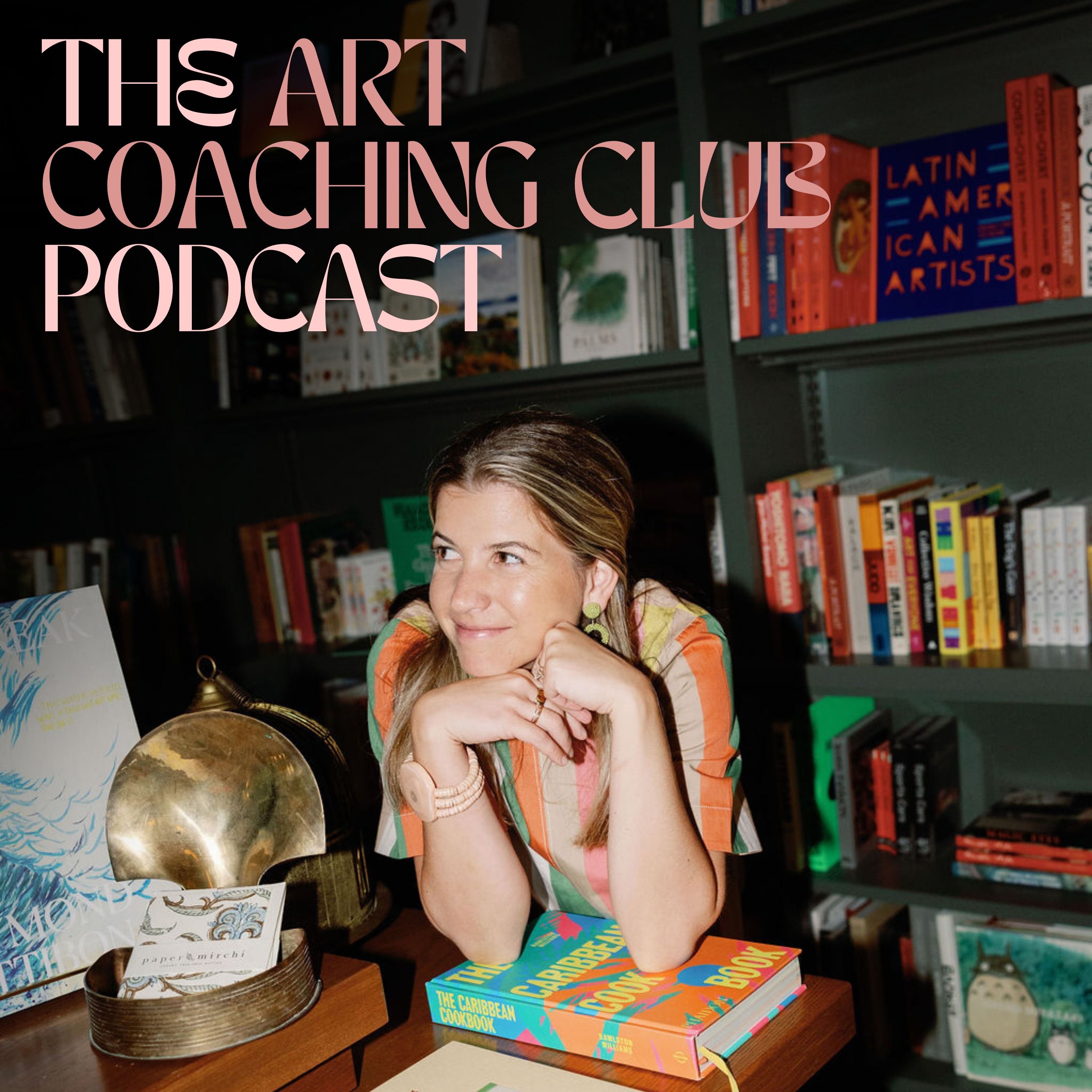
The Art Coaching Club Podcast
Hosted by The Art Coaching Club · EN
Being an artist can be one of the most fulfilling careers, but can also be one of the most frustrating. The time and effort that goes into creating, often leaves little time for other tasks such as marketing, networking, website development, and financials. The Art Coaching Club Podcast is here to help!Hayley Price is the creator behind The Art Coaching Club and now The Art Coaching Club Podcast. As an artist, owner of the online art gallery, The Scouted Studio, and as an international business coach for creatives, Hayley understands the art world inside and out. Each episode, she breaks down the challenges that come with scaling a creative business and develops strategies to help artists get organized and get back in the studio doing what they love. You can expect to hear from artists at all levels of their careers discussing their career journeys, their biggest challenges, and how they got to where they are now. Subscribe to listen every Tuesday .
38episodes
Episodes
Newest firstAll episodes
Pricing Without Flinching: How to Price Your Artwork (and Stop Underselling Yourself)
Yesterday00:31:37Tap to summarizePricing is probably the question I get asked more than anything else — right behind shipping tips. So to close out this three-day series and kick off season two, we're talking about how to actually price your art. I'm walking through the pricing mistakes I see most often — giving work away "for exposure," panic-discounting during a slow month, pricing off materials alone, copying someone else's price sheet, underpricing commissions just to land the client — and what those mistakes really cost you over time: a hole that's brutal to climb out of, galleries and shows that pass you over, and the burnout that pushes so many talented artists to quit. Then we get into the fix: the three pricing models I actually use (square inch, hourly, and market comparison), how to price commissions so you stop resenting them, and the mindset shift that matters more than any formula — your dream client respects the number, raising your prices can grow demand instead of killing it, and a sustainable business beats a busy one every time. If you've ever wondered whether you're charging enough or you're ready to raise your prices without scaring off clients, start here. Homework this week: audit your own pricing and see where you land. Loved this one? A quick rating and review helps this show reach more artists who need it — and subscribing means you never miss an episode. Read my recent Substacks on Pricing: https://hayleypricewhite.substack.com/p/tips-for-pricing-art https://hayleypricewhite.substack.com/p/the-year-i-sold-a-painting-for-20?r=3ehfyc https://hayleypricewhite.substack.com/p/the-truth-about-raising-your-prices?r=3ehfyc Hosted by Simplecast, an AdsWizz company. See pcm.adswizz.com for information about our collection and use of personal data for advertising.
Transcribe →What Actually Makes a Collector Buy Your Artwork
2d ago00:23:11Tap to summarizeMost artists think their ideal buyer is some hyper-rich woman sitting in a castle, waiting to click purchase. She's not. Your real buyer is closer to you than you think — she's the person who splurged on something last month she didn't need, saved all year for a piece she loved, or bought herself a gift she didn't feel like explaining to anyone. Art isn't a commodity only the wealthy buy. It's belief, desire, and a luxury people find a way toward even when the math doesn't quite work. In this episode I'm breaking down what's actually happening in a collector's head in the moment they decide to buy: the role of story, why real scarcity works and manufactured urgency backfires, how trust gets built long before anyone sees your prices, and why the way you tier your work can make or break a sale. I'm pulling real examples from my own Reading Girls collection and from what running The Scouted Studio gallery has taught me about which artists build collectors and which ones don't. If you've ever made something beautiful and still couldn't figure out why it wasn't selling, this one's for you. Hosted by Simplecast, an AdsWizz company. See pcm.adswizz.com for information about our collection and use of personal data for advertising.
Transcribe →Just Start: Killing the Starving Artist Myth
3d ago00:16:37Tap to summarizeSeason two is here, and yes, I know season one somehow ran 250-something episodes and this is still "season two." We're not overthinking it. I took the spring and summer off, and I'm back with a shift: fewer interviews, more solo episodes built around one thing — growing a real, sustainable art business. The interviews aren't gone, and there are 200-plus of them in the archive if you want another artist's story to pair with these. But the weekly focus now is practical, walk-away-and-do-it advice, not just inspiration. This episode is part story, part reckoning. I tell you about the semester I nearly didn't double major in art, the professor who talked me into it, and the day I stood up in front of my class, flipped my notes over mid-presentation, and asked them to vote on whether I should take a "safe" internship or go all in on my art. I also tell you what happened after — the magazine job that didn't turn into a job, the arts management gig that turned into a gallery I ran out of a bedroom, then a closet with curtains hung around a painting so I'd feel like I had a window, then an actual studio, then King Street, then back online because, well, 2020. From there we get into the starving artist myth itself — where it actually comes from, what it costs you the longer you believe it, and why I think it's increasingly just not true. My take: money and art aren't enemies, collectors respect work priced with confidence, and building a sustainable business doesn't mean turning into a machine or giving up your mornings with your coffee and your dog. Your homework this week isn't a five-step framework. It's two words: just start. The email you've been drafting, the video you've been avoiding, the collaboration you keep talking yourself out of — that's the thing to do today. If this is useful, subscribe so you don't miss an episode, and send it to another artist who needs to hear it. Come find me on Instagram at The Art Coaching Club and tell me what you're starting this week. Hosted by Simplecast, an AdsWizz company. See pcm.adswizz.com for information about our collection and use of personal data for advertising.
Transcribe →FFF: Lindsey Crafter on Pricing, Pinterest, and the Myth of the Big Following
1w ago01:11:34Tap to summarizeLindsey McCord paints under the name Lindsay Crafter, a nickname a boss in New York gave her years ago when she was rigging marshmallows from ceilings for Target and L'Oréal events. She got there through fashion school, event production, ghostwriting, prop styling, basically every creative job that existed, and it wasn't until she had her daughter in 2020 that painting became the thing she actually built a business around, posting one piece at a time while the baby slept. This conversation goes deep on the parts of running an art business that don't show up on Instagram. Lindsey walks through what she believes was a full year of suppressed reach after opting into Instagram's paid views program, watching her income graph mirror her impressions graph almost exactly, and how a single interior design placement (a show house piece that got picked up by House Beautiful) pulled her back from the edge. She talks about the bathroom-mirror goal sheet that changed her income more than anything else she tried, why she stopped making tiny pieces and started painting larger canvases for the same amount of studio time, and why she quit discounting her work entirely after watching flash sales quietly train collectors to wait her out. We also get into Pinterest as her single biggest source of international sales, why she thinks chasing follower count actively works against you, a cautionary tale about a market booth that cost her thousands of dollars and taught her how to vet a show before committing, and a refreshingly honest conversation about money, shame, and why she thinks women artists in particular need to talk about income more openly. If you've ever wondered whether the artists you follow online have it as figured out as it looks, this one is a good reminder that nobody does, and that's fine. Hosted by Simplecast, an AdsWizz company. See pcm.adswizz.com for information about our collection and use of personal data for advertising.
Transcribe →FFF: From a $100 First Sale to Selling Out a Collection in 4 Minutes with Artist Brittany Smith
2w ago00:49:45Tap to summarizeThis week's Friday replay is with Brittany Smith, and it's one of my favorite conversations about what actually happens between "I started painting again for myself" and "I have a thriving art business." Brittany's path wasn't linear. She turned down a scholarship to SCAD to stay close to family, had a life-altering year in college, once planned to move overseas to teach jewelry-making to women coming out of human trafficking, and ended up instead raising three young kids, one with special needs, before she ever opened an Etsy shop in the summer of 2019. Her first sale, to a total stranger in Texas, arrived damaged because she had no idea how to ship yet. Everyone starts somewhere. We talk about the floral collection she painted in June 2020 that sold out in four minutes, and how that moment gave her the confidence to keep going. We also get into the year she poured everything into growing her Instagram, hit burnout, and pulled back the following year to just focus on the work, which turned out to be her best year yet. That's a pattern I hear from artist after artist, and it never stops being worth repeating. The back half of this one is genuinely useful if you're trying to build income that isn't entirely dependent on your own two hands: prints, curated gallery partnerships with a hired designer, licensing deals (including one with a friend who's become both a collector and an unofficial business mentor), and wholesale. Brittany's advice on starting small with licensing rather than chasing the big-box deal right away is worth sitting with. Her closing advice: give yourself permission to just create without the pressure of a launch calendar, and if you're serious about this, invest in a real website. Etsy is a fine place to start, but your own site is your storefront. Find Brittany on Instagram and at brittanysmithstudio.com. Hosted by Simplecast, an AdsWizz company. See pcm.adswizz.com for information about our collection and use of personal data for advertising.
Transcribe →FFF: Artist Amanda Petro on Her Paintings, Gallery Red Flags, and the Comparison Trap
3w ago00:47:00Tap to summarizeHosted by Simplecast, an AdsWizz company. See https://pcm.adswizz.com for information about our collection and use of personal data for advertising.
Transcribe →FFF: Ekaterina Papova on Community, Coaching, and the Numbers Nobody Talks About
4w ago00:25:59Tap to summarizeIn this episode, I sit down with Ekaterina "Kat" Papova, artist, founder of Create Magazine, and creator of The Art Queens community, to talk about the messy, unglamorous path from making art in your dorm room to running a real business around it. We swap stories about our earliest Instagram days, the websites we obsessed over and rebuilt a dozen times, and the moment we each realized that waiting for the "perfect" setup was just another way of stalling. Kat shares how she built Create Magazine and The Art Queens out of a genuine hell-yes moment, and how she decides which ideas are worth chasing versus which ones just need to sit and simmer. We also get into email lists as a safety net against Instagram's chaos, why bootstrapping before you invest in a fancy rebrand actually pays off, and how knowing your numbers (even the ones that sting) changes what you make and how you price it. Kat's new book with Chronicle Books was about to launch when we recorded this, and she talks about what it took to get there. If you've ever felt paralyzed by a blank Instagram bio or a spreadsheet, this one's for you. Hosted by Simplecast, an AdsWizz company. See pcm.adswizz.com for information about our collection and use of personal data for advertising.
Transcribe →FFF:Paige Lindsey on Building a Multi-Passionate Art Career (and Making Peace With the Messy Middle)
Jul 1000:58:06Tap to summarizeThis week's rewind takes us back to one of my favorite conversations, with watercolor artist, live wedding painter, and podcaster Paige Lindsey. Paige got laid off in March 2020 and turned that gut-punch into Paige Lindsey Design, but the real story starts years earlier, with a BFA program that left her feeling like a failure and a paint-and-sip studio that taught her more about running a business than art school ever did. We get into all of it. The scholarship trip to Italy that gave her the confidence to come home and start over. How markets, workshops, and a wildly successful bridal bouquet giveaway during lockdown built the foundation for the business she runs today, one that now spans commissions, live wedding painting, workshops both online and in person, and her own podcast. Paige is also refreshingly honest about the parts nobody posts about: therapy, an early labor she suspects was brought on by overdoing it, and the ongoing work of unlearning hustle culture now that she's a mom. If you've ever felt like your path has to look tidy to count, or like you need a mentor to show up before you're allowed to start, this one's for you. Paige's advice, plus her plans for teaching other artists how to build corporate and small-business partnerships, might be the nudge you need this Friday. Hosted by Simplecast, an AdsWizz company. See pcm.adswizz.com for information about our collection and use of personal data for advertising.
Transcribe →FFF:How Artist Megan Daisy Milner Built a Multi-Passionate Creative Business
Jul 300:47:58Tap to summarizeWe're bringing back a favorite from the archives! This week, we're replaying Episode 26, featuring artist Megan Daisy Milner. Even though this conversation originally aired years ago, the insights are just as relevant today. In this episode, Megan shares her journey as an artist, how she expanded her business into textiles and wallpaper, the importance of professional photography in building an art brand, and how she balances motherhood with running a successful creative business. Whether you're discovering this episode for the first time or giving it another listen, we hope you'll find inspiration and practical advice for growing your own art career. Follow Megan's work: • Website: Megan Daisy Milner • Instagram: @megandaisymilner • Explore her collection at The Scouted Studio Hosted by Simplecast, an AdsWizz company. See pcm.adswizz.com for information about our collection and use of personal data for advertising.
Transcribe →FFF: Growing an Art Brand Through Storytelling, Products & Licensing with Adam Trest
Jun 2601:00:16Tap to summarizeFan Favorite Friday Replay This week, we're bringing back one of our most-loved conversations with artist and entrepreneur Adam Trest. In this episode of The Art Coaching Club Podcast, I sit down with Mississippi-based artist Adam Trest to explore how he transformed his distinctive, pattern-rich artwork into a thriving creative business that extends far beyond the canvas. Adam shares his journey from traditional fine art and portrait painting to developing a recognizable style that now lives across products, licensing partnerships, fabric collections, tile designs, and more. Along the way, he offers candid insights into building a sustainable art career, growing a loyal audience, and balancing creativity with business strategy. In this conversation, you'll hear about: • How Adam discovered and refined his signature artistic style • His transition from fine art to licensing and product design • Lessons learned from launching a wholesale business and retail storefront • Why email marketing has been one of his most valuable business tools • The role storytelling plays in building a memorable brand • Advice for artists looking to diversify their income and expand beyond original artwork Whether you're interested in licensing, product development, audience building, or simply hearing how another artist has successfully navigated the business side of creativity, this episode is packed with practical insights and inspiration. Enjoy this Fan Favorite Friday replay, and be sure to check out Adam's work on his website and Instagram. Hosted by Simplecast, an AdsWizz company. See pcm.adswizz.com for information about our collection and use of personal data for advertising.
Transcribe →