
Podcast
The Biographers
Hosted by The Biographers · EN
The Biographers is a deep-dive biography podcast that aims to tell the full and complete stories of history’s most fascinating and influential characters. Join hosts Daniel Newman and Akiva Meola as they take you through the expansive and entertaining stories of various historic figures.
In a time where short-form, hardly-researched videos flood TikTok, YouTube, and Instagram, we are doing the exact opposite. The Biographers gives you the chance to learn the full life stories of historic figures, both famous and obscure, without cutting corners. With hour-long, deep-dive research, we provide a bigger, better story than what’s in your feed. If you love true crime, but are craving stories about people who truly made a difference, then you’ve just discovered your new favorite podcast.
19episodes
Episodes
Newest firstAll episodes
Office Hours Ep. 11: Ch-ch-ch-ch-Changes
5d ago00:49:45Tap to summarizeIt's time for another episode of Office Hours, and this time we have some show-altering news! Our very own Akiva Meola, who has been co-host of The Biographers for two years, is leaving the show. We talk about what led him to this decision, while also introducing the person who will be taking his place. Don't worry, everyone! Change can be scary, but we know you're going to love our new co-host -- the one and only Charlotte Stanley.
Transcribe →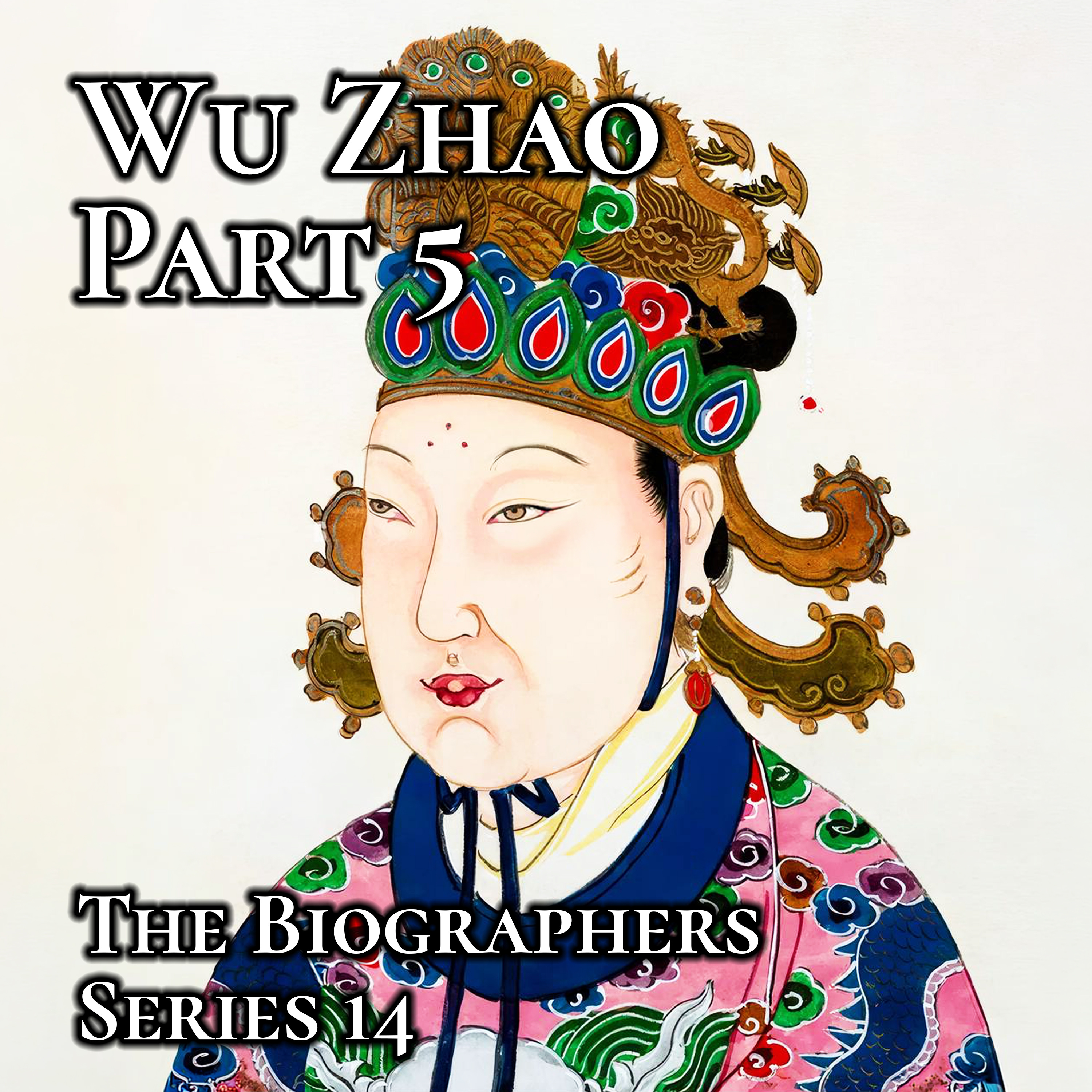
Wu Zhao Part 5: The Fall of a Dynasty
3w ago01:34:19Tap to summarizeIn the conclusion to our series on the infamous Wu Zhao, we discover why the only female emperor in Chinese history, relinquished the throne. Her reign as emperor would only last 15 years, and though she would have several opportunities to extend her dynasty past a single member, her stubborn nature would get the better of her. Zhao's new pair of lovers, the Chang brothers, would seemingly cast a spell upon her that clouded her judgment, which in turn affected her ability to rule fairly. The political court around her would eventually become so desperate for change that they would stage a coup, and her reign would end. The tea is hot in this episode — tune in for part five of Wu Zhou to see how it all ends! (Ep. 081)
Transcribe →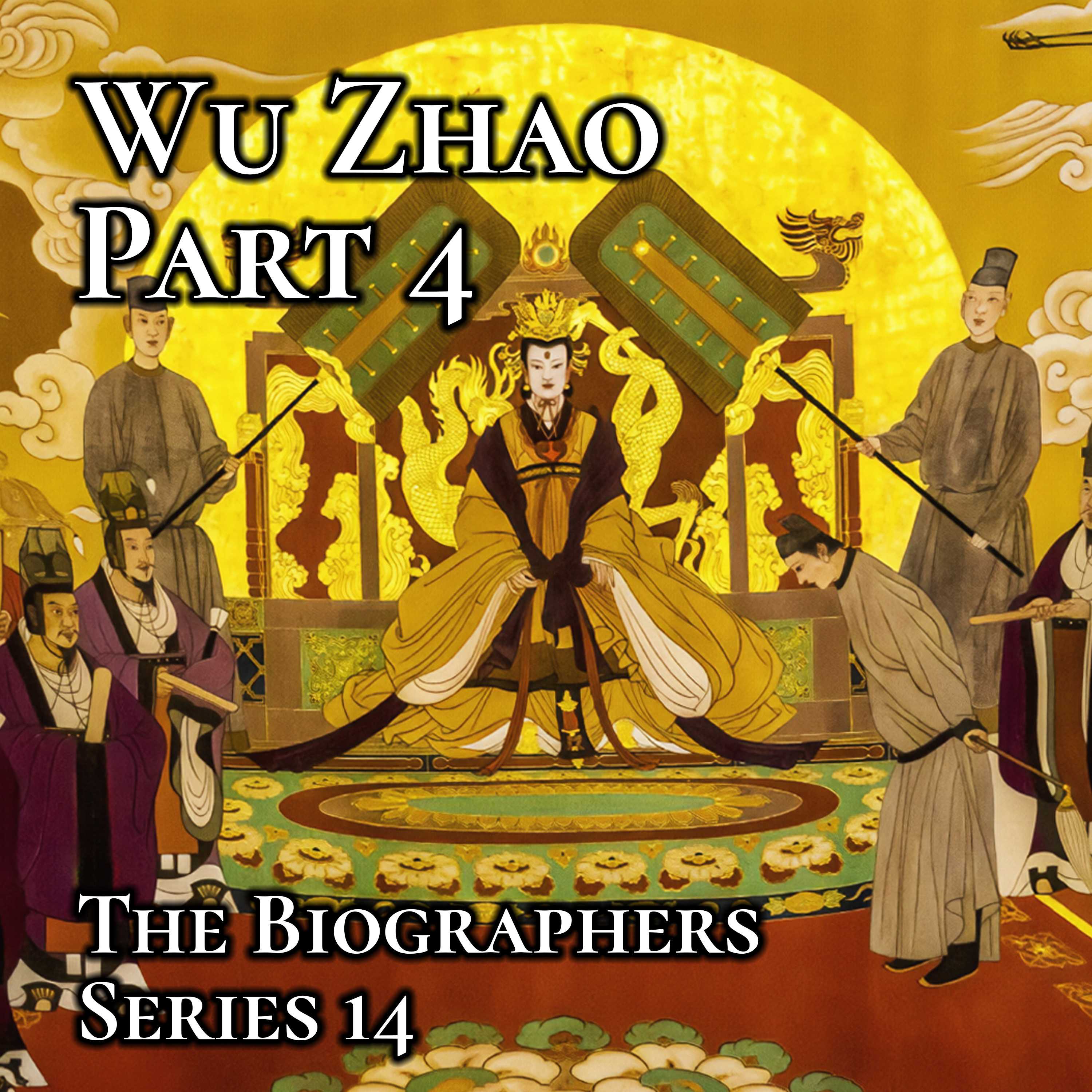
Wu Zhao Part 4: No Half Measures
Jul 1101:16:56Tap to summarizeIn part four of our series on Wu Zhao, we watch the continued rise to power of the only female emperor in the history of China. With Emperor Gaozong's health declining to the point of his ultimate demise, Zhao finds various means to push her sons away from the throne and establish herself as the de facto leader of China. It would take social, political, and religious reform, along with some not-so-savory actions, before the time would finally be right. Finally, at the age of 65, Zhao would ascend the throne and take the name of Emperor Wu Zetian. Tune in to part four to learn all the juicy details! (Ep. 080)
Transcribe →
Wu Zhao Part 3: The Two Sages
Jun 2700:59:56Tap to summarizeIn part three of our series on the infamous Wu Zhao, we finally get to see her long-planned rise to Empress, and what sequence of events led her there! Due to some health complications, the Emperor would soon rely on Zhao to run the day to day governmental operations of China, and despite the medieval Chinese belief that women were unfit (and unable) to lead, Zhao would prove to be an astute political leader, which resulted in the royal couple earning the nickname of "The Two Sages". Tune in to part three of Wu Zhao to learn more! (Ep. 079)
Transcribe →
Wu Zhao Part 2: How to Train Your Concubine
Jun 1301:10:39Tap to summarizeIn part two of our series on Wu Zhao, we take a look at the earliest days of her arrival into the royal harem of the Emperor, and what curriculum needed to be studied as a concubine. Zhao's time in the harem would first last ten years, but after the Emperor she served passed away, she would be shuttled off to live the life of a solitary monk in a monastery. Thanks to some careful planning (as well as a bit of luck), Zhao would find herself back in the royal palace, and mother to three children. But her sights were now fixed on becoming Empress, and in order to fulfill her dreams, drastic steps needed to be taken. But just how far was she willing to go? Tune in to part two of Wu Zhao to find out! (Ep. 078)
Transcribe →
Wu Zhao Part 1: A Great and Terrible Honor
May 3001:13:21Tap to summarizeIt's time for a brand new series, and this time we're headed further back in time than we ever have before: the 7th century! For series 14 of The Biographers, we're covering Wu Zhao -- the only woman to ever reign as the Emperor of China. At just 13 years old, Wu Zhao was recruited into the Emperor's harem of concubines, and despite being born in a time and place where women were viewed as disposable, she would seize every opportunity put before her in a relentless quest to have her name carved into the history books. Buckle up, kids -- this one's going to be a doozie! (Ep. 77)
Transcribe →
Office Hours Ep. 10: Now With Video!
May 1601:02:57Tap to summarizeComing in hot with another laid-back episode of Office Hours, but this time we have video! We are indeed humans! In this episode, we go over all the corrections and questions from our Frida Kahlo series in addition to chatting about our upcoming series on Wu Zhao.
Transcribe →
Frida Kahlo Part 6: Una Vida Vivida
May 201:32:08Tap to summarizeIn our final episode on Frida Kahlo, we discuss her last decade of life. Coming on the heels of Trotsky's death, Frida and Diego decide to remarry after realizing what they meant to one another, if only for a time. Frida's painting skills peaked in the 1940s, reaching a new level of detail evident in “Rosita Morillo” and “Moses”, which led to national recognition as one of Mexico's finest painters. Her newfound esteem even landed her a teaching position at La Esmeralda, where Frida and the “Fridos” explored the world with an artist's eye. Her time as a teacher was cut short, however, when health issues arose. As her friends sat beside her in the hospital bed once again, they knew she didn't have long to live. In a final effort to celebrate Frida’s alegría, artists, poets, peasants, and rebels banded together for an exhibition that nearly broke down the doors of La Galería Contemporánea. Needless to say, when the party ended, she would spend her last years fighting death with a ferocity only Frida could muster. Tune in to hear the finale of Frida Kahlo! (Ep. 076)
Transcribe →
Frida Kahlo Part 5: La Surrealista Asesina
Apr 1801:42:10Tap to summarizeIn part 5 of our series covering the dramatic and tragic life of Frida Kahlo, we go over the most formative years for her career as a painter. Following Diego's brutal betrayal of trust, Frida would make more paintings in two years than in the entirety of her marriage to him, creating masterpieces like The Two Fridas, and What the Water Gave Me. After an art show in Manhattan that had Frida spreading her wings outside of her husband's shadow, surrealist icons like Andre Breton would invite her to Paris for an exhibition, which turned out to be more than she bargained for. Back in Mexico, a petulant Diego would shove a political wedge between himself and the 4th International, setting off a chain of events that would leave a hand broken, a skull crushed, a house raided, and Frida Kahlo behind bars. Tune in to part four to hear all the drama! (Ep. 075)
Transcribe →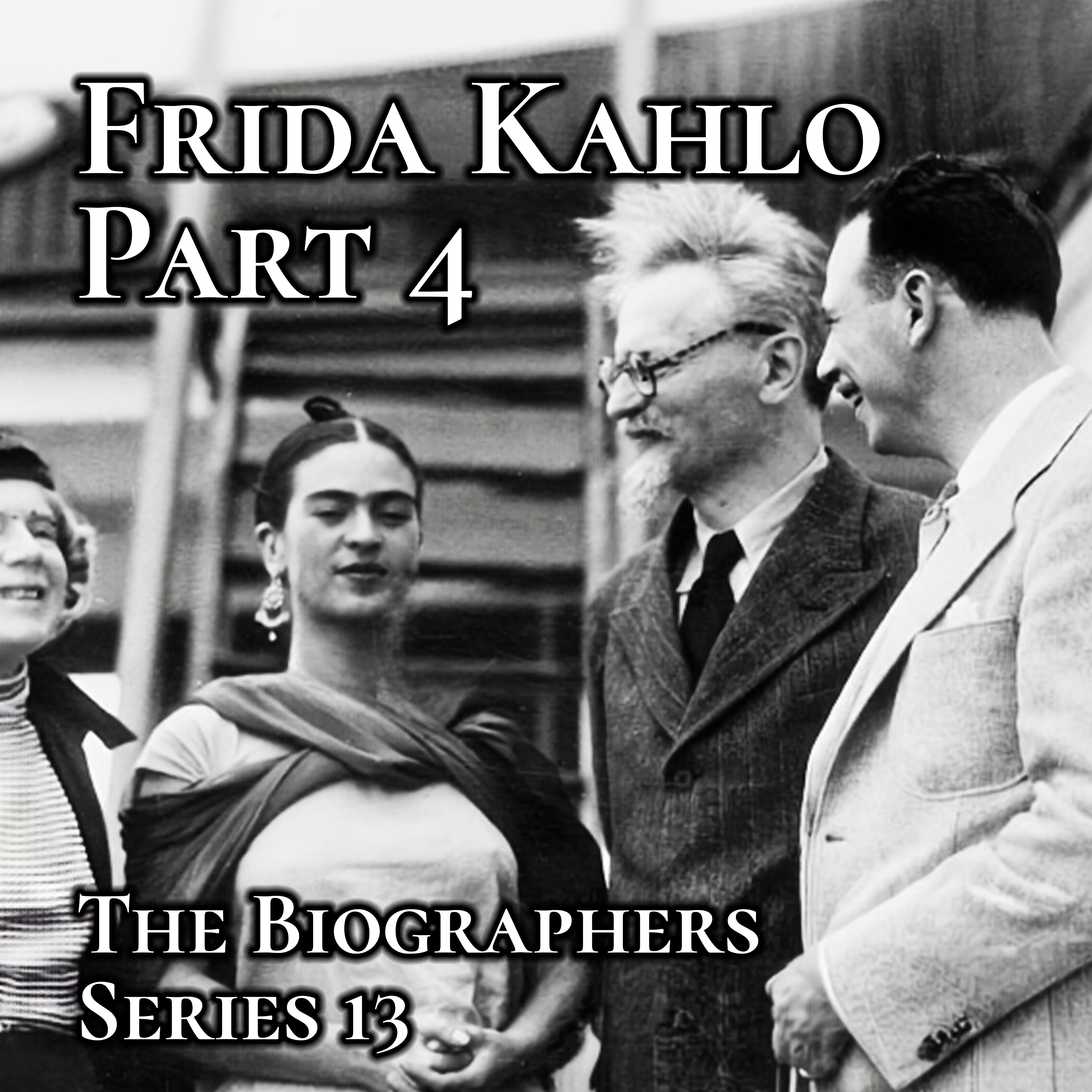
Frida Kahlo Part 4: Unos Cuantos Piquetitos
Apr 401:26:52Tap to summarizeIn part four of our series on Frida Kahlo, the seminal artist's grand tour of the United States comes to an end. Devastation would follow devastation in Frida’s mid-twenties: a miscarriage in Detroit, followed by the death of her mother in Coyoacán. Diego, on the other hand, was at the height of his fame, and was receiving commissions from some of America's most elite clientele. Unfortunately for Diego, his work would be a little too "Red" for the taste's of client's, and his work would be destroyed before it was finished. After moving back to Mexico, Diego would find some redemption, but would soon commit a betrayal so painful that Frida considered it equal to her most devastating physical injuries. Bruised but not broken, Frida would go on to create a life somewhat free of Diego’s influence just as the tides would usher in the arrival of one of the biggest names in the history of Communism. Tune in for part four to learn more! (Ep. 074)
Transcribe →