← The Bobby Bones Show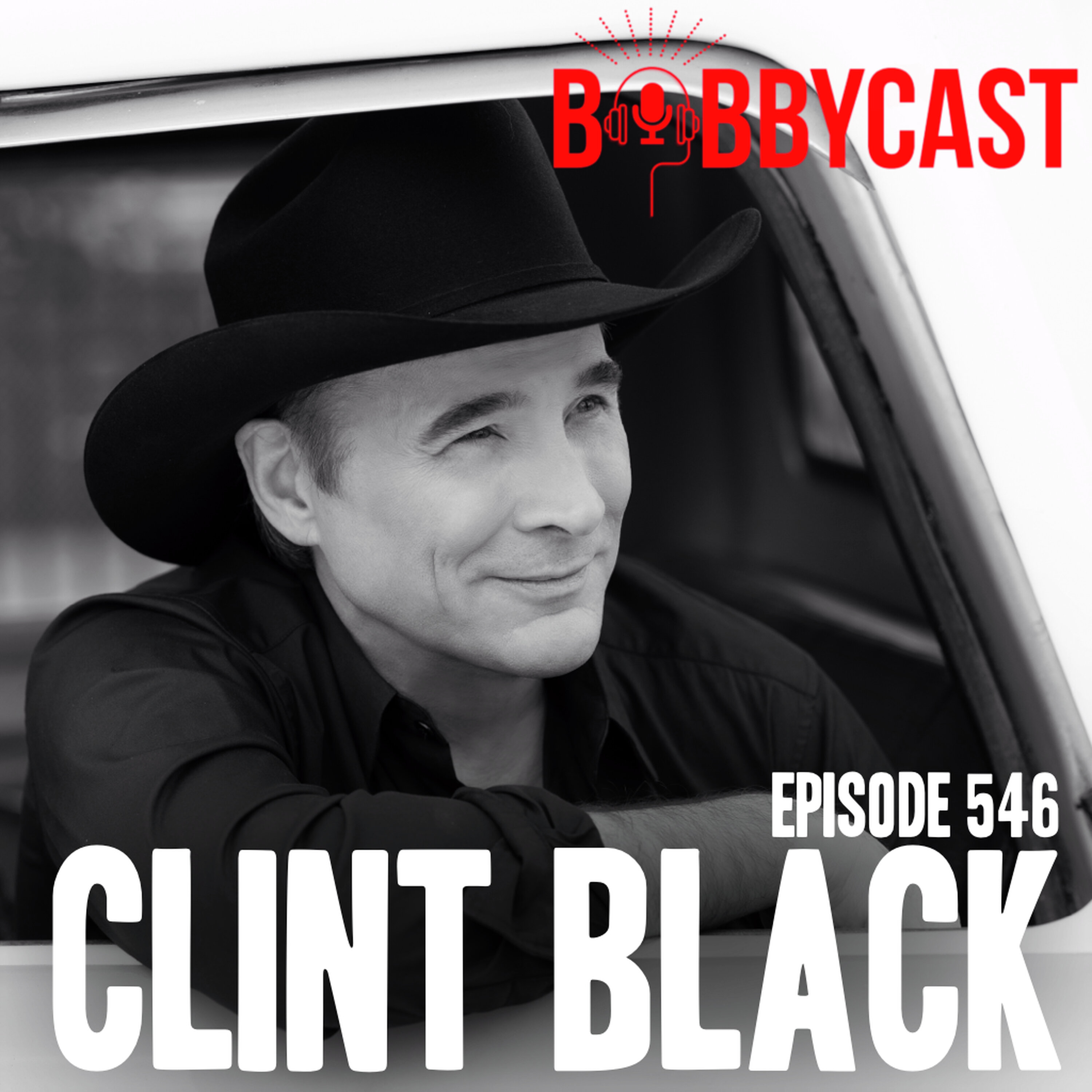
The Bobby Bones Show
#546 - Clint Black on Playing Bars for 10 Years Before His Big Break + Fans Showing Up to His House Unannounced + The Story Behind "A Better Man" + His Worst Injury Falling Off Stage + How He Met His Wife + What Is Hard About Being Famous
01:09:54
Loading summary
Transcript433 lines
- [00:00]
A
This is an iHeart podcast.
- [00:07]
B
The murder of an 18 year old girl in Graves County, Kentucky went unsolved for years until a local housewife, a journalist and a handful of girls came forward with a story.
- [00:21]
C
America, y' all better wake the hell up. Bad things happens to good people in small towns.
- [00:33]
B
Listen to Graves county on the iHeartRadio app, Apple Podcasts or wherever you get your podcast. And to binge the entire season ad free. Subscribe to Lava for Good plus on Apple Podcasts.
- [00:48]
D
It's Ana Ortiz and I'm Markin Delicato. You might know us as Hilda and.
- [00:54]
A
Justin from Ugly Betty.
- [00:56]
D
Welcome to our new podcast, Viva Betty. We're rewatching from start to finish and.
- [01:03]
A
Talking to iconic guests like Betty herself, America Ferreira.
- [01:07]
D
There was this moment when the glasses went on and it was like, this is our Betty.
- [01:12]
A
Listen to Viva Betty on the iHeartRadio app, Apple Podcasts or wherever you get your podcasts.
- [01:20]
C
I'm Eva Longoria.
- [01:22]
D
And I'm Maite Gomez Jejun.
- [01:23]
A
And this week on our podcast Hungry for History, we talk oysters. Plus the Miami cheer stops by.
- [01:29]
C
If you are not an oyster lover.
- [01:31]
A
Don'T even talk to me. Ancient Athen used to scratch names onto oyster shells to vote politicians into exile. So our word ostracize is related to the word oyster.
- [01:43]
C
No way. Bring back the ostrichon.
- [01:46]
D
Listen to Hungry for history on the.
- [01:48]
B
Iheartradio app, Apple Podcasts or wherever you get your podcasts.
- [01:59]
C
There was a constant flow of people coming by the house. Even the wife of guitar player in Garth's band. And four other women knocked on my door one morning at 8am they said we just wanted to see if you were really nice. I said, well you should have come by at noon.
- [02:21]
A
Now it's time for episode 546 with the Great Clint Black. I really like Clint as a person. In the last couple years I've been able to spend a little more time with Clint. Even at the ACMs which are on Amazon, he was presenting and I was doing like the bad second co host job where I just go into the crowd. But I was back because I had to do all of rehearsal so I had to sit through the whole show before it went on. And he was presenting and so he's back. He was in my dressing room which was just a curtained off room, wasn't even that cool but he was in and we were writing jokes for his hit, which I thought was interesting that he was just writing a joke. I guess he can do that. He's Clint Black. And so I like Clinton. He played our Million dollar show with us with Raging Idiots last year. He's got just so many great songs and I'm leaving here a better man. Jam. This killing time is killing me Jam. We could keep going, but love Clint. He came over, we talked for over an hour. I did his show Talking in Circles, his TV show once, and that was super fun. So it was nice for him to come over and do this. He has extended his back on the Blacktop North American tour with a final 2026 leg in the spring. So he's on the road now. He still tours like crazy. I didn't know he had like a back issue, like surgery. Yeah. The thing I learned is we need to get pillows just in case people have back issues. Because he was like, oh, my back. You have a pillow. It wouldn't have a single pillow. So what I did is I grabbed like some towels and I like stuffed towels in the chair. I know I gotta do better. Check out ClintBlack.com. he is one of the sharpest guys that I've ever met in this business. Here he is, the great Clint Black. Did you just play cover songs and bars for a while? Did you go through that normal trajectory?
- [04:11]
C
Yeah, I, I guess it was probably, if you count the years after I got my break, when I was still playing bars for 50 bucks, it was about 10 years.
- [04:25]
A
Wow.
- [04:28]
C
If I'm going about it the right.
- [04:30]
A
Way, maybe you should do air conditioners.
- [04:32]
C
I, I, if I would have had a fallback. You see, my brother Kevin, we both quit iron working and, and I started playing in bar. We, he and I started playing in bars. And then he left and went back to iron working. It's just dependable money. And I, I couldn't, I couldn't do that. I couldn't do that iron work anymore. Every day I just thought, why, why aren't I singing somewhere? And I had to make the decision, if, if this is as far as I get, this is what I'm going to do. And so there wasn't a way out. I think that that's part of the reason I, you know, made it through.
- [05:13]
A
You're in the bars for 10 years. At any point did you think, maybe I won't even be a front man because there are other paths. You can play guitar in a band.
- [05:23]
C
Yeah, but I wasn't, I, I played guitar to accompany myself. I never set out to be good at guitar. I, I wanted to sing and I needed, you know, I needed this simple guitar Part to do at least that. So I wasn't on a path to being a sideman. It it and that.
- [05:42]
A
That never like fell in like, maybe this is what I'll do. I want to stay in music, but it never was. I think I'll go be a part of a band then.
- [05:50]
C
When I was in the band with my brother, there was. There were too many conflicts, too much disagreement and. And there was not one person who could ultimately decide on anything. So when I came out of that band and went solo, I knew if I ever have a band again, it'll be one I put together and. And I get to say what happens.
- [06:15]
A
So then what was the moment or what? Why did you get your break? So you're playing in the bars. But when did it change? Did you move to Nashville first?
- [06:22]
C
No, I would. There was no way I was going to move to Nashville first. It was too intimidating too. It was too much of an enigma. And I knew I had to have a manager. So what finally made the. The switch for me? What? I was reading all these books, Self help Music business, the Platinum Rainbow and all these things, trying to figure out, how am I going to do this? Because what I'm doing isn't working. And I found a book called Time Management. Work Smarter, not Harder. And I followed the exercise in the book of laying out goals. And under each goal, you write down every activity you can imagine would lead you to that goal. And then every day, your job is to be checking off as many activities as you can, one of which was make a demo. So I had this gig that I was gonna get, and it was twice what I was earning playing solo gigs. It was a hundred dollars a night. And in order for me to get that solo gig, I had to do this party for them with a band. So I found a band. And by the time we got to the a rehearsal with the band, the guitar player that was in the band had left. And Hayden Nicholas was now the guitar player for this gig. And so Hayden was great. Best guitar player I'd ever played with. So we gravitated to one another. He said, what are you doing? I'm trying to make demos. He said, I have an eight track recorder and we can make some demos. I'll charge you 150 bucks a song. And if you get a record deal out of it, it goes up to 300 retroactively.
- [08:19]
A
So you got to pay them more if you get a record.
- [08:20]
C
If I get a record deal, yeah. So. So we struck that deal and started making demos. And I needed the demo to find a manager. I knew a record promoter in town because he managed. Manage in quotation. Managed me for, you know, 10 minutes. And. But he was a legitimate record promoter with platinum records all over his office walls. So I knew he knew people. And the first demo we finished was Nobody's Home, and took that to him, and he took me to Bill Ham, who I knew was ZZ Topps manager, and that's. That was my break.
- [09:03]
A
And he believed in you? He heard it and believed it.
- [09:06]
C
Yeah, yeah, he. He heard that and two other songs from the first album that we had demoed. By the time I met him, we had that song maybe Nothing's News and Winding Down. And so, yeah, he heard those and said he wanted to hear more. So Hayden and I feverishly went to work making more demos.
- [09:32]
A
What were you wearing then? Do you have a look?
- [09:35]
C
Yeah, I. I had basically the. The same look. I. I didn't have a cowboy hat. The one I had was trashed. And I couldn't even really afford guitar strings. The. The guy at the guitar store sold them to me as cheaply as he could. And I went through a lot of guitar strings playing four to seven hours a night, you know, and you sweat right through them, you know, so I'd have to have two sets per night for two guitars. So between that and gas. I mean, I was. I. I really. Until I got the record deal, I couldn't afford to buy a new hat. And as soon as I could afford a new hat and I got some new shirts out of the deal, you know, I got. I got a nice cowboy hat, kind of like the one you see behind here. But. But it wasn't until I met this guy, Doug Eastman with the Waco Hat Company, who said, I'm going to make you a hat that really fits your head. And he put a device on my head, and it printed out the shape of my head. And he made. And the brim was about three quarters of an inch shorter than the hat I was wearing. And as soon as I put it on, I knew this is. This is my hat.
- [11:01]
A
Did you stay with that type of hat forever?
- [11:03]
C
Forever still today? Yeah, I. In fact, I still have that hat. And the guy down in Texas that makes my hats now, it's. It's in his office. It's the model. So every time they make me a new hat, they go by that.
- [11:21]
A
When did you move to Nashville? How long?
- [11:23]
C
90. 90, 91.
- [11:26]
A
You didn't move here till 91?
- [11:28]
C
No.
- [11:28]
A
Even though you're in the famous class of 89.
- [11:31]
C
Yeah. Yep. But I was here all the time.
- [11:33]
A
But you didn't move here.
- [11:34]
C
But it was, it was. I never got home. I was in a hotel here all the time. So finally I wanted to stay in Texas. I recorded most of the albums in Texas and. But I never got home. I had a. I had my place there. And when I got a little bit of money, you know, I got a better place and. And I just never saw it.
- [11:58]
A
What was it then that made you move here if you were doing just fine with the place down there?
- [12:02]
C
Just knowing every time. We had two or three days off the buses ended up here and I could fly home one day, be home a day, fly back the next to get on the bus, and I wasn't going to do that. So. Found a place here up on Old Hickory Lake on the north side and lived there for a while and people. It was just. It was a long drive to get here and I was coming here all the time.
- [12:34]
A
You mean from Old Hickory Lake? I mean from Houston. Houston. That's a long drive, too.
- [12:37]
C
Yeah, but on the north side of Old Hickory Lake. And I was in a little cove between Johnny Cash's house and. And Roy Orbison's house. I was. I was way up there. And so the drive back and forth was killing me. But also there was a constant flow of people coming by the house, coming by the dock and, you know, yelling up and coming and knocking on the door.
- [13:01]
A
They knew you live there?
- [13:02]
C
Yeah. How do they know you live there? I don't know. I don't know. But even the wife of guitar player in Garth's band and four other women knocked on my door one morning at 8am I had to give. I had to get out of bed to come answer the door. And what would they say? They said, we just wanted to see if you were really nice. You should come by at noon.
- [13:31]
A
Did you get a fence? How do you stop that?
- [13:33]
C
You leave. I, you know, you couldn't get a fence. It was against the rags and, and, you know, there were people that were drunk that were just coming up in their boats and. Yeah, that's crazy. I'm from Houston, so, you know, my brother was a cop. I worked in security. I had to study crime and in order to do that job. So that concerned me if it were just fans that were harmless. Okay, just please don't wake me up. But I was, you know, I was thinking with the old security mind that there's too many people coming to my house, but that wasn't. That wasn't why I moved to town. It was the drive. I just couldn't take it.
- [14:18]
A
That album in 89, Killing Time, how many of those songs did you have stashed away in those sessions that you were writing before? I don't know Before.
- [14:31]
C
Well, nothing's News was old. I was 22 when I wrote that. Winding down was probably wrote it in 85. Live and learn, probably in 1985. That's. That's probably it. Winding Down. Nothing's News. Live and Learn. There were other songs that would end up that I'd written like when I was 18. Like the next album, Loving Blind, I wrote when I was 18. State of mind, which was a big hit on my fourth album, I wrote when I was 18.
- [15:08]
A
Do you think it was weird when you came to town and there were co writes?
- [15:12]
C
No. No, because I'd already been doing that. I've been co writing with Hayden, co writing with Sheikh Russell and so I, I liked that idea but I had to make sure and write songs by myself so that I. It didn't become a crap crutch. So I would have something I think I'm going to get with Hayden real, you know, and then I'd say, you know, I really need to write another one by myself. So songs like A Bad Goodbye and others, I just, I just made myself. It's more fun to write with someone else. There's a lot more juice in the room. There's laughs you can have in between and. And riding by yourself is. It can be exciting when you're making progress and you come up with great ideas but not a lot of laughs.
- [16:01]
A
You know, unless you're really crazy.
- [16:04]
C
Yeah. Which I am.
- [16:06]
A
Yeah. You got to be crazy to even do this job. You got to be really crazy to be laughing alone as you're writing a song.
- [16:10]
C
Yeah.
- [16:11]
A
On that 89 album, it's your first record. Did you have an expectation of success or was it you're blind to it. Let's just see what happens?
- [16:20]
C
No, I had an expectation. I'm. I'm a country fan first. And we watched everything that country music would feed us and we listened to all the stations and thank you so much. Thank you, Morgan. We consumed everything there was to consume. So we were country fans and we knew what we liked. So if I had something I liked and my dad liked it and my brothers liked it, I knew that other people like us would like it. But you don't really know. And I knew. I didn't really know. I just thought I knew. And so there's There has to be at least an ounce of humility in that knowing and. But I believed it. I believe that people were really going to like those songs. I knew we had the wrong first single.
- [17:17]
A
What was the first single?
- [17:18]
C
It was straight from the Factory and I knew that was wrong as Western swing. And I'm thinking these big cities. We went into kzla, Los Angeles, big station. Bob Guerra production, the program manager. And. And we're playing him straight from the Factory at the end of the first course, second chorus, really, he hit stop and he said, if you get that into the top 2020, I can add it. And that isn't what we wanted to hear.
- [17:51]
A
You wanted to hear it go right away.
- [17:52]
C
Yeah. So I had, I had strong doubts about it, but I had a cassette in my pocket and I didn't know the rules, so I just took a chance. Carson Schreiber, the, the promotion guy for that region at rca wasn't going to hit me over the head later. And I said, can I play another song, you know Bob? And he said, yeah, so put on a Better Man. And at the end of the first chorus he hit stop and said, I'll add that out of the box.
- [18:23]
A
No way.
- [18:24]
C
And we left and I grabbed Carson. I said, we have to call Joe Galati and tell him we have to change the first single. And he called Joe and Joe changed the first single right then and there. And Better man went number one.
- [18:39]
A
Let's take a quick pause for a message from our sponsor. All I know is what I've been told. And that to Half Truth is a whole lie.
- [18:52]
B
For almost a decade, the murder of an 18 year old girl from a small town in Graves County, Kentucky went unsolved until a local homemaker, a journalist and a handful of girls came forward with a story.
- [19:08]
A
I'm telling you, we know Quincy killed her.
- [19:10]
B
We know a story that law enforcement used to convict six and that got the citizen investigator on national tv.
- [19:19]
C
Through sheer persistence and nerve, this Kentucky housewife helped give justice to Jessica Curran.
- [19:26]
B
My name is Maggie Freeling. I'm a Pulitzer Prize winning journalist producer. And I wouldn't be here if the truth were that easy to find.
- [19:36]
C
I did not know her and I did not kill her or rape or burn or any of that other stuff.
- [19:41]
A
That y' all said.
- [19:42]
C
They literally made me say that I took a match and struck and threw it on her. They made me say that I poured gas on her.
- [19:50]
B
From lava for good. This is Graves County, a show about just how far our legal system will go in Order to find someone to blame.
- [20:00]
A
America, y' all better wake the hell up.
- [20:02]
C
Bad things happens to good people and small towns.
- [20:09]
B
Listen to Graves county in the Bone Valley feed on the iHeartRadio app, Apple Podcasts, or wherever you get your podcasts. And to binge the entire season ad free, subscribe to Lava for Good plus on Apple Podcasts.
- [20:31]
D
Damie Gente.
- [20:32]
A
It's Ana Ortiz, and I'm Mark and Delicato.
- [20:35]
D
You might know us as Hilda and.
- [20:37]
A
Justin from Ugly Betty.
- [20:40]
D
We played mother and son on the show, but in real life we're best friends.
- [20:43]
A
And I'm all grown up now.
- [20:45]
D
Welcome to our new podcast, Viva Betty.
- [20:48]
A
Yay. Woo hoo.
- [20:49]
D
Can you believe it has been almost 20 years?
- [20:51]
A
I.
- [20:52]
D
That's not even possible. You're the only one that looks that much different. I look exactly the same. We're rewatching the series from start to finish and getting into all the fashions, the drama, and the behind the scenes moments that you've never heard before.
- [21:05]
A
You're gonna hear from guests like America Ferrera, Vanessa Williams, Michael Urie, Becky Newton, Tony Plana, and so many more icons.
- [21:15]
D
Each and every one, all of a sudden, like, someone, like, comes running up to me and it's Salma Hayek. And she's like, you are my Ugly Betty. And I was like, what is she even talking about? Listen to Viva Betty as part of the My Cultura podcast network, available on the iHeartRadio app, Apple Podcasts, or wherever you get your podcasts.
- [21:41]
B
In early 1988, federal agents raced to track down the gang they suspect of importing millions of dollars worth of heroin into New York from Asia.
- [21:50]
C
We had 30 agents ready to go with shotguns and rifles and you name it.
- [21:56]
B
But what they find is not what they expected.
- [22:00]
C
Basically, your stay at home moms were picking up these large amounts of heroin. They go, is this your daughter?
- [22:05]
A
I said, yes.
- [22:06]
C
They go, oh, you may not see.
- [22:08]
A
Her for like 25 years.
- [22:13]
B
Caught between a federal investigation and the violent gang who recruited them, the women must decide who they're willing to protect and who they dare to betray.
- [22:24]
C
Once I saw the gun, I tried to take his hand and I saw.
- [22:27]
A
The floor flash a light.
- [22:28]
B
Listen to the Chinatown sting on the iHeartRadio app, Apple Podcasts, or anywhere you get your podcasts.
- [22:45]
A
And we're back on the Bobby cast. Sarah Evans is over. She was in one of those chairs over there and she was rocking back and forth in it and she wiped out.
- [22:55]
C
I love it. We have video of that.
- [22:57]
A
We do with A coffee in her hand.
- [22:59]
C
Okay, well, I would text me that video later so I can send it to her with commentary.
- [23:04]
A
I was so scared when it happened because you just didn't want her to be hurt. And she somehow fell and held the coffee. It's like when somebody falls or jumps in the lake and they keep their beer up. Yeah, she did that with the coffee. I mean, she wiped out.
- [23:21]
C
Had it.
- [23:22]
A
And I'm at a crossroads, and I'm like, well, yeah, I like Sarah. Do I poke at her or do I. Or do I call 911 as soon.
- [23:29]
C
As, you know she's not injured?
- [23:31]
A
That's exactly what I did. And she was awesome about it. And, you know, she was like, yeah, I shouldn't have been rocking back in the chair. But she wiped out. It was awkward for a second.
- [23:40]
C
She's a regular person. And, you know, I've seen things happen to irregular persons who think that they. I guess they think they're supposed to be perfect.
- [23:50]
A
Yeah.
- [23:50]
C
And they can't laugh at themselves. Yeah.
- [23:53]
A
I thought she was super cool about it. Yeah. I was worried also.
- [23:57]
C
I was like, I saw KT Oslin fall down on stage. A show down in Florida. Yeah, she fell down. She's in high heels and a tight skirt, and she's laying on the floor, and she signals the band, and the band stops, and she's lying on her side looking at the audience, and she says, I bet Charler wondering how I'm gonna get up.
- [24:19]
A
Have you ever fallen off stage?
- [24:20]
C
Yeah, off. Off stage.
- [24:22]
A
What happened?
- [24:23]
C
Injury. Oh, surgery.
- [24:24]
A
Really?
- [24:25]
C
Yeah. I fell off the stage in Canada in 2015, and I turned it into a jump because I realized I was going. So I kind of. I kind of. I went ahead and jumped instead of just teetering over and. But I couldn't see. We were in an arena and concrete floor, and I couldn't see the ground because of the spotlights. And. And so I wasn't able to time the bending of the knees for shock absorption. And I landed on my right heel with. With a straight leg, and it ruptured a disc in my lumbar. And I. I knew something was wrong. I didn't know how bad, but I got back on stage. I kept. Got right back. Kept singing.
- [25:11]
A
Adrenaline kept you up.
- [25:12]
C
I was. I wasn't playing guitar on that song. Put yourself in my shoes. And I just got up and finished the show, and I iced it all the next day, which was a day off. And then I had two more shows. I got through those shows. My right leg was numb. I. I almost fell a few times just because I couldn't really feel my leg. And then I got on a plane and went to. Flew to la and by the time I got to the airport, I had to request a wheelchair and I hated it. I just. I just. I was. Wanted to will myself through the pain, but I couldn't and I had to be wheeled out of there and I was in surgery two days later. I went in for injection, try to see if that would. Maybe it was just bulging and had images and you couldn't really tell. And then the next day he had to do surgery and he told me post op, he said you would never been able to endure this. There's so much debris just lacerating nerves.
- [26:28]
A
Were you like at the edge and you didn't know it of the stage?
- [26:30]
C
Yeah, I. My crew normally puts a piece of white tape along the front edge and this was the one time they forgot and.
- [26:42]
A
Oh, user error, crew, user error.
- [26:44]
C
Yeah, I still could have gone over. The spotlights sometimes are just too bright and. And sometimes I don't look down. I think I know where I am. But nonetheless, it was.
- [26:59]
A
How long were you out?
- [27:02]
C
Well, I was, I recovered. I. Three days later I had to be back on stage for a charity TV show that I had developed and pushed up the hill. It was Chidio. It was a songwriter competition that we taped here in Nashville. So, no, it was. It was 10 days later, but 10 days later I was back on stage doing that TV show. And then three days after that I was back on tour. And I would only go as far as my surgeon would tell me I could go before I hurt myself. Pain I've endured, I've had lots of. I injured my spinal cord once in a mountain biking accident. I ran into a tree. So it just developed a lot of problems with my cervical spine. And so I've been through a lot of surgeries, been through the back of my neck five times and through here about four or five times, just buttressing up my cervical spine. So I've. I've. You know, I managed to deal with pain with just some Advil, but, you know, when it's in the lumbar, it's. It's something different. And I remember thinking about canceling. I had to cancel shows just to have the surgery, but I thought about the other ones that I had coming up, but I couldn't. I couldn't do it.
- [28:33]
A
She just got their own.
- [28:34]
C
Yeah.
- [28:35]
A
What kind of kid are you? Were you a studious kid?
- [28:37]
C
Great kid.
- [28:38]
A
Great. Everybody, obviously. Yes, but did you. I feel like you're talking about books. I always like to read books, even as a kid. Is that what you were into? Did you read a lot of books?
- [28:46]
C
I did not. I was a terrible student.
- [28:48]
A
No way.
- [28:49]
C
Awful. I wanted to be a good student, but you know, I just couldn't figure out how to take notes and get to the homework and do the homework well. And then I, you fall behind and then it's even harder. Fall behind. 9th grade, I failed. I repeated the 9th grade. 10th grade I was going to fail. I had to go through summer school to get into the 11th grade. 11th grade, I was going to fail. But I was 18 by then and I dropped out and went into construction. And within a year I knew just what a mistake it was. And, and I started then doing everything I could to fill in the, the gaps, make up for the lost time. So then I started reading non fiction mostly for a long time. So it would have been history books, biographies, self help books, the Platinum Rainbow, this business of music, all those things that would have helped at work. Psychology books, you know, seven Habits of Highly Effective People. Everything like that I could find. I, I got a program that was on my laptop and it was all punctuation. I just, I just ate it up because I've, I felt like I can go at my own pace now and, and I was able to learn that, learn that stuff more slowly.
- [30:28]
A
Do you feel like you had ADHD because you're really smart? Obviously I don't need to know what you read. I can just tell by talking with you. I mean and, and knowing you a bit that we know each other now. Like I have to prepare myself to keep up with you. Like you have a brilliantly fast mind.
- [30:46]
C
Keep talking this well, no, it just.
- [30:48]
A
Feels like they didn't know how to.
- [30:52]
C
Teach you Well, I didn't have a lot of help at home. My mother wasn't a good student. She wasn't educated beyond high school. My dad, you know, really tired so he wasn't going to come home from, you know, being on the job at 5:00am and, and do homework. He, he would help a little bit with math. He was really good. So the support there wasn't at home and the discipline wasn't there. I could get away with skirting it. So as I felt more and more lost, I was able to just get by without anyone at home saying, show me your homework.
- [31:39]
A
When did you know you wanted to do music then? Like how old?
- [31:43]
C
I started harmonica when I was 13 and then guitar at 15 and by the time I was 17, I was deciding on whether I was going to join the Air Force and work my way into the space program or be a musician. I had singer's grades, so I wouldn't have gotten anywhere near an airplane, much less a rocket.
- [32:06]
A
Did you do harmonica to accompany your brother? The harmonica, did you play that to accompany your brothers?
- [32:12]
C
Well, actually, my brother Brian was already playing, and then I just played it everywhere I went. We go down to the pool hall, my friend said, hey, let's throw down a hat. And then people put money in there, and. And then by the time I got the guitar, I got a harmonica brace, and I was just out in the neighborhood playing the three songs I knew for everyone who would listen to my brother. Kevin had the band, and they didn't have a bass player, but the lead guitar player, Gavin Van, would set up an extra microphone, and I'd get up and pretend I was plugged in and sing harmonies around my brother. But I wasn't playing that much harmonica with them.
- [32:57]
A
Usually the younger brothers have to, like, pick up a bass because the older.
- [33:01]
C
Brothers playing guitar, I became the bass player.
- [33:03]
A
You did?
- [33:04]
C
Yeah, yeah.
- [33:05]
A
Do you still play bass at all now?
- [33:07]
C
No. No.
- [33:09]
A
Could you fall back into it?
- [33:10]
C
Yeah, I could. I'd have to lose the. I. I grow my nails out longer to. To use as picks, and they wouldn't work on bass. So, yeah, I've. I've done it a little bit, you know, in the studio, just getting a part.
- [33:29]
A
What kind of studio artist are you? Because obviously you're a great musician, therefore, obvious.
- [33:35]
C
It's obvious to anyone.
- [33:36]
A
You know, I'm going to be honest. I had never seen you live until the Opry was shut down for Covid. And I hosted the Opry all during those empty shows. And you played, and Darius played. You guys played. And so there's like seven of us there in the whole building. And I watched you, with nobody around, just shred a guitar. And I had no idea you were such a proficient guitar player. I knew you could play, and I know you played lead parts, because I'd seen that. But I had no idea you were, it looked like to me, such an advanced guitar player. Now, I play rudimentary guitar, and so I was kind of blown away at your guitar ability. So I would imagine you're in a studio. Are you a perfectionist? Are you right alongside whoever's producing the record and going, okay, I don't think this is exactly right.
- [34:17]
C
No, but I'm producing my own records since 99 or something. Something. But I'm not a perfectionist and I don't even like the word. I think, I think excellence is the, the better goal you can achieve. Excellence, perfection is as an accident. You know, it happens because you get lucky during being, trying to be excellent. So I don't strive for perfection ever. But I know what my ear likes. So if my ear's not liking it, it's, it's not excellent.
- [34:56]
A
It sounds like that's the same idea you had with that record, that first record when you're like, hey, I know what country music fans like. I know what I like as a country music fan. And so we're gonna make that kind of record. And I want to go back to you and Better man being added out of the box, which for those that don't know, that's station programmer will go, I'm gonna add that to my playlist immediately, before it's even actually asked to be added. It's like the earliest you can get a song added. So this LA program director says that your label switches over, they now promote it. How fast until that song actually became something you were known for or that was played on the radio?
- [35:34]
C
Well, it went to number one. It was 17 weeks in today's time.
- [35:39]
A
That's pretty quick. How quick was it that, that back then?
- [35:42]
C
It was long. It was, yeah, you know, it, it, it took its time. You know, it was, it was steady enough. But I think back then, you know, back then you could get a, A, a song up to number one and back. You know, you could get like almost five a year, which I don't think.
- [36:05]
A
You can't do that now. Like, you can now if you're like Morgan Wallen. And that's so different than anything else that's happened in my career in Nashville. Like, that's super, super fast. But yeah, that's crazy. You could do that back then. And you think 17 weeks was slow back then?
- [36:20]
C
Well, that's the impression I got.
- [36:22]
A
Because they were telling you because you didn't know what was really fast.
- [36:25]
C
Because the, because people who would interview me after, say, were you worried it wasn't going to get there? I mean, it took a while. Things like that, that just, you know, getting grained. Oh, it took a while. But I don't, I don't think I remember enough about that moment in my career to, to remember anything specifically where other records are doing it in 10 weeks. Yeah, it took 17.
- [36:53]
A
I don't remember really, that song as it was climbing, like, could you feel more people singing along and or depending if they're your shows or not, the crowd's getting bigger.
- [37:05]
C
Yeah, we. We were playing bars, and the bars were packed, and CMT had a lot to do with that because I wanted to get a video right away and came up with a plan with Mary Hamilton at RCA to do that and have it ready to go instantly, you know, when the. When the single was released. So the video tnn, the Nashville Network was smoking hot back then. We were all watching it, every country fan. So being on the Ralph Emory show, Ralph was saying things like, I like you and I think you're going to be around a while, you know, and. And I think that helped a lot. I was getting on the Tonight show with Johnny Carson, Jay Leno, when he guested, you know, I. I was. I was really lucking into all the other, you know, ancillary, you know, platforms you could be on. And the Wall Street Journal, a reporter came out and. And rode the bus for a few days and did a feature article in that USA Today did one, and I think it was on the COVID of the entertainment section. So the video tnn, all those other things, we were feeling it. Yeah. And, you know, I was. I was starting to get, you know, spots opening for the Judds and Alabama Dwight Yocum. I did a month out on the road with him, so it was. It was. It was clear that even if it didn't go to number one, that it was going to have a. A big impact.
- [38:47]
A
Can you give me a Johnny Carson story?
- [38:50]
C
Johnny Carson. I think the second time I did the show with him, I wanted to do something that used my full vocal range. And we had been playing on the road kind of a Hank Jr version of Ain't Misbehaving. But I would. I would go up and sing real high toward the end of the song. And so we did that on there. And when I got over to the couch, Johnny said, wow, you have a falsetto you could throw a cat through. Wow. I am. That's. That's one compliment I will never forget.
- [39:33]
A
It's got to be crazy feeling to go 10 years in bars to doing the Tonight Show. Were you able to have awareness of how cool it was to be getting those big moments, or were you so in it that it was difficult to actually understand or be happy about it?
- [39:49]
C
I think I was mostly overwhelmed by the workload because I was doing nine cities in a row, one day off, eight in a row. One time we did 21 in a row day off and calling into radio stations in the morning and in the afternoon drive time and meeting and greeting 30 to 100 people, you know, before the show. Before, you know, every show, it was, I was, I was constantly worried about being able to sing because if you're.
- [40:22]
A
Tired or sick, you don't have a voice.
- [40:24]
C
Yeah. Or if you talk all day.
- [40:25]
A
Yeah.
- [40:25]
C
And people don't think talking's that hard. But imagine singing a song that only has three notes and singing it all day long. You know, you may be able to sing some other notes, but those three notes are done. And talking is that way, especially because a lot of us, especially guys, tend to go down here. You know, you don't talk. Michael Jackson spoke up here because it took some of the strain off his vocal cords.
- [40:51]
A
But is that really why? Yeah, I mean, it makes sense. I didn't know that.
- [40:56]
C
It's, it's absolutely why I went to his voice coach. I've been trying to find someone in Houston for years and had been worked with some voice coaches. I knew I didn't have a good warm up routine and I thought I could have better technique, take the strain off, but no one was helping me. And when Lisa and I got married and I told her, and she took me to Seth Riggs, who was the top guy in la. He was Michael's guy. And he didn't tell me anything about Michael, but he, he said, you know, whenever you're talking, just don't talk down here so much. Try to stay up in here and make it easier. And Michael just took that all the way up. But, but Seth had a guy, a young guy, he was 18. Steve Real. I told Seth I really wanted someone to go on the road with me. And he calls Steve in and Steve comes in, hey. And he goes, Steve, Mr. Black is looking for someone to work with him on the road, warm him up, show him some, you know, some techniques that'll help take the strain off. And are you interested in doing that?
- [42:10]
B
Sure.
- [42:10]
C
He goes, well, how's fifteen hundred dollars a week? Seth and I didn't even talk money, but he just negotiated for me. And she goes, sure. And he goes, he goes, you know, Mr. Black's a country singer and so to fit in with his entourage, he may ask you to take the earring off. You want to do that? Yeah, yeah, sure. That was it. And, and Steve spent the next 12 years on the road with me, singing in the band.
- [42:37]
A
Now he's saying in the band and.
- [42:38]
C
Working with me when I had trouble, if I, if I was sick, he would give me some, you know, specific type of warm up to, to get through that. And, you know, if I was singing something on stage and making it harder than it had to be after the show, he'd say, you know, when you do that, if you do this vowel instead to get up to your high note and then switch, it's much easier to get up there and things. And it just, it saved my sanity. It saved my voice, gave me longevity I don't think I would have had. And it just made everything easier.
- [43:16]
A
What'd you follow up after Better Man?
- [43:19]
C
Better man and then Killing Time?
- [43:23]
A
Did that one feel even bigger?
- [43:24]
C
Oh, yeah, well, it was, it was stepping off, you know, on already on the first floor. So Killing Time shot up there. Better man and Killing Time were the number one and two singles of the year, which hadn't happened in 34 years. The last time was Hank Senior with Kalija and your Cheating Heart, which I sang in the bars a million times. And, and I remember thinking, you know, I was careful not to pat myself on the back and break my arm doing it, you know, but, but I took that ego trip that was. I had a historical connection to, you know, one of the greatest country artists, songwriters of all time. And, and I felt it, I mean, I, I felt the significance of that. It was written about and, and it was like, I'm here now. I'm, I'm. I have my place.
- [44:28]
A
You felt like you arrived.
- [44:29]
C
Yeah.
- [44:30]
A
After Killing Time.
- [44:31]
C
Yeah.
- [44:32]
A
What was next?
- [44:34]
C
Next, I think was nobody's home and then walking away and then nothing's news.
- [44:41]
A
The Bobby cast. We'll be right back. All I know is what I've been told. And that's a half truth is a whole lie.
- [44:53]
B
For almost a decade, the murder of an 18 year old girl from a small town in Graves County, Kentucky went unsolved until a local homemaker, a journalist and a handful of girls came forward with a story.
- [45:08]
A
I'm telling you, we know Quincy killed her.
- [45:11]
B
We know a story that law enforcement used to convict six people and that got the citizen investigator on national tv.
- [45:20]
C
Through sheer persistence and nerve, this Kentucky housewife helped give justice to Jessica Curran.
- [45:27]
B
My name is Maggie Freeling. I'm a Pulitzer Prize winning journalist producer. And I wouldn't be here if the truth were that easy to find.
- [45:37]
A
I did not know her and I.
- [45:38]
C
Did not kill her or rape or burn or any of that other stuff.
- [45:41]
A
That y' all said.
- [45:42]
C
They literally made me say that I took a match and struck and threw it on her. They made me say that I poured gas on her.
- [45:50]
B
From lava for good. This is Graves County a show about just how far our legal system will go in order to find someone to blame.
- [46:01]
A
America, y' all better wake the hell up.
- [46:03]
C
Bad things happens to good people and small towns.
- [46:10]
B
Listen to Graves county in the Bone Valley feed on the iHeartRadio app, Apple Podcasts, or wherever you get your podcasts. And to binge the entire scene season ad free, subscribe to Lava for Good plus on Apple Podcasts.
- [46:33]
A
It's Ana Ortiz and I'm Mark and Delicato.
- [46:36]
D
You might know us as Hilda and.
- [46:38]
A
Justin from Ugly Betty.
- [46:40]
D
We played mother and son on the show, but in real life we're best friends.
- [46:44]
A
And I'm all grown up now.
- [46:45]
D
Welcome to our new podcast, Viva Betty.
- [46:48]
A
Yay.
- [46:49]
C
Woo hoo.
- [46:49]
D
Can you believe it has been almost 20 years? That's not even possible. Well, you're the only one that looks that much different. I look exactly the same. We're rewatching the series from start to finish and getting into all the fashions, the drama and the behind the scenes moments that you've never heard before.
- [47:06]
A
You're gonna hear from guests like America Ferreira, Vanessa Williams, Michael Urie, Becky Newton, Tony Plana, and so many more icons.
- [47:15]
D
Each and every one. All of a sudden like someone like comes running up to me and it's Salma Hayek and she's like, you are my Ugly Betty. And I was like, what is she even talking about? Listen to Viva Betty as part of the My Cultura Podcast network, available on the iHeartRadio app, Apple Podcasts or wherever you get your podcasts.
- [47:38]
A
What's up everybody?
- [47:39]
C
This is snacks from the Trap Nerds podcast and we're bringing you the horror every week all October long.
- [47:45]
A
Kicking off this month, I'll be bringing.
- [47:46]
C
You all my greatest fear inducing horror games. From Resident Evil to Solid Hill. Me and Tony bringing back Fireteam on Left 4 Dead 2.
- [47:54]
A
And we just gonna be going over.
- [47:55]
C
Some of the greats. Also in October, we'll be talking about our favorite horror and Halloween movies and.
- [48:01]
A
Figure out why black people out always gotta die first.
- [48:03]
C
The umbral reliquary invites any and all fooling brave enough to peruse its many curiosities. But take heed, all sales are final. Weekly horror side quests written and narrated by yours truly with a full episode.
- [48:21]
A
Read and a commentary special.
- [48:23]
C
And we will cap it off with.
- [48:24]
A
Horror Movie Battle Royale.
- [48:26]
C
Jason versus Freddy, Michael Myers versus the Alien Thing with the Little Tongue Monster. October. We're doing it Halloween style.
- [48:32]
A
Listen to the Trap Nurse Podcast, Black.
- [48:34]
C
Effect Podcast Network on the iHeartRadio app.
- [48:36]
A
Apple Podcast, or wherever you get your podcast. That's pretty epic beginning.
- [48:46]
C
Five songs. Yeah. And they all went. Not all on the. On the. The same chart. We had, I think, three charts back then, so RCA counted them all as number ones. If it makes it on one chart, that's. Yeah, that's good enough. And so it was billed as five number one singles on a debut album, which had never happened in any genre. And that kind of just. It sort of gives you an historical position that makes you a news item. So from there, you know, it was just more and more stories and. And things just kept picking up.
- [49:34]
A
How'd you meet your wife?
- [49:37]
C
Well, it's a great story, and you'll be able to read that story next summer in a book and something.
- [49:47]
A
Are you writing a book?
- [49:47]
C
I'm writing it, yeah.
- [49:48]
A
You are, yeah. Give me a. Give me an abbreviated version.
- [49:52]
C
She and her mom were in Houston doing press for one of Lisa's movies on cbs. And someone at TV station said, you know, I've got tickets to the Clint Black Show. It was New Year's Eve, if y' all want them. And they. They took the tickets. She had already heard about me because her manager, Herb Nanis, was partners with Stan Morriss, who was KT's manager, who I knew because I'd toured with KT, and he and I were like Dean and Jerry. We were a comedy show everywhere we went. And. And he gave Lisa a tape and said, listen to this guy. You know, you love him. So now they come to the show. Somebody with my management company brings her backstage. We say hello briefly, and then about 10 days later, we're taping a. An Opry anniversary show. It's a TV special, and it was the night I was inducted as a member. Before the show, the head of specials, Fred Rapoport, came back to my dressing room and said, I have Lisa Hartman's phone number. And he's about to give it to me, and he pulls it back when I reach for it and says, but I'm not going to give it to you unless you promise me you're going to call her. So I promised, and. And I called her right away. I was going to be in LA to do the Tonight show, and I had one night off. We went to dinner, and we were married 10 months later.
- [51:26]
A
Did you move out there?
- [51:29]
C
I did. I didn't. I kept a toothbrush out there.
- [51:32]
A
Yes, you're out there a bunch, but you didn't live.
- [51:33]
C
No mail. No mail. She was always doing Movies. She did about six the year we met, I think, and. And so I would end up out there if she was working, or she would be in Nashville if she weren't.
- [51:47]
A
Did you ever take a break?
- [51:49]
C
Yes. Yeah. When my first Greatest Hits came out.
- [51:55]
A
How long was the break?
- [51:56]
C
A year and a half. I worked a little, but not like previously.
- [52:01]
A
How did you do on that break?
- [52:04]
C
I did fine. You did?
- [52:05]
A
You liked it?
- [52:06]
C
I need. I needed a break. You know, we were doing 150 cities and all the other stuff a year, at least.
- [52:16]
A
So to get burnt out or did you get tired? They're two different things. Which was it?
- [52:21]
C
I think I was worn out. And RCA said, you know, we want to take a break from releasing albums and put out the greatest hits. And I was relieved. And, you know, I wanted to spend more time with Lisa. It was the mid-90s, and I think that's when we went over to France and Italy for five weeks and just.
- [52:47]
A
Probably have never been able to do that, because five weeks, that's a significant amount of time. So to be able to go anywhere for. Right. Was that totally different and, like, revitalizing to be able to do that?
- [52:58]
C
Yeah, I was. I was able to completely detach, which I hadn't detached from work since 1980. You know, when I started playing the bars, everything I did was to get another gig, to play somewhere to make enough money for gas and guitar strings. You know, the food I was eating was the cheapest food you could get. I'd go to Wendy's and buy a bowl of chili, and I'd get the little sauce cups for my tray, and I'd fill up, like, 10 of them with ketchup. And then as my chili bowl emptied, I'd add ketchup, stir it in. So by the time I got to the bottom of the bowl, it was mostly ketchup. But I only had to buy one bowl of chili.
- [53:44]
A
Well, that's what makes you appreciate the good stuff.
- [53:46]
C
Yeah.
- [53:47]
A
Like, I think for me, what I like about the success that I've had is that I know what it's like to not have success. And I think that's what's kept me not only grounded in even. What is grounded when you're a weirdo doing a creative job. Like, I don't know that you're ever really grounded anyway, but. But I think knowing what it's like, not having it has made having it that much more satisfying. And also, it keeps me on my toes because I know it can be taken away at any time.
- [54:12]
C
You Know, I feel that way about the post RCA years. You know, when, when my deal with RCA was up, they were, they were done with me. You know, they didn't like me writing my own songs and pestered me about that a lot. And, and, and so Galani wasn't interested in continuing and I was happy to go. But all the other major labels I talked to had the, you know, we'll find you songs and we'll have them produce the way they need to sound to be on the radio. This would have been the early 2000s. So I walked away from that and, and just became an independent artist. And so radio was over for me then and I really learned over the years to appreciate what those RCA years did for me because I've been able to tour all this time. I can tour the way I want. I have three buses and a truck and a great crew, great band and I, I think, you know, those RCA years being bookended by the club days and then the no major label, you know, pushing your music. I think I appreciate every little thing that happens more than I might have.
- [55:41]
A
Like three questions. Do you remember the first award you won?
- [55:45]
C
Yes.
- [55:45]
A
What was it?
- [55:46]
C
It was the Horizon Award, which was.
- [55:47]
A
The best new artist.
- [55:48]
C
Yeah. Yeah.
- [55:49]
A
And so that would have been what year? 90, 91.
- [55:52]
C
89.
- [55:52]
A
It was in 89, yeah. And do you know who you were up against?
- [55:57]
C
I think, I think it was maybe Kathy Matea.
- [56:03]
A
Did you think you'd win going into it?
- [56:07]
C
I didn't think about it. I was, I was the reluctant hoper, you know, when it came to awards. I really hope I do, but stop hoping.
- [56:21]
A
Do you have a speech prepared?
- [56:23]
C
No, no, but I had one line prepared which was, I feel like I'm stepping into a painting I've been looking at all my life. And it, and it was like everyone I'm looking at is the people I've been listening to on the radio or watching on Hee Har or tnn, you know, so I'm looking out at, at, you know, my, my musical heroes and, and it really, it really rang true. And I think I added that, you know, I feel like I'm in it now. I'm in the painting with them. I think I was careful how I worded that. I'm the same as you, you know, I didn't, I didn't want to be too self aggrandizing, but I knew I had crossed a line. I was driving past a bar I used to play in Houston when I was home and, and in an instant it's Like a whole paragraph just shoots through your mind in an instant. I. I saw a scene play out of me going into that bar then and now. And I knew going into a bar in Houston would never be the same for me. And I crossed a line and. And I remember feeling a little bit remorseful. I got what I wanted, but I lost something. You know, I was a people watcher, and now I was the watched. And. And so it was. It was nothing bitter or mournful about it. But I remember. I remember lamenting for a moment that's gone that part of my life.
- [58:23]
A
Was it ever hard being famous?
- [58:25]
C
Oh, yeah. Yeah. It's not a normal thing, you know, I mean. I mean, you can run into people here at the grocery store who see people like us all the time, and it's nice, you know, but, you know, if I go back home where they're not seeing people like us all the time, I'm, you know, I'm an event sometimes. And it. And, you know, if people have, you know, shrieked, you know, oh, my God, I can't believe I'm seeing you. You know, and I've. I've learned to live in that skin now and. And find ways to be comfortable when unusual moments happen. But, you know, 89, 90, 91, 92, 93. I mean, there were years where I'd look back and go, I was pretty cool. I had it together. And then I go and look back and I go, no, I really didn't. But now I do. And then years would go by and I go, I really didn't. And then, you know, and it just kept happening where, you know, I would realize more and more that I'm still adjusting. And when I thought I was calm, cool and collected, I may have been cool at times, but I wasn't calm and I wasn't collected. And the biggest fear is probably the same with you, is you don't ever want to make anyone feel bad. You don't ever want to make anyone feel like they're intruding. So, you know, there was a period there where I was actually worried about earlobes being ripped off because they've been grabbed, and I've been grabbed in places that don't like grabbing. And so you start to become uptight if you feel like you're suddenly in a crowd that wants to touch you. And. And so if I thought suddenly now the attention's on me and I could suddenly find myself in a crowd, I would become uptight. And. And it. And it took years to get rid of that that feeling and also things calm down. I think as people get older, which my audience primarily is, they behave a little better. But it was, it was crazy. And it was. Everywhere I went was an event because I didn't have any time off to go somewhere that wasn't an event. So it was like every room I walked into it was, oh, he's here, come, Clint Black's here. And you know, unless you thrive on attention, I like it when I'm singing. I hope you'll pay attention while I sing to you, or trying to make you laugh or, you know, it's okay and, and that kind of attention. But unless you really, I think, unless you really thrive. And I know there are some who, who just walk into a room and they, they feel like a star. I don't feel like that. I don't, I don't have that, that feeling. I want to walk into a room and be amongst people and not, you know, above them, you know, and, and it probably sounds self serving to say it, but I tried my best to, to treat people the way I would want to be treated and to try to be a normal person.
- [62:10]
A
Do you write a lot of music with your daughter?
- [62:13]
C
Not a lot. I was careful not to do too much because I want her to learn the craft by writing with other writers. So she's going down to Music Row now and doing co writes and what.
- [62:26]
A
Do you think about her doing music?
- [62:28]
C
I love, to me, it's whatever makes her happy. You know, Lisa would joke, don't you want to be a veterinarian or something? And, and for me it was just, you know, if you really want to do this, you know, then, then you have to. It has to be this or nothing else. And so once she made her mind up and she took a gap year from Belmont after two years that we all knew would be the end of, you know, school at Belmont. So we agreed that I would create a homeschooling artist development program for her and I would be Dean Daddy and she would have to listen to me again. And, and then it was, you know, push and push and push until, until I felt like I've pushed enough. My pushing won't help you anymore. And then, you know, I just came to her and her mom. I said, I think it's time to throw Lily into the deep end of the pool. And called a couple of my buddies, you know, Rusty Gaston and Clay Bradley, and, you know, and said, hey, you know, I need some advice. You know, where's the best pool? I, I didn't have to say much. I just, I just wanted to, to pick their brains. And they took it from there. They said, just tell her to call us. They both said that. And, and so she called him. She went in for that, you know, high Nerve meeting and, and they started introducing her to young writers her age. And. And that was it. It was, you know, I'm still here with advice, but this is, this is your pool.
- [64:30]
A
Now, before you came in, we were talking about the Back on the Blacktop tour. And do you still play all the songs? Do you have any hits you don't play?
- [64:39]
C
Oh, yeah, you do. I do, yeah. I.
- [64:42]
A
But you do what you do play all the songs or you have some you don't play?
- [64:44]
C
I have some, I don't play. Yeah. And it varies, but I can only do about 22 songs in a show and then it becomes too long. When Lisa and Lily were on the road with me, we would do more, but they were coming and going in different wardrobe and, and, but, you know, 22 songs. I had 31 top tens and 22 number ones. And, and so I want to do some, a couple of deep cuts. There's a couple of, you know, barn burners like tuckered out that we need to do.
- [65:26]
A
What must you play? Give me the five songs you must play every show.
- [65:28]
C
Oh, Better Man, Killing Time, Good Run of Bad Luck, Nothing but the Tail Lights every show.
- [65:38]
A
You're going to do those for sure. You can do those. Oh yeah, because I think people would be upset if you didn't do those exact ones.
- [65:44]
C
Summer's Coming is one, I feel like, you know, and, and the ones that usually lose outer ballads because you can only do so many ballads most shows.
- [65:55]
A
Man, what a problem. You have too many hits. That's a long way from the bar, man.
- [66:00]
C
Trust me, I know.
- [66:02]
A
That is a long way from the bar. That's awesome. Let's take a quick pause for a message from our sponsor. All I know is what I've been told. And that's a half truth is a whole lie.
- [66:18]
B
For almost a decade, the murder of an 18 year old girl from a small town in Graves County, Kentucky went unsolved until a local homemaker, a journalist and a handful of girls came forward with a story.
- [66:34]
A
I'm telling you. We know Quincy killed her.
- [66:37]
B
We know a story that law enforcement used to convict six people and that got the citizen investigator on national tv.
- [66:46]
C
Through sheer persistence and nerve, this Kentucky housewife helped give justice to Jessica Kern.
- [66:53]
B
My name is Maggie Freeling. I'm a Pulitzer Prize winning journalist, producer And I wouldn't be here if the truth were that easy to find.
- [67:03]
C
I did not know her and I did not kill her or rape or burn or any of that other stuff.
- [67:07]
A
That y' all said.
- [67:08]
C
They literally made me say that I took a match and struck and threw it on her. They made me say that I poured gas on her.
- [67:16]
B
From Lava for Good. This is Graves County, a show about just how far our legal system will go in order to find someone to blame.
- [67:26]
C
America, y' all better wake the hell up. Bad things happens to good people and small towns.
- [67:36]
B
Listen to Graves county in the Bone Valley feed on the iHeartRadio app, Apple Podcasts, or wherever you get your podcasts and to binge the entire season ad free. Subscribe to Lava for Good plus on Apple Podcasts.
- [67:58]
A
It'S Anna Ortiz and I'm Mark and Delicato.
- [68:01]
D
You might know us as Hilda and.
- [68:04]
A
Justin from Ugly Betty.
- [68:06]
D
We played mother and son on the show, but in real life, we're best friends.
- [68:10]
A
And I'm all grown up now.
- [68:11]
D
Welcome to our new podcast, Viva Betty.
- [68:14]
C
Yay. Woo hoo.
- [68:15]
D
Can you believe it has been almost 20 years? I that's not even possible. Well, you're the only one that looks that much different. I look exactly the same. We're rewatching the series from start to finish and getting into all the fashions, the drama, and the behind the scenes moments that you've never heard before.
- [68:32]
A
You're going to hear from guests like America Ferreira, Vanessa Williams, Michael Urie, Becky Newton, Tony Plana, and so many more icons.
- [68:41]
D
Each and every one, all of a sudden, like, someone like, comes running up to me and it's Salma Hayek. And she's like, you are my Ugly Betty. And I was like, what is she even talking about? Listen to Viva Betty. As part of the My Cultura podcast network, available on the iHeartRadio app, Apple Podcasts, or wherever you get your podcasts.
- [69:07]
B
In early 1988, federal agents raced to track down the gang they suspect of importing millions of dollars worth of heroin into New York from Asia.
- [69:16]
C
We had 30 agents ready to go with shotguns and rifles and you name it.
- [69:22]
B
But what they find is not what they expected.
- [69:26]
C
Basically, your stay at home moms were picking up these large amounts of heroin. They go, is this your daughter?
- [69:31]
A
I said, yes.
- [69:32]
C
They go, oh, you may not see.
- [69:34]
A
Her for like 25 years.
- [69:39]
B
Caught between a federal investigation and the violent gang who recruited them, the women must decide who they're willing to protect and who they dare to betray.
- [69:51]
C
Once I Saw the on. I tried to take his hand and.
- [69:53]
A
I saw the flash of light.
- [69:55]
B
Listen to the Chinatown sting on the iHeartRadio app. Apple Podcasts or anywhere you get your podcasts.
- [70:12]
A
And we're back on the bobbycast. We've done this the other way where I was in that seat, not at the same house, but you've interviewed me and so tables are turned. Have you sat for many long form, hour long interviews?
- [70:25]
C
I don't think so. I, I did Sarah Evans podcast and my manager's right over there. He keeps track of what I'm doing. I can tell you where I'm going. I can't tell you where I've been. It's this weird thing. I have got this Google Calendar and I can look at it.
- [70:41]
A
What kind of calendar person are you?
- [70:44]
C
Well, what do you mean? Well, I, I have the, I have the one on my laptop and on my phone.
- [70:49]
A
Is everything in it?
- [70:50]
C
And everything is in it.
- [70:51]
A
Do you follow it to the dot? Yeah, I mean, I do. I, I live by it. Like, my calendar is a massive part of my everyday life.
- [70:59]
C
Yeah, I, I have to have a calendar and I have to be. I, I just, I'm one of those early people. I'm early. I have to look at my calendar and then I go. And then I study the Google map and I go down to street level and I drove over here virtually before I came over. So, so I can. Because I'm very anxious. I don't want to miss a turn and be late. It starts to wear on me.
- [71:25]
A
You know, you were. And I say this is another person that's very early all the time. You were very early here. I love that.
- [71:30]
C
Thanks.
- [71:30]
A
Because some people not as early, some would say late a little, a little disrespectful, I feel.
- [71:39]
C
Well, I think if you're not 15 minutes early, you're late. And my dad was that way and me and one other brother was that way and the other two brothers were the opposite. And we would tell them tee times that were like an hour and a half earlier than they were. Yeah. And they'd still be late.
- [71:58]
A
I got into that with my wife a little because she is, she's not a late person, but she's definitely not overly prompt like I am. And so I would start to tell her a little later. Then she would find out that I was telling her later generally. So she'd start stalling on that time. So then I had to move it back even more. So then I'm telling her like an hour and a Half early. And eventually she catches up with it, and it became a pretty. A sore spot. And I'm early everywhere except when I'm with my wife. I was talking to the driver. I had a driver taking me back to the airport from Vegas and. And I'm just curious about people in general. And I was talking to her about her job and how long she had been in Vegas. And I said, are most people late when they go to the airport from Vegas? Because we had been there for work, but we were staying in a casino. And she was like, yeah, most people are late. And the latest are couples. Couples are always late because they're always fighting about something. Always fighting to be late. So is your wife early, late? What's her. What's her style?
- [72:53]
C
No, she's. She's always rushing to get out the door. And our daughter is. Lily is always rushing to get out the door. And. And so now Lily uses what I always used. Here we go. Here we go. Instead of, hey, we need to go, you know, because that can irritate people. You know, we need to leave. We're running behind. You're going to make us late. You can't say that. You can't say any of those.
- [73:20]
A
Yeah, I feel like that's.
- [73:21]
C
Here we go.
- [73:22]
A
Just not effective at all. In my house, you have how many brothers?
- [73:25]
C
Three.
- [73:26]
A
All boys?
- [73:26]
C
Yeah. No sisters. Wow.
- [73:29]
A
That must have been a rough housing house.
- [73:30]
C
It was. Yeah, it was. One brother used reason and logic on me. And the other two, one. One would seem like he was going to get physical, but he wouldn't, and then the other one would.
- [73:45]
A
Where do you fall in the order?
- [73:47]
C
I'm the youngest. Wow. So I was retreating under furniture a lot.
- [73:54]
A
So as the youngest. And you had three older brothers. Were they ball players, artists? Like, what. What was the brother vibe like?
- [74:04]
C
Ball players. When. When we were younger, the oldest brother wasn't musical and the rest of us were the older. Oldest brother, you know, early on, went into construction. We all followed him. One became a carpenter. Brian. But Mark, young Mark became a foreman. And Kevin and I worked for Mark as iron workers. Kevin longer than I did. But, you know, we were mostly into music. One became a cop. He was a cop for a while. Got into a bad shootout, and the guy that pointed a gun at five deputies and they had to shoot him. And then Brian, you know, started plugging up holes and they saved his life. He lived. But then he sued them for five years, then the deputies and the department, and it really destroyed his love of policing. Brian was always the Person who would, you know, jump out at a car wreck to try to help people. When he was in security, he was the first one. Bullet shots, whatever was happening, he was the first one on scene. He was just that way. And. And when that shooting happened, it changed everything.
- [75:26]
A
What about your mom and dad? What were they like?
- [75:29]
C
Dad was very stoic, very quiet, dry wit. And my mom, who's Italian, who's still with us, she'll be 90 next year, very dynamic. So you can imagine with four boys in the house, she just was driven to anger a lot. And it would come up in a flash when she finally have enough of our nonsense, and then it would disappear in a flash. And just as quickly, she could laugh hysterically. So, you know, her wire was live and ready to go. Whichever button you pushed, you know, mom was ready and she loved being in the mix. We were playing in bars, you know, being there, having fun, singing along and all of that. And my dad, not at all. You know, my dad, we would have backyard parties where my brother's band and I would, would be in the backyard playing and barbecuing and all of that. You know, my dad had his lounge chair with his ice chest and, and that was him for the whole night. He was just. He worked so hard every day, you know, getting up at, you know, 4:15am and going into work. He was a heavy equipment operator. The tower cranes that go up above the buildings, and it was intense work. So he came home pretty tired.
- [76:59]
A
Do you think that his personality and where I come from, a lot of people do construction jobs or mill jobs. And so there's not a lot of belief in a job that is art because it's not secure. There's no real security in any sort of artistic endeavor. When you come from a rural area like I did, the people don't tell you you can't do it, but it's really, it's kind of a fairy tale and there's really no consistency in fairy tales. Do you feel like your dad thought that about music? Like he loved you guys and was.
- [77:30]
C
Like, I don't know. He told me I needed to have a, a fallback, the consistency. But he believed in me as a singer and he just worried that it wasn't going to work because it seldom does. And there's no road map that anyone knows of. I read all the books you can find, couldn't find the one roadmap in any of those books. And so you, you, you just don't, you don't know. It's not like A vocation. You know, I was taught how to do iron work, and I could have done it the rest of my life and made good, good living. You know, if you learn. He wanted me to learn how to repair air conditioners because we were in Houston. A lot of need for that. And.
- [78:15]
A
And it was always going to be hot.
- [78:16]
C
Yeah.
- [78:17]
A
For the rest of time, it was going to be hot.
- [78:19]
C
Yeah.
- [78:19]
A
And if it's hot, there's. There's work.
- [78:21]
C
Yeah. And you can learn how to do that work and then just keep doing it. You can learn how to do music, and you can keep doing it, but you're not gonna, you know, make the kind of money. If you don't get out of the bars, you're not going to make the kind of money an electrician would or, you know, the Maytag guy would.
- [78:40]
A
Maytag. I made good money.
- [78:42]
C
So we're doing commercials. Yes.
- [78:43]
A
Yes. And he wore a uniform, so I didn't have to get fancy clothes or anything. Well, I really like you as a person, so I'm. I'm super excited that you came over today.
- [78:52]
C
The feeling's mutual. Well, and you're. You're a great guy to kid with. You know, I can say things to you in a text, and I have to worry about them being taken the wrong way.
- [79:03]
A
Yeah. I think we're cut from a bit of the same cloth.
- [79:05]
C
Yeah.
- [79:06]
A
But I do have. When. When you're around, I got to sit up straight because I know it's coming, and I got to come back or I'll be left in there in the dust.
- [79:14]
C
Well, and that's.
- [79:15]
A
That's a good. That's a. That's a fun thing to have.
- [79:17]
C
Well, it's fun to. To know you feel that way.
- [79:20]
A
Yes.
- [79:20]
C
Because I'd like to think I'm smart or witty and all of that, but you're pretty smart and witty yourself, you know, so I'm wearing an earpiece.
- [79:31]
A
They're telling me what to say. Funny back.
- [79:33]
C
Say no coffee. Say no coffee.
- [79:37]
A
All right, you guys go check out the tour back on the Blacktop North American tour. There's a final leg in the spring of 2026. Tickets are@clintblack.com and you did a Killing Time like an anniversary album, didn't you?
- [79:50]
C
Yeah, last year. We did the whole album in order.
- [79:53]
A
And did you. Did you do vinyl on that?
- [79:55]
C
Yes.
- [79:56]
A
Do you still sell those?
- [79:57]
C
Yeah. Yeah. Dang.
- [79:59]
A
I should have had one of those. Could have got to autograph my favorite artist.
- [80:02]
C
I have a manager over there on. Ask him why hey, you did our.
- [80:05]
A
Show with us this year too. Thank you for that. I told you, thank you.
- [80:08]
C
But that was fun.
- [80:09]
A
But you came and we did. We do a big show for St. Jude. You came and it was really, really.
- [80:14]
C
You know, from the very beginning when Randy Owen called me and said, will you be involved in our, you know, country cares for St. Jude's he kicked all that off. I had met a kid in South Carolina who came up to me backstage and said, told me his story. He had cancer. His parents had no means. There was no way to get help where he lived. And his high school friends had heard about St. Jude's and they drove him to Memphis and dropped him off in front of the hospital. He walked in and they cured him. Wow. And so, And I had seen a documentary on it, so when Radio Randy called, it was a, it was a no brainer. Just the fact that they share their research with everyone. There's. There's no, you know, proprietary, you know, ownership.
- [81:08]
A
Yeah. That and for me, because I was in the hospital a bunch as a kid and without help because I didn't have cancer, but I'd rupture my spleen and I had a lot of internal bleeding. But if it weren't for organizations, even our church, I don't know that we'd have gotten through it or even got our bills paid after. And so at St. Jude, one of the things that they do that's so amazing is there's no bill. There's no bill. It's. Food's covered, travel's covered, housing's covered. And so with that, I think that's why I was drawn to it, to pretty much stay active the whole year with it. It is really a fantastic place. I didn't know that story about the kid in South Carolina.
- [81:48]
C
The thing I found out years later was the hospital open, opened, I think the day I was born is that I. I think I know it was your middle Jude.
- [81:58]
A
Then it would be really crazy.
- [81:59]
C
I go by Saint normally. The. I know it was the year, but I think it opened February 4th or 3rd. You have that Mike?
- [82:11]
A
Mike, if it's. If the hospital started on your birthday period, then yeah, there's something cosmic happening here, if not.
- [82:19]
C
Yeah, yeah.
- [82:20]
A
Just a fun coincidence.
- [82:21]
C
Yeah. I mean, I'm meeting that kid and of course Randy, I think would have called me.
- [82:26]
A
Yeah, yeah.
- [82:27]
C
You know, no matter when it opened.
- [82:28]
A
Mike, any date on that.
- [82:31]
C
62, February 4th. That's my birthday.
- [82:34]
A
No way.
- [82:37]
C
Yes, that is. Wow. And I found that out just like 10 years ago. And Then I forgot that I knew it. I had to. I had to get Mike to help verify it.
- [82:47]
A
Mike, will you google if any other famous events happen on that day, February 4, 1962? Any other. And if it's like Hindenburg crashed, it's.
- [82:56]
C
Like Bobby Bones waited to be born.
- [82:59]
A
That is literally the first thing that.
- [83:01]
C
Pops up when you search that.
- [83:02]
A
What? The opening of St. Jude. Oh, got it. Is there anything else on that date? First US Helicopter shot down in Vietnam. That's what I thought. Yeah.
- [83:11]
C
That feels more. I had nothing to do with that. You sure?
- [83:15]
A
I'm sure. All right, guys, go check out Clint live at Clint Black. Clint, good to see you, man.
- [83:19]
C
You too.
- [83:20]
A
Thanks for listening to a Bobby Cast production.
- [83:33]
B
The murder of an 18 year old girl in Graves County, Kentucky, went unsolved for years until a local housewife, a journalist, and a handful of girls came forward with a story.
- [83:46]
C
America, y' all better wake the hell up. Bad things happens to good people in small towns.
- [83:58]
B
Listen to Graves county on the iHeartRadio app, Apple Podcasts or wherever. Wherever you get your podcasts. And to binge the entire season ad free, subscribe to Lava for Good plus on Apple Podcasts.
- [84:14]
D
It'S Ana Ortiz.
- [84:15]
A
And I'm Markin Delicato.
- [84:17]
D
You might know us as Hilda and.
- [84:19]
A
Justin from Ugly Betty.
- [84:22]
D
Welcome to our new podcast, Viva Betty. We're rewatching the series from start to.
- [84:28]
A
Finish and talking to iconic guests like Betty herself, America Ferreira.
- [84:33]
D
There was this moment when the glasses went on and it was like, this is our Betty.
- [84:38]
A
Listen to Viva Betty on the iHeartRadio app, Apple Podcasts, or wherever you get your podcasts.
- [84:46]
C
I'm Eva Longoria.
- [84:47]
D
And I'm Maitha Gomez Jejun.
- [84:49]
A
And this week on our podcast, Hungry for History, we talk oysters. Plus, the Miami chief stops by.
- [84:55]
C
If you're not an oyster lover, don't.
- [84:57]
A
Even talk to me. Ancient Athenians used to scratch names onto oyster shells to vote politicians into exile. So our word ostracize is related to the word oyster.
- [85:09]
C
No way. Bring back the ostracon.
- [85:12]
D
Listen to Hungry for history on the.
- [85:14]
B
Iheartradio app, Apple Podcast, or wherever you get your podcasts.
- [85:18]
C
This is an iHeart podcast.