← The Bobby Bones Show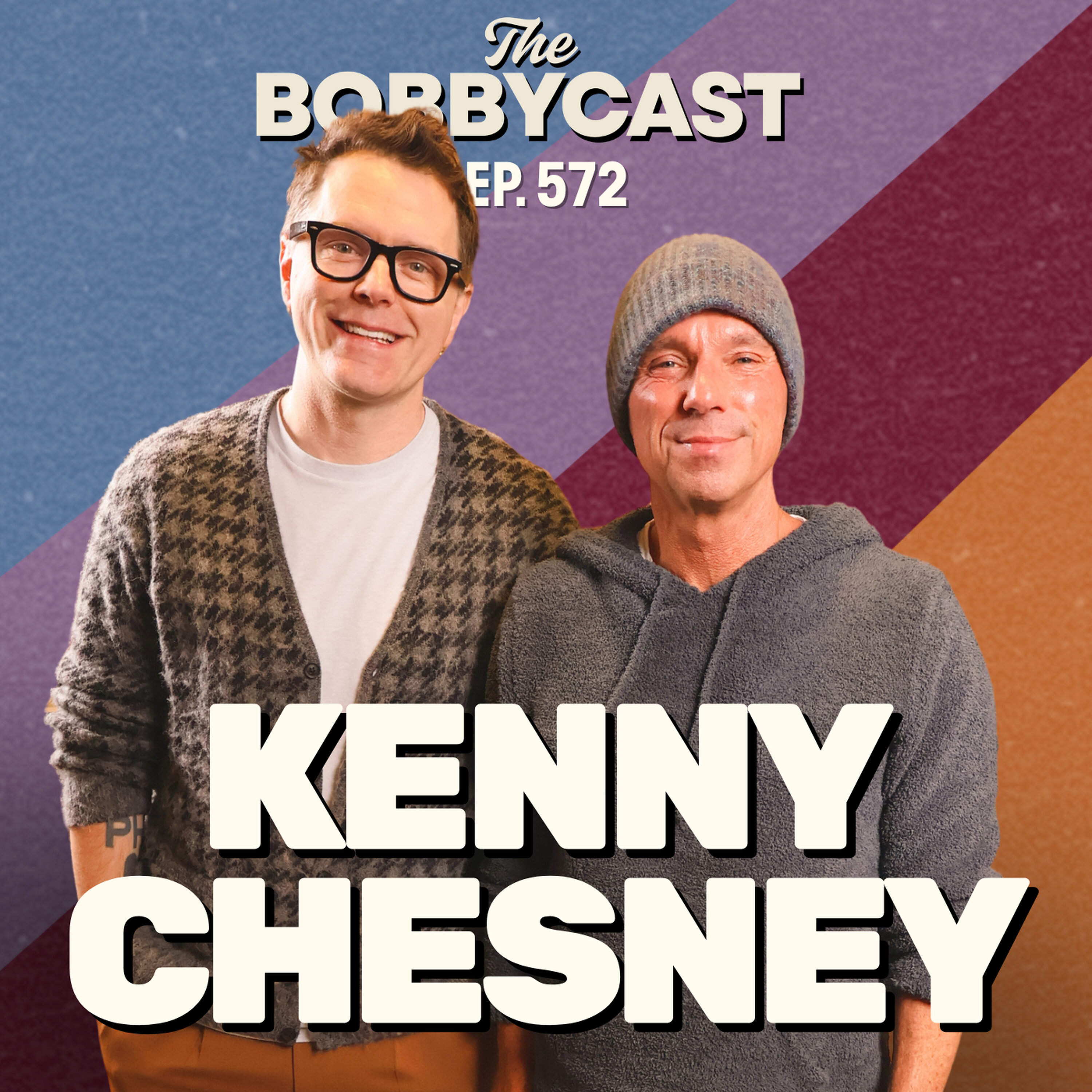
The Bobby Bones Show
BOBBYCAST (now on Netflix) - Kenny Chesney on Fame, Music and Can He Ever Go Unnoticed in Public?
01:06:02
Loading summary
Transcript361 lines
- [00:00]
A
This is an iHeart podcast. Guaranteed Human.
- [00:11]
B
Kenny, thank you for being here.
- [00:12]
A
Thanks for having me, man. Good to see you.
- [00:14]
B
This is our first Netflix episode, so.
- [00:16]
A
Well, I am honored, man.
- [00:17]
B
Thank you very much. I have my hometown sign up here.
- [00:20]
A
Yeah, I see that.
- [00:22]
B
772 people.
- [00:23]
A
Yeah, the story behind it. Yeah. But not that one.
- [00:26]
B
Well, no, that's the literal. Well, they had three of them and I asked for design of it and they sent this, the design. So we ordered it. But the one in my hometown literally has bullet holes all in it.
- [00:38]
A
So somebody didn't like Bobby.
- [00:39]
B
Somebody, I think is just tired of my name being on the town.
- [00:42]
A
Somebody was jealous of Bobby.
- [00:44]
B
How many people in Luttrell, Tennessee?
- [00:47]
A
Oh, I don't know. Maybe a little more than 700.
- [00:51]
B
Did you guys have like a Walmart or anything?
- [00:52]
A
No.
- [00:53]
B
Yeah, I mean, obviously we had a.
- [00:55]
A
Church, we had a post office. We had a couple of meet and threes. And that's. I mean, that's like an old school grocery store. Like, not a. It was a mom and pop grocery store. It wasn't like any of the chains. You know, we had to go in the Knoxville to get. To go to Kroger or anything like that.
- [01:13]
B
I was gonna ask if there was town, because for us to go to town, man, we went to Hot Springs and that's where Walmart was.
- [01:20]
A
That's right. No, we would go into town at Christmas. I mean, I didn't go down a lot of roads as a kid. I went down the road. I lived with my grandmother for three or four years, so that meant I knew the road to church on Wednesday night, on Sunday morning and Sunday night. And I knew the road to the ballpark where I played ball. That was it. But my grandfather was one of these people, you know, during Christmas, he goes, let's all get in the car and drive to Knoxville to see the lights. And that was a big deal.
- [01:51]
B
How far was that?
- [01:53]
A
45 minutes, maybe. But it might as well have been four or five hours. We didn't go that much. So that's how I grew up. So when I came in and saw that, I went, oh, wow. Because they put one up for me in my hometown and somebody just took it down. They just did. They didn't want to see it. So are you sure that wasn't a compliment?
- [02:12]
B
Like someone stole it?
- [02:14]
A
So maybe it's pot. I mean, there's a small chance that. That that's it. But you could just. I don't know, you could just feel the jealousy or something that you Made it. But either way, it was gone. And they didn't put another one back, but they did put another one, like, right down from where my grandmother used to live. And. And this one did make me happy. They put another one up because right in front of the Lutrell City hall, there was this big sign from me growing up that said, home of country music entertainer. Whatever they say. Chet Atkins. Right. Well, now there's one of me right beside Chet Atkins, and that makes me very happy.
- [02:54]
B
That's cool.
- [02:54]
A
Because I was a kid. Look. I was a kid looking at that. Now I got my own sign right next to him.
- [02:58]
B
So you mentioned your grandma and grandpa. My grandma adopted me and raised me growing up. What was the story with your grandparents raising you or at least living with them?
- [03:06]
A
Well, my mom. My mom and my real father divorced before I was one. And then my mom got married to my grand. I mean, to my stepfather. And then he went to Vietnam. So we lived with my mom's parents for three or four years. So that's where I first heard country music. You know, I. I would get up every morning when this. Going a little further back. My mom and my grandmother were pregnant at the same time. Having me and my Aunt Missy.
- [03:40]
B
No way.
- [03:41]
A
So they were in the hospital at the same time, almost having us. So I grew up with my aunt. Like, you know, I thought she was my sister, but not really. She was my mom's sister. Makes sense why this is really for people listening on Netflix. This is really East Tennessee stuff. But that's how it happened, you know? So when my Aunt Missy and I got old enough to go to elementary school, my grandmother went to work in the school cafeteria. So I would get up every morning with her, and we would go early because she had to open up the cafeteria for school and all the lunches. And that's where I first heard country music was in her house that morning. You know, those mornings getting ready to go to school.
- [04:24]
B
Who was born first, you or your aunt?
- [04:27]
A
My Aunt Missy six days before me. She's six days older than me.
- [04:32]
B
My Arkansas version of that story is my mom, who had me when she was 15. But her and her sister married my biological dad, who I don't know, and his brother. So my cousins are double cousins. Almost incest, but not quite.
- [04:47]
A
Not quite.
- [04:48]
B
We're as close as you can be, but it was two sisters and two brothers.
- [04:52]
A
So you understand.
- [04:53]
B
Yeah. No one really got it. I was like, we're double cousins. And they were like, does that mean you do it with them? I Was like, no, no, no, no. You got the wrong idea. But you're not far off.
- [05:03]
A
Not far off. So.
- [05:04]
B
So what kind of country music did you hear?
- [05:07]
A
Well, in her house, it was bluegrass. It was just this show on TV called the Cass Walker Something Hour. He had a chain of grocery stores in East Tennessee. And it's funny the things you remember, right? Because he had a slogan, and I guess I can say this, but the slogan was, you can beat our prices, but you can't beat our meat. No way. Swear to God. I remember that as a child.
- [05:39]
B
No way.
- [05:40]
A
That's a true story.
- [05:43]
B
So I guess my question would be, because that's so funny, and it would not work now.
- [05:46]
A
It wouldn't work now.
- [05:47]
B
Did beat our meat mean the same thing back then?
- [05:50]
A
Well, I didn't know what that even meant as a child when I heard it.
- [05:53]
B
No, I know, but do you think that was a masturbation reference, like a joke then?
- [05:57]
A
I mean, it had to have been.
- [05:59]
B
I would think so. I think it would have to have been.
- [06:00]
A
These were adults that made up that were in the market.
- [06:03]
B
That's so funny, right?
- [06:04]
A
These were adults that were doing the marketing. So they had to have. They couldn't have been that.
- [06:09]
B
It's like if a frat had a grocery store.
- [06:11]
A
That's exactly right. So that's where I first heard this music with three part harmonies and all this stuff, you know, so. But that's. It's funny, though, what happens to you as a kid or these things that you think that are really insignificant when they happen to you in your life and then you grow up and you go into your life and those small things meant everything, you know, and that's. That's the way it is for me in several places.
- [06:44]
B
Whenever my grandmother was playing music for me, I thought what she was playing was current because it's what I heard. And it were a lot of gospel records, like Andy Griffith gospel records, Ray Charles, country music, a lot of Johnny Cash, because he was from Arkansas. The same reason that I'm sure you love people from Tennessee or your hometown. Like. Yeah, but I thought that was contemporary country music.
- [07:07]
A
Well, I heard a lot of, you know, of course, Dolly. Dolly Parton was from east Tennessee. And there was a friend of mine, you know, of our family who I still love is singing, is a guy named Con Hunley. Con Hunley was from Knoxville, and I still look up to him. So those people taught me that or showed me that it was possible for the things that were rattling around in my head, right but growing up, it was kind of like you. I mean, I, I, my mom loved Alabama. She loved Merle Haggard, you know, and it wasn't until I got into and into high school that I heard about Leonard Skynyrd and I heard about Tom Petty, and I didn't know the genius of Bruce Springsteen or Bob Dylan or any of that stuff until I got into college. Because my musical taste now is very diverse. It's, it's, it's, it's. But I can tell you that I was always drawn to and curious about the people that wrote their own songs.
- [08:03]
B
Were you musical in high school?
- [08:05]
A
Not really. Just played bowl, it was singing song. But it was in college where I decided that, you know, my mom and my Aunt Sharon, my family sang and I did too. I just didn't know. I had no idea, Bobby, that I was going to do this for. When you said I was going to make this my life. I was an athlete. My father was a coach. I thought that I was going to be in some sort of an athlete or do something in sports with my life because I was very passionate about it. And I'm still passionate about sports. Sports and music are two passions in my life.
- [08:39]
B
Then where did you sing as a kid? Like church.
- [08:41]
A
Church, school. But never, I mean, I was in college before I had a guitar. And I was sitting outside my apartment complex my freshman year in college, and there was a couple of people that lived, you know, like it was outside. You'd walk outside and there was, you know, it was just the outside part of our apartment. And you'd walk down to all the doors and, you know, so I would sit outside and people could hear me playing. And there was a couple of people that said, you know, there's a, a lot of people that plays at Chucky's Trading Post. This is in Johnson City, Tennessee. There's people playing down there every night at Chucky's Trading Post for tips. Doing exactly what you're doing right here.
- [09:22]
B
At your apartment and you're doing it for free is basically what they're saying.
- [09:25]
A
You can do that and go make some money, really. And it just kind of sparked my imagination and I called them to see if I could come down and play for them. And actually before that, I went to see what they were doing, you know, and I was, me and my buddies went there to eat and I need. I didn't even tell my buddies what I was. What was really the purpose of the trip?
- [09:43]
B
Did you have to go and play for them?
- [09:45]
A
Yes. So I talked to somebody I talked to a waitress that night, and then after that, she. She introduced me to the manager, and I told her what I wanted to do. I said, I want to do that. What that guy's doing up there. And she goes, well, come here Saturday and play me some songs.
- [10:01]
B
When you do that, are you nervous because you haven't very.
- [10:03]
A
Because I didn't have a lot of material. She asked me, you know, I played her a couple songs. I could see I could. She was looking at me grinning, you know, and she goes, well, how much material do you have? I said, maybe an hour. She goes, well, you're going to need four. So I had to get. I had to learn some material.
- [10:20]
B
What did you know then? What do you think you would have played then?
- [10:24]
A
Well, I know what I played. I mean, I played a lot of country music that I loved. I played, you know, George Strait. Randy Travis was blowing up at that time. I played a lot of Randy. I played some Hank Jr. I played the Eagles. I played Jimmy Buffett. I played just a random Lynyrd Skynyrd. I love them. I played a little bit of Bruce, even though I wasn't that familiar with his catalog. There was a couple of songs that I really loved, like One Step up, which I would end up recording years later on the no Shoes album. I just played a lot of. A lot of stuff. And it was me and a tip jar and a bunch of people that were there to have dinner. But I didn't want them, you know, they were having conversation. I wanted them to listen to me. So it was a glimpse into the future a little bit, because I would just. I was really loud in there, you know, and they did. I got to talking to a couple of times in management.
- [11:23]
B
Oh, they didn't want you to be loud?
- [11:24]
A
They didn't want me to be that loud. I said, well, I want them, you know, pay attention to me. And so I learned my lesson there. I had to turn it down some, but it was truly a glimpse into the future. Cause if you come to our shows in any kind of environment, it's. It's not timid.
- [11:40]
B
I want to come back to this exact point, but it reminds me. Because you're going to do Sphere, Part 2.
- [11:44]
A
Yes.
- [11:45]
B
So I didn't come out. I know I should have come out. But people aren't looking at you because you've built such imagery and you're talking about, like, people. They didn't go to listen to you. But it just. It made me think of this.
- [12:00]
A
It's ironic, right?
- [12:01]
B
That you're in this sphere, and you've built this entire career. You're one of the great. You're a current and a great at the same time, which is wild, because that's unique. Yeah, very unique. But again, you've built this show to where people aren't looking at you. I know that's got to be weird to even do that the first time, right?
- [12:17]
A
And you look, in the beginning, it was weird, I'll tell you. But they can't. You just can't help yourself because you. It's. It's such an emotional experience and a visual experience. So, you know, at first, you know, we're up there playing and there's. Like I said, people are just like. They're processing what's happening to them.
- [12:39]
B
But that's weird for you because that's never happened to you. That hasn't happened to you in years.
- [12:43]
A
Not until early. Not since early on in my career. But luckily, over the years, I have learned how to control an audience and learn how to talk to an audience. And slowly but surely, we were able to get their attention and pull them across the fence to us and still have them see what's going on. I mean, us as a band, we're doing it, you know, we're like the first. The first weekend, you know, to be up there in that space and playing our music, and we're just like, wow, you're watching it. We're watching it too. Wow, this is unbelievable. But that's what. That's what makes Playing Sphere so incredible is, you know, when you go to a regular show, there's the band and there's the audience. And some people even put a shear between the two. I don't like that. I say, come here. You know, we're gonna love on each other all night. But still, in a regular show, there's a separation of the stage and the audience playing Sphere. It's like we're all in there together. It's just such a shared experience and it's hard to explain. And it took. I think it took us the first three shows, like we. And we're gonna do it this year. We played three shows a week. We did Wednesday, Friday, Saturday. And I think it took us the first weekend to learn it. And after that, we were able to bring them across the fence to us and were able to make it as more of a normal show as we possibly could, because there is nothing about it normal. Everything is so immersed. And it's like, oh, wow, the band, the crew. Then there's the Audience. And then there's the content that is not just behind you. It's here, it's. It's over there. You can see it behind the crowd, you know, so it took. It took me a minute to focus, right? So. But we're looking forward to it, you know, now it's. It's a much less learning curve this year because honestly, you know, getting ready to do it and, and preparing all the content and figuring out how it all works was. There was a learning curve to it, and now we're preparing for it and we're going, oh, yeah, we don't need to do this. This works better this way, you know, which. And we're changing, you know, a third of it because, you know, there's probably going to be some people come this year that came last year, and it's like going to the circus every year. You want to see different tricks.
- [15:09]
B
Back to the restaurant. Did you know when you started playing the restaurant that that's what you might want to do your whole life, or did playing that restaurant make you go, this is what I want to do my whole life?
- [15:18]
A
It wasn't the restaurant. I went, wow, this is cool. I had a tip jar and I would leave, you know, with some cash in my pocket every night. And I was in college and I was. It was at a Mexican restaurant and I was getting free enchiladas every night. And I was. I don't know. When you're in college and you get a free dinner every night, playing four nights a week eventually. And then it went from there to me playing in a real bar.
- [15:47]
B
Did you build a fan base at the restaurant?
- [15:48]
A
Yes.
- [15:49]
B
Did you like Red regulars?
- [15:49]
A
So it's kind of like there was. There was four or five groups and, and bands in town. There was a. There was a. There was a band called Plane Jane has no Date. There was a. There was a.
- [16:06]
B
That sounds like an alternative band.
- [16:07]
A
It was, it was. Yeah. And there was a group kind of. It was kind of garage bandish group called Stinky Finger. And then there was a couple of guys playing guitar. There was this great guy named Alex Ogburn who, Who played everything. And I was the country guy. Right. So I, I started to build a little bit of a following and. But it was in a bar called Quarterbacks Barbecue and it had no windows and it was about as big as this room. Right.
- [16:39]
B
Did you play any songs that were your own at this point?
- [16:42]
A
Well, I mean, I like.
- [16:44]
B
Did you write any songs at the barbecue house?
- [16:46]
A
I had. I had a couple of songs that I had written, but I wasn't, I knew better, you know, because I was, I was getting to a point where I was like, oh, wow. People were actually, especially in the bar setting, they were listening and there were people in front of me for the first time. And it was one of those late nights of playing in that place, and there was smoke everywhere, and I didn't smoke, but I would go home after, after playing these places, and I would smell like I did, you know, it was like in my, it was on my skin, you know. But it was one of those nights where I saw connection with just a few people and they felt it, I felt it, and they cared about what I was doing. And I was, I was learning how to do this, and I was getting better. I was, you know, just getting better at all of it. And it was one of those nights that I went, wow, this might be something that I might really, this might be my life. And look, I was, I thought I was, I was a marketing major and I was going to do something, you know, with that, but I had no idea that music was going to become my life like this. Obviously, you know, you can't dream that. Let's take a quick pause for a message from our sponsor. And we're back on the Bobby cast.
- [18:12]
B
What would you have done if you wouldn't have had those nights that made you go, hey, I think it's music. You're a marketing major. What do you think you'd be?
- [18:21]
A
I don't know. I mean, I think that, I think on some level I'd be playing music somewhere, but I don't think if it wasn't my life, it would be, you know, for fun, because that's what I still believe. Music is still fun to me. Creating and playing music on stage is still fun to me, but it would be something, I think within sports. It would be, I don't, I don't know. I might be Bobby Bones. Who knows? I might, I might be doing something in radio or I might. Something we're doing. Working marketing for some, for someone. I, I, I, I don't know. I've. Can you see how uncomfortable I am with answering that? Because I really have no idea. I mean, this was a godsend. I mean, this was what I was supposed to do. It's what I was put down here to do.
- [19:06]
B
Did you finish school?
- [19:07]
A
Yes, I graduated East Tennessee State University in Johnson City, Tennessee in December of 1990.
- [19:14]
B
Then what happens, right when you graduate? Do you move here?
- [19:16]
A
I moved to Nashville less than a month after that.
- [19:20]
B
Were you planning to move here, though, after you graduated?
- [19:22]
A
Yes. And I moved. I moved to Tennessee. I mean, I was in Tennessee. I moved to Nashville January 13, 1991. And the reason I know that is, that's because that was the day the first Gulf War started. Not ws. Not President W. George Bush, but his daddy. When we went in, was that all.
- [19:45]
B
The unscrews you saw, like the bombing at night in Iraq?
- [19:48]
A
Yeah, like, that was happening. When I first moved to Nashville, I didn't know anybody.
- [19:54]
B
Yeah. What was it like when you moved here? Like, what are the memories of you moving to town?
- [19:58]
A
It was like. I think my mom and my family thought this was something that I was gonna do for a little bit and decide it wasn't working and come home and get a job. Like the guys that work with me out on the road, Tim Holt, Darrell Hobby and David Farmer, those guys, I went to elementary school with them. I went to high school with them. We were all college roommates. And they have been on the road with me almost this whole time. And David's my real manager, and Tim and Darrell run my merch company, you know. But I think they thought at the time that I was just going to come home and get a job like them, but. Because Tim and Darrell went to work for a credit union and.
- [20:36]
B
Classic Tim and Darrell. Right.
- [20:37]
A
And I was. I was. I was down here trying to meet people and write songs and. But I got a publishing deal pretty quickly. I mean, it was a little over a year. I got a publishing deal at Acuff Rose Music, which was eventually bought by Sony. But it was crazy, Bobby. All of a sudden, I was in town about a month, and I was playing down on Lower Broadway at a bar that no longer exists called the Turf Covers again. Covers. Kind of like I did in college, because I had been doing that for two or three years in college. And then I got here. I got to Nashville, and there was nowhere to do that unless you wanted to go down there and, you know, get. It was an area town. Now, if you go down the lower Broadway now, you know, every singer's got a bar. It's like, you know, there's. It's a bachelorette destination for whatever reason. It's much different.
- [21:35]
B
It was shadier then.
- [21:36]
A
It was. Well, I mean, there was a. There was a. Yeah, it was dirtier and a little more dangerous than it is now, but still, it had a lot of. Of charm that built this town. And I got to see that, and I was down there. That's what I Did when I first got to town.
- [21:55]
B
Did you audition again there like you did at the barbecue place?
- [21:58]
A
Yeah, but I auditioned that afternoon and sang that night, so it was pretty, pretty wonderful.
- [22:06]
B
Was it another night of four hour sets?
- [22:08]
A
Yeah, I mean, it was. Yeah, it was 45 minutes on and 15 minutes off. I did that four times. And so I would do that at night and I was able to write during the day and I was parking cars at a couple of places around town, you know, working valet and doing all that kind of stuff. But then when I got signed to Acre Froze, it was all of a sudden, I mean, it was bigger than life to me because I was in the hallways and seeing people that I truly looked up to, like Dean Dillon and Watty Schaefer and Don Sampson and Skip Ewing and all these people that were great songwriters and I was in those rooms. I couldn't understand why, but I was there and that truly changed my life.
- [22:53]
B
When you're valeting cars here, did you valet for anyone famous?
- [23:00]
A
A lot of executives, right? I don't remember valeting for anybody that was famous.
- [23:07]
B
No Johnny Cash dropping off a truck, none of that.
- [23:11]
A
I think, I think it wasn't his car, but Kenny Rogers was in one of the cars that I did valet, you know. But I remember a lot of the executives would roll in and I would valet their car. And I was used to my mom's car and my grandmother's car and then the truck that I had that didn't have air conditioning in it, right. And I would get their car and when I'd valet it, I would go, I'd go, damn, this smells really successful, you know what I mean? It was just different.
- [23:42]
B
If you drop off your car truck now, and I've had this happen to me, especially when I. The first five or six years here, people would leave music in my car.
- [23:51]
A
Oh, that's happened to you?
- [23:53]
B
Oh, yeah. Or if I'm eating dinner and I've had it before where people would leave something like a waiter and I would take time. I've brought them up on the show before. If they were good and some of.
- [24:04]
A
Them weren't, that's great.
- [24:05]
B
But the problem with that was when I did it and talked about it, then it created more of that.
- [24:11]
A
Yeah, yeah, that's the thing.
- [24:13]
B
I know.
- [24:13]
A
Did has that happened to you as now it's more. Yes, that's happened to me a lot. But not leaving it in my car or whatever. Look, my mom used to cut hair for a living, right? So people would just come there and Just drop off stuff to her. I mean, that was there. That was one way, you know. Now it's much different because they don't have to go anywhere. They can just send it to you on social media.
- [24:37]
B
Yeah.
- [24:38]
A
Have you got. Yeah.
- [24:39]
B
So much so that it's everywhere all the time, that I don't see anything. People are always sending me stuff because it's so much.
- [24:45]
A
Yeah. That I don't. Because I don't want to listen to any of it. Because I don't want them to come back at me and going, hey, I sent you this. And you recorded something similar, like in some lyric that I didn't even write. You know what I mean? So I just. I got my people.
- [24:59]
B
I had to buy insurance because when I started recording comedy music, I had to buy insurance that said if I get sued, because I hear if somebody hands me something and they sued me. My business manager. And again, business manager was new to me, much less having to buy insurance for stealing somebody's song. And I thought that was wild. But because I was taking and listening to so much new music for one part of my career, I had to have insurance to cover me in case someone said, well, I gave you this music and you recorded a funny song. And there's a couple lyrics in that that you took. I thought that was wild.
- [25:32]
A
Now I get also that, look, people are trying to. To build their own dream and they're trying to find their way. And I, Like, I was that person, but I don't think I ever left. I mean, I never left a CD in Irv Woolsey's truck or his car.
- [25:47]
B
Did you think about it?
- [25:48]
A
Right. I mean, I didn't have to, actually, because I was a writer for A Cuff Rose. And then they had people to take to Walk it across the street and give it to Irvin George or whatever, you know, But. But I understand why they're doing it, but to this point now, it's just so. It's such the wild, wild west out there. I don't ever listen unless it's given to me by people that I really trust.
- [26:14]
B
When you move here, when you got a publishing deal, did you come with a bunch of songs?
- [26:18]
A
Yeah, they weren't refined at all. I mean, I had to learn. Look, I learned from afar. Like, I loved songwriters and I learned songwriting. And so when I first started writing songs, and then I started looking at a lot of the people that I loved who were songwriters and their songs, I realized that theirs were a lot more well crafted than what I was doing. Mine was Like I'd write a song about a girl and it was seven minutes long. And I realized, okay, that doesn't work. That's not gonna work if I want to do this, you know. But I. One of the first people I met in Nashville, there were a few people that really, you know, gave me a lot of great advice, and that was Clay Bradley at BMI at the time, and he's there now. A guy named Tom Collins. There was a guy named Jeff Gordon. Not the, not the NASCAR driver, but there was a guy that worked at MCA named Jeff Gordon. And I was able to go and play him songs. And then there was a girl that really became a huge part of my record making life. Her name was Renee Bell. And Renee Bell. And I made almost every record that people have heard in my career. And those people were able to, you know, give me a lot of direction when I first came to town and. Which was a blessing. Not everybody has that, you know, but they, I think they could see how much I wanted. Wanted it and I think they could see how much I loved creating and how much I cared about songwriters and songs and. And I still do.
- [27:58]
B
When you moved here, did you play any, like, rec softball leagues or any like, because you're an athlete? And when I moved here was like, how do I find people to play ball with?
- [28:04]
A
I didn't.
- [28:05]
B
No, you gave it. They gave that all up. Playing, I think.
- [28:08]
A
Yeah. Really. I mean, and I love sports so much. And that's the thing, one of the things I miss the most, like me and my buddies out on the road, you know, one of, one of the things that we have that we feel very grateful and fortunate for is we're out there on the road and you're on the bus outside the Pittsburgh Steeler football stadium. We're, wow, this is amazing. You know, we would go in and play all these places and when I played the Rose bowl on Pasadena, California, I brought my dad and his buddies out there because I can't tell you how many times I've sat on a couch a lot like this when I watched the Rose bowl with my father. And now all of a sudden I'm a small part of that history, you know, through music. So we have, we've talked about the thing that, that we miss the most. And the thing that I miss a lot is competitive sports. I don't have that much in my life anymore. You know, maybe one day I'll. I'll get on a church softball team or something.
- [29:06]
B
You know, I started playing pickleball and I started competing at pickleball.
- [29:09]
A
No. I got a lot of friends that play pickleball too. Do you like that?
- [29:13]
B
I need to compete at something.
- [29:14]
A
Yeah.
- [29:14]
B
Like, I love to play ball and so pickleball, you can pick it up pretty easy. I'm still pretty athletic. I was playing in tournaments, I was driving and I was playing in like 3.5 tournaments, which is a pretty high level. Not the highest, but pretty high. And I tore my ankle, so it's like my age.
- [29:31]
A
Met recently.
- [29:33]
B
Yeah, I just got out of a boot.
- [29:35]
A
Oh, yeah.
- [29:36]
B
So it's awesome. But I'm like that. I need that fulfillment. I need to compete because I was playing when I moved here. I, like, found a rec. Softball league to play. I was playing just trying to find that. And I wondered if you still tried to find.
- [29:46]
A
Yeah, maybe I should do that.
- [29:48]
B
You shouldn't now. No.
- [29:49]
A
Yeah.
- [29:51]
B
I've been in a boot and on a scooter for like four months.
- [29:53]
A
It sucks. Well, you know, I, I work out a lot, especially when I'm training to go on the road. I worked out with the same guy for a long time and.
- [30:02]
B
Are you yoga, Yoga guy?
- [30:04]
A
No.
- [30:05]
B
You don't do yoga.
- [30:06]
A
I've done hot yoga.
- [30:07]
B
Yeah. Okay.
- [30:08]
A
I like, I love how you feel when you get out of there. You feel so depleted.
- [30:12]
B
I've done hot yoga too. I guess I, that's still yoga to me. It's not yoga to you. That's insulting to say yoga if you do hot yoga.
- [30:17]
A
I mean, I guess it's a form of yoga. Right?
- [30:19]
B
Isn't it the same? Just, it's just, I don't think it's.
- [30:21]
A
Maybe I'm wrong. I don't know. I'm not the yoga expert, but I think when I have a great group of friends in Malibu, where that's more healthier of a group than I have in my life and other places. And I've done, and I've done yoga with them and it's much, it's harder to me than doing hot yoga. Hot yoga. I mean, I'm sure there's a lot of poses and stuff that that's, that's part of yoga. But it didn't seem as difficult to me. And I may be completely wrong. Maybe it's because I'm just so hot in there. I don't, it doesn't seem so. But, but yeah, I, I, I, any way that I can get where you can sweat. And I, I'm, I do heat and ice all the time. I do a sauna. I do 15 minutes in the sauna, and. And I do about. I'm working my way back up to three minutes in the ice, which is hard for me, but, you know, being. I'm 57 now, so anything that you can do to get toxins out of your body and help your body heal, you know, especially from working out as hard as I do, it's. It's great. And. And especially when you're on stage, when. When I'm working out there, you know, I beat my body up.
- [31:35]
B
Do you ever get really gassed out there?
- [31:37]
A
Well, yeah, especially if it's. If it's humid, you know, but that's one of the things that I. One of the reasons I train so hard is just for my cardiovascular, you know, to be in shape for that. Because if you're out there, I can't help it. I have video footage in my grandmother's kitchen of her and my mom and my Aunt Sharon and my Aunt Missy, all of them listening to music. And I'm. Bobby, I'm telling you, if you look at that video, I'm moving the same way as a child as I do on stage as an adult. It's the same move, the same stance, everything. But I can't help it. So when you have the band that I have and the drummer that I have and the guitar players and all of it, I move. And so I have to be. That's the thing I am in constant thought of thinking about, okay? It's one thing to train and be in shape and, you know, to get in what I call my show jeans, right? But it's another thing to be up there in the moment, feeling all that energy and the rush of the audience and the band and those two energies and synergies meeting, okay? And you not feeling overwhelmed, and so you can sing in the middle of it. And that's what I train for. And that's something you can't simulate on a treadmill or in the gym or anywhere. You got to work your way through it.
- [33:02]
B
Do you ever do the merch lottery with your guys?
- [33:04]
A
I did merch lottery for a long time.
- [33:06]
B
Will you explain that?
- [33:08]
A
Well, I did merch lottery. I don't know. It was four or five years in a row. And I started doing it the first year. We were playing football stadiums across America, and I went, you know what? I'm gonna like these guys right here working really hard. And I've decided that I was gonna pick one stadium show on the tour, and whatever was made that night, we're gonna do a merge Lottery and we, we. When I played Sammy Hagar's birthday party one year, he gave me this. He met me in the band at the airport and gave us all sombreros and had had trays of tequila shots.
- [33:51]
B
He met you at the airport?
- [33:52]
A
He met us at the airport, you know, and he goes, happy birthday to me. And so here we are in the. We're going through customs doing tequila shots and sombreros. It's great, you know, so I wouldn't take anything for that sombrero, you know, I had it. I caught a blue marlin off the north drop in the Virgin Islands one year and had it, you know, took it to the taxidermist and so we still have it out on the road. And I have that sombrero Sammy gave me on top of that blue mar. We had a row case built, built for it and everything, and it's still out there. So I decided we were going to. It's almost like drawing names for Christmas, you know. So we put everybody's name on a piece of paper in that sombrero and we brought everybody together and I would go out there and shake it all around and pull out a name. And whoever's name I pulled got all the merch for the stadium that night.
- [34:43]
B
All the money.
- [34:43]
A
All the money. All the merchandise.
- [34:45]
B
What would that be?
- [34:46]
A
Which could be life changing money. It's six figures, really. Yeah. So what they ended up doing though is after a couple years, whoever got them, let's just say you got the money. You know, if you're, you're a part of the video crew and I, I pull out Bobby Bones's name. Right. Well, what they started doing is just sharing it with everyone, which was great. You know, they split it up amongst everyone.
- [35:13]
B
So the first couple of years though, someone would win like two, $300,000. Yeah.
- [35:18]
A
Wow. The Bobby cast will be right back. This is the Bobbycast.
- [35:34]
B
What if. Because that makes me think of like those lines at Starbucks where they keep passing it on. What if somebody didn't share it? It's like two years and Jim wins and he's like, screw this, I'm keeping it.
- [35:48]
A
Yeah, well, I mean, that happened a couple times.
- [35:50]
B
Like somebody that cuts off the Starbucks pass it online.
- [35:52]
A
You're like, they didn't know they had to share it. You know, that was part of the thing. Oh, you know, somebody's life could, you know, be changed, whatever. But then, then they decided, oh, well, you know what, all of our lives are going to change a little bit.
- [36:05]
B
Yeah, that would be crazy to win The Merch Lottery.
- [36:08]
A
I know. Yeah. When I first did it, I was like, all my buddies are going, you sure you want to do this? I said, yeah, I'. And then we did it. It was like, ah, okay.
- [36:18]
B
You put your own name in it.
- [36:20]
A
The winner, Kenneth Cheese. Me. Yes.
- [36:27]
B
You moved to town. How long until you actually have.
- [36:30]
A
But think about that. Think about moving the town and not even not having anything to a point where, oh, you're doing Merch Lottery.
- [36:38]
B
How long until you get any sort of. As an artist, any sort of traction?
- [36:43]
A
Well, when I got my songwriting deal first with Ako, froze. And then it was about a year and a half later that I signed my first deal with Capricorn Records. But that was a lot like playing AAA baseball. I thought I was in the major leagues. My family thought I was in the major leagues.
- [37:08]
B
The record label, you're saying?
- [37:09]
A
Yeah, yeah. Being on that, you know, because I didn't know. I was so green and oblivious. I thought that I had a record deal and I did, but it was. It was a. It was getting to learn things, and I'm so grateful for it, but I was not competing. I would. I wasn't even on the same playing field as the major labels, you know, but it gave me an opportunity to go out on the road. I had a band. I was growing an audience, barely. I was selling a little bit of merchandise. You know, I was. I was learning. And it was not until after. There's a guy named Joe Galante who was running RCA in New York, and he signed Dave Matthews, and he signed a lot of people that we all know and love. But he came back to Nashville to run the Nashville division, and I was one of the first people that he signed.
- [37:56]
B
How did you get out of the Capricorn deal?
- [38:00]
A
I went and asked for off of.
- [38:01]
B
It because you knew there was a new.
- [38:04]
A
I was feeling, and I knew we weren't going to. And I learned very quickly that I was on an independent, if you will, record label now. It was a very big label out of Macon, Georgia. I mean, they had a lot of big acts on there. And to this day, I am very thankful for Phil Walden and everyone involved in that, because you get to a place in your life and you know that every single part of it is for a reason, and that is no different.
- [38:32]
B
Did they keep a little percentage of the Kinney after you left?
- [38:36]
A
Well, it wasn't. They didn't let me go for free.
- [38:38]
B
Yeah. Okay. Yeah.
- [38:39]
A
So we had to. You know, to Phil's credit, you know, I. I Went in there and Phil knew what I was coming to talk about, and he was nervously moving some papers around and he goes, what's going on, Kenny? Tell me something good. And I said it was in the fall. I said, well, Tennessee Play Saturday. That's good. And, and, and I said, phil, you know, we're not competing. You know, I said, please let me off the label, you know, so I can go and, and, and pursue something else. And, and I'll never forget it. He, he goes, kenny, I signed you because I believe and believed in you, and I'm letting you go because I believe in you. He goes, have the lawyers call me and we'll work it out. I went, okay, great. I didn't care what the details were. I was out that door very quickly. But yeah, it wasn't for free, but it changed my life.
- [39:28]
B
When you started having hits, do you feel like those hits are still in the same vein of the music you make now?
- [39:33]
A
No.
- [39:34]
B
The reason I ask, we're doing this documentary type series on the 90s in general, and I think we talk about you a lot in 97. And that may have been when you get your first number one. Yeah, but it also, that music, as awesome as it was, it doesn't feel like the same, Kenny.
- [39:50]
A
Well, it's sonically much different. And I was making music in the. Look, I was just trying to get on the radio, so I was trying to be anything that was successful. I had no idea who I was as an artist. I had no idea where this was going to take me. I had no idea. I didn't. I was so green. I was just making records that I thought would get played and, and some of those records I, I'm proud of today. Some of them I'm not. But when you do this a lot, you start to grow as a. And I've, I've co produced almost everything that I've ever done. I did that with Barry Beckett and me and Budd and have made all the records since then. But sonically, it's a much different. Well, it's a much different time in our, in our genre and in music worldwide. But if you listen to 90s country, Kenny, and then you can see the progression sonically, and I think that the song sense got better. And I remember having a Coming to Jesus meeting with myself and I said, you have to be better, you have to be better. The songs have to be better, the production has to be better. You as a human being, you have to be better. I'll never forget it. I was in My apartment complex out east of town. And it was one of those epiphany moments. And I had a list of things on a yellow note on a yellow legal pad of things that I could change that would, that needed to happen for me to go to the next step. And I started working on that list.
- [41:29]
B
Did you ever feel like you wouldn't make it? Did it ever get so bleak that you're going, I think this may not work out?
- [41:33]
A
Yes. I mean, well, even. Okay, so after, after Capricorn, you know, Joe signed me to a major label deal and it wasn't working. You know, we had a few hits, I had a few songs and that, that, you know, got into the top five and, and, but look, Bobby, I had. What's crazy, what is really crazy about my life and my career is I had an 18 song greatest hits album and nobody knew who I was.
- [42:04]
B
So then why did you make the greatest hits if they weren't that great?
- [42:07]
A
Because we had the songs and it was, honestly, it was a marketing move by the label. Okay. Now, okay, none of these are really successful, so we're just gonna bunch them all together and make it successful. We went double platinum on a bunch of songs that weren't that successful. So it's a true story. And then that led me into the where that, it was during that period that I went, okay, we have to make this better.
- [42:33]
B
So you had a greatest hits album that launched your career, like supercharged it, I would say.
- [42:37]
A
But it was double platinum. We sold 2 million greatest hits records, you know, and, but that gave me time. And there was about a two year period from when the greatest hits package came out to when the no Shoes, no Shirt, no Problems album came out that completely changed my life. And because the music had changed, I had changed mentally, I had changed physically. I was in shape, I was, my brain was on fire with creativity and it just changed. Yeah.
- [43:08]
B
I was going to ask if you ever had a tough love yourself. It sounds like you were doing that to where there are probably decisions you have to make. If I'm going to be better, I have to stop. And I don't know, it could have been drinking.
- [43:17]
A
Yeah. But, well, I mean, it was, it was, I changed my diet.
- [43:21]
B
Yeah.
- [43:21]
A
I changed my, I don't know, I, I, I gave all of it.
- [43:27]
B
Are there any songs that you recorded back then that you don't like to play now? They were number ones.
- [43:33]
A
Yeah. I mean, I wouldn't say don't like to play. You know, we still do Don't Happen Twice in The show. And for whatever reason, it still fits in our show. We do Tractor every now and then.
- [43:46]
B
Just.
- [43:46]
A
There's a moment that I got really sick of Tractor. Like, I just thought, well, if I don't have to sing Tractor anymore, it's not going to hurt my feelings. But then Megan Maroney comes out on the road with us, and she's out there for a couple weekends, and she goes, why are you not doing Tractor? I want to hear Tractor. She was. Everybody out there wants to hear Tractor. I want to hear Tractor. And I said, okay, well, you're going to come up and sing it with me. And she goes, deal. And then I did it. And she was right.
- [44:12]
B
They go crazy.
- [44:13]
A
They go crazy. It's just. It's like, okay, me, mentally, I'm past it, but it's. It will forever be there, you know, and that's when she and I became. Started to become really good friends, you know, so. But that's how I started. That's how I started playing Tractor again, is because Megan more or less forced it on me.
- [44:33]
B
I think she, for sure, my favorite. I think she, if not the best, is one of the best new in this new version of greats. I think she's one of the best songwriters that exists.
- [44:44]
A
I think that she has a. You know, I've had the luxury of being around her now for a couple years and getting to know her, and she has a very unique work ethic. She has a very unique song sense. She has an unbelievable personality. She has an unbelievable sense of humor.
- [45:08]
B
She's so funny. I was about to say that. She's so funny.
- [45:10]
A
And not everybody. I mean, you have to really get to know her and peel the onion back to see how thoughtful she is. I mean, she's just an amazing human being, but there's a work ethic in there that early on that I recognized, if that makes sense, you know, and that's how we became really good friends out there, you know? And so over the. Over the course of the 2024 Summer Tour, Megan and I became. Became very close, you know, And. And, I mean, we're. It's. We played the Atlanta Falcons football stadium in 2018, and she was a college kid up in the 300 section with her friends. Now think about how powerful the universe is. And if you would have told me on stage that night that you're going to become really great friends with a person up there, you know, I told you you were crazy, but that happened, you know, and to see what's happening to her and to See her take it and run with it. And to see how. Speaking. I told you earlier that my brain was on fire. I recognized that because her brain is completely on fire with creating music and giving her audience positive energy and love. And it's been really interesting to see what happened to us. It's happening to one of your friends, and I get to watch it from the side of the stage.
- [46:33]
B
Flip that, though. Who were you in the crowd for that? Was that where. Later on, you're the kid that I got to know. Yeah, but you were watching them at a show, and again, same thing happens. It's like, holy crap, I'm on stage with whomever or I'm friends with whomever.
- [46:47]
A
Well, when I was in. When I was in high school and I went to see Jackson Brown by myself, because I was. I loved that music, and I was beginning to think about, you know, how much I love songs and whatever. And I went to see Jackson Brown never knowing that I would meet him, ever. Right. I went to see George Strait never knowing that I would ever be on the road with George Strait ever. And I was. I. That's how I got introduced to the world of doing stadiums. I was out there two summers in a row with George, and it changed my life. But I. Now, of course, you never can think that, you know, but I think it's very interesting. I think people are pushed into our lives for reason, in and out, you know, and it's. It's. I think, you know, it's just the universe works in crazy ways. And to see that what's happening to Megan is. Is beautiful. But also, I mean, the one that really comes to mind is when I first moved to Nashville, I had zero money. I was living with a friend that I was in a bluegrass band with in college off of Belmont. Okay. She let me stay in her house because I. I had nothing. It was right before I signed with Echo Froze Music. And a lot of my friends were going to go see Jimmy Buffett at. Which is no longer there, at a place called Starwood Amphitheater. And I went to see Jimmy. It was pouring rain that night. We went in a party bus, and I went home that night, and I was lying in bed and I was staring at the ceiling going, what did I just see? I'd been to a lot of concerts, but I never saw somebody love their audience quite like that. And it made an impression. Right. Now you fast forward. That was in 1990. That was in the summer of 91. Now you fast forward 12 years, right? Whatever it was When I first met Jimmy Buffett, I was with my friend Holly Gleason, and she had a friend in Palm beach that knew Jimmy, and we were playing in Vegas at the same time. Jimmy was playing across the street at the mgm, and I was playing. This was right when my life changed. And I was playing the. The. The arena at Mandalay Bay. And we walked over, and there was Jimmy and some of his, you know, road family with him at the pool at the Four Seasons in one of those cabanas. And I walked up and I went, there's the guy that I saw play in the pouring rain in Nashville, you know, and never knowing that I would become friends with him and collaborate with him and. And be in the studio with him and become friends with him and get to know him on any level. So that was. That's kind of my version of me and Megan, if you will. Let's take a quick pause for a message from our sponsor. And we're back on the Bobby cast.
- [50:01]
B
Do you ever just go to Sonic or Chick fil a and order something and they look at you like, there's no way Kenny Chesney's ordering Sonic or Chick Fil a by himself?
- [50:10]
A
Well, I mean, it's been a minute since I went to Sonic or Chick fil A, but I do love when I was eating Chick Fil a. I love the sweet tea. I did love that when I was drinking that stuff.
- [50:19]
B
But cheesecake fact anywhere? Do you have anywhere not specific, but just in there?
- [50:24]
A
Yeah.
- [50:24]
B
I mean, they're like, why is Kenny Chesney at a gas station in Tupelo, Mississippi? It's just random. Do you ever just do that? Are you ever by yourself in normal places?
- [50:34]
A
Yeah, I mean, I go to normal places. I mean, I can walk between the raindrops pretty well. No way.
- [50:39]
B
Grocery store, kinda.
- [50:40]
A
Well, it's been a minute since I've been to a grocery store, but I go early. If I go to the grocery store.
- [50:45]
B
Where do you go? That's so normal that we'd be like, there's no way Kenny Chesney goes there.
- [50:49]
A
Oh, well, I don't know. But, I mean, I've been at gas stations or whatever, or, you know, I would be at a. At a restaurant, you know, whatever it is. And I remember this guy recently. He was. You know, him and his wife were staring at me. I got radar pretty good, you know, and I. I could just tell. Okay, well, you know, they're.
- [51:10]
B
Or if a phone's up, a lot of the angles.
- [51:12]
A
The worst mention ever was when they could do it backwards. They can act like and, you know, whatever. But he could. He finally comes up to me and he goes, you're him, aren't you? I said, well, it depends on who you're talking about, you know? But you know what? Usually, I mean, look. Yeah, when.
- [51:32]
B
What about traffic?
- [51:33]
A
If someone looks over.
- [51:34]
B
You ever see people look over in traffic?
- [51:35]
A
Oh, no, all the time.
- [51:37]
B
And they're like, is it Chesney in traffic?
- [51:38]
A
But when people come up to me and, I mean, nine times out of ten, it's pretty positive. You know, I haven't drank in a while, so when. Especially if I'm on island or down south, and they. You know, back when I was really partying a lot, and people would want a picture, and I would say, no, I mean, I. I can't see your camera. You know, I'd rather not take a picture, but. But now, I mean, there's worse things that people could say to you than, I love your music. And, man, that's part. That's what happens. We just want to tell you that we love your music, and there's a lot worse things people could say to you. That means a lot.
- [52:19]
B
I only got a few more minutes with you, but people bring their best, their favorite, or one of the records that influenced them the most. And we talked about Jimmy Buffett. Is that a Jimmy Buffett record over there?
- [52:32]
A
That's it.
- [52:32]
B
Would you mind holding that up and telling us why you picked this record?
- [52:34]
A
Well, I picked this record, and it's interesting. We talk about a greatest hits or a compilation, because this is a compilation. You know, what is it?
- [52:42]
B
What record is that?
- [52:43]
A
Songs, you know, by heart. And this was one of the records that captured my imagination. I say this a lot about my friend Jimmy Buffett. He was one of the first people that taught me it was possible to paint pictures with words. And it took my brain somewhere else. A kid from East Tennessee that didn't know that it was possible to sit on that boat. Somewhere on the bow of that boat. It just. It was. This music really meant a lot to me and this. This album, you know, because I. You know, it's the first time I heard pirate looks at 40, which is still one of my favorite songs ever. I played pirate looks at 40 because. Just the story of it, you know, it's just I played that song on a stool with a tip jar in a lot of different places, and I don't know, I just. I truly loved the storytelling. I love the simplicity of it. I love how it took you Know if it can take a kid's imagination from East Tennessee anywhere. You know, this is one of the albums that I feel like that, that, you know, built Jimmy's life, you know, and it sure made me curious about what was out there.
- [53:51]
B
Do you think about mortality ever?
- [53:54]
A
Well, I mean, not recently. I mean, not. I mean, no.
- [53:57]
B
When I hear pirate looks at 40.
- [53:59]
A
Well, no, that's.
- [54:00]
B
Yeah, that's what I think.
- [54:02]
A
Yeah. No, not really. I. Well, I'm. I'm now. I will tonight.
- [54:19]
B
Fair enough. What do you want to be remembered for, then?
- [54:24]
A
Oh, wow.
- [54:27]
B
Yeah.
- [54:27]
A
I mean, I guess legacy is only what people think about you, right? I don't know.
- [54:31]
B
Do you care? Do you even care?
- [54:34]
A
I think everybody cares.
- [54:35]
B
I don't care that much, but I don't have kids yet.
- [54:37]
A
I don't have kids either.
- [54:38]
B
So I think, like.
- [54:42]
A
I don't know, I think somebody that, that loves spreading positive energy and love to their audience, that loves songs and songwriters that, you know, love the ocean, love protecting it. Loved.
- [55:00]
B
So that's become important to you, Protecting the ocean environment?
- [55:02]
A
Yeah.
- [55:03]
B
Yeah.
- [55:03]
A
And, yeah. I don't know. Like, people, People have asked me about legacy, you know, and I think that it would be important for people to know that. I. Because somebody asked me in an interview once, they said, we think it's great that you give so much of yourself to what you do. And I stopped. I said, no, no, no. I gave all of it. So I think that that would be a part of it, you know, that I truly have given almost all of myself to do what I do. But I, but it never once, Bobby, I swear to God, it's never once seemed like sacrifice. I truly loved and love what I do. I love creating. I love the look on people's faces when I'm up there. And I know I just played their favorite song. I know I did.
- [55:49]
B
Unless it's tractor and you voice tractor.
- [55:51]
A
And I go, eh, whatever.
- [55:52]
B
Yeah, yeah, yeah. All right, three final questions. Okay. Growing up without a lot. Now you've done quite well for yourself. What's the coolest part about being rich?
- [56:04]
A
That you didn't know that you can help other people. That.
- [56:10]
B
I mean, such a good answer.
- [56:11]
A
I mean, you can help other people.
- [56:13]
B
I wanted to say airplane.
- [56:15]
A
Well, that's. That's a perk.
- [56:16]
B
That's second.
- [56:18]
A
That's. You can help other people with that perk.
- [56:20]
B
Okay, got it. Got it.
- [56:21]
A
Which we did.
- [56:21]
B
Yeah.
- [56:22]
A
After Hurricane Irma, you were flying stuff. We saved a lot on animals, like being able to help, you know, I, I, that's the. That's the best thing about being blessed, you know, with what's happened to me is being able to help people that need help.
- [56:40]
B
Final question. 2 of 3. Of all of your songs, which song ended up being a monster that maybe you didn't quite think it would be? And I'm sure you have confidence in all of that.
- [56:54]
A
Yeah, but one that surprised me was Save it for a Rainy Day. And I don't know that it was the biggest hit, but I didn't. I mean, it was on Brand. I knew when I heard it that it was on Brand, if you will, and that it might be fun live. But when we kick into that today, I went, oh, wow. I mean, that was a real hit. There's that one. I mean, the first time I heard when the Sun Goes Down. Oh, yeah, that's going to work. I don't know that it's going to be an eight week number one, which it was. But I didn't know it was going to be that. That surprised me. But I knew it was going to be, you know, good for us. You and Tequila. I didn't know what it was going to do. But that song didn't even go number one. I've had more number two records than probably any act in the world. I mean, I've had like 14 or 15 songs that didn't hit number one. That was number two. Like no Shoes, no Shirt, no Problems went to number two.
- [57:48]
B
That wasn't a number one.
- [57:49]
A
Nope. And it got stuck behind my friend Jimmy Buffett and Alan Jackson's five o' Clock somewhere for eight straight weeks.
- [58:00]
B
Wow, that's just bad timing.
- [58:02]
A
Same label pissed me off.
- [58:04]
B
Oh, okay. Because they didn't make the call to go pull that one back to play.
- [58:09]
A
Let's do a little bit. But that record was so hot, they couldn't maneuver it. You know what I mean?
- [58:13]
B
You and Tequila is a top five all time song for me.
- [58:17]
A
Thank you. Yeah.
- [58:18]
B
It's not a top five Kenny song, like a top five all time song.
- [58:21]
A
Thank you. I mean, that song was, you know, I had that song recorded, but I didn't know who I wanted to sing on it. And I didn't want someone expected within the format. Was nothing wrong with that. I mean, that happens all the time. But I felt like that song was so special and little left a center for me. You know, I felt like that you and Tequila, you could be in an Uber or a taxi or your own car somewhere in Italy or wherever in the world and that song Come on. And it Fit. And so it needed the voice, the. The. The perfect female voice to be that. The yin and yang of it, you know? And when I heard Grace Potter, I went, oh, my God, that's the voice. I'd never met her. And I sent her you and Tequila. And less than three days later, after I sent it to her, she was in Nashville on my birthday, March 26th, and we were in the studio recording you doing our vocals on you and Tequila.
- [59:24]
B
When you recorded it, do you think it'd be a single?
- [59:26]
A
Didn't know if it was going to be a single. No. Had no idea it was part of the Hemingway's Whiskey album, and we had no idea what was going to be. The first single. Ended up being Boys of Fall was the first single off that because we released it in late summer. But you and Tequila is one of my top five songs of mine.
- [59:46]
B
Oh, that's what I'll do. The final question, then. Do your top five songs of.
- [59:48]
A
You.
- [59:48]
B
You do your top five to one.
- [59:50]
A
Or one to five.
- [59:51]
B
It's probably easier to go one to five, right?
- [59:53]
A
But it changes. I mean, it's like. It. Like you could ask me tomorrow, but you can.
- [59:56]
B
Okay, but I'm asking you today. And you open that up because I want. I want one through five. Kenny Chesney doing Kenny Chesney songs. Number one.
- [60:04]
A
Number one. Probably it would be Old Blue Chair, just because Deeper cut such. It's such a portrait of my soul. It's. It was. It stamped a time of my life where I was in the Virgin Islands, and, man, I remember I was out. This was. Remember. And I started writing this song at the. Writing New Year's Day. Well, New Year's Eve, whatever. But it was. It was in 1999. There was this. This person. I forgot the name that. The name. The guy that did this. But he predicted that the world was going to end at the. At. At the year 2000. So everybody was just kind of like.
- [60:48]
B
Y2K was also going to kill everybody.
- [60:49]
A
Yeah, like something. Not. What? What's that?
- [60:52]
B
It wasn't Nostradamus.
- [60:53]
A
Yes.
- [60:53]
B
Oh, I thought it was like, somebody you knew.
- [60:55]
A
No. Oh, I didn't know.
- [60:56]
B
It was like Nostradamus from hundreds of years. Not my uncle.
- [60:58]
A
Oh, yeah. That was like.
- [60:59]
B
I thought it was like Crest of the credit union. Again, I didn't know. Yeah, Nostradamus.
- [61:03]
A
Not my uncle Butch. Yeah.
- [61:03]
B
Got it, got it, got it.
- [61:04]
A
But. So everybody. The whole country was. The whole world was kind of. Oh, okay. Well, this is gonna be weird. And I thought well, that's gonna happen. I'm gonna have fun, you know, So I was. I was down in the Virgin Islands, and I was, you know, having a blast. And the place that I rented had two blue wicker rocking chairs. And I stayed there for, like, three or four years. And I remember I came in from town and I had. I had a cup that tall, full about, you know, coconut rum and Diet Coke. And I went out there and sat in that chair, and I was looking up. It was beautiful. And I was, you know, right on the beach, and I was looking up at the sky. There was a million stars in the sky. And I had to drink in between my legs. And I fell asleep. And I woke up the next morning with the sun coming right over the hill, and I was covered in mosquito bites. And that day, I started writing down the lyrics to Old Blue Chair and finished it several months later. But that'd be. I mean, as a songwriter, that would be number one.
- [62:04]
B
Okay. Number two.
- [62:05]
A
Number two would, as a songwriter slash artist would be. I go back. Number three would probably. Probably be There Goes My Life. Number four would probably be Anything But Mine. And then, I don't know, there's, like, Young Summertime.
- [62:27]
B
Well, you said you and Tequila's top five. You and Tequila.
- [62:30]
A
Tequila has to be five. But if I had to do another five, it would be young. It would be summertime. It would be saving for a rainy day. It would be. I don't know. The duet with Pink was a lot of fun.
- [62:45]
B
I'm not forcing you to do a top other five.
- [62:47]
A
Yeah. Okay. If there's some alternates, we could put those in there.
- [62:50]
B
Yeah. I've really enjoyed this. We were talking about before you got here, the Sphere two. So those after you do it the first time, I guess people have seen it, they want to come back.
- [63:01]
A
Yeah.
- [63:02]
B
Do you. Do you feel like you need to promote as much now, or do you just feel like it's going to sell like crazy because the proof of concepts already there?
- [63:08]
A
Well, I mean, you got a promo. Promo for sure, but it's just such a unique experience.
- [63:14]
B
I'm coming to this one. I'm coming to this one.
- [63:16]
A
Yeah. Please come.
- [63:17]
B
I just saw so many of my friends going, like, they were like, we're with, like, coaches that I know. Like, I saw, like, Dan Mullen. I got all these guys that are.
- [63:23]
A
Like, my Dan Mullen, I believe, was at every show he let us, by.
- [63:29]
B
The way, Dan Mullen, for those that don't know right now, he's the UNLV head Coach, but he was at Florida.
- [63:34]
A
He was a television. He was at Mississippi State. He was, you know, a lot of places. And he got the gig at unlv, so he let me and Bailey come work out there. I worked out at UNLV's football facility every single day for a month and a half that I was in Vegas. So I would go into that backstage area, you know, I had a little area we called the Sock Monkey Lounge. And I'd go in there and say hi to people, you know, and nine times out of 10, I'd see Dan there, you know, like, that was the trade off.
- [64:04]
B
That's awesome.
- [64:06]
A
I love it.
- [64:06]
B
I'm a big fan. I've often said, many times, because I'm from Arkansas, we didn't have beaches. Yeah. So to me, I'm not drawn to beach. I love emo Kenny.
- [64:14]
A
Yeah.
- [64:15]
B
Beach Kenny's got some bangers.
- [64:16]
A
Yeah. Yeah.
- [64:17]
B
But I love emo Kenny.
- [64:18]
A
Yeah. What's interesting, though, is, like, it's not necessarily a beach thing. It's more of an island culture.
- [64:24]
B
Yeah. I don't have that culture either. I annoyed they don't bring food quicker.
- [64:27]
A
So. There's an emo in that too, though. I mean, there's a lot of singer, songwriter in me that came from that.
- [64:31]
B
I'm sure it's a huge influence.
- [64:33]
A
I spent five years, like, I would get off the road and there was. There was a huge part, I felt about five or six year period of my life where I truly. I would pack to go home. I was gone so much. So what that means is I would get off the bus and I wouldn't come to Nashville. I would go to my boat in the Virgin Islands. And so I. Over a period of about five years, I wrote a lot of different songs that didn't necessarily fit on your, you know, anywhere else in your life that you're building, which. Which end up being some of my favorite records.
- [65:06]
B
You ever get stung by a starfish or a jellyfish? I guess starfish don't sting. Yes, jellyfish do sting.
- [65:11]
A
I got stung, Yeah. A couple times.
- [65:13]
B
Shark encounter with a shark? No.
- [65:16]
A
I went diving a lot with my friend Bob Shinners in the Virgin Islands and I saw a bunch of sharks. No.
- [65:20]
B
No risk, though. No death? No.
- [65:22]
A
I mean, like, if they. When they know you're not food, you know, you're pretty safe.
- [65:26]
B
All right.
- [65:26]
A
That's what happens, though. Like, if they think you're food and they don't, you know. Yeah.
- [65:31]
B
So I really appreciate you coming by, really, because this is.
- [65:34]
A
Thanks for having me, man. I didn't know I was gonna be the first one.
- [65:38]
B
Number one. You know, we've. We've. We have some others in the can, but I was like, we gotta go a one with Ken.
- [65:43]
A
I'm really appreciative first round draft. Appreciate you, man, and for everything, and it's good to be here.
- [65:48]
B
Well, I appreciate it. There he is, Kenny Chesney. Thank you.
- [65:50]
A
Come to sphere, Bobby.
- [65:51]
B
Yeah, I said I would last time. This time, though, I'm only partially lying. All right, there he is, the great Kenny Chesney.
- [65:57]
A
Thanks for listening to a Bobby Cast production.
- [66:07]
B
This is an iHeart podcast.
- [66:09]
A
Guaranteed Human.