← The Bobby Bones Show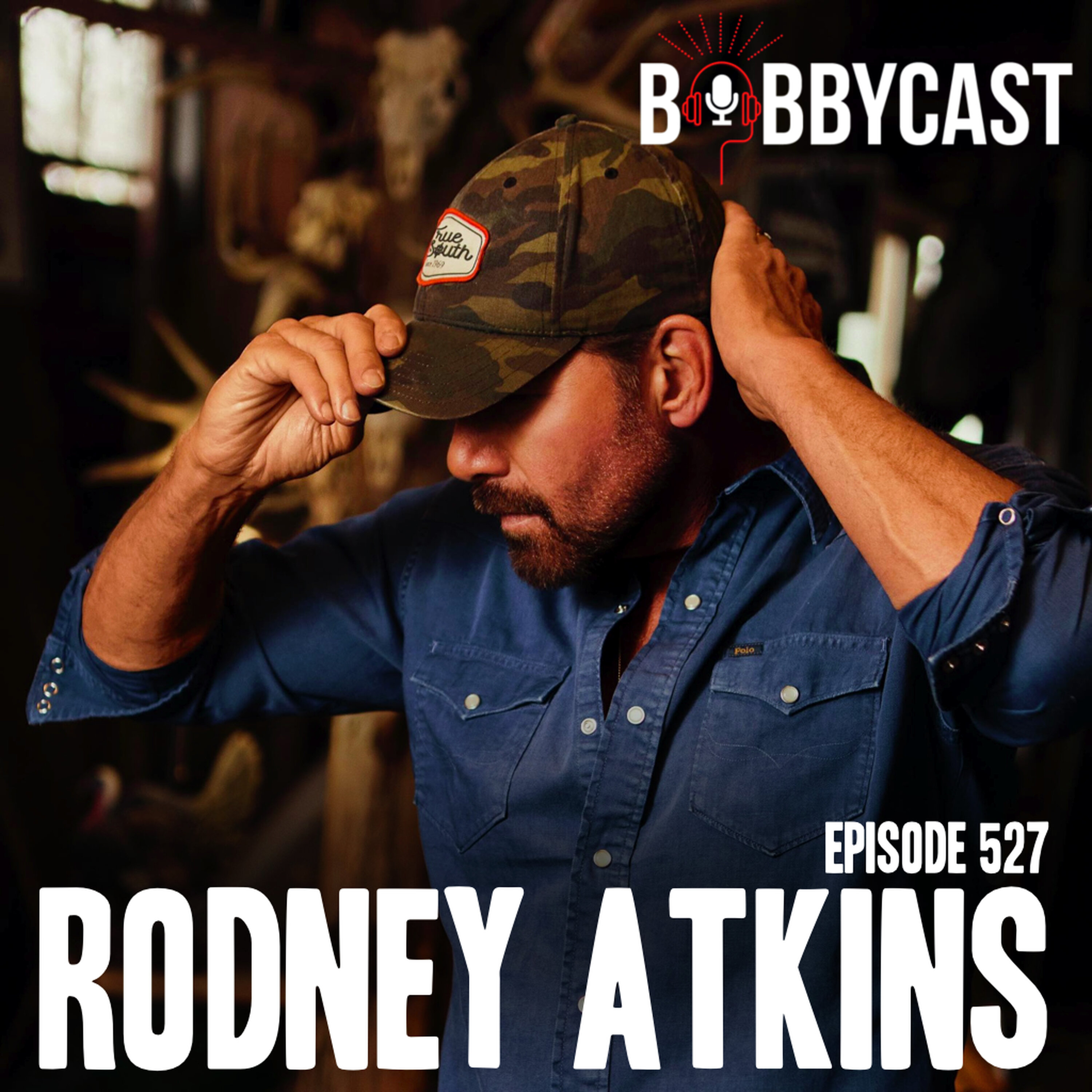
The Bobby Bones Show
BOBBYCAST: Rodney Atkins on When He Find Out He Was Adopted + Meeting His Birth Mom + Why Jimmy Butler Requested to Meet Him + How Delivering Wood To Alan Jackson Led to a Huge Career Moment + Why He Refused to Change His Name
00:52:32
Loading summary
Transcript311 lines
- [00:00]
Podcast Host
This is an iHeart podcast.
- [00:04]
Amy
Sometimes you hear about Christmas in July. What about Black Friday in July for some amazing savings? Hey, it's Amy. And if you love a good deal like I do, we don't have to wait until November for Black Friday. Then the good news is Macy's Black Friday in July is back. Now this is a time where you get to stock up on summer basics while they're marked way down. Like 20 to 40% off Nike and Adidas Under Armour North Face 50 to 70% off women's shoes. Shop the Black Friday in July sale from July 23rd through the 27th in store or at Macy's.com join iHeartradio and.
- [00:43]
Sarah Spain
Sarah Spain in celebrating the one year anniversary of iHeart Women's Sports. With powerful interviews and insider analysis, our shows have connected fans with the heart of women's Sports. In just one year, the network has launched 15 shows and built a community united by passion podcasts that amplify the voices of women in sports. Thank you for supporting iHeart Women's Sports and our founding sponsors, Elf Beauty, Capital One and Novartis. Just open the free iHeart app and search iHeart Women's Sports to listen.
- [01:12]
Podcast Host
Now this summer on the X Ray Vision podcast, we're diving deep into the summer's biggest movies. From Jurassic World, Rebirth to Fantastic Four.
- [01:20]
Plus we'll talk to the stars of Superman.
- [01:22]
Those are a part of the. The Lois Lane costume that helped you.
- [01:26]
Rodney Atkins
Feel like you were really stepping into her.
- [01:28]
Amy
It was the necklace for me. Nobody's really asked that before, so thank you.
- [01:33]
Podcast Host
Listen to X Ray Vision on America's number one podcast network, iHeart.
- [01:37]
Open your free iHeartradio app, search X Ray Vision and listen.
- [01:40]
Rodney Atkins
Now, when I did this stuff for the National Council for Adoption, I was doing these interviews and in those interviews, those stories would get out there and people started showing up at my shows with like Ziploc baggies with hair in it. Want me to run some kind of CSI analysis to prove they're my cousin, uncle, brother, sister? No way. Like crazy. I mean crazy.
- [02:12]
Bobby Bones
Welcome to episode 527 with Rodney Atkins. You can follow him Rodney Atkins on Instagram and he has a new song, watching you 2.0 and it's with his son, Eli Atkins. And that whole song is about his kid when he was way, way, way younger. So kind of a full circle moment. We talk about that. You can also go see Rodney on tour. Just go to rodney atkins.com Little Rodney News for you. He's had six number one songs, massive songs, too. He has. I've been watching you. Yay. And he has. If you're going through hell, that one. I don't sing that one as well. He has Cleaning that gun. Just a crazy cool career. Also, his story of being adopted, which we talk about a lot in this episode, and I felt like he was pretty generous with going into those stories. Didn't you? Gets emotional. Yeah. Yeah, it was good. So first time that I've really spent, well, this much time with Rodney Atkins. Really liked it. I hope you like it. And again, you can follow us on Instagram, the Bobbycast, and you can see all these clips. You can watch the whole video as well. If you just don't want to listen, you can watch the YouTube channel. Same thing. Go over and find at Bobby Bones channel over on YouTube. All right, here he is, episode 527. Rodney Atkins. Rodney, how are you, man?
- [03:23]
Rodney Atkins
I'm good, man. Good to see you.
- [03:24]
Bobby Bones
Yeah, good to see you, too. I feel like I've been In Nashville now, 12, 13 years or so.
- [03:28]
Rodney Atkins
Oh, yeah?
- [03:29]
Bobby Bones
Yeah. How long have you been here?
- [03:30]
Rodney Atkins
Dude, this is my year that I moved here in 95, so this is my 30th year.
- [03:36]
Bobby Bones
From where?
- [03:37]
Rodney Atkins
From East Will. So I grew up in East Tennessee, a little town called Cumberland Gap. That's where I grew up. Kind of started making my way this direction. I went to a junior college in East Tennessee, then I went to Tennessee Tech. So that's where I moved here from, was. Was Cookville.
- [03:55]
Bobby Bones
I have friends from Cookville, so I know the area. Yeah, Gator.
- [03:58]
Rodney Atkins
Gator. Love Gator.
- [03:59]
Bobby Bones
Yeah, Gator's from near Cookville.
- [04:01]
Rodney Atkins
He was one of my first encourager.
- [04:03]
Bobby Bones
Really?
- [04:04]
Rodney Atkins
Yeah, early. Early on, when he was at the. The Country Giant. Man, he rocked that morning show forever. While I was going to school at Tennessee Tech.
- [04:12]
Bobby Bones
It's weird. People have radio names. I say that as somebody with a radio name, like, because his name's not Gator. But I remember we were getting married and. Not you and I, Rodney. My wife and I.
- [04:23]
Rodney Atkins
Yes, sir.
- [04:23]
Bobby Bones
And we were writing down all the names for the guest list. And a lot of my friends are in radio. And so there's like, Gator, Harrison, Rod Phillips, Charlemagne, the God. And she was like, you know, these aren't their real names. Like, we need their real names to invite them to the wedding. And that's funny. I know Gator. I've known him for so long. His name is just Gator, but that's. He was part of a morning show, and that's how he Got his name. That's, that's funny to think about. So when you were going to college, what were you doing?
- [04:49]
Rodney Atkins
So I was there. I was majoring in psychology at tech. They make you do these, these practicums, these, these huge paper, these thesis papers for an undergraduate degree in that. And it took forever and I really had no desire. I, I was just taking classes. I wound up leaving, supposedly with one class left, that thesis that I was supposed to do. And then years later I qualified for this interdisciplinary studies degree. So I finally got my degree after all that. But I was pretty much trying to write songs, I think the whole time I was there.
- [05:27]
Bobby Bones
Why psychology?
- [05:28]
Rodney Atkins
You know, I don't know, it just seemed like, what are you interested in? And I thought about working with kids. That, that was kind of my drive at the time. And I wound up doing some. I had a, a job at Woodland Residential center in Cookville. And it was just working with, I think there were 13 to 18 year old males that had gotten a lot of trouble and supposedly the worst of the worst in the state of Tennessee. I started working there and that kind of opened the door of, okay, this could be something that I love to do. That. That's the only thing I can go back to, that I was really interested in psychology, I guess.
- [06:05]
Bobby Bones
Did you get in much trouble as a kid?
- [06:07]
Rodney Atkins
No, no, not really.
- [06:08]
Bobby Bones
Nothing more than small town south trouble.
- [06:12]
Rodney Atkins
Exactly. Just normal. Yeah. Might break a window or get caught out too late, but no.
- [06:18]
Bobby Bones
Did you play ball?
- [06:19]
Rodney Atkins
Yeah. Yeah.
- [06:19]
Bobby Bones
What, what was your sport?
- [06:21]
Rodney Atkins
Baseball. Man, I love baseball.
- [06:23]
Bobby Bones
Did you play outside of high school at all?
- [06:24]
Rodney Atkins
I did, I played at that. Junior college is like the, it could be the best baseball school in the whole country. It's called Walter State. And I went there for a couple years thinking that I had a shot at playing baseball until I got around those guys and they were all like either drafted out of high school and just beast players had a blast. But man, I realized how good I wasn't around those guys. They were, they were brutes.
- [06:52]
Bobby Bones
When did you start doing music?
- [06:54]
Rodney Atkins
So my dad played gospel music. He directed choirs and he was always around music. I was always too shy to actually get up and sing in front of people. Got in high school and I met a girl and she, her parents played all kinds of instruments. It was that backwood hillbilly family that plays every instrument and you would literally hear people playing music on a front porch somewhere. Show up, they'd hand you a guitar. And so when I went over to her house, they played music her Little brother was like Roy Clark or something in the sixth grade. And they taught me my first guitar chords. They were a singing bunch. They could all sing and play. And I just started playing music. Then I was kind of into writing. Like, I remember, like, I really loved doing book reports and stuff in school. And then somewhere in there, this girl that gave me my first guitar just broke my heart. Just shattered me. And it made me, A, want to write songs and B, get out of that little town. It was. It was all her. And that's really where I started playing music and writing songs. That's all I wanted to do was write songs. And when I got to Walter State, the junior college, they. The guys was like, bring your guitar on the bus. And so I would take it. We'd sit around and sing. But it was never me getting up in front of people and singing. It was just around friends. And that's how I kind of started playing, really.
- [08:20]
Bobby Bones
I feel like Roy Clark's one of the greatest players of all time, and he doesn't get lumped in with the greatest of all time. Probably because he was in country music.
- [08:30]
Rodney Atkins
I guess so, yeah, he was. He was just other the next level. Chet Atkins kind of appear.
- [08:36]
Bobby Bones
I feel like he's one of the greatest of all time. And because country music hadn't spread as much as it has now into popular culture, he's often overlooked.
- [08:46]
Rodney Atkins
And he was Buck Owen's sidekick.
- [08:47]
Bobby Bones
Yeah.
- [08:48]
Rodney Atkins
So Buck took that Buck Owens world. But yeah, man, I remember just being in awe of that. And a lot of pickers. I think guitar players see that.
- [09:00]
Bobby Bones
Are you a good guitar player?
- [09:01]
Rodney Atkins
Oh, no, I can just accompany myself. I just. Just enough to really play along with this Dwight Yocum song or what, you know, to learn those songs as you hear them on the radio and stuff.
- [09:13]
Bobby Bones
Do you play piano?
- [09:14]
Rodney Atkins
No.
- [09:15]
Bobby Bones
Did you ever learn to play piano?
- [09:16]
Rodney Atkins
I did not wish I would have. I was that kid that my sister took piano. She did all that. But I'm like, I'm not doing that. I'm playing sports. I don't want to play music. That didn't happen till later. I'd give anything if I would have now.
- [09:29]
Bobby Bones
I feel the same way. I wish I would have been a band. Yeah, because I played sports.
- [09:32]
Rodney Atkins
Exactly.
- [09:33]
Bobby Bones
But I wish I would have just sucked it up and got. I wanted to play an instrument. I think a lot of the reason too is financial. But still there were ways to make it happen, because there are ways to make other things happen. I wish I would have learned music in high school.
- [09:44]
Rodney Atkins
My Our neighbor, the lady that lived near us, taught my sister piano. I could have just walked over there, but I just. No, I'm not doing that. The band leader. You should join the band. I'm not playing in a band. Play sports. That's what I do.
- [09:58]
Bobby Bones
You've talked about being adopted. When you say your dad. Your adopted father.
- [10:03]
Rodney Atkins
Yeah, yeah, yeah, yeah.
- [10:04]
Bobby Bones
So when did you first know you were adopted? Were you always.
- [10:07]
Rodney Atkins
When I was a kid, my sister came up and said, you're not really their kid. You're adopted. And so I went to my parents and asked them. I mean, I was like, five. And it's funny now, but they told me the whole story that I was put up for adoption. And then this children's home took me in. Holston Home for Children. Still do a lot of stuff with them. And evidently my parents had lost a child that had a respiratory staph infection, I think is what it was. He only lived a couple of weeks. Well, after they went through that, they applied to adopt, and I was adopted by another couple. And then I was taken back because I had the same thing, to just lesser degree of what their child had. So I was adopted, like, two or three times and returned to the orphanage as a baby. Yeah.
- [11:03]
Bobby Bones
So you have no memory of this?
- [11:04]
Rodney Atkins
Lord, no, no. And so that is kind of how I wound up with them. And so they told me the whole story.
- [11:11]
Bobby Bones
And I've had trouble trying to figure out who, like, my grandparents are, my great grandparents. So my dad left when I was 5 or 6. I know my mom, but she was an addict. She died in her 40s. But my grandmother adopted me for a lot, you know, a big part of my life, and Which I found, like, a Social Security card with a different name on it. Like, that's how I found out. And it wasn't the same story because my parents were still alive. They were just not with me. My grandmother had to take over guardianship. And I found out because I literally saw a Social Security card with a different last name. And I was like, what is this? And it was like, well, you've been adopted that whole story. Right. But because my grandmother's husband, that would be my grandpa, died before I was born. And my grandmother on my dad's side, I didn't know my dad, so I didn't know her. I didn't know anything. I don't know any family history of, like, medical. They're like, hey, what's your family history? I don't know. Like, that's a struggle.
- [12:04]
Rodney Atkins
Yeah, I. I Went down that road for. For quite a while and you start thinking about that. That kind of stuff because you just don't know where you come from. My wife, actually. Just so back when I finally met my birth mom. Cuz you don't.
- [12:18]
Bobby Bones
You met her?
- [12:18]
Rodney Atkins
Yeah, yeah. Close to her. She's amazing.
- [12:21]
Bobby Bones
You have a relationship now with her?
- [12:22]
Rodney Atkins
Yeah, yeah, yeah. Wow. Yeah, she lives in Knoxville. Sweetheart. Found out I have a little brother, lives down in Texas and it's great. Now, my birth father, I found out who he was, but dude, he had. He had a crazy past on him, so I never made that happen. It just didn't seem like the right thing to do.
- [12:43]
Bobby Bones
He's still alive?
- [12:45]
Rodney Atkins
No.
- [12:45]
Bobby Bones
Did you ever have the opportunity to meet him?
- [12:47]
Rodney Atkins
Probably. So I found out. So what the reason I've even found who my birth mom was. When I did this stuff for the National Council for Adoption, I was doing these interviews and it was like God post and just a lot of stuff talking about adoption. And in those interviews, those stories would get out there and people started showing up at my shows with like Ziploc baggies with hair in it. Want me to run some kind of CSI analysis to prove they're my cousin, uncle, brother, sister. No way. Like crazy. I mean, crazy.
- [13:21]
Bobby Bones
And were they being honest with themselves or was it kind of a grift?
- [13:26]
Rodney Atkins
I have no idea. I'm sure both. But a lot of them were convinced, man. That I'm your cousin, uncle.
- [13:32]
Bobby Bones
Well, that's just being in the south to me. Like everybody in Arkansas I'm related to, it feels like Uncle Daddy. That's crazy.
- [13:38]
Rodney Atkins
And so in that I gotta figure this out. I need to nail down actually where I'm from. So we hired, I guess it was an attorney that kind of tracked down people and could get into the records and. And see. So they contacted my birth. They asked me if I wanted to meet my birth mom. They showed me a picture of her, said yes, would love to, and then said, this is your dad and this is his story. And in that I found out that I have a one brother on death row that I never met from my father, so.
- [14:12]
Bobby Bones
So technically a half brother. Yes, different mom. Got it.
- [14:15]
Rodney Atkins
And another one that was just in and out of jail. And I think my dad had been in and out of jail. And it kind of hits you, you just. Man, I could have been that. That could have been the road I was on. So I'm very grateful, but. So I met my birth mom and we got together and talked and we're very close.
- [14:31]
Bobby Bones
Now that's really cool.
- [14:33]
Rodney Atkins
It is cool.
- [14:34]
Bobby Bones
I have the same feeling of, man, what could have been if it wasn't for somebody stepping in. Because my biological dad, I. I don't really call him a dad, but he's alive. And a lot of that family has spent time in prison. Some of them are. Two of them still are. My mom and her sister married two brothers, so all my cousins are double cousins. I mean, it's as Arkansas as you could be exact.
- [14:56]
Rodney Atkins
Hillbilly man.
- [14:57]
Bobby Bones
Yeah. Yeah. And I say that not in a way of making fun. Everybody's just close. Small town, like two sisters married, two brothers. But there's a whole part of the family that's been in a lot of trouble, and a lot of that just comes from circumstance. Right. When there aren't a lot of options, that's it. It's not bad people, per se, that's getting in trouble. It's people without a lot of options. And so when there aren't a lot of options presented to you, you pick the one that you think is the best for that time. And a lot of times it ends up in trouble. And for my family, sounds like much like yours that I'm not close to, they're in prison. Like many, many first cousins, parents, you know, a lot of that happened. And I'm very grateful to my grandmother.
- [15:36]
Rodney Atkins
Absolutely.
- [15:36]
Bobby Bones
Who did not have to step in and did and raised me and my sister for, you know, years and years, like a kid. Like her own kid. And so I'm sure you have that feeling toward your parents now. Like, had they not taken care of you, that could have been you for sure.
- [15:53]
Rodney Atkins
Yeah. The path I could have been on. And we didn't grow up with. With much, but it was for the most part, very stable and. And very normal. So. Yeah, I can't imagine what my life would have been like.
- [16:09]
Bobby Bones
Yeah. Consistency is such currency.
- [16:10]
Rodney Atkins
Yep.
- [16:11]
Bobby Bones
That's what I feel now. I didn't have a bunch of it until I made it myself. Like, made and had the ability to have consistency. Now I. I live and thrive off of it. Probably too much, because nothing feels secure unless it's consistent and constant and safe.
- [16:26]
Rodney Atkins
I get that. Yeah. And I grew up a lot about. With the adoption in the back of my head, still thinking that I was given up. And I found out this is a crazy thing to. To even process, but I was the product of a first date gone wrong.
- [16:46]
Bobby Bones
How old were they? Do you know when you were born?
- [16:50]
Rodney Atkins
Early 20s. I'm pretty sure my mom had a. She had a Kind of crazy story. She was married before. It was an abusive situation. She got out of it and had a daughter. And then I came along on the. The bad date and she wanted to hide me from her parents because she was divorced and just. Yeah, the whole.
- [17:16]
Bobby Bones
There's all that shame attached to it.
- [17:18]
Rodney Atkins
Exactly. And so she hid me from her parents. And then I was born, she gave me up. And then she went on and got married, had a son. So you struggle with that, this self worth and you don't belong anywhere and you don't think much of yourself and you must not be worth much.
- [17:37]
Bobby Bones
Yeah, I felt that.
- [17:38]
Rodney Atkins
Yeah. Yeah.
- [17:39]
Bobby Bones
Yeah. My mom was 15 when she got pregnant.
- [17:41]
Rodney Atkins
Wow.
- [17:42]
Bobby Bones
And my biological father was 17. And so it was. He left. So again, there's that. He just. He just chose to leave when I was like five. So there's that part of it. And I did have that like. Like you're talking about, you're. You're kind of challenging your value within yourself. And then it turns into. I just had like crazy sympathy for like my mom.
- [18:03]
Rodney Atkins
She was 15. Yeah.
- [18:05]
Bobby Bones
And then I just felt terrible for her. And you kind of just process until like a new emotion comes in. Like you just. I've just sat on one and I think my wife and I, we don't have kids yet. We'll have kids sometime soon, but I would hope. And what makes me so nervous about being a dad eventually is that I hopefully will not be like what I. What I had happen to me. Did that happen with you at all before you were dad? Did you worry about that? Hopefully I said that clear.
- [18:34]
Rodney Atkins
Yeah.
- [18:34]
Bobby Bones
It makes me nervous because I don't want to be what was to me.
- [18:38]
Rodney Atkins
Exactly. And yeah, especially after I found out that these guys are on death row and stuff. Are you capable of that? You know, of not showing up? But I don't think. I don't know, man. It's driven me to not be that, to not even come close to. To that. Just to be stable and consistent and to know you come to terms with unconditional love. I think that's.
- [19:07]
Bobby Bones
What do you mean, come to terms with that?
- [19:09]
Rodney Atkins
That you, you. The best you can do is under. Is believe it. Believe you are unconditionally loved. And. And I don't think I got that until I met my wife, Rose. And those voices in my head, I just quit listening to them and said, I'm just going to believe her, what she thinks of me. I'm going to believe that. And I became closer to God and really started thinking about if I want my kids to know the father. I need to represent that in some form until they can figure it out for themselves. Just to be there, consistent and stable and really care. And by that means, don't let them just do whatever. You know, when you're trying to raise. I say, I'm trying to raise men and not babies. And kind of all those things come into play of what you're representing for your kids. And that's all I think about. That's the main drive for me, period. Every single day is, is that. And I don't know if that's me running away from what I don't want to be. It's just who I want to be. Really. Years ago, man, this is kind of crazy. I don't know why. This. You made me think of this. I was in Chicago and I forgot about this. This is crazy. I was in Chicago visiting USN station, and they said, hey, there's a Chicago Bulls player that is a fan of you. Would you like to meet him? I said, heck, yeah. And it was Jimmy Butler. And he came to a show. To the show that evening. He said, can I talk to you? I said, absolutely. He said, I just want to tell you something, and I want you to sit there and listen to me until I'm done. All right? And he said, your song. Watching you, I grew up without a dad, and when I heard that song, it. It really pissed me off that that's what it's supposed to be like. And I didn't have it. He said, but that song got inside of me and made me realize what I would never be, because I want to be like that song. And that song changed my life. It made me want to do better in school. It made me get my grades. It made me work harder at basketball. It shaped me by trying to not be who I was afraid I would be, which is my dad that he didn't know.
- [21:39]
Bobby Bones
And when Jimmy Butler says, sit and listen, I imagine you said, and listen to what?
- [21:42]
Rodney Atkins
Absolutely.
- [21:43]
Bobby Bones
Whatever he's going to say.
- [21:43]
Rodney Atkins
Oh, he killed me. I was crying. Let's take a quick pause for a message from our sponsor.
- [21:49]
Podcast Host
The X Ray Vision podcast is your home for reactions, recaps, and roundtable debates on the biggest pop culture moments of the summer. We drop four episodes a week, and every Friday, we're popping out the popcorn and breaking down that weekend's big box office draws, including Superman and Sinners. Rosie. Sinners. What an incredible cinema experience.
- [22:11]
I went in and I was expecting Kugler. I was expecting horror. What I didn't expect. There was just this unbelievable, sprawling cinematography.
- [22:20]
This is a movie that gets better the more you think about it.
- [22:24]
From Star wars to Fantastic Four, we're covering all the biggest movies, shows and stories in fandom, including interviews with none other than Superman and Lois Lane themselves, David Corenswet and Rachel Brosnahan.
- [22:36]
Rodney Atkins
We haven't seen the film yet. We're waiting to see it at the premiere because we want that full experience with the crowd at the premiere in.
- [22:43]
Amy
La, me and Nick and David are going to hold hands and squeeze each other's little fingies when exciting things happen on screen.
- [22:51]
Podcast Host
Listen to X ray vision on America's number one podcast network, iHeart. Follow X Ray Vision and start listening on the free iHeartRadio app today.
- [23:02]
Kelly Harnett
Kelly Harnett spent over a decade in prison for a murder she says she didn't commit.
- [23:08]
Podcast Host
I'm 100% innocent.
- [23:10]
Kelly Harnett
While behind bars, she learned the law from scratch.
- [23:14]
Podcast Host
He goes, oh God. Harnett Jailhouse Lawyer and as she fought.
- [23:17]
Kelly Harnett
For herself, she also became a lifeline for the women locked up alongside her. You're supposed to have your faith in.
- [23:24]
Rodney Atkins
God, but I had nothing but faith in her.
- [23:26]
Kelly Harnett
So many of these women had lived the same stories.
- [23:29]
Podcast Host
I said, were you a victim of domestic violence?
- [23:32]
Kelly Harnett
And she was like, yeah, but maybe Kelly could change the ending.
- [23:38]
Podcast Host
I said, how many people have gotten other incarcerated individuals out of here? I'm going to be the first one to do that.
- [23:47]
Kelly Harnett
This is the story of Kelly Harnett, a woman who spent 12 years fighting not just for her own freedom, but her girlfriend's too.
- [23:55]
Podcast Host
I think I have a mission from God to save souls by getting people out of prison.
- [24:00]
Kelly Harnett
The Girlfriends Jailhouse Lawyer listen on the iHeartRadio app, Apple Podcasts, or wherever you get your podcasts.
- [24:11]
Podcast Host
My Uncle Chris is definitely somebody worth talking about. He was the kind of guy that used Confederate flags as window curtains, lived in a trailer with an ex con and a retired stripper, left loaded machine guns laying around, drank a bottle of whiskey a night, claimed he could kill a man with his bare hands, drove a garbage truck for a living, spoke fluent Spanish with a thick Southern accent, and is currently buried in a crypt alongside the founding families of Panama. Listen to the Uncle Chris podcast to hear all about him and a whole lot more. This collection of stories will make you laugh, it'll make you cry. And if I do my job right, they'll let you see the world and your place in it in a whole new way. I can't wait to tell you all I About Uncle Chris. Listen now to Uncle Chris on Will Ferrell's Big Money Players Network, on the iHeartRadio app, Apple Podcasts or wherever you listen to podcasts.
- [25:10]
Bobby Bones
And we're back on the Bobby cast. I imagine that song resonates with a lot of people and you probably feel it like if you're doing any sort of meet and greet, because that's when the fan has the opportunity to talk. Does that come up a lot? Like that song's affected me? Like, what are the common themes of how it's affected people?
- [25:30]
Rodney Atkins
Mostly it's that's me and my dad or. And recently it's been several stories of my dad has passed and we played that song at his funeral and it was just. And it. An important part of our life. It's me and my mom. I get it's. It's me and my dad just over and over. It's. That's the coolest thing in the world. When somebody says one of your tunes is their song, when they take ownership of it, that's mostly what I get is to say, it's our song. It's our song. We, if we hear it, we stop, we sing it.
- [26:08]
Bobby Bones
Whenever you did 2.0 and you're. Yeah, a lot of people message me going, you gotta talk to him about this song. Why did you choose now to do 2.0 version of that song?
- [26:20]
Rodney Atkins
2.0. For years I didn't think Elijah, my son, was interested in singing at all. Again, he was shy like, like me. And then he had started through the years, he would say, dad, you should sing this song or check this song out. He would send me songs or play something for me. And then a. Oh, a year and a half ago or something, he sent me a tune and I'm like, this is cool, man. I, I can't sing like that. I, I stay in my lane I But this is great. I've never. I don't recognize the voice. He said, that's me, dad.
- [26:59]
Bobby Bones
No way.
- [27:00]
Rodney Atkins
And I was just blown away. He had started writing songs and I think he had a girl that broke his heart, the whole thing. And then for Father's Day last year, my wife said, we need to do a duet for watching you. And I didn't even know what that was at the time.
- [27:20]
Bobby Bones
On TikTok.
- [27:20]
Rodney Atkins
On TikTok. Tick tock. Yeah. And so she said, and I've got a, an idea. I don't know if we can pull it off, but just sing. And then we're going to have people jump in and Sing with you. And she turned around there. Within about three days, Eli had come in and she said, eli, you have to do this. The number one comment that we're getting on TikTok from this is, you need to duet with your son. So she sweet talked him, she made him chicken casserole. Just. She just kept on and finally got him to just sing a chorus of it. And it was the craziest thing. I mean, it was like 12 million views. And so from that moment on, it was her again saying, you guys got to do the whole version. You got to make it happen, the whole thing. And so just convincing Eli to take a chance and. And do it.
- [28:13]
Bobby Bones
How's he felt about it since?
- [28:16]
Rodney Atkins
Yeah, I think he just had fun with it. Yeah, it's. It's been amazing. He's only performed twice in his life, and one was his debut was at the Ramen here. When I played his show, we came out and then at CMA Fest at the stadium, he came out and sang it with me. So he's just kind of rolling with it. He's having fun.
- [28:38]
Bobby Bones
And those are not traditional debuts.
- [28:42]
Rodney Atkins
No, no. And they're almost so big, you can't take in what's happening around you. The rhyming. Just the thought of that place makes me nervous more than probably anywhere else.
- [28:53]
Bobby Bones
Do you remember the first time you played the Ryman?
- [28:56]
Rodney Atkins
Yeah, it was the Opry and they asked me to sing a cover song. And I'll never forget asking my mom, pick a cover song. Name something you want me to sing.
- [29:08]
Bobby Bones
Oh, they just said, sing a cover. Yeah, that was just like randomly.
- [29:12]
Rodney Atkins
Yeah. I don't know if I had a single out. It was like the first time I got to play there. Just something to play with the band. And she told me behind closed doors, Charlie Rich. And I'm like, really? So my mom is like a sweet, pure, and she's want me to sing that. It was pretty funny. So my first time I sang behind closed doors at the Ramen and they got to come and see that show.
- [29:38]
Bobby Bones
And your first Opry performance was at the Ryman as well?
- [29:41]
Rodney Atkins
Yeah.
- [29:42]
Bobby Bones
Yeah. Both of you got you and your son.
- [29:46]
Rodney Atkins
That's true.
- [29:47]
Bobby Bones
That's pretty cool.
- [29:48]
Rodney Atkins
Yeah, it's awesome.
- [29:49]
Bobby Bones
You still play the Operator?
- [29:51]
Rodney Atkins
Yeah, yeah. I'll jump in and play with them from time to time. And always makes you nervous. Always. It's. It's an honor. It's not lost on me.
- [30:01]
Bobby Bones
How many times have you played it? Do you know? Oh, man, I got my 10 cup. You know, I don't know if they. Did they give you. Do they give you a cup after you played 10? Was that a thing even five years ago?
- [30:13]
Rodney Atkins
Not that I'm aware of.
- [30:14]
Bobby Bones
I walked off stage after my 10th opera performance. They gave me a cup with a number 10 on it, and I thought it was a joker. I didn't know they gave people a 10. A number 10 cup on it.
- [30:22]
Rodney Atkins
That's cool.
- [30:23]
Bobby Bones
And so, yeah, I mean, I have it. I guess I didn't. I don't know the symbolism of a cup, or maybe I think it's just.
- [30:31]
Rodney Atkins
That it's the Opry, it's the ramen, It's. It's being a part of that historical.
- [30:38]
Bobby Bones
And that's why I. I don't use the cup. I just let it sit. Just let it sit and make history. I don't even drink coffee.
- [30:44]
Rodney Atkins
That's funny.
- [30:45]
Bobby Bones
Do you drink coffee?
- [30:47]
Rodney Atkins
Occasionally. Not a lot.
- [30:48]
Bobby Bones
Do you? Caffeine?
- [30:50]
Rodney Atkins
I used to do energy drinks like crazy, and I'm like, this is gonna kill me. So I just kind of shut all that down and just occasionally have a cup of coffee.
- [30:58]
Bobby Bones
If. What.
- [31:03]
Rodney Atkins
If I get up and I'm still sleepy, sometimes if I have a late show, I might have a cup of coffee at 4 or 5, just to kind of ramp up.
- [31:13]
Bobby Bones
What made you move to Nashville.
- [31:18]
Rodney Atkins
Music? Just. I wanted to be a songwriter, man.
- [31:22]
Bobby Bones
Did you have confidence to, quote, move to Nashville, or was it. I got nothing else right now. Let's just give it a run.
- [31:31]
Rodney Atkins
I never looked at it like that. There was a. A backup plan. It's just I wanted to write songs. Just write songs. And so I was at Tennessee Tech in Cookville, and I met some other dudes that wrote songs, and they said, you got to come play a writer's night with us. And I really didn't want to go up and get up and sing in front of people, but they said, you can do it. Let's go.
- [31:53]
Bobby Bones
So you had no intention, really, to be an artist. You wanted to write songs, and that was it.
- [31:58]
Rodney Atkins
Wow. That was. I had. Yeah. My deal. When I prayed my prayer. I just want to make music that can touch people's lives, and that's. I just want to write songs. That's it. Not get up and sing at all.
- [32:10]
Bobby Bones
So you play the writers round?
- [32:11]
Rodney Atkins
Played the writers round. That next day was kind of a crazy story, too. Played the Courtyard Cafe down south of town. And so my first night that I played, they put me up there with one other guy. It was just us playing songs back and forth, and he was just killing me. I'm like, oh, my God. If this is what Nashville songwriters are, I am. I am screwed because this guy's. He's out of control. And we exchanged numbers and it was, you know, Casey Beathard.
- [32:45]
Bobby Bones
I do.
- [32:47]
Rodney Atkins
So Casey became songwriter of the decade, you know, and we became friends. So that night. And I think it was because he was so great that I was just wrapped up in that I got an opportunity to come take a meeting on Music Row with a publisher.
- [33:05]
Bobby Bones
You think that they invited you or that they thought you. I'm going to be putting words in your mouth here just by what you just said. Do you think they thought you were better than you were because you were next to somebody who was really great?
- [33:17]
Rodney Atkins
I don't know if they maybe. I mean, he made. Because he was so great, he made me seem better than I probably was, I'm sure. And we just got along. We had fun up there talking and just kind of being silly. So. Yeah, I definitely think that had a lot to do with people coming up, giving me cards to have a meeting.
- [33:44]
Bobby Bones
They were so moved by the night.
- [33:46]
Rodney Atkins
I think so. Yeah. And that's what nice.
- [33:48]
Bobby Bones
I think you're down yourself a little bit because you've done that a few times already during the interview.
- [33:53]
Rodney Atkins
I don't know.
- [33:54]
Bobby Bones
Okay, so tell me about the next day then. So you go. You have a. You go to Music Row Publishing meeting.
- [33:59]
Rodney Atkins
Yeah, I went to. Do you remember the artist. The UA Artist tower that used to be there kind of the round building. There's Loud Studios was there.
- [34:09]
Bobby Bones
I don't.
- [34:09]
Rodney Atkins
It's next door to actually one of Curb Records building.
- [34:13]
Bobby Bones
Okay.
- [34:13]
Rodney Atkins
And so the first time you're in music girl, if you can go back to that, it is an insane place to go because of the one way streets and then the two way alleys. And so I was trying to figure out how to get to this UA artist tower and had a guitar and a backpack. And I'm walking across one of those alleys and a car came flying up and. And just. Just bowed up, stopped about three inches from me. And I looked up and it was Garth Brooks. I'm like, that guy almost killed me. And then I went, it's Garth Brooks. What planet am I on? And he was like, hey, buddy. Sorry about that, man. All good. And so I walked across the street across that alley and went to the UA Tower. And because I was just a clobberhead carrying a guitar case, backpack, I went up to get the door, set my guitar case down, my backpack Falls over and a hand comes across me. So let me get that door for you, son.
- [35:14]
Bobby Bones
Let me guess by that. Let me guess by the impression. Trey seconds.
- [35:17]
Rodney Atkins
No.
- [35:17]
Bobby Bones
Okay. Because that does kind of sound like Trace.
- [35:19]
Rodney Atkins
No.
- [35:19]
Bobby Bones
Are you doing a good impression of him?
- [35:21]
Rodney Atkins
I don't think I can do impression.
- [35:23]
Bobby Bones
Okay, then never mind. Go ahead. Who is it?
- [35:24]
Rodney Atkins
But it was Merle Haggard.
- [35:26]
Bobby Bones
Oh, that's probably a pretty good Merle Haggard impressions.
- [35:28]
Rodney Atkins
And so he said, let me get that door for you. And I'm like, so Merle Haggard opened my first door, almost died.
- [35:33]
Bobby Bones
Garth almost kills you, and Merle Haggard opens the door for you.
- [35:35]
Rodney Atkins
Yeah. And it was just. What planet am I on?
- [35:40]
Bobby Bones
Yeah. It feels like a movie of what country music is like in the perfect fictional universe.
- [35:45]
Rodney Atkins
Exactly. And which that deal turned into kind of nothing. But it opened up this possibility of what it feels like to go take meetings and, you know, dig in like that and. Yeah. And plus, that's the other thing Nashville is so incredibly great about, because I met Casey Beathard and we became buddies after all that time. And that's. I kind of fell in love with that about Nashville. Playing the riders, knots. And it's the songwriter. Just camaraderie that happens. It's an amazing thing.
- [36:24]
Bobby Bones
The Bobby cast. We'll be right back.
- [36:28]
Podcast Host
The X Ray Vision podcast is your home for reactions, recaps, and roundtable debates on the biggest pop culture moments of the summer. We drop four episodes a week, and every Friday, we're popping out the popcorn and breaking down that weekend's big box office draws, including Superman and Sinners Rosie. Sinners. What an incredible cinema experience.
- [36:49]
I went in and I was expecting Kugler. I was expecting horror. What I didn't expect, there was just this unbelievable, sprawling cinematography.
- [36:59]
This is a movie that gets better the more you think about it.
- [37:02]
From Star wars to Fantastic Four, we're covering all the biggest movies, shows, and stories in fandom, including interviews with none other than Superman and Lois Lane themselves, David Corenswet and Rachel Brosnahan.
- [37:14]
Rodney Atkins
We haven't seen the film yet. We're waiting to see it at the premiere because we want that full experience with the crowd at the premiere in.
- [37:22]
Amy
La, me and Nick and David are gonna hold hands and squeeze each other's little fingies when exciting things happen on screen.
- [37:29]
Podcast Host
Listen to X Ray Vision on America's number one podcast network, iHeart. Follow X Ray Vision and start listening on the free iHeartRadio app today.
- [37:40]
Kelly Harnett
Kelly Harnett spent over a decade in prison for a murder she says she.
- [37:45]
Podcast Host
Didn'T commit, I'm 100% innocent.
- [37:49]
Kelly Harnett
While behind bars, she learned the law from scratch.
- [37:52]
Podcast Host
He goes, oh, God. Harnett jailhouse lawyer.
- [37:55]
Kelly Harnett
And as she fought for herself, she also became a lifeline for the women locked up alongside her. You're supposed to have your faith in.
- [38:02]
Rodney Atkins
God, but I had nothing but faith in her.
- [38:04]
Kelly Harnett
So many of these women had lived the same stories.
- [38:08]
Podcast Host
I said, were you a victim of domestic violence?
- [38:10]
Kelly Harnett
And she was like, yeah, but maybe Kelly could change the ending.
- [38:17]
Podcast Host
I said, how many people have gotten other incarcerated individuals out of here? I'm going to be the first one to do that.
- [38:26]
Kelly Harnett
This is the story of Kelly Harnett, a woman who spent 12 years fighting not just for her own freedom, but her girlfriend's too.
- [38:34]
Podcast Host
I think I have a mission from God to save souls by getting people out of prison.
- [38:39]
Kelly Harnett
The girlfriends, jailhouse lawyer listen on the iHeartRadio app, Apple Podcasts or wherever you get your podcasts.
- [38:50]
Podcast Host
My Uncle Chris is definitely somebody worth talking about. He was the kind of guy that used Confederate flags as window curtains, lived in a trailer with an ex con and a retired stripper, left loaded machine guns laying around, drank a bottle of whiskey a night, claimed he could kill a man with his bare hands, drove a garbage truck for a living, spoke fluent Spanish with a thick southern accent, and is currently buried in a crypt alongside the founding families of Panama. Listen to the Uncle Chris podcast to hear all about him and a whole lot more. This collection of stories will make you laugh, it'll make you cry, and if I do my job right, they'll let you see the world and your place in it in a whole new way. I can't wait to tell you all about Uncle Chris. Listen now to Uncle Chris on Will Ferrell's Big Money Players Network, on the iHeartRadio app, Apple Podcasts, or wherever you listen to podcasts.
- [39:49]
Bobby Bones
This is the Bobby cast. When did you start to have confidence in singing publicly or doing anything publicly considering you're a pretty shy person?
- [40:01]
Rodney Atkins
You know, I think it clicked. It's still the same way now. I was asked to if I would be willing to play some songs for tips at a bar in Cookville. And they like you can play original songs and doesn't have to be great. It'll be quiet, just something over here in the corner. I'm like, okay, I'll give it a shot. Why not? I want to write songs. That's what I want to do. I can try songs out. And as I was doing that, a couple songs that I'd written And I can't remember them now were kind of that sing along thing. And the people would sing along with me after they heard it the first time there. And I'm like, wait a minute. So I'm not going to be the guy that y' all sit there and I'm going to sing at you, and you're just going to love this. It's let's do this together. If I can have songs that people sing along with me, then it's not on me anymore. And we're all in this together. And I was just always drawn to more we songs instead of us against them kind of songs.
- [41:06]
Bobby Bones
What about when you got to town because you came as a writer, you did a writer's night. When did you think? I think I'll be an artist now as well, man. Because there's an intention.
- [41:19]
Rodney Atkins
It is. So the way that I got signed to my deal, a buddy of mine that we'd written some songs together named Ted Hewitt. Ted was offered a publishing deal with Curb, and he wanted me to go and play for the guy that he was working with named Chuck Howard. And Ted said, I want you to check my buddy up, man. He's got some great songs. You just got to hear it. He's like, curb does not need any more acts. They don't need any male acts at all. They had Tim McGraw and Jeff Carson and I can't remember who else. Maybe a band, if you can put a band together. And Ted said, just let him play a song for you. So I did. And he stopped me halfway through and said, I don't want to sign you.
- [42:01]
Bobby Bones
What'd you play?
- [42:02]
Rodney Atkins
Just some tune we'd written. I think it was them called, like, God Only Knows or something. And I'm like, okay, cool. I got a publishing deal. He said, no, I want to. We want to sign you to the label. And I don't even know how that twisted around like that. Wow. And the next day. Now my publishing deal took about 16 months. My record deal was done the next day. My he. He recorded me in his little studio there. He took it to M. Curb. My Curb called the next day and my deal was done.
- [42:35]
Bobby Bones
Why do you think that pace was different? Because they. You were assigned artist. They wanted you signed so they could get you working immediately. Like, why did one take so long on one? You know?
- [42:46]
Rodney Atkins
Oh, the publishing deal. I don't. That's not a question for me. Publishing deals just take forever. I don't know why. The record deal was, I think, just pretty cut and dry. But that was 96. So I moved here in 95 and then that deal was done then. Then God bless Curb Records. But it was 10 years later before I ever had a hit.
- [43:07]
Bobby Bones
Did you feel like they shot you out of a cannon in 95 as far as like traveling around doing the hey, I'm a new artist, like the radio tour that used to happen type thing?
- [43:18]
Rodney Atkins
Yeah, I did a lot of radio tours. It was really. So what happened? I recorded some stuff with other producers there and I was talking to. That's the crazy thing. I'm talking to Mike Curb weekly through all this. And he said, how you feel about this music you record? And I recorded a whole album and I said, I don't feel close to it. I feel like I'm just kind of grasping at something.
- [43:45]
Bobby Bones
You would say that?
- [43:46]
Rodney Atkins
Yeah, yeah. I said, it just doesn't seem there yet. And he said, well, they had me with some other producers, some rock guys, some different people. And then finally a guy named Phil Gernhard stepped in way back then, and he said, I'm going to do with you what I did with Tim McGraw. I don't know what that means. And he seemed like a. Like a not real person. I just heard his name around there. And so he said when Tim came here, he signed his first record deal and explained to me how he saw Tim at a showcase, maybe New Faces CRS or something. And Tim just shined. He just came out. He sang Indian Outlaw and he had done his first album that sold. I don't think it did much at all. And he said, but I took Tim in right then, told him to forget everything. I'm going to teach you how to record yourself, how to find your own sound, how to do every single thing. If you'll do it. It's going to be boot camp. And I don't know how long it's going to take. I'm like, well, if you're willing to dig into it. And talking with my Curb too. And it was Mike's right hand guy. So all that time you're asking me was really boot camp of he would tell me stuff sucked. He like, why did you send me this? This obviously is a scratch vocal, just brutal. But man, when it, when he finally started tapping into something with the. The Going Through Hell album, he's like, this is it. This is. This is different. This is not what I thought you would do because these are life songs. These aren't love songs. But if you can have a hit with song like if you're going through hell That'll be around forever. And so the whole time was. Did a lot of encouraging and sit and wait and believed. But I started recording at home back then too, and people didn't do that. But it was a lot of pick you up, knock you down. For all those years and working on songwriting and figuring out literally boot camp.
- [45:56]
Bobby Bones
It was like knock you down, but rebuild you back up.
- [45:59]
Rodney Atkins
I guess that's artist development is what you would call that. And I don't know if that happens.
- [46:02]
Bobby Bones
A lot like that now. No, that's go to hr. You get in trouble if you true do that. Knocking down now. Yeah, it.
- [46:08]
Rodney Atkins
It was. I wouldn't trade it for anything, man. He was a true mentor. M her was. He was right in the middle of that, man. What a great man he is.
- [46:17]
Bobby Bones
How many songs did you put out as singles before Going Through Hell?
- [46:21]
Rodney Atkins
I think we put a couple singles.
- [46:23]
Bobby Bones
Out, and in between just.
- [46:25]
Rodney Atkins
I did this album beforehand that we talked about, and it had. I think we released a couple of singles. Maybe on it. I'm not even sure because they're just constantly trying stuff. It was probably two or three singles at least.
- [46:42]
Bobby Bones
Did you start to lose hope that your artist career would. Would thrive?
- [46:48]
Rodney Atkins
That's the crazy thing, man. I don't think I did. I think I just. This is what I'm doing. And I was working odd jobs, man. I. I was. I'd work three and four jobs.
- [47:01]
Bobby Bones
What kind of jobs?
- [47:03]
Rodney Atkins
One of them back then. So I was living in Cookville in Baxter, a little town outside of there. And in between, like, I would cut firewood, for example, or mow yards or do farm work, whatever I could do. And so I was cutting firewood, and I was asked to. To deliver it to some people in Nashville. So I would load my trailer, drive to Nashville, to Music Row or to the Nashville area, deliver the firewood, go put my trailer somewhere, go write songs, go back and do it again. And one of my customers back then, I was asked to deliver firewood to Alan Jackson. And that was like in 2005, but going through hell came out in 2006. And I'll never forget delivering that firewood to his big place out there. And then three months after going through hell, three months after I delivered firewood to him, he asked me to open some shows for him. It's. It still kills me. He invited me on his bus to. To say hello, how much he loved what I was doing. And I got to thank him because we needed the money so bad. And it was just like, this is not Real. This is like a movie because it was. It was so hard. But occasionally people would pop up like that and things would happen or look with Phil Gernhardt in. In A R just encouraging me. Little things would come up. So I never really quit believing that. Just do the right thing.
- [49:01]
Bobby Bones
So others belief in you at times kept your belief in you strong. Yeah. That's crazy about the Alan Jackson story.
- [49:09]
Rodney Atkins
And I think all that goes back to being a little adopted kid, you know, and. And learning to trust what other people think of you a lot. That people that believe in you. I think beyond that, it kind of doesn't matter what people think of you. But fortunately, people that came in my path just encouraged me. And when Mike Curb's telling you that like, okay, we can do this, if you think we can do it, we can do it.
- [49:37]
Bobby Bones
When Going Through Hell comes out, you put it out a lot of traction quickly. Or was it a slow burner?
- [49:43]
Rodney Atkins
No, I think it was a pretty slow burn. It took a long time. I think it even on the charts would go up and die. Wow.
- [49:52]
Bobby Bones
No way.
- [49:53]
Rodney Atkins
Lose its arrow, go backwards, move forward again. I think the label did a whole lot of shifting stuff around or I don't know what they did. But yeah, it was a long, long, long. I wanna. I'm pretty sure it was like a 50 week kind of thing. It was.
- [50:14]
Bobby Bones
That's crazy looking back because now that everybody knows that song and to think of the struggle that even that song had that now is, I think, a song that people identify with. It was so big as a part of their life, like a time. There are certain songs I think of and reminds me of a time in my life. Like that's one of those songs for a lot of people, that's cool. When that song hits top 10 or so. When did it kind of shift for you to where now you're that guy.
- [50:40]
Rodney Atkins
Man, I don't know if I ever thought I was that guy. I just. I was. I was getting to do that. It shifted pretty early when the demands and talk about radio tours, and I did so many of them and I've heard people complain about that. I don't really get that. It was always, I don't have to do this, I get to do this. And I started hearing stories about going through hell. You asked me about stories earlier about watching you. I'll never forget when the song was in the top 10. And would that be MySpace or an email or something that I got back then and the person said they were. They wanted to thank me for the song that they were just. They. I don't know if their wife left, they lost their job. They're at the bottom. They were in their pickup truck, and the song came on the radio, and they had a pistol in their hand, and they said, your song came on the radio. And I heard it, and it stopped me. And that pistol is at the bottom of the river now. And I started getting these messages about how that song was really touching people's lives. And with Phil Gernard, he's telling me, this is working. This is connecting. It's. It's doing what you wanted it to do. Then after. The crazy thing after that is Phil even came to me. He didn't have kids. And he said, all right, so I think the second single we're going to come with watching you. He said, and I got to tell you, I don't really get just. It's not. I don't have kids. I can't relate. But my curb is afraid somebody's going to hear that song, rewrite it some way, and beat us being able to get it out. Because he said, I can't believe no one else has written that. And so that was just because of Mike. Didn't want to get. Get beat. So it came out next.
- [52:40]
Bobby Bones
I thought cleaning this gun was you talk about a life song that mean. That's a life song that parents, kids, daughters, girlfriends, boyfriends. Like, everybody kind of has a version of living that story.
- [52:54]
Rodney Atkins
And that song, man, I went out the cleaning is God. Just love the song. It's Casey beathard song and Marla Cannon. But so that song, the demo, his workday was pretty dark. It was slower. And I left town and just tried the song out in some little places. I mean, I played. I played grocery stores at Elks Lodges, little bars, flea markets, anywhere I could. Just trying those songs out with the going through hell. And one time I was down in Texas and a guy had just had a baby daughter, and I said, I'm gonna play a song for you. And I played it too fast. But he loved the song, and it kind of clicked that that's how it should be. And it's been amazing. People that have come up through the years with Clean this Gun and talk about Hell. That's an intel. That's a very smart song. That's. That's a intelligent redneck kind of song. But I was told too, at the beginning that that wouldn't work because it's kids and guns and people won't get. That will never work.
- [54:03]
Bobby Bones
What's the Story about these are my People.
- [54:07]
Rodney Atkins
These are my people, man. So I, I did not write these Are My People. Dave Berg, Rivers Rutherford. And I heard the song, loved it. And they said Steve Azar was cutting the song. And I'm like, oh man. Well, let me know if I can get it. And so I'd got with Dave Berg to write, to get together and write songs. And I said, what you got, man? You got anything for me that any new songs? He said, I got one. Check this out. And he started playing these Are My People. Wait a minute. No, that's getting cut. I love that song, but it can't happen. He said, it just came off old. If you wanted, it's yours. I'm like, all right, let's go. I just, I believed in that song. Just that it was a special WE song.
- [54:59]
Bobby Bones
Yeah, that one feels like a WE song that you were talking about earlier. Of all those songs, which one almost didn't make it and which one happened the fastest? Happened the fastest, where it just wasn't a struggle. Not that it was easy, but great song.
- [55:17]
Rodney Atkins
I feel like watching you. Probably because I didn't write it. I just wrote it because my kid got in trouble for singing if you're going through hell in pre K. One day he got in trouble. He heard me working on the songs at home, trying to record. And he would just stay in the room with me being quiet. Think he's paying attention? The next day I went to pick him up from pre K and his teacher said, I gotta talk to you about your boy. What happened? She said, we got this routine. I turned the lights on and off every day and that's their signal to get in line and get quiet. Then we go to lunch and today started to walk. And then I heard it, your boy singing some song I've never heard before. Some. He's in the lunch line. If you're going through hell, keep on going. And she just laughed about it. And I just thought my 4 year old said a 4 letter word and that was it. I didn't. I got with a couple of guys, Steve Dean and Brian White, told him about it, had a chorus made up and I didn't think it was going to go anywhere. It was just a cute song for my kid. And so at one point it wasn't we. It kind of got no bounce back to even get to record it. The whole recording process. I think I recorded it two or three times because it just seemed too slow and I'd almost given up on it then with radio it varies Was very slow. But once it. Once it kicked in, man, that was a. That was an awesome ride.
- [56:52]
Bobby Bones
It was a real life experience, though, that triggered that thought to write that song.
- [56:57]
Rodney Atkins
Oh, for sure. A four year old said a four letter word. I wonder if there's a song in that. That's what I was thinking. And it was. It was amazing when that. When people. First time I was out playing and people knew some of the words. If you're going through hell. But that song, and it's still the same exact way today, I don't have to sing it. That's the dream is for me to go on stage and just. I'm gonna be the house band for all you guys to sing. And still today, hearing people sing. I've been watching you, dad. That's the coolest thing in the world.
- [57:33]
Bobby Bones
Did people. And they probably still do a bit, get you Rodney and Rhett? Because your last names are very similar too.
- [57:41]
Rodney Atkins
Yeah.
- [57:41]
Bobby Bones
Confused all the time, for sure.
- [57:44]
Rodney Atkins
Yeah. With Rip, even with Trace, people get that. That confused.
- [57:50]
Bobby Bones
Yeah.
- [57:52]
Rodney Atkins
And that's a crazy thing. When I've. My Curb was. I had. I talked to other publishers and somewhere there was other labels and. And what I kept hearing was I had to change my name. Even to be a songwriter, you got to change your name because there's Rhett over here and Trace over here. And my Curb asked me, what do you think about changing your name? It happens all the time in the music business. And I said, man, I just don't think I can. I'm lucky to have this last name. I shouldn't have this last name. I didn't have it when I was born, but I can't. I don't think I can do that. And he said, well, that's a good enough reason for me. And he said, and Curb Records is on Chet Atkins, whatever Avenue or whatever it has to be said. He said, I think it's meant to be. We're not changing your name. And years later, people thought I did change my name, that I made it.
- [58:44]
Bobby Bones
Up because it was similar. They thought you chased them.
- [58:48]
Rodney Atkins
Yeah, exactly.
- [58:50]
Bobby Bones
That's a really great reason to not change your name. Yeah, I couldn't, because you could have been Gator.
- [58:54]
Rodney Atkins
I could have been Gator. That'd be cool.
- [58:56]
Bobby Bones
Could have been Gator. Bones. I didn't even. My real name stuck with Bones, you know, it's like a pirate.
- [59:02]
Rodney Atkins
It's awesome.
- [59:02]
Bobby Bones
This sure sounds like a human it.
- [59:04]
Rodney Atkins
I don't know, man. It is crazy. The. The turns you take and what brought you here Stuff that you don't think matters, but it all kind of matters, I guess.
- [59:17]
Bobby Bones
Well, I hope everybody checks out watching you 2.0 and visually check it out too. I would encourage that. I think hearing it's cool, but seeing that's really cool.
- [59:26]
Rodney Atkins
Cool.
- [59:27]
Bobby Bones
I think the visuals, all the content you guys did, it's like next level sets it apart. So, yeah, congratulations.
- [59:34]
Rodney Atkins
It's been fun.
- [59:34]
Bobby Bones
Your wife, excellent, excellent writer. Like she. I don't know, I mean, she's great.
- [59:40]
Rodney Atkins
She's on another level. Some people get in a room and you write songs with. Casey Beathard was one of those guys they see around corners and like anything that I do, she's putting it together and we're writing those songs and she writes with all these new guys. She prefers being around dudes than I think she doesn't write with many girls and the stuff that she writes is like, I don't know how you get your head around that. She is a creative force. I think she's putting out some music on her own now.
- [60:10]
Bobby Bones
Well, tell her I said hello. Rose Falcon. I'm a fan and thanks for coming by. This has been awesome.
- [60:14]
Rodney Atkins
Thank you for having us, man.
- [60:15]
Bobby Bones
Yeah, this has been super cool. Again, you guys, check out Rodney and Rodney Atkins on Instagram. It's just his name. And watching you 2.0, if you go listen to the song, I encourage you to check out the visuals on it. Check out the video, especially Rodney. Thanks, man. And hopefully we'll see you again soon.
- [60:29]
Rodney Atkins
This is an honor, man. Thanks. Thanks for listening to a Bobbycast production.
- [60:41]
Sarah Spain
Join iHeartRadio and Sarah Spain in celebrating the one year anniversary of iHeart Women's Sports. With powerful interviews and insider analysis, our shows have connected fans with the heart of women's Sports. In just one year, the network has launched 15 shows and built a community united by passion podcasts that amplify the voices of women in sports.
- [61:01]
Rodney Atkins
Sports.
- [61:01]
Sarah Spain
Thank you for supporting iHeart women's sports and our founding sponsors, E L F Beauty, Capital One and Novartis. Just open the free iHeart app and search iHeart Women's Sports to listen.
- [61:11]
Podcast Host
Now this summer on the X Ray Vision podcast, we're diving deep into the summer's biggest movies. From Jurassic World Rebirth to Fantastic four.
- [61:19]
Plus we'll talk to the stars of Superman.
- [61:22]
Was there a part of the Lois Lane costume that helped you feel like.
- [61:26]
Rodney Atkins
You were really stepping into it was.
- [61:28]
Amy
The necklace for me. Nobody's really asked that before, so thank you.
- [61:33]
Podcast Host
Listen to X Ray Vision on America's number one podcast. Network, iHeart.
- [61:36]
Open your free iHeartradio app. Search X Ray Vision and listen.
- [61:40]
Kelly Harnett
Now the Girlfriends is back with a new season, and this time, I'm telling you the story of Kelly Harnett. Kelly spent over a decade in prison for a murder she says she didn't commit. As she fought for her freedom, she taught herself the law.
- [61:55]
Podcast Host
He goes, oh, God. Harnett, jailhouse lawyer.
- [61:58]
Kelly Harnett
And became a beacon of hope for the women locked up alongside her. You're supposed to have your faith in.
- [62:04]
Rodney Atkins
God, but I had nothing but faith in her.
- [62:05]
Podcast Host
I think I was put here to save souls by getting people out of prison.
- [62:10]
Kelly Harnett
The Girlfriends, Jailhouse lawyer. Listen on the iHeartRadio app, Apple Podcasts, or wherever you get your podcasts.
- [62:19]
Podcast Host
This is an iHeart podcast.