← The Bobby Bones Show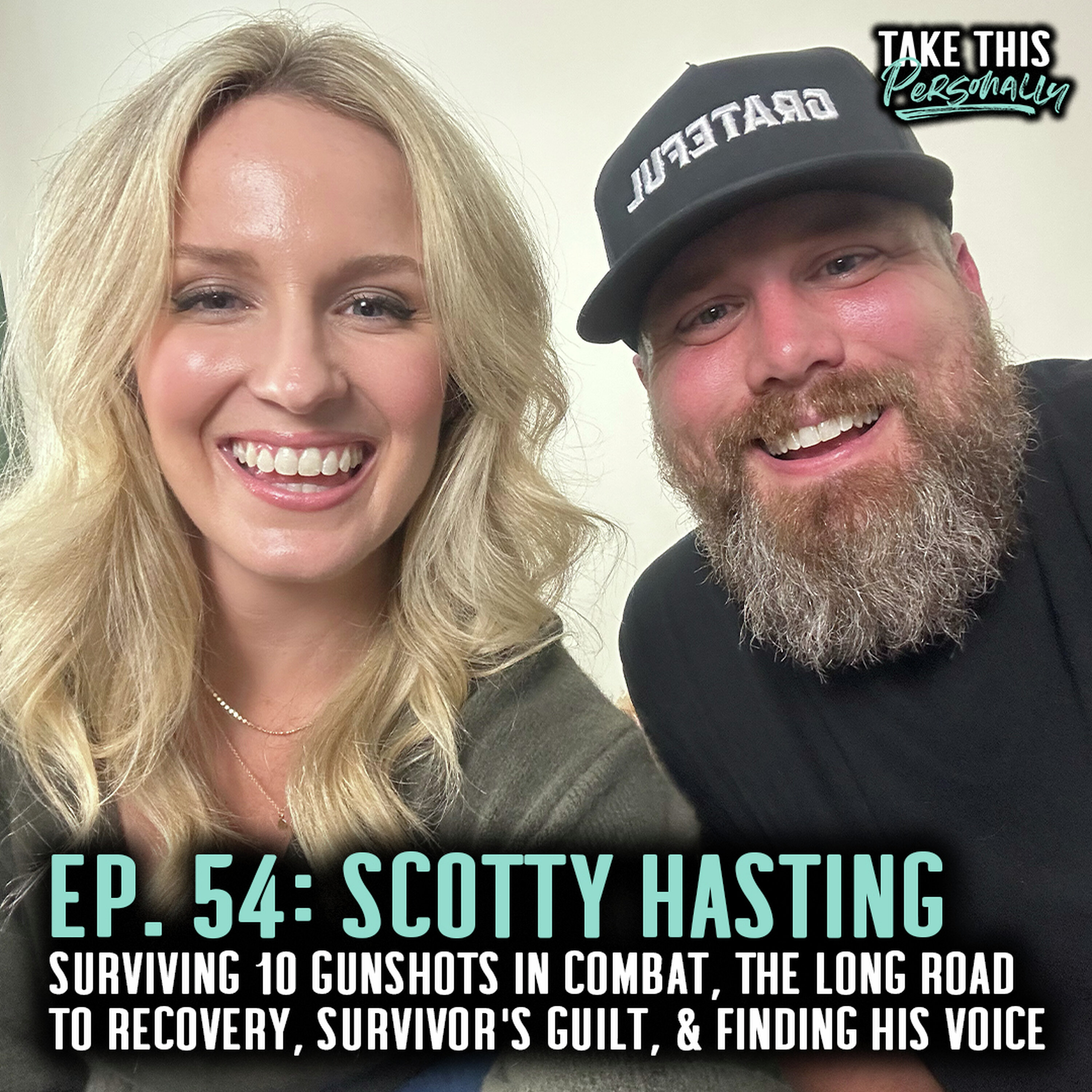
The Bobby Bones Show
MORGAN: Scotty Survived Ten Gunshots in an Ambush, Then Found His Voice in Music
00:49:56
Loading summary
Transcript225 lines
- [00:00]
Morgan Huelsman
This is an iHeart podcast.
- [00:05]
Ryan Seacrest
You can make a difference in someone's life, including your own, with a job in home care. These jobs offer flexible schedules, health care, retirement options and free training. They also provide paid time off and opportunities for overtime. Visit oregonhomecarejobs.com to learn more and apply. That's oregonhomecarejobs.com.
- [00:34]
Scotty Hasting
Hey, it's Ryan Seacrest for Albertsons and Safeway. Now through August 26th, it's back to deals time where you can enjoy storewide deals and earn four times points. Look for in store tags to earn on eligible items from Hershey's, Cheez It, Kellogg's, Gatorade, Smart Water, Skinny Pop, Oberto, Zoa, and Activia. Then clip the offer in the app for automatic event long savings. Shop in store or online for easy drive up and go pickup or delivery. Subject availability restrictions apply. Visit Albertsons or Safeway.com for more details.
- [01:04]
Morgan Huelsman
Gatorade Zero the number one proven electrolyte blend made with zero sugar, designed to hydrate better than water so you can lose more sweat and push more limits. Gatorade 0 Is it in? You.
- [01:32]
Ryan Seacrest
Take this personally with Morgan Huelsman.
- [01:37]
Morgan Huelsman
A while back, I met a guy named Scotty Hasting at an event here in Nashville, and I knew as soon as I was talking to him that he had a story that needed to be shared. And that's why I decided to bring him on this week. We haven't done any episodes on veterans or military or anything really in that space, and I feel like he's one of the perfect people to come on and start a conversation around that. And his story is one that will have you feel all kinds of emotions, especially to see where he's at now. So let's get into this. I'm joined this week by Scotty Hasting. Him and I met, gosh so many months back at an event for creativettes, which was super awesome. But I'm really just excited to have you guys get to know Scotty more and hear his wild story and experiences. So, Scotty, thanks for being here.
- [02:29]
Unknown
Thank you for having me.
- [02:30]
Morgan Huelsman
We are gonna dive in so quick today.
- [02:33]
Unknown
Let's do it.
- [02:34]
Morgan Huelsman
Your story because creative, it's the end of your story of what really started this journey. I want to hear the beginning.
- [02:42]
Unknown
Yeah.
- [02:43]
Morgan Huelsman
What got this all started, why you're even in that group in the first place. Like your background.
- [02:48]
Unknown
Yeah.
- [02:48]
Morgan Huelsman
And what got you to where you are today?
- [02:50]
Unknown
Yeah. It's insane. So I grew up in the Cincinnati, Northern Kentucky area and I was playing Baseball at the time, semi pro baseball. I was making a little bit of money, not a whole lot. And I made the decision one day that I wanted to be a part of something that meant something, be a part of something bigger than myself. And I decided that I was gonna go and enlist in the Army. And so I did. And when I got there, it was. It's so funny. I was like, man, I just want to fight. Like, to me, a soldier is someone who goes over and fights. That's what I wanted to be. That's what I wanted to do. And. And. And I should have played harder to get because come to find out, there was a signing bonus. But they did. Of course, the recruiter didn't tell me when I went to join, because he was like, oh, this guy wants to be like, heck, yeah. You didn't get the signing, but everyone else who, like, got. Actually got recruited got a signing bonus except for me. I'm like, man, come on.
- [03:39]
Morgan Huelsman
How many years did it take for you to find out about that?
- [03:41]
Unknown
Oh, it was at basic training when I found out that everyone else was getting a signing bonus. Yes. Someone had said something about it. They're like, oh, I got half the money before I left and helped out my family, and then I get the rest of the half when I graduate basic. And I was like, what? It's like that meme. We're like, wait, you guys are getting paid? Absolutely. 100. That meme. Wow. Yeah. It was insane.
- [04:03]
Morgan Huelsman
You wanted to do this?
- [04:05]
Unknown
Yeah, Yeah, I wanted to. I just. I felt like I needed to be a part of something that meant something. I was living a life where, you know, I just felt like I needed to do something. And so I. Yeah, I joined the Army. I went to Fort Benning for basic training, which is the home of the infantry, and graduated basic training. And probably three months after graduating basic training, I was in Afghanistan.
- [04:26]
Morgan Huelsman
Wow.
- [04:27]
Unknown
Yeah, it was very quick. Very quick. When I got to my unit, they were like, hey, you guys know we're deploying, right? I was like, oh, okay.
- [04:33]
Morgan Huelsman
Was that kind of a shock when it first happened? You're like, I knew I wanted this, but also, that's happening a lot quicker than I expected.
- [04:40]
Unknown
Oh, 100. You go in and you're like, okay, I'm gonna go to my first. My first duty station. I'm gonna be there for a little bit. I'm gonna train. I'm gonna hang out with all the guys, whatever. And then you get there, and they're like, oh, yeah, we're deploying in, like, A couple months. I was like, okay. Dang. Wasn't expecting it to be that fast.
- [04:55]
Morgan Huelsman
Yeah. And when you get that notice of deployment, are you aware of what situation you're going into?
- [05:02]
Unknown
Yeah, a little bit. For a while there, it was that we were going to go to Iraq, and then we were going to go somewhere else, and then they finally decided Afghanistan is where we're going. And. And, yeah, and then that by. That was probably a month before we left. So we knew going into it, like, we were going to Afghanistan. We knew. We didn't really know what part of Afghanistan yet. We didn't. Yeah, we didn't know that until right before we left, but. But, yeah, we knew it was going to be Afghanistan.
- [05:29]
Morgan Huelsman
So then you get there and how long are you over in Afghanistan for?
- [05:32]
Unknown
I was in Afghanistan for three months before I got shot.
- [05:37]
Morgan Huelsman
So this all happened on your first ever deployment?
- [05:39]
Unknown
Yeah.
- [05:40]
Morgan Huelsman
Okay.
- [05:41]
Unknown
Yeah.
- [05:41]
Morgan Huelsman
Wow. I'm gonna hold my reaction in comments until you continue this.
- [05:45]
Unknown
Yeah, no, it was. It was insane. We were there for three months. We were there in 2010, 2011, the end of 2010, and beginning of 2011, and it was. That was a rough time in Afghanistan. We were in the Kandahar province, which is the southern part of Afghanistan, which is a very rough part of Afghanistan. And we were in firefights every day and losing people, and it was. It was hard. But, yeah, three months in was. We were on patrol April 21, 2011, and. And I walked up on a guy who had a rifle behind his back, and he just started spraying, and he was maybe 15ft from me, and he ended up hitting me 10 times total. So, yeah, it was like, up my body this way.
- [06:23]
Morgan Huelsman
Wow.
- [06:23]
Unknown
Yeah.
- [06:24]
Morgan Huelsman
Do you remember as this was happening in the events that followed?
- [06:28]
Unknown
Oh, yeah.
- [06:28]
Morgan Huelsman
Were you coming in and out?
- [06:30]
Unknown
Yeah. No, I was awake the whole time. I remember. The only thing that I don't remember is falling on the ground. I remember getting shot. I remember how it felt. And then I remember waking up on the ground. I don't remember that at all, but I do remember being on the ground and trying to crawl over to my guys because they were. Me getting shot was the start of an ambush. So not only did I get shot, but now they're getting shot at also. So it was a whole thing. And I was trying to cl. I was trying to crawl over to them, but I was really bad off, so I just couldn't get to them.
- [07:02]
Morgan Huelsman
When everything finally stopped, because I'm assuming that's what happened then. You get transported somewhere.
- [07:10]
Unknown
Yeah. I go from. Finally, the fire stops. The guy who shot me, his gun jammed, and that's the reason why he stopped shooting me. And he. I guess he looked up as he was trying to fix the jam and realized that I was still alive. And I pointed my rifle at him, and. And that's when he dropped his rifle and took off running. And then. So he took off running, but my team, my squad is still getting shot at. And then they. All that subsides. It felt like a lifetime, but it was probably only a couple minutes. Then that happens in my. In between the firefight that's happening, my medic runs to me, and he starts working on me. And then from there, we go back to the Kandahar airfield. Once the helicopter gets there and picks me up. But I had lost so much blood at one point in time that I. My eyesight started shutting down, and it was just like a white film that I saw. It's crazy. I attribute that to, like, the. When people say, I see the light, like, that's what that is. I feel it's just like parts of your body are shutting down. And my eyesight was the first to go. But I eventually got to the Kandahar airfield and then went into the initial trauma room where the doctors were working on me, trying to figure everything out. And they immediately started hooking me up to blood, started getting blood pumping back into my body. And when that happened, I started getting my eyesight back. And I remember saying, hey, I can see, like, my eyesight's coming back. It's a little fuzzy, but I can see you guys. And then that's when I heard a lady lean down and say, hey, it's okay for you to go to sleep now. I fought like hell to try to stay awake the whole time. I remember, like, how easy it felt to just, like, drift away. Like, how easy it would have been to just. Just give up and push and just drift away. And. And I remember fighting that feeling from the. From the time that they picked me up in the gurney until I was in the hospital. Can her airfield. So the lady leaned down, she said, hey, it's okay for you to go to sleep. And I was out like that.
- [08:56]
Morgan Huelsman
Why do you feel like you were fighting so hard? What was going through your mind that you can maybe recall that was continuing to push you to fight?
- [09:04]
Unknown
Yeah, it was just the fact that I just felt like I wasn't ready to give up. I just felt like I wasn't. There's still a lot of life. It's crazy when I was laying down on the ground and I was bleeding. I was like, man, there's still so much that I want to. Want to do. I can't die here. There's so much that I want to do still. And I just remember fighting. And the best, the most amazing part about it is going into basic training, you find out that in all the different combat lifesaver things that you do, they tell you that going into shock is going to be. It's a killer. If you go into shock, it's the number one killer of combat injuries. If you get injured or you're missing a limb or whatever, if you go into shock, more than likely you're not going to come back from that. So I fought to just try to stay calm. Try to stay as calm and cool as possible to the point of where, like, I was trying to just make jokes with my buddies that were part with me that were there. And kudos to them because they were picking up what I was trying to do and they were just joking around with me, the medic and those guys, they saved my life. Just doing that, just making me stay calm as much as possible.
- [10:01]
Morgan Huelsman
Scotty, that's incredibly impressive. Also just heartbreaking. But so impressive that you could stay calm after that just happened to you. Did you realize how many times you had been hit at that?
- [10:13]
Unknown
No. I knew that I was really bad off. I didn't know how bad. I knew that my. My hand and everything, my whole arm was completely numb. My leg, I remember feel like I remember when I got shot. I felt all of it. So whoever says that adrenaline kicks in is a liar. Felt all of it. But no, I remember just the pain. And I was like, man, this. With how much pain I'm in, I have to be really bad off. I was missing a part of my hip where the guy said that you. Whenever they first came to me to work on my hip, you could see, like, the joint of my hip, like the ball joint. And because I was all of that muscle and all that tissue and everything was just ripped away by bullets, I'm missing part of my armpit because of where it hit me in the brachial plexus also. And it's just. Yeah, it was really bad off. And I knew it was bad off. And especially by the way that the medic reacted when he first came to me, I was like, oh, okay, this is a lot. This is really bad.
- [11:08]
Morgan Huelsman
And yet you're still here and you're staying calm and you're cracking, Joe.
- [11:12]
Unknown
Yeah, I'm still trying to stay as calm as possible. That's the only thing that you can do in that situation. That's literally the only thing that I could do, which is try to stay calm and try to fight that feeling of just drifting off and going away.
- [11:23]
Morgan Huelsman
So you get to the hospital, they start doing all of this work on you. What are the events that follow?
- [11:29]
Unknown
The most incredible thing of that. This whole story is that lady that. That leaned down and said, it's okay for you to go to sleep. I talked to a guy who was in that room that day, and there was no. There were no women in that room that day. Wow. So whoever that was, whoever came into my head and said, it's okay for you to go to sleep. It's okay for you to let go. We got you. Whoever that was, I don't know who it was, but then there was no women in that room that night.
- [11:58]
Morgan Huelsman
Does that feel, like, eerie to you and you're trying to place maybe potentially who that was?
- [12:02]
Unknown
Yeah, it's just. It's. Yeah. It still gives me goosebumps. Is crazy. It was a voice I've never heard before, and it was just. Yeah. It was literally like, hey, it's okay for you to go to sleep. We got you. We'll take care of you. And then I just passed out.
- [12:15]
Morgan Huelsman
It's crazy what happens with your body and with your mind when stuff like that's happening.
- [12:20]
Unknown
Absolutely.
- [12:20]
Morgan Huelsman
Just you. Even you sitting here talking about the. Trying to stay really calm, but then also this happening. It's just crazy. The things and the events that surround a really traumatic experience like that.
- [12:32]
Unknown
Absolutely. It's insane, man. And I remember. So that happened. We got all that done. I went to sleep, and I woke up, like, a day later, and I was still in Kandahar, and we were getting ready to move. They asked me where I wanted to go, if I wanted to go to Walter Reed or if I wanted to go to bamsey, which is in San Antonio. I'd never heard of bamsi. And they talked about Bamsi being mainly for burn people.
- [12:55]
Morgan Huelsman
Okay.
- [12:55]
Unknown
And I was like, well, I'm not burnt, and I've never heard of bamsey, but I've heard of Walter Reed. I'll go there. Why not? That's cool. And so went there. But we made. So they take you from Kandahar into lawnstool Germany, and. But between those two, they lost pulse of my arm, and they thought they were gonna have to take my arm, and they had to make an emergency stop in Bagram, and they ended up taking A vein out of my right leg and replacing the artery in my arm, which is crazy. Wow. I can even do that because I don't know what health class they went to, but the one that I went to said that arteries and veins are completely different.
- [13:30]
Morgan Huelsman
Yeah.
- [13:32]
Unknown
But apparently the. A vein will grow into an artery, which is crazy. Or at least grow into what it needs to be. It's insane.
- [13:40]
Morgan Huelsman
It sounds like you were in the right place with the right person.
- [13:43]
Unknown
100.
- [13:45]
Morgan Huelsman
To do what needed to do.
- [13:46]
Unknown
Absolutely. Because like I said, they lost possibly my arm. They thought they're gonna have to take the arm. They just thought, hey, like, the arm's dying. We just have to get rid of it. But luckily there was a doctor that I said, nope, I got something I can do. And that, thank God I still have it.
- [13:59]
Morgan Huelsman
Yeah. Do you have full feeling and stuff?
- [14:02]
Unknown
No, I have from. I have no feeling from basically my elbow down. I have this much movement in this hand. These three fingers just sit there. But, yeah, it's something I've lived with.
- [14:11]
Morgan Huelsman
For a while now, and we get into in a little bit. You play an instrument. Does that change anything for you?
- [14:17]
Unknown
Yeah. Yeah. I was lucky enough that when I started learning guitar, I didn't know how to play guitar until, like, before this, because I feel like if I knew how to play guitar before this, I would have been like, this is stupid. I'm done. I'm not going to do this anymore. I would have gotten upset, and I would have gotten frustrated and just quit. Because it does change a lot. It's there. There's a lot of learning curves that happen with having nerve damage in your hand trying to learn how to play the guitar.
- [14:41]
Morgan Huelsman
Yeah, I could imagine.
- [14:42]
Unknown
Yeah. Yeah. And it was that. So they patched me up. They got my arm still fine in. Bam. And then I got to lawn school, Germany. And then when I got to lawn, actually when I got the Bagram is when I actually finally got to call my family. So for the longest time, they were told Scotty got hit. He got shot a bunch of times. He's in intensive care. We don't really know what's gonna happen or what's happening. Like, it's touch and go. We don't know.
- [15:05]
Morgan Huelsman
And what is that time frame?
- [15:06]
Unknown
That's two days where my family's, like, just trying to figure out if I'm even alive.
- [15:12]
Morgan Huelsman
Oh, my God.
- [15:12]
Unknown
And then. Yeah. And then I get to Bagram, and they do that procedure, and that's when I call my mom, and I'm like, hey, I'm Good. I'm still here. I'm alive for now, at least. And then that's when she heard my voice. I called my wife at the time, and it was. It was crazy. For the longest time, they didn't even know if I was still alive. 1.
- [15:30]
Morgan Huelsman
Just like when you were having that experience where you're like, this felt like years for them, I'm sure, saying where it was, like, every minute just clicked as they were just waiting for that phone call.
- [15:39]
Unknown
Absolutely. 100. I couldn't imagine being. Now that I have kids, I couldn't imagine being on that end and just wondering if my child's alive. Like, I couldn't even imagine the feeling.
- [15:49]
Morgan Huelsman
Have you ever talked to your mom about that moment in time?
- [15:52]
Unknown
Oh, yeah. We've done different, like, documentaries and stuff like that. We did a VA documentary that she talks about it and stuff, and we've had conversations about it, and it's rough. It's really rough to hear her talk about it and to hear my brother and my dad talk about it. It's. Yeah, it's a completely different experience than what I experienced.
- [16:11]
Morgan Huelsman
Well, and it's not ever something. I don't feel like anybody who chooses to join the army by choice. Right. Like, you choose. You're like, this is what I want to do. I don't think you're thinking in that moment. Well, I'm. My. My family is gonna have to potentially get a phone call someday. That's not what you're considering?
- [16:28]
Unknown
Yeah. I think when you volunteer, especially volunteering into the infantry, like, you have an idea that something could happen, but you don't ever want to think about it. You want to think that could happen, and then it does, and you're like, what do I do now?
- [16:42]
Morgan Huelsman
It's.
- [16:42]
Unknown
And, yeah, and that's, I think, more so for the family, it's harder because this wasn't a decision they made. This was a decision that I made. And, yeah, now they're just having to deal with the consequences of it. And. Yeah, it's just. It was rough.
- [16:57]
Morgan Huelsman
I could imagine. But on all of you guys, but particularly, you're the one who's going through this entire experience. So you're in Germany. You make that phone call. When do you finally make it back to the States?
- [17:06]
Unknown
Yeah, so I was in Lon still for about another day. I think it was about another day. They were basically just trying to make sure that I could make the trip from Germany to the United States. Which, before we go any further, whoever picks the nurses that go to Lonstal Germany deserves a medal because they are beautiful. So shout out to you, whoever it.
- [17:29]
Morgan Huelsman
Was, are they nurses within like the US army or are they?
- [17:33]
Unknown
Yeah, a little bit of both. So in law and still you have, you have the German nurses and then you have nurses that are also still part of the United States army. And and then you have nurses who are from the US that they just, they get paid to go overseas and be nurses in hospitals like that.
- [17:49]
Morgan Huelsman
Yeah. Well shout out if you're in lawnstool 100%. There's something about you.
- [17:54]
Unknown
Absolutely. You're great. You can make a difference in someone's life, including your own with a job in home care. These jobs offer flexible schedules, health care.
- [18:07]
Scotty Hasting
Retirement options and free training. They also provide paid time off and opportunities for overtime.
- [18:16]
Unknown
Visit OregonHomeCareJobs.com to learn more and apply. That's OregonHomeCareJobs.com.
- [18:27]
Ryan Seacrest
Tired of spills and stains on your sofa? WashablesOfAs.com has your back featuring the Anna Baker Collection, the only designer sofa that's machine washable inside and out. Where designer quality meets budget friendly prices. That's right, sofas start at just $699. Enjoy a no risk experience with pet friendly stain resistant and changeable slipcovers made with performance fabrics. Experience cloud like comfort with high resilience foam that's hypoallergenic and never needs fluffing. The sturdy steel frame ensures longevity and the modular pieces can be rearranged anytime. Check out washablesofas.com and get up to 60% off your Anna Bay sofa backed by a 30 day satisfaction guarantee. If you're not absolutely in love, send it back for a full refund. No return shipping or restocking fees. Every penny back. Upgrade now@washablesofas.com Offers are subject to change and certain restrictions may apply.
- [19:26]
Scotty Hasting
Hey, it's Ryan Seacrest for Albertsons and Safeway. Now through August 26th, it's back to Deals time where you can enjoy storewide deals and earn four times points. Look for in store tags to earn on eligible items from Hershey's, Cheez It, Kellogg's, Gatorade, Smart Water, Skinny Pop, Oberto, Zoa and Activia. Then clip the offer in the app for automatic event long savings. Shop in store or online for easy drive up and go pickup or delivery subject to availability restrictions.
- [19:53]
Unknown
Apply.
- [19:53]
Scotty Hasting
Visit Albertsons or Safeway.com for more details.
- [19:57]
Unknown
But yeah, so got I I went from there. I went to from lawn school. I finally got to Walter Reed and that was really. That was where like, the fight really started, was to. That that's where I had to learn how to re. Walk again. I had to learn how to. I had to learn how to do everything left handed instead of right handed. And. And that was when I had to do all the pt, the occupational therapy, the different therapies, and. Yeah, and then that was when. The first time that my family got to see me also. And the hardest part for them was I was hooked up to wound vacs, which are like, the things that help keep your wounds clean. And I was hooked up to like four. Four different ones. And my mom said that when she first walked in, she thought that those machines were keeping me alive, and she said that it scared the crap out of her.
- [20:42]
Morgan Huelsman
Well, yeah, and she's seen four different machines, and then she's seen you hooked up to all kinds of other stuff, and she's. Is this permanent? What's happening to my son?
- [20:50]
Unknown
Yeah. Yeah. She didn't really. She didn't know what those were. You don't know what a wound vac is until you get in that situation. Like, oh, those are okay. But yeah, she said when she first walked in, like, her, my dad and my brother were all like, is he even. Is he gonna live through this? What? And they didn't know, but I was fine. I was alive. Like, I was good.
- [21:06]
Morgan Huelsman
When you get the. You gave the phone call and they're like, okay, he's alive. That's good. We're good. They're probably not anticipating what that meant.
- [21:14]
Unknown
No, not at all. They were definitely not anticipating what they saw when they walked into that. And. Yeah, but, you know, they were. They were troopers, man. They stayed strong. And it was.
- [21:24]
Morgan Huelsman
How long were you there for?
- [21:25]
Unknown
I was impatient for a month. And then I was outpatient at Walter Reed, but still living on the campus for six months.
- [21:31]
Morgan Huelsman
Wow.
- [21:32]
Unknown
But inpatient. I. That was every other day. I was going under anesthesia and they were cleaning my wounds every other day for a month.
- [21:38]
Morgan Huelsman
You had to go under anesthesia every other day?
- [21:41]
Unknown
Every other day, yeah.
- [21:43]
Morgan Huelsman
Just to clean the wounds that you had.
- [21:44]
Unknown
Yeah, because it would have been far too painful to not do it.
- [21:49]
Morgan Huelsman
So after that month of having that same experience over and over, were you just.
- [21:54]
Unknown
Yeah, it was just a blur. It really was. It was. You just get into, okay, well, this is what my life is now. There's, like, different stages. I feel like you get there and you're like, for me, I still. I was like, okay, I'm gonna be fine. I'm gonna get nursed back to health, and I'm gonna go back over there. I'm gonna be with my guys. I'm gonna go back over. That's the plan. And then at Walter Reed, that was slowly started deteriorating. Okay, I'm not going to be able to go back over because this is worse than I thought. And then it goes to accepting that, okay, well, this is my life now. And then. And then it's. You get a little pissed off sometimes and you're like, well, why? I don't want to do this anymore. I don't want to go back to sleep tomorrow. It's what you need to do. It's hard. It's a hard life to live in a hospital bed.
- [22:37]
Morgan Huelsman
Well, and that's some. So much of why I wanted to bring you on, Scotty, because those experiences that you have are unfortunately not uncommon. Your situation and then what happened to you is very solo, and it's all yours.
- [22:51]
Unknown
But thank God, because I don't recommend it.
- [22:56]
Morgan Huelsman
But there's so many men and women like you who choose to serve, and they come out of serving with horribly traumatic situations that happen to them. And the things that happen to you guys after is really what gets lost. Right. Here's your story. This is what happened to you. This is what everybody always wants to know. Yeah, but who's Scotty after that? And what happens to Scotty after that moment in time where everybody's paying attention, the support is all there, everybody's doing all the things. And you go through the six months, but then after.
- [23:31]
Unknown
Yeah, there was a moment when I was at Walter Reed where I just. I had to redefine what my life was going to look like and what I was going to look like. There was a time when I was married at the time, and we were. At one point in time, she had gotten pregnant and we were expecting a baby. And I'm like, what does. Like, how do I change a diaper? Like, how do I. What. How do I live my life? Like, how do I take care of another person when I can barely even take care of my. Myself? But there were a lot of moments like that where you just had to make the decision that you were just going to figure it out. And. And for a long time at Walter Reed, for probably three months while I was there, I was in that rut of just feeling sorry for myself for so long. And then something happened. There was a moment when I was at Walter Reed that kind of changed everything. And we were at an event at Walter Reed, and there Was a. And at these different events, like, they always held these events to build camaraderie, build between all the broke veterans that were there. You say it like that, and that even sounds bad. You're like, broke veteran, but. And it was great. It was great to have that. It was great to have a community. That was. One of the most amazing things about Walter Reed is that there is a community of people there, and everyone is suffering. Some of us were worse than others, and. But at the end of the day, we all went through something horrific, and we're all there, and we're all kind of bonding in this trauma, and it was amazing. But there was a moment when we were at this event and I overheard a song that they were playing in the background. They always played music in the background. And there was a song that came on, and it was a song that was cut by Trace Atkins called Till that Shots Fired, and Trace Atkins originally cut it. It was the first time I'd ever heard this song. And I heard it out of the corner of my. Just in the background, and. And then it was like I locked into it. I don't know what happened, but something just drew me into the song. And after the song was over, like, I cried for a baby for two hours, and I couldn't stop myself here. And in those two hours, that was when I made the decision that I was going to live my life to the fullest, and I wasn't going to let my injury dictate my life, and I was going to live for my best friends who would never have the opportunity. And, yeah, that song came back around full circle a little bit later that we can talk about in a little bit.
- [25:31]
Morgan Huelsman
Yeah, I definitely want to. I want to talk about that for sure. But. Wow. Talk about a defining moment when you're really struggling. And do you feel like that was the first time, as you hear the song and you talk about crying for two hours after? Was that really the first time where everything just kind of all the emotions and everything you'd been experiencing for the last several months just came to a head 100%.
- [25:52]
Unknown
That was. Those two hours of crying was 100% understanding that life. Life is different now. And while I'm here at Walter Reed, I'm also hearing about my best friends being killed. And it's. There was just so much at Walter Reed, I guess in that moment, it was like everything finally slowed down, and I was able to, like, all the emotions, everything just came rushing in, and I was able to really think about what just happened. And what life looks like moving forward. And it was just an overwhelming sense of emotion that just. I couldn't help it.
- [26:24]
Morgan Huelsman
What would you hope for someone like me who's never had that experience, or maybe somebody who's never heard of a story like yours? What's something that you hope they can come away with? Understanding. For someone in an experience like yours, or even somebody who chooses to fight in the army. Any of the above.
- [26:41]
Unknown
Yeah.
- [26:42]
Morgan Huelsman
But just maybe something that helps them understand, maybe have more empathy, understanding of situations and things that you go, yeah.
- [26:51]
Unknown
It's so hard to be empathetic with someone if you've never experienced what they experience. You know what I mean? That's something that I feel like the world is understanding now, but at the same time, loss is loss. I lost some of my best friends, and that still sticks to me. And the survivor's guilt behind that still is something I still try to deal with. And at the end of the day, trauma is trauma, and trauma is relative. But anyone who experiences it different ways and. And I think that it's important for everyone to understand that. Just be like, there's a lot of people that are like, man, I got hurt, but it wasn't anything like you. Like, it doesn't matter. Like, trauma is trauma. Like, it doesn't matter that you weren't hurt as bad as me. You experienced something. It was relative to your life. It changed your life. Like, it doesn't matter if it was, like, if it was as bad as me or not or. Yeah, at the end of the day, we're all in this. And at the end of the day, like, it hurts regardless. And at the end of the day, you have to find a new way to live life.
- [27:46]
Morgan Huelsman
You mentioned that survivor's guilt. I know a lot of you guys struggle with that because you're really experiencing this. A very sharp contrast between life and death. Does the survivor's guilt happen? Obviously in the moment when you find out, but throughout the rest of your life?
- [28:03]
Unknown
Yeah. It's still something I. I struggle with on a daily basis. It's actually pretty amazing. I was able to create a vest. I was able to link up with them and write a song about my survivor's guilt. And when I signed my record deal with Black River Entertainment, it was the first single that I ever put out called how do you choose? And because with my music and with all that I've only ever wanted, I want to help people that are struggling. I want to use either my story or my music or something and try to help someone who's struggling and understand that there's so much more, you know, that you can go through all of this bad and you can come out on the other side and do things that you never thought possible. And there with that, though, I had to put out songs that were very much me opening my chest and letting me people see my heart and my soul. And that song is still the hardest song I've ever written, and it's the hardest song that I ever perform. And it's truly a song about my Survivor Guild and my best friends who never came home and why did I get to after getting shot 10 times and there they did.
- [29:01]
Morgan Huelsman
Do you still keep in contact with any of those families?
- [29:04]
Unknown
Oh, 100%. My best friend, Adam Hamilton, his mom is one of my dearest friends. I love her so much. It's actually amazing. I made my grandal opera debut not too long ago, and at the. At that debut, I played a song from Forrest Gump, which was Fortunate Son. It was amazing. It was so much fun. And then I played that song. How do you choose? And that song is about my best friend Adam Hamilton, who was killed. And Adam Hamilton's family was in the crowd that night. And it was one of the most incredible experiences I've ever felt. And it was cool because after you make your debut, like, you go into the circle room and you get this little party, this little debut party, and all of Adam's family was there, and it was so cool to, like, just experience this moment with them. And it was even more amazing because I had never met some of them. So it was cool to be like, hey, man, so great to meet you. Like, how do you choose? Makes me feel connected to Adam again. And, like, just to, like, understand that, like, this thing that I put out that was so personal to me, like, that it touches them and makes them feel something that's amazing.
- [30:02]
Morgan Huelsman
You're making me feel. I'm, like, getting all teary eyed just even hearing the story of this and how you use such difficult moments in your life to connect with others, which is what this podcast is all about, was trying to help people feel less alone and their struggles. And veterans and people who are in our military are such a huge part of the population. And you are the perfect first guest for this to share your story. And I just like, Scotty, it's so incredible watching what you've done, because here, everybody's heard your story. This is what happened. And you take this moment in time and then you're doing what you do now, which is making Music, being an artist, you're working with. Creative bets give that kind of background, too, because that's now the big part of your story.
- [30:50]
Unknown
Yeah, yeah. This is the. Honestly, the music part of it was the most unexpected of all of it. If I'm gonna be real. So after all my injury and everything, I went back to Fort Riley and in Kansas because my guys were coming back.
- [31:01]
Morgan Huelsman
That's where I'm from. Kansas.
- [31:02]
Unknown
Yes, I did. Absolutely.
- [31:04]
Morgan Huelsman
I went to Manhattan, Kansas, for college. So Fort Riley, State. Heck, I even did news segments at Fort Riley. I was crawling in the barbed wire.
- [31:12]
Unknown
That's awesome. Yeah, that's so cool. But, yeah, so I went back to Fort Riley because my guys were coming back. I had to be there. Which is crazy because a lot of times, like, people who go to Walter Reed, like, that's where their story ends. Like, they go to Walter Reed, they get out of the military, they medically retired to the military. So for me to be like, hey, I want to go back to my Fort Riley and be there when my guys get there. No one at Walter Reed knew how to make that happen because it never happened before. No one has ever done that. It basically took an act of Congress. Luckily, my congressman was an ex Ranger and he said, yeah, you need to be there. And so he wrote up a letter and stuff and made it work.
- [31:46]
Morgan Huelsman
But I went, that's incredible, by the way. That's just awesome that happened. But also crazy that to your point that it took an act of Congress.
- [31:52]
Unknown
Yeah. Oh, it was.
- [31:53]
Morgan Huelsman
For that to happen.
- [31:54]
Unknown
For it. My Congress congressman had to write a letter just for me to be able to go back to my duty station and see my guys. But, yeah, so I was there. I went back to Fort Riley and they all came back and we were there for a while. But while I was there, I was lucky enough to find adaptive sports. I played sports my whole life. Growing up, sports was our world. That's what we did. So when I got to Fort Riley, they were like, adaptive sports is what we're really pushing right now. We feel like it's really going to help. It's going to help you give. Get an escape, whatever. And I was like, yeah, sure, let's try it. I'll try everything you got on this list. And I did. And the one that really stuck with me was archery. So to the point of where it's crazy because I'm right handed. So I went to my first archery clinic ever to learn how to shoot archery. And the guy was like, all right, what are you left Handed, Right handed. I'm like, I'm right handed, but this hand, I have no feeling and it doesn't really work. He said, ah, that's all right. We'll strap a, we'll strap a release to this hand. You'll be fine. And then I found out three arrows later into the ceiling that I not having feeling in the hand that's has the trigger on it is a bad thing.
- [32:51]
Morgan Huelsman
I've even done archery and I do have full feeling and it's even a disaster.
- [32:54]
Unknown
It was to the point where the guy was like, listen, you're a liability. Stop. Yeah, stop shooting archery.
- [32:59]
Morgan Huelsman
You're like, I did tell you.
- [33:00]
Unknown
I was like, man, we had this conversation, I don't know what you want, but I'm way too hard headed for him to tell me I can't do it. So I was like, man, there's got to be a way to do it. I remember him saying, the hand that's holding the bow just sits there. That's all it does. And I was like, well, this hand, that's all it does. Anyhow, what if I just switched to left handed? So I went back the next day and as soon as I walked up, he immediately was like, no. Like, why are you here? I told you, you're a liability. You have to go like, you can't do it. And I was like, no, just hear me out, just hear me out, man. What if I try this left handed? And so we did. And I found an amazing escape and an amazing purpose in archery to the point of where I eventually got recruited by the US Paralympic Committee. And I started shooting and representing the United States and the Paralympic program all throughout the United States. And I did that.
- [33:44]
Morgan Huelsman
Hold on. Wow. Yeah, Scotty, you just like low key, like, okay, yeah, it was, that's incredible.
- [33:51]
Unknown
It was amazing. And it was. I did that for six years. I shot professionally. I got paid by the VA and by others to. To shoot. And that's what I did. That was my job. And it was amazing because for the seven seconds before that era releases, the ptsd, the depression, the anxiety, all that disability disappeared. And I was able to focus on just one thing. And I lived for those seven seconds. For six years, I lived for those seven seconds. And then Covid happened.
- [34:17]
Ryan Seacrest
You can make a difference in someone's life, including your own, with a job in home care. These jobs offer flexible schedules, health care, retirement options, and free training. They also provide paid time off and opportunities for overtime. Visit oregonhomecarejobs.com to learn more and apply. That's oregonhomecarejobs.com Tired of spills and stains on your sofa? WashablesOfAs.com has your back. Featuring the Annabe collection, the only designer sofa that's machine washable inside and out. Where designer quality meets budget friendly prices. That's right, sofas start at just $699. Enjoy a no risk experience with pet friendly stain resistant and changeable slipcovers made with performance fabrics. Experience cloud like comfort with high resilience foam that's hypoallergenic and never needs fluffing. The sturdy steel frame ensures longevity and the modular pieces can be rearranged anytime. Check out washablesofas.com and get up to 60% off your Anna Bay sofa backed by a 30 day satisfaction guarantee. If you're not absolutely in love, send it back for a full refund. No return, shipping or restocking fees. Every penny back. Upgrade now@washablesofas.com Offers are subject to change and certain restrictions may apply.
- [35:46]
Scotty Hasting
Hey, it's Ryan Seacrest for Albertsons and Safeway. Now through August 26th, it's back to Deals time, where you can enjoy storewide deals and earn four times. Look for in store tags to earn on eligible items from Hershey's, Cheez It, Kellogg's, Gatorade, Smart Water, Skinny Pop, Alberto Zoa and Activia. Then clip the offer in the app for automatic event long savings. Shop in store or online for easy drive up and go pickup or delivery. Subject to availability restrictions.
- [36:12]
Unknown
Apply.
- [36:13]
Scotty Hasting
Visit Albertsons or Safeway.com for more details.
- [36:17]
Unknown
When Covid happened, the world shut down. Which means that my therapy, my escape got taken away from me. And when it gets quiet is when the demon's not the loudest. And Covid was very quiet. And I needed something. I was struggling. I was really going into a place that I had been before and I didn't want to be anymore. And I had a guitar in the corner of my room and one day I was like, you know what? I'm just, I'm gonna, I'm gonna learn how to play this thing. I'm gonna, I'm just gonna jump on YouTube and I'm gonna figure out how to play this. So I did. I jumped on YouTube and I deep dove in to learn how to play the guitar. And yeah, there's a lot that goes into having to learn with a disability how to play the guitar. And again, thank God I didn't know how to play before because I would have gotten just pissed off and Be like, I'm done. I'm not doing this.
- [36:59]
Morgan Huelsman
Yeah.
- [36:59]
Unknown
But, you know, it was. And for me, like, I. I figured that learning how to play the guitar was going to be hard enough to where it's something that I'm truly going to have to focus all my time into. I'm really gonna have to escape into this and figure out how to do this. And it was. It gave me a new escape. It let me escape from the PTSD and the depression and the anxiety that I was feeling at that time. And the best way for me to learn was I started learning how to play songs I grew up listening to. I am a 90s country kid through and through. 90s country is the best time for country music, in my opinion.
- [37:27]
Morgan Huelsman
And you're not wrong. It's not a controversial one. So you are safe.
- [37:31]
Unknown
There we go.
- [37:32]
Scotty Hasting
Perfect.
- [37:32]
Morgan Huelsman
What's the first song you were like, I have to learn this song.
- [37:35]
Unknown
Oh. The first song I ever learned how to play was should have been Cowboy by Toby Key.
- [37:38]
Morgan Huelsman
Oh, yeah. Fantastic song.
- [37:40]
Unknown
Yeah, I love that song. I started learning how to play songs that I grew up listening to because I knew if it didn't sound right, I had to fix something. And there's plenty of YouTube videos out there to teach you how to play it. I. I started learning songs that I grew up listening to, and then from there, I was like, okay, like, I'm learning how to play the guitar. This is really cool. But I still have all these feelings, and I still have all these thoughts, and I still have all these emotions that are just overwhelming. And I need some. I need to find a way to. To stop this cup from overflowing. I need to figure out a way to. To pour some out of this cup a little bit. And that's when I discovered songwriting. I don't know what I thought. Maybe I. I don't know. I thought songs just came out of nowhere. It was just like, God just gave them to people. I don't like a stork and the.
- [38:24]
Morgan Huelsman
Babies drop it on your front porch.
- [38:26]
Unknown
I don't know why. I never thought that songwriting was a thing. It was just like, people had these songs, and here you go. I don't know. I don't know what I thought. But then I discovered songwriting, and I was like, I want to learn how to do this. Like, I can just take these emotions and these feelings, and I can throw them somewhere. So I jumped on YouTube and I started learning how to write songs, and I started learning how songs are structured and how you go from a Verse to a chorus to a bridge, and then how all this comes together and becomes one piece of work. And I. I found a new escape in learning how to write, and I found a new escape and getting these emotions and these feelings that I was truly struggling with and putting them somewhere else. I was able to take them out of myself and throw them into something else, which was a lifesaver. Truly a lifesaver for me.
- [39:05]
Morgan Huelsman
You created your own therapy.
- [39:06]
Unknown
Yeah.
- [39:08]
Morgan Huelsman
With what you were teaching yourself.
- [39:09]
Unknown
Absolutely.
- [39:10]
Morgan Huelsman
Because songwriting is a form of journaling.
- [39:12]
Unknown
Oh, 100.
- [39:13]
Morgan Huelsman
You're. You're expressing how you're feeling. It's just almost giving it a prettier look.
- [39:19]
Unknown
Yeah. Well, I don't know. Pretty. I mean, they were not songs. They were not. They were thoughts and feelings were not good. It was really just like word vomit put onto a piece of paper that I could then, like, put somewhere else. And I needed that. And. And it was exactly what I needed when I needed it, and it was amazing. And then from there, I just really deep dove into music in general, in all the types of music. And then from there, the world started opening up a little bit. And I went to an open mic night in Cookeville, Tennessee, at Red Silo Brewing Company. And I don't know why I did it. I just decided, screw it, I'm gonna go. Why not? And I know songs now, so why not go sing one? Why not? Let's give it a shot. I went up there. I put my name on the list. There was, like, four people there because it's still covet time, and everyone thinks that everyone's gonna die when you meet each other. And I was like, well, four people here. What do I have to lose? What are the four people are gonna make?
- [40:11]
Morgan Huelsman
Probably better that way. This is easier. I can do this.
- [40:13]
Unknown
Four people are gonna make fun of me. Cool. I don't care. I don't live here in Cookeville. I'll be fine. But, yeah, so I went up there and I played the first song I ever learned how to play, should have Been a Cowboy by Toby Keith. In that moment, that escape that I had found in archery, that. That sense of purpose that I had found, that therapy that I had found in everything else before was there, but it was magnified a hundred times. And in that moment, that's when the stage became a sanctuary for me. And then I was hooked in archery for seven seconds. Nothing else in the world matters except for being in that moment when I'm playing a song or I'm playing a show for three minutes. Now nothing in the world matters except for being in that moment to the point of now, where when I play a show and I'm playing an hour long show, now nothing in the world matters except for me being in that moment for an hour. I lived for that. To the point of where I would go to all different open mic nights all around Nashville. And then Nashville started opening up a little bit. And I had heard through some of the other guys at the. At the open mic nights that down on Broadway you can play three to four hours at a time. I was like, whoa, wait, tell me. For three to four hours a day, I can be rid of the PTSD and the depression, the anxiety. I can live in a moment for three to four hours a day. I want to do that. So I walked up and down Broadway for a month bugging the crap out of people until they lit me on a stage. And to the point of I was playing six shows a week. I would play a show every night, three to four hours at a time. My vocal cords hated me. But the therapy that I got from it was more than I could have ever imagined. I was able to live in a moment for three to four hours. And for someone who suffers from ptsd, depression, and anxiety, being able to find a moment where you can live in that moment is magic.
- [41:51]
Morgan Huelsman
Do you feel like those experiences every single night as you were having them allowed you then to heal during the other 23 hours of the day? That.
- [42:00]
Unknown
Yeah. 100. 100. Because I knew that no matter what I was struggling with, I was gonna have that outlet. No matter what was happening, no matter all the hard that I was dealing with throughout the day, I knew that there was going to be an escape. And I knew that for three to four hours, I was going to be able to get rid of this, this, and I was going to be able to get away from it. And it kept me moving, right? It kept me understanding that there's going to be something that's going to help me get over whatever I'm dealing with at this time. And yeah, so I live for that. Live for the three to four hours at a time. And I always say, you know, that when I'm on stage, like you're watching therapy happen in person, like you're truly actively watching it, because that's what it is for me. And it's so crazy. I don't know how it all happened, how all where I am now and all that. It's. It's just insane. It's. I'm more blessed than I could have ever imagined I would be. But for those three to four hours, and it didn't matter. It didn't matter who was in the room. It didn't matter anything else. All that mattered was that I was on that stage and that I was playing that music and I was being able to live in a moment. It didn't matter if there was 300 people in a full bar down on Broadway or if I was just playing for the bartenders. I was just there for myself, for my therapy. But at the same time, like, I'm so glad that I went. I went to Broadway, and I'm so glad that I played down on Broadway because it taught me so much about being an artist and about being a performer and about being able to connect with people and because Broadway will humble you. One day you're playing for a packed room and everyone's having a great time, and the next day you're playing for the bartenders and hoping someone walks in the door. Yeah, it'll humble you real quick. But it. At the end of the day, you really have to love it. And it made me find a love, a true love for music and a true love for performing.
- [43:39]
Morgan Huelsman
Scotty, just listening to you over just the course of all of your stories, I think a lot of it is also a testament to your character and who you are as a person, which you've probably never given yourself the credit for, but you couldn't do and have survived a lot of the things that you've gone through without being who you are.
- [43:55]
Unknown
Yeah.
- [43:55]
Morgan Huelsman
And you're an incredible person, and you did that. Like, you created this. I know you're like, I have no idea how I am where I am right now. But, like, you did this, and you created all of that. Just hearing you talk about it, and I know, like, I can sit here and see your bigger picture. You're in it, so it's harder to see when you're in it. But you did all that. That was all you.
- [44:16]
Unknown
Yeah. I think it was just the necessity of it all. I needed something. I've lost way too many buddies here in the States, and I wasn't going to be another one of them. And I needed something. I have kids. I have things I have to live for. And I needed. The necessity of needing to find something outweighed anything. It outweighed all the embarrassment that I could possibly feel going to that open mic night. It outweighed any of it. And now I'm at a point in this career that has become a dream and a career That I could only ever imagine I would be.
- [44:50]
Morgan Huelsman
Yeah. And it's incredible. Which is what I want you to share the three kind of stories because you are now part of Creative it.
- [44:57]
Unknown
Yes.
- [44:57]
Morgan Huelsman
Which is an awesome organization that employs veterans to write songs and do a lot within the music industry. But you have three really cool stories.
- [45:06]
Unknown
Yeah.
- [45:07]
Morgan Huelsman
How I met you, was that you? You were. If I remember correctly, there's a George Strait song connection type thing. Or were you just there? That.
- [45:15]
Unknown
I was just there.
- [45:16]
Morgan Huelsman
Okay. You were just hanging out for Creative.
- [45:17]
Unknown
Yeah.
- [45:18]
Morgan Huelsman
Okay. Okay. Then there's two stories that I know for sure, but you were there. George Straight did an entire album with a lot of the creatives, which was really cool. We were there for the art exhibit and the whole piece of that. But Dolly Parton story and Trace Atkins story.
- [45:31]
Unknown
Oh, man, you know it. I'll tell another story that's pretty amazing. Bring it on, Nashville story.
- [45:37]
Morgan Huelsman
Okay.
- [45:37]
Unknown
The way that I got discovered. Everyone always asks this. One day, my mom was like, hey, I'm gonna go buy a new car. I want you to come with me. I don't know anything about cars. I know nothing about cars.
- [45:47]
Morgan Huelsman
Listen, but when you're a woman, you need a male accomplice for things, because otherwise you get taken advantage of. So I know how your mom.
- [45:53]
Unknown
You know what's great? I was like, man, I don't know anything about. About cars, but I do know mom's probably going to buy lunch, so I'll go, because I will never say no to free food. And so I went. And we were at this dealership, and. And her salesman was Michael Kerr, who is the son of the president and CEO of Black River Entertainment, Gordon Kerr. And we were talking about music and how I use music as a form of therapy. And he grew up in music and how I use it as a form of therapy and how I want to help people with my music and with my story. And we just. We talked for an hour. We were. My mom was supposed to be buying a car, and we're talking about music and all this stuff. She end up buying the car. But, yeah, we talked about music. And at the time, I had one song out just because I wanted to get a taste of what being in the studio was like. So he was like, man, the song's okay, but your story is amazing. I'm going to send this to my dad, and I'm going to send. I'm going to send it to Doug Johnson and our guy at Black River. I feel like they need to meet you. And I was like, yeah, man. Like, that would be incredible. That's amazing. Please. Like, holy crap. He's like, no promises. And I'm like, yeah, of course. But Nashville's full of people who talk, and then nothing ever happens. And I'm like, okay, I'm not gonna get my hopes up, but three hours later, I got a call from Doug Johnson. Hey, man, we need to meet. And I was like, okay. And then, yeah, it's crazy.
- [47:06]
Morgan Huelsman
This is all because you went for free food?
- [47:09]
Unknown
Because I went for free food with my mom. If your mom ever asked you to go somewhere, go.
- [47:12]
Morgan Huelsman
Go.
- [47:12]
Unknown
Because you never know what could happen.
- [47:14]
Morgan Huelsman
Yeah.
- [47:14]
Unknown
And then. Yeah. So I went into Black river, and I met Doug, and literally, like, 10 minutes into me telling my story, he was like, stop talking. Hold on. We need to go to Gordon's office, and you need to tell this story with Gordon there. And I was like, okay, yeah, I don't know who Gordon is, but absolutely, let's do it. And so went in, told my story, told. Talked about what I want to do with music and how I use music. And they were, yeah, are you gonna. Do you live here in Nashville? I was like, yeah. And they're like, can you come back? Come back around? And I was like, yeah, absolutely. From then on out, I just started coming over, and I just started hanging out with Doug. And Doug is. Not only did Doug Johnson write three wooden crosses, but he's the guy who developed Blake Shelton into Blake Shelton. And I didn't know any of this when I first met him. And it's so funny, looking back now. He took the time to talk to me and write with me and develop me into who I am now. And it's so funny. For the longest time at Black River, I was just. Was just Doug's guy. No one knew who I was. No one had a name to put with my face. I was just Doug's guy. And. Yeah. And then a little bit later, I ended up signing a record deal with them and a publishing deal with them, and now I'm a recording artist, which is insane.
- [48:20]
Morgan Huelsman
That's an incredibly awesome Nashville story.
- [48:22]
Unknown
Yeah, I love a Nashville story. So it's even crazier because stuff like that never really happens anymore. It's just man like that. That's crazy. But, yeah, so the Trace Atkins story is wild. I told you that. I heard this song, and it changed everything for me. Fast forward 10 years, and I'm sitting in Doug Johnson's office talking about signing a record deal, and he's working with me to become an artist and all this other stuff. And he's. Hey, man, there's a song I wrote a while ago, and me and Rob Crosby wrote it. And I don't know if you've heard it. It's a song called to the Last Shots Fired. Trace Atkins originally cut it. I don't know if you've heard it. And I was like. I was like, yeah, I know the song. Yeah. I'm trying. I'm trying to stay cool. Trying to stay cool and calm. He's like, cool. You've heard it. Awesome. I'm glad you've heard it. Do you want to do a version of it? And I was like, yeah, man, I would love to do a version of it.
- [49:10]
Morgan Huelsman
Like, how long did you keep your chill for?
- [49:12]
Unknown
Not very long. But, you know, I'm like, I would love to. I'm trying to stay calm and cool, but inside I'm jumping up and down. A little kiddage on Christmas morning. Oh, my God, you have no idea. But then, yeah, I was like, man, yeah. And then I think after we finally finished, I finally told Doug what that song actually meant me to me. But we did a version of it, and it was amazing. And every feeling that I first felt when I heard that song, I put it into that song, and it was perfect. I thought. I was like, this is. This song is incredible. And Doug was like, man, this is really great. I love this version. Your version, where it's just you. It's amazing. But what do you think about reaching out to some other artists and seeing what happens? I'm like, send it to everybody. Like, yeah, man, who knows? And the first person who said yes was Lee Bryce. And a testament to who Lee is. He has become an incredibly dear friend of mine now. But he basically sat down with us, and he was like, man, I don't care what part I play in this song. I just want to be a part of what this is. Whatever you're doing here, I want to be a part of this. So then we had me and Lee's version. And. And it was amazing. And it was perfect. I thought it was perfect. Fast forward a couple weeks, and Doug's. I'm driving home from somewhere, and Doug calls me. He's like, hey, man, Dolly Parton wants to be a part of this song. What do you think? And I'm like, why are you calling me? Let her do whatever she wants to do. Are you serious? It's Dolly Parton. Like, what? And she's like, that's what I thought you'd say. Okay. And I'm like, I don't feel like you needed to call me about that. I feel like you could have just been like, dolly's gonna be on your song. And then, literally four weeks later, I got a call from Doug again. He's. Hey, man. Like, I have Dolly's version. You want to hear it? I'm like, again, I feel like we're making phone calls we don't need to make.
- [50:42]
Morgan Huelsman
Yeah. Can you just, like, send this off?
- [50:43]
Unknown
Why are you doing this to me, man? Just send it. And so he sent it to me, and it meant, like, the feelings that. That I felt when I first heard that song just came rushing back, and it was. And I had to pull over on the side of the road, and I was just. I just cried, man. And it was like. And it wasn't just the fact that, like, this song is what it is and that it means as much as it means to me, but they decided that they wanted the fact that they wanted to be a part of my song, but not only just a part of my song, but a part of my journey and a part of my story. And that means more than they will ever know. And I don't think I can ever tell them. Thank you enough for not only, like I said, not only being a part of the song, but just like, some. Some guy who just started music, doesn't know anything about music, and they wanted to be a part of a song that I was doing. Like, that means so much.
- [51:30]
Morgan Huelsman
Okay, again, Scotty, but back to the testament of you as a human being. I think anybody meets you and wants to be in your circle, I think they hear your story. I think they hear who you are as a person and are like, yes. When people are just energizers and they have this gosh aura about them, people truly gravitate towards that.
- [51:51]
Unknown
Yeah.
- [51:51]
Morgan Huelsman
And bad people, sure, but, like, good people, too, like Ali Bryce and Dolly Parton. If that. If Dolly Parton wanting to be on it doesn't tell you what an energizer you are, man.
- [52:04]
Unknown
That's. It's insane. The craziest part is I have a song with her still haven't met her yet, so that's on the bucket list still.
- [52:10]
Morgan Huelsman
That has to happen. And did you ever meet Trace knowing that this song.
- [52:14]
Unknown
I met Trace way before music was ever a thing. It was the. One of the first opera shows I ever went to. I just. I went to a military opera show one day, and there was, like, an outing that they were doing for veterans, and I'd Always wanted to go to an opera show, and I never got the chance. And I went and I got to meet Trace, which was crazy. And I was like, man, like, your song Till Last Shots Fired changed. Changed everything for me. And I. And then fast forward a little bit, and I remember Doug called Trace, and we were talking to him because originally I was like, man, I would love to do this with Trace. Like, that would be so cool. Can I. You think we can do that? And that was like. And originally when he was like, let's send it to other artists and see. And I was like, trace. Trace. Maybe that would be great. Can we do that?
- [52:52]
Morgan Huelsman
Like, I know he already has this song. Can we do it with him?
- [52:54]
Unknown
And you know what's amazing is we were on the phone with Trace, and he said, man, he said, I already have my version. He said, let Scotty make his own. And I was like, okay, that's cool. You're cool. You're. Oh, yeah.
- [53:07]
Morgan Huelsman
But that's also the recognition that, like, he heard your song.
- [53:10]
Unknown
Yeah, it was just. It was just like. Like, it's. Let Scotty do. Let Scotty do this. Let Scotty have his. And it wasn't like. It was just amazing. Just the understanding that he's. Man, if I do another version of this, it's gonna be another Trace song. Let Scotty have his moment. And it was so cool. It was so cool to just hear that. And for a part of me was, oh, dang, man. Like, Trace would have been cool, but, you know, a part of me understood and was, like, grateful that he was like, scotty needs to have his version. It was just really cool.
- [53:37]
Morgan Huelsman
Well, I'm gonna manifest for you that you guys get to have your own collab. And it's just a new song.
- [53:41]
Unknown
I would love that. I would love to do it.
- [53:42]
Morgan Huelsman
Maybe another one. You wrote like that. I like it.
- [53:46]
Unknown
Cool.
- [53:46]
Morgan Huelsman
Well, man, Scotty, I'm so happy you came on and shared your story and all the pieces, and I hope everybody goes out and supports you. You want to shout out your social media page so they can go follow you.
- [53:55]
Unknown
Yeah. It's literally at Scotty hasting music everywhere.
- [53:59]
Morgan Huelsman
Perfect. He made it simple, easy, super easy.
- [54:01]
Unknown
Absolutely.
- [54:02]
Morgan Huelsman
So go stream it. Go support him and all the stuff that he's incredibly doing, not just in music, but also with creative vets and. And the story that he's trying to share and get out with the world. So, Scotty, thanks for being here.
- [54:12]
Unknown
Thank you. Thanks for having me. Yeah, it's been wild. Been a wild year, and it's looking even crazier now.
- [54:18]
Morgan Huelsman
I was going to say it's probably only going to get more wild for here, but that's a good thing.
- [54:21]
Unknown
Yes, absolutely. Thank you.
- [54:23]
Morgan Huelsman
Thanks Scotty. Thanks for being here. This is what it's all about for me, getting to share stories like Scotty's and so many of the other episodes that we've done. I think it's really important to share real people and their real experiences. That is how we connect with one another. That's how we feel community. It's how we feel less alone. And Scotty's story not only does just that, but it's also a story of determination and hope. And I love everything about what he represents. So really cool to have him on. Be sure to go and follow our Instagram page at. Take this personally. Also, you can watch all of these episodes on YouTube at Web Girl Morgan and if you're subscribed, awesome. I love you. If you're not, go ahead and do that wherever you listen and as well as be ready for next week because we're going to talk some more veterans and families. Really. In the space of homeless veterans, I have somebody coming on who's doing great work in the community. So love you and I'll yap at you next week.
- [55:15]
Scotty Hasting
Hey, it's Ryan Seacrest for Albertsons and SAFEWAY now through August 26th, it's back to Deals time where you can enjoy storewide deals and earn four times points. Look for in store tags to earn on eligible items from Hershey's, Cheez It, Kellogg's, Gatorade, Smartwater, Skinny Pop, Oberto, Zoa and Activia. Then clip the offer in the app for automatic event long savings. Shop in store or online for easy drive up and go pickup or delivery subject to availability restrictions apply. Visit Albertsons or Safeway.com for more details.
- [55:45]
Morgan Huelsman
Gatorade Zero the number one proven electrolyte blend made with zero sugar, designed to hydrate better than water so you can lose more sweat and push more limits. Gatorade Zero is it in you?
- [56:00]
Unknown
The Disney Plus Hulu HBO Max bundle plan starting at just $16.99 a month. Catch Limitless live better now season one with Chris Hemsworth on Disney. We got a lot of work to do. Alien Earth on Hulu this ship Collected Monsters and Final Destination Bloodlines on HBO Max.
- [56:18]
Ryan Seacrest
Death is coming for our family.
- [56:21]
Unknown
The Disney Hulu HBO Max Bundle plans starting at $16.99 a month. All these and more streaming soon. Visit Disney huluhbomaxbundle.com for details.
- [56:30]
Morgan Huelsman
This is an iHeart podcast.