← The Bobby Bones Show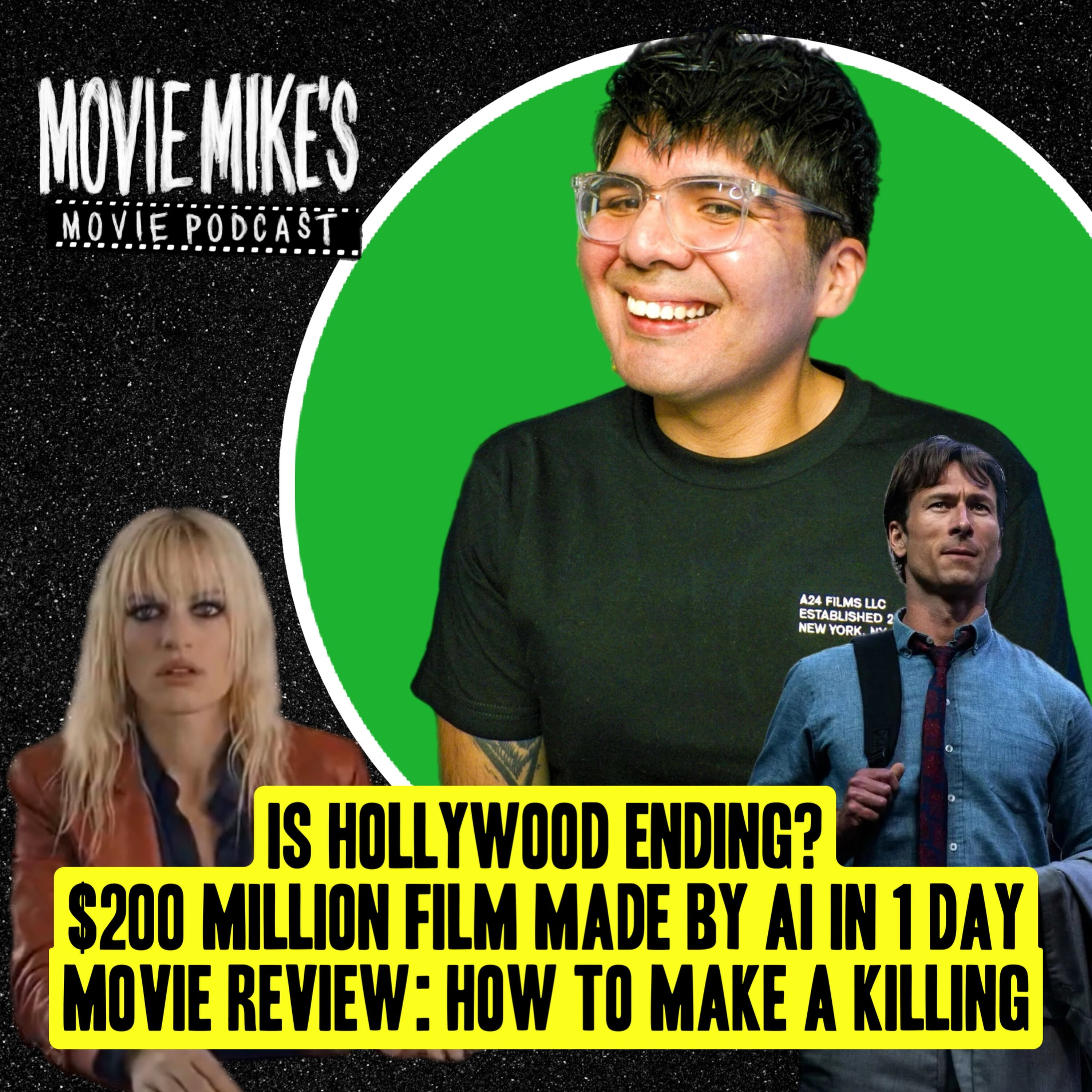
The Bobby Bones Show
MOVIE MIKE: Is Hollywood Ending? $200 million Film Made by AI in 1 Day + Movie Review: How to Make a Killing + Trailer Park: THE BRIDE!
00:49:13
Loading summary
Transcript55 lines
- [00:00]
Orderly Meds Announcer
This is an iHeart podcast.
- [00:02]
Sponsor Announcer
Guaranteed Human support for the show comes from Public, the investing platform for those who take it seriously. On Public you can build a multi asset portfolio of stocks, bonds, options, crypto and now generated assets which allow you to turn any idea into an investable index with AI. It all starts with your prompt. From renewable energy companies with high free cash flow to semiconductor suppliers growing revenue over 20% year over year, you can literally type any prompt and put the AI to work. It screens thousands of stocks, builds a one of a kind index and lets you back test it against the S&P 500. Then you can invest in a few clicks. Generated assets are like ETFs with infinite possibilities, completely customizable and based on your thesis, not someone else's. Go to public.com podcast and earn an uncapped 1% bonus when you transfer your portfolio. That's public.com podcast paid for by Public Investing Brokerage Services by Open to the Public Investing Inc. Member FINRA and SIPC Advisory Services by Public Advisors llc, SEC Registered Advisor. Generated Assets is an interactive analysis tool. Output is for informational purposes only and is not an investment recommendation or advice. Complete disclosures available at public.com disclosures Taco Bell is rolling out the new Chicken Bacon Ranch Street Chalupas.
- [01:10]
Movie Mike
And here's the thing, you literally can't just get one.
- [01:13]
Sponsor Announcer
They come in twos. And thank goodness they do because these toasted Cheddar Street Chalupas filled with slow roasted Chicken, Crispy bacon and Avocado Ranch are stacked with bold flavor that keeps you going.
- [01:25]
Movie Mike
Back for more Chicken Bacon Ranch Street
- [01:28]
Sponsor Announcer
Chalupas only at Taco Bell. Get yours today at participating U.S. taco Bell locations for a limited time only while supplies last. When people turn to telehealth for weight loss, they're looking for real support. That's why more people are choosing orderlymeds.com orderly meds connects you with real doctors and access to proven GLP1 medications like semaglutide and Tirzeptatide. No guessing, just a more supportive experience and all shipped directly to your door in discreet packaging. Do your research, ask questions, then visit orderlymeds.com podcast for an exclusive offer. That's orderlymeds.com podcast. Individual results may vary. Not medical advice. Eligibility required. C Site for details.
- [02:06]
Redfin Announcer
You're listening to a podcast, so you're doing something else too. Like maybe scrolling home listings on Redfin, saving places you like without thinking you'll get them, because that's what house hunting has become. But Redfin isn't Built for endless browsing. It's built to help you find and own a home. Redfin agents close twice as many deals as other agents, which means when you find a place you love, you've got a real shot at getting it. Redfin helps turn saved listings into real addresses. Get started@redfin.com own the dream hello, and
- [02:43]
Movie Mike
welcome back to Movie Mike's Movie Podcast. I am your host, Movie Mike. I'm trying to sound so excited, except I'm a little scared Hollywood could be ending. Somebody just made a $200 million movie in one day. We got to talk about how AI is going to change this industry. Oh, man, it's getting crazy out there, y'. All. In the movie review, we'll be talking about how to Make a Killing, starring Glenn Powell. Is he still on track to be the next great American movie star, or is he gonna be somebody else that Hollywood is just kind of forcing down our throats? In the trailer park, we'll be talking about Maggie Gyllenhaal's the Bride, starring Jesse Buckley and Christian Bale. This movie looks awesome. I am finally convinced. So thank you for being here and thank you for being subscribed. If you don't mind, go check out my YouTube page, YouTube.com mikedistro watch individual movie reviews there. But. And now let's talk movies from the Nashville Podcast Network.
- [03:40]
Sponsor Announcer
This is Movie Mike's Movie Podcast.
- [03:44]
Movie Mike
Is Hollywood Ending as we know it? This video went up last week and it is all I can think about. Saw a bunch of people from the industry, real legit people, not just people on X over here talking nonsense. Real actors, directors, and writers reacting to this AI video that these two guys made. The Door Brothers. They are these two German guys who have this company and they claim that they made a $200 million movie in just one day. They put out about a 3 and 15 minute what they call a movie. It's really just a trailer. It's really not anything. And that is the issue I'm having with AI. But they put this out and everybody is saying that Hollywood is cooked because this looks like it's going to eliminate so many jobs. I'm frustrated and struggling with this, and I want to talk about what even qualifies a movie. But before I do, if you haven't seen this viral post, I just want to give you a little bit of context of what it is that they created with AI. Just prompts. They did this entire thing with prompts. No crew, no director, no actual physical sets, no actors. They generated the actress in this movie by themselves, like, it was all prompts. So this real person doesn't exist. There were some other videos that we'll talk about using real Hollywood actors that we know. I think that's why all these things bubbling led me to want to do this episode. But if you haven't seen it, I do want to give you at least a little bit of context of what it sounds like as far as the acting. But here is a little bit of the $200 million movie made in just one day. Because essentially what you have is a woman at her job in this high rise in what appears to be New York City. All of a sudden, this storm is just ripping through the country. It flashes to her watching the news, talking about this storm, and then a helicopter falls out of the sky. She leaves her building, runs outside, gets into a cyber truck, which also kind of tells you the kind of person who created the prompt for this. It's Tech Rose. I've never seen a cybertruck in a movie, but she gets into a cybertruck and out of nowhere is already acting like a superhero, which doesn't make sense to me. As you can already tell, my criticism of AI Is coming out. But then she gets into a cyber truck out of nowhere. You learn she has a daughter. She's trying to get home to her daughter, and then she gets hit by this military vehicle and then goes into this weird, like, dream sequence. She ends up in an interrogation room with the head of the FBI who's like, well, you'll hear it in this clip. And then the head of the FBI calls the President for some reason. But here is just a little bit of this quote, unquote, $200 million movie made in just one day.
- [06:41]
Sponsor Announcer
Sophia.
- [06:42]
Movie Mike
Mom, I love.
- [06:44]
Knix Bra Announcer
On my way.
- [06:45]
Movie Mike
I need you to hide. Get underground. Good morning, Sleeping Beauty. Why don't you get the President on the phone? We have her.
- [07:02]
Sponsor Announcer
I'll be right there.
- [07:06]
Movie Mike
Let's address the acting first. There is no acting in that. AI doesn't know how to act yet. I think the problem I have with AI and what I've seen it generate up to now, when it tries to replicate a movie or create a movie, there's no pacing to AI if you watch this quote unquote movie, I guess I got to call it a movie. If you watch this movie, it feels off where the humans aren't acting like humans. They're not speaking like humans. You hear it there a little bit more. At the head of the FBI and the President. It sounds a little bit More natural. But the interaction between the mom and the daughter feels very fabricated to me. So the acting is just not there. I think where all the hype is being created and people saying that it's going to replace people in Hollywood, it's going to change the way we watch movies is because of how it looks. This does not look good to me. I think the people saying that this looks good are lying to themselves and they don't really understand what it is to make a movie that is visually appealing. Because this looks so off to me. The movements are awkward. I think the only thing that is impressing people is that they were able to make all these explosions, which would be expensive and able to do it for. You can make this movie for free with a high. That's the whole point. They were able to do this in one day, which they claim to be a $200 million movie. That is not a $200 million movie. That Is Walmart, maybe Four Dollar Bin at best. This is not a $200 million dollar movie. So a little bit of that is also them playing into that clickbait, trying to get people in a fit of rage like they have me right now. Because in no way, in no world is this a $200 million movie. Iron Man 3 is a $200 million movie. This is not. This feels like something that would come out and I wouldn't even question going to see it in theaters because it looks so bad. But by comparison, Iron Man 3 cost $200 million. So I think we are just getting ahead of ourselves in saying that this looks like a $200 million movie. It does not. That is not what they created here. They created a screensaver. They created something that is probably enticing to people who are invested in AI but to you and me and people who have become even just more critical about bad visual effects in movies, in no way would we be satisfied to watch this in our living room, much less pay money to go see something of this quality. But it leads to the question, what is a movie? What is art? I did ask the question on social media. I asked, if you watch a movie that look like this, but it is entirely AI generated, does it still count as a movie? 65% of you guys said no. It needs story and human performance. 28% of you guys said unsure, depends on the project. And 7% of you guys said yes, Visuals are what matter. I think that is a bit of a relief to me as somebody who loves the artistry that goes into making a movie, because I think what The Internet is trying to say is that all you need is visuals. Because if this looks as good as something that would have cost $200 million, then we have this thing figured out. But making a movie is not that. What about animation? Is that still making a movie if you create it entirely on a computer? If you go back and watch the first Toy Story movie, which was the first movie to ever be computer generated, what people at that time have said, that's not a movie. You made that all on a computer. You didn't hand draw everything.
- [10:57]
Knix Bra Announcer
Whoa.
- [10:59]
Movie Mike
So to me, it is not the actual technology being used that I have a problem with, because I know the minute you start rejecting technology, you're dead. If we were constantly in fear of rejecting technology, we would not grow. You think about all throughout history, the people who didn't want to give up their horse and buggy to this automobile. That's never going to catch on. I am not trying to be a part of those people who are closed minded and adapting new technologies. But I think when it comes to AI, it is not there yet. I do think it could be a tool, but I think it is crazy to think wild to think that AI could do all the things that go into making a movie. When I talk to actors and directors in particular on this podcast, a lot of making a movie from a director standpoint is managing people. This human element of connecting with people, connecting with actors, being able to get a performance out of somebody that you need to make the story work, not put it into a prompt and just hope you kind of get what you need. There is so much more detail that goes into storytelling that I do not think AI can replicate that process. I do think it could be a tool. I think it has already been a tool. If you think about cgi, if you look back on filmmakers who were initially resistant and skeptical of CGI when it was first introduced back in the 1970s and 1980s, they were against it because they thought it had limitations. At the time they thought it was too expensive and they preferred traditional, tangible, practical effects, which I am still a fan of. But now CGI has become so normalized, we do not even question it if you use CGI to make an actor fly. But back in the 70s and 80s, they were so. I don't want to completely reject AI. I don't want it taking away jobs from people. Because if you think about who this would greatly affect, is going to affect those people working on the sets, in catering, on the crew, doing all those jobs that you think if you don't have these big sets, those are going to go away. That is what I am against. But I do think at this point we are kind of in the situation where the toothpaste is out of the tube, the technology is here, it's being pushed on us from all of these companies. When you even have Disney out here signing these AI deals to license out their characters, and right now they are just saying, oh, it's for you guys, so you can make your own animations at home with your favorite characters. But that to me is a big threat to all those people creating those characters of it not even being a part of your baby anymore once it gets sold off to a corporation. I don't like those aspects of it, but I do think it can be a tool. But at this point of what I'm seeing, it looks so awful. And that is what I care about the most when it comes to movies. I don't want to live in a world where it feels like content that is just being spit out because it's good enough. And that is what I worry about. Because in the industry right now, a lot of studios are struggling. And when you put out a movie that costs you a lot of money and you lose on that, that is what studios are trying to avoid. So to me, I see AI as a way of them to think, oh well, we have this tool now. Instead of spending $200 million on something that may or may not work, just get somebody to put together a movie with all these prompts and AI and then it's a low risk, high reward because you didn't have to spend all that money to make the movie. But then you start thinking about, man, do we want to go to a theater where we end up having to pick between watching a human made movie the traditional way and watching an AI generated movie. All I have to tell you is I. I am not paying full price for an AI movie. So maybe those movies come as a reduced cost to the customer. Or maybe those movies just never make it on to the big screen. Because I have to imagine there are going to be a lot of people rejecting a fully AI produced movie in theaters. And then you start thinking about who is going to promote an AI Movie. If you have an AI generated actor, are you going to send them out on a press tour or are you just going to generate a bunch of promo clips of them doing interviews? It gets so weird just thinking about how this starts to affect everything. Can you sell a movie without any story behind it? If you take that all away because you have an AI cast. Is anybody going to care? How are you going to market an AI movie? All these questions have been flooding me in the last week. And the other video that really started to rock the industry was the one of Brad Pitt and Tom Cruise having a full out fight on top of a roof. And people again in that one were saying this looks so realistic, we are cooked. That was the video that really got people in the industry talking. And then you have all these questions that come up with with SAG and after and the Motion Picture association who they want to shut this down, the actors want to shut this down. Because you can't have people out here making movies and making content with your image and likeness without their consent. The idea of making performances without the performers is crazy that you could just generate them instead of hiring them. Because again, it goes back to man, it would cost us $40 million to hire Brad Pitt right now and it would cost us another $40 million to have him fight Tom Cruise. I'm not even sure these two people would get along. Let's get a quote from their teams. All right, that's yeah, 40 million. 40 million. You know what, let's just AI generate them. What's the quote on that? Maybe we just pay a licensing thing to use their image and likeness. If studios can just generate stars and action scenes like that, just boom. What happens to the mid budget movies? Because if we are so focused on these $200 million movies, Brad Pitt versus Tom Cruz, what happens to that $50 million movie, that $100 million movie that can't just be generated the same way? A film where there's a lot of nuance and where the cinematography is a little bit more subtle and some things on set happen by accident and it's all those little things that you encounter when you are dealing with physical people and actual sets where it's alive and it's breathing. What happens to those movies, the lower budget movies, the movies that create hype in this world that are the biggest success stories where they spend maybe 10, $20 million to make it like a good Boy Last year, the horror movie from the perspective of the dog. What happens to those movies where you take every novel aspect out of the filmmaking process just because you have this technology. I don't want to live in that world where you can't have these small independent movies that really hit you in the fields when you need it. And what I do think is interesting about that, about being able to use actors image in their likeness. The one good thing I could Say is, what if some of these movies that we can't watch anymore because they have a canceled actor in them. I won't say specifically who could be movies, could be a TV show even. But you think about the movies and TV shows that we're no longer allowed to fully enjoy because the people in them have now done awful things. What if you want to swap out one of those canceled actors and you use AI to do so? Is that bad? If we get back some of these movies we haven't been able to fully enjoy because we see some of these people in them and we're like, oh, man, I probably shouldn't support their work anymore. But the studios are able to go in and say, let's swap out the actor, put in a new actor, take their image and likeness and place them over them, change all the dialogue to now be the new actor's voice and. And then boom, you have a new cut of that movie. Or even what we've seen recently in Star wars movies, being able to bring back people from the dead. Where does it end? I feel like if I would have made this episode a year ago, I wouldn't have had all this material to work with. But the fact that so much is happening now, it's kind of the Wild west with all this stuff. You see big companies like Netflix sending out real cease and desist letters to the companies responsible for this content. You see writers like the writer of Deadpool and Wolverine out here saying like, yeah, we're cooked. You have actors like Zachary Levi, who is saying, we need to be afraid of this. And he has a company that he has created that is focused on human made projects and not using anything with AI. You have another filmmaker, Zach Morrison, who said, you have no character here, no emotional spine, no story logic. In response to some of these AI generated movies, he says, what I still can't do is narrative intent, subtext. Like I was talking about earlier performance choices and taste. He compares it to a tech demo, a cinematic mood reel, and a really expensive trailer with no movie attached to. I think that's a great point Zach Morrison makes here. This kind of feels like a demo. I think that is the furthest this technology is going to go where it can be used within the industry to say, okay, this is the idea I have. I want to have this building go down this spaceship, come out of this corner, and then you have our hero emerge from the flames. Let's generate this to see how it would look. But then let's make the real version of that. Great movies are not built from prompts, they're built from decisions. But everything I've seen just looks so soulless and looks way too sharp and overproduced. And there was even a scene that was made just for me that somebody did with Spider man in a really hyper realistic looking suit swinging through a snowy New York City. And it had some really slick looking angles, but if you watch all the movements on that, it just doesn't feel right. It looks like something that would probably impress a 10 year old, maybe a 12 year old. Which is also where I start to think about this technology of if I think of young me who was wanting to be a director when he was 10, 12 years old, would get out the old home video camera with the VHS tape and make movies in the backyard, I think if that version of me had this technology I would find it really exciting because now the things I want to make are a little bit more in my reach. And I think how the industry is going to go is based upon how the young people use this technology. Because I got to say, if I was 10 years old and I had access to AI, I would not be saying the things I have been saying here. Because to me this would just be new, this would just be the way. So I think in my lifetime I won't fully see an AI generated movie. I really don't. But I think about now, I think about how old the young people are now. These days there's a 10 year old out there who doesn't have access to a camera, maybe has a smartphone, maybe, but he has a laptop and he has the ability to use this software to generate his wildest dreams. It's not going to be good. I think back on the things I made when I was that young aspiring to create art probably wasn't good, but that is who is going to get really good at this technology really quickly. I do think generating prompts is going to be what young people know better and learn better and are able to use in their everyday life more than we ever will because to them that is the new thing. I mean even when I was going to school and I mean I don't want to date myself only, but it wasn't the norm to have a laptop. All the way throughout my school. I am from the generation that I remember, a time before Internet and how I adapted to all the new technology as it came and advanced. But it was through my developmental life from young kid to teenager to college that I got to experience all of that technology. But if you're a young Kid, now you come out and you're already holding an iPad, watching Bluey on that thing. So I think it is the next generation of filmmaker that is going to decide where the industry goes. You're going to have these really old school people who don't want to see things changed. And I don't want to see them change just for the fact that I don't want people's jobs to just go away. Because a corporation just wants to make more money and make movies for less, take all the art out of it, give us soulless content and think they could still make money off us. That is where I draw the line. That's what I don't want to see. I don't want to see art being devalued like this. And I think that is what this is a threat of. I feel nothing from any of this slop that I've been seeing on social media. And it's all just people trying to sell me. This hype of the future is here now. It's not here now. So let's get over that. It is not here now. It's not. I don't want to say it's not even close, but if I had to put it on a scale, oh, I would say just a step above not being close. It is maybe impressive to some people who want to invest in this or are trying to get people to invest in this, but I think to the consumer, to the person who this would be sold to and said, hey, go watch this movie. It is not there yet. We are so critical. Oh my gosh. If you put out the best movie that has the best cinematography, you will still find the haters. If you put out an Oscar award level performance, people will still find the bad in that. And you have to tell me and make me believe that we are going to accept AI performances. You're out of your mind. So we'll start to wrap this thing up here. But is it the end of Hollywood or is it just the start of something new? I am hopeful towards the future. I don't think this is the end. People have been saying this for so long. The rumor of Hollywood's demise has just been greatly exaggerated where people just keep saying that movies are going away. I've been hearing this for the last 20 years, but now people are saying this is the final nail in the coffin. I don't think Hollywood is ever going away. I don't think movies are going away. I don't think movie theaters are going away. Hopefully the people who keep saying that are going away and we'll stop saying that. But that's like saying concerts are going to go away because they're getting so expensive. That's like saying because we have this technology that we just don't need art anymore. We just don't need human connection. If we get to a point that we don't need that, I don't know what the purpose of living is going to be at that point. When we're not interacting with people, we're not experiencing anything real and we're just fabricating things because it's quicker and faster. I still think we will always crave that human connection because as humans we need that. So I don't think it is the end of Hollywood. It could be the start of something new. Maybe this is something entirely different on a different lane. We'll see some threats here in the next few years, but I don't think this is fully going to take over as much as people are hyping it up to be. Because production was never the magic. It was never because, oh, we have all this technology that we're able to make all these great things. That's not where the magic is. It's in that taste, it's in that storytelling, it's in that audience connection. The real tangible things of making a film is what we buy into is what our the essential building blocks of movies that are pillars of our life. I just lowers the bar to get in there, but it doesn't replicate that, it doesn't lower the bar for greatness. And that is what I'm trying to say. So what it could change that 10 year old I was talking about who wants to make a movie but doesn't have the access to making big blockbuster type visuals. It gives that kid the power, maybe even some independent filmmakers who would not have the ability to have a chase scene with explosions. It gives them that ability to put that into their film. But it's going to make studios prioritize IP even more, which could be good, which could be a bad thing. Depending on how you feel about that. I think that could be. I want to say it's a good thing, but ultimately it's going to be a bad thing because that means we're going to be so fearful of creating new IP and giving untested things a chance. And then if everybody's just creating AI content, then we're just going to have the same actors we've been having and now generating them, generating the same stories. And then does AI know how to create new stories or Is it just going to act off of the stories that have already been created before it and then you just have the same IP being regurgitated even more now than it already is? Where that is our biggest complaint of us saying oh, everything's a remake, everything's a reboot if AI takes over. Hate to break it to you but we're not getting anything new, we're just getting the same thing over and over that it has been made for the last 20 to 30 years. Because when I want somebody making a movie, I don't want somebody who's really great with technology. I want somebody who knows how to craft a story that is going to make me sad, happy, excited, all the emotions I get out of the movie going experience. So my final thoughts here. If everyone can make a movie, who is still going to know how to make a great one? What will the future of directing and acting be? And then if it gets so good that the audience can't tell the difference, does it even matter? Right now I am the audience. I can tell the difference and it matters. Let me know what you think Is AI about to break Hollywood? Would you watch an AI generated movie? Do you care more about visuals or do you want storytelling? Do you want that human element? Let me know. Hit me up on social media at Mike Diestro and everything. Or you can always send me an email movie mike d@gmail.com. i'll come back and give my spoiler free review of the Human Made how to Make a Killing starring Glen Powell.
- [30:15]
Sponsor Announcer
Support for the show comes from Public, the investing platform for those who take it seriously. On Public you can build a multi asset portfolio of stocks, bonds, options, crypto and now generated assets which allow you to turn any idea into an investable index. With AI it all starts with your prompt. From renewable energy companies with high free cash flow to semiconductor suppliers growing revenue over 20% year over year. You can literally type any prompt and put the AI to work. It screens thousands of stocks, builds a one of a kind index and lets you back test it against the S&P 500. Then you can invest in a few clicks. Generated assets are like ETFs with infinite possibilities, completely customizable and based on your thesis, not someone else's. Go to public.com podcast and earn an uncapped 1% bonus when you transfer your portfolio. That's public.com podcast paid for by Public Investing Brokerage Services by Open to the Public Investing Inc. Member FINRA and SIPC Advisory Services by Public Advisors llc SEC Registered Advisor Generated Assets is an interactive analysis tool. Output is for informational purposes only and is not an investment recommendation or advice. Complete disclosures available@public.com disclosures let's talk about modern home shopping.
- [31:19]
Redfin Announcer
It's sort of become a fun side hobby, right? Scrolling listings at night, dreaming about kitchens you've never seen or backyards you haven't even stepped foot in. All from the comfort of pretty much anywhere. Redfin knows a lot of people like you want to own but are stuck in this browsing mode loop. That's where Redfin flips the script. With listings that update within minutes and tours you can book right from the Redfin app, you can see your dream home the moment it appears. Now, liking a listing is easy, but actually landing it? That's where Redfin comes in. Redfin has over 2200 agents with local expertise and Redfin agents close twice as many deals as other agents. That means they want to help you win, not just window shop. Redfin is built to help you go from just looking to wait. This could actually be home. So become the newest neighbor on the block. Visit redfin.com to start finding and start owning. That's redfin.com youm know what's wild?
- [32:18]
Knix Bra Announcer
We can video chat from space, order groceries just by talking out loud and men have like 17 options for hair loss alone. But a bra that actually fits and feels good? Apparently too much to ask until now. Meet the Uplift bra from Nix. That's KN I X, a wireless bra that finally delivers real lift and all day comfort. The secret? Molded cups with a built in foam panel that gently enhances your natural shape so you get a subtle boost without wires, digging or that. Why am I still wearing this moment at 3pm you asked for it. We delivered in a push up bra that doesn't dig, poke or pinch. And with an extensive size range from 28A through 42E, you'll be sure to find your perfect fit with the uplift. Try the uplift bra@nyx.com and use code perfectfit15 for 15% off your first order. That's knix.com code perfectfit15nyx.com are you trying
- [33:18]
Orderly Meds Announcer
to get weight loss support through telehealth? But it feels overwhelming and rushed. Check out orderlymeds.com now orderlymeds.com was built to be different. Here you connect with real doctors who take the time to understand your goals, review your eligibility and guide you through a plan that's right for you. Orderly Meds provides access to proven GLP1 medications like semaglutide and tirzepatide, including both name brand options and procedures, personalized compound versions when appropriate, so you have choices backed by clinical oversight, not guesswork. It's a simpler, more supportive telehealth experience designed around people who want clarity, care and confidence in their weight loss journey. And your medication is delivered directly to your home in discreet packaging so your experience stays private from start to finish. Do your research, ask the right questions, then visit orderlymeds.com podcast for an exclusive offer. Again, that's orderlymeds.com podcast. Individual results may vary. Not medical advice. Eligibility required. See Cite for details.
- [34:23]
Movie Mike
Let's get into it now. A spoiler Free movie review of how to Make a Killing Starring Glenn Powell, Margaret Qualley, directed by John Patton Ford, who before this did a movie I really loved called Emily the Criminal starring Aubrey Plaza. Which is all about how you can be rooting for somebody who is not a good person, which is a genre I just seem to love lately. I like rooting for the bad person in movies so much that I start to question my moral compass. But that is the question that this movie raises. What would you do if seven relatives stood in the way of your 28 billion? Yes, billion with a B dollar inheritance. That is what Glen Powell's character Beckett is going through. He was born from a teenage mom, 18 years old, who came from this really wealthy family. But as soon as she got pregnant they said, you're kicked out. We don't care about this kid. You are cut off. So he was born outside of that wealth. But still there was this will set in place in order to protect the family money, that he was still in line. He believed at some point he he would be given this $28 billion. His mom passes away and now he is left just waiting for that inheritance. But he has these seven relatives standing in his way. And he has been done wrong in life for so long. He is working at a job that just doesn't feel the job he is supposed to be working. He is living still where he grew up. He has people looking down on him. As a kid he formed a friendship with a girl named Julia, who was later played by Margaret Qualley and their entire, I guess you could call it friendship. Whatever relationship is that they have is a driving force throughout this entire movie. But I have to say this is one of the best dark comedies I have seen in a long time. And I guess from the trailer and the description of this movie, I didn't know how funny it was actually going to be the thing I love about Glen Powell is he is so dedicated to every single role. If you look at the last four movies he did, including this one, how to Make a Killing, Running Man, Hitman, he also did Twisters. Before that he did Anyone But You. And in between there he did Chad Powers, which he is working on another season right now. Every single time I've seen Glen Powell commit to a character, I feel like I'm getting 100% of him. And that is what I love about him. Not just his love for Texas, because as somebody who is a Texan and we just want somebody at the top to also represent our state. I love that about him. But I think he is just a great actor who is also taking a lot of risks doing smaller A24 movies, doing the big action movies, doing the fun shows where he doesn't take himself too seriously. He also really likes dressing up in different costumes. If you look at almost all of his roles, he is always dressing up, trying to be somebody different. But I find that he is so committed to every single project that it makes me always feel like I'm getting my money's worth. When I go to see a Glenn Powell movie, I've never seen him phoning it in. And I know he is right there on the cusp of being at that A level tier. The type of person that you would go see every single movie that they make. I just fear that he doesn't quite have or he really doesn't have that signature role yet. And still when people talk about him, they say it's the guy from Top Gun. But he has come so far from there. And I feel like he's just one roll away. But I felt that since Twisters, Running man didn't really put him on that level. And I don't think it was his fault. I think that movie just didn't really resonate with audiences. Maybe it wasn't the time to remake that movie. But I just fear that people are starting to feel like Glen Powell is being shoved down their throats and. And I don't like that for him because if you actually look at his work, I am a big believer that he is not just somebody who is doing a mass amount of projects in order to saturate the market, in order to be at the forefront all the time. I still think he is putting out quality movies and TV shows that I am still all aboard the Glen Powell train. But then you look at Margaret Qualley, who has also delivered some really great performances since the Substance and Drive Away Dolls Honey don't, which I think people didn't fully understand how great that movie was. I really enjoyed it. It was what I felt a good throwback to like an 80s crime, just fun movie that maybe came across a little bit cheeseball to some. But I really enjoyed Honey Don't. I also think she was great even though she wasn't in it that much kinds of kindness, but still, by far the substance has been her best role. And I feel like her and Glen Powell together just kind of makes sense because if you look at both of their last films, they are kind of right there of their really famous but still don't have that one role that sets them apart and puts them on that A level tier. But then you put them together. It's such a great casting decision. And it really is because of them that this movie works now. I really wish there was a little bit more of plot to chew on because it really wasn't until that third act that I felt, okay, this is something really special. It felt kind of like it was going through the motions in the first and second act. I also think the action in the first act felt a little bit abrupt where I was kind of hoping on some more development in his character to go from somebody who has been kicked down by the world to somebody who is now considering killing seven people in order to get billions of dollars. And I get that they wanted to move this story a little bit quickly. If this movie would have been any more of a slow burn, which it wasn't, but if it would have been a slow burn, I think that would have turned a lot of people off early on. But I feel it almost jumped the gun a little bit to get to the action. Because being under an hour and 50 minutes, I think it's closer to like an hour 45. It really had a lot of story to fit in and the way it kind of jumps around between times, I just felt like I didn't really get a good grasp on his character and what would possess him to do something like this. So I think not getting to know him so much in the first act made me question some of the things he was doing in the second act. Some of the relationships he was starting to form. And then I almost felt like Margaret Qualley's character. Even though I loved her, she is a really great, manipulative person who you never really like in this movie. The relationship is very toxic. And she almost felt like a caricature at times where she didn't really feel like a real human and I think that is where this movie kind of walked the line of being realistic, but also kind of being just a fun comedy at times. And. And while it's not lol, laugh out loud moments, I think dark comedies are the best right now because you don't really go into that expectation, given the plot of this movie, of expecting laughs. But I think I heard laughter more throughout this movie than actual comedies I've gotten to see in theaters. So that was kind of like a pleasant surprise. But because of that, at times it is kind of hard to pinpoint Margaret Qualley's character. And I think that was the only thing that kind of lacked in building up some tension and building up some momentum going into the third act. But once it got there, it felt like an entirely different movie. And that is where I went from just enjoying and liking and finding this movie entertaining to really feeling like I just watched something special. So much so that very rarely does this happen that a movie ends and I want to keep going. And I think it's also because it did have a shorter runtime, but it really left me wanting more. I want to know where the story goes next. And most times in a movie like this, I'm like, okay, that was good. That was fun. I got from it what I needed. But I think it's because there wasn't that much on the line up until the very end that all that action started to feel a little bit rushed to me and I wanted to see more of it. And so I do want to know where this story goes next. And that has me really excited. Even though I don't think this is a movie that lends itself to being a sequel. But if you look at some of the most recent A24 movies that have been successful like a Marty Supreme, I think it is just a step below that. But if you compare it to the best Glenn Powell movies, I do think it is up there at the top. For me. Nothing is going to top his role in Twisters, but I have a little bit of bias because the original Twister is one of my favorite movies of all time. I definitely think it is much better than Running man, which is wild because that movie costs so much more money. But I think the story here was just a little bit more novel. There was a lot more nuance in his performance and the story. Overall, I just still think that Glen Powell in a rom com, anyone but you is right. But below, yeah, I would still put that one right below Twisters, but I think it is right up there on the level of Hitman, but I do think Richard Linklater is a better director than John Patton Ford. But all things aside, my biggest problem with the movie is that it just left me wanting more. For how to Make a Killing, I give it four out of five Black Hitman Gloves.
- [44:03]
Sponsor Announcer
Support for the show comes from Public, the investing platform for those who take it seriously. On Public you can build a multi asset portfolio of stocks, bonds, options, crypto and now generated assets which allow you to turn any idea into an investable index with AI. It all starts with your prompt. From renewable energy companies with high free cash flow to semiconductor suppliers growing revenue over 20% year over year, you can literally type any prompt and put the AI to work. It screens thousands of stocks, builds a one of a kind index and lets you back test it against the S&P 500. Then you can invest in a few clicks. Generated assets are like ETFs with infinite possibilities, completely customizable and based on your thesis, not someone else's. Go to public.com podcast and earn an uncapped 1% bonus when you transfer your portfolio. That's public.com podcast paid for by Public Investing Brokerage Services by Open to the Public Investing Inc. Member FINRA and SIPC Advisory Services by Public Advisors, llc, SEC Registered Advisor Generated Assets is an interactive analysis tool. Output is for informational purposes only and is not an investment recommendation or advice. Complete disclosure is available at public.com disclosures
- [45:04]
Redfin Announcer
let's talk about modern home shopping. It's sort of become a fun side hobby, right? Scrolling listings at night, dreaming about kitchens you've never seen or backyards you haven't even stepped foot in. All from the comfort of pretty much anywhere. Redfin knows a lot of people like you want to own but are stuck in this browsing mode loop. That's where Redfin flips the script with listings that update within minutes and tours you can book right from the Redfin app. You can see your dream home the moment it appears. Now, liking a listing is easy, but actually landing it? That's where Redfin comes in. Redfin has over 2200 agents with local expertise and Redfin agents close twice as many deals as other agents. That means they want to help you win. Not just window shop. Redfin is built to help you go from just looking to wait. This could actually be home. So become the newest neighbor on the block. Visit redfin.com to start finding and start owning. That's redfin.com youm know what's wild?
- [46:06]
Knix Bra Announcer
We can video chat from space, order groceries just by talking out loud and men have like 17 options for hair loss alone, but a bra that actually fits and feels good? Apparently too much to ask until now. Meet the Uplift bra from Nyx. That's KN I X, a wireless bra that finally delivers real lift and all day comfortable. The secret molded cups with a built in foam panel that gently enhances your natural shape so you get a subtle boost without wires, digging or that why am I still wearing this moment at 3pm you asked for it. We delivered in a push up bra that doesn't dig, poke or pinch and with an extensive size range from 28A through 42E, you'll be sure to find your perfect fit with the uplift. Try the uplift bra@nyx.com and use code perfectfit15 for 15% off your first order. That's knix.com code perfectfit15nix.com Lots of support
- [47:05]
Orderly Meds Announcer
through telehealth, but it feels overwhelming and rushed. Check out orderlymeds.com now. Orderlymeds.com was built to be different. Here you connect with real doctors who take the time to understand your goals, review your eligibility and guide you through a plan that's right for you. Orderly Meds provides access to proven GLP1 medication like semaglutide and Tirzepatide, including both name brand options and personalized compound versions when appropriate. So you have choices backed by clinical oversight, not guesswork. It's a simpler, more supportive telehealth experience designed around people who want clarity, care and confidence in their weight loss journey. And your medication is delivered directly to your home in discreet packaging so your experience stays private from start to finish. Do your research, ask the right questions, then visit orderlymeds.com podcast for an exclusive offer. Again, that's orderlymeds.com podcast. Individual results may vary. Not medical advice. Eligibility required. See Cite for details.
- [48:06]
Sponsor Announcer
It's time to head down to Movie Mike's Trailer Park.
- [48:10]
Movie Mike
I know this trailer has been out for a while, but the Bride looks awesome. I saw it again when I went to go see Wuthering Heights and I got to see it on the big screen and I got a lot better indication of how good this movie is going to be. More so than just seeing it online. I think this movie is going to be fantastic and Frankenstein is so hot right now. Guillermo del Toro put out his version on Netflix at the end of last year and of course the character of Frankenstein has been around forever since I've been alive, but Guillermo del Toro put his spin on that character Crafted his vision to give us something that was a breath of fresh air. But now with the Bride, not the Bride of Frankenstein, just the Bride. All caps, exclamation point. Love the stylistic choice, just the title of the movie. It is an entirely different take on the story of Frankenstein and his bride. More so focusing on her character, not so much the Frankenstein monster, just being lonely and needing a companion. This is going to be her story. And it was seeing this trailer on the big screen, seeing Jesse Buckley up there as the bride, looking fantastic. The makeup, the wardrobe. I am so in on this. Directed by Maggie Gyllenhaal, yes, the sister of Jake Gyllenhaal, but also a great actor in her own right. And now this is her second big studio movie. She did a movie in 2021 called the Lost Daughter that also starred Jessie Buckley, Olivia Colman and Dakota Johnson, which was pretty good on Netflix, pretty much just a straight ahead drama. Paul Mescal is also in that movie. So this is an entirely different look for her. Already on her big second movie. So a lot to talk about. I'll tell you the three things I'm the most excited by. But before I do, here is just a little bit of the Bride trailer coming out in theaters on March 6th. What happened?
- [50:08]
Sponsor Announcer
You an accident.
- [50:11]
Knix Bra Announcer
An accident, huh?
- [50:13]
Sponsor Announcer
We dug you up, then we brought you back to life.
- [50:16]
Movie Mike
What did you want with a dead girl?
- [50:18]
Sponsor Announcer
I'm the same. Born from the dead.
- [50:22]
Movie Mike
I am a monster. Yeah.
- [50:26]
Sponsor Announcer
So am I the Bride of Frankenstein?
- [50:33]
Movie Mike
No, just the Bride. I love how she made it a point there to not say or want to be called the Bride of Frankenstein. She's like, no, I don't need you. I am just the Bride. So this is going to be a lot different than the Bride of Frankenstein. It is going to be more of a Bonnie and Clyde like story. At the very beginning, we see her being thrown by somebody down the stairs. Now, what she targeted, maybe. Maybe it's Christian Bale who ends up being not only the one who kills her, but also the one who digs her up after she dies and is buried and then brings her back to life. But we will probably learn more about that in the movie. I have to imagine that is a pivotal point in the plot. That image alone, that single frame of seeing Jesse Buckley at the bottom of those stairs, her body contorted, that is such a great image. But you have two fantastic actors with Christian Bale and Jesse Buckley both in the lead roles. Now, three things I love about this movie. Number one, Maggie Gyllenhaal fought so hard to cast Jesse Buckley as the lead in this because the studio didn't want her. According to a story I read on Entertainment Weekly, they did not want to hire her because she didn't have and still doesn't have a large social media presence. I actually looked before doing this trailer park, she does not have an account of her own. When you Google Jesse Buckley Instagram, the first thing that comes up is a fan account has a decent amount of followers, but it's not run by her or her team. And if you look around on different social media sites, she doesn't have a presence. She doesn't even have accounts that are just held for her or maybe just posting about the movie she is going to be in. So for that reason, and we've heard more and more from actors and directors that studios want actors with a good amount of social media followers because they want to put people in their movies that they can bank on being able to promote to their fans. But Maggie Gyllenhaal fought for her because they worked together on the Lost Daughter and she knew she had what it takes, the range, the humor and abilities to take on this gothic horror role, that she was perfect and she had to have her. So that's what she did. She fought for her to get cast in this movie. And I think the studio is probably feeling a lot better now that Jesse Buckley has some nominations to her name. With Hamnet being such a big hit among the critics, I don't know how much Gen Pop has a grasp on Jessie Buckley's name and being able to attach it to her face, but this trailer has made a really good impact because you do have Christian Bale alongside her, whose name alone will bring credibility to any movie. But I love the fact that Maggie Gyllenhaal was so passionate about casting her that she fought for her. That proves to me she really wanted to see her vision come to life. Every actor gets their moment and I think if the Bride is a success, it is going to be Jesse buckley's moment. At 36 years old, I also, I know how the world works. I know at the end of the day it is a business. But I hate that social media followers plays into who does and doesn't get a role. I think we have probably seen some movies fail because the wrong person was cast just because they have a million, 2 million followers or who knows how many followers is enough for a studio to be comfortable with allowing a director to give that person a role. So I also think it's kind of Cool for actors to be a little bit elusive. You don't want to see them doing tiktoks all the time and breaking down little things from their life. You want to be able to feel a little bit mysterious, or at least I do, about the people in these movies. My second favorite thing about this movie is it feels like a little bit of a family affair. Because Maggie Gyllenhaal not only gets to direct her brother Jake Gyllenhaal, which will be her first time directing him, they have been in a few movies together. A Dangerous Woman in 1993 and Homegrown in 1998. There were two movies directed by their father, Stephen Gyllenhaal. They were also both in Donnie Darko back in 2001. But not only that, Maggie Gyllenhaal will also be directing her husband, Peter Skarsgard. So you got brother, husband. A lot of nepotism playing into this movie. But when you have a director who feels so comfortable with her actors on an entirely different level, when you are working with your sibling and your spouse, you feel this level of comfort that you could probably ask them to do whatever you want. Because there is already this understanding, this trust, which that is a major thing, that relationship between director and actor, how much you trust each other. You don't even have to question that here, because you know your brother, you know your husband, you can push them as much as you want to get that great performance out of them. And then, of course, Maggie Gyllenhaal and Christian Bale also work together on the Dark Knight. So again, it's a lot of people who already feel comfortable with each other. My third favorite thing about this trailer and about this movie is seeing the transition of Jesse Buckley's character going from being scared to being powerful and seeing her be so dominant already just at the end of this trailer, I can only imagine how that shift is going to feel throughout the movie. And what I started to feel by the end of this trailer is, man, I think this is what joker2full I do was supposed to be, where you have a madman. In this case, it is Frankenstein. In the case of the Joker, it is of course the Joker who just wants that companion who is equally as mad and into crime and wanting to cause chaos and destruction and anarchy. They fall in love and then are this beautiful mess where their relationship is toxic. They are doing terrible things. You also have a bit of a musical element to this story, where there is one scene where you see Frankenstein and the bride and dancing at this party. There's this music playing that kind of looks like what Todd Phillips was going for in Joker 2, deciding to make that movie a musical, which made no sense in the world of Gotham and in the world of Joker. It completely ruined all the aura that was created in Joker 1. So I'm hoping if this movie is successful, it proves that a story like this can work. And it should have worked with Joker Foley Ado. It also just kind of reminds me of the Bride of Chucky where Chucky essentially did the same thing. And I also just love that it is set in 1930s New York and you have people running around using Tommy guns. But ultimately I just think this is a big creative swing for Maggie Gyllenhaal and I can't wait to see it on the big screen on March 6th.
- [57:43]
Sponsor Announcer
And that was this week's edition of Movie Mike's Trailer Park.
- [57:50]
Movie Mike
Oh boy. And that is gonna do it for another episode here of the podcast. But before I go, I gotta give my listener shout out of the week. This week I'm going over to my Instagram DMs and I'm shouting out Justin. Justin sent me a DM and said, hey man, huge fan. I'm mostly a sore loser, but I have been listening to movie mics for a year or so now. I am here with my fiance watching a kid's movie called Goat and all I can do while watching it is critique it like Movie Mike. It's a good one though, I think. Love seeing your growth, man. I would love an autograph if I can win one somehow. Signed Justin. That has to be like the highest compliment I can get. If you go watch a movie in theaters, which over the weekend I went to go see Wuthering Heights and Crime 101. Just didn't have time to go see Goat. But if you go to the movies or watch a movie at home and you are thinking in your head how I would review that movie, that is the coolest compliment to me. So Justin, thanks for that dm. Thank you for listening for over a year. That means you are officially a part of the movie crew. You don't have to listen to the podcast for a year to be a part of that. You can listen to one episode and you're in, but that says to me you are riding with the podcast and I can easily get you that autograph. I don't know why you would want my autograph, but if that is something that you think would be cool. I don't really think anything about me is cool, but I can do that for you. Thank you for listening. Thanks for going to the movies. I say that as if I own a chain of movie theaters, but that is always inspiring for me to see that people still love going to the movies and experiencing a movie with other people. And I'm still planning to go see Goat in theater. So hopefully when we do our monthly recap with Kelsey, we can get that review in. So thank you for listening, thank you for being subscribed and until next time. Oh you can also go check out full individual movie reviews YouTube.com mikedistro but until next time, go out and watch good movies and I will talk to you later.
- [60:01]
Sponsor Announcer
Everyone deserves to be connected. That's why T Mobile and US Cellular are joining forces. Switch to T Mobile and save up to 20% versus Verizon by getting built in benefits they leave out. Check the math@t mobile.com switch and now T Mobile is in US cellular stores.
- [60:20]
Movie Mike
Savings versus Comparable Verizon plan plus the
- [60:23]
Sponsor Announcer
cost of optional benefits, plan features and
- [60:24]
Movie Mike
taxes and fees vary. Savings with three plus lines include third
- [60:27]
Sponsor Announcer
line free via monthly bill credits.
- [60:28]
Movie Mike
Credit stop if you cancel any lines. Qualifying credit required.
- [60:30]
Sponsor Announcer
This podcast is supported by FX's love story, John F. Kennedy Jr. And Carolyn Bessette, the new limited series from executive producer Ryan Murphy. It explores the complex courtship of the iconic couple considered to be American royalty, whose love story captured the attention of the nation. Their fairytale romance would unfold in front of the public eye, where their private love would also become a national obsession. FX's love story John F. Kennedy Jr. And Carolyn Bassette watch now on FX, Hulu and Hulu on Disney for bundle subscribers.
- [61:01]
Redfin Announcer
Picture this Me, Reese Witherspoon in London
- [61:04]
Orderly Meds Announcer
ordering fish and chips so often they
- [61:07]
Movie Mike
might start wrapping me in paper.
- [61:08]
Orderly Meds Announcer
I'm traveling with my Wells Fargo Autograph Journey card, so I earn rewards wherever I book travel five times points with hotels, four times with airlines, three times on restaurants and other travel and one
- [61:19]
Movie Mike
point on other purchases.
- [61:20]
Orderly Meds Announcer
Imagine getting rewarded for eating a toad in the hole.
- [61:24]
Movie Mike
Wait, what is a toad in a hole?
- [61:25]
Sponsor Announcer
Visit Wells Fargo.com autograph journey terms apply.
- [61:31]
Orderly Meds Announcer
Are you trying to get weight loss support through telehealth? But it feels overwhelming and rushed? Check out orderly meds.com now. Orderly meds.com was built to be different. Here you connect with real doctors who take the time to understand your goals, review your eligibility, and guide you through a plan that's right for you. Orderly Meds provides access to proven GLP1 medications like semaglutide and Tirzepatide including both name brand options and personalized compound versions when appropriate. So you have choices backed by clinical oversight, not guesswork. It's a simpler, more supportive telehealth experience designed around people who weren't clarity, care, and confidence in their weight loss journey. And your medication is delivered directly to your home in discreet packaging so your experience stays private from start to finish. Do your research, ask the right questions, then visit orderlymeds.com podcast for an exclusive offer. Again, that's orderlymeds.com podcast. Individual results may vary. Not medical advice eligibility required. See Cite for details. This is an iHeart podcast. Guaranteed Human.