← The Bobby Bones Show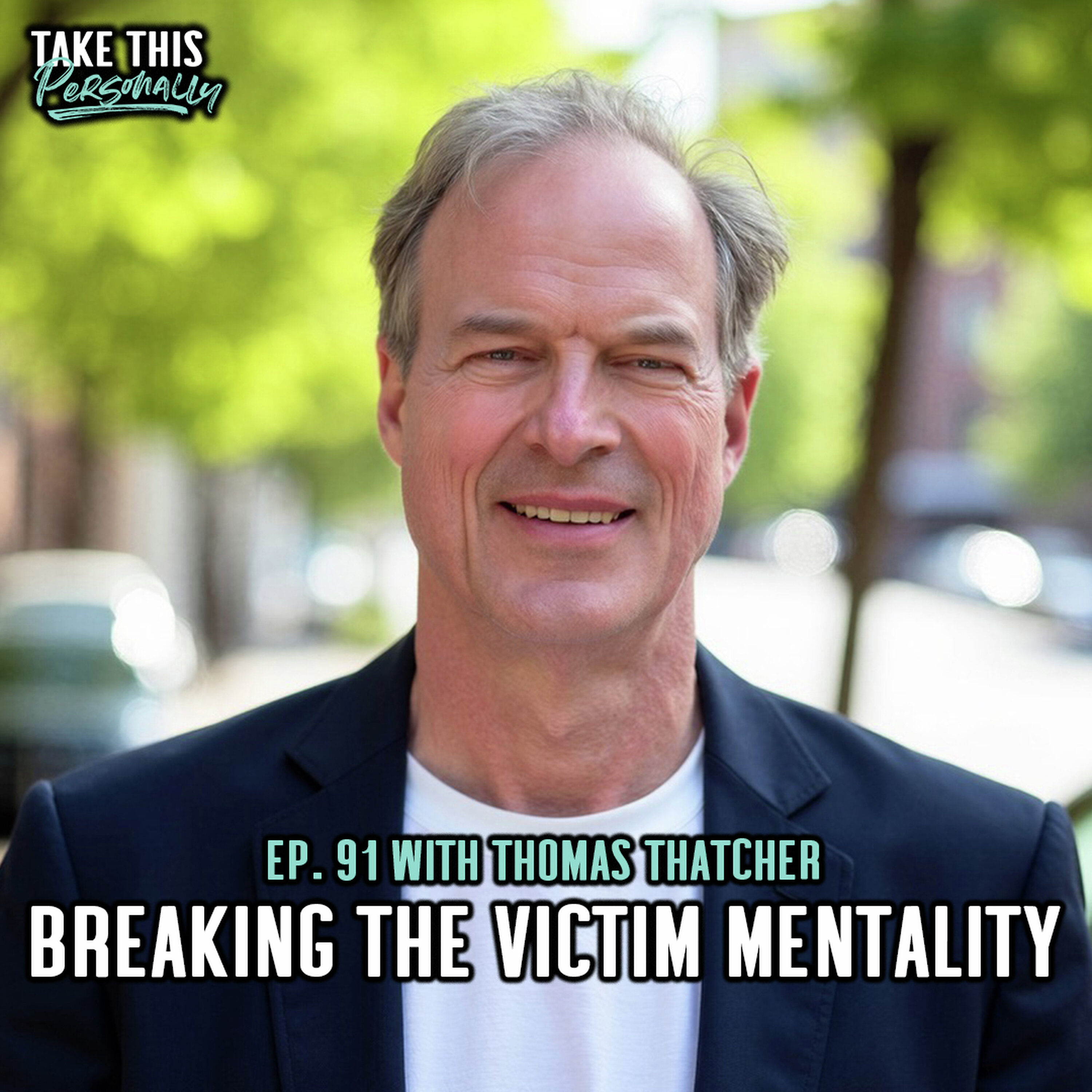
The Bobby Bones Show
TAKE THIS PERSONALLY: Stop Suffering & Take Back Your Life: A Powerful Lesson in Personal Responsibility
00:33:27
Loading summary
Transcript91 lines
- [00:00]
Podcast Announcer
This is an iHeart podcast.
- [00:02]
Morgan Huels
Guaranteed Human health insurance shouldn't get in the way of getting care. Just the opposite. It should make getting care easier. That's exactly what the employees at UnitedHealthcare work to do every day. Think about it. UnitedHealthcare employees need the healthcare system just like we do. They're real people who want real connection. When it matters most, they get it. And it's why they support people with genuine care and are helping make healthcare simpler. Learn more about how UnitedHealthcare is committed to care@uhc.com care
- [00:32]
Kalpen (Kal Penn)
hey everyone, it's Kalpen.
- [00:34]
Thomas Thatcher
I'm inviting you to join the best sounding book club you've ever heard with
- [00:37]
Kalpen (Kal Penn)
my podcast HearSay, the Audible and iHeart Audiobook Club. Every episode I nerd out with amazing guests and dive into the best new audiobooks available on Audible. It's the book club for your ears. Listen to Earsay, the Audible and iHeart Audiobook Club on the iHeartradio app or
- [00:57]
Thomas Thatcher
wherever you get your podcasts.
- [01:01]
Julian Edelman
You know the fastest way to ruin a great adventure? Getting dehydrated for real. That's why you always gotta plan ahead with some Liquid IV Hydration multiplier veteran move. You're basically your own hydration coach at that point. Just one stick and 16 ounces of water hydrates you faster than water alone.
- [01:23]
Podcast Announcer
Boom.
- [01:24]
Julian Edelman
Back in the game. Hydration multiplier powered by liquid IV Hydra Science, which is fancy talk for a smart science backed mix of electrolytes and essential vitamins doing the dirty work to keep you going Strong. Go to liquidiv.com and use the code nuthouse for 20% off your first purchase.
- [01:46]
Podcast Announcer
Eczema isn't always obvious, but it's real. And so is the relief from EBGLIS. After an initial dosing phase, about 4 in 10 people taking EPGLIS achieved itch relief and clear or almost clear skin at 16 weeks. And most of those people maintain skin that's still more clear at one year with monthly dosing.
- [02:04]
Kalpen (Kal Penn)
EVGLIS Librekizumab, a 250 mg per 2 ML injection, is a prescription medicine used to treat adults and children 12 years of age and older who weigh at least 88 pounds or 40 kilograms with moderate to severe eczema, also called atopic dermatitis, that is not well controlled. With prescription therapies used on the skin or topicals, or who cannot use topical therapies, EBGLIS can be used with or without topical corticosteroids. Don't use if you're allergic to ebglis. Allergic reactions can occur that can be severe. Eye problems can occur. Tell your doctor if you have new or worsening eye problems. You should not receive a live vaccine when treated with Epglis. Before starting Epglis, tell your doctor if you have a parasitic infection searching for real relief.
- [02:39]
Podcast Announcer
Ask your doctor about ebglis and visit epglis.lily.com or call 1-800-lilyrx or 1-800-545-5979.
- [02:59]
Thomas Thatcher
Take this Personally with Morgan Huels.
- [03:04]
Morgan Huels
When I started doing this podcast, I used to believe there were only a few paths to self help. But the more I bring on guests, the more I realize just how many different methods and ways there are to find true healing, which makes sense. There is no one path to healing, so there's also no one method. So as we continue the series on understanding ourselves better, I'm bringing on a guest this week who found a philosophy and way of thinking that saved his life. So let's do this. Thomas Thatcher joins me this week. He is the author, author of the Tack Philosophy, Detaching Yourself from Suffering. So Thomas, thanks for joining me today.
- [03:42]
Thomas Thatcher
Thank you.
- [03:43]
Morgan Huels
Excited to have you. But I want to hear how you even got into this line of work, why this line of work is important to you. Because there's typically a story that comes from that.
- [03:54]
Thomas Thatcher
Yes. And that's what my book's about, is stories. But my story came in the family business where I was, what was it, the Harry book, where I was a spare child or the second son. And when I came into the business, my father had already pretty well had set up my brother to run the business. And so I thought that I was going to come in and we were going to run it together or there was going to be a place for me. And I was upstairs and he was downstairs in the office by my dad. And I was not in meetings and he was in meetings. So I said, wow, this is a really bad situation. And the problem was not that pain part. The problem was going from the pain part into the suffering part. And that was all the stories that I made up to it. And what I had come to, the conclusion was, is that my father didn't love me, he didn't care. And so then I was going under that burden and it became very difficult. I got very depressed. I didn't feel like I even wanted to live anymore. And I even became suicidal. And I got with a friend who told me a story about the tack and he says I Want to give you an example of three people. I said, okay, so the first one sits on the tack and goes, wow, that's painful. I got to get off. Man, that hurts. The second one sits on the tack and says, it's painful, but I'll just put something myself, something under so that it's not as painful, something to cushion it, so to speak. And then the third one sits on the tack and it is so painful, and he yet refuses to get off. And so my friend said, tom, which one do you think you are? And I then got to the point where I realized that I was going from a pain part to a suffering part and all that was doing myself. And that's where I came to the realization of what the tact philosophy was all about.
- [06:02]
Morgan Huels
So it really was playing a role in your life before you decided to go with this book and start to help other people through it, their own lives.
- [06:10]
Thomas Thatcher
Yeah. Yes.
- [06:12]
Morgan Huels
It was how long a period of your life? You mentioned you were in it for a while. So how long of your life was this happening? For?
- [06:21]
Thomas Thatcher
Quite a long time. And I was quite a tact proficient guy. I really loved the tac. It was wonderful. When I was on the tac, I didn't have to be responsible. Nobody could dominate me, nobody could control me, nobody could. I got to be right about something and it was pretty nice. And it was only when the costs got so unbearable that I said, the costs just aren't worth it anymore. And that's when I finally decided to get off it. But the problem is, Morgan, is that when you decide to get off it, it's just not that easy. Yes, you can just stand up, but then when you stand up, you say, oh, but I've got to give all my rackets up. No, now I have to be responsible. Now I really have to work hard. Now I have to come to the office on time. See, when I had my situation with my brother and my father, I said, I don't need to come to work. I'll get there at 9:30 if I want, or I don't need to work hard because look at this. Look at the. Look at my story. Look how I can justify my actions because of what my father did to me, so to speak. And that's the problem that we get into is our stories then become a fixed way of being. And we can almost justify anything when we're in that state.
- [07:36]
Morgan Huels
Very much so. And so you do decide to remove yourself from this tack. You start working through this philosophy in your own life. What was that I guess pattern like that you were following as you stopped doing this job, started to enter in and you became an author. Walk me through that part of your life. That was the after.
- [07:56]
Thomas Thatcher
Well, I've got this little whiteboard here for everybody. I don't know if you can see it, but really, here's what the four steps are. This is really what the pattern is of the TAC mat, so to speak. First of all, you have awareness, and you say, okay, I'm on it. I'm suffering. And then you have to have the understanding, and you have to say, why am I on it? And for me, I was on it because I was getting a great payoff from not having to be responsible. And then you got to make a choice. You either are going to stay on it or and suffer, or you're going to to make the choice to get off it. And then when you get off it, it's a whole type of a renewal period where you go in and you say, okay, now I am ready to walk a new life with compassion and integrity and confidence. And that's what had happened for me. But it wasn't an easy process. It took a long time. I had to address my demons. I had to really look at my stories. And so I did a lot of writing in journals, and I said, this is what I'm feeling and this is what I'm thinking and whatever. And when I come back to those journals today, I go, wow, was I thinking that? I can't believe. Seems so irrational, but at the time, it seemed so rational that I said, wow, yeah, this seems so logical. And, Morgan, people can justify doing anything, right? When they have this situation where they have a jury verdict that they don't like, then they can go riot the city or burn a city down or break down stores or whatever, and they can justify that action because they say, look what happened to the verdict. Look at the injustice system, look at whatever, and that's what the racket's all about.
- [09:45]
Morgan Huels
And tell me why the TAC philosophy worked for you. Because there's a lot of. You mentioned it there, where there's different variations of how people handle things, how they get through stuff, what it looks like. So why the tack philosophy finally worked for you? Because I would imagine that you were trying other things. Maybe you were trying therapy or maybe you weren't, or maybe there was other moments in your life where you did try and recognize what was happening, but it wasn't working. So why the tack philosophy? What took you down that road?
- [10:13]
Thomas Thatcher
What really took me down that road is the other road because my father wanted me to go through every single psychiatrist or doctor or therapist or whatever. And I'm not saying that wasn't helpful. But the real road of where you start to get cured is when you take your personal responsibility and you say, this is up to me. When you have surrendered your power by being on the tack, you take it back by being off the tack. And then when you take it, when you off the tack and you have the responsibility, then you have to really look at your integrity. And so in the book, I used kind of two types of terms. If you, if you sort of speak one with integrity, what am I really about? What do I really value? What do I really want? And the other one is the responsibility. It's up to me. And so often, and I got caught in a situation, right. My father was a very successful businessman. And so I did not learn the idea that. I just thought just because of being my father's son, I can be successful too, or whatever. And that's not the case. You've got to be responsible for you and you can understand that your happiness and your well being and your. And all the things that you value or want to have happen, they're up to you. They're not up to other people. They're not. They can help and they can be of good service and be keys and everything. But in the bottom line, it's up to you. So if I would say one word, that was the key for me. It was responsibility, personal responsibility. Saying I'm a cause in the matter and I am responsible for myself.
- [11:53]
Premier Protein Announcer
Yeah.
- [11:53]
Morgan Huels
And personal responsibility is hard to take on sometimes. Sometimes we don't like to acknowledge that we do have a personal responsibility to things. The relationship with your family. Did you walking down this different road help you to have a better relationship with your family? I imagine it wasn't one that was not bad, but necessarily not good either, based on what you were going through and what you were experiencing.
- [12:19]
Thomas Thatcher
Right. It was difficult because then I had my mom who was, oh my goodness, you're being mean to your sons. And this business is supposed to be for two equal sons. And my dad going, now listen, dear, I'm going to run the business, you run the family. I love your help and support, but this is my business and I'm going to decide what's best for the business. So, yeah. And the thing that's the problem with this, Morgan, is it just doesn't stay central. It's like kind of a oil spill in a lake. It just keeps spreading and spreading and spreading. So not only did it hurt the relationships with my spouse and then hurt the relationship with my family, but because I had that attitude and was taking that idea that the world's done me wrong and I'm a victim and all of those types of things, then it would extend to my friendships and my outside relationships, where it got to be where I then started to really blame and cause isolation. And that's when it got very, very severe.
- [13:26]
Morgan Huels
Health insurance should make getting care easier, but sometimes it can feel like the opposite. That's why UnitedHealthcare is committed to putting care at the heart of health insurance, with empathy, transparency, and real human connection. I mean, doesn't care feel different when it's personal? When you can tell that the person on the other end of the phone, the screen and the Service genuinely cares? UnitedHealthcare is working to make that happen every day. They're also helping people make healthcare decisions with confidence, giving them the information that they need to better understand their benefits, costs and claims. Because UnitedHealthcare knows when you understand that stuff, you can better get the care you and your family need. UnitedHealthcare is also working to make care more accessible. They're doing it by helping connect people with more top doctors, clinics, specialists and such right in their own communities. It makes getting care easier and feels way more personal. You know, care can show up in a lot of ways, and everyone at UnitedHealthcare is committed to bringing it every day. Learn more about how UnitedHealthcare is committed to care@uhc.com Care Eczema isn't always obvious, but it's real.
- [14:28]
Podcast Announcer
And so is the relief from Epglis. After an initial dosing phase, about 4 in 10 people taking EVGLIS achieved itch relief and clear or almost clear skin at 16 weeks. And most of those people maintain skin that's still more clear at one year with monthly dosing.
- [14:42]
Kalpen (Kal Penn)
EBGLIS Lebricizumab, LBKZ, a 250mg 2ml injection, is a prescription medicine used to treat adults and children 12 years of age and older who weigh at least 88 pounds or 40 kilograms with moderate to severe eczema, also called atopic dermatitis, that is not well controlled with prescription therapies used on the skin or topicals, or who cannot use topical therapies. EBGLIS can be used with or without topical corticosteroids. Don't use if you're allergic to ebglis. Allergic reactions can occur that can be severe eye problems can occur. Tell your doctor if you have new or worsening eye problems. You should not receive a live vaccine when treated with Epglis. Before starting Epglis. Tell your doctor if you have a parasitic infection searching for real relief.
- [15:17]
Podcast Announcer
Ask your doctor about epglis and visit epglis.lily.com or call 1-800-lilyrx or 1-800-545-5979.
- [15:24]
Julian Edelman
This is Julian Edelman from Games With Names. You know, I always got something going on. Lifting, chasing my kid, or heading on a family road trip where I'm somehow both the snack guy and the dj. But no matter what's going on in my schedule, one thing never changes. I make sure I stay hydrated. That's where Liquid IV shows up. Clutch. We've said it before. It's the key to faster hydration. You got to have a Liquid IV on you. Gym bag, glove box, the pantry you swear is organized. Toss one in just a stick and 16 ounces of water hydrates you faster than water alone.
- [16:11]
Thomas Thatcher
Boom.
- [16:12]
Julian Edelman
Efficiency. It's powered by Liquid IV Hydro Science sounds like a playbook term, but it's an optimized ratio of electrolytes, vitamins and clinically tested nutrients turning water into a game changer. Worried it tastes like science? Don't Liquid IV hydration Multiplier flavors are delicious. Lemon, Lime Popsicle, firecracker and cotton candy. Plus sugar free favorites like White peach and Rainbow Sherbert. That's a win tear pour. Enjoy. Even I can handle that. Go to liquidiv.com and use the promo code nuthouse for 20 off your first purchase.
- [16:56]
Premier Protein Announcer
Premier Protein it's for getting after life, not just Fitness. With 30 grams of protein, 160 calories and no sugar added, helping people fuel their joyful lives. With Premier Protein, you can say yes to more. Whether it's crushing a big presentation at work, building an epic fort with the kids, or hitting the hiking trail with friends. Premier Protein offers delicious flavors like cafe latte, chocolate, caramel, vanilla, strawberry and cake battery to name a few. Find your favorite flavor@premier protein.com and I
- [17:27]
Morgan Huels
believe there would be a lot of pride associated with this. Right? You're acknowledging that you're prideful. You don't want to admit that there's failure in that. You don't want to admit that there's anything wrong with what you were doing.
- [17:40]
Thomas Thatcher
Right?
- [17:41]
Morgan Huels
And so I would imagine pride is part of this battle as well.
- [17:45]
Thomas Thatcher
Absolutely no. No question about it. The ego becomes in the driver's seat and it Starts to say now, whoa, whoa, whoa. Don't let anybody take this from you. You're owed this. You deserve this, and you're right about this. And I'll be happy to give anybody a beaker or any type of surprise, any type of prize they want for the ability of being right. Because being right is truly the booby prize in life. I can go into the end of this world and I could say to God, who will judge me or whatever, and say, yeah, but I was right about this situation. Well, yeah, but what'd you accomplish? I didn't accomplish anything, but I was right. I was right. So people get into that idea that right is so important and that there's so much value in being right. If I was to pull up your resume or my resume, would you want something that says, well, Morgan was right. Morgan was right about this argument. Morgan was right about this point. Tom Thatcher was right about this point. It's hollow. And so that's the thing that gets us trapped, caught, so to speak, where you are so right about something and you feel like, no, I'm not going to give up, or whatever. And that's what gets you into trouble.
- [19:04]
Morgan Huels
And having that also gets you stuck, too. So how does somebody even get themselves to the point of saying, oh, this is happening and I should do something about it? Because that's the hardest step, Honestly, once you're emotion and you're doing it, you're working through, it's a little bit easier. But the. The hardest step is the first one. So what ultimately got you to take that first step? And like, how can that help other people take our first step if they do? Got to go down this route of tack philosophy.
- [19:36]
Thomas Thatcher
One is the pain becomes so great that you can't stand it anymore. I just didn't want to commit suicide. I tried and I went through the process, and thank goodness that the fear of suicide overwhelmed this. But I just said, I just don't want this anymore. The pain is just too great. The pain is too great. And once you see that the pain is much greater than the payoff, so that your costs way outweigh the payoff, that's when you're going to make change. Where we get into a real problem is in our comfort mode, where the payoff is about equal to the cost or the payoff is even a little bit greater than the cost, then it's very hard to change. But once that cost gets really high, you say to yourself, I just don't want to be this way. I just don't want to be this way. And then you go in and say, I'm going to take the step to get off it and be responsible. And it is very difficult because, Morgan, we start in life as a baby. And I don't know if I've had many babies that have been not cute, adorable and wonderful, because we kind of start in that way of being peaceful, loving and kind and whatever. But then this thing called life happens and hits us with all these things, and then we get all these layers and all these interpretations and all of this history builds up. And so we look through that little lens of how everything is for us, which kind of jades our interpretations and our attitudes. And the whole point of life is just trying to unravel, peel that all away and get back right to where you were at birth. And if you at the end of the life can get right where you are back at birth, then you've had a successful life because you've been able to manage everything that life has thrown at you. And now you can get back to where you were at the beginning. And that's the key, is when you're off the tack. You're loving, you're at peace, and you're forgiving. And that's the keys, I think, to a happy life.
- [21:38]
Morgan Huels
You talk about being off of it now, and I think there's a lot to sharing the experience after, because I think that can contribute to people being willing to take a first step to get out of suffering is to realize there is another side. Often when we are suffering and we're in pain, we don't like to be able to see somebody who is suffering and going through something. The grass isn't greener on the other side, that there is no other grass, it's just all bad. And so talk to me from the other side of it now, where you're off of it and you feel peace and you feel more loved. Talk to me through what that feels like, because I do think that can help somebody be willing to take a step away from their suffering if they know that it actually can exist.
- [22:29]
Thomas Thatcher
It is total freedom. It is total freedom and it is total peace. And it is the greatest feeling in all of the world. Because when I was going to work and my whole thought is what calls my brother getting what meetings is he getting invited to, what assignments is he given? And my whole thought was on him and what he was doing. That is misery. And when you break away from that and you say, I really don't have any concern about that, therefore you're Insulated, because things don't affect you, they don't bother you. So therefore, when you're off the tack and people are being successful, you don't go and say, oh, yeah, but he wasn't successful in there, or he's wrong here. You celebrate them. You say, that's wonderful. That's great, because I am so free and I am so not connected that I can't explain the feeling. It is just. It's euphoria. It's euphoria. You know how you want, when we live in the United States, how we love our freedom to be here in a free country. When you're off the tack, you feel like you're in a free country. You don't feel like you're in Russia or some communist country or whatever. You feel like you're free. You can do what you want to do. You can make the choices you want to make. You can be who you want to be. That it's. That's total peace.
- [24:00]
Morgan Huels
Was there a little bit for you grief for your former self that you went through something for so long and you wish you had this information to get out of it quicker?
- [24:10]
Thomas Thatcher
Absolutely. Absolutely. There are times when I have nightmares about the situation, and it is really painful. And if I want to give any encouragement to your listeners, they're going to be duped into thinking getting on the tack is a really nice thing to do. Because when you get into this role of, oh, I'm a victim and I've been affected and all of that, that's internalizing, but that is not the way it goes. Because then after you do get off, you got to clean everything up. It's like you blow up a city and now you got to build the buildings back up again, or you have a terrible hurricane and you got to go through the long period of build. And even though you have this wonderful freedom, you still have this past that you have to address. And so I'd made sure in the book that I have addressed the idea of how to address your past. And the only way that you can really fix your past is to look forward to a great future. Because, see, the past leads to the present. And so when you have the past leading to the present, then the present leads to the future. So whatever you are, your past can then just replicate what you are in the present. When you have a future, then you can go backwards and say, okay, now what I am in the future, I can now be different in the present. And that's what allows you to do
- [25:47]
Morgan Huels
and correct me if I'M wrong. But somebody who is often dealing with the victim mentality, the constant suffering, they are often living in the past. They're living off of these actions that have stacked up over time and created a belief system in them that this is what they deserve and what they've been given. So when you can look outside of the past, I would imagine that's also part of this entire experience.
- [26:17]
Thomas Thatcher
Exactly. Yeah. But you only look, you can only address that when you have a new, exciting future. You can't try to address the past from the present because the past will just become the present and then present will become the future. You can't really get a hold of the past until you say, this is going to be my new future and this is what I'm going to be. And then that will allow you to be somebody different in the present.
- [26:44]
Morgan Huels
Well, you also have to too recognize, I imagine, that you are in that suffering to even allow yourself to start to look at a future. Because much like you mentioned and you were talking about your experience of no longer wanting to be here, I've also personally experienced that. And when you go through that experience, it's often not that you can't even believe that there's a possible future for you. You think that there's no possibility that there's one that you would like. I would imagine you'd have to get to a certain step in all of this to start to envision a possible future as well.
- [27:19]
Thomas Thatcher
Yes, you do. And so you have to identify to yourself, what do I value, what's important, what do I define as a great life? And then I go through the book and I give you all of these domains that happen, because the fact that we're human beings, we're historical, we're biological, we are beings of language, all of those have created domains in our life that we have to address. We have to address the sociability, we have to address the idea of work. We have to address all of these types of things, community, all of those types of things. And once you start doing that, you're on the responsibility path. And now you're creating something that you can control. I think it was Einstein who said the best way to have a future, to predict a future, is to create it yourself. And I think that's a really good point. Once you're starting in the point of saying, I'm going to create this future, then you're on the road to responsibility. And that's the road you got to be onto. You got to be on the road to integrity. Meaning this is my honor, this is what I value. This is what I think is very, very important. So that then when the winds and the rains and the storms come, you say, no, no, I'm not going to be driven by my moods or my emotions. I'm going to be driven by what I value and what I believe. That's the key, and what I want to be. And then you take the other path of responsibility to make it happen.
- [28:45]
Morgan Huels
Health insurance should make getting care easier, but sometimes it can feel like the opposite. That's why UnitedHealthcare is committed to putting care at the heart of health insurance, with empathy, transparency and real human connection. I mean, doesn't care feel different when it's personal? When you can tell that the person on the other end of the phone, the screen and the Service genuinely cares? UnitedHealthcare is working to make that happen every day. They're also helping people make healthcare decisions with confidence, giving them the information that they need to better understand their benefits, costs and claims. Because UnitedHealthcare knows when you understand that stuff, you can better get the care you and your family need. UnitedHealthcare is also working to make care more accessible. They're doing it by helping connect people with more top doctors, clinics, specialists and such right in their own communities. It makes getting care easier and feels way more personal. You know, care can show up in a lot of ways, and everyone at UnitedHealthcare is committed to bringing it every day. Learn more about how UnitedHealthcare is committed to care@uhc.com Care eczema is unpredictable, but
- [29:46]
Podcast Announcer
you can flare less with EPGLIS, a once monthly treatment for moderate to severe eczema after an initial four month or longer dosing phase. About four in ten people taking ebglis achieved itch relief and clear or almost clear skin at 16 weeks, and most of those people maintain skin that's still more clear at one year with monthly dosing.
- [30:03]
Kalpen (Kal Penn)
Emplis Lebricizumab, LBKZ, a 250 milligram PER2 milliliter injection, is a prescription prescription medicine used to treat adults and children 12 years of age and older who weigh at least 88 pounds or 40 kilograms with moderate to severe eczema, also called atopic dermatitis, that is not well controlled with prescription therapies used on the skin or topicals or who cannot use topical therapies. EBGLIS can be used with or without topical corticosteroids. Don't use if you are allergic to ebglis, allergic reactions can occur that can be severe. Eye problems can occur. Tell your doctor if you have new or worsening eye problems. You should not receive a live vaccine when treated with ebglis. Before starting ebglis, tell your doctor if you have a parasitic infection.
- [30:37]
Podcast Announcer
Ask your doctor about FGLISS and visit fgliss.lily.com or call 1-800-lilyrx or 1-800-545-5979.
- [30:44]
Julian Edelman
This is Julian Edelman from Dudes on Dudes with Gronk and Jewels. One thing I've learned over the years before you head out on any adventure, you gotta be ready to stay hydrated because dehydration ruins the fun faster than you can spell it. Pretty sure there's a Y in there somewhere. I was a slot receiver, not a spelling bee champion. Speaking of adventures, Liquid IV has been rolling with us for a while now. Total pros. Pro show up, does the job, makes everyone better. We're pumped to have them on the team, and trust me, you'll be thankful to have them with you when dehydration tries to sneak up on you. No playbook required. All you gotta do is tear, pour and enjoy. Go to liquid I've com and use the code nuthouse for 20% off your first purchase and check us out on YouTube or listen to dudes on dudes on the iheart app or wherever you get your podcast.
- [31:42]
Premier Protein Announcer
Premier Protein. It's for getting after life, not just Fitness. With 30 grams of protein, 160 calories, and no sugar added, helping people fuel their joyful lives. With Premier Protein, you can say yes to more. Whether it's crushing a big presentation at work, building an epic fort with the kids, or hitting the hiking trail with friends. Premier Protein offers delicious flavors like cafe latte, chocolate, caramel, vanilla, strawberry and cake batter, to name a few. Find your favorite flavor@premeeprotein.com
- [32:13]
Morgan Huels
do you feel like there's a chance? So once you've gone through the tech philosophy, you were on it, now you're off of it. You are in this position now where there's freedom, there's clarity. Is there the chance that you have that same experience again, or do you feel like there's a complete transformation that happens, that you would never find yourself in that kind of suffering again?
- [32:40]
Thomas Thatcher
Oh, that's the big misnomer. We think that progress is just straight up down, up, down, up down, up down, up down. But then if you were to take a highlighter on that, you see that you're gradually going up, but it doesn't Mean, you're not going to go up and down. And so even to this day, even without writing the book, I get on it. But I have such a wonderful network of help and love and support, whatever, that when I'm on it, my son, who helped me somewhat with the book and read the book, I'll be running my racket or something, and I'll say, I don't know if you really love me or not. I came over with the kids and they didn't give me attention, or you guys didn't give me attention or everything. And he immediately goes, dad, get off it right now. So, yeah, we like to revert back to things. It's not easy. And I don't know if you're a golfer, when you try to change your swing at golf, it's great. After you change your swing, you say, great, I'm really hitting the ball a long way. This is wonderful. But then you kind of want to revert right back to what you've been doing because it's so comfortable. So the fact. Do you get better and better? Yes. When I was on the tack, it used to be a week before I got off. Now I can get off in about less than an hour. And that's the real difference. Not that you won't get back on it, but that you won't stay on it for a long period of time.
- [34:01]
Morgan Huels
Yeah. And from what it sounds like, creating a foundation for yourself and environment for yourself where you can survive through it and push through those moments versus before, it would be a spiral and you'd be back to bottom.
- [34:15]
Thomas Thatcher
Exactly. Yeah, exactly.
- [34:17]
Morgan Huels
Yeah. I really love that. And I feel like there's so much of this framework is really focusing on patterns and taking the personal responsibility. And I'm curious too, for you, was there other things through this journey as you're going through the tact and you're learning about yourself, did you learn other things about yourself that were removed from this whole situation where you're like, I didn't even know that about myself until I started to work through these things.
- [34:50]
Thomas Thatcher
You do, but you don't learn it unless you allow yourself to learn it. Because the best vehicle for you to learn something is other people. So if you're a very quick person to get offended or you're very sensitive or whatever, and people point out things and you go, no, I'm not. And you get very defensive and you get very attacking, then you don't learn anything. So we as human beings, we have one big flaw. We can't see outside ourselves. So when we record ourselves, and I mentioned in the book about a lady in the classroom or something, that they said, you're pretty hard on your students. No, I'm not. No, I'm not. I'm not hard on my students at all. But then she recorded herself and she went, yeah, yeah. And so we just have these blind spots. And unless we're open for people to educate us and teach us, no, we don't learn anything more because we're so convinced that we already know everything. So it's the stuff that we don't know that we don't know that hurts us. And the best educator for that is other people.
- [36:02]
Morgan Huels
Yeah, that's very true. If you look at human nature in general, we don't like to be wrong. We don't like to. I often say I'm really good with feedback, but I'm not good with criticism. If you want to criticize me, I will not respond well. But if you want to give me feedback, I do really well. But there is a very important distinction between the two.
- [36:21]
Thomas Thatcher
Yeah, exactly. Yeah, absolutely. There is.
- [36:25]
Morgan Huels
And it is. That's human nature, Right. We feel defensive of ourselves. We feel defensive of the life that we've created. We feel defensive of who we've become. And so I think that is nature. But you're right there. It takes a certain special moment or thought to remove yourself and remove the personal attachment to something, to say, oh, I was not right in that situation.
- [36:51]
Thomas Thatcher
Yeah, there's three stages of the attack, right? You're either suffering and you're on it, and you just will not allow yourself to get off of it, or you're compensating so you don't feel the pain. And you think you're doing great because you know you're compensating. And that compensation can be addictions. It can be being a workaholic. It can all sorts of things. But then there's the real part where you're truly off the tack. And so one of the things that you kind of fight about in this tack philosophy is make sure that you get off compensation and into thriving, because you really can't thrive when you're compensating. Yeah, you can make a very successful company, make millions and millions of dollars, but your marriage is no good, or you've never seen your grandkids. Well, that's not One of the things the Tact Wise tries to show is that we have to address all our domains of concern, not just one. Money is certainly one domain, but we've got other things Family, social, all health, all of those types of things. And you can be the richest man in the world, but if you've got a heart problem or you haven't taken care of your health or whatever, then you're not going to be around very much longer. Use it anyway. So it's very important to address all the other domains.
- [38:08]
Morgan Huels
Yeah, life is much about balance. Although another thing with human nature, we are not good with balance
- [38:16]
Thomas Thatcher
because we like to be good at something, because we identify ourselves as identity. And we would be much better as human beings if we would identify our identity instead of not what we have, but what we are being. So the idea that we are being kind, we are being loving, we are being compassionate, what's in our heart. I really think at the end of the whole judgment day, it's going to be what's in your heart, not what you have, possession wise, that's going to be the most important.
- [38:49]
Morgan Huels
It very much is. And you talk about identity a lot of if you go to meet somebody, the often the first question beyond what's your name? Is what do you do? And it becomes a part of your identity versus not who are you? Tell me about who you are as a human being. It's what do you do and how much money do you make and how are you gonna benefit me? You know what I mean?
- [39:12]
Thomas Thatcher
Exactly.
- [39:13]
Morgan Huels
And so I think we've created that narrative for ourselves. And so maybe that's something too where we start meeting people and instead of asking what do you do? It's who are you? Tell me about you.
- [39:22]
Thomas Thatcher
Exactly. Exactly.
- [39:24]
Morgan Huels
Yeah, I love that. And I love to end these episodes by you sharing. It could be something, maybe we haven't got to about the task philosophy, or it can be something completely different. But I like to end on a piece of motivation, inspiration, something that's heavy on your heart, that you want to share. And I just give over the floor to you, Thomas, and you take us away.
- [39:48]
Thomas Thatcher
I think the best motivation thing is that if I really think about it, how really wonderful freedom is and just how very special it can be, and I think that's the biggest thing I can take that when you truly are at peace, where you're loving and you're forgiving and you're kind and you're not attached where this thing has you. Because really, Morgan, when you're attached to something, you can really never have it because it has you. If you're attached to money, you really don't have money because money has you. So in order to really have something, you gotta Be free from it. And I like the example of how they catch monkeys where they have this gourd where they put a hole in this little gourd thing and they put a banana in there. And the monkey goes in and reaches the banana. And the way they catch the monkey is he just won't let go of the banana. If he lets go of the banana, he can get out of the board, but the banana is long enough that he can't get the hand and the banana out and so that he will not let go. And so I guess my final message would be let go, Let go. Because there's a beautiful, beautiful world out there and so much opportunity and so much to live for, and we don't know when we're going to die or when that time comes or whatever. So we just got to live life to the fullest.
- [41:12]
Morgan Huels
So much about what you talked about today is really just is getting back to our human nature beyond the evolution of where we are now, and just getting back to being humans and enjoying life and working through that instead of living and suffering. And I think that's super awesome. I think people are having a desire to be there. I do believe there's a large portion of the world that is unfortunately suffering, and not in the way that, you know, of course, there's suffering across the board of a whole lot of really bad things, but there's also suffering of people that are chronically unhappy. And it would be cool if we could look at the world and we start seeing more smiles instead of sadness and dark gray skies.
- [41:55]
Thomas Thatcher
Absolutely. Absolutely.
- [41:58]
Morgan Huels
Thomas, thank you so much for joining me and sharing. And you guys can check out his attack philosophy. It was awesome to have you.
- [42:05]
Thomas Thatcher
Yeah, it's great. And if anybody wants to get a copy, it's available on Amazon. And. And I also have made something available. I've left my email, which is taxvelocitymail.com and if anybody wants to give me a situation and say, hey, I've got this problem, or whatever, I will be happy to answer them back and give them any type of insight from that philosophy that might help them.
- [42:29]
Morgan Huels
So you're basically what I'm hearing. ATT and ck philosophy therapist.
- [42:35]
Thomas Thatcher
I guess I consider myself the tack master because nobody's lived the tack like I have. I am really good and getting on it and I'm getting much, much better at getting off of it. Yes.
- [42:48]
Morgan Huels
I love it. And you know what?
- [42:49]
Thomas Thatcher
The best could call me the tack master if I had any title.
- [42:54]
Morgan Huels
I like the tack master. You know what the best type of advice we can have is from people who have had lived experience. So yeah, I love that. And thank you so much Thomas. Really, it's been great talking to you.
- [43:05]
Thomas Thatcher
Thank you Morgan. I appreciate it.
- [43:07]
Morgan Huels
The tack philosophy is not one I've ever personally explored, but hearing it from Thomas's perspective shows us how much something like this is needed. We can all fall to victim mentality and be stuck in suffering. So if that does happen to you, I hope you found this philosophy useful and supportive. The next series we're diving into some difficult life experiences with two women who are brave enough to share their stories and they are both incredibly powerful. Subscribe so you don't miss them and leave a review if you're loving this podcast. Can't wait for more with you guys next week. I'm so happy that you're here. Bye.
- [43:39]
Podcast Announcer
Dryness is one of the biggest challenges for curly hair and many products they clock out after wash day. The new Ultra Moisture Collection was literally designed with our hair in mind. Curls, coils, all of it powered by Botano oil and Jamaican Black Castor oil. Which means the science is actually doing the work. Clinically proven to help retain moisture for up to to five days, this means non stop moisture for up to five whole days. The shampoo gently cleanses without stripping. The mask deeply, conditions and helps reduce breakage. The leave in adds rich moisturization with hyaluronic acid and the Curl cream wraps every curl in luxurious hydration with long lasting definition. No sulfates, no parabens, no silicones, no mineral oils. Just nourishment without the compromise. Because here's the thing, your hair deserves products that actually understand it. Moisture that starts at the root and keeps going well past wash day. That's the Ultra Moisture Collection from Cantu. Explore their full line built for every curl pattern, every hair routine available now at Walmart. Go get it. Eczema is unpredictable, but you can flare less with Epgliss, a once monthly treatment for moderate to severe eczema after an initial four month or longer dosing phase. About four in ten people taking Epglis achieved itch relief and clear or almost clear skin at 16 weeks. And most of those people maintain skin that's still more clear at one year with monthly dosing.
- [45:03]
Kalpen (Kal Penn)
Hemplis Lebricizumab LBKZ, a 250mg 2ml injection is a prescription medicine used to treat adults and children 12 years of age and older who weigh at least 88 pounds or 40 kilograms with moderate to severe eczema also called atopic dermatitis, that is not well controlled, controlled with prescription therapies used on the skin or topicals, or who cannot use topical therapies. EBGLIS can be used with or without topical corticosteroids. Don't use if you're allergic to Eglis. Allergic reactions can occur that can be severe. Eye problems can occur. Tell your doctor if you have new or worsening eye problems. You should not receive a live vaccine when treated with ebglis. Before starting ebglis, tell your doctor if you have a parasitic infection.
- [45:37]
Podcast Announcer
Ask your doctor about ebglis and visit ebgliss.lilly.com or call 1-800-lilyrx or 1-800-554-55979.
- [45:44]
Premier Protein Announcer
Premier Protein it's for getting after life, not just Fitness. With 30 grams of protein, 160 calories and no sugar added, helping people fuel their joyful lives with Premier Protein, you can say yes to more. Whether it's crushing a big presentation at work, building an epic fort with the kids, or hitting the hiking trail with friends, Premier Protein offers delicious flavors like cafe latte, chocolate, caramel, vanilla, vanilla, strawberry and cake batter, to name a few. Find your favorite flavor@premier protein.com Imagine winning
- [46:15]
Thomas Thatcher
game day before the whistle blows. With American Express as the official payments partner of the NFL Card, members around the world can get used to that feeling and enjoy incredible experiences at select events all season long. Plus, with the American Express Platinum Card, you can get exclusive access to unique experiences at sporting events and concerts worldwide, getting you closer to the moments that matter now. That's membership at its best. Terms apply. Learn more about amex's partnership with the NFL and Premium Events Collection at. Go Amex NFL.
- [46:48]
Podcast Announcer
This is an iHeart podcast. Guaranteed Human.