← The Bobby Bones Show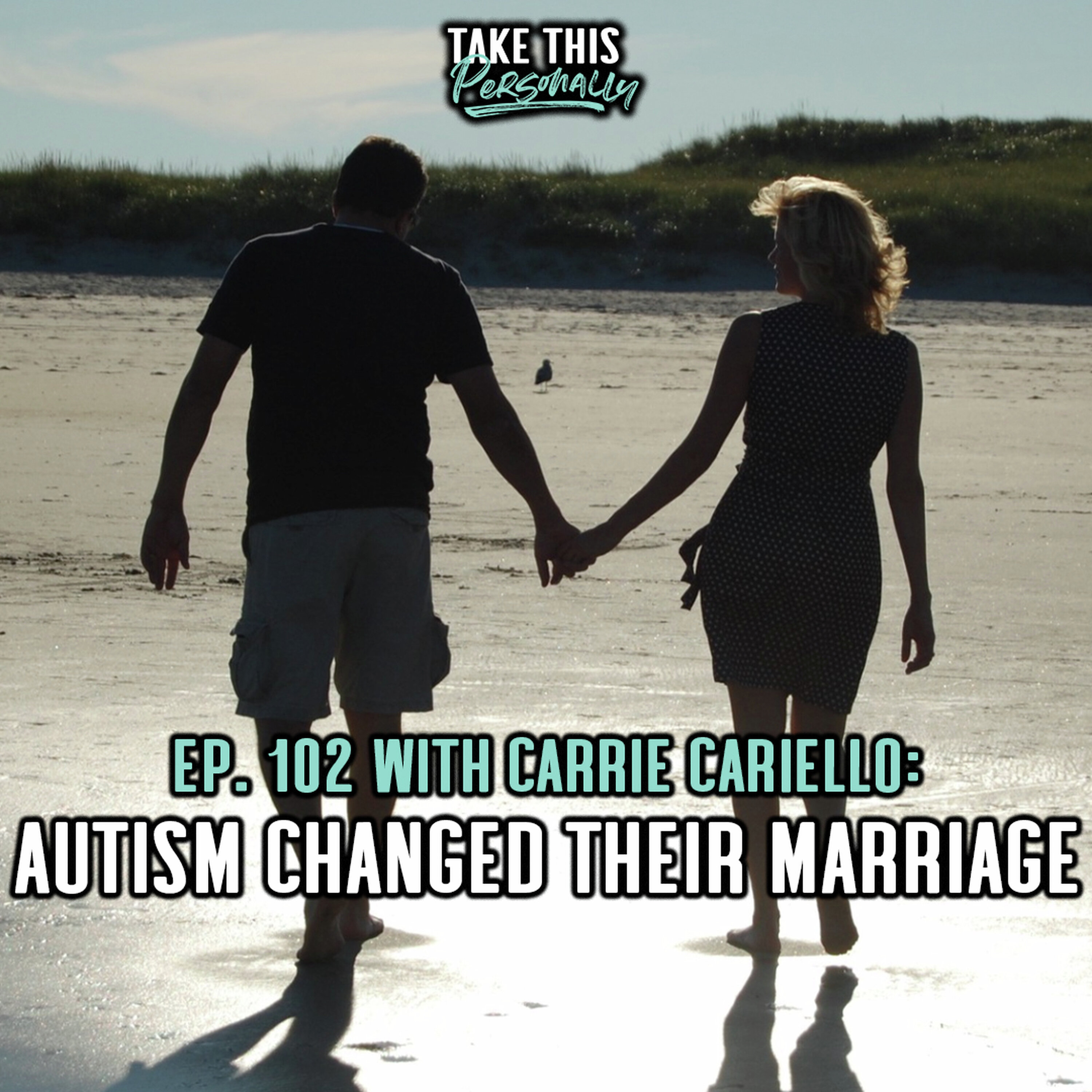
The Bobby Bones Show
TAKE THIS PERSONALLY - What Raising an Autistic Son Taught Them About Marriage
00:42:46
Loading summary
Transcript158 lines
- [00:00]
Carrie Cariello
This is an iHeart podcast. Guaranteed Human.
- [00:04]
AT&T Business Wireless Narrator
Before we had AT and T Business Wireless coverage, our delivery GPS wasn't the most reliable. Once our driver had to do a 14 point turn to get back on route. A 14 point turn, an influencer, even livestream the whole thing. Not good for business. Now with AT&T business wireless, routes are updating on the fly and deliveries are on time. And the influencer did get us 53 new followers though.
- [00:29]
Podcast Host (Sports/AT&T)
AT&T business Wireless connecting changes everything
- [00:34]
Dr. Laurie Santos
Health
- [00:35]
UnitedHealthcare Narrator
insurance shouldn't get in the way of getting care. Just the opposite. It should make getting care easier. That's exactly what the employees at UnitedHealthcare
- [00:42]
Morgan
work to do every day.
- [00:43]
UnitedHealthcare Narrator
Think about it. UnitedHealthcare employees need the healthcare system just like we do. They're real people who want real connection. When it matters most, they get it. And it's why they support people with genuine care and are helping make healthcare simpler. Learn more about how UnitedHealthcare is committed to care@uhc.com Care the World cup is
- [01:02]
Podcast Host (Sports/AT&T)
underway and it's been incredible. On our podcast the Away End with Daniel Alarcon and John Green, we're talking about the games that have delighted us, the teams that have inspired us, what we're loving and what surprised us all through the lens of being massive fans of the world's most beautiful game. Daniel this tournament has been magical so far. There's so much to love and I can hardly believe the drama that the group stage brought us. And now it's time for us to talk about the teams that are left. And as the field is whittled down to one World cup champion on July 19, listen to the Away End with Aniel Alarcon and John green on the iHeartRadio app, Apple Podcasts or wherever you get your podcasts.
- [01:38]
Dr. Laurie Santos
Here at the Happiness Lab, we're serving up some hot takes for the summer. Big ideas that just might reshape how you think about your well being. Like the radical notion that we should get rid of small talk completely.
- [01:49]
ASU Online Narrator
We talk about current events. We talk about what you do for a living, but not do you love what you do for a living? Is this your dream job?
- [01:55]
Dr. Laurie Santos
For more surprising ideas backed by psychological science, check out our new series, Happiness Hot Takes. Listen to the Happiness lab with me, Dr. Laurie Santos on the iHeartRadio app, Apple Podcasts or wherever you get your podcasts.
- [02:21]
Carrie Cariello
Take this personally with Morgan.
- [02:28]
Morgan
I'm excited to welcome Carrie Cariello with me this week. She's an author and an autism advocate. She wrote the book Marriage. I love you for now. Which is so funny because I. My favorite children's book was the I love you for always. I'll let you know that. That one. So kind of similar. Hi, Carrie. Thanks for joining.
- [02:47]
Carrie Cariello
Thank you. This is very exciting. Yet my husband actually titled the book. So here it is. And this is Hinai on the COVID walking on the beach. I think I had had a baby about 20 minutes before I took this picture, so.
- [03:00]
Morgan
20 minutes.
- [03:02]
Carrie Cariello
I love that.
- [03:03]
Morgan
Well, Carrie, let's start with your story, why you decided to write this book. And just kind of give us a brief breakdown before we get into all the details of everything.
- [03:12]
Carrie Cariello
Yeah, for sure. So I'm married to a man named Joe, and we have five kids. And our second son, Jack, is diagnosed with autism. And I've written for years about kind of family and motherhood and raising children, and I've always touched on marriage. But at some point, it just seemed like we needed a dedicated book to kind of breaking down the different pressures that couples raising a special needs child face. And the divorce rate is significantly higher than it is for families raising neurotypical kiddos. And I just really wanted to explore that. But kind of with the backdrop of things that worked for us as a couple, things that we found, funny, things that didn't work for us. And then at the very end of it, I said to Joe, what. What do you think we should call it? And I had a couple other ideas, and he said, I think we should call it Marriage. I love you for now. And then we. The subtitle is the Messy work of Marriage, Family, and Raising a Diagnosed Child.
- [04:10]
Morgan
I love that. I love that he had such a hand in it too. It wasn't just like, you were out there on your own. You're like, I'm gonna do this. He was like, no, we're doing this. This is part of our journey, writing all of the books and talking about these things. Why was that so important to you?
- [04:25]
Carrie Cariello
I really seek in our life in general to kind of normalize a lot of the things that I think are universal concepts that families face. This one in particular talks about when you have different parenting styles. Marriage counseling is a huge part of the conversation that I wanted other couples to feel more comfortable with through our. Through our experience. And then things that worked for us, like date night, being married on purpose, A concept we call the five five, five rule, where. Where this in five minutes, five days, or five years. And I. I just thought, like, a lot of the work that I've done, people always seem to see a piece of themselves inside of our story. And I just thought marriage would be no exception.
- [05:07]
Morgan
That's definitely true. And I love that role. I've. I've used that in my own individual life, and now upon getting engaged, I use it. I. That 5, 55 rule is a very
- [05:16]
Carrie Cariello
solid one that I enjoy.
- [05:19]
Podcast Host (Sports/AT&T)
Yes.
- [05:19]
Carrie Cariello
I, I think it applies really for me to social engagements. So I always say when it comes to social bandwidth, I'm a dot. I keep mine very close and tight. And Joe is a circle, and so he's never met a stranger. The door would be open all hours of the day to have people come in and out. We. He would never turn an invitation down. And so it's a great way to say, like, okay, we have this, you know, wedding invitation. Will we even know these people in five minutes, five day. Will this matter for that duration of time? So it has many applications.
- [05:52]
Morgan
It definitely does it and I really enjoy it. But it's cool to learn that you're using it in your marriage too, because I feel like it's important to implement there. So you say you guys have five kids. Are they all older kids now? What is the situation with your kid?
- [06:07]
Carrie Cariello
They're much older.
- [06:08]
Morgan
So.
- [06:08]
Carrie Cariello
My oldest son is 23. He's graduating from college in a month in Philadelphia. Our special needs son Jack turns 22 on Saturday. Our middle son Charlie is 20. He's pitching for a baseball team in Maine. My daughter Rose is. She'll be 19 this summer and she is a rower in college. My kids are very, very tall. So she's six one. Jack's almost six six. The rest are like six, three, six, four. They're massive.
- [06:37]
Morgan
They dwarf me. I am five and three fourths of one inch Carrie.
- [06:41]
Carrie Cariello
Aww, I'm jealous. Well, it's a joke because I do have a little bit of an online presence. And then when I meet people in person who have only seen photos, me standing with my family, they think I'm very short. I'm actually like, close. I'm five nine.
- [06:58]
Morgan
But yeah, you're tall.
- [06:59]
Carrie Cariello
I'm fine. But they are so tall. And so. And then my youngest son, we have one son home still in High School, one to get across the finish line. Henry is 17 and probably almost 6 5.
- [07:13]
Morgan
I mean, you got a whole mini baseball team going on over there, which is so fun. But a big piece to this whole story for you is being that an autism advocate speaking of your kids and one of them being that, gosh, I have to imagine that that experience was just different for all of them, not just the one kid, but for all of them. For you guys as parents, that was a reason why you wanted to write a lot of this stuff. So talk to me about that.
- [07:42]
Carrie Cariello
Yeah, I mean, we say a lot in our community, the autism community, that autism is a family diagnosis. It affects every single person in the home a little bit differently. And that still continues to this day. As my kids get a little bit older, they will all know that. They do all know that they'll have some responsibility in the future when. When my husband and I are no longer here. And so Jack is in his fourth year in a supportive community right now. So he actually doesn't live here, which is a tremendous triumph in and of itself. You know, we. We searched far and wide for programs for after high school, for the neurodiverse that were supported enough and get offered him enough of an experience. And they're just. There's a real scarcity of them. And so now he's living his very best life. My oldest son, Joseph, says that Jack is living like a rom com. Just like today, we're going. We're going out for ice cream, and then we're ice skating, and then we're going to see the new movie and then there'll be game night and, you know, but he's excited, experiencing life to the fullest. And I think that that's a really beautiful thing. But in the book, I talk a lot about how my husband, Joe and I really struggled. We came at that next step very, very differently. And that's really related to how differently we interact with Jack, how differently we interpret autism, and how differently we always say we want the same things for him. We want Jack to live as independently as possible, to be happy, to be learning, to thrive. But how we expect Jack to get there is very different for each one of us. And Jack was accepted into this program. And then, you know, it probably was three to four months of Joe and I on the couch every night debating if he was ready to go. So I also, in the book, explore a lot about how in our experience as a couple, mother's grief is like loud. It takes up the whole room. It sucks all the air out. It's very colorful. A father's grief is like this. After hours on the couch. It's a quiet, sort of private experience. And that. That plays out again and again, you know, between Jo and I.
- [09:55]
Morgan
That's really descriptive, and I love seeing that. As you were sharing that, I could definitely picture it. And you're right, it is. That's Very much what it looks like. And I imagine that that didn't just happen, though, when this choice came. I imagine it came a lot throughout his life. And correct me if I'm wrong in that, but this isn't one of those things that often you're prepared for when you go to have a kid. You're like, yeah, we're gonna have a kid. This is great. And you're excited to have a kid. And then things took a different turn than you were expecting. So what was that like for your marriage? Raising a kid with autism, that wasn't something that was probably on your bingo card, I guess is the best way I can say it.
- [10:41]
Carrie Cariello
It's so funny because you're talking exactly about a chapter that I wrote. So. Joe and I are both Catholic, and we were married in a Catholic church. And. And Catholicism has you do something called pre Cana, where you. You know, the way it was for us, how 27 years ago we went to this. This couple's house. They were also parishioners, and they asked us a lot of questions like, where do you think you'll spe? How much, Morgan, can you spend without letting your husband know? What's your threshold for budget? And not once did they say, what can you imagine what life would be like if you had a child with more needs, a special needs child? And I reflect in the book about how to Joe, he says that wouldn't have made a difference. It wouldn't have really registered on his radar for me. I do think it would have just planted something in my subconscious that this was even possible. We. This was, like you said, the last thing on our bingo card. The things I worried about when I was pregnant with. With my first child especially, but cleft palate. I worried we would have a hermaphrodite. I. I just read a. Just these really, like, really out there kind of thoughts and. But I never once was like, what if I have a child with down syndrome? Autism, adhd, Any of that wasn't on my radar at all.
- [12:07]
Morgan
Yeah, and it isn't. It often is not something that we like to bring attention to. And. And nobody who's listening, please do not get me wrong. I think it's a beautiful life when you have those kids. It's something incredibly special that a lot of people cannot even begin to understand unless you've had that experience. From every person that I've worked with within the community and every mother and father that I've spoken to, they love their children immensely. And that love is tenfold. But there Is a discussion there for sure that happens. Of. It's not something that we often talk about when it comes to having kids. We're just like, you should have kids. That's the path you should take without thinking of all of the things that come with potentially having children. And I love that you explore that openly as a mom who did have a kid with autism. And you're. And you're open to having that conversation.
- [12:58]
Sam J.
Yeah.
- [12:58]
Carrie Cariello
I mean, you touched on it.
- [12:59]
Sam J.
Right.
- [12:59]
Carrie Cariello
Like, we expect life to follow this formula. And for us, it was college. You meet somebody, you get engaged, you get married, kids, career, retirement, whatever. Not only is our life no longer following this formula, his life will absolutely not follow that formula. So you have to sort of make peace on two fronts. That now you've been disrupted as a human being and as a family in an exquisitely beautiful way, like you said. But it is a disruption. And. And then you have to come to terms with like, okay, what is the best way for him to live? Mm.
- [13:35]
Morgan
And at the same time, your marriage, just like you're saying, was not prepared for this disruption.
- [13:43]
Carrie Cariello
No.
- [13:44]
Morgan
And it was asked. You weren't even told to reflect on it, to think, to have the conversation.
- [13:50]
Carrie Cariello
I knew I could spend $50 without checking with Joe. That was very early on. But I had no idea what. How. How would we handle when you're kiddo completely dissolves in a public space as people stare at you. I mean, to be honest, we weren't really prepared to be parents in general. I don't know that anybody is wholly prepared for that. We didn't talk a lot about parenting styles, and that's something that gets in our way. Still to this day, with the ages I just listed to you, still to this day, the number one thing we argue about is our kids with it close second being autism. And sometimes they sort of compete for that top sp.
- [14:33]
Morgan
Yeah, well. And they both inter cross each other, I would imagine, too, because that's how you have a kid with autism. So what did it do to your marriage?
- [14:42]
Carrie Cariello
You.
- [14:43]
Morgan
You, obviously, you guys are both still together, which is incredible. You guys have put in the work, the effort, the energy. You wrote a book about this. So how does a marriage survive this and these things that have happened? And how did you guys do it? Because I think that's the magic question I need to ask.
- [15:01]
Carrie Cariello
It is evolving. It's always evolving. But I think we put some guardrails in place probably when Jack was around 9 or 10. I really think we both felt we were in a tremendous pressure cooker. He was going through extreme periods of anxiety. Sometimes we couldn't get him to leave the house. The day Jack was diagnosed, he was 18 months old. And the very next day, and I, I write about this in my book called what Color is Monday? The very next day I found out I was pregnant with my fourth child. So they really are all about a year apart, which in, in a perfect world, just them being all neurotypical would represent its own kind of pressure cooker. But when you add in someone who's sensory issues, who's a significant language delay, behavioral issues in puberty, I mean, it's, it's really like no wonder the divorce statistics are as high as they are. But, but speaking back to those guardrails, I mean, the first thing we did when Jack was around 9 or 10, and we both felt very lost, it, we felt stuck in solving the same problems over and over again. In the book, I call that marriage fatigue. We went to a marriage counselor and we went to him for about four years. And I really work hard to normalize that. Cause I hear a lot that there's pushback from the husband often. And Joe's very willing and open about this too, that he loved it. He absolutely loved it. And it was just a space for the two of us to breathe. It started out once a week and then we slowly sort of tapered off. And then he retired and said we couldn't come back, which I thought was so mean. There is so much you have already brought into the marriage in terms of familial baggage, expectations, traditions you think are important, religious expectations, just untangling all that and then the layer of how you communicate. Joe and I communicate very, very differently, and that is always somewhat gotten in our way.
- [16:56]
UnitedHealthcare Narrator
Health insurance should make getting care easier, but sometimes it can feel like the opposite. That's why UnitedHealthcare is committed to putting care at the heart of health insurance, with empathy, transparency, and real human connection. I mean, doesn't care feel different when it's personal? When you can tell that the person on the other end of the phone, the screen, and the Service genuinely cares? UnitedHealthcare is working to make that happen every day. They're also helping people make healthcare decisions with confidence, giving them the information that they need to better understand their benefits, costs and claims. Because UnitedHealthcare knows when you understand that stuff, you can better get the care you and your family need. UnitedHealthcare is also working to make care more accessible. They're doing it by helping connect people with more top doctors, clinics, specialists and such right in their own communities. It makes getting care easier and feels way more personal. You know, care can show up in a lot of ways and everyone at UnitedHealthcare is committed to bringing it every day. Learn more about how UnitedHealthcare is committed to care@uhc.com care awkward time to ask
- [17:56]
Podcast Host (Sports/AT&T)
this, but hey, did you download the trail map?
- [17:58]
T-Mobile Narrator
Yeah, no, I don't need to.
- [18:00]
Podcast Host (Sports/AT&T)
I don't understand. You're trusting your signal out here.
- [18:02]
T-Mobile Narrator
I'm trusting T Mobile. They have the best network and if we end up in bumtots nowhere, well, we've got T Satellite for backup.
- [18:09]
T-Mobile Narrator 2
Whoa.
- [18:09]
Podcast Host (Sports/AT&T)
I don't trust my carrier that much.
- [18:11]
T-Mobile Narrator
We'll just use your phone as a flashlight.
- [18:15]
T-Mobile Narrator 2
With America's best network and T Satellite, we're keeping you connected in places you never thought possible. And if you switch today, you get free phones for zero down and only 25 bucks a month per line for four lines. Find out more@t mobile.com or visit your local store.
- [18:31]
T-Mobile Legal/Disclaimer Voice
Best Mobile Network Based on analysis by Ooklab Speed Test Intelligence data 2H 2025 with 24 monthly bill credits and 4 eligible port ins on essentials for well qualified customers with auto pay taxes, fees and $35 connection charge per line credits and imbalance due if you pay off earlier. Cancel Contact Us Finance Agreement example $299.99 MotoEdge 5G required T Satellite available with compatible device in most outdoor areas in the US where you can see the sky included with experience beyond or $10 a month auto renews monthly. Cancel anytime.
- [18:53]
ASU Online Narrator
Visit t mobile.com you can't predict the future, but you can prepare for it. Arizona State University is building degrees for what's Ahead, programs designed around emerging fields taught by faculty whose research is shaping our future, not just teaching about it. It's why we've been ranked number one in innovation for more than a decade. Your future is worth preparing for, and you don't have to prepare alone. Future proof your career Explore more than 350 programs at ASUonline ASU. EDU. That's a degree better.
- [19:26]
Ari Chambers
What's up, fam? I'm sports journalist Ari Chambers.
- [19:28]
Sam J.
Hey, what's up, y'? All? It's your girl, Sam J.
- [19:30]
Ari Chambers
And we're the host of Everyone Watches Women's Sports, a new podcast from Together. And I heart women's sports.
- [19:36]
Sam J.
Because, let's be real, women's sports is giving us way too much to talk about these days.
- [19:40]
Ari Chambers
The highlights, the rivalries, the breakout stars, the moments that Take over your entire
- [19:44]
Sam J.
timeline and the conversations that start during the game and somehow keep going all week.
- [19:49]
Ari Chambers
Every week, we're breaking down the biggest stories across women's sports.
- [19:52]
Sam J.
We'll give you our takes, our debates, and probably a few disagreements.
- [19:57]
Ari Chambers
We'll talk to athletes, celebrate big moments, and get into what's happening on and off the field, court, track, and beyond.
- [20:03]
Sam J.
Because we're not just interested in what happened, we're interested in why everyone's talking about it. Because everyone watches women's sports. So if you're already a fan or
- [20:13]
Ari Chambers
you're just getting into the game, there's a seat for you right here.
- [20:16]
Sam J.
Listen to everyone watches women's Sports on the iHeartRadio app, Apple Podcasts, or wherever you get your podcast.
- [20:25]
Morgan
When you guys were first started dating, were there conversations about any of these things that you're mentioning, like the. The differences of stuff, or did that come after as this kind of is unraveling with the kids?
- [20:37]
Carrie Cariello
Unraveling? I would say it came later than it should have. No, I think. I definitely think it came after. I mean, I was 19 when I met my husband and we got married. I was 23. I was like two months shy or a month shy of turning 24. We were so young. Looking back, I'm glad that we did that young. I don't have any regrets about the age in which we got married, but I don't think we even knew enough to be like, well, do you. Do you think kids should finish all their food at the dinner table?
- [21:09]
Morgan
Like, it's really hard not thinking of.
- [21:13]
Carrie Cariello
Right. To play that tape forward of. Like, do you. Do you think spanking is good?
- [21:18]
Morgan
You know, I don't.
- [21:18]
Carrie Cariello
You know, we just didn't have the tools to have even explored that together. I think so much of building a family is trial by fire. You know, you're building the ship while you're swimming alongside of it. We are not. This surprises people who even know us in our inner circle is that we are calm until we are not calm, and we do not fight calmly. In fact, Mother's Day's coming soon, and my kids love to remind us, our kids, of the great Mother's Day blowout. Joe and I had an incredibly huge argument one Mother's Day, and the kids just think that that's. They will remind you of every worst moment you ever had. Trust me.
- [22:00]
Morgan
You're like, thank you. I don't know that I need to remember that we got over it.
- [22:04]
Sam J.
Right?
- [22:06]
Morgan
But honestly, I don't know how you don't I'm just gonna say that plainly. I, I think if you have five children, you got married when you were in your early 20s, there's so much life that comes after all of that. And so a blow up fight doesn't surprise me in a lot of ways. For a lot of people, even if you're the calmest of individuals, there is so much happening, so much happening.
- [22:31]
Carrie Cariello
And somebody wise once told me that kids really benefit from the pattern of rupture and repair if they never experience rupture. And a few families come to mind where they say, oh, we never fight, we never argue. And that always feels so like, I feel like so low when people say that. It's the same kind of people that are like, oh, we're not on social media. But kids who have not experienced parents that can rupture but then come back to one another have a more difficult time in their own adult relationships in the future. And I think it's important for kids to hear. Somebody once equipped me with this message, this phrase to say to them, hey, I didn't use the right part of my brain, Daddy. And I did not use the right parts of our brain. You know, and that happens to grownups too.
- [23:22]
Morgan
It's a good lesson. You're right. I know plenty of people who came from families where there was no arguments, no discussion, and I'm like, wow, I, I know all about that. Okay. That's unusual. And you have different experiences. It's, it's much like everything. If you have too much of one thing, it's bad. If you have not enough of something, that's bad. The, the middle ground is always where we like to be. That's the most ideal position. You were talking, you were talking about your son and his name's Jack. Am I. Is that correct?
- [23:54]
Sam J.
Yep.
- [23:55]
Morgan
He is now attending a program and that was a part of, where you guys had a lot of learning experience to come in. There's a side to this that I also don't know that is very thought about. Much like it's not thought about when you're about to have a kid, is that you will be part of their life for the rest of their life in a way that's different than a completely independent child.
- [24:21]
Carrie Cariello
Yes, 100%.
- [24:23]
Morgan
Yeah. And talk to me about that experience because that's also part to that story. I would imagine that you're just having a lot of discussions about what that all looks like. Even mentioned it with your other kids and what that looks like for them. As Jack gets older, as you guys get older.
- [24:39]
Carrie Cariello
I always say that when. When Jacques was younger, there were a lot more, even though Jack was diagnosed 21 years ago. So it was sort of on the cusp of all of this, but still, there were more resources. There was more therapies and parent groups and all of that. And I'm just noticing as he, like, blossoms into this young adult, that all of that is beginning to fall away, and there really is no roadmap for what we're embarking on. We had to put several, like, safety measures in place, one being when he turned 18, we had to apply for guardianship, meaning that we oversee his financial and medical, you know, those hemispheres of his life, to make sure that he's safeguarded. And right now, we're navigating the tricky terrain of Social Security to make sure that financially he will always be provided for and that won't fall to the rest of our kids. We probably have meetings at least once a month, either with an attorney or a financial planner. And they're completely demoralizing. The very nature of it is to take all of Jack's vulnerabilities and emphasize them so that he's recognized by the state, so that he. We can make sure that he's taken care of. And some of the meetings Jack sits in on, it's part of the process that he has to sit there and listen to all the things that we're worried he wouldn't be able to earn for himself. You know, he will. He pay a mortgage. And Jack is what we call splinter skills, where he has really high proficiency in certain areas, and they are the splinter of the larger concept. For example, he has his own apartment right now, and it's connected to the community, so he has access to the community. It's right across the street. And when he signed the lease, he immediately went on Amazon. Well, first he pestered the landlord to give him the layout of. Down to the last inch of the apartment and, like, a blueprint. And then he went on Amazon, and he bought. He measured everything that he needed, and he bought everything down to the wastebasket that would go in the bathroom. I mean, when you go in his apartment, Morgan, it's the sweetest thing. He has a little chalkboard that has the WI FI password on it. You know, he has shelves. What always, like, makes my breath catch is he has a little hook by the door for his umbrella. So that's his splinter skill. He masters this level of organization. He.
- [27:08]
Morgan
And the detail, like, the detail to everything.
- [27:11]
T-Mobile Narrator
A little.
- [27:12]
Carrie Cariello
A little glass container in the bathroom. With all the Q tips in it. He has like his oven mitts with, with hooks on them. I mean, it is immaculate. He could not tell you what a mortgage was. He does not in any way comprehend. And this is not me judging or sort of like, you know, running him down or whatever. It's just the reality that he masters splinters of bigger concepts. But there's some things that still, at 22, are kind of out of his reach. He does work. He has a job in a grocery store cutting, like the fruit in the produce department for the prepackaged. You know, when people go to buy their fruit, it's difficult for Jack. We wouldn't be able to work without somebody there with him. And five hours of a shift is probably the longest that he can do. So we, we're. We have a profile with him that sort of straddles the line. Right. When he was first diagnosed, there weren't levels. Now there's level one, level two, level three. Then it was high functioning, low functioning. But they've since, like, it broadened it. But we have a kid who can work. But I can't trust that Jack could support himself in whatever jobs he. He manages to. To work at in the coming years. So those are really like, weighty things to consider as a, as a married couple.
- [28:38]
Morgan
Yeah. Again, it's going back to this is when you have kids, yes, they're a part of your life for the rest of your life. That's true. But this is a different kind of part of your life for the rest of your life. There's not gonna be a complete and total independency where he can walk out the door one day and you're like, I'm never gonna have to worry about what's gonna happen. You're worrying every single day.
- [29:01]
Carrie Cariello
We worry every single day. And I know the contrast because I have it. My oldest just on Monday, started a job as a financial analyst at. At Sunoco. He bought a house, we helped him, but he bought a duplex so that he'll live in one side. And my worries are different. Like he's with a girlfriend and they're very serious. And I hope they. He's the she'. Like, those are the worries. They're very containable. They're very formulaic. According to what my peer group is worried about Jack. You know, before we. We agreed that it was. It was the right decision. Joe's biggest worry was that somebody would take advantage of him either financially, emotionally, sexually predator. And about a year in, it happened where Jack called us One night, absolutely hysterical. He had met someone online. He'd connected with what he thought was a peer online, and they invited him to meet them. And it turned out it was two men. And they brought him into their car and had him take out money at the ATM with his debit card. So it was like every fear Joe had, that was a really low moment as a couple. Every fear was sort of realized in one evening. And. And to my husband's credit, he said, this is a learning opportunity for all the things we didn't. You know, you're always thinking through, okay, if this happens, if he can't share the washing machine in a laundromat, can. Does he know how to talk to people in a locker room when they're changing? Like, you're always playing the tape forward, but there is just gonna be some gaps in that tape. And as a couple, you have to, like, be okay to move on from that.
- [30:41]
Morgan
Oh, and, gosh, I just imagine as parents, one, your heart breaks because this is the thing that you never wanted to happen. And just even hearing that, I. It's hard, right?
- [30:51]
T-Mobile Narrator
You.
- [30:51]
Morgan
I wish that that didn't exist in the world. I wish that we didn't have to be concerned on that level. But unfortunately, that is the world that we live in. And so what does that do with your marriage? Have you guys understood foundationally how to work through those things? Because it is. I don't want to say common, but it happens more often than not where you're going to face those ruptures. Like when. What have you guys done to make sure your marriage can withstand those constant ruptures?
- [31:26]
Carrie Cariello
Yeah, I think in that particular instance, it was just giving each other space to sort of absorb it and really respecting the different grieving process and that we each did have to process that in our own way as well as help Jack process it at the same time. So that was very isolated. But I think we, as a couple have really grown and evolved into a season where we really see each other for who we are. I was doing an online, like, virtual where there was, like, a million little zoom boxes with faces in them. You're too young for this, but it reminds me of the Muppet show, which is what we grew up on. All those little faces. And one mom was so young, and she said to me, how did you make sure you had enough time for all of your kids? That all of you, five of your kids got enough attention? And I write about that in the book because it was one of those. I didn't even think I just spoke and I said, worry less about the attention your kids get and more about the attention your marriage gets. And I went on in the book to explore that. Really what I meant by that is kids, even kids like Jack, have a lot of players in their world who will give them feedback, who will give them love, who will give them attention. You know, neighbors, grandparents, friends, teachers. The two partners in a marriage are the only ones who can sustain that. That is only on you. And that's what I meant by that response. And I think Joe and I come from very, very different backgrounds. I was part of three divorces, but not one of them were my own. And the longest I always say I ever lived with a married couple was six years. So I had no background, I had no, like, history for what a marriage should look like. And Joe, on the other hand, is the youngest of six, and his parents were married 65 years, I think 66 years. And so he had a very firm understanding of what he thought his marriage should look like. And I'll tell you that this marriage looks nothing like at all the ones that we sort of brought in with us. So being open to flexing and being curious about what one another brings to the table has been really, really effective.
- [33:38]
UnitedHealthcare Narrator
Health insurance should make getting care easier, but sometimes it can feel like the opposite. That's why UnitedHealthcare is committed to putting care at the heart of health insurance, with empathy, transparency, and real human connection. I mean, doesn't care feel different when it's personal? When you can tell that the person on the other end of the phone, the screen, and the Service genuinely cares? UnitedHealthcare is working to make that happen every day. They're also helping people make healthcare decisions with confidence, giving them the information that they need to better understand their benefits, costs, and claims. Because UnitedHealthcare knows when you understand that stuff, you can better get the care you and your family need. UnitedHealthcare is also working to make care more accessible. They're doing it by helping connect people with more top doctors, clinics, specialists, and such right in their own communities. It makes getting care easier and feels way more personal. You know, care can show up in a lot of ways, and everyone at UnitedHealthcare is committed to bringing it every day. Learn more about how UnitedHealthcare is committed to care@uhc.com care awkward time to ask this, but.
- [34:39]
Podcast Host (Sports/AT&T)
Hey, did you download the trail map?
- [34:41]
T-Mobile Narrator
Yeah. No, I don't need to.
- [34:43]
Podcast Host (Sports/AT&T)
I don't understand. You're trusting your signal out here.
- [34:45]
T-Mobile Narrator
I'm trusting t Mobile. They have the best network. And if we end up in bumtots nowhere, well, we've got Tsavor light for backup.
- [34:51]
Podcast Host (Sports/AT&T)
Whoa, I don't trust my carrier that much.
- [34:54]
T-Mobile Narrator
We'll just use your phone as a flashlight.
- [34:57]
T-Mobile Narrator 2
With America's Best Network and T Satellite, we're keeping you connected in places you never thought possible. And if you switch today, you get free phones for zero down and only 25 bucks a month per line for four lines. Find out more@t mobile.com or visit your local store.
- [35:14]
T-Mobile Legal/Disclaimer Voice
Best Mobile Network based on analysis by oogle of speed testing to intelligence data to H 2025 with 24 monthly bill credits and 4 eligible port ins on essentials for well qualified customers with autopay plus taxes, fees and $35 connection charge per line credits. And in balance too, if you pay off earlier, cancel contact US Finance Agreement example $299.99 Moto Edge 5G required T Satellite available with compatible device in most outdoor areas in the US where you can see the sky included with experience beyond under $10 a month. However, news monthly cancel anytime visit t
- [35:36]
ASU Online Narrator
mobile.com youm can't predict the future, but you can prepare for it. Arizona State University is building degrees for what's ahead of taught by world class faculty who are shaping our Future. Explore over 350 programs offered online at ASUonline ASU.edu
- [35:54]
Lowe's/Amex Narrator
with the new Myloes Pro Rewards American Express Card earn 3 points per dollar spent on Lowe's qualifying purchases for the first 6 months after card account opening. Plus save 5% every day on eligible purchases at Lowe's and earn points on eligible purchases everywhere else. Amex is accepted. Card members get more at Lowe's subject to credit approval. 5% can't be combined with any other offer. Exclusions and restrictions apply. Points subject to loyalty terms@lowe's.com terms and credit reward terms@synchrony.com mlpra-terms visit lowe's.com business
- [36:21]
Morgan
credit well, I I love that you answered that because that was going to be a question I had was you. You're so open and honest about the experience and I was curious what that was like, but that's such a again, one of those things that we don't really discuss when you see somebody in a family with somebody with autism or, or anything on that spectrum and
- [36:45]
UnitedHealthcare Narrator
we're
- [36:46]
Morgan
more focused on the kid than we often are of the parents in the marriage. Which great. It it should happen that way. But the marriage did come first, and the marriage is what's going to get you through. It's what's going to be there at the end. But we are often not looking at that when we're understanding those families.
- [37:04]
AT&T Business Wireless Narrator
Well.
- [37:04]
Sam J.
Right.
- [37:05]
Carrie Cariello
And I think, you know, we're lucky enough that we were able to launch Jack and I know that that won't be everyone's story who's raising a neurotypical. But the TR is now. You know, our lives were so busy for so long with kids stuff, book reports and school stuff. And they call it May Sember because May is so frantic with kids activity. You know, we have one kid at home now. He works a ton. He does his. He's living his own life as 17 year olds are supposed to. It is Joe and I, probably five nights out of seven, it is just the two of us.
- [37:41]
T-Mobile Narrator
Us.
- [37:41]
Carrie Cariello
It's something young parents can't visualize for themselves and nor should you really. But God willing, that day will come for you. And how do you really want to spend it?
- [37:52]
AT&T Business Wireless Narrator
Mm.
- [37:53]
Morgan
Well, that's the. The later part of the story.
- [37:56]
Sam J.
Right.
- [37:56]
Morgan
Again, it's. I imagine that one of the questions that you guys asked when you went to. What were they called?
- [38:02]
Carrie Cariello
Pre Cana.
- [38:03]
Morgan
Yeah, Pre Cana. They were like, well, so what's it gonna look like in 30 years when you don't have kids in the home? What do you guys think your marriage will be like then? That's question there.
- [38:13]
Carrie Cariello
I don't know. I'll be a geriatric. That's what we probably would. Will I be able to walk?
- [38:19]
Morgan
Yeah. Like, are we gonna stay here? Travel?
- [38:22]
Sam J.
What.
- [38:22]
Morgan
What does that look like? Yeah, it's just questions that we don't. A lot of the things that you've experienced and you're experiencing and why I think your story is so important is because it's unique to this entire situation that we just often having these conversations too feel hard. Right. Because it feels like we're looking at it from a lens of negativity and why it's difficult and why it's hard when, as I mentioned before, that's not the truth of it. The truth is just understanding the players in this whole story instead of just the one.
- [38:58]
Carrie Cariello
Yeah. And being realistic. And I often talk to moms behind me, so M O M mom. I really want to get a T shirt made called Manager of Mood, because that's what I was for years. I managed everybody's mood in this house. I'm married to an Italian who runs at a 12. We are more comfortable at a 6. And kids like Jack can only match the highest regulatory system in the room. So if you come in at a 12, which Joe usually does, Jack can only match that with very little coping skills of how to bring himself back down. And for years, I was subconsciously aware of that dynamic, even if I didn't have a name for it. And so I was always like, okay, Joe's like, let's, you know, Jack's upset and. And then do the kids like, well, dad had a bad day at work and. And then autism is a way of making a triangle out of couples. And the kids. Right, the kids, you and your partner. And one day to sort of smooth out the edges of that triangle, I just stopped being the manager and I moved to the background so they could develop their own way of interacting, their own way of relating to each other. And it's messy. It's, to this day messy to watch, but it's important. And they. I will tell you, Jack, my husband, Joe, Jack's father, is the only one, the only person in the world that Jack is affectionate with. Jack has hugged me. I. I know for a fact once, last year on his birthday, he hugged me. It was a huge moment. Other than that I might get like a side, like an obligatory hug. He doesn't like me to touch him. He never has, even as an infant. But Joe, on the other hand, can sort of engulf him and he never resists it.
- [40:43]
Morgan
A very special bond between father and son. And there's a. There's always a reason for that. But, gosh, hearing you say that as a mom. I'm not a mom, but I can imagine that that experience was difficult to not have affection.
- [41:00]
Carrie Cariello
It's something that I made ongoing peace with. And by that I mean sometimes I was like, eh, it's not a big deal. You know, he never wanted you to, like, wipe his tears. There was really very little you could do to comfort him. I remember that was really sort of the, like the aha moment when he was. We were in this tiny exam room with the developmental pediatrician, and Jack, at that age, 18 months, was whirling around like a, you know, like he was on battery or something. Like he never slowed down. And then he slammed his shin into this iron, this. This metal filing cabinet, the corner, and he of it. And he sacked Jack, sank to the ground and was screaming. And the doctor said, does he ever come to you for comfort? I'll never forget those words. And I said, no, he never comes to me for comfort. And so it's just part of, like, who Jack is. That he's, he does not desire that from me. He desires other things from me, but not comfort.
- [42:00]
Morgan
I was going to say, did you guys develop your own other side of communicating in affection that didn't maybe look like the affection that as hugs or just closeness?
- [42:11]
Carrie Cariello
I think so.
- [42:12]
Sam J.
I think.
- [42:13]
Carrie Cariello
And that, that in a weird way is what prompted me to become so determined in finding somewhere for Jack to continue his development, is that we had become kind of companions. He was always around me. If he lived at home, even right if he was home right now on break, he would be right here. Our, our umbilical cord never really like, like severed. And that shows up even now. He'll text me sometimes 10, 15 times a day. And I have to say, whoa, whoa, okay. I'm only going to answer texts from 2 o' clock to 3 o' clock and really like put boundaries in place for both of us. And the truth is our home had stopped being a learning environment for him. Joe and I had taken him as far as we could go here. And even circling back to the incident with the adult men in the car, like, it was horrific and it could have had a really terrible outcome. But he learned lessons that he was never going to learn here. And that's sort of the whole point of, of nudging him forward through life. And so we definitely have our own little language that, that I, I know for sure Jack feels loved by me. I can, I can say that with certainty. And. But it's just he, he's not an affectionate guy.
- [43:30]
Morgan
Well, and there's two kind of follow up questions I have to. Both of those. One, one being you talk about that incident and has it been, I know you said difficult, but has it also been rewarding to watch him start to understand these lessons and see him become even more than you thought possible,
- [43:53]
Carrie Cariello
1,000%. And I know you mentioned earlier, like families like ours have the privilege to kind of experiencing life on a whole different level. And it's not always easy, but we take no triumph for granted. There is no thing that is too small that he accomplishes. When he applied for those jobs, he applied to over two dozen jobs. He went on over a dozen interviews and he has like, again, those splinter skills. He has that interview shirt he lays out every time and he, he takes the bus because he doesn't drive and you know, he knows the mechanics of how to behave in an interview. And he was turned down so many times and just his pure joy when he got this job. And he's been there for, I think eight Months now. It makes it all worthwhile.
- [44:44]
UnitedHealthcare Narrator
Yeah.
- [44:44]
Morgan
And that, that is. The big moments are, gosh, they're so cool to see and witness. I love when I see a lot of them on social media. And those are like some of my favorite videos is to see their expressive nature and how they feel. And it's just so pure. It's like if we didn't have filters, that's what we would be like. And I think we need a lot more of that in the world. So I enjoy those moments. But on that other side, something that you had mentioned was how when he's home, he's always like right next to you. The umbilical cord didn't get cut. I do imagine that that would be difficult on your marriage, which is why so much of that is writing in the book about this. Because you can't have intimacy, you can't have moments of closeness, you can't have important conversations if there's always this other connection here. So walk me through that experience now, especially as he's older and he's understanding more things and how you guys navigate that scenario.
- [45:46]
Carrie Cariello
I mean, there's zero privacy when Jack's around. He does come home for visits and there's always, when he comes back home, there's. I talk to my readers about this all the time. There's like one or two days of transition where he's not sure how to be. And I'm trying to parent a 22 year old. You know, I talk a lot about how with kids like Jack, there's what I call a duality. There's his physical age, 22 on Saturday, and then there's him, his emotional age. And I would put that around 14. And so we're constantly trying to sort of parent both of those. It definitely takes its toll on a marriage, particularly when you argue, because again, Jack's nervous system skyrockets and he's what I call a catastrophizer. Everything's the end of the world for Jack. You know, if we argue, that's it, they're getting a divorce. And when you, when you're just. I don't know what kind of arguer you are with your fiance, but say you're. You get heated, let's just say, and you're both trying desperately to keep your own nervous systems down. Then you have somebody circling you, like literally circling you, going, you're getting a divorce, aren't you? This is it, isn't it? This is it. Dad's moving out,
- [46:59]
Morgan
escalating the situation very quickly.
- [47:01]
Carrie Cariello
It's like a match to a gasoline. Yeah.
- [47:04]
Morgan
Yeah. Well. And again, that just goes back to navigating it, which is why I think you sharing your story, writing the book, is so important, because navigating this does not have a book literally, like, there isn't a path that everybody can follow that's going to look the same. And so even addressing some of these things that are stuff that the nitty gritty people don't want to maybe mention or talk about because it's too vulnerable or it's too out there and you can't admit those things, I think, is why your book is so important. It's a space that's needed.
- [47:39]
Carrie Cariello
I think what I hope. I mean, my first chapter is a letter to the newly married couple, who's probably thinking, what have I done? But when we did go to marriage counseling, our counselor was a wonderful, kind gentleman, and at the end of every session, he said to us, remember, you love each other. And so I just hope that at the end of the day, this book can be really that reminder to couples like, you love each other. And once you even say those words to yourself, we love each other, you'll feel your own nervous system smooth out. I mean, it's just sort of like a balm to your spirit, you know, Now.
- [48:17]
Morgan
And how long now have you and Joe been married?
- [48:21]
Carrie Cariello
27 years. Wow. Like a lifetime. Like a lifetime. That's a lot of life that has
- [48:29]
Morgan
happened there in those 27 years.
- [48:31]
Carrie Cariello
What's fascinating is my metaphor, is that small children are like these excavators. They'll just, like, expose every crack in your foundation. Like, they have pickaxes. Older kids are, like I say in the book, topographers or people that they're using your marriage to map out what own relationships are going to look like. So it sort of shifts a little bit, and it's a fascinating dynamic. Yeah, for sure.
- [48:56]
Morgan
That I love that perspective and showing that. Well, Carrie, this is so cool to. To have you on and hear these pieces. I love to end the podcast episodes with. Maybe it's a piece of advice. Maybe it's motivation. Maybe it's a topic that we did not even get to that you think is really important. I kind of give the floor over to you, and you end us on something that. That's heavy on your heart to share.
- [49:18]
Sam J.
Well, I.
- [49:18]
Carrie Cariello
There's one thing I would love to share, and that is, you know, wherever you are, what season you are in your. In your relationship, your partnership, your marriage, just do it on purpose. We do everything else in our life on purpose. We do podcasts, we order pizza, we go to the gym, we get the mail. Everything on life that we accomplish is on purpose, and your relationship should be no exception to that.
- [49:40]
Ari Chambers
Yes.
- [49:41]
Morgan
Oh, gosh, yes. And you have 27 years of experience, so I think you can say that very confidently.
- [49:46]
Carrie Cariello
Yes, I love you. For now. That's what my husband's title should be. He's less than.
- [49:53]
Morgan
Did you ask him particularly why that was the title he suggested, so.
- [49:57]
Carrie Cariello
My husband's a dentist, and dentists think they're very funny. His license plate is painless. So I just thought he thought it would be funny. And I had some people say, oh, I don't know if that's the best representation for the topic of the book. And I thought he was brave enough to suggest it, and I'm not going to overthink it. And this, by the way, on the back of the book the designer managed to get in is my very favorite picture of Joe, Jack and I. Jack, as you can see, is giant. This is a candid. We were on the campus where his program is, and another college student said, do you want me to take your picture? And I was like, oh, sure. And he just caught it. And I think this so perfectly captures us. The two of them looking ahead and me looking at Jack.
- [50:46]
Morgan
Yes, very much so. You're like, this is all of the embodiment of the last. This is 20. You said he's turning 22. The 22 years of your life.
- [50:54]
Carrie Cariello
Yes. Yes. This is it in one book, Carrie.
- [50:58]
Morgan
I love that. Well, thank you for being here. Thanks for sharing your story and. And writing a book that I think will really impact a lot of families.
- [51:05]
Carrie Cariello
Thank you. Thank you for having me. This is an iHeart podcast. Guaranteed Human.