← The Bobby Bones Show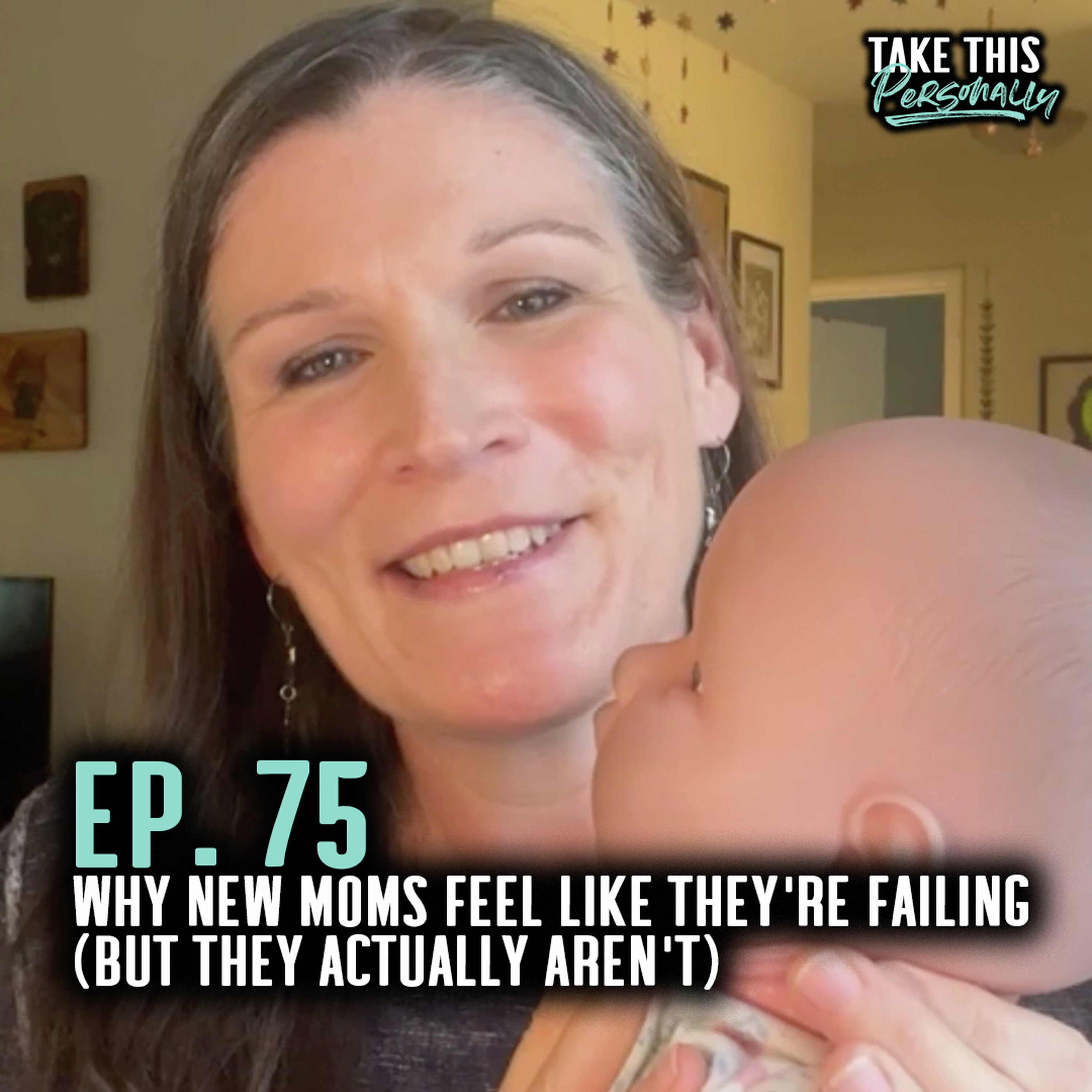
The Bobby Bones Show
TAKE THIS PERSONALLY: You Are the Perfect Parent for Your Baby: Postpartum, Baby Instincts & Trusting Yourself
00:50:34
Loading summary
Transcript77 lines
- [00:00]
Michelle Poole
This is an iHeart podcast. Guaranteed Human.
- [00:04]
Podcast Sponsor/Ad Voice
Did you know Tide has been upgraded to provide an even better clean in cold water. Tide is specifically designed to fight any stain you throw at it, even in cold butter. Yep. Chocolate ice cream. Sure thing. Barbecue sauce. Tide's got you covered. You don't need to use warm water. Additionally, Tide pods let you confidently fight tough stains with new coldzyme technology. Just remember, if it's gotta be clean, it's gotta be tied.
- [00:46]
Michelle Poole
Take this personally with Morgan Kielsman.
- [00:51]
Morgan Kielsman
I've got Michelle Poole with me this week. Her Instagram one minutemilk bites is helping new parents everywhere with advice in quick one minute videos. I'm excited for you all to hear her drop some major family knowledge.
- [01:01]
Michelle Poole
Here we go.
- [01:06]
Morgan Kielsman
Michelle fool is a nurse at the Maven Clinic and she is awesome about sharing so much information online about babies, motherhood, the boobies, all the things. So, Michelle, thanks for joining me today.
- [01:18]
Michelle Poole
Thanks so much for having me, Morgan. Very excited to talk all things babies today.
- [01:24]
Morgan Kielsman
Yeah, I would love to know. So you work at the Maven Clinic, you work in. You guys are family building, fertility, pregnancy, parenting, menopause, all the things that around this. But talk to me about starting that and why you got into that line of work. But then also your social media page and why you're sharing the information that you are online.
- [01:42]
Michelle Poole
Yeah, I mean, how much time do we have? I'm kidding.
- [01:45]
Morgan Kielsman
You can go as far as you want. We love to get deep on here.
- [01:48]
Michelle Poole
The short version is that I have a master's degree in counseling. And before I even thought about having a baby, I was a counselor. And I helped families with children with special needs and did that kind of behavior therapy. So I was in that world. When I became pregnant, I was told that breastfeeding was easy and natural. It's just like breathing. And I was like, oh, cool, then I don't need to take a class or read any books back. That sounds like a big waste of time. But when my baby came around, it was really, really difficult for me and I struggled. I was doing all of the things with the breasts and the pumps and the bottles and the formula and the nipple shields. And I started to lose it. And I didn't know what postpartum depression was because I didn't take any of the classes. You see, it's good to take classes, guys. And I just thought, I'm really bad at this. I'm not cut out to be doing this. And luckily, I did get some help from a visiting nurse. Things fell into place. My Little baby, God bless him, decided to participate and try to figure it out with me. Some babies don't, and that's okay too, but it just worked. And it took a couple of weeks before I was like, oh, it is easy and natural. After eight weeks of really hard, bad.
- [03:11]
Morgan Kielsman
Times, a lot of ups and downs, I would imagine.
- [03:14]
Michelle Poole
Now it is. Now you just put the baby on the breast and we're done. Ah, like, this is why people breastfeed. I almost gave up, which would have been fine. Something was going to give my mental health or breastfeeding, and it just worked out that I was able to keep both. But I realized it is, it can be easy and natural if we get through that learning curve, make it through the zombie haze of becoming a new parent. I almost didn't know that because I would have just stopped and I would have hated breastfeeding and said, don't do that. That's a really bad idea. But because I had both perspectives and I was a counselor, I was like, ah, I think there's a new pathway for me here to use my counseling skills and learn about lactation and babies and then marry those into a new job. I became a nurse because that seemed to be helpful in the whole overarching career path. Did my time as an intern and studied and did the exams and ended up with a lot of different jobs in the realm of babies and newborn care and breastfeeding. I've worked in hospitals, lactation centers, NICUs, birth centers, outpatient home visits. And then the pandemic happened and a lot of things switched over to online. And that's where I actually worked for Maven before that happened. But I have several jobs now. Maven is one of them. They are not only taking care of moms, pregnancy, having babies postpartum, but throughout the life cycle of women, which I just love every bit of that and love being a part of their team. So that's why I'm sitting in front of you today. And the social media just, I don't know, two or three years ago, I just felt like I can give more. I'm seeing so many moms who are struggling so much with just not knowing the very basics of this thing. And we can talk more about that, but that's where the social media part came in.
- [05:22]
Morgan Kielsman
I love this, and you mentioned that. And we'll definitely get into it about how it's a life cycle, right? We like to think we push people into having kids and, oh, it's so exciting. And you have a kid and they're Here, this is of kind school. And then it's like everybody disappears. And I've seen that happen in so many of my friends and in so many of the people that I love. And it really breaks my heart because that's when that's the most isolating moment of their lives is this new thing is so exciting and they were so excited for it. But also nobody warns you about what happens after. Everybody's excited about it and nobody's that village disperses because they're like, oh, you got it, you know what you're doing. And the moms and dads are sitting there like, no, we don't. Yeah, hey, we're still here kind of. So we'll definitely get into that. I want to talk about it. But particularly a lot of the content you mention about new moms in this very first phase of having the baby and then being like, what am I doing? And it's a fear I think a lot of women have, especially because they're like, I don't know how to do this and I don't have all these tools. Everybody says the mother instinct happens and it does. But there's also a lot of fear that comes with that. So what do you see a lot where moms are starting to freak out and they don't know things. Talk to me through those things that you're seeing and experiencing with people.
- [06:39]
Michelle Poole
Yeah, I think it ties into what you were just talking about, where we're not set up for a village anymore as a human species. For hundreds of thousands of years, we did live together in community, in a village. There weren't lactation consultants. Other mothers were the lactation consultants for the new moms. And we helped each other. And if you couldn't breastfeed, I would breastfeed your baby. Problem solved. And then we try to help you. But it was a very village led effort. And now of course, we're very isolated in general. So new parents are isolated. But I think that's just a reflection of the bigger picture of what's been going on probably for the last 100 to 200 years, since the Industrial revolution, since we all had to get. Everybody has to have a job. We can't just have a dad goes off to work and I get to stay home. Not that there's anything wrong with that or wanting to go to work, but a lot of people don't even have the choice. Both parents must go back to work. We are able to move away from our village. I did, and there's good things about that. And not so good things about that. When it comes to raising a little baby, I think moms definitely start to feel that isolation if they're not at least near their family or friends. So I think that has a lot to do with kind of the origination of why moms are feeling so disconnected from themselves and their babies and each other. Because that's the society that we live in. It's not their fault.
- [08:12]
Morgan Kielsman
Yeah, it very much is. And Right. Like you're mentioning, it's part of that bigger picture. And it's hard to watch because there is such an encouragement of have kids. You should have kids, don't not have kids. But we're not really supporting them in the way to give people the belief that it's safe to do so. It's like this scary thing. And so that's why I love what you're doing is you found this gap, and you're like, I'm trying to provide the support and I'm trying to help you guys through this. And so you're. You do milk bites, which I love. And they're really walking through the basic steps of, hey, breastfeeding. So talk to me about breastfeeding and why that kind of became a little niche for you. When it comes to social media, I.
- [08:53]
Michelle Poole
Think breastfeeding, again, because we've lost touch with the community, the village. Many moms who are having a baby, they've never actually seen somebody having a baby before. So, like, if we lived in the village 500 years ago and you were having a baby, I would be at your bedside helping you out. There would be women around, and we would just know what this is and what it looks like and what to do. So a lot of women who are having kids, they've never even seen that happen. And then when it comes to putting a baby to their breast, they've never seen that either until it's their baby. And now the stakes are high. If we're trying to exclusively breastfeed, we're trying to keep the baby alive from the breast alone. But I have no idea what. I've never even seen it happen before, so I feel very at a disadvantage. And then the mom's, like you mentioned, the maternal instinct, there's a baby instinct as well. So moms feel out of touch with that instinct, and I think they are. And again, that's no fault of their own. But they don't know that the baby has instincts as well. And to learn some of those baby behaviors and the reflexes that the babies are born with to get to the breast can be so helpful before the baby comes along. But all in all, when it comes to baby feeding, we can breastfeed, we can formula feed, we can pump. We're all three. Breastfeeding seems to be the harder one to get under our belts and a steeper learning curve. So that's where I give the most help, because I feel like it's the hardest of the three things. I do try to talk to pumping moms and formula feeding moms as well, because formula feeding moms get left in the dust sometimes. Cause it's like you're breastfeeding. That's hard. Pumping's also hard. Oh, you're formula feeding. Read the back of the can.
- [10:40]
Morgan Kielsman
Yeah. And it's not that simple. Nothing is ever that simple.
- [10:44]
Michelle Poole
That's right. That's right. So I try to help everybody out. But it is the breastfeeding where we're getting the most kind of confused and tied up and lacking just very basic information, not only about the mechanics of it, but also just the biological components of it, which I think are really important to the big story.
- [11:03]
Morgan Kielsman
And a part of this picture. We're obviously seeing a huge shift in people wanting to be aware of what they're consuming, what their babies are consuming, what's happening. So I'm imagining that's also a role in this when it comes to formula and breastfeeding and pumping and stuff. Are you seeing that transition happen as well?
- [11:20]
Michelle Poole
It's really heartbreaking to me because moms are always constantly comparing themselves to get a sense of how they're doing. And that's also just a reflection, I think, of the society that we live in. And it's like, I have to look at you and you to know that I'm doing a good job, which isn't how anything really works. But they're doing that, and then they're hearing messaging from people like me. I don't say this, but some lactation consultants may say, or doctors or healthcare professionals may say, breast is best. Breastfeeding is best for your baby. And they just hit with that message again and again. And then when that isn't going well, they've tied it up with parenting. It's not just like, breast is best. It's like, oh, breast is best. And therefore, if I'm breastfeeding, I'm the best parent. I'm like, I didn't say that. That's not what I said. But that's what they're hearing. And I've been really asking lactation consultants to change that messaging because we know how harmful that can be. When the mom is now tied up, if I'm breastfeeding really well, that I'm a good parent, and when that starts to fall apart, I'm not as good as a parent anymore, but at least I can pump. And now they're pumping, but comparing, like, the volumes that they're getting. We're having people telling them, oh, when you pump the milk, it's not as good, is it? The baby's just breastfeeding. And then when that's not working, they have to use formula. And so the formula. I'm so grateful that we have formula that nobody has to breastfeed if they don't want to. If they can't, we have something to feed the baby. And we live in this society where the almighty dollar rules. And so formula companies are marketing to these vulnerable moms and trying to tell them why their formula is the best one, and it can't even be in this country anymore. Now it's like, well, you have to go and buy the European formula. You want to be the best mom. So it really is heartbreaking to see these moms just trying to do. They just want to do what's best for their baby, but they lose sight that, like, their best is the best for the baby. Just being themselves is the best for the baby. Loving the baby, taking care of the baby, the baby trusts that I'm going to meet their needs. That's what we got to be focusing on. Not, like, how many ounces of milk you pumped, whether you were at the breast or pumped it, what kind of formula did you buy? But they've tied that up with how good a parent I am. So I'm trying to unravel that problem, which, again is people like me caused that. So I want everybody in my side of the screen today to take responsibility here and think about how the language we're using is messing moms up.
- [13:52]
Morgan Kielsman
Well, and it's funny you mentioned that we had just done a podcast episode. We're really talking about social media and how the twists and turns. It's turned on so many different levels, from therapy to parenting to so much a part of what we understand and how we compare ourselves and what that all looks like. And it's super damaging for the real life experience versus the online experience. So I know that's playing such a significant role. And I want to get back to that thing you mentioned about baby instincts, because this can also be a way that moms and dads can be the best parent they can Be because I think I should have thought about that, that babies do have instinct. They're their little human. But. But that's definitely not something anybody has told me about. So talk to me about that.
- [14:34]
Michelle Poole
Yeah, this is also, it's funny in a way, like, it's very sad. But it's also funny because when parents, first time parents who have not been around newborn babies have not lived in that community where we're helping each other out when they have. And I'll get one of my baby props.
- [14:52]
Morgan Kielsman
I love a baby prop. This is perfect.
- [14:54]
Michelle Poole
I love a baby prop. So we have the baby arrives on the scene and it's like, what do I do with this? And parents, dads especially are like holding a baby like this, like, ah. And they're like, what? Like I need an instruction manual. What do I do with this little creature? Is this even human? It seems like it's a foreign species to us. That's how far we removed we are from it. So part of what I'm doing and in the future, in the near future, I think I'm going to start another Instagram channel or some kind of social media channel where I'm really trying to build these basics of this is a human being. You know how to take care of a human being. You've taken care of a lot of human beings in your life. This is one of them. They just happen to be a lot smaller. But when we just reframe it, even that I get parents who are like, I never thought of it like that. And I'm like, wow, well then we have a lot of work to do. But it's good that now you are thinking of this is a human, this is a mammal. And if you can learn some basic things about mammal babies, it's going to apply to your baby as well. And then we can just start to say, what is this baby mammal born with the ability to do? And there's social media. It's problematic in this space and it's also a blessing because it gives me an opportunity to just get the message out there. There are other providers who are giving good evidence based, nice, not harmful information. And there are so many videos that we can go watch now of what happens when a baby is born. Did you know that every baby goes through the same nine behaviors after they come out? No.
- [16:36]
Morgan Kielsman
Can you tell me about these nine behaviors? Because I feel like I, I feel like I'm getting a whole educational experience right now.
- [16:42]
Michelle Poole
It's super cool. So I'm not gonna go through all nine of the Steps. But, but if you go, anybody that's listening and you want to see what I'm talking about? If you look up newborn babies, breast crawl, newborn babies, the golden hour, like, then you're going to see these babies who are fresh out. They're out now. They're living in the world and they do nine of the same thing. So it's like they cry, they rest, they look around, and eventually they get themselves to the breast. So step nine is like they've latched and started eating. And, and if I just. Now this is. Okay, so here. And it has to be a normal vaginal delivery with no interventions. And that's pretty rare these days. It still happens. It happens in birth centers. It can happen in the hospital if you're vocal about it. There sometimes are compromises we have to make. But we could have a baby who is going skin to skin after birth, full term delivery. And all I have to do as a mom is just make sure the baby doesn't fall off of the bed and this baby will put herself onto my breast. Parents don't know that. And when they see the videos, they're like, it's mind blowing. I've seen a lot of babies doing this over the years and it still like, makes me weep because it's just this beautiful thing that I have no idea what I'm doing. Thank goodness this baby now, it got.
- [18:10]
Morgan Kielsman
That natural instinct, like as soon as.
- [18:13]
Michelle Poole
They'Re out of the womb a hundred percent. So within the first hour, you're going to see all of those things happen. These stages that our baby mammals go through. And that is, that can be a big shift for parents. To see it on a video is one thing. And that can make them say, wow, what? But then when they have their baby, it's amazing just to have them just sit back. You don't have to do anything. You don't. Because they're just like, what do I do? Like, you don't even have to do anything. Literally, like, just relax and hold your baby and watch what they can do. And then as we move forward now, it's nice for you to be able to sit up and hold them and do the things. But if you just lean back, they'll do a lot of the work for you, which is super cool.
- [18:59]
Morgan Kielsman
You've mentioned that specifically the traditional style of birth. So does that change? If C section is part of this and different things, what does that look like?
- [19:10]
Michelle Poole
It can look a lot of different ways. We have, of course, a lot of studies now that show us what it can look like. And so if you have an epidural, let's say, and some moms want an epidural, which is totally fine, and some moms don't want an epidural, but then they do and that's also fine. And some moms don't want one. But then the healthcare team is like, you really should get one because of medical reasons. It's safe for the baby in terms of the medication. But if you think about what an epidural is, you know, it's a numbing agent. And so it's not that the baby doesn't get any of the medicine, they do. And so sometimes just depends like the dose of the epidural, how far away we are from delivering the baby, all of these kinds of things. But we see that babies who were born to a mother who had an epidural, they're not quite as feisty. If you go look up the breast crawl, you're going to see these babies that are like doing push ups on the mom's chest and bobbing their head and eating their hands and pushing with their feet to get to the breast. And that's what we would love to see. Babies who have some kind of medication in their system might not be quite as bright eyed and bushy tailed. They might be a little, just a little floppier, a little more relaxed about the whole thing. And as that medication wears off, they will start to pick up with those behaviors. They don't lose them. It's really important for those moms who had to have an epidural. I hate I had to have a C section. I had all the medication and thank you for all the medication for that. And I had a baby that was floppy and not super into things for a minute. And I've seen lots of babies like that in the job that I do. Keep that baby skin to skin with you. That's if anybody's listening today, if there's one take home message. Hold your baby skin to skin as much as you can, as often as you can. And when you get tired of it, give it to dad, give it to your partner. Give baby to grandma to hold in skin to skin. It's so good for them. It's really great for breastfeeding development. It's like the neurons are firing in the baby when they're held skin to skin. It's really cool science stuff where they have like sensors on the front of their body that are talking to them about where they are and what they need to do and triggering feeding reflexes. And if the baby has had any medication as that wears off, I'm going to start seeing some of those behaviors that I wanted to see when they were born. And I'm gonna be the first to know if the baby is right here and know that. Okay, now it's time to feed. So there are some differences, but generally they're short term. Within 24 to 36 hours, we should see a baby kind of free of the medication and acting like fiery little mammals trying to eat.
- [22:04]
Morgan Kielsman
Oh, wow, that's so fascinating. And they do not teach you that in school, that's for sure. And it's also interesting, I've seen some stories recently coming out talking about C sections. So I'd love your take on that because it's. There's and I don't know, you may not have one and you may not know, but it's more the. We're seeing that C sections were pushed a lot for people to have them and versus having natural birth or whatever they wanted to have. I loved watching my sister navigate this for the first time because she. I said it in the very beginning. I was like, one thing I know from all the information I've taken in is just be your own advocate, do whatever you want to do and stand up for yourself. You deserve that. And she did in every way. And she fought like hell to do the things that she wanted to do as long as it was safe for her and her baby. And that was really cool to watch. But it's also interesting now seeing a lot of the feedback come out online about C sections and this push to have them done. So is there anything you can share and shed light on that kind of situation that's really unfolding right now?
- [23:05]
Michelle Poole
Yeah, like I mentioned, I had a C section. My baby was breech and he didn't turn and he didn't turn and he didn't turn. And when I finally delivered via C section, they said he was never going to turn. Like he was folded up like a taco. This way there was no room for him to move. So thank goodness we have C sections for medical reasons. It is major abdominal surgery. And we forget that because it's so commonplace when we're talking about having a baby. And it's like, oh, are you going to give birth vaginal? Are you going to have a C section? Like it's major abdominal surgery. And not only is it major abdominal surgery, maybe even at this point we can hold baby skin to skin after a C section. A lot of hospitals are doing that now. But imagine, like, going in for any other abdominal surgery, like, you're going to have some kind of liver surgery or surgery on your stomach and you are awake for the surgery, and 10 minutes later they go, here's a baby. Please keep it alive. Can you imagine? But that's what we're doing when we have a C section and we're like, here's your baby. Don't pull your stitches out. Be really careful holding them. Like, make sure when you're breastfeeding they're not kicking your incision. It's crazy. So we've really normalized it in a way that I think is a detriment to the way that moms are thinking about it. And they're not. And like I said, I'm glad we have them and everyone. You should do what you would like to do, but make an informed decision and recognize that you are having your body opened up and they're taking your organs out and laying them on your stomach, and then they're cutting them. So it's like, it's a big deal. There can be, just like with any surgery, there are way more risks, as you can imagine, involved with this way of delivering a baby, because we do it so much. On the plus side, we're good at it.
- [24:54]
Morgan Kielsman
Yes.
- [24:54]
Michelle Poole
I would say probably. I don't know the evidence, so don't quote me on this, but I would imagine that whenever we started doing C sections that, like, they're probably a lot safer than they used to be. I would hope so.
- [25:04]
Morgan Kielsman
I would hope so as well. I think we've been doing those for a few decades.
- [25:07]
Michelle Poole
I would hope so. But they do come with some disadvantages. And then once you are, recovery is a whole different story. You now. I remember standing up the first day after I had that surgery, and it was scary. It was scary. You're not allowed to drive. You're not allowed to walk up the stairs. You're not supposed to pick up anything bigger than your baby. And if you have other kids at home, it's a challenge. It's a challenge. So lots of kind of risks and downsides that I'm not sure that we're always being honest about with moms.
- [25:41]
Morgan Kielsman
I think the wild experience about that, too, is that you mentioned it and you don't get to recover completely. You're now going to get kicked out, too. They chose you on this Friday to misbehave. They are normally angels. During this whole process, they've gotten used to it. I'm not sure what the warning is, but I thank you. You mentioned that this, like, the recovery process. And I think about the idea of having to take care of a newborn, learn to breastfeed, learn to. Especially new moms, right? If you've done this is your 4C section, you probably have a little idea of what's about to happen. But what's wild to me is those first newborn moms for the very first time are like, I have to recover for how long? And I also have to take care of my baby this whole time. And nobody really warns you about that in the process. It's, yeah, this is a big deal, but it's, you'll be fine.
- [26:32]
Michelle Poole
I don't feel like we're super. Maybe not honest, but just like, not talking about it at all when we're making informed decisions. And like I said, sometimes it's really not a decision. In my case, if we have a baby that's breached, to me, that's not a decision. I guess some people might say it is, but in my opinion. But I. We're going to have a C section because we're at much less risk than delivering vaginally in some of these cases. But it is super stressful to have to be recovering from this. And then just. I. Even after birth, I remember I felt so sick because of the medication that they gave me. Like, I was like, a lot of people are throwing up. I don't remember if I did or not. I might have. But again, they're trying to, like, give me a baby when I'm, like, vomiting and I'm like, are you out of your mind? Like, what is happening? This is not.
- [27:27]
Morgan Kielsman
Like, I can't even take care of myself right now. Don't give me something that needs me to help it survive.
- [27:32]
Michelle Poole
That's right. And so it was. It gets a little weird. I think, again, we've just normalized. It is. It is a normal way to give birth. Like, the babies are coming out through the window instead of the door. And it's very safe relative to other things. But compared to a vaginal delivery, it's not quite as safe. And then the recovery time is intense, especially sometimes right afterwards. And this was a planned C section. When we're talking about an emergency C section, that can be way riskier all the way around. And then depending on why did we have that in the first place? What was going on with the mom, what was going on with the baby? Now we might have a baby in the NICU for some reason, or moms had to be moved to a different part of the hospital. Can get really complex and challenging for new parents to navigate this and just navigate it, period. Forget about breastfeeding. Sometimes that goes out the window pretty quickly when we're in that kind of a situation.
- [28:29]
Morgan Kielsman
Very much so. And we're now to this point where it's after the baby is born. And a big piece of this, what we mentioned right at the beginning, is that there's a stage at which people forget that these parents exist and they have a newborn and this is what's happening in their lives for the rest of their lives. And they don't have that village and community as much as they did in the very beginning. And there's also postpartum that comes with that. So what are some things that you're seeing maybe to help parents, especially moms, get through that postpartum season and get through it without having to face that? Because that is another thing we just really don't talk about a lot because joyful having a baby, it's great you created life. But hey, also, you might have some depression, anxiety and stress that come with this. But don't worry about it. It'll be fine.
- [29:17]
Michelle Poole
Yeah, that gets really hard, too, especially not being in community, because now, and I mentioned I had postpartum depression, it didn't go diagnosed because I never told anybody about it, because what am I going to say? I'm bad at being a mom. I don't think I can do this. I decided to have a baby, and now I feel like I can't say I didn't want this or I'm bad at this. So the feelings of, like, shame and guilt are big in moms, and it's like, it's not even their fault. Like, we've had this major hormonal flux that has triggered some kind of depression. Now if we have a baby that's not breastfeeding pain or not sleeping, that makes it all worse. But it's. It's not like they did something wrong, but they don't know that you can't see it when you're inside of it. And so now if you're lucky enough to have a partner, they're the ones that are responsible. So one thing I would say is that if you're supporting somebody who's pregnant, learn about the baby blues and learn about postpartum depression, because we want to normalize those things so that you understand it's pretty normal for that big mood swing to happen over the first few days after birth and to feel very teary sometimes, even though this is supposed to be the Happiest day of my life. Why am I crying? But then most of the rest of the day I can move out of that and still enjoy myself and still laugh or eat dinner, something. If that continues to kick up, get worse and worse. And now I'm crying more and more. I'm just shutting off emotionally. Now we're headed into postpartum depression territory. And again, I don't know it because I'm inside of it. So for the partner to be able to be checking in daily and just being like, hey, how are you feeling? How are you doing? What can I do for you? What's the hardest thing today? I like that question a lot, lot. What's the most challenging thing for you today? And telling mom, this is so hard right now and you are doing such a great job in spite of these challenges. I see how hard you're trying. Moms need to hear that and they're not hearing it from the community anymore. They don't get it from the village. So that partner has a lot of new responsibilities that sometimes as men, they're not as in touch with that womanly mothering part of themselves, that nurturing part of themselves. So I think all of this needs to happen before we have the baby for it to work out. So I think there's a lot of work that can be done prenatally with couples going to classes, asking questions, learning about what's normal, how can the partner support mom, knowing the signs, how to talk to her about it, what to do if we feel like this is not okay. You're not alone, There is help and things are going to change, but we need to take some action to get there. But that falls on the partner a lot of the time.
- [32:05]
Morgan Kielsman
Well, and I love that you said that because it does.
- [32:07]
Michelle Poole
Right?
- [32:07]
Morgan Kielsman
This isn't just one person who's part of this picture. And sometimes it is. And that breaks my heart in itself and it's an entirely different story. But when there is a partnership that's happening and one of them is just removed from the scenario and I'm like, hey, you made half of that just because it's coming out of her, you still have a whole lot of responsibility that's about to come. And it's so funny. I was my poor brother in law, when my sister first told me she was pregnant, I think I sent him so many different social media clips of taking care of her. I was like, I'm not there. We live in separate cities. So you, I like you right now. We've gotten along this whole Time. But I'm gonna make sure that you're also gonna show up in this way. Cause I need you to for my sister. And I knew he would. He's an incredible dad, an incredible partner. But it was like, I wanted to help him also have information that I don't know that I even knew. It was an entire community trying to help to make sure. One of the things that I was so profoundly just really in touch with for my sister was like, I need to check in with you all the time and how are you doing and how are you feeling about this? Talk to me about what you are. Instead of being like, how's the baby? Talk to me about your new baby. It was like, mom, you're still my sister, and I want to know about your life and how you are. So that was something I really recognized in just a lot of friends and a lot of people I've seen have babies too.
- [33:29]
Michelle Poole
She's really lucky to have you.
- [33:32]
Morgan Kielsman
No, thank you.
- [33:33]
Michelle Poole
But I'm glad that you recognize the need for that.
- [33:36]
Morgan Kielsman
Well, and I hope it helps other people recognize. It took me seeing and experiencing other people going through this to say, I need to make sure I'm aware of this when this does happen. For my best friend. Need to be the one who's checking in on her. Because it's really easy and to no fault of anybody's. Right? You know, a new baby's exciting and having a new family member and all of these things are so exciting. But mom's still there, and she's still very much a part of that picture. So it's not just the baby. And that was something that hopefully me saying that is just like, oh, yeah, I need to flip that switch. Because it's easy. It gets lost in the mix.
- [34:14]
Michelle Poole
That's so true. And I like what you said about maybe you saying that was the first time that she even thought about herself. Because we forget about ourselves as moms and we're so hyper focused on, is the baby okay? Is the baby breathing? Is the baby eating? And I forget that, like, I'm here too, and I'm alive, and I need to keep myself alive and I need to be okay as possible. And I don't. I stopped thinking about that. So it's important not just to be checking in, but also for you to make mom remember that she needs to be thinking about this too. And again, we've lost a lot of that connection with other people in a community. So if you have a family member that is pregnant having a baby, friends check in on them. Somebody's checking in on the baby. I promise you. Like that baby's getting checked over a million times a day. But mom gets left out sometimes, and that's a bit problematic from a lot of different angles, in my opinion. I hope we're going to do better with. Sometimes a mom won't even see her doctor for six weeks after she delivers. So she has a baby, and her first OB GYN checkup is six weeks postpartum. Wow, that's 15 lifetimes with a new baby. Six weeks. Oh, are you breastfeeding?
- [35:30]
Podcast Sponsor/Ad Voice
No.
- [35:30]
Michelle Poole
I'm like, I quit three weeks ago because it was so hard. Like, your whole life is changing day by day. The baby's doing different things. If I'm breastfeeding, my body's changing. We need better postpartum support just through the medical system. That's a different topic. But in the meantime, people who are around mom in her community, even if we're living far away, we do have FaceTime and we do have phone calls. Take advantage of those. I think also having conversations about it before we have the baby. I think I mentioned that. But just to reinforce everybody having a conversation with mom because her whole identity is gonna change. We often don't talk about that either. Where it's like, well, I'm having a baby. What do I need to buy? What are the hacks? And I'm like, cool. Like, you can get that probably literally anywhere on social media. But who's talking about, like, your whole life is going to change. You're not going to be the same person ever again, and your relationship is never going to be the same relationship ever again. I think we need to spend some time thinking about that and talking through that. In addition to all the things we're going to buy in the baby showers and all of that.
- [36:39]
Morgan Kielsman
Well, that is so important because it is. It's a focus on what all do I need? How do I make sure the house is prepared? Is the baby room ready? Do we have everything the baby needs? And those conversations there doesn't feel like there's a lot of space for it in all of the noise. And not intentionally, but just there's so much else happening. When you do have new parents who are coming in or maybe people who are thinking about having kids or anything along those lines. What are those conversations that you just mentioned? A few there. And I just want to make sure I highlight all of them because this might be the first time they're even hearing that they should be talking about these things.
- [37:15]
Michelle Poole
Yeah, I think Feeling. Feeling like I really trust my partner. Do we have any trust issues that we need to work on? Talk through and just saying, hey, do you trust me? What about this relationship? Could I be doing better? Because literally, like, my life is now dependent upon my partner. So the dad sometimes, ah, you can change the diapers, or you're keeping your family alive. And dad, partner, whoever, again, if we're lucky enough to have that person, is like, eyes on the big picture now. And is baby okay? Yes. But, like, mom's pretty attuned to that. Is mom okay and what does that look like? And then as the household okay and talking through, I want you to be able to tell me when you're feeling anything that's wrong or there's a big challenge. Like, I want to be the first to know. I want to hear, what do you need? Like, you can ask me for anything. Like, just really building and making a solid foundation of, like, trust. Because it really is. It can be life and death. When we talk about, like, new baby, new mom, there are risks that go along with this, and we want to make sure that everybody's safe and healthy. And that involves some level of trust between caregivers. So really working on your relationship, if there's any sort of stress around that. And of course, those of us who have been married, like, leading up to the wedding, it can get a little stressful sometimes with our future spouses. And, like, having a baby sometimes leading up to that can get a little stressful. And I see it happening postpartum as well. But the couples that I know are gonna be okay are the ones that I know because they've told me about, like, how wonderful this person is for them, and they know that, and they say it, and they. They can be vulnerable with that person. They can share their deepest, darkest fears with that person and trust that they're gonna be able to receive that and help in whatever way that they can. So that's critical. And then the household management. One of the best things that my now ex husband did when we were expecting the baby was he got very serious, and he came in one day. I was having a C section. It was planned. So we knew, like, tomorrow we're having a baby or something. And anyway, he came in, he's very serious, and he has, like, a pad of paper and a pencil, and he's like, I need you to tell me everything that you do in this house. And I was like, ah. And I'm telling you, like, he realized I do a lot of things that he doesn't even know what they are. And he realizes that's all gonna change, and I'm not doing crap for at least a couple of weeks now, and he's gonna have to do it. So that was amazing. So I share that story with new couples and say, have that conversation. What are each of you doing in this household? And know that mom's not going to be doing a lot of that. At least for a minute, please. No, really.
- [40:17]
Morgan Kielsman
At least for several weeks, actually. Yeah, that's. Those are such important questions. And ones, again, like, you speak from that counseling perspective, I'm sure, too, of just. We do see a lot of resentment that comes after people have a baby, because life does change, and it's not to be dramatic. It's supposed to hit you with a reality that this is going to be different. It's going to be awesome, and there's going to be exciting moments, but there's also going to be a lot of changes. And are you prepared for that? Are. What is your life? It's no different than when you're about to get married. It's like, are you sure you want to be with that guy for the rest of your life? Like, have we gone through the whole questions and have you answered all of them? How do you feel? There's a cool trend that's been happening online that I've been seeing lately of people saying it's important who you marry. And they're showing these really hard moments in their life. And I wish I could stress that so much more because it's all I see. Right. I. And I've seen so many different perspectives of this, and I've lived in so many different partner situations, and the one thing I always come back to is, are you going to be able to get me through the toughest moment of my life? Are you going to be able to get through loss? Are you going to be able to help me get through if I do decide to have a child and push it out of my body? What are you going to. What's that going to look like? And I wish more people had that conversation with themselves before marriage, before having kids, all of it. I think that's such an important topic.
- [41:41]
Michelle Poole
It really is. And I just saw something funny, and it was like, ladies, you're going to meet a man when you're 23 years old, and you're going to know that he's the one. It's very important that you don't marry him. I was like, oh, dang. Okay. Like, I feel called out a little bit, but all right.
- [42:00]
Morgan Kielsman
It's so true, though sometimes it feels that way and it's just not it.
- [42:05]
Michelle Poole
And also, we do the best we can with where we're at. Hindsight is 20 20. Often within the situation, it does feel like this is the person, this is the one that can do all the things. And then when push comes to shove. But I didn't know that because we didn't. We never had a baby together. So a lot of these things are kind of firsts and I don't even know how I'm going to be. So it gets. It can be like it's not a perfect equation where if we talk about it in advance and everything's going to be great and there's not going to be any problems. No, there's definitely. That's not how this works.
- [42:38]
Morgan Kielsman
No. You can have all the conversations you want. You can still not be prepared for certain things. That's life.
- [42:46]
Michelle Poole
And I like to really stress that because the pressure to be perfect and having a baby, the pressure to be perfect parents is bigger than ever. And now social media, like the whole world has their opinion on what that looks like and how to be the best parent. You're going to mess up 100%. You are not going to be a perfect parent. But that's okay as long as you're able to remain focused on what does my baby need right now? And I'm trying my best to answer that need. That's a great parent. Not somebody who bought the right things or showed the right video or these kinds of trendy social media things. But you have to allow for the flexibility. And I said this before in my videos, take that word failure and take it out of your vocabulary when it comes to being a new parent, when it comes to breastfeeding, get rid of that word and replace it with another F word, not the one you're thinking of. Replace it with another F word. Flexible. I didn't fail at anything. I was flexible in meeting the ever changing needs of a little baby mammal. And that's where we need. The gland is just saying like, I'm showing up and doing my best, but I'm gonna get it wrong. And this baby's gonna tell me. They're gonna tell you you got it wrong and you get to try again until you get it right. And if you can't get it right, you pick up the phone and you call somebody, help, come help me. I don't know how to take care of this baby. But even that asking for help, that's where Again, we've lost that community, that village. None of that would even have happened if we were still living with each other in these close knit situations. So you will mess up. Your relationship is going to experience friction because you're becoming new people and you've never met that person before. You've never met the baby before. This is a new dynamic, it's a new family unit. Like there will be friction, there will be stress. How do you work through that with each other? How has that gone historically? What do we need to talk about in terms of how to best get through it when it comes up after the baby arrives? These kinds of things I think are critical.
- [44:53]
Morgan Kielsman
Oh yeah. And wow, having those conversations is so important. Even the idea that you can have those conversations shows that you're in a good place to be able to approach this type of situation. It's the ones where you may not be able to even have a conversation that I would be a little concerned about. But to your point, yeah, nothing's perfect. Everything is gonna come with its challenges. And I think that's what's so cool about having you on to share those experiences to hopefully the whole purpose is always of this podcast is to make people feel less alone. And the one area that I don't have a lot of experience with because I'm not a mom or a parent in any way, that is motherhood is such a journey and parenthood is. And it's such an individualized one that there's just not a one size fits all. But there is information you can consume to help you. And that's what I think is really cool what you're doing.
- [45:46]
Michelle Poole
Thank you so much. Yeah. Everything you said is absolutely true. And we have moved out of the literal village situation, but we still can find it if we look for it. It is out there. There are places to call if you. I don't have anybody else to call. Yes, you do. There's phone numbers you can call that will pick up at 3:30am and help you with whatever you've got going on. And knowing that, and there are social media accounts like mine, I hope to think that are really trying to help you get through its support. And I do. I get a lot of requests and DMs. I can't just do that with my life. I don't have time. Or else I would. If I were independently wealthy, y', all, I would be answering every single one of the DMs about, I need help, I need help. But I do try once in a while to do that. But know that in this, in the United States, if you have health insurance, you receive free lactation benefits. So I want everybody to hear that and know that you pay nothing as long as the lactation zone is in network with your insurance. Take advantage of that. Nothing is free. You're paying for it somewhere along the line. But when it comes to, I show up at your house, you don't have to give me anything. Like, I'm getting paid and I'm helping you. And a lot of times you can even have, like, up to six visits with a lactation consultant at no extra cost. So that's really important to remember. If you're struggling with breastfeeding, pumping, bottle feeding. That's. I love that.
- [47:05]
Morgan Kielsman
That's really good to know. I don't think a lot of people know that and are aware of it. Resources are everything. So we are in a different time. But at least, hopefully, the resources are so infinite that you can find what you're looking for. And hopefully for something like that. Hey, it's girl math. It's basically free, so just do it.
- [47:22]
Michelle Poole
Love that.
- [47:23]
Morgan Kielsman
Yes, I do like to end this podcast on. It's either a piece of advice or motivation. Or maybe it's something that we didn't talk about that you'd really like to talk about. I give the floor over to you, and you end us on something. So this is me transferring power right now.
- [47:39]
Michelle Poole
Wow, I wasn't ready for this. There's so many little things, but.
- [47:43]
Morgan Kielsman
And you can hit a bunch too, if you like. There's no rules to this. I just like to end on something that you're really passionate about or want to share.
- [47:49]
Michelle Poole
Everybody out there who's having a baby, going to have a. Planning to have a baby. You. This is gonna be a weird one.
- [47:58]
Morgan Kielsman
I love it.
- [47:59]
Michelle Poole
You are a mammal. And that means that by definition, you do have some behaviors and instincts. You make milk. Nobody has to breastfeed. I think that's fine. But you're gonna make milk no matter what, because your mammal body is doing a lot of things. Growing a baby, creating milk for the baby. And maternal instincts are real in every mammal and in you. It is inside of you. So sitting with yourself and really, I think, getting to that truth. Yeah, you can watch social media, watch videos, but also just sit quietly and just think about yourself as a mother. Who am I as a mother? What does that look like? How have I mothered other people in my life? How do I nurture those around me? What do I feel when I think about having this Baby, That's a great way to start getting in touch with who you are as a mother, because it is. It's built into your DNA. You can't escape it. We feel very removed from it. But just sitting quietly, even just once before you have the baby, a couple times would be great. I think going to groups where women are talking about these things could be super helpful. But you, you can do this. And the last thing I'll just say is that your best is good enough. You are the perfect mother for your baby. They think you're literally a goddess. That's what they think. You're judging yourself. Stop doing that. Is your baby fed? Great. You did a great job. Is your baby loved, cared for? You're doing. You're rocking it. It doesn't look the way that you want it. That's okay. That's another problem, though. That has nothing to do with your worth as a mother. Get some help. Get help before you give up. Get help if you need help. But you're doing a great job taking care of this baby just as you are.
- [49:41]
Morgan Kielsman
And we wouldn't be here sitting here having this conversation if people like you didn't exist. So, Michelle, thank you for everything that you're doing and the information you're sharing. Do you want to shout out your Instagram page so they can follow you? See all that content?
- [49:53]
Michelle Poole
That is one minute, Milk bites. Please come follow me. Drop me a message. Say you saw me on Morgan's podcast. I'd love to chat and thank you for listening and seeing what I have to do, what I'm doing with my life. I love it. It makes me feel very validated and motivated to continue. So thanks for having me on and letting me spread the word to as many people as want to listen to it.
- [50:21]
Morgan Kielsman
Oh, yeah, you are doing amazing things. Like I said, you're. I found you from my sister who kept sending me things. I was like, I don't even have a baby. But I will keep taking this from you. And I thought you were going to be such a great guest and you are. So thank you for spreading information. Keep going. And I'll make sure to link her profile in the show notes too, so you guys can find it easily. But again, thanks, Michelle. I really appreciate it.
- [50:42]
Michelle Poole
Thanks, Morgan.
- [50:43]
Morgan Kielsman
That wraps up our new parent episodes. Hopefully you all got some wisdom or a moment of relatability these last two weeks. The next time I talk to you, we will be in the new year, starting our next era. I'll be sharing an episode with my grandma Bernie, who is an incredible woman and firecracker with lots of stories to share. I'll post things on my socials in case you want to stay in the loop at Take this personally. Happy Almost New Year friends. Stay safe this week. I'm so happy that you're here.
- [51:06]
Michelle Poole
This is an I heart podcast. Guaranteed human.